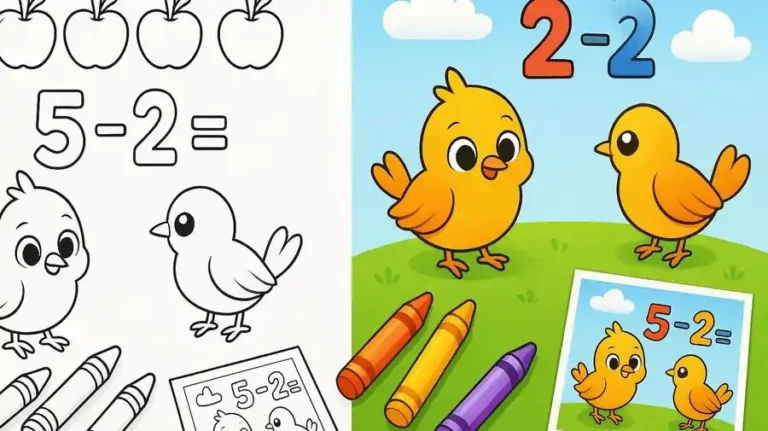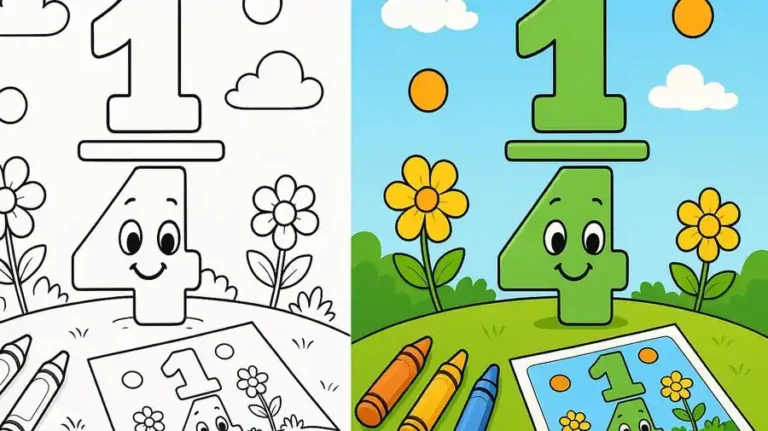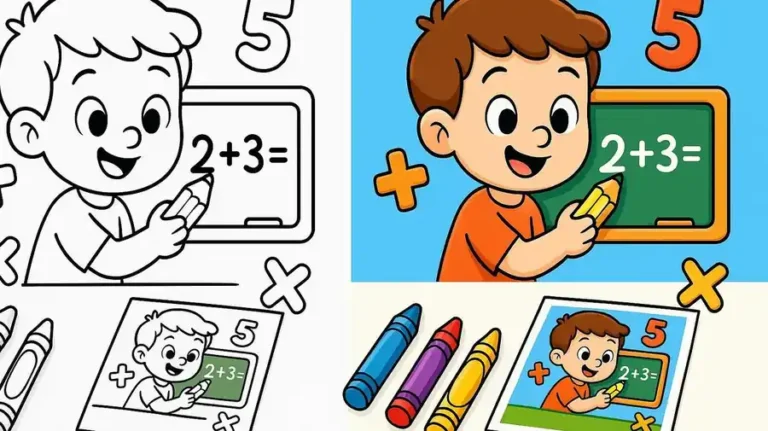

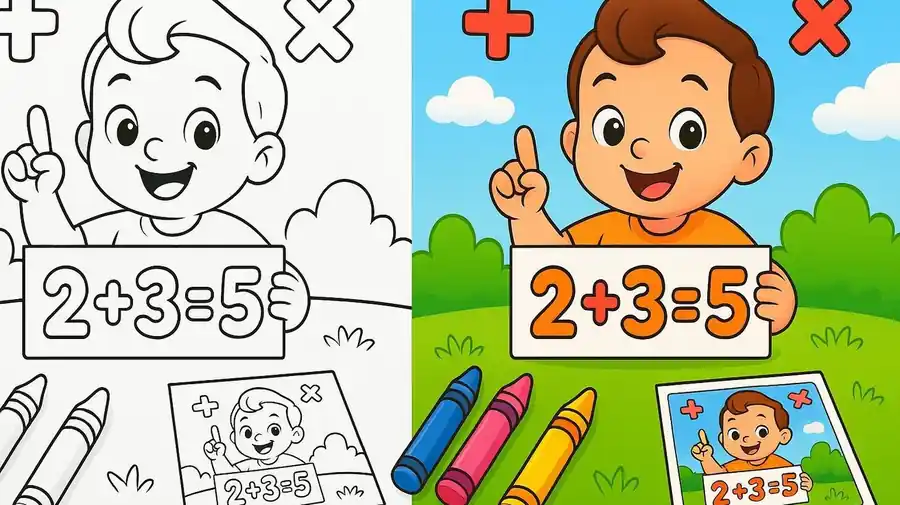
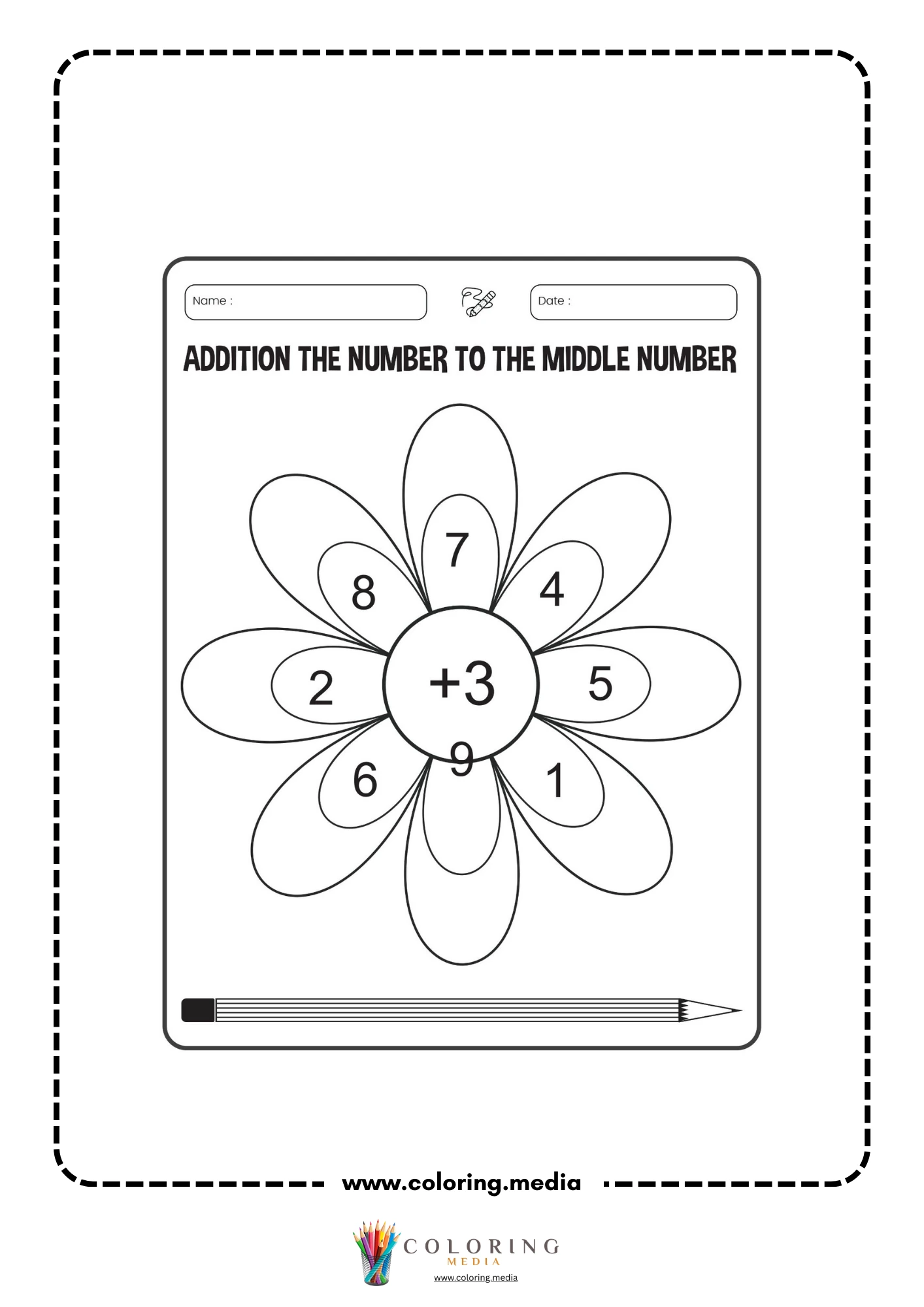
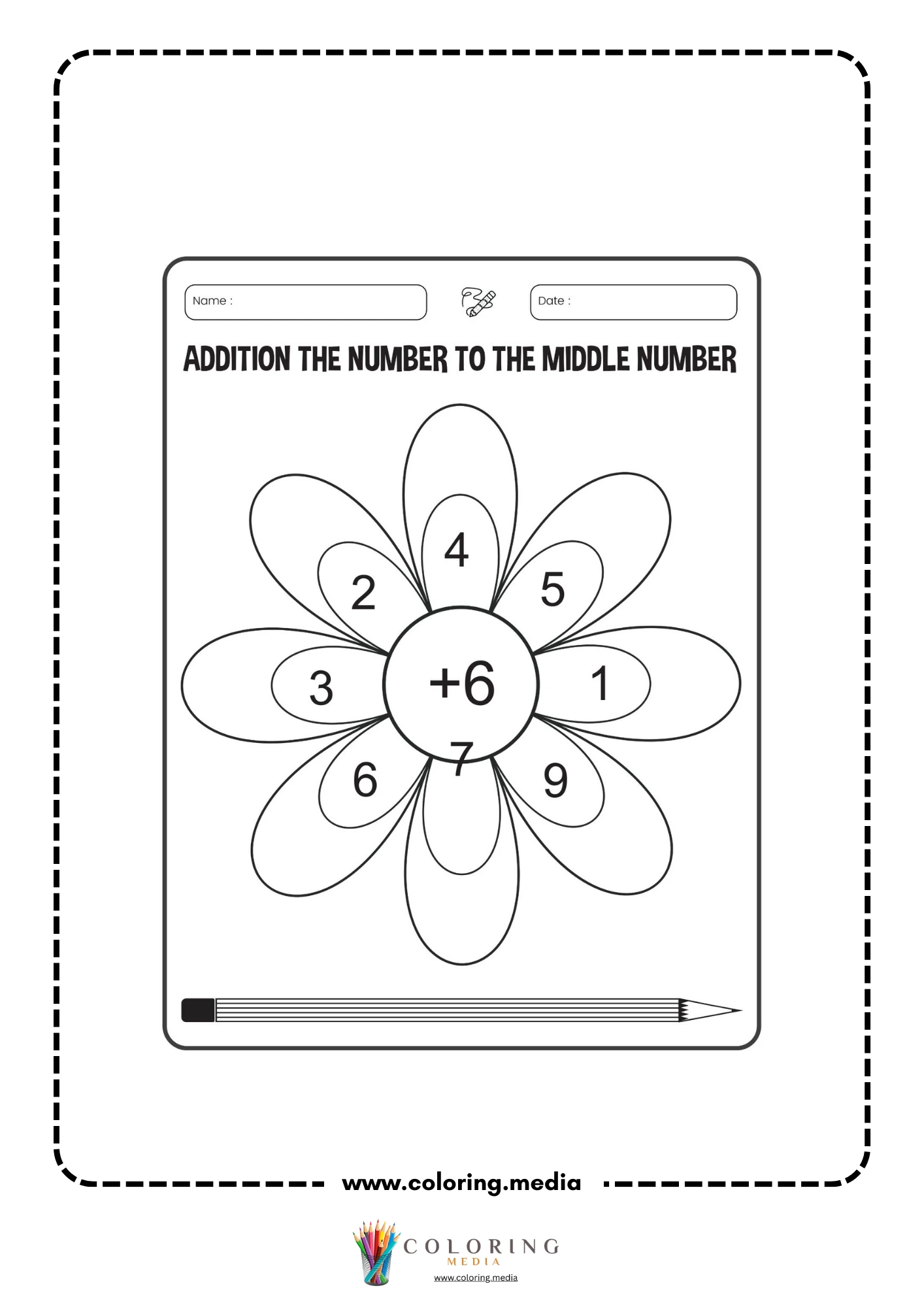
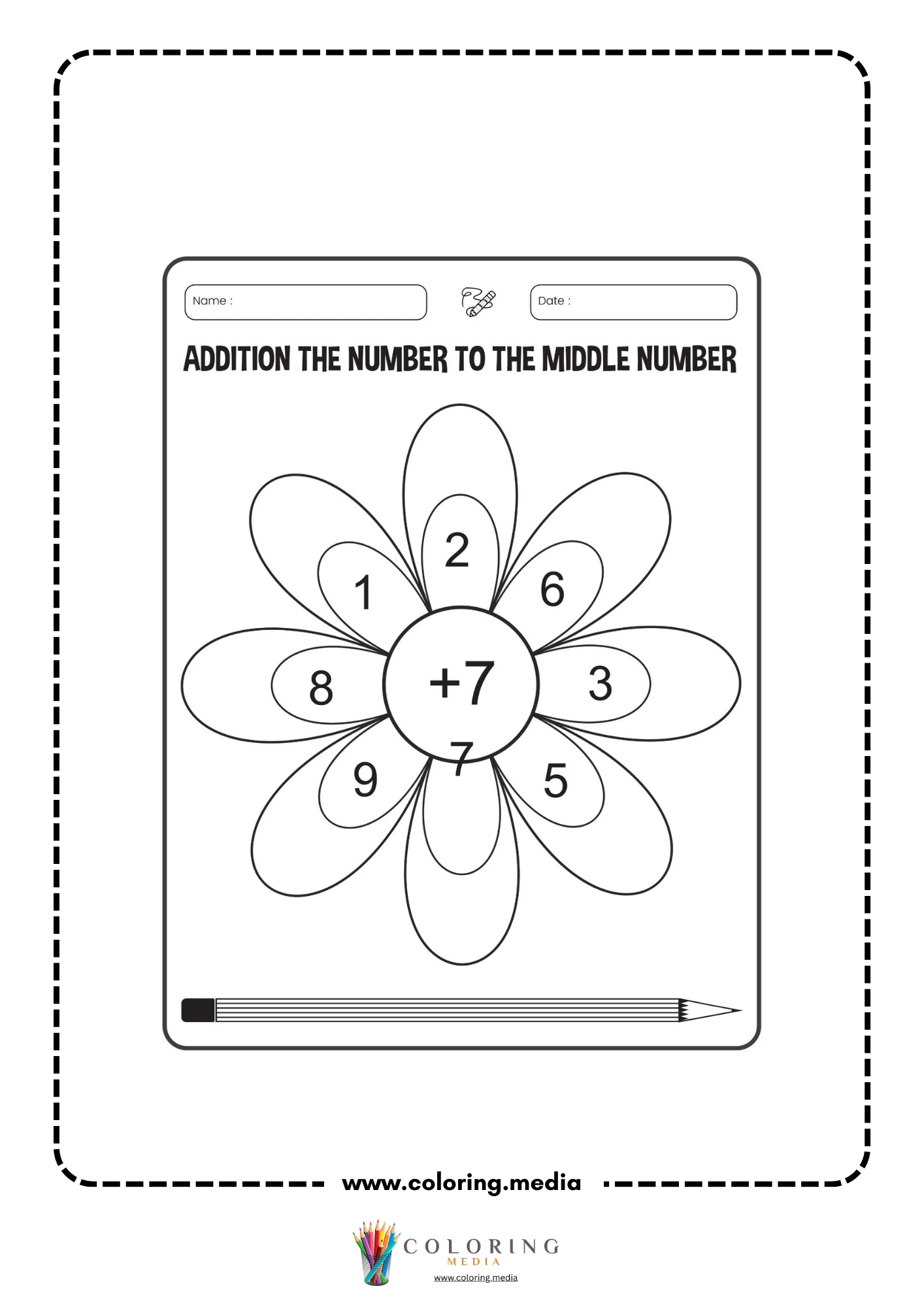
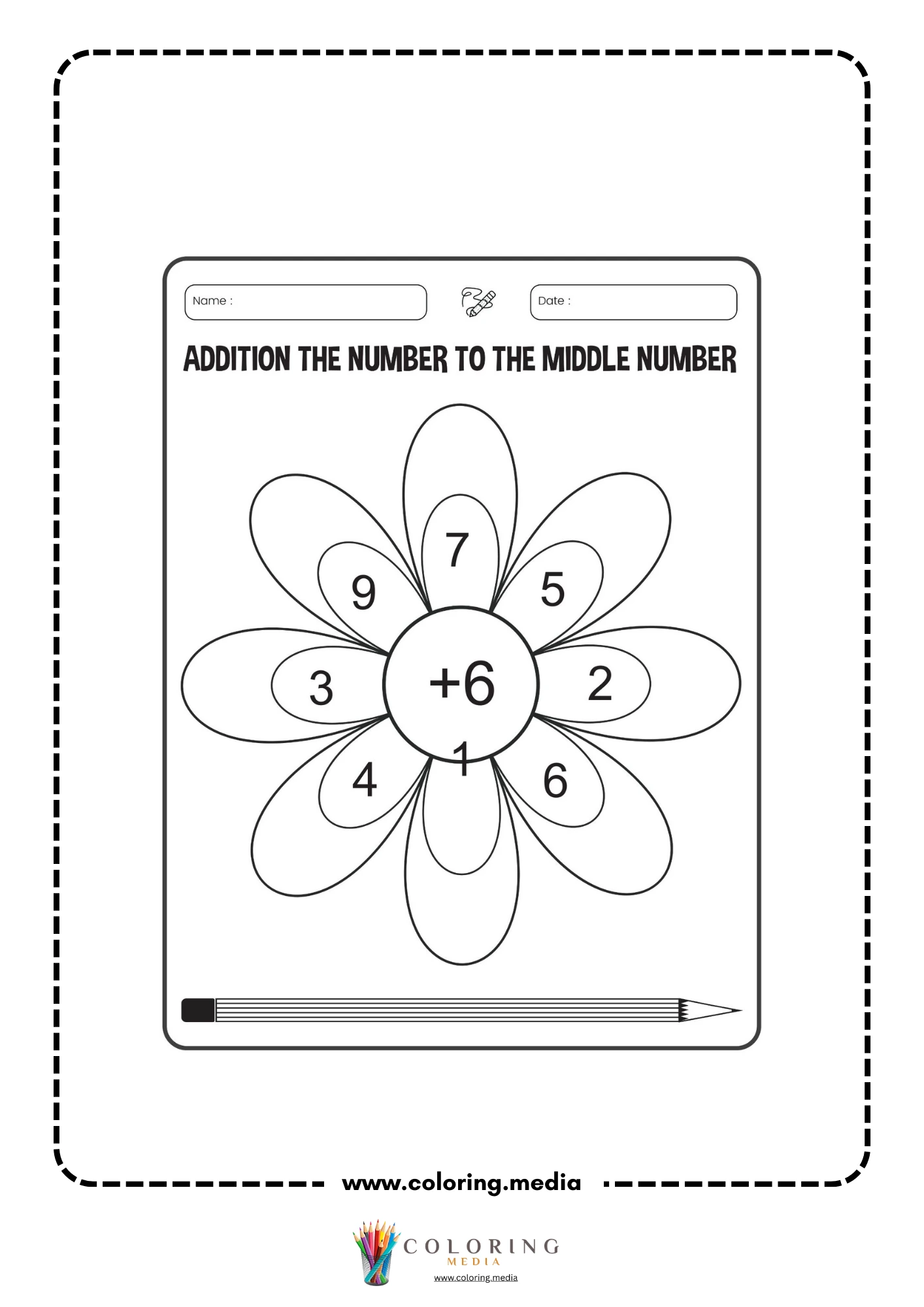
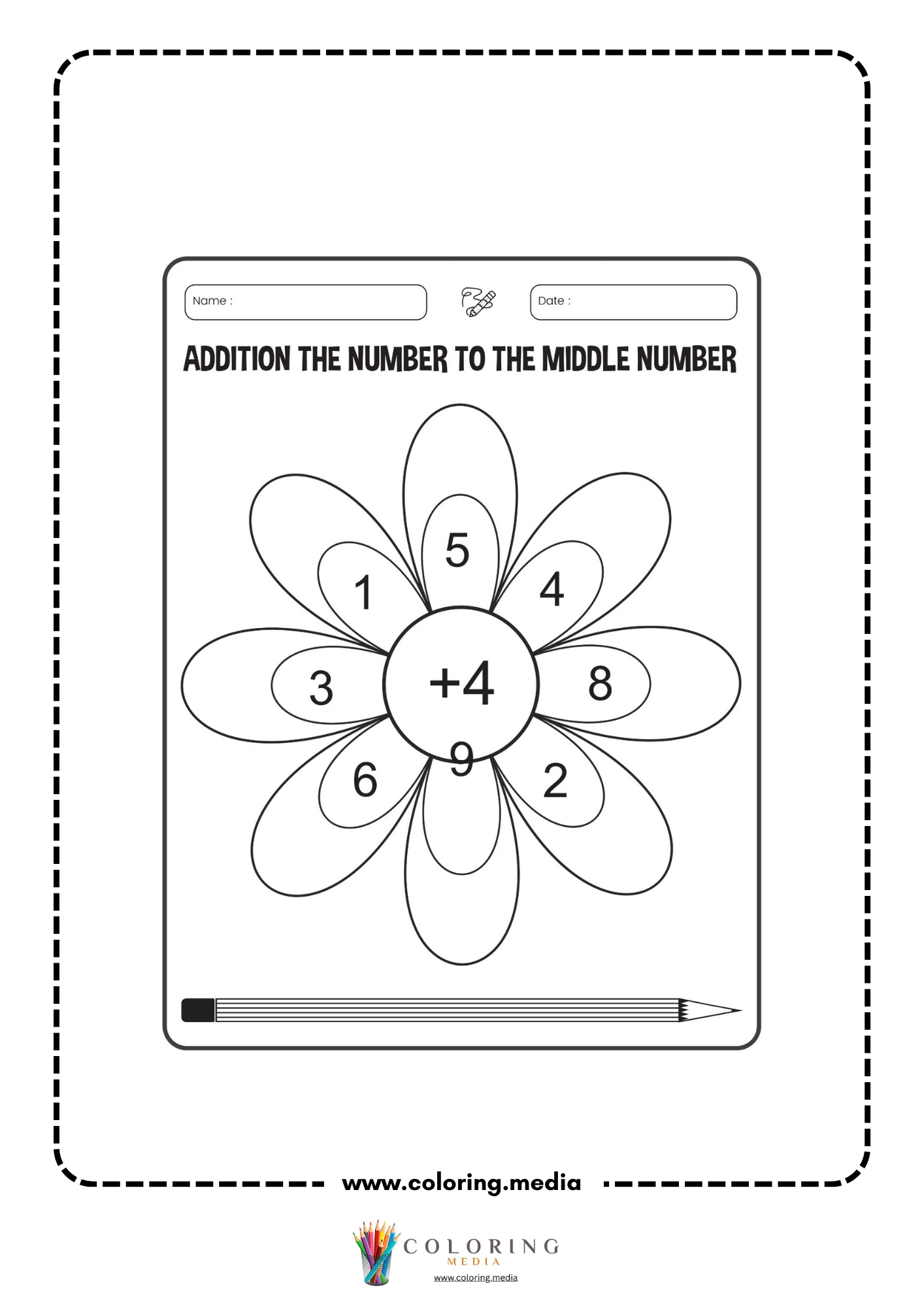
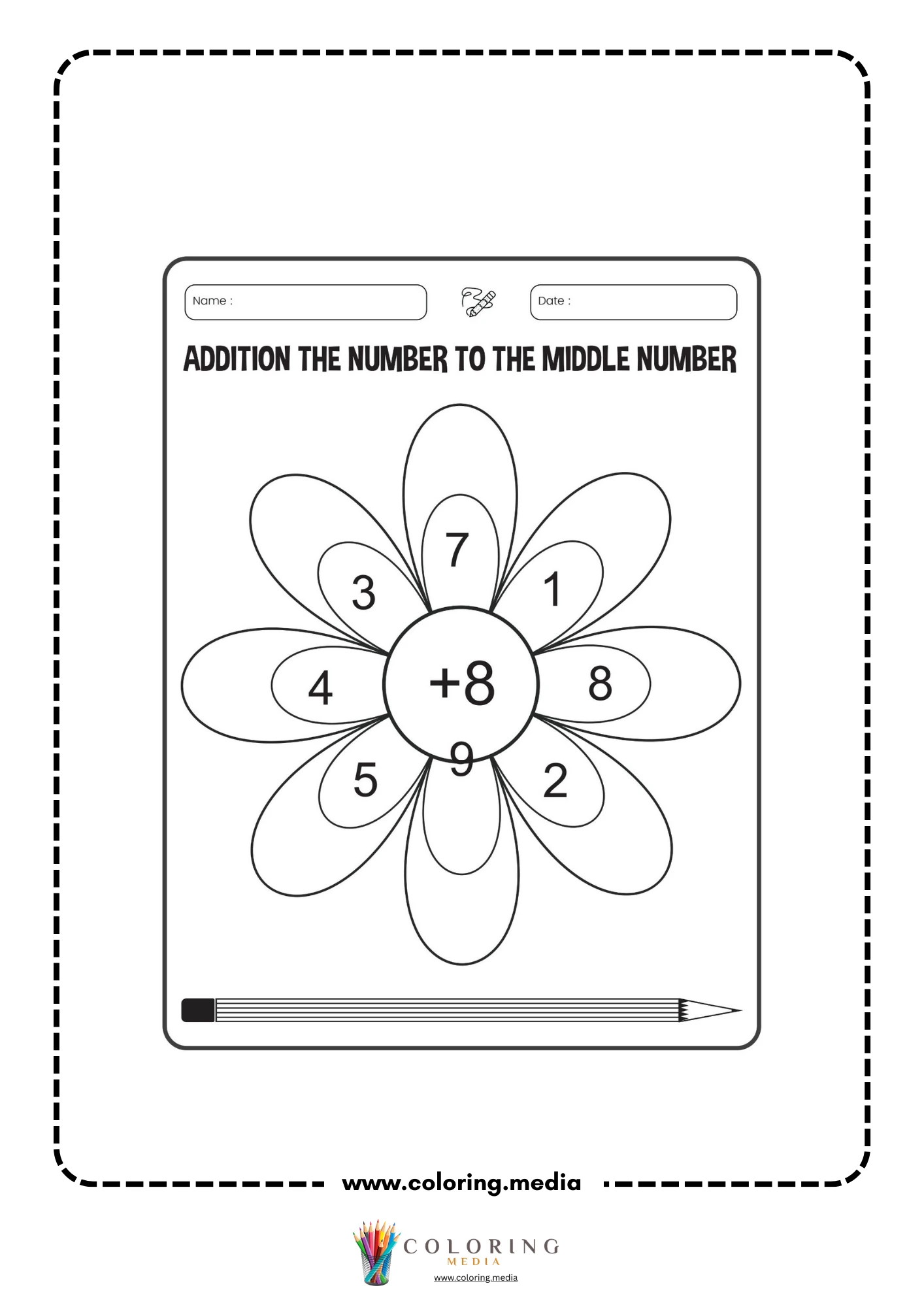
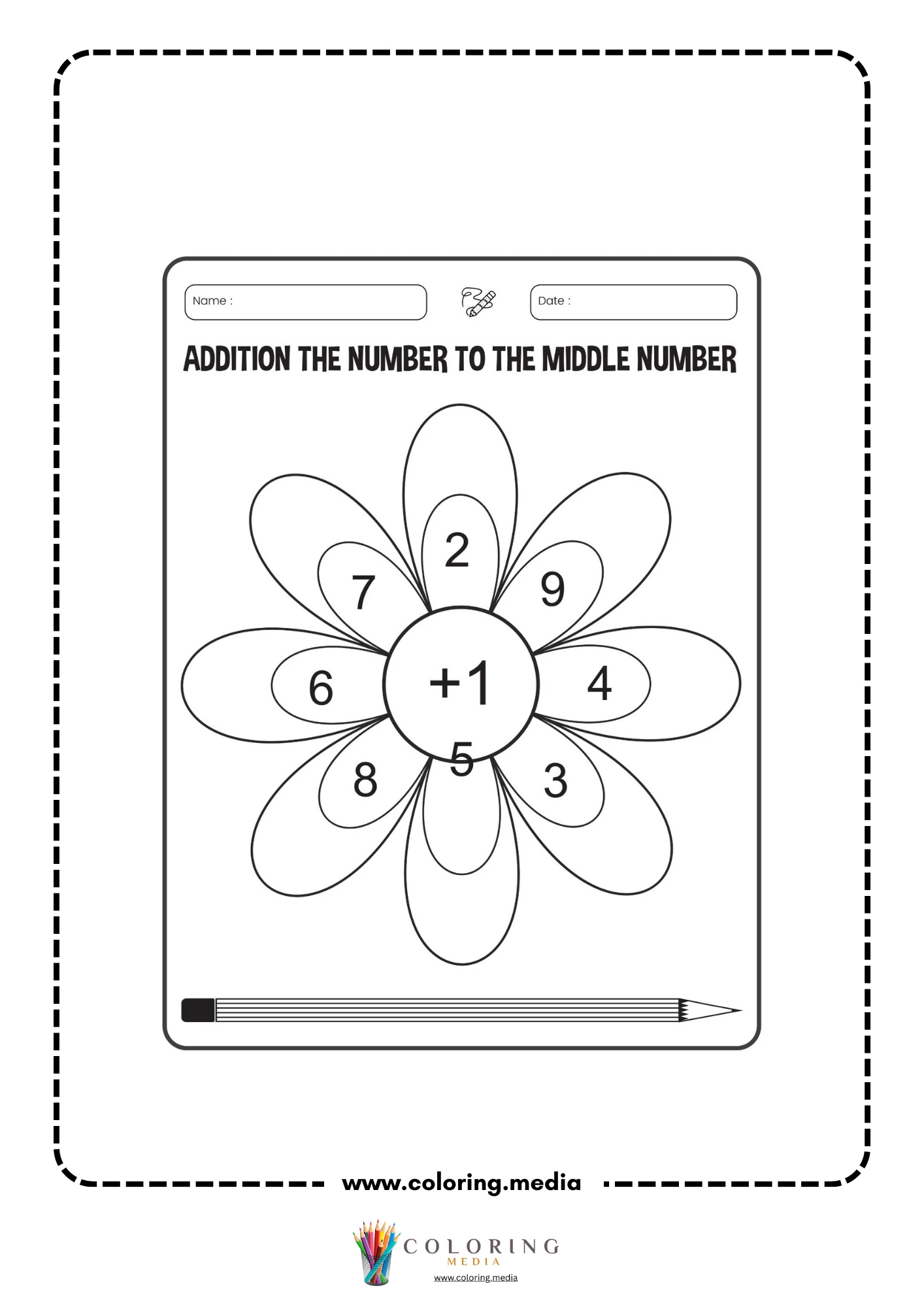
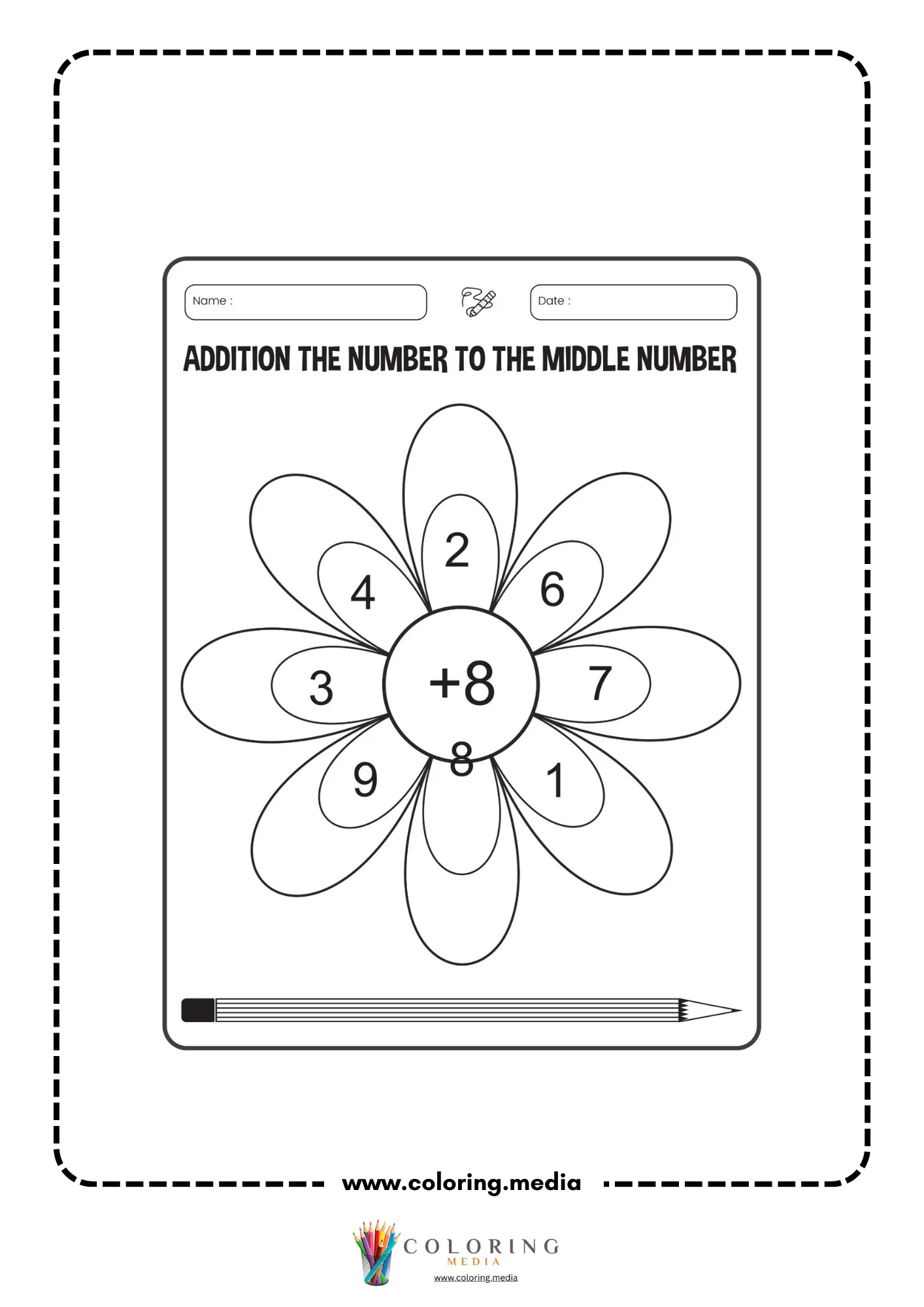
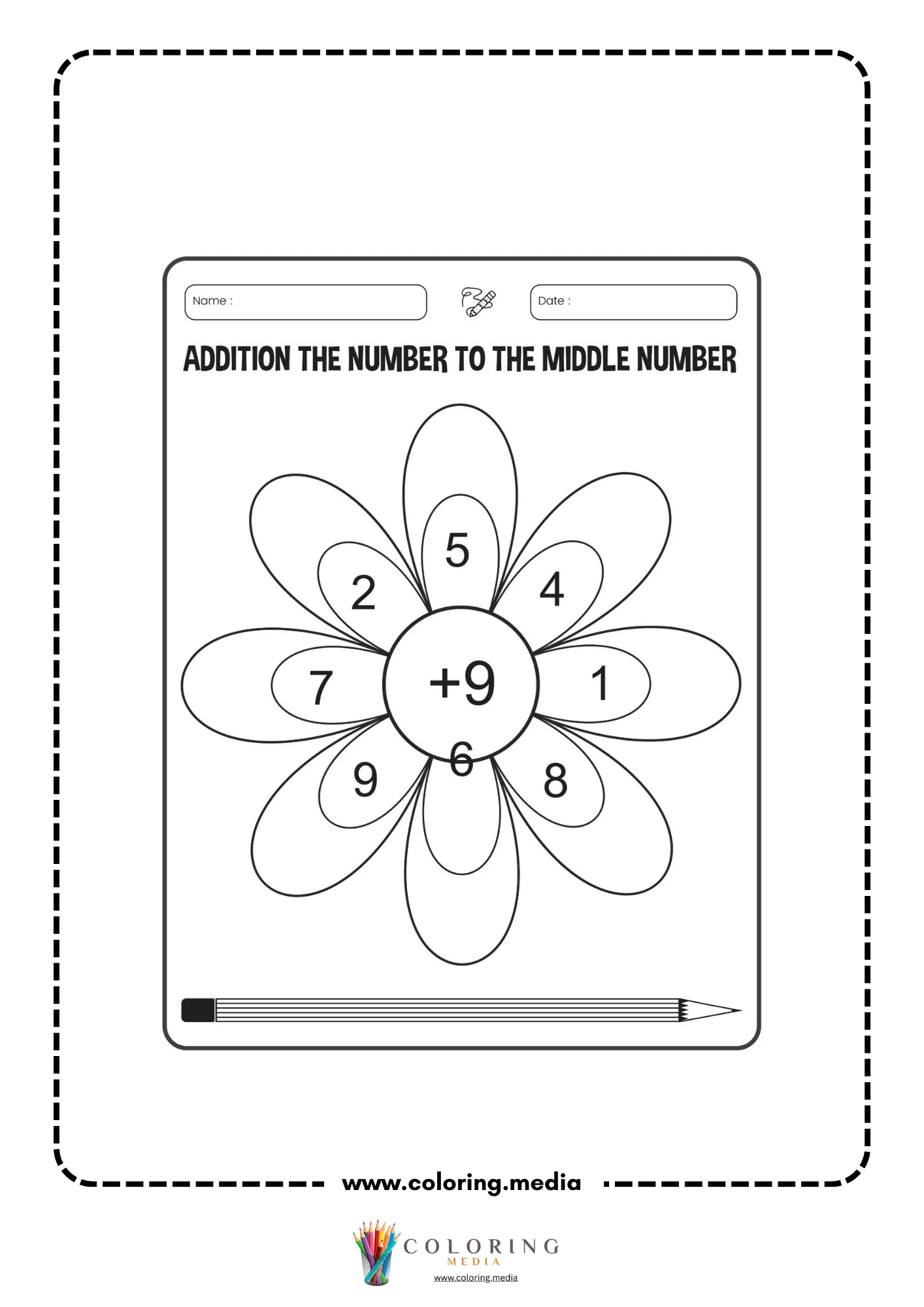
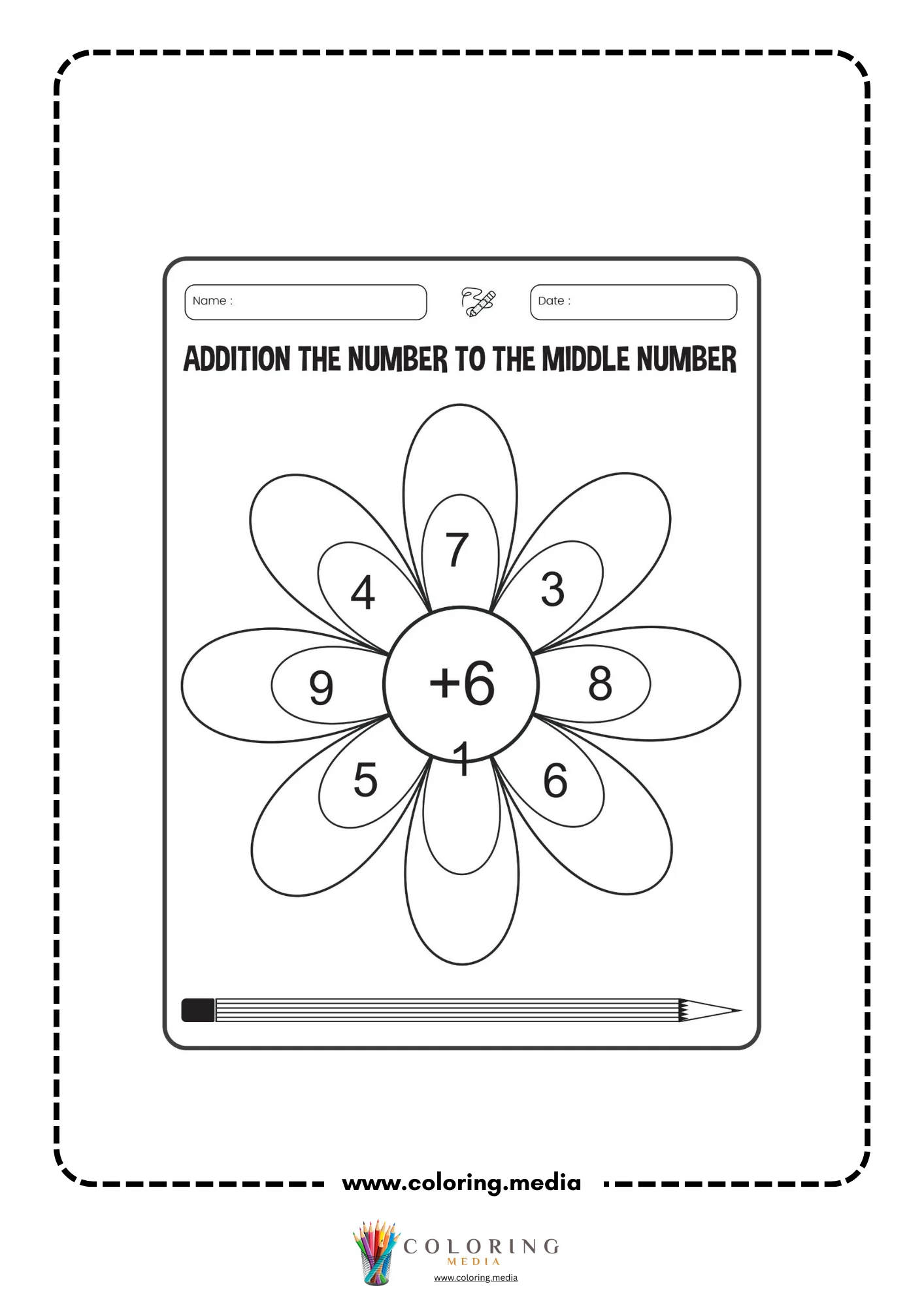
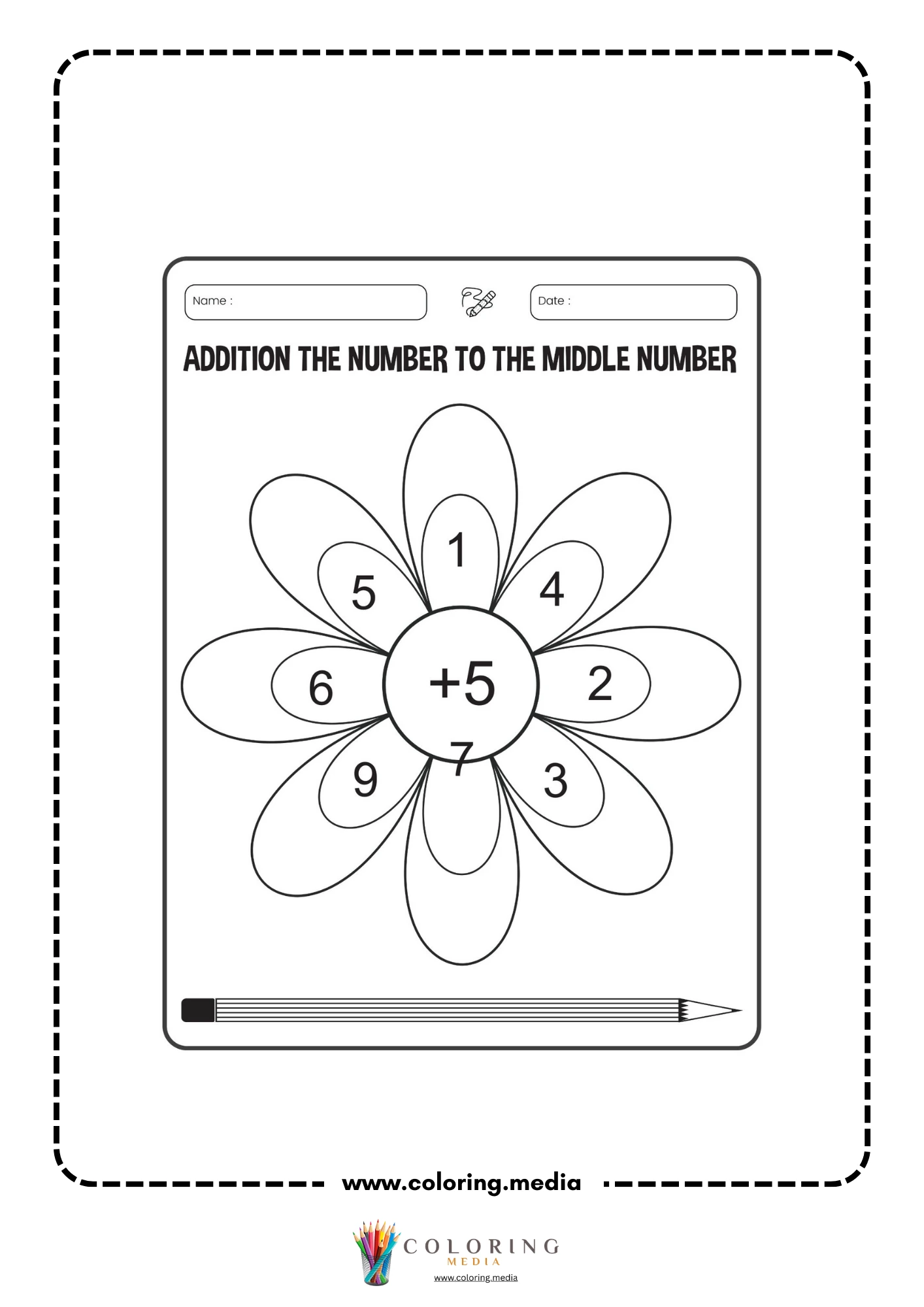
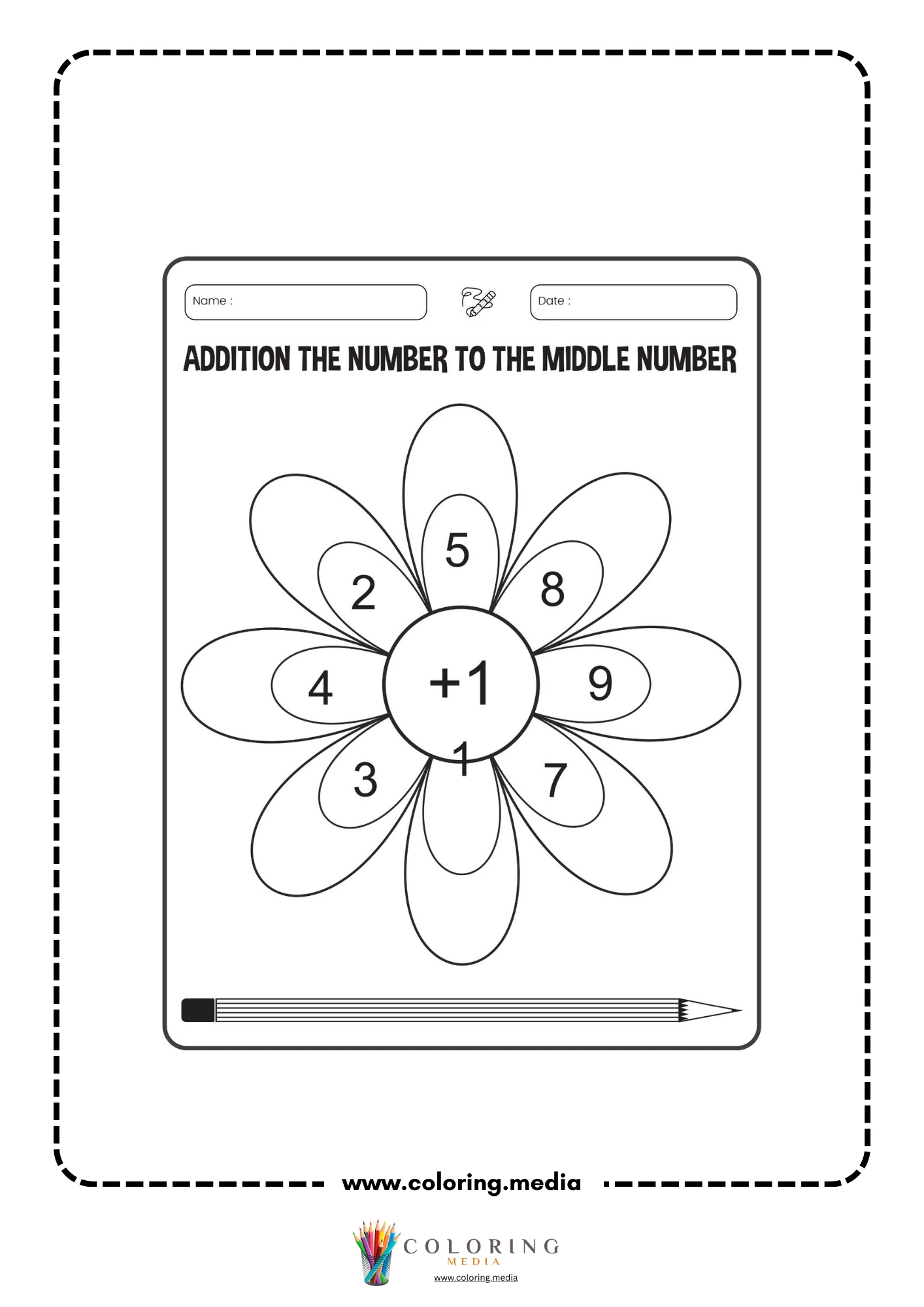
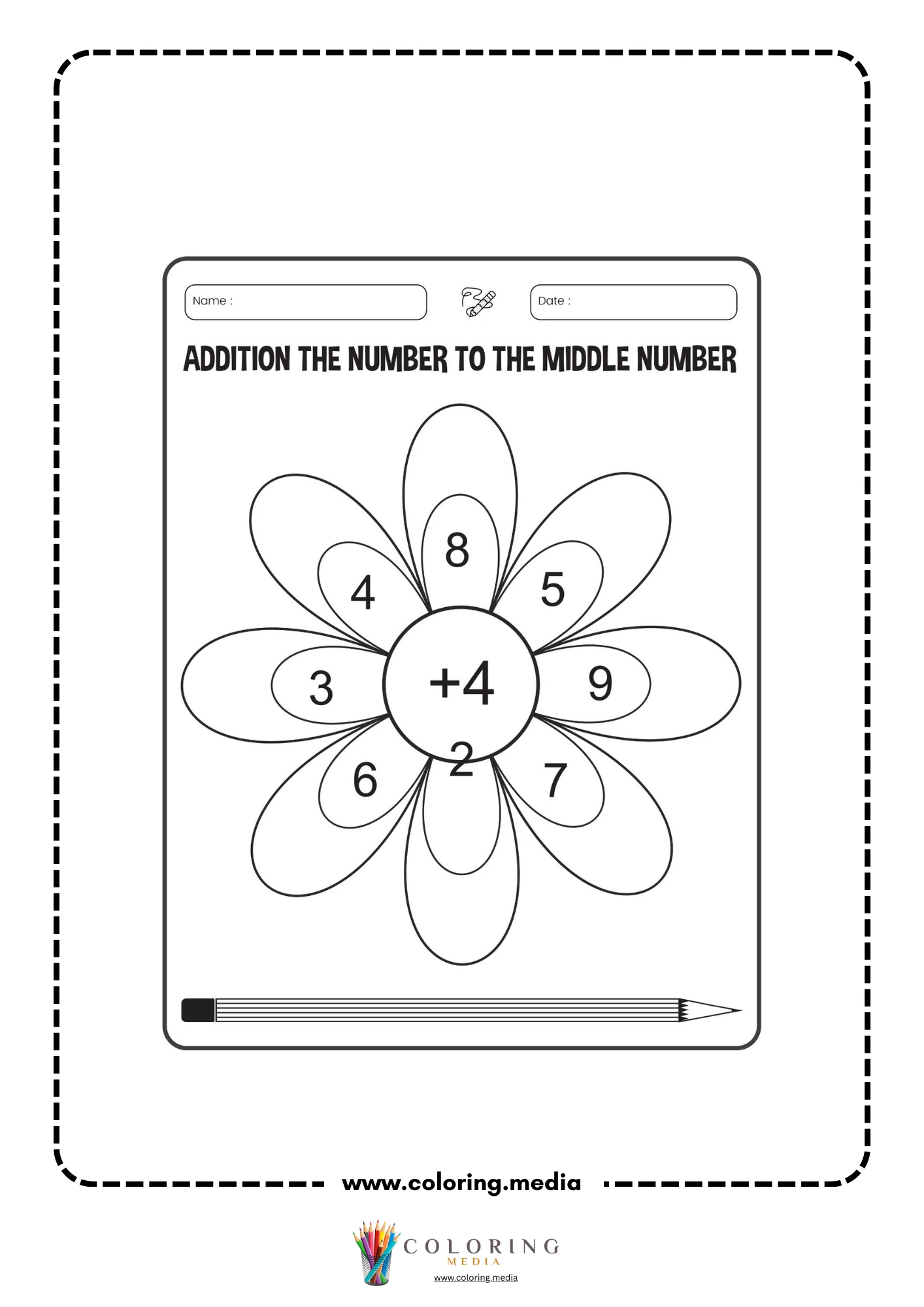
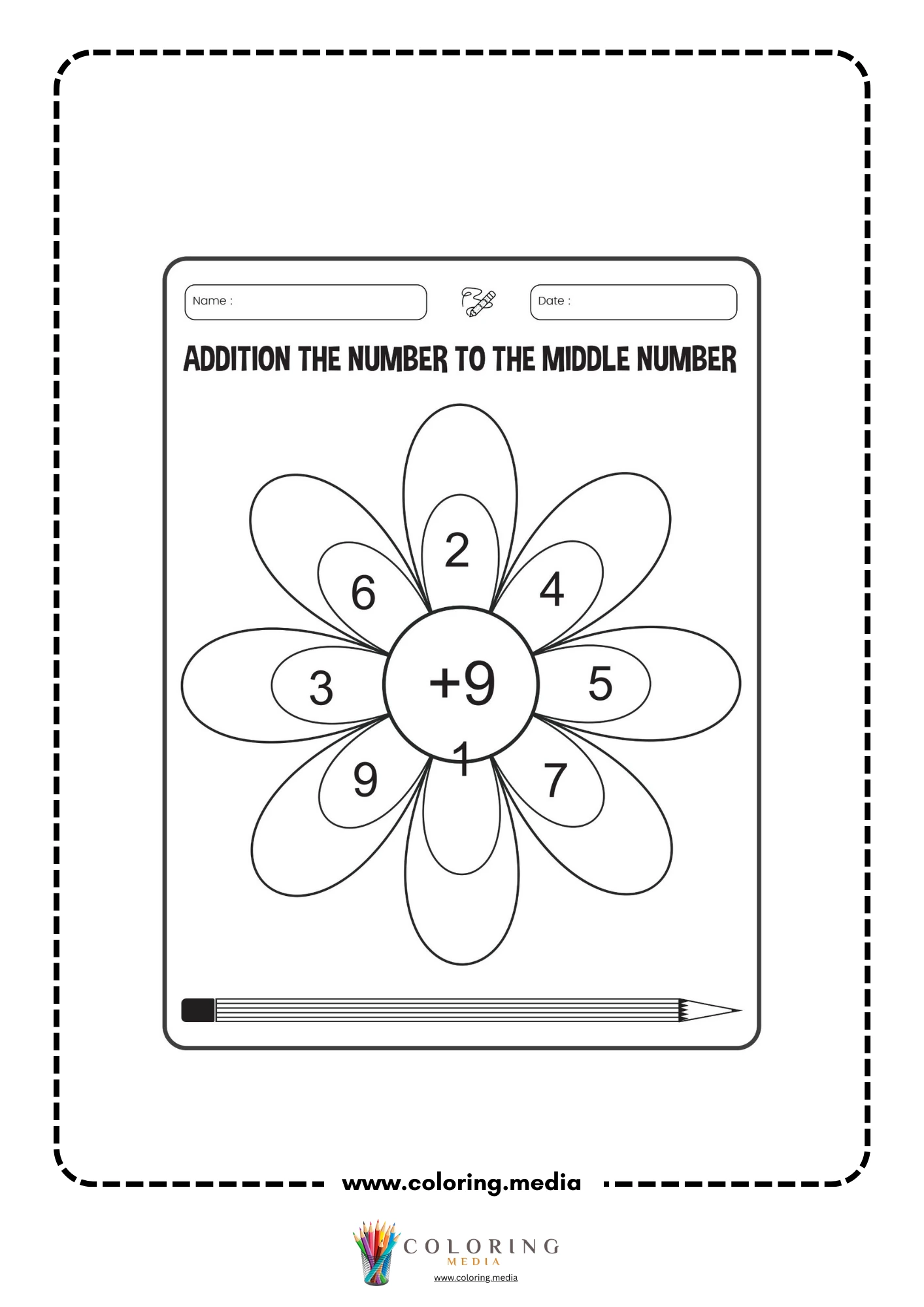
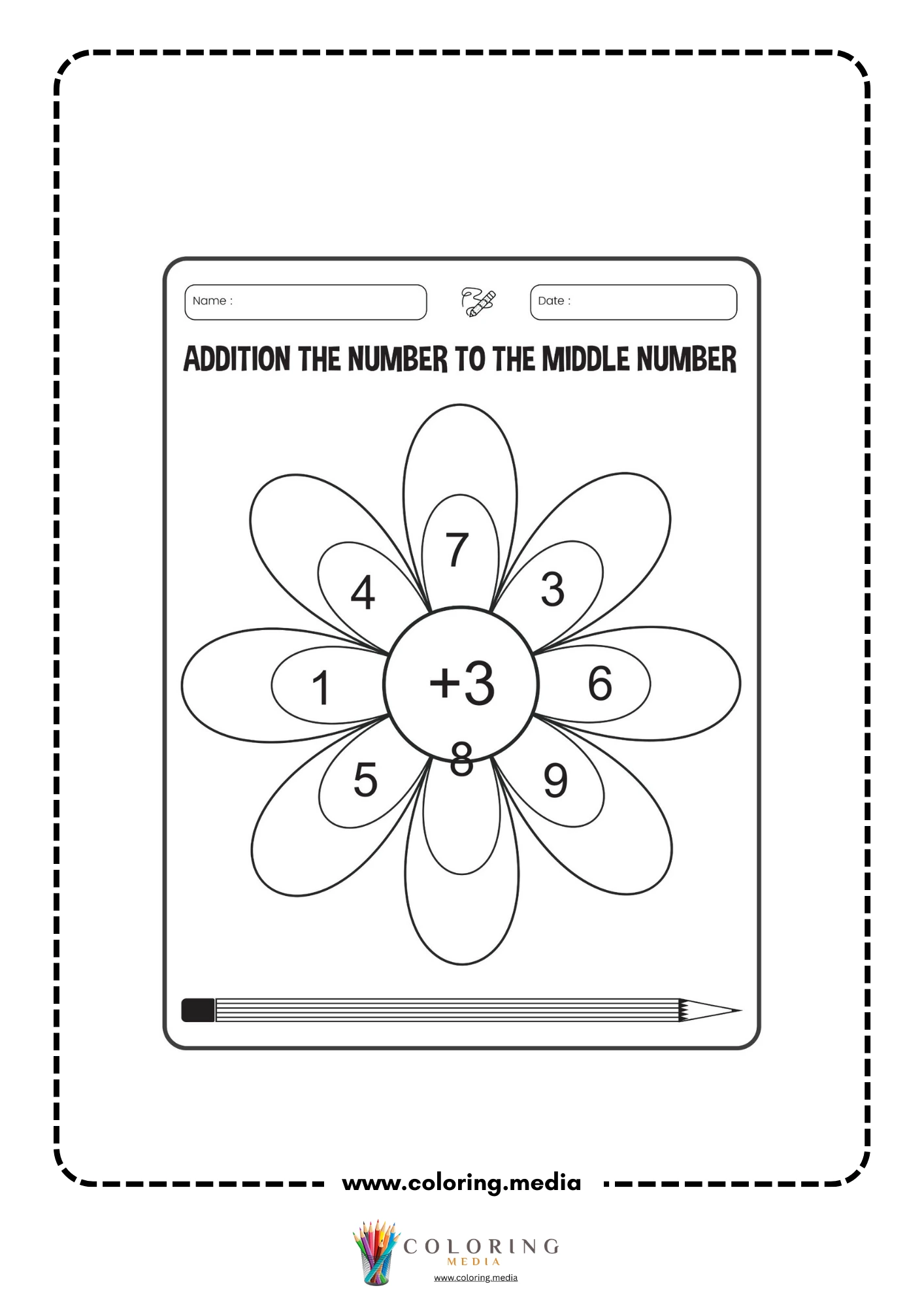
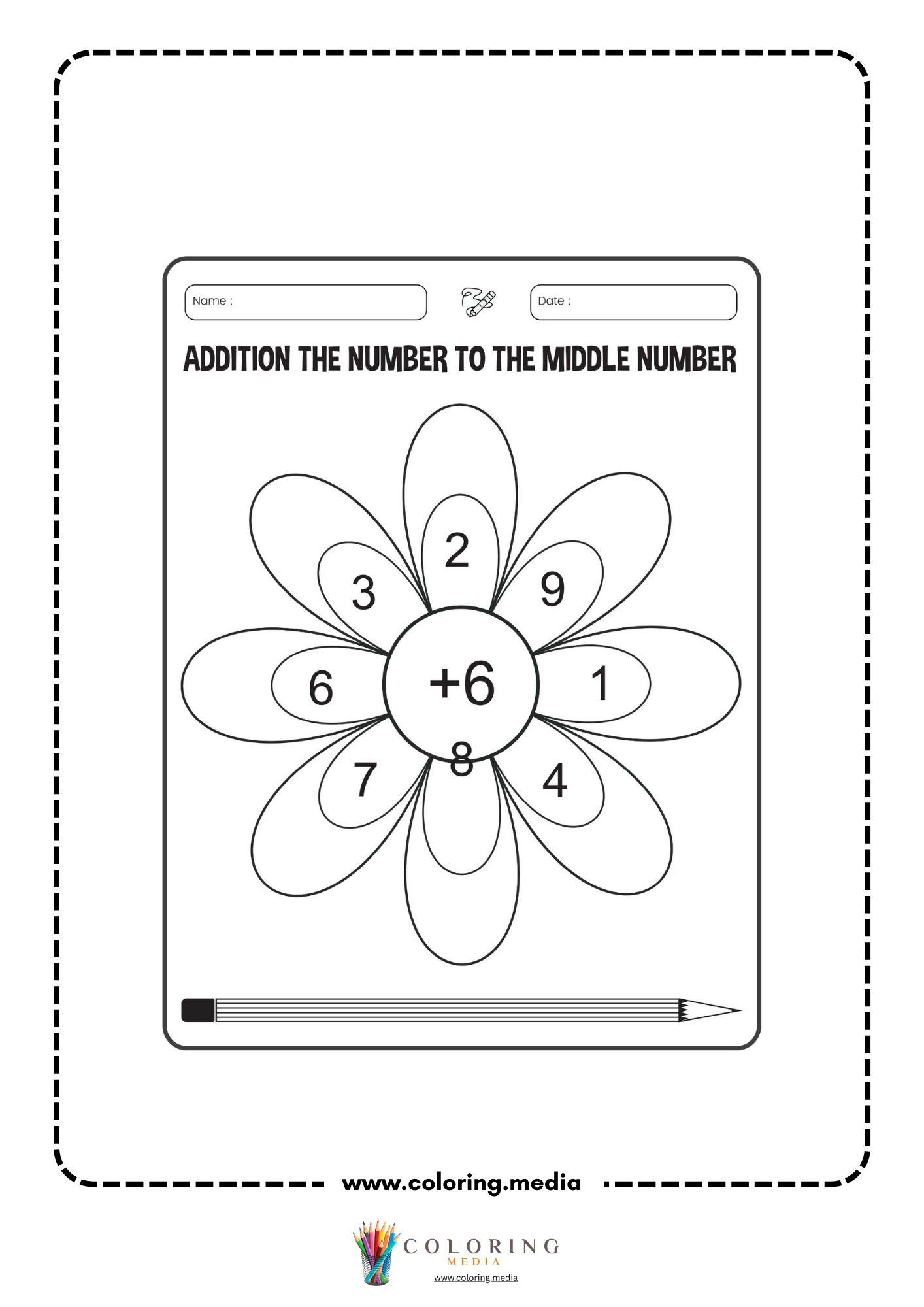
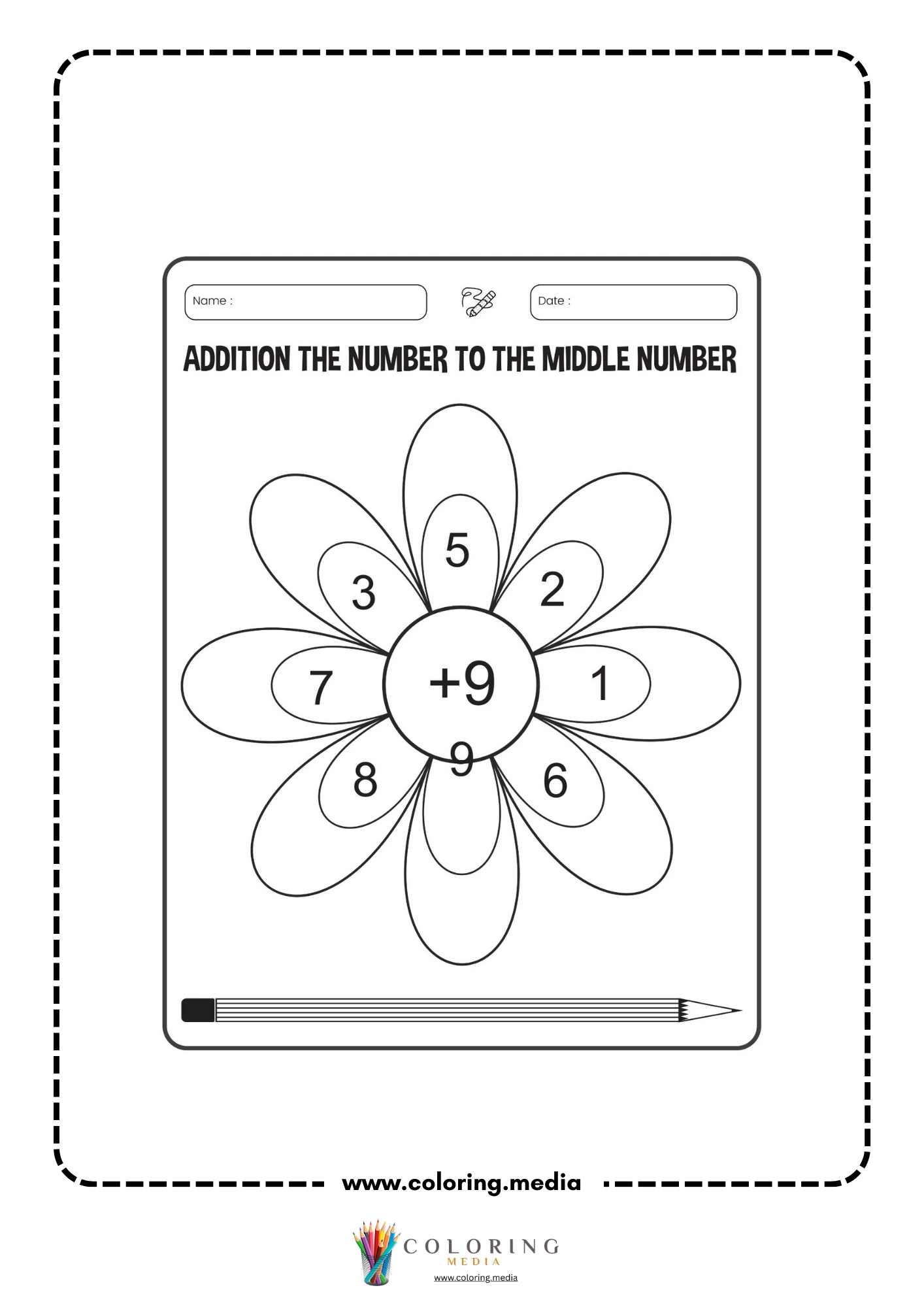
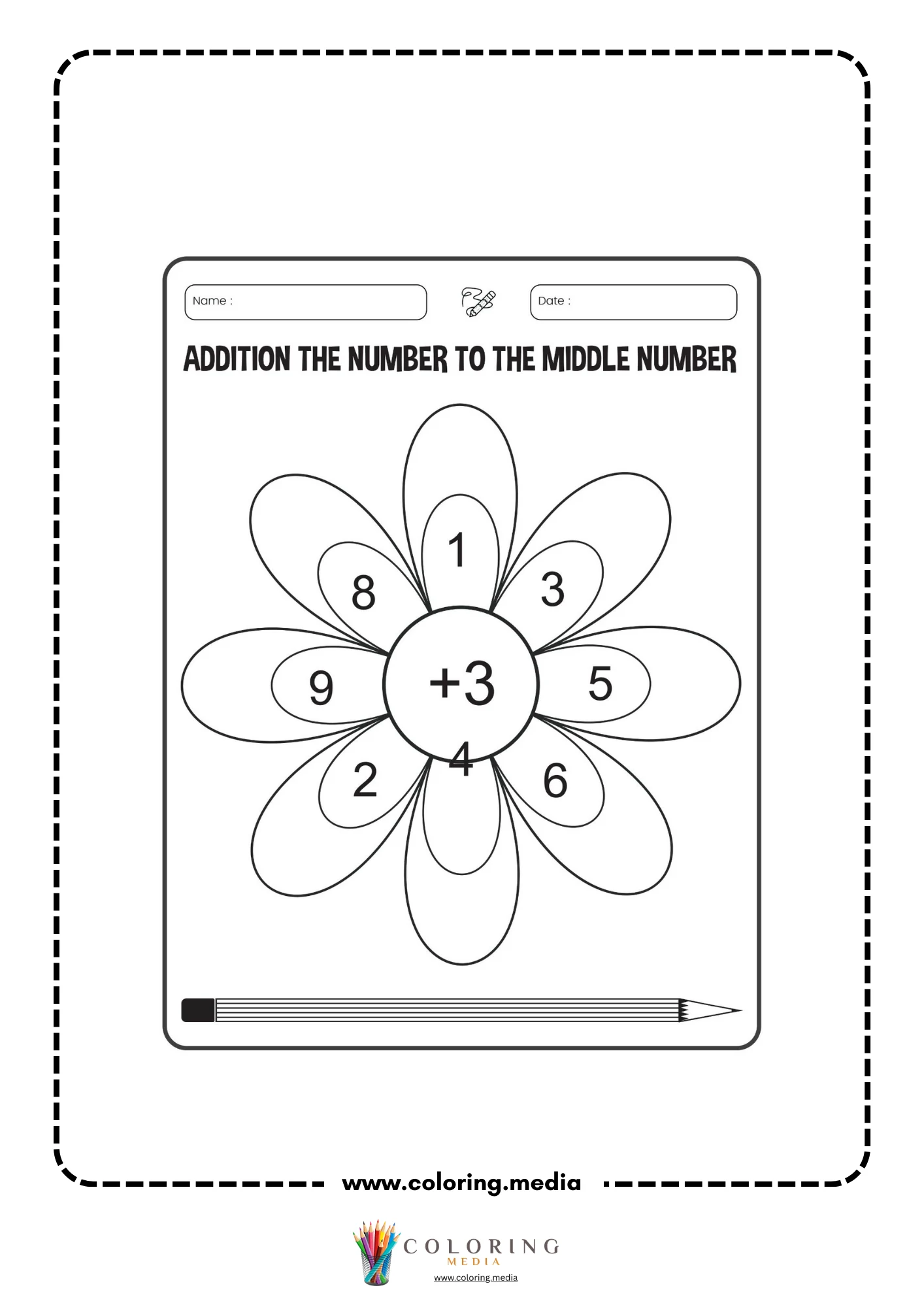
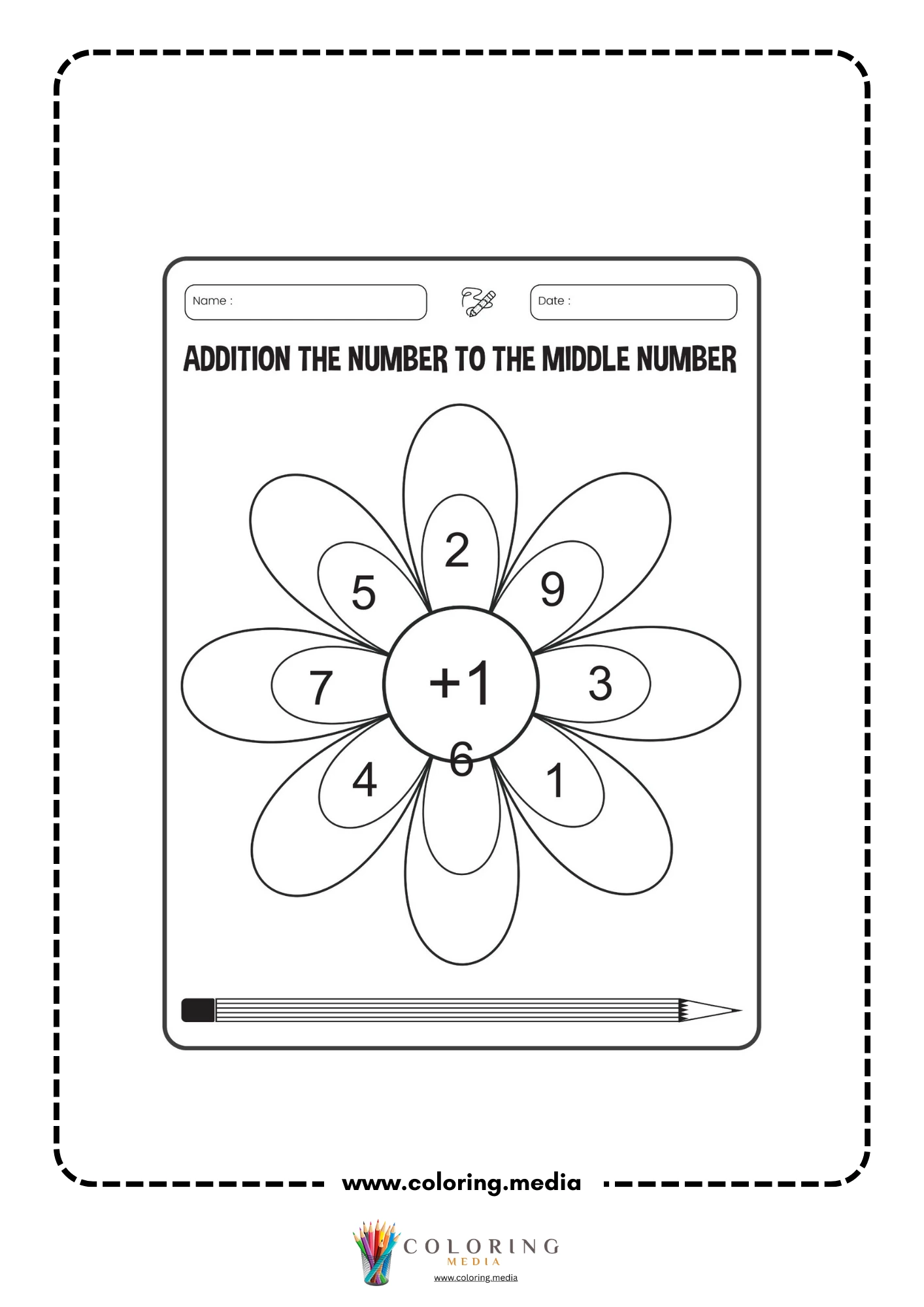
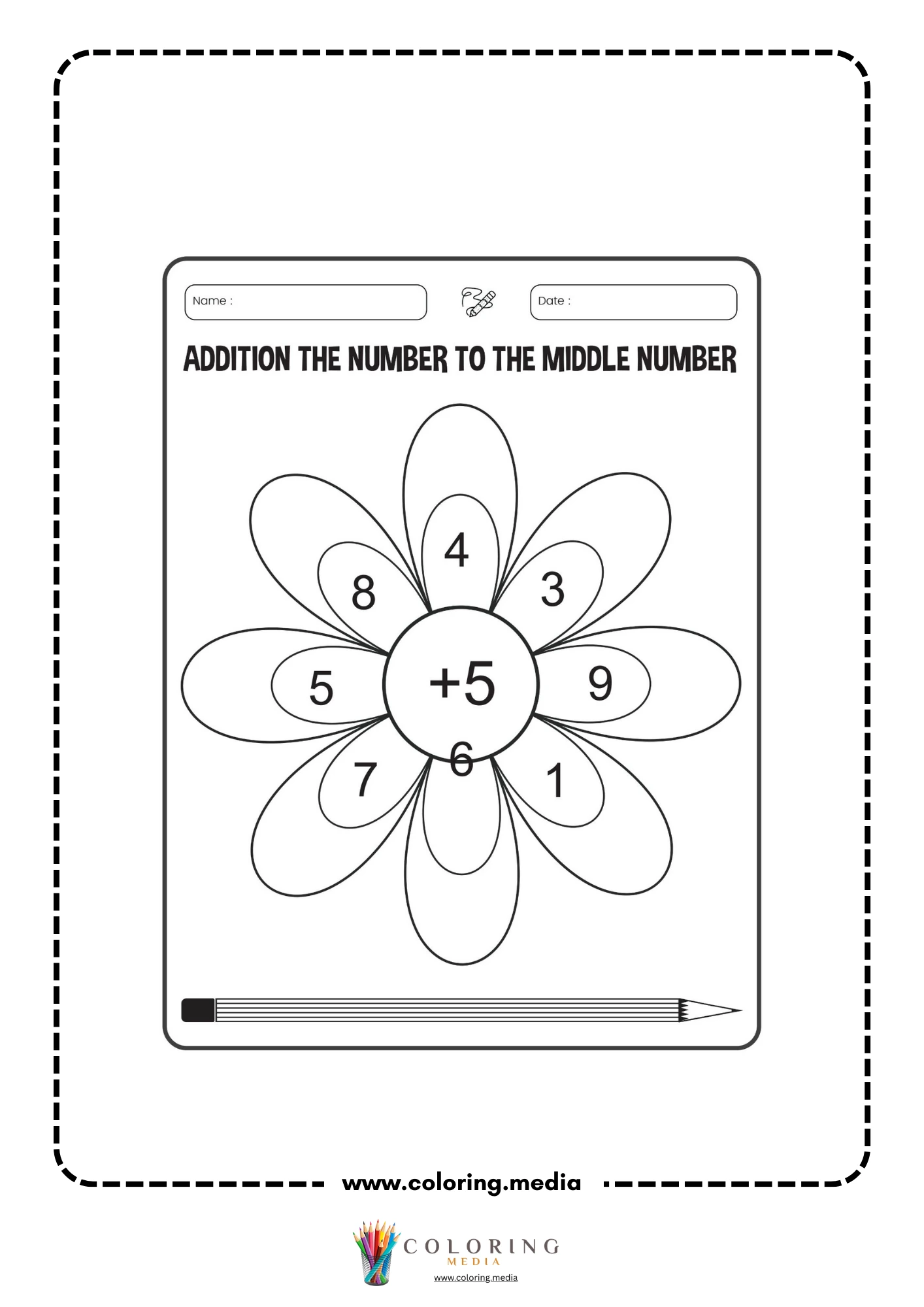
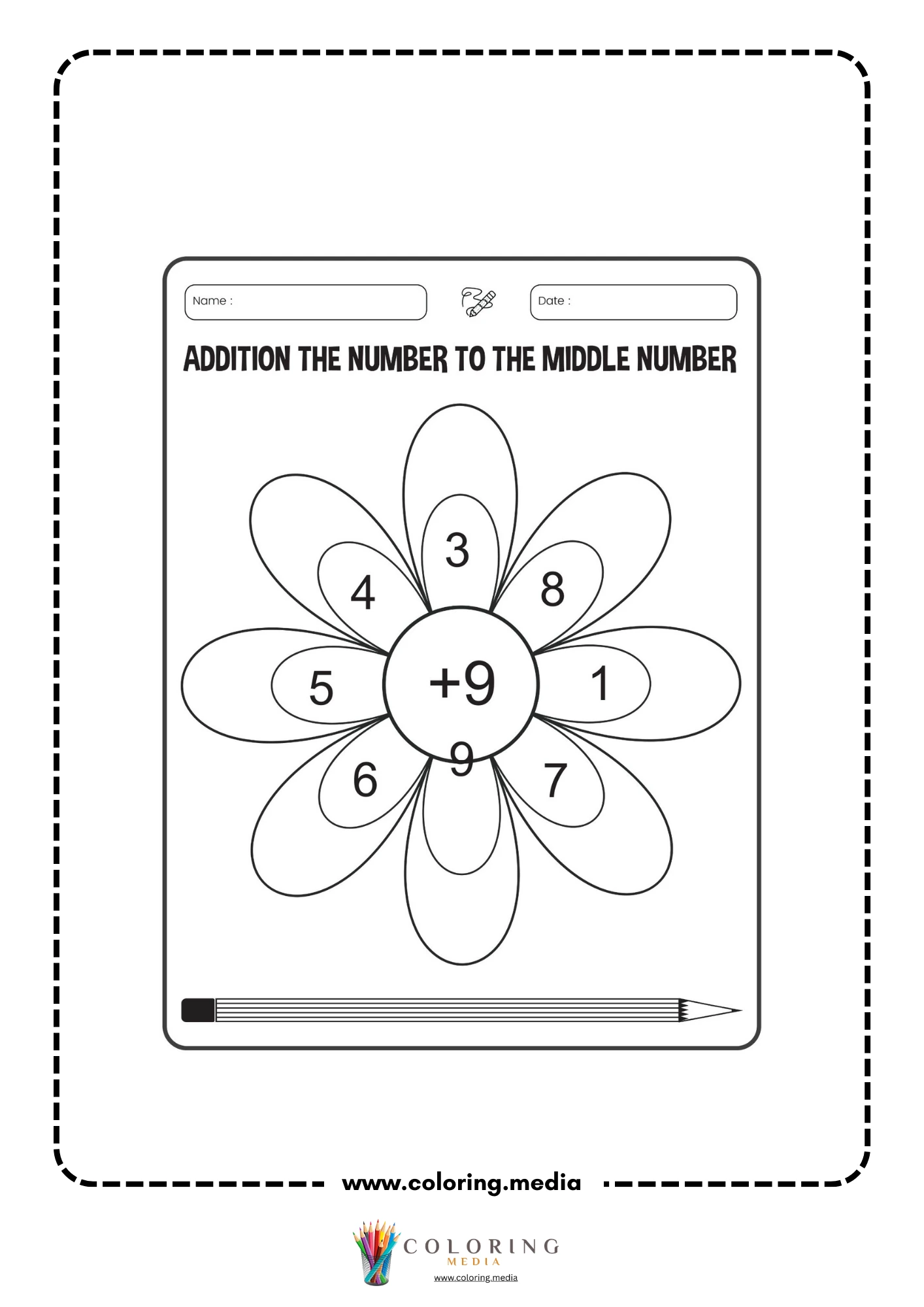
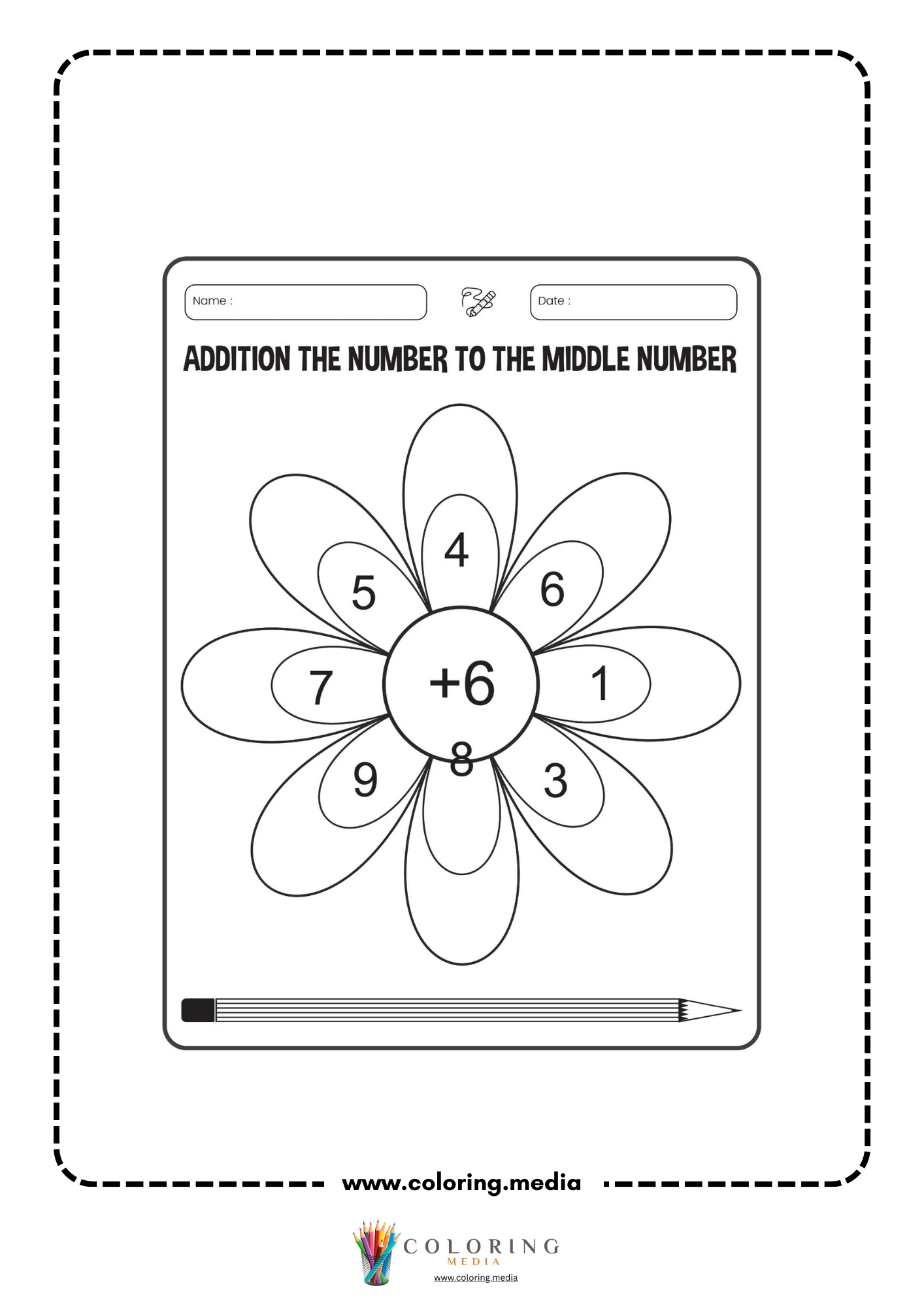
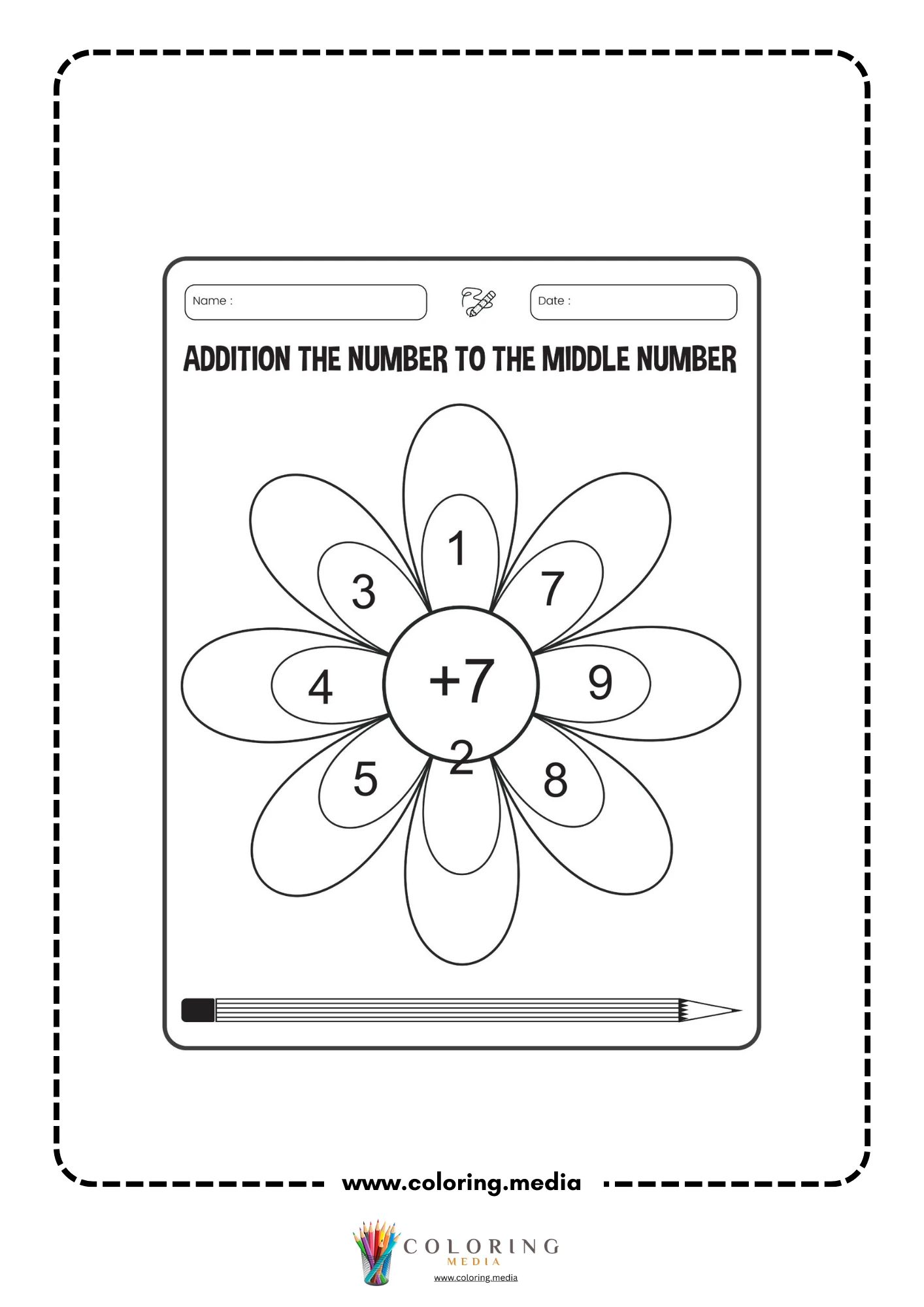
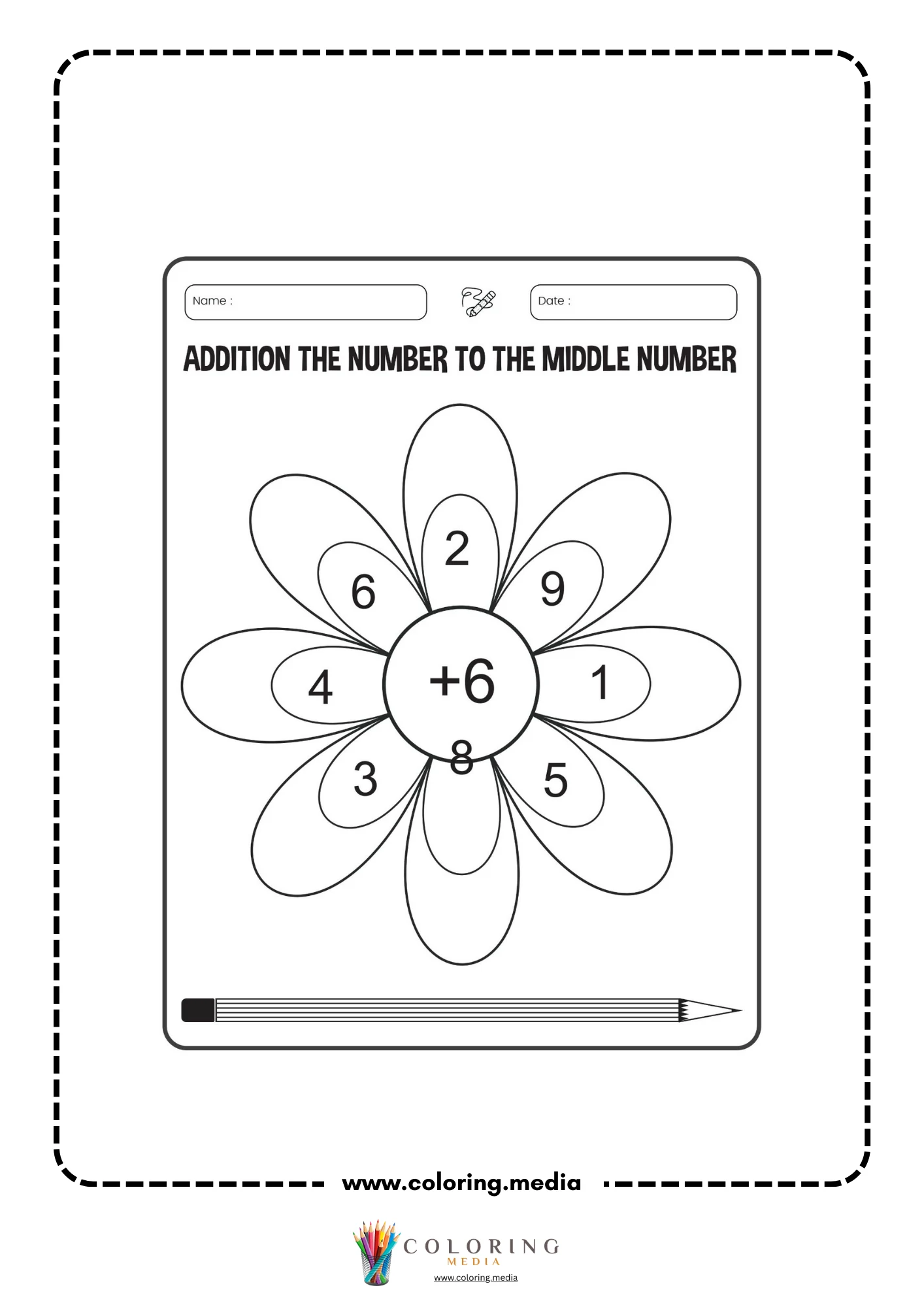
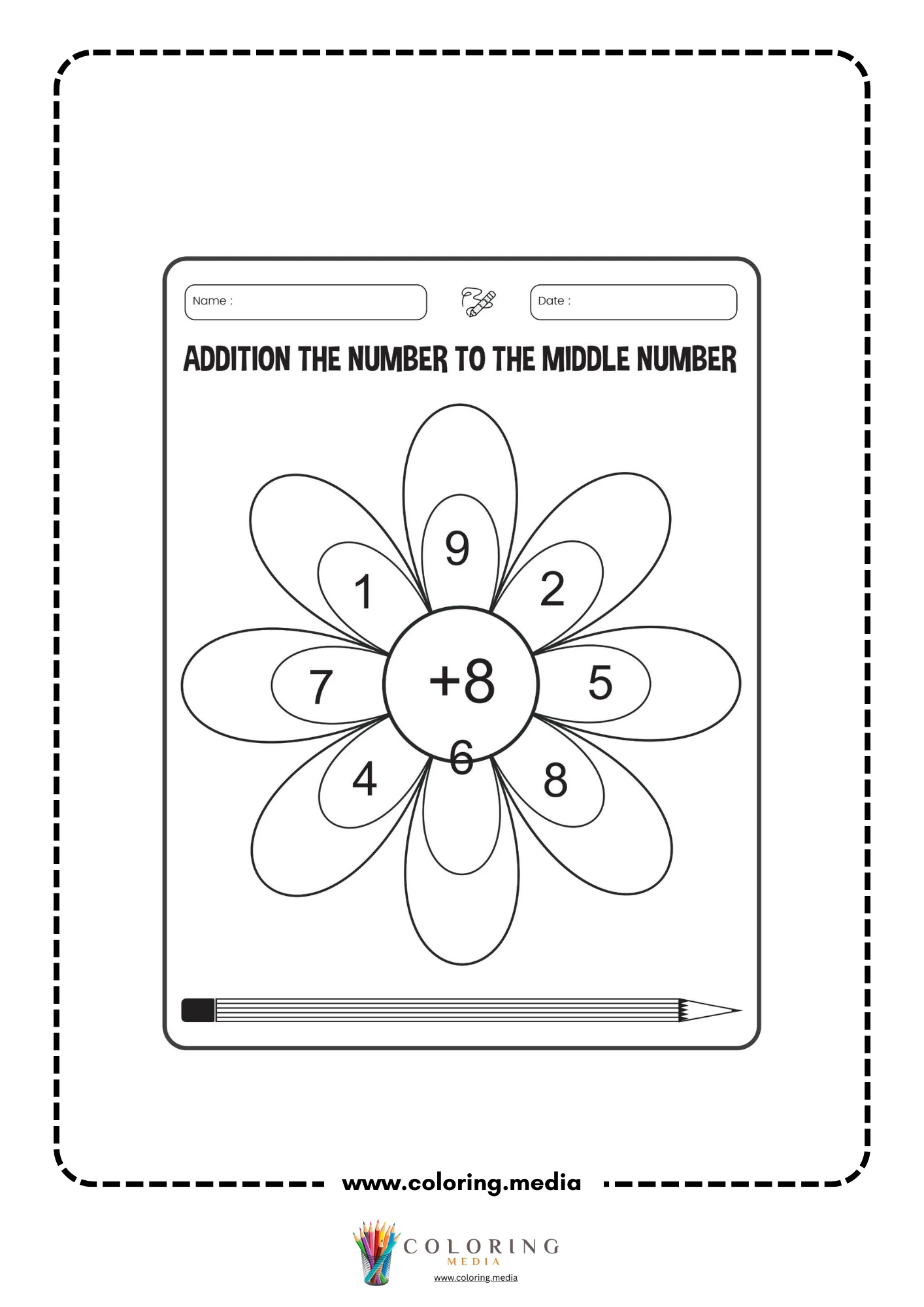
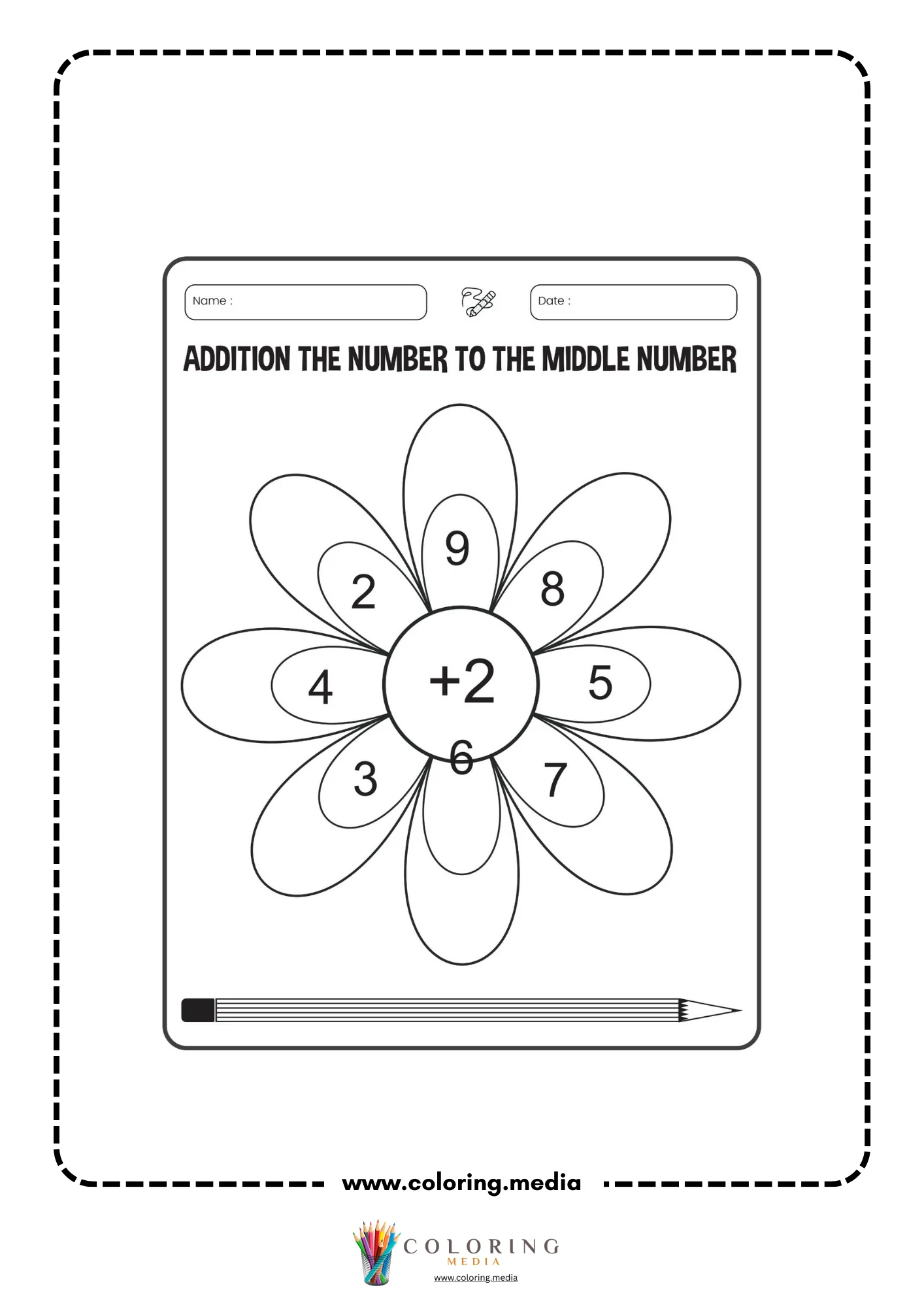
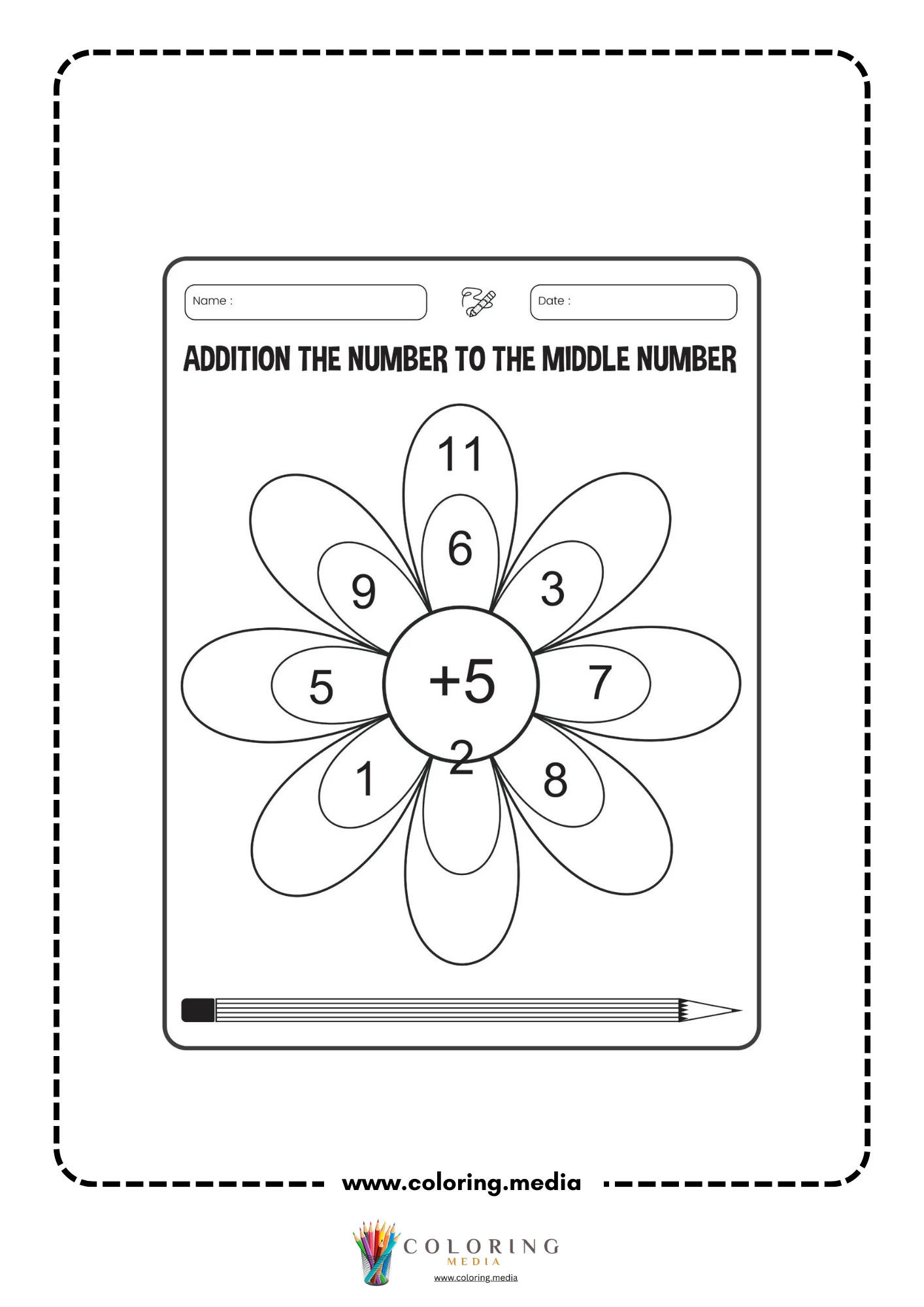
Each page in this set follows a clean, purposeful format: a row of addition equations at the top, and a geometric flower mandala in the center waiting to be colored once the problems are solved. The progression is deliberate — early sheets work within sums of 5 or 10, while later pages push into larger totals, so there is a natural difficulty ramp built into the collection without any extra planning required from the teacher or parent.
These pages are built for children who are learning their addition facts and need something that rewards the mental effort without making the worksheet feel like a chore. The coloring component is earned, which gives kids a genuine reason to finish the equations carefully rather than rushing through. Everything here is free to download and easy to print.
Free Printable Addition Math Coloring Pages
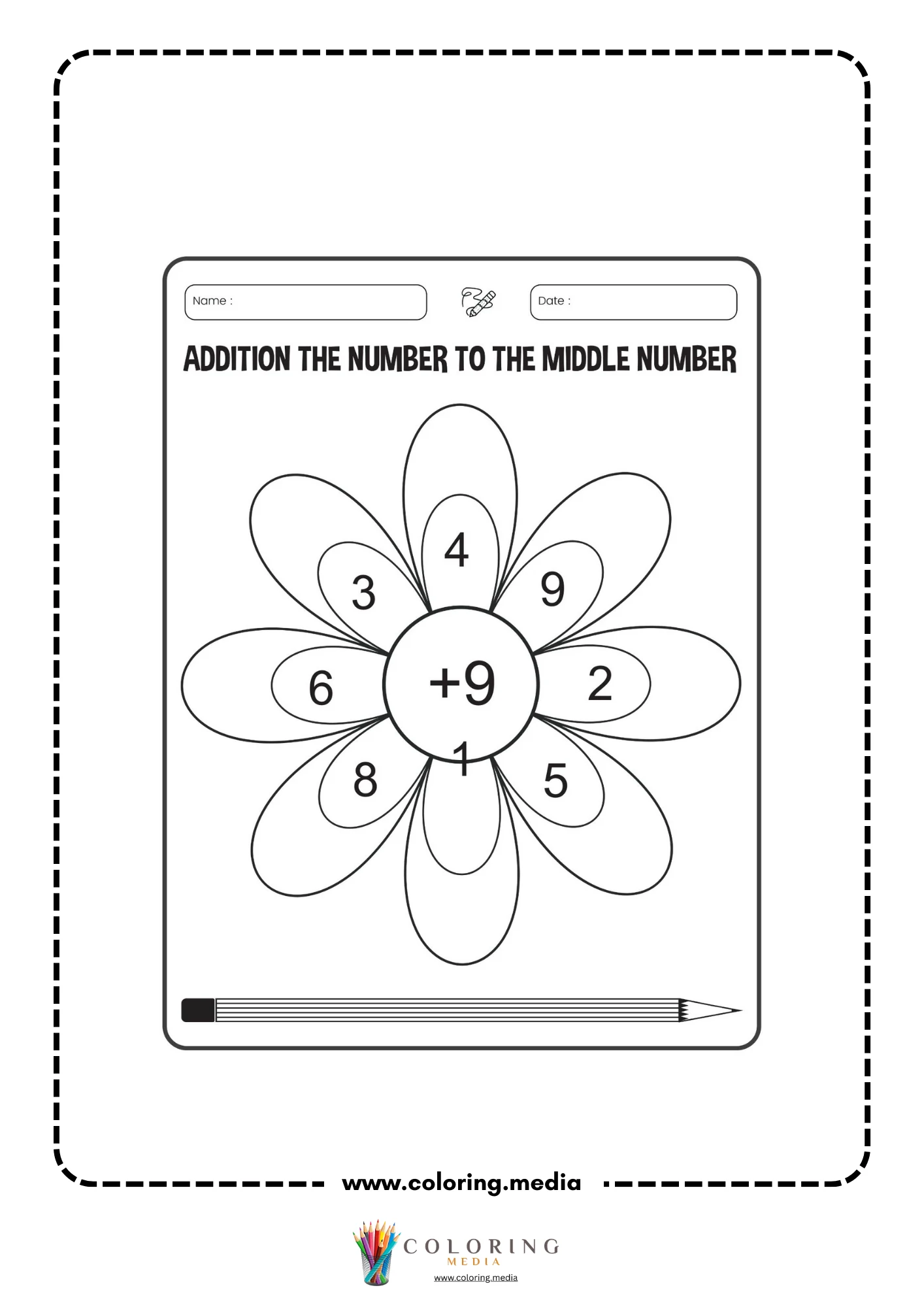
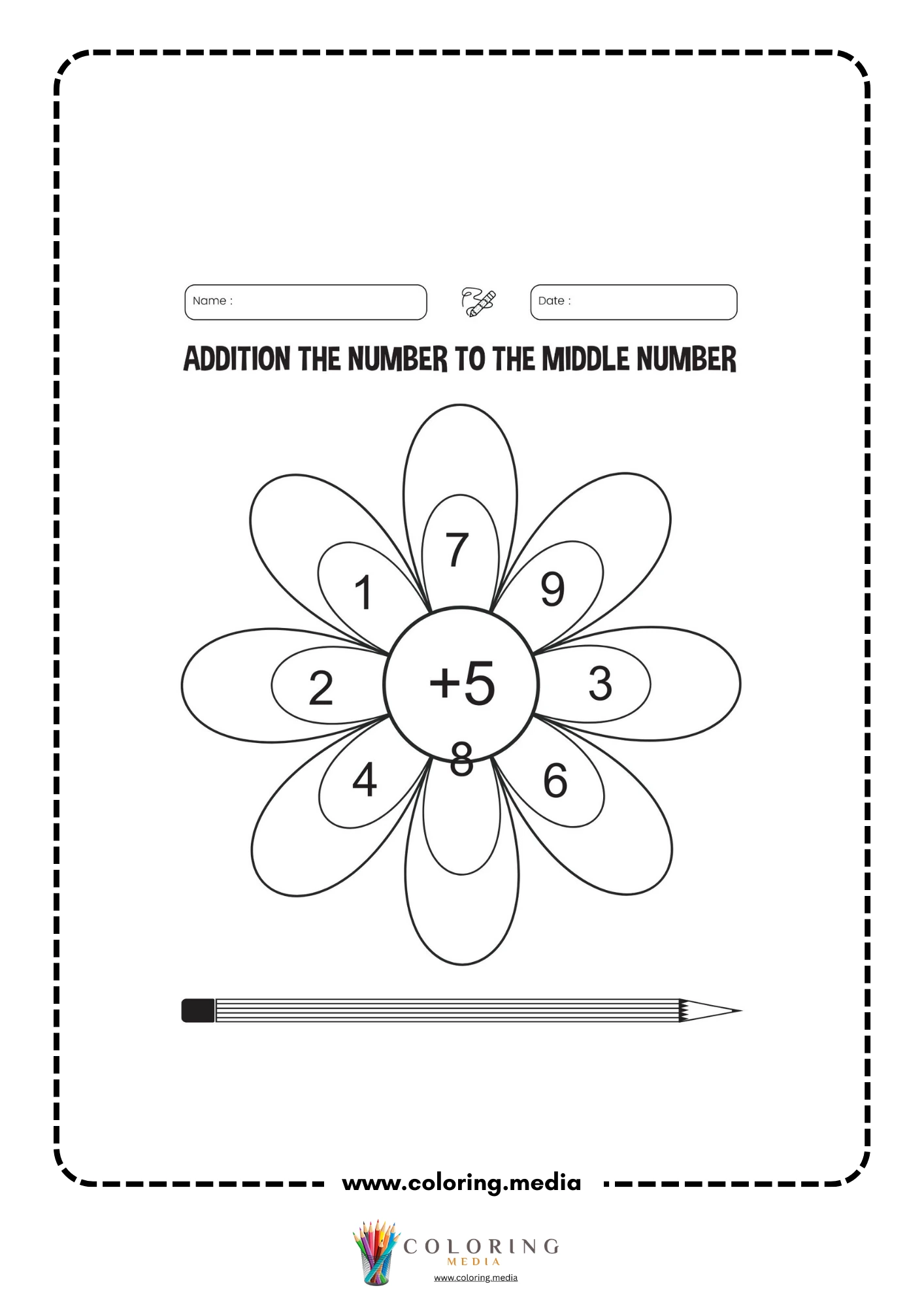
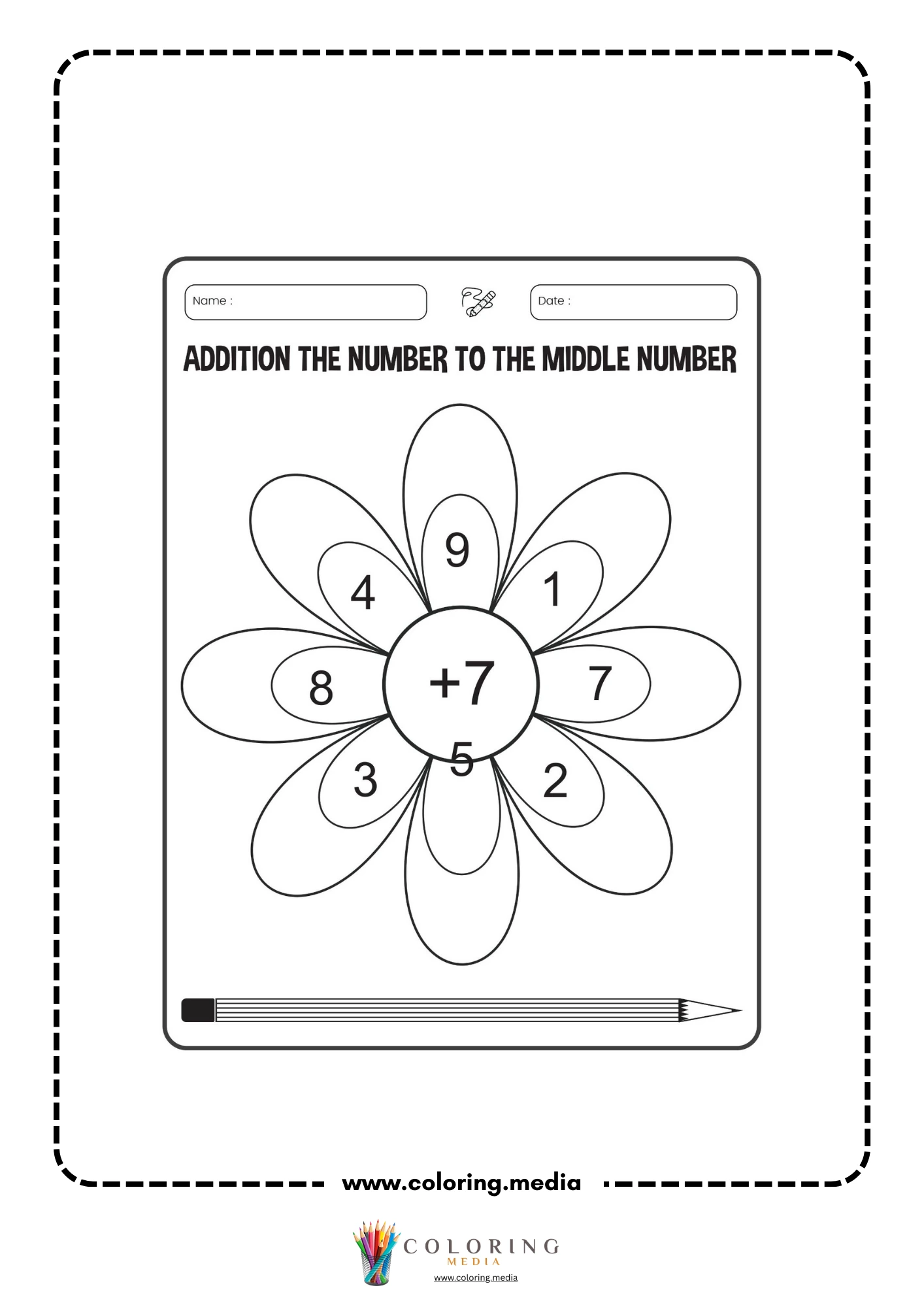
This collection includes 30 printable addition math coloring pages featuring solve-and-color worksheets that pair addition equation practice with a decorative geometric flower design. The equations cover a range of difficulty levels, from single-digit sums within 5 through progressively larger addition problems, making the set useful across an entire school year as skills build. Each page is formatted consistently so kids know exactly what to expect, reducing the cognitive load of figuring out the instructions and letting them focus on the math. Pages print cleanly on standard US Letter or A4 paper at 100% scale.
Who Are These Addition Math Coloring Pages Best For?
Kindergarteners working on addition within 5 or 10 will find the early pages in this set well-suited to where they are. The equations use single digits, the answer boxes are generously sized for small handwriting, and the coloring reward at the end of each page feels immediately satisfying. There is no ambiguity about what to do — solve, then color — which is exactly the right amount of structure for kids who are still building independent work habits.
Early elementary students in grades 1 and 2 can move into the pages where sums grow larger. At this stage children are working toward automatic recall of addition facts, and the repetitive-but-rewarding format of these sheets supports that kind of fluency building without feeling punishing. The flower mandala center gives their hands something pleasing to do once the equations are done, which helps reluctant workers push through to completion.
In a classroom, these pages work well as morning warm-up activities, early finisher tasks, or take-home practice that does not feel like a standard boring worksheet. Homeschool families can use them as a low-prep way to rotate math practice into a weekly art block.
Interesting Addition Facts to Share While Coloring
Addition is one of the oldest things humans ever wrote down. Ancient Egyptians recorded addition calculations on papyrus scrolls more than 3,500 years ago. They used a system without a zero, which made carrying over in their equations much trickier than it is for us today.
The plus sign (+) is only about 600 years old. It appeared in a German manuscript around 1489. Before that, mathematicians wrote out the word for “and” or used abbreviations. The equals sign (=) came along even later, in 1557.
Your brain does not learn all addition facts the same way. Facts involving zero or one are learned almost immediately because there is a simple rule. Facts like 7+8 take longer because there is no shortcut — your brain has to actually memorize the pair through repeated exposure, which is exactly what practice sheets are for.
Doubles are always the easiest facts to remember. 4+4, 6+6, 8+8 — because both numbers are identical, your memory treats them differently than mixed pairs. Once you know your doubles cold, you can use them as stepping stones: 6+7 is just one more than 6+6.
The order of the numbers in addition does not change the answer. This is called the commutative property, and it cuts the number of facts you need to memorize roughly in half. If you know 3+8=11, you already know 8+3=11 for free.
Creative Addition Coloring and Craft Ideas
Fact Family Flip Book Pick one page’s equations and write the matching subtraction facts on the back of the sheet to make a two-sided fact family reference card.
Race to Ten Game Two kids each take a blank sheet of paper and roll a die. They add their rolls together and color that many petals on a hand-drawn flower. First to fill ten petals wins.
Color-Code by Answer Before printing, tell kids they must use one specific color for all answers that equal 10, another color for answers less than 10, and a third for answers greater than 10. The mandala becomes a pattern based on math logic.
Display Wall of Mastery Hang completed sheets on a dedicated math wall as a visible record of progress. Kids can see their stack growing as they move through the difficulty levels across the 30 pages.
Missing Addend Challenge Cover one number in each equation with a small sticky note before handing the sheet to a student who has already mastered standard addition — now they are solving for the missing number instead.
Timed Coloring Sprint Set a two-minute timer for the equations only, then let kids take as long as they want on the coloring. Tracking how many problems they finish correctly in two minutes over several sessions shows real fluency growth.
Partner Check Have two students each complete the same page independently, then compare answers before coloring. Any disagreements get worked out together before either child picks up a crayon.
Crayon Gradient Art Instead of choosing one color per section of the flower, blend two crayons together — light pressure then heavy — to create gradient petals. It adds an art lesson to the math practice with zero extra materials.
How to Print These Addition Math Coloring Pages
Download any page as a PDF and print at 100% scale on standard US Letter or A4 paper — do not select “fit to page” or the answer boxes may shrink. Standard copy paper works fine, though a slightly heavier 24 lb paper holds crayon and colored pencil better without the color bleeding through to the table. If your printer is low on ink, the grayscale setting prints cleanly since the worksheets are already black-and-white line art.
Explore More Math Coloring Pages
If you enjoyed these pages, you may also like:
Subtraction Math Coloring Pages
Math Activity Coloring Pages
Counting Fruits Coloring Pages
Simple Fraction Coloring Pages
Rocket Math Worksheet Coloring Pages