
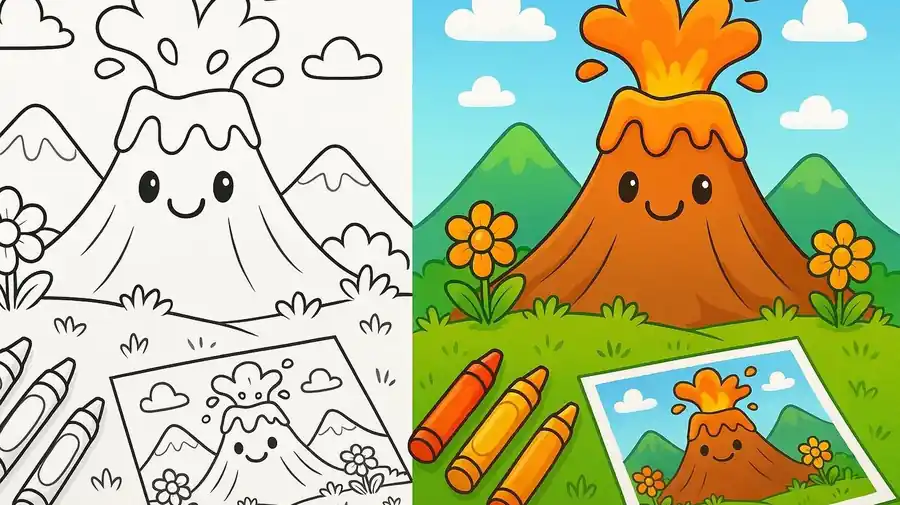
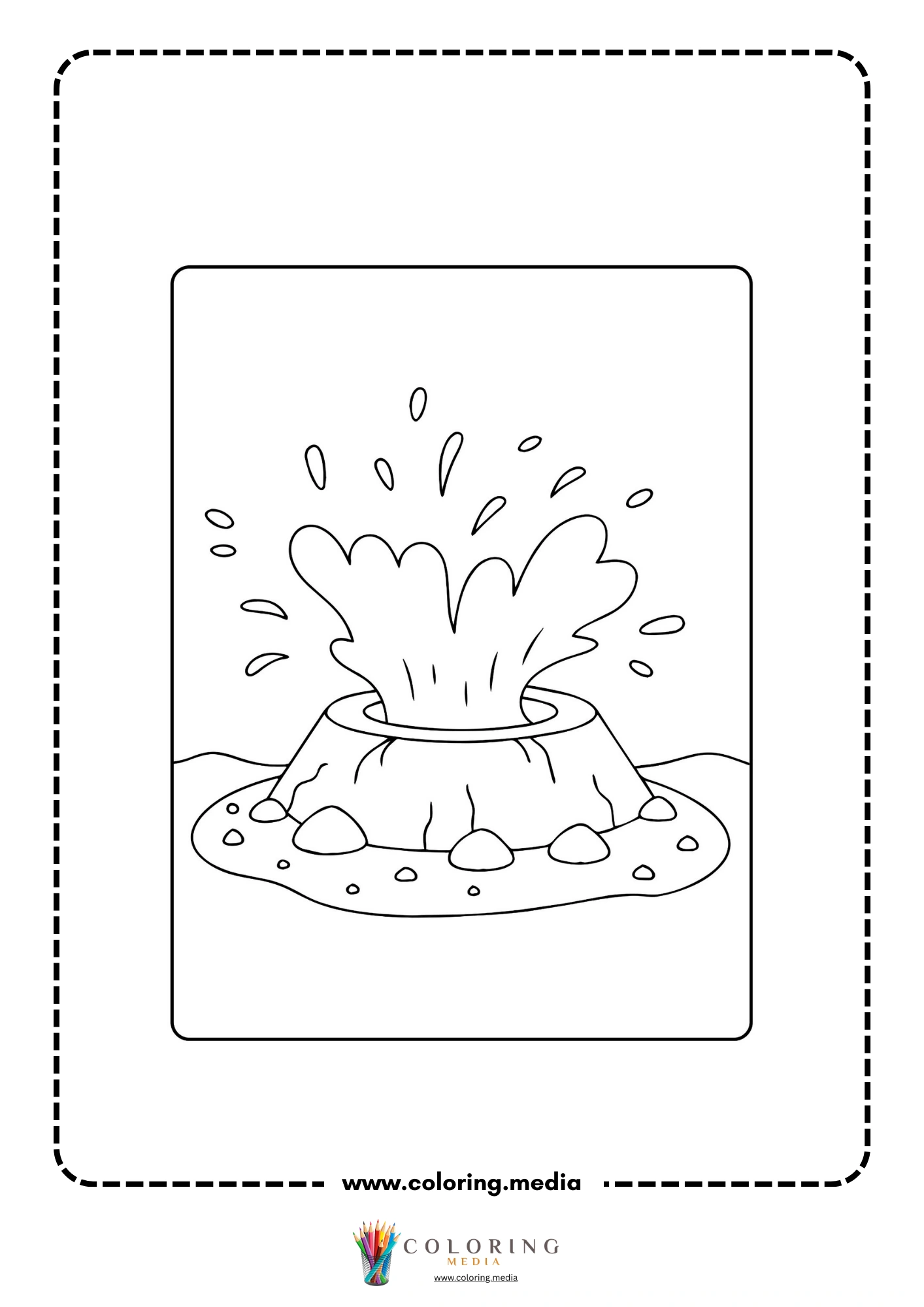
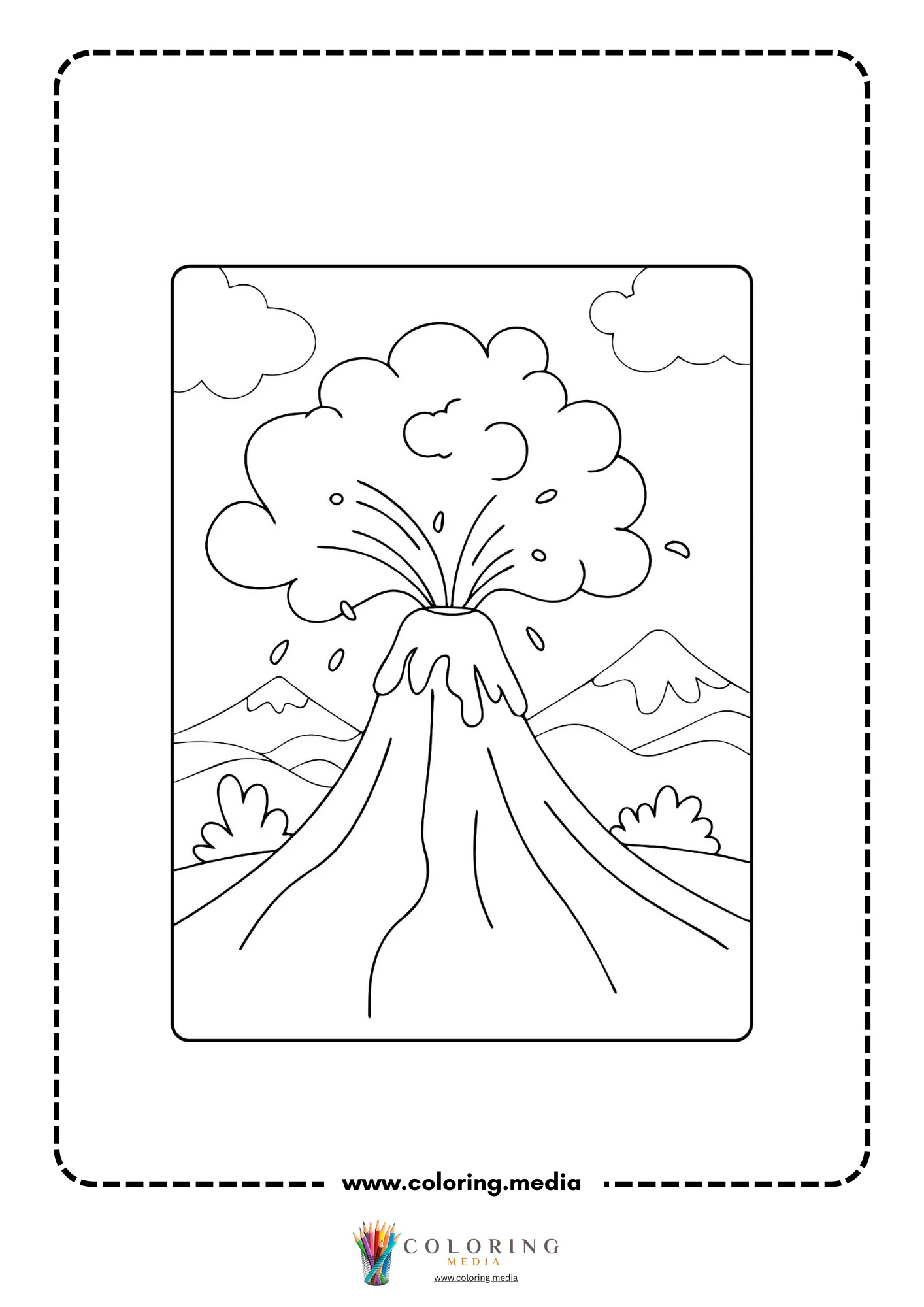
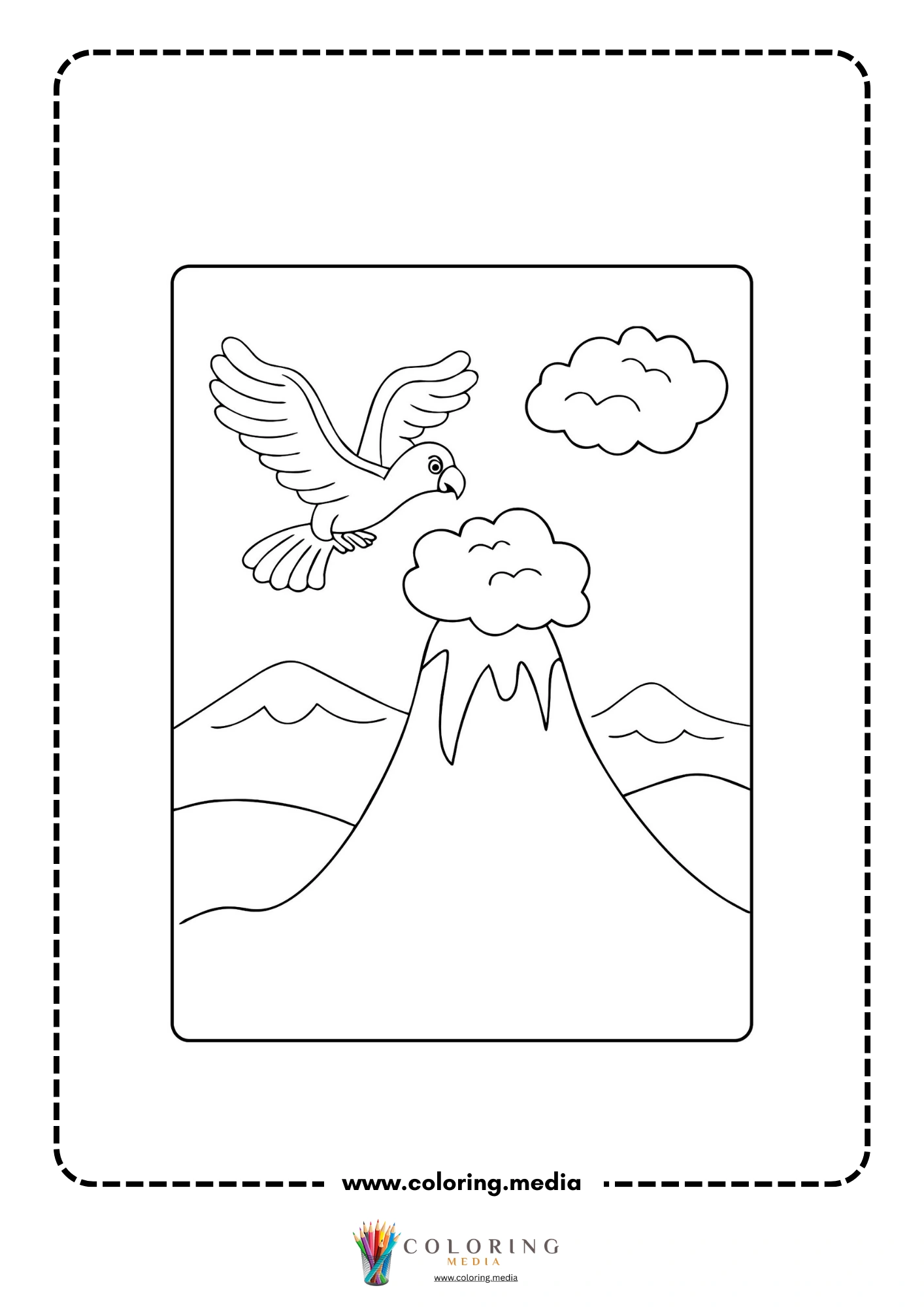
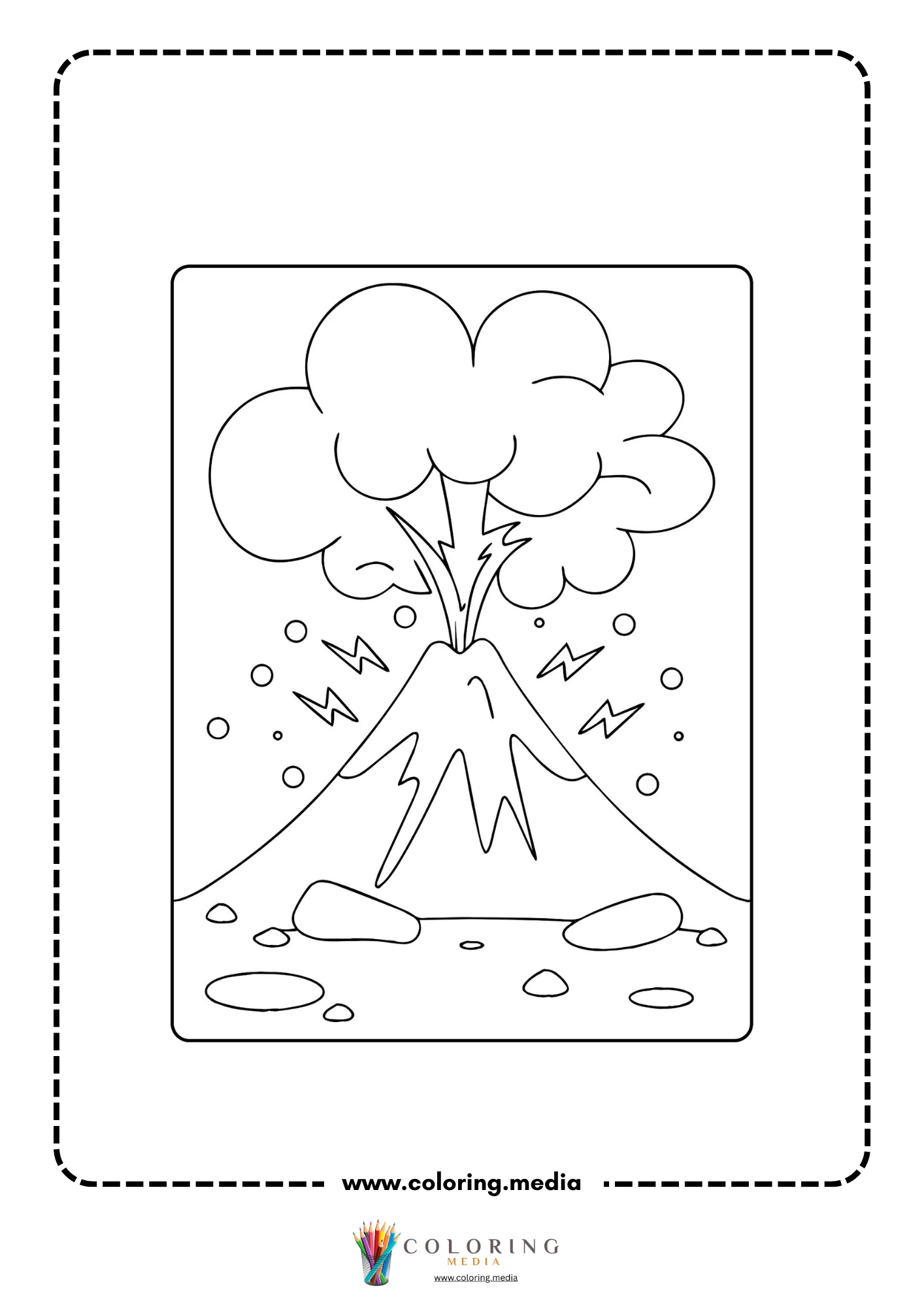
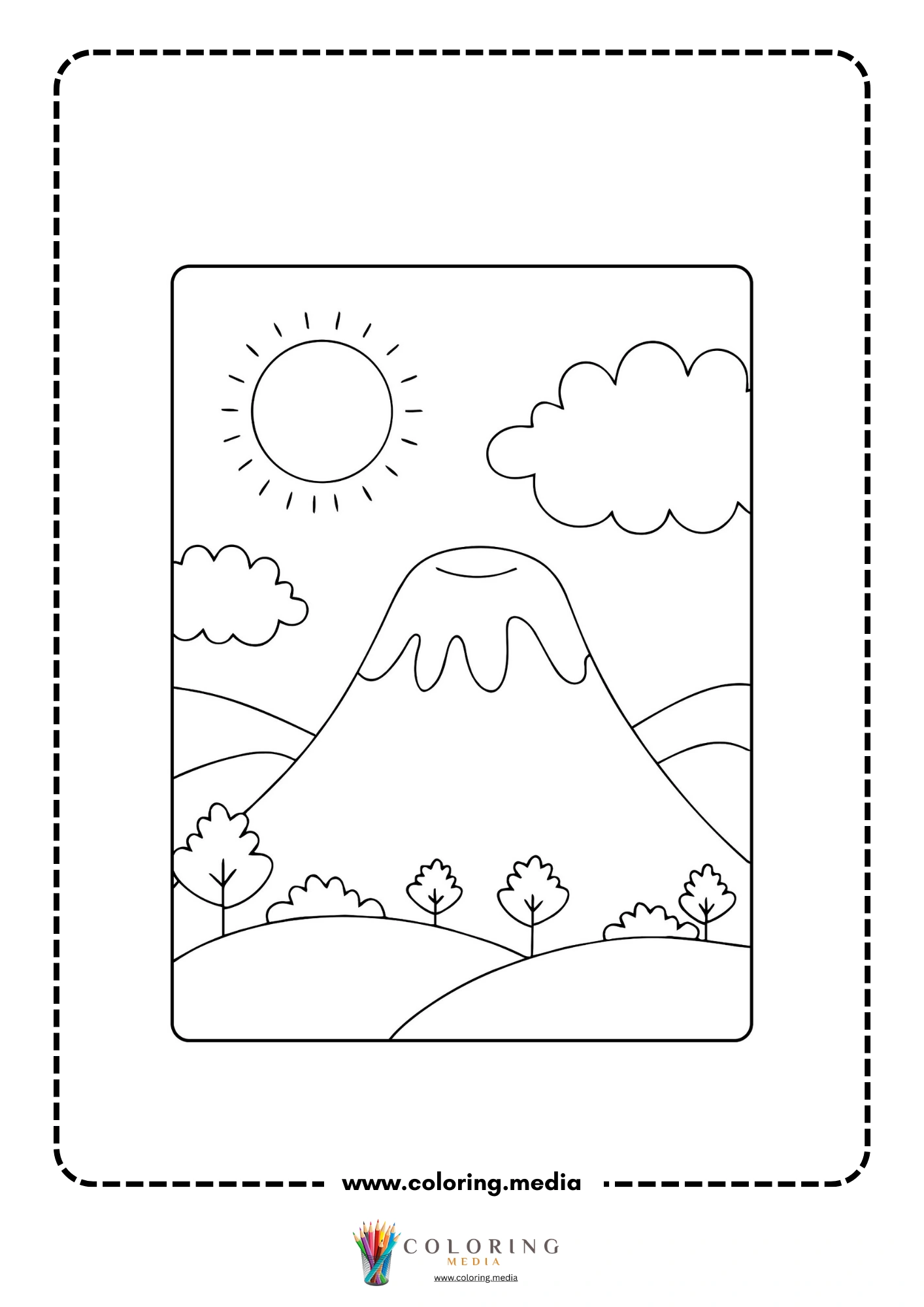
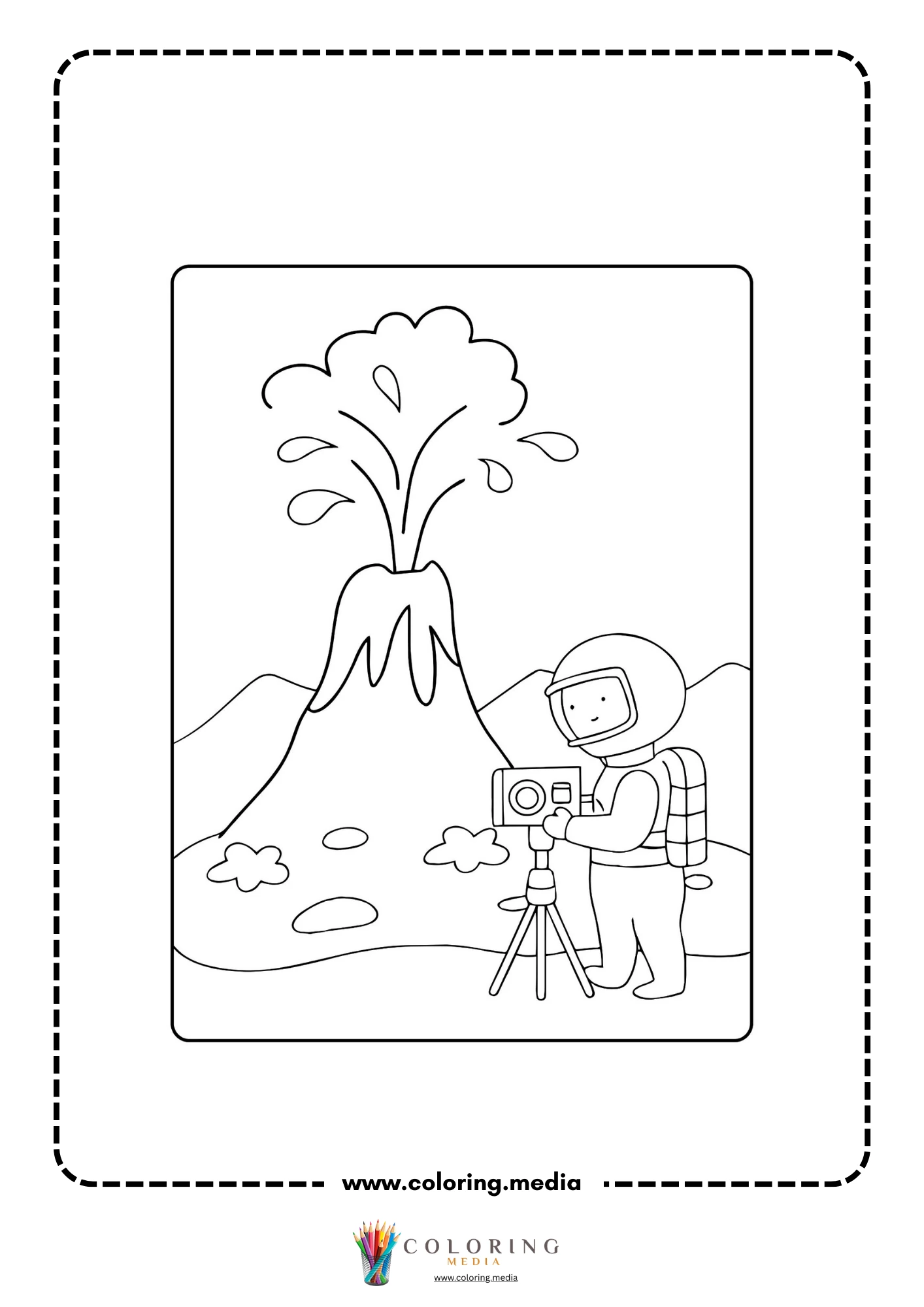
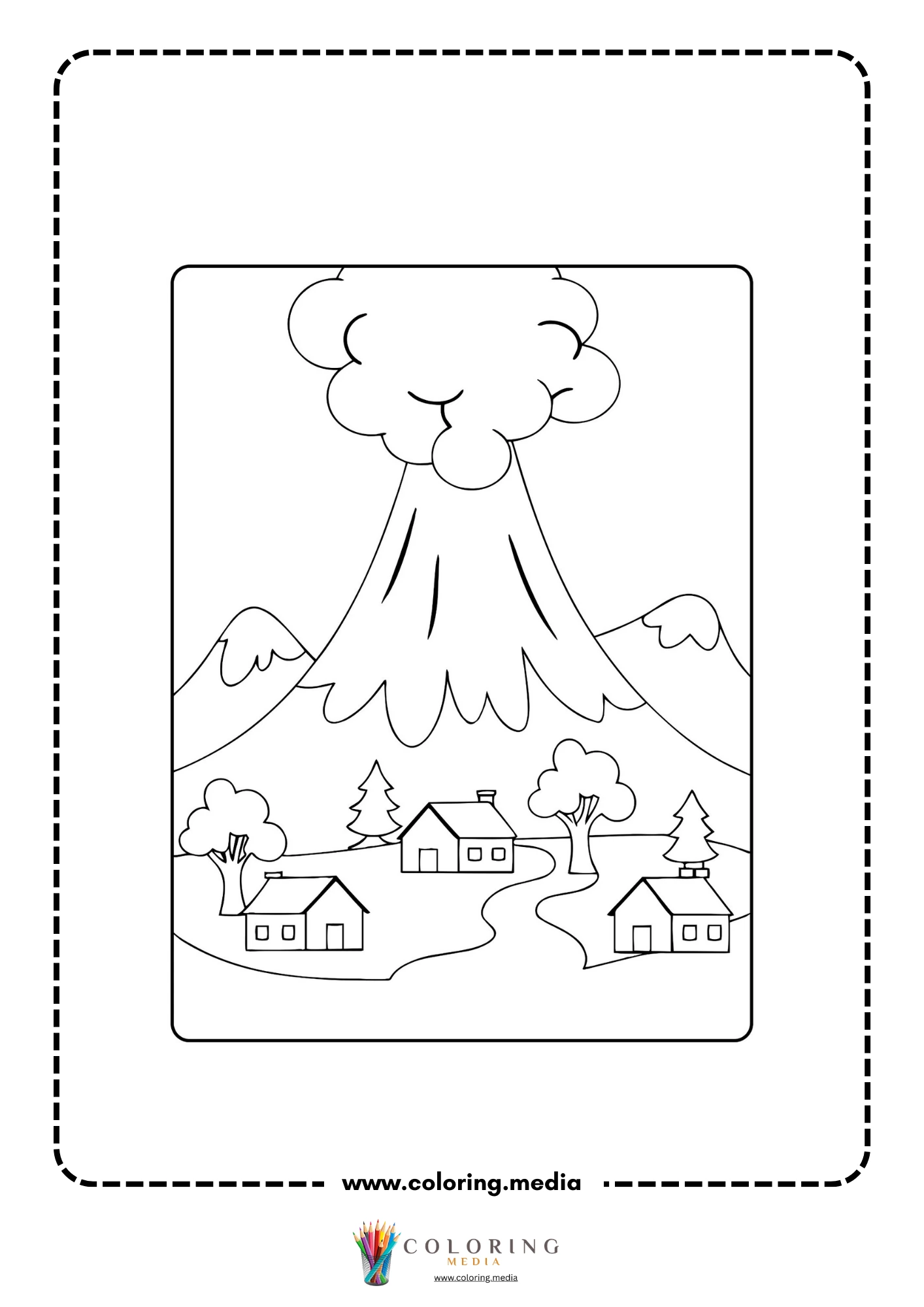
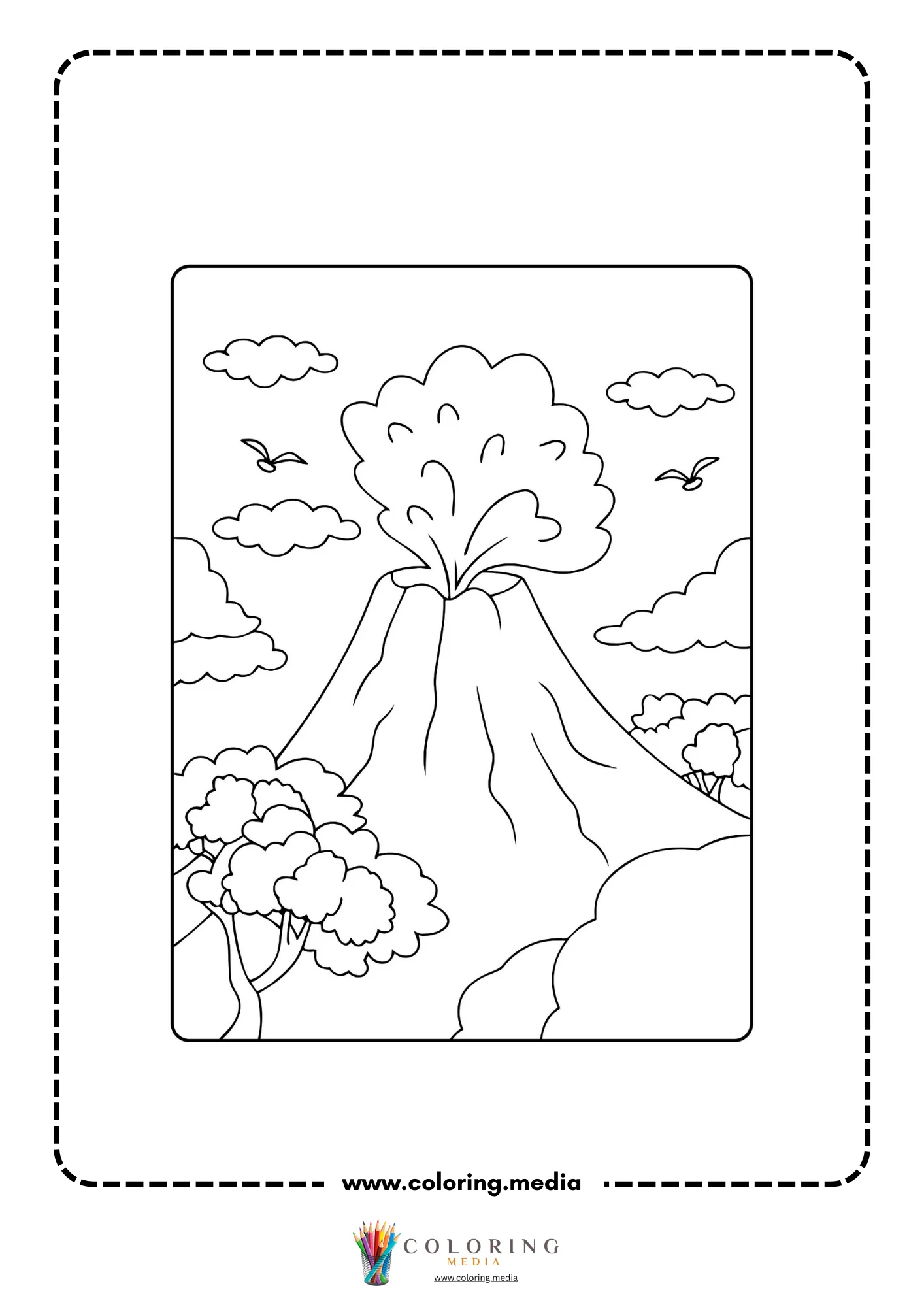
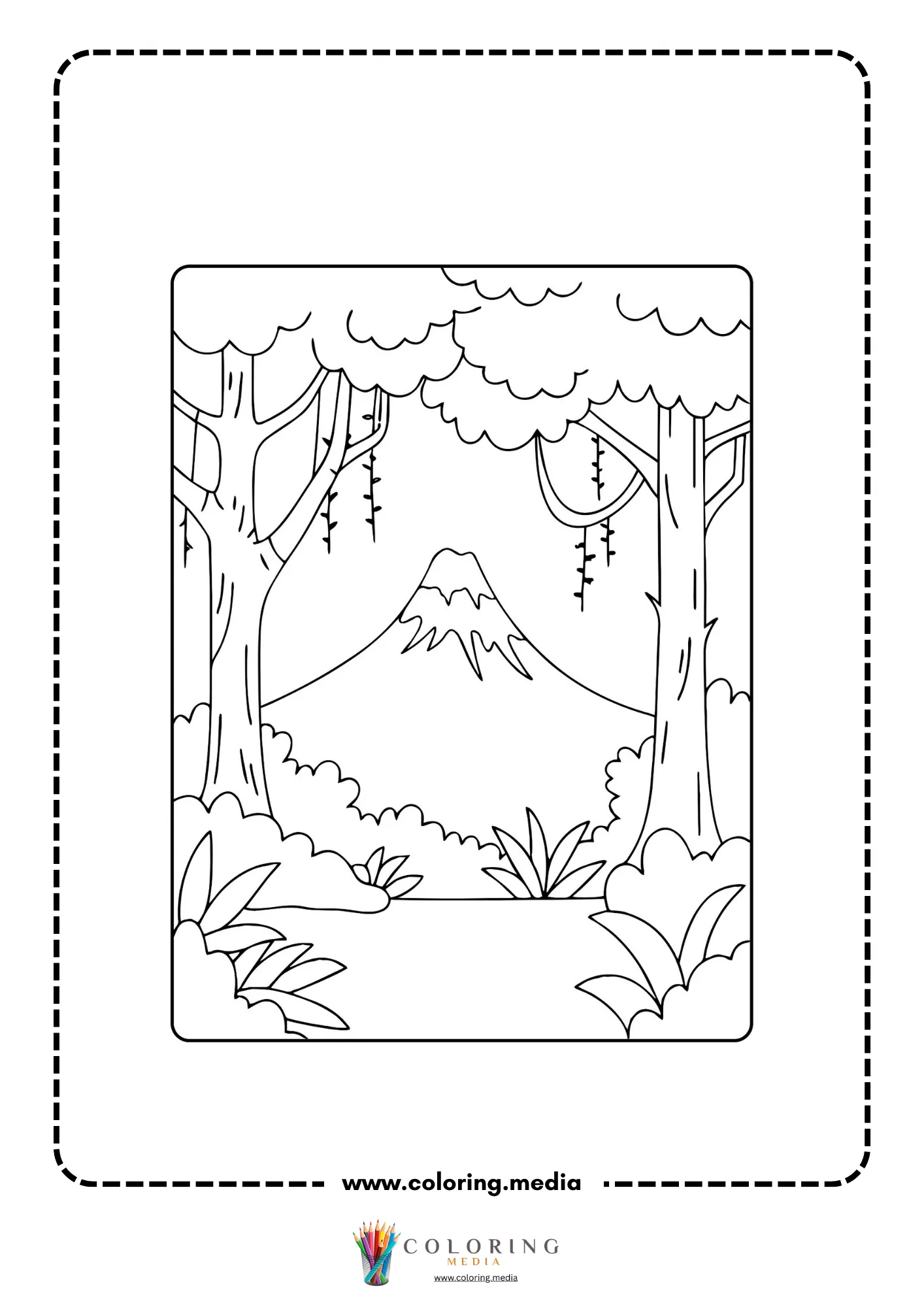
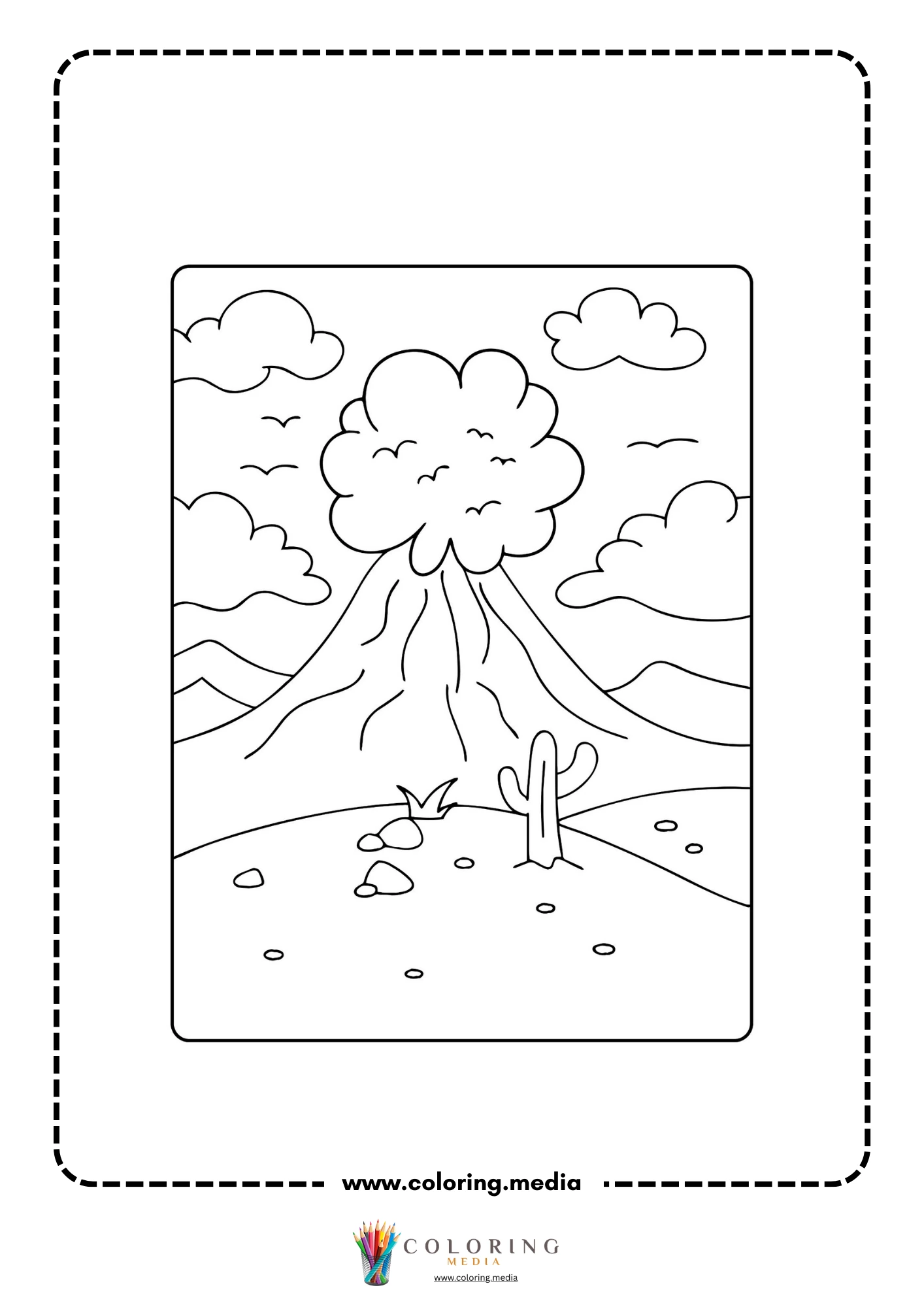
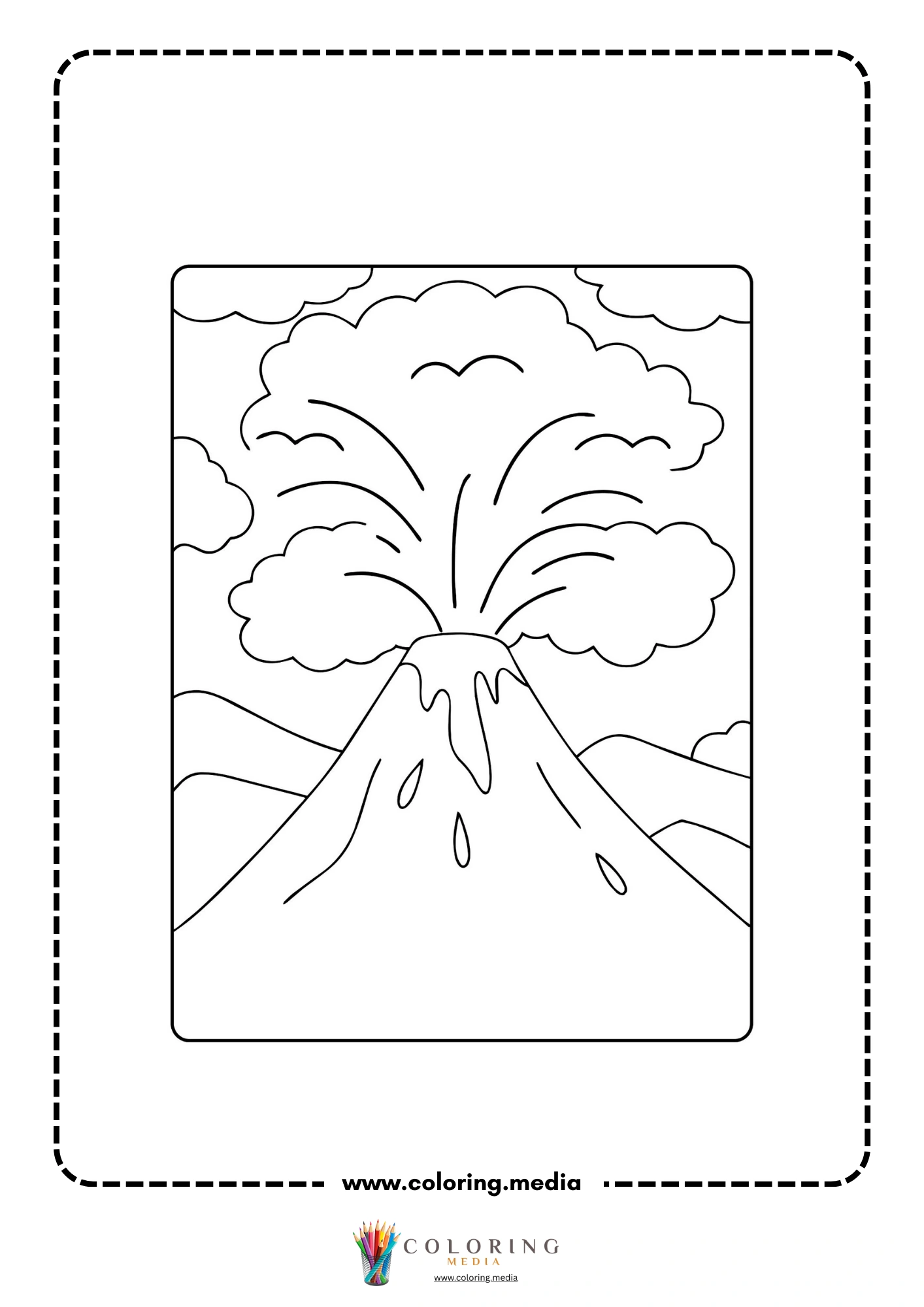
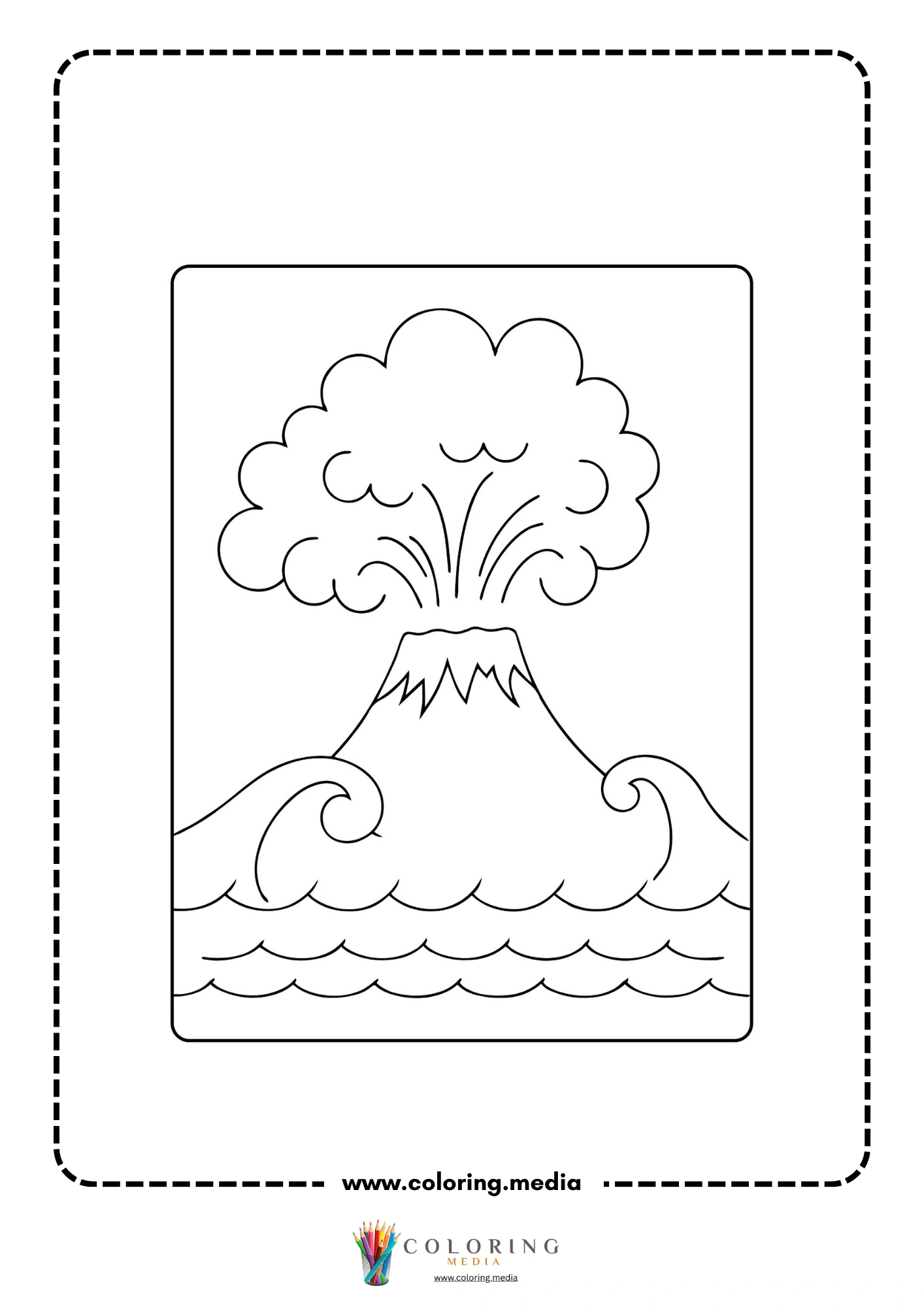
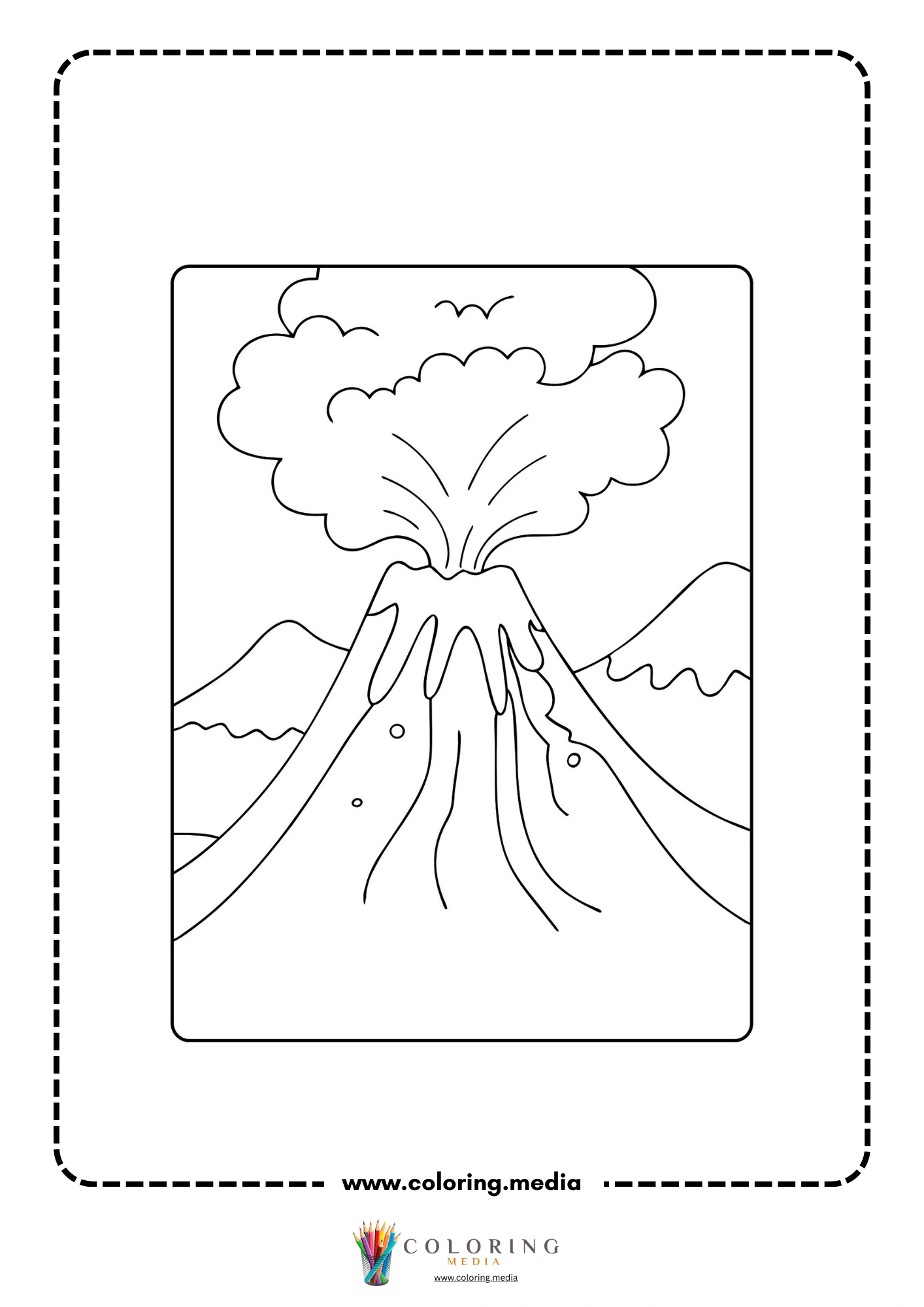
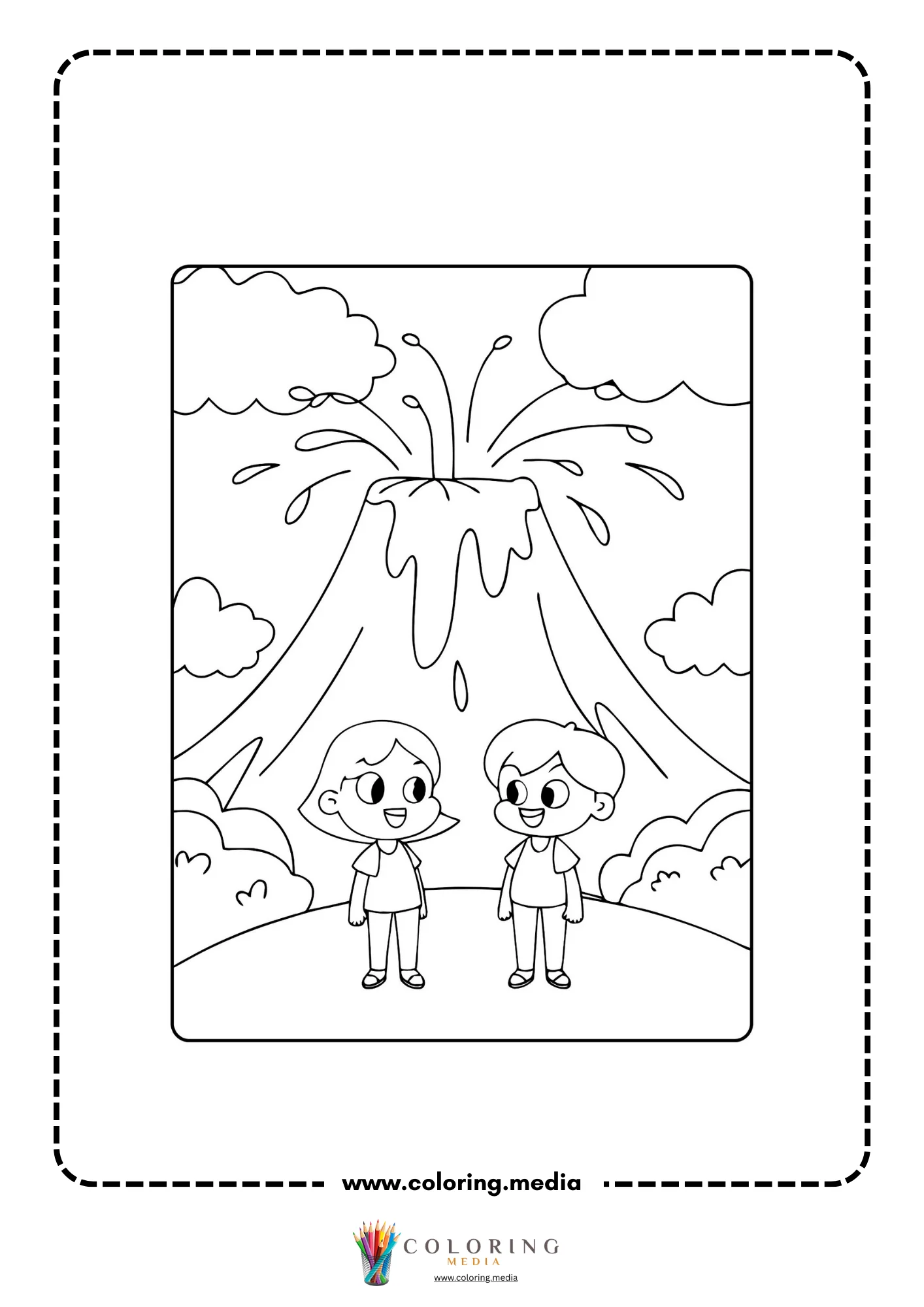
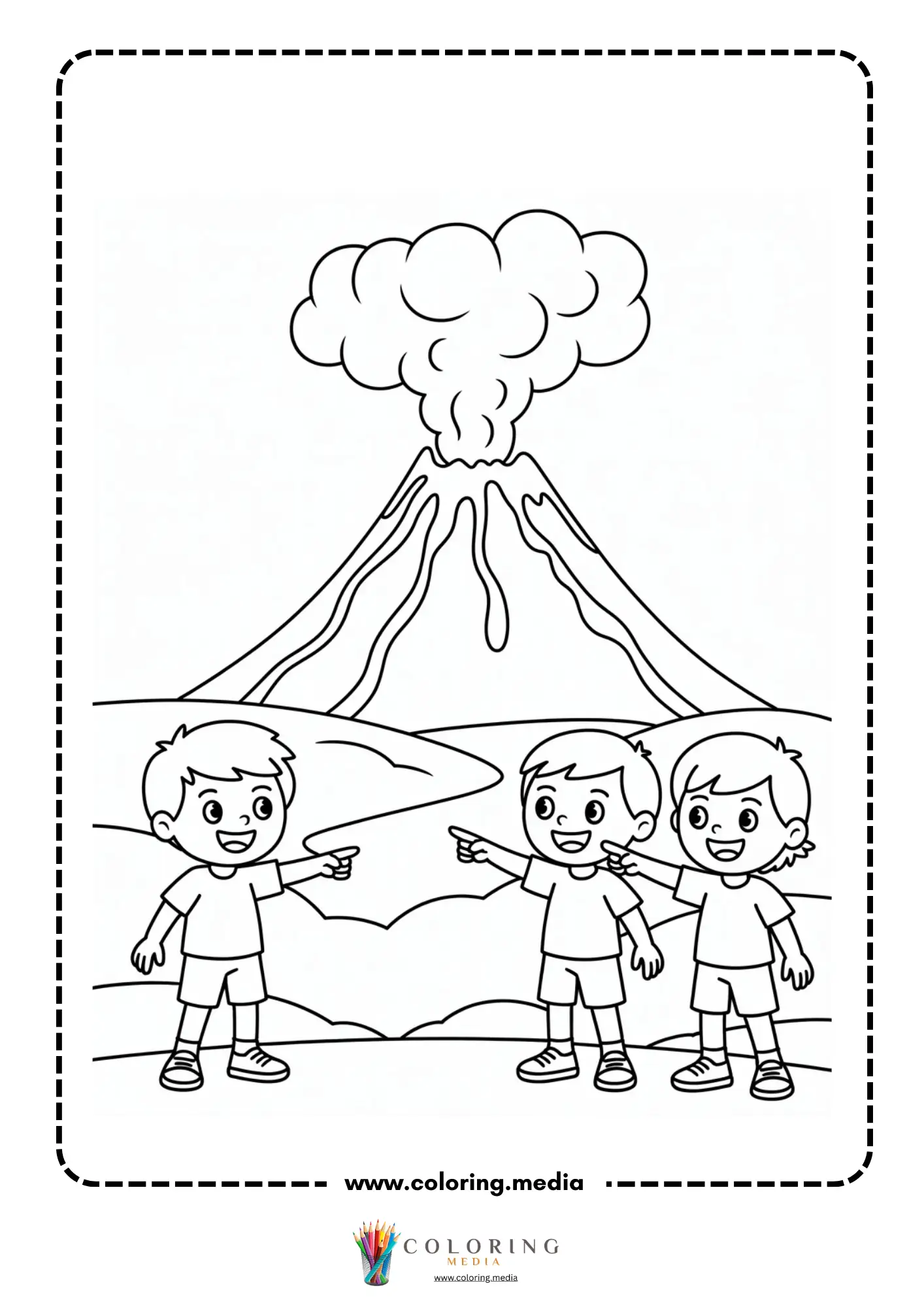
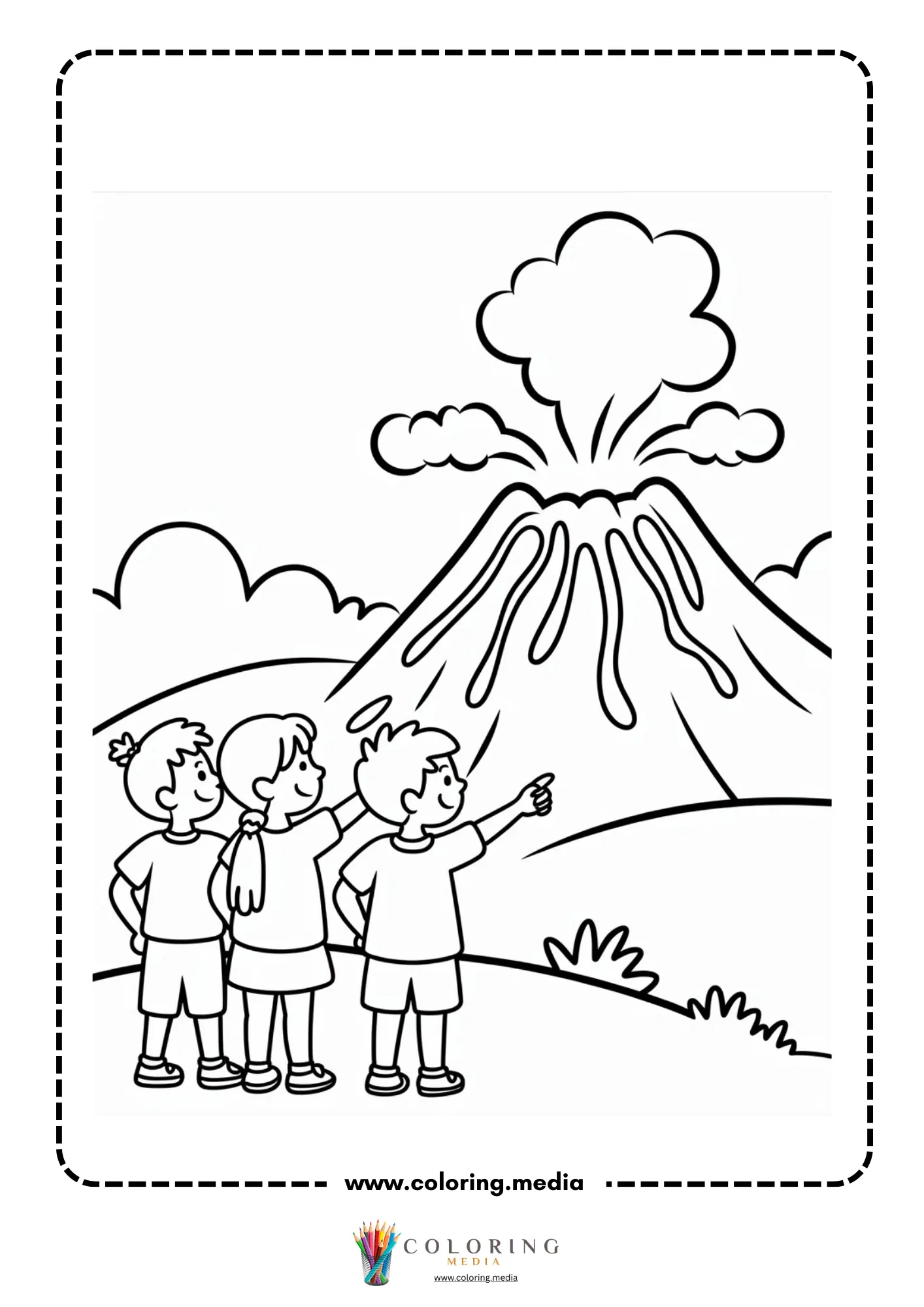
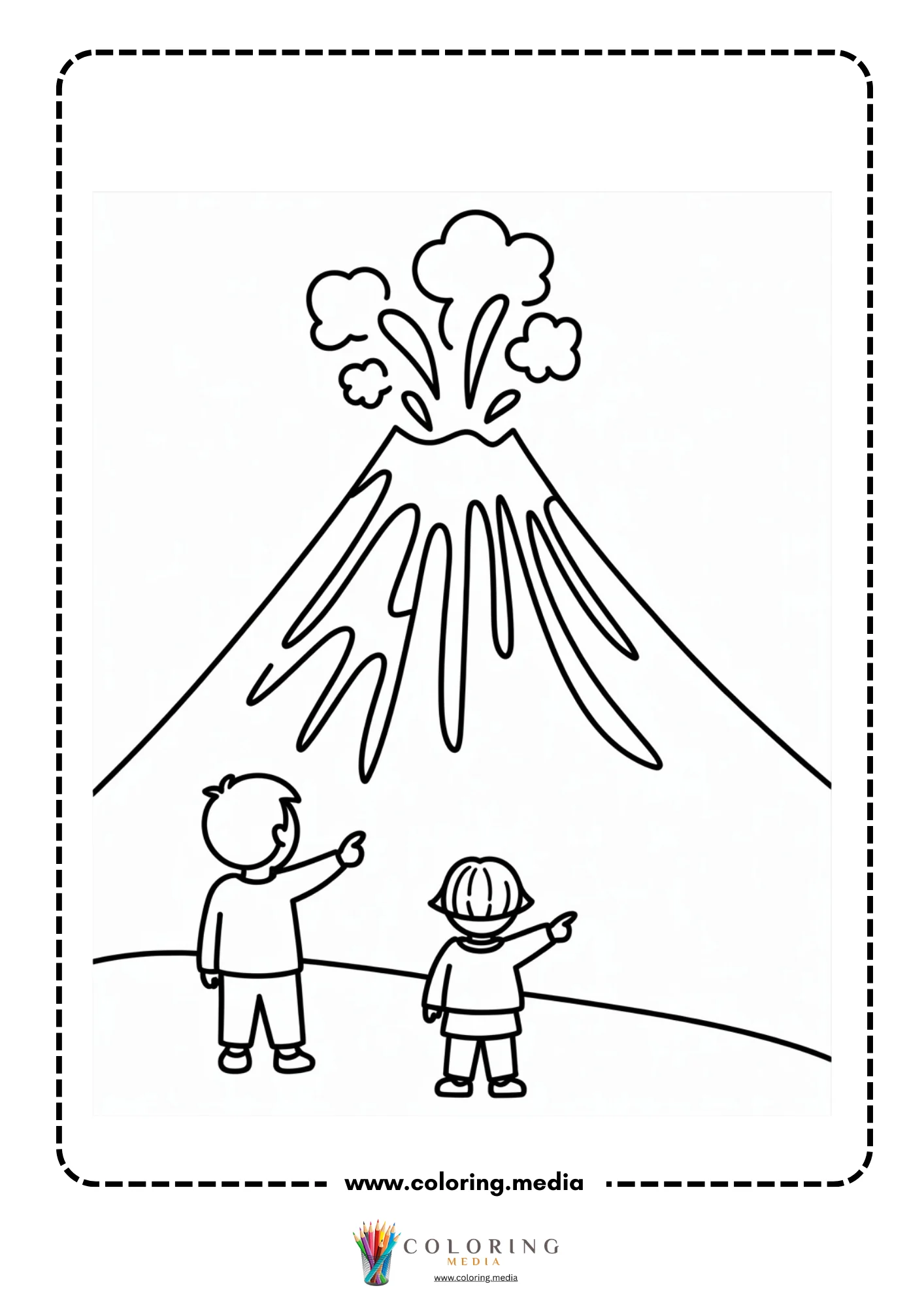
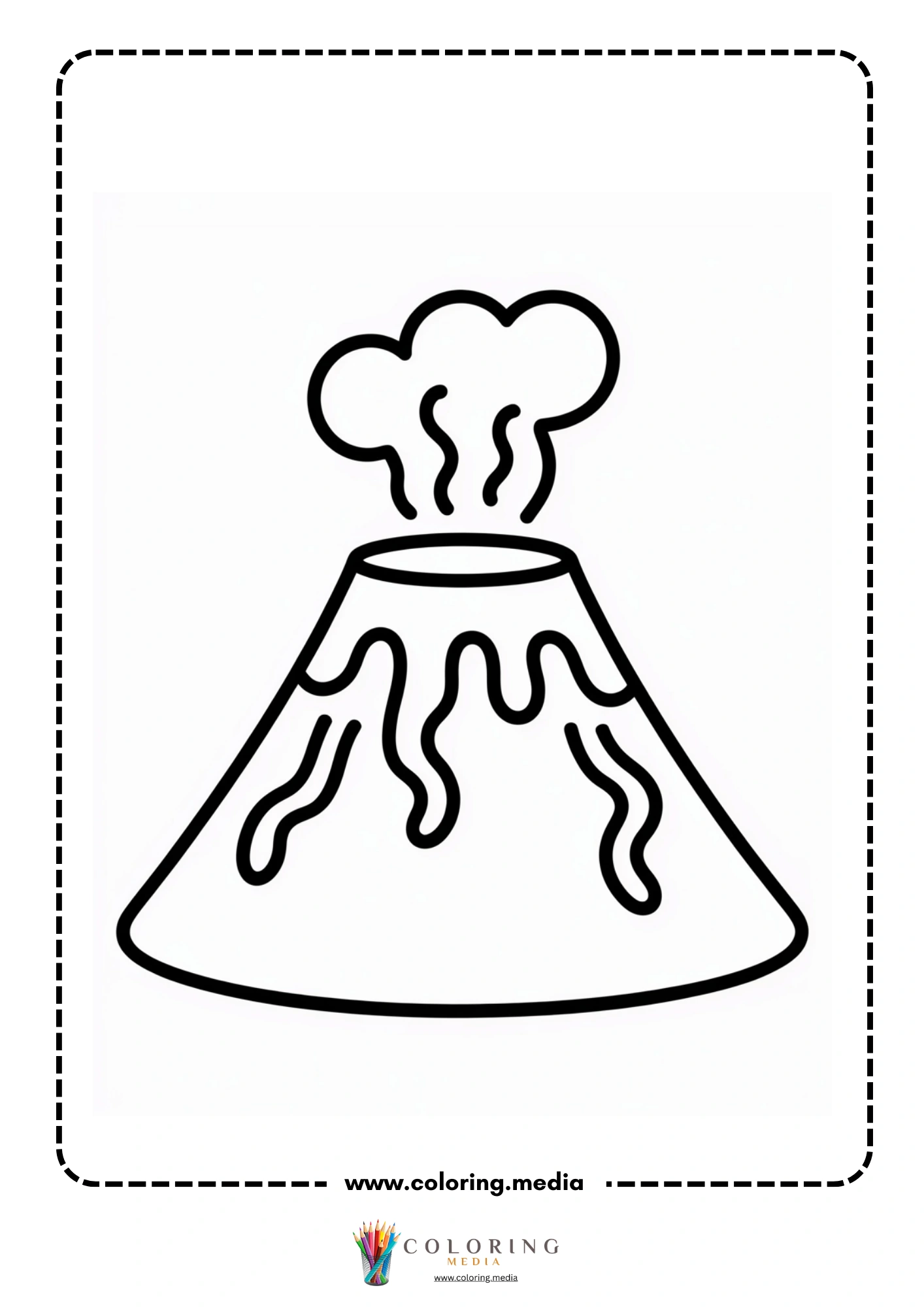
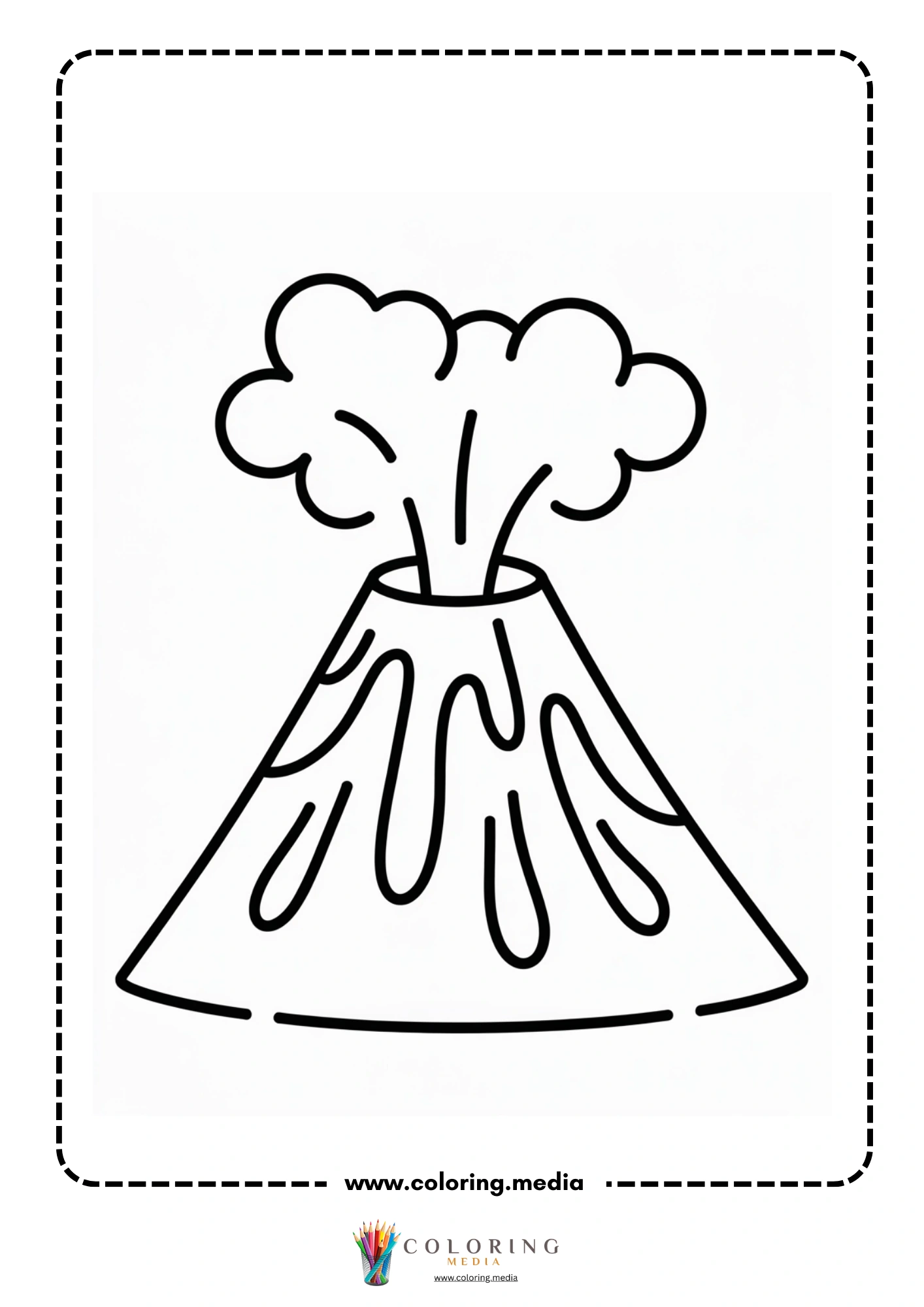
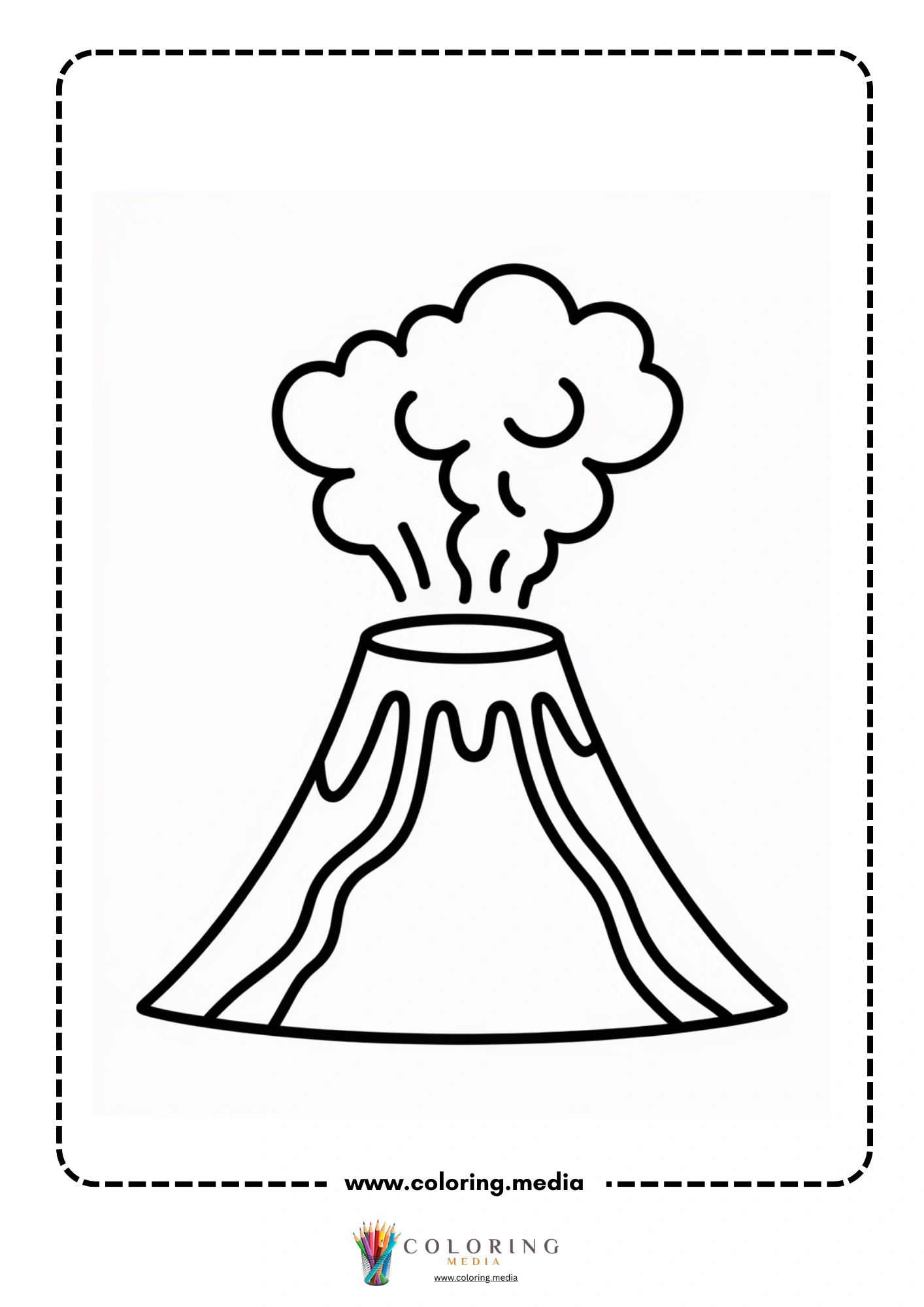
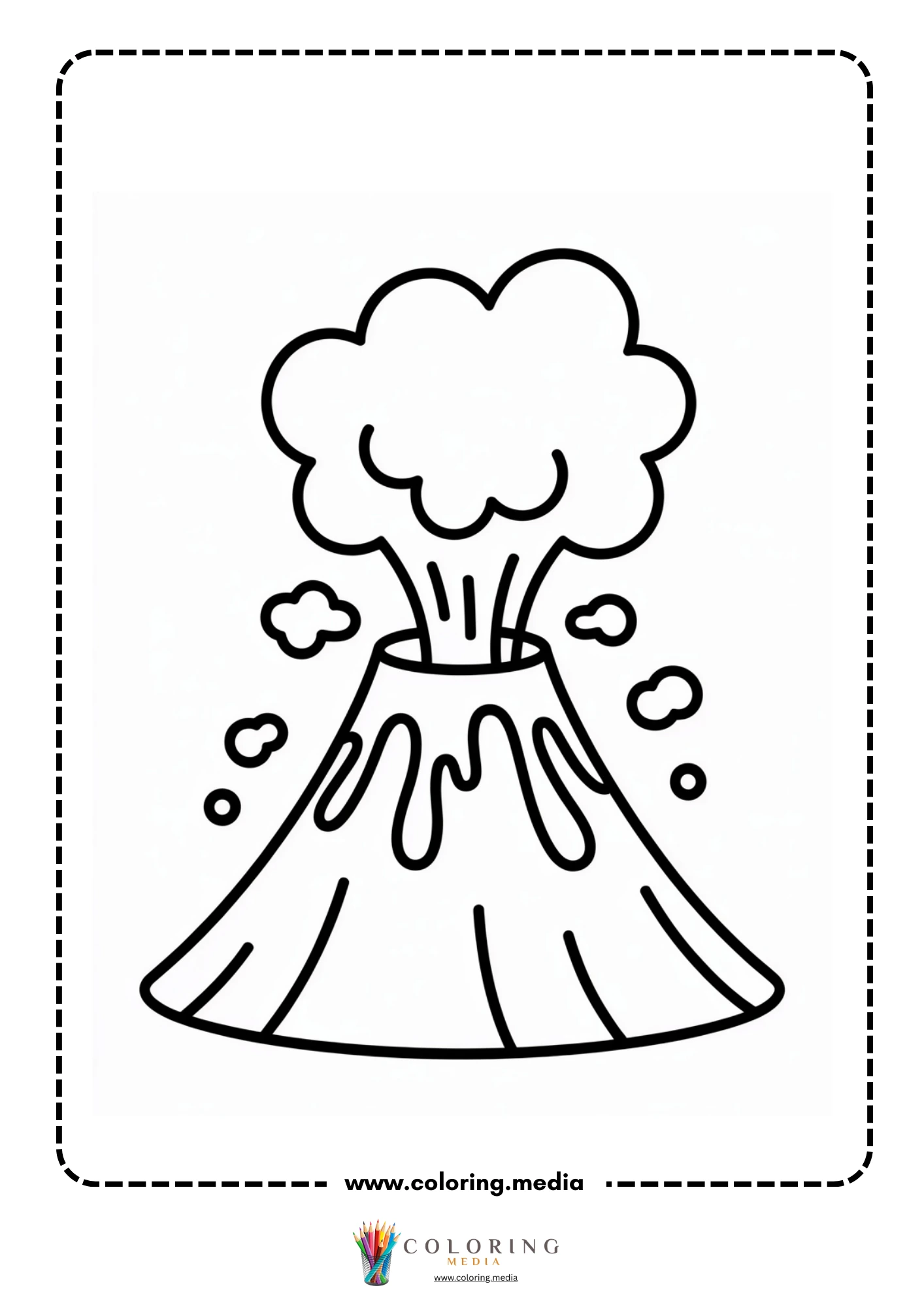
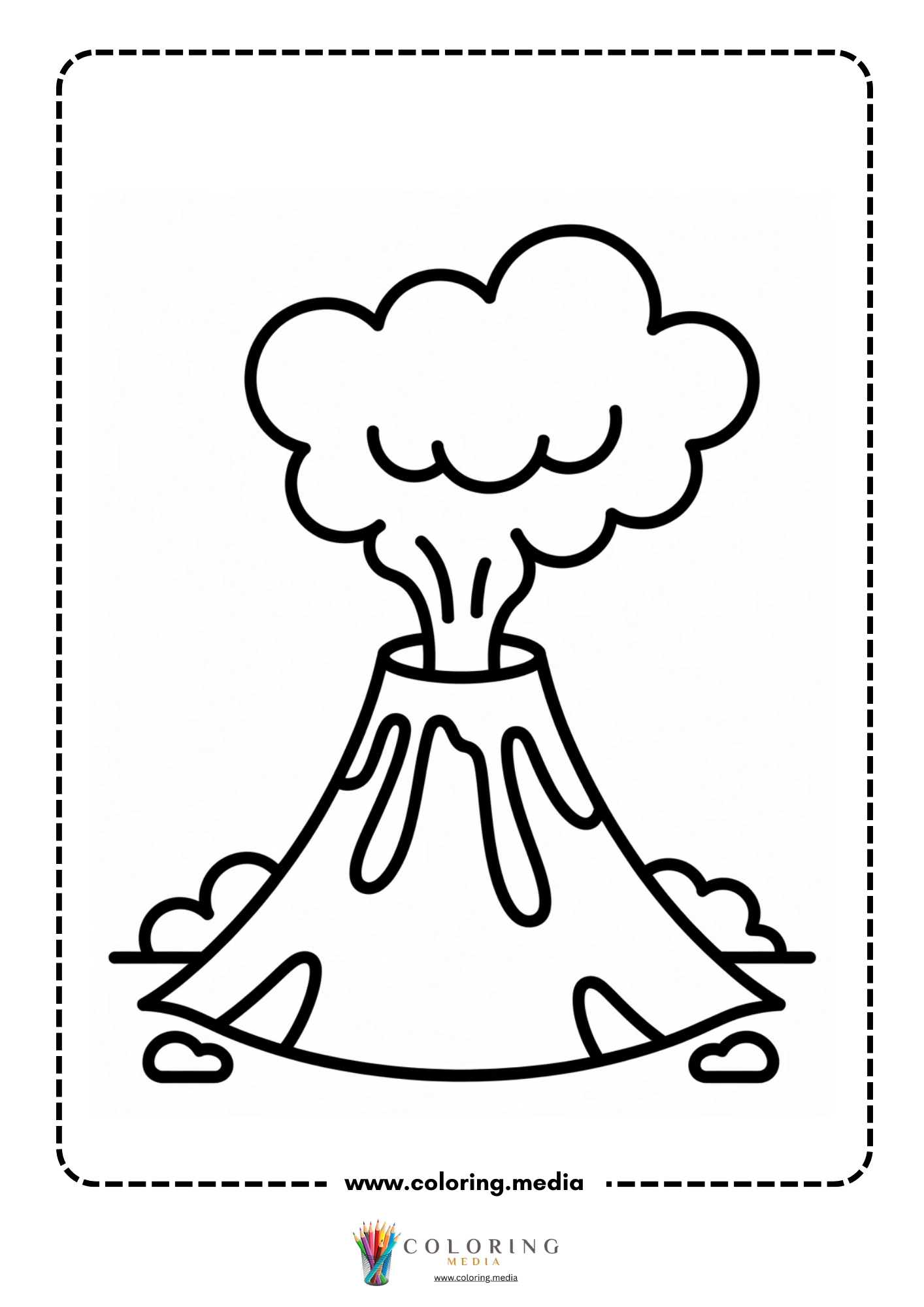
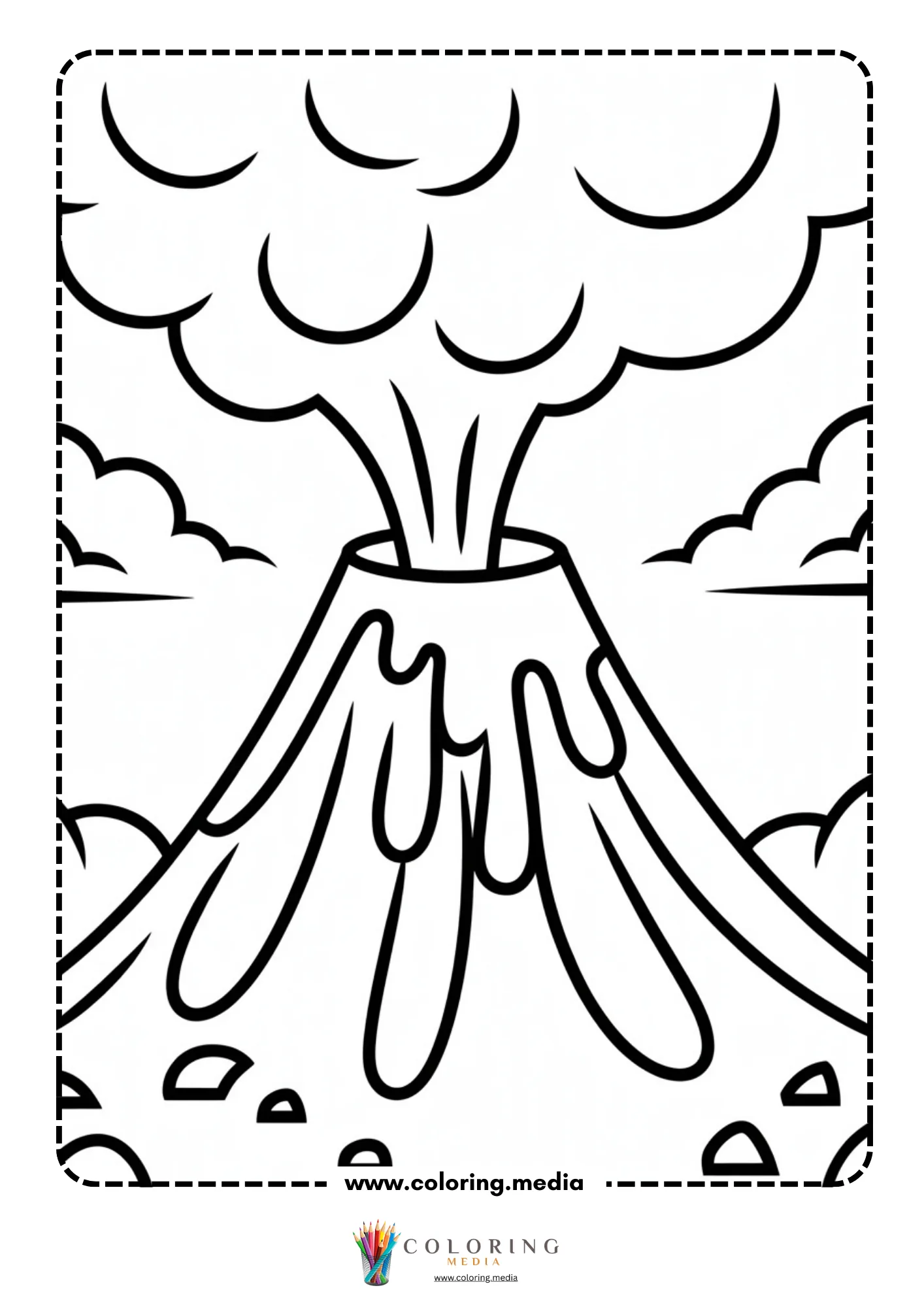
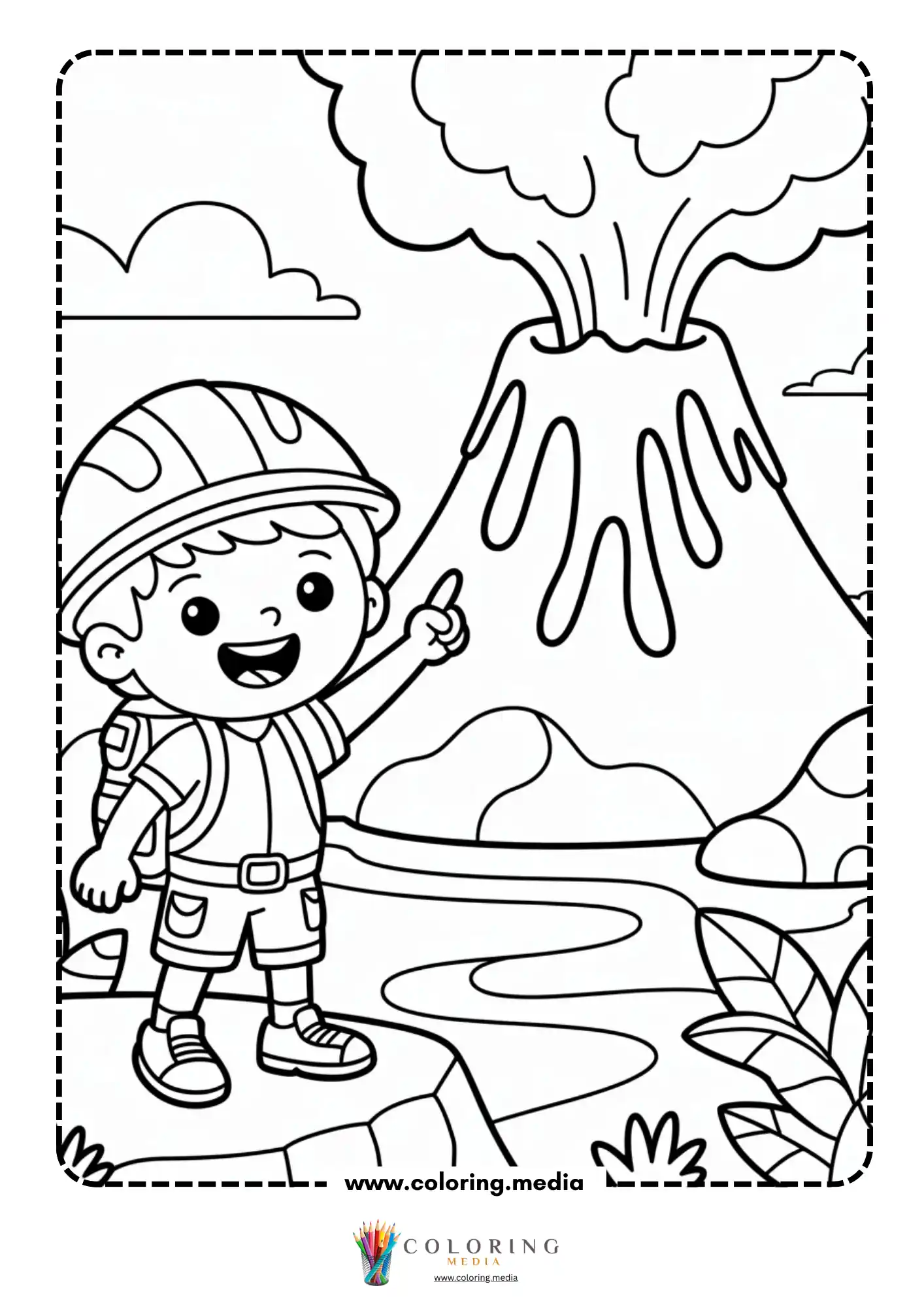
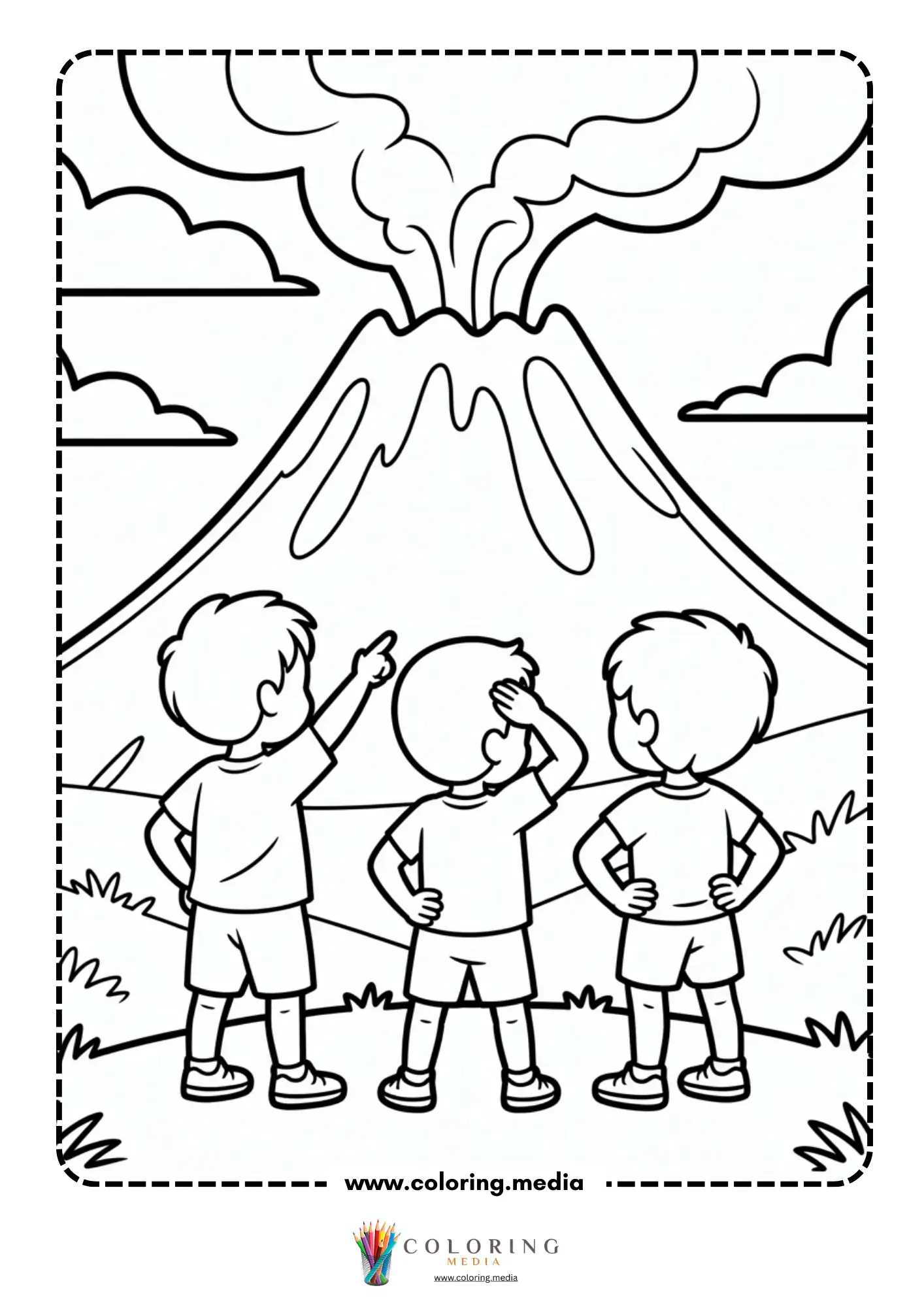
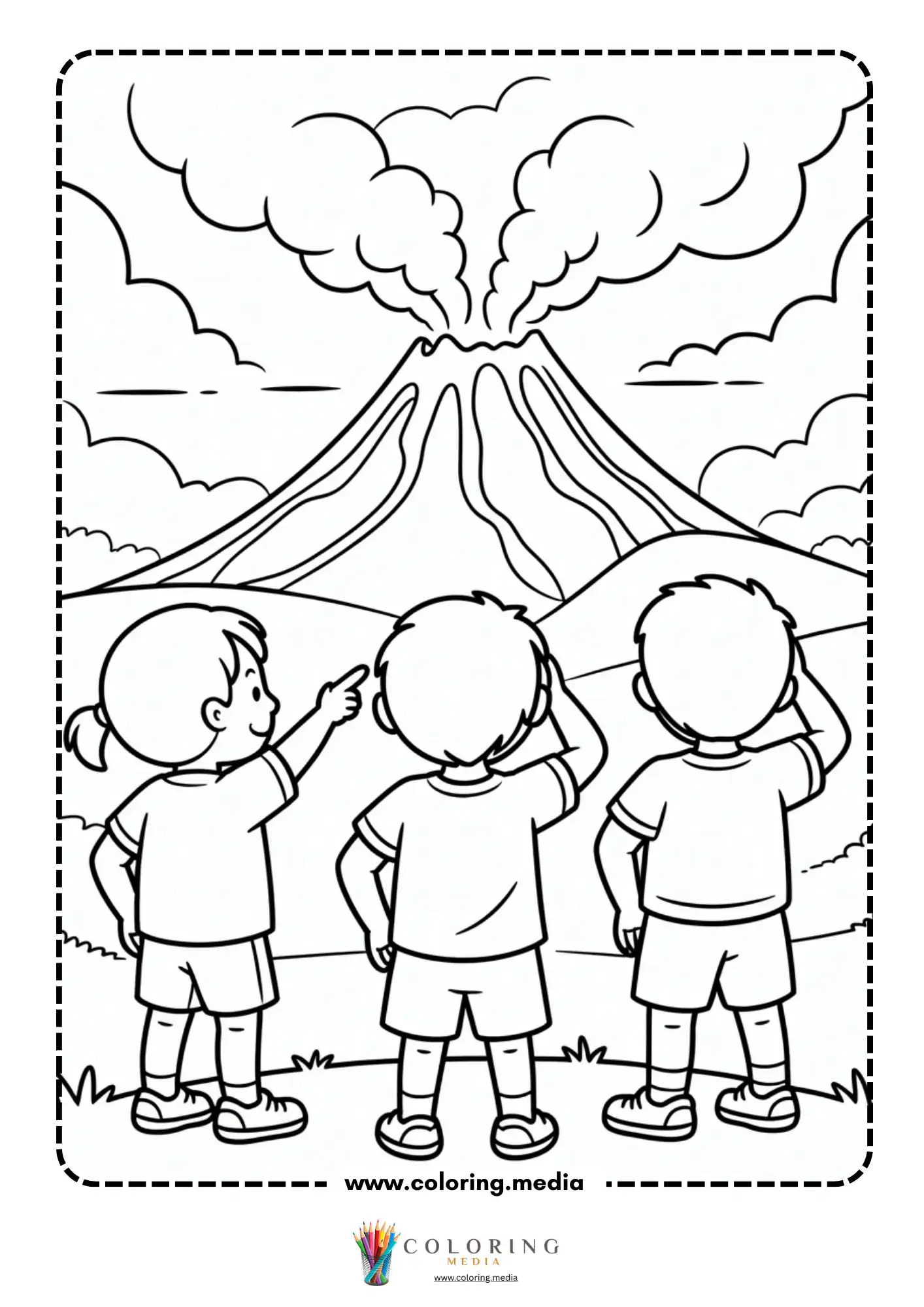
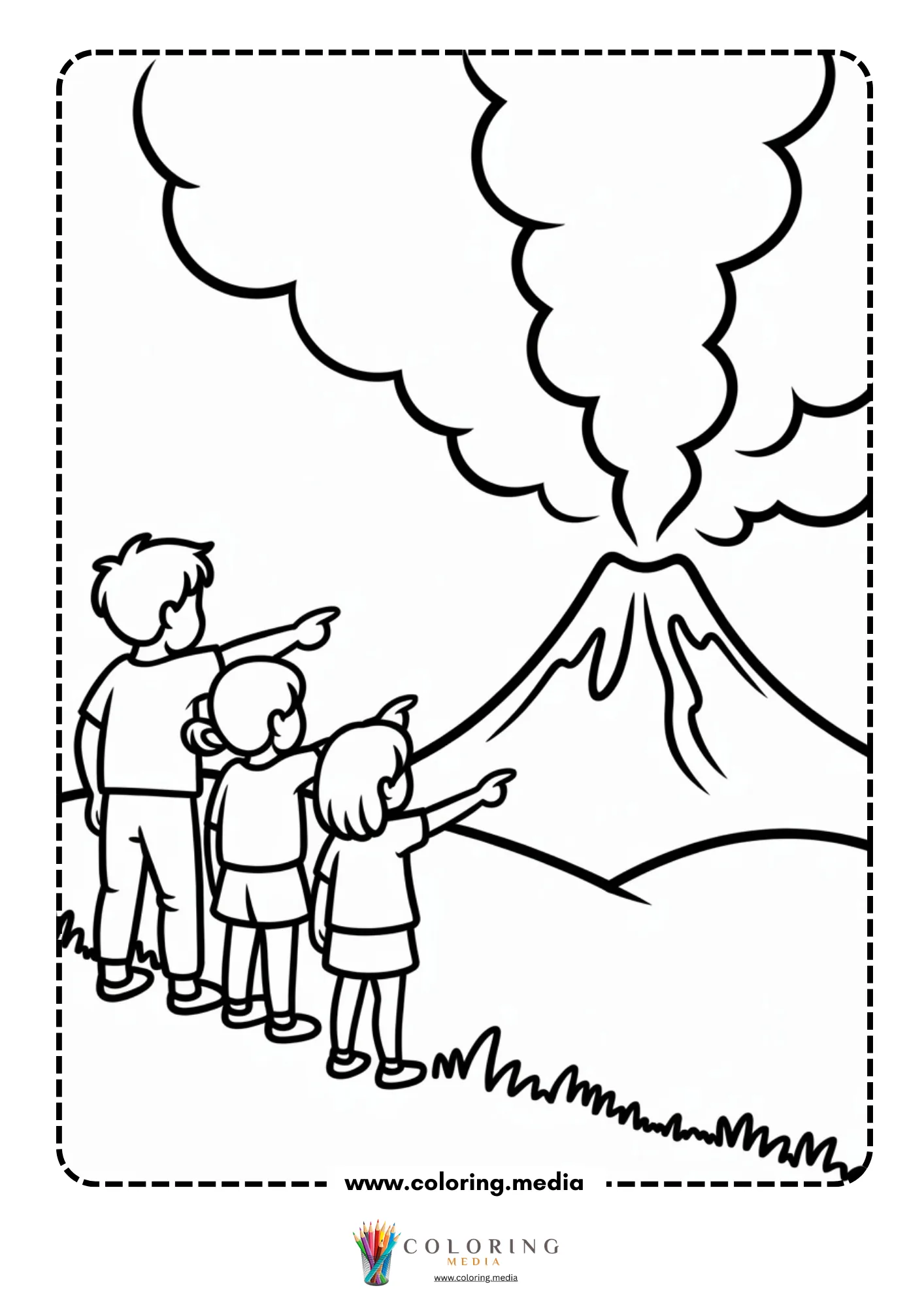
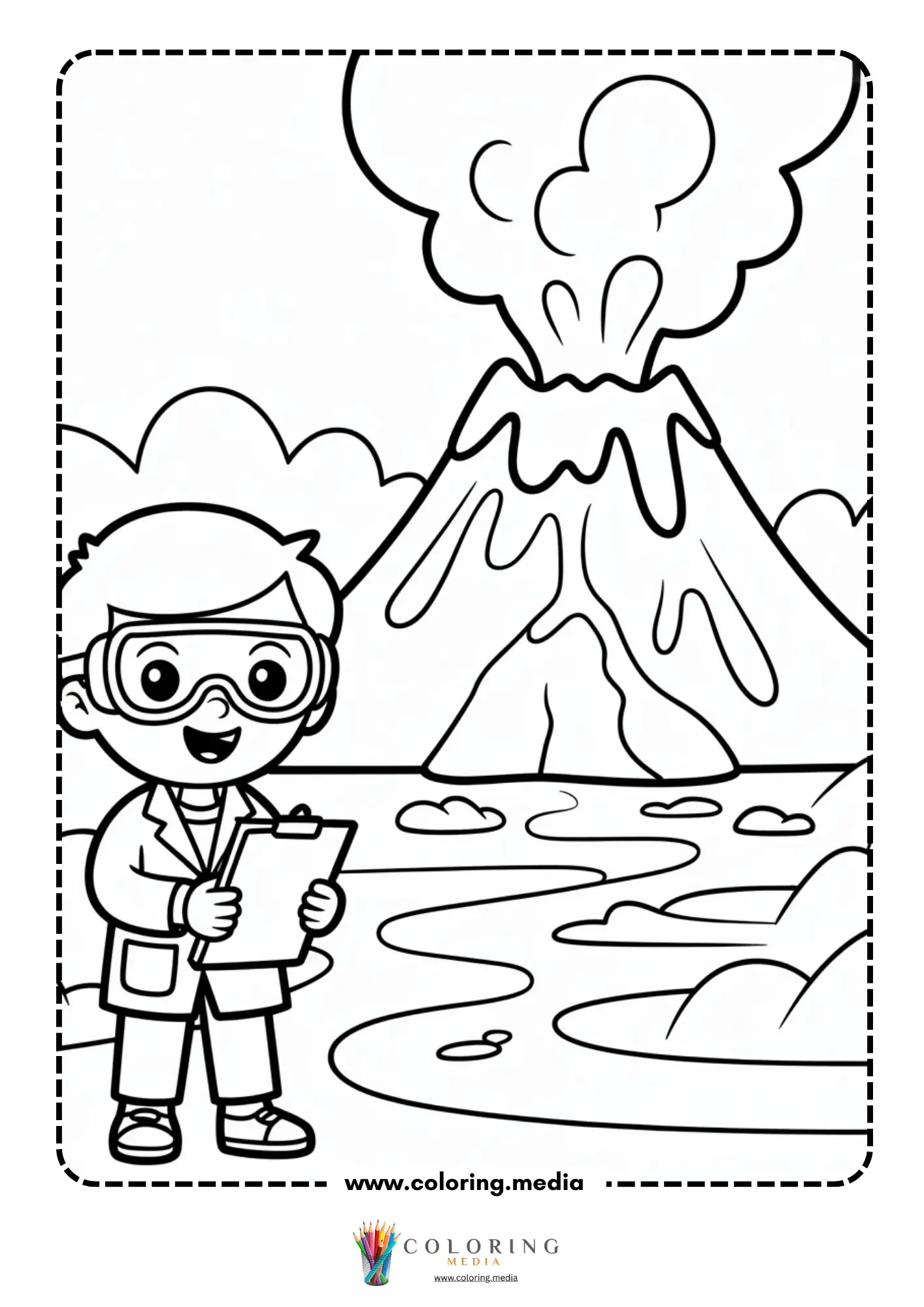
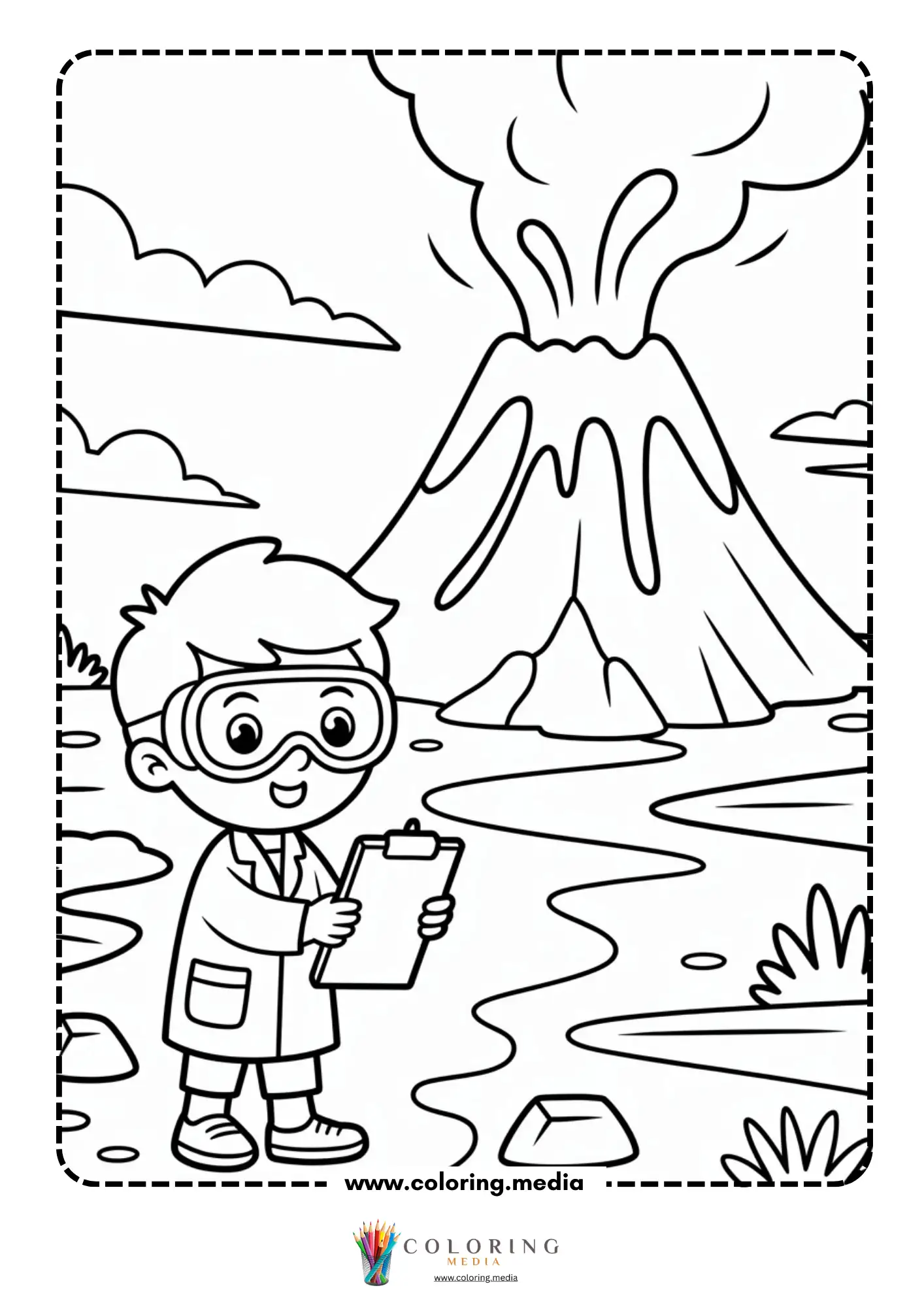
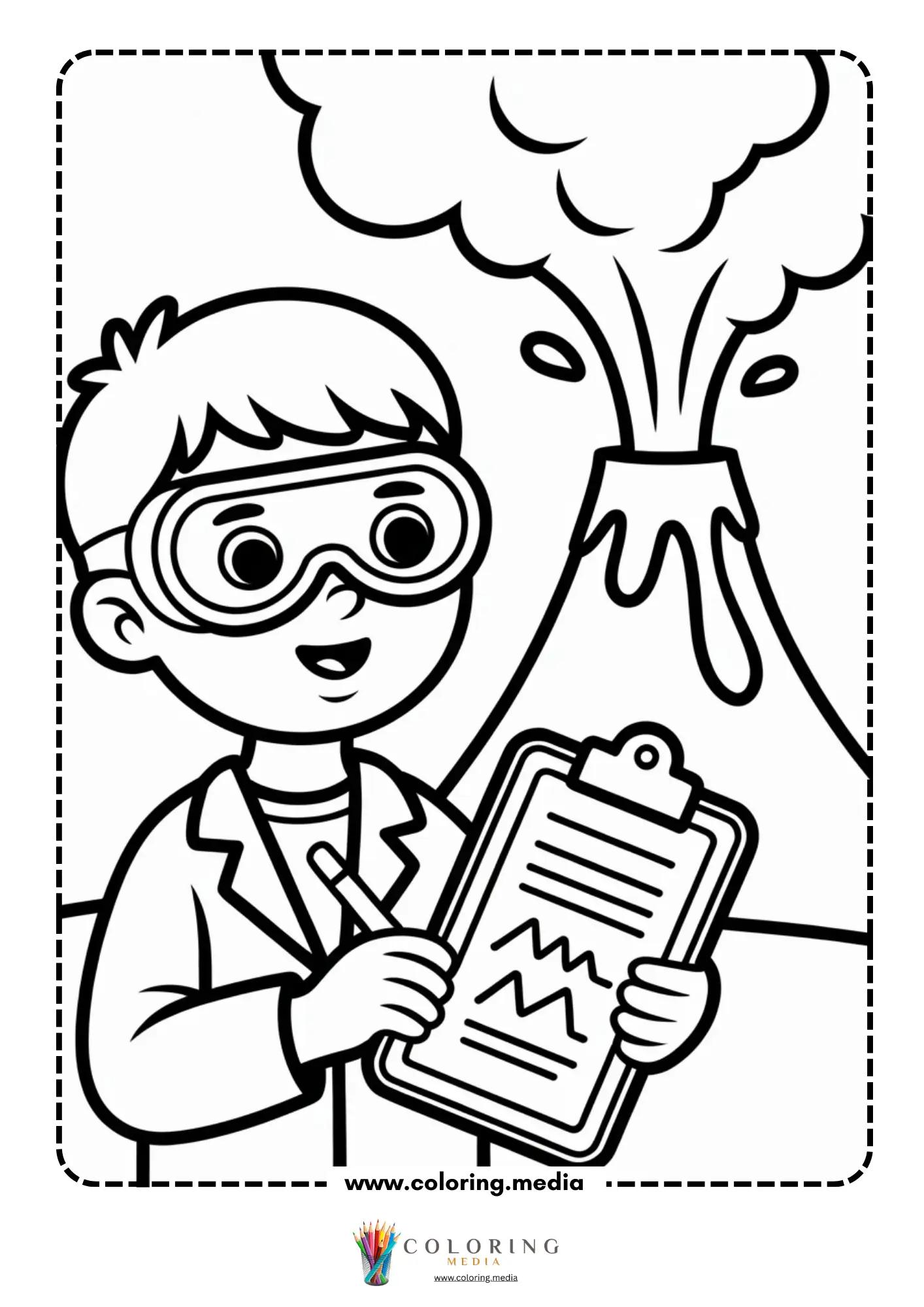
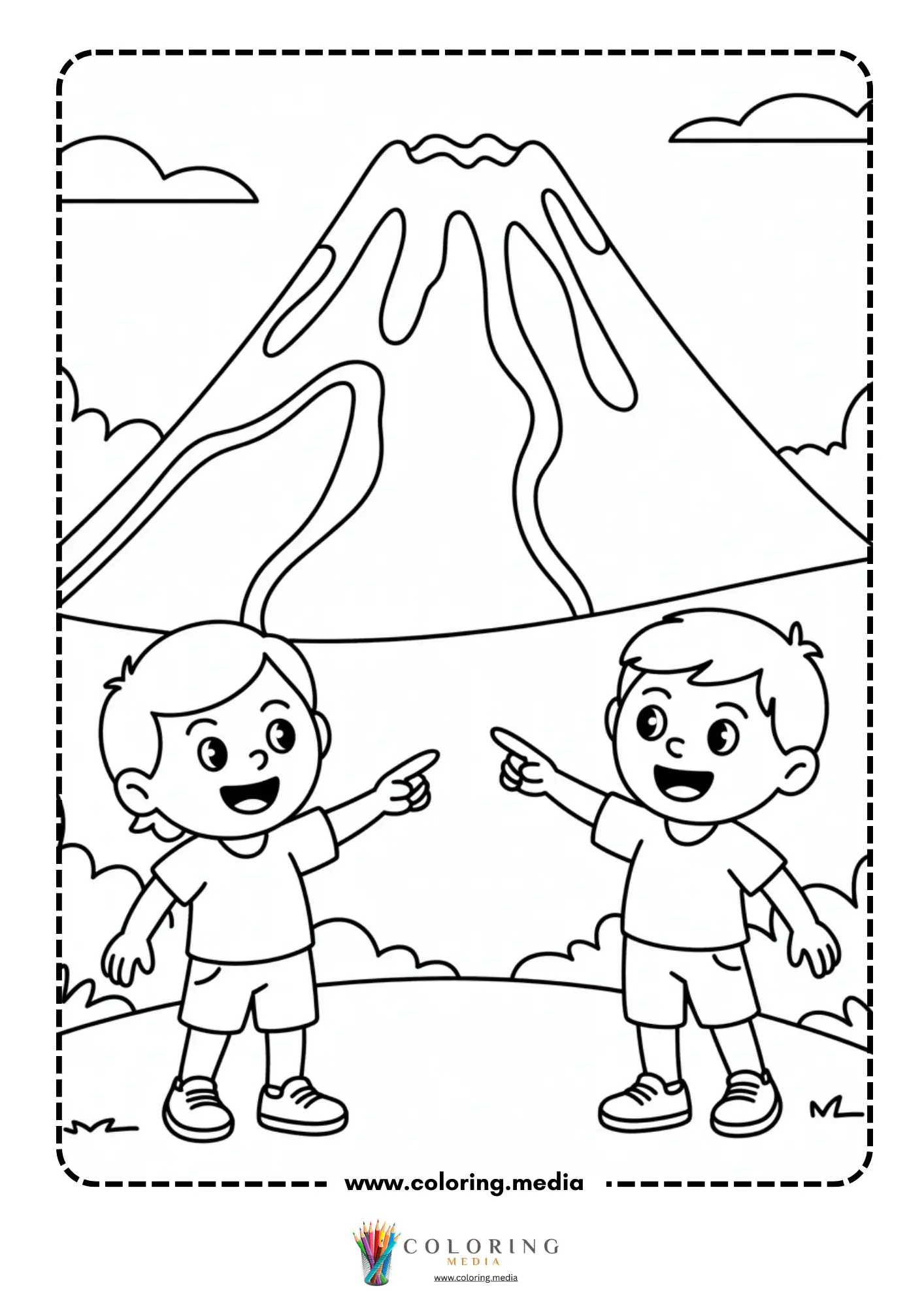
Forty-five pages is a serious collection, and the variety justifies the number. Some pages show a classic conical volcano mid-eruption from a distance — dramatic clouds of ash, bright lava rivers running down the sides. Others zoom in closer and add human figures: a scientist in a hard hat taking measurements, children watching from a safe overlook, a cartoon explorer with a clipboard. A handful appear to be cross-section diagrams showing the magma chamber, conduit, and crater layers.
Line weight varies by page type, from 3–4mm on the simple distant-volcano scenes to 1–2mm on the cross-section diagrams, which require more careful coloring. The range makes this set useful across a wider age span than a single-style collection. Everything here is free to download and easy to print.
Free Printable Volcano Coloring Pages
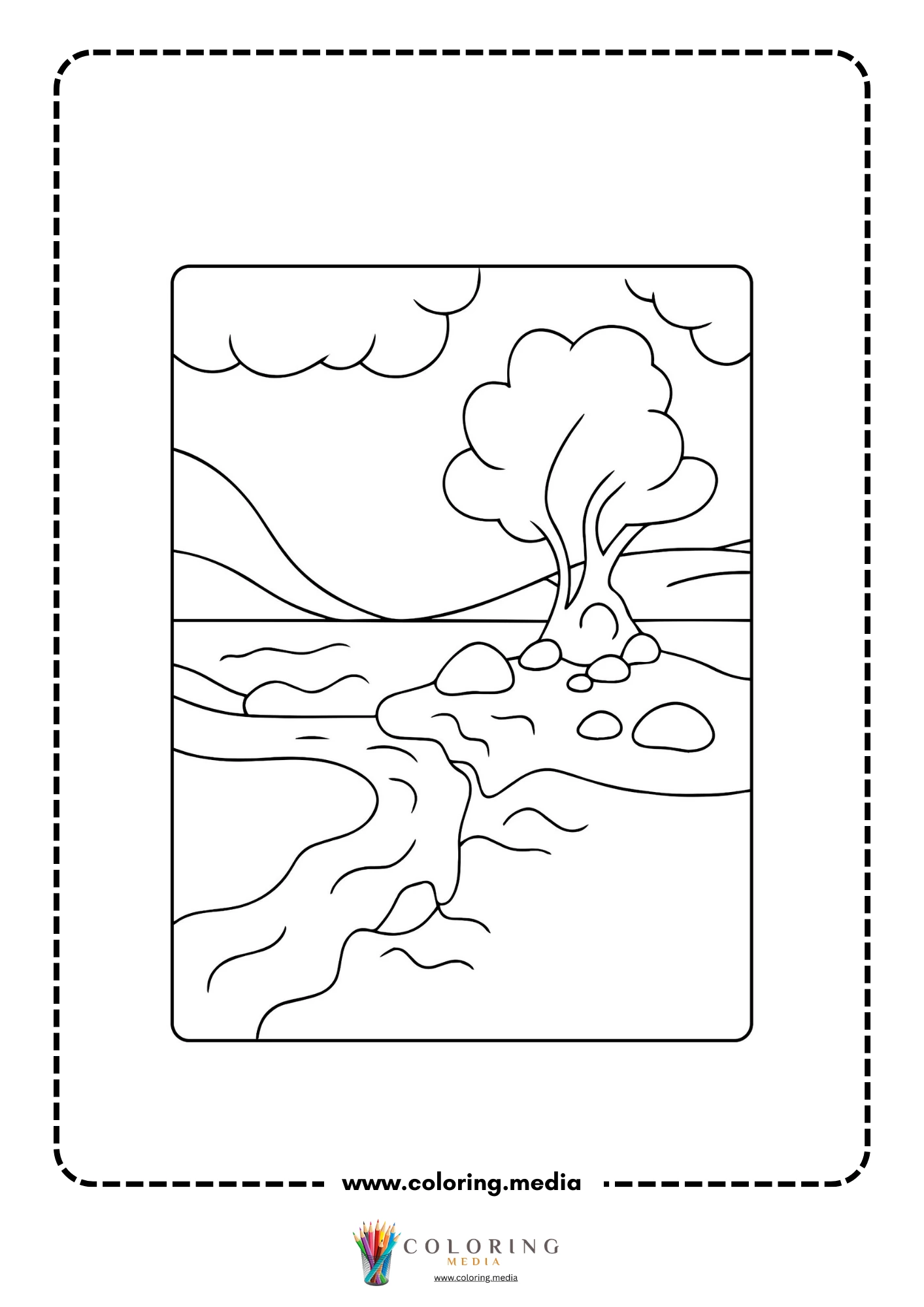
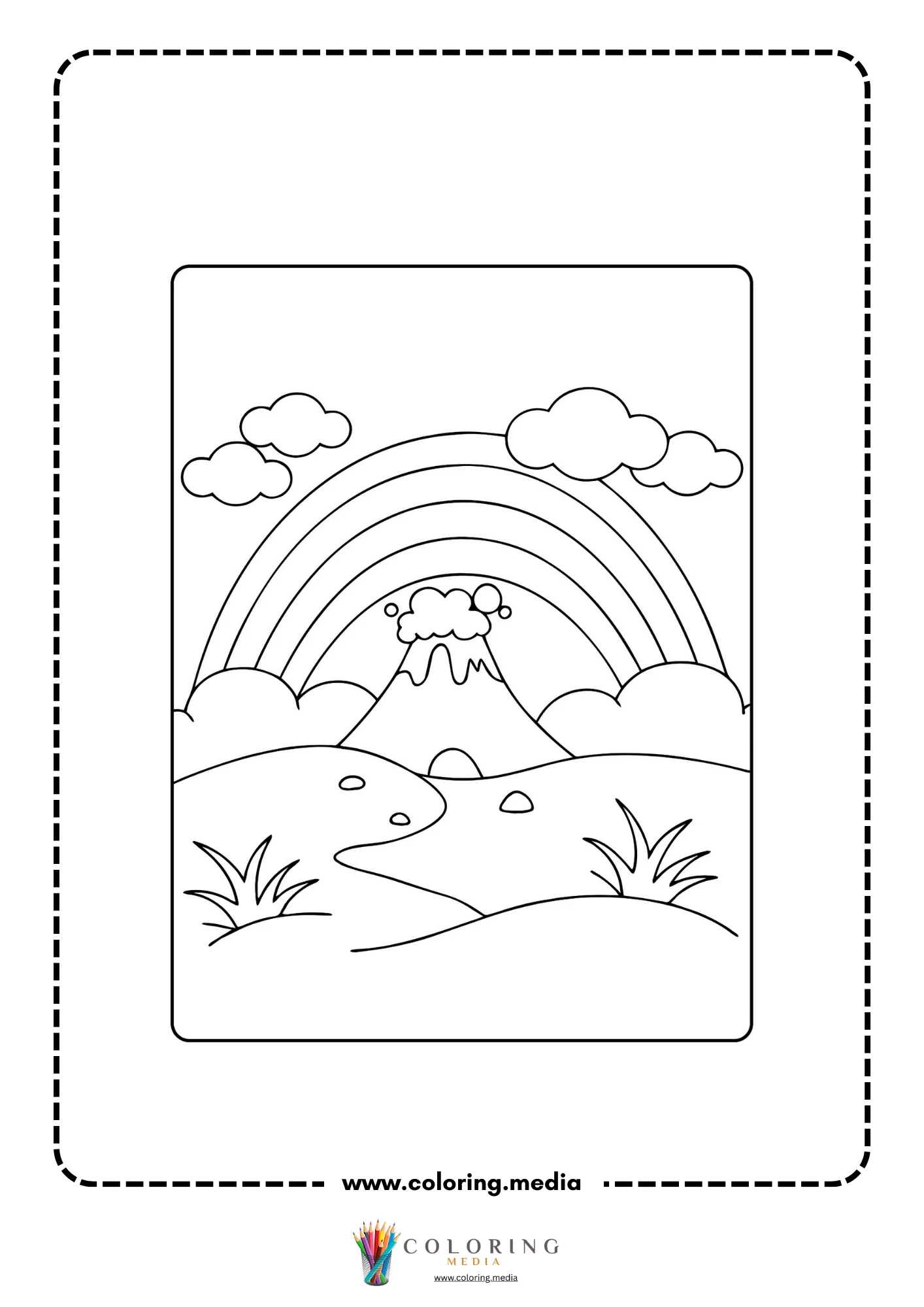
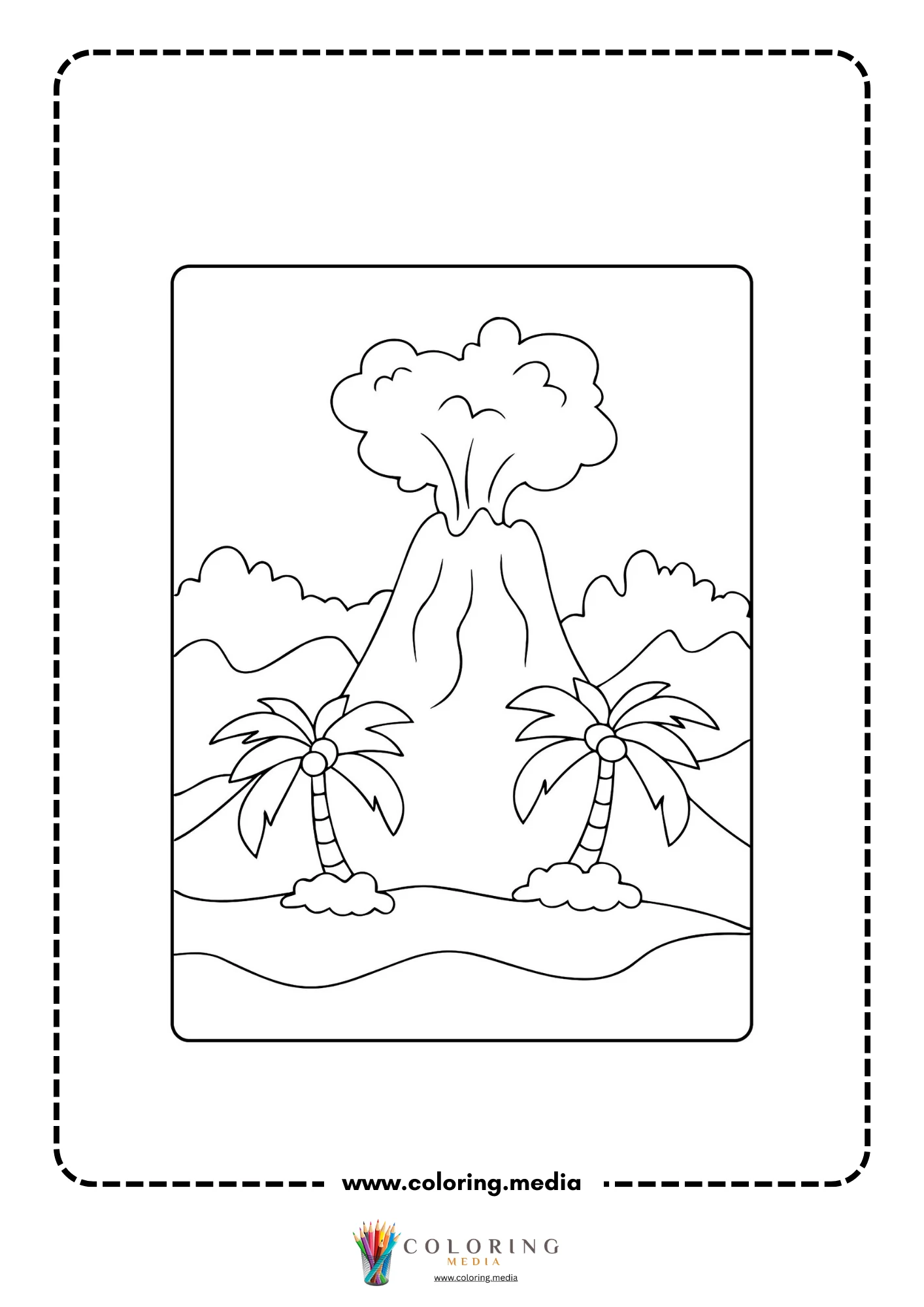
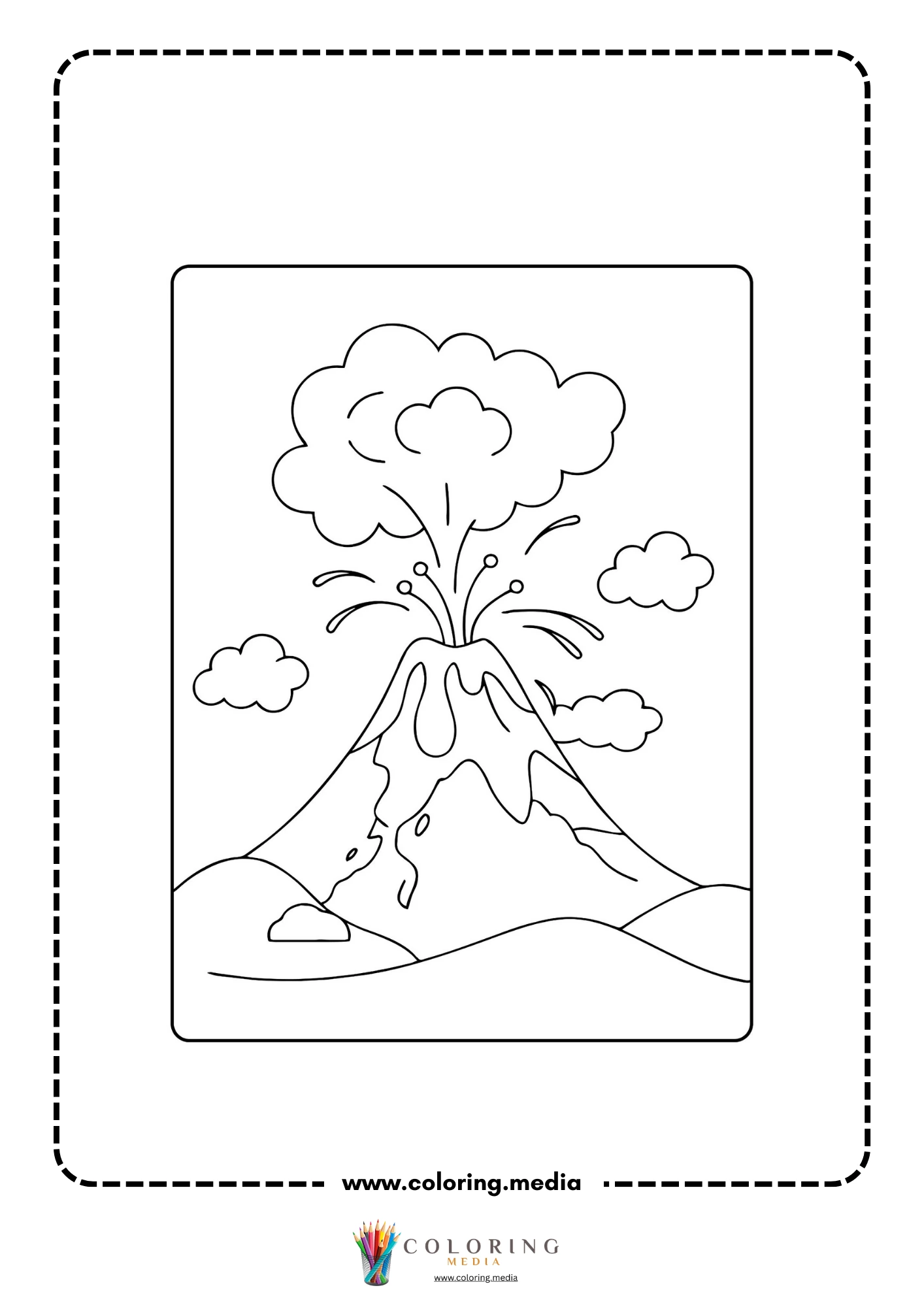
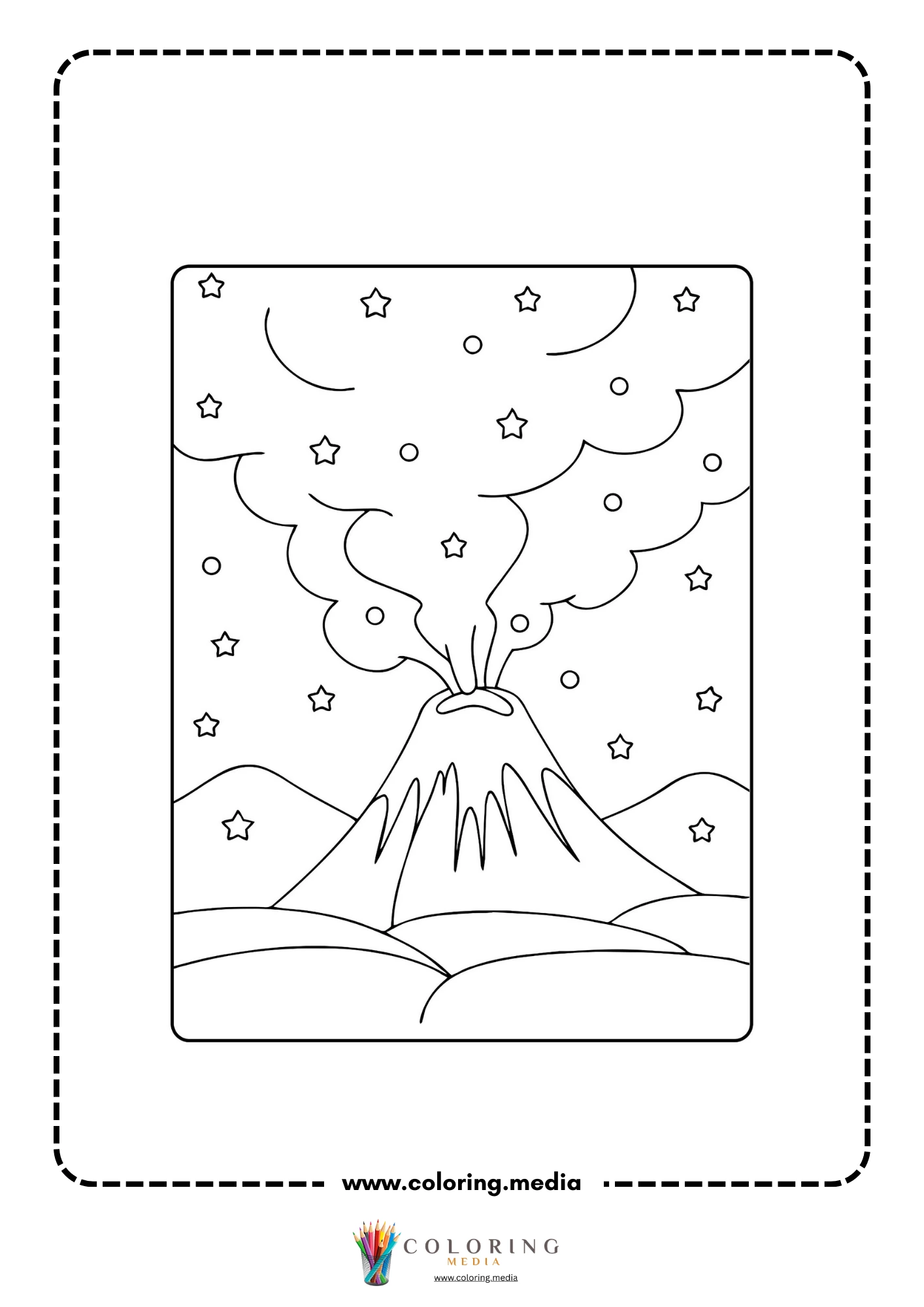
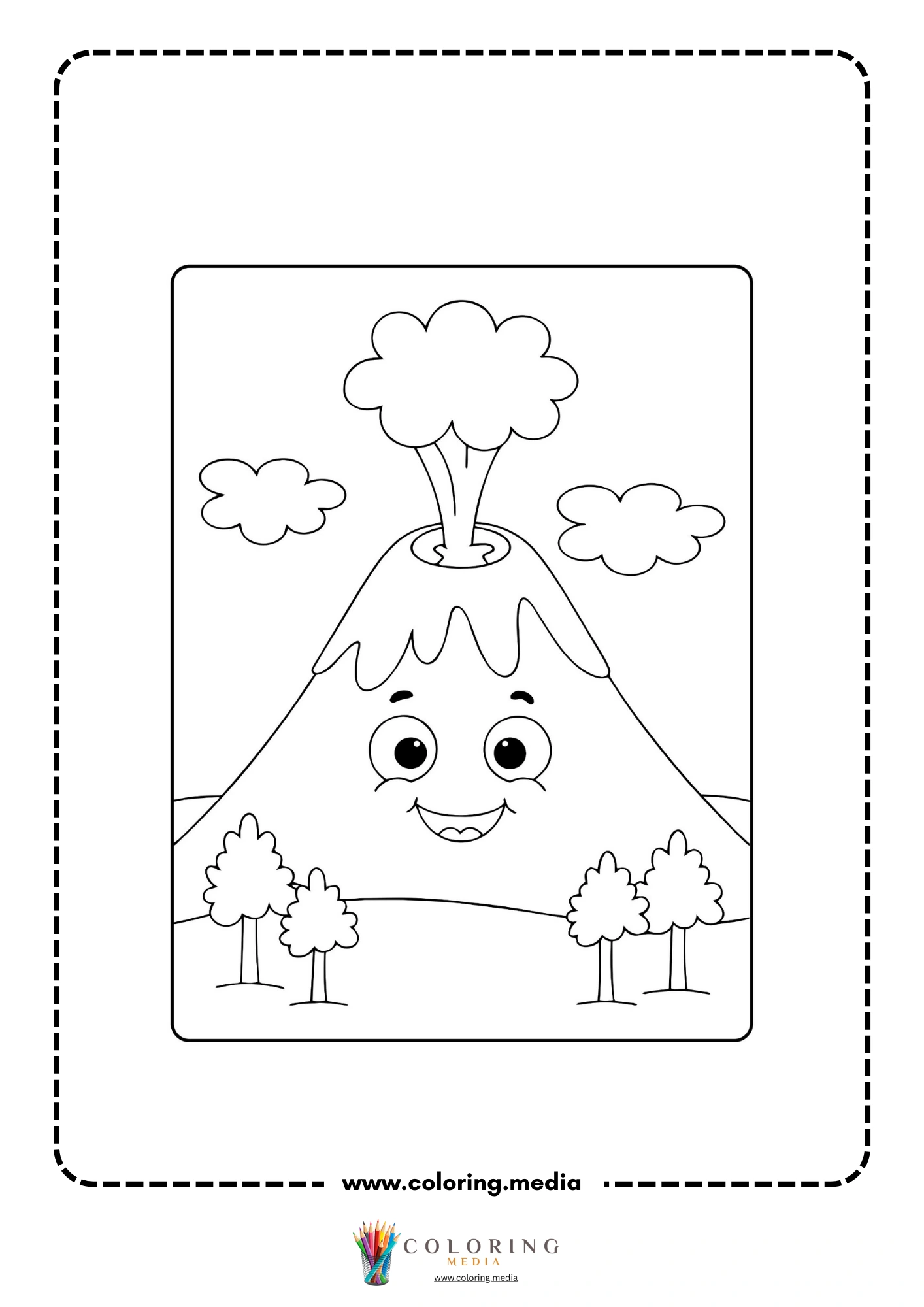
This collection includes 45 printable volcano coloring pages featuring classic conical volcanic eruptions with billowing ash clouds and lava flows, close-up scenes with child and adult characters observing eruptions, cartoon-style volcanoes with exaggerated expressions and lava, geological cross-section diagrams labelling magma chambers and vents, and tropical island volcano scenes with surrounding ocean. The sheer number of pages means there is significant variety in scene type, angle, and complexity. All pages are formatted for A4 or US Letter printing.






Who Are These Volcano Coloring Pages Best For?
Kindergarten-age children will gravitate toward the simple distant-eruption pages and the cartoon volcanoes with character faces. The outlines are thick enough on these pages — 3mm or more — that staying inside the lines is achievable with crayon. The drama of the eruption imagery makes these pages exciting to color even for children who normally lose interest quickly.
Early elementary students (grades 1–3) can work through the more complex pages, especially the cross-section diagrams, which require coloring multiple distinct labeled zones. These pages work naturally alongside a geology or earth science lesson and can serve as a study tool — color the magma chamber red, the crust grey, the ash cloud white and grey — rather than purely as a creative activity.
The sheer number of pages in this set makes it suitable for extended projects: a week-long volcano unit could use two or three pages per day without repetition. The variety also means a mixed-age sibling group can each find pages appropriate to their level and patience without one child feeling condescended to.
Interesting Volcano Facts to Share While Coloring
There are about 1,500 potentially active volcanoes on Earth, and around 50 erupt every year. Most of them are in the Pacific Ring of Fire, a horseshoe-shaped belt that runs from the west coast of the Americas across to Japan and down through New Zealand.
Lava can reach temperatures of 1,200 degrees Celsius, hot enough to melt most metals. It moves at different speeds depending on its composition — runny basaltic lava from shield volcanoes can flow as fast as 60 km/h on steep slopes, while thick rhyolitic lava may barely creep.
Pompeii was buried so quickly by the eruption of Mount Vesuvius in 79 AD that people, food, and buildings were preserved almost intact. Archaeologists have found loaves of bread still sitting in bakery ovens and a fast-food counter with snacks still in their serving vessels.
Some volcanoes erupt underwater, and most of the ocean floor is volcanic rock formed this way. The longest mountain range on Earth is the mid-ocean ridge system, a mostly underwater chain of volcanoes stretching 65,000 kilometers around the globe.
Volcanic ash can circle the entire planet. When Mount Pinatubo in the Philippines erupted in 1991, ash and gas reached the stratosphere and caused global average temperatures to drop by about 0.5 degrees Celsius for the following two years.
Creative Volcano Coloring and Craft Ideas
Lava Color Gradient For eruption pages, color the lava from bright yellow-white at the hottest center to orange to dark red at the cooled edges to show temperature differences.
Ash Cloud Technique Use a tissue to smudge grey and white pencil in overlapping circles for the ash cloud, rather than coloring it in flat — gives a billowing, smoky effect.
Cross-Section Color Code For diagram pages, decide on a consistent color for each layer (red for magma, orange for conduit, grey for crust, brown for rock) and apply it the same way on every diagram page.
Before and After Color two pages to show the same volcano before eruption (green trees, blue sky, calm) and mid-eruption (red lava, grey sky, burnt landscape).
Baking Soda Volcano Model After coloring a cross-section page, build a model using a plastic bottle, baking soda, vinegar, and red food coloring to match the diagram.
Scientist Field Notes On the scientist-character pages, write a paragraph on the back in first person from the scientist’s point of view describing what they are observing.
Lava Flow Direction Map On a distant-eruption page, draw arrows showing which direction the lava would flow based on the slope of the volcano, then mark which areas would be safest.
Newspaper Front Page Write a pretend newspaper headline and opening paragraph reporting on the volcano eruption shown in one of the pages.
How to Print These Volcano Coloring Pages
Each page downloads as a single PDF at 300 dpi, formatted for A4 and US Letter. Print from Adobe Reader or a browser with ‘fit to page’ enabled. Standard copy paper handles crayons and pencils without issue. For the detailed diagram pages where colored pencil blending is likely, 90–100gsm paper gives a slightly better coloring surface. Use black-and-white print mode to avoid wasting color ink.
Explore More Science-Nature Coloring Pages
If you enjoyed these pages, you may also like:
Earthquake Coloring Pages
Earth Science Coloring Pages
Weather Coloring Pages
Ocean Coloring Pages
Science & Nature Coloring Pages