
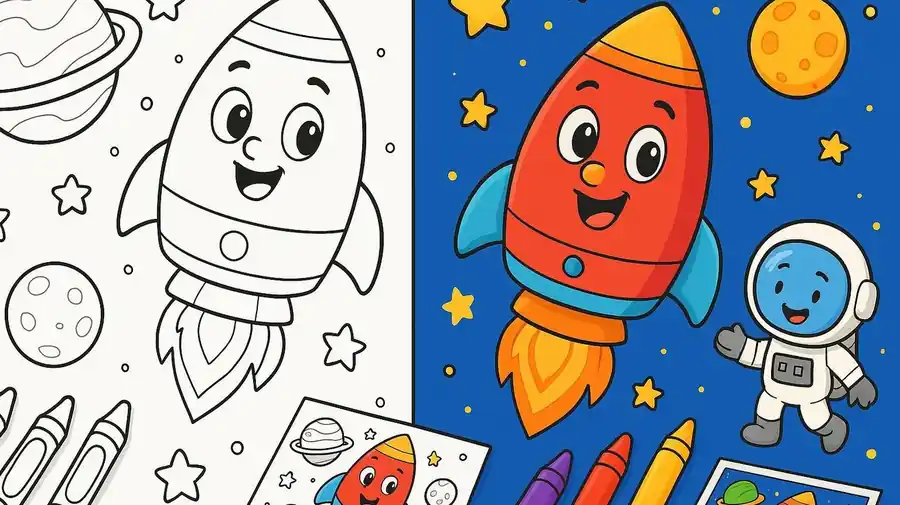
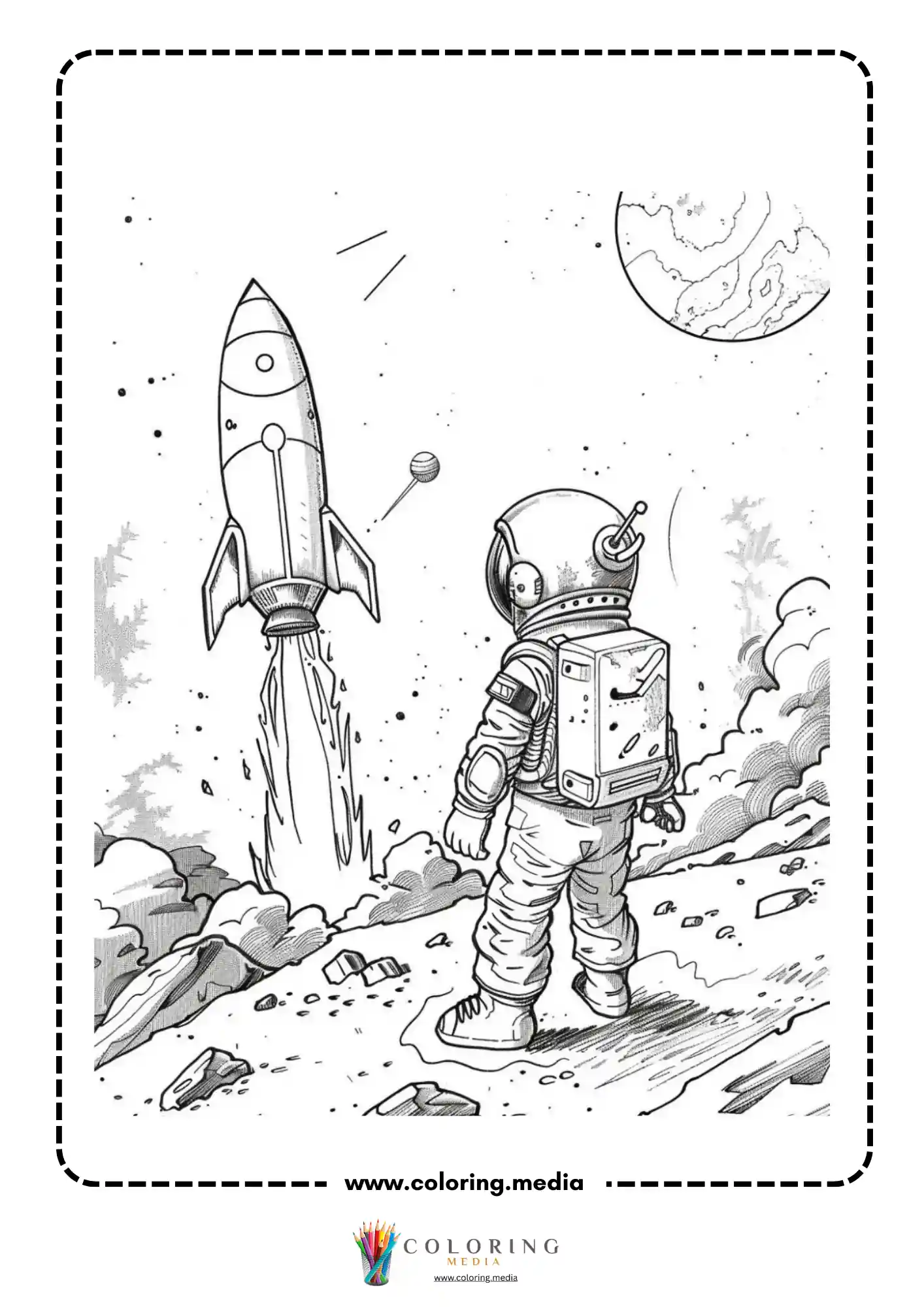
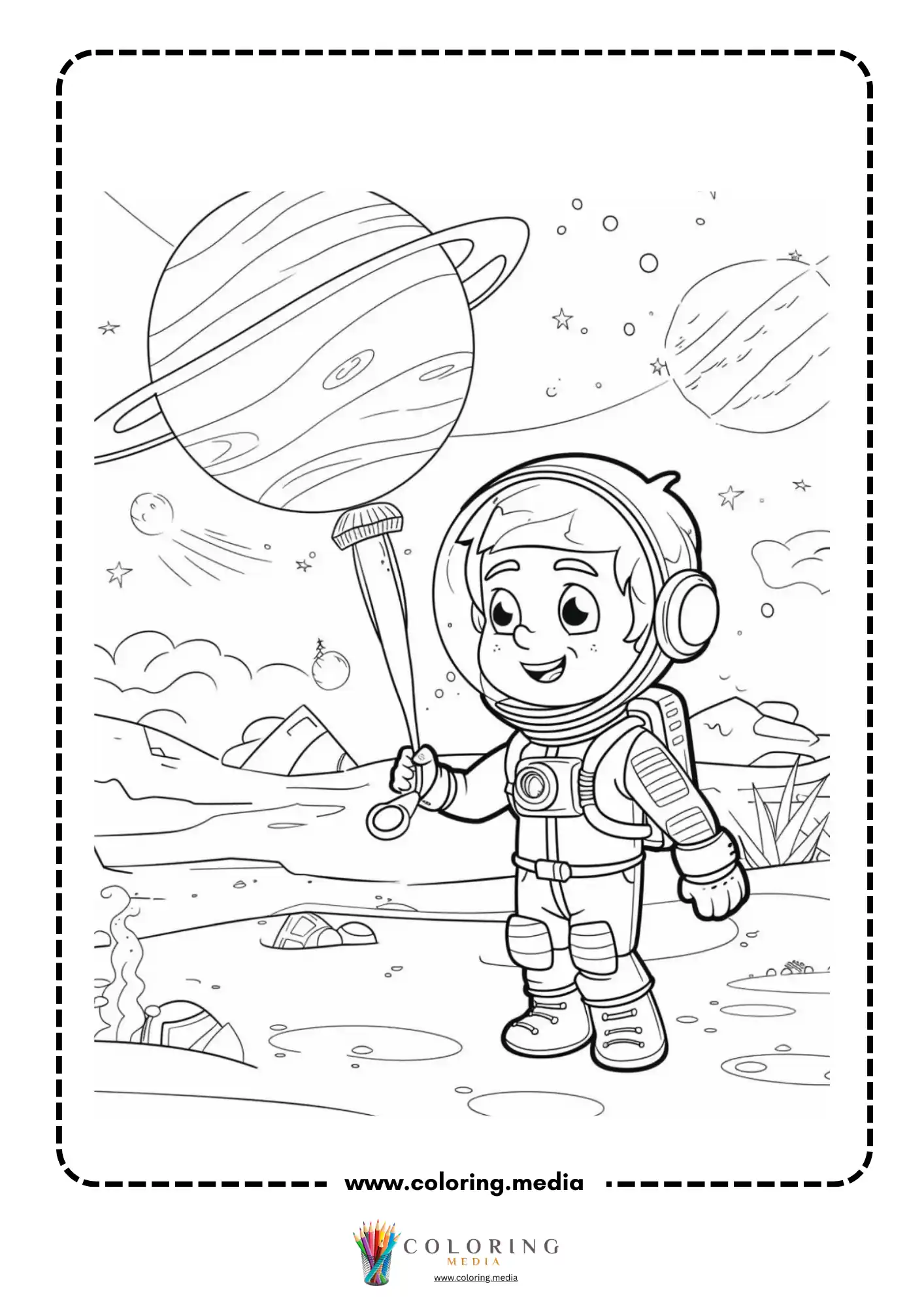
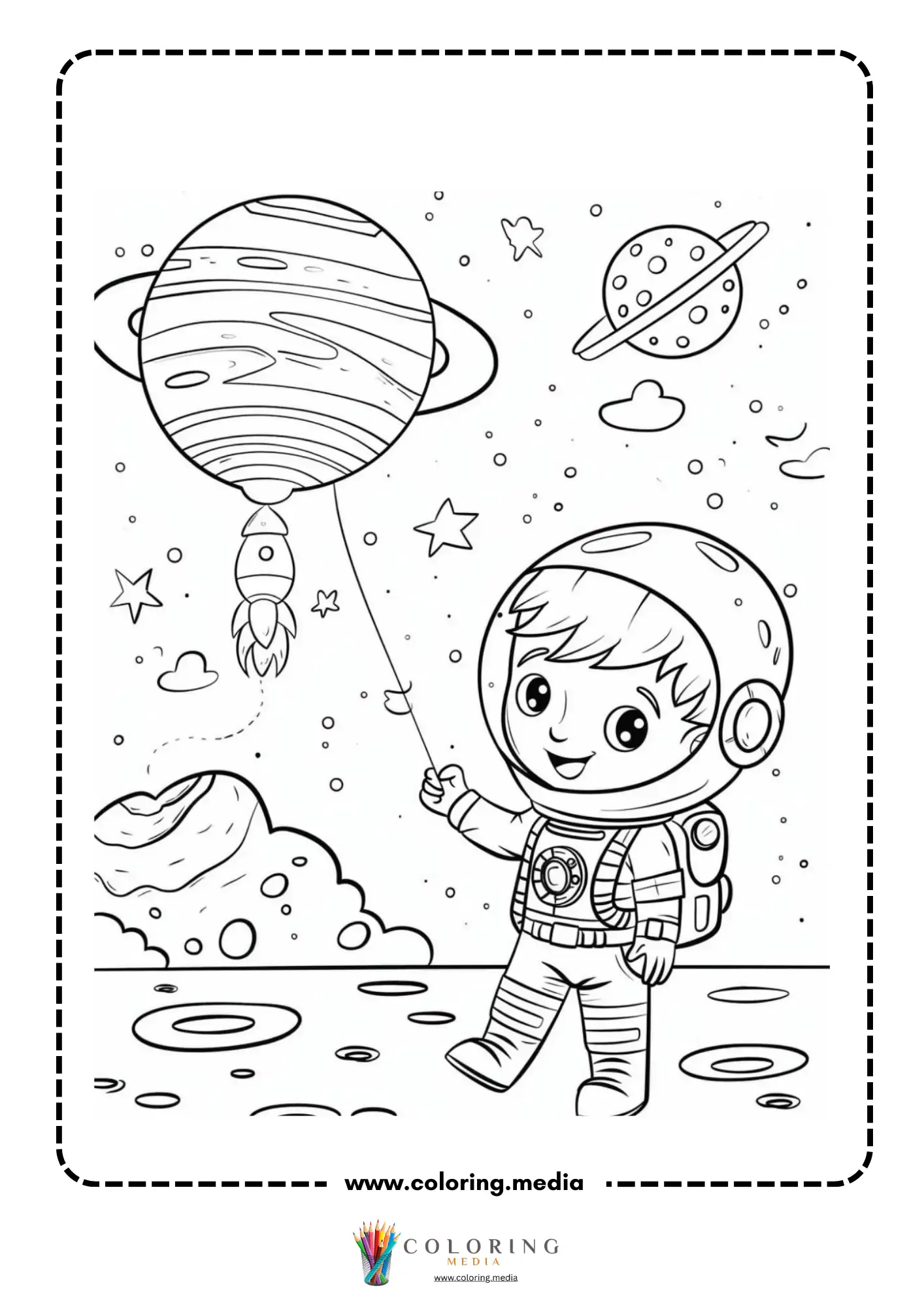
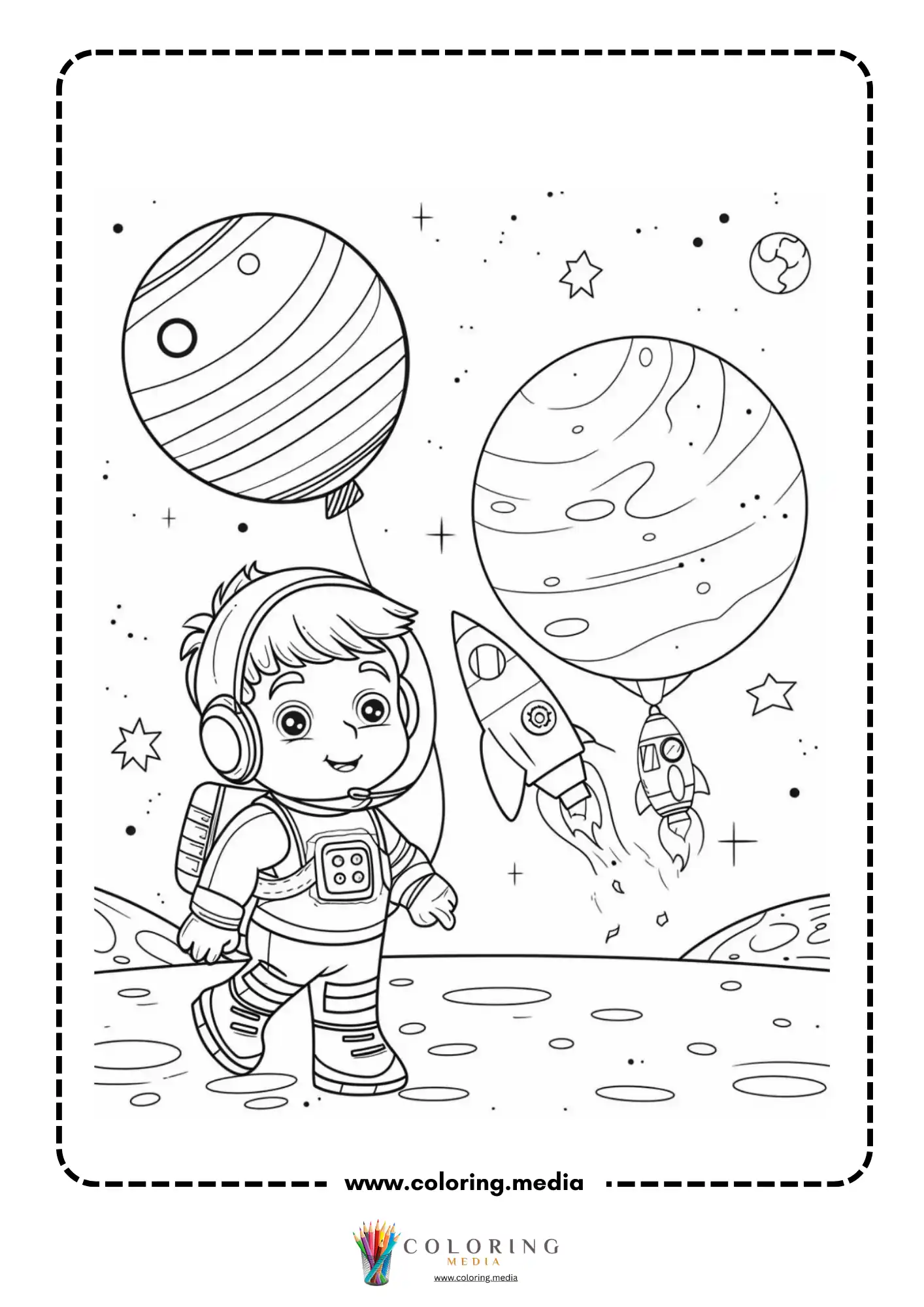
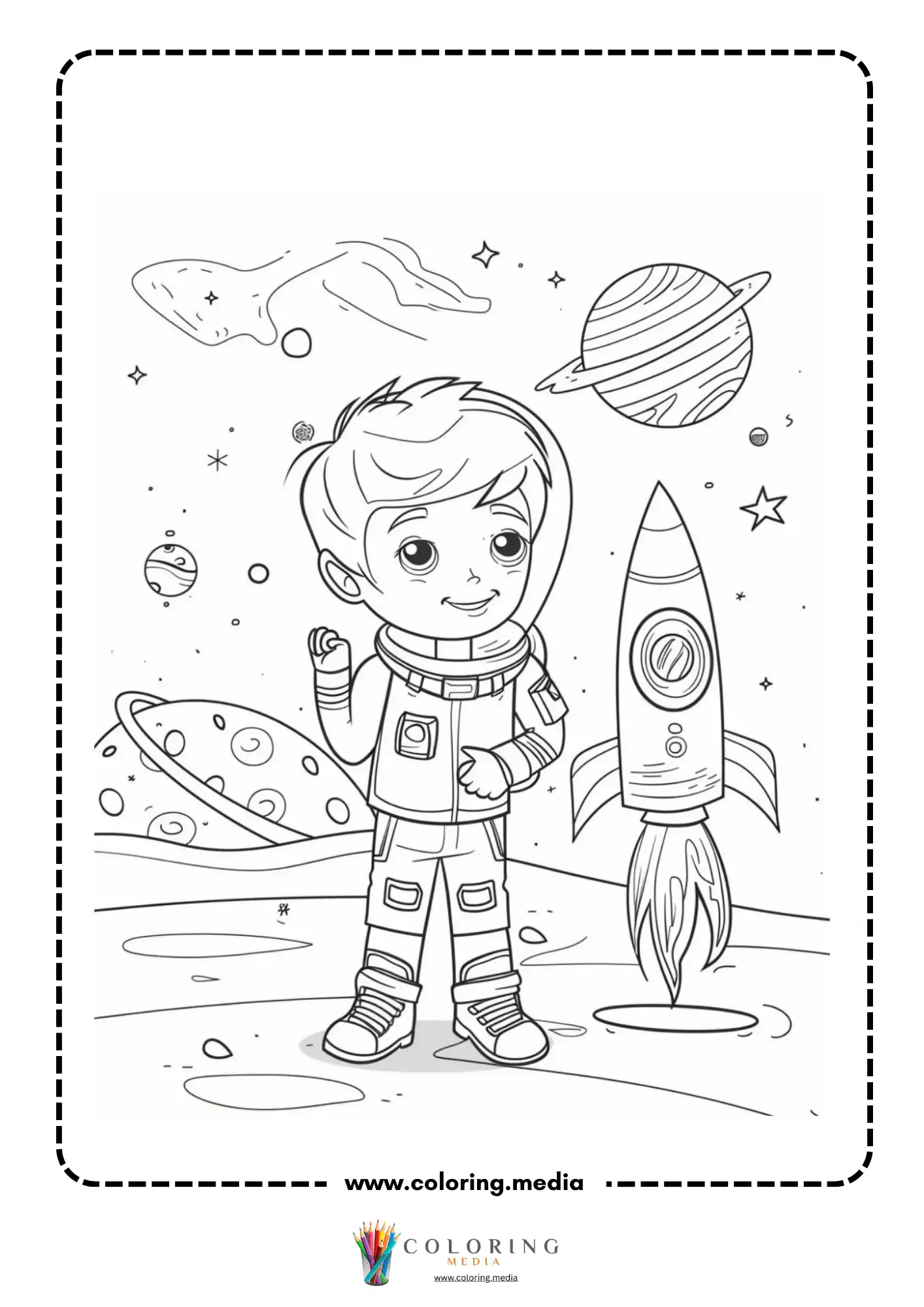
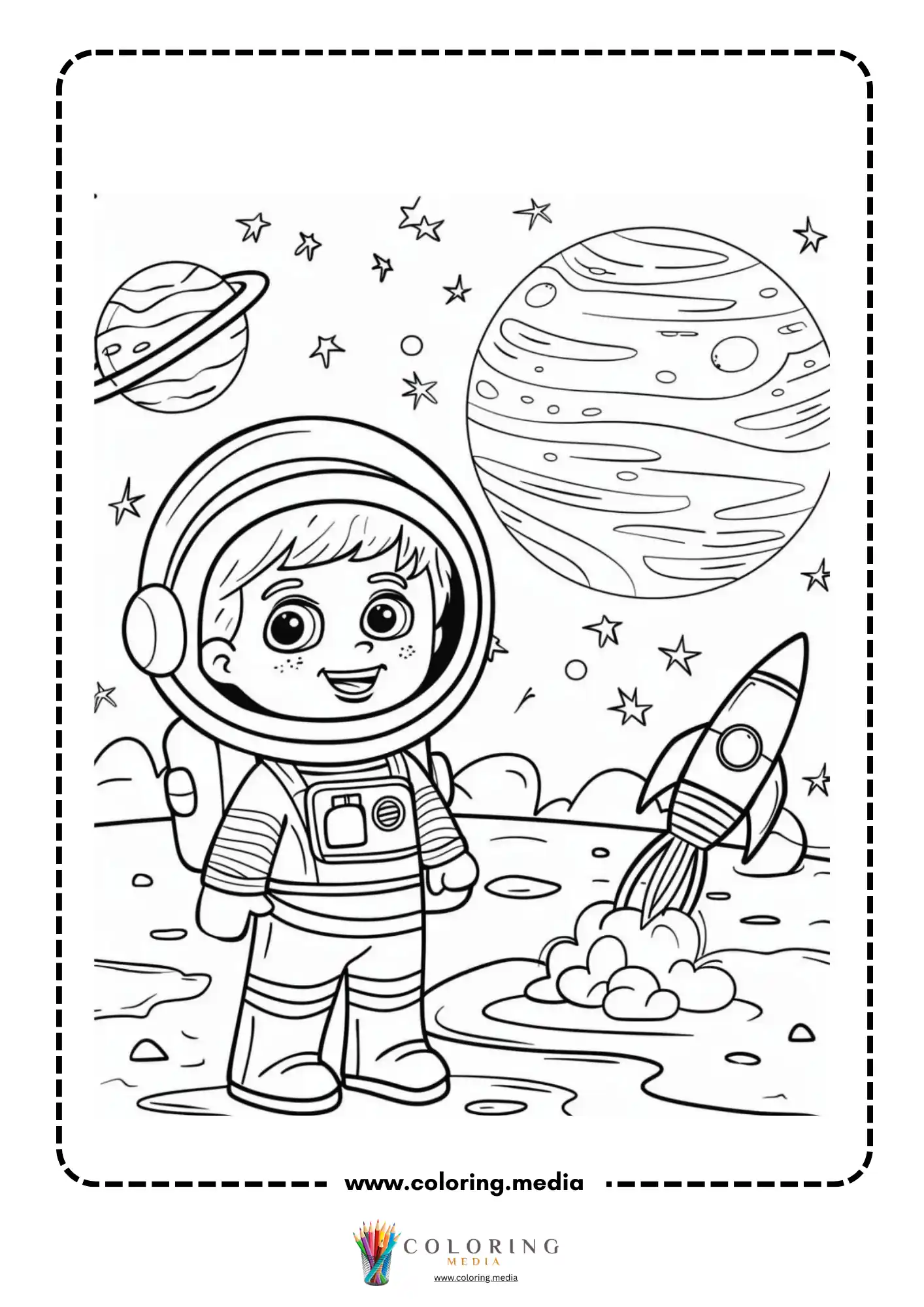
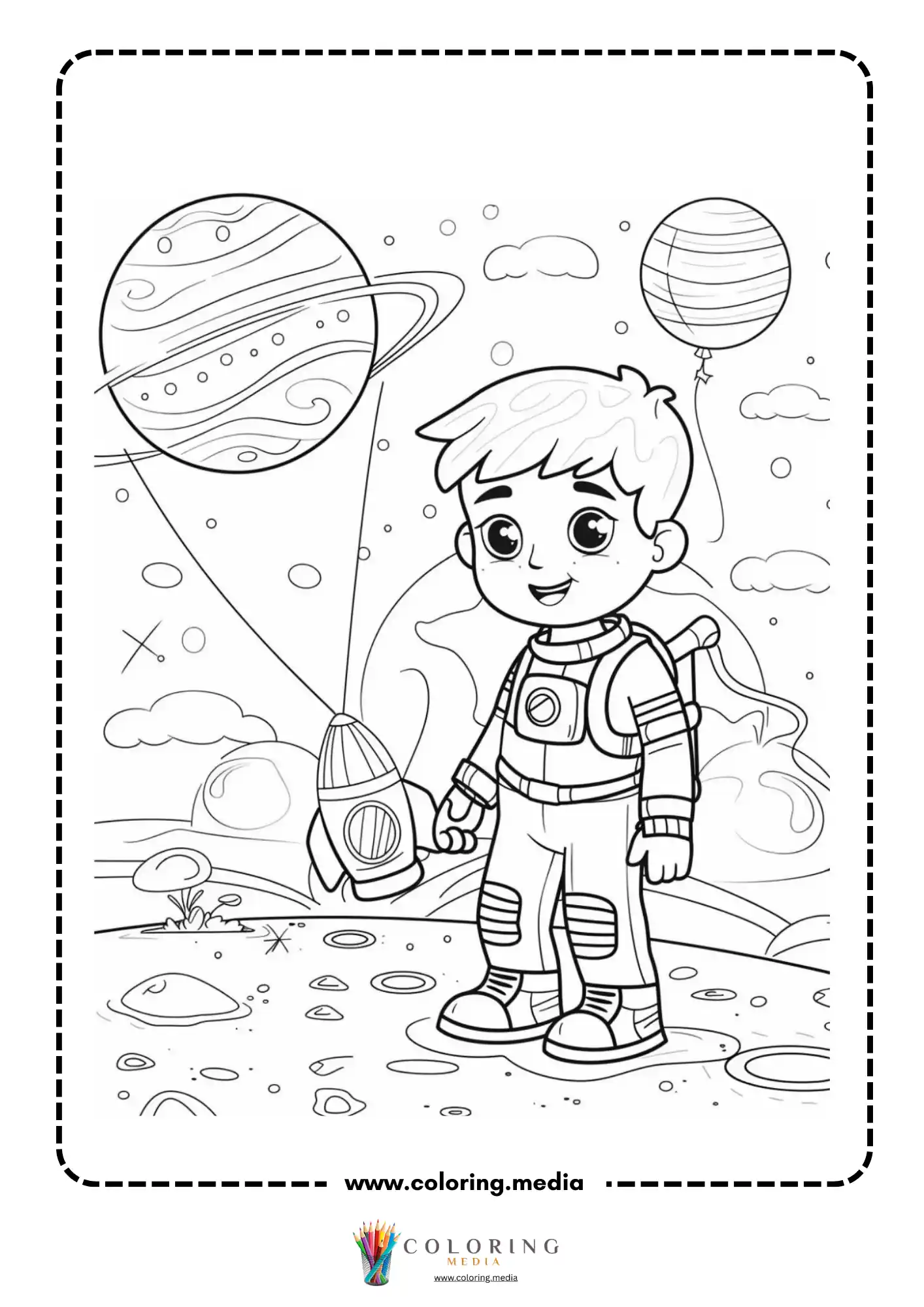
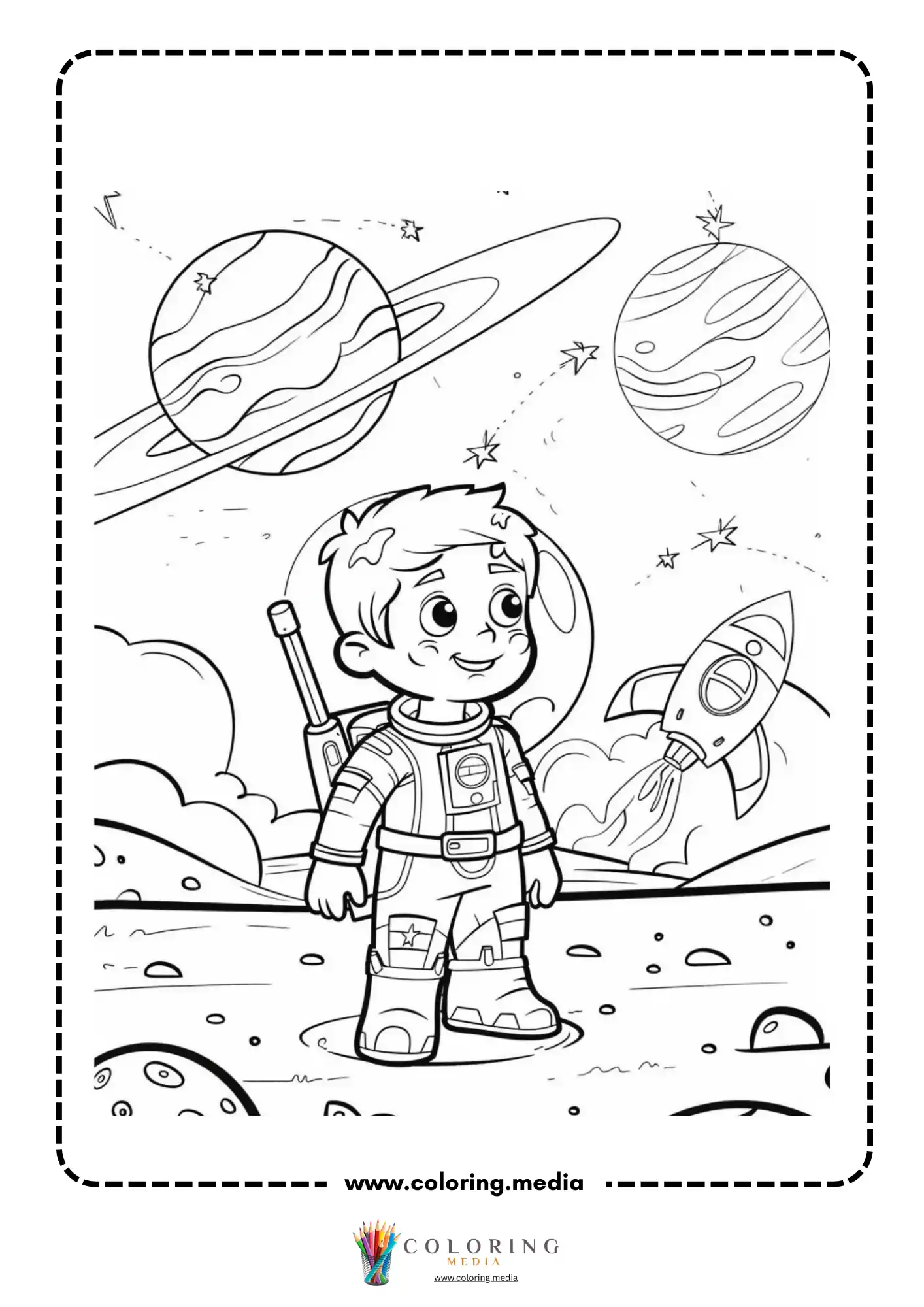
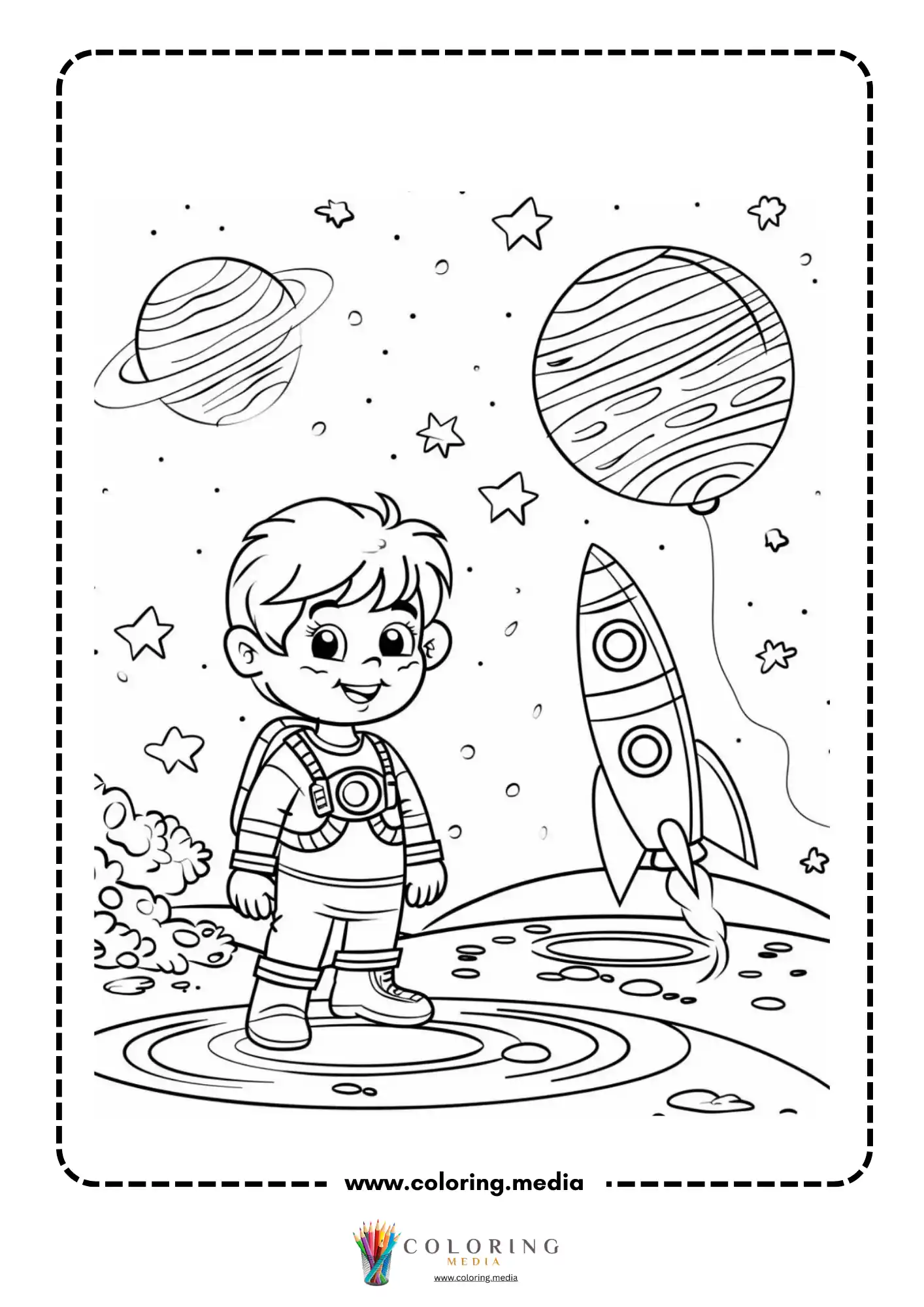
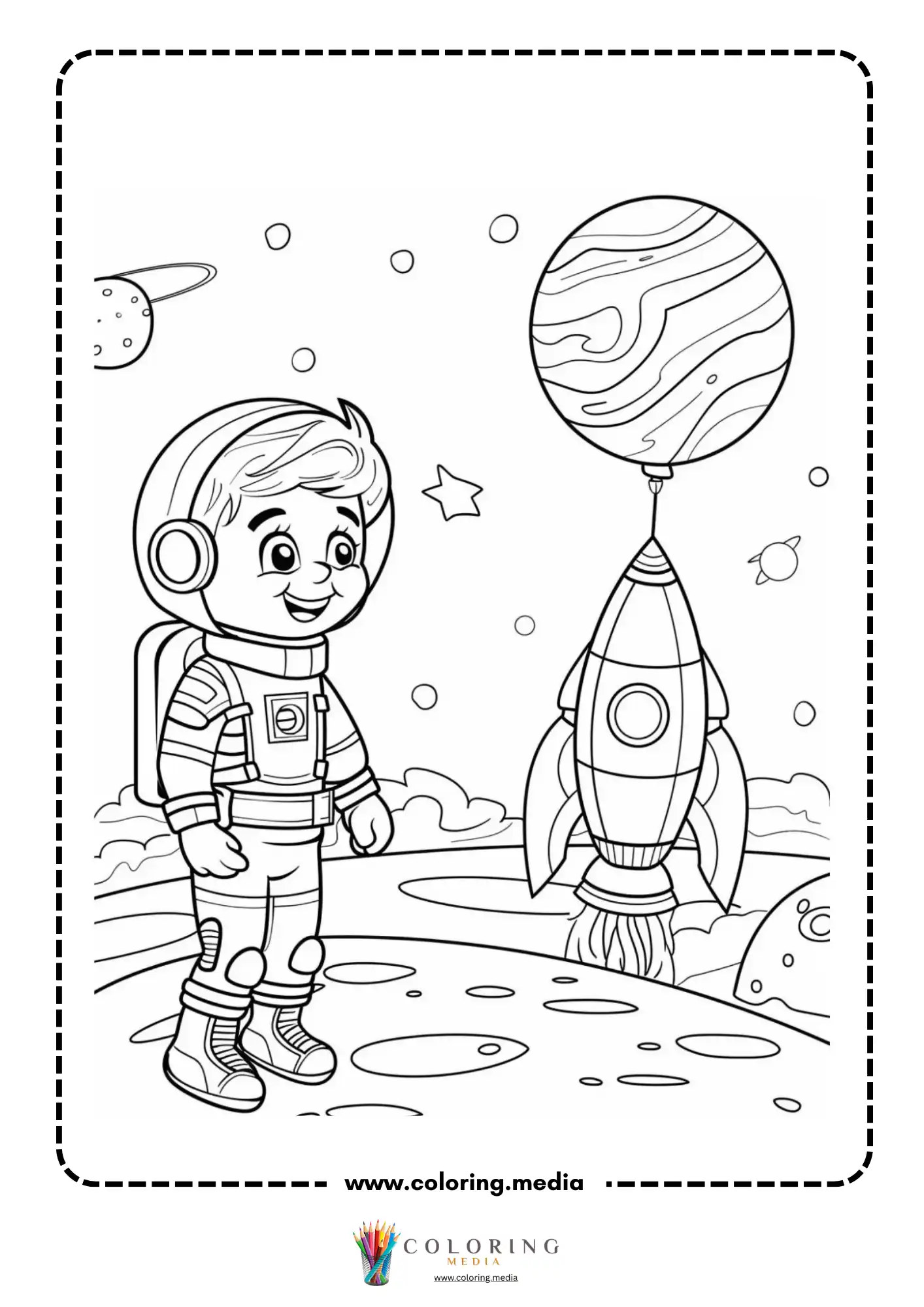
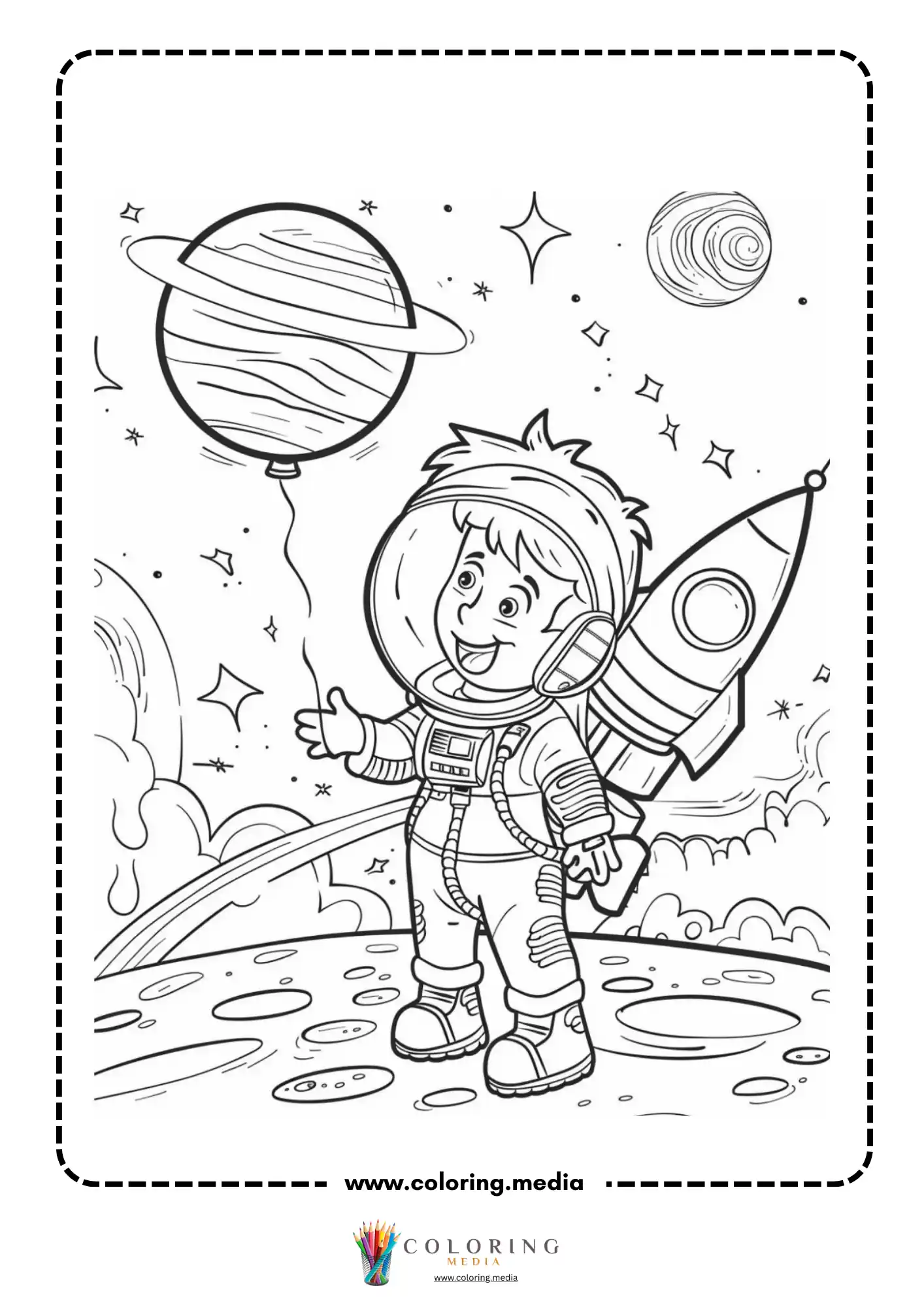
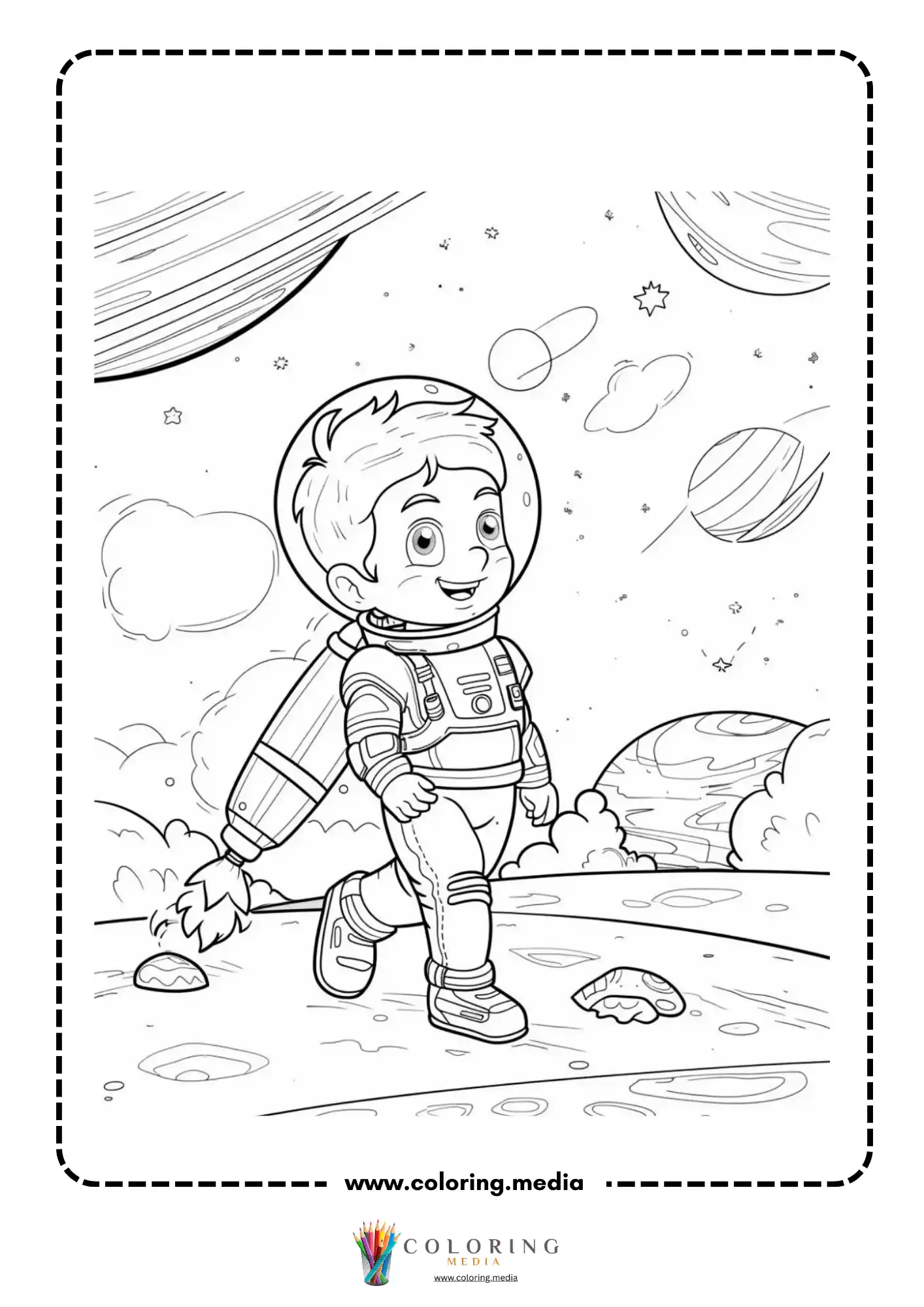
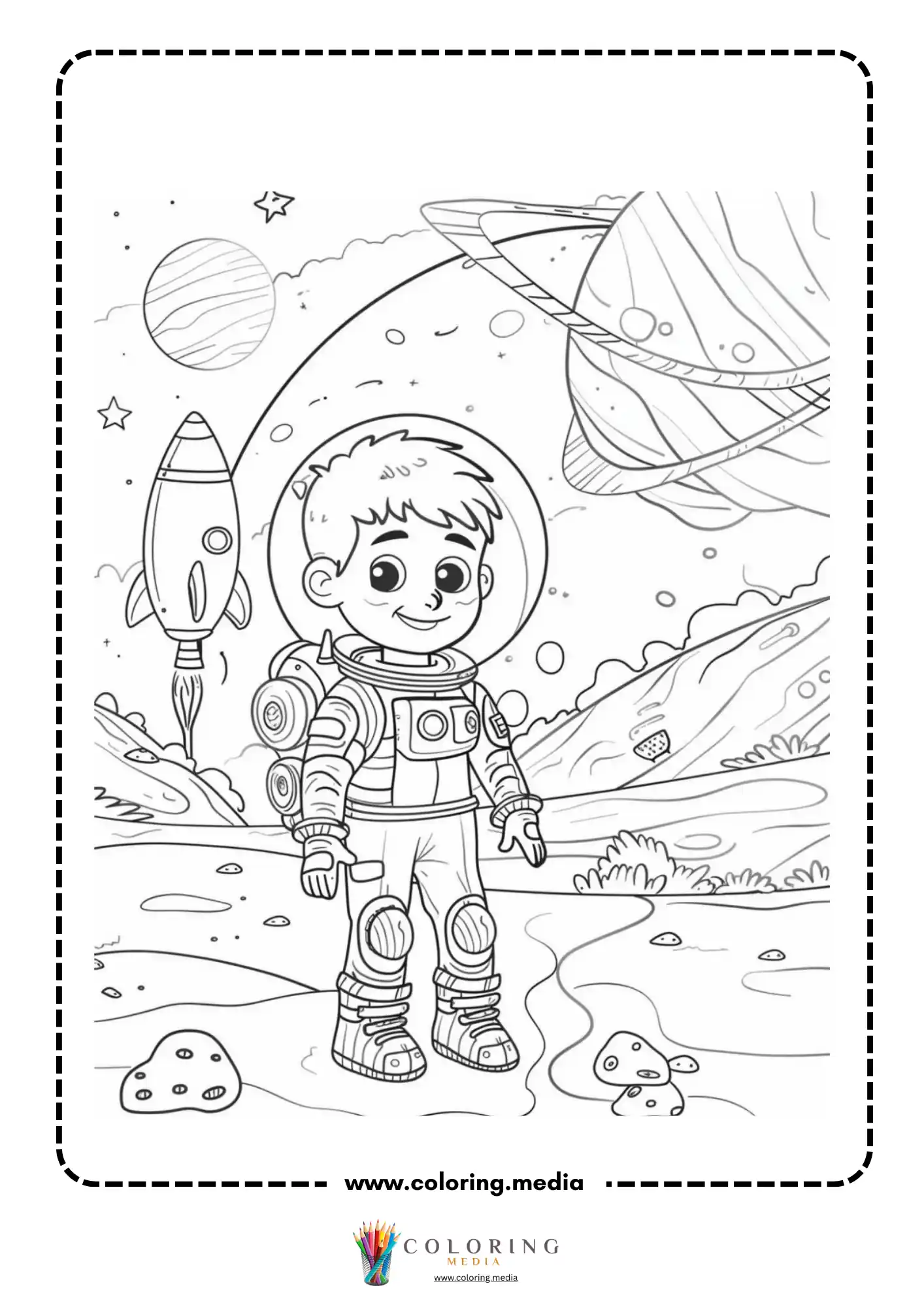
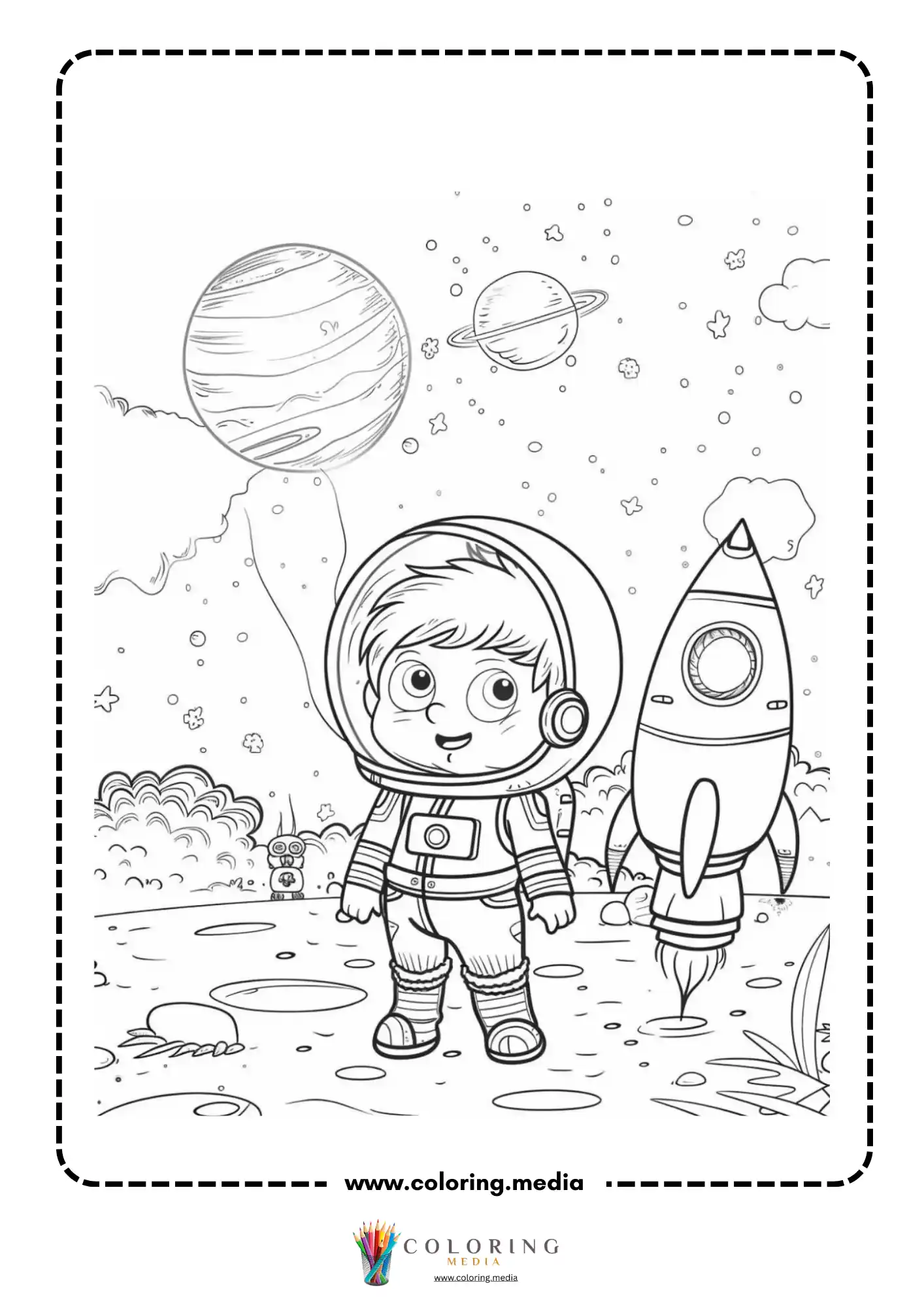
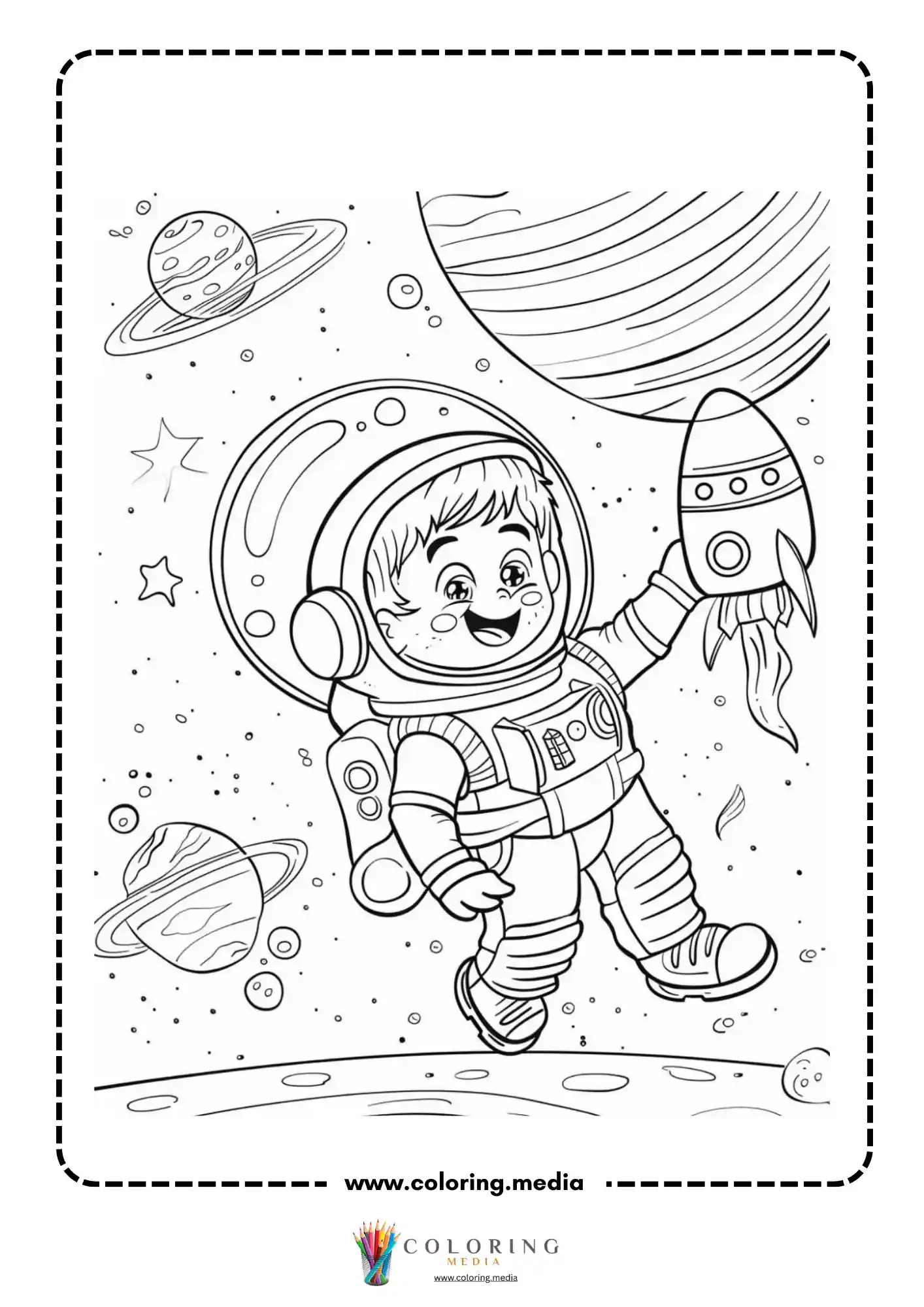
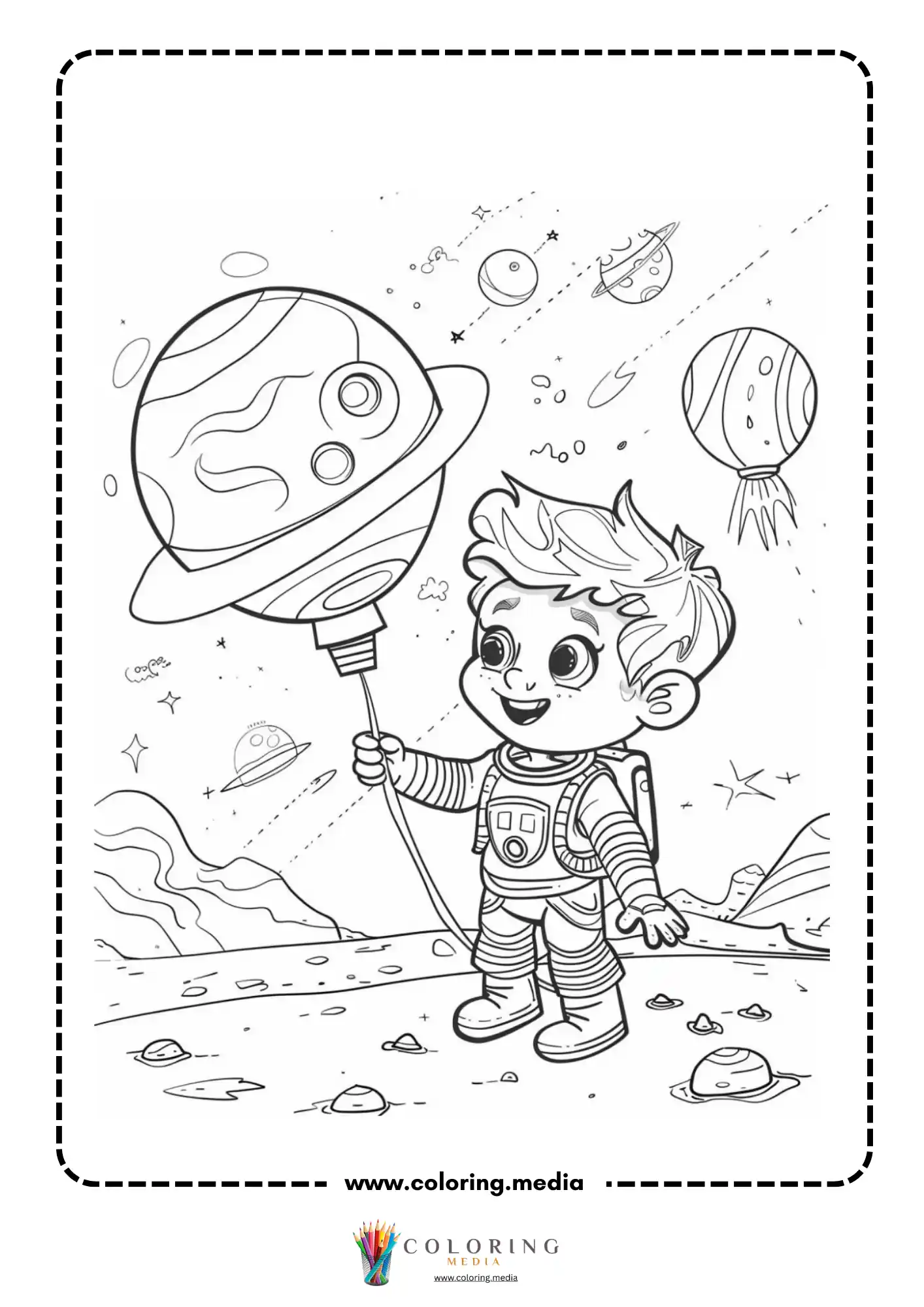
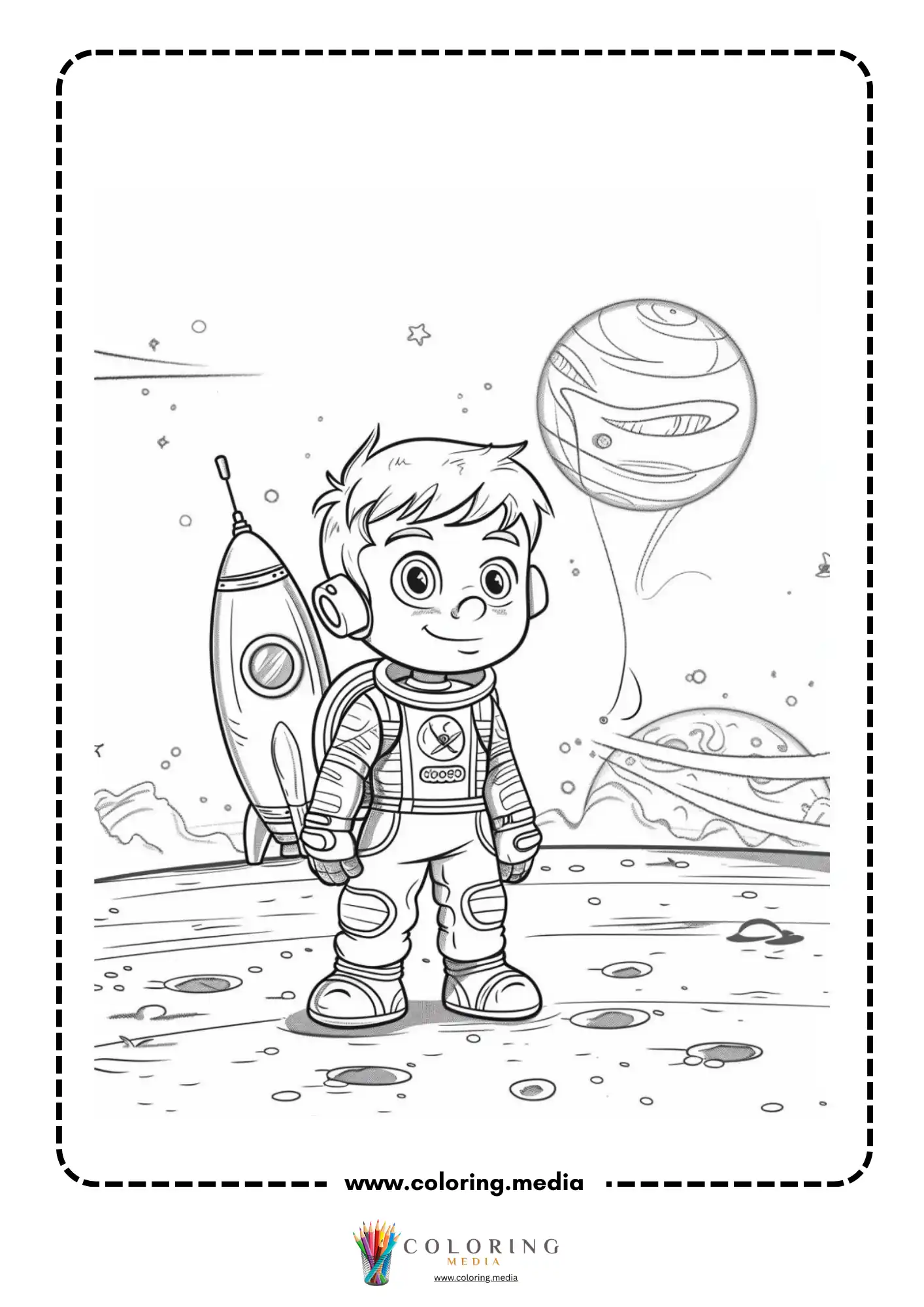
Every page in this set features a child astronaut — a small figure in a rounded spacesuit, helmet visor fogged with wonder — exploring planets, floating past moons, or launching on a rocket. The art style sits firmly in kawaii-adjacent cartoon territory: large heads, small bodies, chunky outlines of 3–4mm, minimal interior detail. The overall feel is joyful rather than scientific, which is exactly right for the target age.
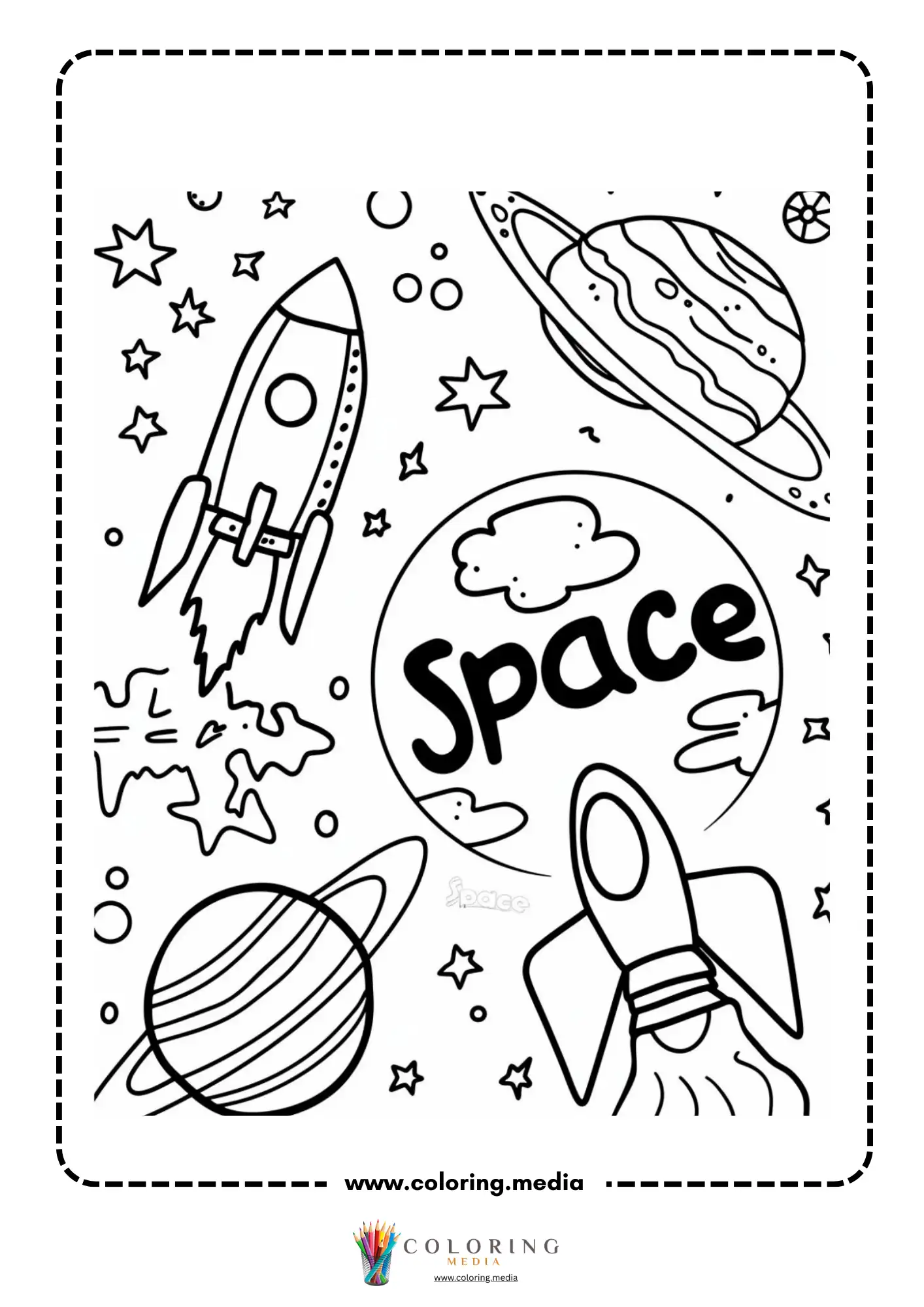
The scenes are varied enough to avoid repetition — some pages show the child alone on an alien surface, others show them with a rocket in the background, and a few pack in multiple planets and stars around the central figure. Everything here is free to download and easy to print.
Free Printable Space Coloring Pages
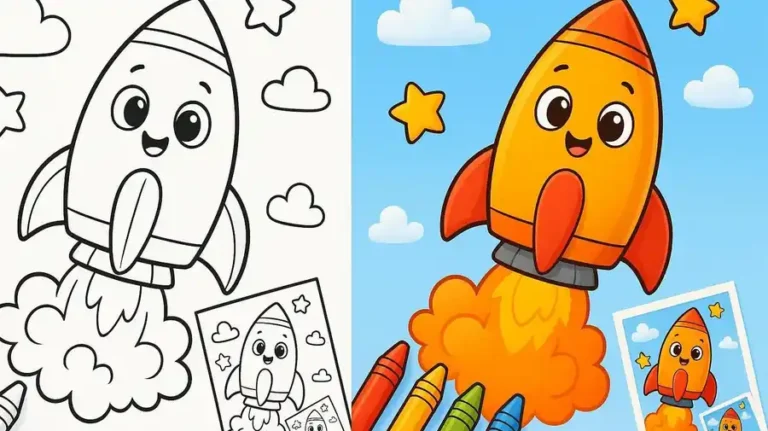
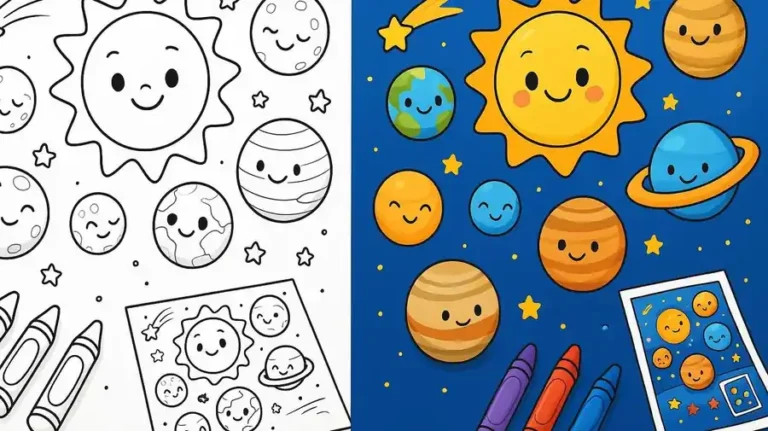
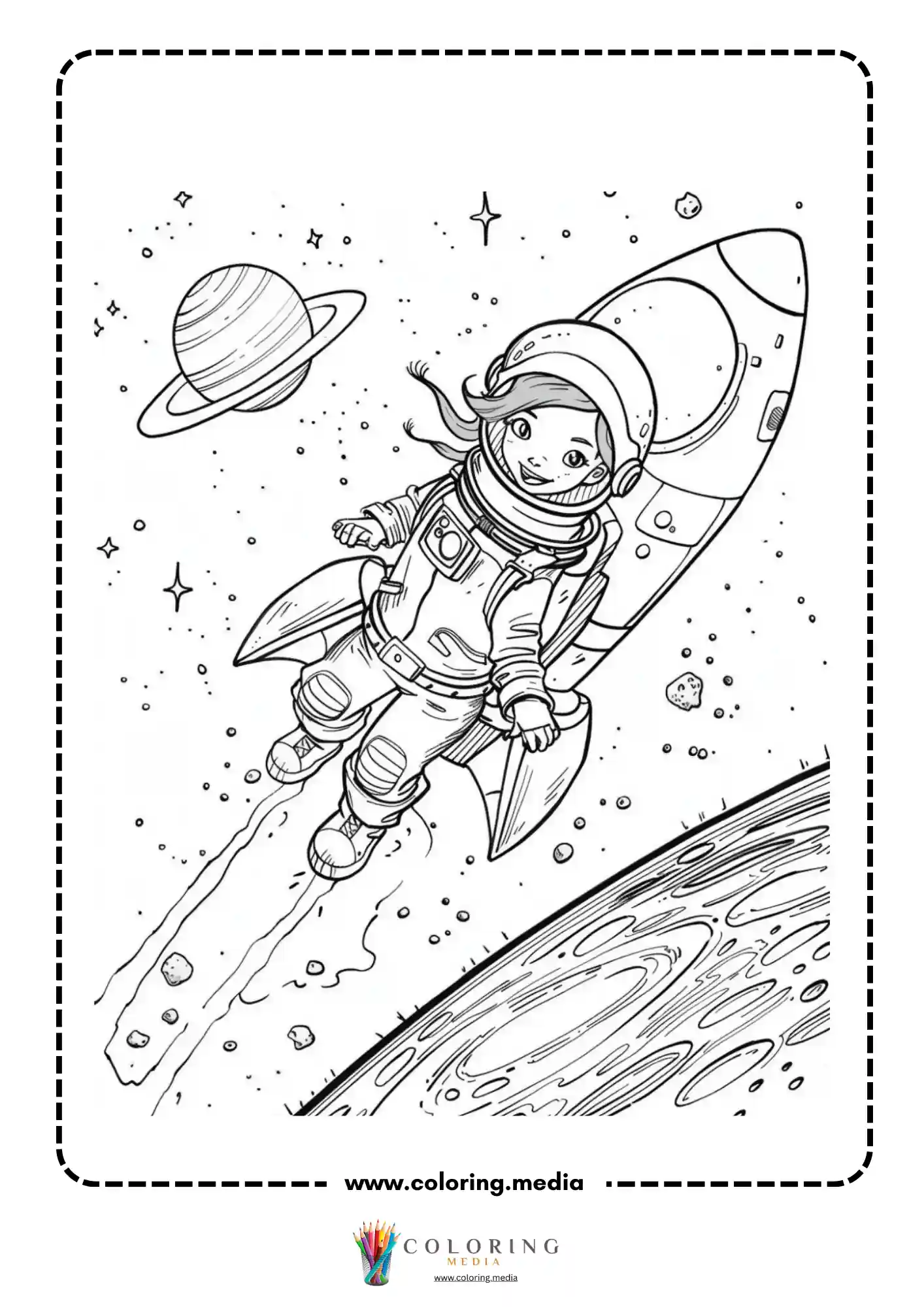
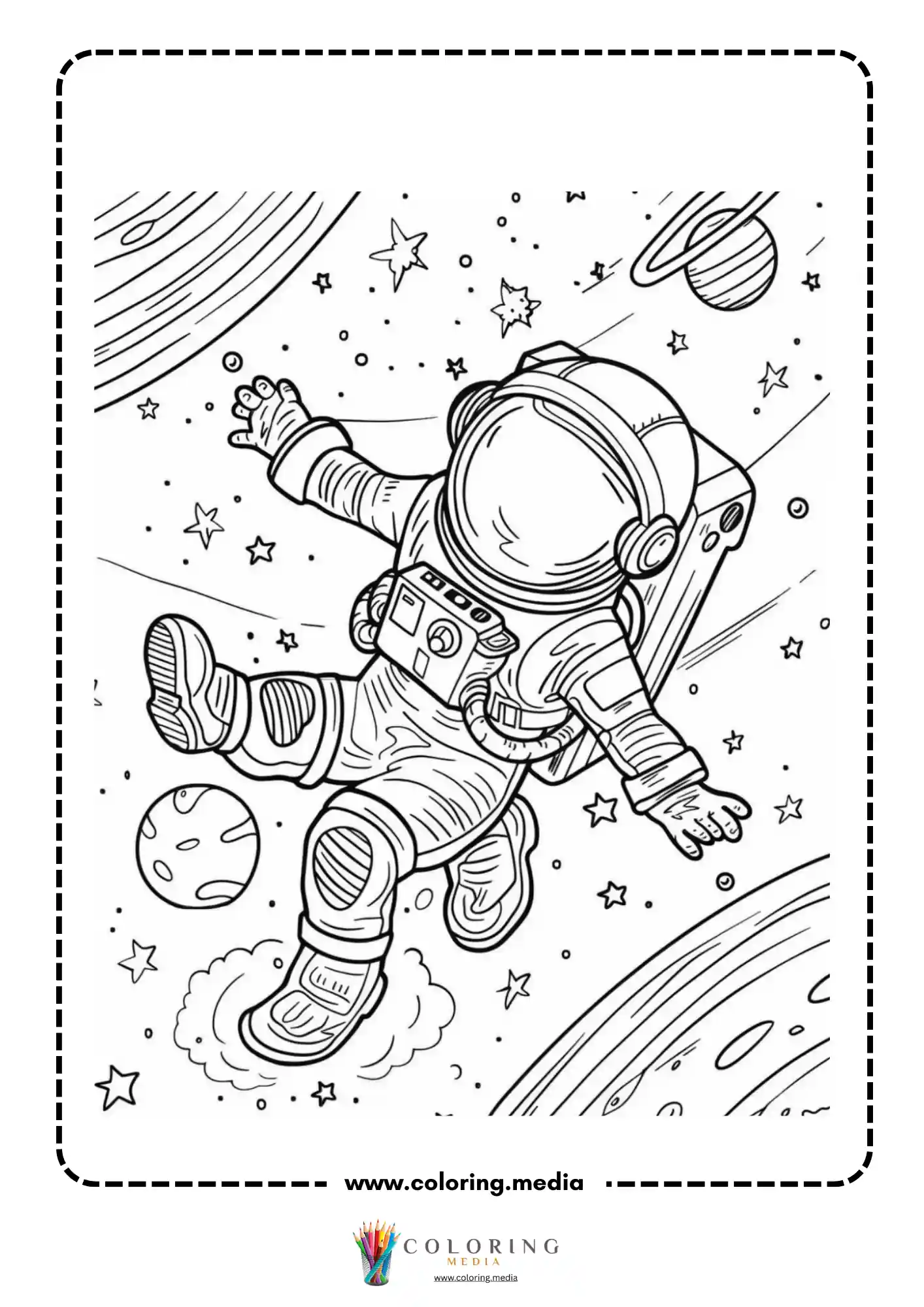
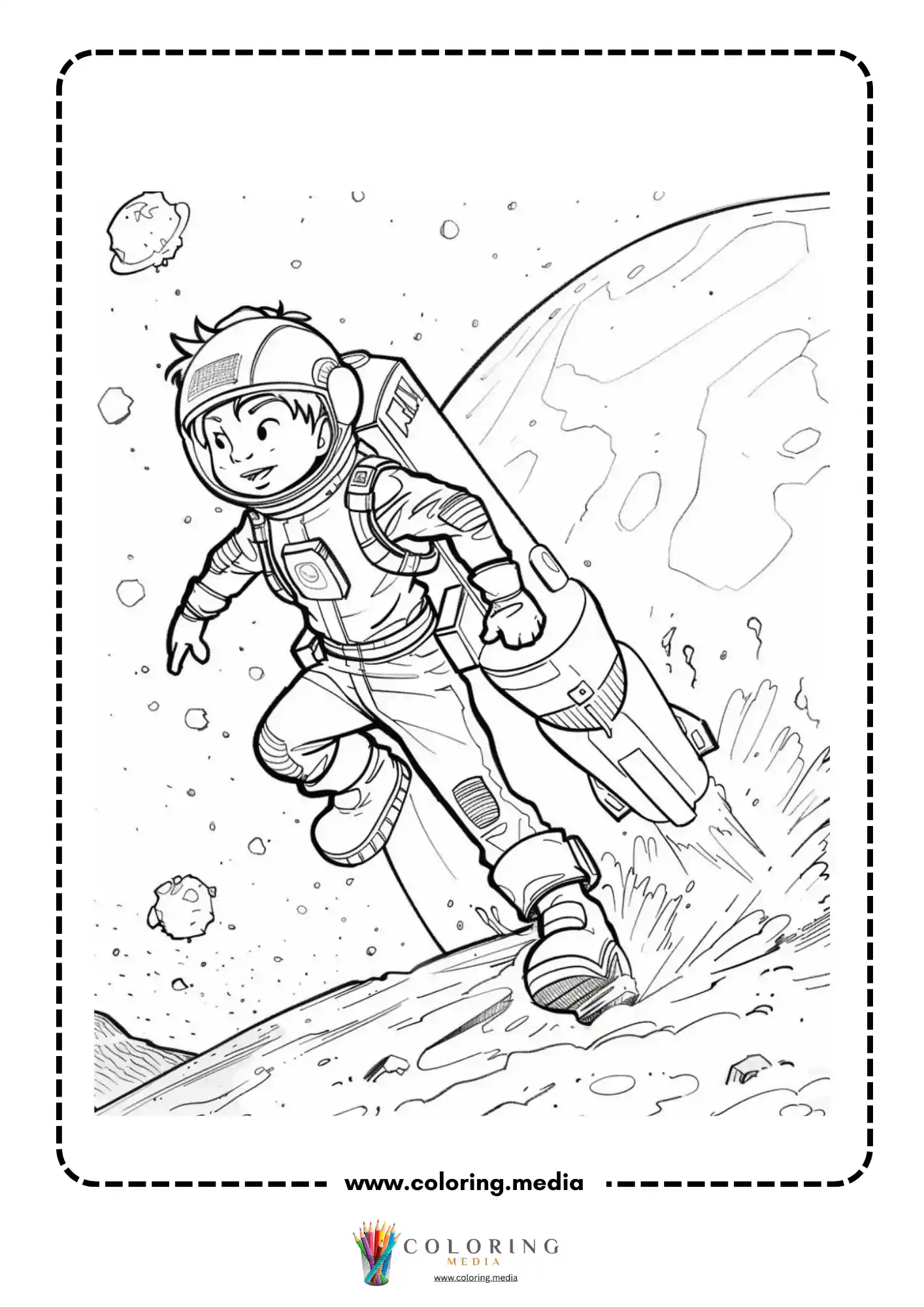
This collection includes 24 printable space coloring pages featuring cartoon child astronauts in full spacesuits exploring lunar and planetary surfaces, piloting rockets, floating through star fields, and posing with planets and alien flora. The backgrounds include craters, distant Earths, ringed planets, and scattered stars. Most pages are portrait-format single scenes with generous white space around the main figure. All files print on A4 or US Letter paper.



Who Are These Space Coloring Pages Best For?
These pages are squarely aimed at kindergarten-age children, roughly 4–6 years old. The 3–4mm outlines are wide enough for a crayon to stay inside without perfect hand control, and the child astronaut character gives younger colorers a human figure to identify with rather than an abstract planetary diagram. Most pages can be completed in a single sitting without the child losing interest.
Early elementary students (grades 1–2) can still enjoy these, particularly the pages with more background detail — star fields, multiple planets, rocky terrain. A first-grader with colored pencils will find more to work with in those pages than a crayon-stage kindergartener would, without the pages being at all difficult.
For a space unit in a classroom or homeschool setting, these pages work well as day-openers or quiet-time activities. The consistent character across pages creates a narrative feel — kids tend to think of the little astronaut as a specific character and invent stories about where they are going next.
Interesting Space Facts to Share While Coloring
Space is completely silent because there is no air for sound waves to travel through. In a real spacesuit, astronauts communicate by radio — if they took the helmet off, they could not hear a rocket launch happening 10 meters away.
The International Space Station travels at about 28,000 km/h, which means the astronauts aboard see roughly 16 sunrises and 16 sunsets every 24 hours as they lap the Earth. They follow a schedule set to Greenwich Mean Time to keep their days organized.
Weightlessness in space is not caused by being far from gravity — it is caused by falling. Astronauts on the ISS are in a constant free fall around Earth, which makes everything inside the station weightless including them. They just keep missing the ground because they are moving sideways so fast.
The first human to walk in space was Alexei Leonov in 1965, and his suit inflated so much in the vacuum that he could barely move his fingers. He had to let some air out of the suit manually to be flexible enough to get back inside the spacecraft.
There are more stars in the observable universe than grains of sand on all of Earth’s beaches combined — estimated at around 200 billion trillion, or 2 x 10 to the power of 23.
Creative Space Coloring and Craft Ideas
Name Your Astronaut Decide on a name, home planet, and mission for the little astronaut character before coloring — then write the mission details on the back of the page.
Design a Spacesuit Color the spacesuit in a custom color scheme with a unique mission patch on the shoulder, then describe what the patch represents.
Planet Inventor After coloring a scene with an alien planet, invent a name, atmosphere, and one resident creature for that planet and draw the creature in the margin.
Rocket Blueprint Color a rocket page, then flip it over and draw a labeled blueprint of the rocket’s interior — cockpit, engine, fuel tanks, sleeping area.
Space Journal Entry Write a one-paragraph journal entry from the astronaut’s point of view describing what they are seeing in the colored scene.
Glow-in-the-Dark Stars Add-On After coloring, stick small glow-in-the-dark star stickers onto the star field areas of the page for a night-time effect.
Mission Patch Design Draw a circular patch on a separate piece of paper inspired by the colored scene, including the astronaut’s initials and a space image.
Constellation Connect Use a ruler and pencil to connect any three stars in the background into a new constellation and give it a name.
How to Print These Space Coloring Pages
Each page downloads as a single PDF at 300 dpi, formatted for A4 and US Letter. Print from Adobe Reader or a browser with ‘fit to page’ enabled. Standard copy paper handles crayons and colored pencils well. For markers, 90gsm paper reduces bleed-through. Always select black-and-white printing to save ink.
Explore More Science-Nature Coloring Pages
If you enjoyed these pages, you may also like:
Solar System Coloring Pages
Spaceship Coloring Pages
Outer Space Coloring Pages
Astronaut Coloring Pages
Science & Nature Coloring Pages