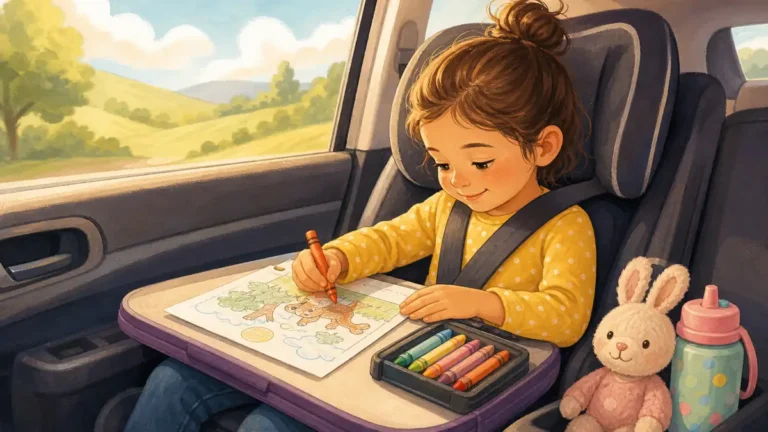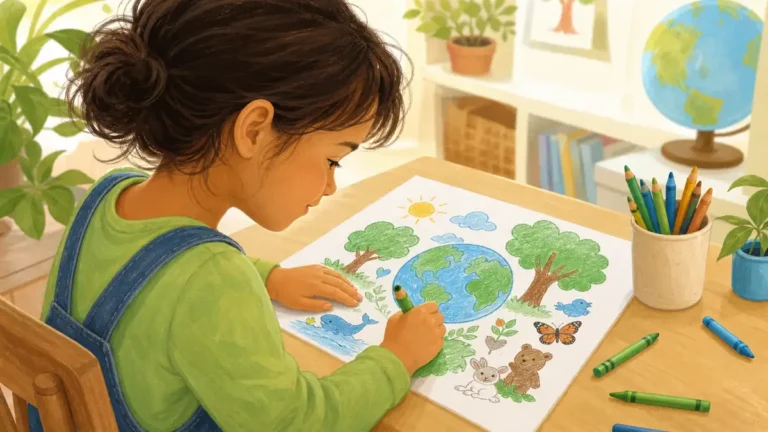

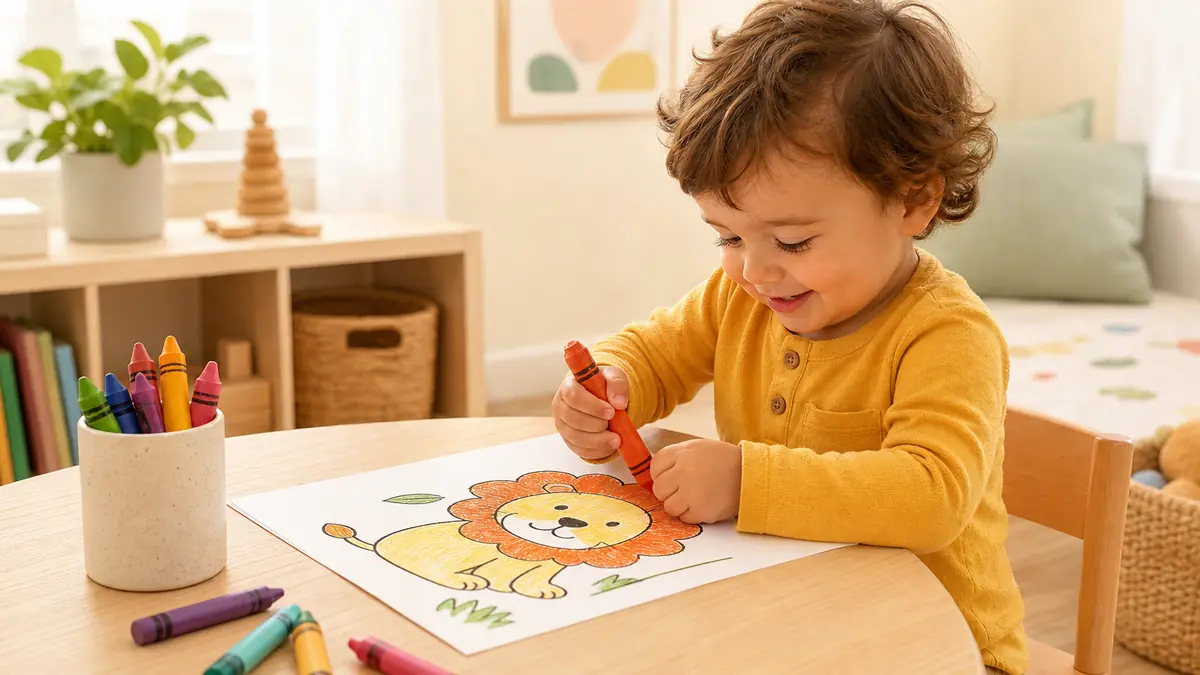

The best screen-free activities for toddlers are simple, hands-on, and require very little setup — and coloring pages tick every one of those boxes. A printed page with bold outlines, a set of chunky crayons, and a flat surface is genuinely all a toddler needs for 15–30 minutes of focused, independent, screen-free play that builds real skills at the same time.
Why Screen-Free Time Matters for Toddlers
The American Academy of Pediatrics recommends limiting screen time to video chatting only for children under 18 months, and no more than one hour per day of high-quality programming for children 2–5. But knowing the limit and filling that time are two different challenges. Toddlers have energy, short attention spans, and a need for constant sensory input — screens are easy precisely because they deliver that input effortlessly.
Screen-free alternatives need to offer something equally engaging but with a different quality of stimulation: physical, creative, and interactive rather than passive. Coloring does exactly that. The grip, the pressure, the color choices, the visible result — it engages a toddler’s sensory and cognitive systems in ways a screen simply cannot.
Screen-Free Coloring Activities for Toddlers by Age
18 Months – 2 Years
At this age, “coloring” is really mark-making — and that’s exactly right. Toddlers at this stage are developing the tripod grip that will later let them hold pencils properly. Use our easy coloring pages for kids with the largest, simplest outlines. Don’t worry about staying inside the lines — the physical experience of holding a crayon and making marks on paper is the entire developmental point at this age.
- Use large, triangular or chunky crayons — easier to grip than standard size
- Tape the page to the table or a clipboard to prevent sliding
- Limit to 2–3 crayons at a time to reduce overwhelm
2 – 3 Years
Two-year-olds begin to show color preferences and subject preferences — a significant developmental leap. They’ll ask for specific colors and reach for pages that feature things they recognize and love. Our animal coloring pages and vehicle pages are top picks at this age — familiar, exciting subjects with simple enough outlines for developing motor skills.
- Name colors as your toddler picks them up — builds vocabulary effortlessly
- Offer 2–3 page choices so they can exercise preference
- Sessions of 15–20 minutes are completely normal and appropriate
3 Years
Three-year-olds are beginning to show intentional coloring — trying to fill areas rather than just making marks. They’re ready for slightly more detailed pages and longer sessions. Food coloring pages are a big hit at this age — pizza, ice cream, and fruit generate lots of conversation and imaginative play around the coloring activity.
Other Screen-Free Activities to Pair with Coloring
Coloring works well as an anchor activity — something that can absorb independent time while parents do other tasks nearby. These pairings extend the screen-free window and build on the same focused energy:
- Coloring + audiobooks: At age 3+, playing a simple audiobook or children’s podcast while coloring keeps the activity going longer and adds a language-rich layer.
- Coloring + playdough: Alternate sessions — color a page, then make the animal from playdough. Connects the visual (coloring) to the tactile (sculpting).
- Coloring + sorting games: After coloring, sort the finished pages by color used, theme, or size. Builds categorization skills and extends the activity naturally.
- Coloring + pretend play: Use finished pages as props — the colored animal “comes to life” and becomes a character in the afternoon’s pretend play.
Setting Up a Screen-Free Coloring Routine for Toddlers
Routine is everything with toddlers. When coloring happens at the same time in the same spot most days, it becomes an expected part of the day rather than something that requires convincing. Two particularly effective windows:
- After breakfast / mid-morning: Toddlers are fresh and focused before midday fatigue sets in. A 20-minute coloring session while a parent has coffee is a genuinely sustainable daily habit.
- After lunch / quiet time: The natural energy dip after lunch makes it ideal for a calm, seated activity. Coloring eases the transition into naptime or rest time without the resistance that comes from enforced inactivity.
Visit our Tips & Techniques hub for more ideas on building screen-free routines that actually stick.
Frequently Asked Questions
What are the best screen-free activities for toddlers at home?
The best screen-free toddler activities are hands-on, low-prep, and developmentally appropriate. Coloring with bold, simple pages is consistently effective across the toddler age range. Other strong options include playdough, simple puzzles, sensory bins, and building blocks. The most sustainable screen-free routines combine several of these in predictable daily slots.
How do I get my toddler to do screen-free activities?
Start with activities your toddler already enjoys — if they love animals, start with animal coloring pages. Establish a consistent time and place so it becomes routine. Participate alongside them rather than handing them the activity and stepping away. Novelty helps: rotate page themes regularly so there’s always something new.
Are coloring pages good for toddlers?
Yes. Coloring pages develop the grip strength and fine motor control that underpin later writing skills. They also build color recognition, focus, and the ability to work toward a visible result — all foundational for school readiness. Use age-appropriate pages: large, bold outlines for under-3s, slightly more detailed for 3-year-olds.
How long should toddlers do screen-free activities?
Toddler attention spans vary widely — anywhere from 5 to 30 minutes depending on the child, the activity, and the time of day. Rather than targeting a specific duration, aim for a consistent daily window of screen-free activity and let the toddler exit naturally. Multiple short sessions across the day add up to meaningful screen-free time without forcing sustained attention beyond what’s developmentally reasonable.
What crayons are best for toddler coloring?
Chunky or triangular crayons are significantly easier for toddlers to grip than standard-sized crayons. Crayola My First Crayons and similar “toddler grip” designs are worth the small premium for this age group. Washable crayons are strongly recommended — toddler coloring rarely stays entirely on the page.
Building a screen-free routine with toddlers doesn’t require elaborate activities or expensive toys. A stack of printed coloring pages and a set of chunky crayons, kept in a consistent spot, gives toddlers something genuinely engaging to reach for — and gives parents a reliable daily pocket of screen-free time. Browse our easy coloring pages and animal pages to build your toddler’s first coloring collection.