
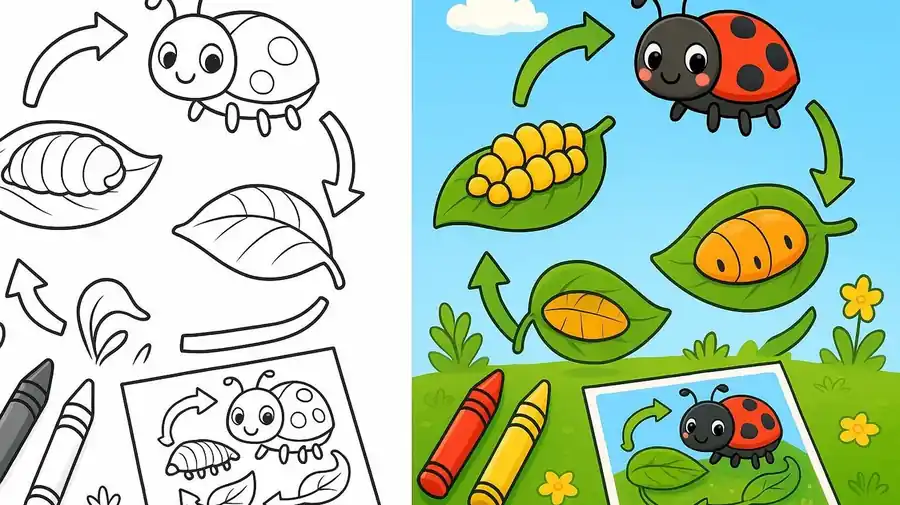
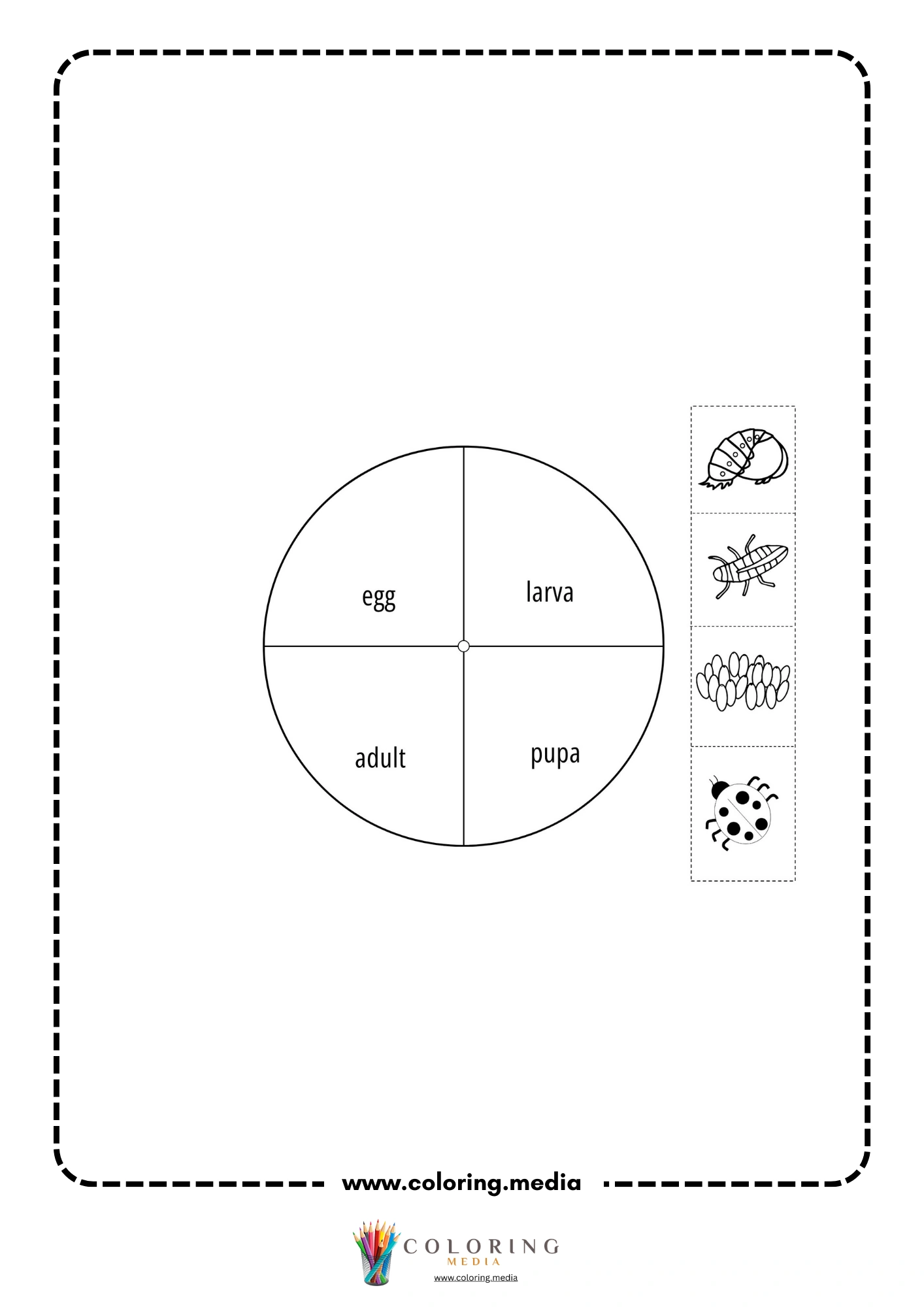
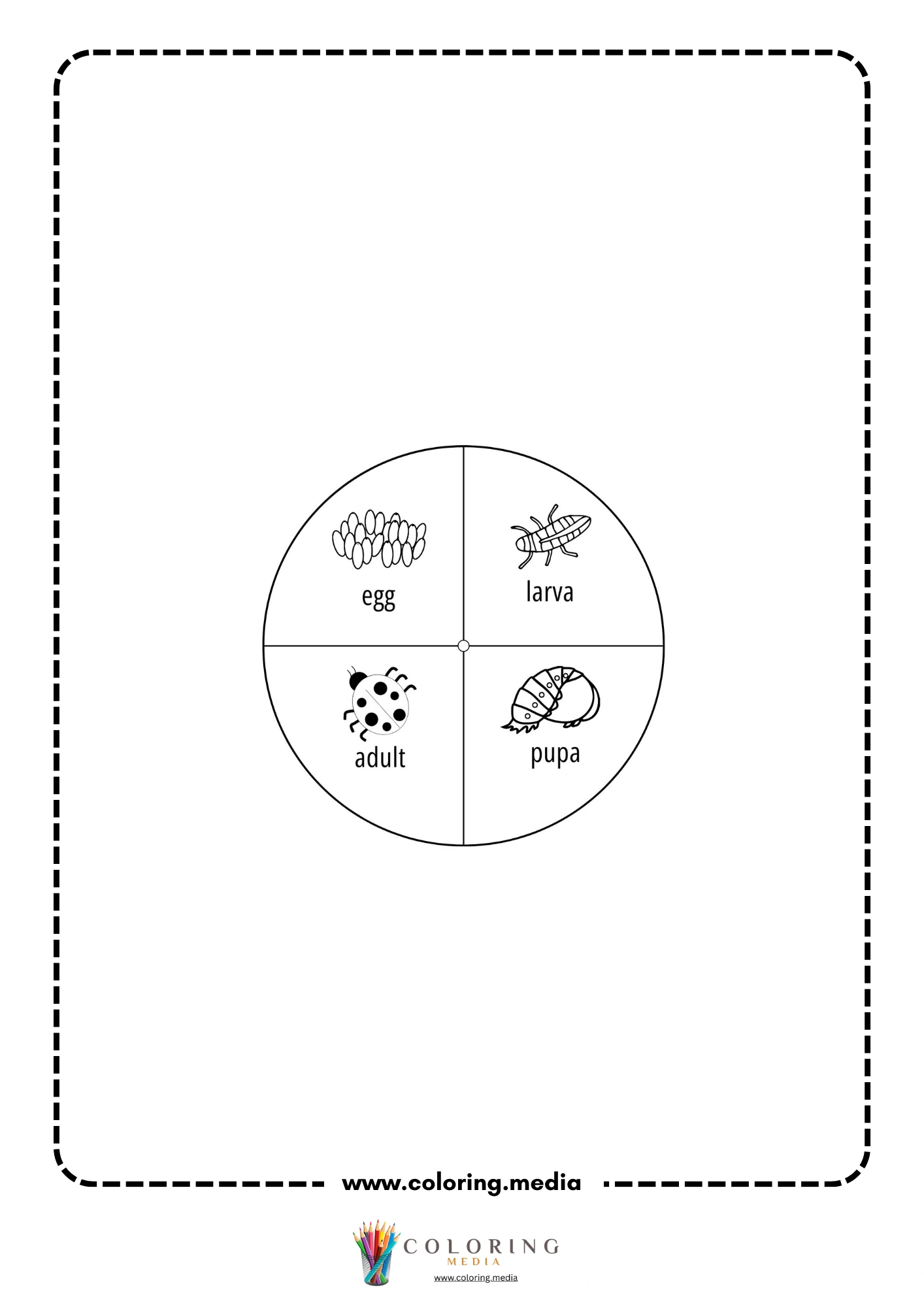
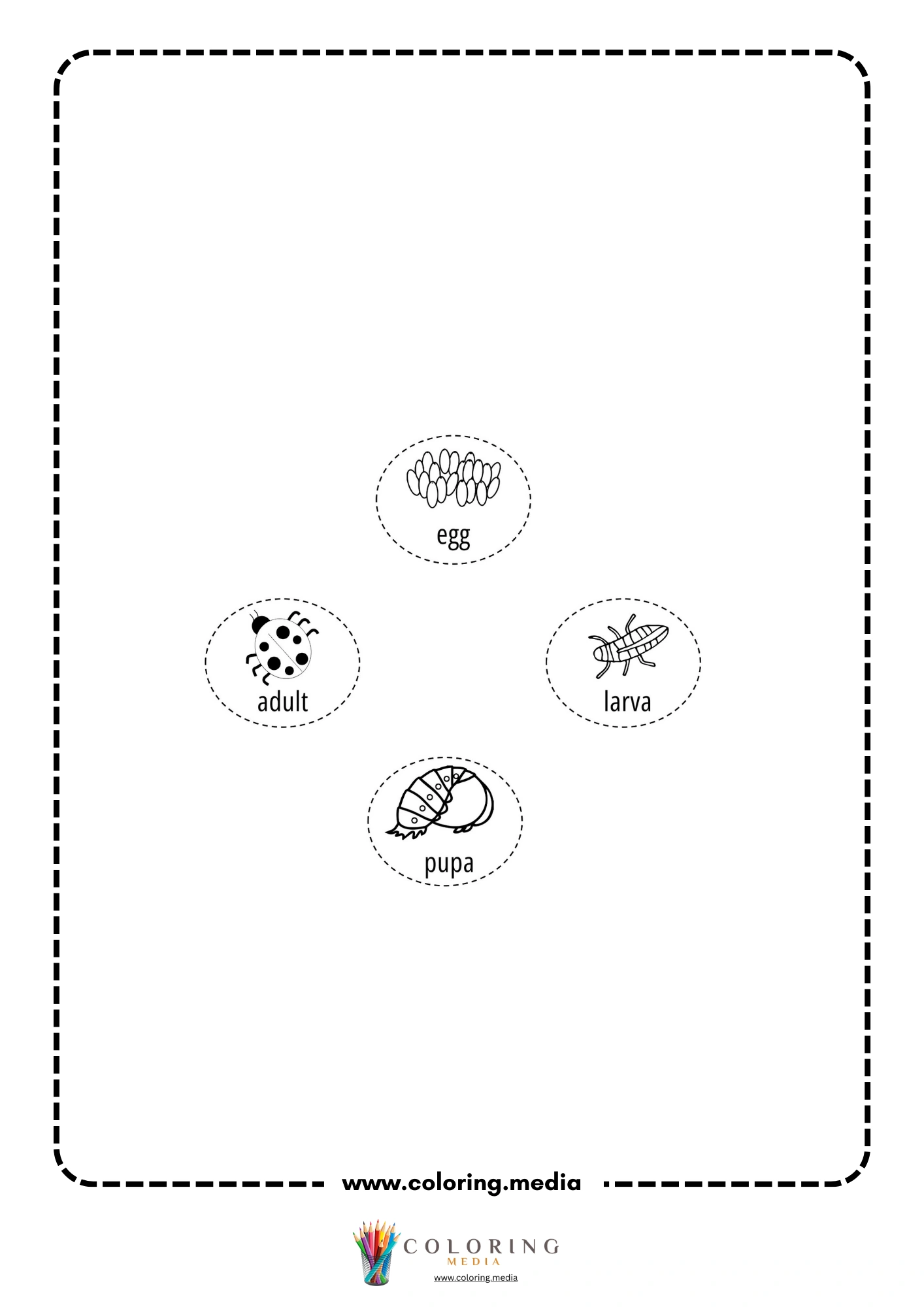
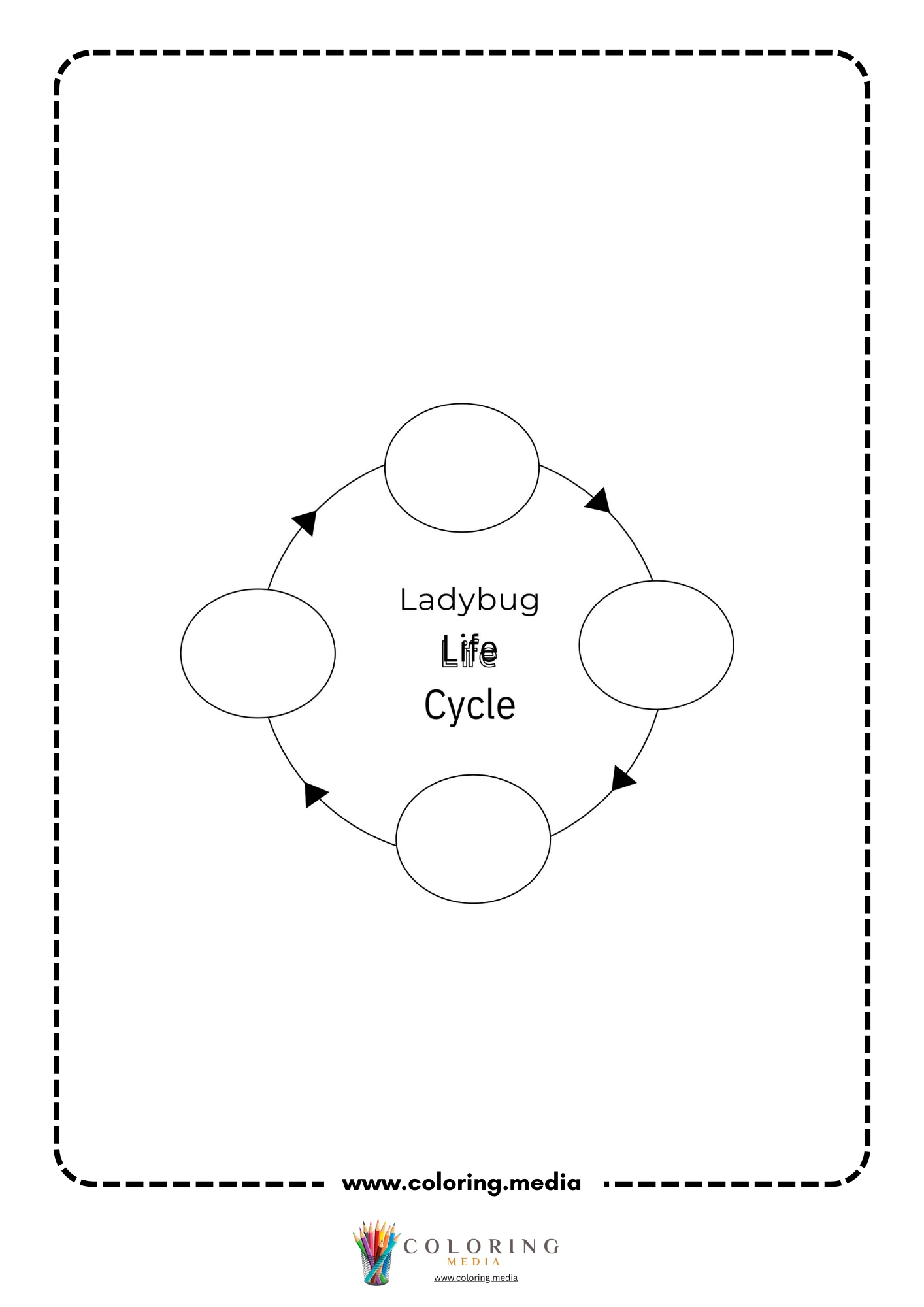
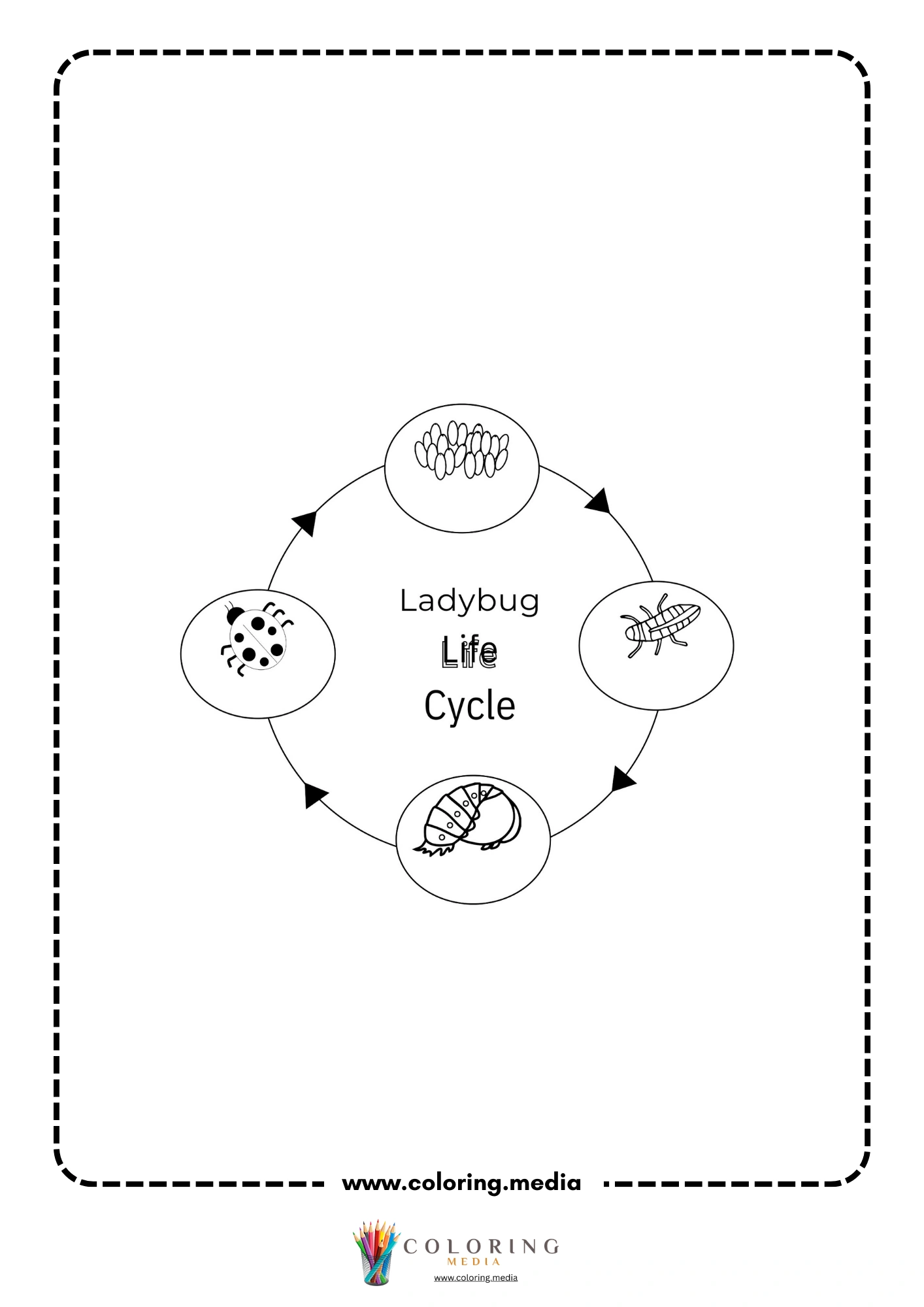
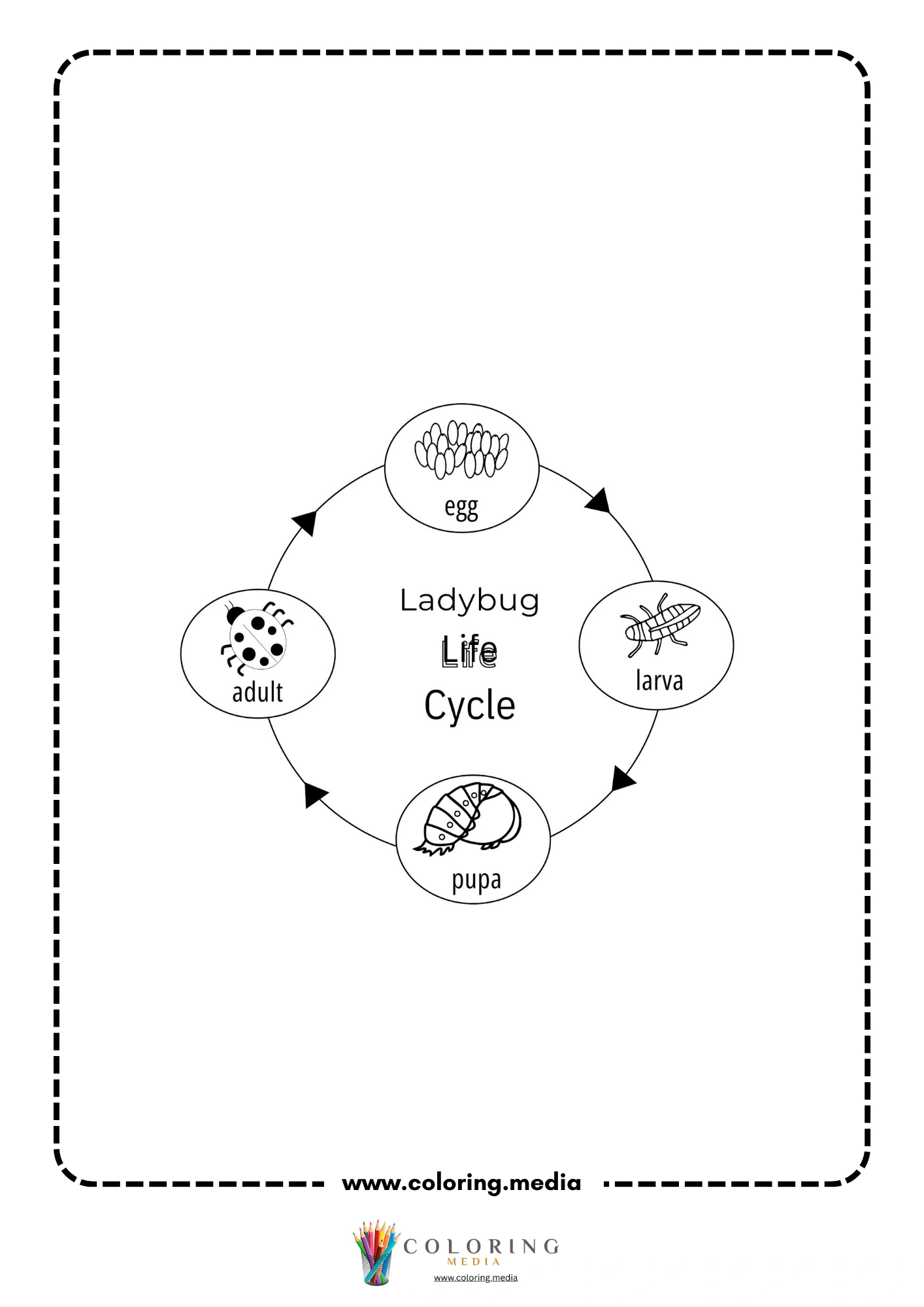
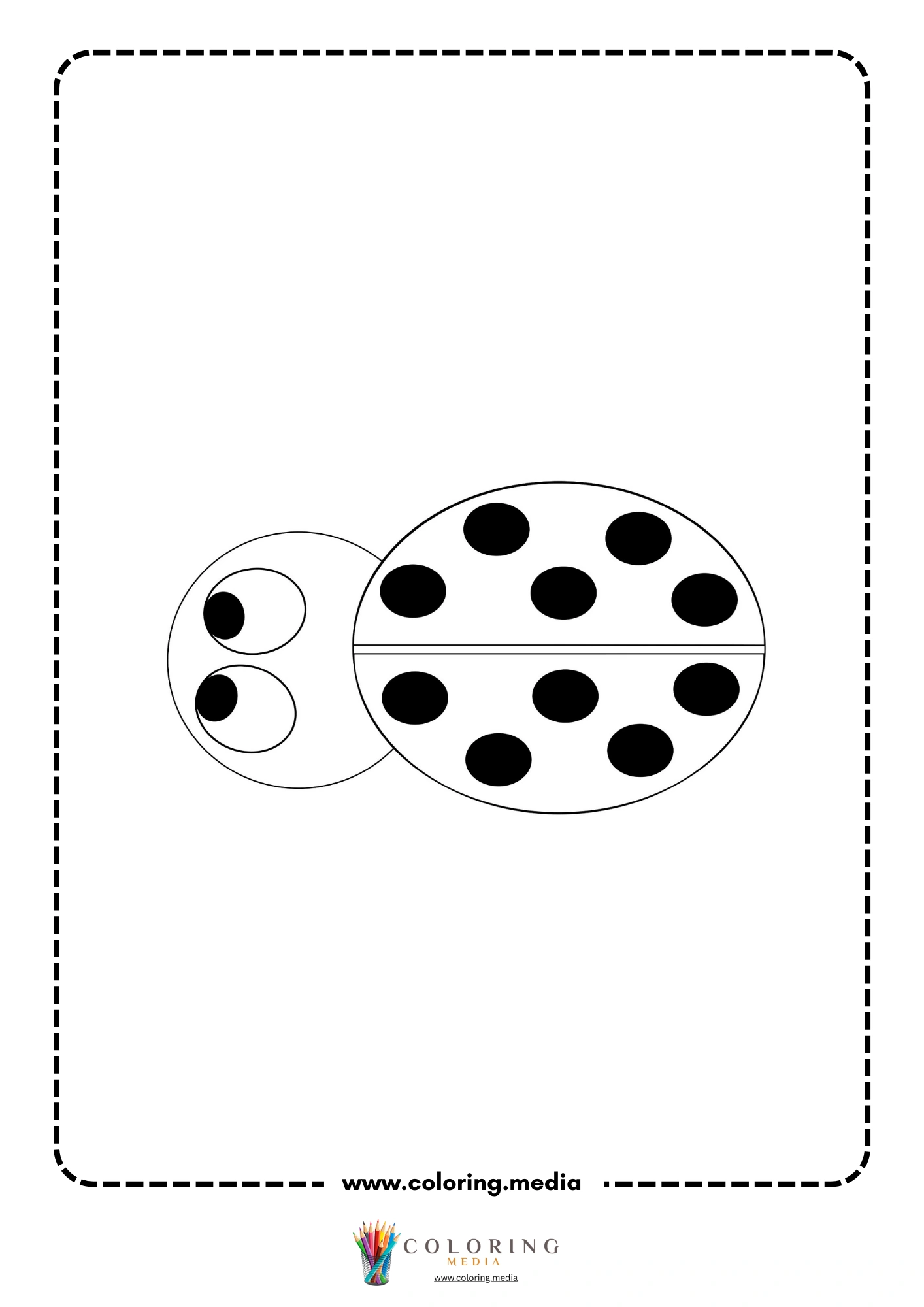
These 13 pages present the ladybug life cycle in a deliberately minimal, open-space format — circular diagrams with simple dotted egg cluster outlines, a larva shape, a pupa oval, and an adult ladybug, all drawn with lots of white space around them and clean, easy-to-read labels. Some pages show the complete four-stage cycle in one diagram; others isolate each stage on its own page for individual examination. A few pages include blank versions where children write the stage names themselves.
The minimal design is intentional for this age group — too many visual elements compete for attention and make the educational point harder to extract. With one or two shapes per page and clear labels, even a 4-year-old can successfully engage with the content. Everything here is free to download and easy to print.
Free Printable Ladybug Life Cycle Coloring Pages
This collection includes 13 printable ladybug life cycle coloring pages in a clean, minimal educational diagram style covering the four stages of ladybug development — egg cluster, larva, pupa, and adult. Formats include complete labeled diagrams, individual stage pages, blank versions for student labeling, and a reading-passage reference. Print on US Letter or A4 paper.


Who Are These Ladybug Life Cycle Coloring Pages Best For?
Kindergarteners and preschoolers (ages 3-6) are the primary audience. Ladybugs are familiar, loved, and generally non-frightening — they are one of the most approachable insects for introducing life cycle concepts to very young children. The simple diagram style means a 3-year-old can color one large shape per page and still produce a page that makes biological sense.
Teachers using this set can differentiate easily: give younger children or early learners the pre-labeled complete diagram and let them color it, while giving more advanced learners the blank versions to test their recall of stage names. The same pages serve both levels without any additional preparation.
Parents who find a ladybug outside with a young child can use these pages immediately afterward — coloring the life cycle together while the memory of the real insect is fresh creates a direct connection between outdoor observation and classroom science.
Interesting Ladybug Life Cycle Facts to Share While Coloring
Ladybugs are not bugs — they are beetles. True bugs belong to the order Hemiptera and have sucking mouthparts. Ladybugs belong to Coleoptera (beetles) and have chewing mouthparts. Their bright red coloring with black dots is a warning to predators that they taste bad — a defense strategy called aposematism.
A single ladybug eats up to 5,000 aphids in its lifetime. This makes ladybugs popular in gardens and agriculture as a natural pest control method. Farmers sometimes purchase and release ladybugs specifically to reduce aphid populations without pesticides.
Ladybugs overwinter in large groups. As temperatures drop in autumn, ladybugs cluster together in leaf litter, under bark, or inside buildings in groups that can number in the thousands. The clustering reduces moisture loss and keeps individual insects warmer through shared body heat.
Creative Ladybug Life Cycle Coloring and Craft Ideas
Egg Dot Counting Ladybug egg clusters contain 10-50 eggs in neat oval groupings. After coloring the egg cluster page, draw a realistic cluster with exactly 20 dots in neat rows as a counting-and-drawing activity.
Lifecycle Sequencing Cards Cut individual stage pages to card size and shuffle them — race to arrange in the correct sequence from egg to adult.
Ladybug Spot Math Count the spots on different ladybug species (2-spot, 7-spot, 22-spot) — the number of spots varies by species, not by age. Draw three species variants on a blank page.
Nature Hunt Go outside and find aphids on a rose bush or similar plant — the same plant where ladybugs lay their eggs. Count how many aphids are on one stem.
Stage Comparison Compare the ladybug life cycle diagram to the butterfly life cycle — both have four stages, but the intermediate stages look dramatically different. How are they similar, how are they different?
Minimal Art Study The minimal style of these pages is deliberate. Try drawing your own minimal life cycle diagram for a different insect using the same approach: one shape per stage, lots of white space.
Garden Design Design a garden on paper that would attract and support ladybugs — which plants attract aphids (the ladybug’s food), and which provide shelter?
Color Variation Ladybugs come in red, orange, yellow, and even black with red spots. Color each stage page a different realistic ladybug color to represent different species.
How to Print These Ladybug Life Cycle Coloring Pages
Each page downloads as a PDF formatted for US Letter and A4 paper. Standard copy paper works well. For the blank labeling versions, print on cardstock if children will be writing and erasing multiple times. All designs print cleanly in grayscale.
Explore More Science & Nature Coloring Pages
If you enjoyed these pages, you may also like:
Butterfly Life Cycle Coloring Pages
Kindergarten Spider Life Cycle Coloring Pages
Life Cycle of a Frog Coloring Pages
Life Cycle of a Chicken Coloring Pages
Science & Nature Coloring Pages