
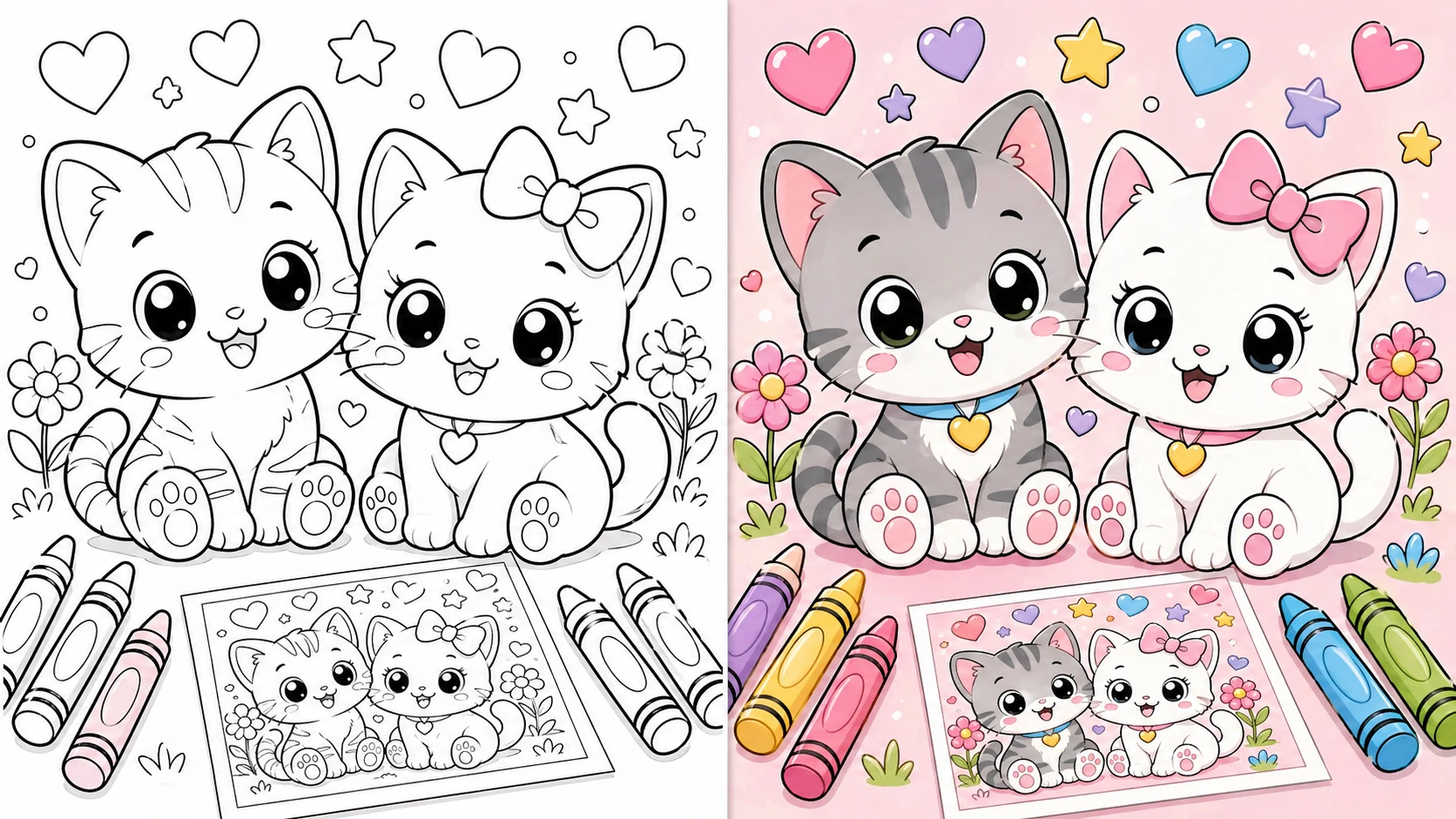
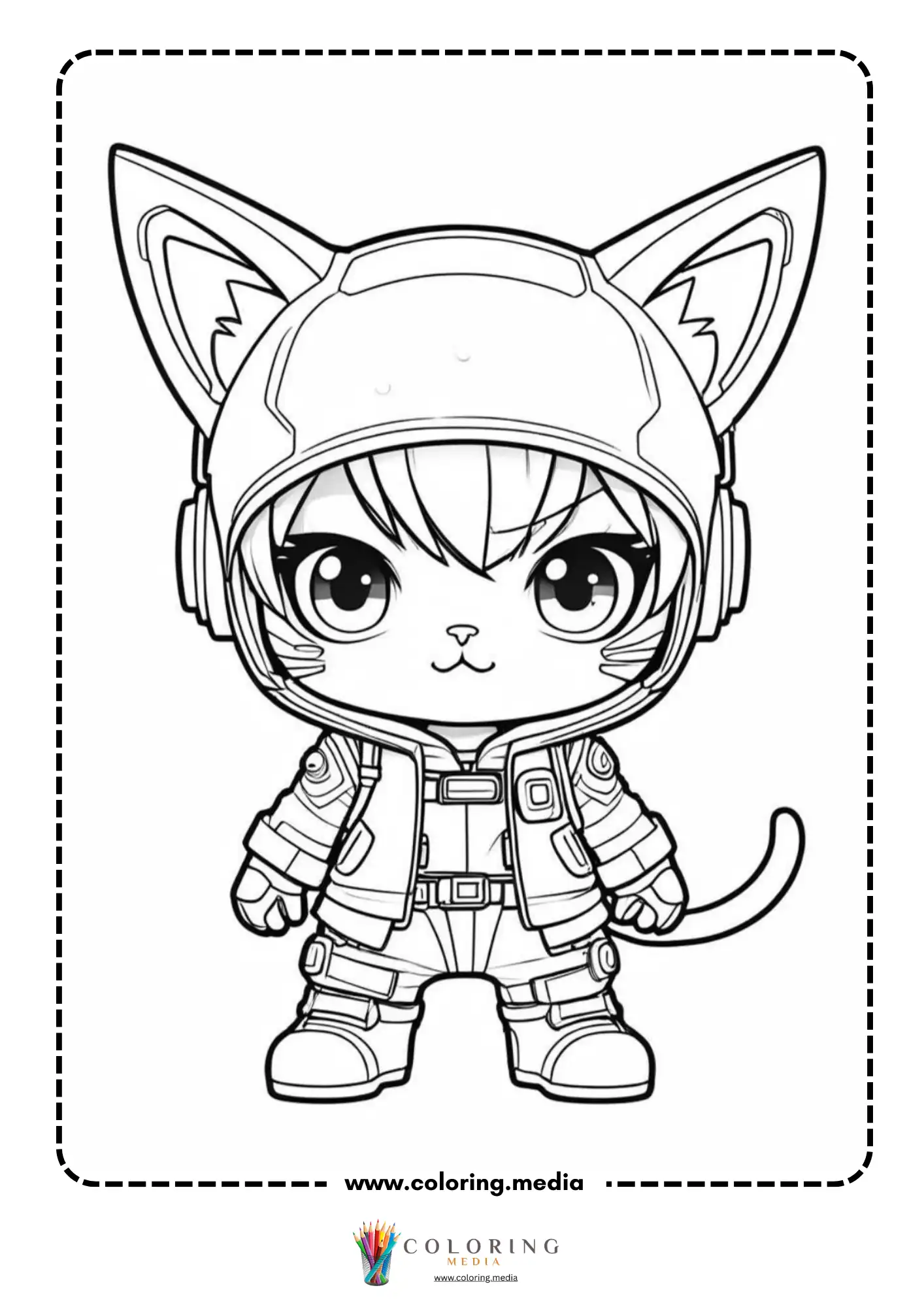
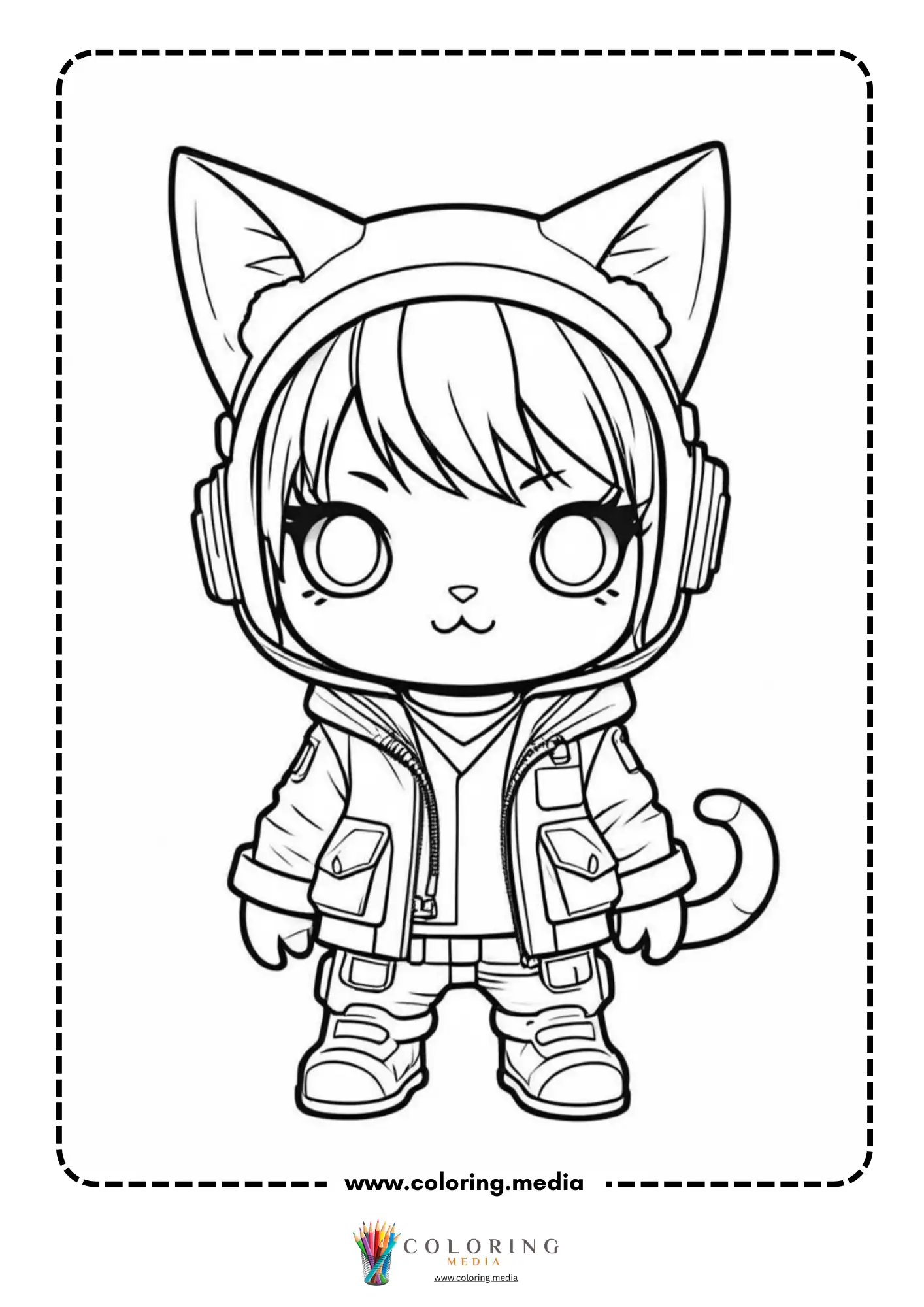
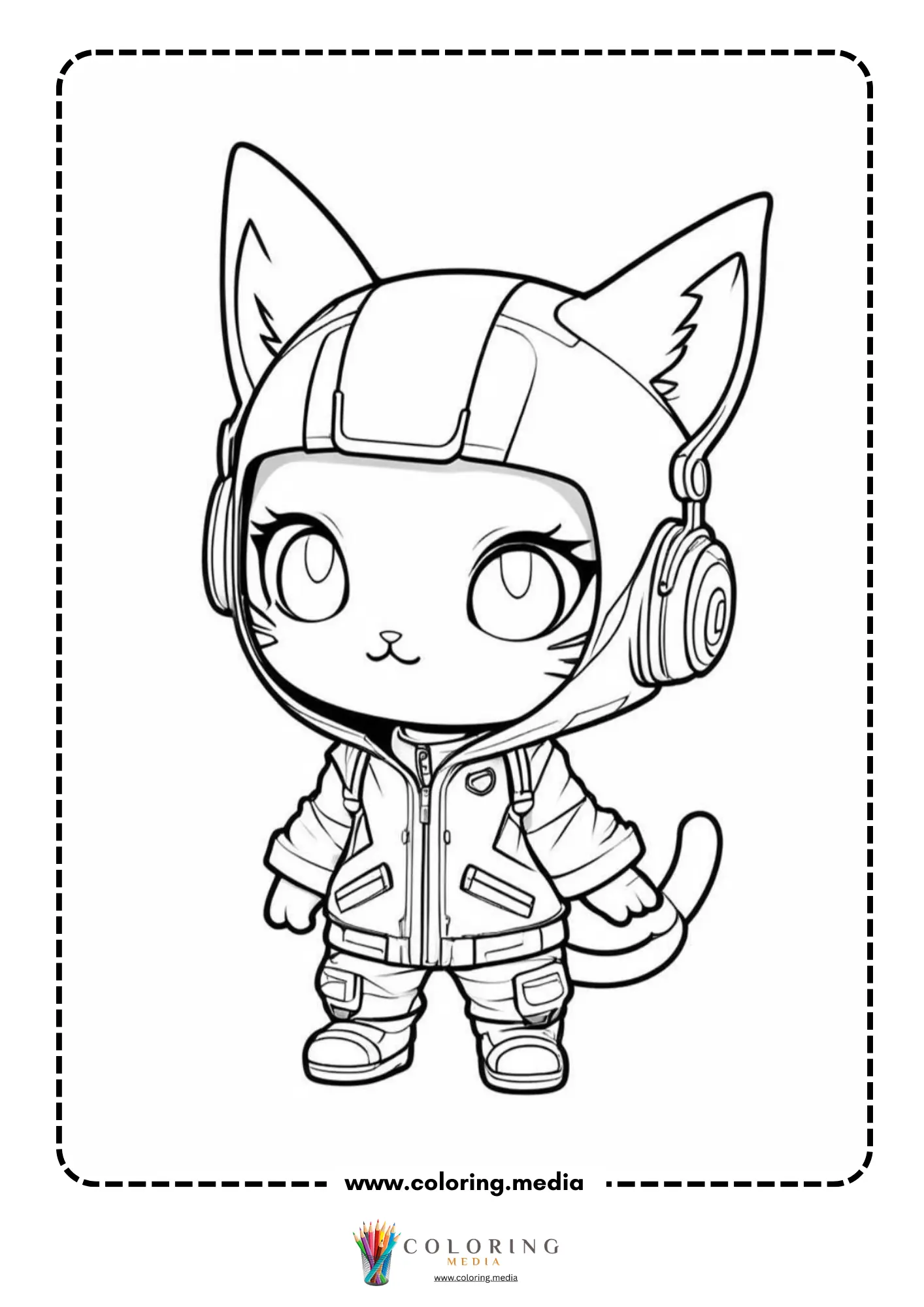
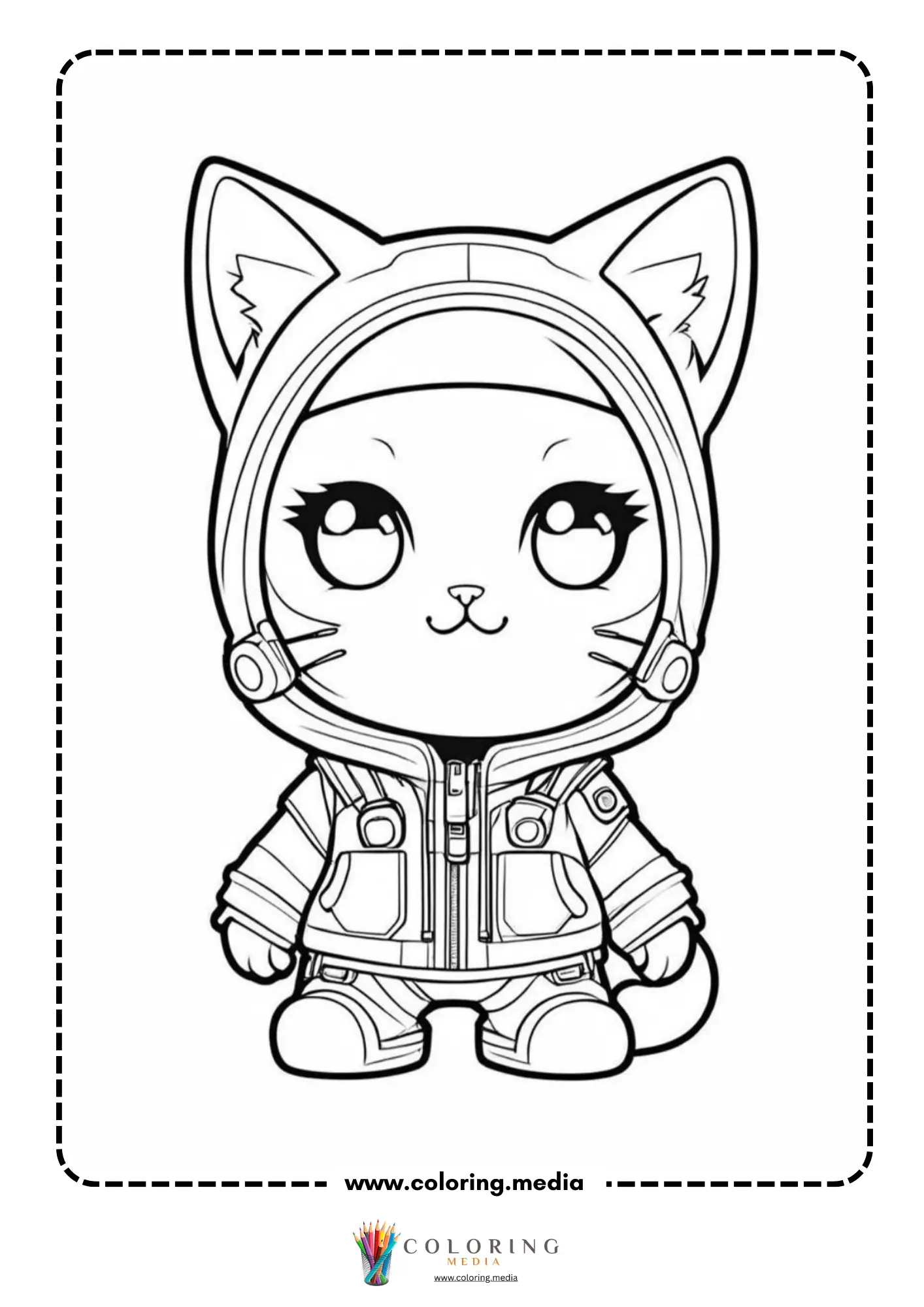
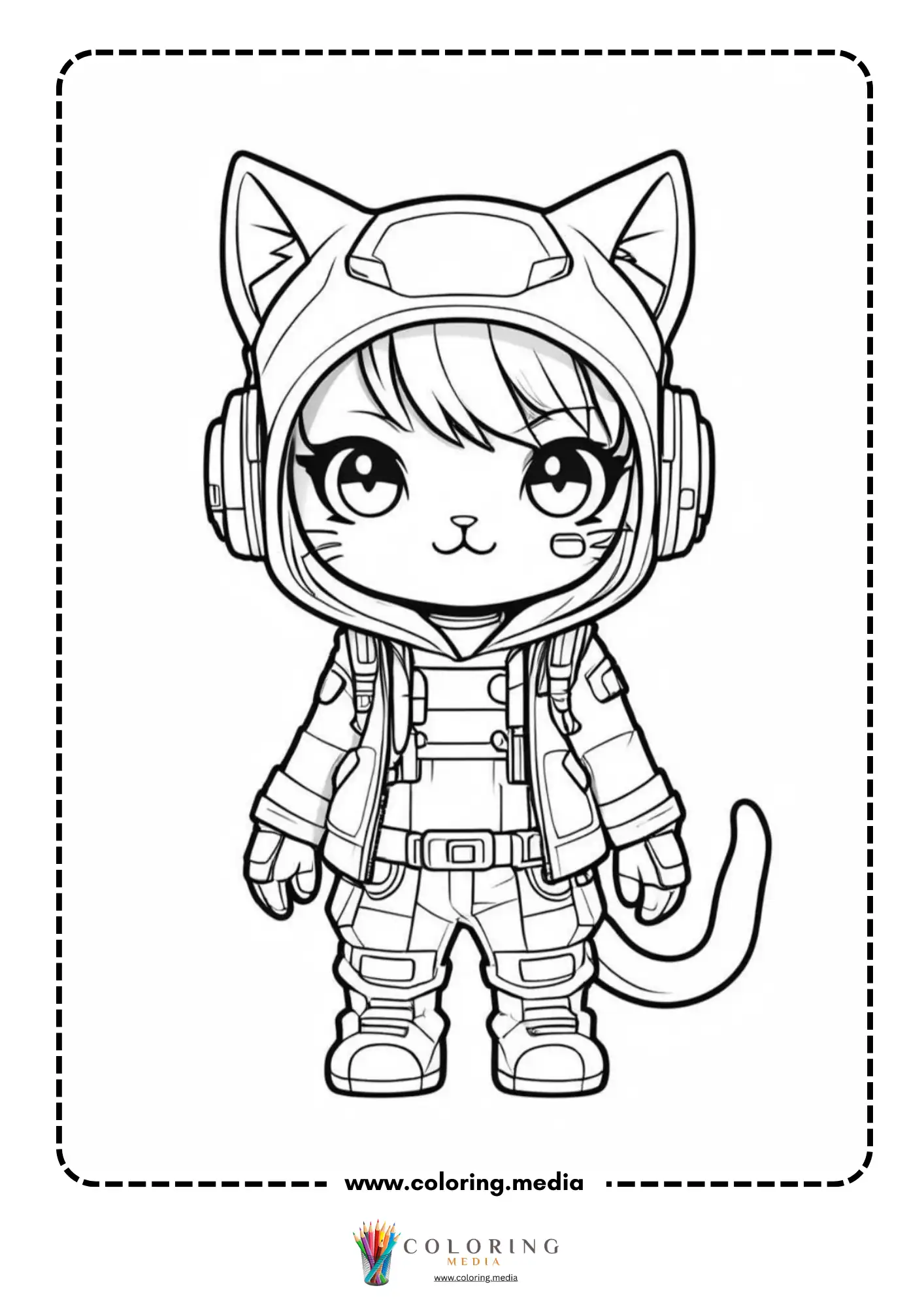
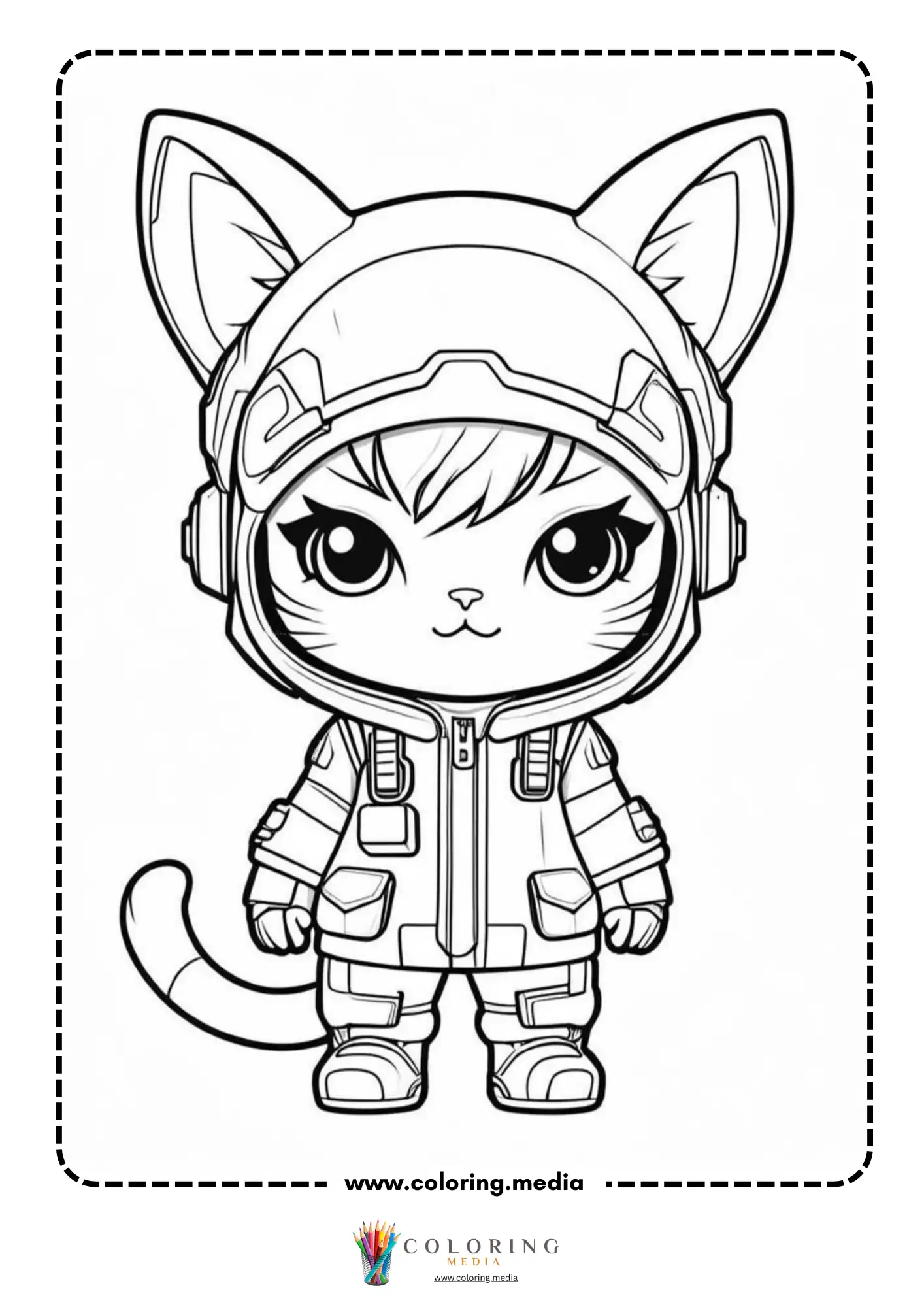
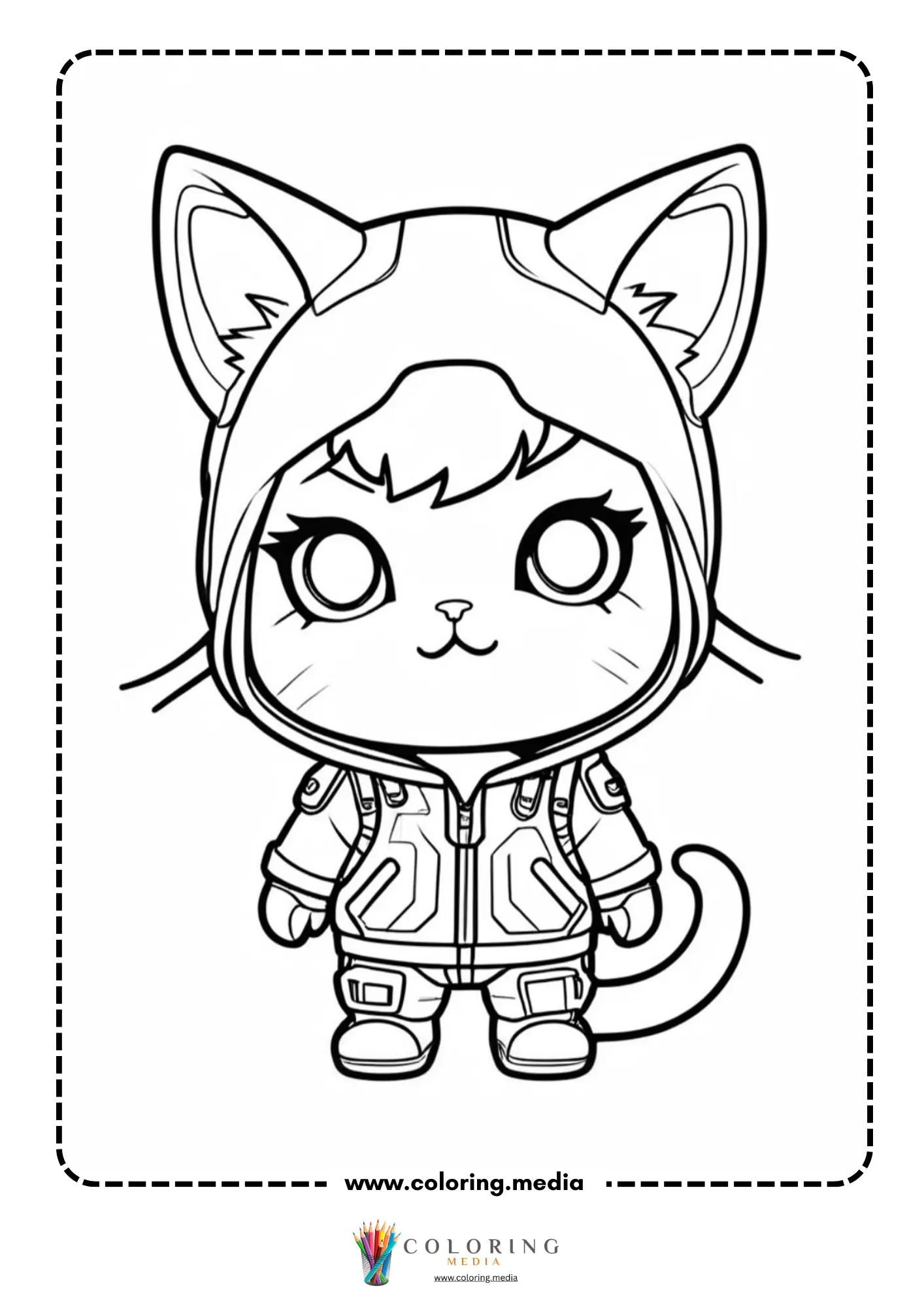
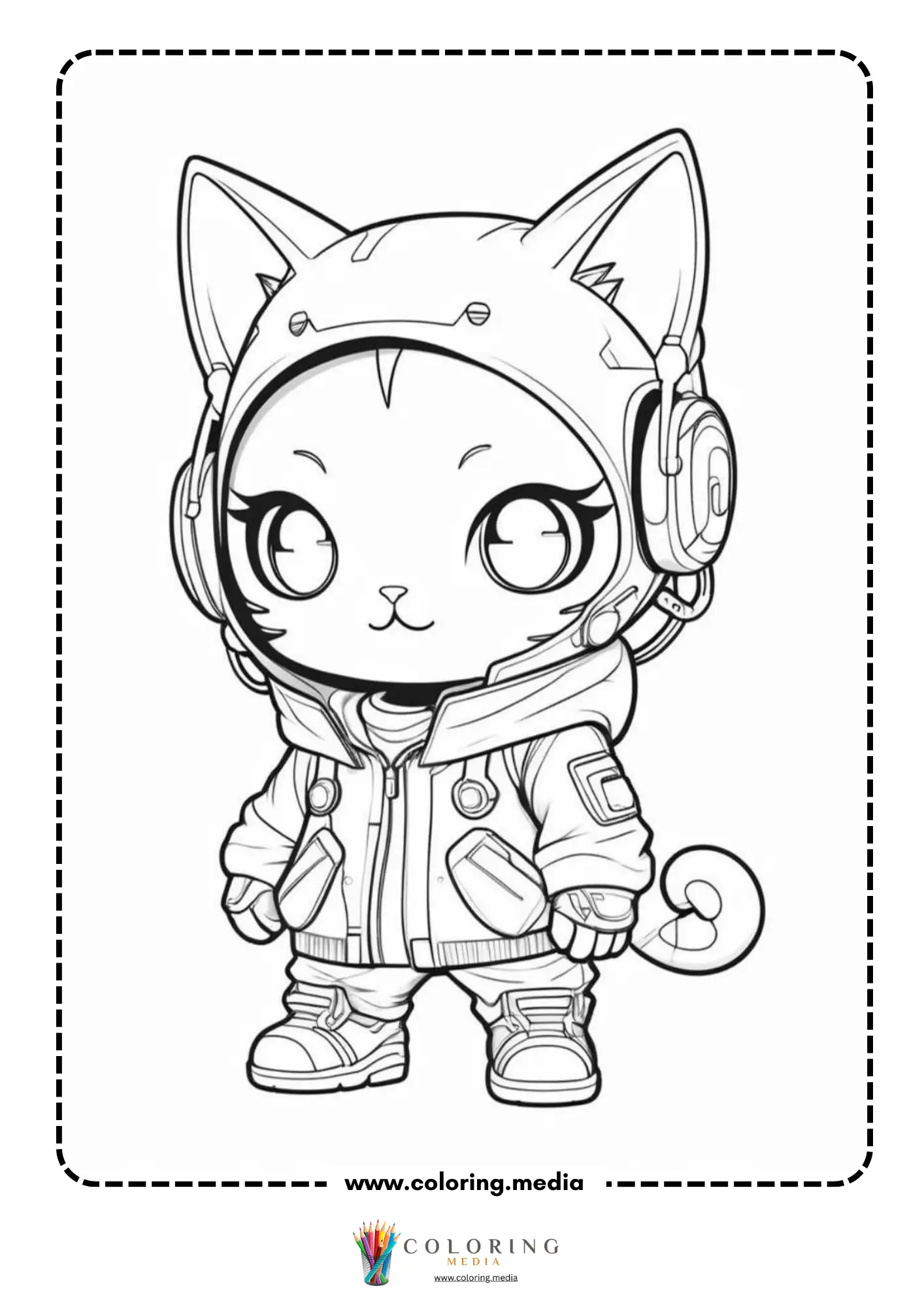
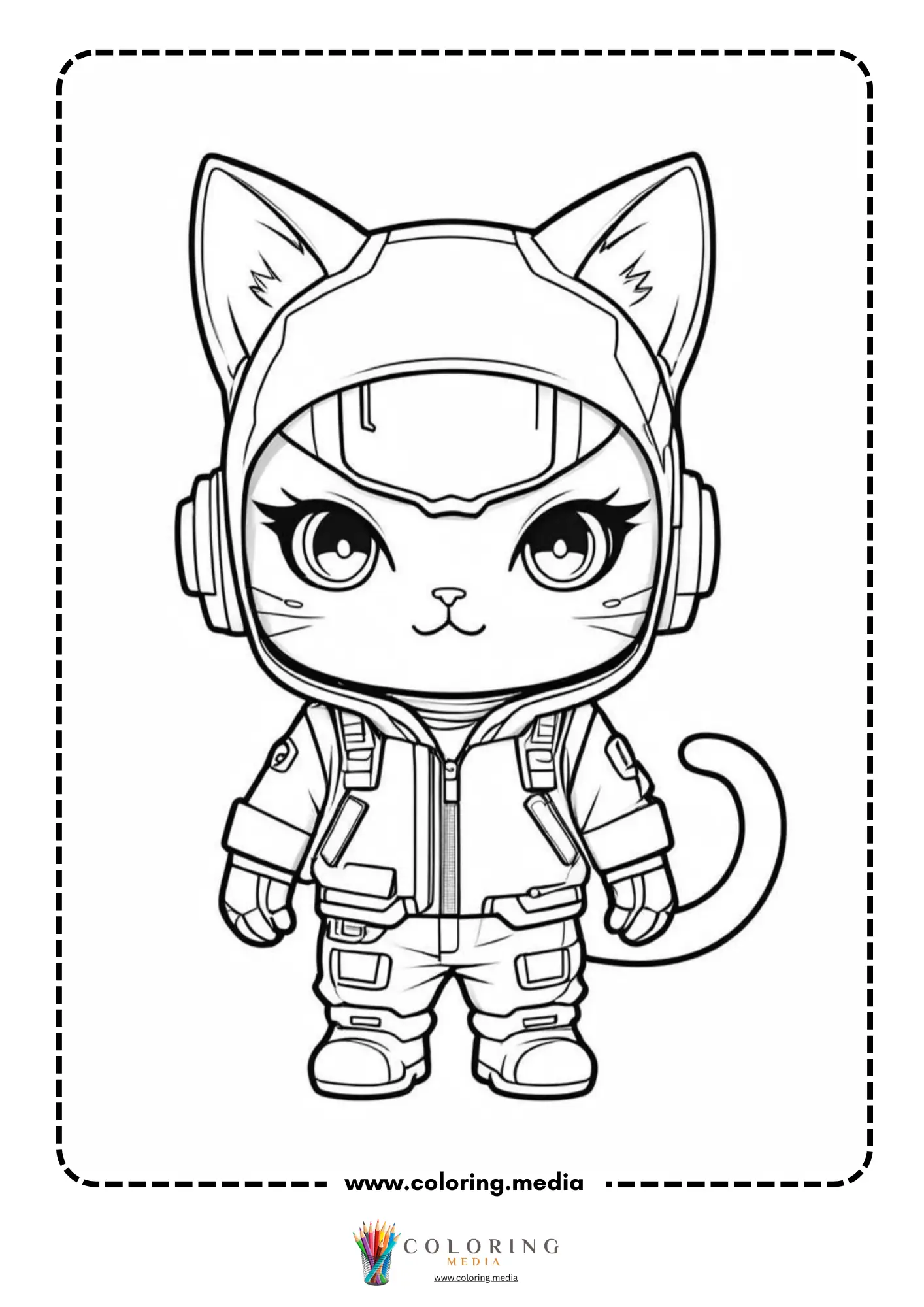
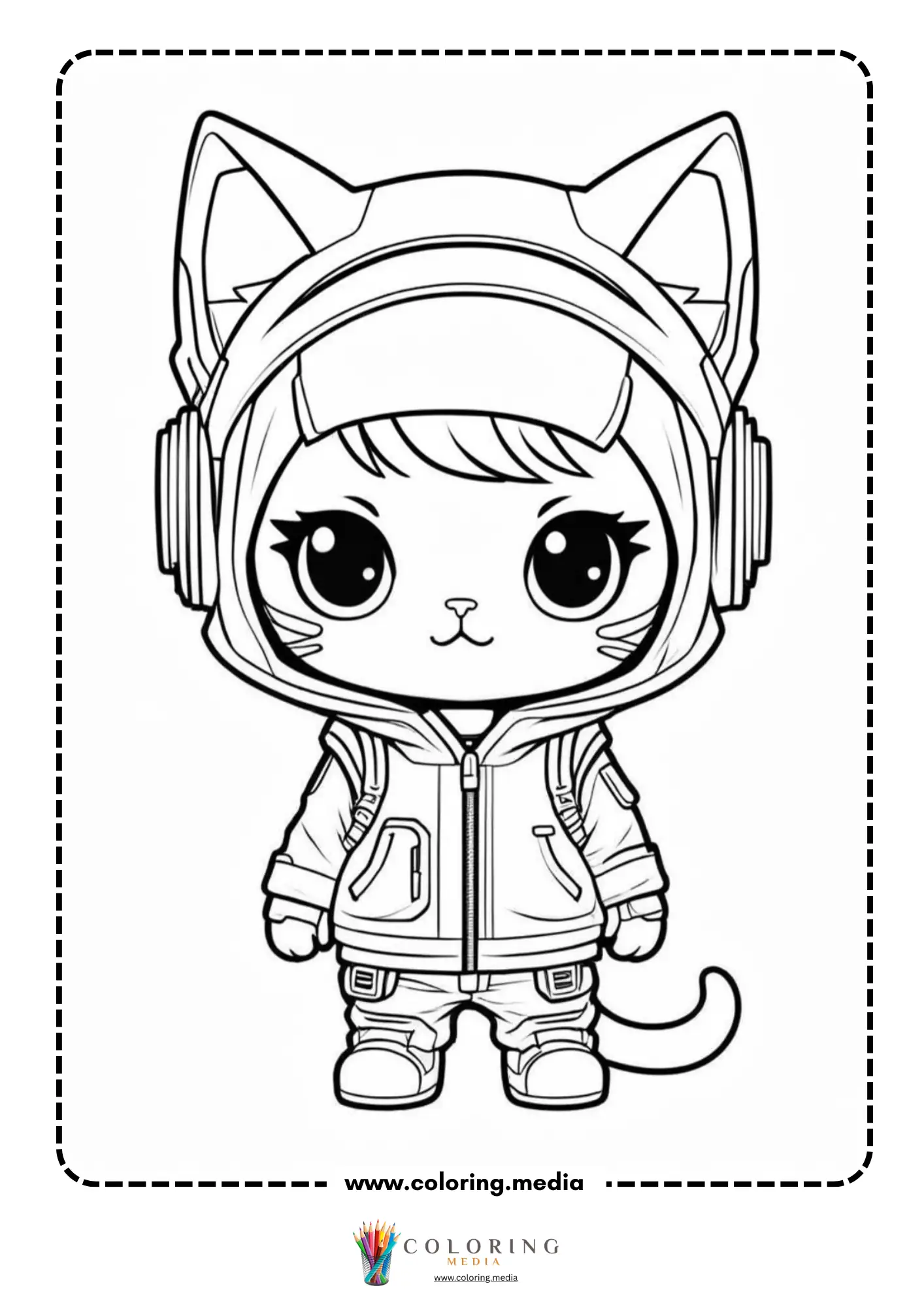
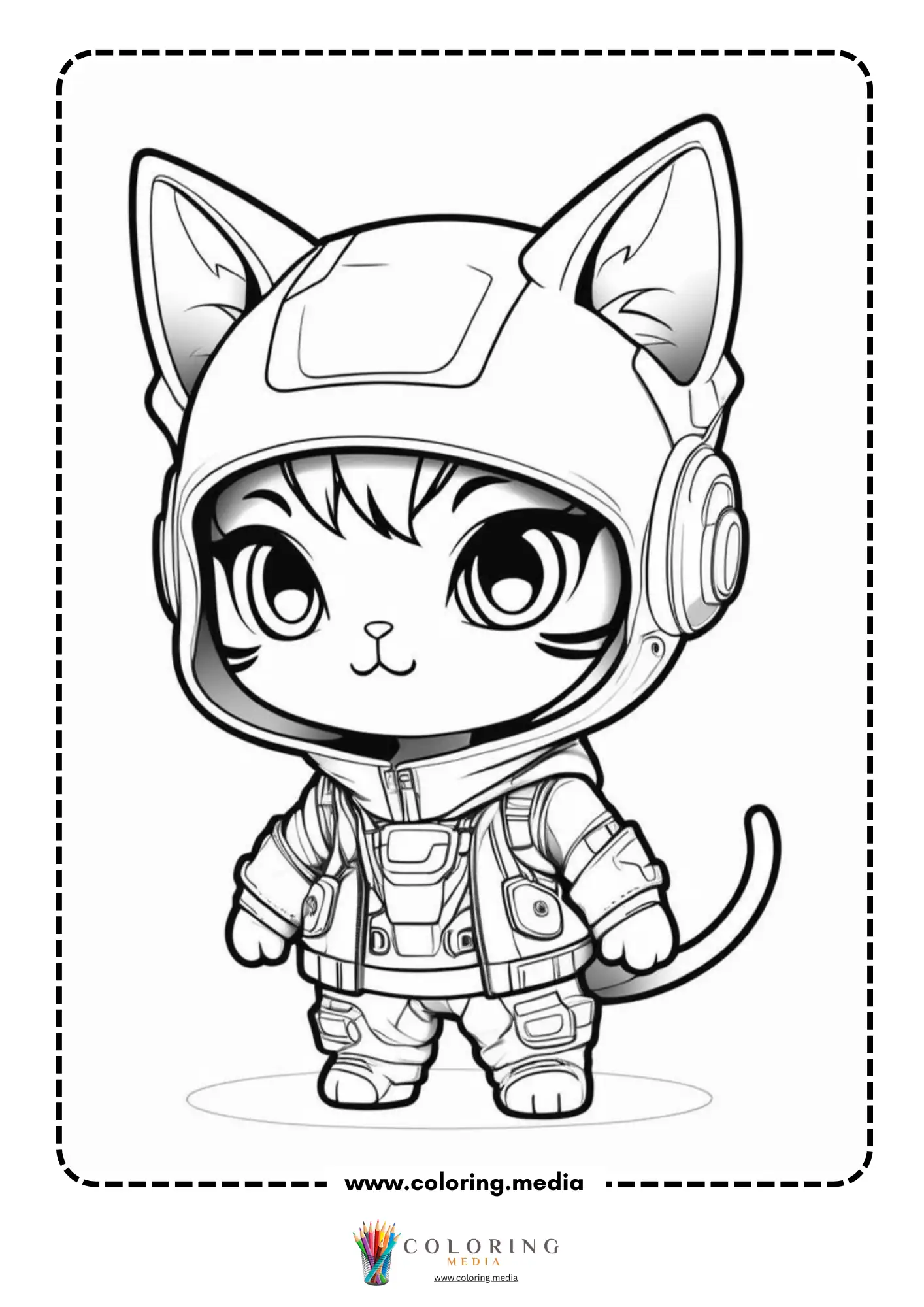
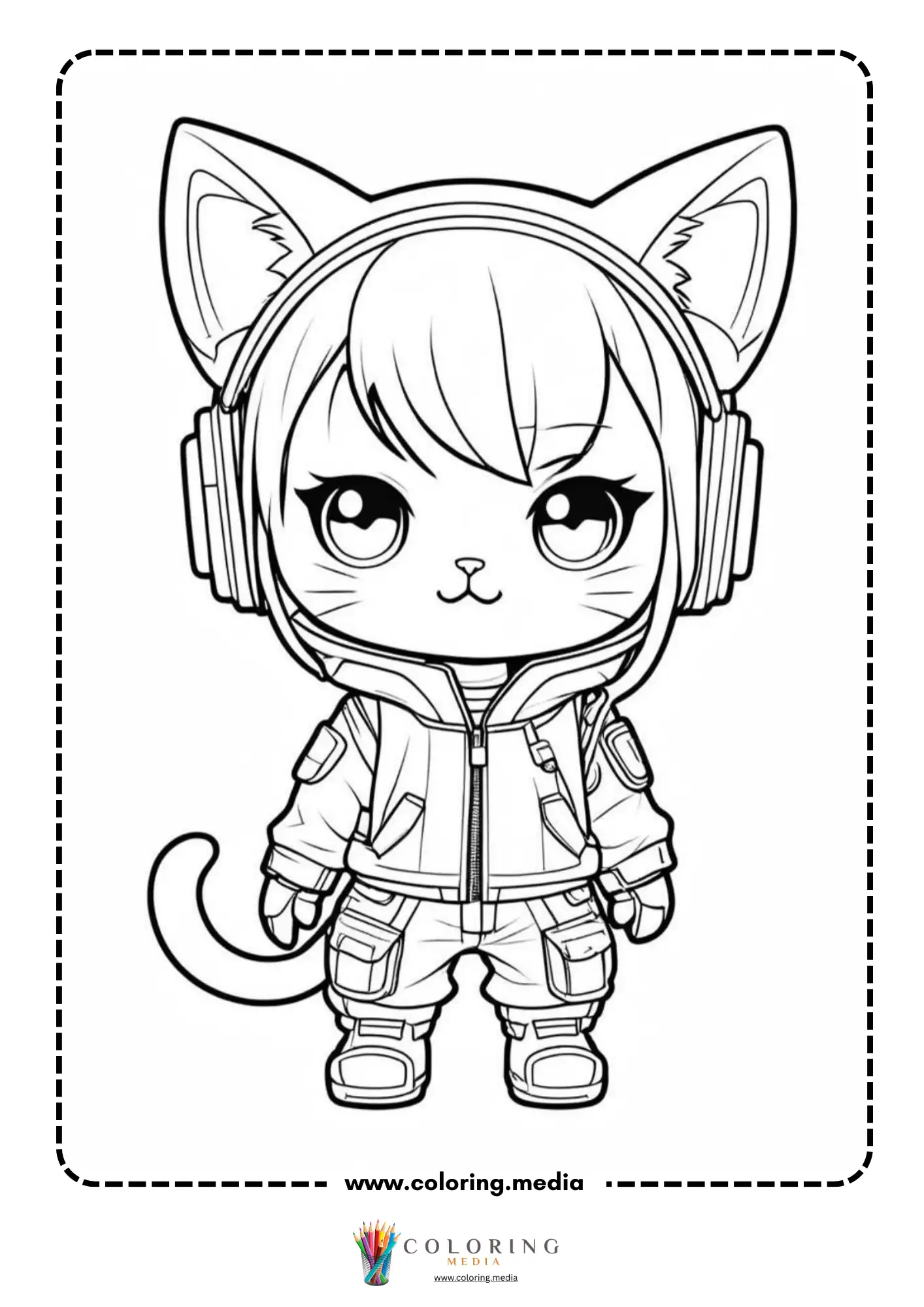
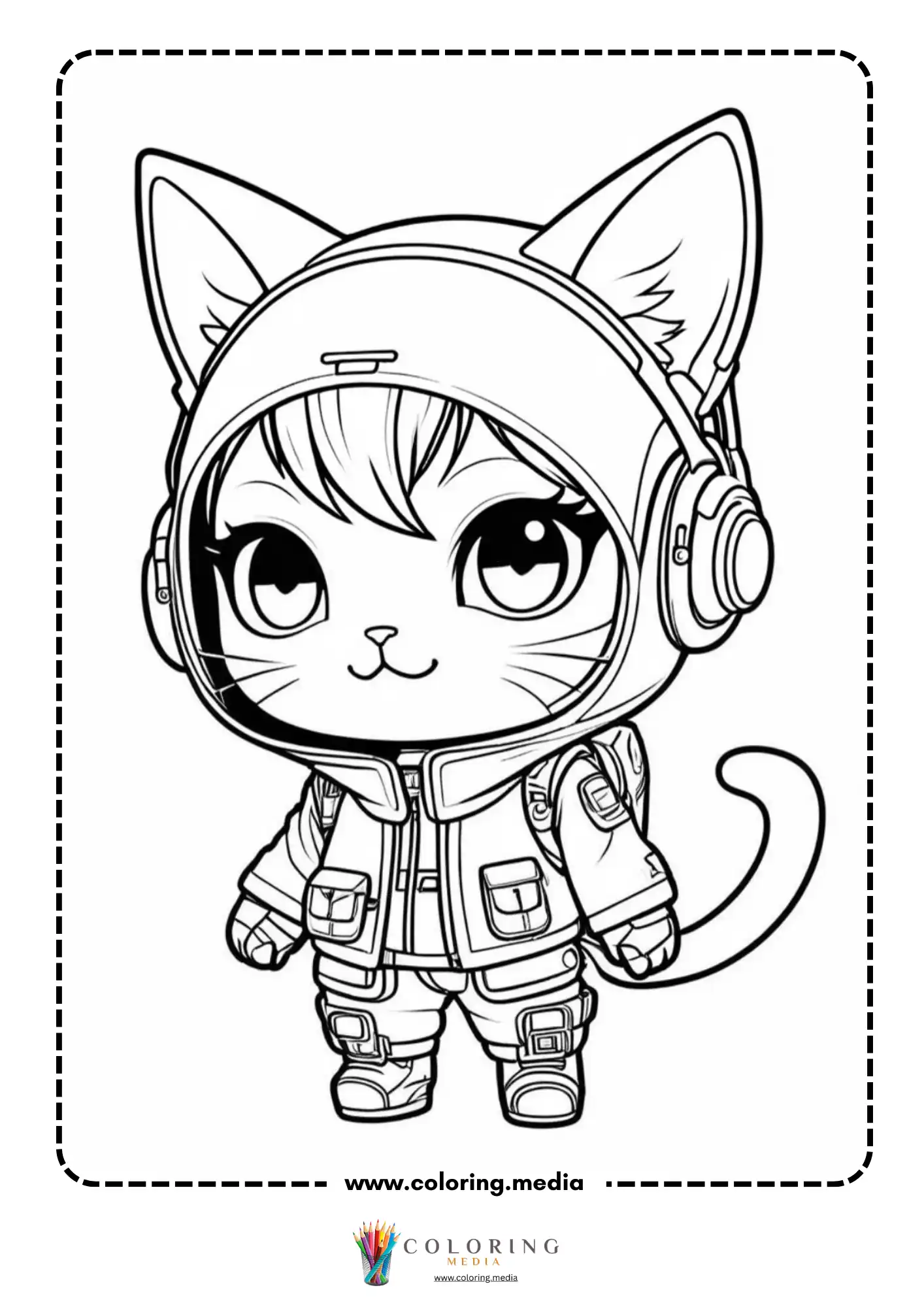
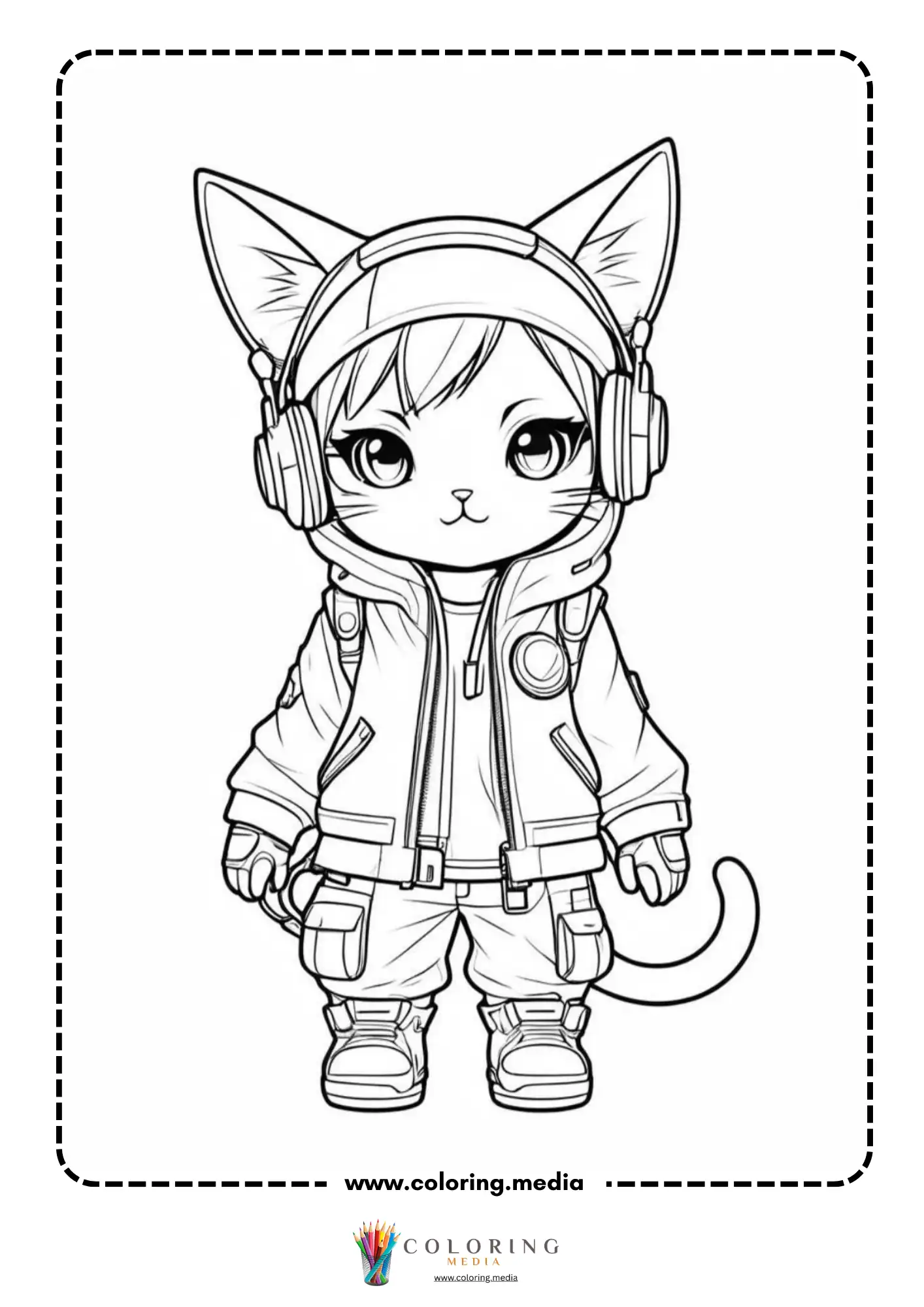
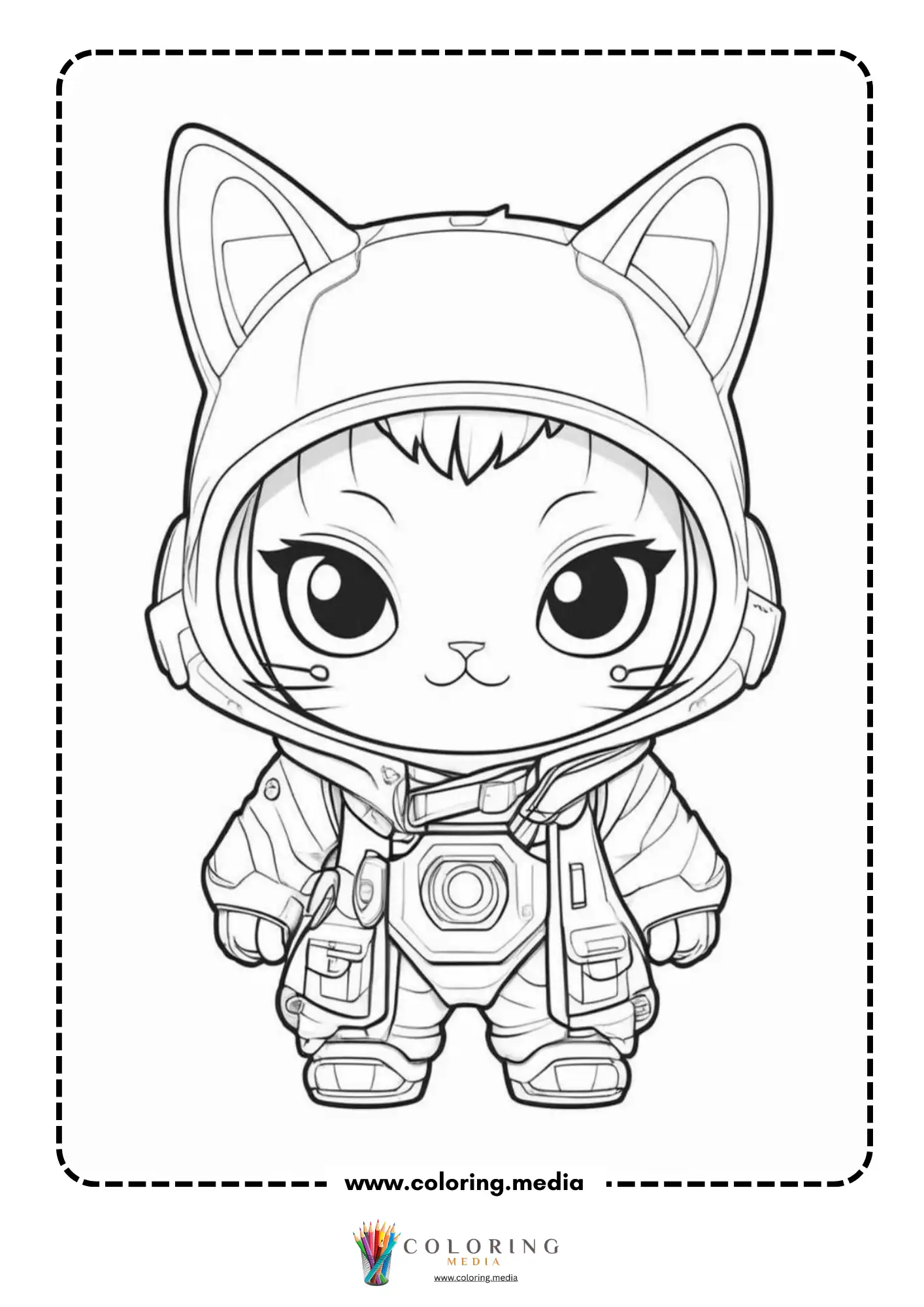
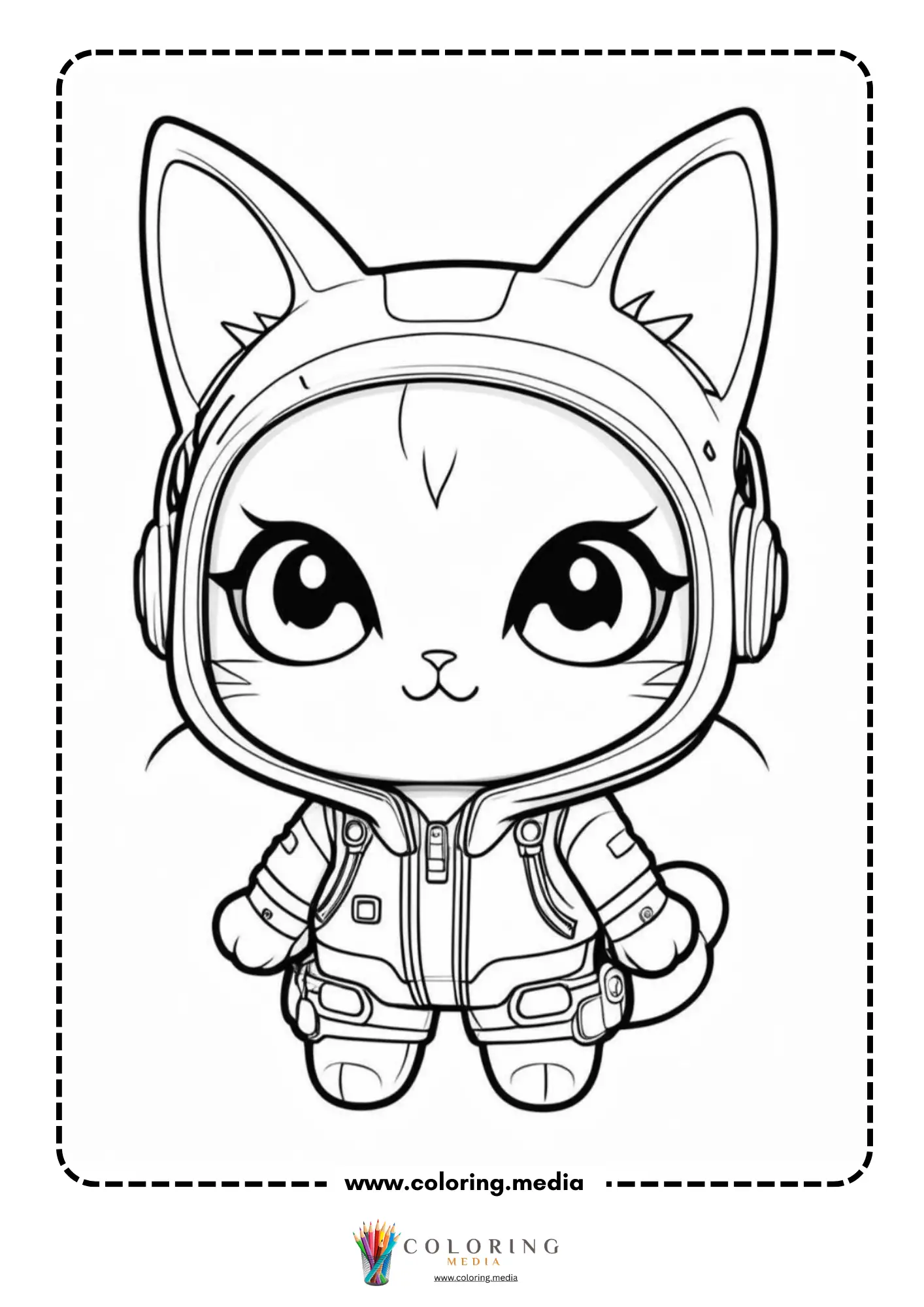
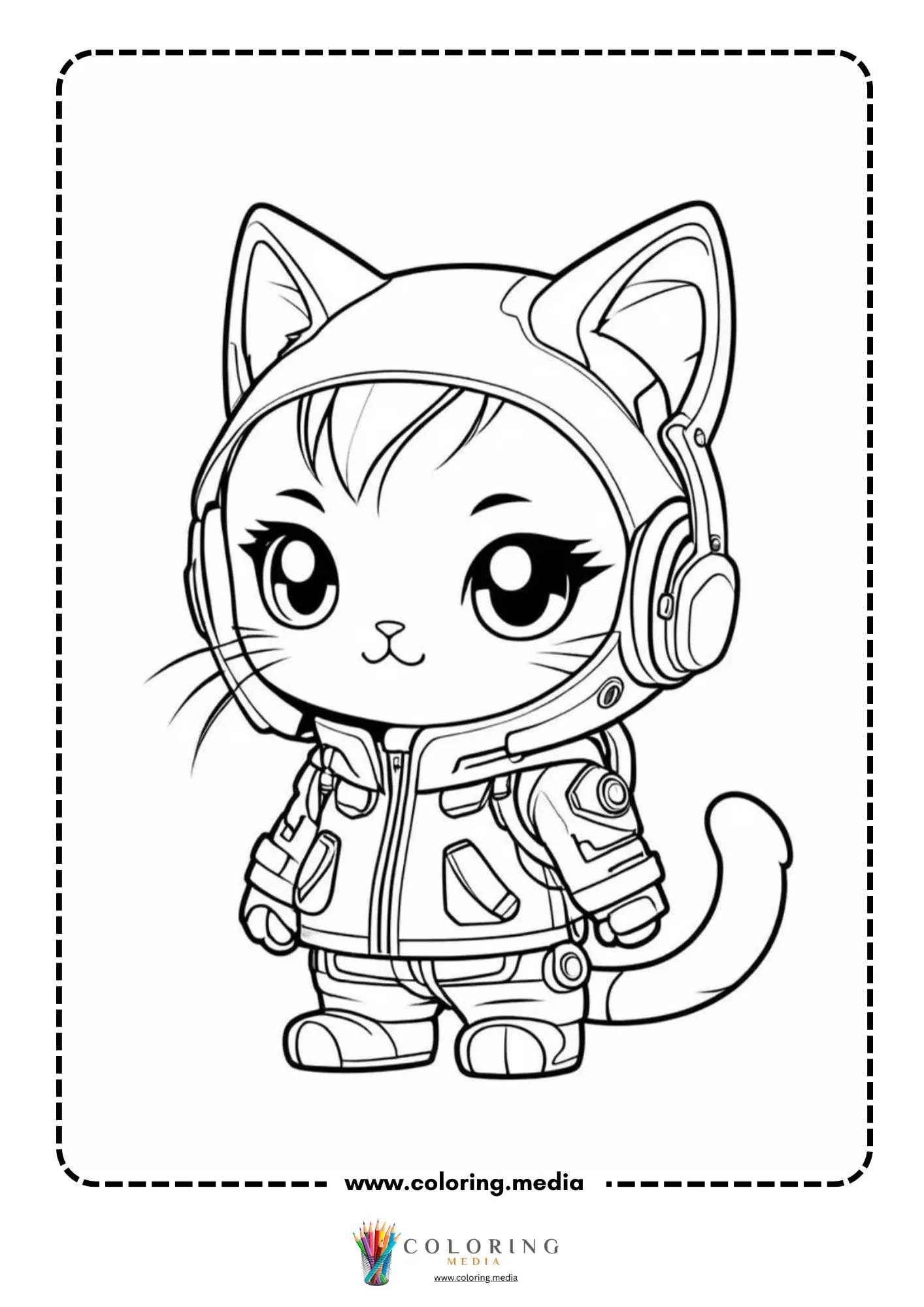
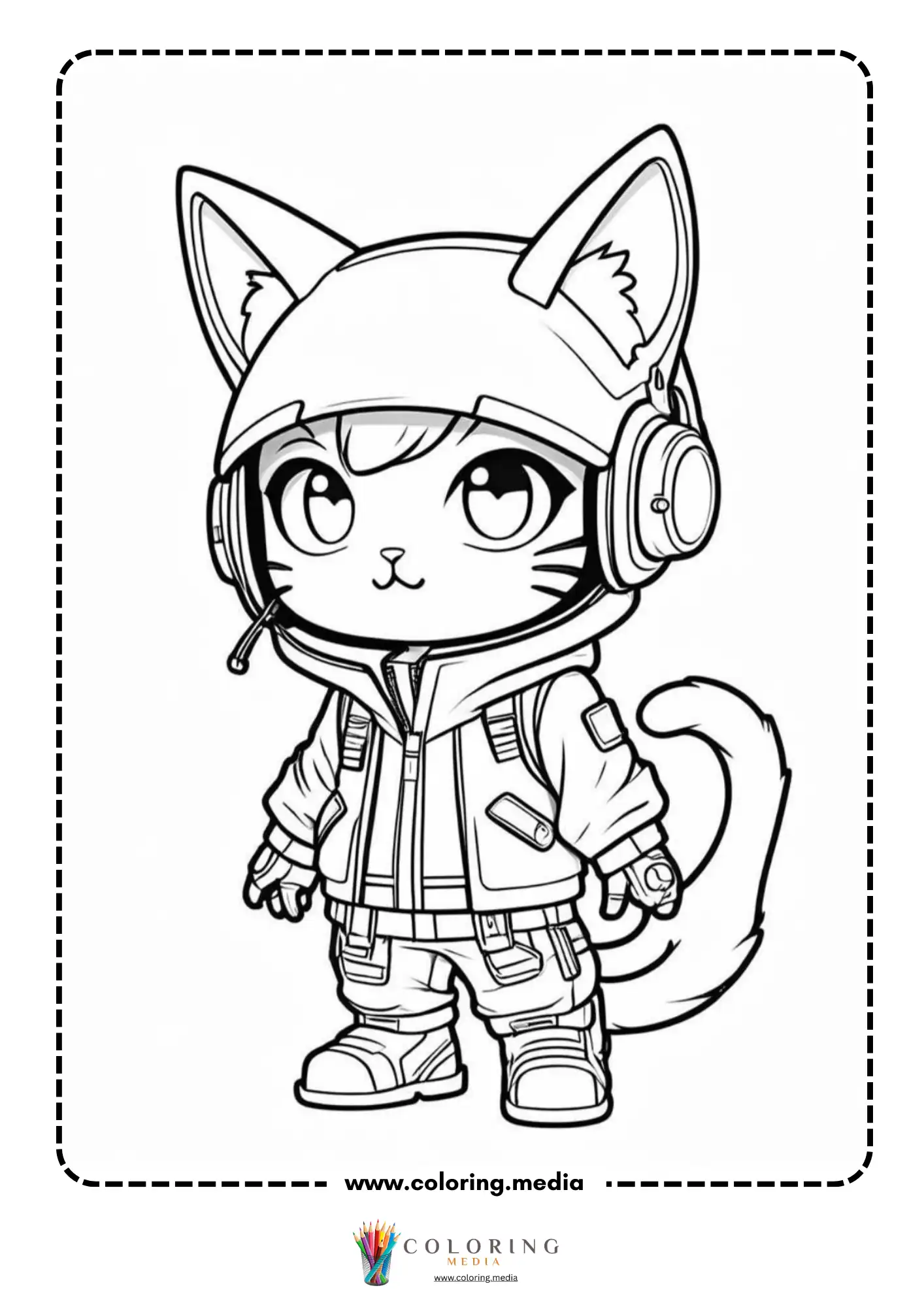
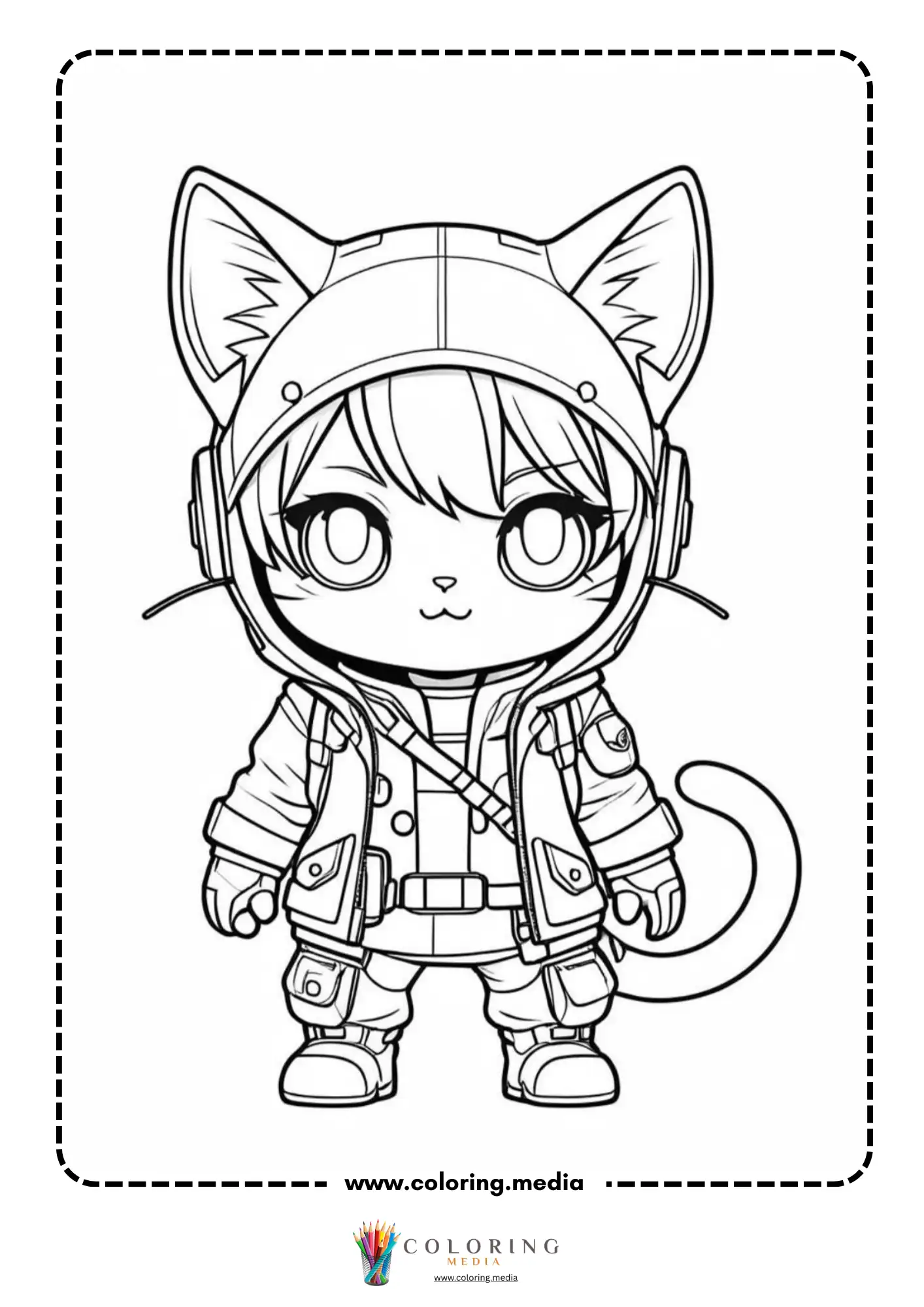
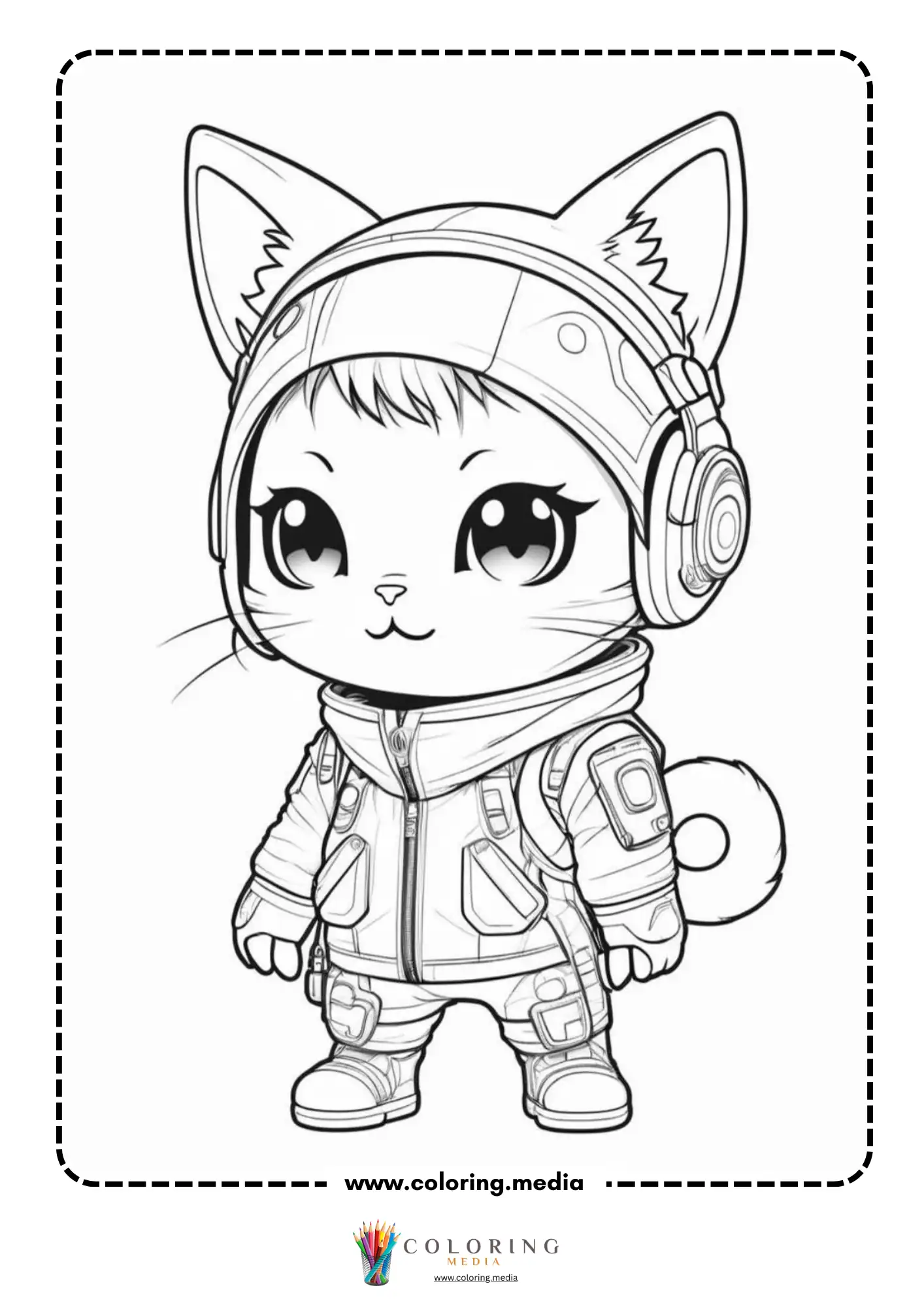
These are not cats — they are chibi characters dressed as cats. Each page features a single kawaii-style figure in a cat-ear hoodie, drawn in a Japanese chibi proportion style: oversized head, compact body, large expressive eyes. The outfits are the real subject here. Zippers, drawstrings, pockets, jacket panels, layered hems, lace-up shoes, headphone accessories, and cat tails worked into the silhouette — each character wears a slightly different variation on the cat-themed outfit, which means every page presents a genuinely different coloring challenge even though the overall concept repeats.
The line work is noticeably finer than a typical kids’ coloring page, with clothing fold lines, hair strand details, and small accessory elements that reward patience and a sharp colored pencil. This is not a quick-fill collection — it is one for children who enjoy the process of working through a detailed figure. Everything here is free to download and easy to print.
Free Printable Cute Kawaii Cat Coloring Pages
This collection includes 20 printable cute kawaii cat coloring pages featuring chibi-style characters in cat-ear hoodies and cat-themed outfits — each with a different hairstyle, jacket design, accessory set, and expression. The figures are drawn in a Japanese kawaii chibi style with fine interior line work for clothing folds, fabric panels, zippers, and hair detail. Pages are formatted for standard US Letter and A4 paper at 300 dpi.
Who Are These Cute Kawaii Cat Coloring Pages Best For?
The detail level here is a genuine step up from standard children’s coloring pages. Clothing fold lines are 1 mm wide or less in some areas, and the jacket panels, zipper pull details, and layered hems require careful color placement to read clearly. A younger child who grabs a fat crayon and colors broadly will lose most of those interior details, which tends to be frustrating rather than satisfying. These pages work best for children in the early elementary range and up — roughly ages 7 and above — who have enough motor control and patience to work a colored pencil or fine-tip marker around small shapes.
Teenagers who are interested in anime, manga, or fashion illustration will find a lot to engage with here. The chibi proportion style — large head, short limbs, simplified facial features — is a foundational drawing style in Japanese popular art, and coloring these figures is useful practice for understanding how shading and color interact with that style. Choosing where to put shadows on a rounded chibi face, or how to make a zippered jacket read as dimensional, are the same decisions an artist makes when drawing original characters.
In a classroom, these work well for an art period focused on fashion design or character illustration — students can color the provided outfits and then design their own variation on a separate sheet alongside.
Interesting Kawaii and Cat Facts to Share While Coloring
The word “kawaii” originally just meant “embarrassing” in old Japanese. The modern meaning — cute, adorable, endearing — developed gradually through the 20th century as youth culture shifted the term toward a positive aesthetic. By the 1970s it had fully transformed, and today kawaii is a recognized design category with its own fashion lines, character merchandise, and cultural export value well beyond Japan.
Chibi is a drawing style, not a character type. The word means “small person” or “short person” in Japanese slang, and the style exaggerates the head-to-body ratio to roughly 1:1 or 2:1 instead of the realistic 1:7 or 1:8. Artists use it to make characters look younger, cuter, and less threatening — it is frequently used in fan art to depict adult characters in a softer, more approachable form.
Cat ears as a fashion accessory have a long history in Japanese street fashion. The “nekomimi” (cat ears) look has appeared in Harajuku fashion since at least the 1990s and has been a staple in anime character design even longer. The hoodie-with-cat-ears format in these pages is a direct nod to that tradition — it is a real clothing item you can buy, not just an illustration convention.
Cats’ pupils change shape based on light — and mood. In dim light, a cat’s pupils open into wide vertical ovals to let in maximum light. In bright light they compress to thin slits. When a cat is very excited or startled, the pupils dilate wide even in full light. The large, round pupils drawn on these chibi characters are the same signal — wide pupils read as alert, engaged, and emotionally open, which is part of why the style feels so expressive.
Creative Kawaii Cat Coloring and Art Ideas
Color-Coded Character Series Assign each character a strict two- or three-color palette and color the entire set — outfit, hair, accessories — within those constraints. Limiting color forces creative decisions about what gets the accent color.
Shadow and Highlight Practice Choose a light source direction before starting and use a darker shade of each color for shadows (under the chin, inside jacket folds) and a lighter shade or white for highlights on top surfaces. Great practice for understanding basic shading.
Fashion Redesign Color the figure as printed, then on a separate sheet redraw just the outfit — keeping the chibi body — but with a completely different clothing design: a school uniform, a space suit, a raincoat.
Original Character Inspiration Use the completed coloring pages as visual references for designing an original chibi character — borrowing the pose and proportion but inventing new hair, face, and outfit details.
Marker Gradient Technique Use two shades of the same colored marker color — light and dark — to blend a gradient across large flat areas like the jacket back. Alcohol-based markers blend more smoothly; regular washable markers create a striped effect that can also look intentional.
Pattern Fill Challenge Instead of solid color fills, use fine-tip pens or thin markers to fill the jacket and pants areas with tiny patterns — dots, stars, stripes, plaid — treating the coloring page as a fabric design exercise.
Before-and-After Color Study Color the same page twice: once in realistic clothing colors and once in a completely surreal palette — neon orange jacket, teal hair, purple shoes — then compare which version feels more “kawaii” and discuss why.
Character Backstory Card Write a short backstory for each colored character on a card — name, personality, what the cat ears mean to them — and display the cards alongside the completed pages.
How to Print These Kawaii Cat Coloring Pages
Each file downloads as a PDF formatted for US Letter (8.5×11 in) and A4 — both sizes print without cropping. Because the line work is finer than a standard coloring page, print quality matters more here: use “actual size” rather than “fit to page,” and set your printer to high quality or photo quality for the sharpest lines. Smooth cardstock (65-80 lb) works better than regular copy paper when using colored pencils or fine-tip markers, as it takes color more evenly and prevents the paper from pilling under repeated pencil strokes.
Explore More Animals Coloring Pages
If you enjoyed these pages, you may also like:
Cute Cat Coloring Pages
Cute Animal Coloring Pages
Fox Coloring Pages
Butterfly Coloring Pages
All Animals Coloring Pages