
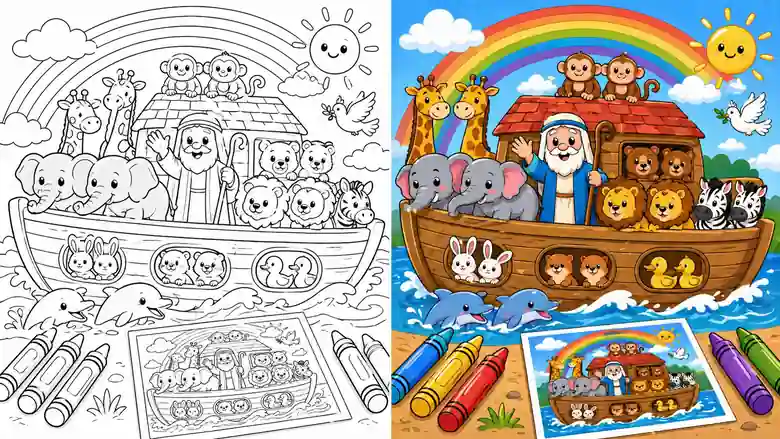
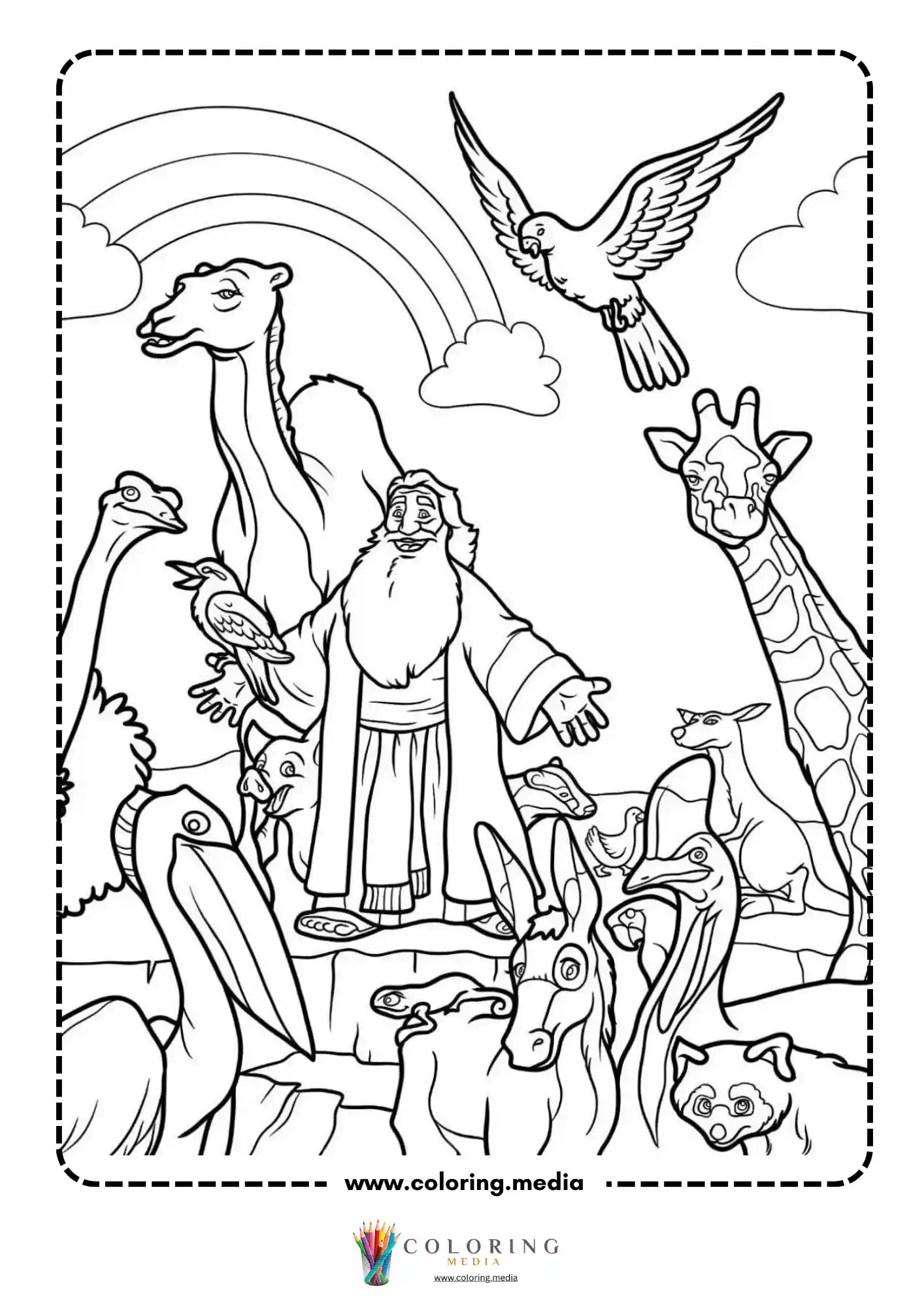
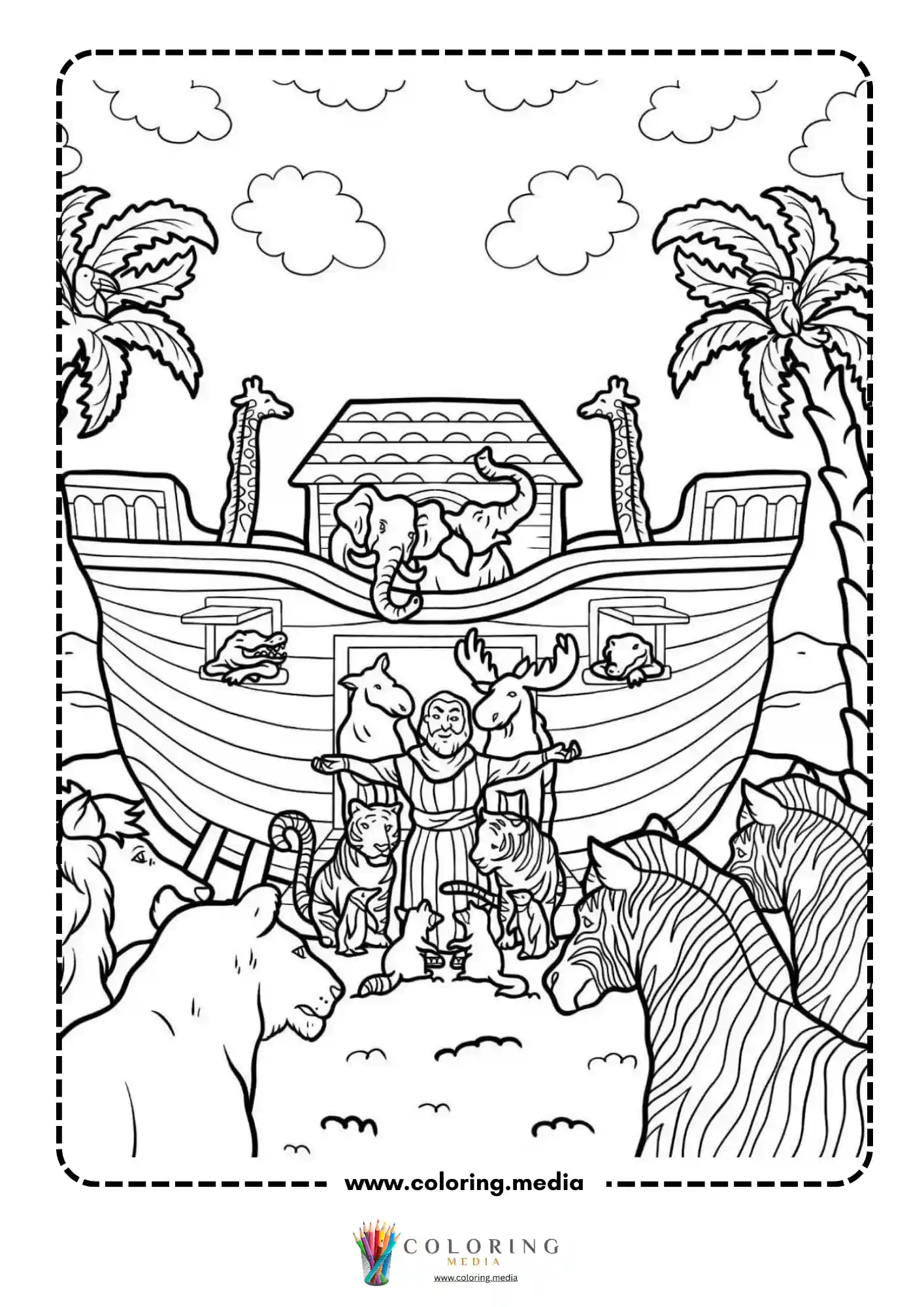
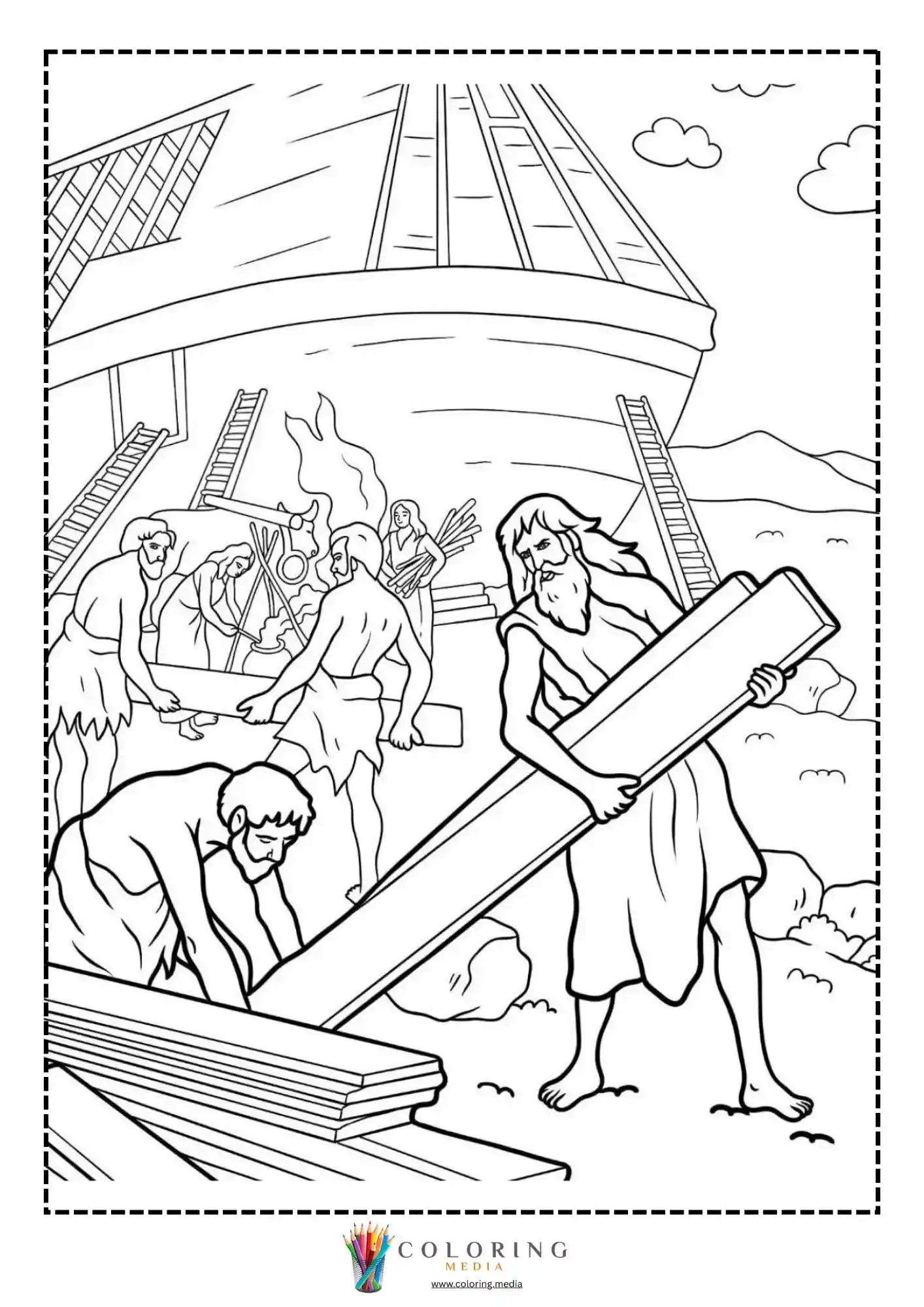
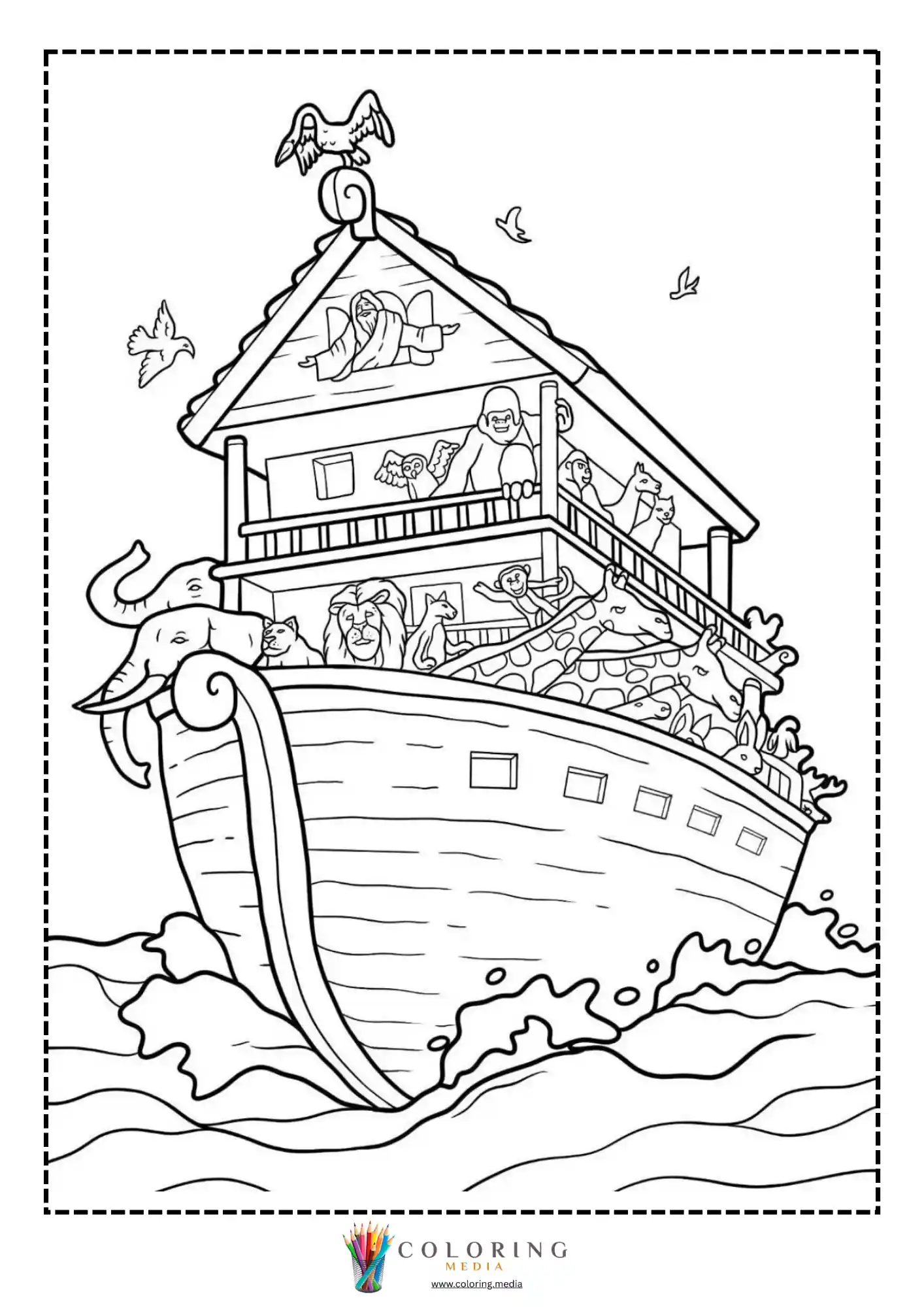
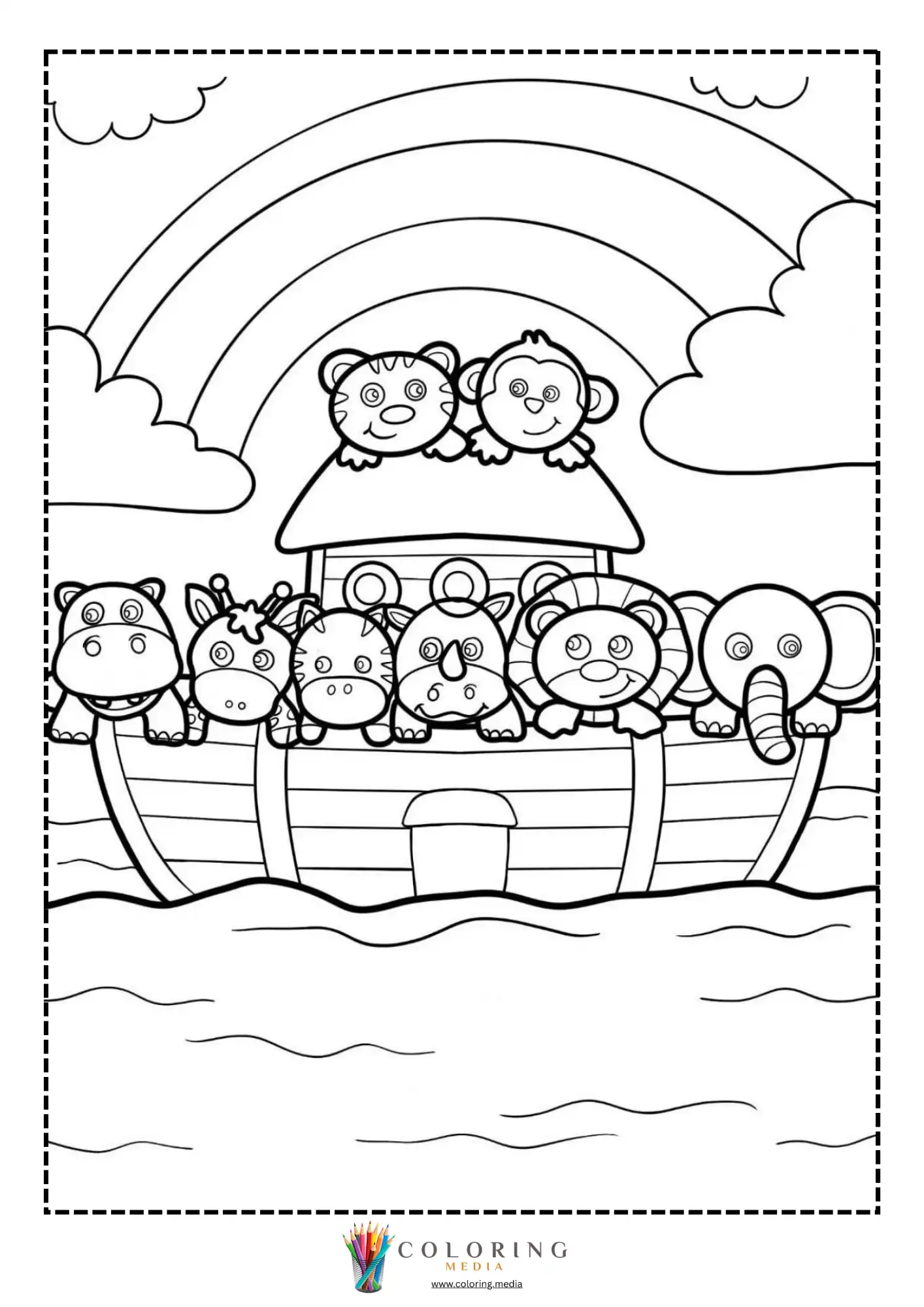
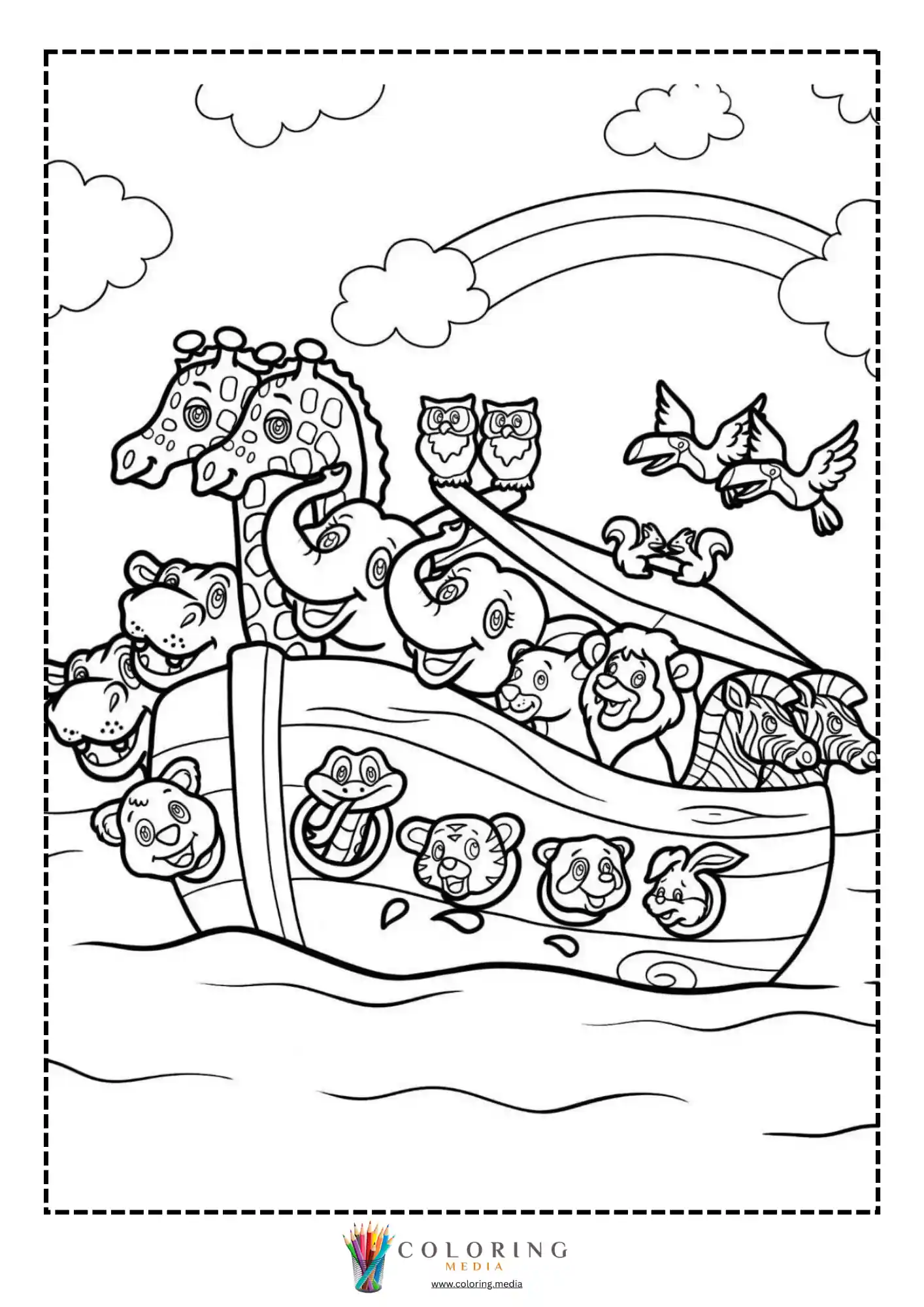
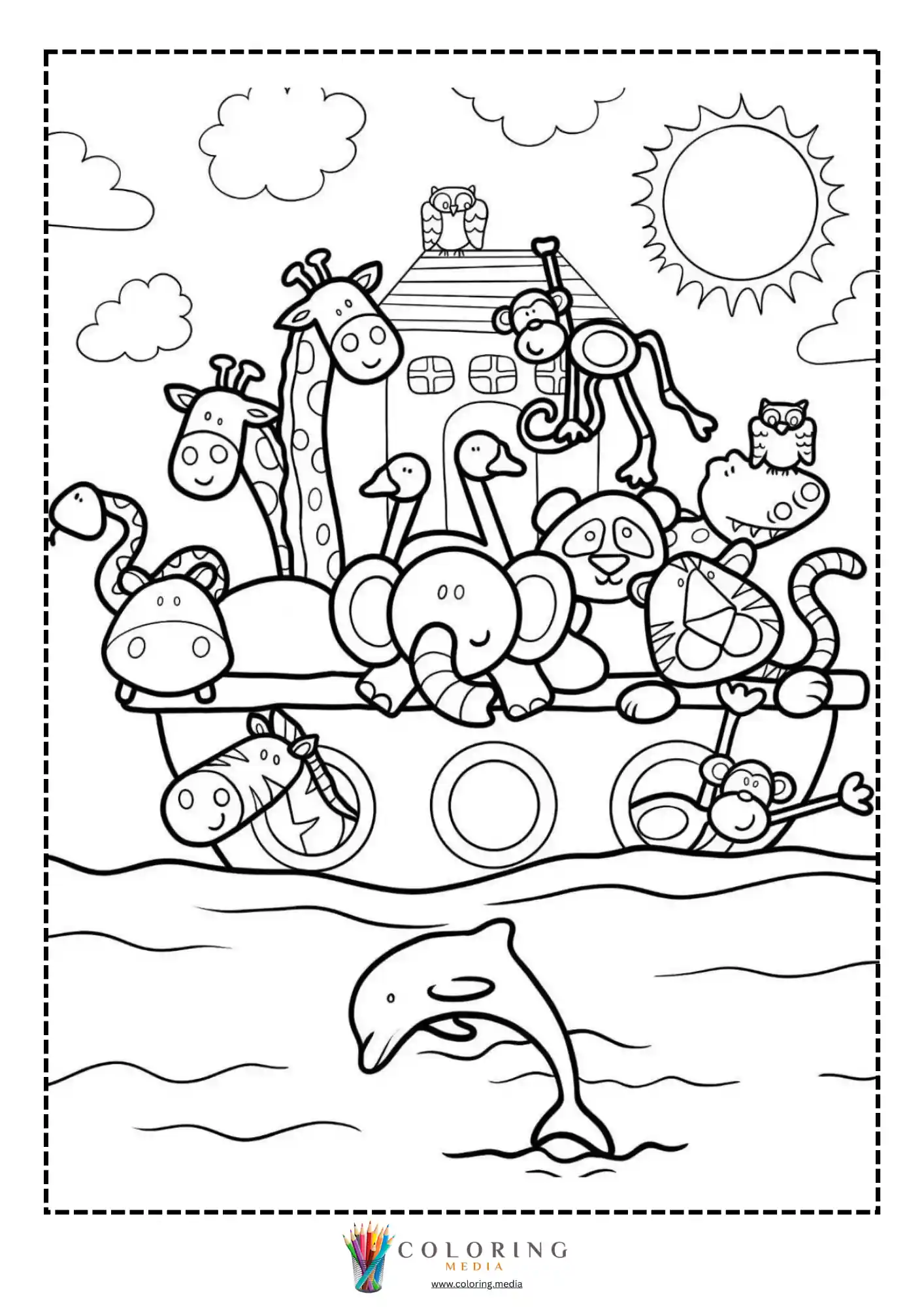
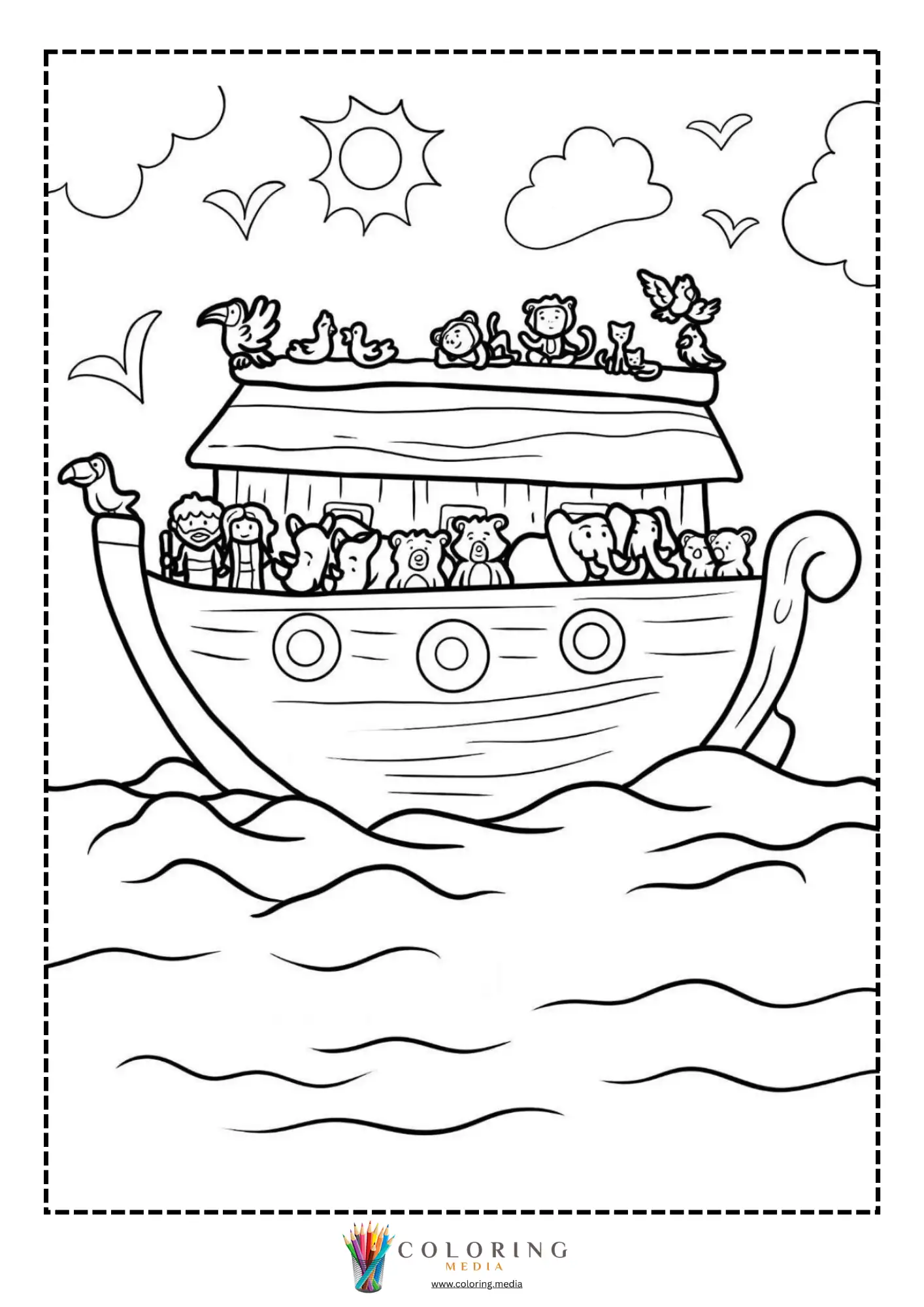
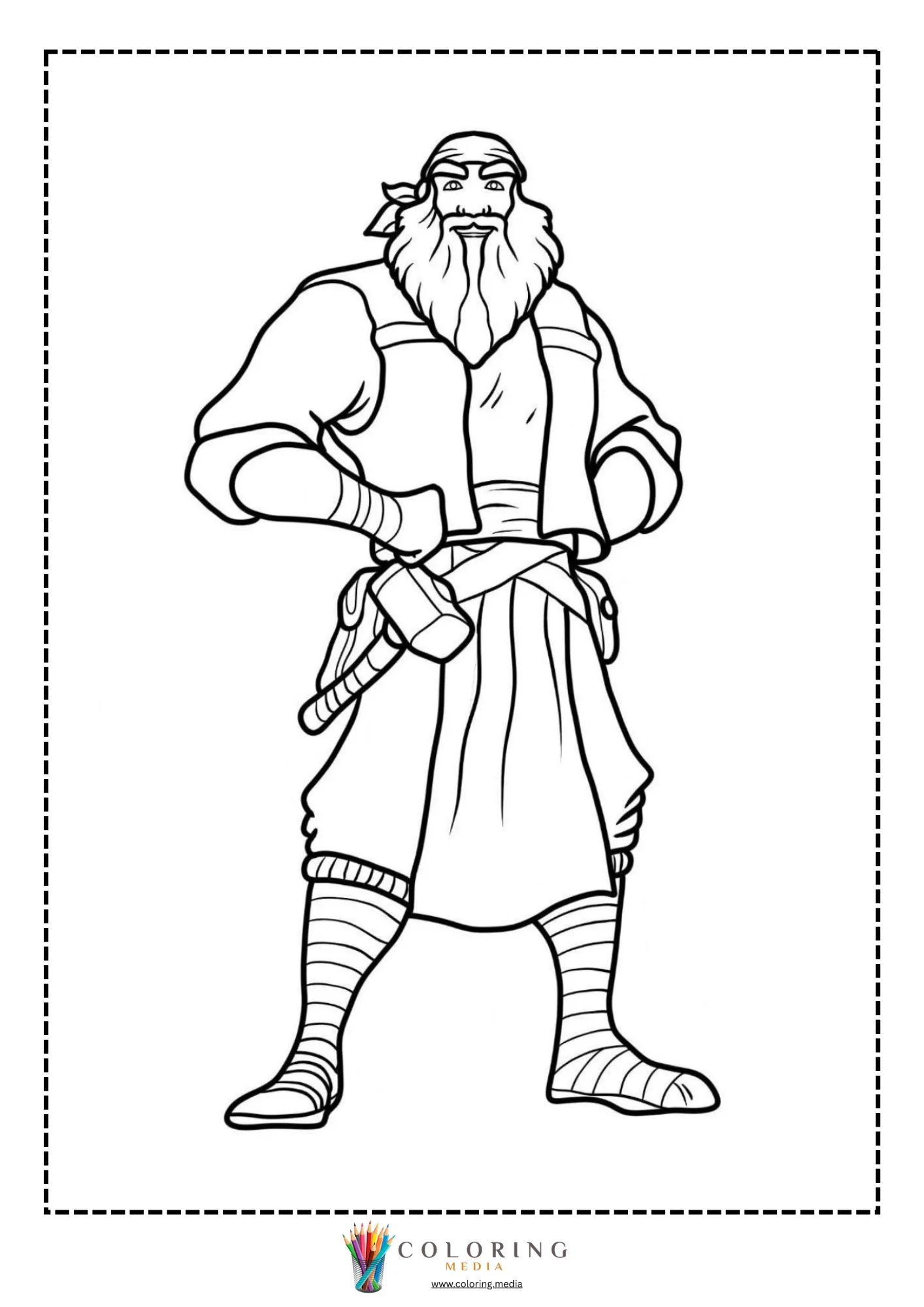
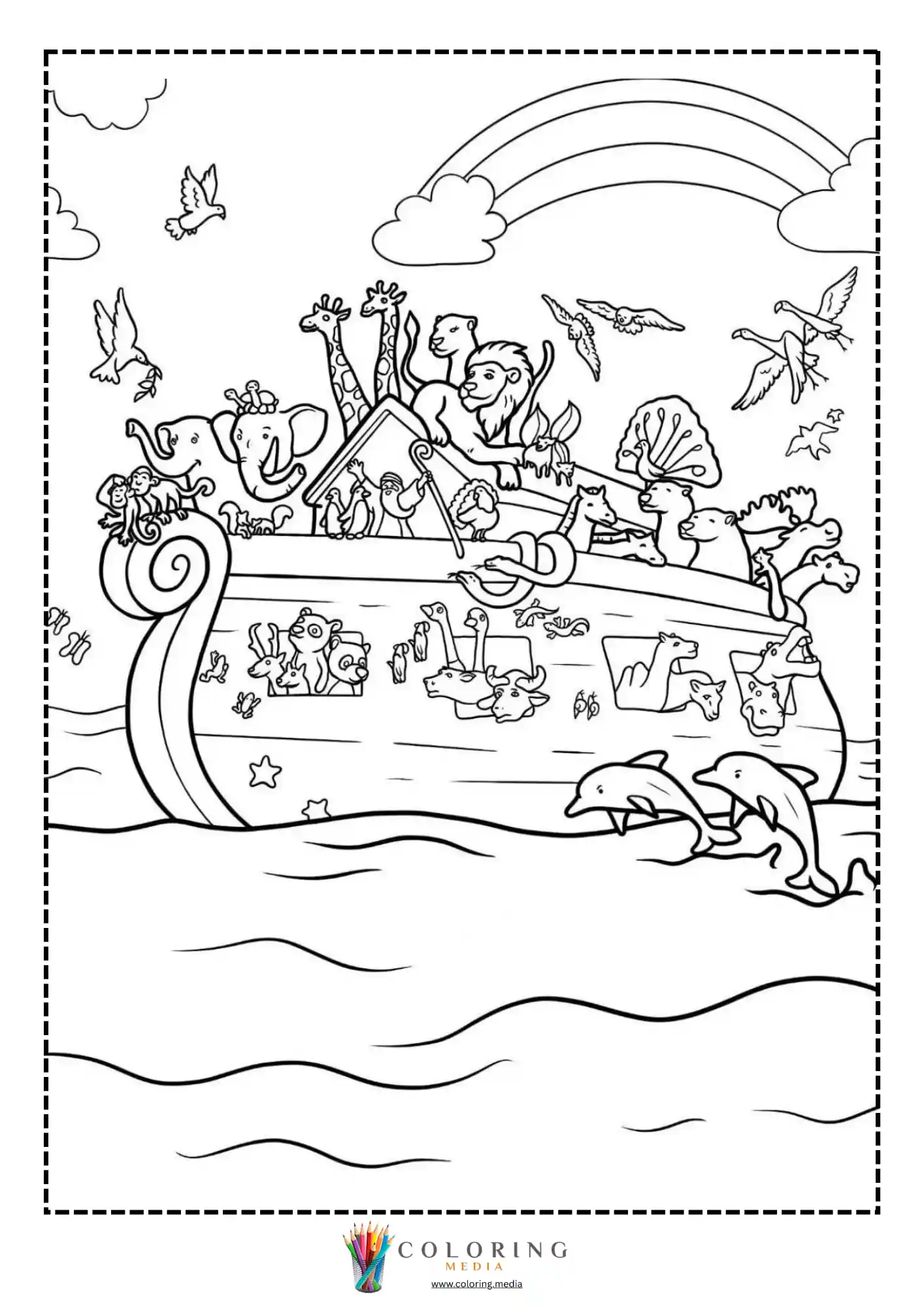
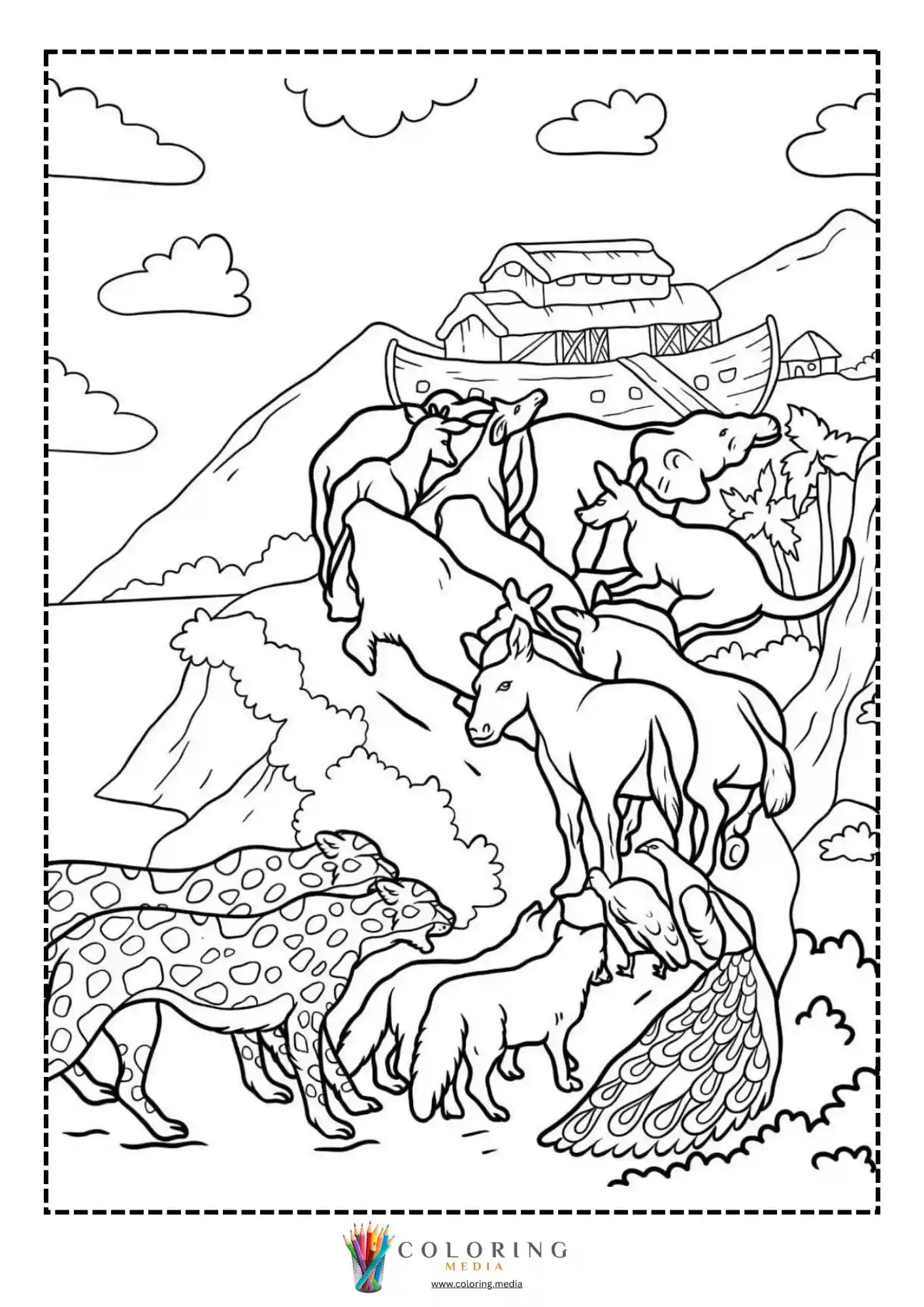
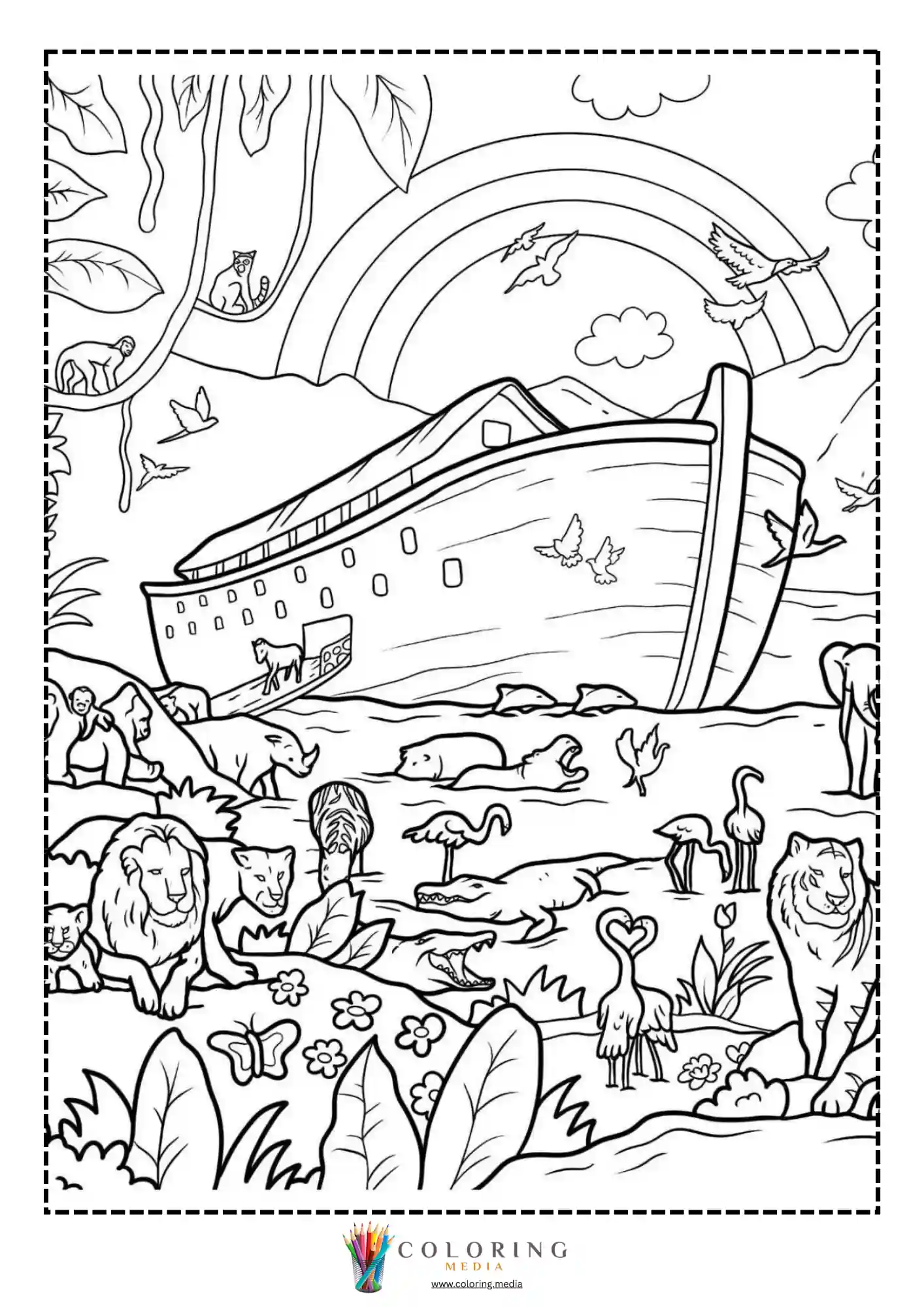
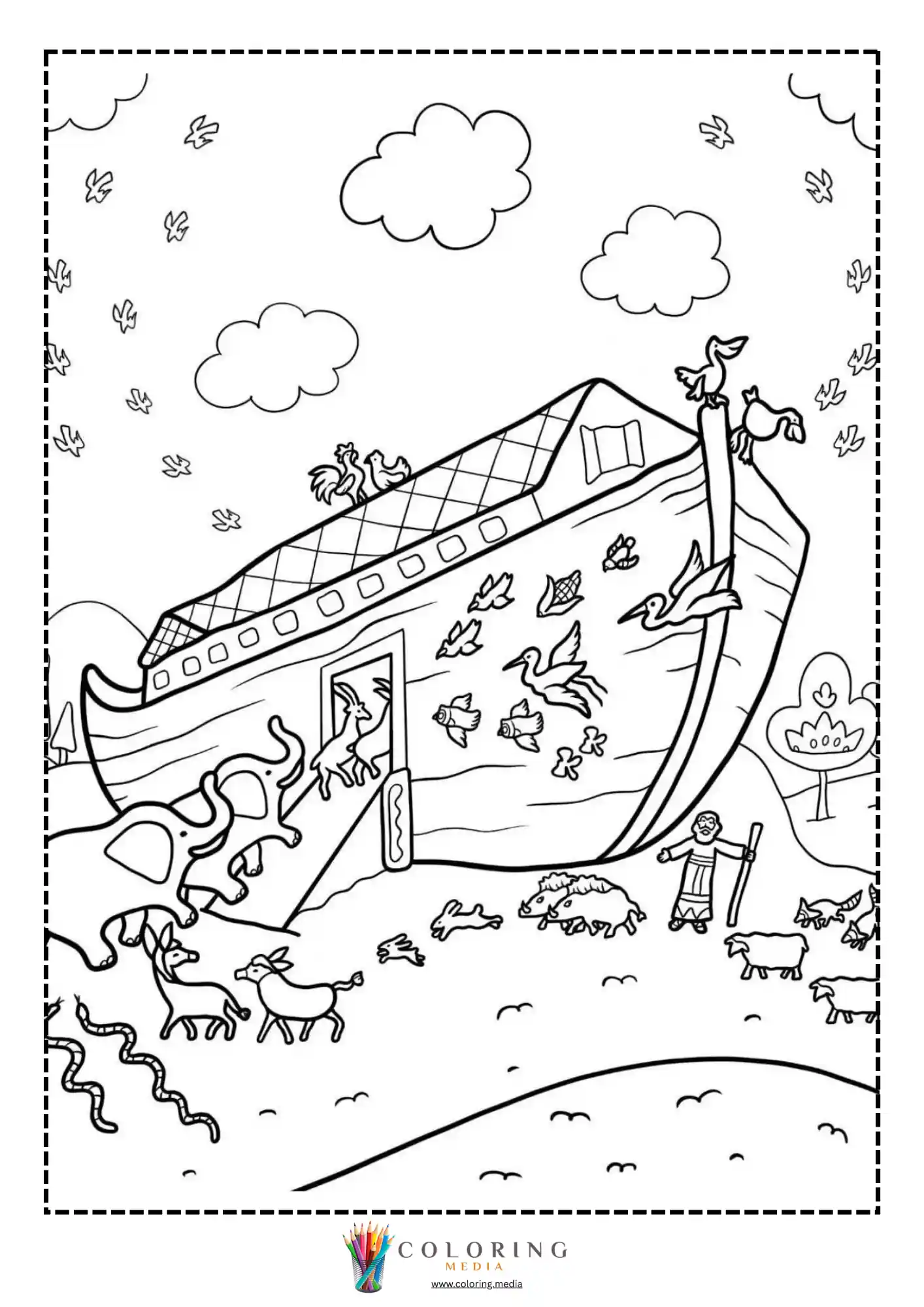
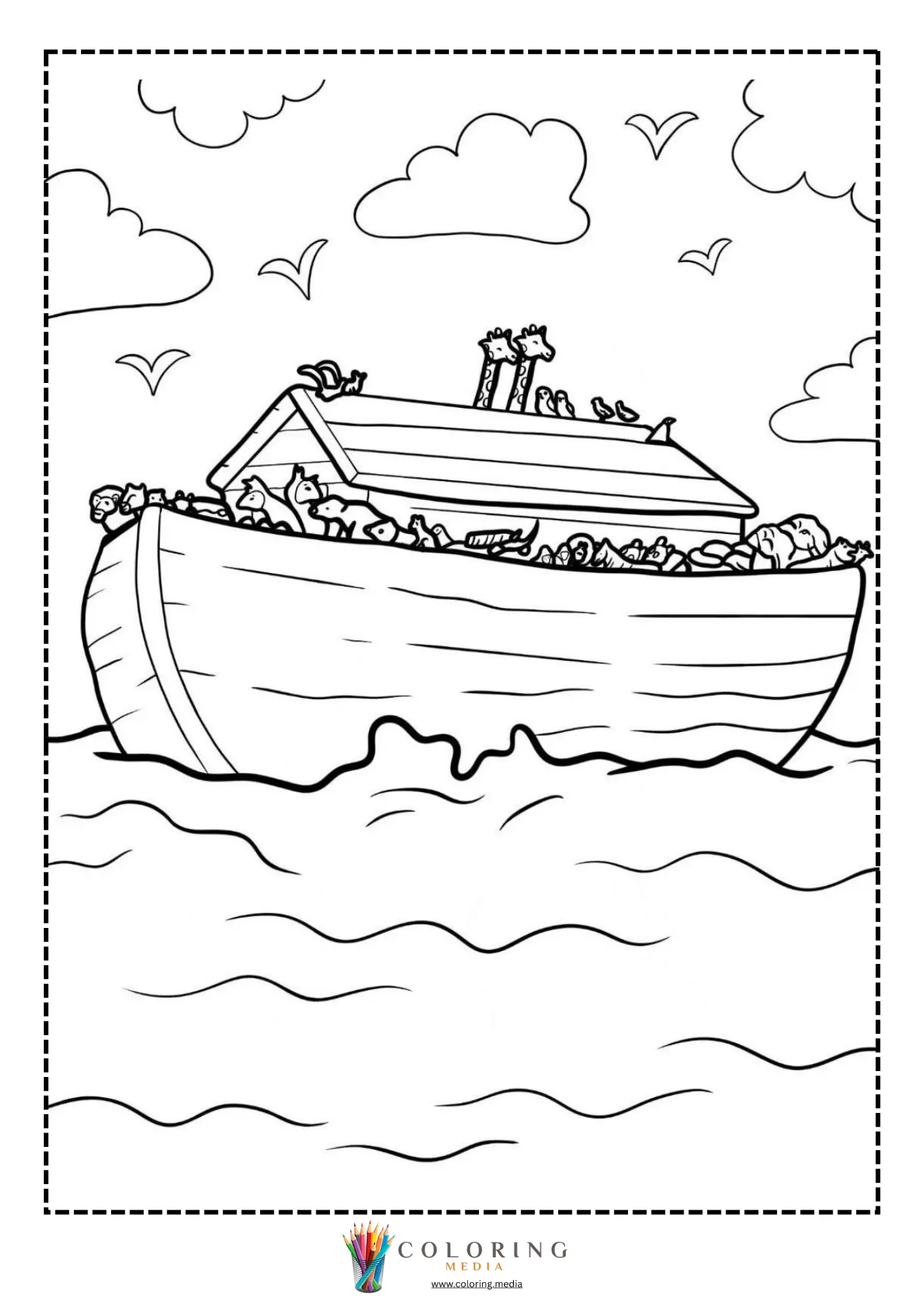
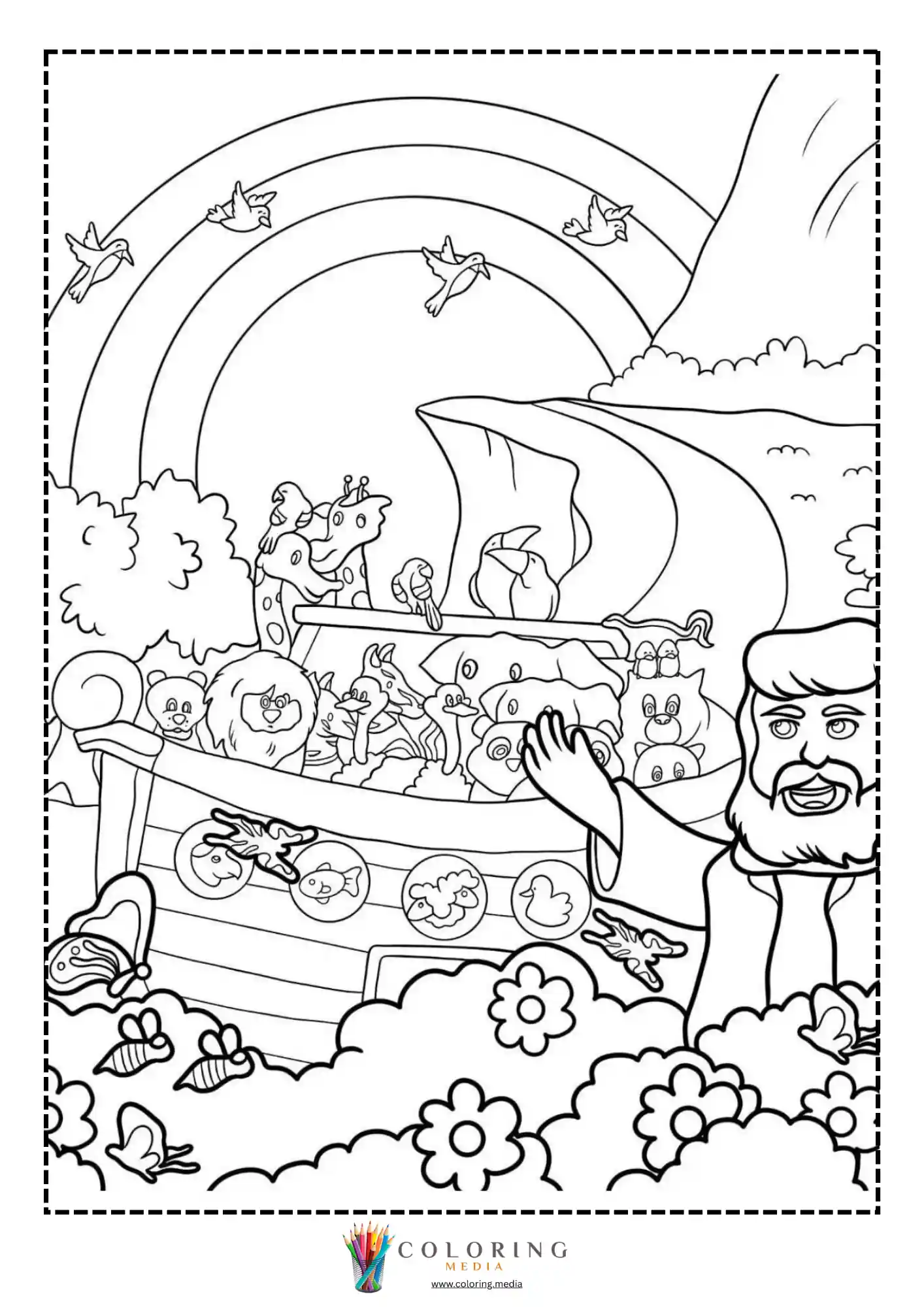
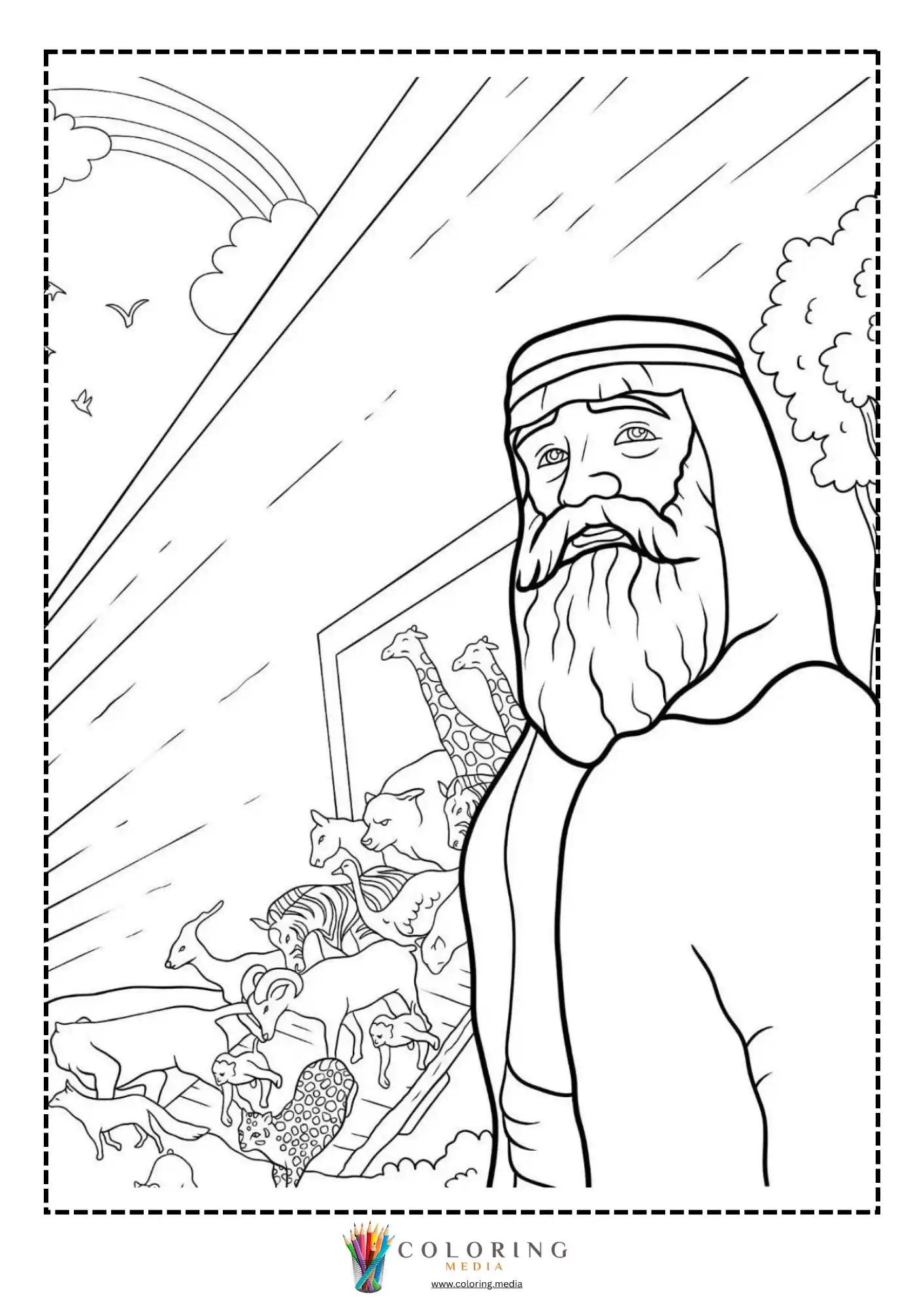
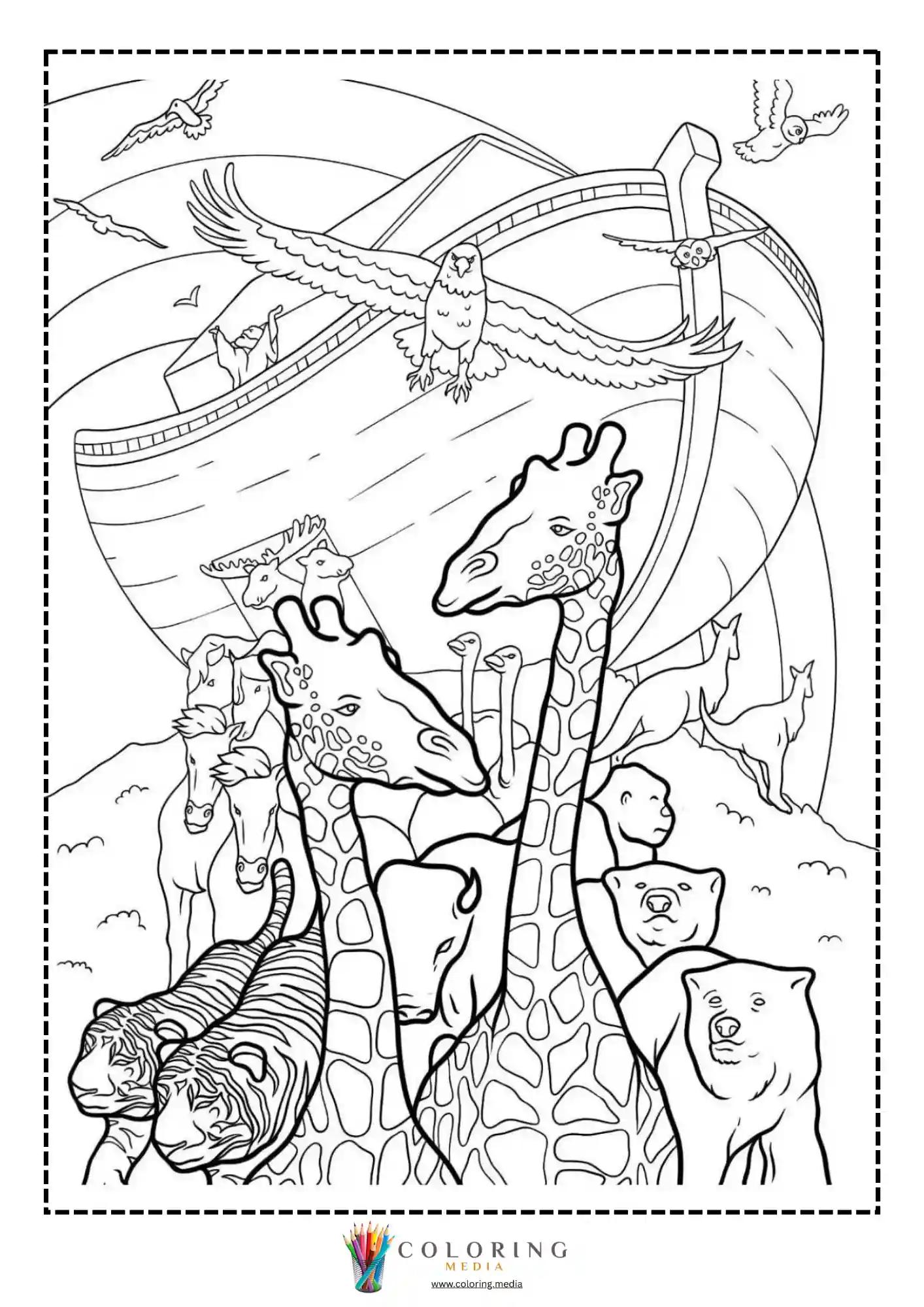
These 20 Noah’s Ark pages tell a complete story across the set. One page shows Noah himself standing with a hammer and tools — a bearded older man, drawn in sturdy cartoon proportions — while other pages crowd the foreground with animal pairs: giraffes with necks stretching to the top of the frame, elephants and lions in the same scene, toucans and parrots perched on the ark’s railing. The linework is denser than a typical kids’ coloring page — overlapping animal figures, detailed wooden planks on the hull, wave patterns in the flood water — which puts most pages solidly in the kindergarten-to-early-elementary range.
The collection covers the full arc: construction, the animals boarding two by two, the flood itself, and the rainbow covenant at the end. That variety makes it useful beyond a single sitting — a different page works for a different day of a lesson unit. Everything here is free to download and easy to print.
Free Printable Noah’s Ark Coloring Pages
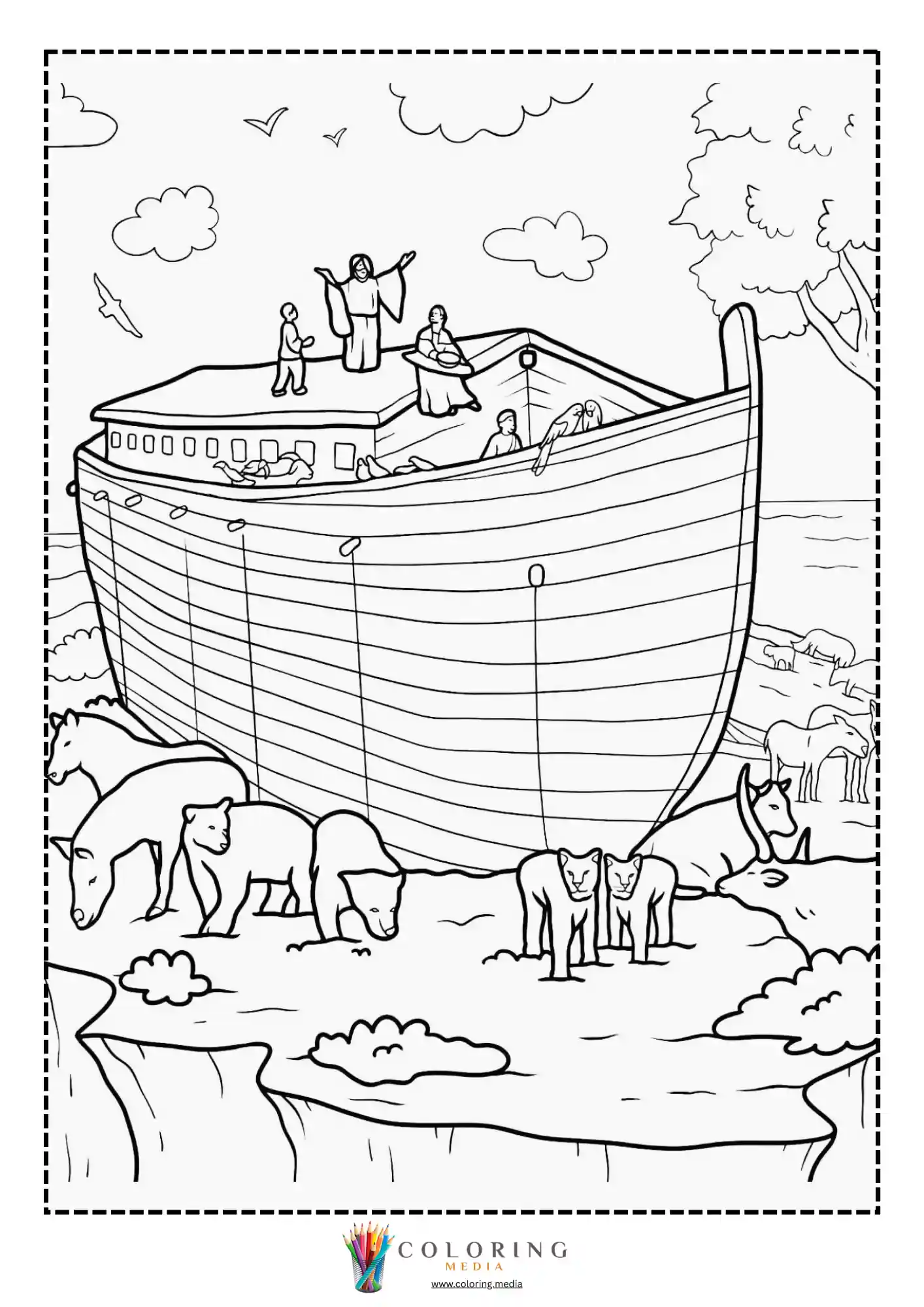
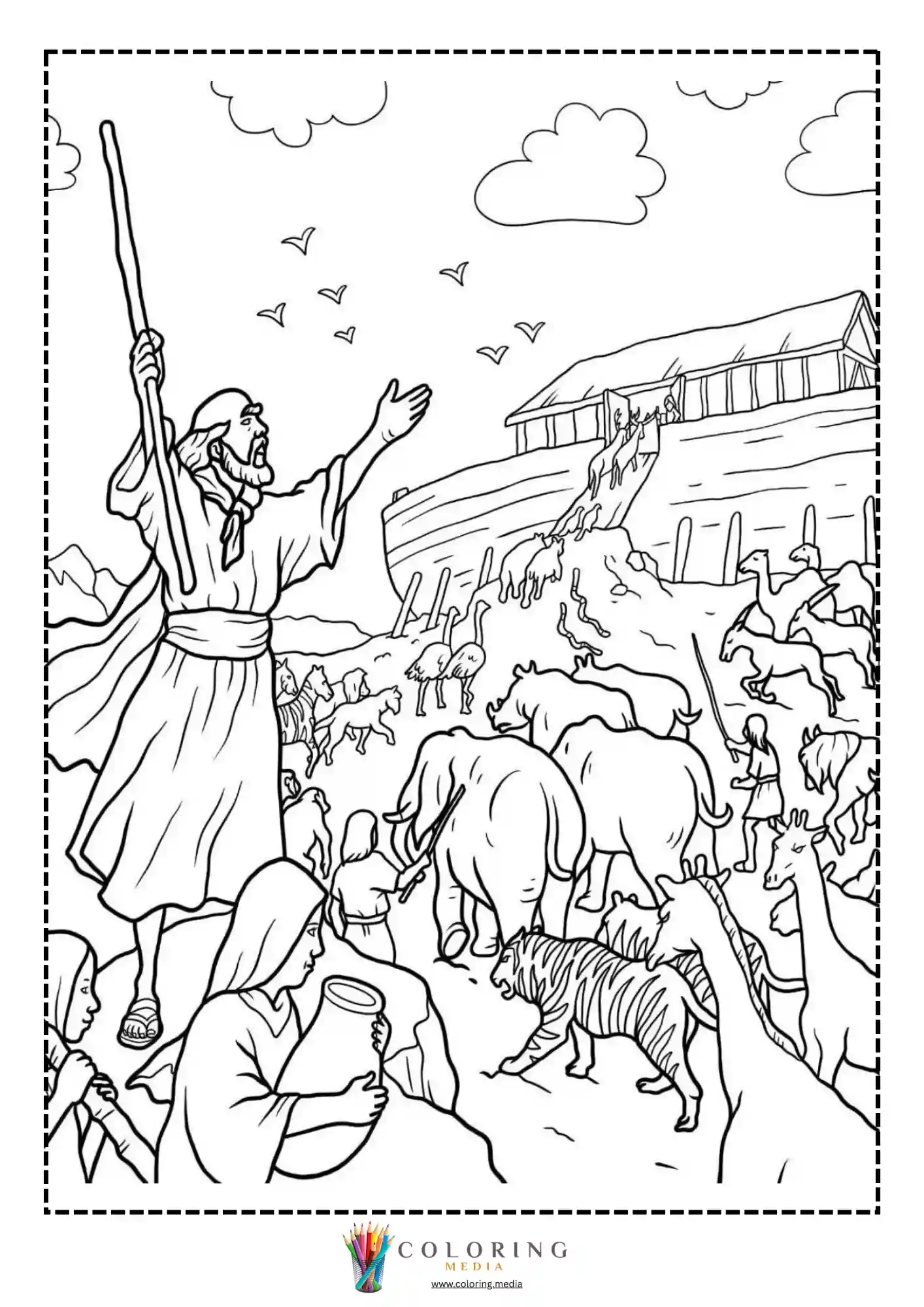
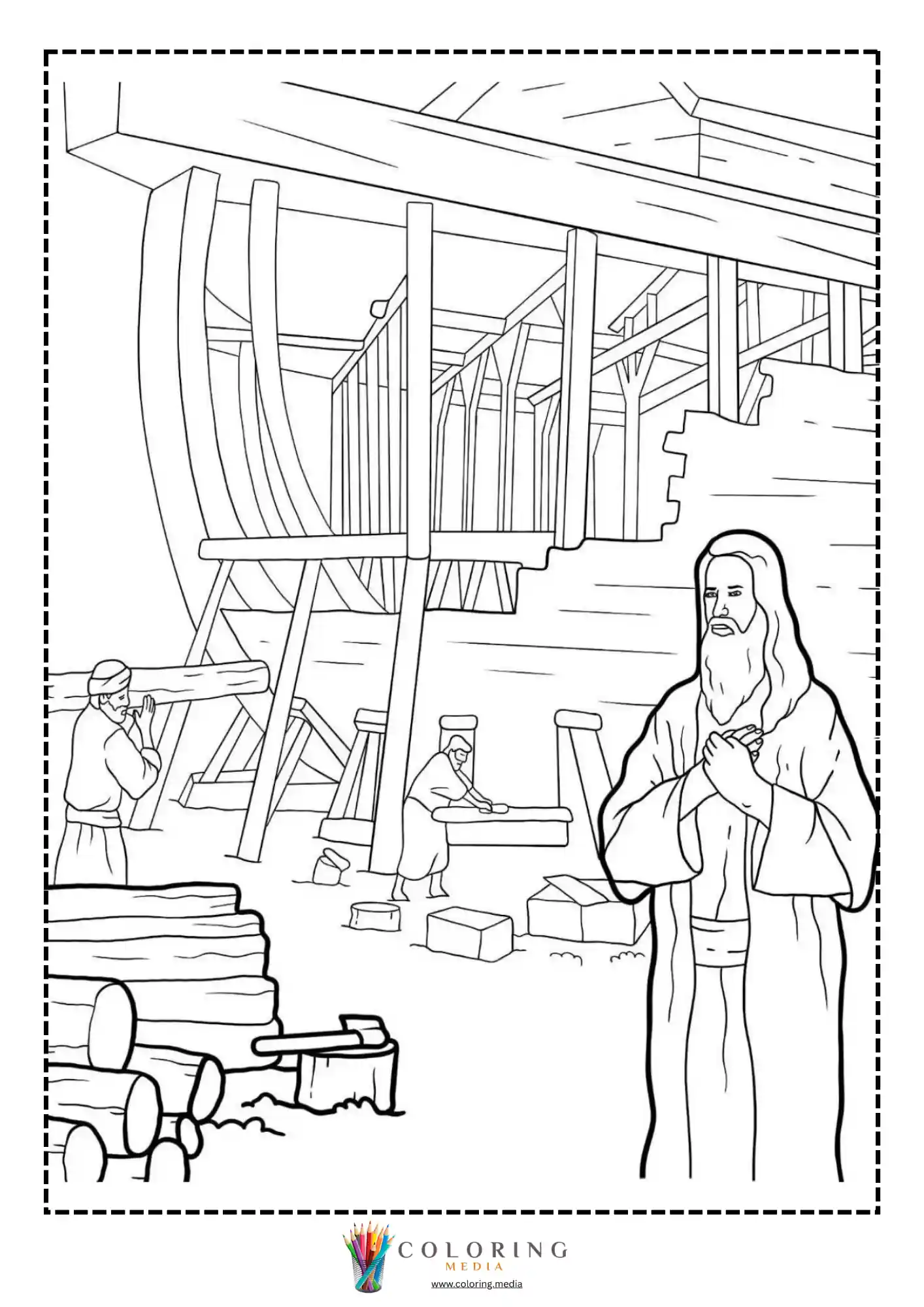
This collection includes 20 printable Noah’s Ark coloring pages featuring Noah building and inspecting the wooden ark, pairs of animals — giraffes, elephants, lions, sheep, birds, and more — boarding the ramp or crowding the deck, the large vessel riding out the flood with waves breaking against the hull, and the scene of Noah releasing the dove with the rainbow arching over calm water. A few pages zoom in close on individual scenes while others pull back to show the full ship with animals visible in every porthole. All pages export as PDFs formatted for US Letter or A4 paper.
Who Are These Noah’s Ark Coloring Pages Best For?
Kindergarteners can handle these pages but will work more slowly than on simpler designs. The animal-crowd scenes have multiple overlapping figures, and a child who wants to color each animal a different color needs to plan a little — which is actually a useful exercise for that age. The ark hull scenes, with their horizontal plank lines, offer a more straightforward coloring experience. A mix of easier and harder pages within the same set keeps the collection useful for a spread of ability levels within a single classroom.
Early elementary is the core audience. Children in grades 1-3 can read the story details into the images — they know the rainbow is a promise, they understand why the animals come in pairs — and that background makes the coloring feel like engagement with a story rather than just filling shapes. The moderate line density keeps them occupied longer than very simple pages would.
A few of the more intricate crowd-of-animals pages, with dozens of overlapping figures and fine detail in the rigging and woodwork, could hold a middle schooler’s attention too. Sunday school teachers often find that older children who feel “too old” for coloring will still pick up a genuinely complex page.
Interesting Noah’s Ark Facts to Share While Coloring
The ark’s dimensions are recorded in Genesis with unusual precision. It was 300 cubits long, 50 cubits wide, and 30 cubits tall — roughly 450 feet by 75 feet by 45 feet using the standard ancient cubit. That makes it one of the largest wooden vessels ever described, comparable in length to a modern naval destroyer.
The story of a great flood appears in dozens of ancient cultures. The Epic of Gilgamesh, one of the oldest written stories on Earth, contains a nearly identical flood narrative — a righteous man, a boat, animals, and a bird sent out to find dry land. Scholars debate whether both stories share a common ancient source or whether major floods in the ancient Near East left memories that spread across cultures.
“Gopherwood” is a translation puzzle. The Hebrew word used in Genesis for the ark’s construction material — gopher wood — doesn’t match any known tree. It appears nowhere else in the Bible or in other ancient texts. Translators have proposed cypress, cedar, and even a type of resinous pine, but nobody knows for certain what Noah was cutting.
Ravens and doves were both sent to scout for land. Genesis records that Noah first released a raven, which flew back and forth until the waters dried. Then he sent a dove three times — the second time it returned with an olive leaf, and the third time it didn’t return at all, which told Noah the land was dry enough.
The rainbow as a covenant symbol was a specific theological claim. In ancient Near Eastern culture, the bow (as in bow and arrow) held by a god pointed at a people meant war or judgment. A bow turned upward, or hung in the sky, meant the war was over. The Hebrew audience hearing this story would have understood the rainbow not just as a pretty phenomenon but as a weapon laid down.
Creative Noah’s Ark Coloring and Craft Ideas
Pair Match Game Color two copies of an animal-crowd page, then cut out individual animals and use them as matching pairs in a memory game.
Story Sequence Board Select five pages representing construction, boarding, the flood, the dove, and the rainbow — arrange and mount them as a sequential storyboard on poster board.
Animal Pattern Challenge Color each animal in a realistic pattern — zebra stripes, leopard spots, elephant gray — and use the page as a visual reference for learning animal markings.
Rainbow Watercolor Accent Color everything on a rainbow-scene page in pencil or crayon, then paint the rainbow arc with watercolor in the ROYGBIV sequence for a striking contrast.
Torn-Paper Collage Background Tear blue and green construction paper into wave shapes and glue to a printed page as the water background before coloring the ark and animals.
Class Mural Print one page per student, color individually, then assemble all 20 around a central ark image for a hallway display.
Animal Bookmark Cut out a single animal figure from a completed page, laminate, and use as a bookmark.
Ark Blueprint Using rulers and pencils, have older children draw the ark’s basic dimensions on graph paper while discussing the cubit measurements — geometry meets Bible history.
How to Print These Noah’s Ark Coloring Pages
Each file downloads as a PDF formatted for US Letter (8.5×11 in) or A4. For pages with dense animal detail, 60-70 lb paper holds up better than standard copy paper if children use markers, as thinner paper may bleed through. Print at 100% scale to keep the original line weights intact. Printing in grayscale is fine — the line art is pure black and white — and saves colored ink for pages where you want to test color schemes before committing.
Explore More Christian & Bible Coloring Pages
If you enjoyed these pages, you may also like:
Bible Character Coloring Pages
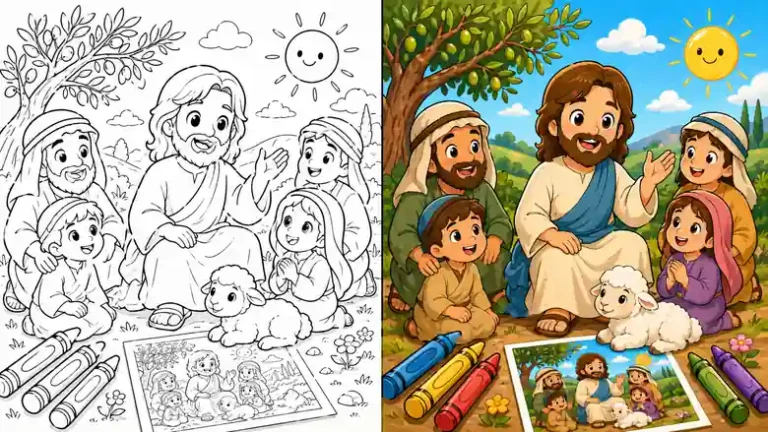
Bible Story Coloring Pages
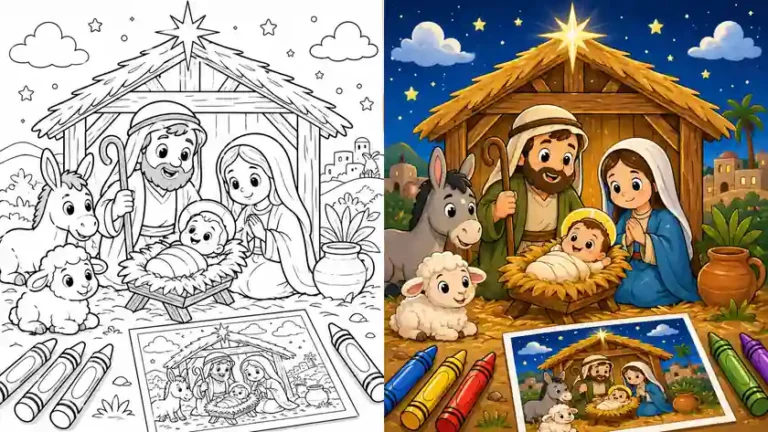
Nativity Coloring Pages
Christian & Bible Coloring Pages