
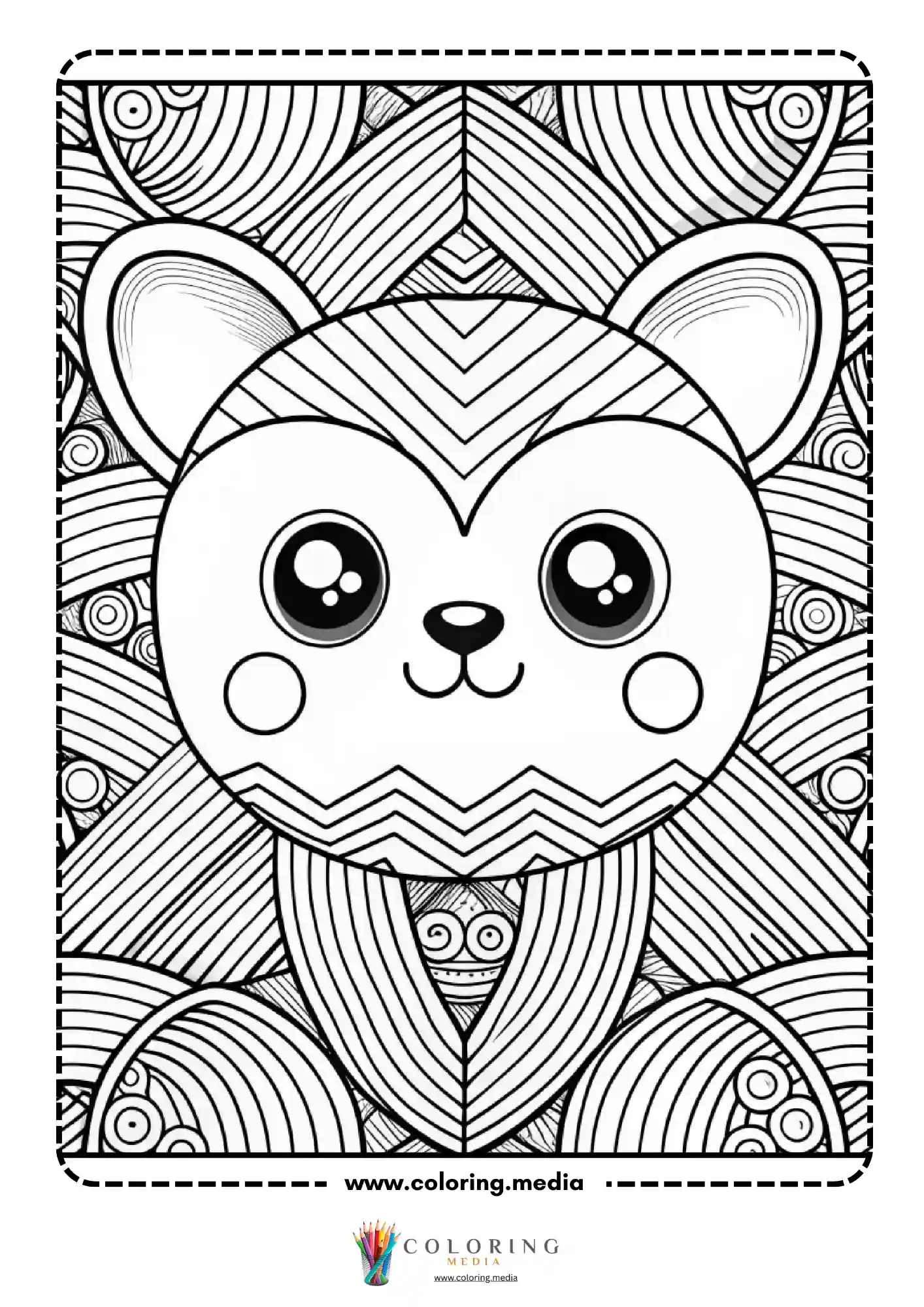
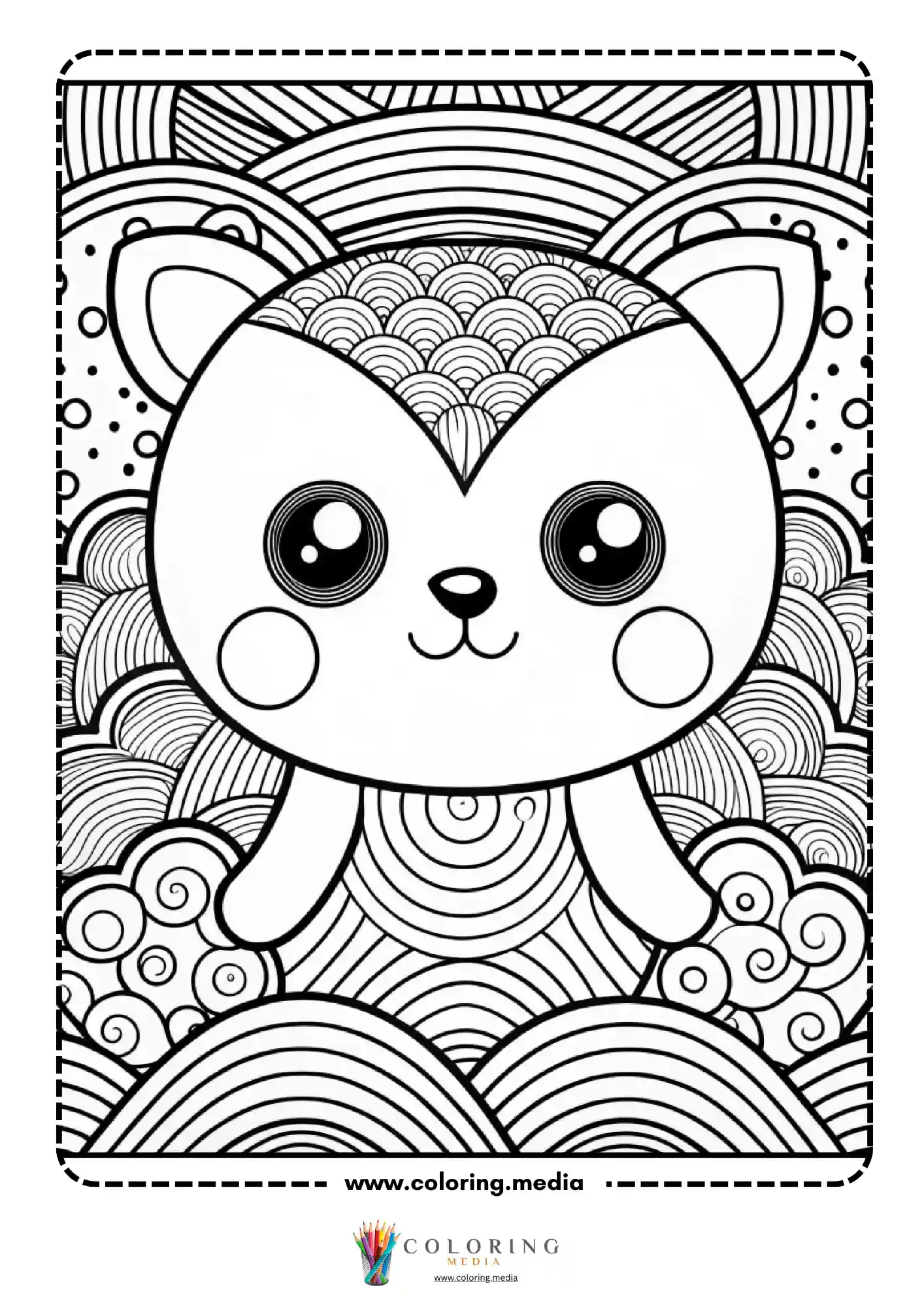
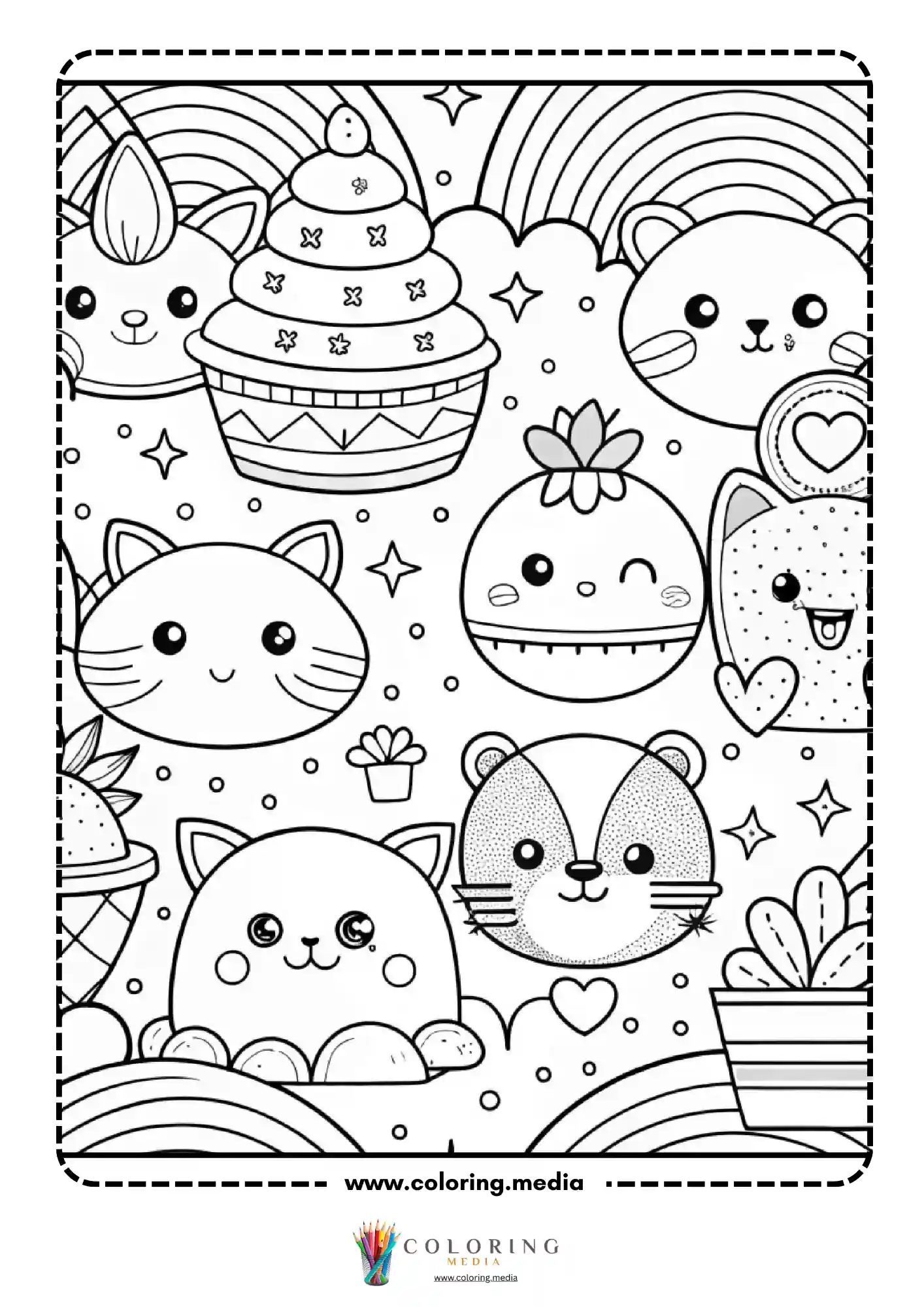
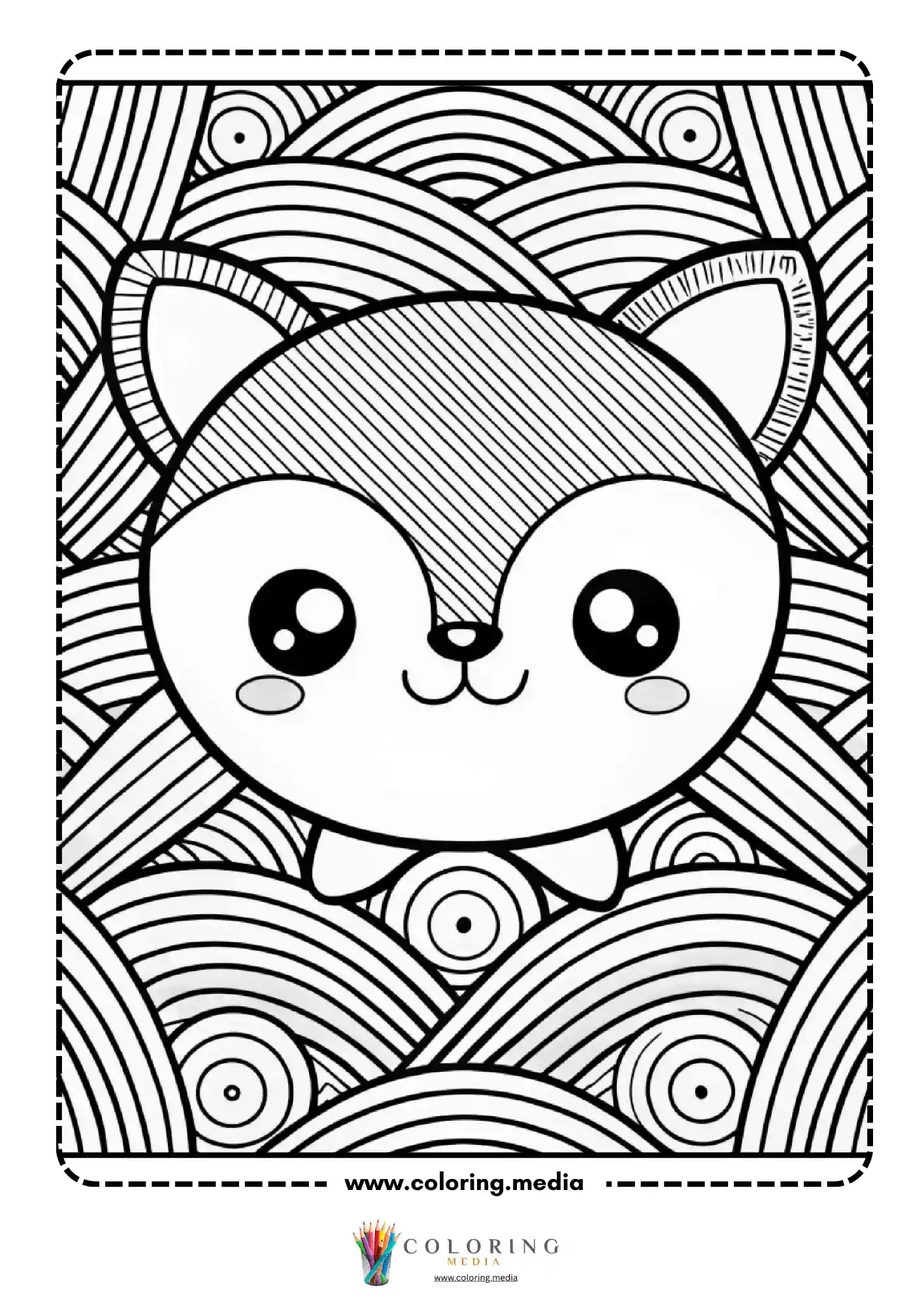
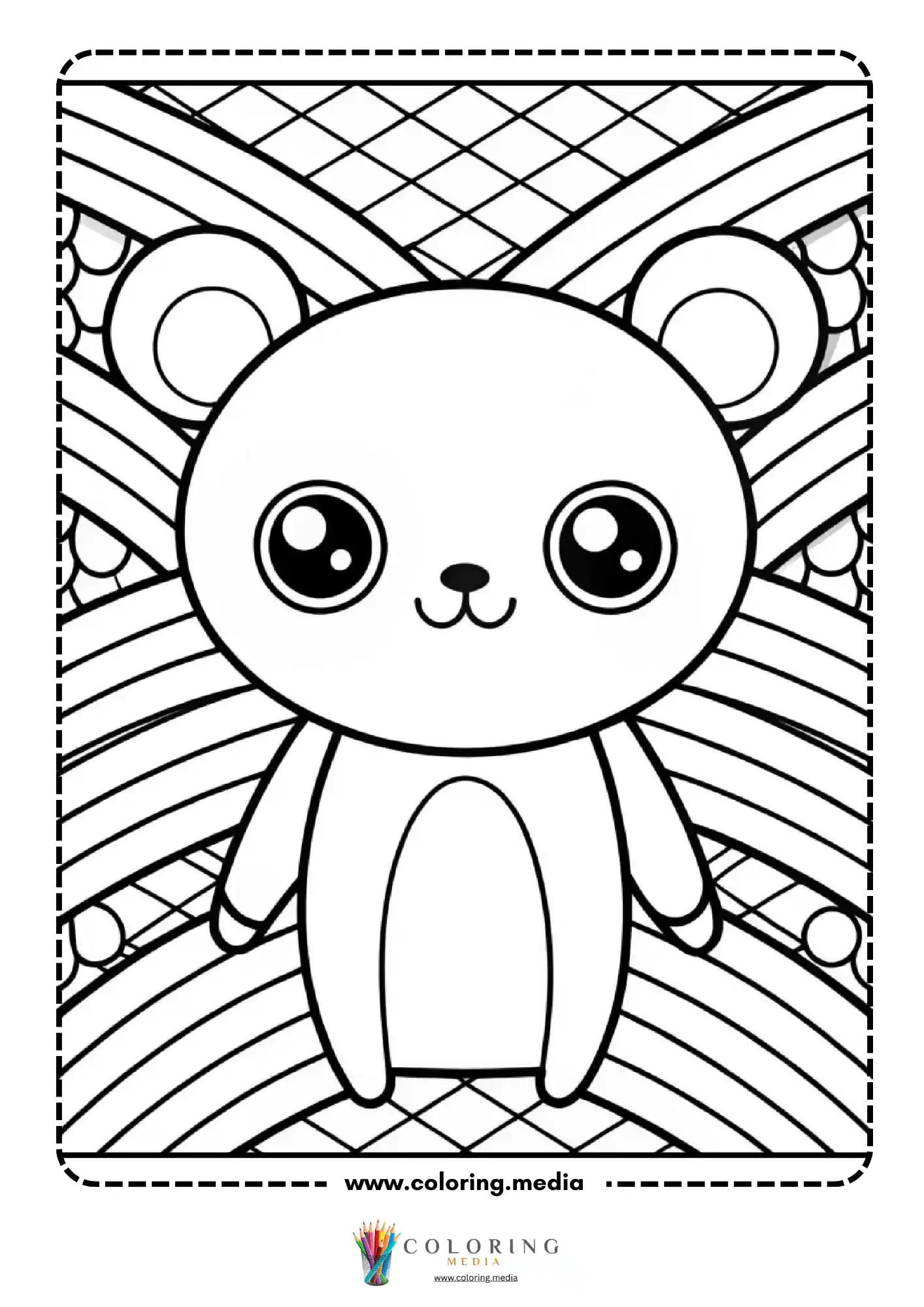
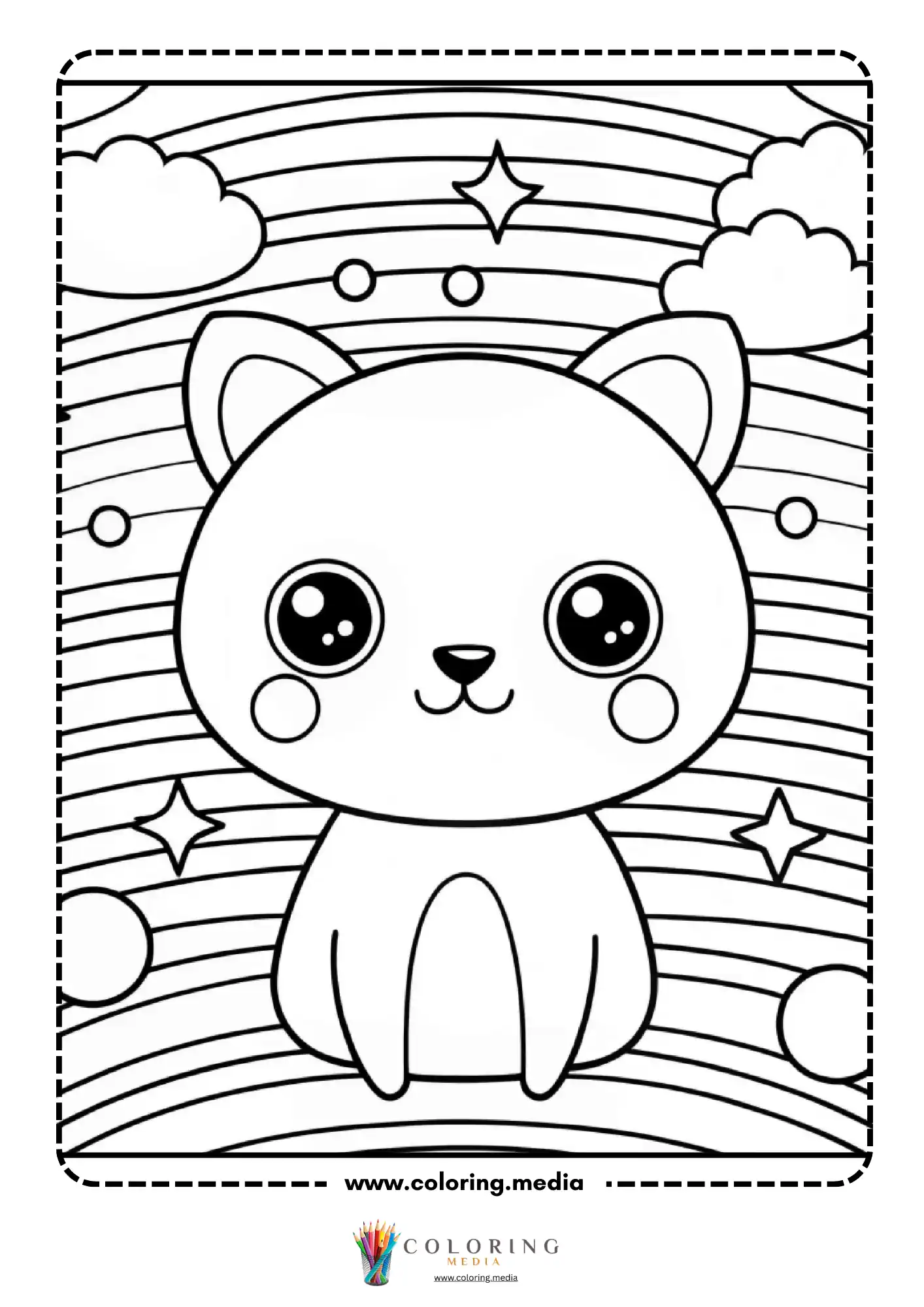
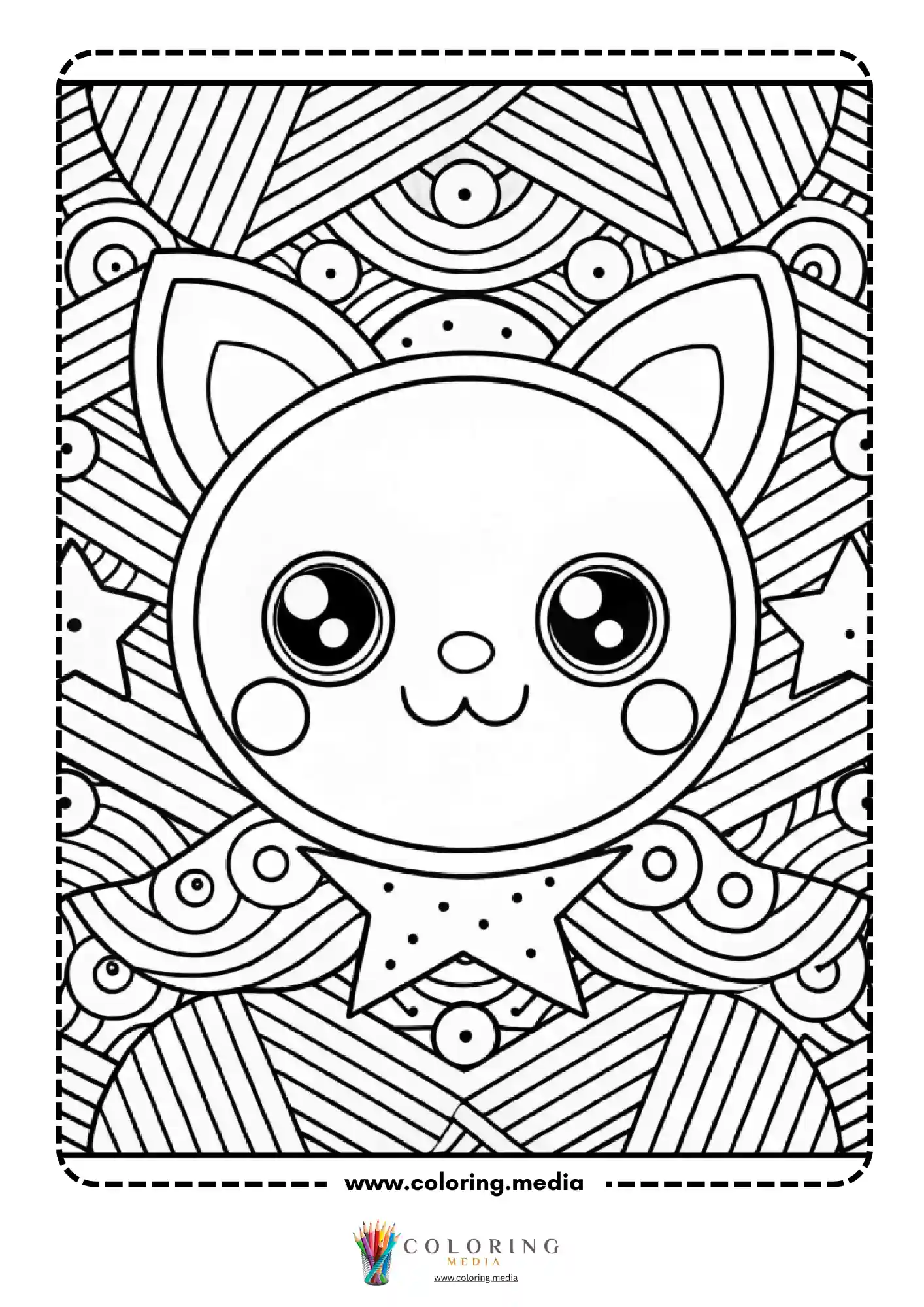
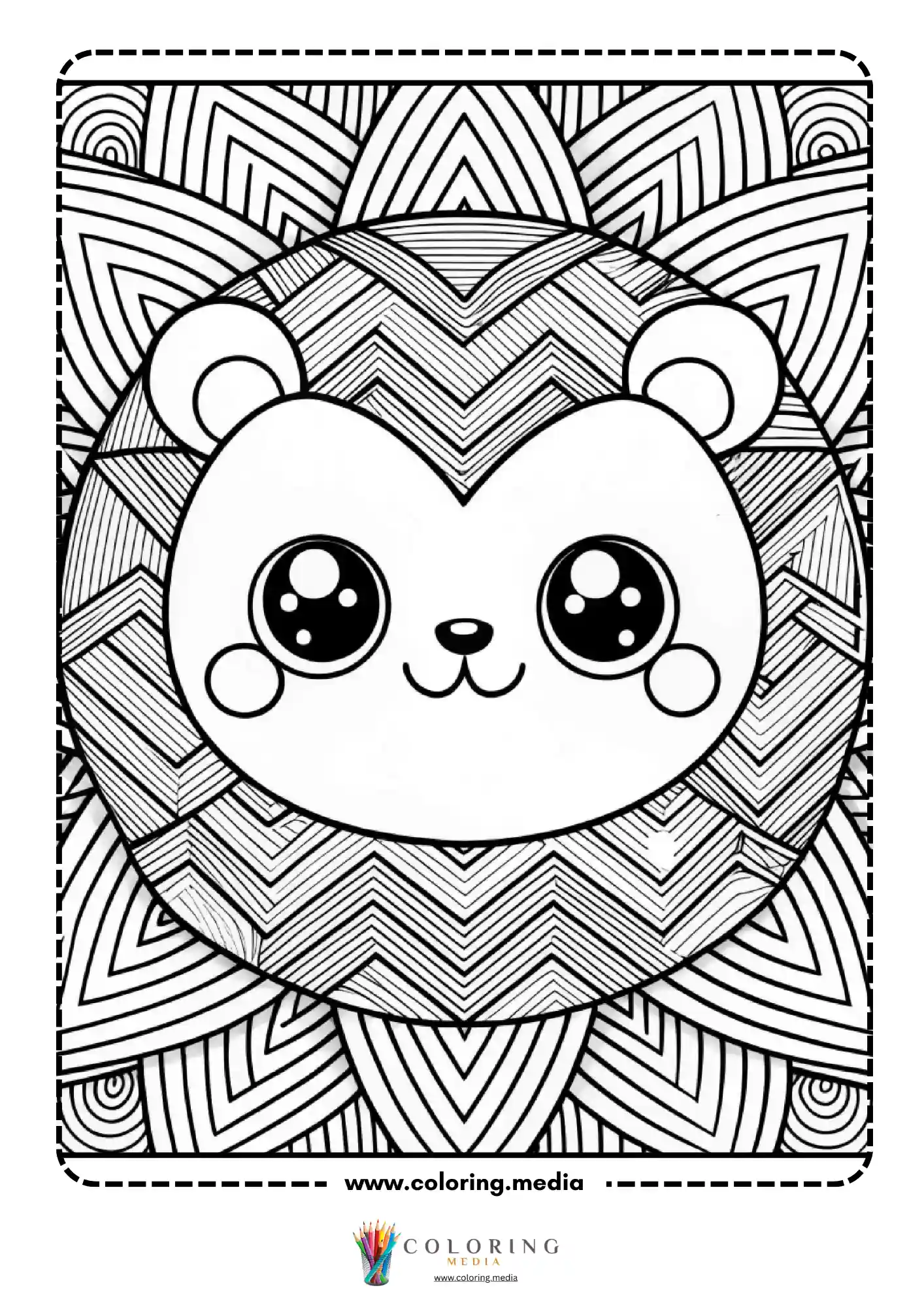
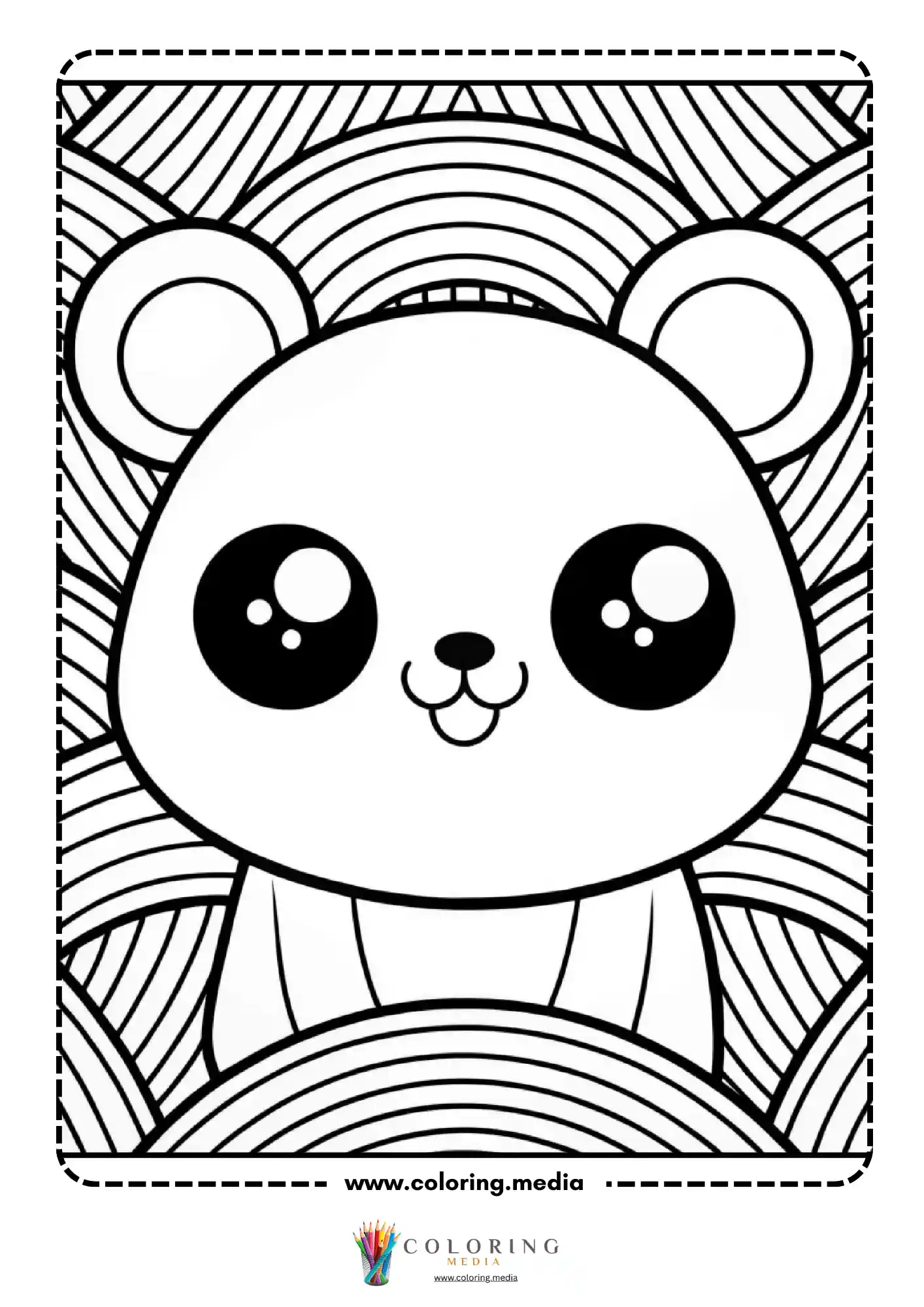
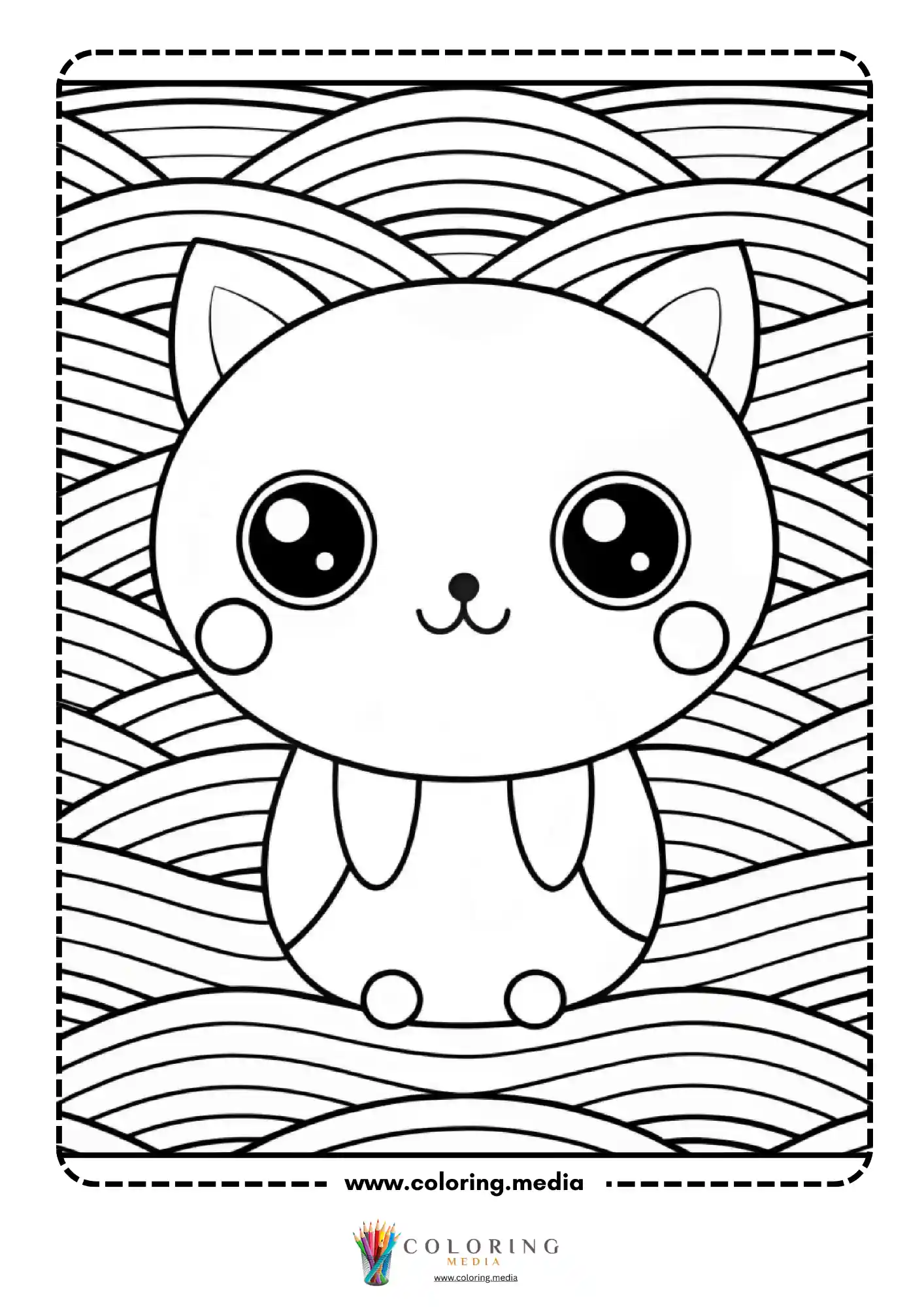
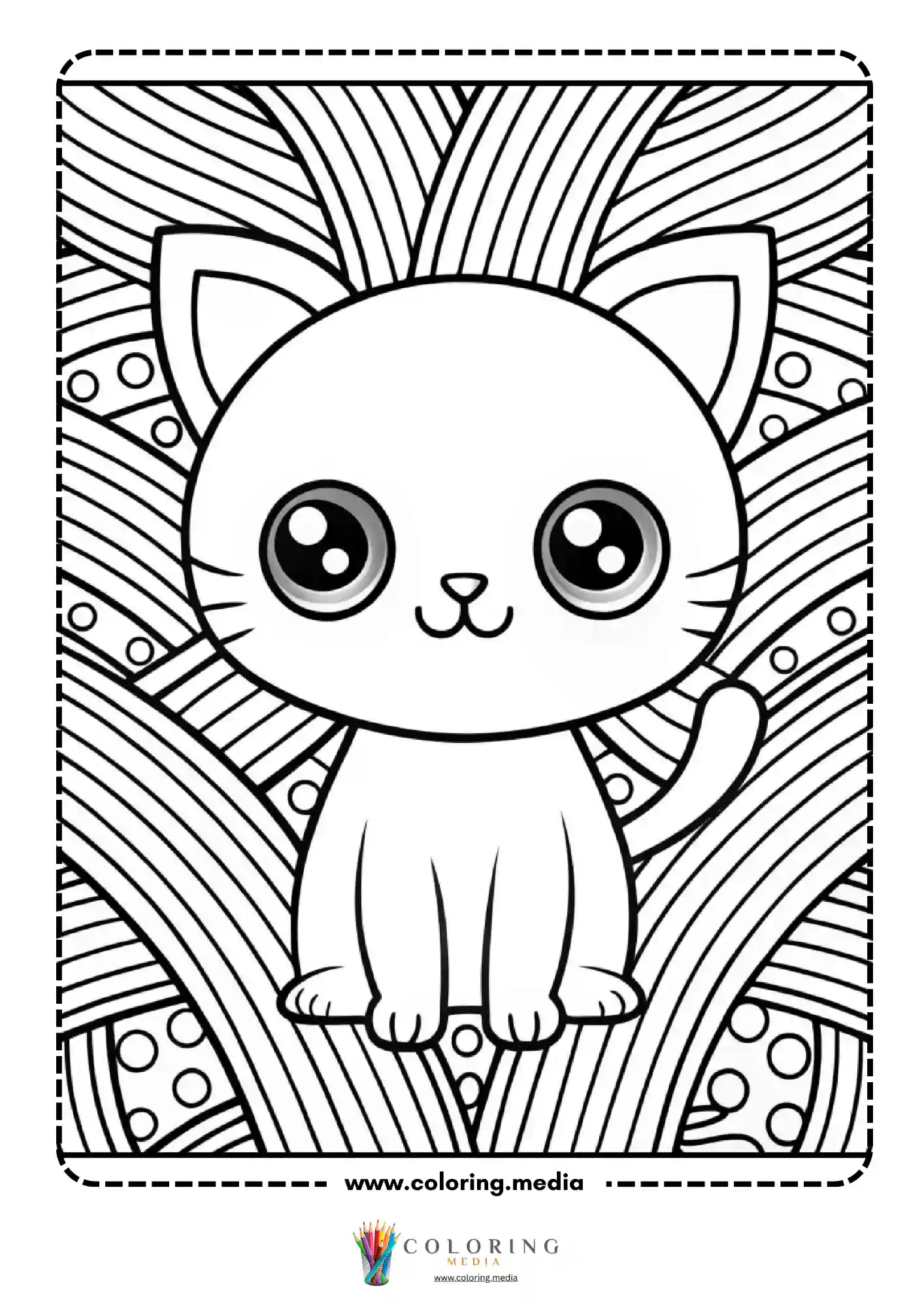
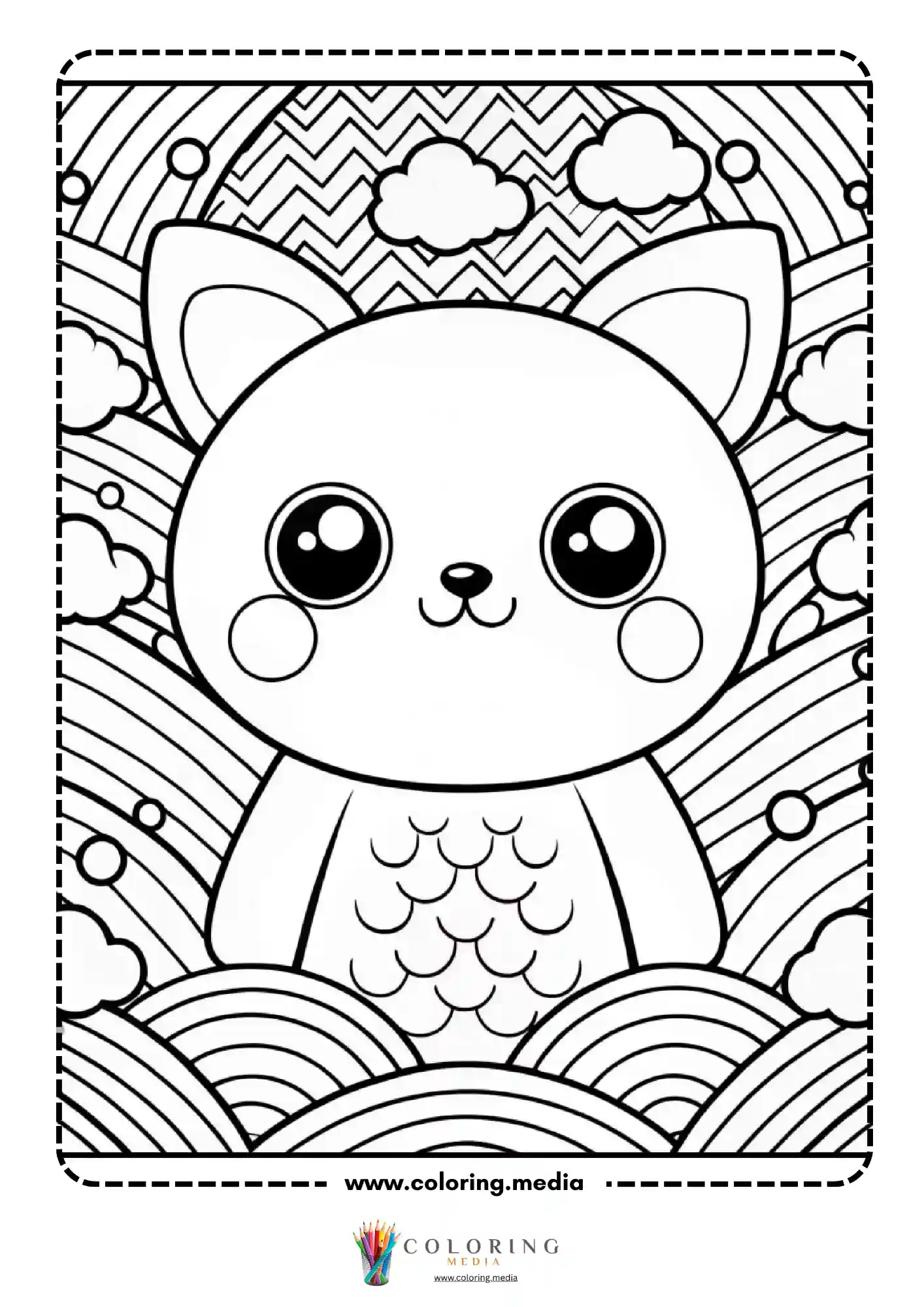
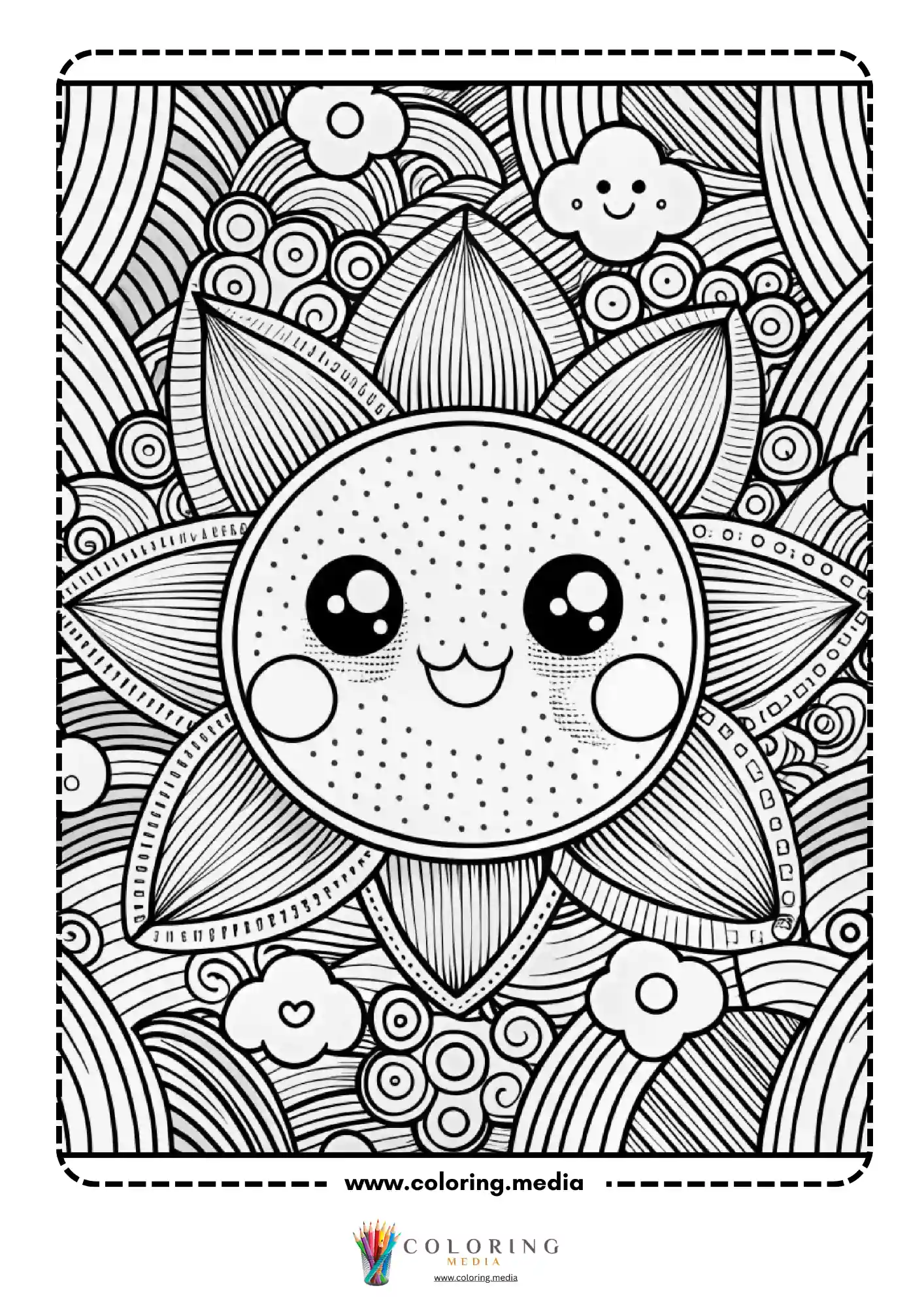
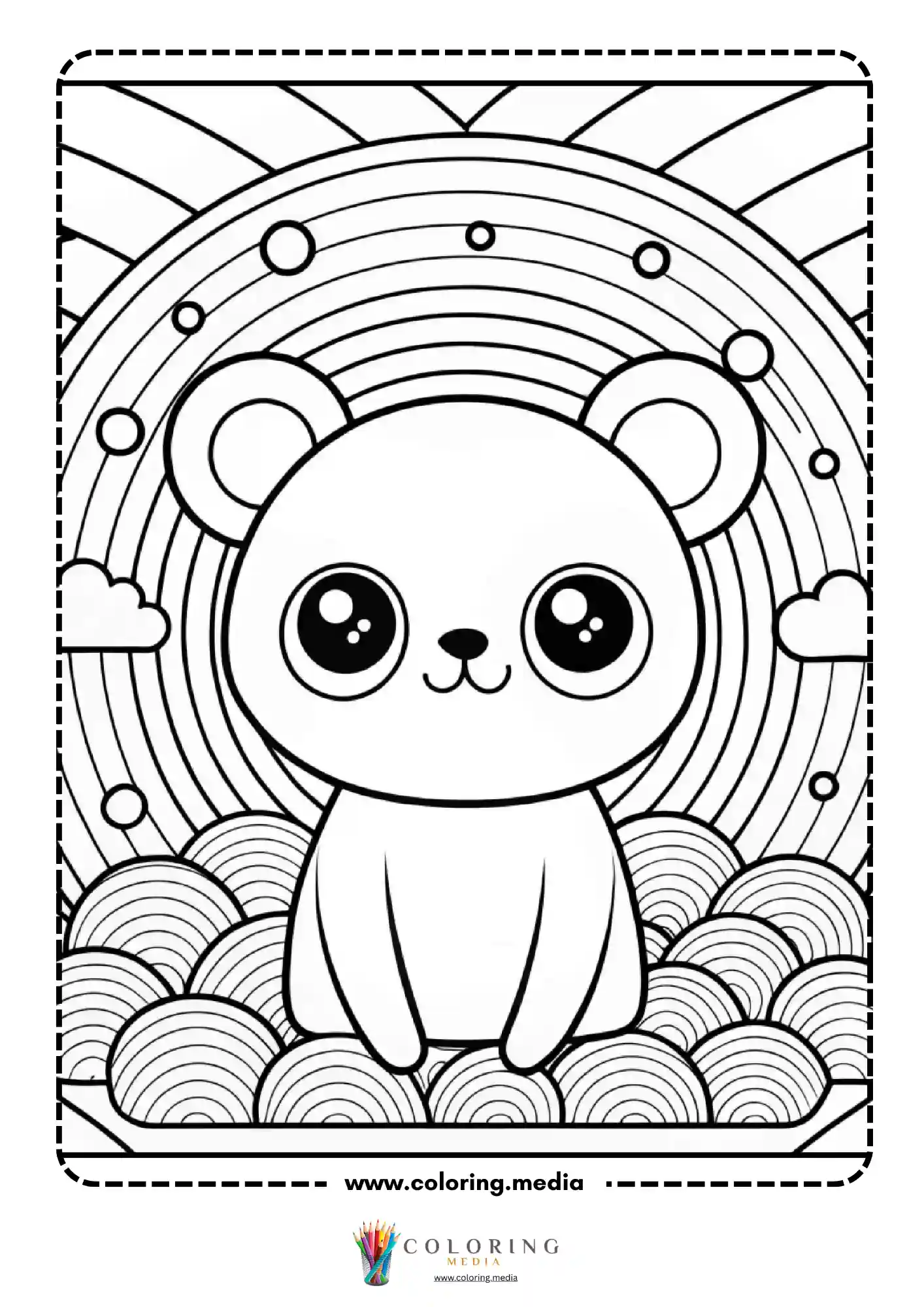
Each page in this collection pairs a kawaii animal character — a cat, an owl, a fox, a bear, a raccoon, a panda — with a full-page mandala or geometric background pattern that fills every inch of space around it. The character itself uses bold 3-4mm outlines and the simplified large-eye style typical of kawaii illustration; the surrounding pattern is a different matter entirely, with dense overlapping curves, repeating floral shapes, and fine-line geometric fills that extend all the way to the page edges. You’re essentially getting two coloring challenges on one page.
The practical effect is that young children can color the large, simple central character and feel finished, while older children or adults can work their way through the intricate background at their own pace. A 5-year-old and a 10-year-old can color the same page and have genuinely different experiences from it. Everything here is free to download and easy to print.
Free Printable Bold Easy Cute Kawaii Coloring Pages
This collection includes 22 printable cute kawaii coloring pages featuring kawaii-style cats in multiple poses, an owl with large expressive eyes, a fox, a raccoon, a bear, a panda, and other round-faced chibi animal characters — each centered on the page and surrounded by a distinct mandala or geometric background pattern ranging from floral mandalas to wave-and-arc compositions to repeating petal grids. The central characters fill roughly one-quarter of each page; the mandala background fills the rest. All pages export as PDFs formatted for US Letter or A4.


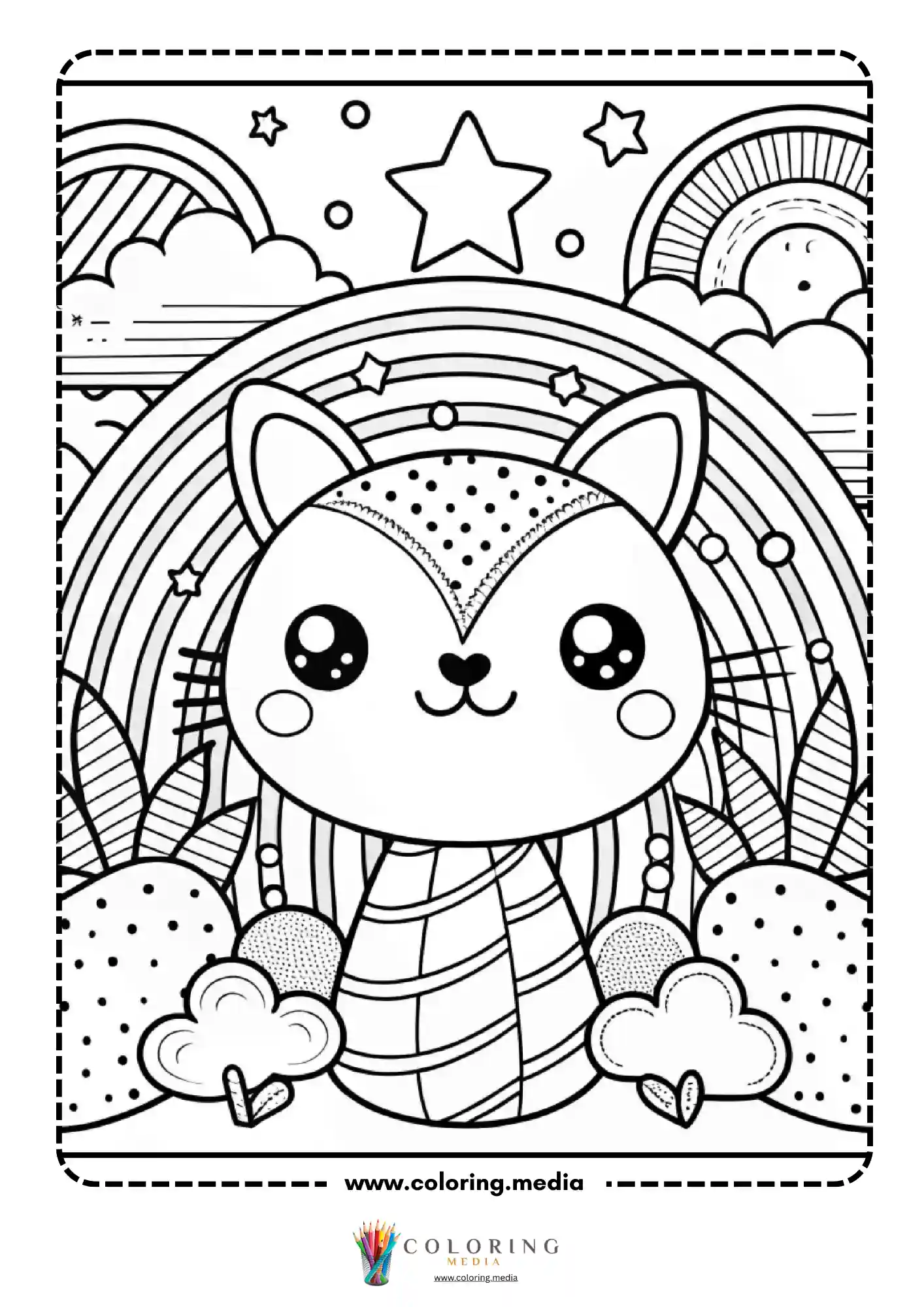

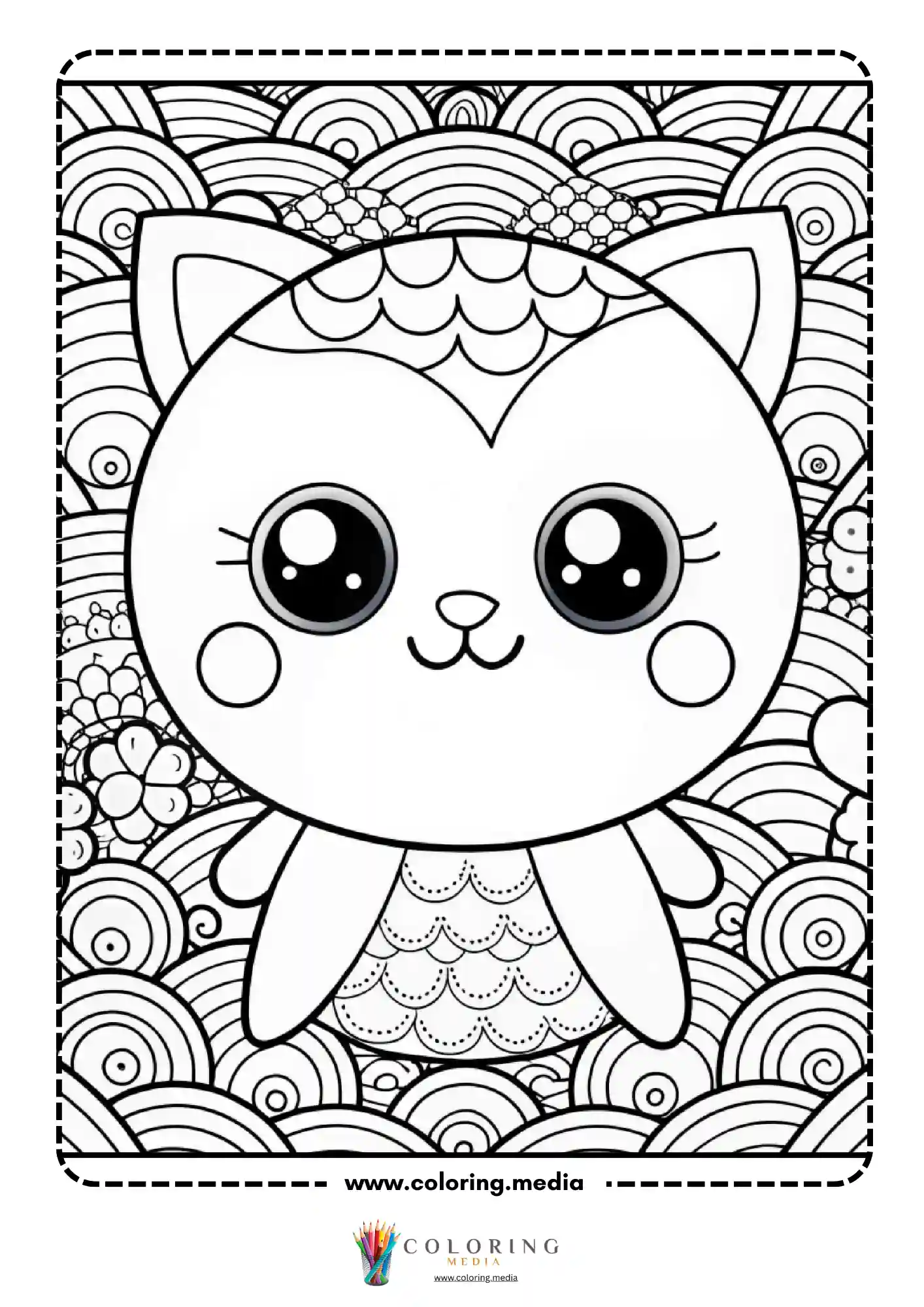
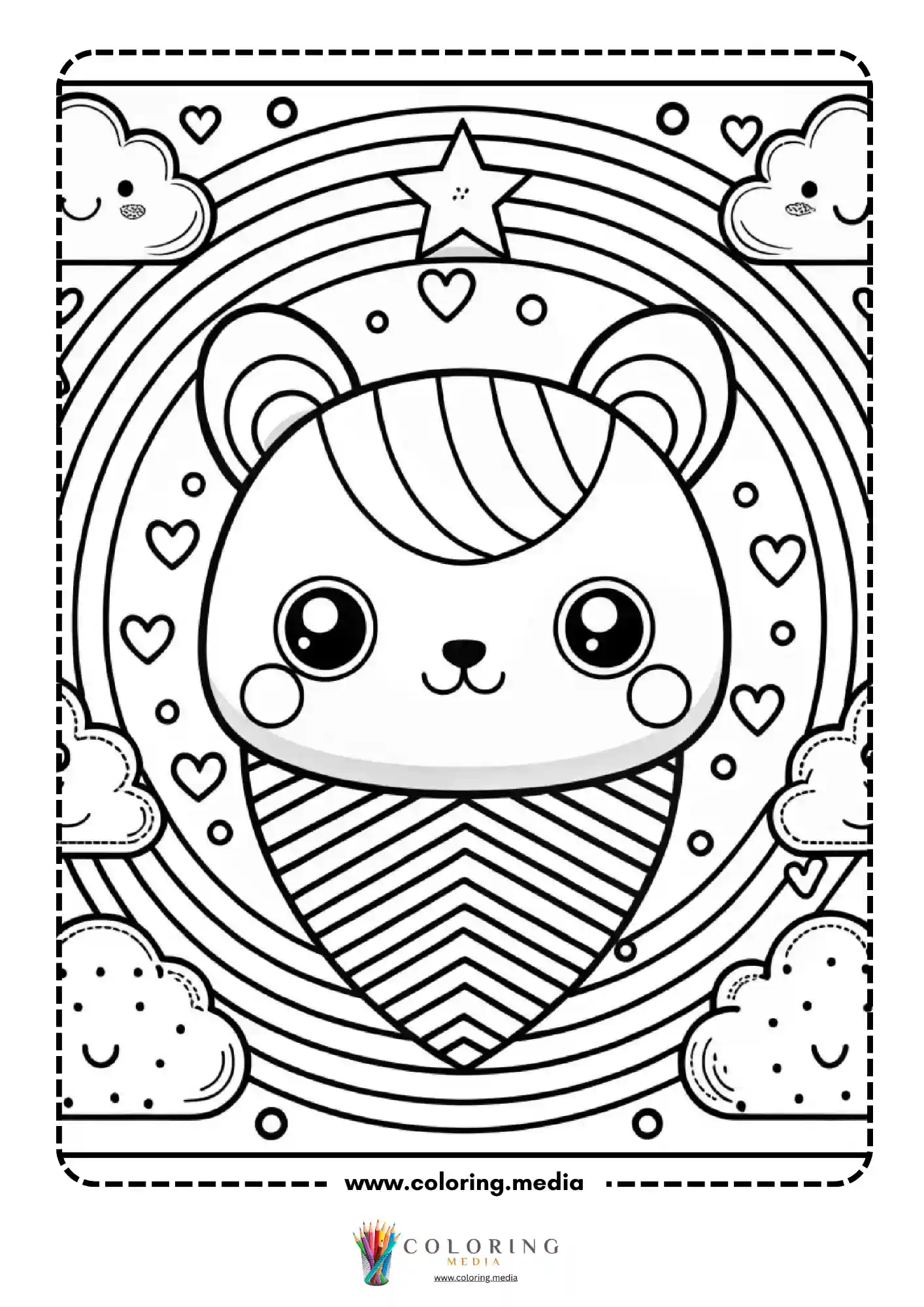
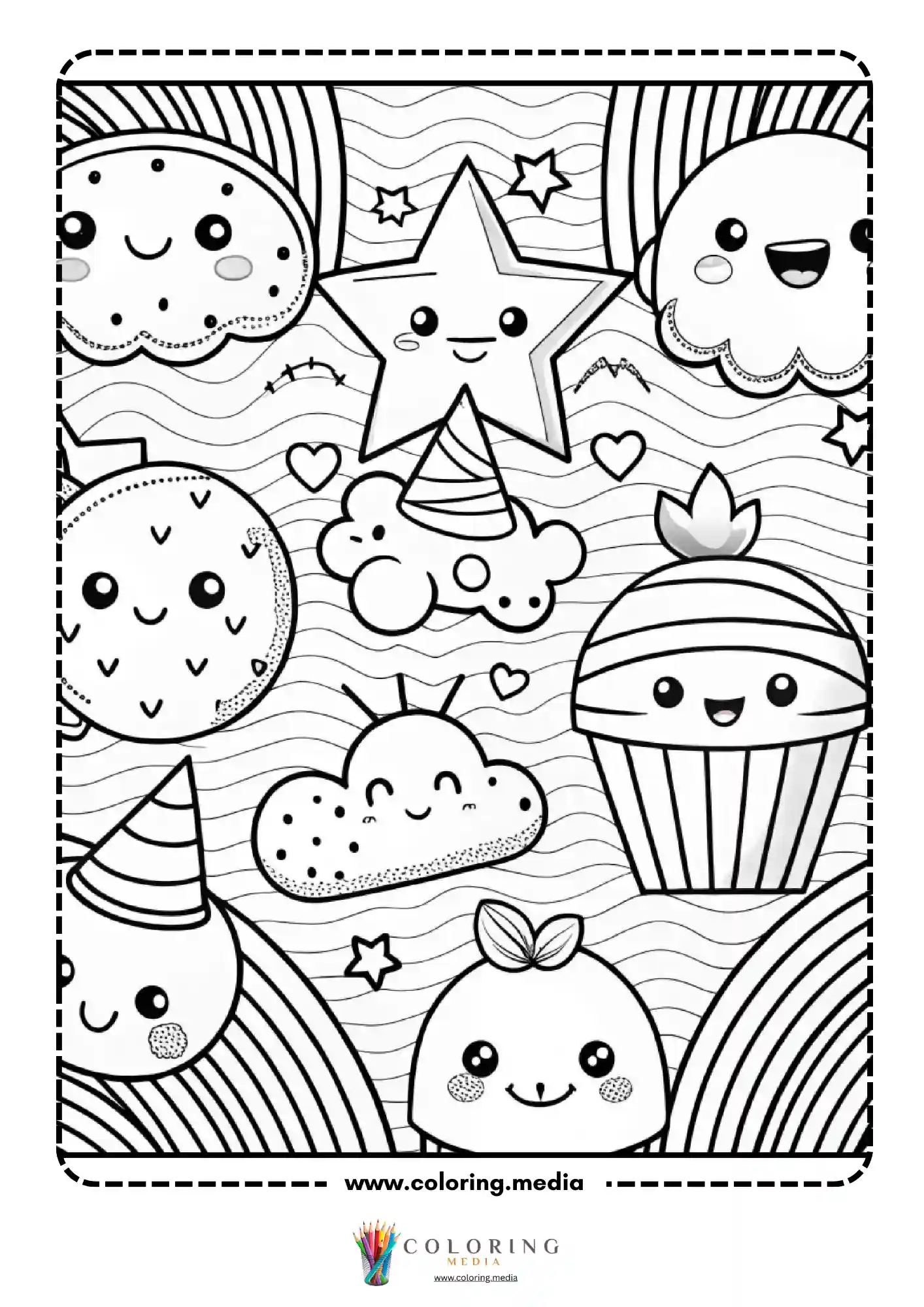

Who Are These Kawaii Coloring Pages Best For?
Kindergarteners who are drawn to cute animal characters will find an entry point immediately — the kawaii cat or bear in the center of each page is easy to identify and straightforward to color. The thick outlines on the character mean a kindergartener can finish that portion confidently in under 10 minutes. Whether they then attempt the surrounding mandala pattern is entirely optional, and most will leave it alone or make a few marks in it before moving on. That’s fine. The character alone is satisfying.
Early elementary children (grades 1-3) often approach these pages as a two-stage project: color the animal first, then work through the background section by section. The mandala patterns are genuinely complex — repeating petals, interlocking arcs, layered geometric shapes — and a child who enjoys the meticulous work of pattern-coloring will find plenty here. The kawaii character at the center also provides a natural focal point for color planning: pick the animal’s main color first, then choose background colors that complement or contrast it.
Older children and adults who enjoy mindfulness coloring but want something more approachable than a pure mandala will find the kawaii character provides a friendly anchor in an otherwise abstract composition. These pages work well as a bridge between simple children’s coloring books and adult mandala books.
Interesting Kawaii and Animal Facts to Share While Coloring
Kawaii (かわいい) literally means “cute” in Japanese, but the aesthetic has a specific origin. The modern kawaii style emerged in Japan in the 1970s when teenagers began writing in a rounded, childlike handwriting style with small drawings in the margins. Brands like Sanrio (Hello Kitty, 1974) codified the aesthetic: oversized eyes, simplified features, round proportions, pastel colors.
Cats have a specific meow they developed to communicate with humans. Adult cats rarely meow at each other in the wild — it’s primarily a vocalization directed at people. Cats learned over thousands of years of domestication that humans respond to sounds that mimic infant cries, so the domestic meow evolved to be more high-pitched and attention-grabbing than the sounds wild cats make.
Owls have asymmetrically placed ears. In many owl species, one ear is positioned higher on the skull than the other. This creates a slight difference in the timing of sound reaching each ear, which the owl’s brain uses to pinpoint the exact three-dimensional location of a sound — including calculating vertical position, not just horizontal. This is how an owl can hunt in complete darkness by sound alone.
Red pandas are more closely related to raccoons than to giant pandas. Despite the name, red pandas belong to their own family (Ailuridae) and are not close relatives of giant pandas. They share the same bamboo-heavy diet and the same high-altitude habitat in the Himalayas, but that’s convergent evolution — two unrelated animals developing similar traits because of a shared environment.
Pandas have a “false thumb” that isn’t actually a thumb. Giant pandas grip bamboo with an enlarged wrist bone that acts like a sixth digit — it’s not a true thumb but evolved from the wrist to function like one. The result is that pandas can grip and strip bamboo stalks with surprising dexterity for an animal with otherwise blunt paws.
Creative Kawaii Coloring and Craft Ideas
Two-Stage Color Plan Color only the kawaii character first, choose three colors for it, then pick three complementary background colors — keep the palette intentionally limited for a cohesive finished look.
Gradient Background Challenge Color the mandala background in a gradient — light at the edges, darker toward the center character — using colored pencils blended in circular strokes.
Sticker Design Color and cut out just the kawaii character from a completed page, laminate, and use as a bookmark or sticker-style decoration.
Color Theory Lesson Use one page to illustrate complementary colors — color the animal in warm tones (orange, red, yellow) and the background in cool tones (blue, purple, green) to see how contrast affects the focal point.
Mindfulness Session Work through just the mandala background of one page slowly and deliberately, focusing on one section at a time — a natural mindfulness exercise that requires no special instruction.
Character Name Story After coloring, give the kawaii animal a name and write a 5-sentence story about it — what it eats, where it lives, what its favorite thing is.
Mixed Media Experiment Color the kawaii character with markers for bold flat color, then use watercolor pencils on the mandala background for a softer, more layered look.
Pattern Section Race Work with a partner on the same page — one person colors the mandala background from the top down, the other from the bottom up, and you meet in the middle.
How to Print These Kawaii Coloring Pages
Each page downloads as a PDF formatted for US Letter (8.5×11 in) or A4. Because the mandala backgrounds contain fine-line detail, printing at the highest resolution your printer supports will give the clearest lines in the pattern areas. Standard copy paper is fine for crayons and colored pencils; use 60 lb paper or heavier if you plan to use markers or watercolor on the intricate background sections. Print at 100% scale — do not scale to fit, as reducing size makes the fine mandala lines harder to color precisely.
Explore More Animal Coloring Pages
If you enjoyed these pages, you may also like:
Cute Kawaii Cat Coloring Pages
Cute Animal Coloring Pages
Bold and Easy Animal Coloring Pages
Animals Coloring Pages