
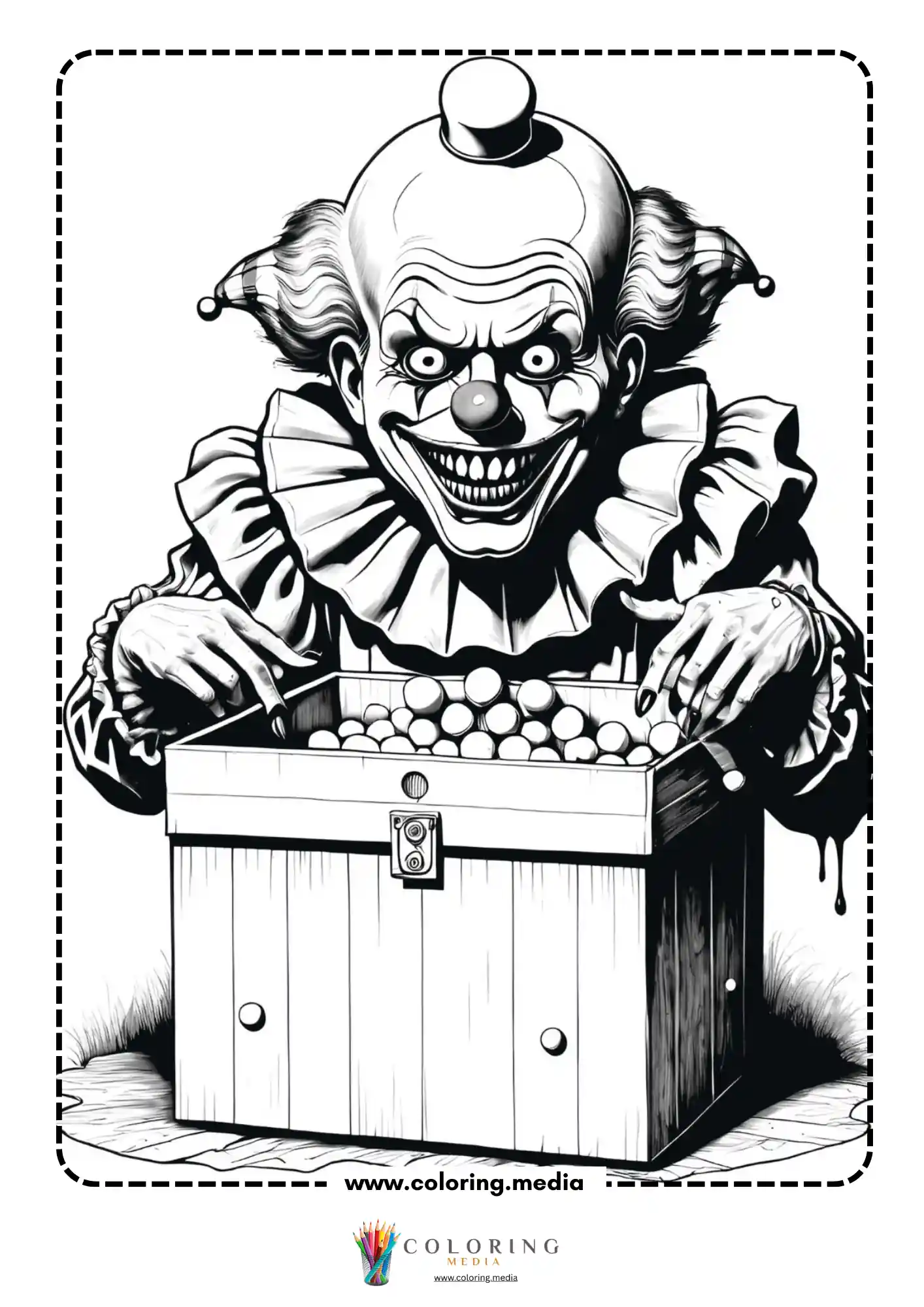
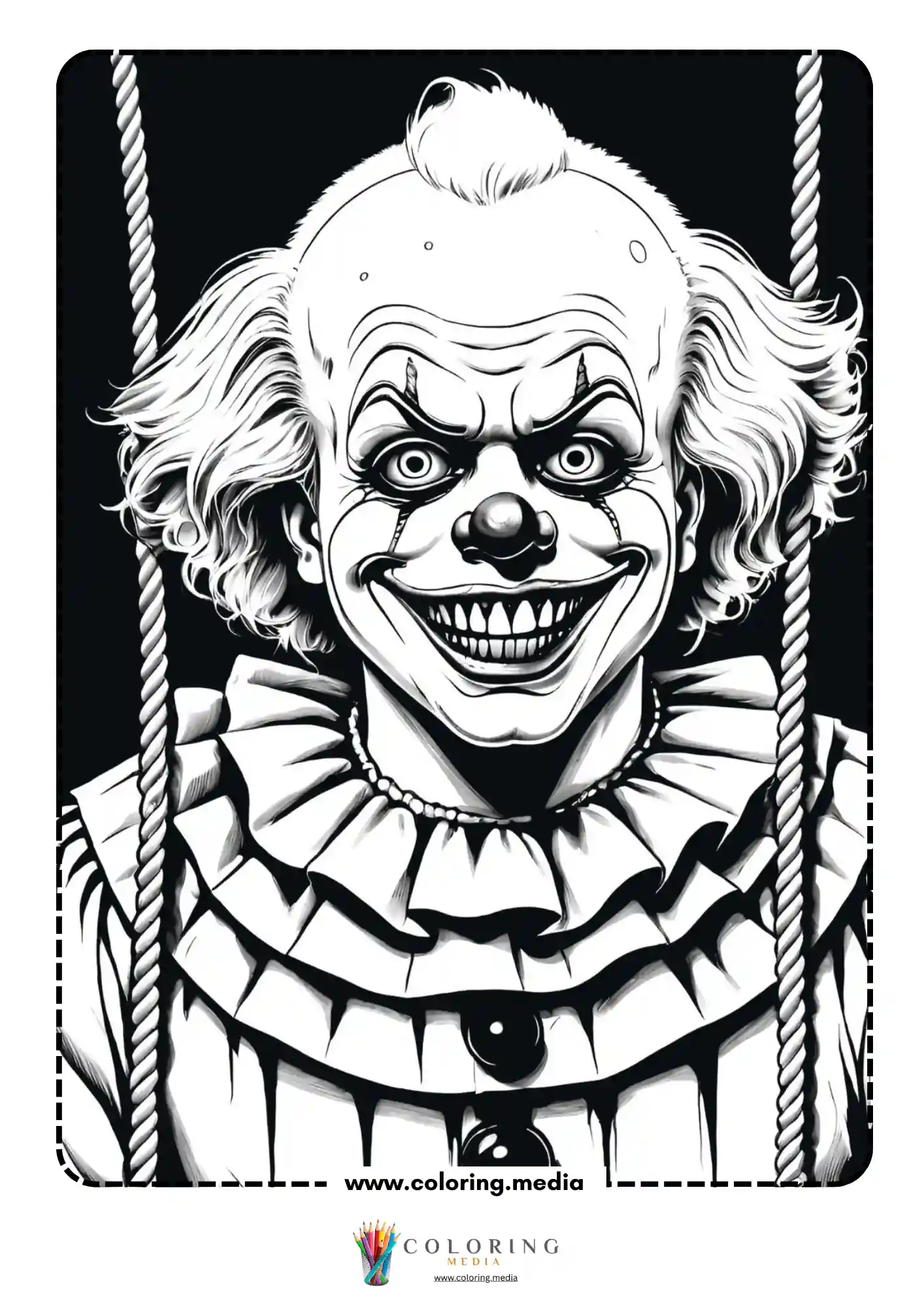
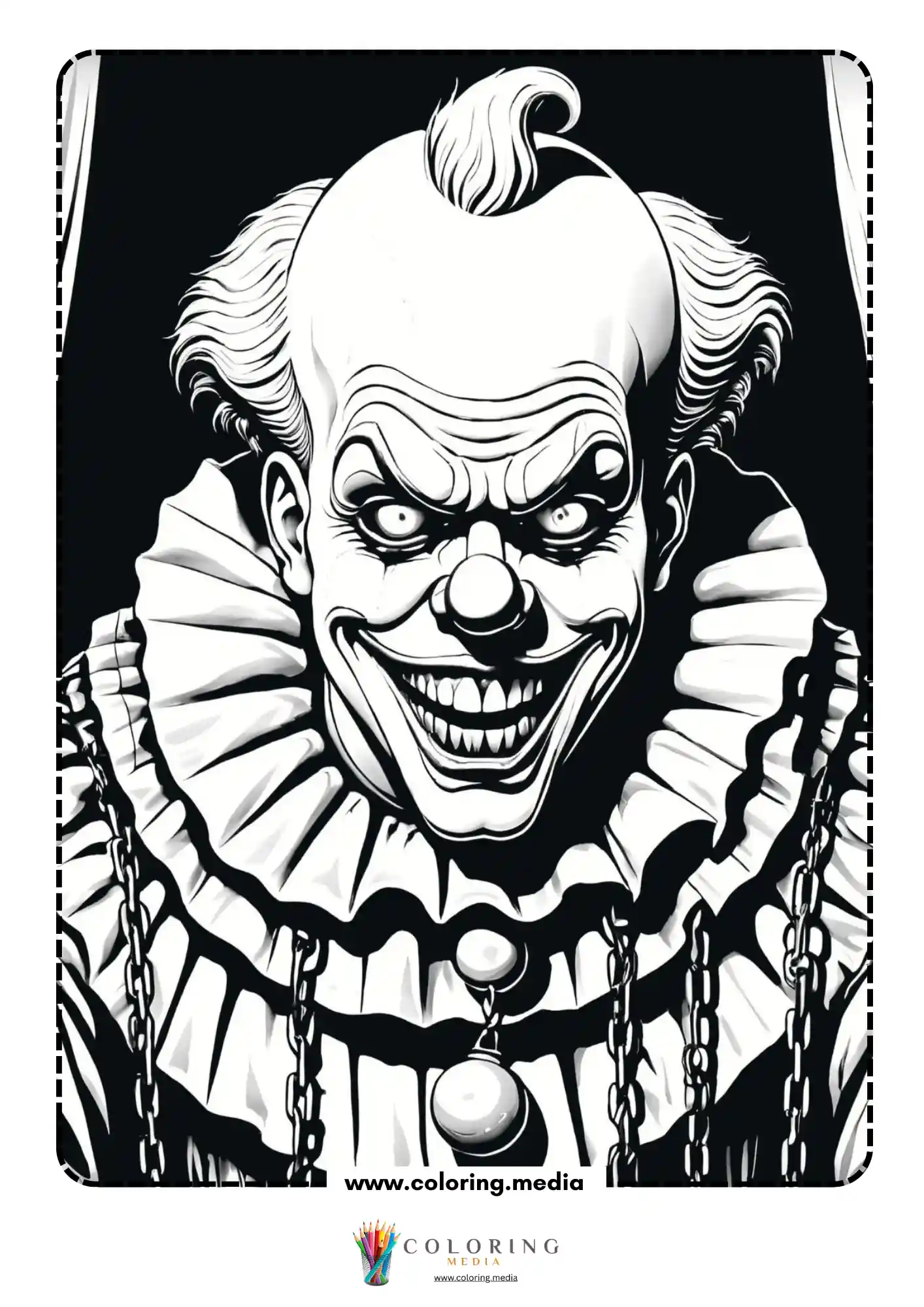
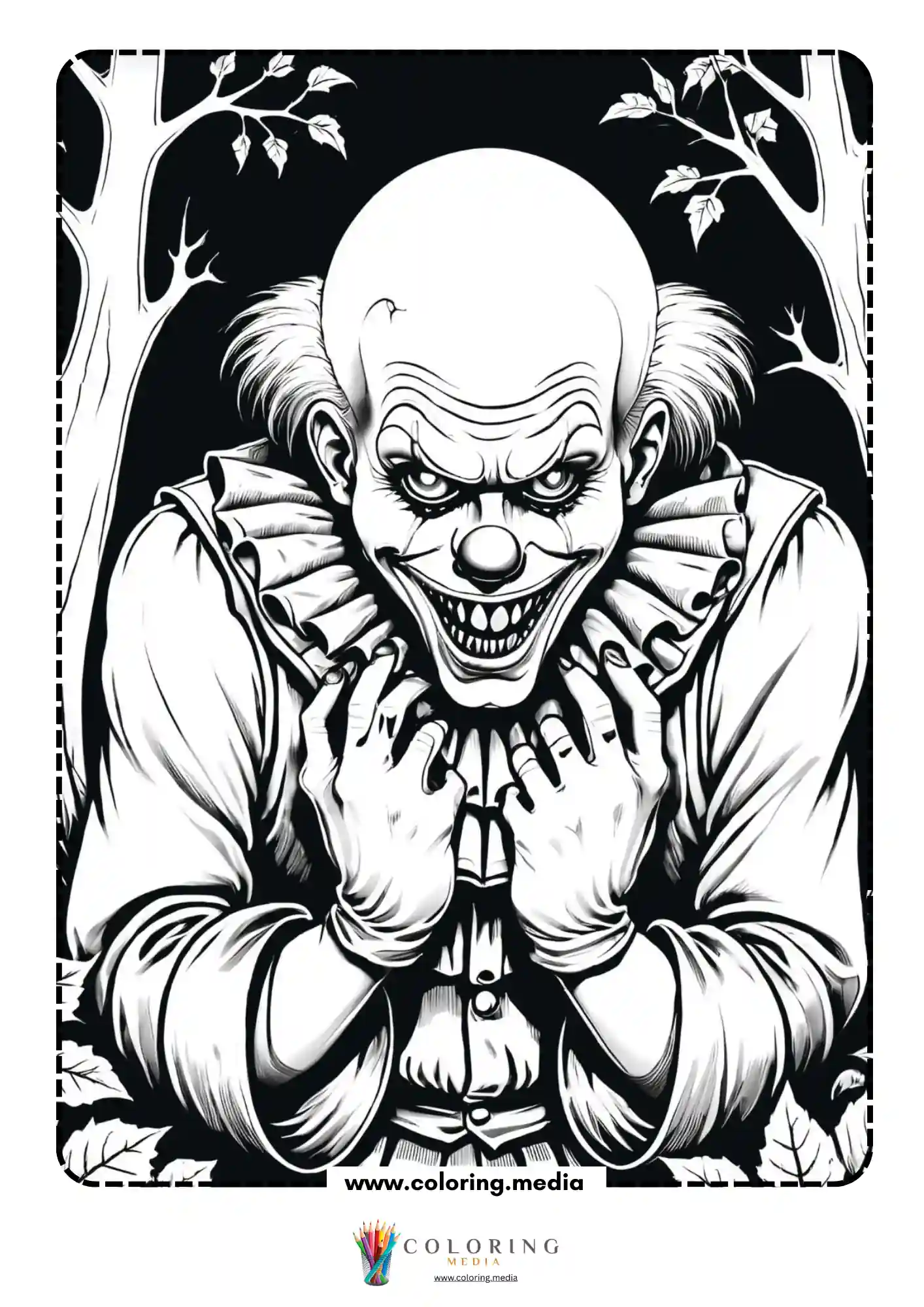
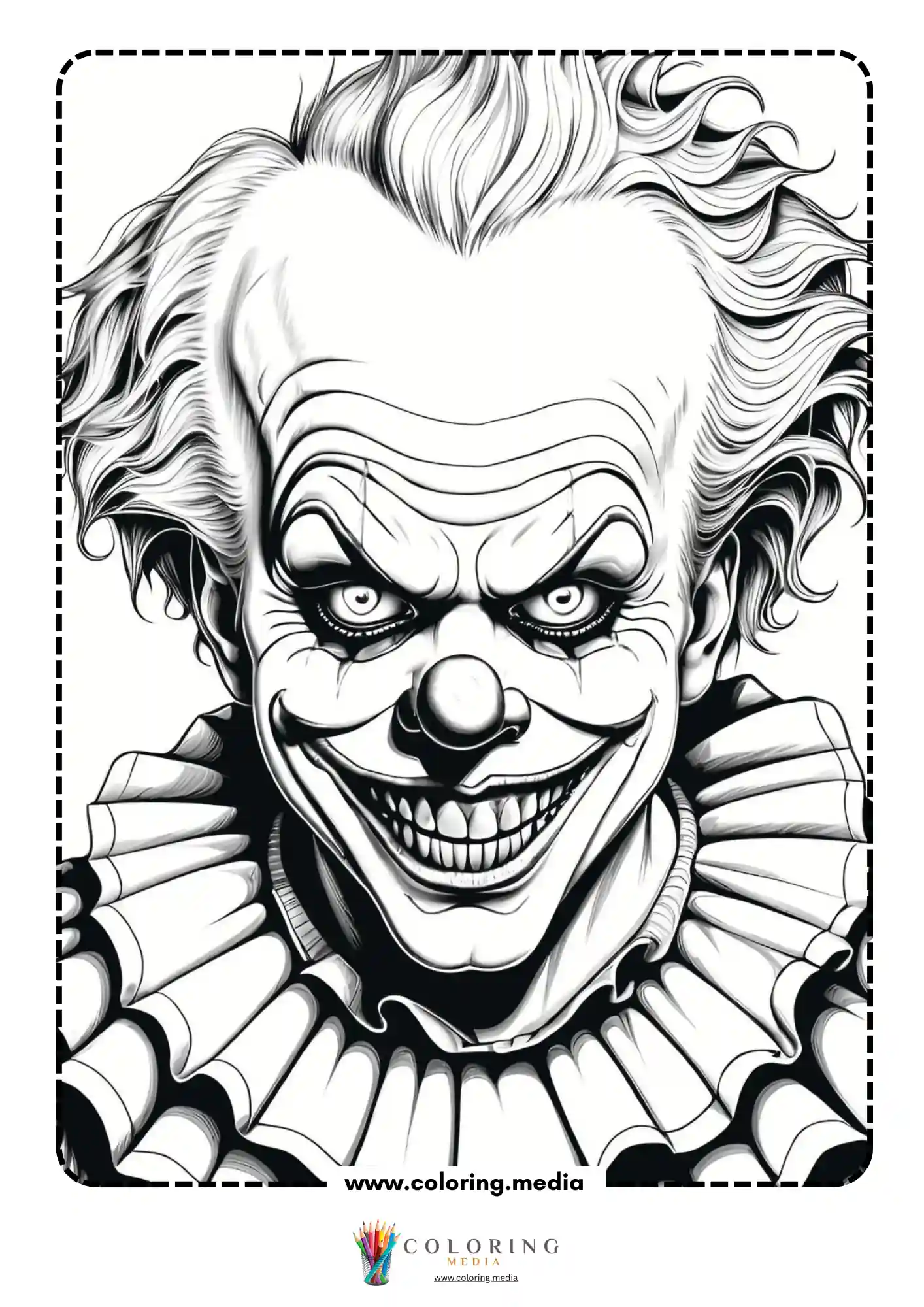
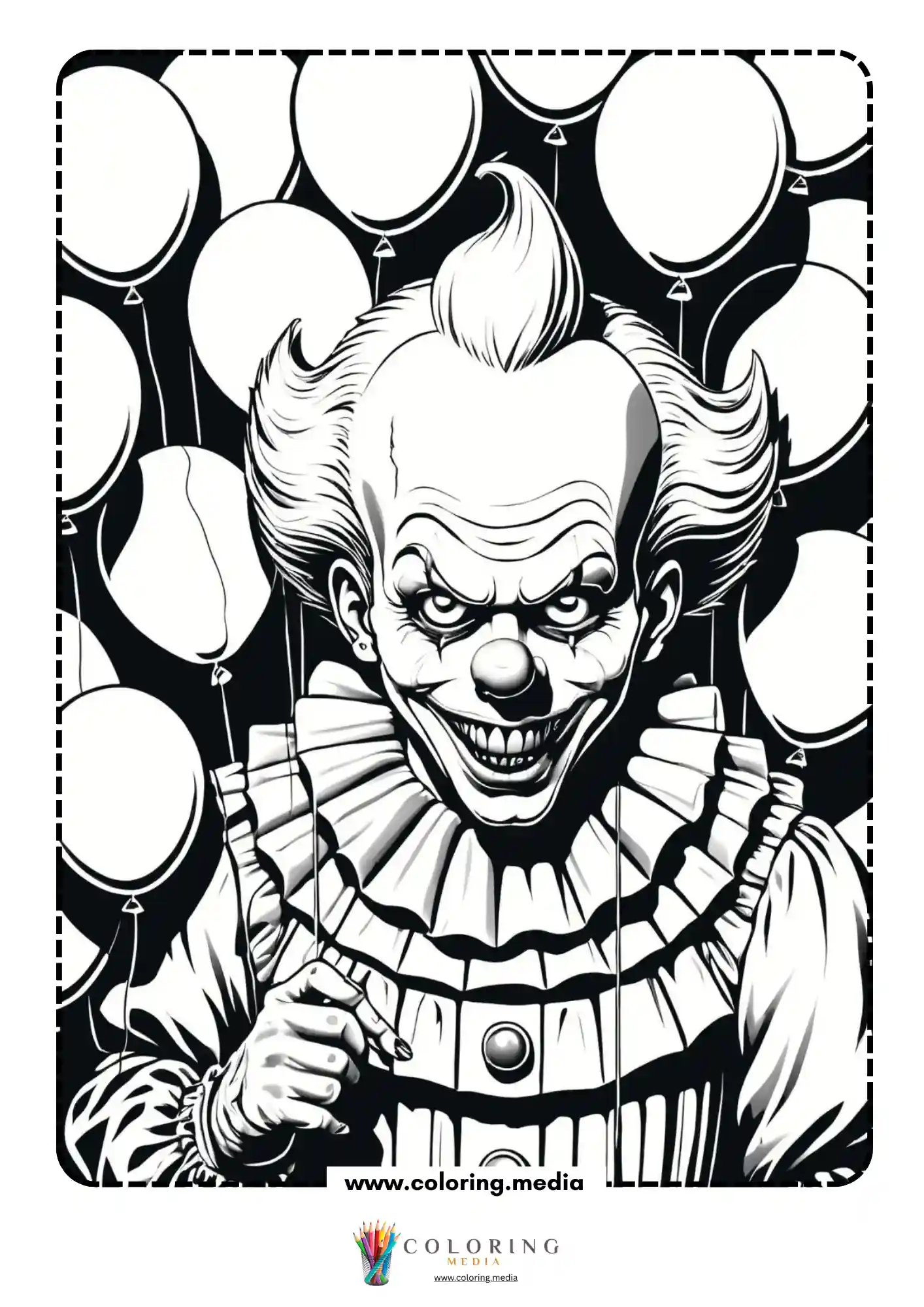
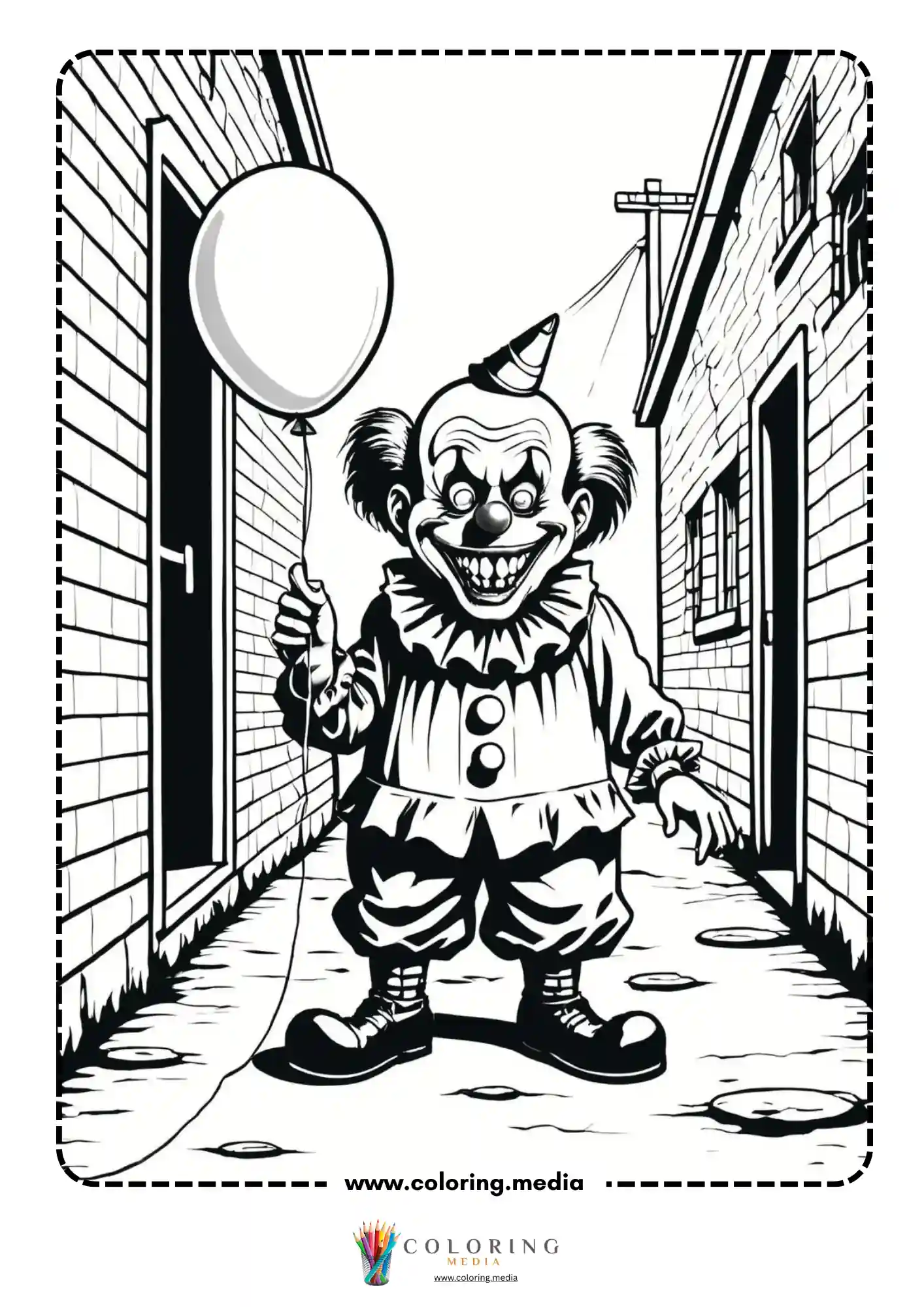
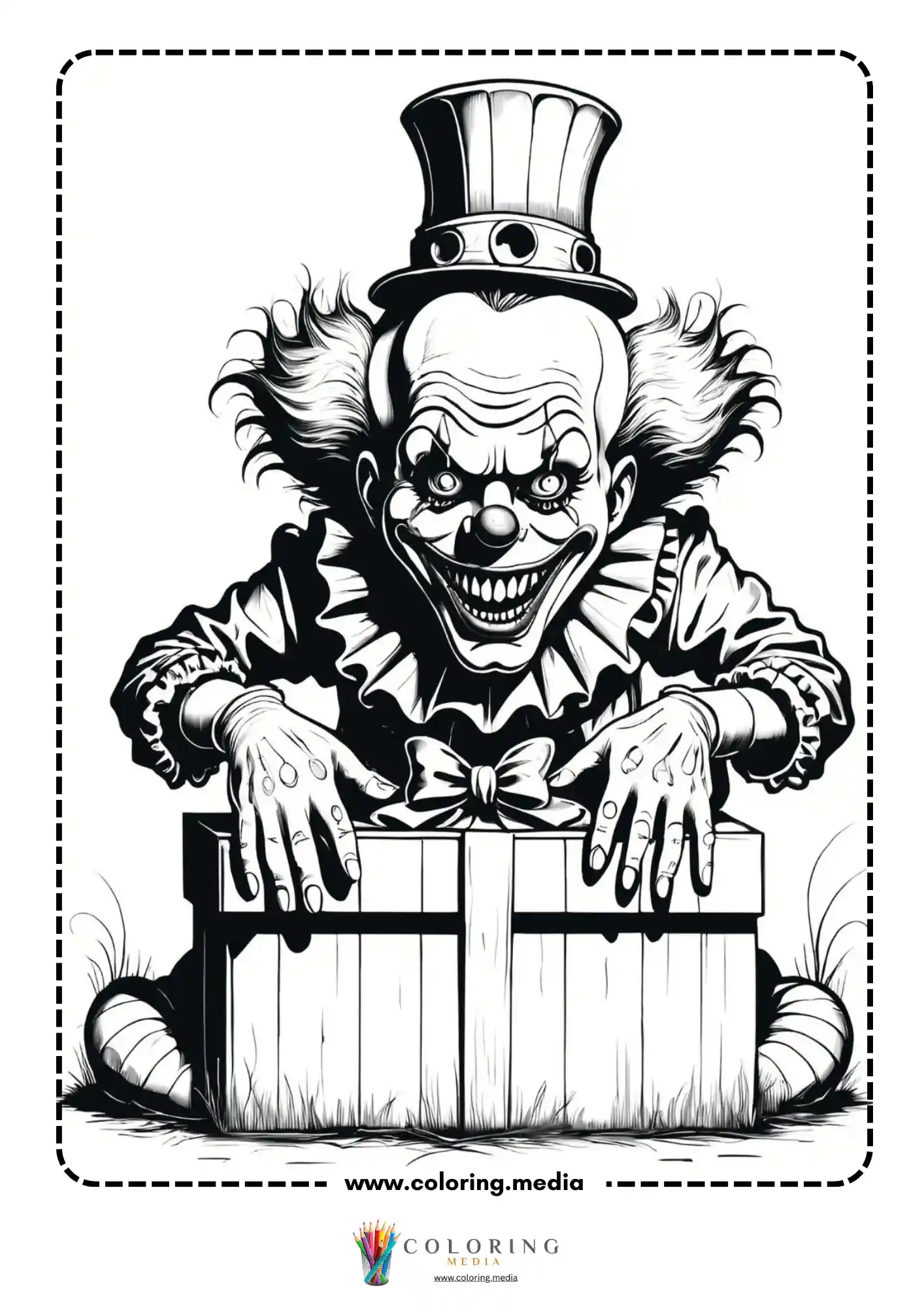
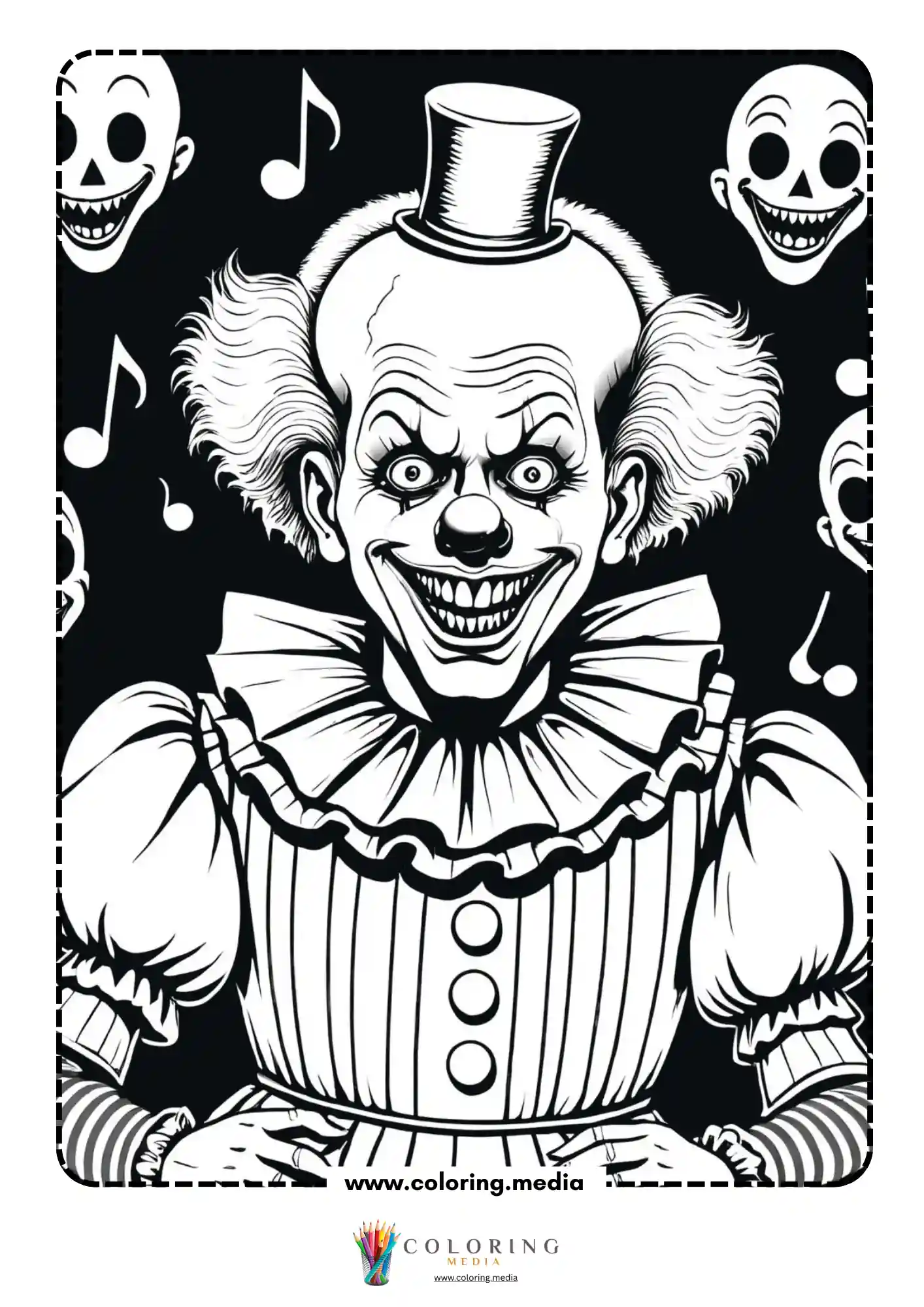
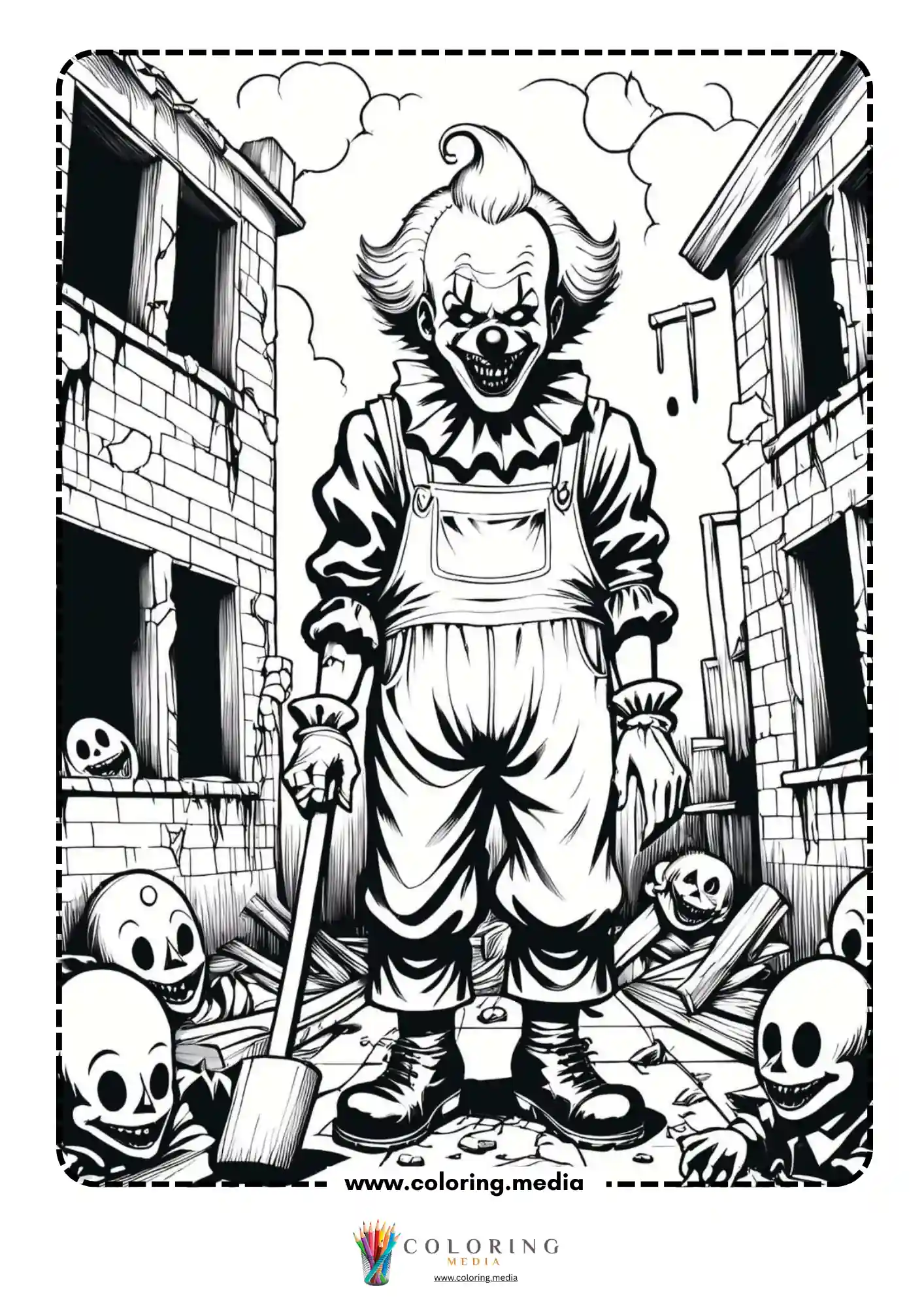
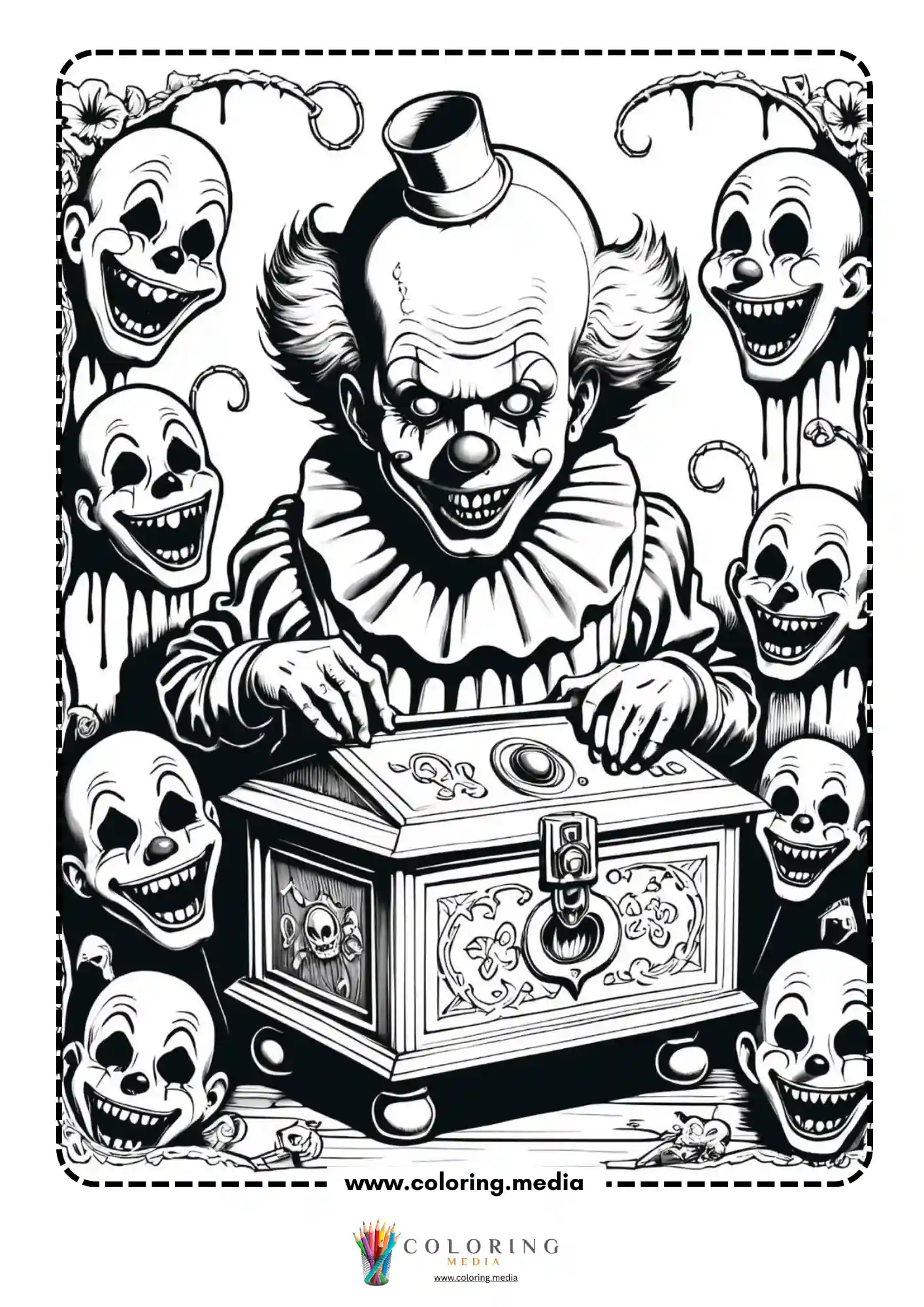
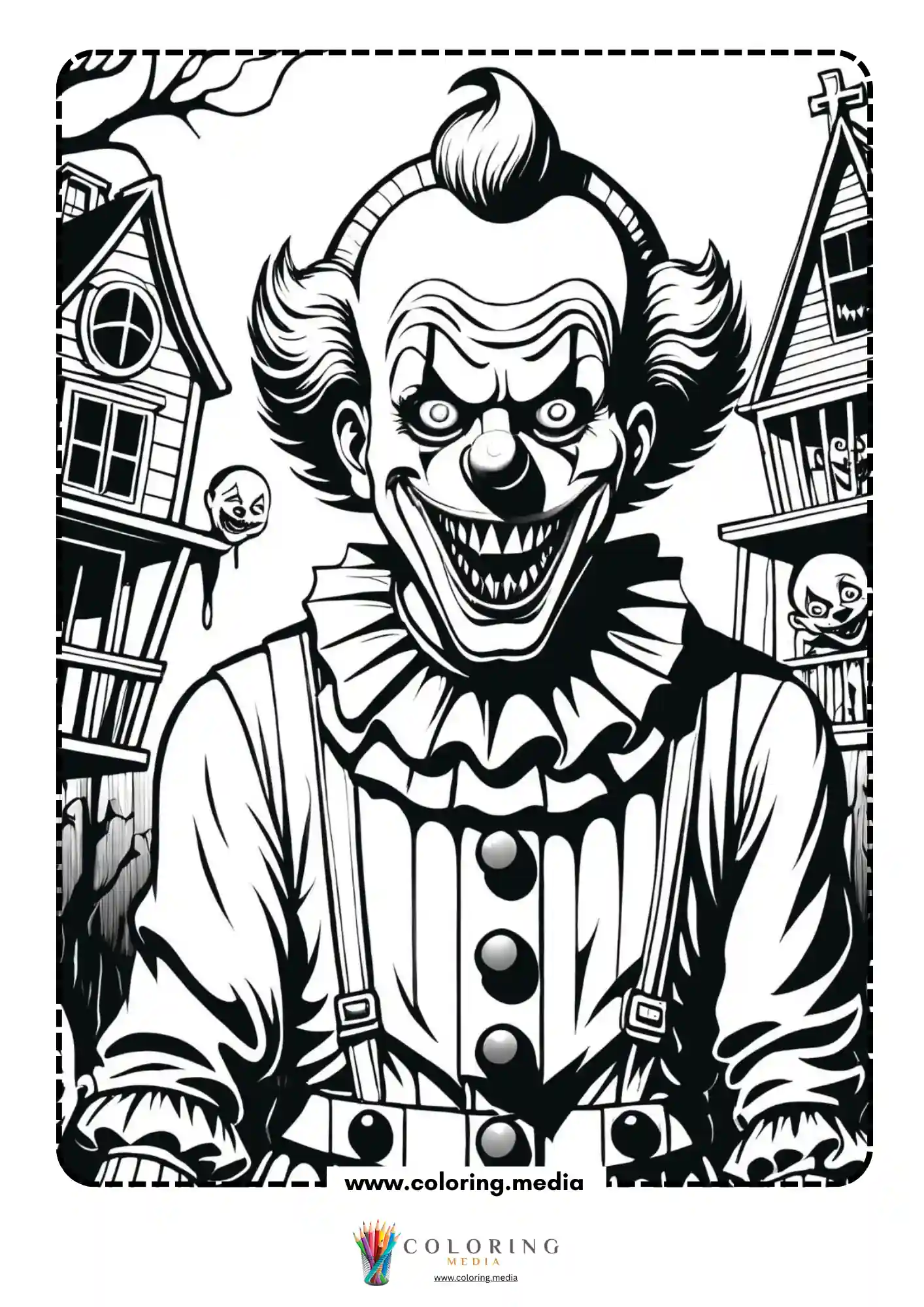
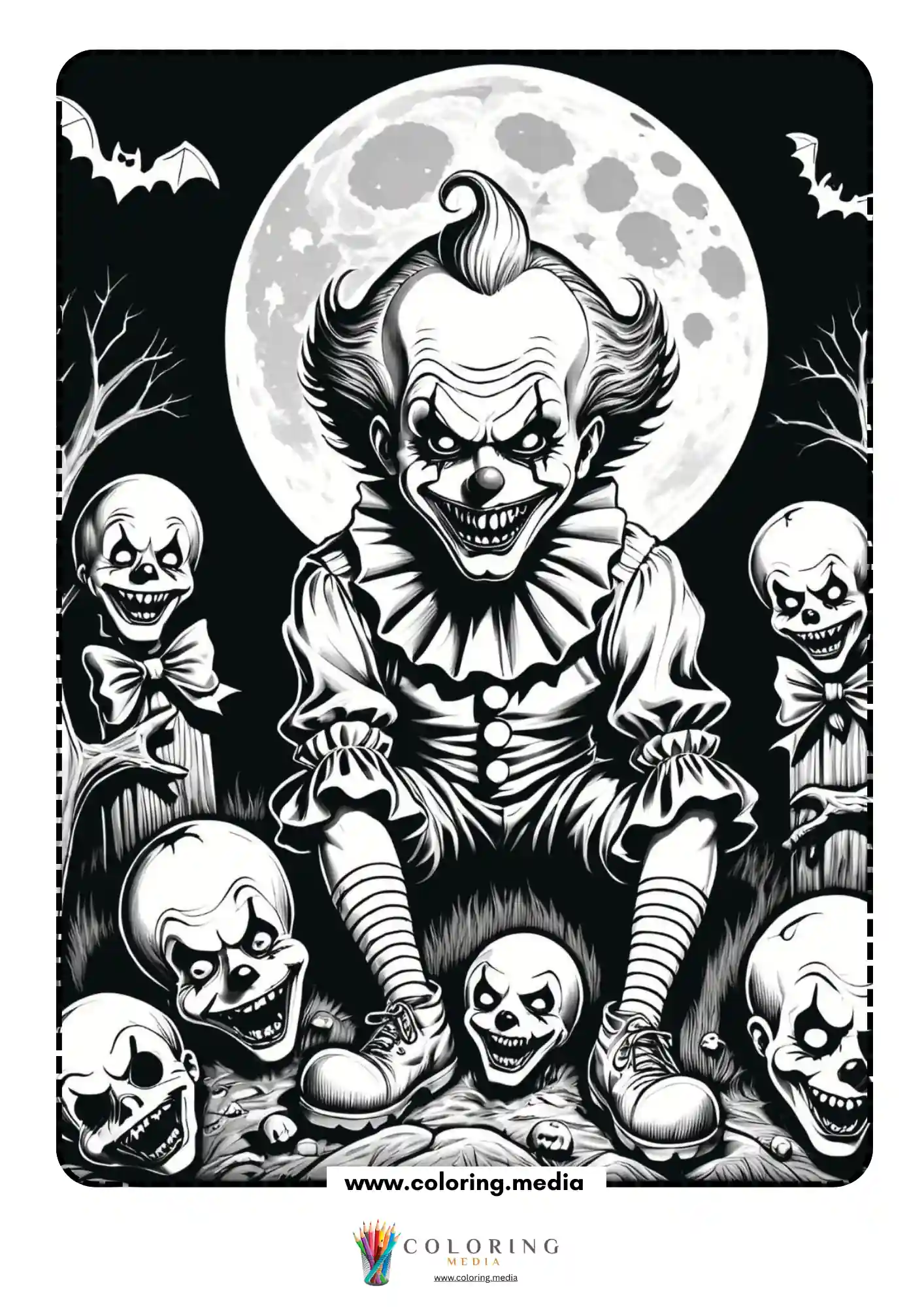
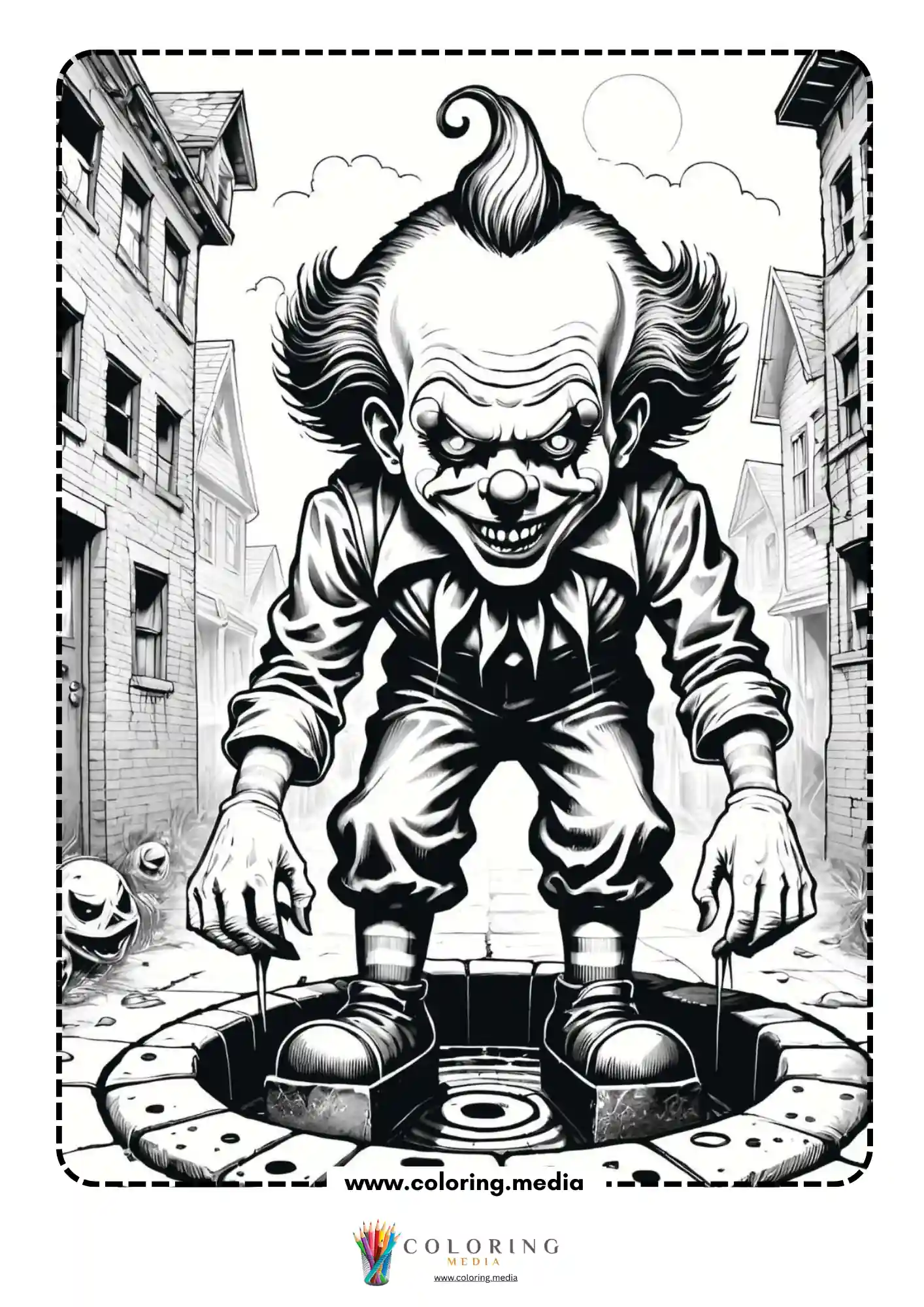
These are full-on horror clown pages — not silly circus figures but sinister, detailed character designs with menacing grins, deep-set shadowed eyes, ruffle collars with extensively cross-hatched folds, and atmospheric dark backgrounds. Several pages feature Pennywise-style characters with layered costume detail, floating balloon props, and shadowy settings including alleys and circus cages. The linework uses extensive crosshatching and stippling to build depth and shadow in a way that standard cartoon coloring pages don’t approach.
Twenty pages of varied horror clown compositions — some close-up portrait shots with heavily detailed faces, others full-body character scenes with environmental elements like skulls, cobblestones, Halloween pumpkins, and dramatic lighting. This is detailed coloring work for someone who enjoys spending real time on a single page. Everything here is free to download and easy to print.
Free Printable Scary Clown Coloring Pages
This collection includes 20 printable scary clown coloring pages featuring menacing clown characters in Pennywise-inspired costumes with elaborate ruffle collars and ruffled sleeves, close-up portrait compositions with highly detailed facial expressions, atmospheric full-scene pages with circus cages and dark alley settings, Halloween pumpkin and skull motifs integrated into the backgrounds, and floating balloon imagery used to sinister effect. The intricate linework creates real visual complexity before any color is applied — these pages look striking in black and white too. All pages are formatted as standard US Letter PDFs, ready to print on regular copy paper.





Who Are These Scary Clown Coloring Pages Best For?
These pages are for teens and older colorists who enjoy horror aesthetics. The linework density — crosshatching, stippling, fine detail lines building shadow and texture on costume folds — assumes a colorist who can plan a full color scheme before starting and is comfortable working across 60 or more small zones on a single page. Younger kids won’t enjoy the imagery, and the detail level would frustrate most children regardless of age.
For the teen audience, horror coloring has a distinct appeal: the dramatic imagery and dark palette give more room for bold, moody color choices than a typical cartoon page would. High-contrast combinations — deep reds against near-black shadows, sickly yellows for skin tones, vivid whites on the costume ruffles — reward confident color decisions. Anyone who’s enjoyed adult coloring books in the detailed floral or mandala tradition will find the complexity level familiar.
These pages work particularly well as a creative activity around Halloween, or for any teen who’s into horror media, dark character art, or the kind of intricate linework that takes a full sitting to complete properly.
Interesting Facts About Clowns and Horror Clown Culture
The “evil clown” archetype predates modern horror cinema by decades — sinister clown characters appear in literature and opera as far back as the 19th century, including the character of Pagliacco in the 1892 opera Pagliacci, who wears a clown costume while experiencing genuine tragedy. The modern horror clown has roots that run well before Pennywise.
Coulrophobia — the fear of clowns — is one of the most commonly reported specific phobias — researchers have linked it to the uncanny valley effect: clown makeup exaggerates human features just enough to feel wrong rather than recognizable, triggering unease rather than familiarity. The painted smile that doesn’t match the eyes is a particular trigger.
Stephen King’s Pennywise, from the 1986 novel IT, is the most recognized horror clown character in popular culture — King has said he chose a clown specifically because children are taught from an early age to trust them, making a malevolent clown a particularly effective vehicle for fear. The character became even more culturally prominent through the 1990 TV adaptation and the 2017 film reboot.
Real circus clowning has a complex tradition with multiple distinct styles — the Auguste clown (slapstick, exaggerated features, colorful chaos) and the Whiteface clown (elegant, controlled, authoritative) are two major traditions with roots in the 19th century. Horror clown aesthetics typically borrow the Auguste’s exaggerated makeup and apply it to sinister contexts.
The “clown panic” of 2016 was a documented social phenomenon — reports of people dressed as threatening clowns appearing in public spaces spread across the United States, Canada, and other countries. The incidents were largely attributed to pranksters, but the coverage itself became a genuine source of public anxiety that reached well beyond the original incidents.
Creative Scary Clown Coloring and Craft Ideas
Classic Horror Palette
Use deep reds, sickly yellows, near-black purples, and bone whites — the classic horror color language — to build a genuinely unsettling finished piece.
Inverse Color Scheme
Color a page in soft pastels — pale pink, baby blue, mint green — to create an unsettling contrast between the cheerful palette and the menacing subject matter.
Background Atmospheric Layers
Work backgrounds first with the lightest tones, building up layers of shadow toward the edges to create a vignette effect that frames the central figure.
Shadow Focus
Leave some areas completely uncolored as highlights, and reinforce the existing crosshatching with dark charcoal pencil or black marker to create maximum contrast.
One-Color Challenge
Color an entire page using only shades of a single color — a monochromatic red scheme, or all greys — for a restrained, graphic effect.
Balloon Color Symbolism
On any page with balloon props, give each balloon a different color that represents something the clown is offering — fear, false joy, danger — as a visual storytelling exercise.
Frame and Mount
Print, color, and frame a completed page in a vintage-style frame for a Halloween wall display or year-round horror decor piece.
How to Print These Scary Clown Coloring Pages
All pages download as US Letter PDFs and print correctly on A4 with “fit to page” selected. The dense crosshatching in the darker areas benefits significantly from 600 DPI printing — fine detail lines at lower resolution can blur together and lose the shadow depth that makes these pages visually interesting. For marker work, 32lb paper or heavier prevents bleed-through. Grayscale printing is ideal; the source files are black-and-white line art designed for uncolored printing.
Explore More Cartoons & Characters Coloring Pages
If you enjoyed these pages, you may also like:
Rick and Morty Coloring Pages
Gravity Falls Coloring Pages
Family Guy Coloring Pages
The Simpsons Coloring Pages
All Cartoons & TV Shows Coloring Pages