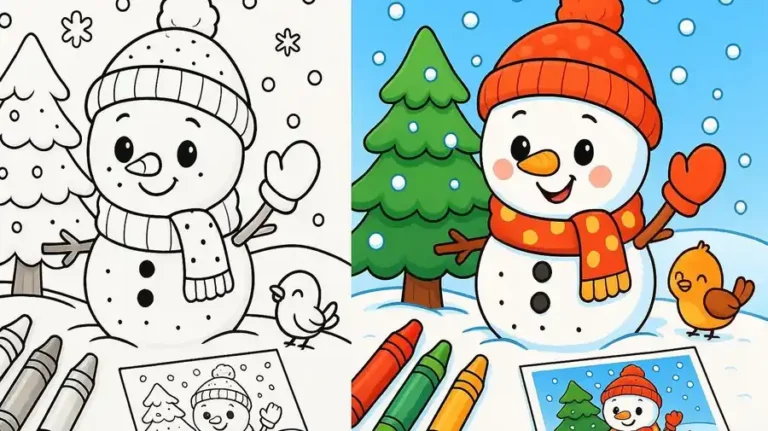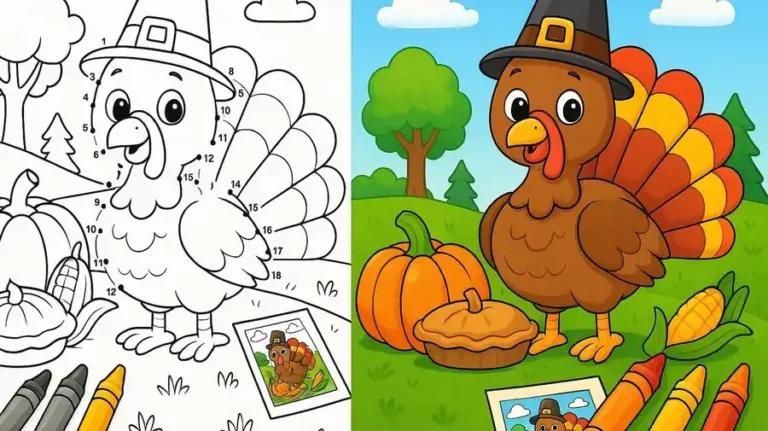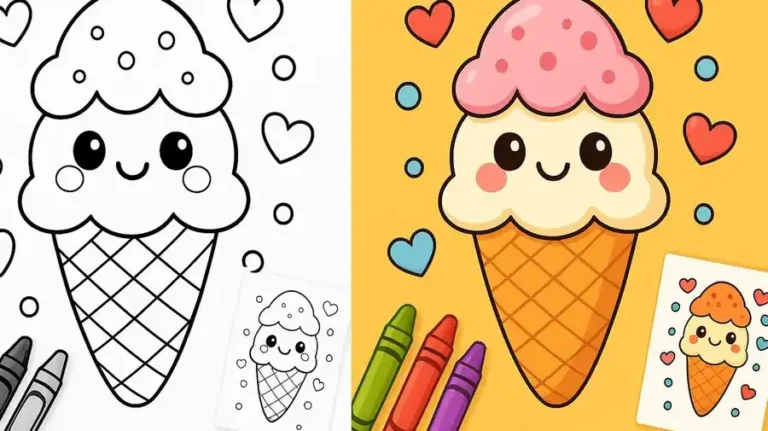


The subjects here read immediately as summer: beach balls, sunglasses, crabs, flamingos, starfish, sunflowers, ice cream cones, kites, seashells, tropical fish, pineapples, and giraffes fill the 30 pages with the kind of cheerful, colorful variety that makes the set feel like a summer activity kit rather than a single-topic worksheet collection. The dot placements follow clean cartoon outlines — rounded, friendly shapes with generous dot spacing that make each puzzle approachable without being trivially easy. Connecting the dots reveals a subject kids already know and can immediately begin coloring with the confident color choices that come from familiarity.
The broad mix of subjects — some from the beach, some tropical animals, some warm-weather treats — means there’s enough variety to spread these across multiple days of a summer break or a summer school program without repetition. A page a day from late June through late July covers the whole set. They also pack well into a travel bag for car rides or beach waits. Everything here is free to download and easy to print.
Free Printable Dot-to-Dot Summer Coloring Pages
This collection includes 30 printable dot-to-dot summer coloring pages featuring beach balls, sunglasses, crabs, flamingos, starfish, sunflowers, ice cream cones, kites, seashells, tropical fish, pineapples, and giraffes — a broad range of warm-weather and beach-themed subjects, each revealed by connecting numbered dots before coloring. The cartoon outlines are clean and friendly once the puzzle is complete. Every page downloads as a PDF formatted for US Letter or A4 paper.


Who Are These Dot-to-Dot Summer Coloring Pages Best For?
Kindergartners are well-positioned to work through these pages independently once they have a solid number sequence to around 25-30. The summer subjects are immediately recognizable — a five or six-year-old who knows what a beach ball looks like will feel confident the moment the dots start revealing the shape, which makes the activity motivating rather than frustrating. The puzzle resolution is fast enough that attention doesn’t lag before the coloring step begins.
Early elementary kids in first and second grade can move through the dot-to-dot portion quickly and spend more time on careful coloring — choosing realistic flamingo pink versus a rainbow flamingo, deciding whether the crab gets a realistic reddish-orange or a bright blue just because they can. The wide variety of subjects means siblings or classmates can each choose a different page and end up with different finished images to compare.
For summer school programs these are a natural fit — low-stakes, visually rewarding, and directly relevant to the season kids are living through. In a homeschool setting, pairing each page with a brief conversation about the subject — where do flamingos live, how do crabs walk sideways, why does a kite stay up — turns a short activity into a natural starting point for curiosity. One page per weekday morning covers the whole summer set over six weeks.
Interesting Summer Facts to Share While Coloring
Flamingos get their pink color from the food they eat. Young flamingos are actually born white or light grey. The pink, orange, and red pigments in their feathers come from carotenoid pigments in the algae, shrimp, and other small creatures they filter from water. A flamingo kept on a diet without these pigments would gradually fade to white.
Crabs can regenerate lost claws. If a crab loses a claw to a predator or gets it caught, it doesn’t lose that limb permanently. Over several molting cycles — when crabs shed their old shell and grow a new one — the claw slowly regenerates, usually growing back smaller at first and then reaching full size after a few more cycles.
Starfish are not actually fish. Marine biologists now prefer the name “sea stars” for this reason. They have no backbone, no fins, and no gills. A sea star moves using hundreds of tiny tube feet on its underside, and most species can regenerate a lost arm — some can even grow an entirely new body from just one severed arm.
Sunflowers track the sun when they are young. Young sunflower stems actually rotate during the day to face the sun — east in the morning, west by evening. This behavior, called heliotropism, stops when the flower matures and the stem stiffens. Most adult sunflowers end up permanently facing east, which is why sunflower fields look most impressive in the morning light.
Kites have been flown for over 2,000 years. The oldest kites were made in China from silk and bamboo, and historical records suggest kites were used there for military signaling as far back as 200 BCE. Kites were also essential to some of the first scientific experiments with wind and electricity, including Benjamin Franklin’s famous thunderstorm experiment.
Creative Summer Coloring and Craft Ideas
Summer Activity Journal Print one page for each week of summer, complete and color it, then tape or glue it into a journal alongside a short note about something that happened that week.
Bright Color Challenge Use only the most saturated, vivid versions of each color — electric pink flamingos, neon orange crabs, brilliant turquoise fish — to create a tropical, high-energy collection.
Beach Scene Collage Complete several pages, cut out the finished subjects, and arrange them on a large blue-and-tan sheet of paper (blue for ocean, tan for sand) to build a beach scene mural.
Travel Activity Pack Print six to eight different pages, stack and staple them into a small booklet, and tuck it into a beach bag or car bag for a ready-made summer outing quiet activity.
Watercolor Sunsets Color the subject with crayons, then paint the background with a warm watercolor wash in orange, pink, and yellow to create a sunset effect around the finished image.
Realistic vs. Imaginary Complete two copies of the same page: color one realistically and one in completely invented colors. Compare them and discuss which one is more interesting to look at and why.
Outdoor Coloring Print a few pages and bring them outside to color in the shade, matching colors to things visible in the environment — the green of the grass, the blue of the sky, the color of flowers nearby.
Subject Research Project After coloring the flamingo, crab, or starfish page, look up three real facts about that animal and write them on the back of the finished page to turn it into a mini field guide entry.
How to Print These Dot-to-Dot Summer Coloring Pages
Each page downloads as a PDF and prints cleanly on US Letter or A4 paper at standard settings. Plain copy paper works for crayons and colored pencils; heavier paper handles markers without bleed-through. Print at 100% scale to keep dot numbers at a readable size. A pencil works best for the connecting step since any jumped number can be erased before coloring begins on the revealed outline.
Explore More Connect-the-Dot Coloring Pages
If you enjoyed these pages, you may also like:
Dot-to-Dot Kawaii Ice Cream Coloring Pages
Dot-to-Dot Winter Coloring Pages
Dot-to-Dot Autumn Coloring Pages
Cute Animals Dot-to-Dot Coloring Pages
All Connect-the-Dot Coloring Pages