
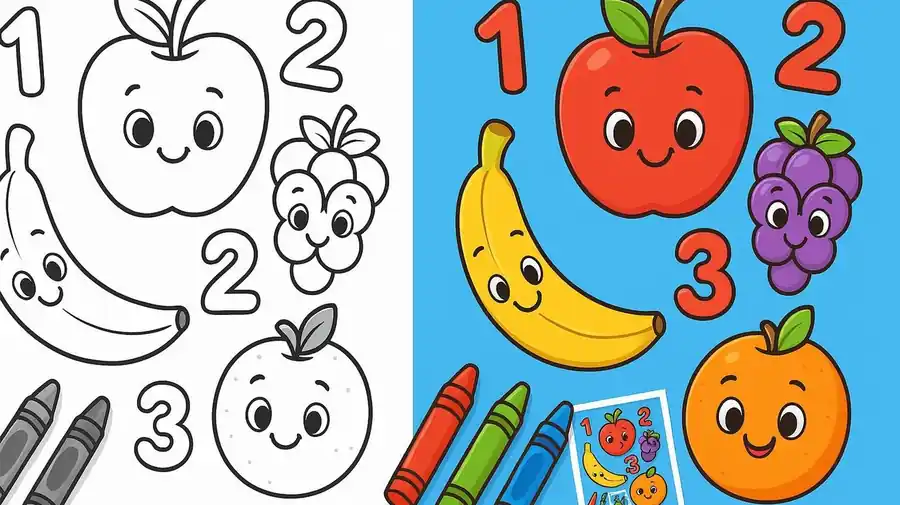
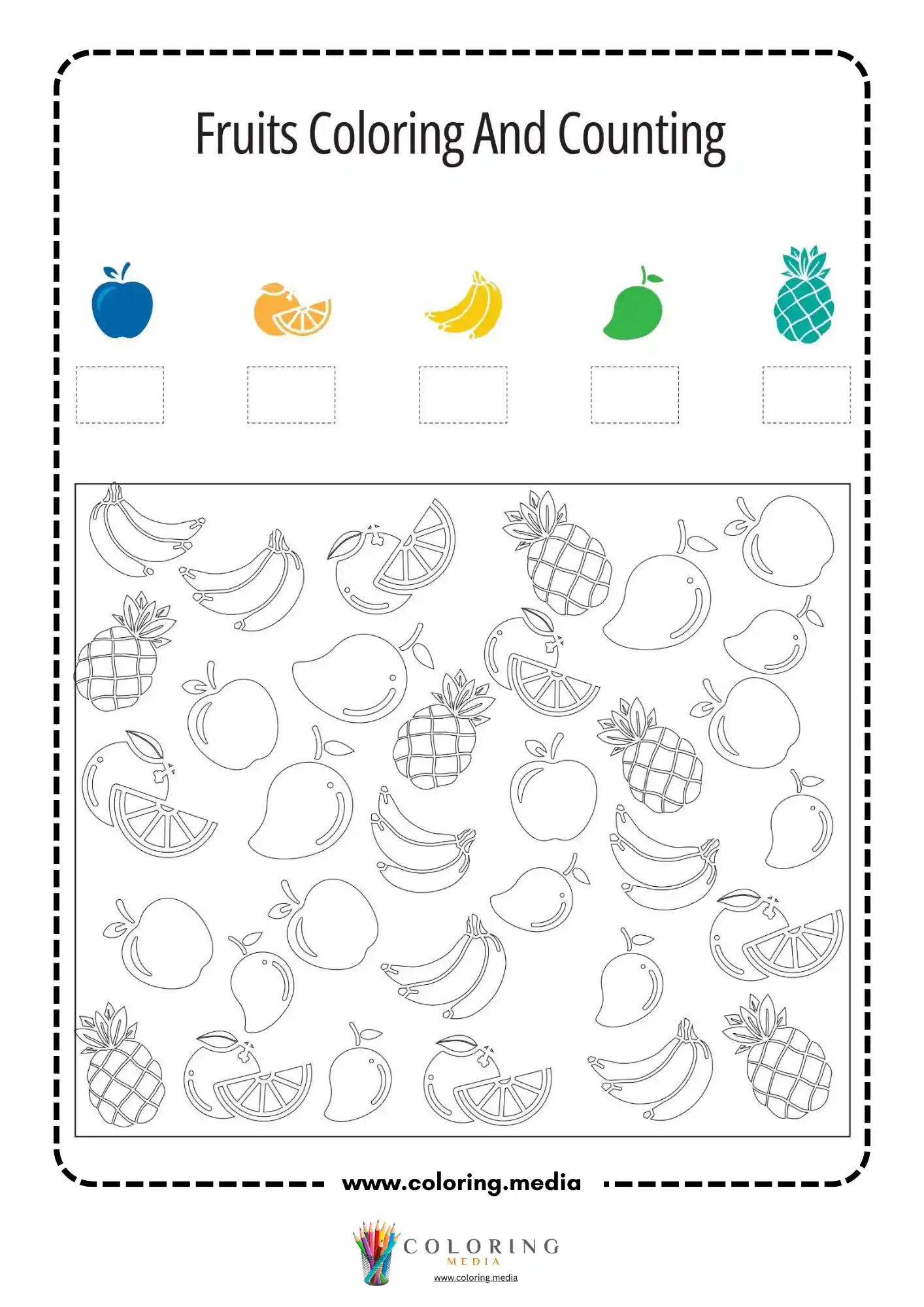
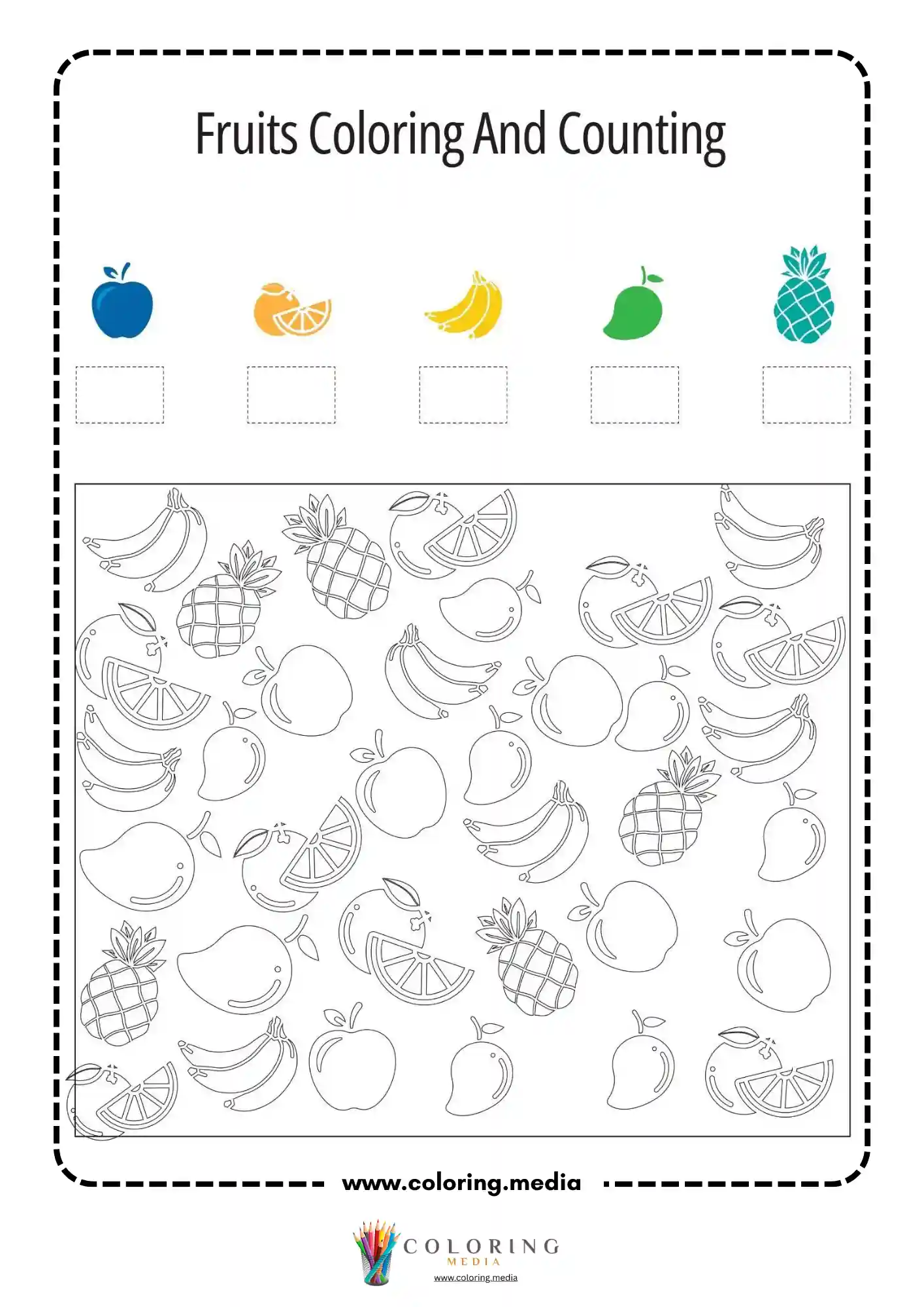
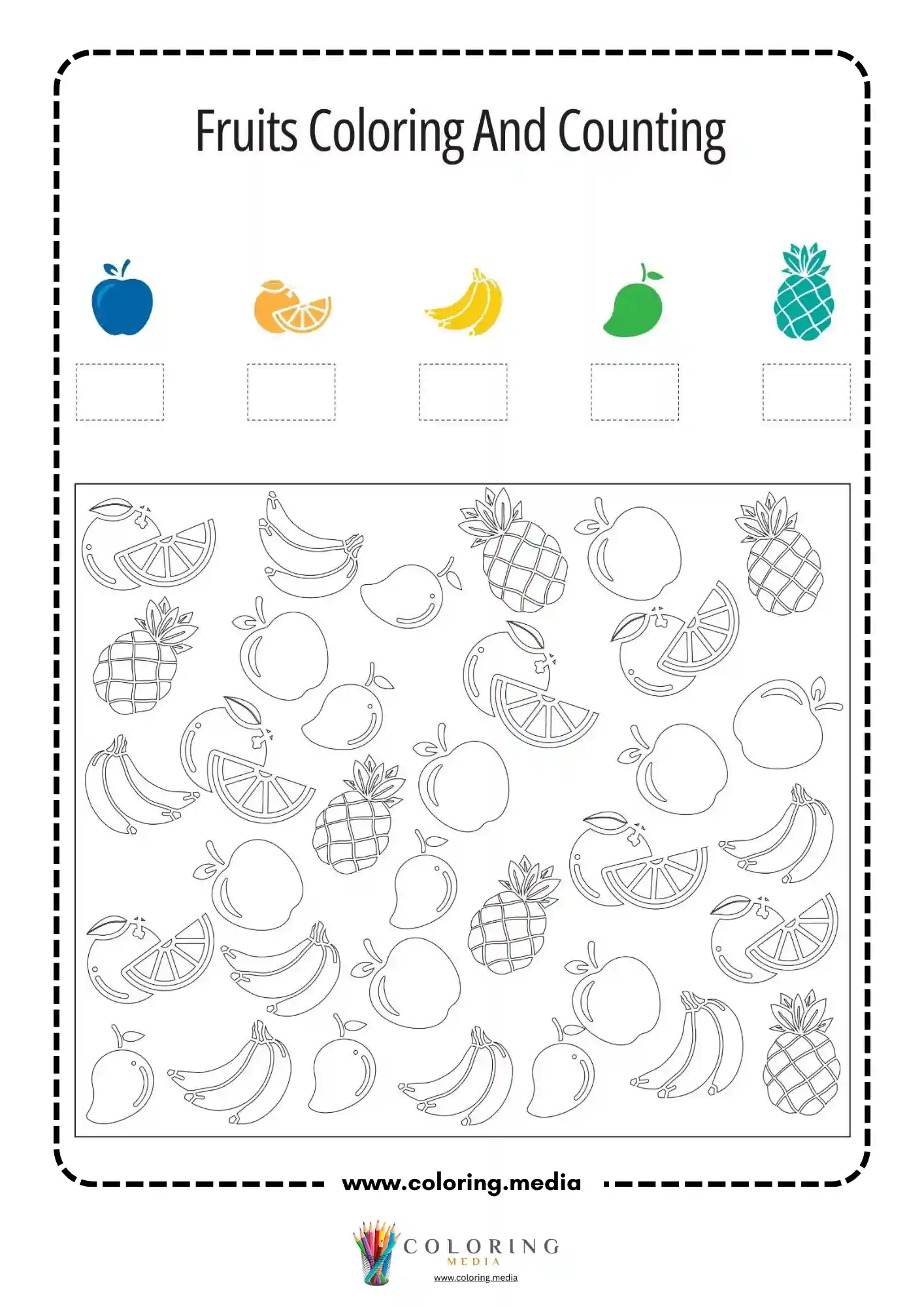
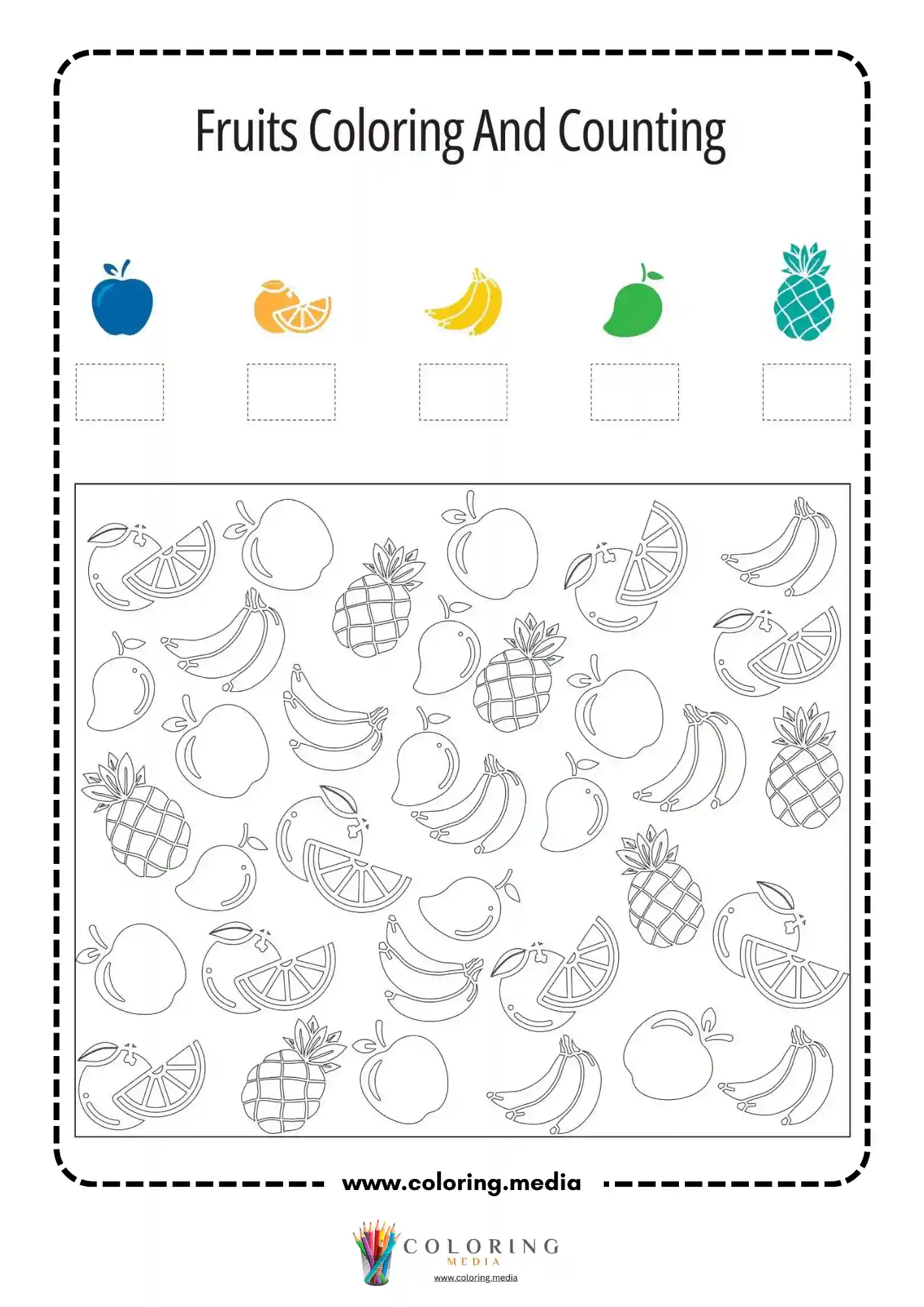
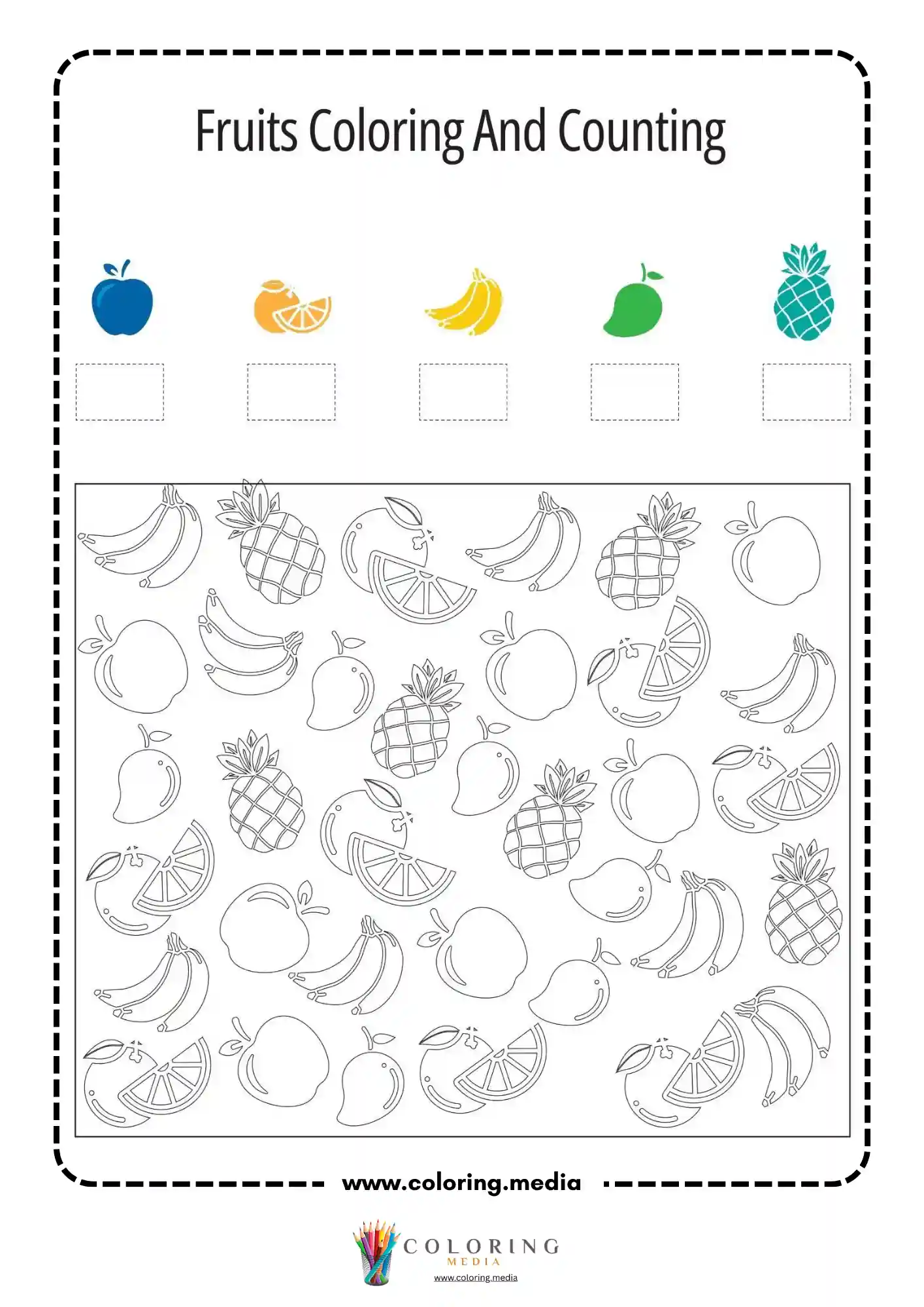
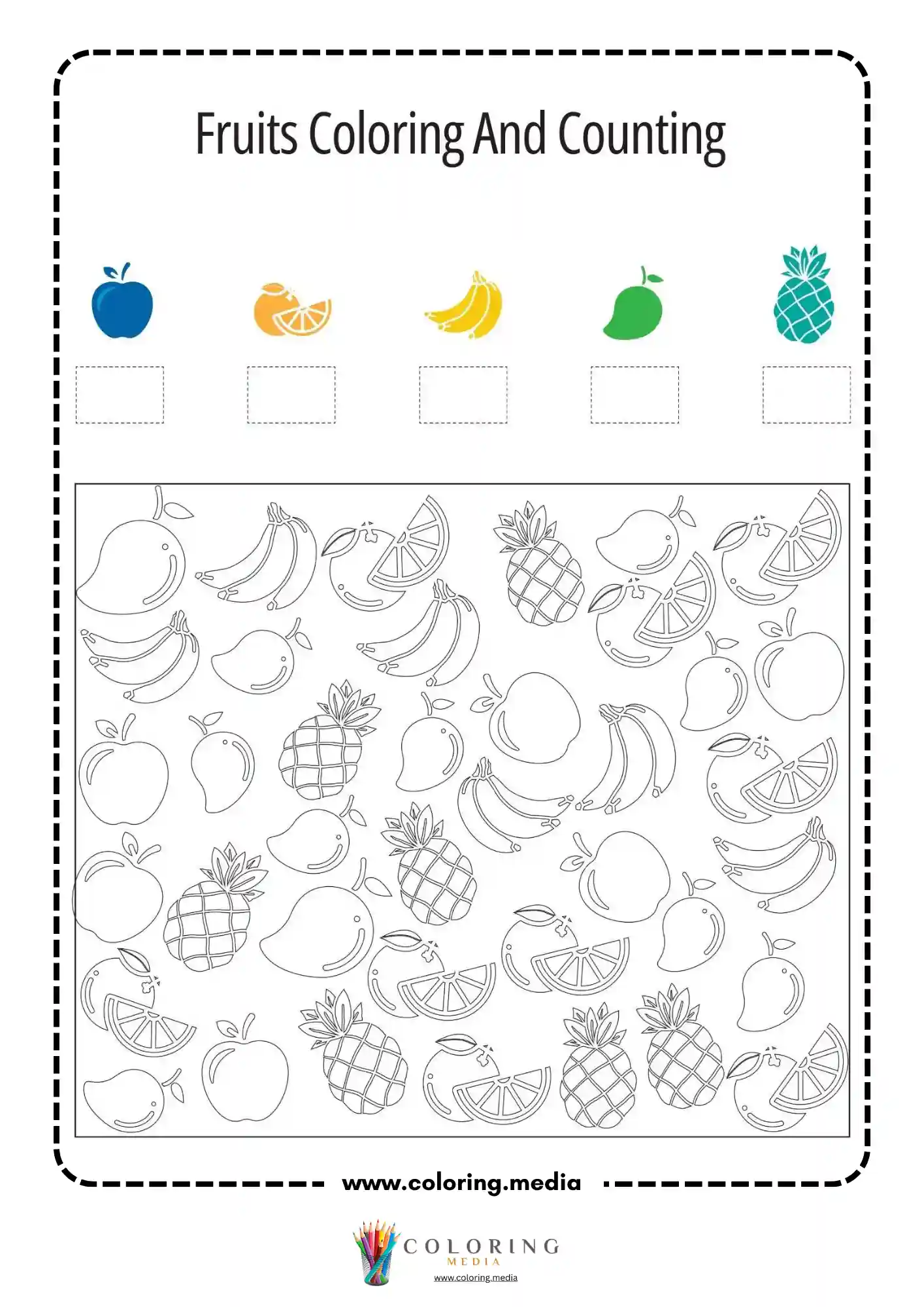
Each page in this set is packed with small line-drawn fruit illustrations — apples, oranges, berries, and more — scattered across the sheet with a color-coded reference guide in the corner. The task is to count how many of each fruit type appear, then color them in. It is a simple premise, but it works precisely because the fruit illustrations themselves are the counting objects, so the coloring and the math happen simultaneously rather than one being tacked onto the other.
The line work is very simple — rounded shapes with thick, clear outlines that small preschool hands can color without frustration. There is enough variety across the 10 pages to keep the activity fresh over multiple sessions without feeling repetitive. Everything here is free to download and easy to print.
Free Printable Counting Fruits Coloring Pages
This collection includes 10 printable counting fruits coloring pages featuring groups of cute fruit illustrations — including apples, oranges, berries, and other varieties — arranged across each page as a counting and coloring activity. Each page includes a color-coded reference guide to help children identify and sort which fruits to count, and the simple, thick outlines are well-suited to young learners still developing fine motor control. Pages print cleanly on US Letter or A4 paper at 100% scale.
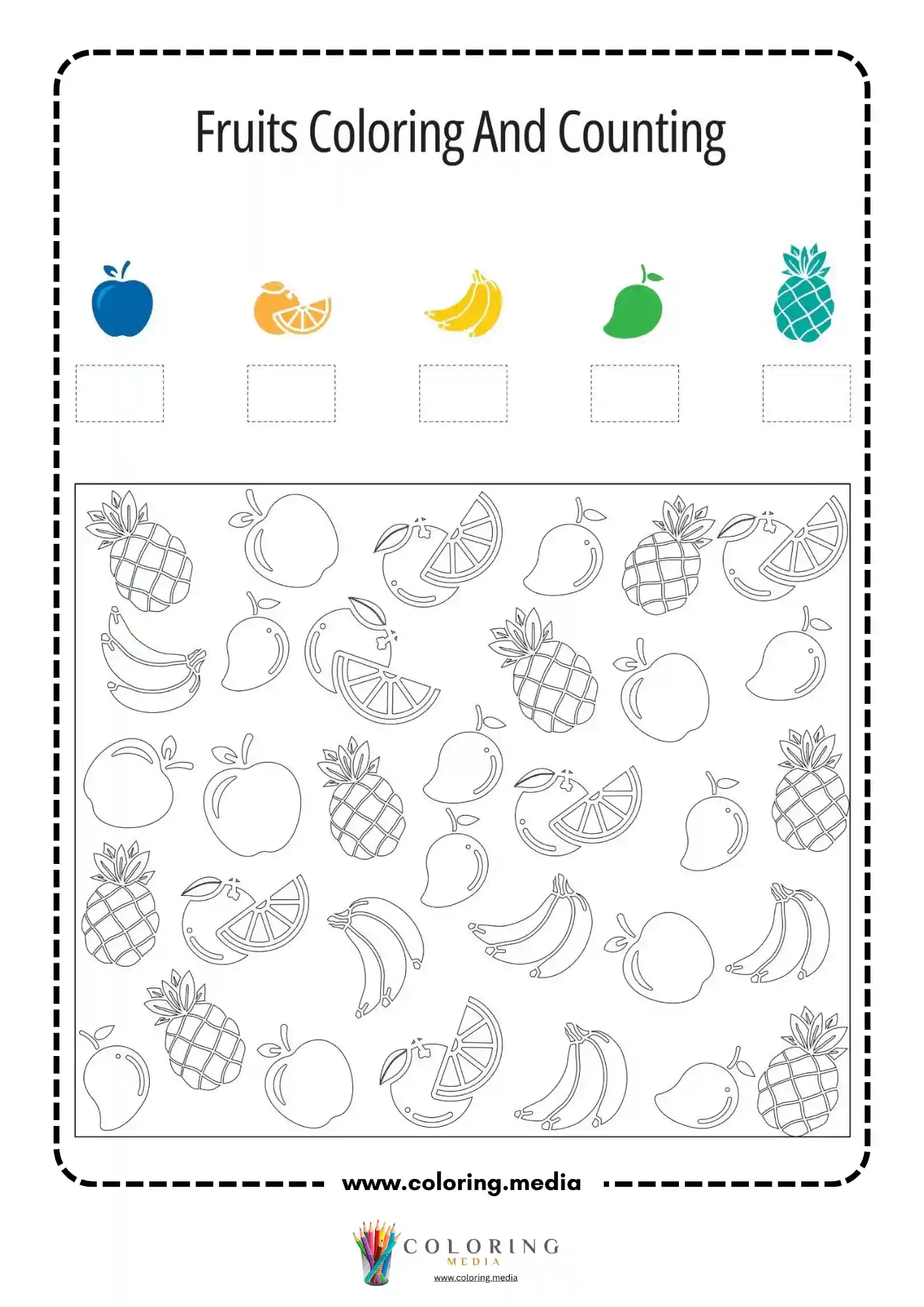
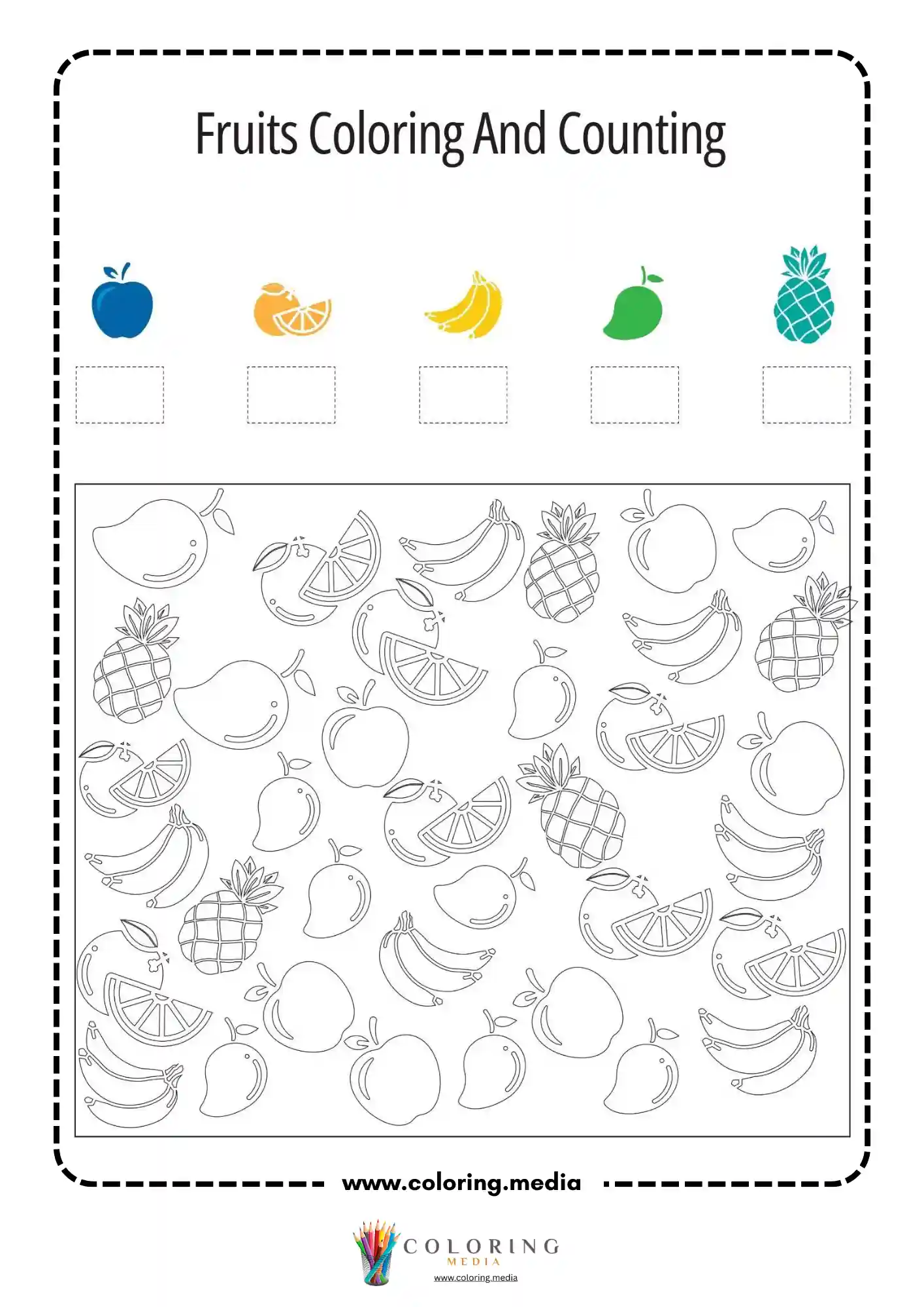
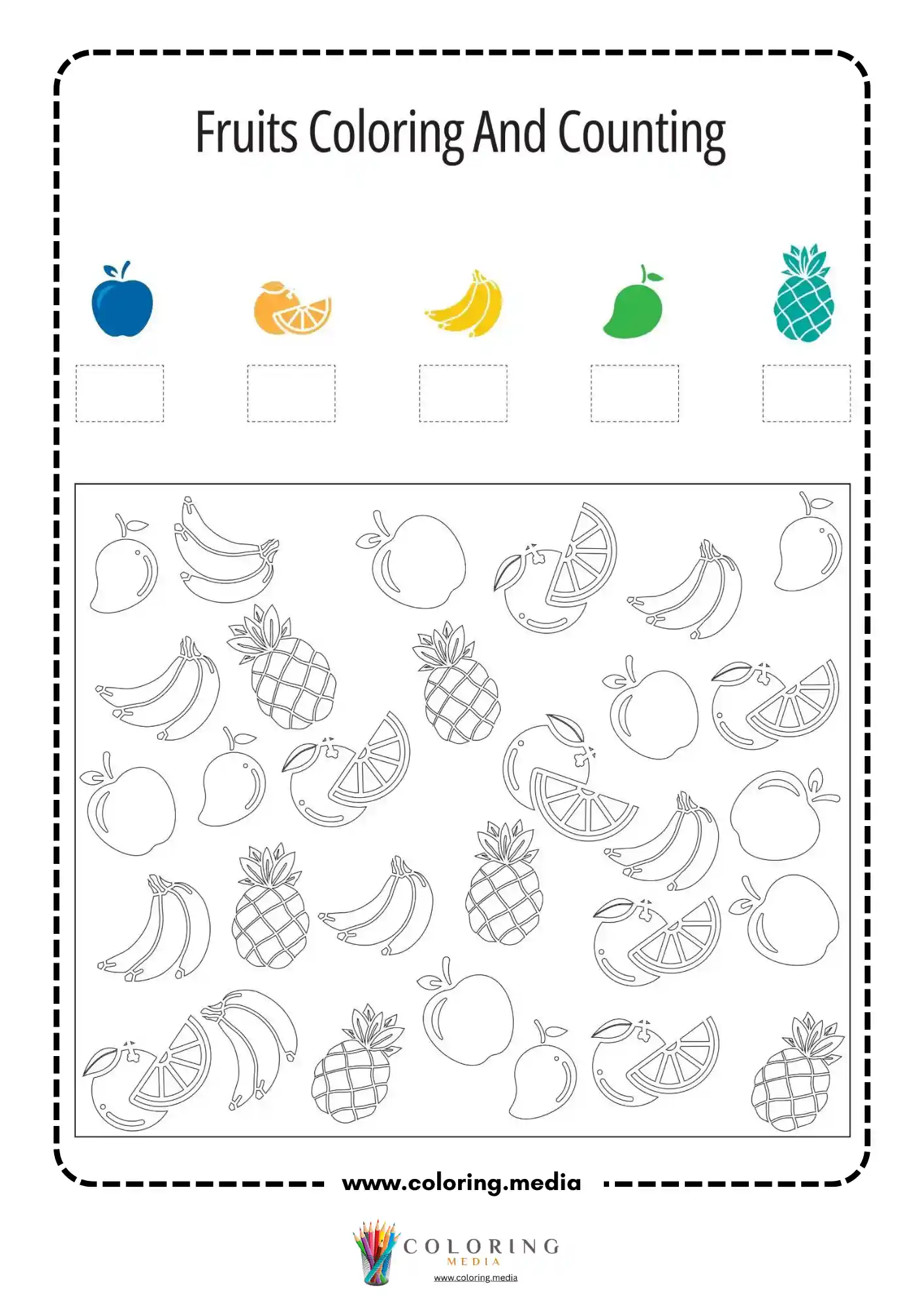
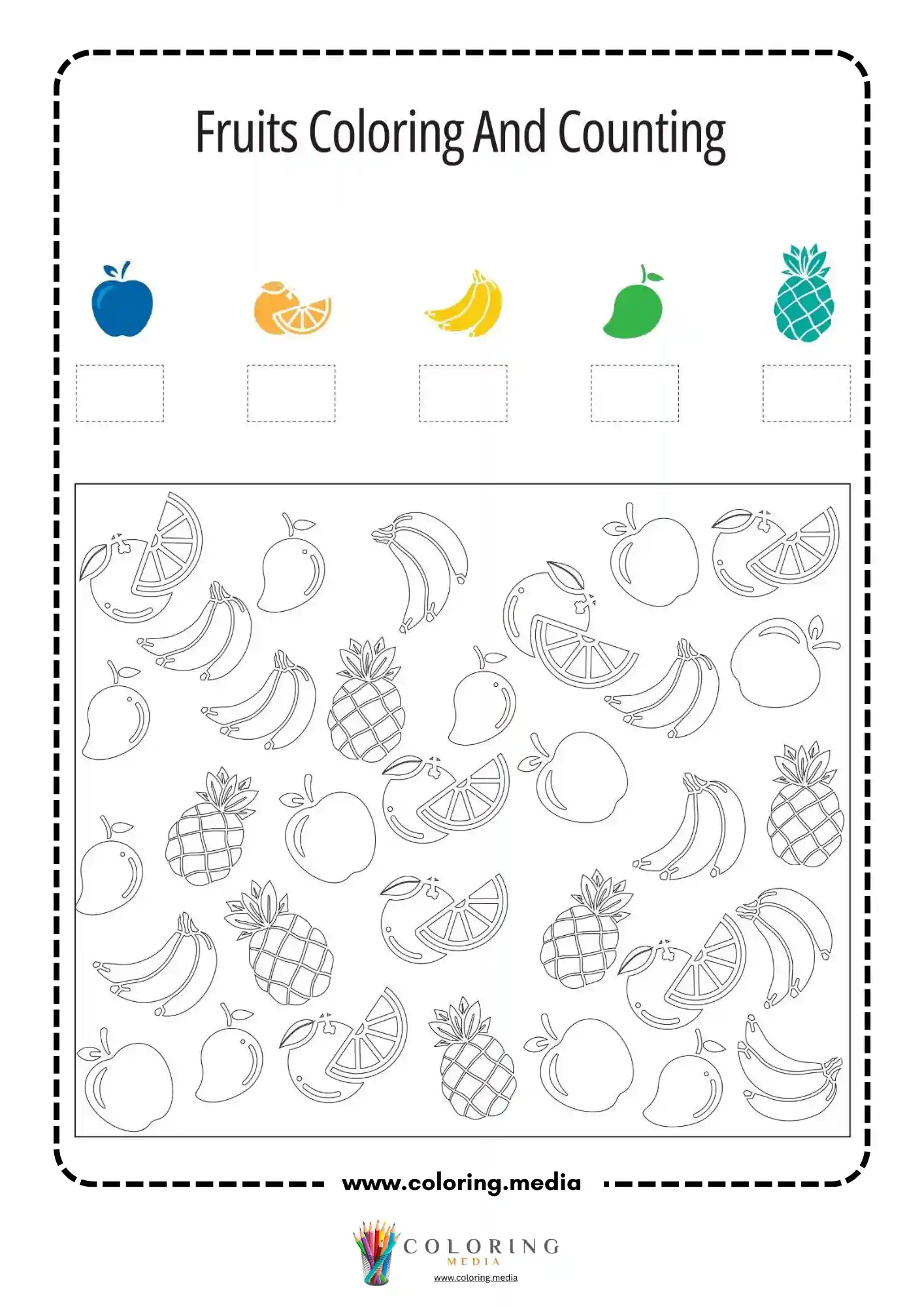
Who Are These Counting Fruits Coloring Pages Best For?
Preschoolers aged 3 to 5 will find these pages well-matched to where they are developmentally. At this age, children are working on one-to-one correspondence — touching each object once as they count it — and having a sheet full of fruit illustrations to point at and color gives them a concrete, tactile experience rather than an abstract number drill. The illustrations are large enough that a child with a fat crayon can color each one without working around tiny details.
Kindergarteners who have already mastered basic counting can use these pages as sorting and classification practice instead. Rather than just counting the total number of items, they can identify how many apples versus oranges appear, introducing informal data and categorization thinking. The color-coded guide in the corner supports this direction naturally.
In a preschool classroom these make excellent small-group table activities during a fruit or healthy food theme week. Homeschool parents can tie them into a kitchen math lesson — count the pages, then count real fruit on the counter for a concrete-to-representational bridge.
Interesting Fruit Facts to Share While Coloring
Strawberries are not technically berries — but bananas are. Botanically, a berry is a fruit that develops from a single flower’s ovary. Bananas qualify. Strawberries do not, because the fleshy part grows from the base of the flower rather than the ovary itself. Most kids find this deeply unfair.
Apples float in water because they are 25% air. The tiny pockets of air between cells in apple flesh make them buoyant. This is why apple bobbing works, and it is also a quick science experiment you can do in a bowl at home after counting the apple pictures on the page.
Oranges are not naturally orange in warm climates. In tropical countries where temperatures never drop below about 55°F, oranges stay green even when fully ripe, because they never need to break down their chlorophyll. The orange color we expect only develops when cool nights trigger the change.
Grapes can be turned into raisins just by sitting in the sun. No cooking or special equipment needed — just sunlight and a few weeks. Raisins are simply grapes that have lost most of their water content through evaporation, which also concentrates their sugars and makes them sweeter than fresh grapes.
The world grows more tomatoes than any other fruit. Tomatoes are botanically fruits — they develop from the flower’s ovary and contain seeds — and global production tops 180 million tons per year, making them the most produced fruit on Earth by a wide margin.
Creative Counting Fruits Coloring and Activity Ideas
Color Before Count Color all the fruits first using the reference colors, then go back and count each type. This separates the two tasks so neither feels rushed, and kids often count more carefully when the page looks finished and polished.
Tally Marks Practice As the child counts each fruit type, make a tally mark in the margin. After finishing, count the tally marks to verify the total. This introduces a second way of recording numbers without any extra worksheets.
More or Less Comparison After completing two pages, compare: which page had more apples? Which had fewer oranges? The comparison language — more, less, same — builds math vocabulary alongside counting.
Real Fruit Sorting Match Place a few actual pieces of fruit on the table alongside the coloring page. After the child identifies a fruit on the sheet, they find its real-world match on the table. The connection between drawing and real object deepens fruit recognition and vocabulary.
Count and Write After counting each fruit type, write the number in a small box drawn in the corner of the page. This pairs counting with numeral formation — two skills reinforced in one activity.
Healthy Eating Conversation While coloring, ask the child which fruits they have tried, which ones they like best, and which they have never eaten. It doubles as a vocabulary and health awareness activity with no extra prep required.
Fruit Sticker Reward After each completed page, place a small fruit-themed sticker in the top corner. Ten pages means ten stickers — a visible progress tracker that preschoolers find genuinely motivating.
How to Print These Counting Fruits Coloring Pages
Download any page as a PDF and print at 100% scale on standard US Letter or A4 paper — the fruit illustrations are sized for young hands, and scaling down would make them too small to color comfortably. Standard copy paper works well; thicker paper handles crayon better without the color transferring through. Grayscale printing works fine since the pages are black-and-white outlines designed to be colored in.
Explore More Math Coloring Pages
If you enjoyed these pages, you may also like:
Addition Math Coloring Pages
Clock Time Coloring Pages
Math Activity Coloring Pages
Simple Fraction Coloring Pages
Cute Fruits Coloring Pages