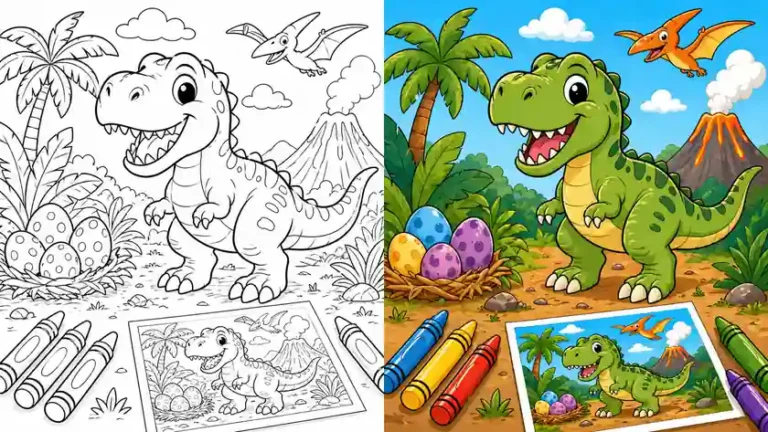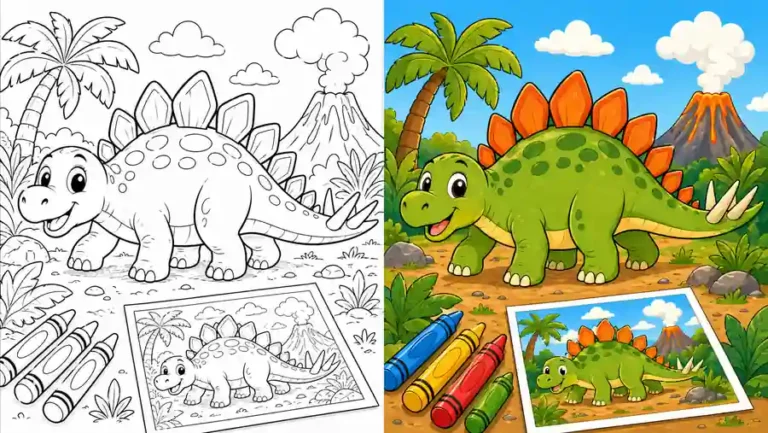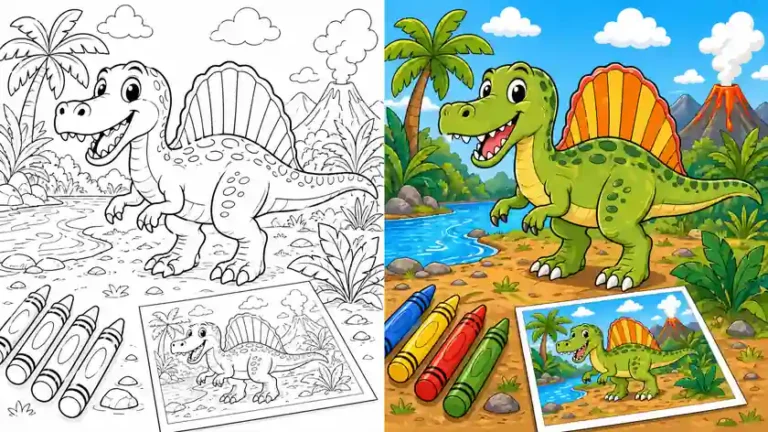

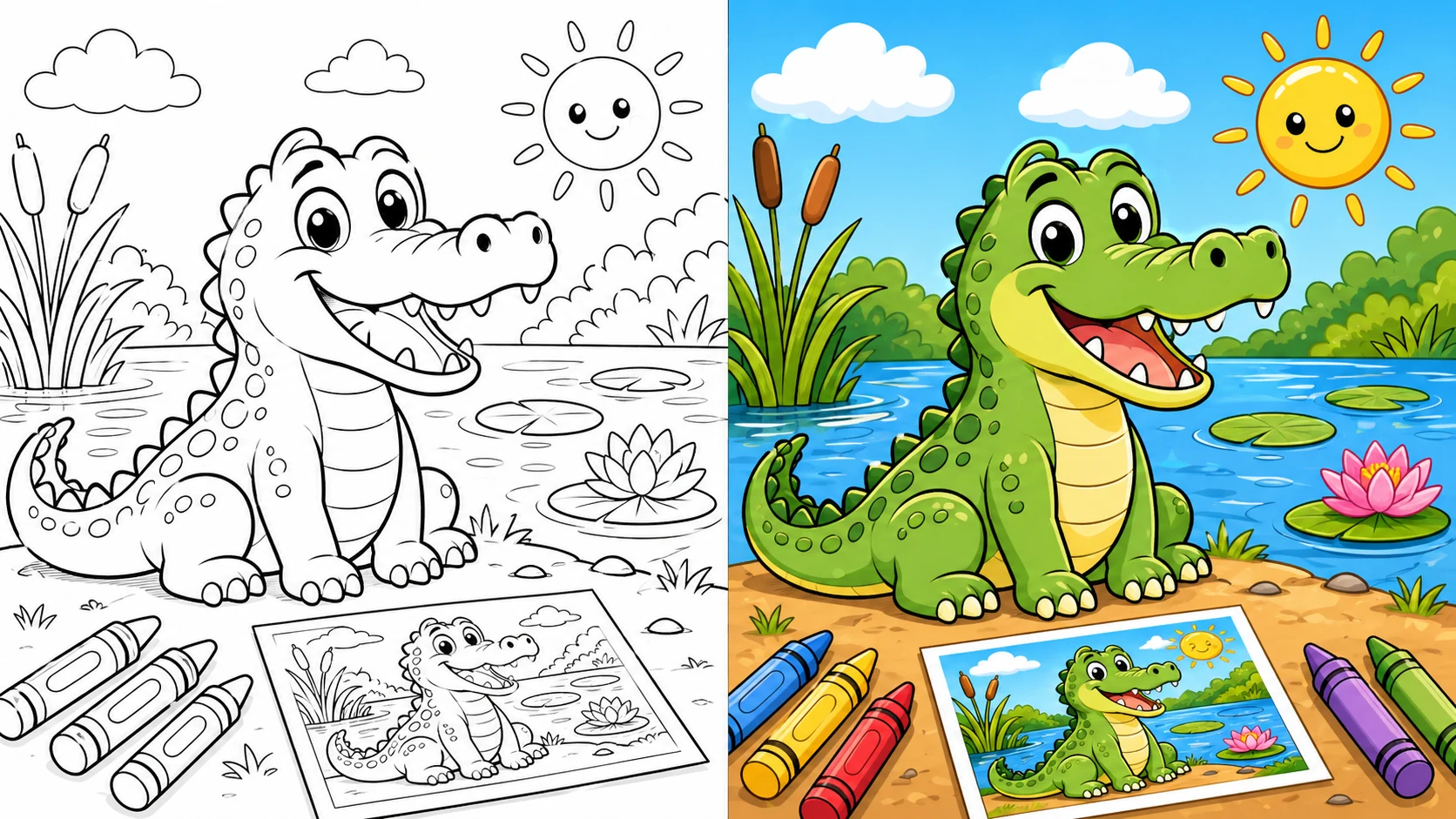
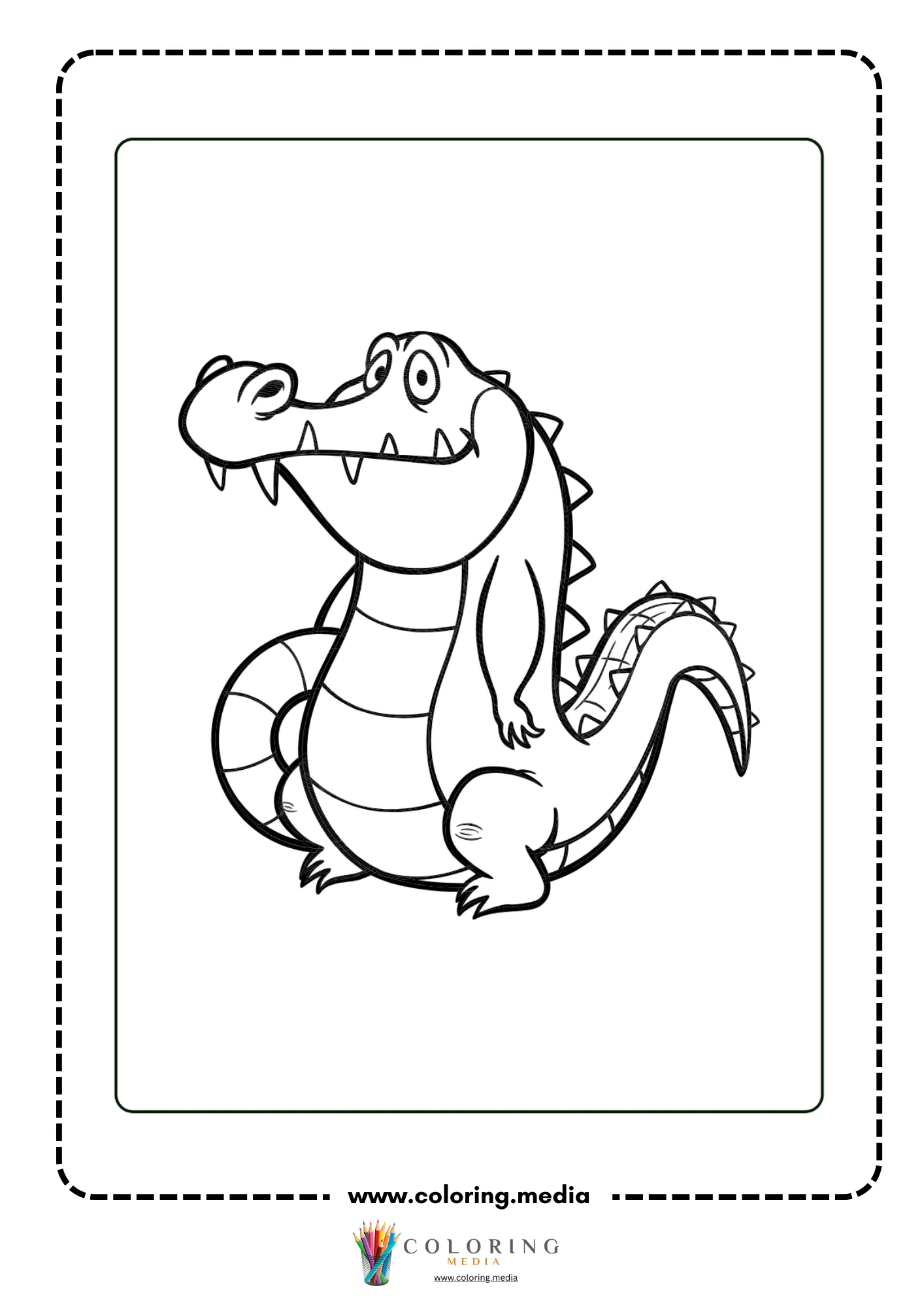
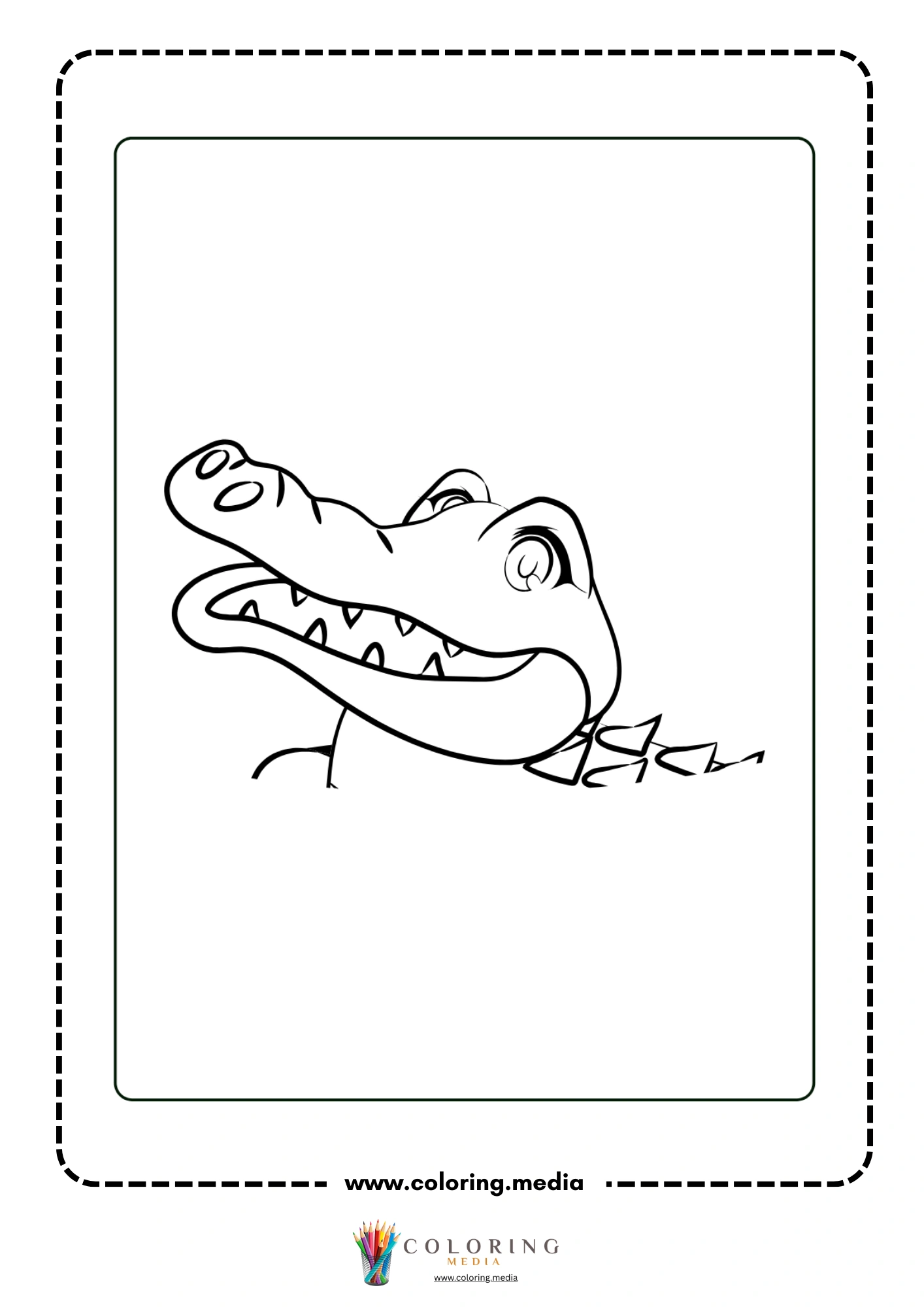
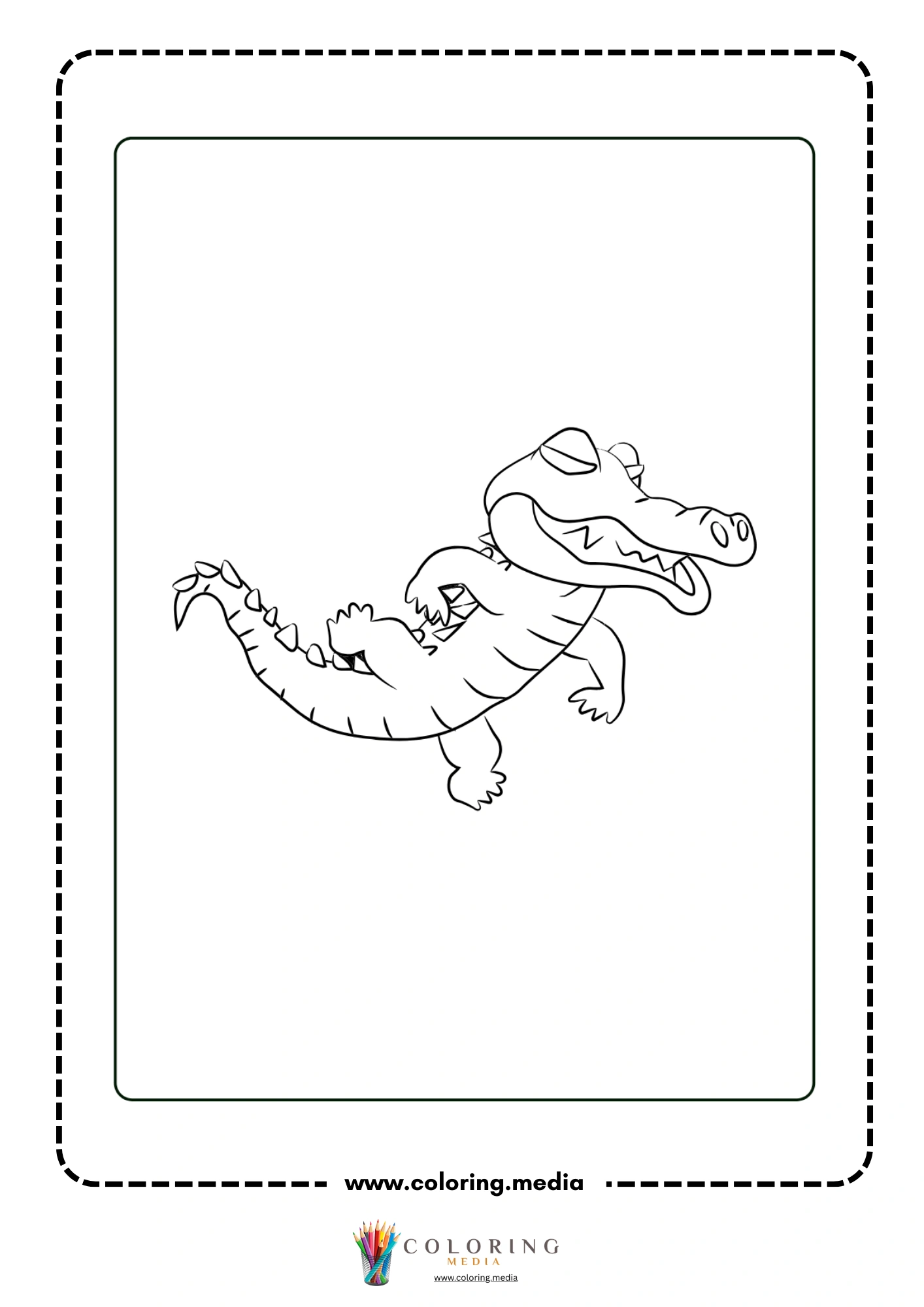
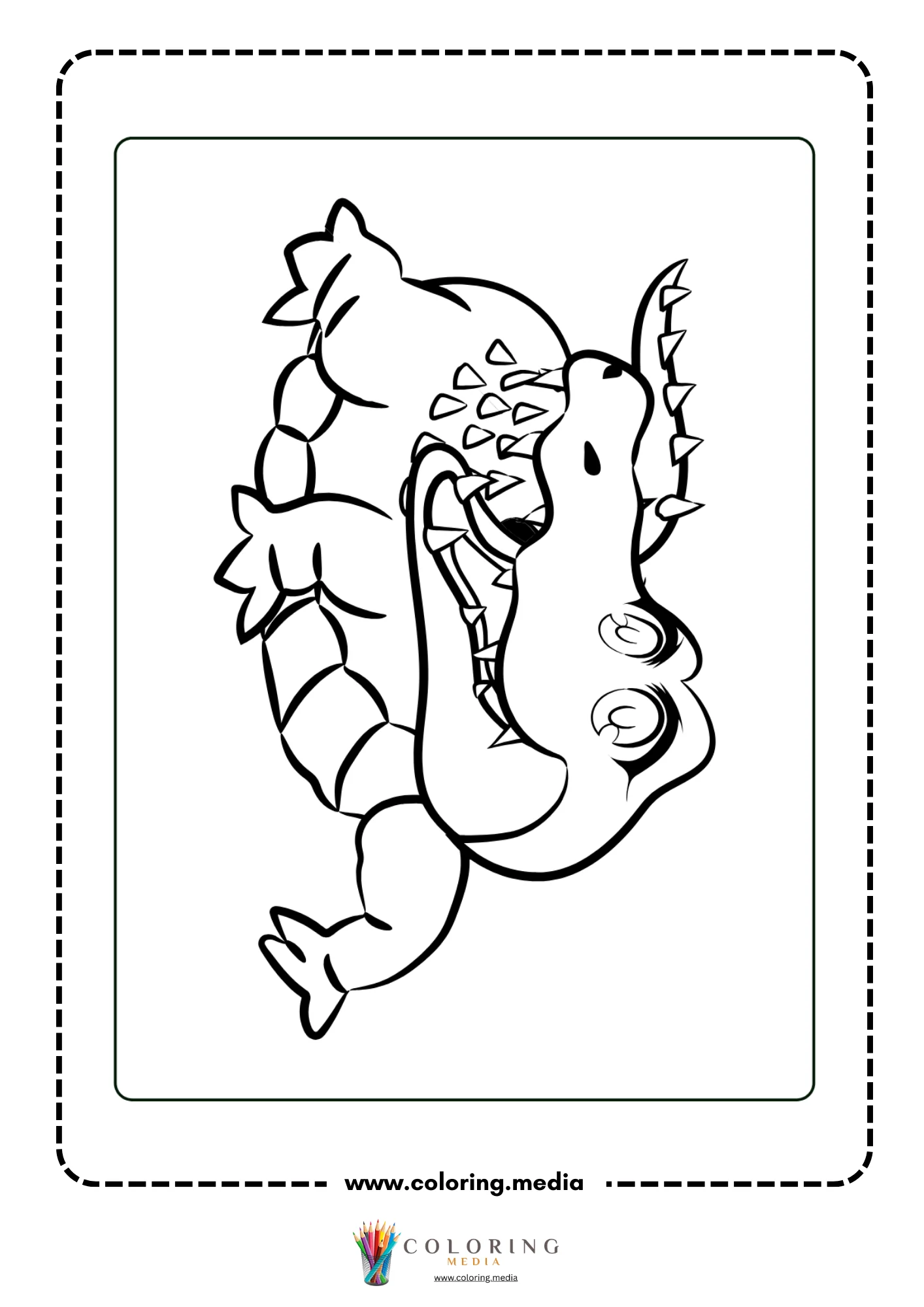
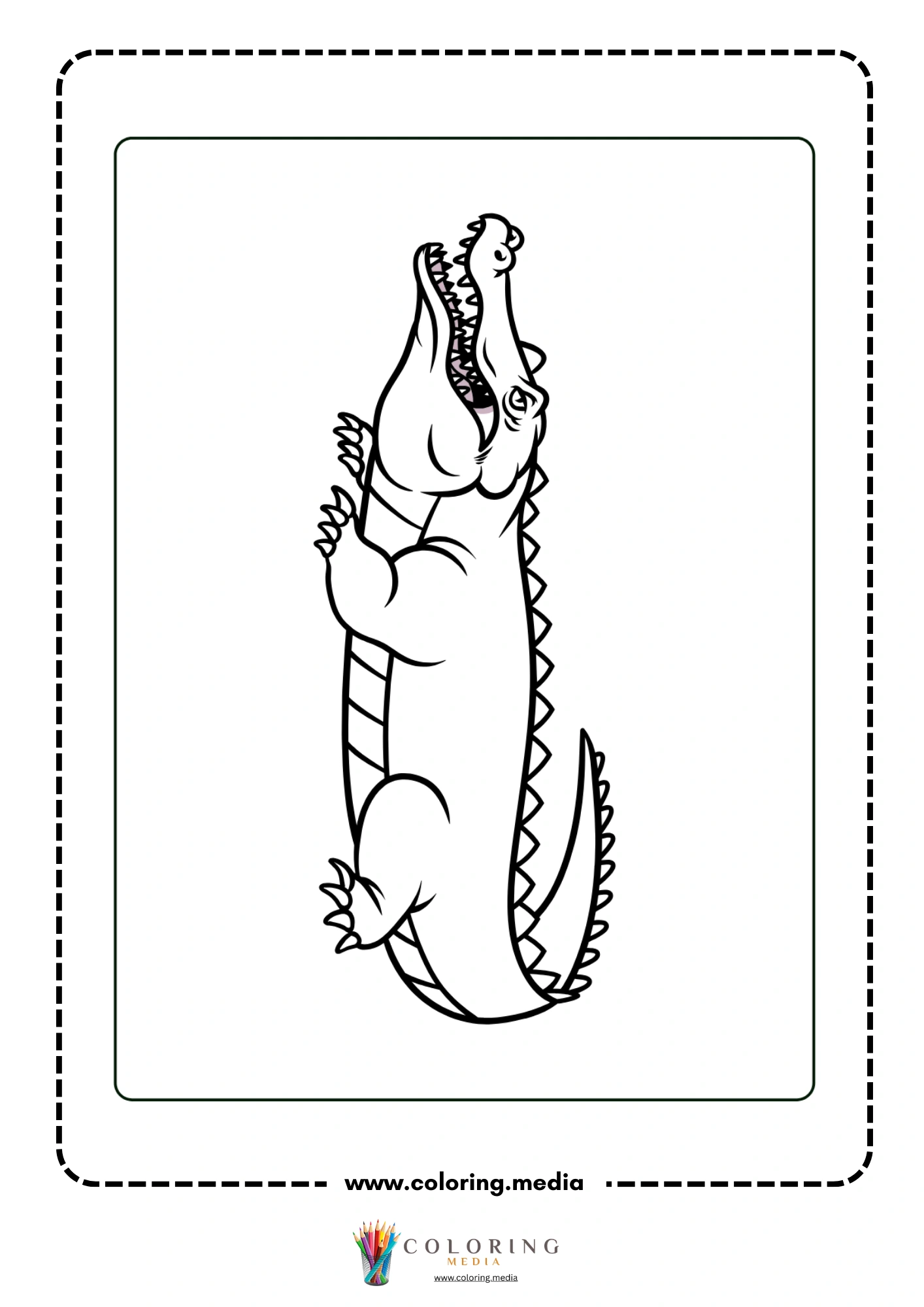
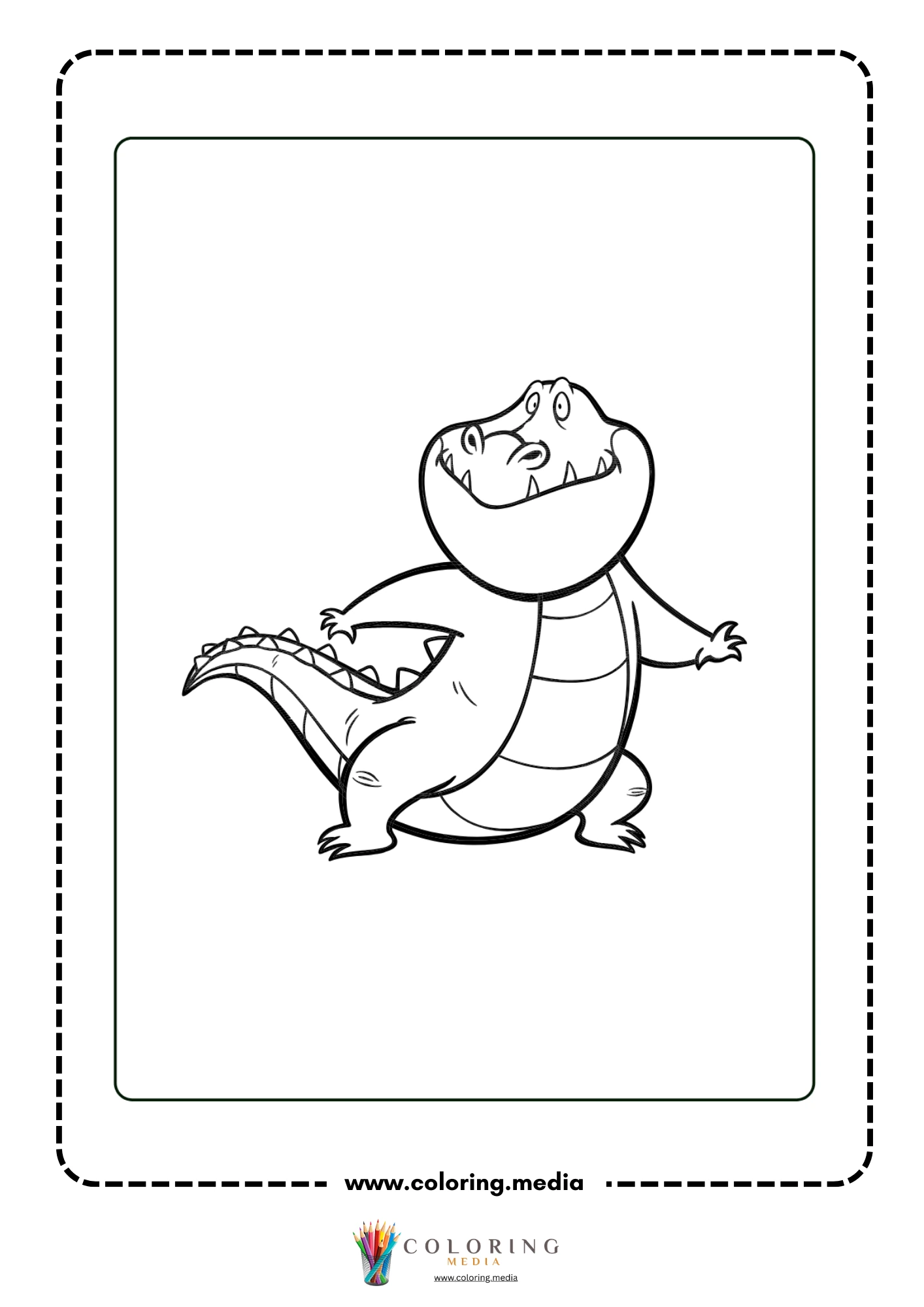
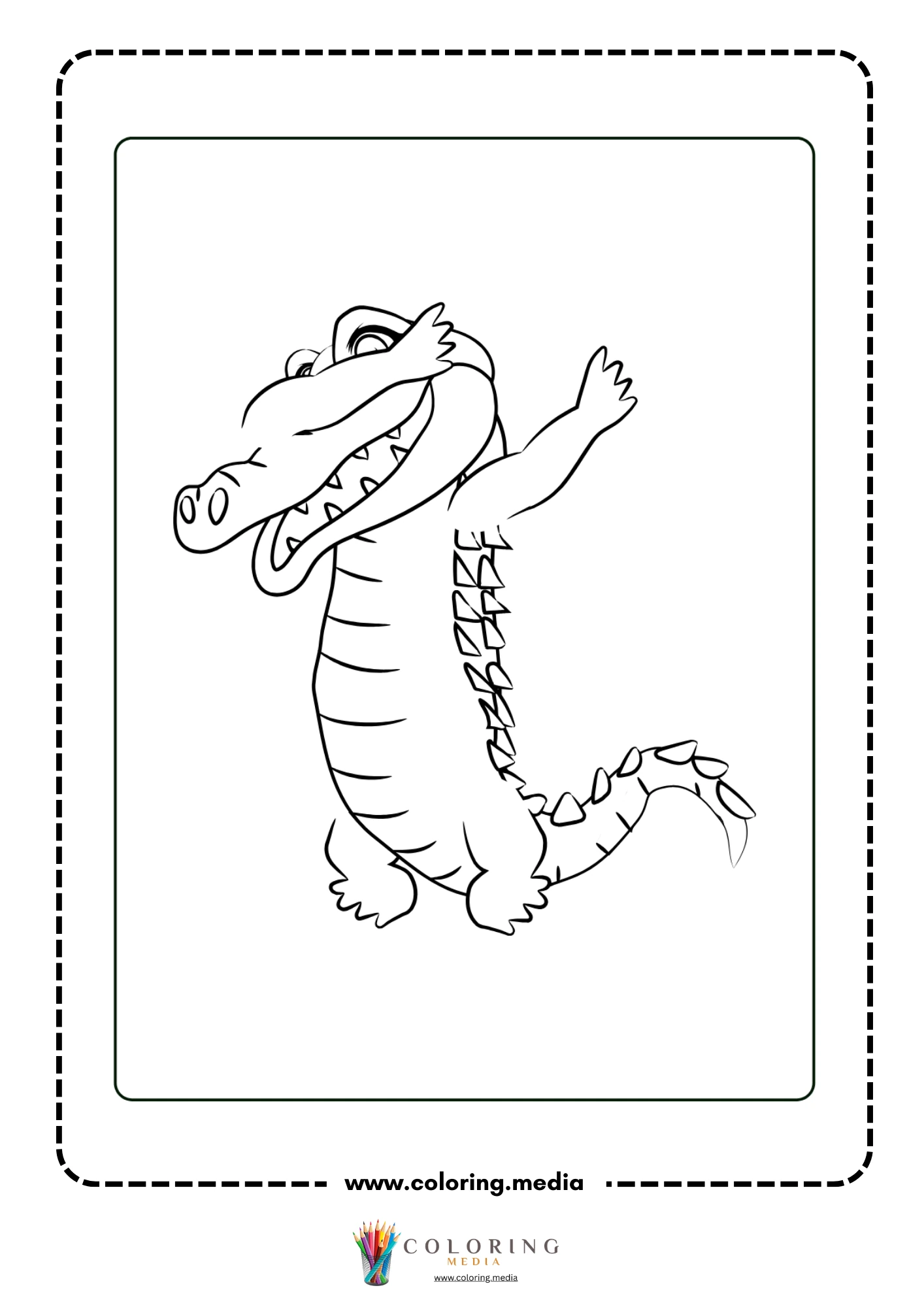
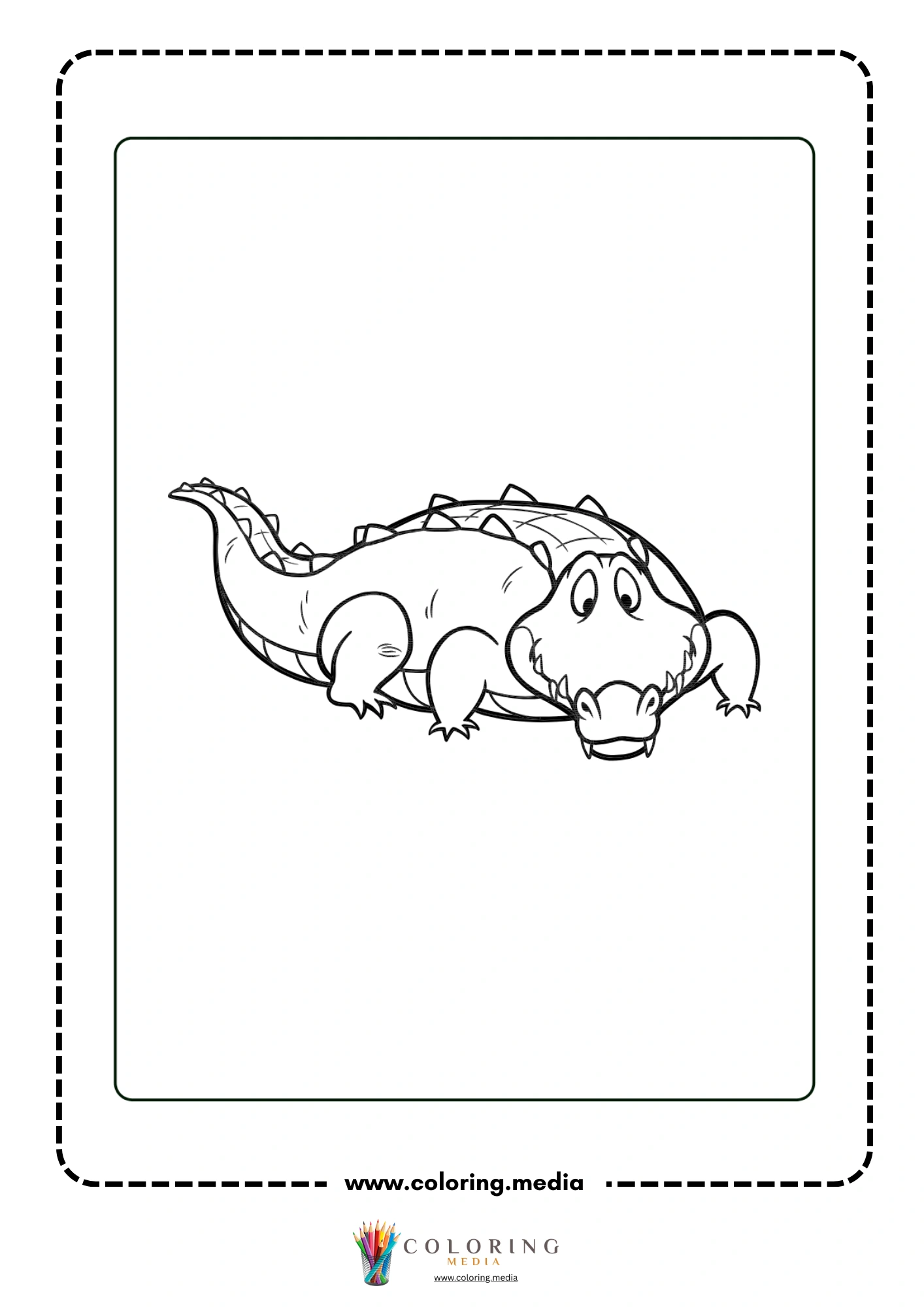
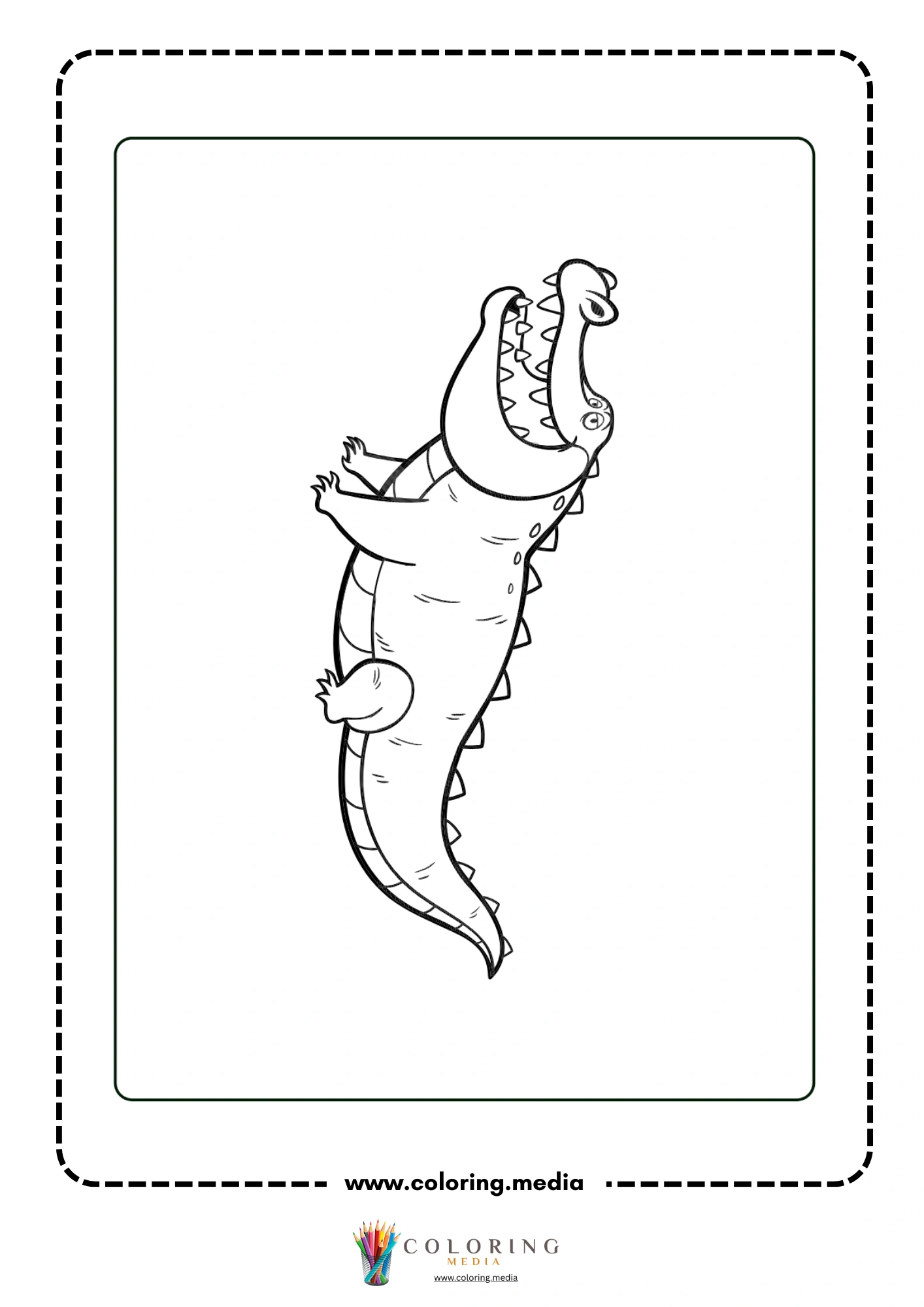
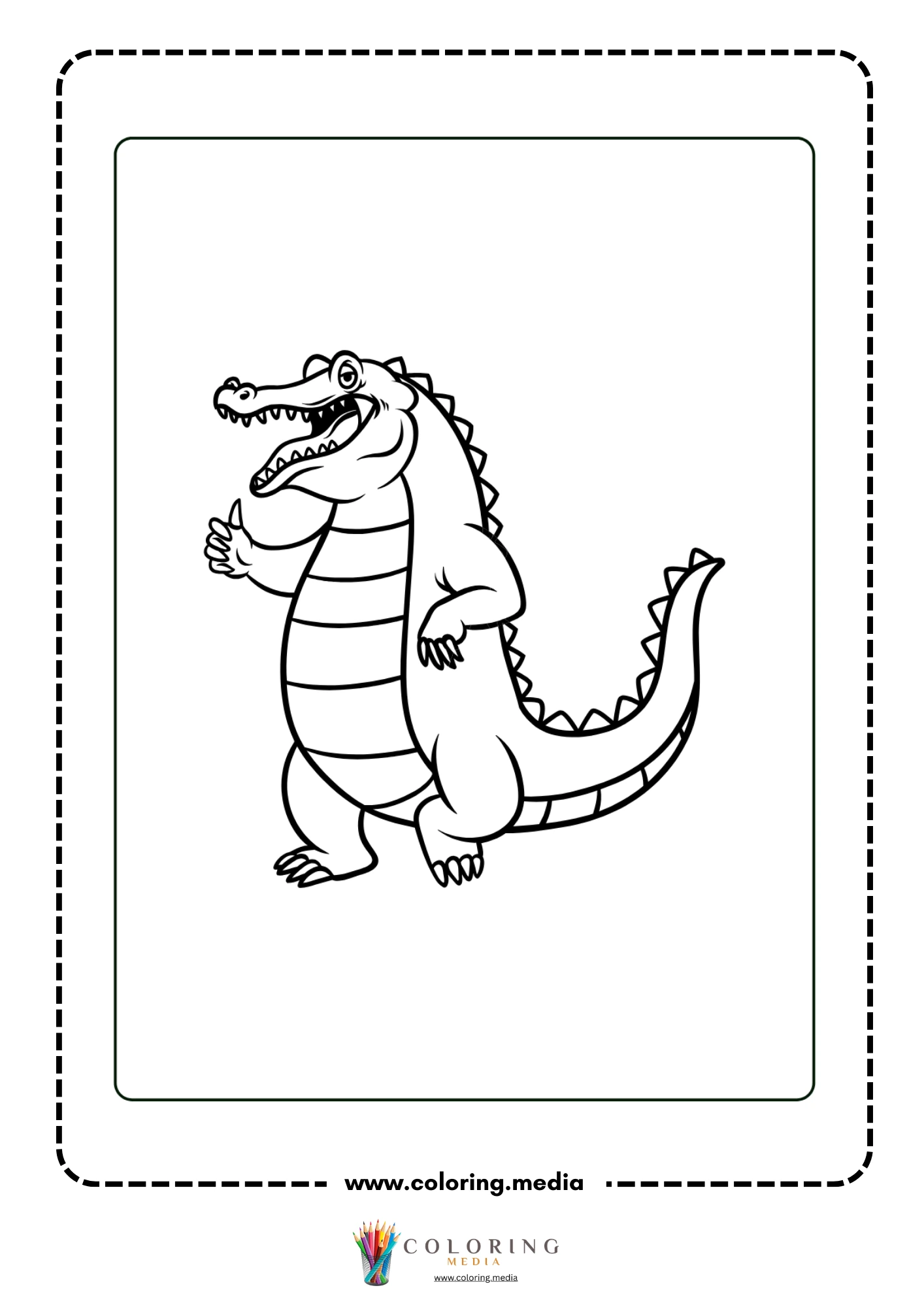
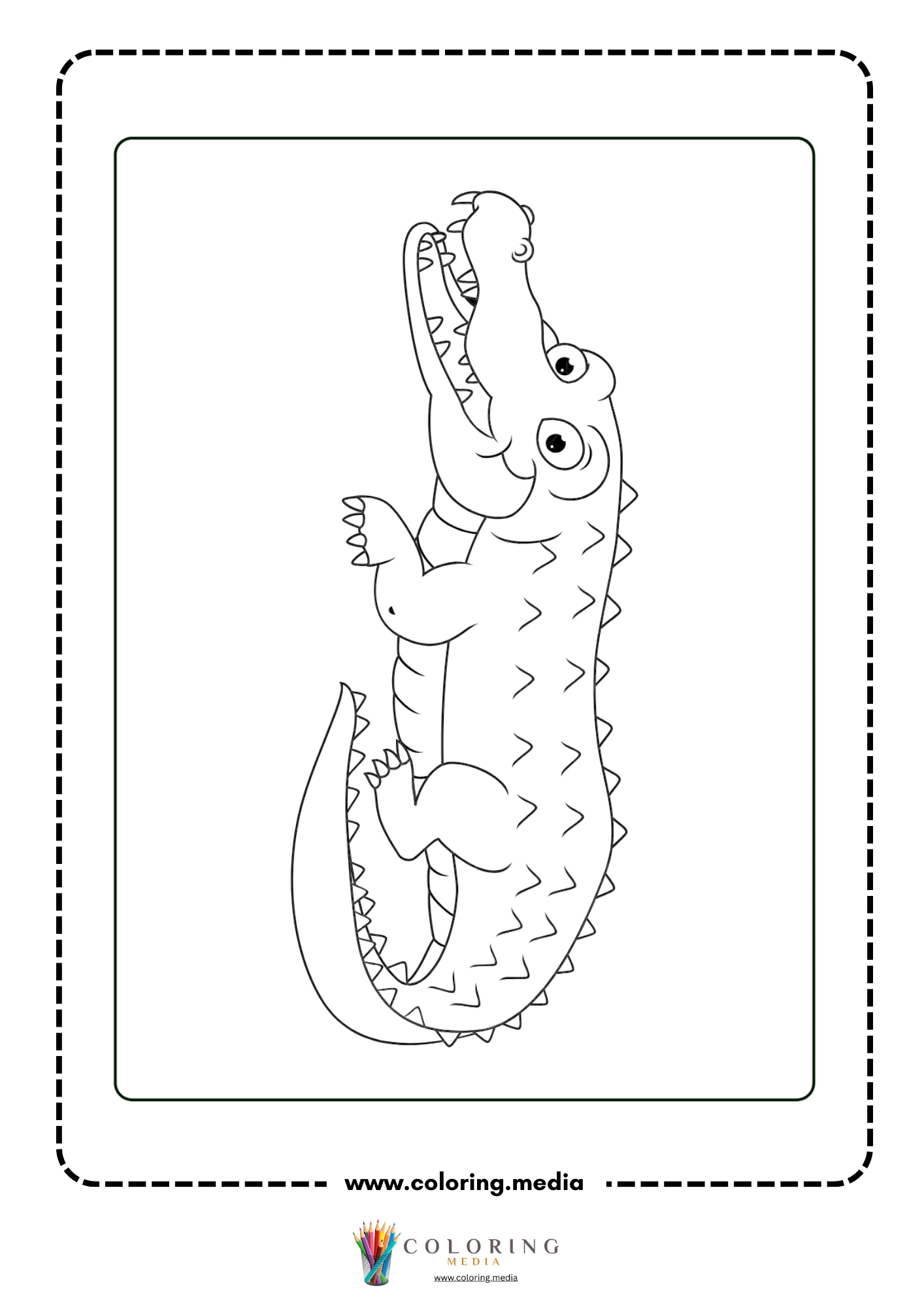
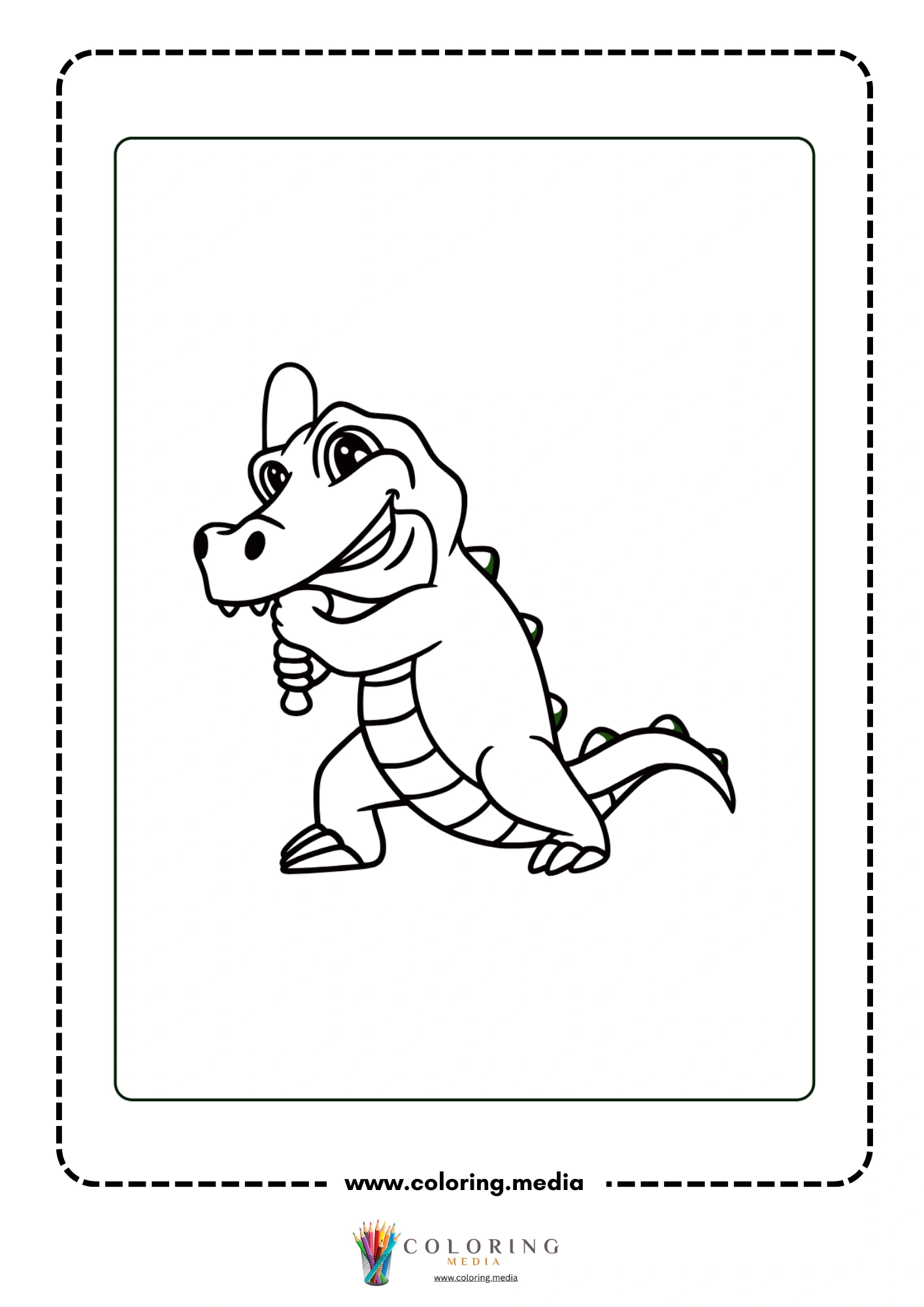
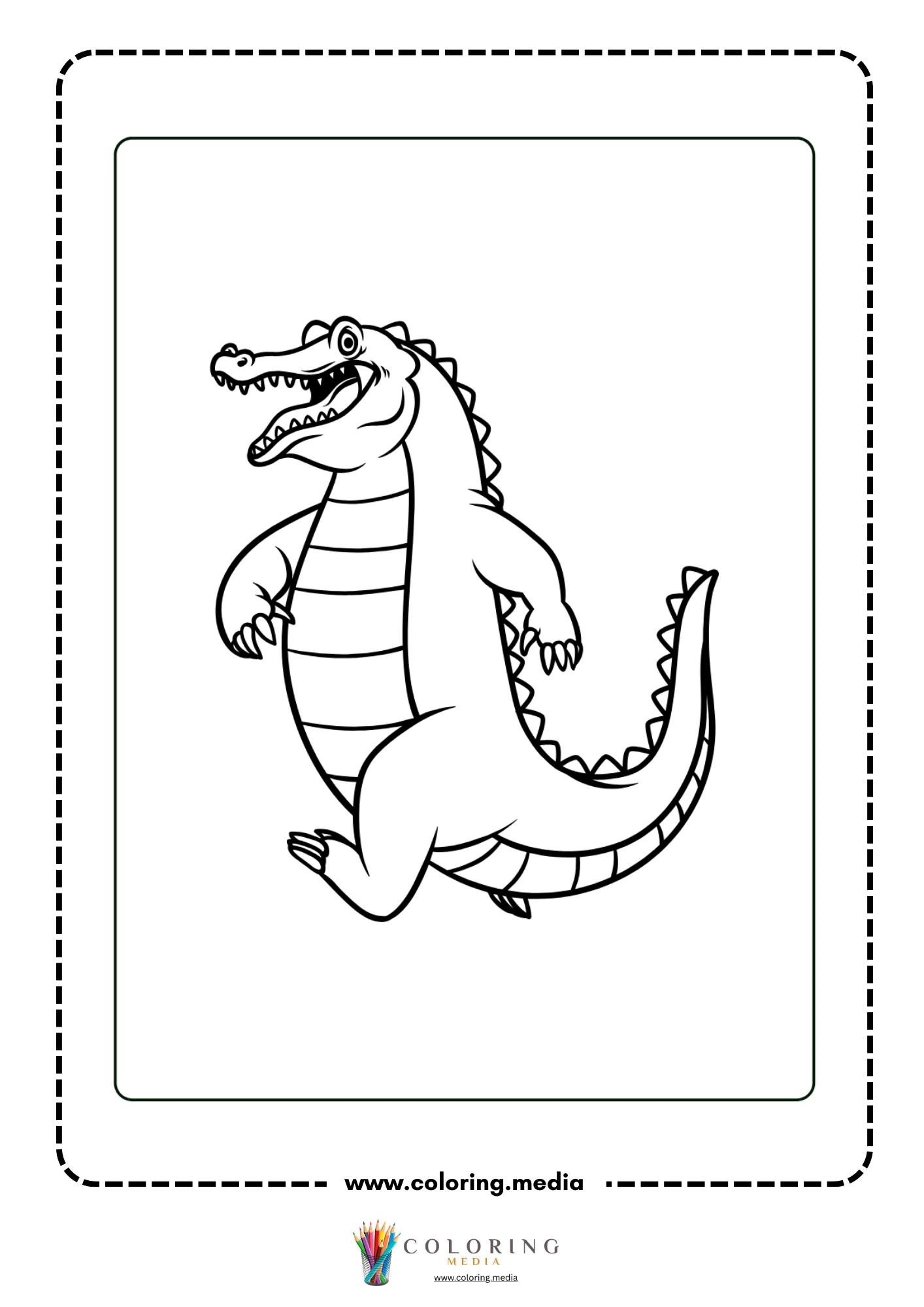
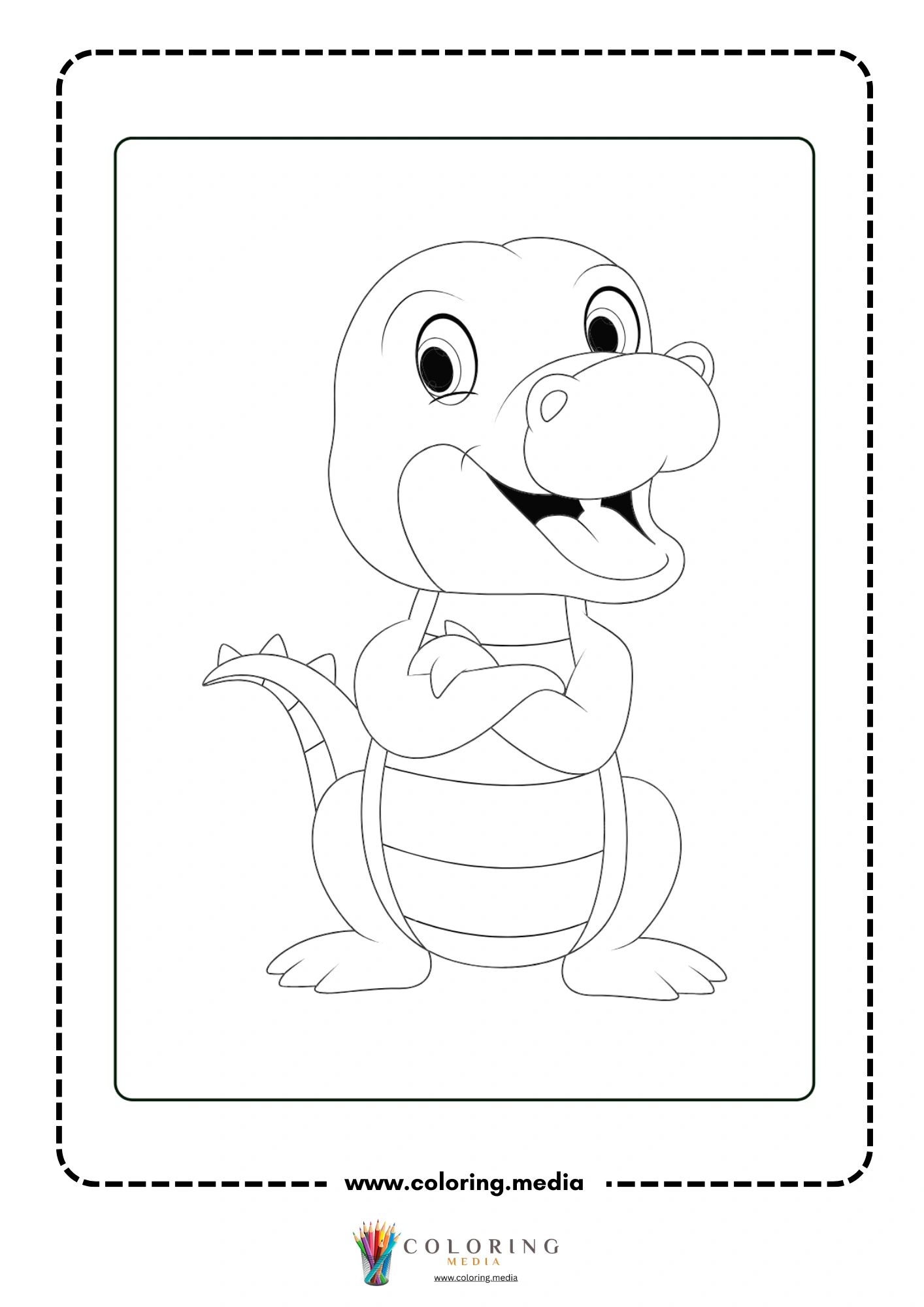
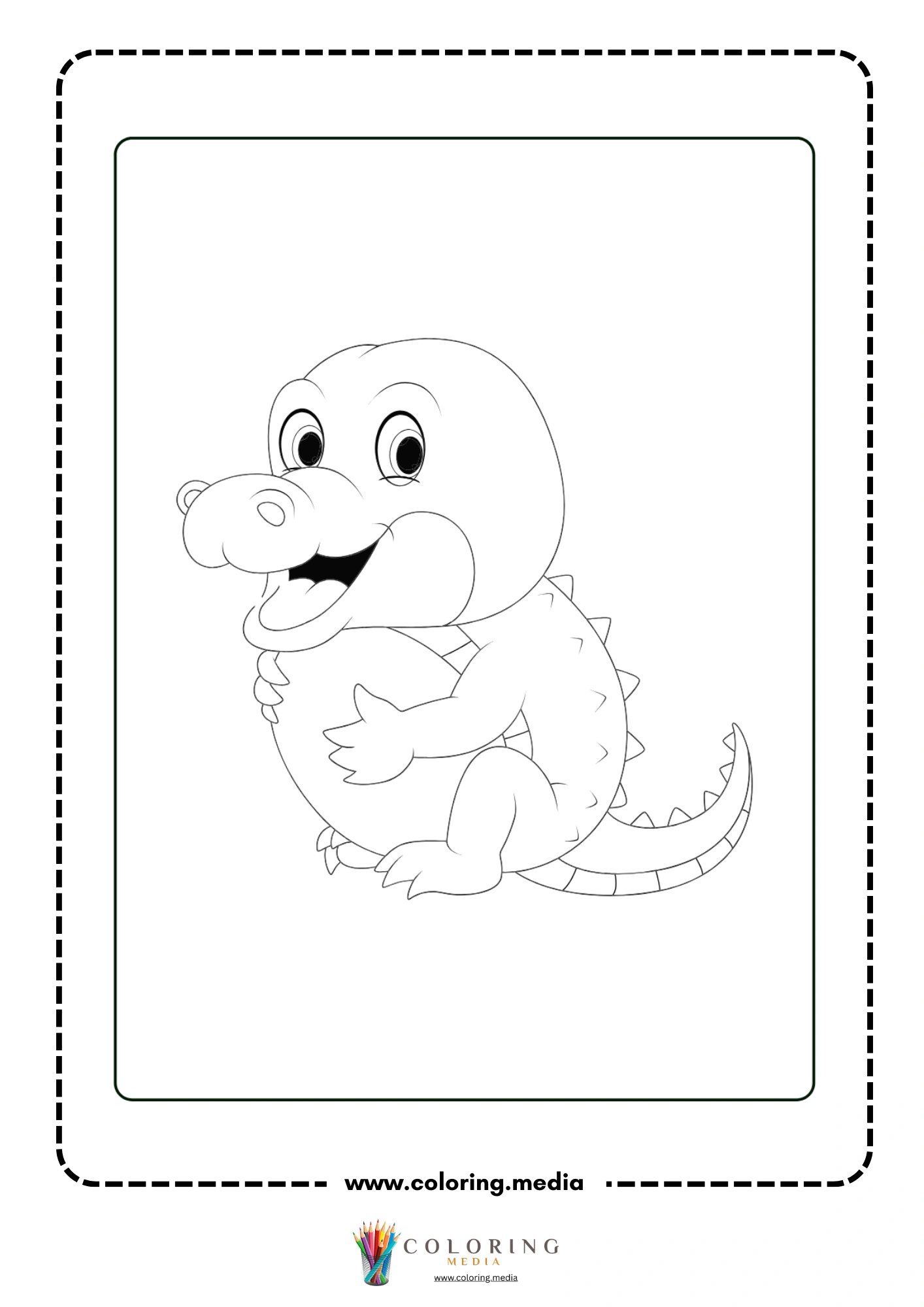
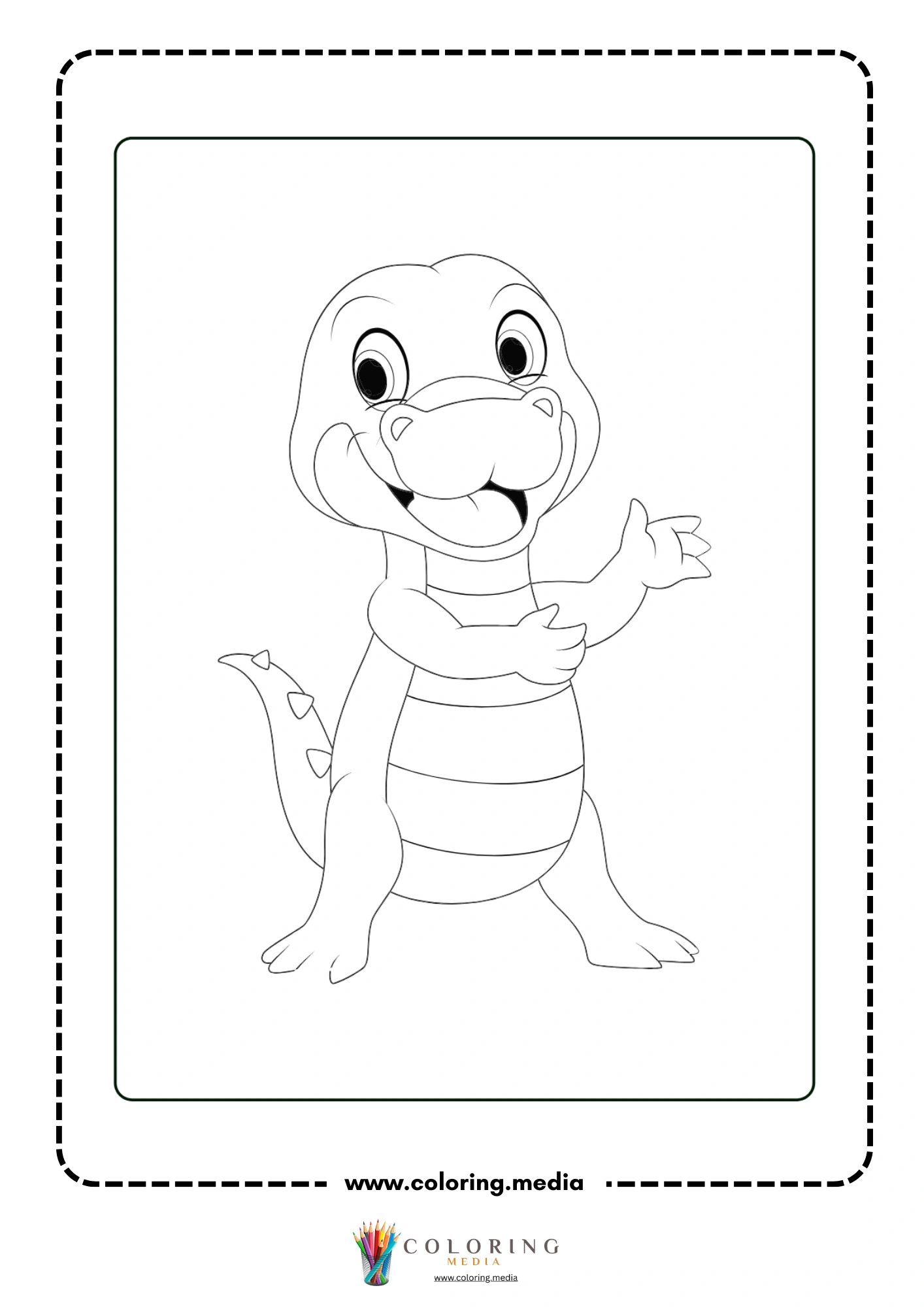
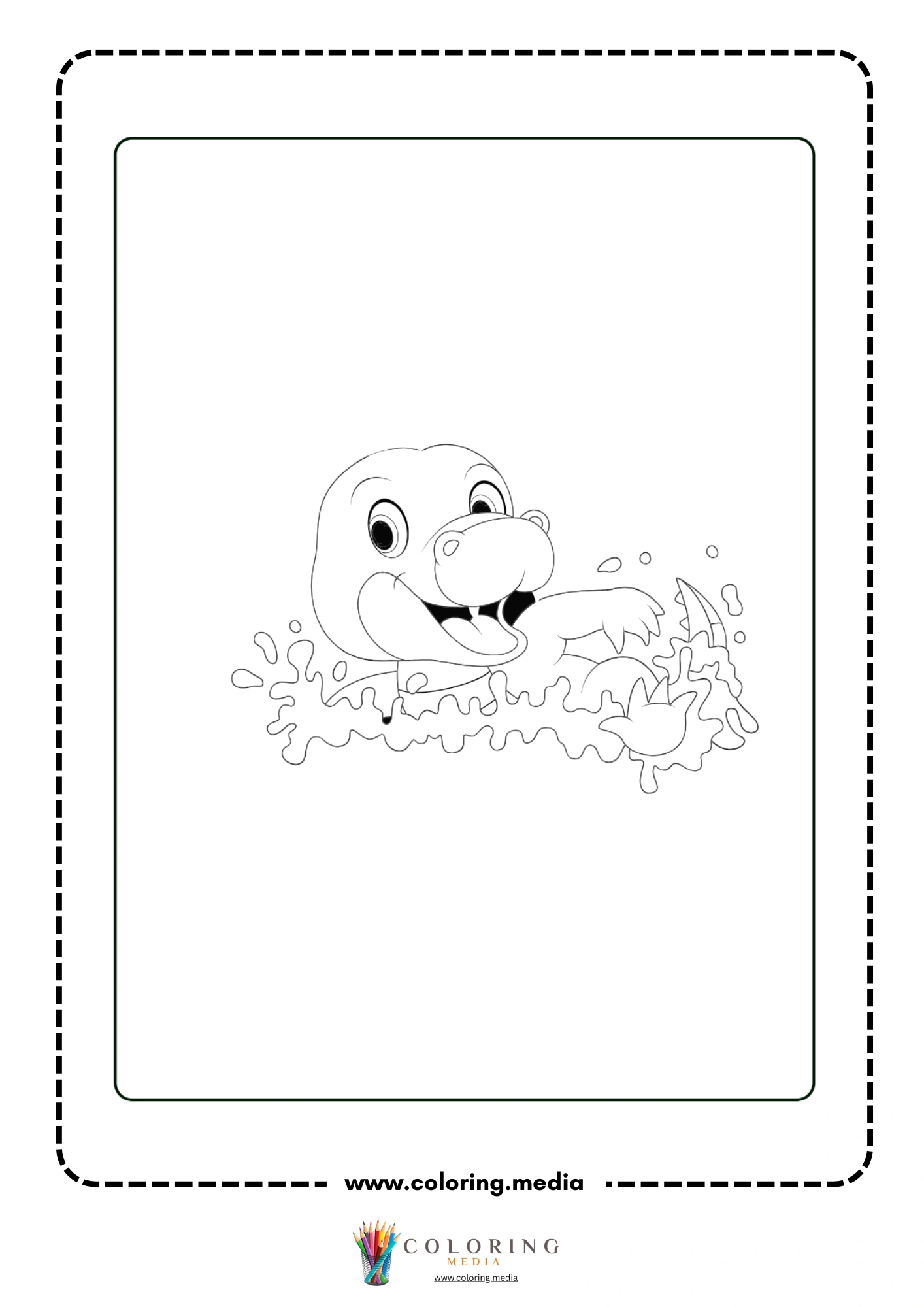
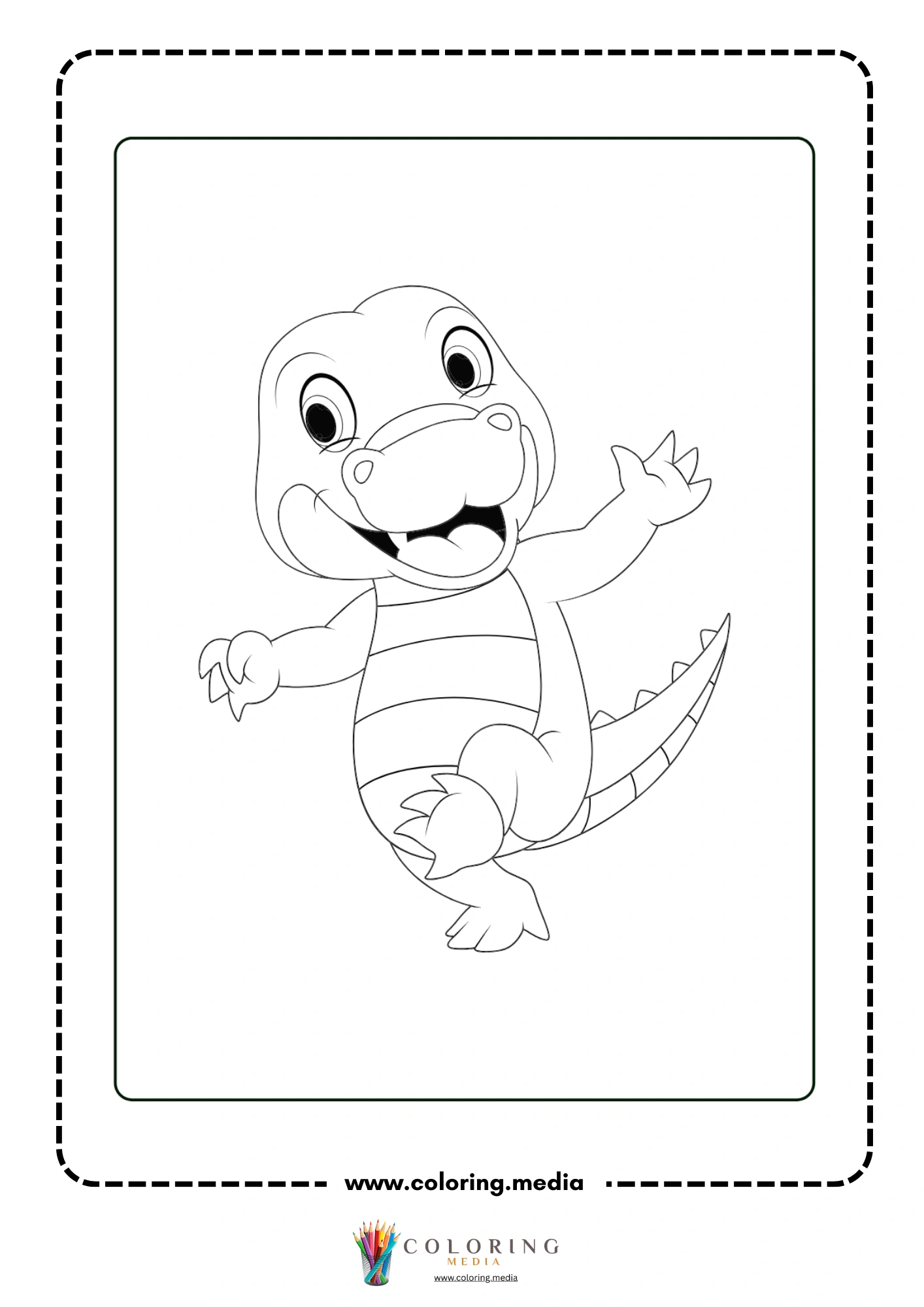
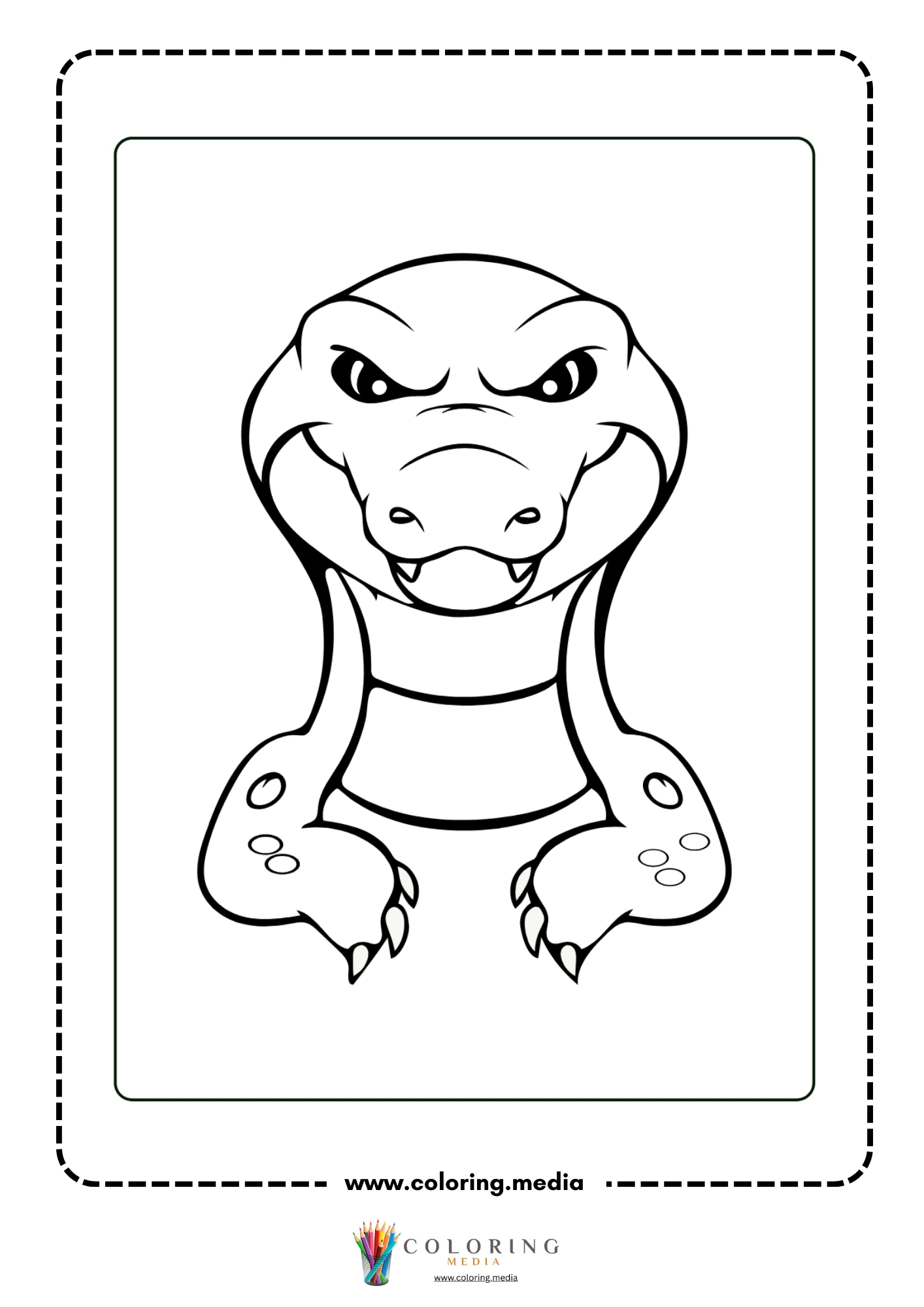
The 20 pages in this set cover a surprisingly wide range of crocodile characters. The first batch runs through the classic cartoon croc — standing, jumping, lying flat, rearing back on its tail with jaws open to the sky — drawn with thick 2–3mm outlines, striped bellies, and dorsal spikes that give each pose a distinct silhouette. Midway through, the set shifts to baby crocodile characters: rounder, cuter, with oversized eyes and tiny spikes, one of them splashing in water and another frozen mid-dance with arms flung wide. The final page breaks from the friendly tone entirely — a close-up front-facing croc with an angry brow and two heavy claws resting forward, designed for older kids who want something with a bit more edge.
The simpler baby crocodile pages suit preschoolers and kindergarteners, while the more detailed upright poses and the front-facing close-up give early elementary kids more to work with. You can also browse more Animals Coloring Pages on the site. Everything here is free to download and easy to print.
Free Printable Crocodile Coloring Pages
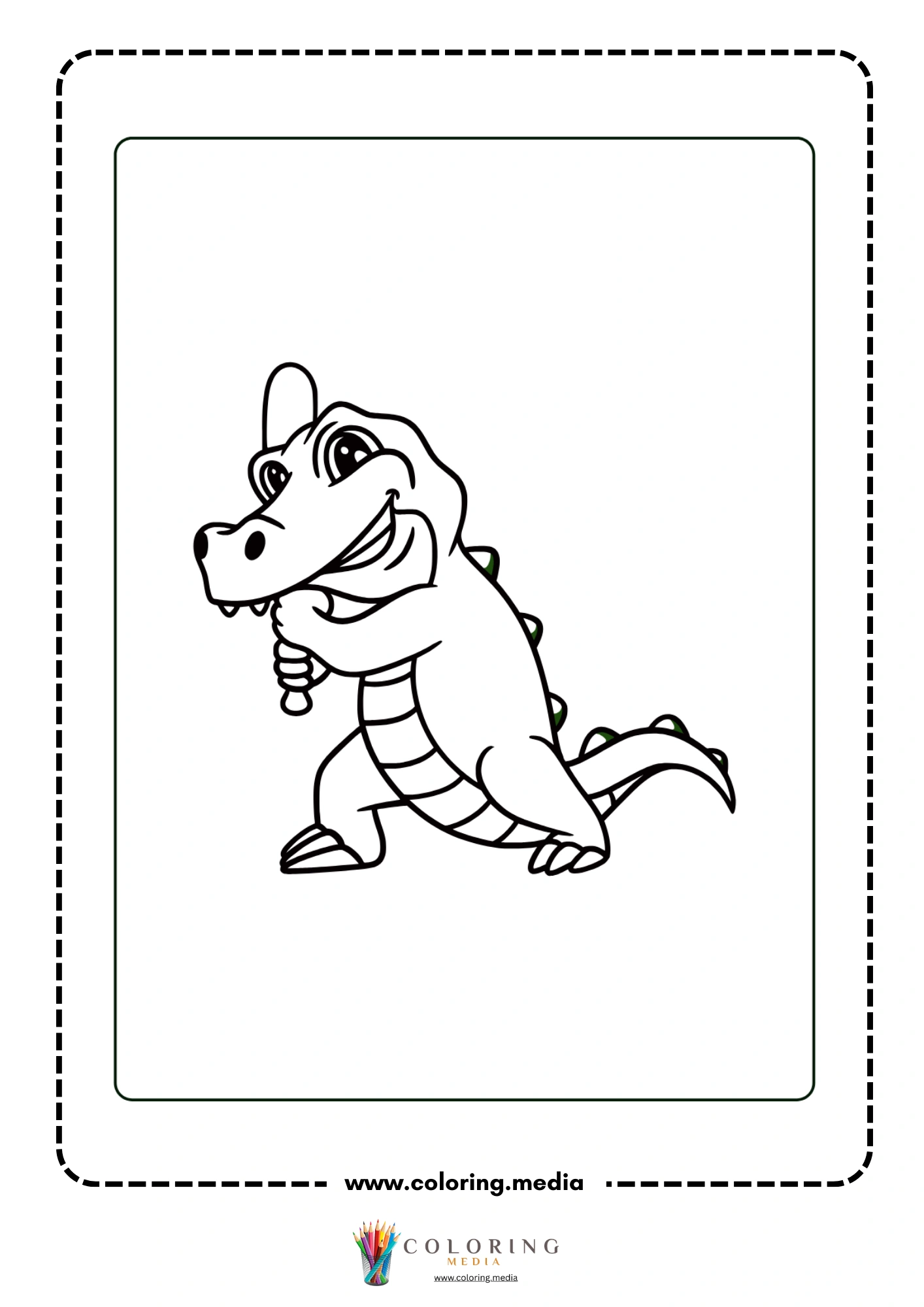
This collection includes 20 printable crocodile coloring pages featuring cartoon crocodiles in a full range of poses — sitting, jumping, dancing, rearing back with jaws open, and lying flat — alongside a series of cute baby crocodile characters including one swimming with splashes and one wearing a cap. The final page is a bold front-facing close-up with an intense expression. All pages are formatted for standard US Letter and A4 paper and print cleanly in black and white.
Who Are These Crocodile Coloring Pages Best For?
Pages 14 through 18 — the baby crocodile series — are the most accessible. The outlines are thick and the shapes are round and simple, which means a 4-year-old can fill each section with a single color and feel satisfied with the result quickly. The sitting, standing, and swimming poses give young children something recognizable to engage with without any tricky narrow spaces.
The upright cartoon crocodiles in pages 1 through 13 are a step up in detail. The striped belly sections, dorsal spikes, and clawed feet create multiple distinct areas that a kindergartener or early elementary kid will want to color differently from each other. Page 20, the close-up front-facing croc with the angry expression, suits older kids who want to color something that looks genuinely fierce rather than friendly.
In a classroom setting, these pages work well alongside a unit on reptiles — the variety of poses means each child can choose a different page and still be coloring the same animal.
Interesting Crocodile Facts to Share While Coloring
Crocodiles are among the oldest surviving reptile groups on Earth. Their body plan has remained largely unchanged for over 80 million years, which means the crocodile a child colors today looks very similar to the ones that lived alongside dinosaurs.
A crocodile’s jaws can snap shut with enormous force, but the muscles that open them are surprisingly weak. A strong person can hold a crocodile’s mouth shut with their bare hands. This is why wildlife handlers can tape a crocodile’s jaws closed with a single strip of tape as a safety measure.
Crocodiles can go months without eating after a large meal. Their metabolism slows dramatically when food is scarce, allowing them to conserve energy for long periods — a survival advantage in environments where prey is unpredictable.
Baby crocodiles make high-pitched calls from inside the egg before they hatch. The mother hears the calls and digs up the nest, then carries the hatchlings gently in her jaws to the water. Despite their fearsome reputation, crocodile mothers are attentive parents in those first weeks.
Crocodiles cannot chew. They swallow food in large chunks and use gastroliths — stones they deliberately swallow — to help grind food in their stomachs, similar to how birds use grit.
Creative Crocodile Coloring and Craft Ideas
Scales Pattern
Pick any of the upright crocodile pages and add a repeating diamond or oval scale pattern across the back using a fine-tip pen before coloring.
Habitat Scene
Color a crocodile page, cut it out, and glue it onto a hand-drawn river scene with reeds and murky water.
Baby vs. Adult
Color a baby crocodile page and a large upright pose page using the same color scheme, then compare how the same colors read differently on the two shapes.
Angry vs. Happy
Color the friendly cartoon croc on page 1 and the front-facing close-up on page 20 in the same colors, then discuss how expression alone changes the mood of a drawing.
Belly Color Decision
Real crocodiles have pale yellowish bellies and darker green backs. Try to match that gradient — dark on the dorsal spikes, lightening toward the belly stripes.
Splash Effect
On the swimming page, color the water splashes in light blue and white, leaving some gaps to suggest foam, then add a darker blue or green for the water line.
How to Print These Crocodile Coloring Pages
Each file is a single-sided PDF formatted for both US Letter (8.5 x 11 in) and A4 paper with no scaling required. Standard 20 lb copy paper works well for crayons and colored pencils. For the more detailed upright poses, a fine-tip colored pencil will give better control around the dorsal spikes and claw areas. Set your printer to grayscale to avoid wasting color ink.
Explore More Animals Coloring Pages
If you enjoyed these pages, you may also like:
Dinosaur Coloring Pages
Sea Life Coloring Pages
Farm Animals Coloring Pages
Bugs and Insects Coloring Pages
Animals Coloring Pages