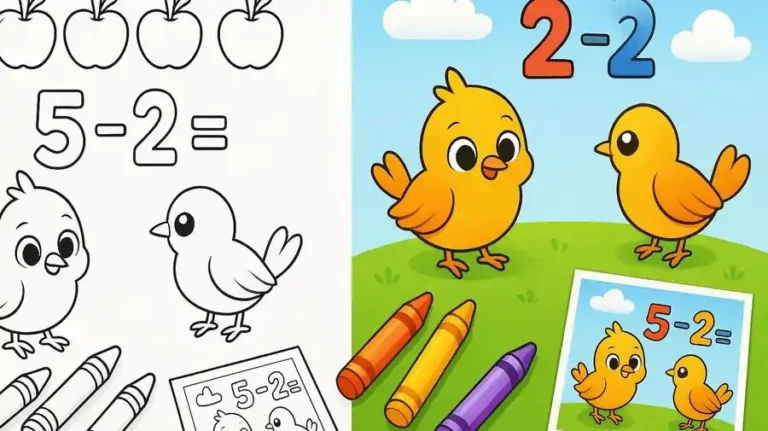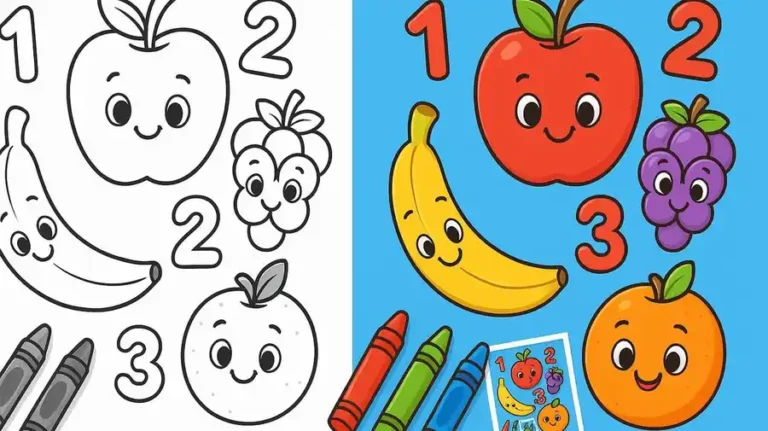

This collection covers three different math skills in a single set: counting with coloring, addition with pictures, and subtraction with cross-out activities. The cute icon illustrations — rows of hearts, stars, flowers, and small animals — are what the math operates on, so the child is never looking at abstract numerals in isolation. They count actual drawn objects, cross out actual drawn icons to subtract, and add together two visible groups before writing the total.
Because the pages vary in type and difficulty, this set works across a wider age range than a single-skill collection would. A preschooler can start on the counting pages, a kindergartener can move into the addition pages, and a first grader working on fact fluency will find the subtraction pages at the right level without needing to be handed a different resource. Everything here is free to download and easy to print.
Free Printable Math Activity Coloring Pages
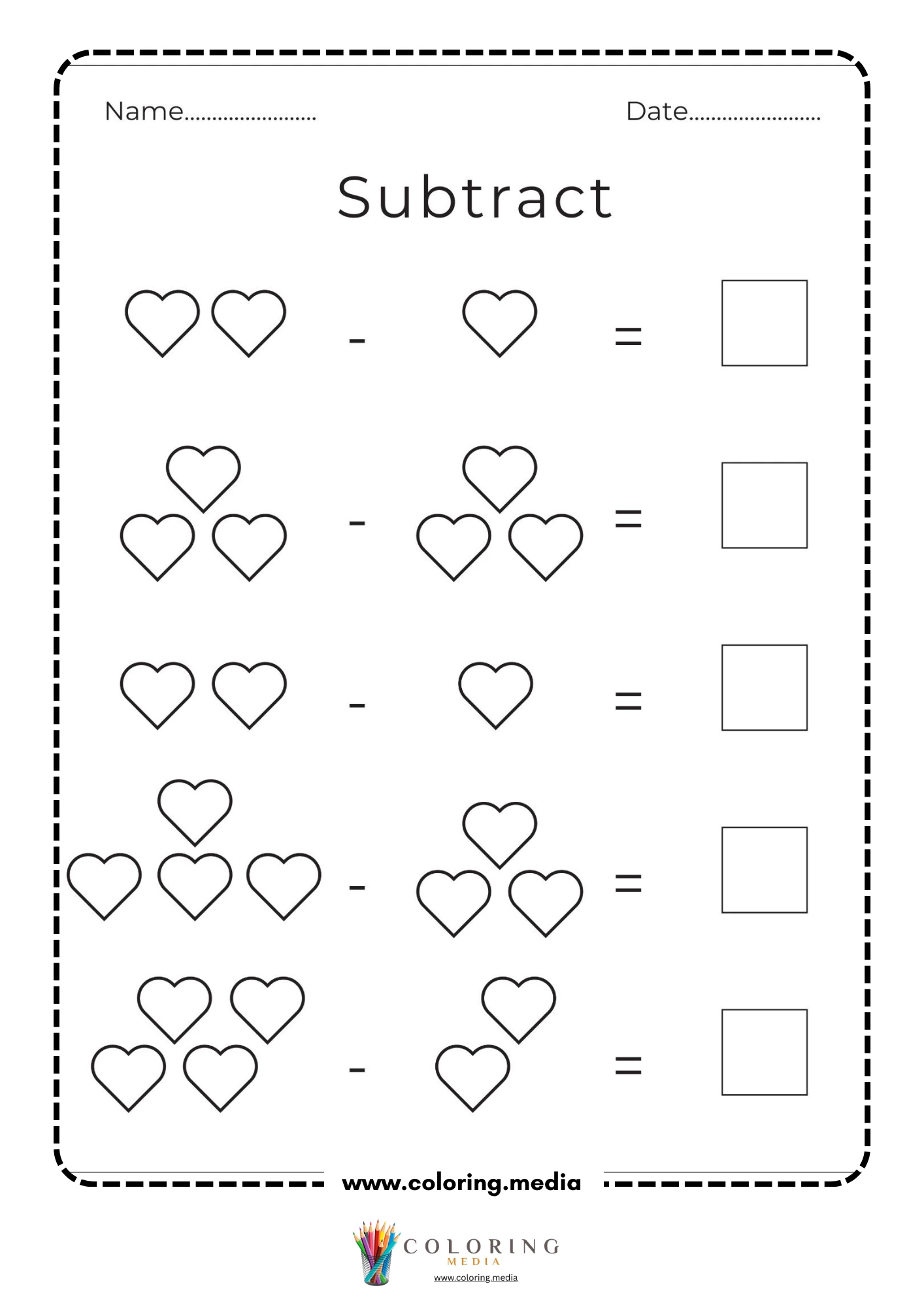
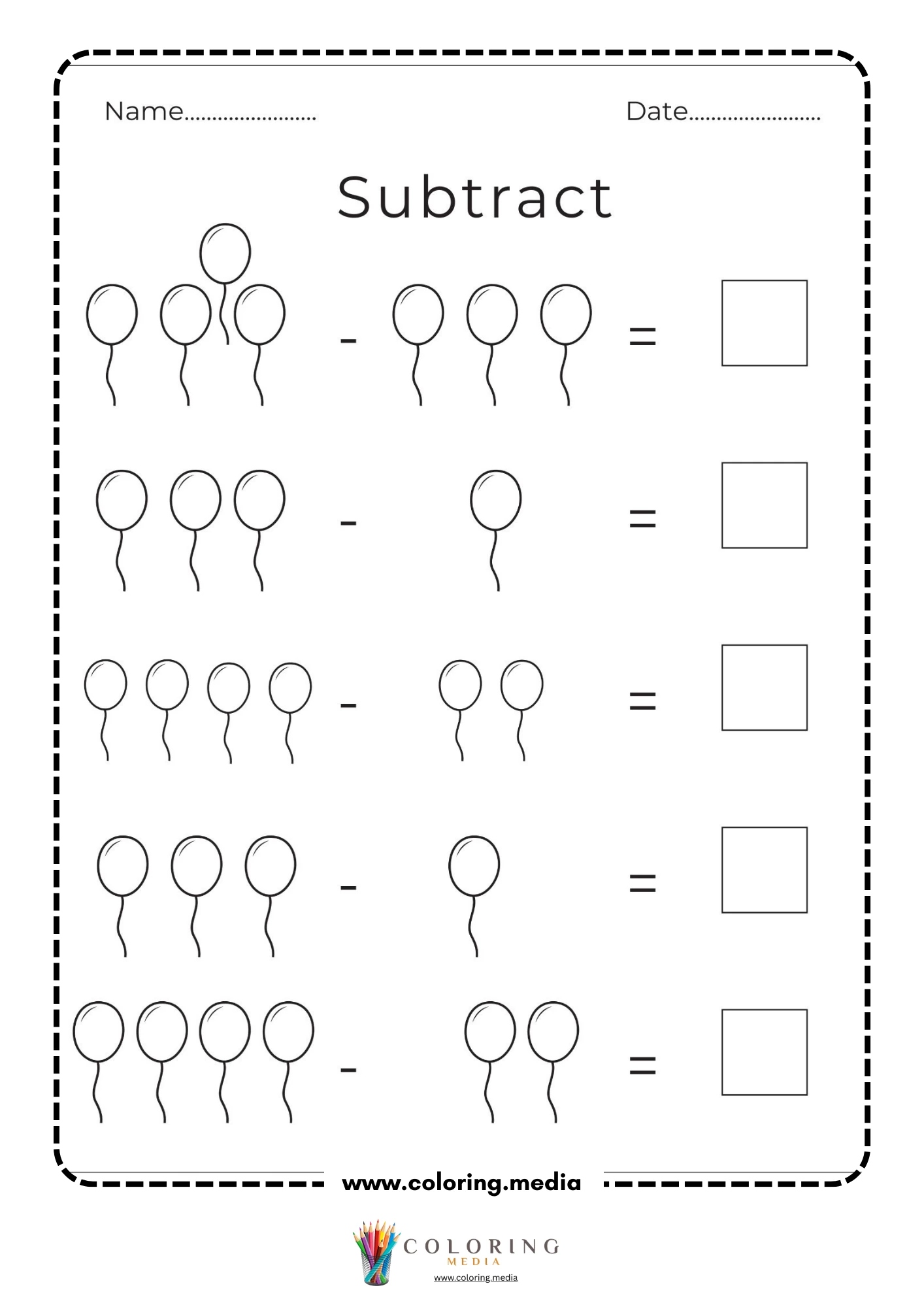
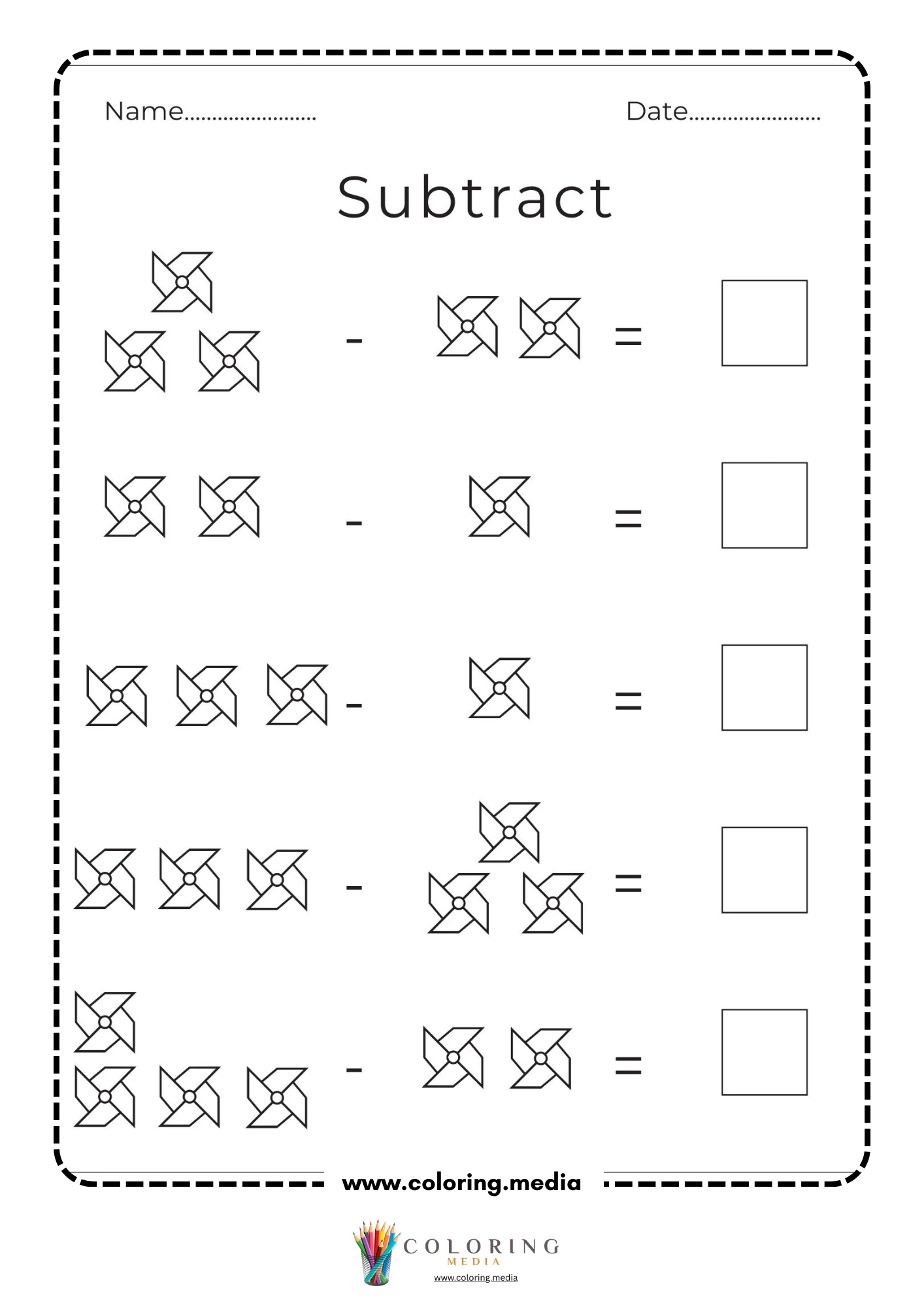
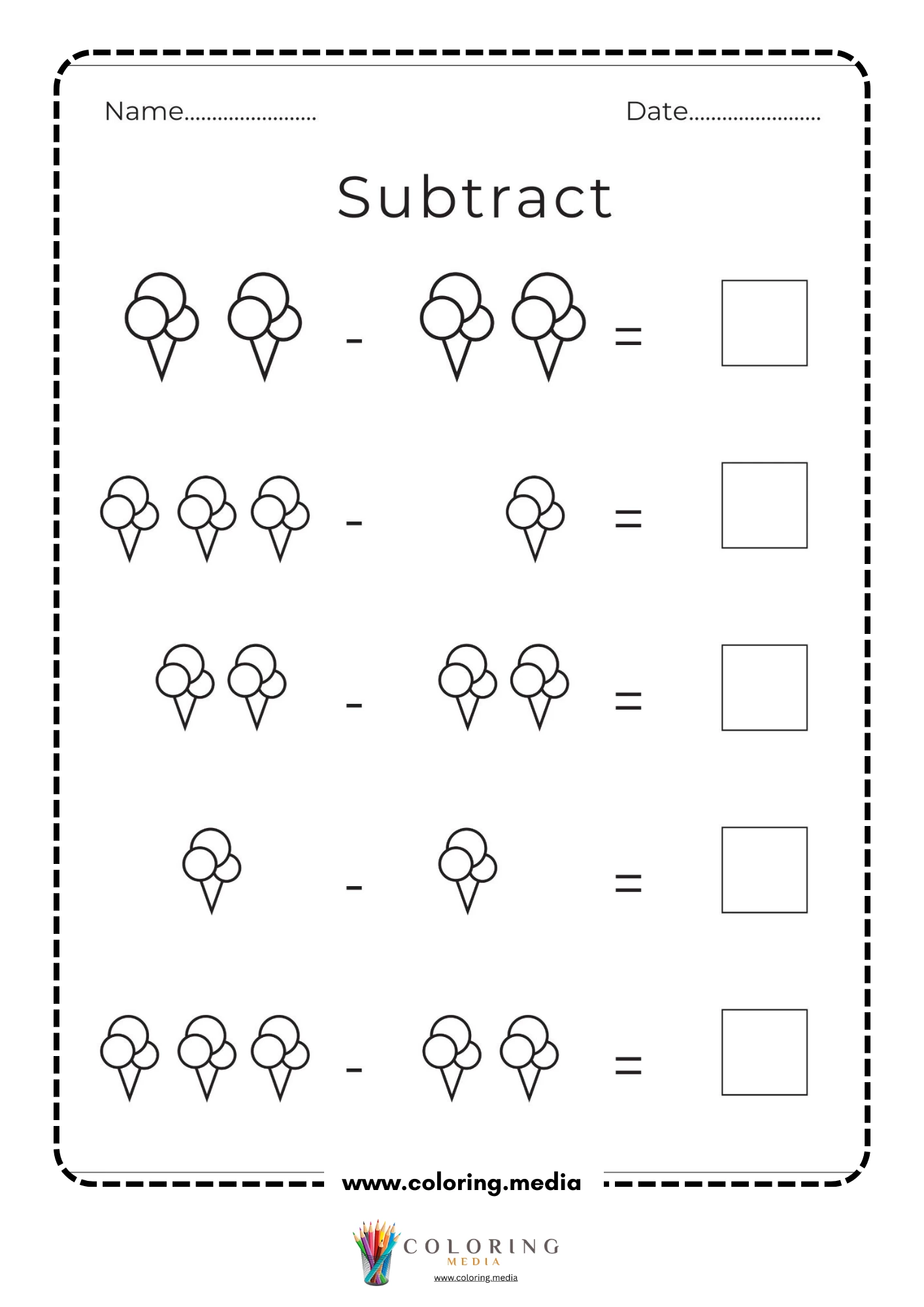
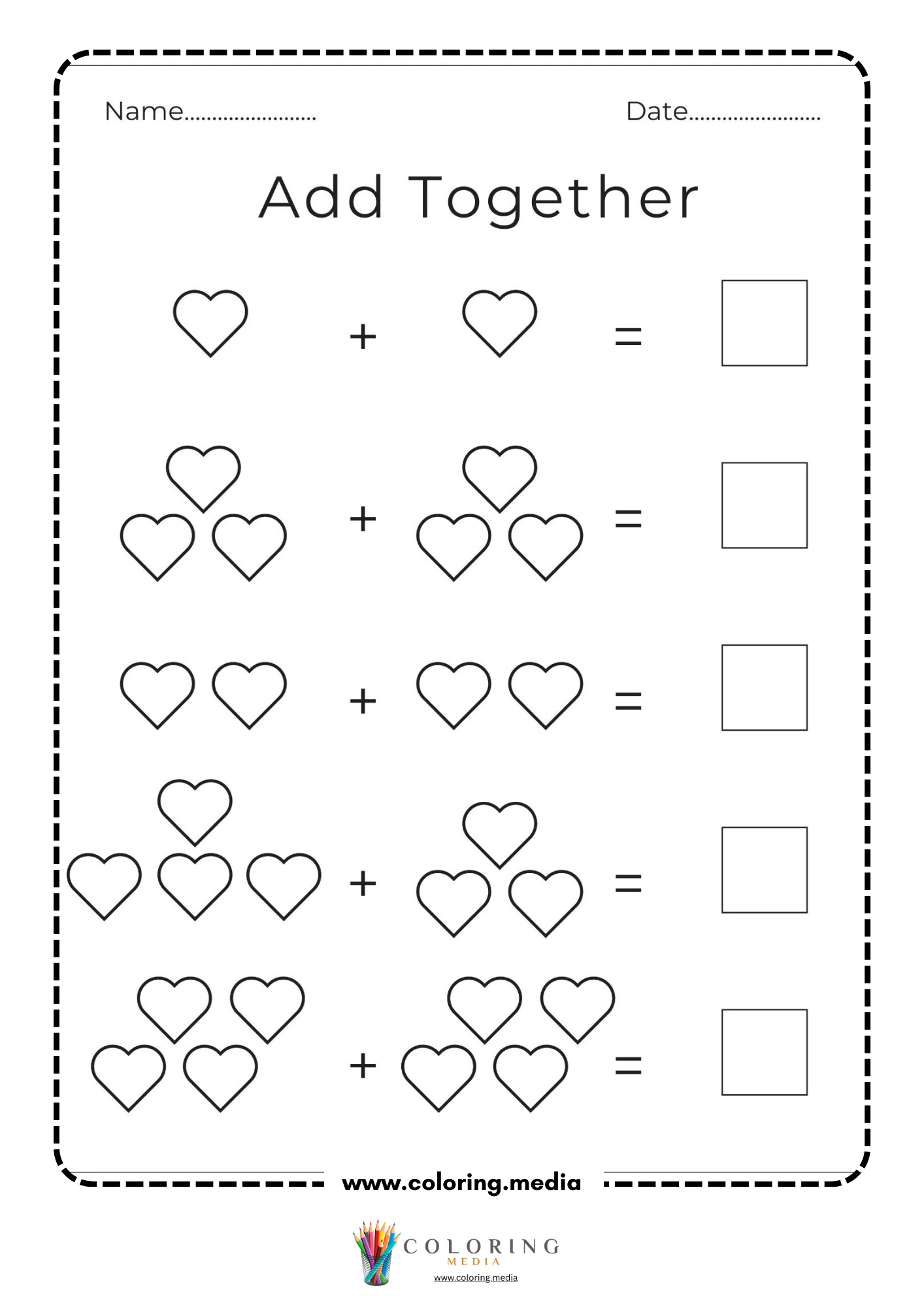
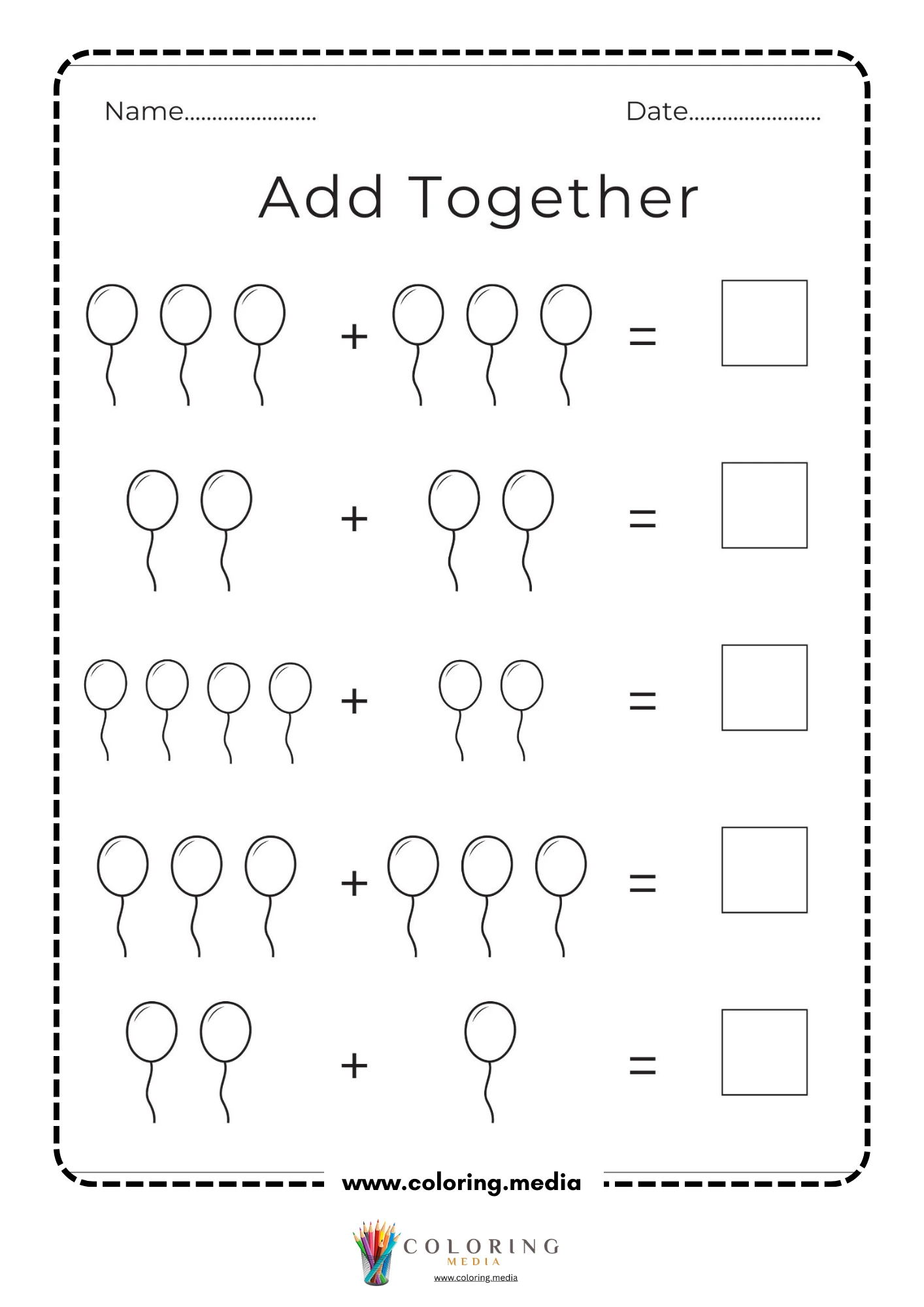
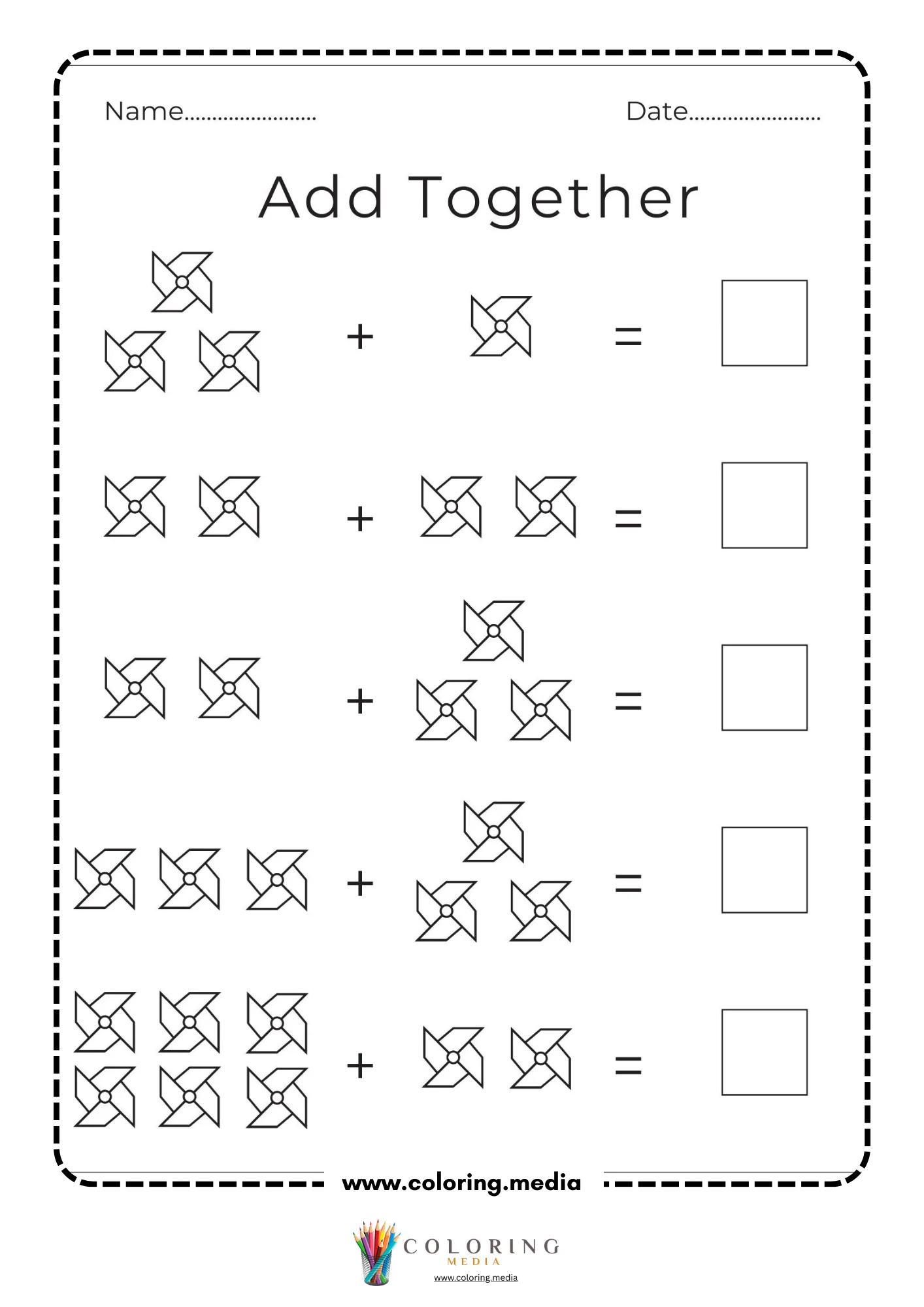
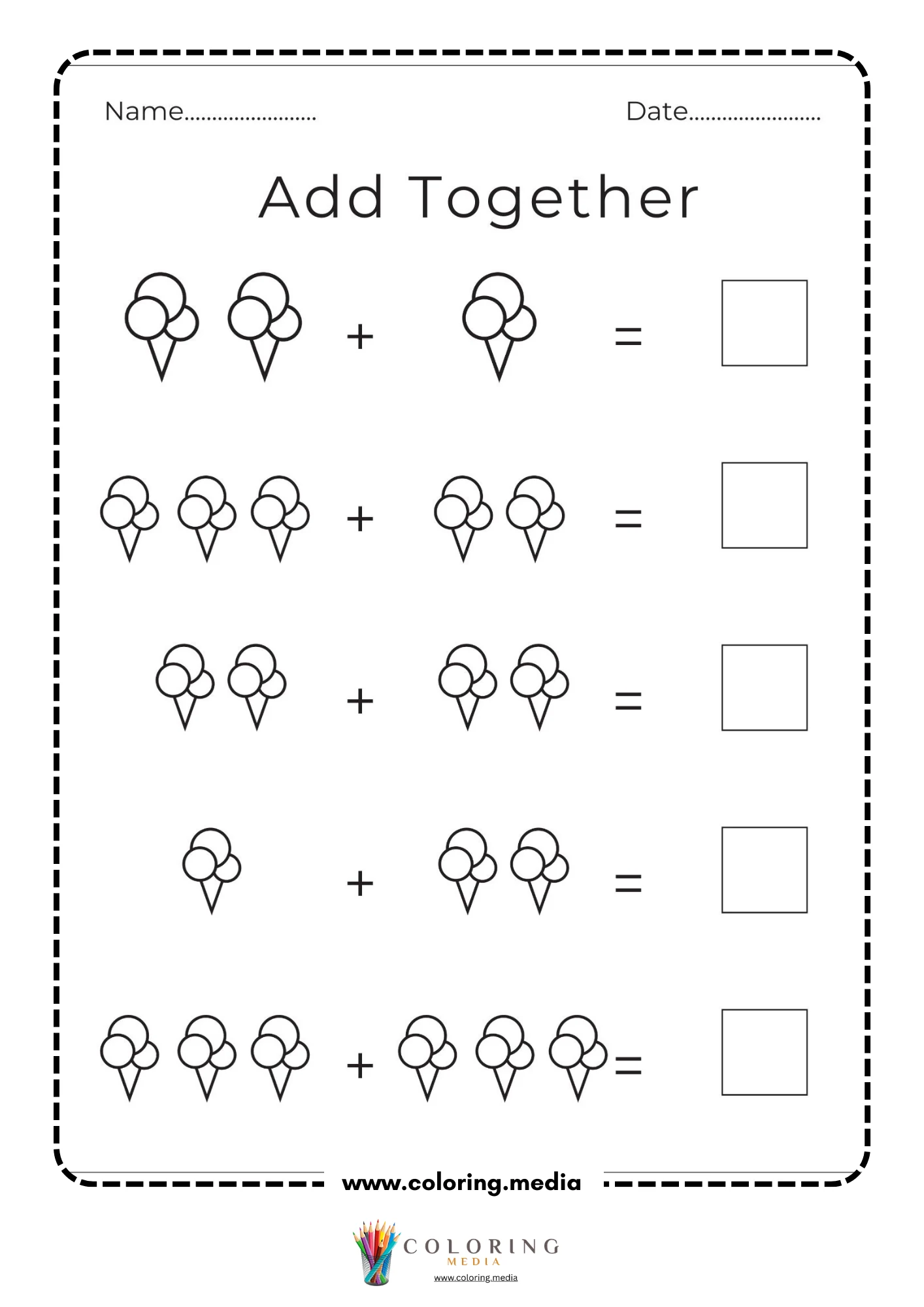
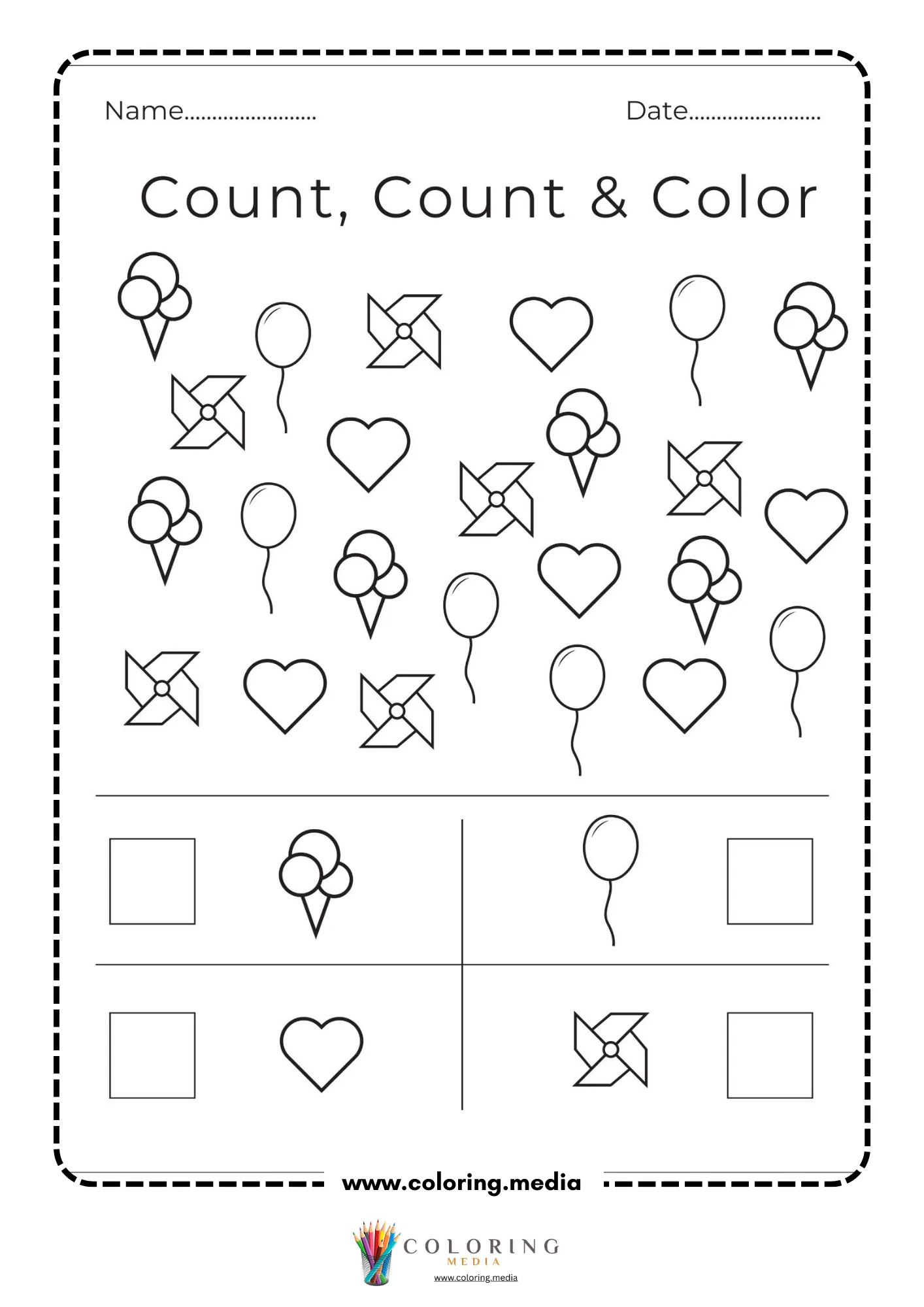
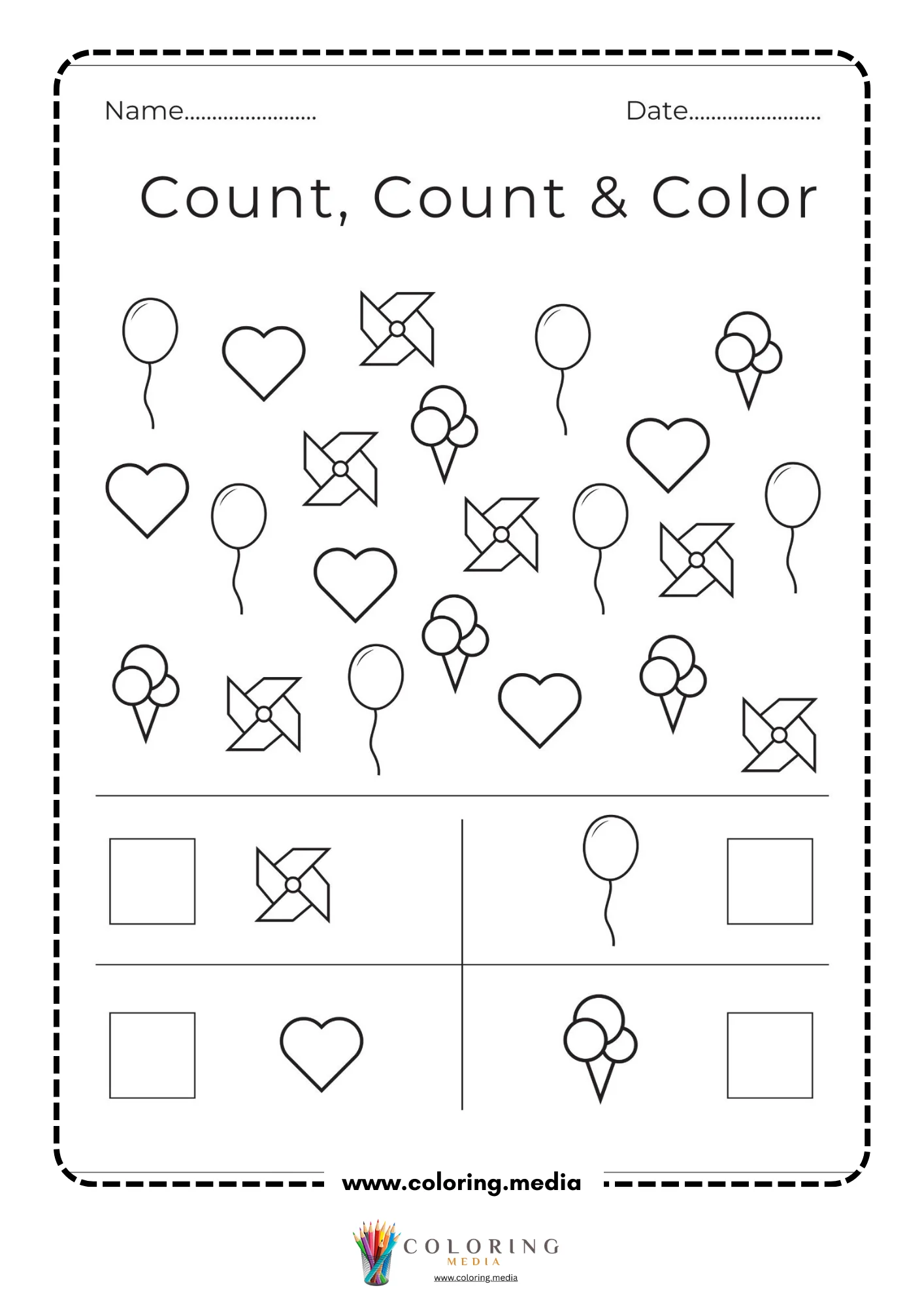
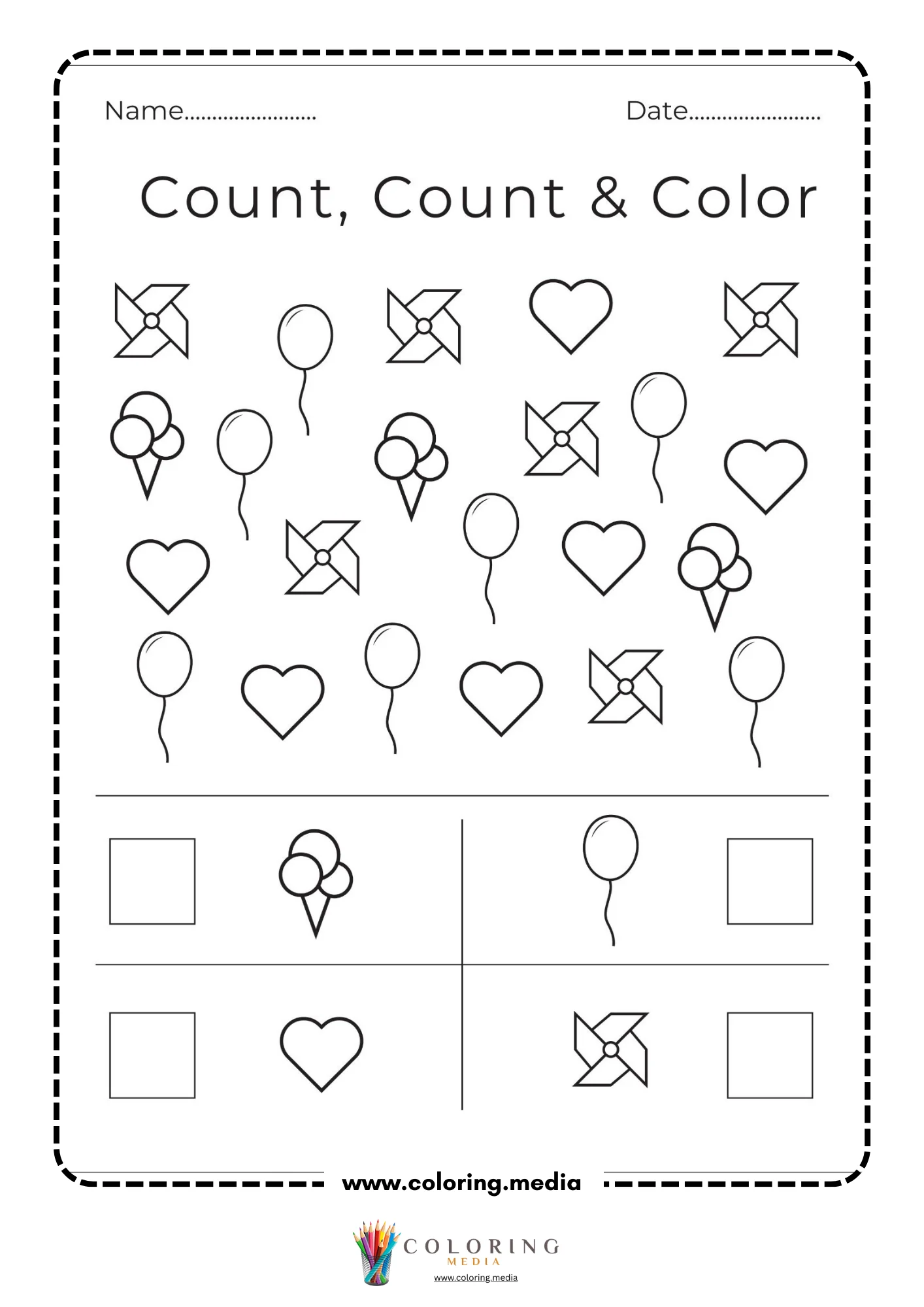
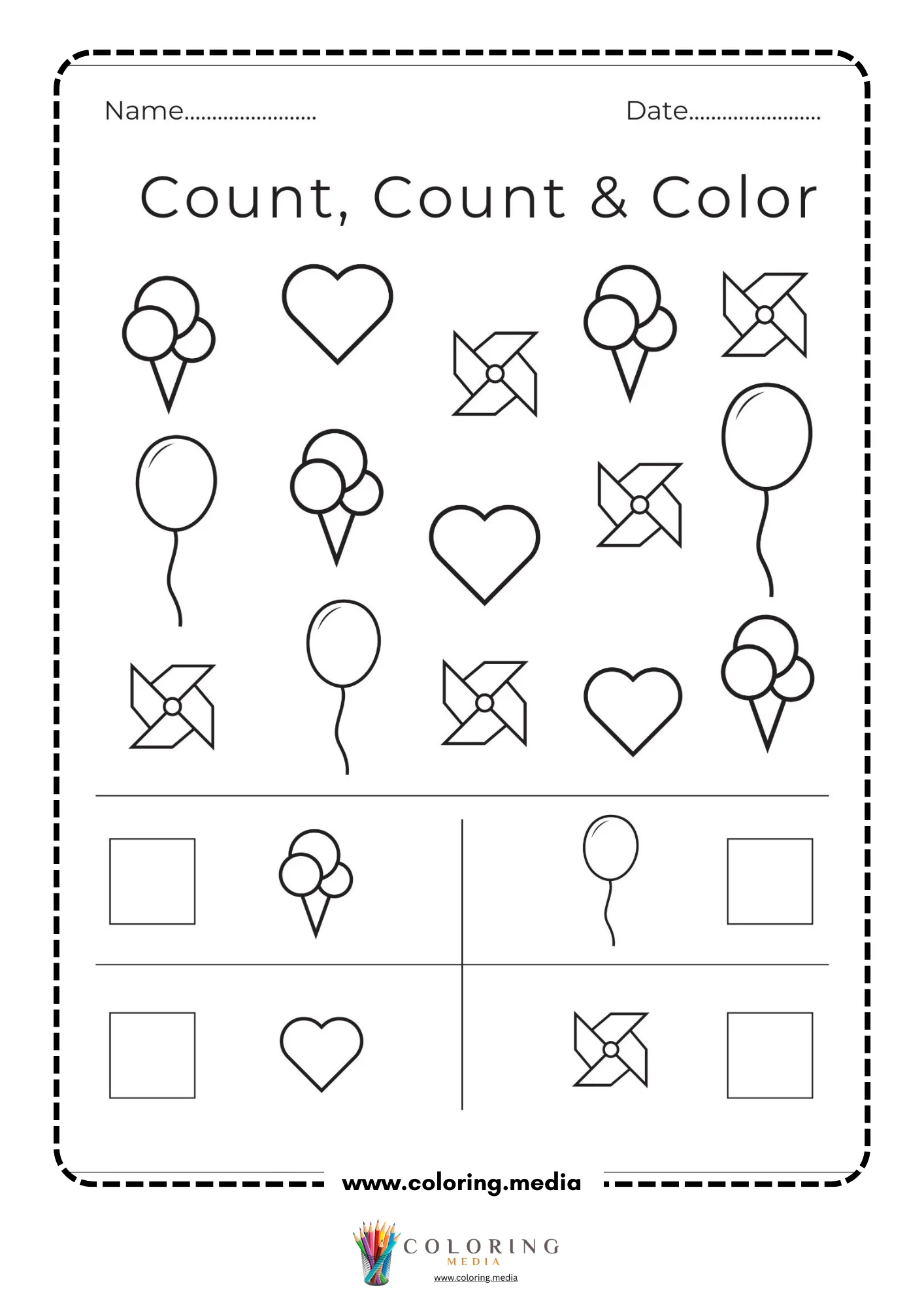
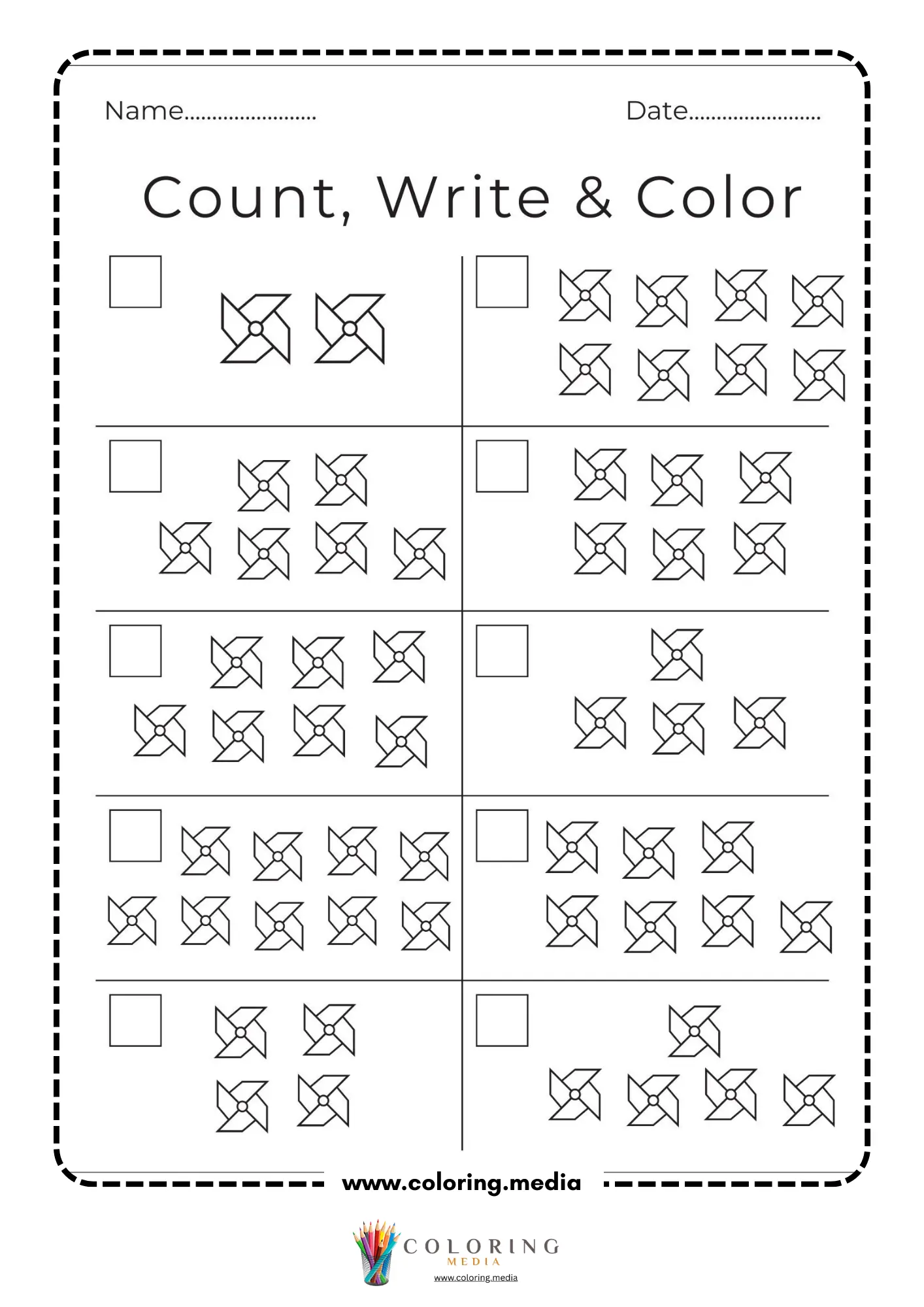
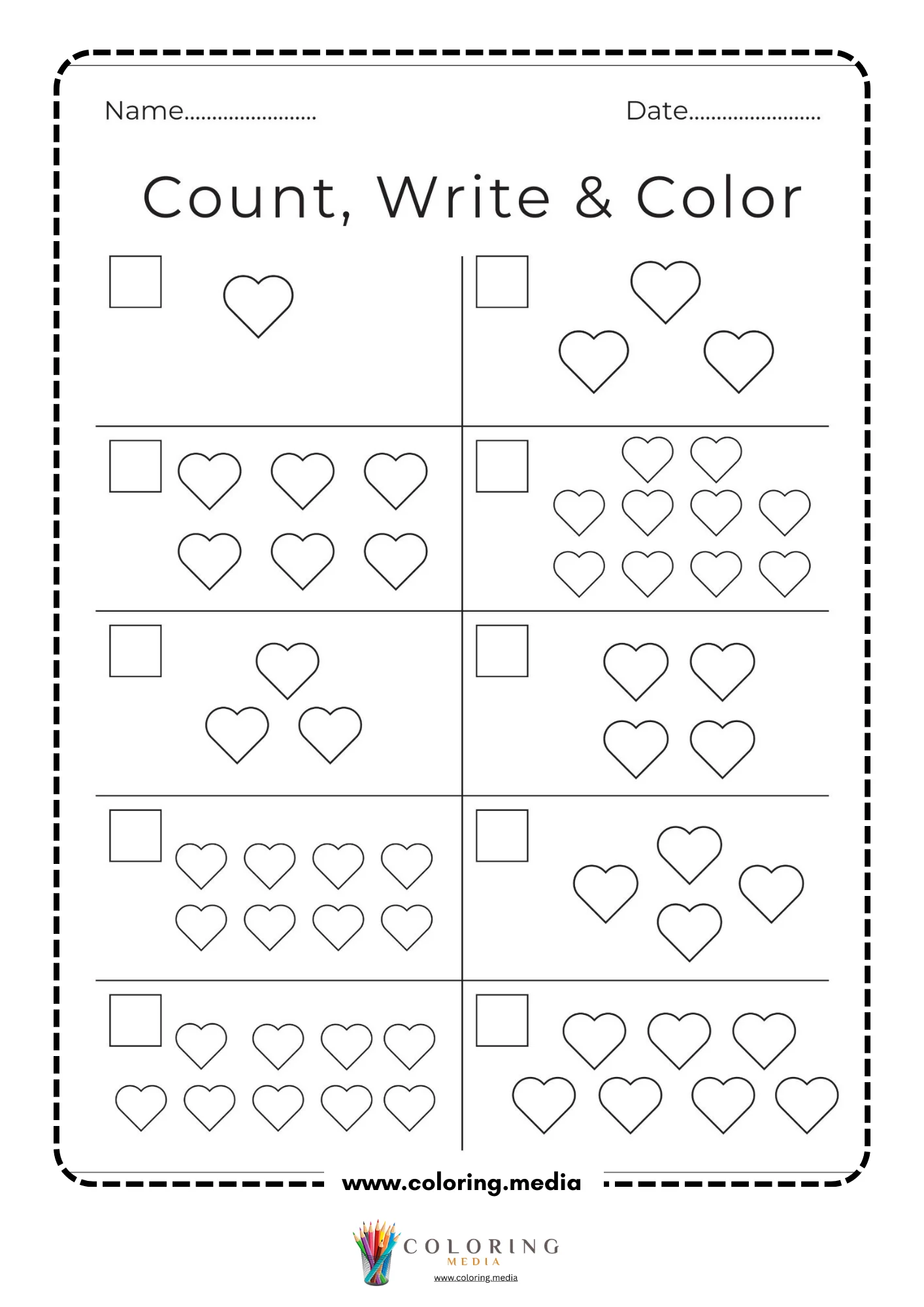
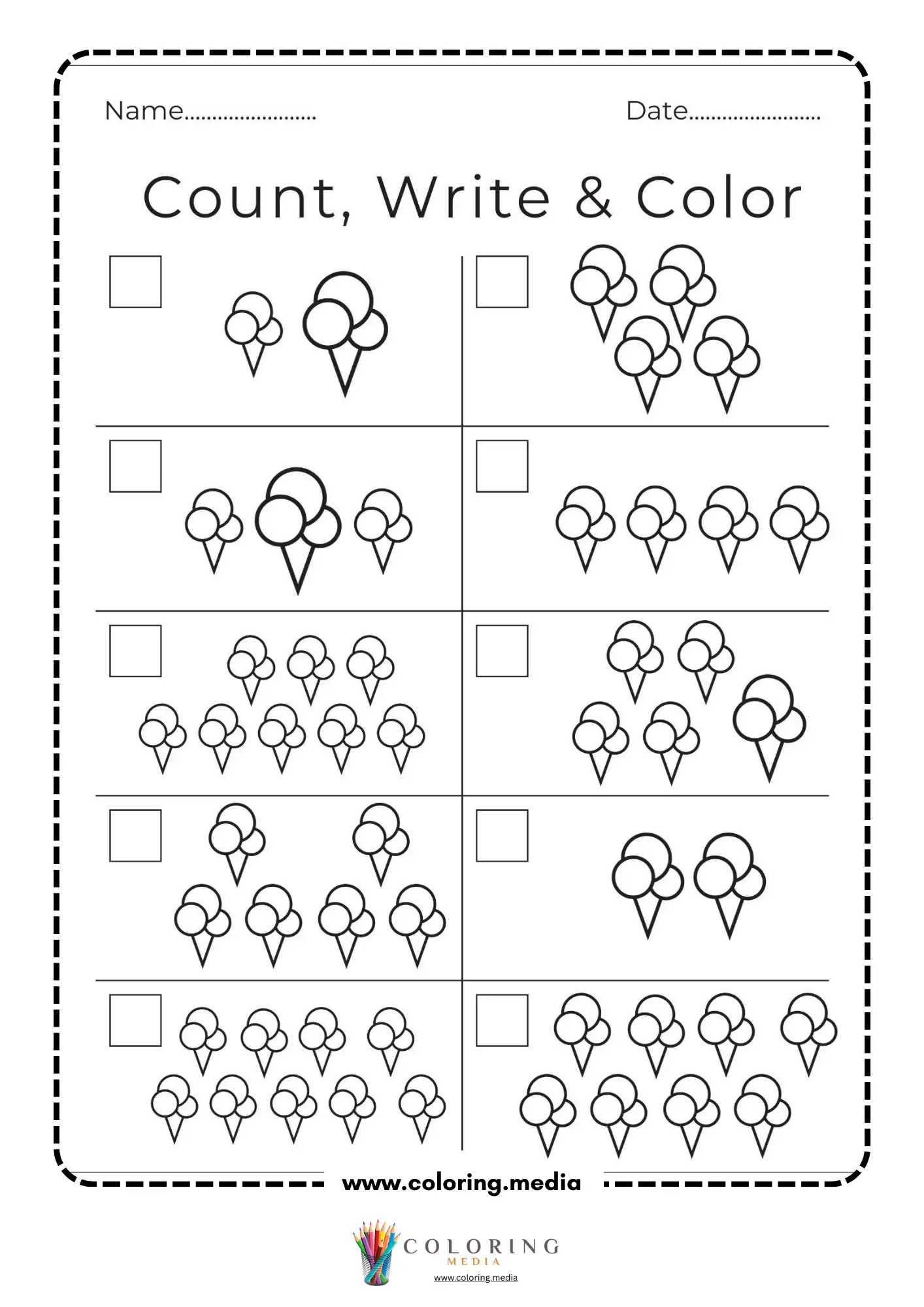
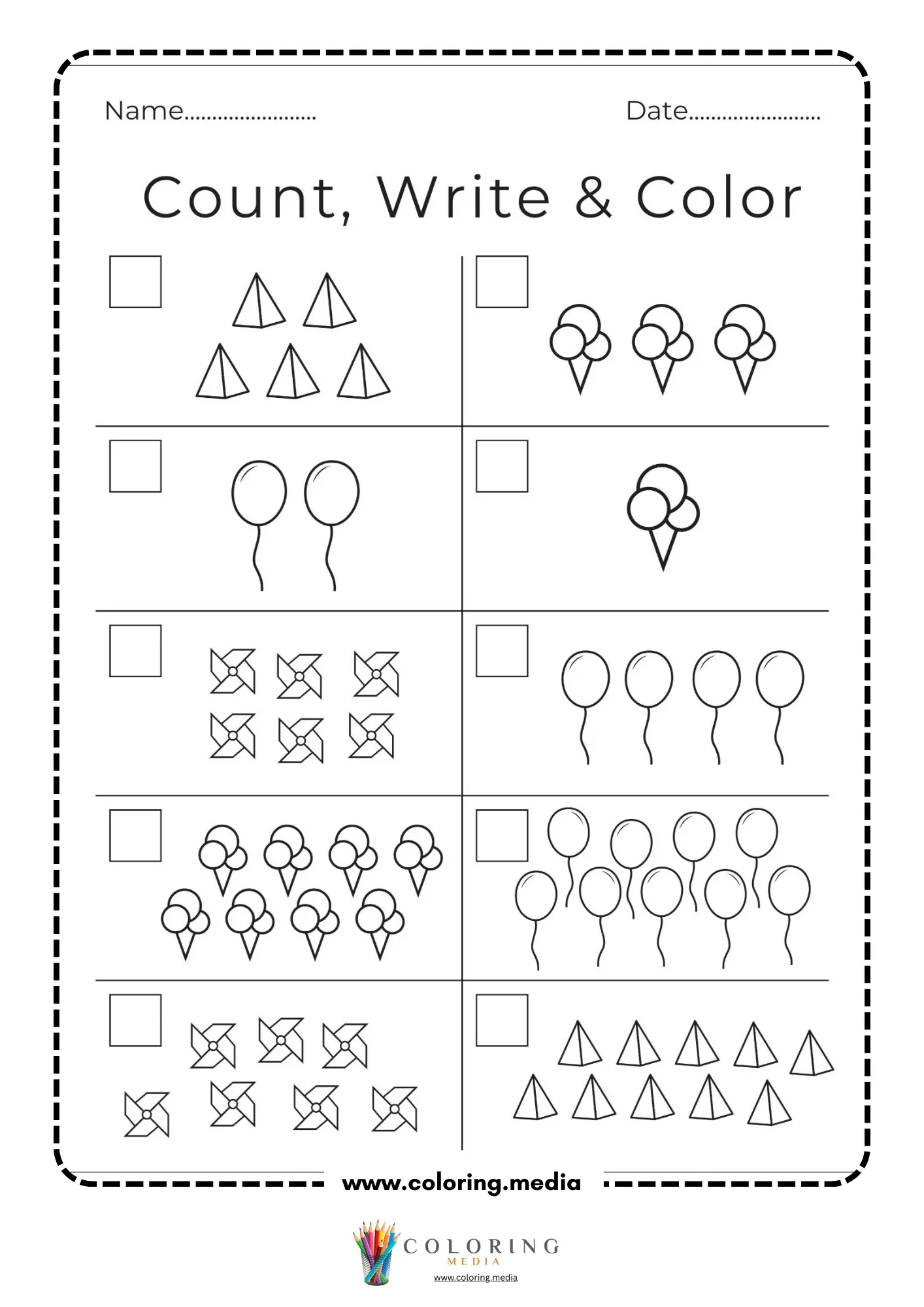
This collection includes 16 printable math activity coloring pages covering three skill areas: “Count, Count & Color” pages that combine picture counting with a coloring reward, “Count, Write & Color” pages that add numeral writing to the sequence, and “Add Together” and “Subtract” worksheets that use rows of cute icon illustrations — hearts, stars, flowers, and animals — as the operands. The variety of page types makes this set useful across preschool through early first grade without any one sheet being too easy or too hard for the target age. Pages print cleanly on standard US Letter or A4 paper at 100% scale.
Who Are These Math Activity Coloring Pages Best For?
The counting pages — where a child simply counts a set of illustrated icons and colors them — are accessible to preschoolers aged 4 and up who are building number recognition and one-to-one correspondence. The clear separation between object groups and the visual simplicity of each icon means a child does not need to read anything to participate; they can follow the structure of the page instinctively after a brief explanation.
The addition pages are best suited to kindergarteners who have been introduced to combining groups and are ready to see that process represented as a written equation. Seeing two drawn groups on the page and then writing the total in the answer box is the classic concrete-to-representational bridge that early math instruction is built on. The subtraction pages push into early first-grade territory, where children are beginning to understand that removing objects from a group changes the total. The cross-out method shown here is the standard physical model for subtraction before abstract fact memorization takes over.
In a classroom, this mixed set works well during a math center rotation where different ability groups can use different page types from the same resource. Homeschool families can use the full set in sequence as a self-paced progression from counting through subtraction over several weeks.
Interesting Math Facts to Share While Coloring
Counting is the oldest math skill humans have. Bones with tally marks carved into them have been found in Africa dating back over 40,000 years. Even before written language existed, people were keeping track of quantities — suggesting that counting came before almost every other form of symbolic communication.
Subtraction and addition are the same operation, just in reverse. If you know that 3 + 5 = 8, you automatically know that 8 − 5 = 3 and 8 − 3 = 5. This relationship — called a fact family — is one of the most useful shortcuts in early arithmetic, and it is one reason teachers spend so much time on addition before introducing subtraction formally.
Zero was not always a number. Ancient Romans had no symbol for zero, which made their arithmetic surprisingly clunky — try doing long division in Roman numerals. The concept of zero as an actual number (not just an absence) was developed independently in India and Mesoamerica, and zero reached Europe only around the 12th century.
Your brain does addition and counting in slightly different ways. Brain imaging studies show that counting objects activates visual-spatial areas, while retrieving a memorized fact like “6 + 3 = 9” activates language-related areas. This is why repeated practice matters — you are literally shifting the work from one brain region to another as facts become automatic.
Creative Math Activity Coloring Ideas
Start with Your Favorite Page Type Let the child choose whether to start with counting, adding, or subtracting on a given day. Ownership over the choice increases buy-in without compromising the learning goal.
Use Fingers as a Check For the addition pages, have the child hold up fingers for the first group, then the second, then count all the fingers together before writing the answer. The page shows the abstract version; the fingers provide the concrete backup.
Act Out the Subtraction Place small objects — blocks, coins, crayons — on the table matching the top row of a subtraction page. Act out removing the crossed-out amount before writing the answer. Making the operation physical first clarifies what the cross-out symbol means.
Color by Answer On the counting pages, assign a color to each possible total (1-5 = red, 6-10 = blue, etc.) and have the child color the icons according to the rule. This turns counting into a color-coding exercise that reveals a pattern across the page.
Progressive Challenge Work through the pages in order of type: all counting pages first, then all addition, then all subtraction. Each transition is a natural leveling-up moment that a child can feel and take pride in.
Oral Narration After completing a subtraction page, ask the child to tell the story behind one of the equations in words: “There were seven stars. We took away three. Now there are four.” Translating the visual into language cements understanding more deeply than silent coloring alone.
Partner Work Two children work on the same page simultaneously. When both finish, they compare answers. If there is a disagreement, they work through the problem together rather than asking an adult. The discussion itself is where real learning happens.
How to Print These Math Activity Coloring Pages
Download any page as a PDF and print at 100% scale on US Letter or A4 paper. The icon illustrations are sized to work well with crayons or colored pencils, and the answer boxes are large enough for young handwriting without cramping. Standard copy paper is fine; grayscale printing produces clear, high-contrast pages since the designs are pure black-and-white line art.
Explore More Math Coloring Pages
If you enjoyed these pages, you may also like:
Addition Math Coloring Pages
Subtraction Math Coloring Pages
Counting Fruits Coloring Pages
Simple Fraction Coloring Pages
Clock Time Coloring Pages