
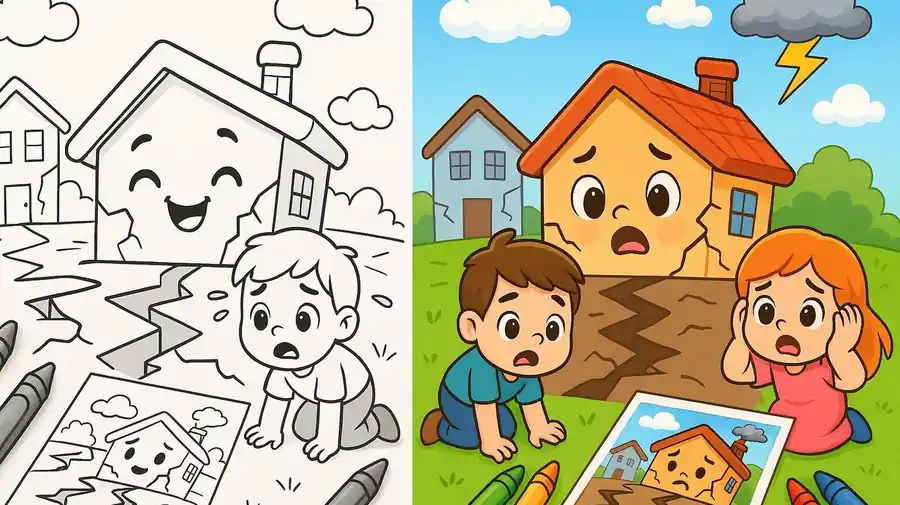
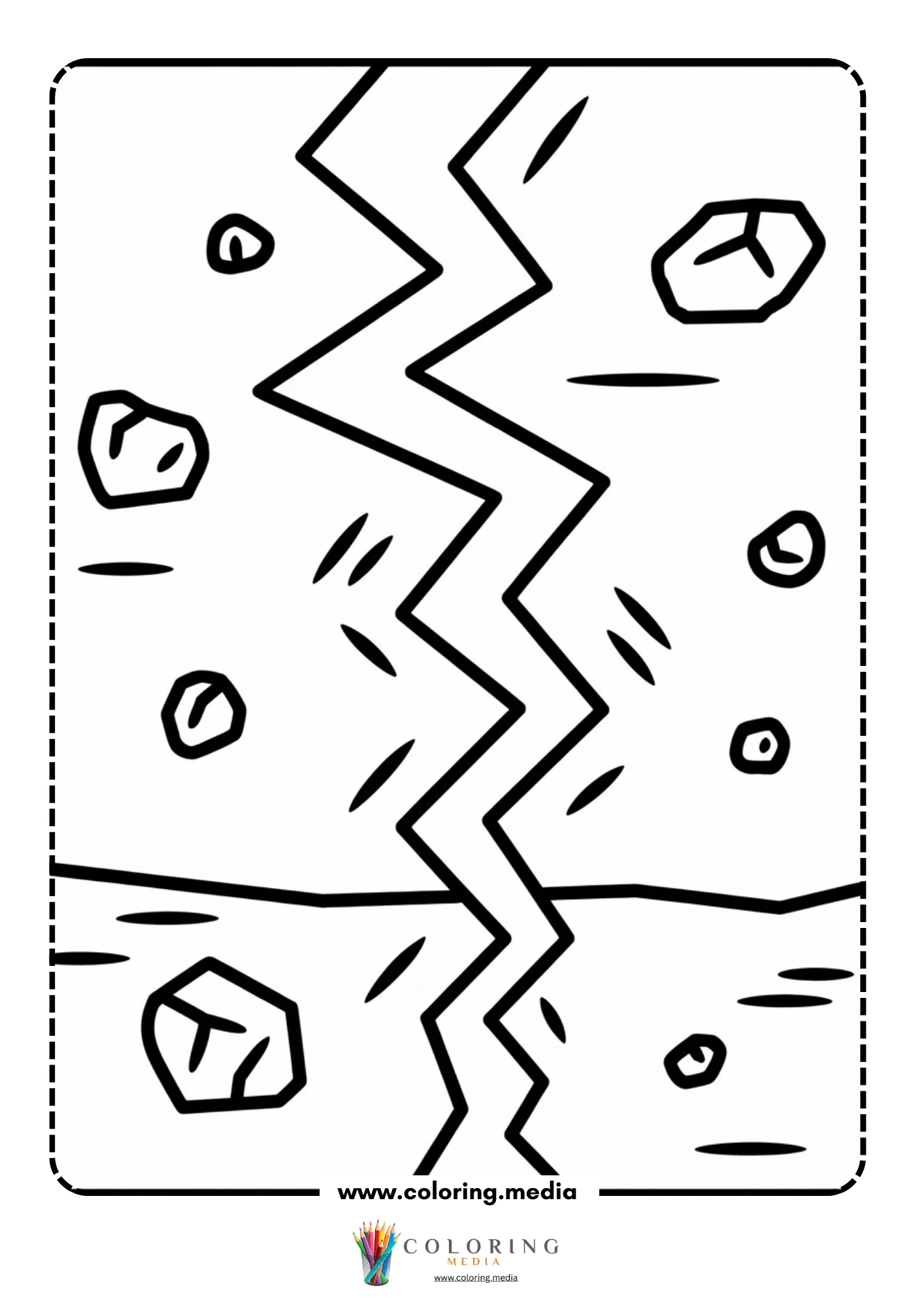
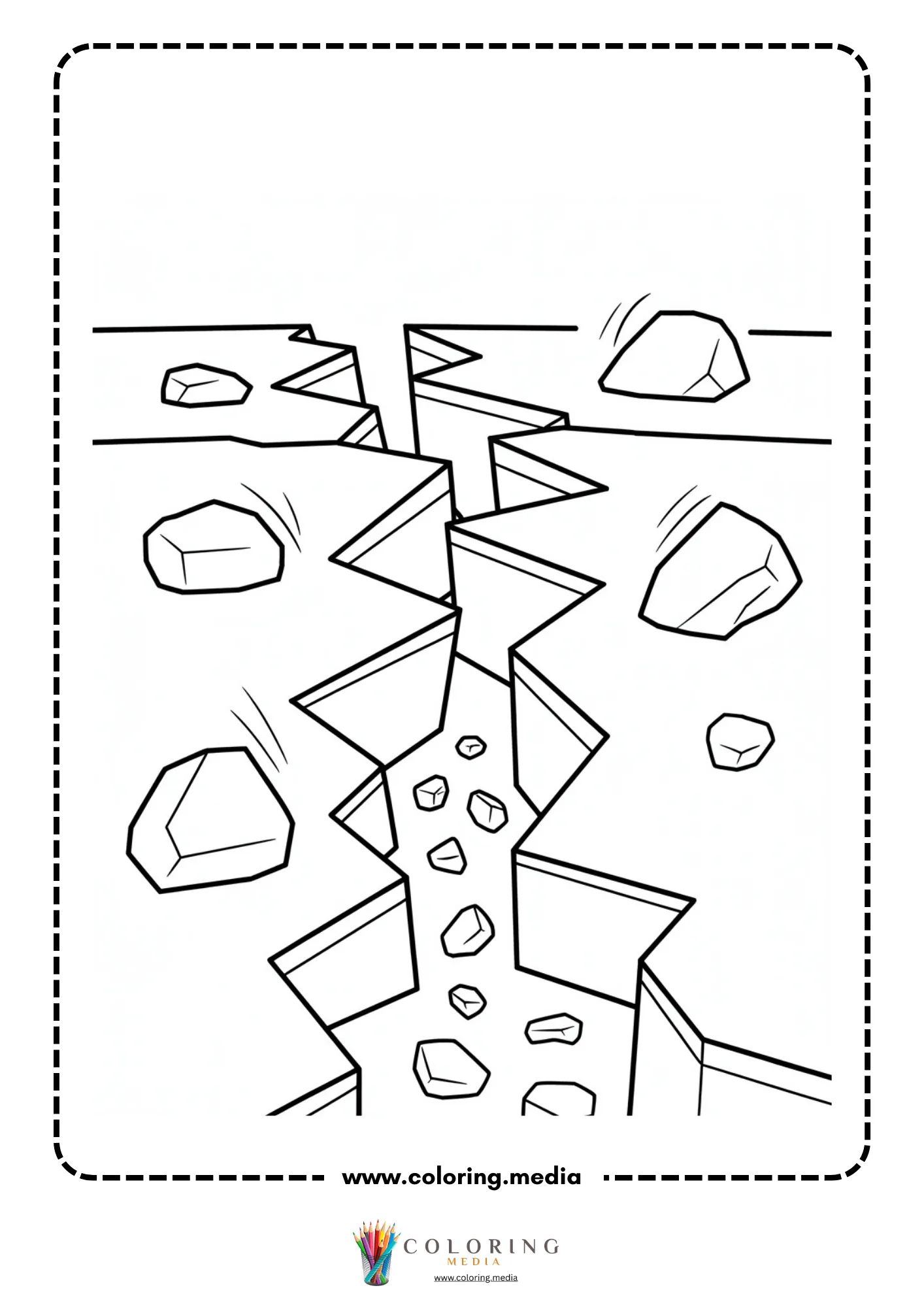
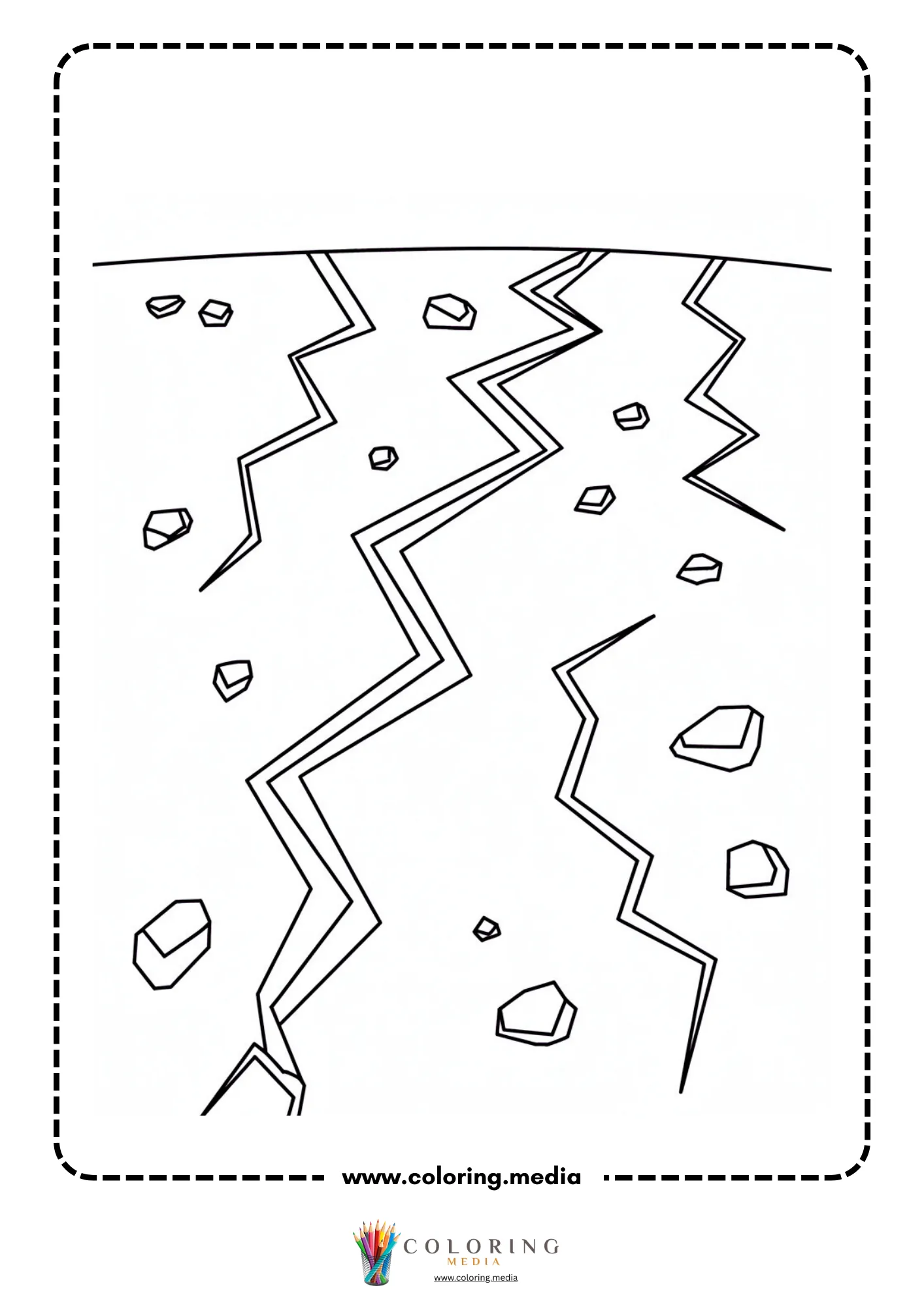
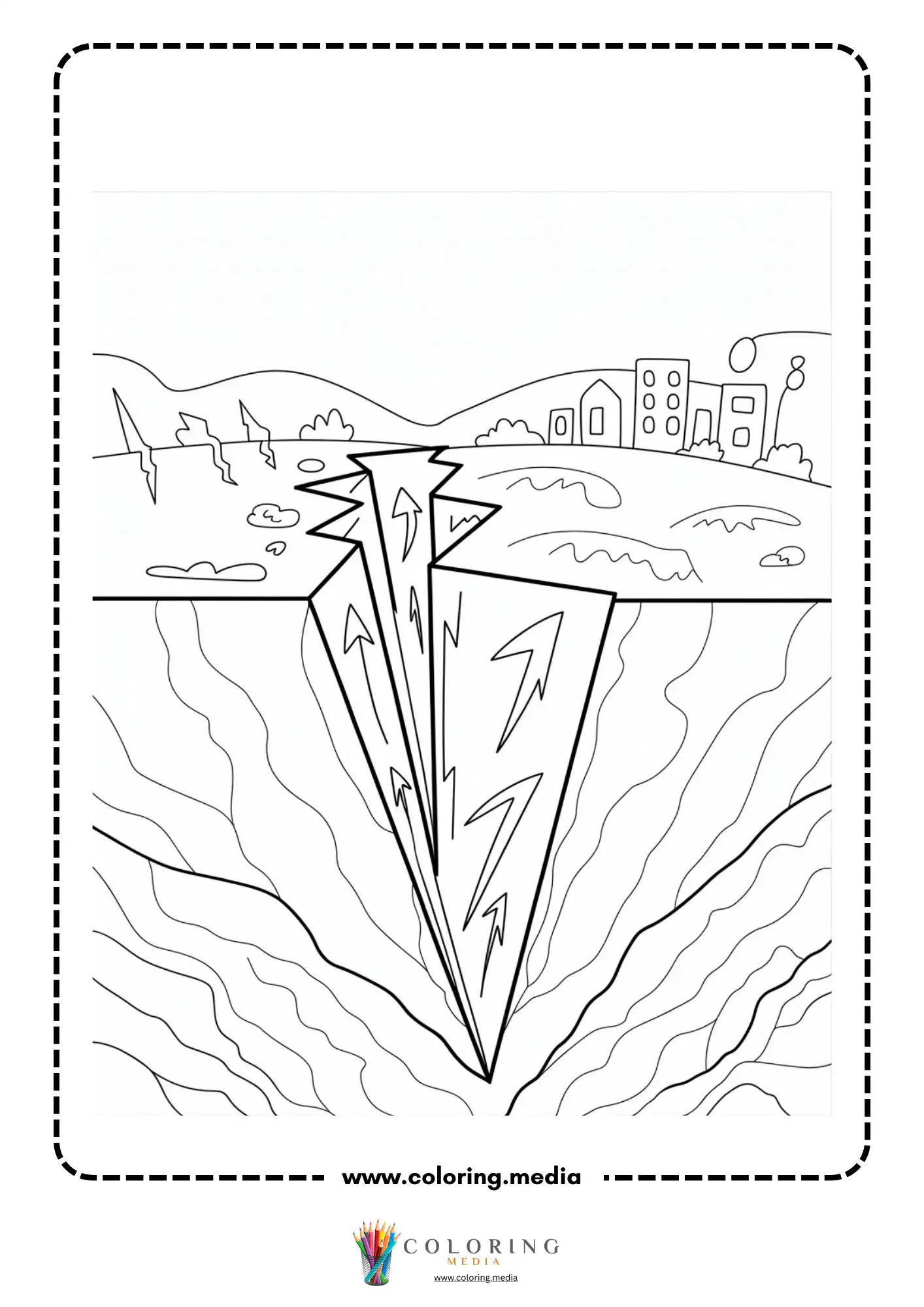
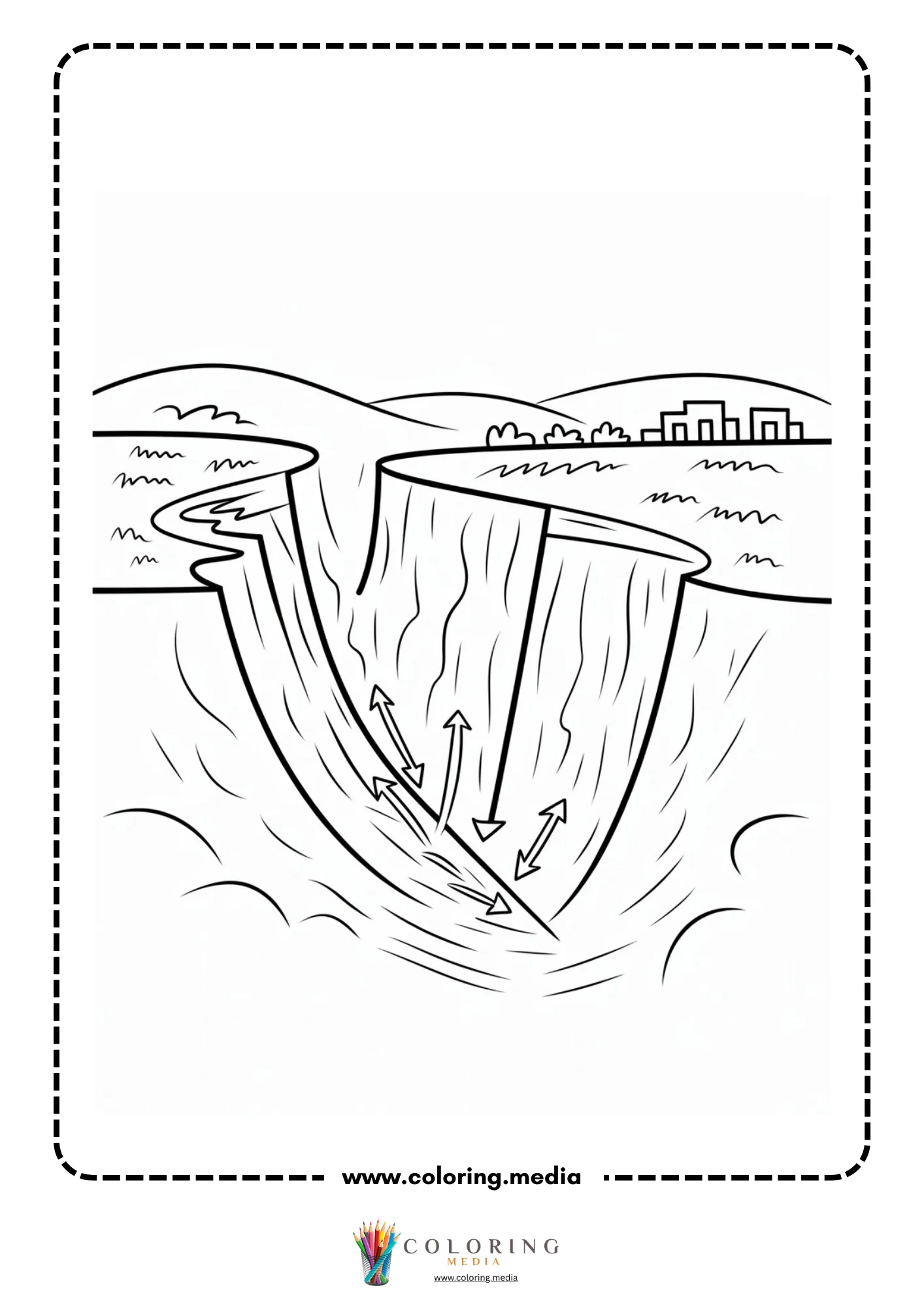
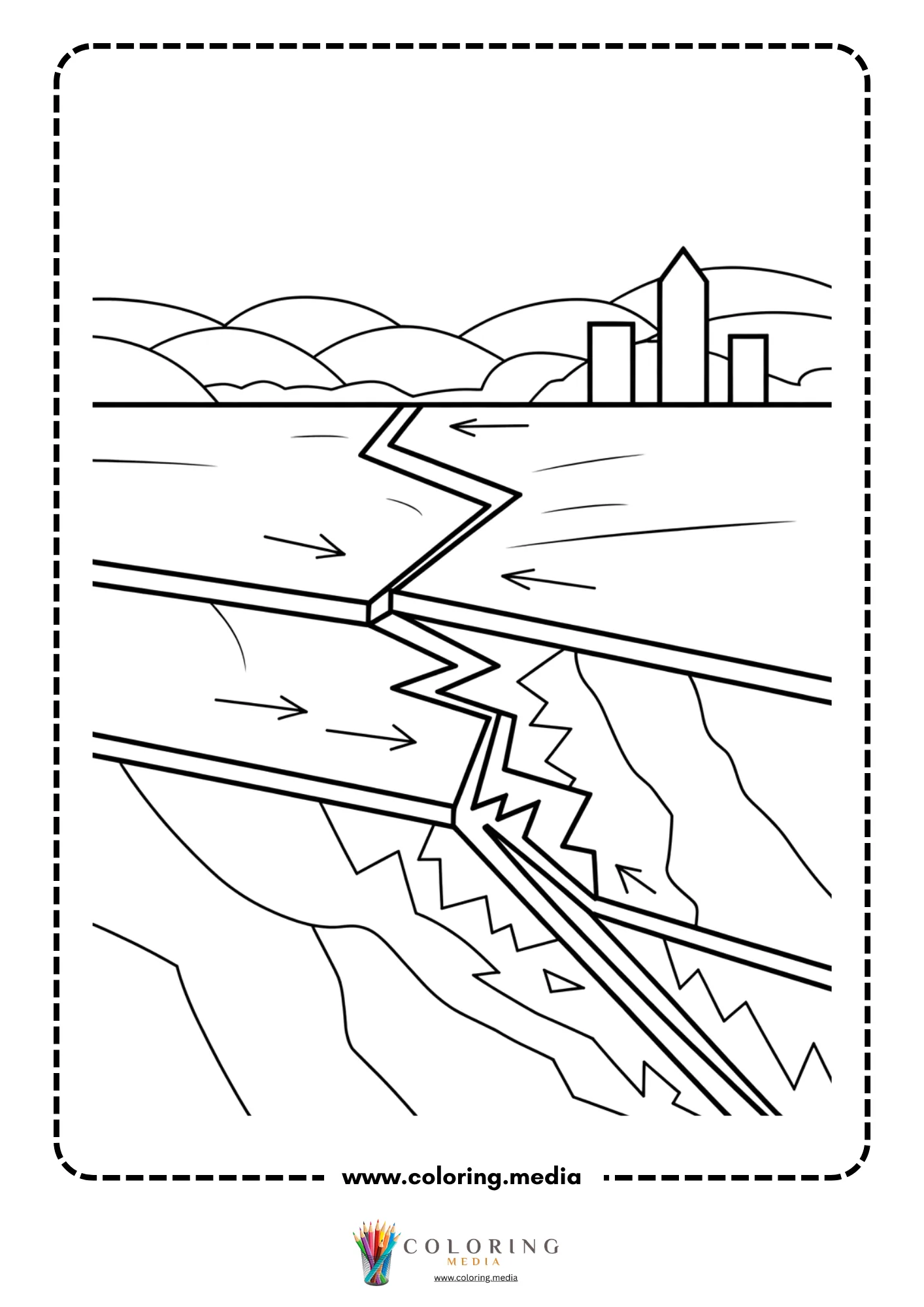
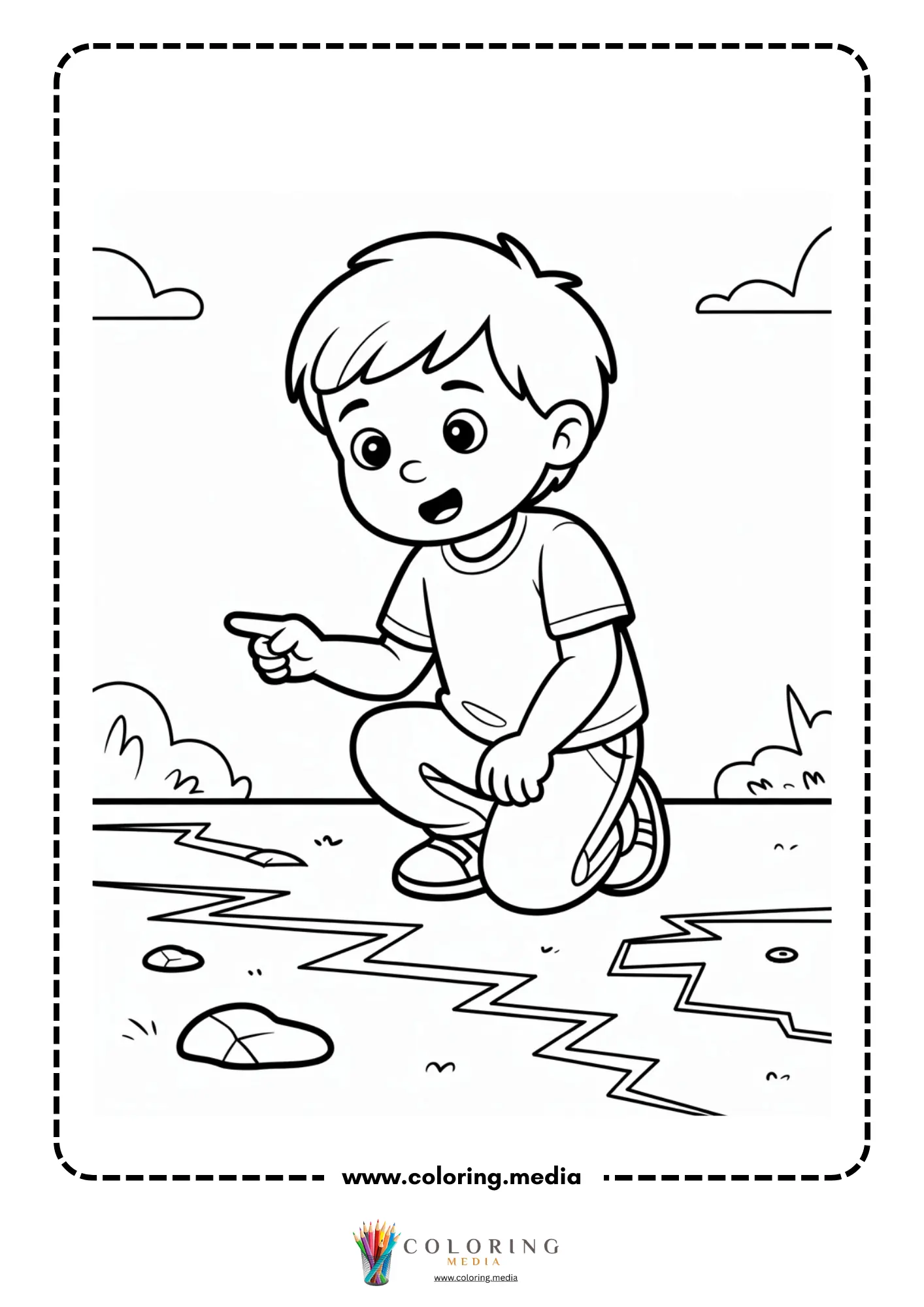
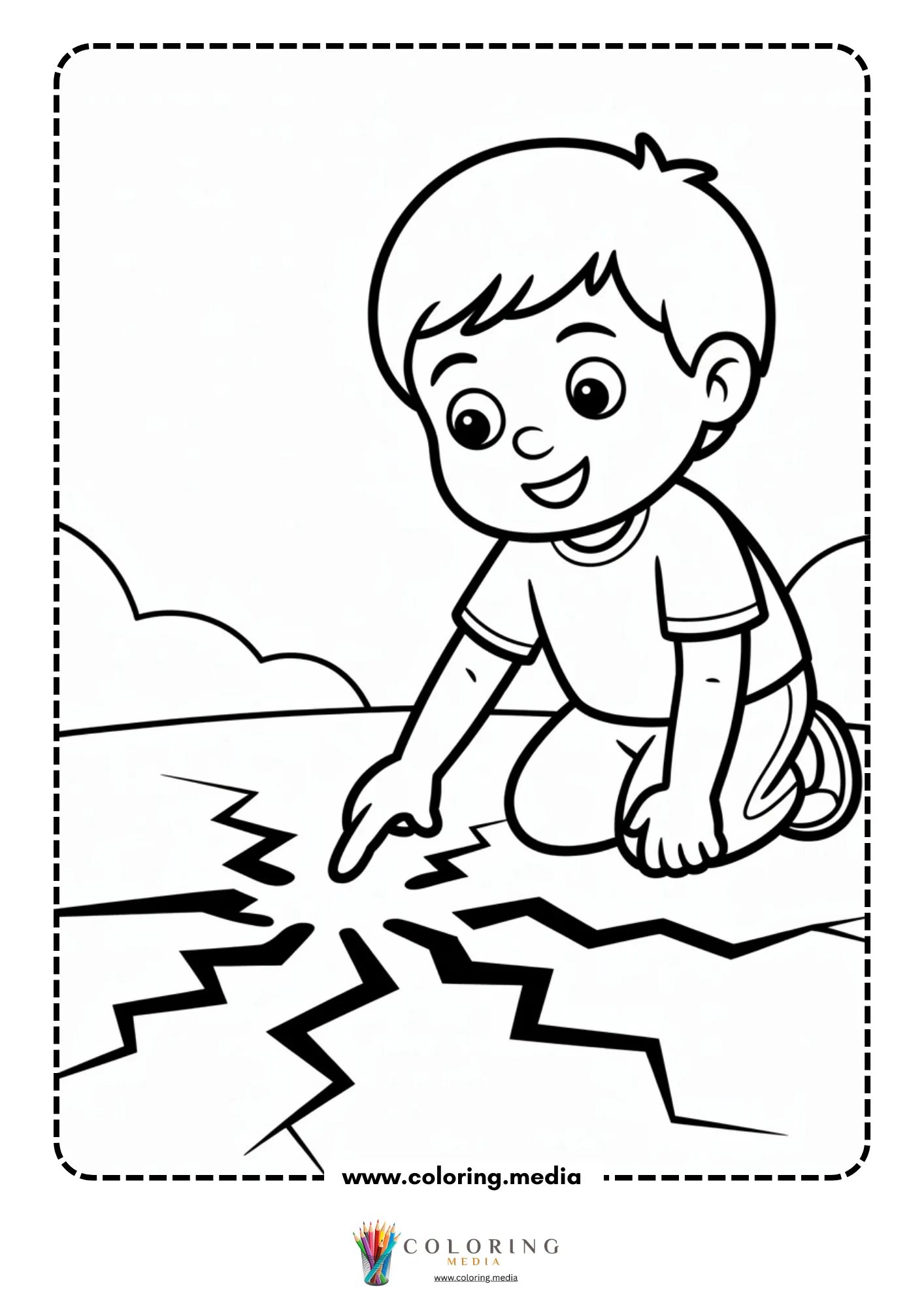
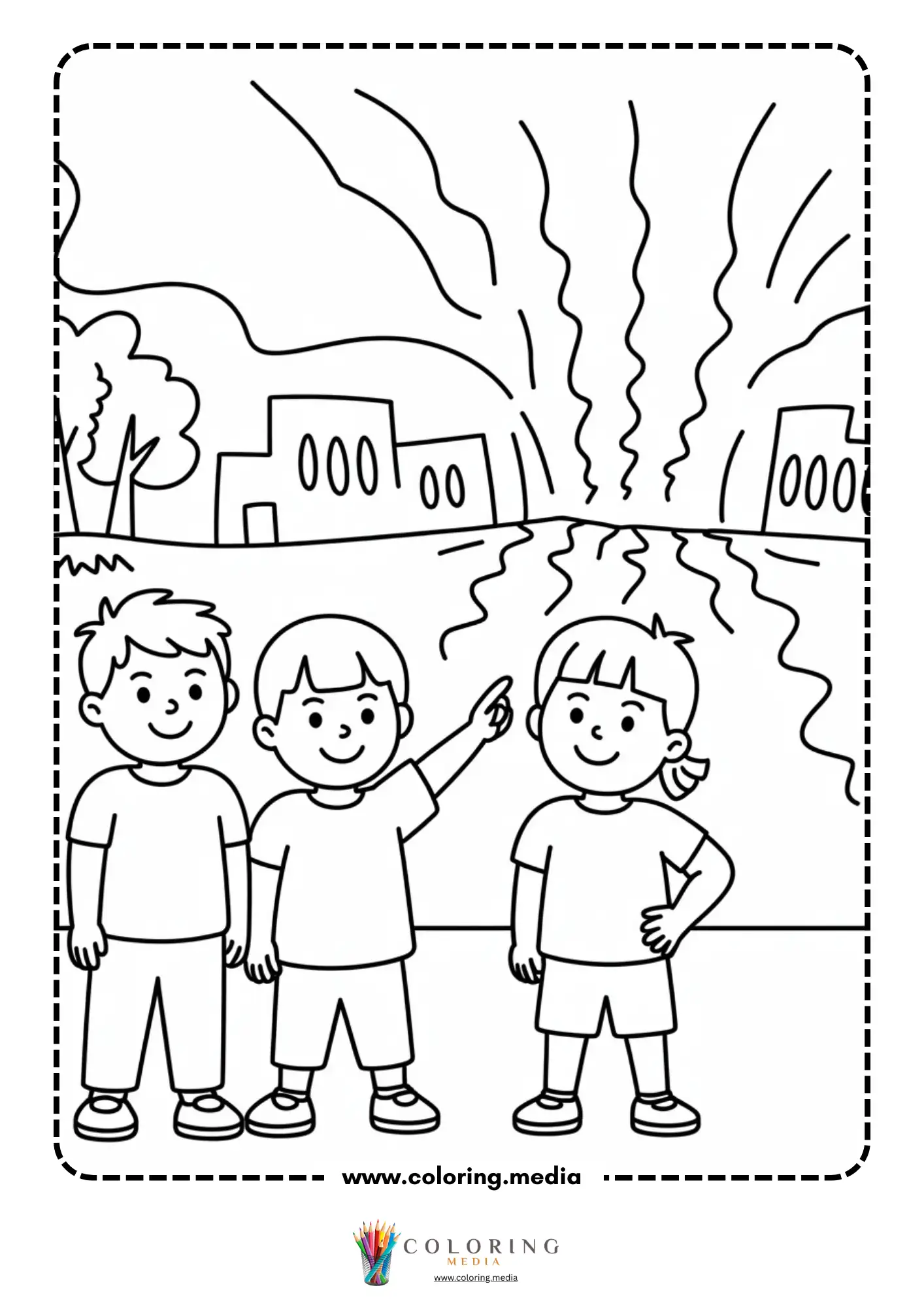
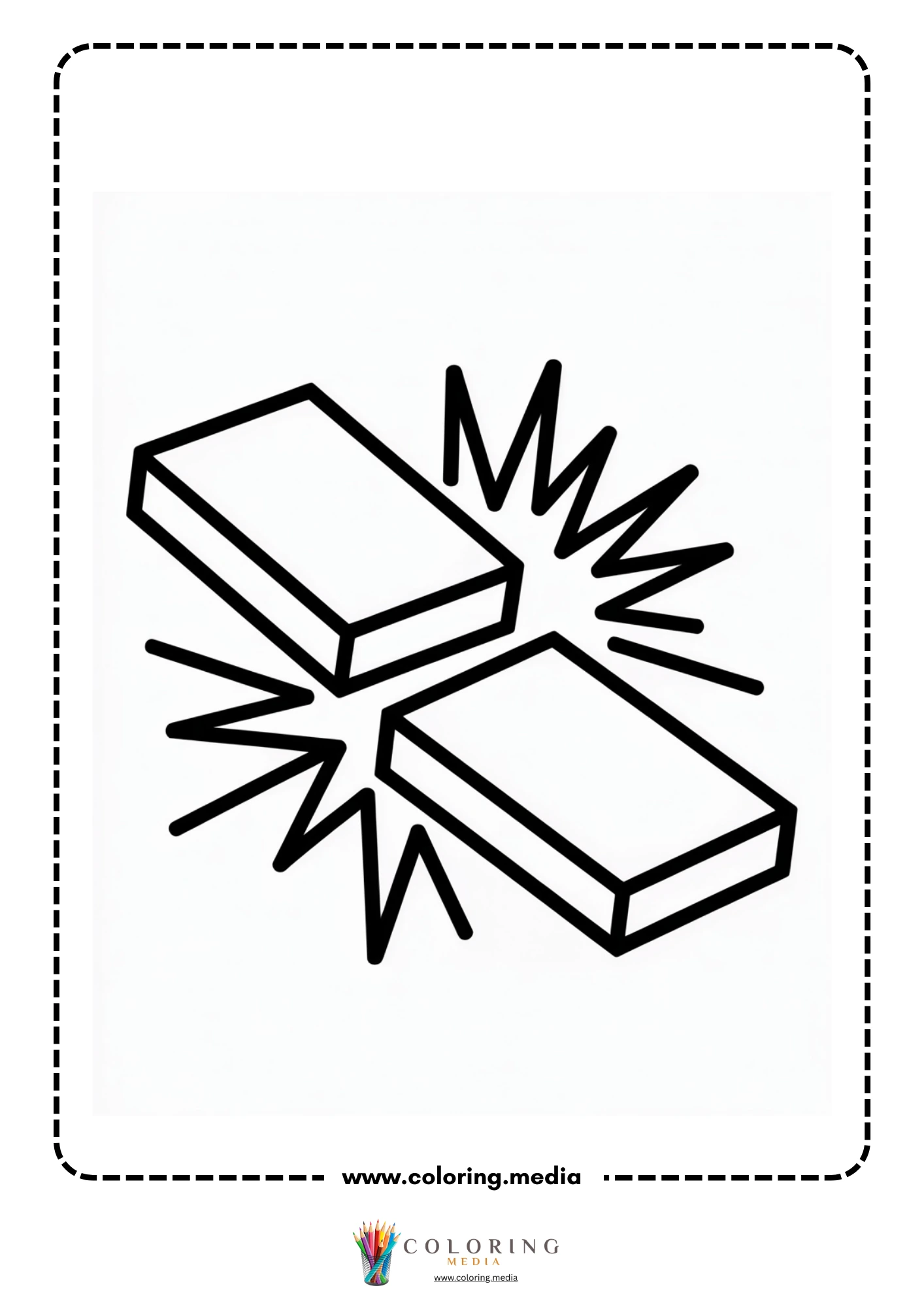
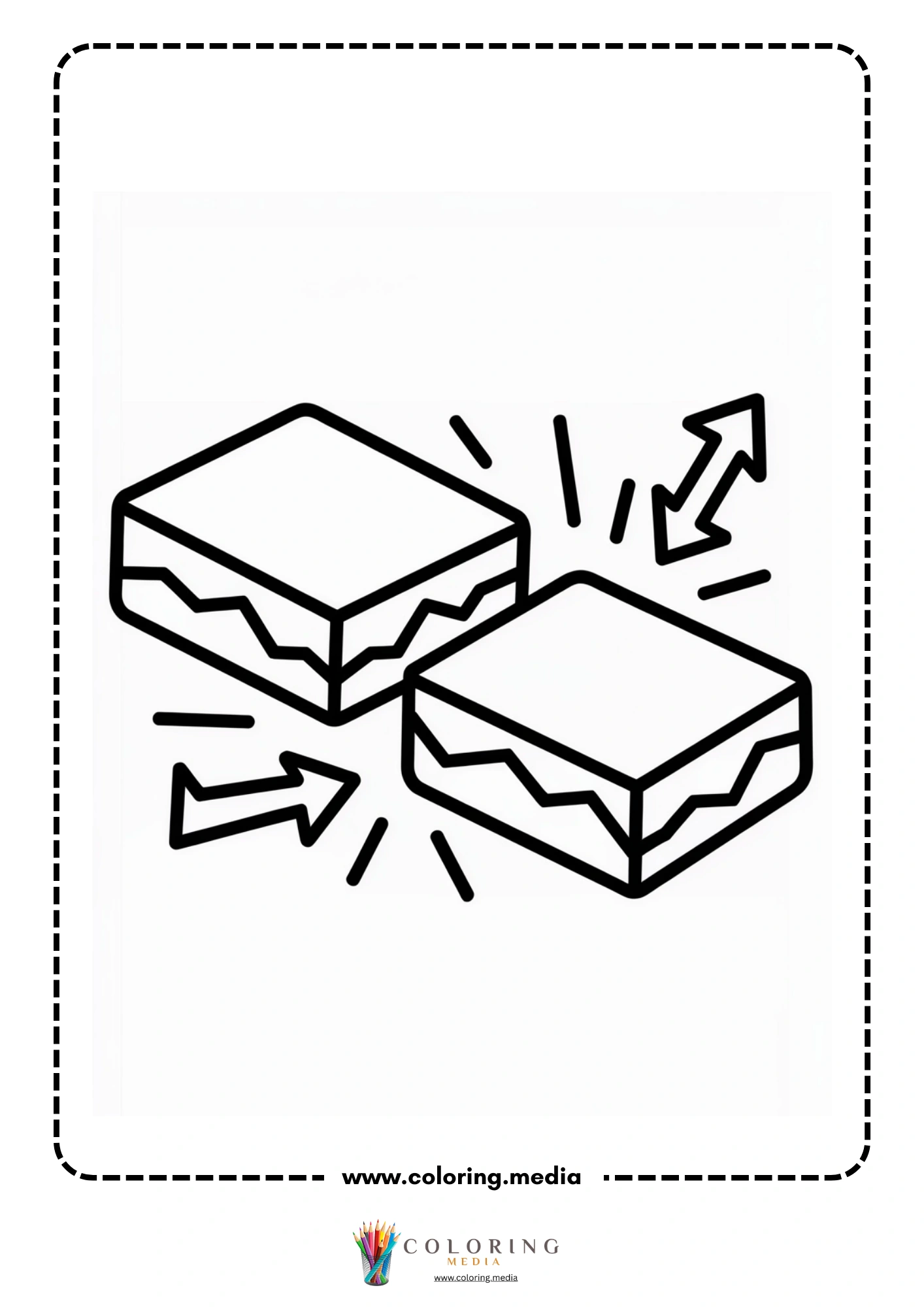
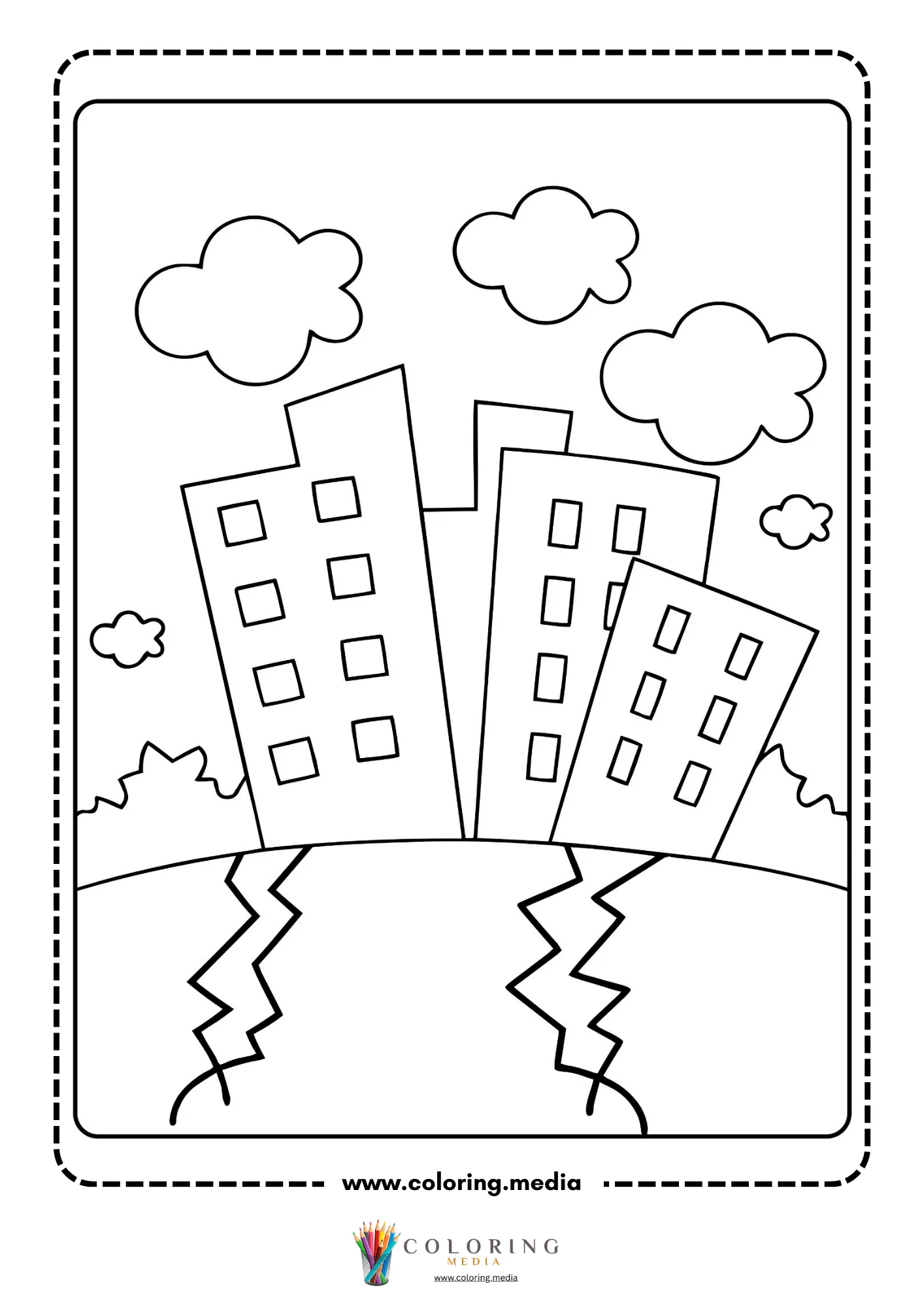
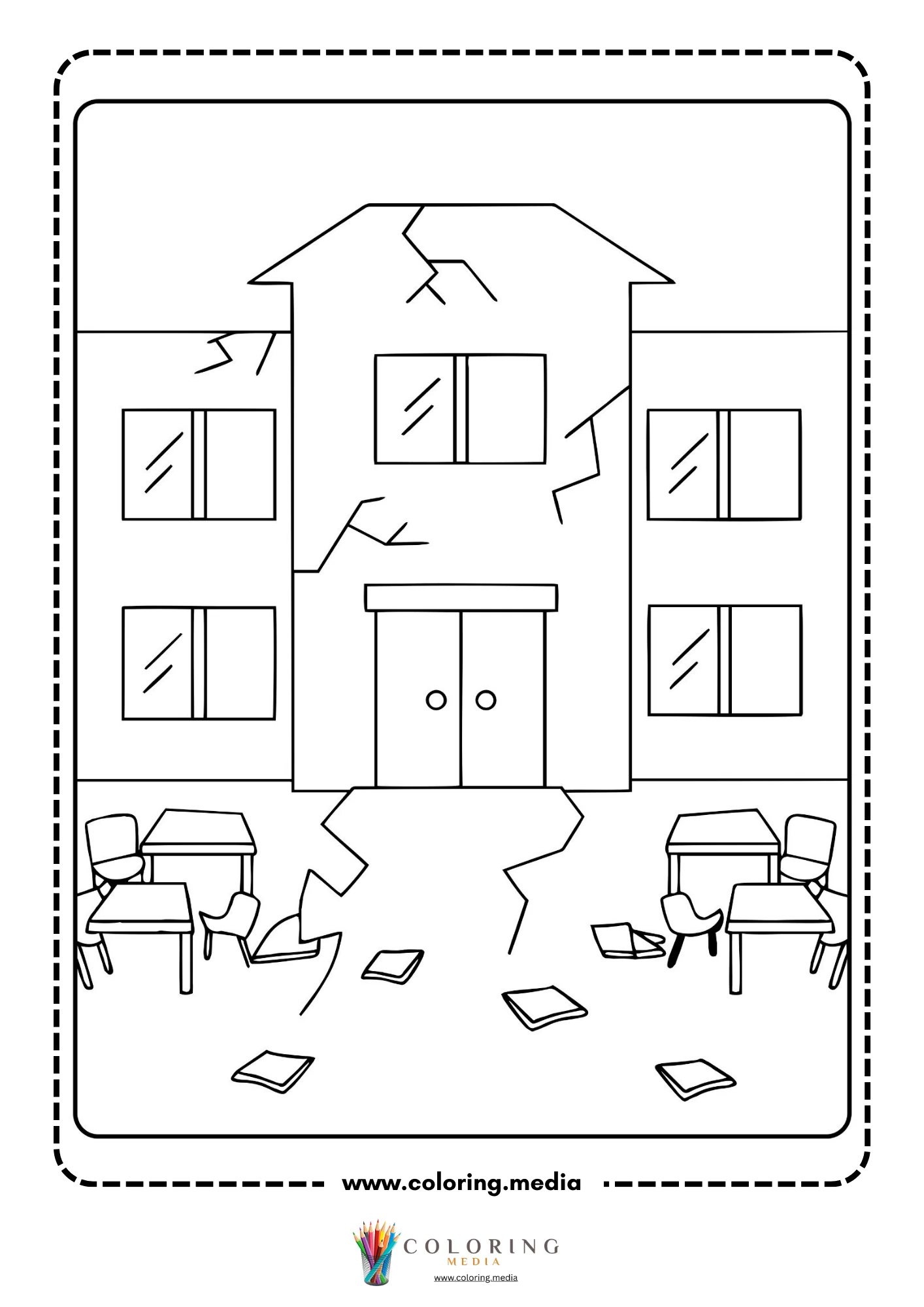
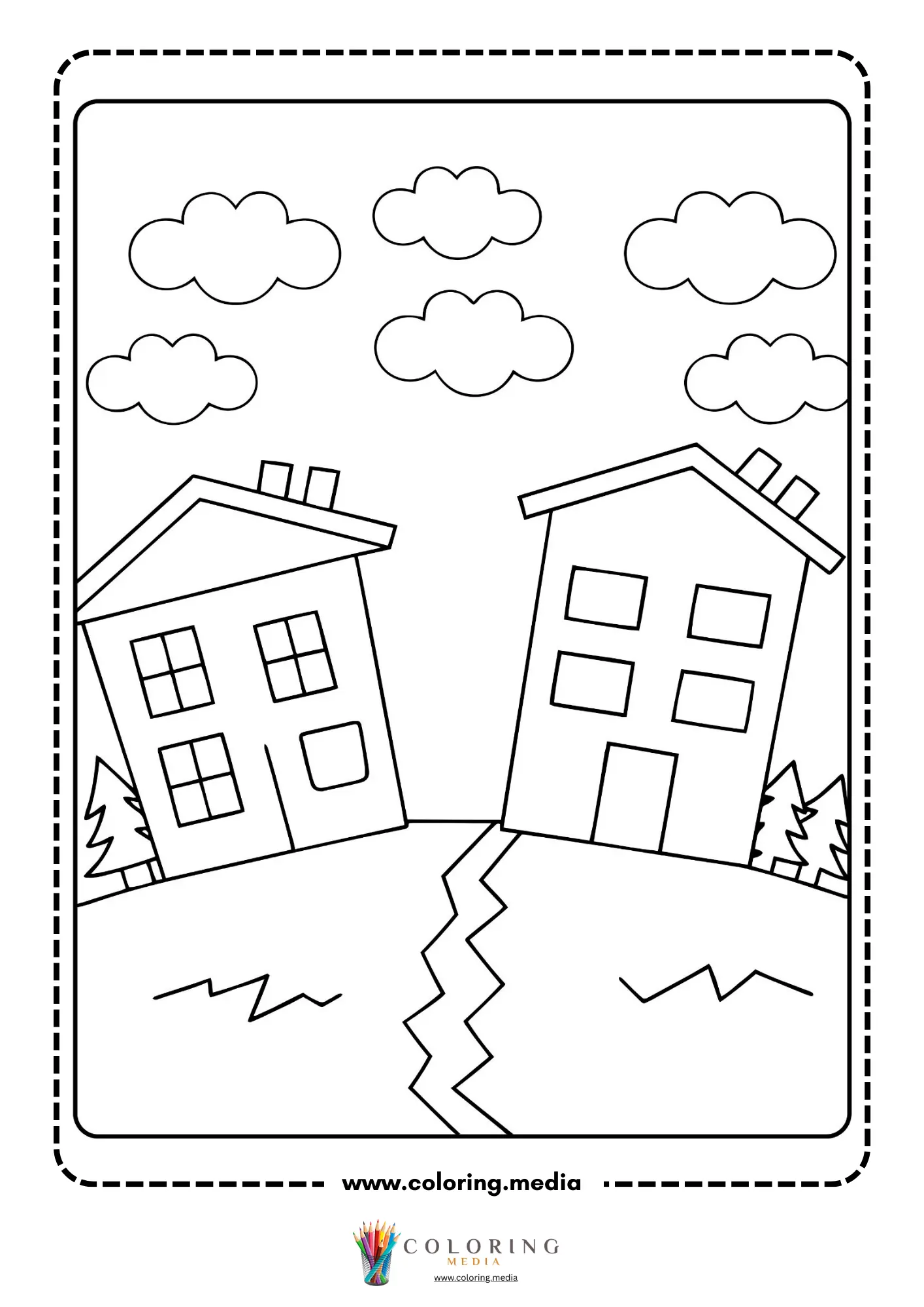
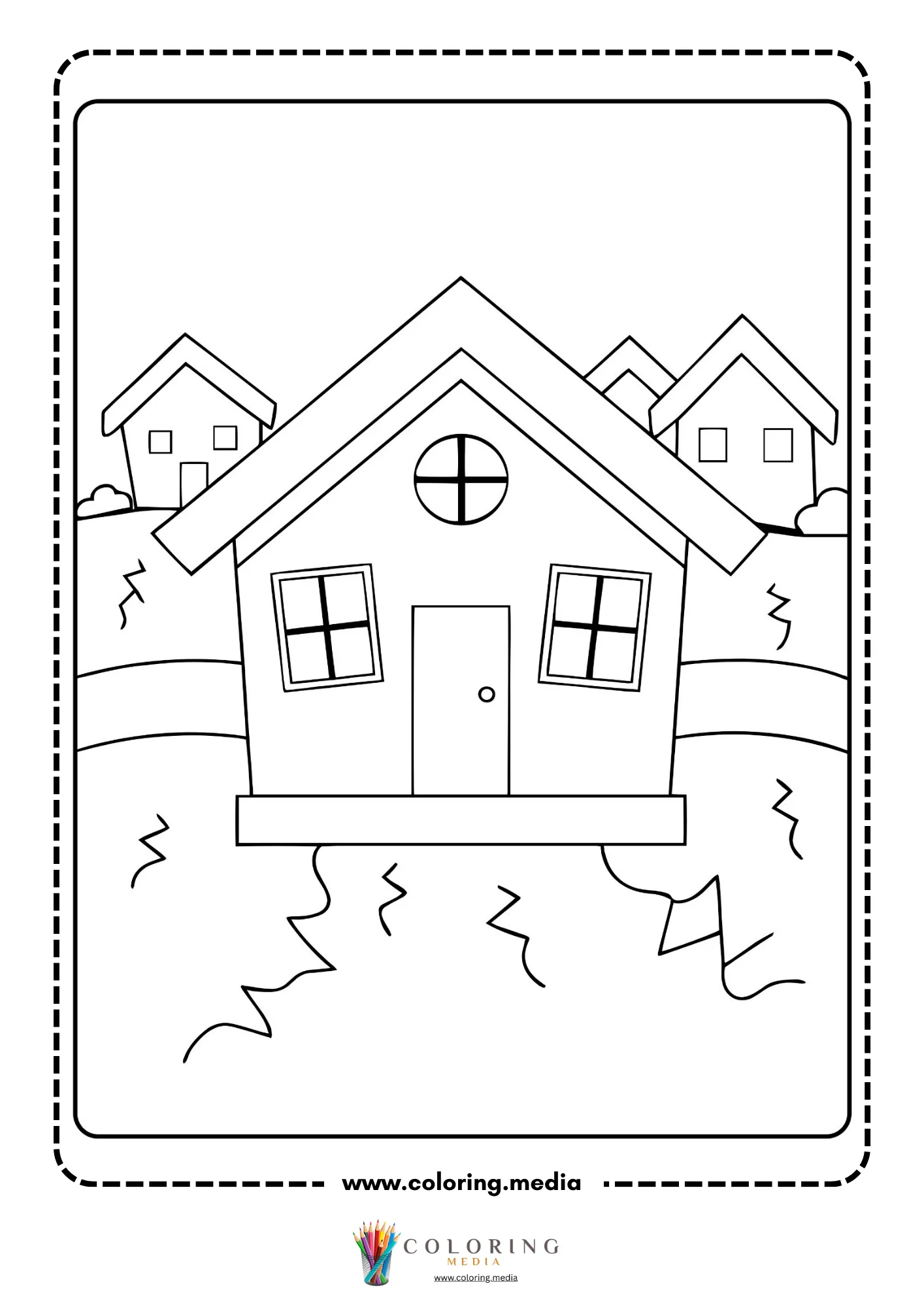
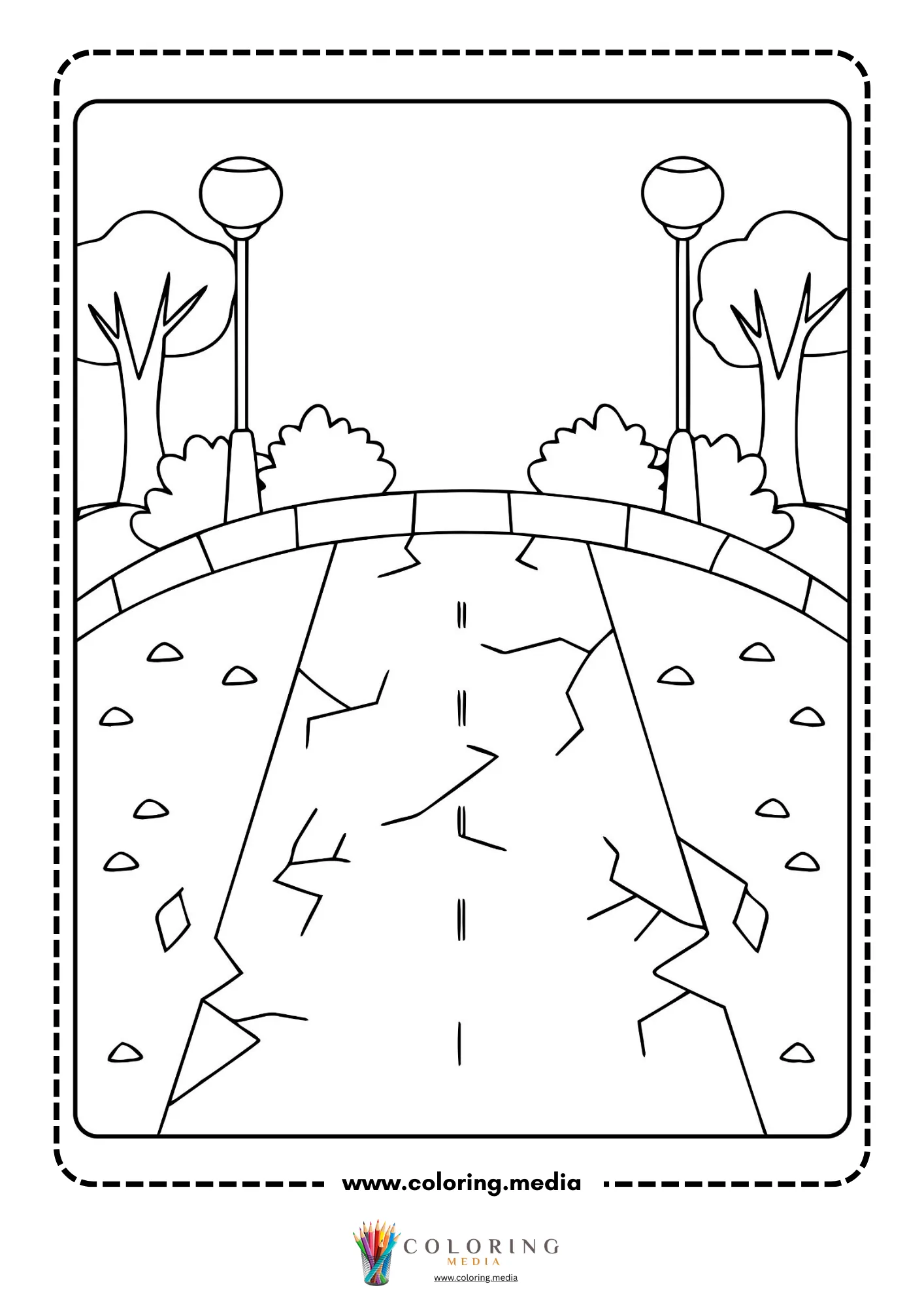
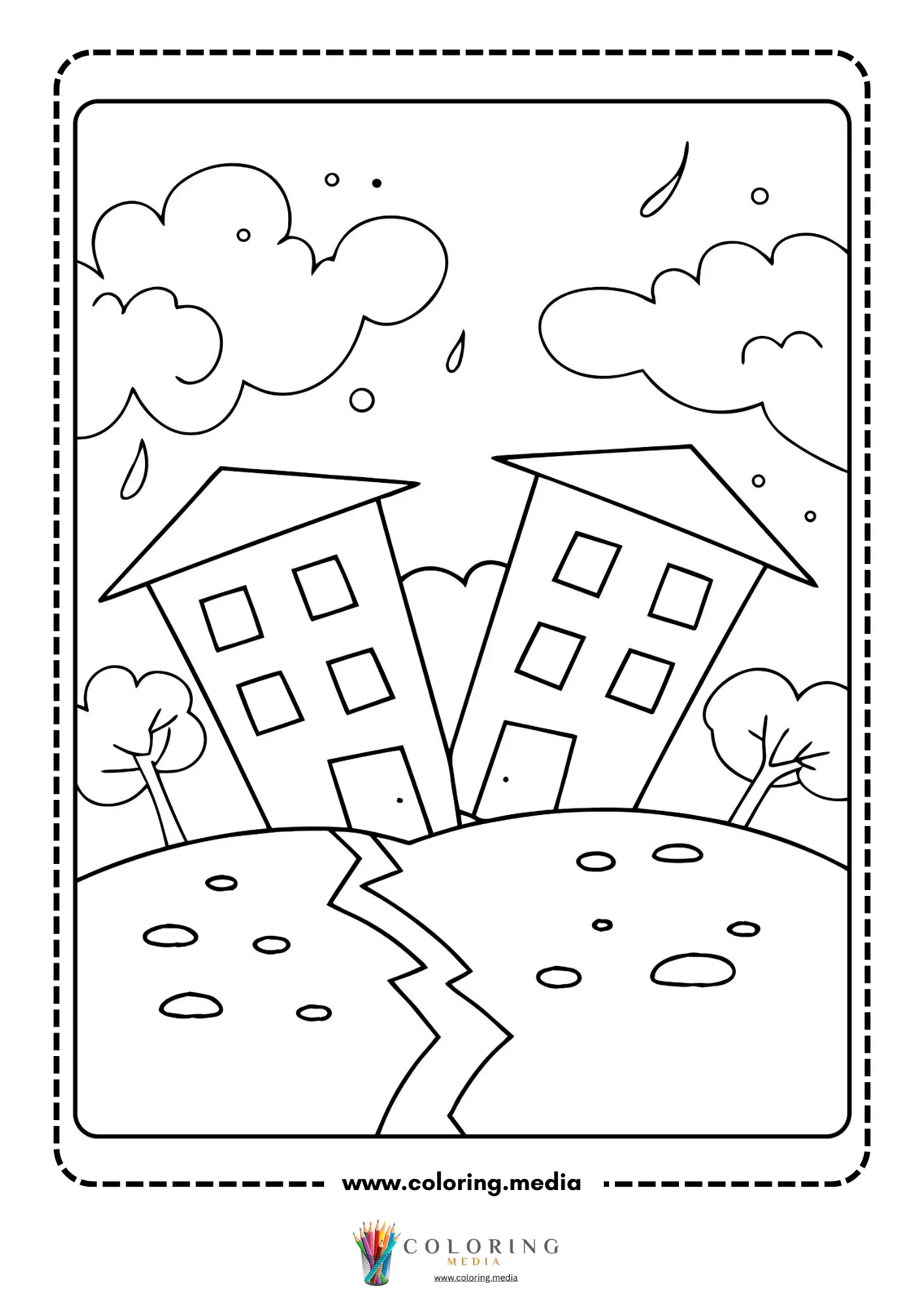
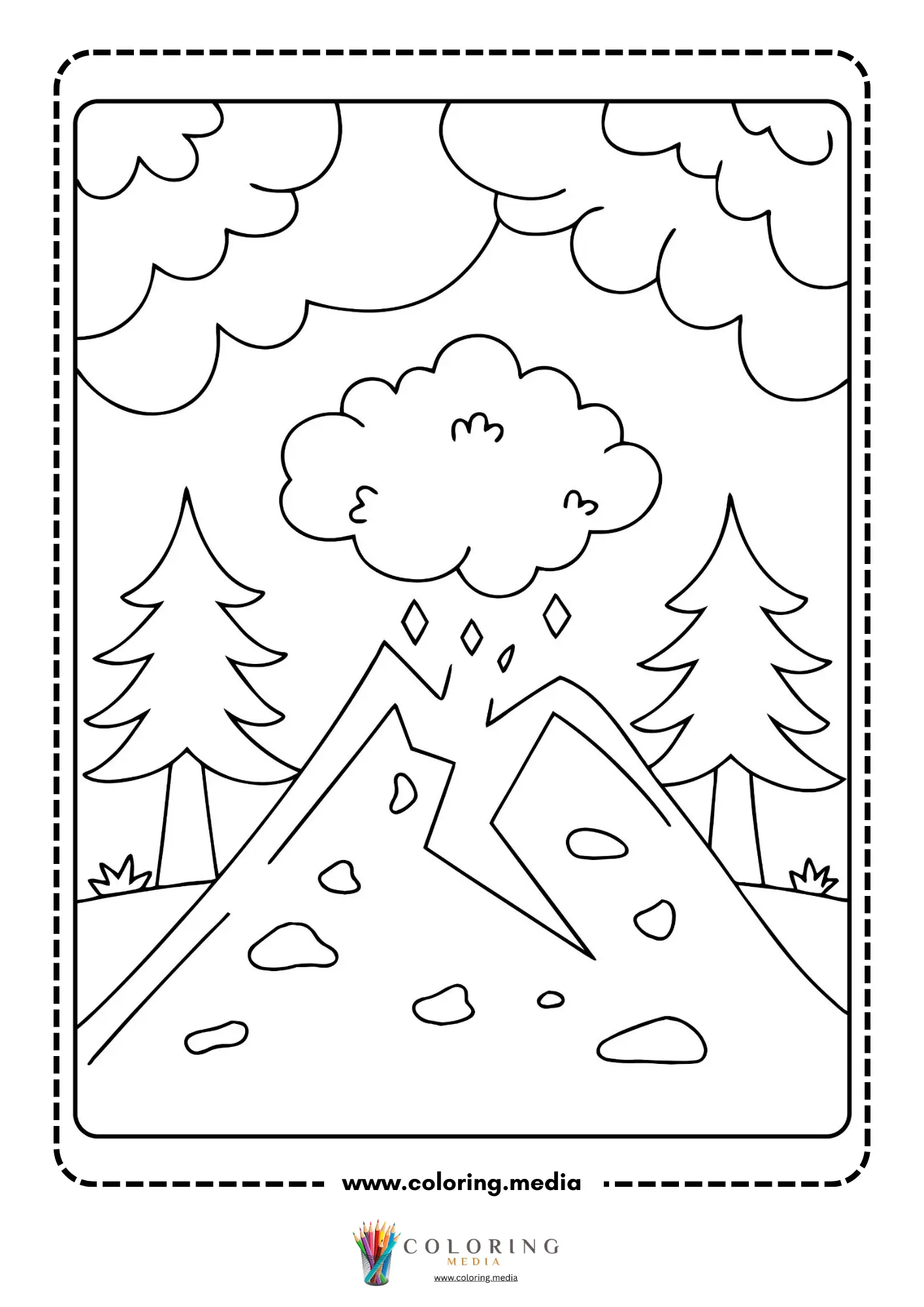
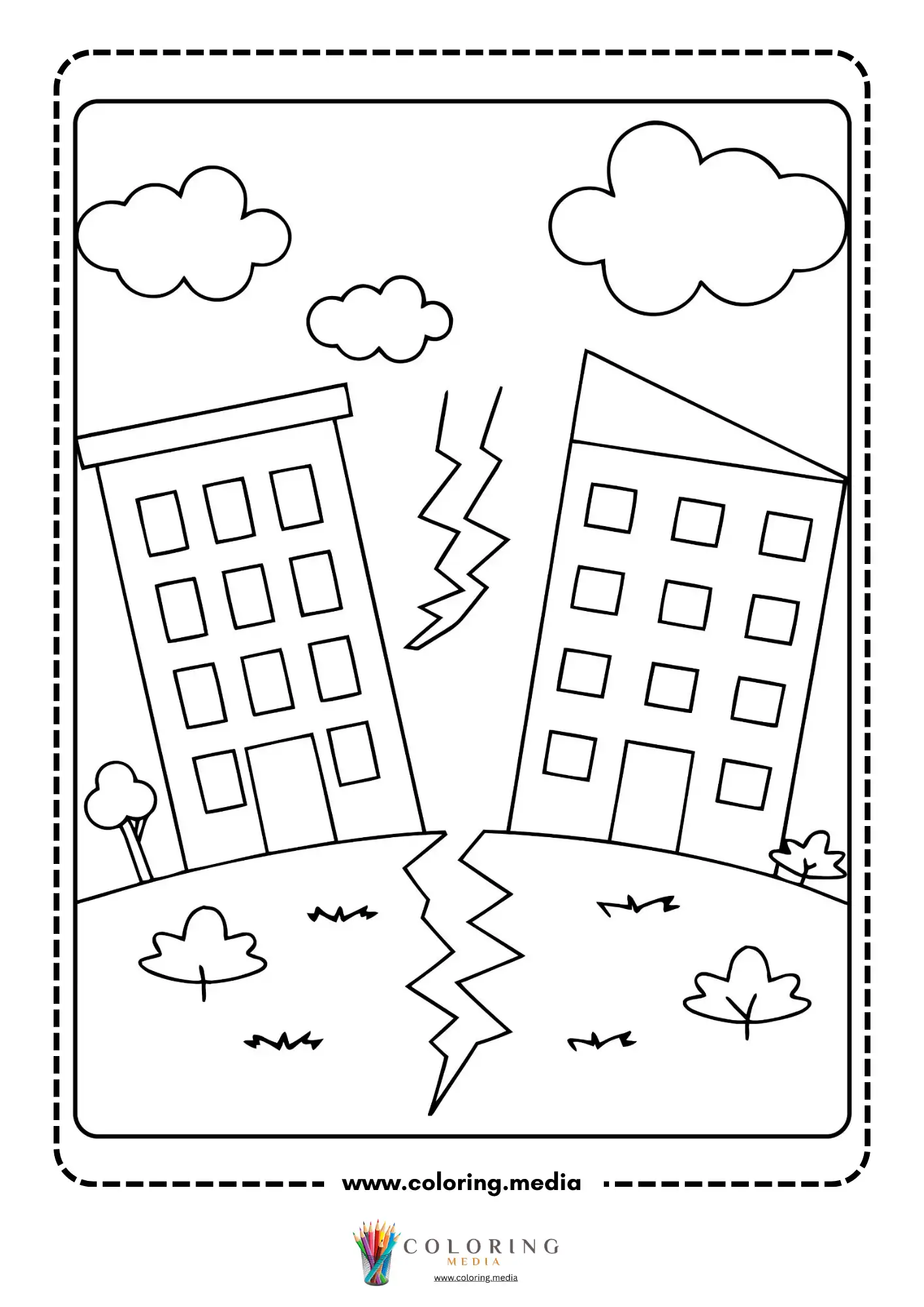
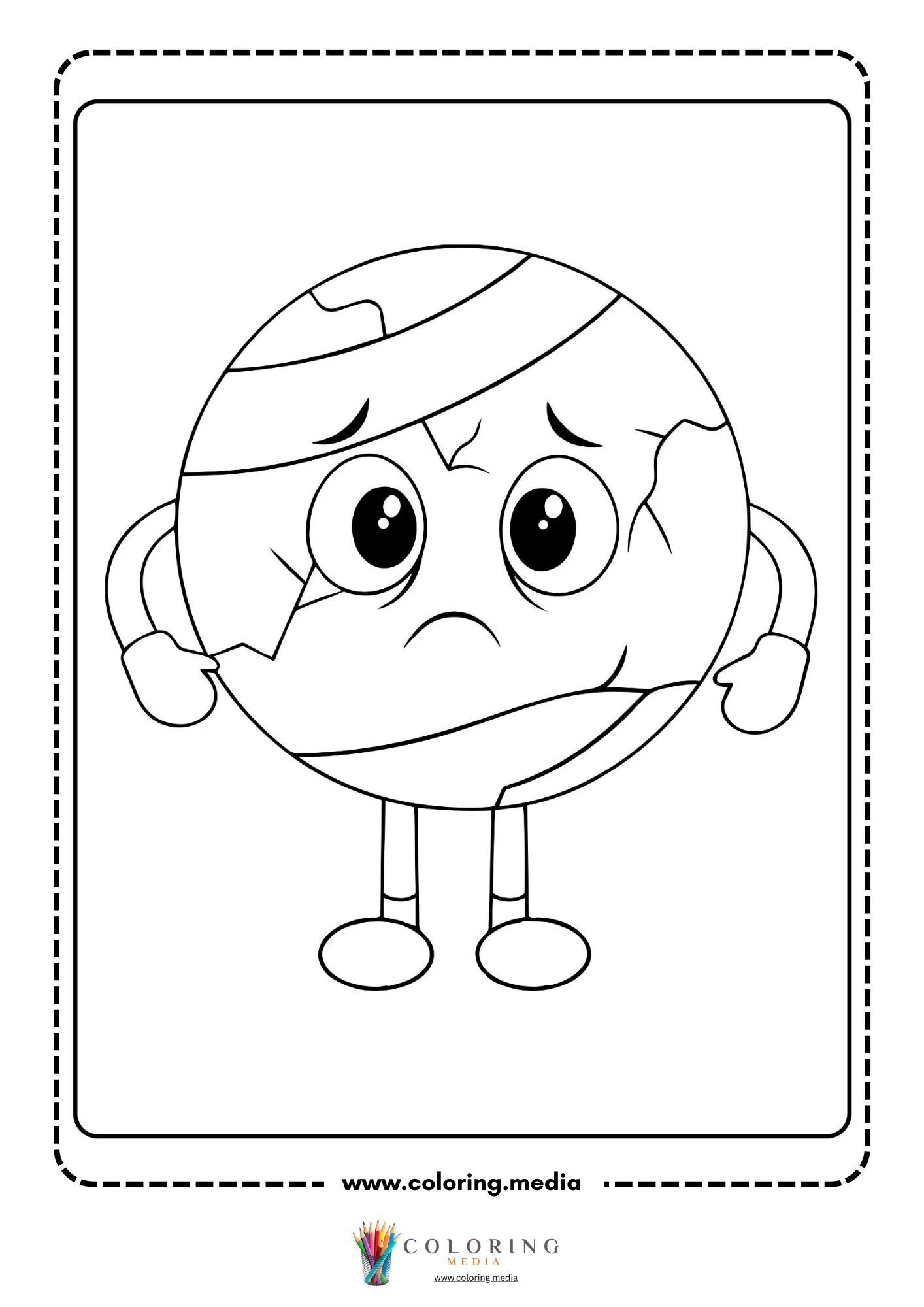
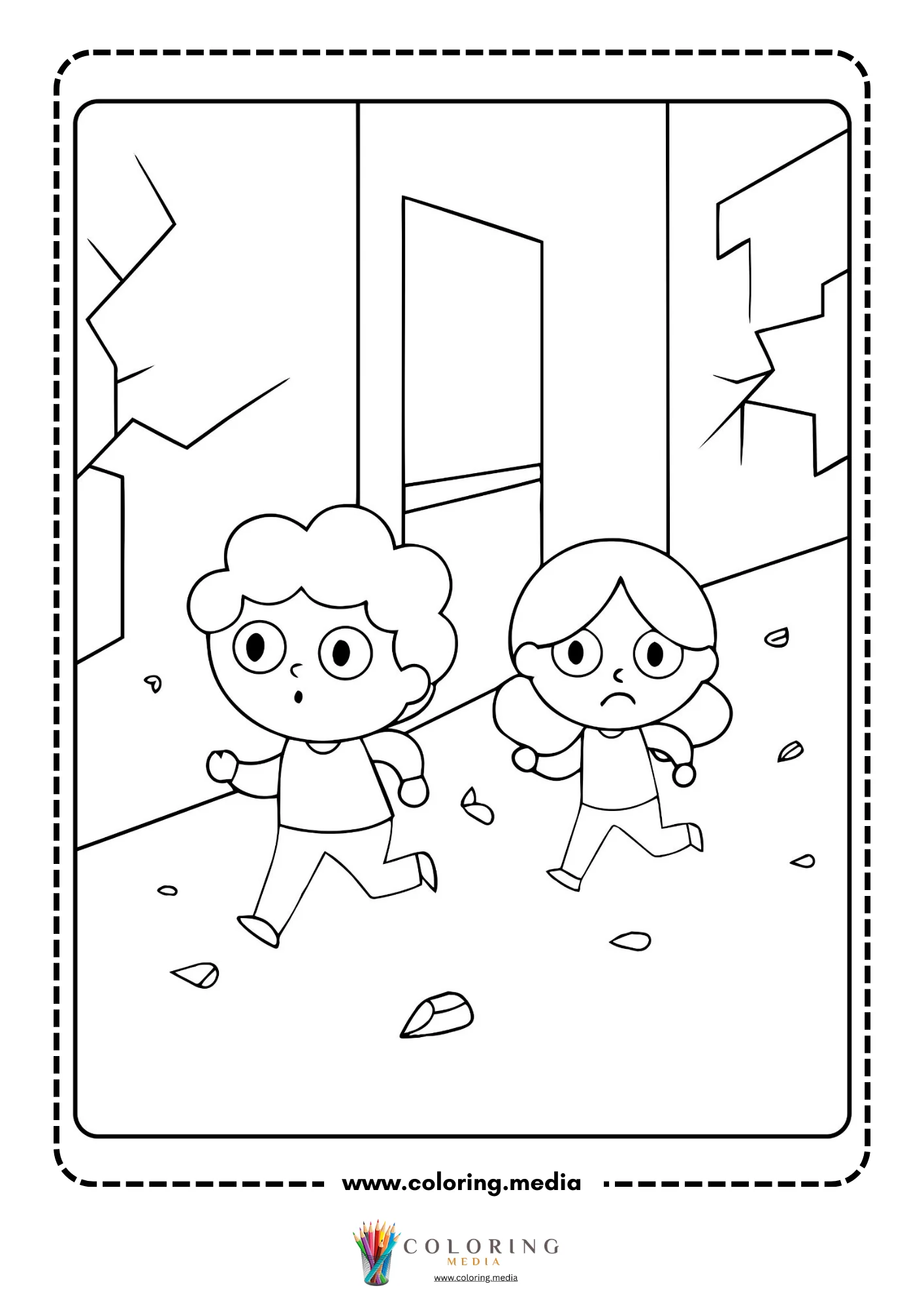
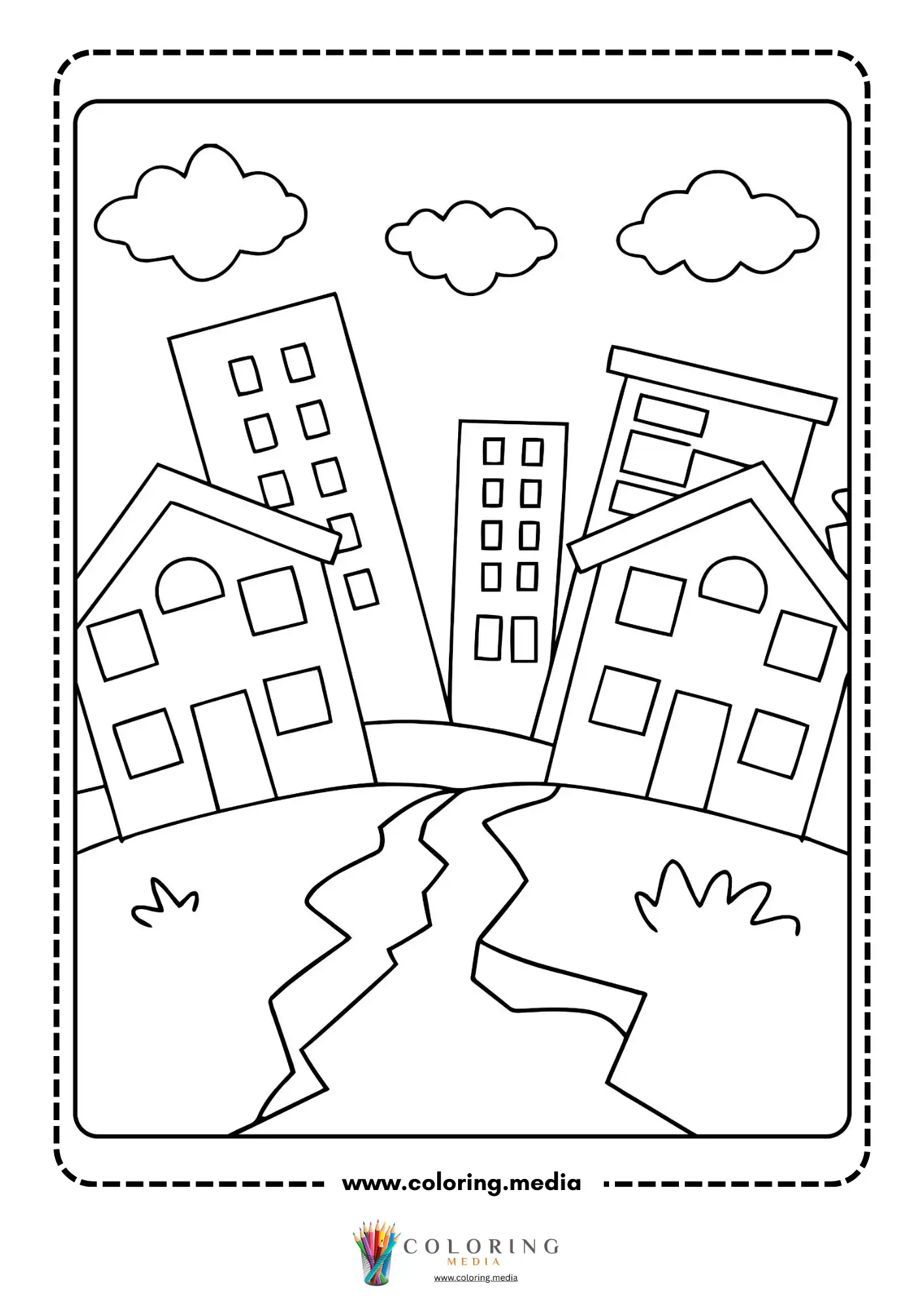
This set of 43 pages covers earthquakes from multiple angles — the physical phenomenon (cracking ground, fault line diagrams, tectonic plate cross-sections), the human impact (damaged buildings, displaced families, emergency response), safety behavior (drop/cover/hold on positions, what to pack in an emergency kit), scientific measurement (seismograph readings, Richter scale illustration), and community recovery (rebuilding scenes, news coverage moments). The illustration style ranges from simple cartoon scenes to more informational diagram-style pages that pair text with visuals.
Earthquake preparedness is a topic where knowledge genuinely matters, and these pages frame that knowledge in a way that is accessible to young children without being alarming. A child who has colored a ‘drop and cover’ page has practiced the correct response visually before ever needing to use it. Everything here is free to download and easy to print.
Free Printable Earthquake Coloring Pages
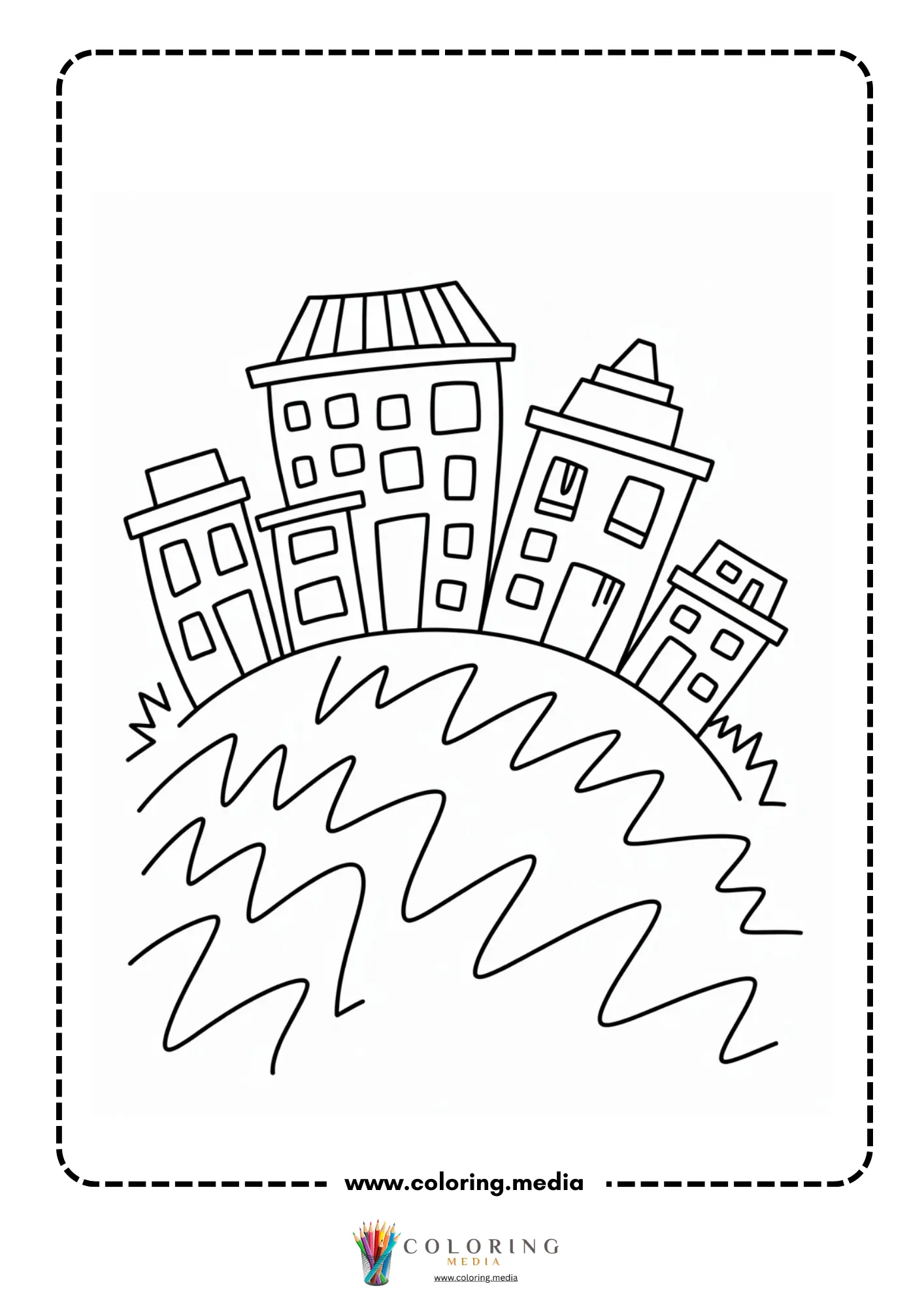
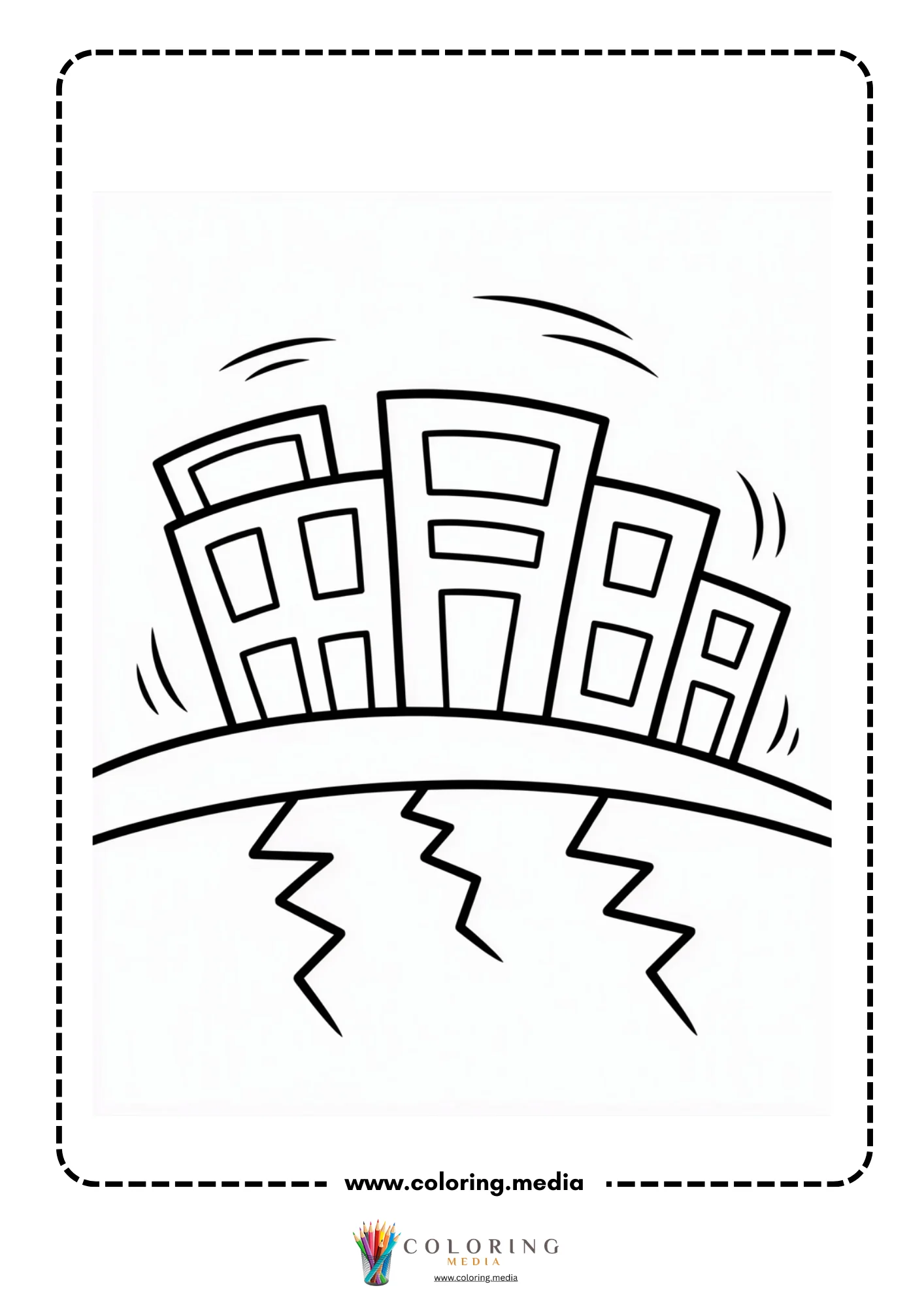
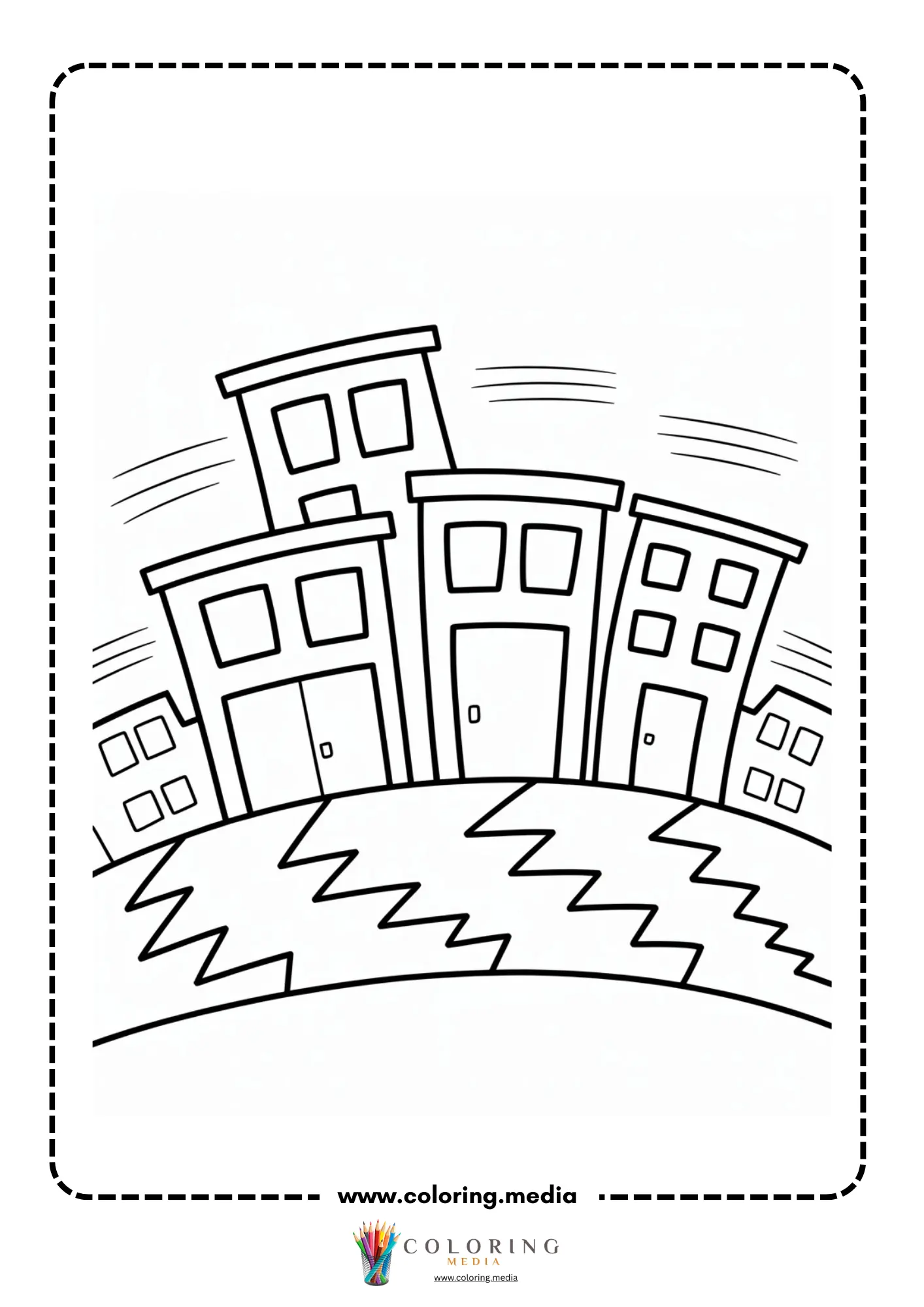
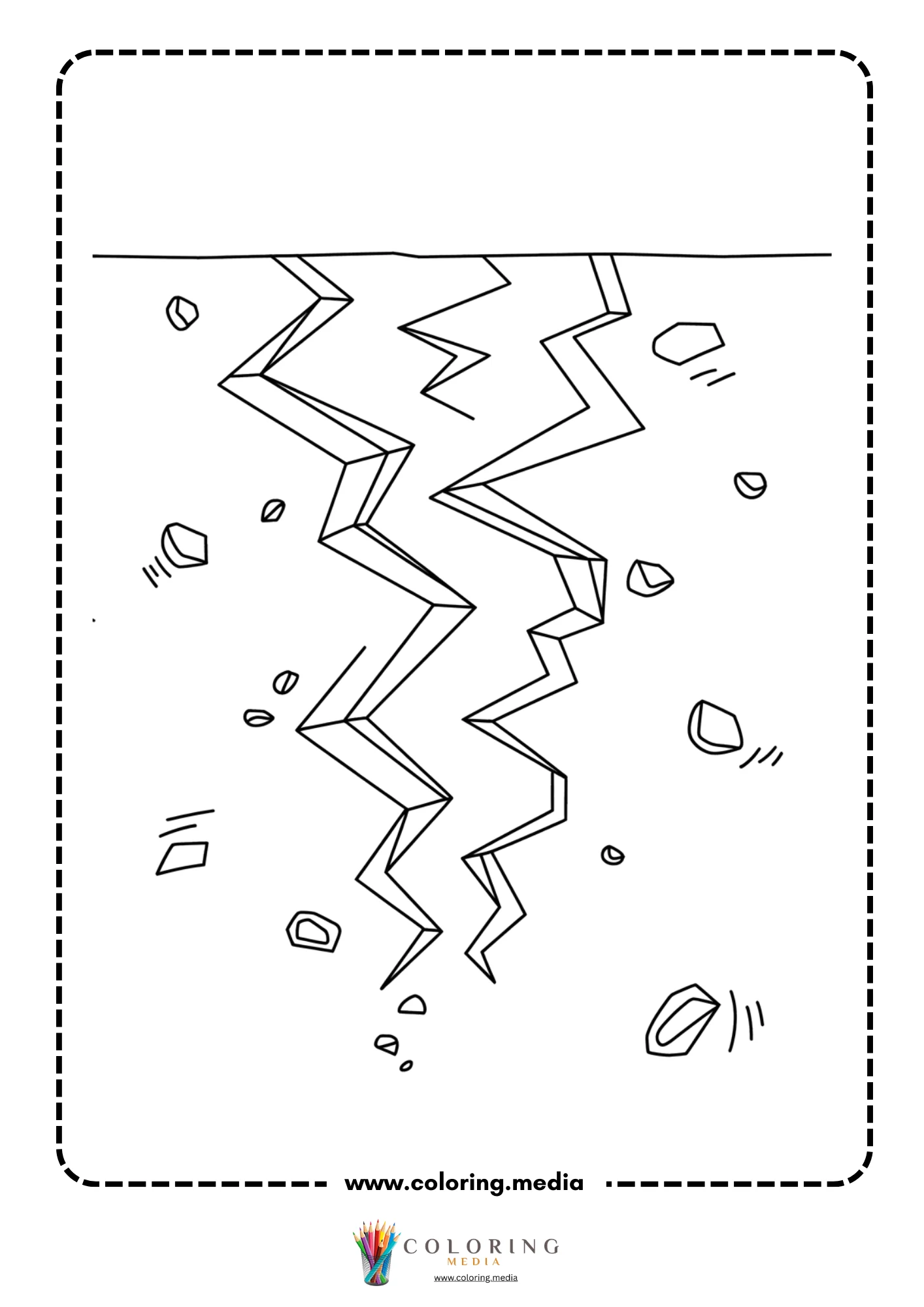
This collection includes 43 printable earthquake coloring pages covering the science of earthquakes, their human and structural impacts, safety procedures, emergency preparedness steps, and community recovery — illustrated in a range of cartoon and educational diagram styles. The set is extensive enough to anchor a multi-week earthquake science and safety unit. Print on US Letter or A4 paper.










Who Are These Earthquake Coloring Pages Best For?
Early-elementary children (ages 6-10) in earthquake-prone regions are the primary audience, though the science and safety content is relevant anywhere. Schools in California, Japan, New Zealand, and other seismically active areas often include earthquake preparedness as a formal curriculum topic, and this set provides ready-made visual materials for that instruction.
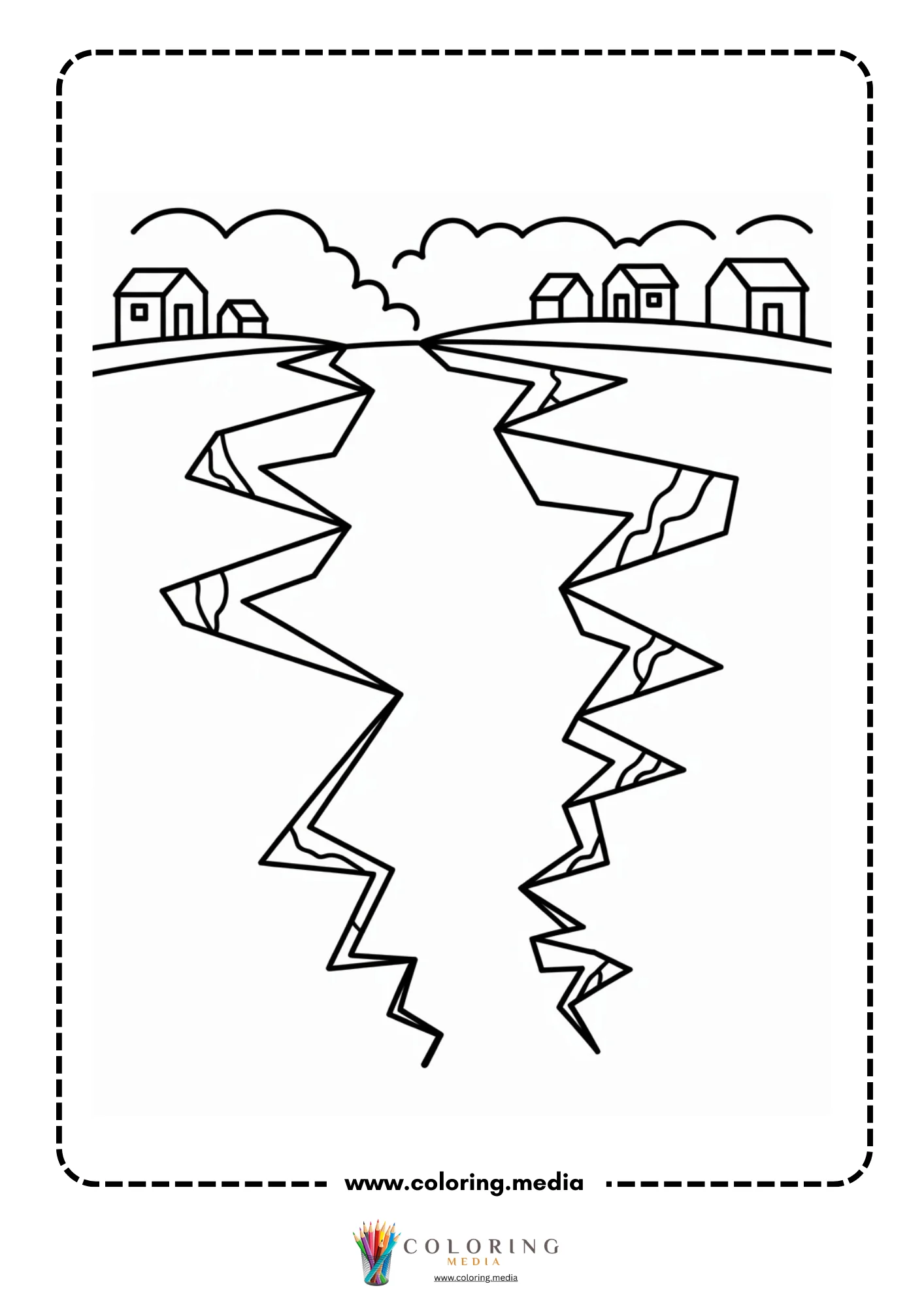
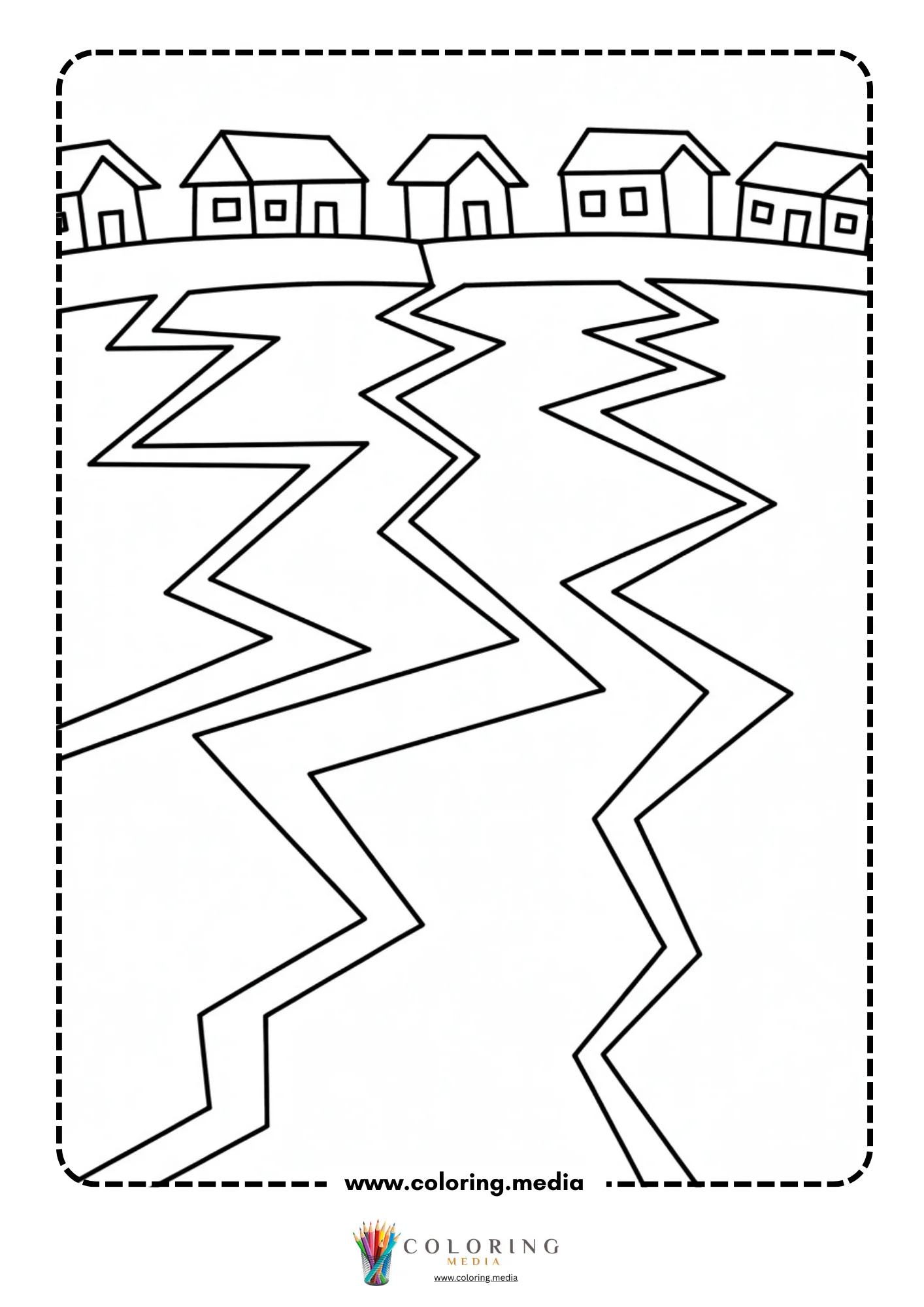
The variety of page types in this set means different pages serve different purposes. The dramatic cracking-ground pages work as conversation starters about what earthquakes feel like. The safety-behavior pages (showing a child under a table, a family with an emergency kit) work as reinforcement after a safety drill. The seismograph and fault-line diagram pages work as science content pages within a geology unit.
Parents in earthquake regions can use 3-4 pages from this set to have a simple, non-scary conversation about earthquake safety at home. Coloring the ’emergency kit’ page together and then actually assembling some of those items is a straightforward way to turn a coloring activity into genuine household preparation.
Interesting Earthquake Facts to Share While Coloring
About 500,000 detectable earthquakes occur worldwide every year. Of these, roughly 100,000 can be felt by humans, and only about 100 cause significant damage. Most earthquakes happen along tectonic plate boundaries — the Ring of Fire around the Pacific Ocean accounts for about 90% of the world’s seismic activity.
Earthquake energy travels in waves, not just shaking. Primary waves (P-waves) travel through rock like sound travels through air — fast but less destructive. Secondary waves (S-waves) arrive later and shake the ground side to side with more energy. Surface waves, which travel along Earth’s surface, cause the rolling motion that damages buildings most severely.
The Richter scale is logarithmic, not linear. A magnitude 7.0 earthquake releases about 31 times more energy than a 6.0, and a magnitude 8.0 releases about 31 times more than a 7.0. The largest recorded earthquake was magnitude 9.5, which struck Chile in 1960 and released more energy than all other earthquakes that century combined.
Drop, cover, and hold on is the recommended response in most earthquakes. The old advice to stand in a doorframe is outdated — modern construction means doorframes are no stronger than the surrounding wall, and moving toward a door during shaking increases injury risk. The safest action is to drop to hands and knees, cover your head and neck, and hold on to something stable until the shaking stops.
Creative Earthquake Coloring and Craft Ideas
Emergency Kit List After coloring the emergency kit page, make a real checklist and work with a parent to locate or gather as many items as possible at home.
Safety Drill Review After coloring the drop-and-cover page, practice the actual drill — where would you go in each room of your home? Which furniture is sturdy enough to shelter under?
Seismograph Reading Look up real seismograph images online and compare them to the illustrated version — what patterns indicate a small tremor versus a major earthquake?
Building Design Test Using toothpicks and marshmallows or spaghetti and clay, build a small structure and test it on a tray of Jell-O to simulate earthquake shaking.
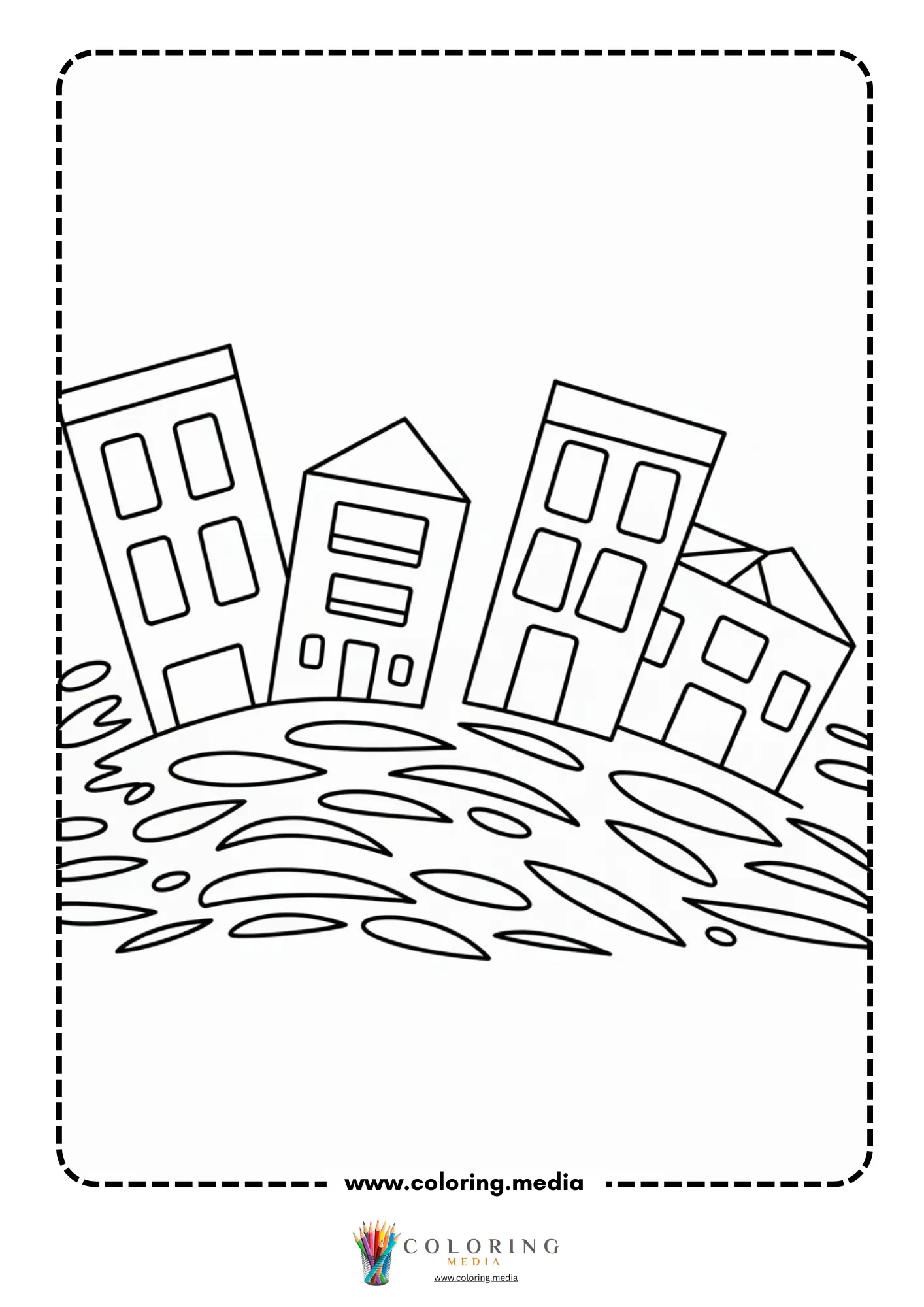
Before and After Drawing Draw a simple building as it looked before an earthquake beside the damaged building page — then draw a third frame showing the rebuilt version.
Tectonic Plate Map After coloring the fault-line pages, mark the major tectonic plate boundaries on a world map and note which cities and countries sit on or near those lines.
News Report Role-Play Using the news coverage scene page as inspiration, write a two-minute earthquake news report and read it aloud — a speaking and science integration activity.
Community Helper Map In the recovery scenes, identify every type of worker shown (firefighter, medic, construction worker, volunteer) and discuss what role each person plays in earthquake response.
How to Print These Earthquake Coloring Pages
Each page downloads as a PDF formatted for US Letter and A4 paper. Standard copy paper handles all coloring media well. For classroom emergency preparedness displays, print the safety-behavior pages at a larger size or laminate finished colored pages for a durable reference. All designs print cleanly in grayscale.
Explore More Science & Nature Coloring Pages
If you enjoyed these pages, you may also like:
Earth Science Coloring Pages
Volcano Coloring Pages
Global Warming Coloring Pages
Weather Coloring Pages
Science & Nature Coloring Pages