
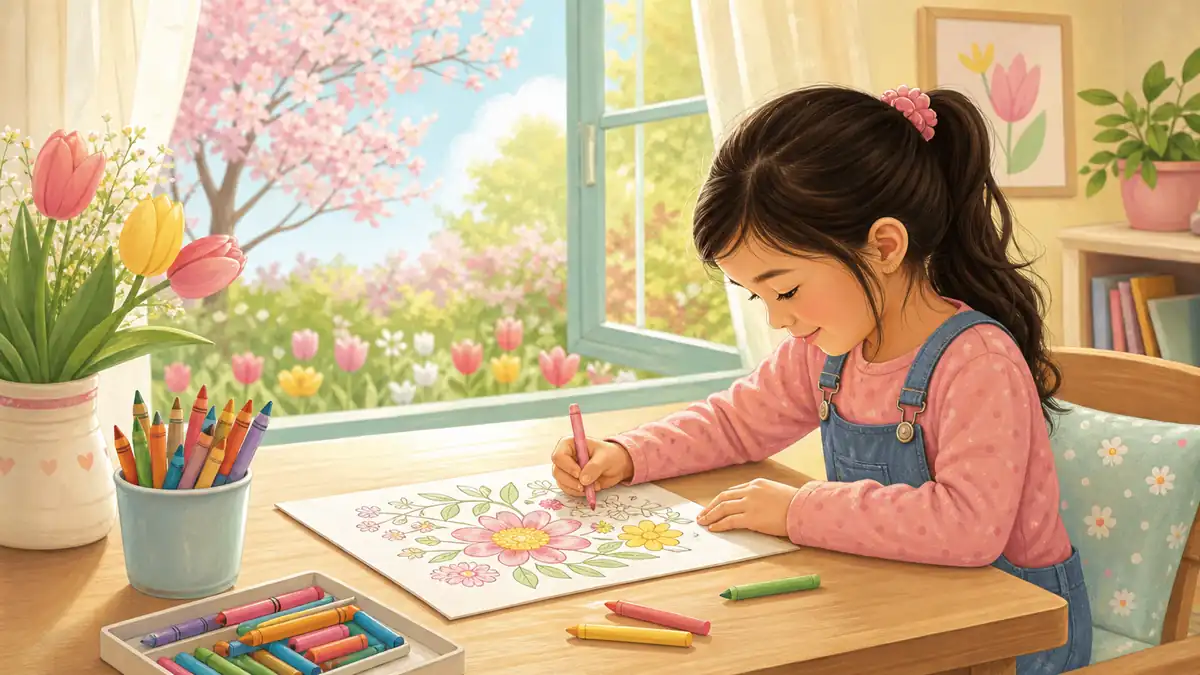

Spring coloring activities give kids a creative way to explore the season — flowers blooming, animals waking up, rain showers, and longer days — with nothing more than a printer and a set of crayons. They work equally well as a classroom activity, a homeschool supplement, or a Saturday morning project at home, and they connect naturally to the science, nature, and seasonal learning happening all around kids in spring.
Why Spring Is a Great Season for Coloring Activities
Spring brings a natural surge of curiosity in children — they’re watching things grow, spotting new animals, noticing changes in weather and light. Coloring pages that reflect what kids are already observing outside connect the indoor creative activity to the outdoor world in a way that feels meaningful rather than arbitrary.
Spring coloring also gives parents and teachers a simple way to extend seasonal learning. A child who just spotted a butterfly outside is far more motivated to color a butterfly page carefully than they would be on a random Tuesday in January. That timing and relevance is the secret advantage of seasonal coloring.
Spring Coloring Activity Ideas
Flowers and Plants
Spring’s most iconic subject. Our flower and plant coloring pages range from single bold tulips suitable for toddlers to detailed garden scenes for older children. Make it educational: name the flowers, discuss pollination, or plant actual seeds the same day as the coloring activity for a memorable connection between paper and real world.
Spring Animals
Baby animals are a spring staple — chicks, lambs, ducklings, butterflies, and bees all emerge in spring and captivate children. Our animal coloring pages include dozens of spring-appropriate species. Pair the coloring activity with simple facts about animal life cycles and you’ve built a complete short lesson around a single page.
Life Cycle Pages
Spring is the perfect time to explore life cycles — butterfly metamorphosis, frog development, seed germination. Our life cycle coloring pages make these abstract processes visual and tangible. Children who color a butterfly life cycle diagram retain the sequence far better than children who simply read or hear about it.
Spring Weather and Nature
Rain clouds, rainbows, puddles, and green growing things — spring weather is full of coloring material. Our nature coloring pages and seasonal pages cover spring themes across detail levels and ages. Combine a rain-themed page with a simple experiment (what makes a rainbow?) for a full spring learning afternoon.
Spring Coloring Activities for Different Ages
Toddlers and Preschoolers
Keep it simple and bold — large flower outlines, single animals, simple butterfly shapes. The color palette of spring (pinks, yellows, greens) is perfect for introducing color names. Let toddlers use whatever colors they want; the goal at this age is the physical experience and the vocabulary, not botanical accuracy.
Kindergarten and Early Elementary
This age group is ready for more detailed pages and appreciates thematic connections. Pair a spring animal coloring page with a short non-fiction book about that animal. Use finished coloring pages as covers for spring journals or as illustrations in a simple “All About Spring” booklet they assemble themselves.
Older Elementary
Older kids enjoy the challenge of detailed scenes and the opportunity to make creative color choices beyond the “obvious.” Challenge them to color a spring garden in an unexpected palette — a blue flower field, a purple and gold butterfly — and discuss how artists use color expressively rather than representationally.
Spring Coloring Activities for the Classroom
Spring coloring pages are reliable classroom tools because they require no prep beyond printing and connect naturally to existing spring curriculum. Effective classroom uses include:
- Morning work warm-up with a spring-themed page while attendance is taken
- Early finisher activity paired with a writing prompt (“Write three facts about the animal you colored”)
- Art center rotation during spring unit studies
- Take-home parent gift — a spring coloring page completed and framed
For more classroom and homeschool coloring ideas, visit our Tips & Techniques hub.
Frequently Asked Questions
What are good spring coloring activities for kids?
The best spring coloring activities feature seasonal subjects — flowers, baby animals, butterflies, rain, and life cycles. Choose page complexity to match your child’s age and pair coloring with a short related activity (planting seeds, reading about spring animals, making a nature journal) for a more complete learning experience.
What spring themes work best for coloring pages?
Flowers, butterflies, garden scenes, rain and rainbows, baby animals (chicks, lambs, ducklings), and life cycle diagrams are all highly effective spring coloring themes. Nature and animal themes are universally motivating across age groups and connect well to outdoor spring observations.
How can I use spring coloring pages for homeschool?
Spring coloring pages work in homeschool as narration tools (color a life cycle diagram and narrate the stages), unit study supplements (science of flowers, spring animals, weather), fine motor practice, and creative expression time. Finished pages can become covers for spring unit notebooks or entries in a nature journal.
Are spring coloring activities good for preschoolers?
Yes — spring is an ideal season for preschool coloring because the subject matter (flowers, butterflies, animals) is highly motivating and the color palette is naturally vibrant. Use bold, simple outlines for preschoolers and name colors, flowers, and animals as they color to build vocabulary alongside the creative activity.
Can spring coloring activities be educational?
Yes. Life cycle coloring pages teach science concepts kinesthetically. Flower and plant pages support botany vocabulary. Animal pages build nature knowledge. Even purely creative spring coloring builds fine motor skills, color recognition, and focus — all foundational for academic learning.
Spring is one of the best seasons to make coloring a regular part of your child’s week — the natural world is changing visibly every day, and coloring pages that mirror that change give kids a creative way to process and celebrate it. Browse our flowers and plants, animals, and seasonal pages to build your spring coloring collection.