

Screen-free activities for kids at home work best when they’re hands-on, creative, and immediately accessible — and coloring pages sit at the top of that list because they require zero setup, scale from toddlers to tweens, and keep children genuinely engaged rather than just occupied. This guide covers everything parents need to build a sustainable screen-free routine at home, organized by age, situation, and the specific challenge you’re trying to solve.
Why Screen-Free Time Matters More Than Most Parents Realize
The American Academy of Pediatrics recommends no more than one hour of screen time per day for children ages 2–5, and consistent limits with an emphasis on quality for ages 6 and up. But the rationale goes beyond the time limits themselves. Screen time doesn’t just consume hours — it displaces other activities that are developmentally essential: creative play, physical movement, conversation, nature time, and the productive boredom that drives children toward independent problem-solving.
Research consistently links excessive screen time in early childhood with delayed language development, reduced attention spans, disrupted sleep, and lower academic performance — not because screens are inherently harmful, but because they crowd out the irreplaceable activities that build these capacities. The solution isn’t screen restriction alone. It’s filling children’s days with activities compelling enough that screens become one option among many rather than the default.
The Best Screen-Free Activities for Kids at Home
Coloring Pages
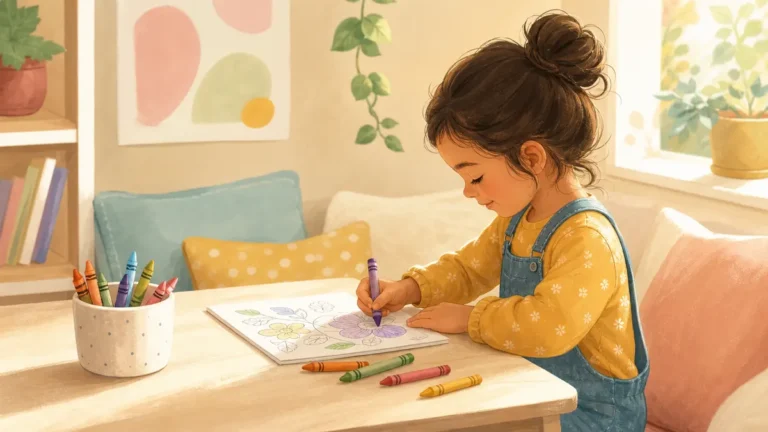
Coloring is the anchor screen-free activity for most families because it delivers on every requirement: it’s immediately available (print and go), works for all ages, requires no adult supervision once started, and produces something tangible. It builds fine motor skills, color recognition, and focused attention while giving children creative control over a visible result.
The key to making coloring a sustainable screen-free staple is having the right pages ready for the right moments. A folder of pre-printed pages organized by theme — animals for the animal-obsessed child, fantasy for the imaginative one, seasonal for the time of year — means the activity is accessible in under 30 seconds rather than requiring a print run when the child is already bored and restless.
Start with our easy coloring pages for toddlers and beginners, animal pages for universal appeal across ages, and our seasonal pages for timely themed options throughout the year.
Outdoor Free Play
Unstructured outdoor time is the single most irreplaceable screen-free activity — nothing substitutes for it developmentally. Even 30–45 minutes of outdoor free play daily produces measurable improvements in attention, physical health, and creative capacity. The goal is unstructured time (child-led, not adult-directed sports or activities) in an outdoor environment.
Creative Arts and Crafts
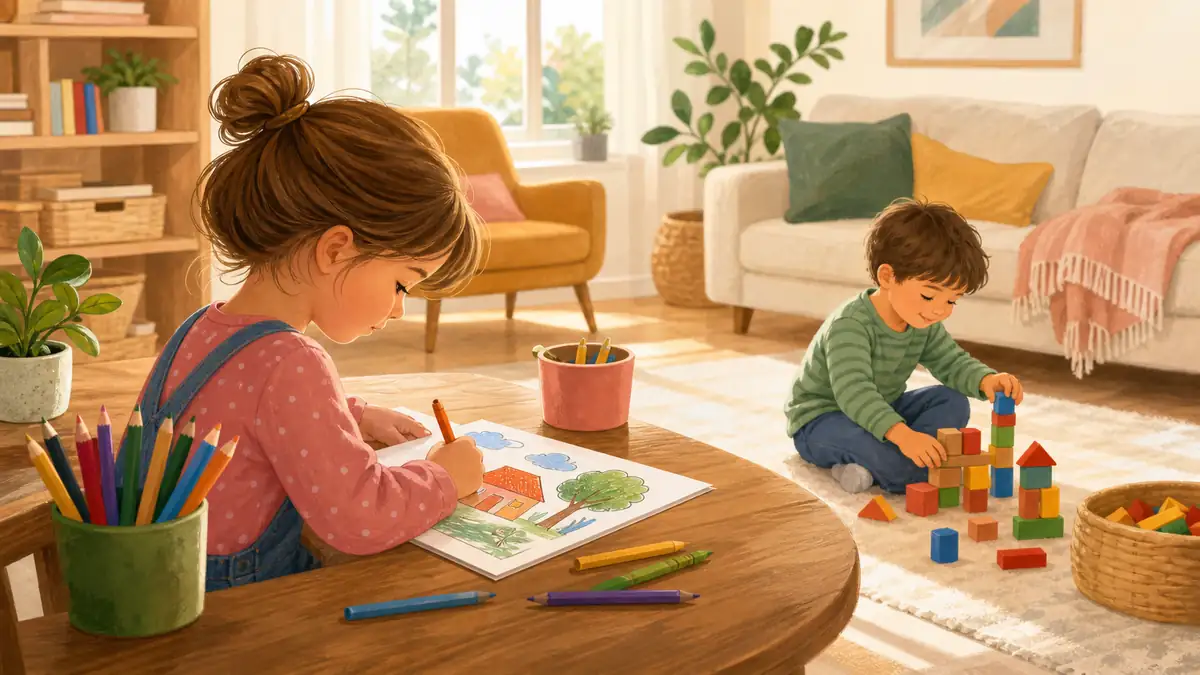
Coloring pairs naturally with other creative activities that share its calm, focused energy: drawing, painting, collage, clay, and simple crafts. A “creative corner” stocked with a rotating selection of supplies gives children a consistent destination for creative screen-free time.
Building and Construction
Blocks, LEGO, magnetic tiles, and similar construction toys deliver some of the richest screen-free play available — they build spatial reasoning, problem-solving, and engineering thinking in ways almost no other activity matches. Construction play is particularly valuable for children who find purely creative activities (coloring, drawing) less engaging.
Reading and Read-Alouds
Books — read independently or aloud — are the most powerful screen-free literacy activity available. Daily read-alouds, even just 15–20 minutes, produce vocabulary, comprehension, and knowledge gains that compound significantly over time. For children who resist independent reading, pairing it with coloring (listen to an audiobook while coloring) makes the activity far more sustainable.
Nature Activities
Nature observation, gardening, insect identification, weather watching, and simple nature journaling connect children to the living world outside their home in ways that have deep developmental and psychological benefits. Pair nature observation with nature-themed coloring pages — our nature pages, flower and plant pages, and science and nature pages — for a connected indoor-outdoor activity loop.
Screen-Free Activities by Age
Screen-Free Activities for Babies and Toddlers (Ages 0–2)
Babies and toddlers under 18 months should have no screen time beyond video calling. For this age group, screen-free time is simply — time. Sensory play (water, sand, fabric, safe objects of varied textures), movement (tummy time, crawling, walking, climbing), social interaction, and simple cause-and-effect toys are the developmental essentials.
From around 18 months, simple mark-making with toddler-grip crayons on large paper introduces the beginning of coloring as a screen-free activity. Don’t expect recognizable images — the goal is the sensory experience of making marks and watching something appear.
Screen-Free Activities for Toddlers (Ages 2–3)
Two and three-year-olds are in a rapid language and motor development phase. The most valuable screen-free activities at this age are:
- Coloring with chunky crayons and bold outline pages — builds grip and fine motor skills essential for later writing. Our easy pages and animal pages work best.
- Sensory play — playdough, water play, sand, finger painting
- Simple puzzles — 4–8 piece knob puzzles build spatial reasoning and problem-solving
- Outdoor play and nature walks — with narration from a parent, these become language development powerhouses
- Read-alouds — at least 20 minutes daily; repetition of favorite books is developmentally valuable, not boring
For a full guide to screen-free coloring with toddlers, see our article on screen-free activities for toddlers.
Screen-Free Activities for Preschoolers (Ages 3–5)
Preschoolers are entering a golden age of imaginative play and are ready for more structured creative activities. Screen-free time at this age should include:
- Intentional coloring — choosing themes, attempting to stay within outlines, discussing what they’re coloring. Our alphabet pages add early literacy to the coloring activity.
- Dramatic and pretend play — the most cognitively demanding activity preschoolers engage in; support it with props, costumes, and space
- Art and craft projects — simple, process-focused projects where the exploration matters more than the product
- Outdoor free play — daily, in all weathers, for at least 45–60 minutes
- Board games and card games — simple games (Snakes and Ladders, Go Fish, Memory) build turn-taking, number concepts, and attention
Screen-Free Activities for Elementary Age (Ages 5–10)
School-age children benefit from screen-free activities that offer genuine challenge and skill development — activities with a learning curve that produces improving results over time. The most valuable include:
- Complex coloring and art projects — detailed scenes, technique exploration (shading, blending), and coloring as a launching point for broader art activities
- Sports and physical activity — team sports, martial arts, swimming, cycling; the social and physical development components of organized physical activity are irreplaceable
- Board games and strategy games — chess, Catan, Clue, and similar games that build strategic thinking, social negotiation, and sustained attention
- Reading — independent reading for pleasure is the single most powerful predictor of vocabulary and academic achievement in this age group
- Building and making — woodworking, electronics kits, LEGO Technic, sewing, cooking — any skill-based making activity that produces real results
Screen-Free Situations: What to Do When
Rainy Days
Rainy days are the most common parental screen-free crisis — outdoor play is off the table and children need the physical energy outlet that only outside time provides. The most effective rainy day screen-free strategy is a combination of physical indoor play (dancing, indoor obstacle courses, yoga) and creative seated activities (coloring, crafts, building).
For a complete guide to rainy day coloring activities, see our rainy day coloring activities guide.
Long Car Rides and Travel
Travel is the hardest screen-free environment because the physical constraint of a car seat or airplane seat eliminates most of the best screen-free alternatives. A travel coloring kit — clipboard, small crayon pouch, 10–12 printed pages — is the most reliable screen-free travel activity available.
See our full guide to coloring pages for car rides and travel for travel kit recommendations and best page choices for the road.
Sick Days
Sick children are in the most challenging screen-free situation — they don’t have energy for active play but still need engagement. Low-energy creative activities are ideal: coloring in bed with a lap desk, audiobooks, simple puzzles, or looking at picture books. Having a dedicated “sick day coloring folder” with a child’s favorite themes ready to go removes the friction of finding activities when everyone is tired and stressed.
After School
The after-school period is the highest-risk time for excessive screen use — children are tired, parents are busy, and the path of least resistance is a screen. A structured after-school screen-free window (30–45 minutes of coloring or outdoor time before any screen use) is one of the most effective habit structures families can build.
Quiet Time
For families with mixed-age children or those who have ended naps, a structured daily quiet time (1–2 hours of independent, screen-free activity in a designated space) is transformative for everyone’s wellbeing. Coloring is the ideal quiet time activity — independent, calm, creative, and long-lasting enough to provide genuine restorative time for adults and children alike.
Building a Sustainable Screen-Free Routine
The families who sustain meaningful screen-free time long-term share a few common practices:
Make the Alternative the Default
Screen-free activities that require setup, negotiation, or parent initiation every time will lose to screens every time. The most sustainable approach is making the screen-free alternative the default — supplies accessible, activities established as part of the routine, and screens as a scheduled option rather than an always-on background state.
Build Consistent Daily Anchor Points
Rather than managing screen time moment-to-moment (exhausting and conflict-prone), build 2–3 daily anchor points that are consistently screen-free: morning creative time, after-school outdoor or coloring time, post-dinner family activity. The consistency removes the daily negotiation.
Stock the Right Supplies
A screen-free activity corner or station stocked with coloring pages, crayons, building materials, and books is more powerful than any screen time rule. When the alternatives are genuinely available and appealing, they compete effectively with screens without requiring parental enforcement.
Participate
The most powerful screen-free intervention a parent can offer is their own presence and participation. A parent who sits down to color alongside their child — even for 15 minutes — signals that the activity is genuinely valuable, creates connection, and models screen-free leisure for the child. This is harder than handing over a device, and worth far more.
Frequently Asked Questions
What are the best screen-free activities for kids at home?
The best screen-free activities for kids at home are age-appropriate, immediately accessible, and genuinely engaging enough to compete with screens. Coloring pages, outdoor free play, building and construction toys, reading and read-alouds, and imaginative play consistently rank highest across age groups and family contexts. The key is having multiple options available and organized so the activity can begin immediately rather than requiring setup that creates an opening for screen negotiation.
How do I get my kids to do screen-free activities without constant conflict?
Build screen-free activities into the daily routine as the default rather than positioning them as what happens when screens aren’t allowed. Make supplies accessible, establish consistent screen-free windows that children can predict and expect, and participate alongside your child when possible. Conflict typically emerges around unexpected screen limits rather than planned screen-free times that children have learned to anticipate and accept.
How much screen-free time do kids need each day?
The American Academy of Pediatrics recommends limiting screens to one hour per day for ages 2–5, with consistent limits and quality emphasis for ages 6 and up. In practical terms, this means the majority of a child’s day should be screen-free — particularly mornings, outdoor time, mealtimes, and the hour before bed. The specific target matters less than the pattern: screens as a scheduled activity rather than a continuous background presence.
What screen-free activities work for kids who say they’re bored?
“I’m bored” is frequently not a statement requiring adult intervention — productive boredom is developmentally valuable and precedes most self-initiated creative play. However, when children genuinely need an activity pivot, having a physical prompt available is more effective than suggestions: a folder of coloring pages, a bin of LEGO, a deck of cards. The physical presence of the activity is more compelling than a verbal suggestion of what they could do.
Can coloring be a good daily screen-free activity?
Yes — daily coloring as a screen-free anchor activity is entirely appropriate and developmentally beneficial for children ages 2–10. It builds fine motor skills and focused attention, provides creative expression, and requires no adult involvement once established as a routine. A 20–30 minute daily coloring session provides consistent screen-free time, fine motor practice, and a calming daily ritual that benefits children across the full elementary age range.
What screen-free activities work for different ages in the same family?
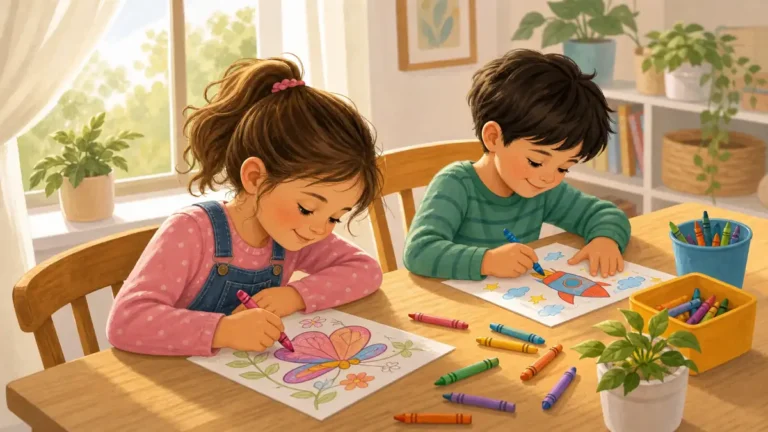
Side-by-side coloring is one of the few screen-free activities that genuinely works for siblings across a wide age range simultaneously — a 3-year-old with a bold simple page and a 9-year-old with a detailed scene can color at the same table for the same 30 minutes, each appropriately engaged at their own level. Build-and-play activities, read-alouds, and outdoor free play similarly scale across age ranges with appropriate adaptation.
Screen-free time doesn’t have to be a constant struggle. When the right activities are ready, the routine is consistent, and screens are a scheduled choice rather than a default, children adapt surprisingly quickly — and often surprise their parents with how much they genuinely enjoy the alternatives. Browse our full library of printable coloring pages at coloring.media, organized by theme, age, and season, and build your family’s screen-free activity foundation starting today.