

Earth Day coloring activities give kids a hands-on, creative way to engage with environmental themes — oceans, forests, animals, recycling, and the natural world — that turns April 22nd from a date on the calendar into a genuinely memorable learning experience. They work equally well in the classroom, in homeschool, and at home, and they connect naturally to science, social studies, and SEL curriculum already happening in spring.
Why Earth Day Coloring Activities Work for Kids
Abstract environmental concepts — climate change, biodiversity, ecosystems — are genuinely difficult for young children to grasp through text or lecture alone. Coloring pages that visualize these concepts make them tangible: a child who colors a coral reef, a rainforest, or a recycling diagram is building a visual-spatial understanding of these environments that words alone can’t create.
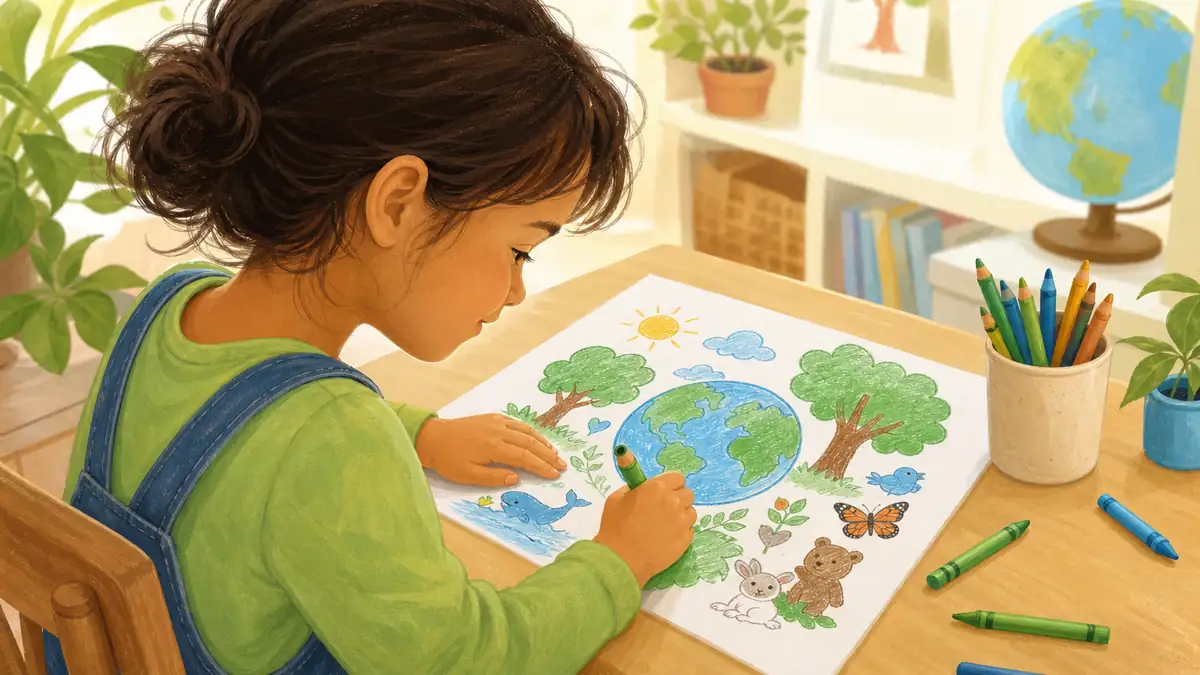
Earth Day coloring also gives children agency. In a world of large, abstract problems, completing a beautiful page about nature and displaying it is a small but real act of care — and that feeling of caring and contributing is developmentally important for building environmental values in young children.
Earth Day Coloring Activity Ideas
Nature and Ecosystem Pages
Rainforests, oceans, forests, wetlands, and meadows — each ecosystem is a coloring opportunity that doubles as a science lesson. Our nature coloring pages and science and nature pages provide ecosystem and nature subjects across detail levels. Pair each page with a simple fact: “Rainforests cover only 6% of Earth’s surface but contain more than half of all plant and animal species.”
Earth Day Animals
Endangered and threatened species are a powerful Earth Day coloring subject — children develop empathy for animals through the act of giving them color and attention. Our animal coloring pages include many species connected to conservation conversations: polar bears, sea turtles, tigers, whales, and butterflies. Discuss why each animal matters and what threatens it after coloring.
Plant and Flower Pages
Earth Day is a natural time for plant-focused coloring — trees, flowers, gardens, and green growing things. Our flower and plant pages provide a range of plant subjects from simple single flowers (toddler-appropriate) to detailed garden and forest scenes for older children. Pair coloring with actual planting — a seed in a small pot — for a full sensory Earth Day experience.
Life Cycle Pages
Life cycle diagrams connect Earth Day themes to science curriculum naturally. A butterfly or frog life cycle page illustrates ecological interdependence in a form children can hold and color. Our life cycle pages provide clear, colorable diagrams for butterflies, frogs, plants, and more.
Earth Day Coloring Activities by Age
Toddlers and Preschoolers (Ages 2–5)
Keep Earth Day simple and joyful for very young children — a flower, a tree, a friendly animal. The concept of “taking care of the Earth” at this age is best embodied in small, concrete actions: watering a plant, picking up a piece of trash, coloring a beautiful nature page and displaying it. Our easy pages with bold outlines make Earth Day coloring accessible and satisfying at this age.
Kindergarten and Early Elementary (Ages 5–8)
This age group is ready for the concepts of ecosystems, food chains, and simple environmental science. Earth Day coloring pages featuring multiple species in an ecosystem prompt rich discussion: “Who eats who? What happens if the bees disappear? Why do we need trees?” Follow the coloring with a short non-fiction read-aloud about the environment.
Upper Elementary (Ages 8–12)
Older children can engage with more complex environmental themes through coloring — detailed ecosystem diagrams, labeled anatomy of environmental systems (the water cycle, the carbon cycle), and artistic pages about specific conservation issues. Pair coloring with a student-led research project: “Color this page about coral reefs, then find three facts about coral bleaching.”
Earth Day Classroom Coloring Activities
Earth Day falls during active school time (April 22nd), making it ideal for classroom integration:
- Morning work: Earth-themed coloring page waiting at each desk on April 22nd — an immediate, memorable start to Earth Day
- Science center: Ecosystem or life cycle coloring during a spring science unit
- Class mural: Each student colors one animal or plant from a specific ecosystem; assemble into a collaborative “Living World” display
- Take-home pledge: Color a nature page and write one Earth Day pledge on the back to take home to families
For more Earth Day and seasonal coloring resources, visit our Tips & Techniques hub.
Frequently Asked Questions
What Earth Day coloring activities are best for young kids?
Simple, joyful nature pages — flowers, trees, friendly animals — work best for preschool and early elementary Earth Day coloring. The goal at this age is building positive feelings about the natural world and a sense of care for living things, not environmental science instruction. Bold outline pages that produce beautiful finished art are ideal.
How can I connect Earth Day coloring to curriculum?
Use coloring pages that match your current science unit: life cycle pages during spring biology units, ecosystem pages during habitat studies, plant pages during botany units. Add a labeling or writing component to make the coloring activity explicitly academic. For social studies, use Earth Day coloring as an entry point to discussions about community responsibility and global citizenship.
Are Earth Day coloring activities appropriate for homeschool?
Yes — Earth Day provides a natural anchor for spring nature study in homeschool. Use coloring pages as part of a multi-day Earth Day unit: day one is nature observation and coloring, day two is non-fiction reading, day three is a hands-on project (planting, composting, nature journaling). The coloring page becomes the illustrated cover of the unit notebook.
What materials do I need for Earth Day coloring activities?
A printer, plain paper, and crayons or colored pencils are all you need. For Earth Day specifically, green and blue pencils are essential — the natural colors of the Earth. For a special Earth Day project, print on recycled paper and note that choice explicitly as part of the environmental message of the activity.
How do I make Earth Day coloring activities more meaningful for kids?
Pair the coloring with a simple action — plant a seed, pick up litter on a walk, turn off lights for an hour. Connect the page to a real place: “We’re coloring a coral reef today. Did you know there’s a coral reef the size of Italy off the coast of Australia?” Display finished pages in a prominent place to signal that the child’s care for the Earth is visible and valued.
Earth Day is one of the most natural occasions in the school year to connect coloring to the larger world. A beautifully colored nature page displayed in a home or classroom is a small act of environmental care that means something to the child who made it. Browse our nature, animals, flowers and plants, and life cycle pages to build your Earth Day coloring collection.