
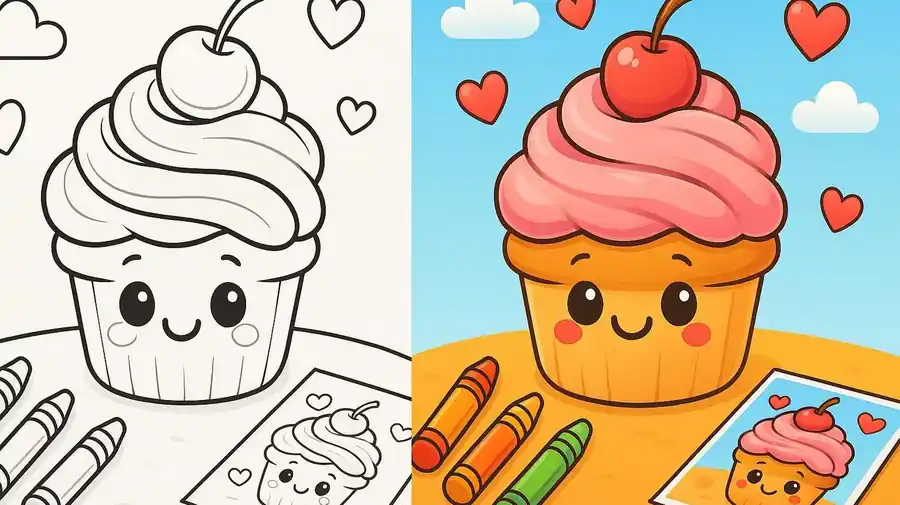
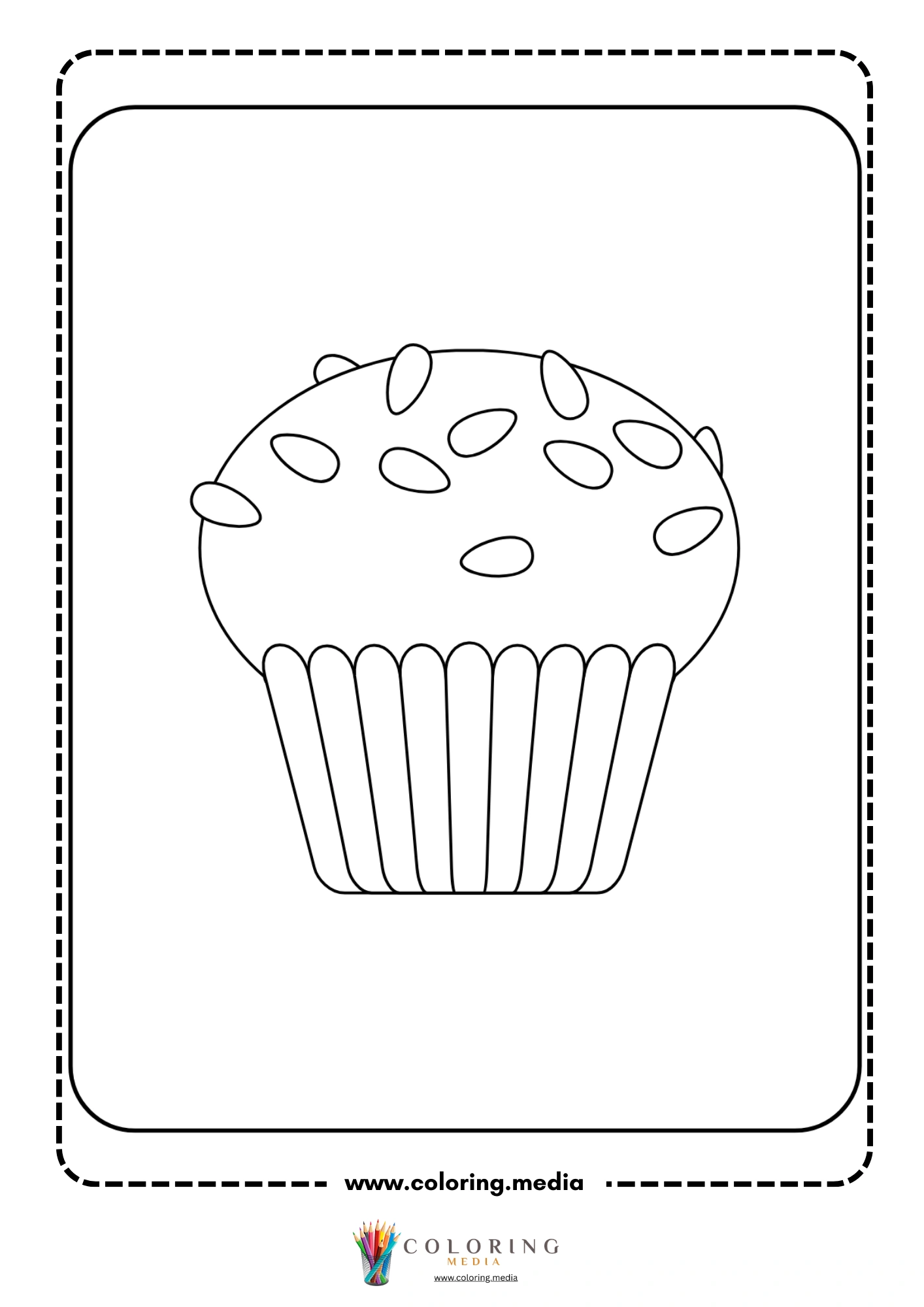
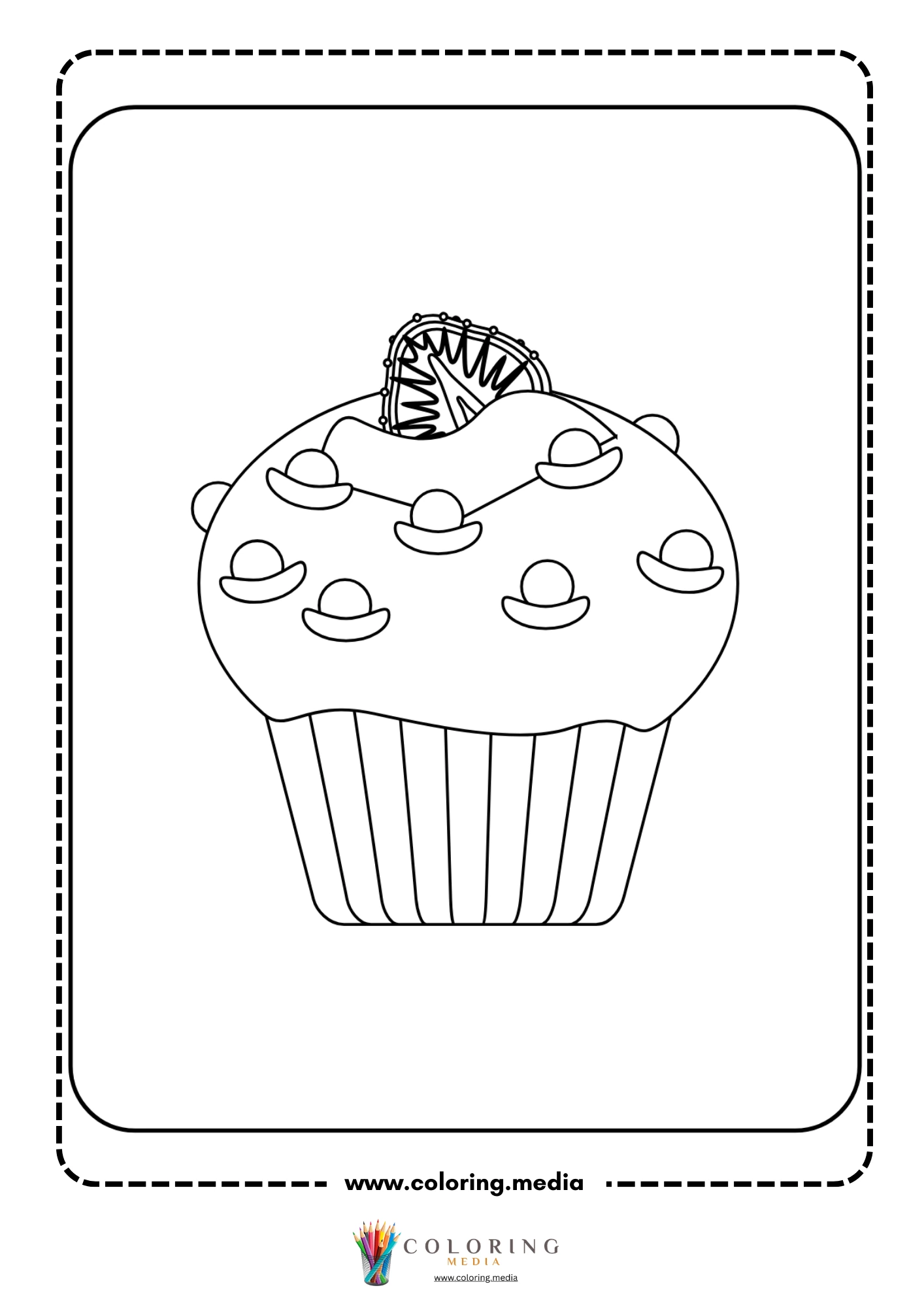
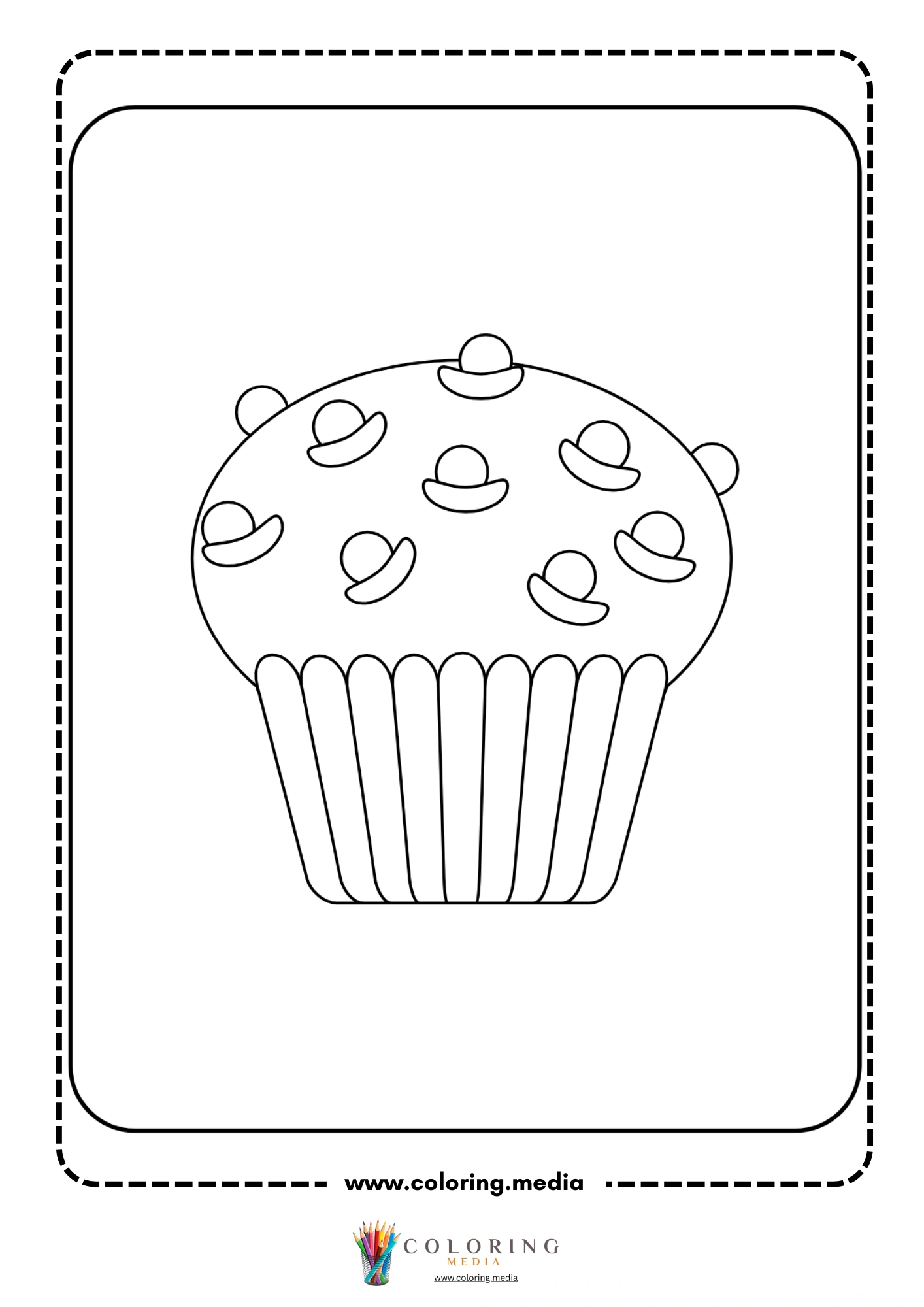
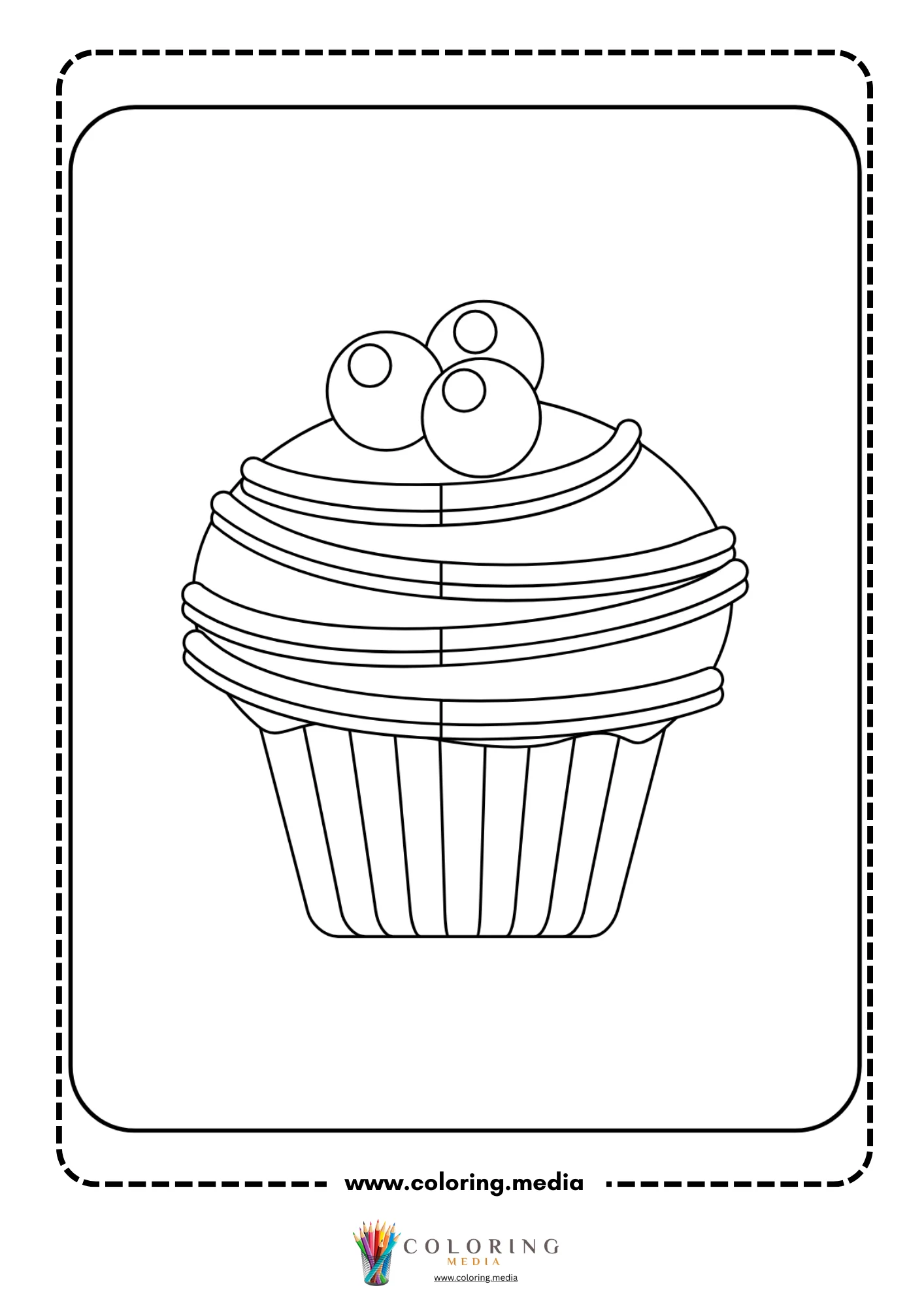
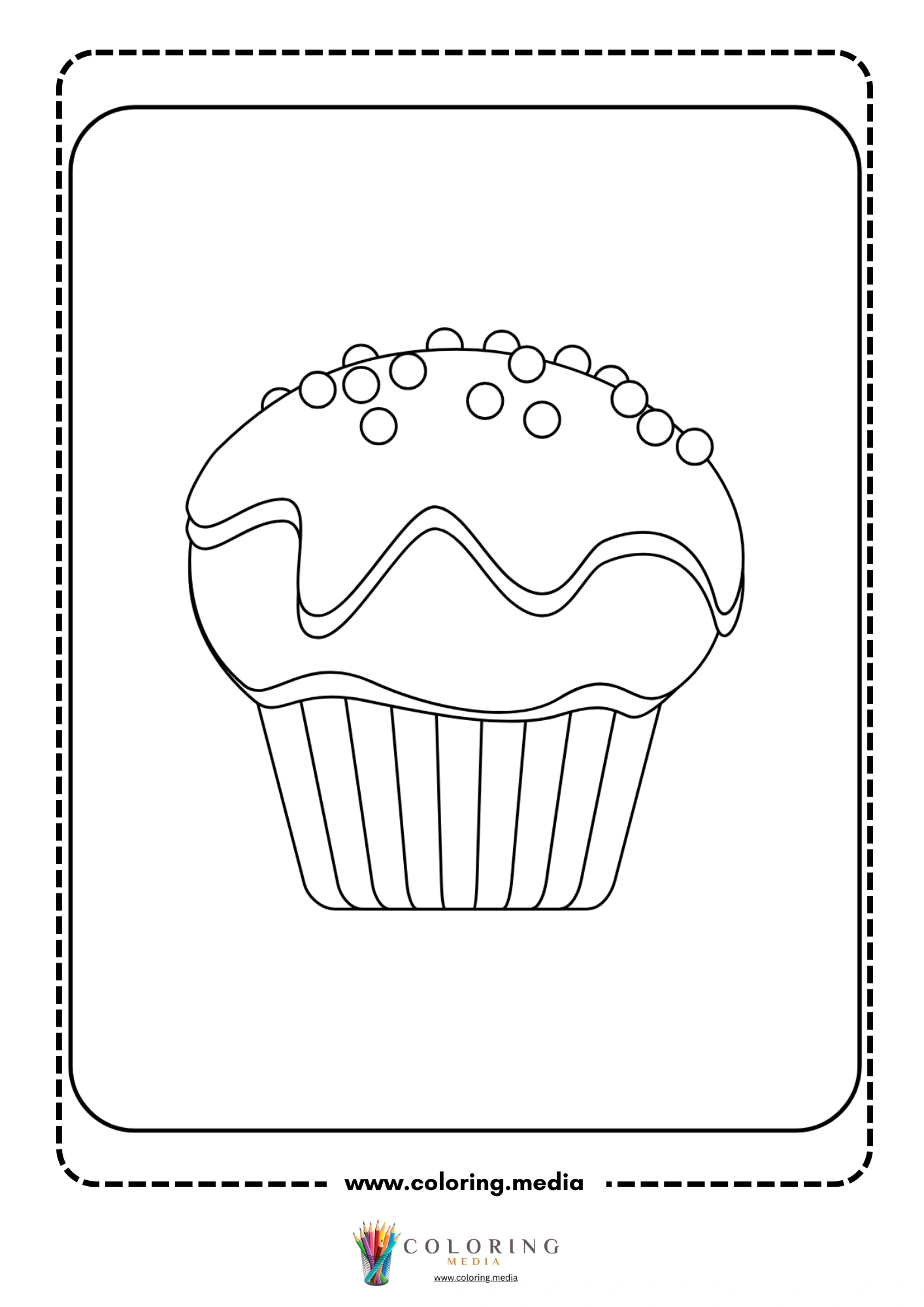
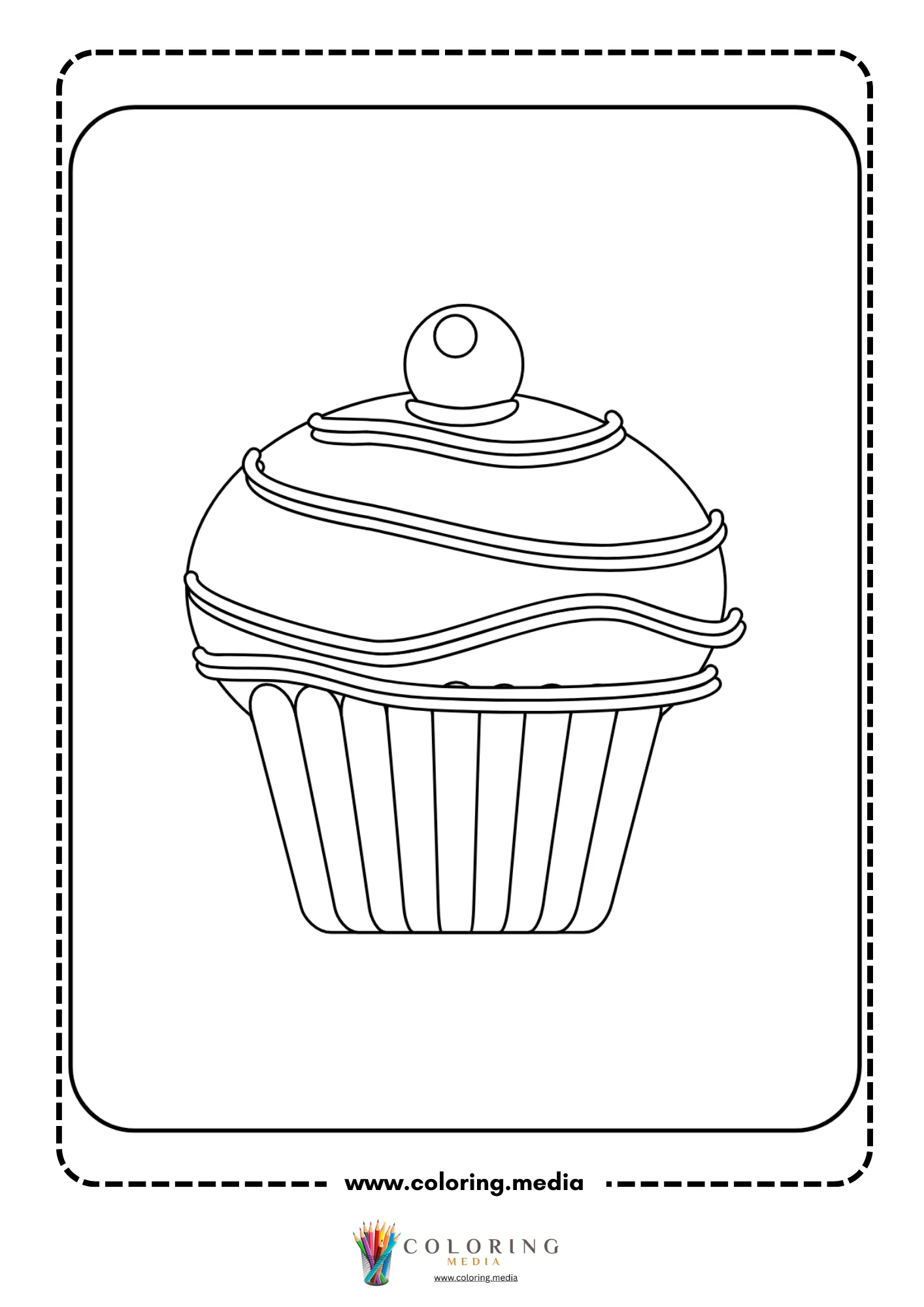
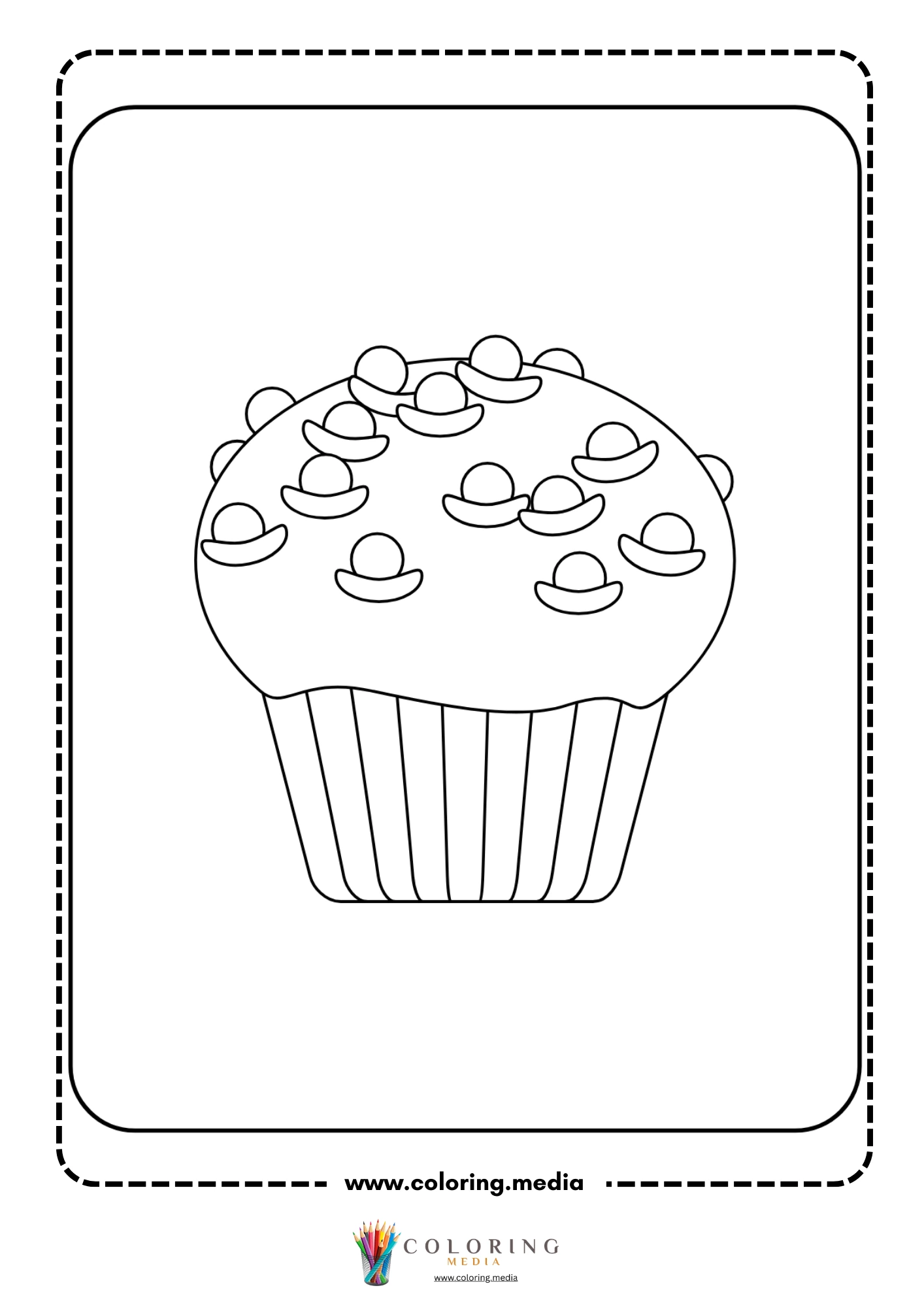
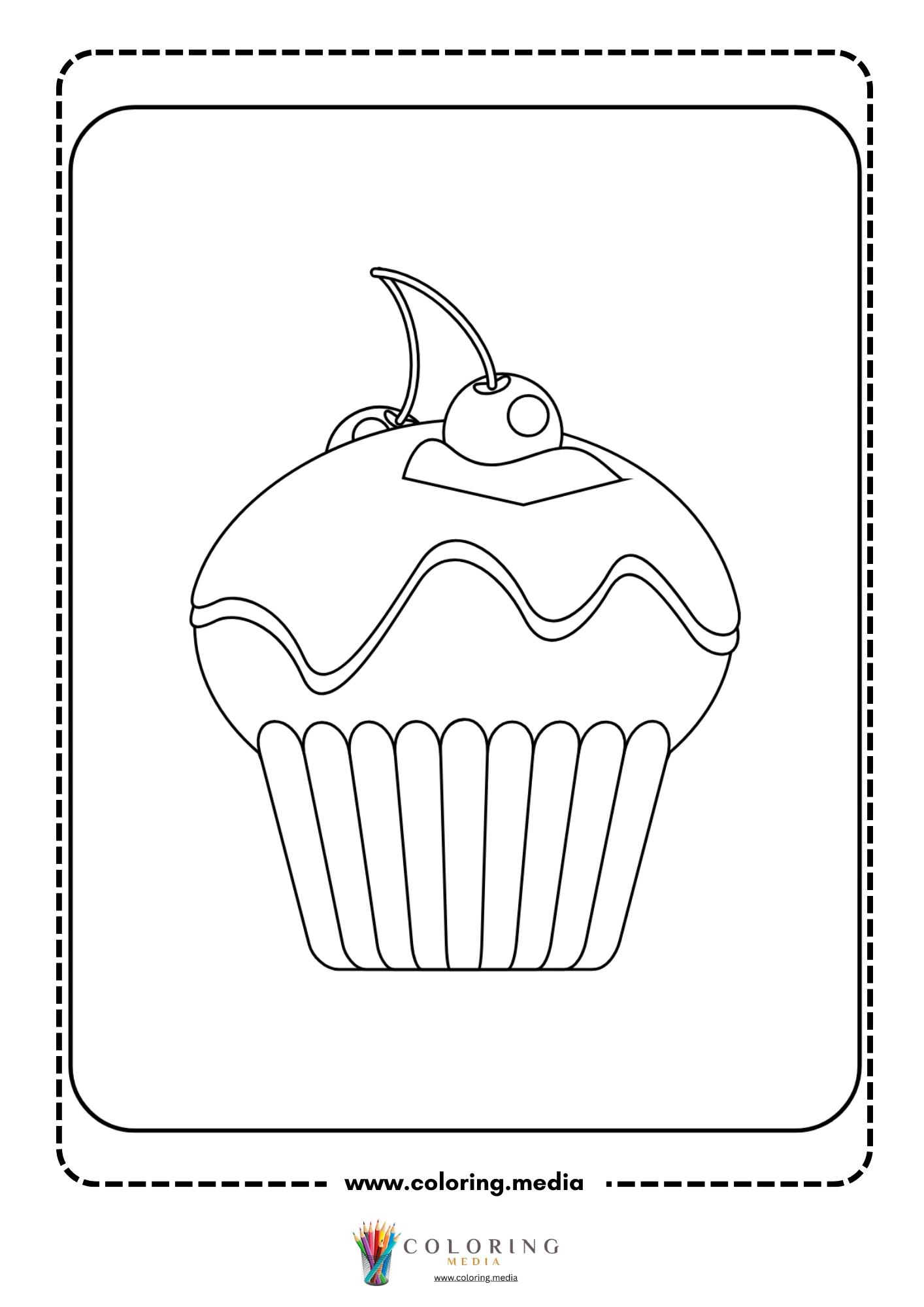
Each of these 20 pages shows a single cupcake, centered on the page with plenty of breathing room. What makes the set interesting is how much variety the illustrator found in one subject: frosting applied as a tall swirl, as a flat dome, as a peaked mound; toppings ranging from a single cherry to scattered sprinkles to blueberries nestled into the icing; paper wrappers with ridged pleats or smooth sides. The outlines are confident and 2–3mm wide throughout, so younger children can fill them without constantly fighting to stay inside a thin line.
This collection is the kind that children return to repeatedly — the format is simple enough to finish in one sitting, but there are enough variations to keep the choices fresh across multiple pages. Kindergarteners enjoy the freedom to pick any frosting color they want with no “right answer” in sight. Everything here is free to download and easy to print.
Free Printable Cupcake Coloring Pages
This collection includes 20 printable cupcake coloring pages featuring a variety of frosted cupcakes with different topping combinations — swirl-frosted with sprinkles, dome-frosted with a cherry on top, flat-glazed with chocolate chips, strawberry-topped, and more. Each page shows one cupcake as the sole subject, drawn in a realistic illustration style with clean outlines, visible wrapper pleats, and enough frosting texture detail to make coloring rewarding. Pages are formatted for US Letter or A4 paper and print cleanly on standard copy paper.


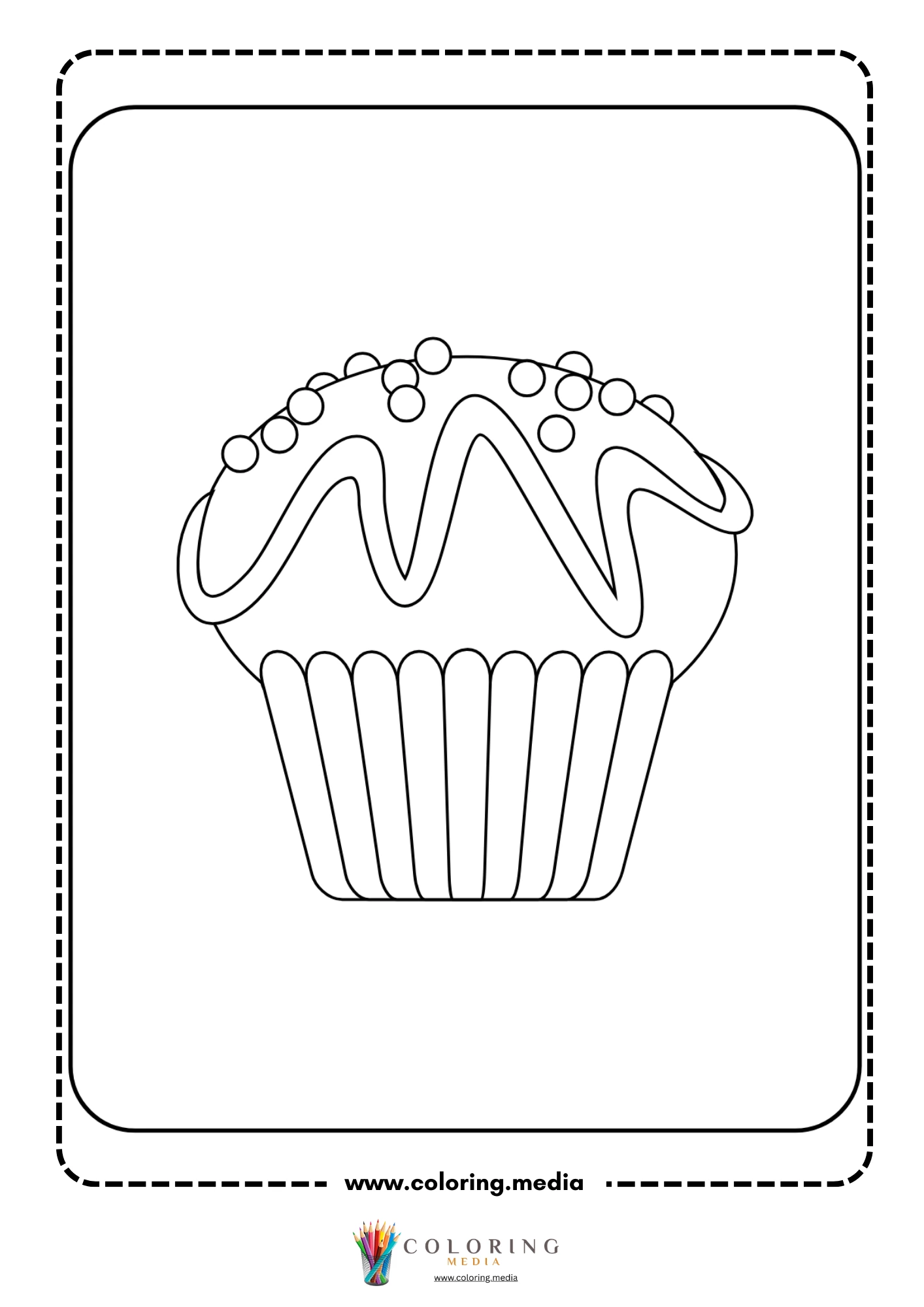
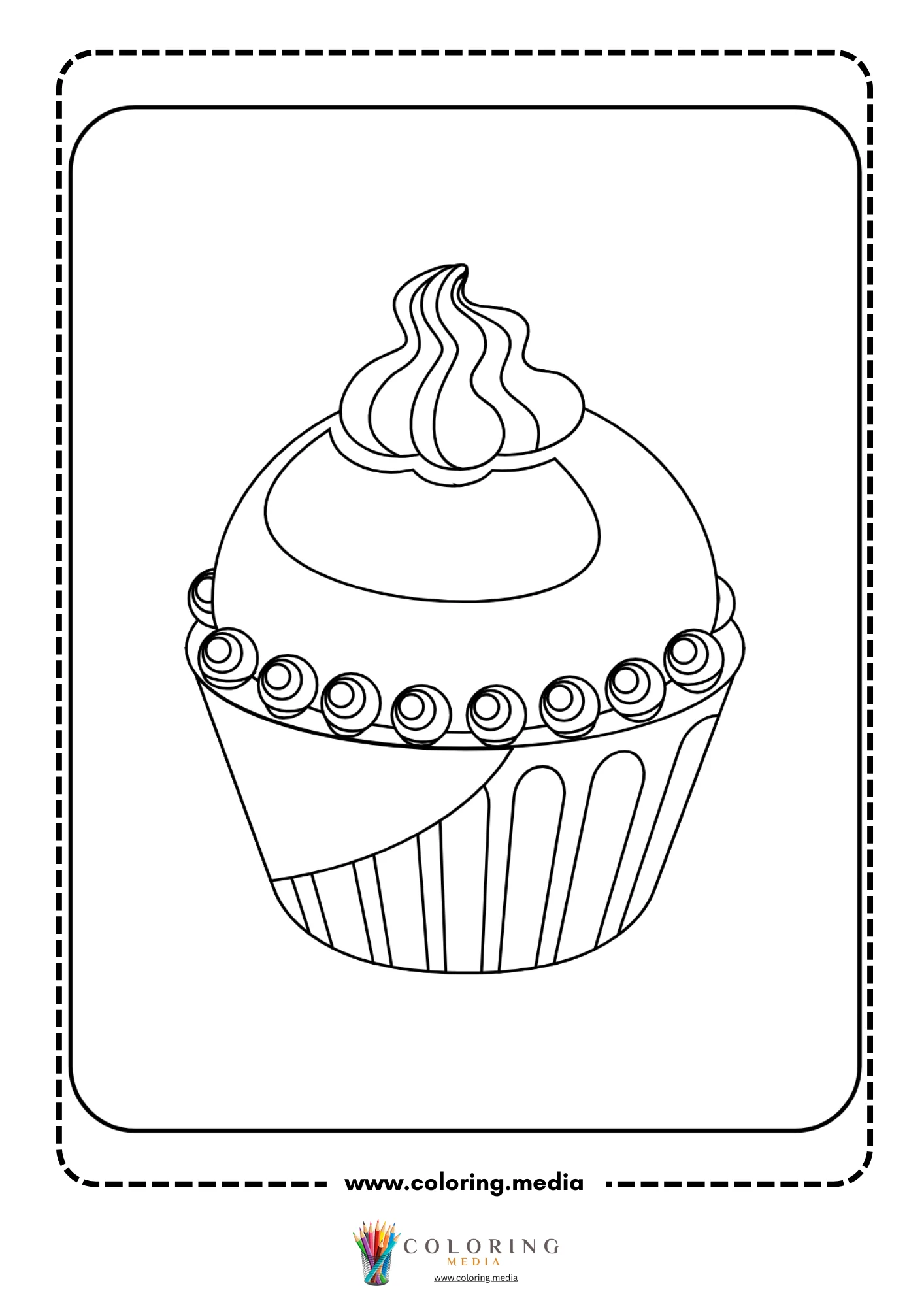

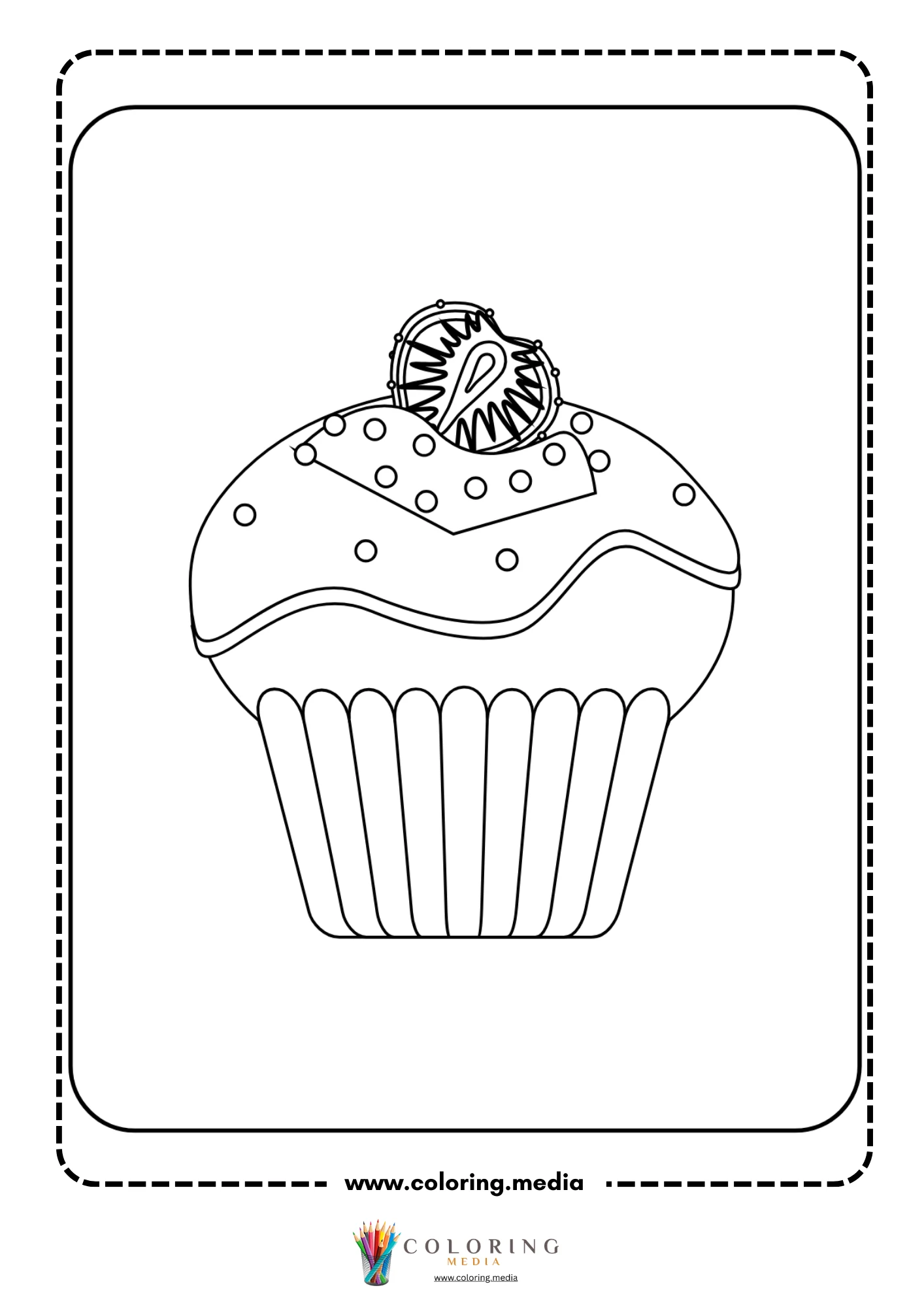
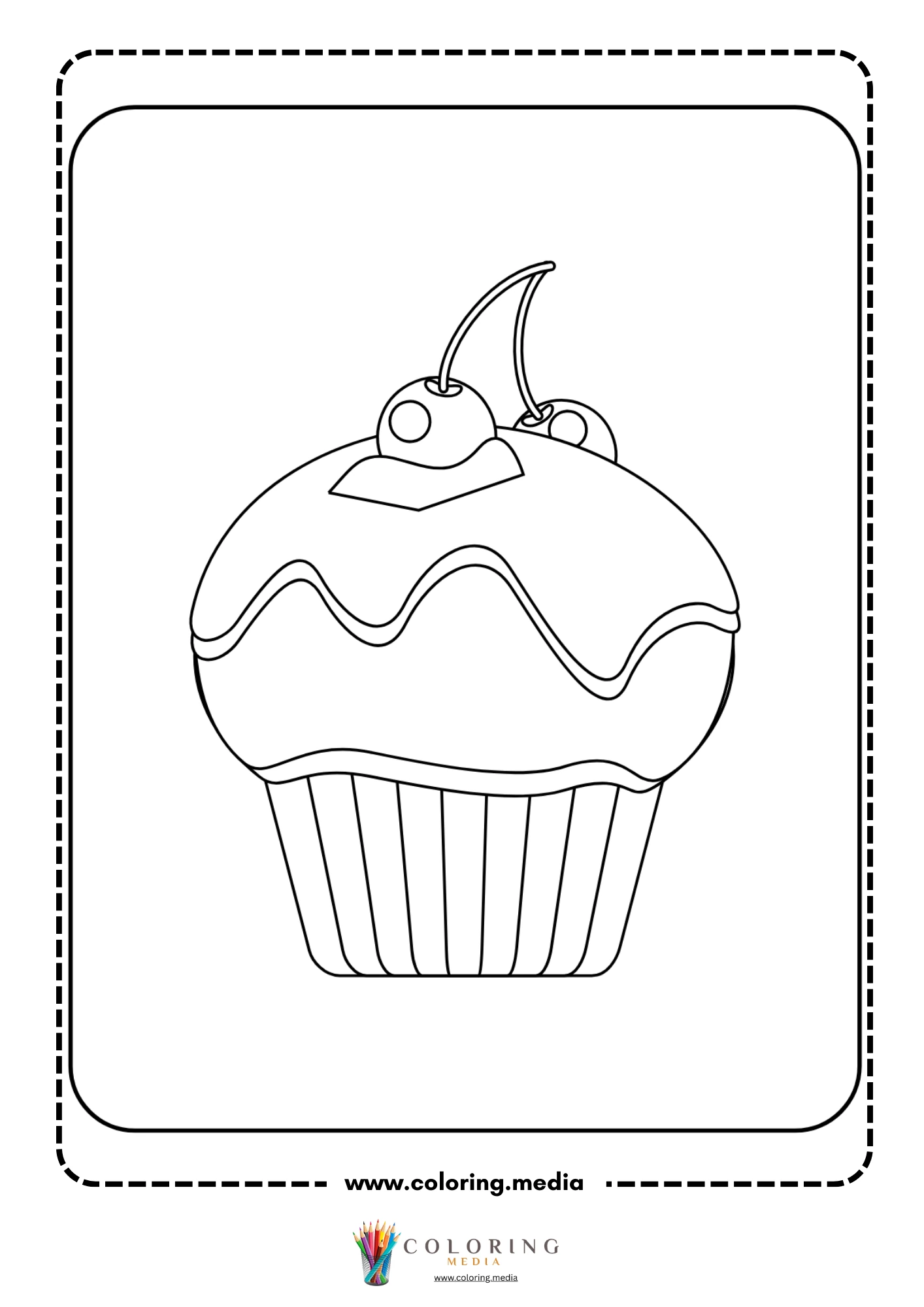

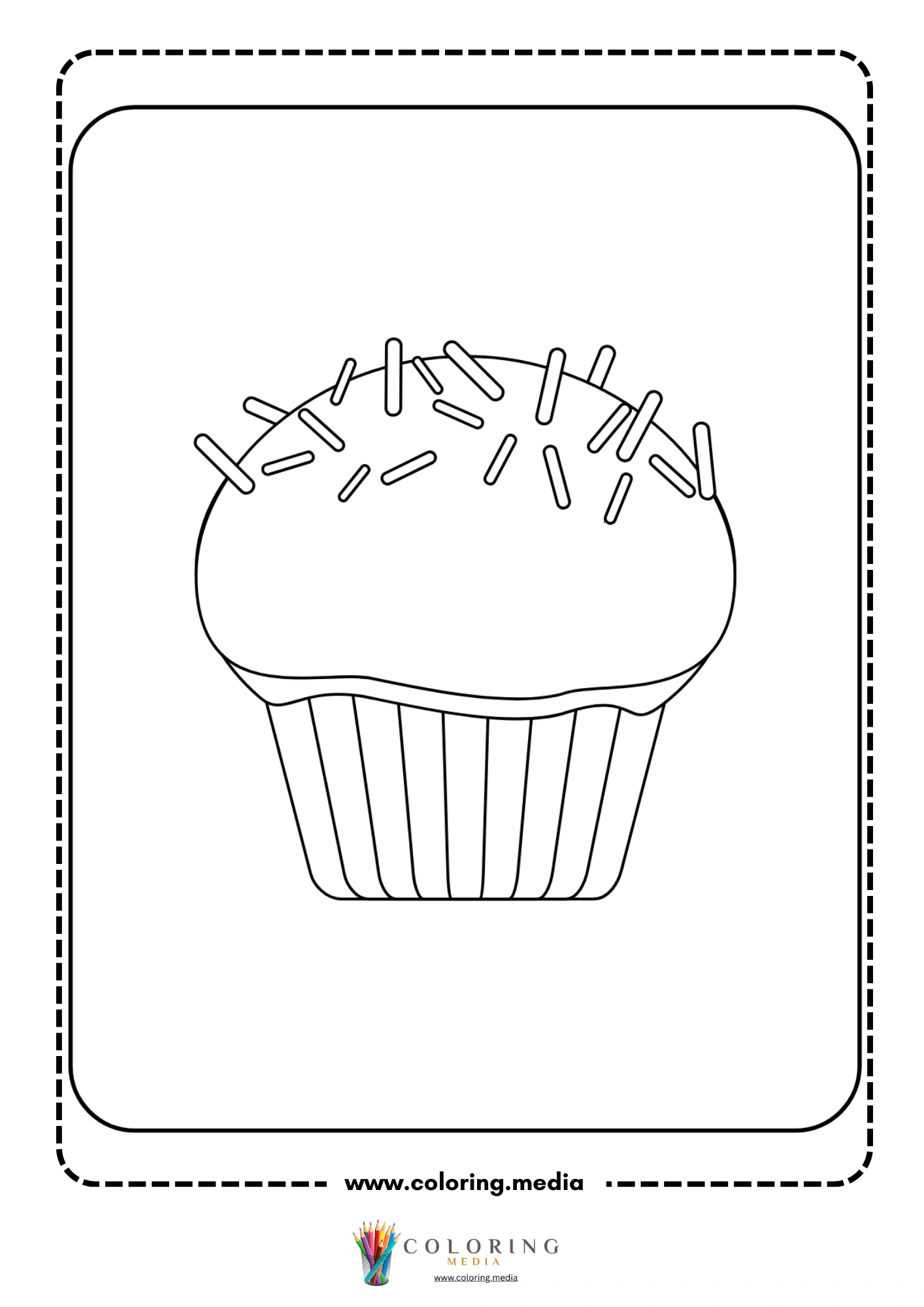
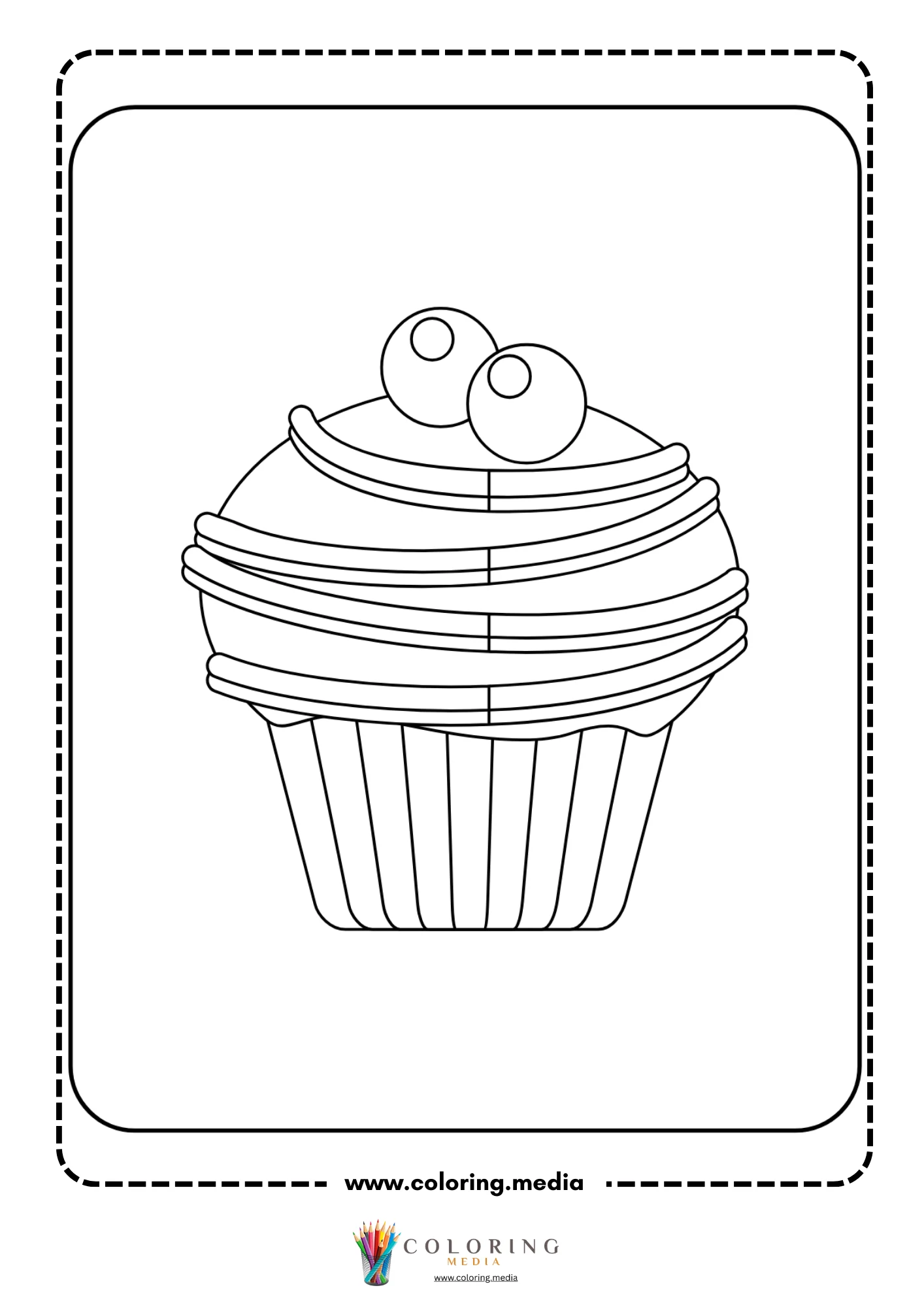
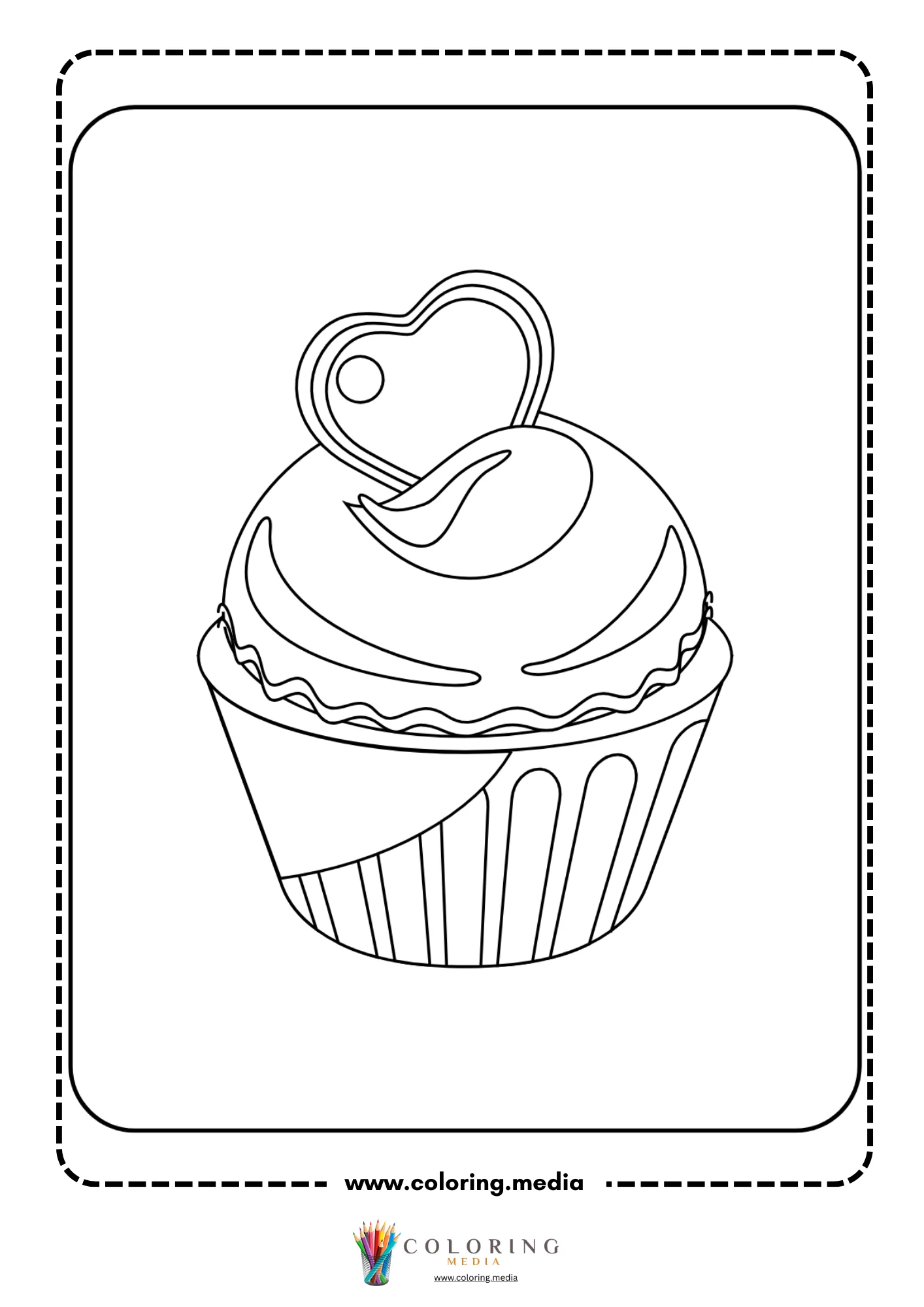
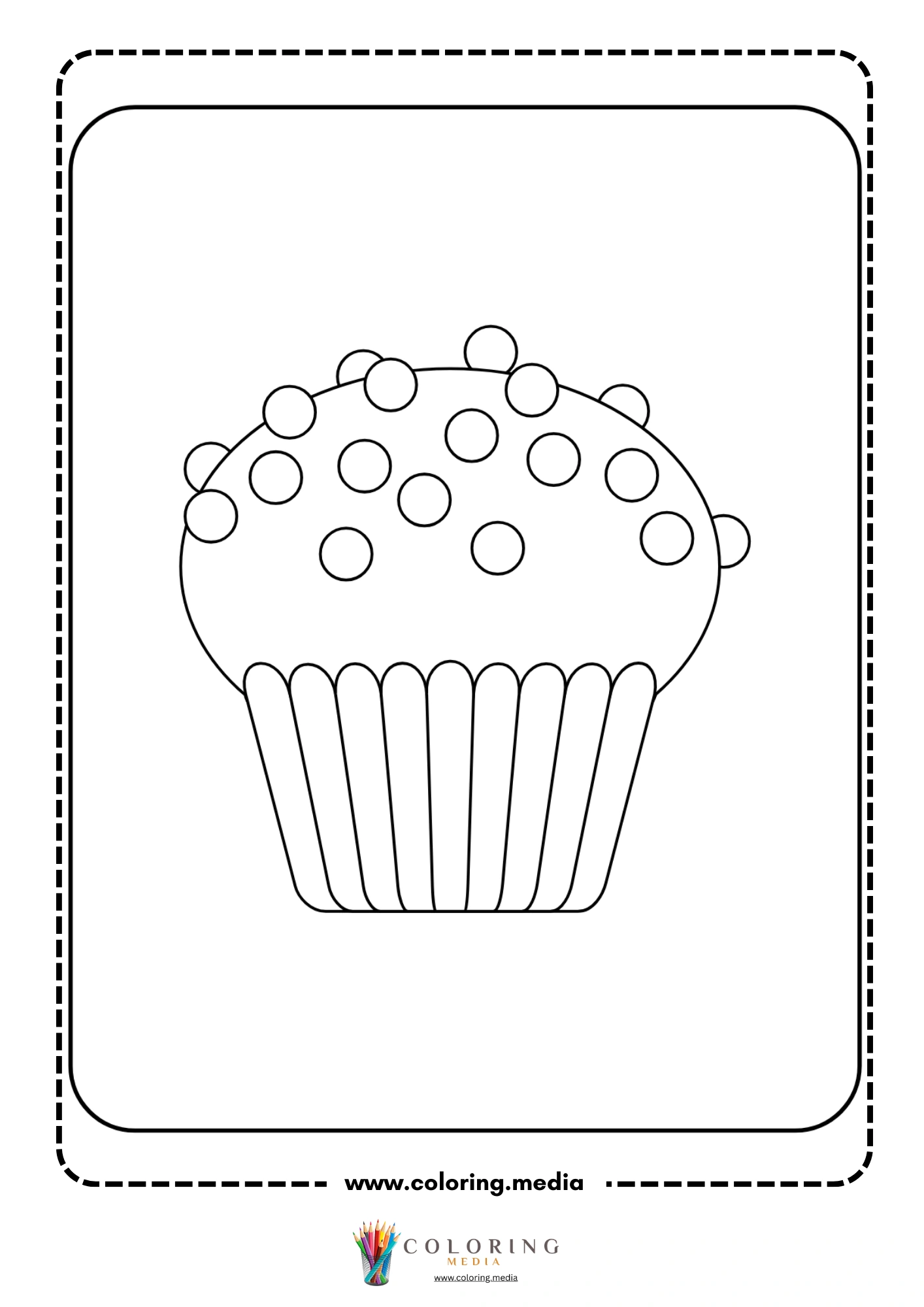
Who Are These Cupcake Coloring Pages Best For?
The open frosting areas and 2–3mm outlines put these pages firmly in kindergarten and early elementary territory — ages five through nine. A five-year-old with chunky crayons can confidently fill the frosting dome and the wrapper without feeling boxed in by thin lines. An eight-year-old with colored pencils can go further, adding gradient shading to the frosting swirl or giving each sprinkle a different color. The subject matter is universally appealing at this age range, and the single-subject format means finishing one page feels like a genuine accomplishment rather than a partial effort.
These also work well as a low-stakes craft activity at birthday parties or baking-themed classroom days. Print a stack of different pages and let children pick the cupcake they want to color — the variety across the set means nobody ends up with the same page.
Interesting Cupcake Facts to Share While Coloring
The cupcake got its name from the measuring method, not the pan. Early American recipes in the 1800s described small cakes measured in cups rather than weighed — a cup of butter, two cups of flour, and so on. The small individual cakes became known as cup cakes long before paper liners or muffin tins were standard kitchen equipment.
Buttercream frosting holds its swirl shape because of its fat content. When softened butter is beaten with powdered sugar, millions of tiny air bubbles get trapped in the fat. Those bubbles give piped frosting its structure — the swirl holds its ridges even at room temperature because the butter stays semi-solid. Heat it above about 32°C and the swirl slowly melts flat.
Sprinkles are essentially hardened sugar tubes. They’re made by extruding a sugar-and-corn-starch mixture through tiny nozzles, then cutting it into short lengths and letting it dry. The shiny coating is a sugar glaze or confectioner’s wax applied in a tumbling drum. The jimmies (the oblong ones) and nonpareils (the tiny round ones) are made by the same basic process but with different nozzle shapes.
A single piping bag tip shape changes the entire look of frosted cupcakes. Professional bakers use dozens of different metal tips: the star tip creates ridged rosettes, the round tip makes smooth domes, the petal tip builds layered flower shapes. The frosting texture shown on these coloring pages — with its swirling ridges — is what a star tip or French star tip looks like in cross-section.
Creative Cupcake Coloring and Craft Ideas
Birthday Flavor Invention Before coloring, decide what flavor the cupcake is — then choose all colors based on that flavor. A lemon cupcake gets yellow frosting and a pale wrapper; a mint chocolate chip gets green frosting with dark brown chips.
Frosting Gradient Use two shades of the same color — say light pink and dark pink — and blend from the base of the frosting swirl to the tip, darker at the bottom, lighter at the peak.
Mix-and-Match Menu Color five different cupcakes, cut them out, and arrange them on a folded sheet of paper as a “bakery menu.” Add handwritten flavor names and pretend prices.
Wrapper Pattern Design Leave the frosting uncolored initially and focus on making the paper wrapper into a detailed pattern — stripes, polka dots, zigzags — then come back to coordinate the frosting color with the wrapper design.
Real Cupcake Comparison Color a page while a real cupcake is on the table. Try to match the colors as closely as possible — it’s harder than it sounds and teaches observation skills.
Seasonal Palette Color the same cupcake page using holiday palettes: red and green for Christmas, orange and black for Halloween, pastels for Easter. Compare the three finished versions side by side.
Sprinkle Counting After coloring a sprinkled cupcake, count every sprinkle and write the total on the back of the page. On the next sprinkle cupcake, try to color each sprinkle a different color and see how many colors you need.
How to Print These Cupcake Coloring Pages
Each page downloads as a PDF formatted for US Letter (8.5×11 inches) or A4 — no resizing needed. Standard 20lb copy paper works for crayons and markers; for wet media or heavy colored pencil layering, 65lb cardstock holds up without buckling. Printing in grayscale or draft mode is fine — the bold outlines reproduce cleanly at reduced ink settings.
Explore More Food & Treats Coloring Pages
If you enjoyed these pages, you may also like:
Cute Food Coloring Pages
Cute Fruits Coloring Pages
Delicious Donut Coloring Pages
All Food & Treats Coloring Pages