
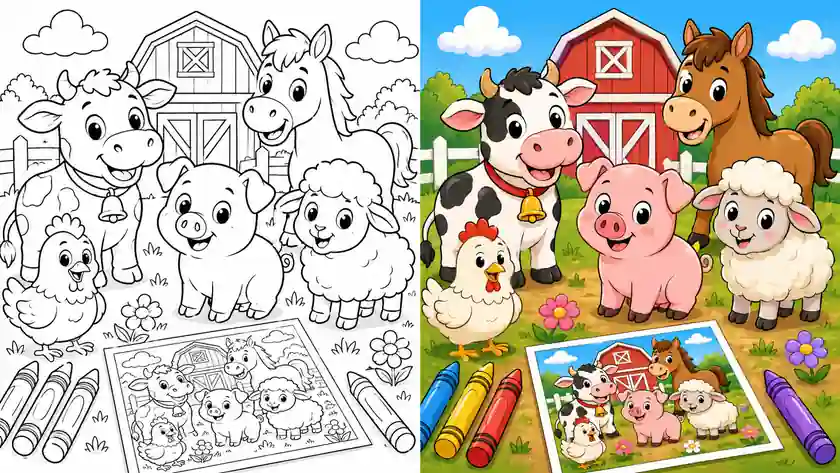
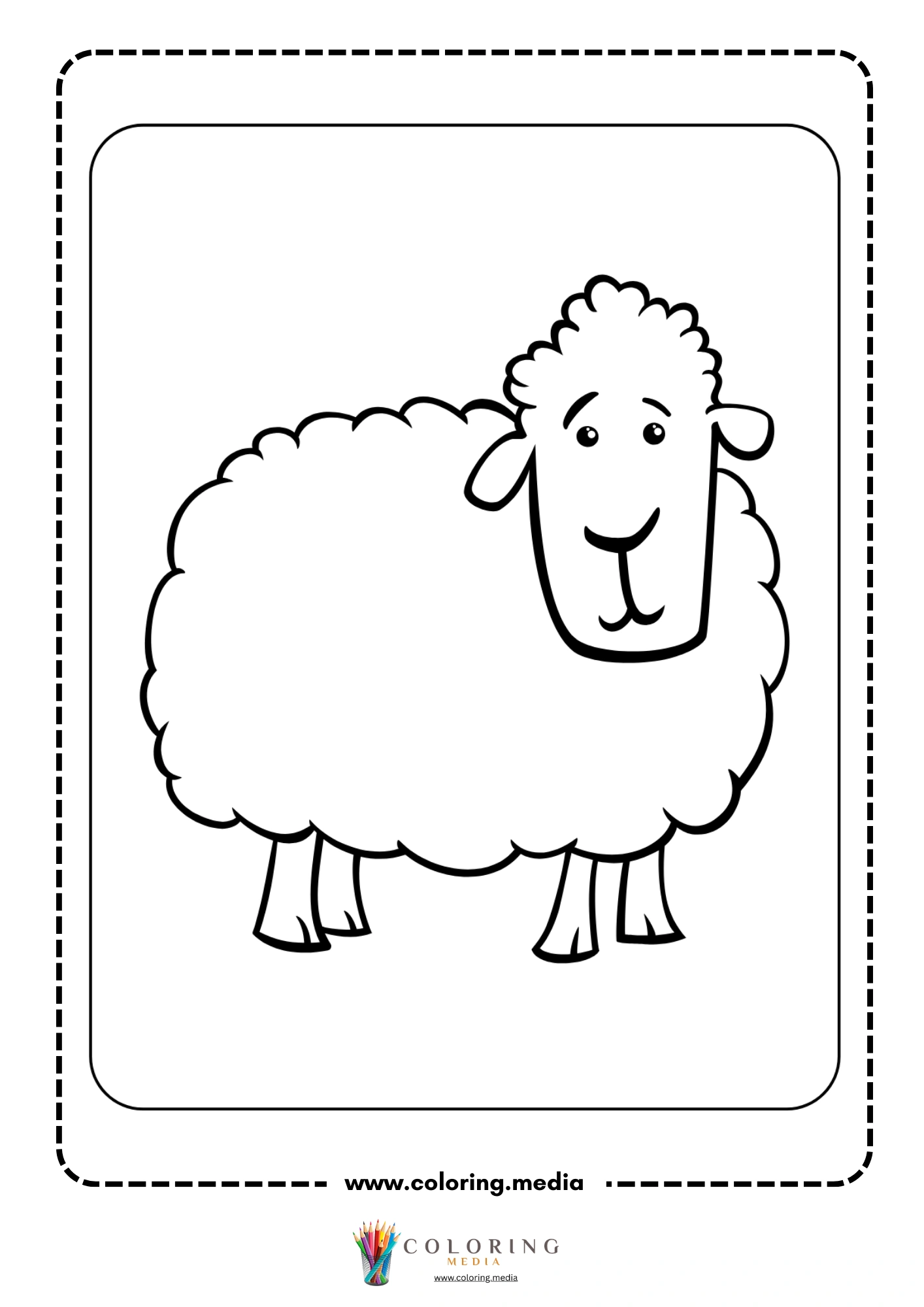
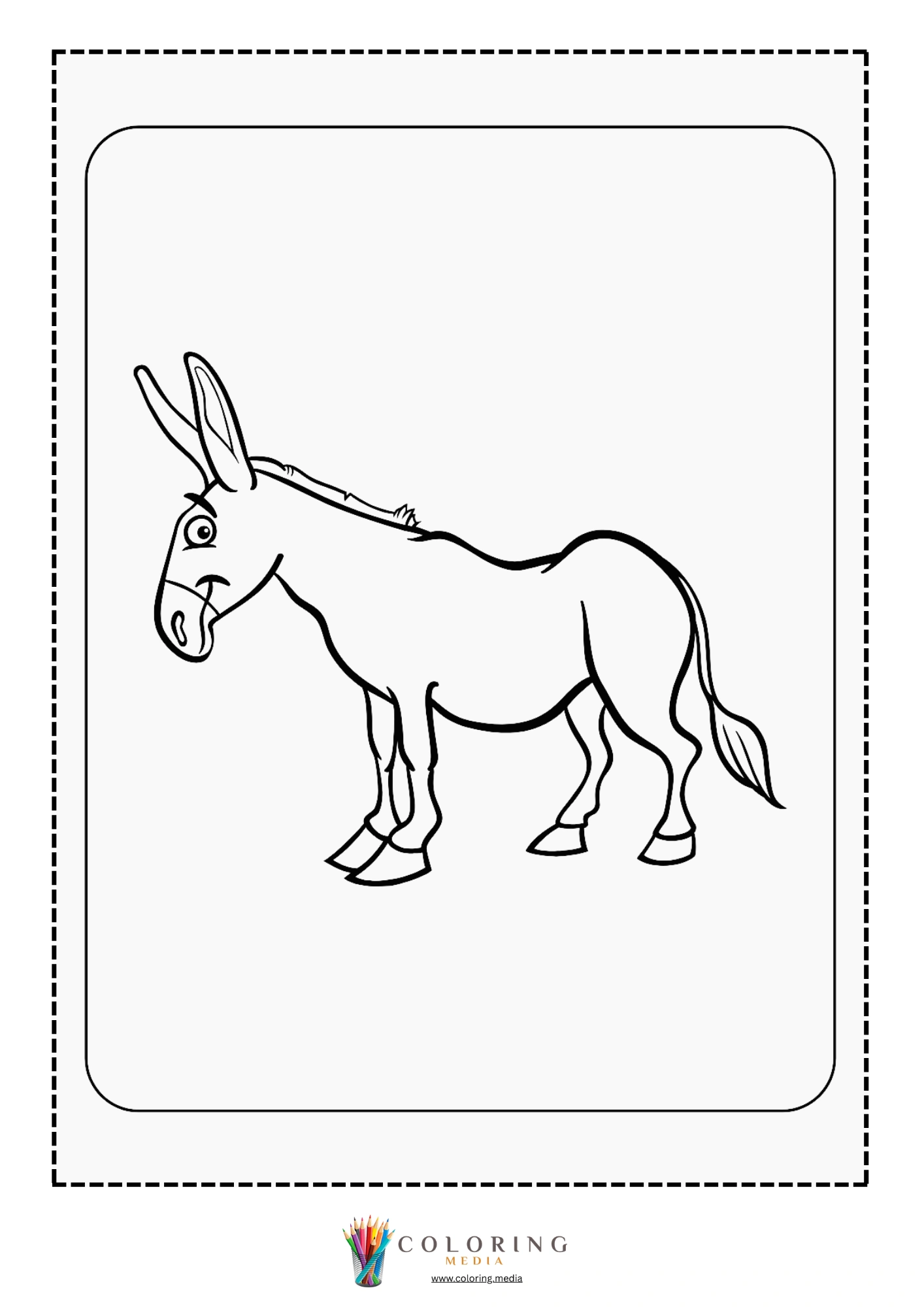
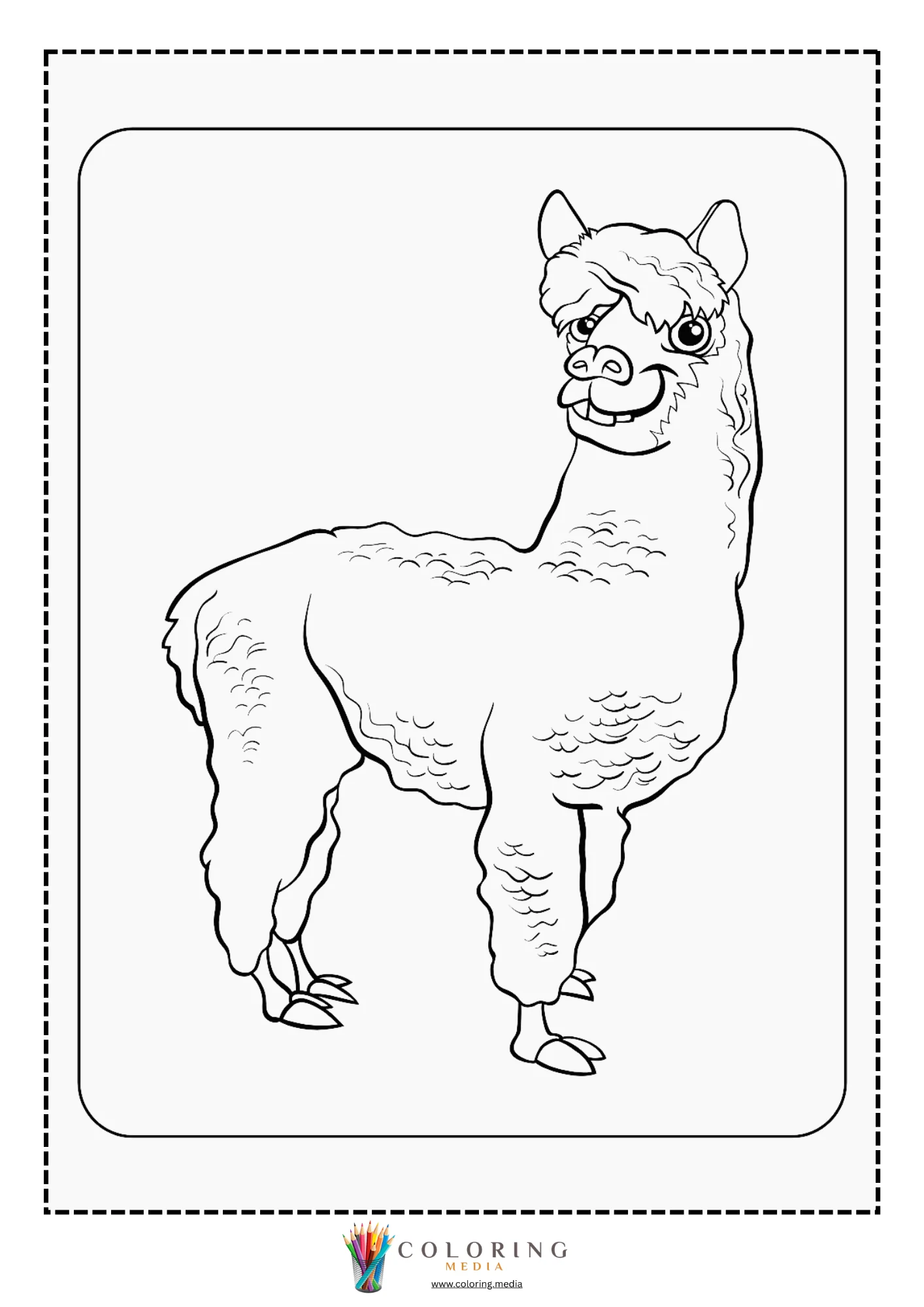
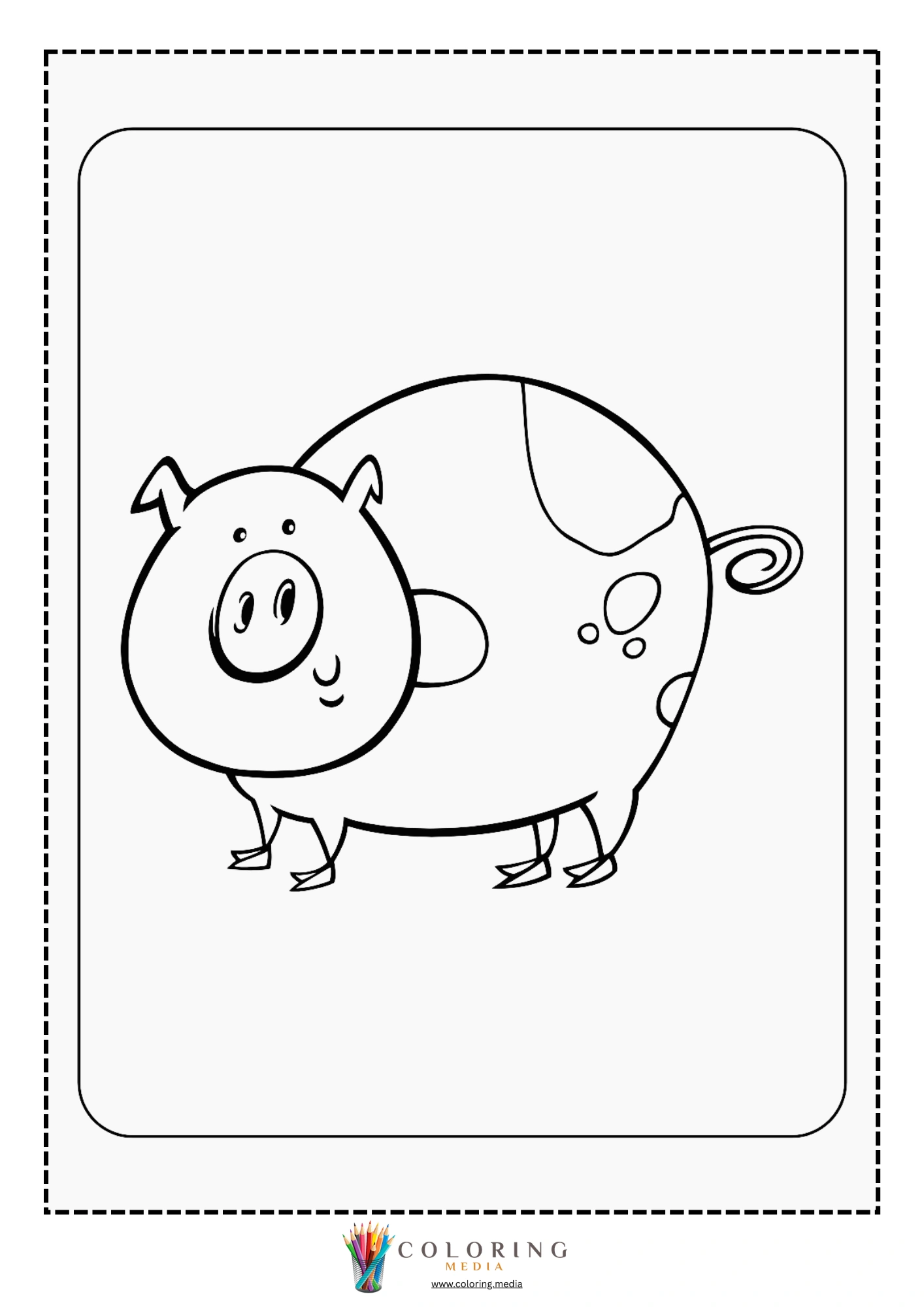
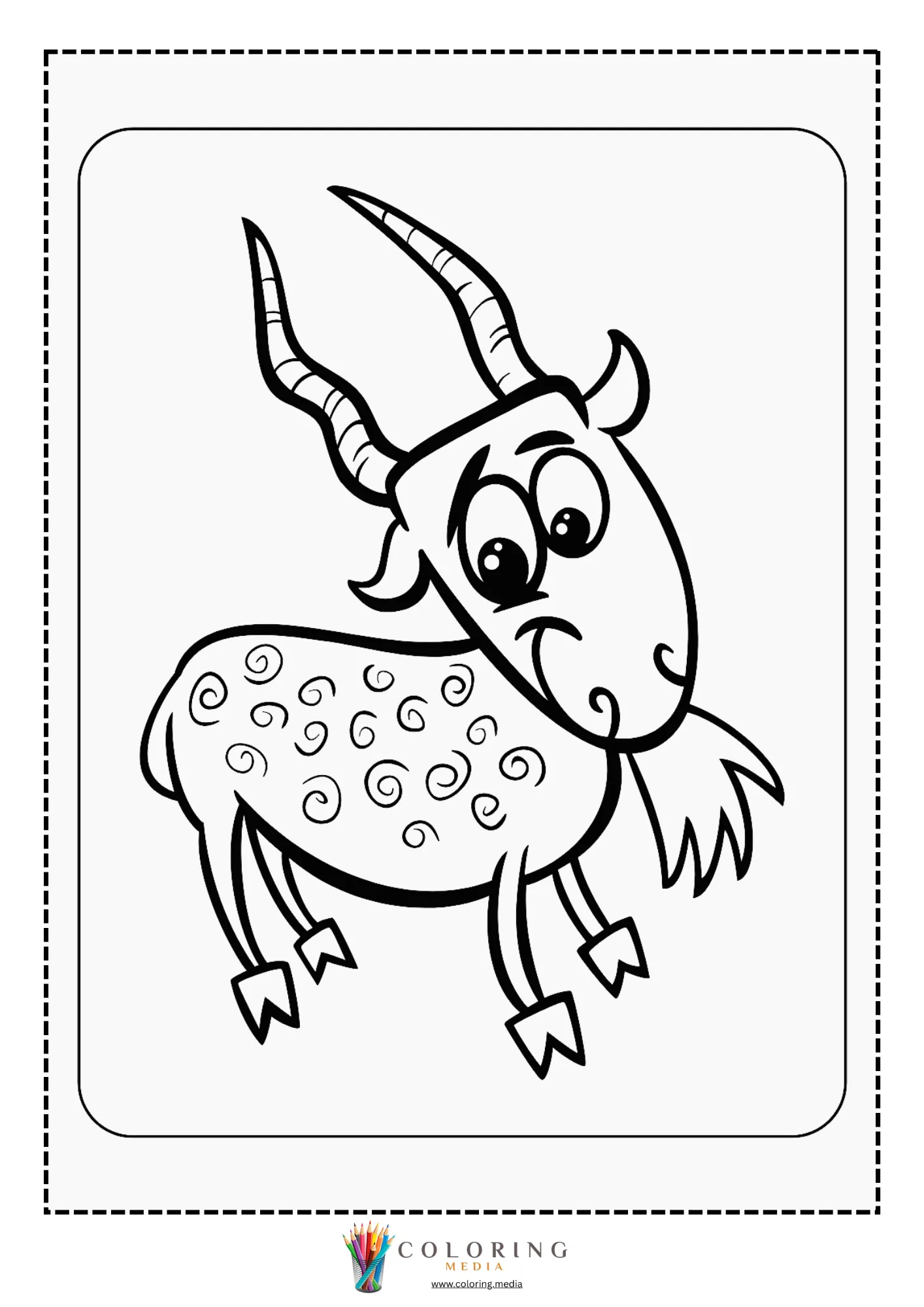
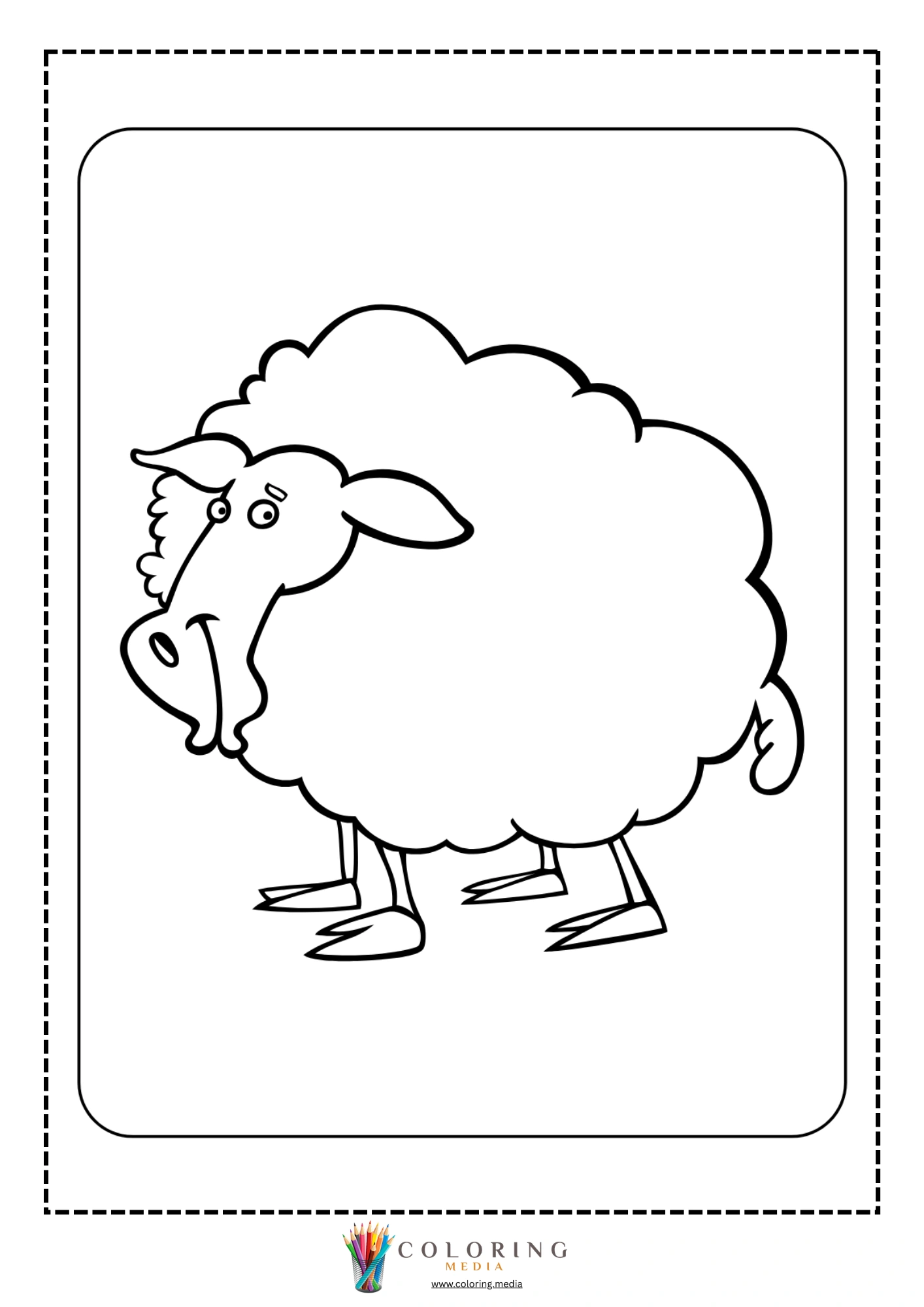
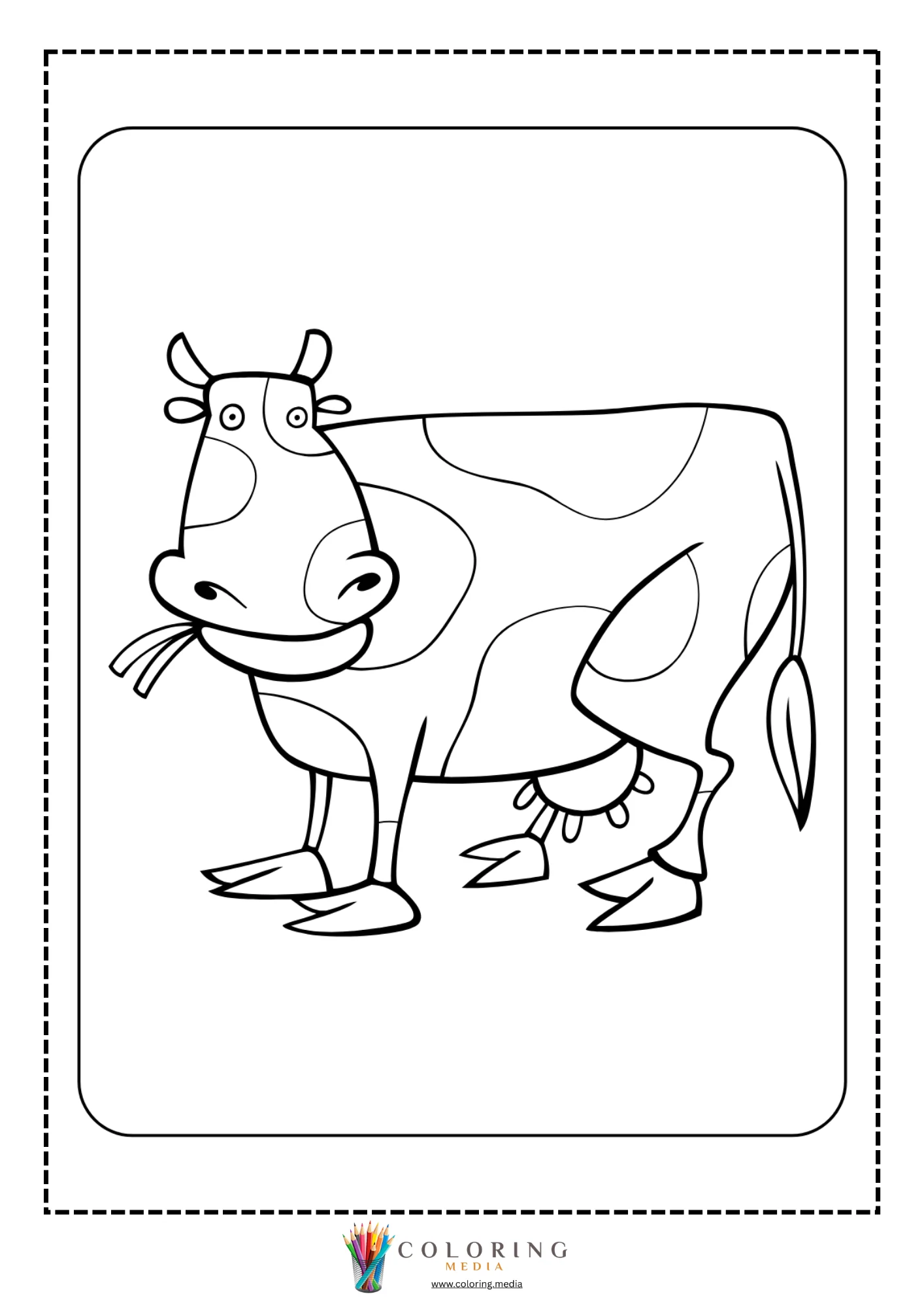
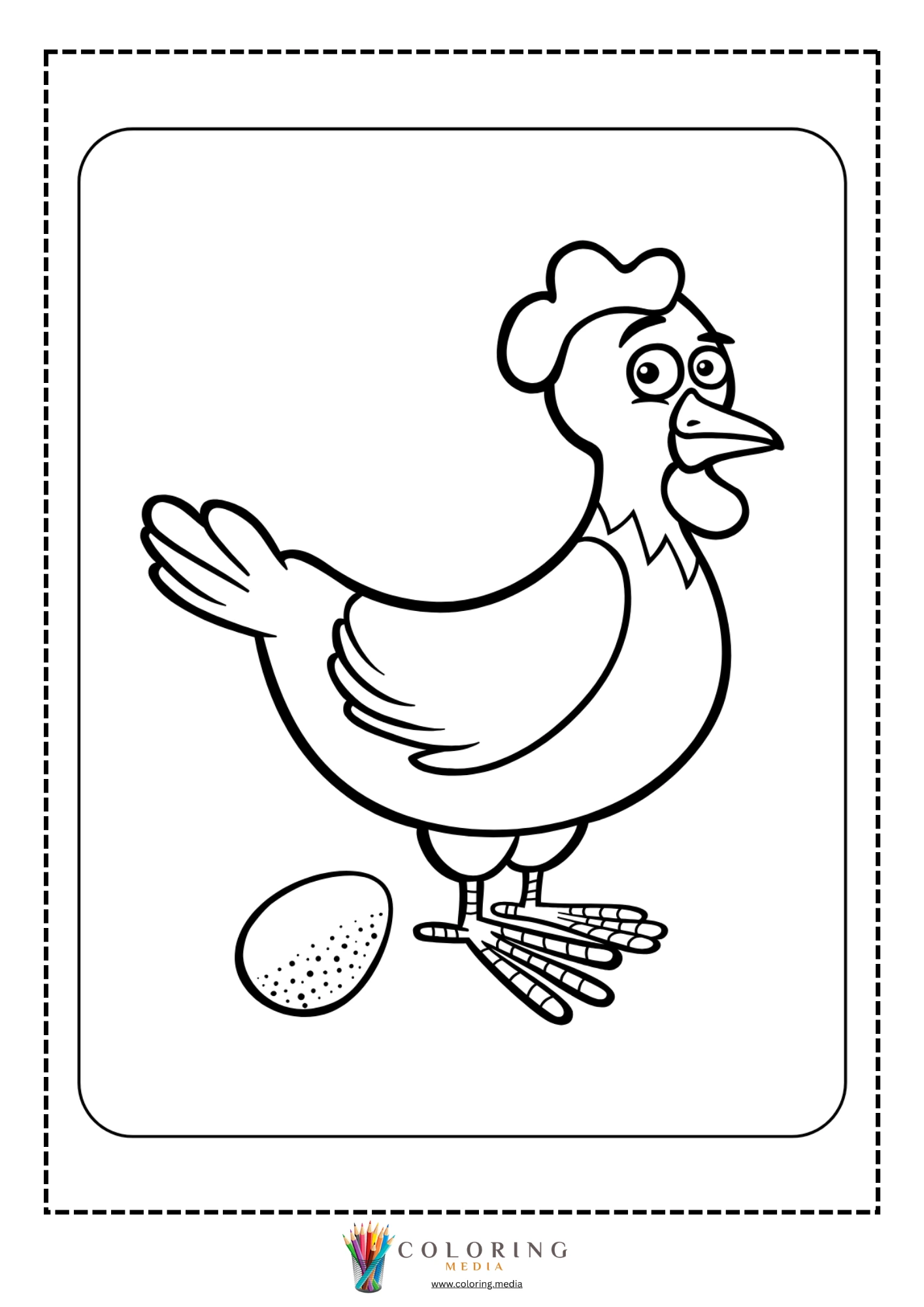
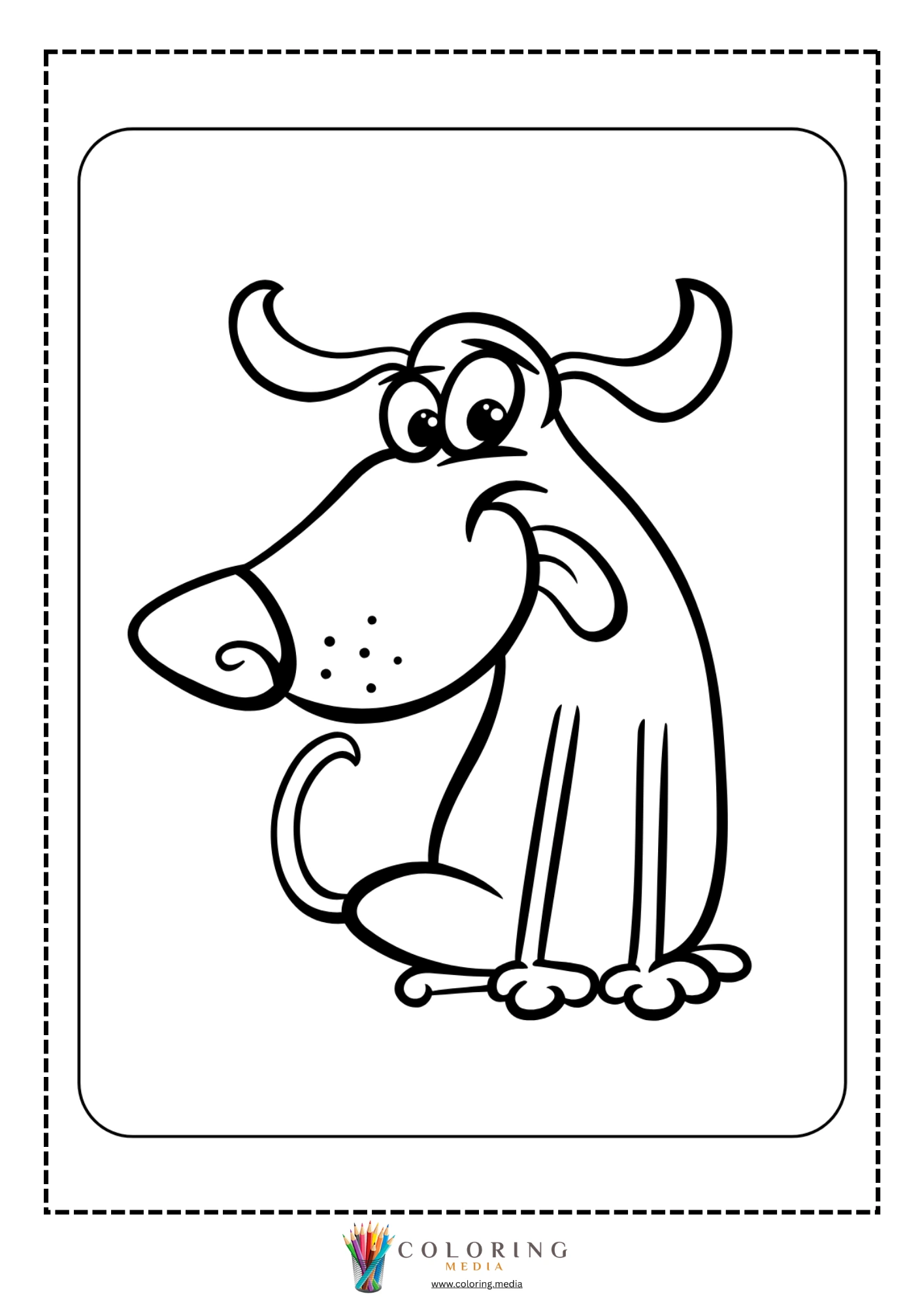
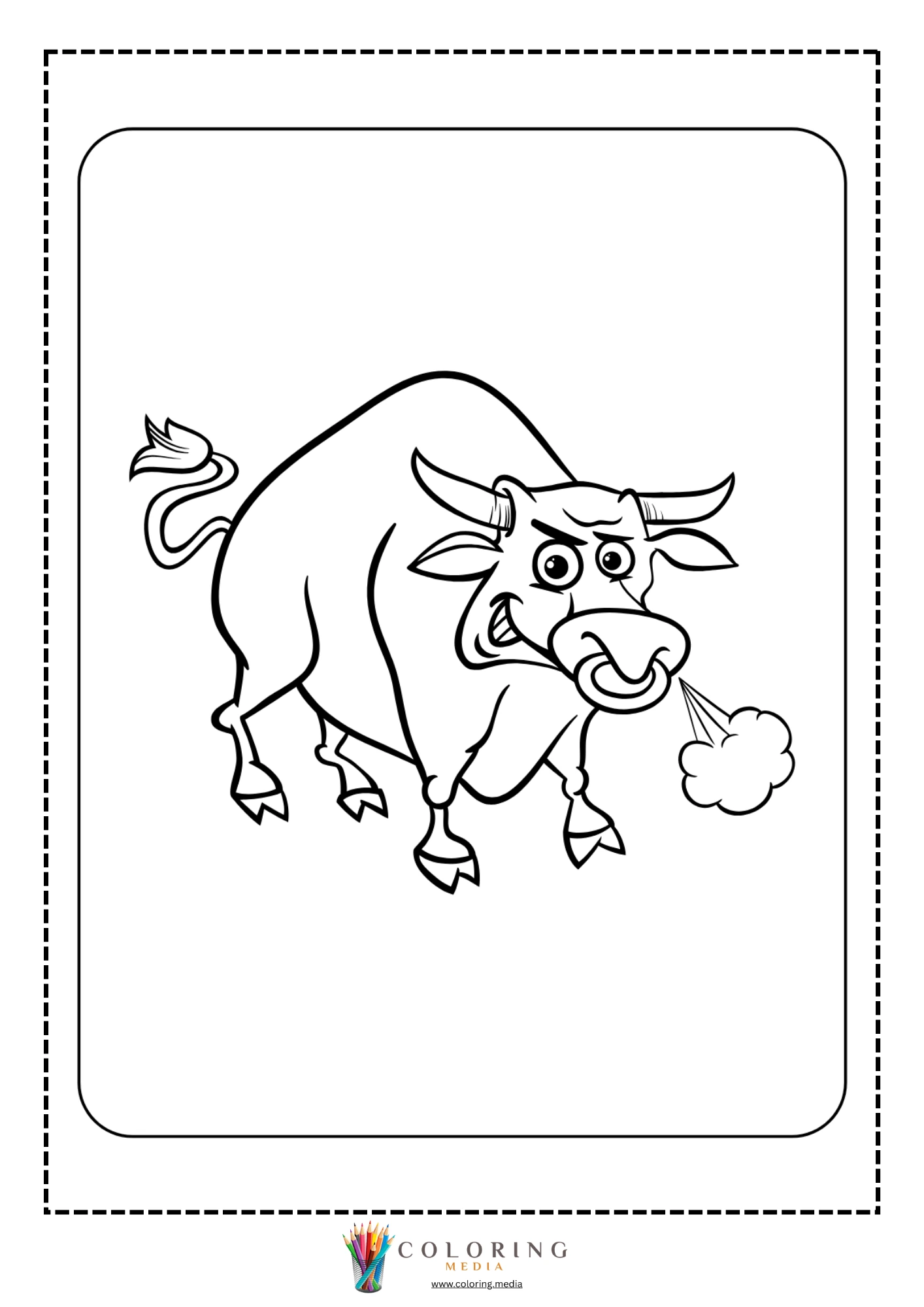
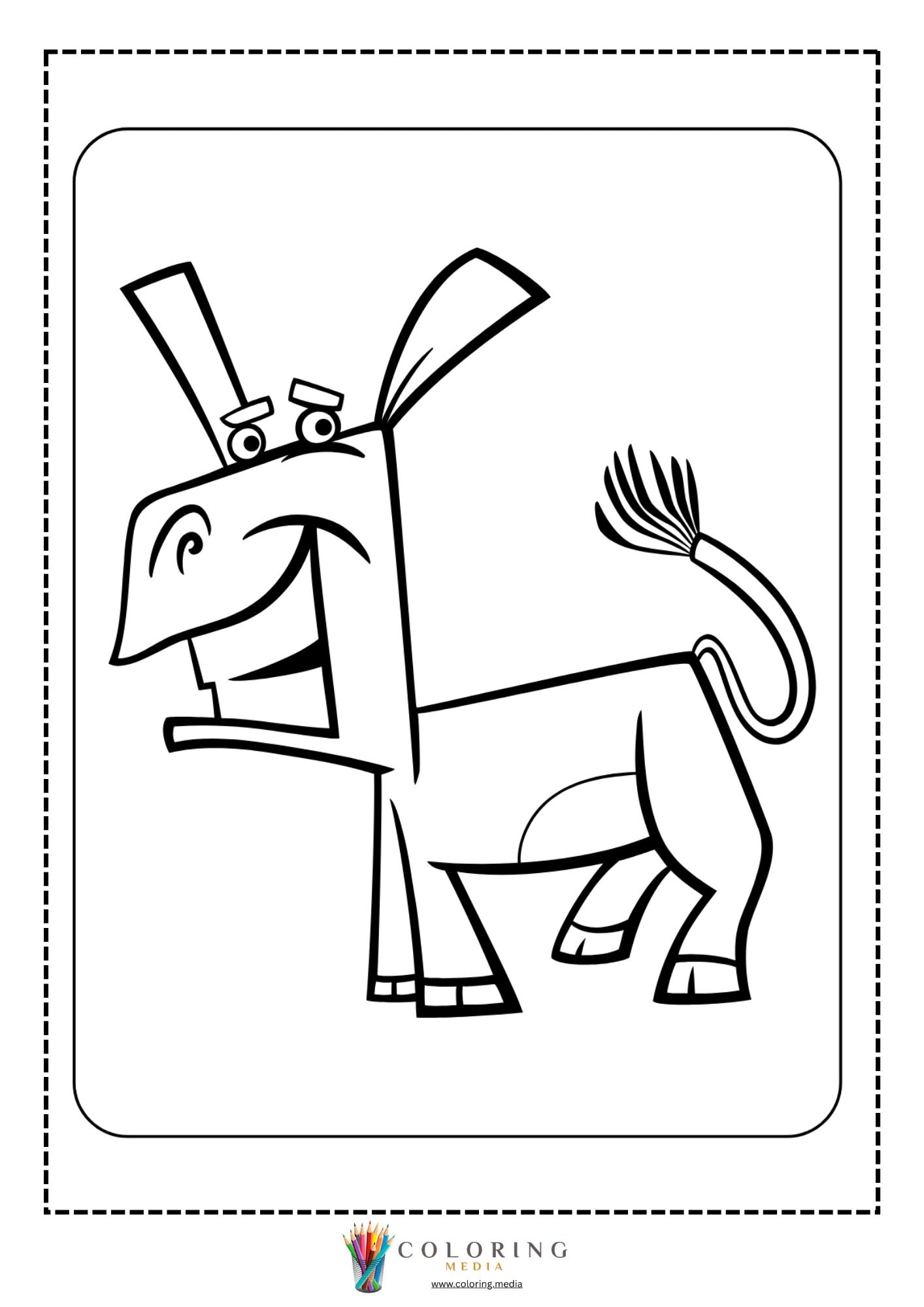
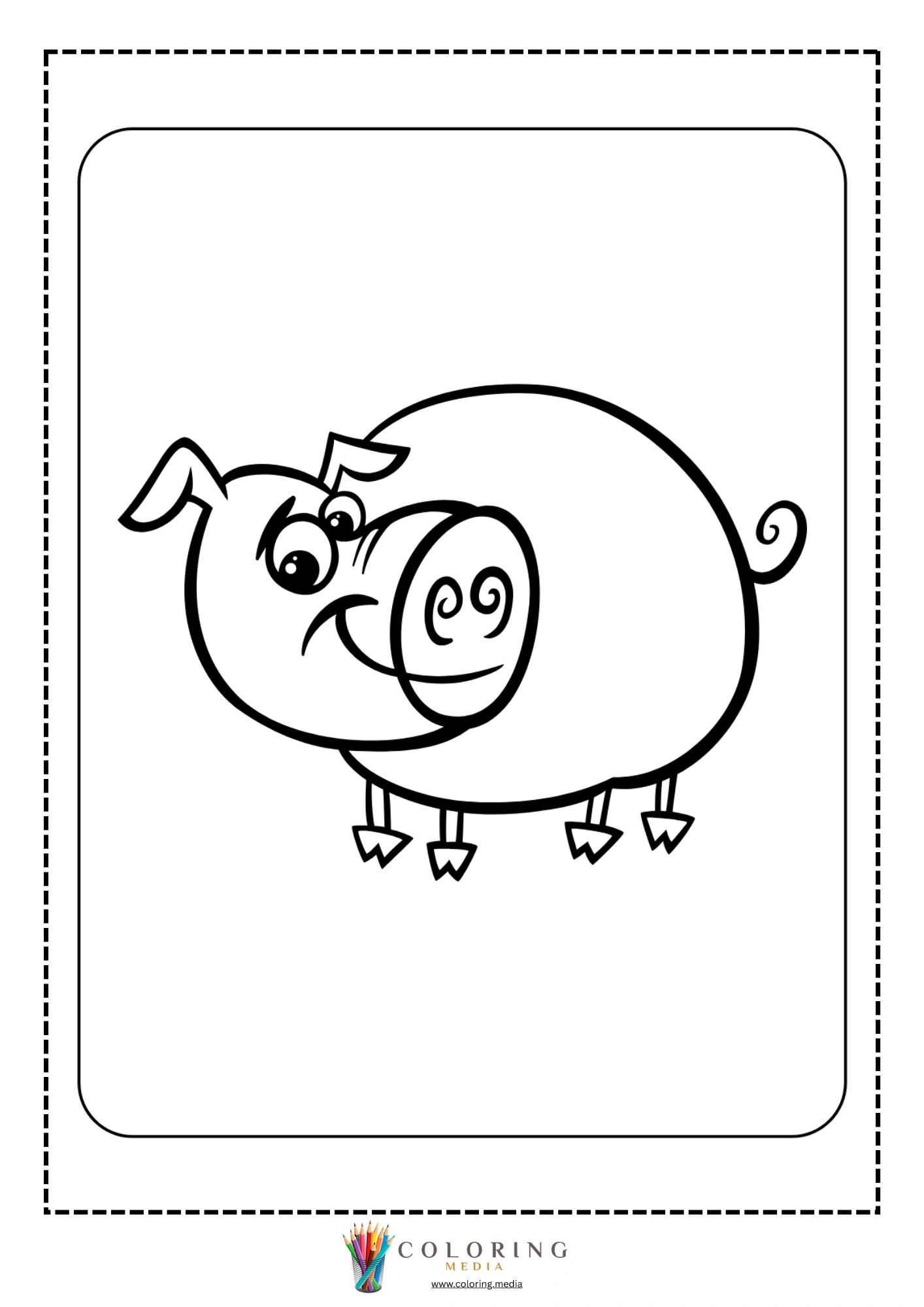
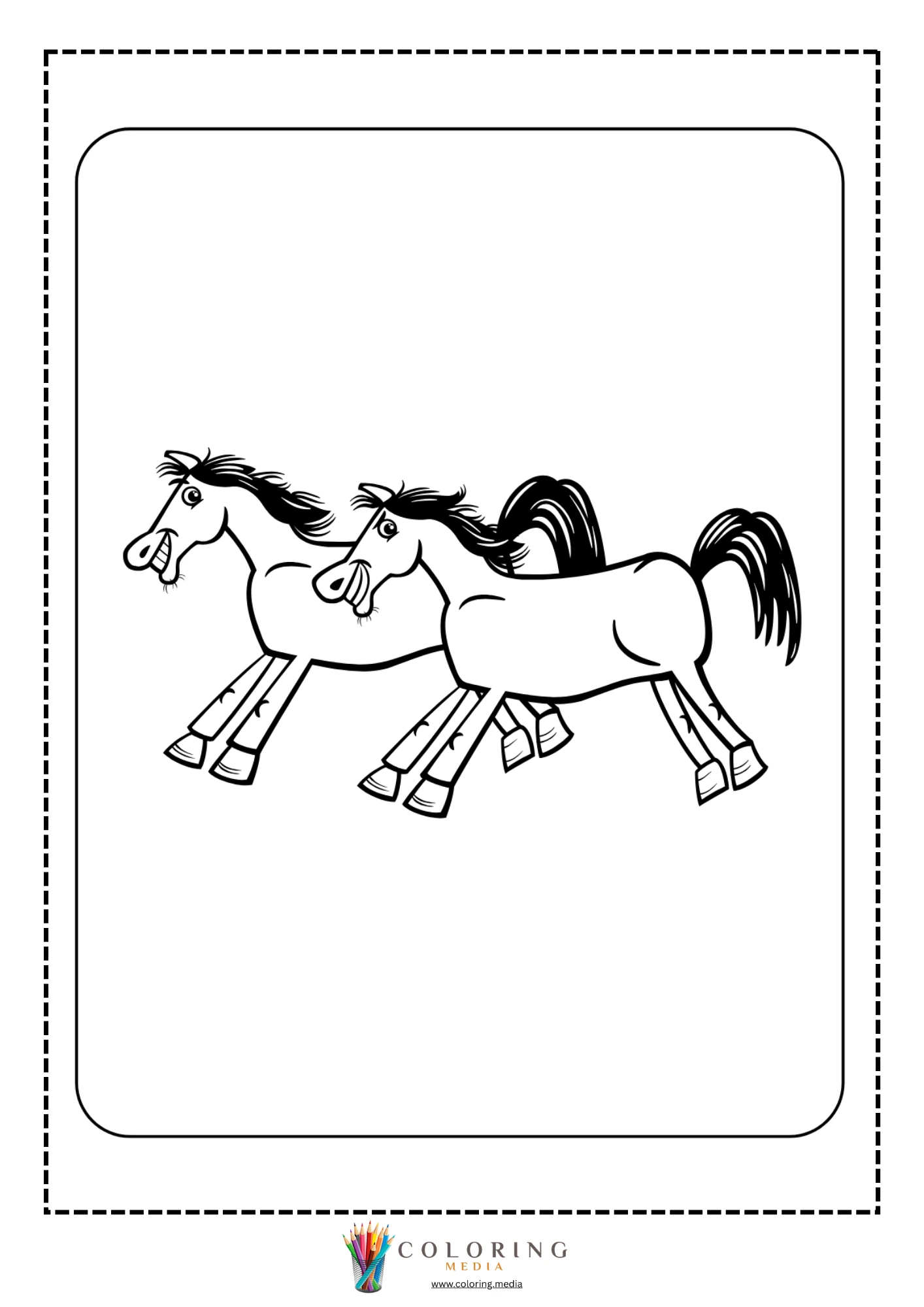
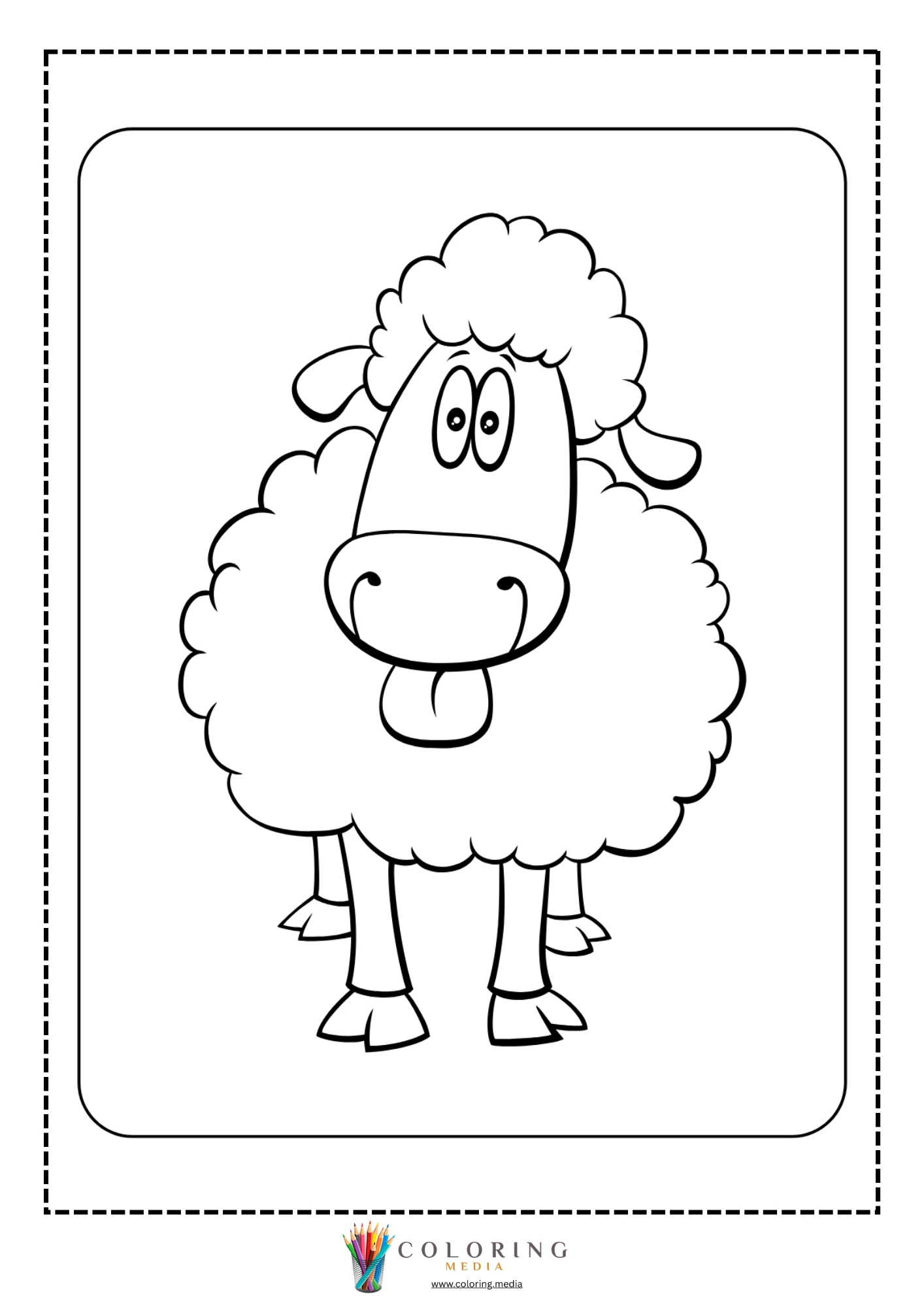
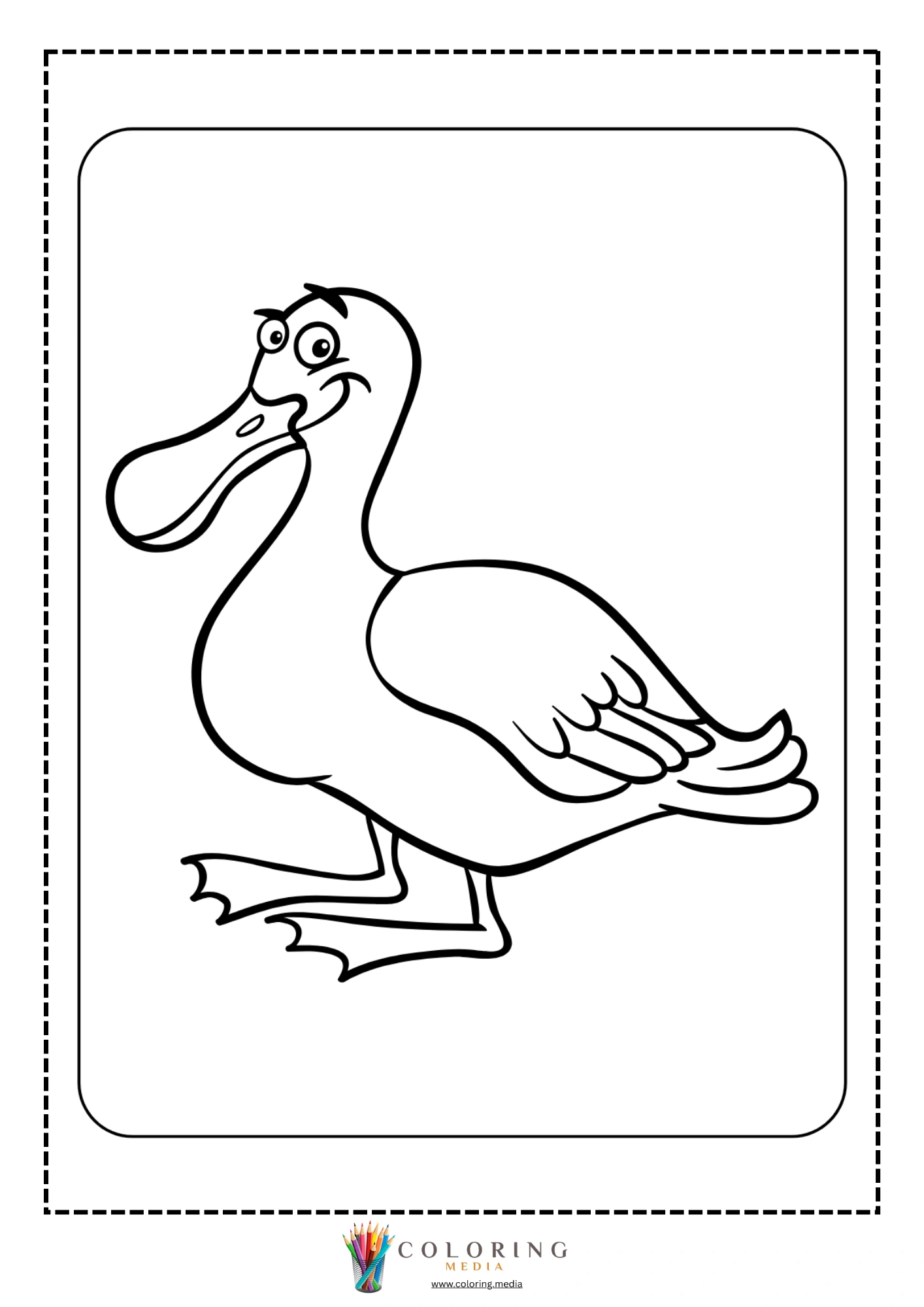
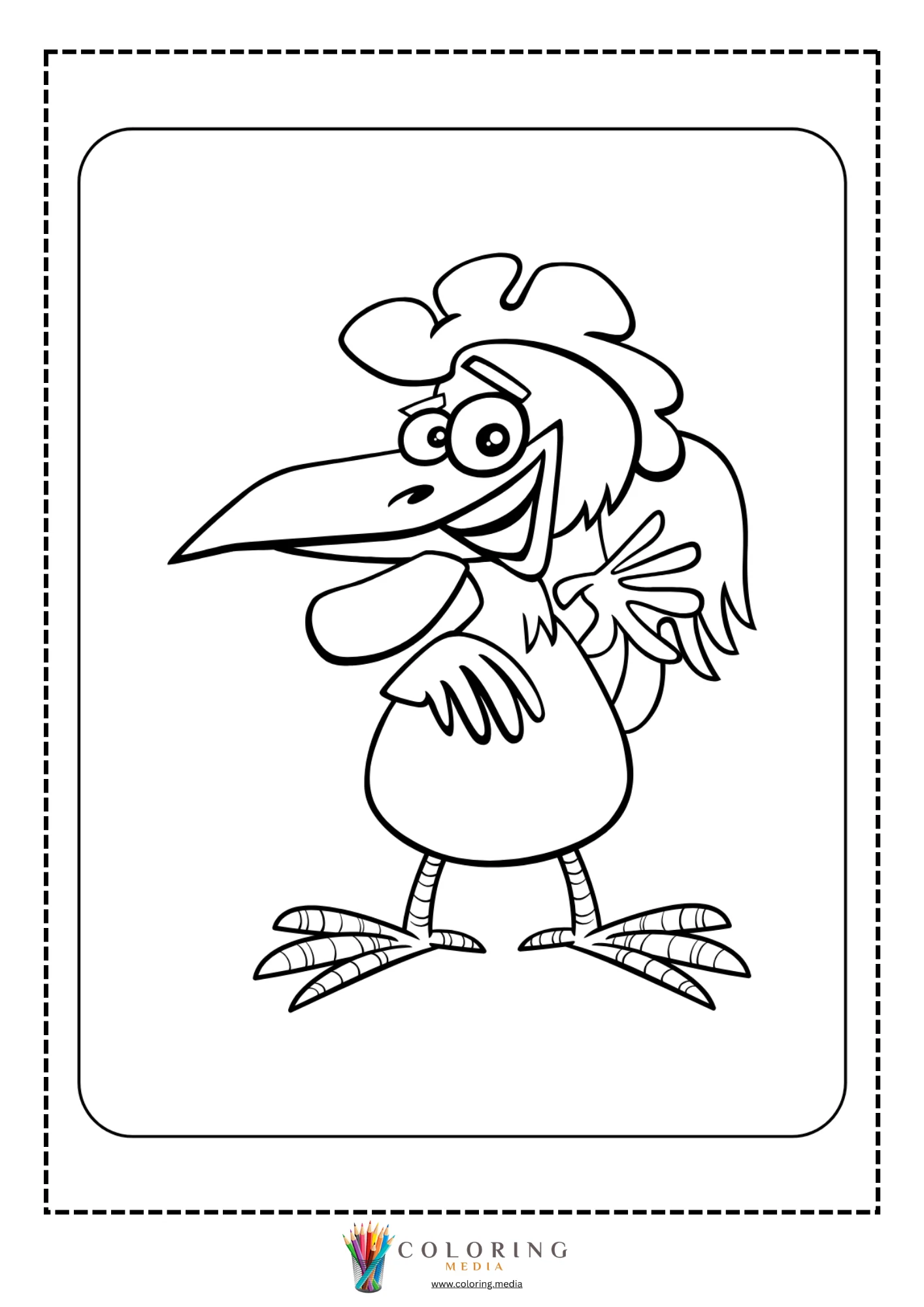
This is a full farmyard roster: sheep with thick woolly coats, a broad-shouldered bull with a ring in its nose, a speckled hen mid-cluck, a rooster with an elaborate tail, a pig with a curly tail and a satisfied expression, a donkey with long ears, a llama that appears mildly judgmental, and a turkey fanning its tail feathers out in what looks like genuine pride. Each page gives one animal the full frame. The art style is consistently cartoon — exaggerated features, bold outlines, clear silhouettes — but the animals are recognizable as specific species rather than generic animal shapes, which matters when a child is learning to distinguish a sheep from a goat or a duck from a turkey.
There are 20 pages covering a broad range of common and less-common farm animals. The line complexity is generally simple to moderate, making this set accessible to young children. Everything here is free to download and easy to print.
Free Printable Farm Animals Coloring Pages
This collection includes 20 printable farm animals coloring pages featuring sheep, cow, bull, chicken, rooster, pig, horse, duck, donkey, goat, llama, turkey, and more — each drawn in a bold cartoon style with clear outlines and character-driven expressions. Pages are mostly clean portrait-style compositions with minimal backgrounds. Files are formatted for standard US Letter and A4 paper at 300 dpi.




Who Are These Farm Animals Coloring Pages Best For?
Most pages here have outlines in the 2-3 mm range with clearly separated body sections — the sheep’s wool is visually distinct from its face, the pig’s body from its snout, the rooster’s tail feathers from its body. That clear segmentation makes these pages suitable for preschoolers aged 3-5, who benefit from having natural color boundaries to work within. The animal bodies are compact and well-defined, so even a child using chunky crayons will end up with something recognizable.
Kindergarteners will find these pages satisfying as a name-and-color activity. Children at this stage are often working on animal identification alongside their coloring, and farm animals are a natural vocabulary set — learning the difference between a rooster and a hen, or between a sheep and a goat, maps easily onto the visual differences between the pages. A few of the more detailed pages (the rooster with the elaborate tail, the turkey in full fan display) offer slightly more complexity for children who want a longer challenge.
In a classroom, these pair naturally with food-source and community units — where does milk come from, what do farmers do, which animals produce wool or eggs. Each completed page can anchor a short discussion or become part of a classroom farm display.
Interesting Farm Animal Facts to Share While Coloring
Chickens are the most numerous bird species on Earth, and they outnumber humans by roughly 3 to 1. There are approximately 24 billion chickens alive at any given time. They were domesticated from the red jungle fowl in Southeast Asia around 8,000 years ago — originally for cockfighting, not food — and have since become the most widely kept domestic animal in history.
Pigs are considered among the most intelligent domesticated animals. They learn tasks faster than dogs in many comparative studies, can operate mirrors to find hidden food, and show evidence of play behavior, emotional contagion (being affected by the mood of other pigs), and even basic optimism and pessimism depending on their living conditions.
A sheep can recognize and remember up to 50 individual sheep faces — and human faces too. Research at the Babraham Institute in Cambridge showed that sheep could identify and remember individual sheep faces for at least two years, and could also identify familiar human faces from photographs. They showed measurable stress responses when they could not see a familiar face during an experiment.
Donkeys have excellent long-term memory and can recognize a donkey they met 25 years ago. They are also significantly different from horses in their response to stress: where a horse will bolt, a donkey tends to freeze and assess — which is often misread as stubbornness. Donkeys used as livestock guardians are highly effective at protecting sheep and goats from coyotes and foxes because they are territorial and not frightened off by small predators.
Llamas are used as livestock guardians in South America and the American West. A single llama placed with a flock of sheep will bond with them and chase away coyotes, foxes, and even dogs. They are effective enough that some sheep farmers keep them specifically for this purpose rather than for wool or meat. Llamas have been domesticated for about 5,000 years, primarily in the Andean region.
Creative Farm Animal Coloring and Craft Ideas
Farm Map Display Color all the animals, cut them out, and arrange them on a hand-drawn farm map — placing the cow near the barn, the chickens near the coop, the pig in the pen — as a group project.
Animal Product Matching Game Color the animals, then draw or print pictures of products they produce (wool, eggs, milk, leather) and play a matching game connecting each animal to its product.
Sound and Animal Pairing Color a page while making the animal’s sound, then write the sound phonetically below — “moo,” “oink,” “baa,” “cock-a-doodle-doo” — for a language and animal connection activity.
Wool Texture Collage Color the sheep, then glue small pieces of cotton balls or yarn onto the wool section for a mixed-media texture element that illustrates what wool actually feels like.
Animal Baby Name Chart Research what baby versions of each animal are called (calf, lamb, piglet, chick, foal, kid, duckling) and label the completed pages accordingly — a vocabulary activity built into the coloring session.
Farm to Table Story Follow one animal through its contribution to food — the hen that lays the egg that becomes breakfast — and illustrate the steps with colored pages and simple drawings in a small booklet.
Turkey Feather Pattern Color the turkey’s tail feathers using a different color for each feather in a deliberate pattern — rainbow order, alternating colors, warm-to-cool gradient — treating the fan as an abstract design challenge.
Farm Animal Alphabet Poster Assign each farm animal an alphabetical label and create a poster — Bull is B, Chicken is C, Donkey is D, and so on — using the colored pages as the illustrations.
How to Print These Farm Animals Coloring Pages
Each file downloads as a PDF formatted for US Letter (8.5×11 in) and A4 — both print without cropping. Plain copy paper works fine for crayons and colored pencils; if using markers, 65-90 lb cardstock prevents bleed-through. Print at “actual size” for the sharpest lines, and high-quality grayscale printing gives crisper outlines than draft mode when color ink is low.
Explore More Animals Coloring Pages
If you enjoyed these pages, you may also like:
Cute Animal Coloring Pages
Elephant Coloring Pages
Guinea Pig Coloring Pages
Fox Coloring Pages
All Animals Coloring Pages