
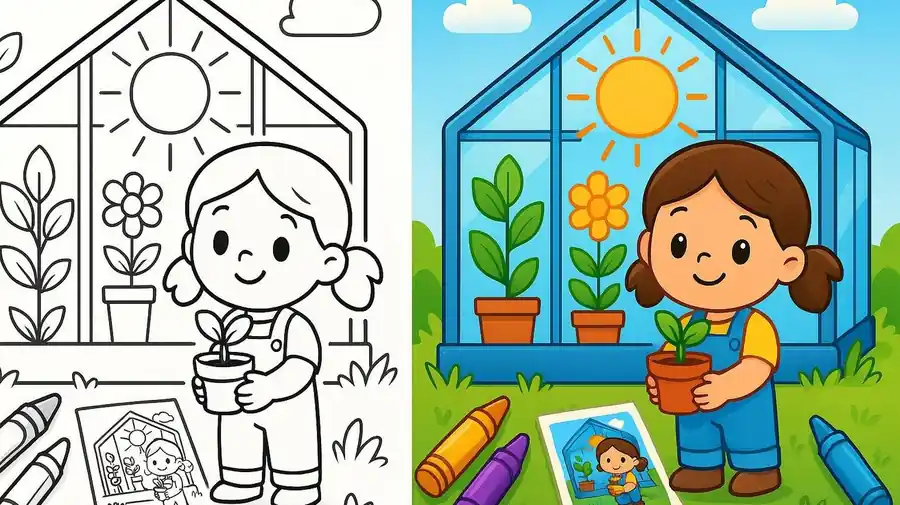
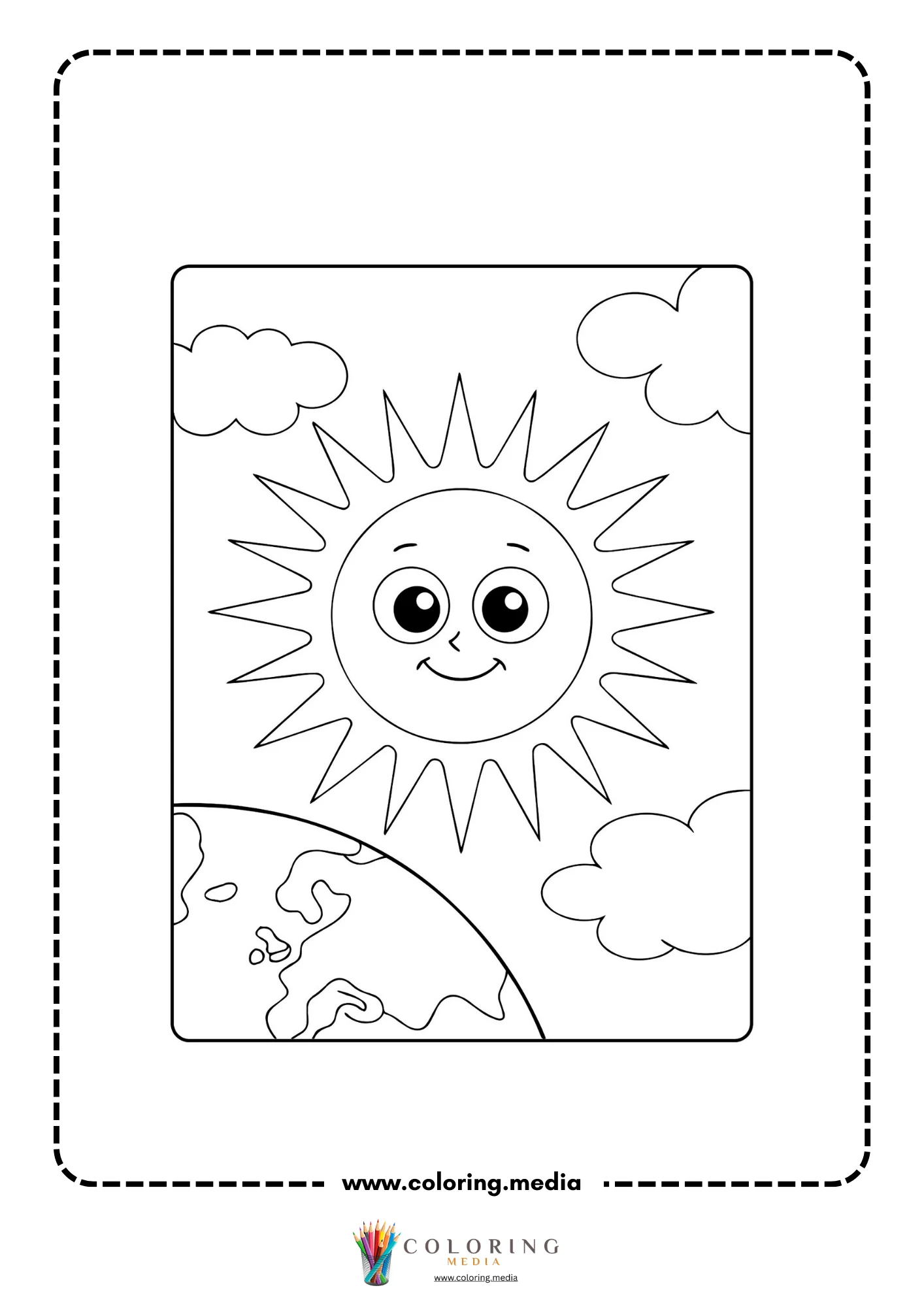
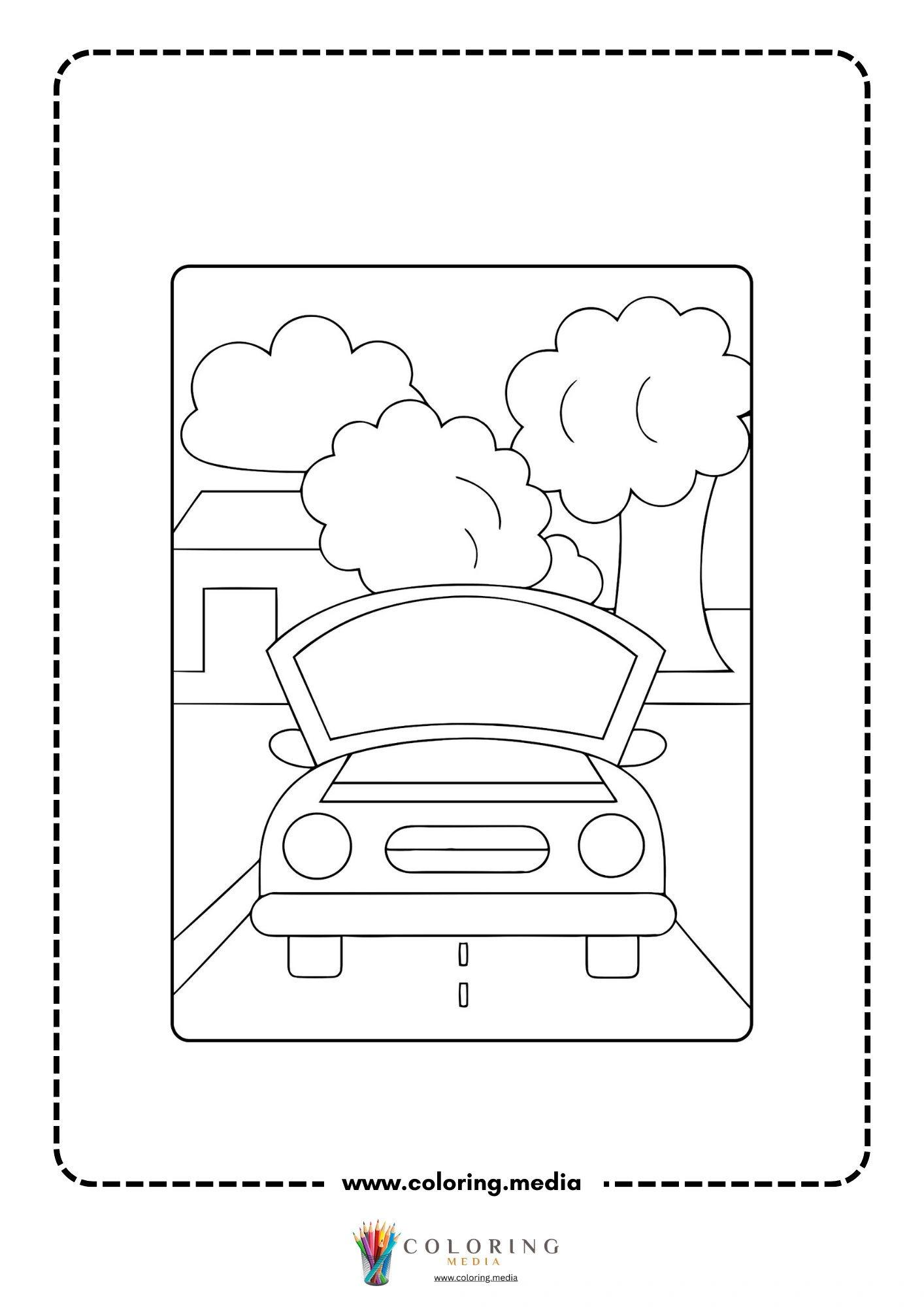
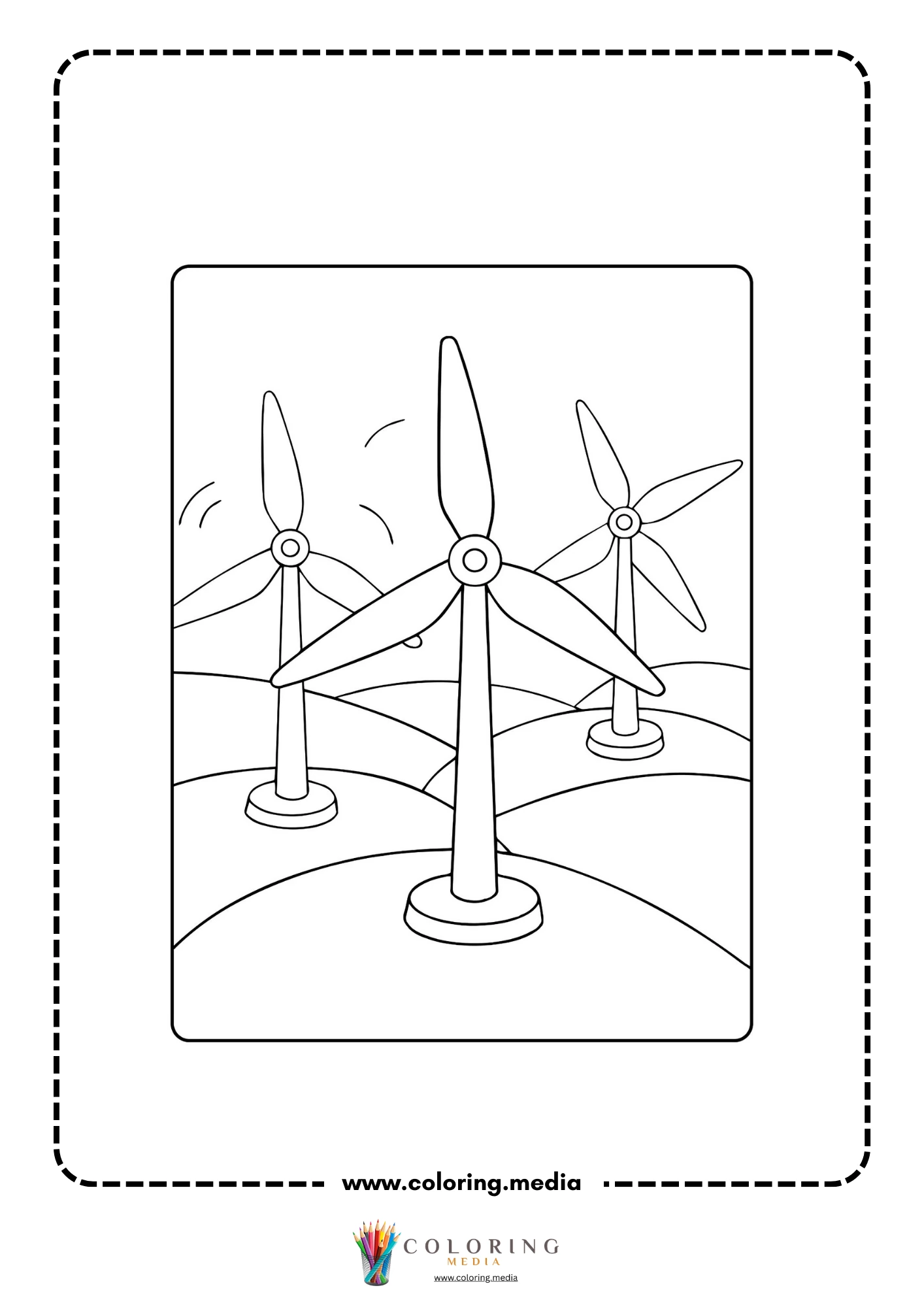
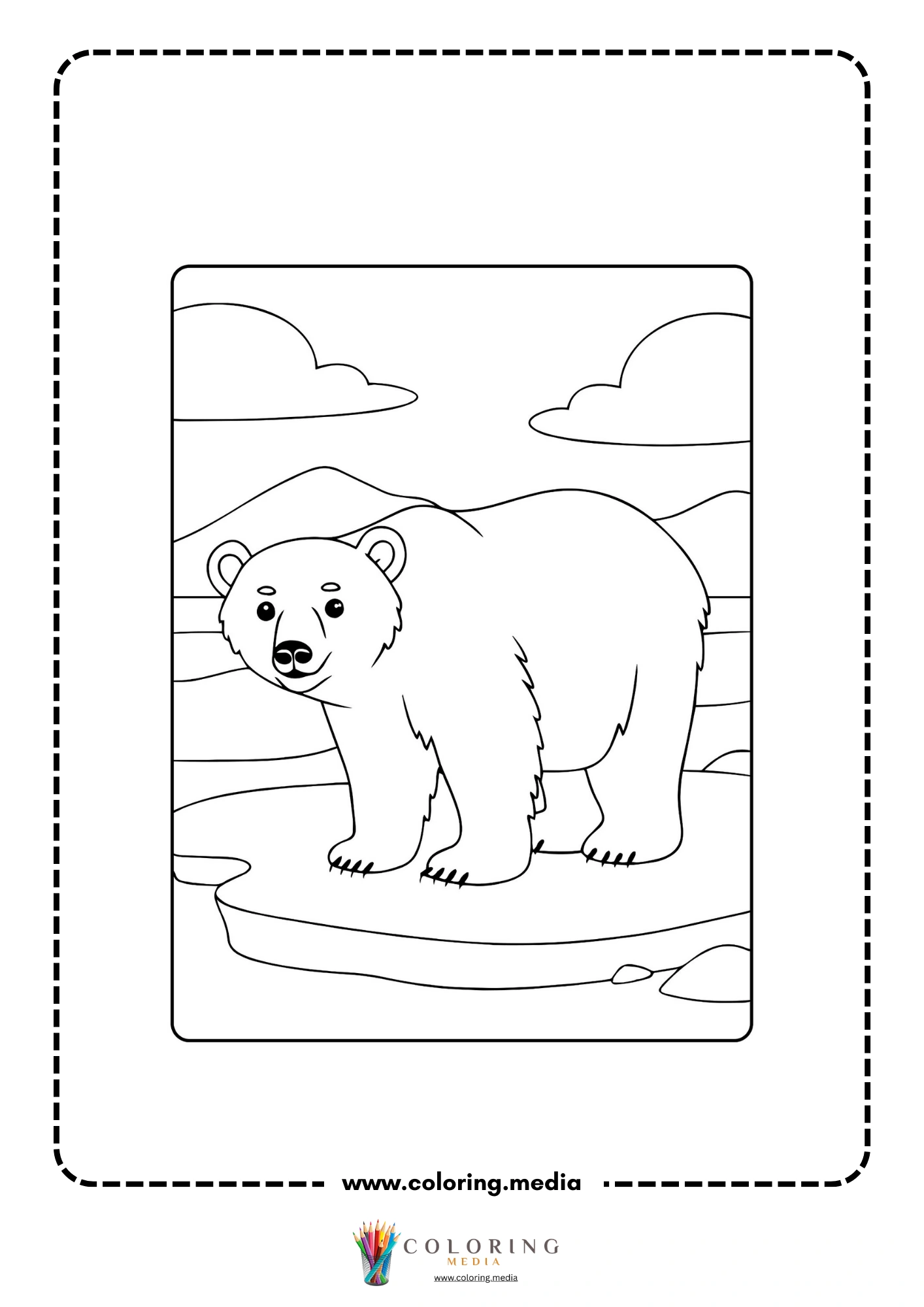
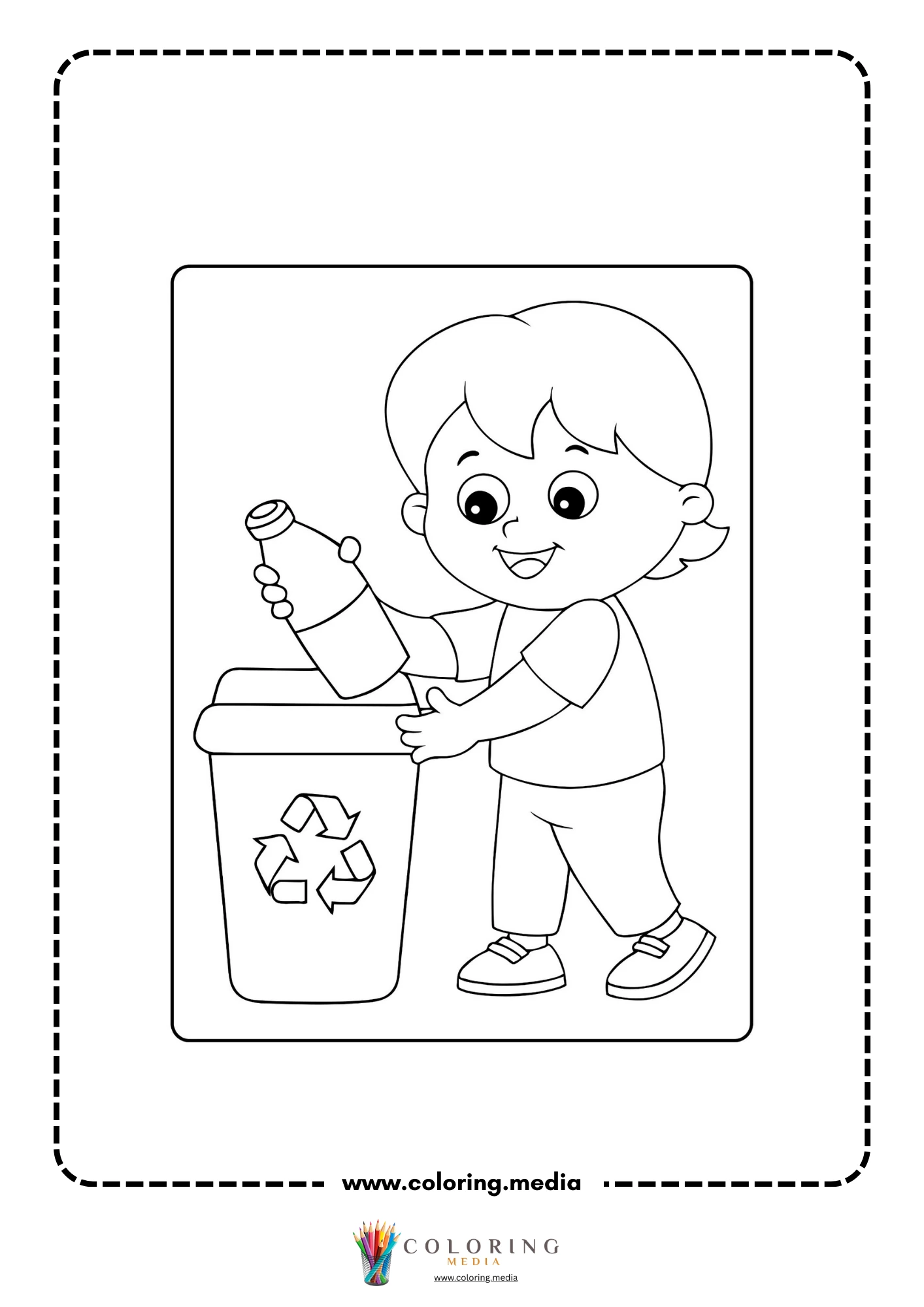
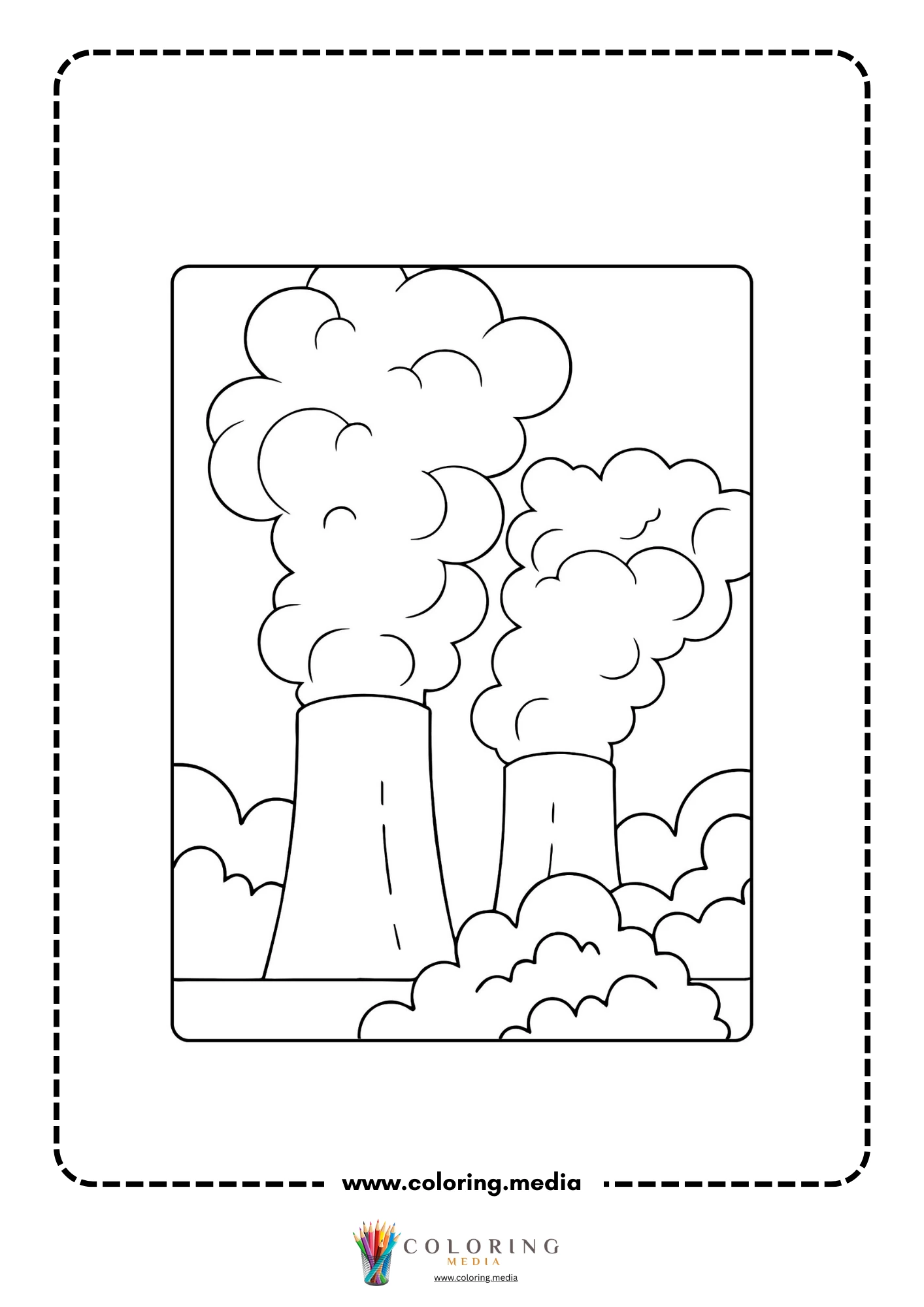
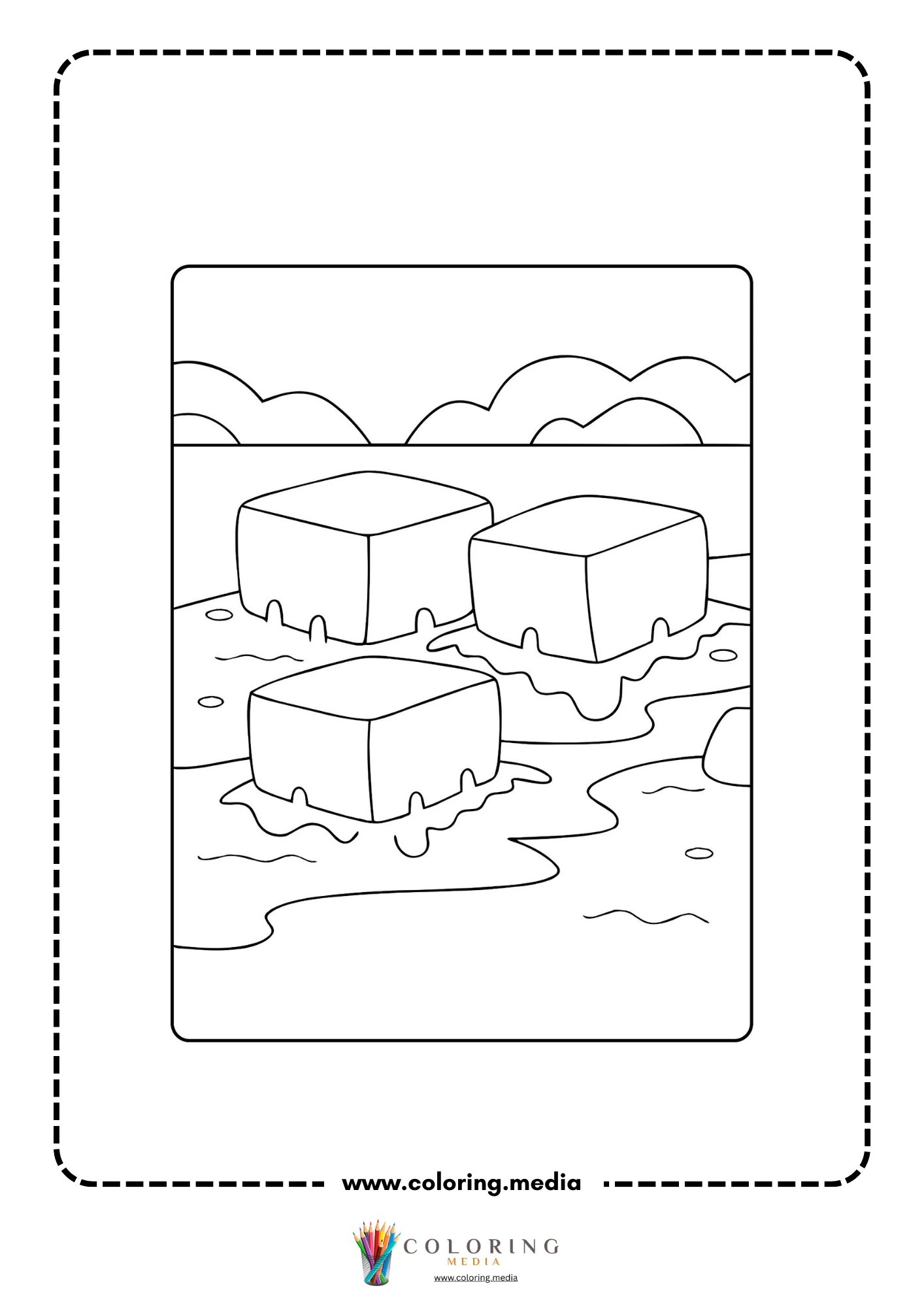
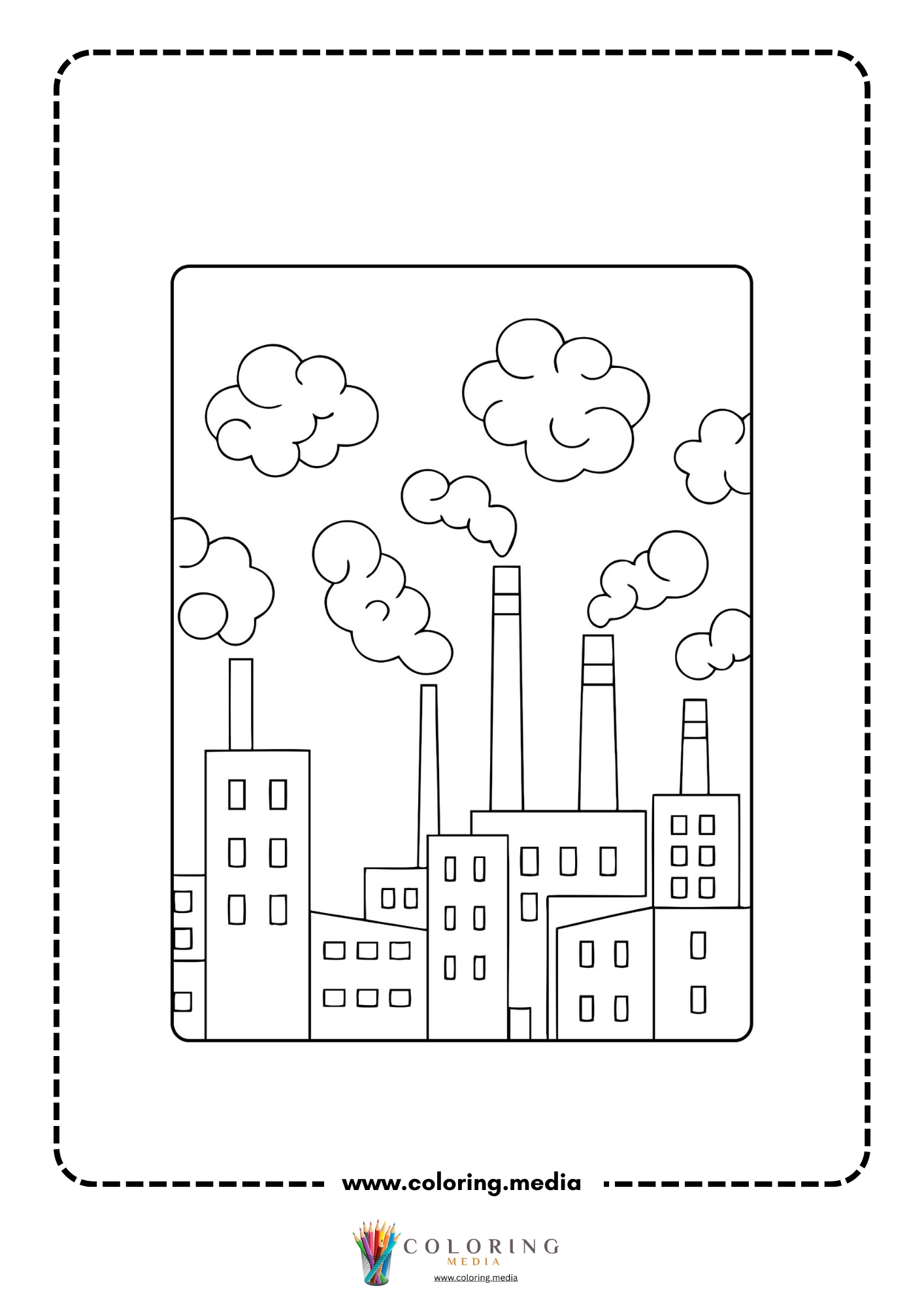
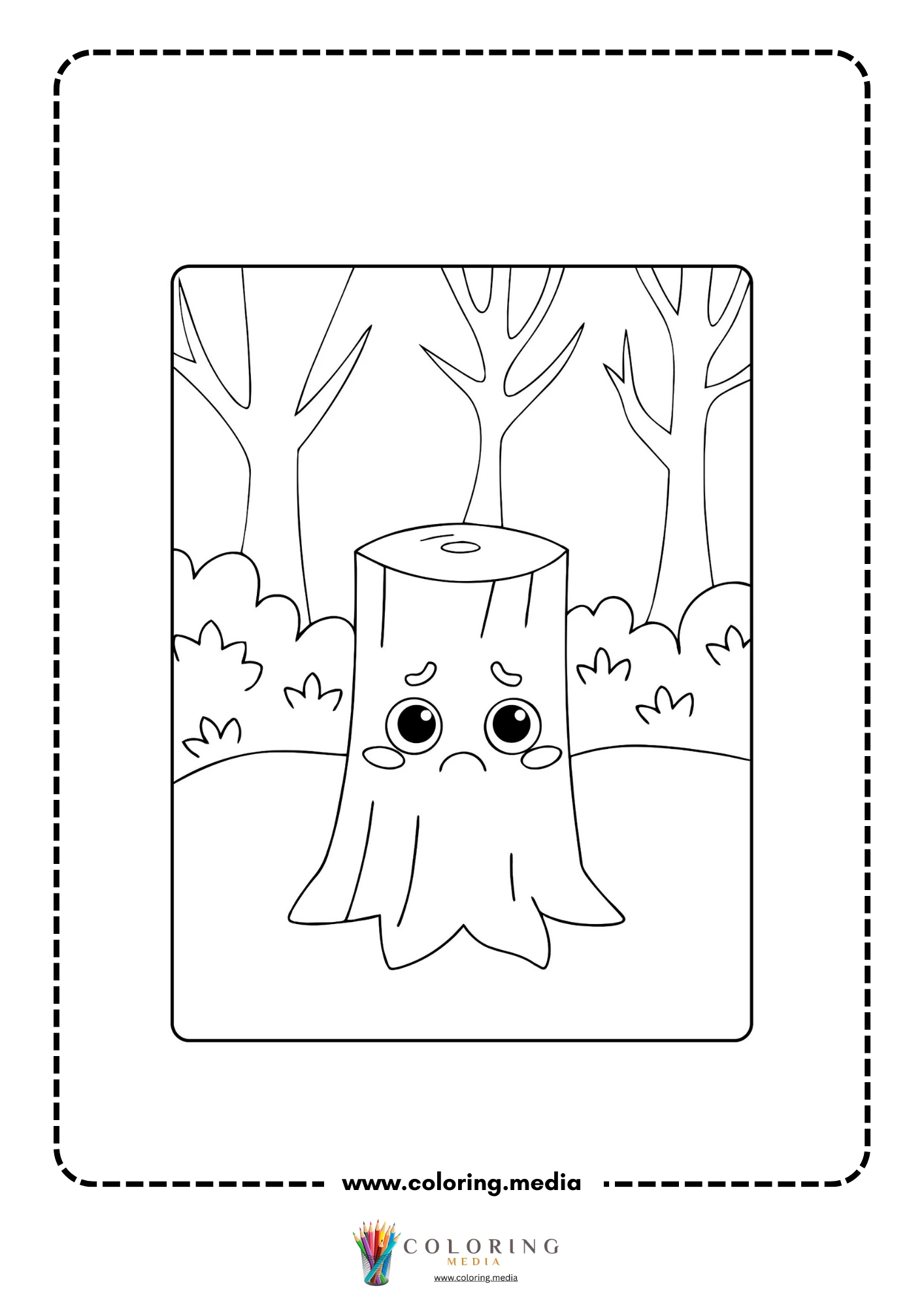
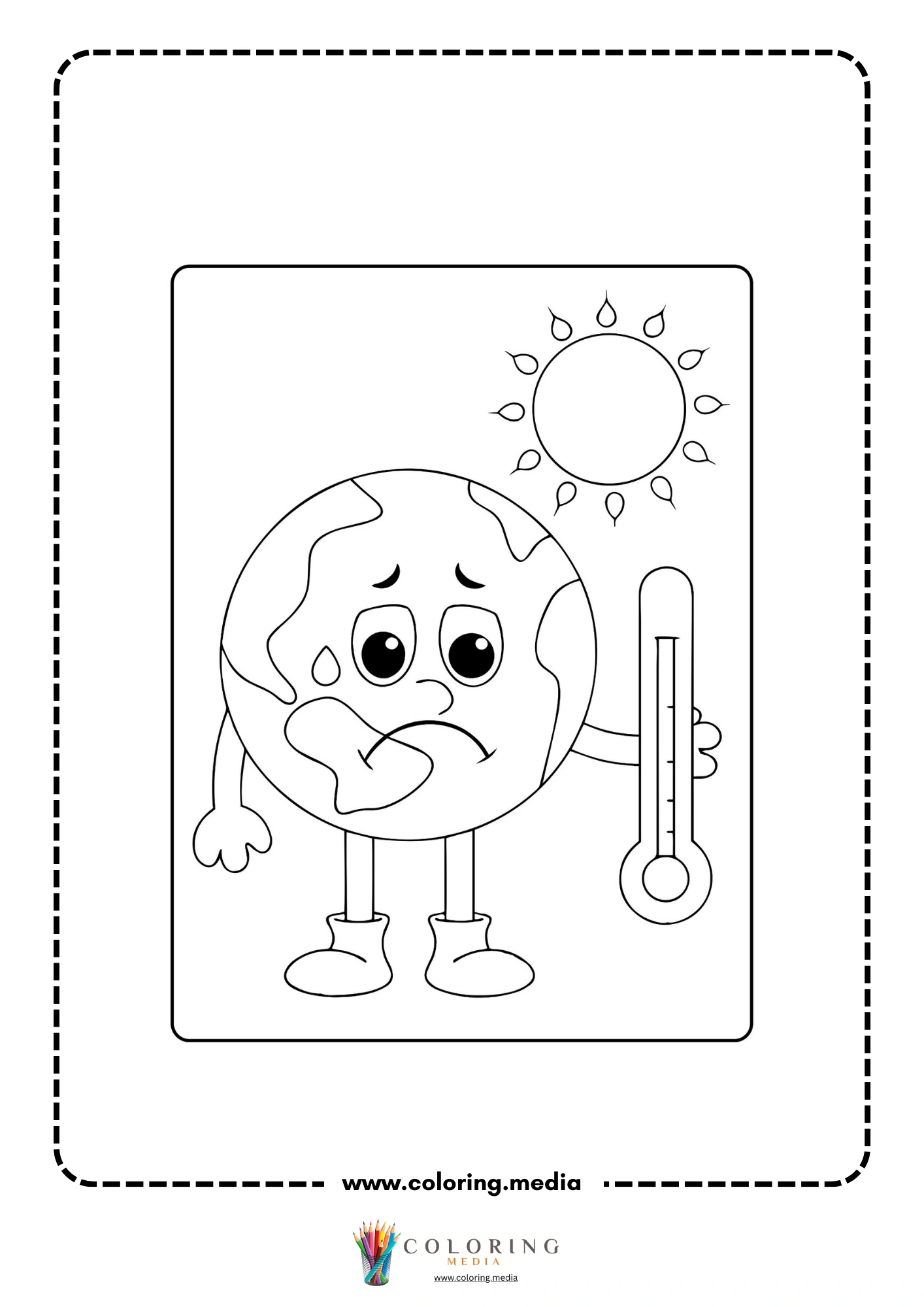
These 21 pages explain the greenhouse effect through a sequence of illustrated scenes — the sun radiating energy toward Earth, the atmosphere trapping heat like a blanket, greenhouse gases (represented as cartoon arrows or labeled molecules) building up from car exhaust and factory emissions, a polar bear affected by warming, wind turbines and solar panels as solutions, an electric car, a recycling family, a child planting a tree, and the Earth with a protective atmosphere restored. Some pages are more diagrammatic; others are fully illustrated scenes.
The greenhouse effect is the foundational mechanism behind climate change, and understanding it — even at a simplified level — gives children a causal model rather than just a list of environmental problems. These pages build that model scene by scene. Everything here is free to download and easy to print.
Free Printable Greenhouse Effects Coloring Pages
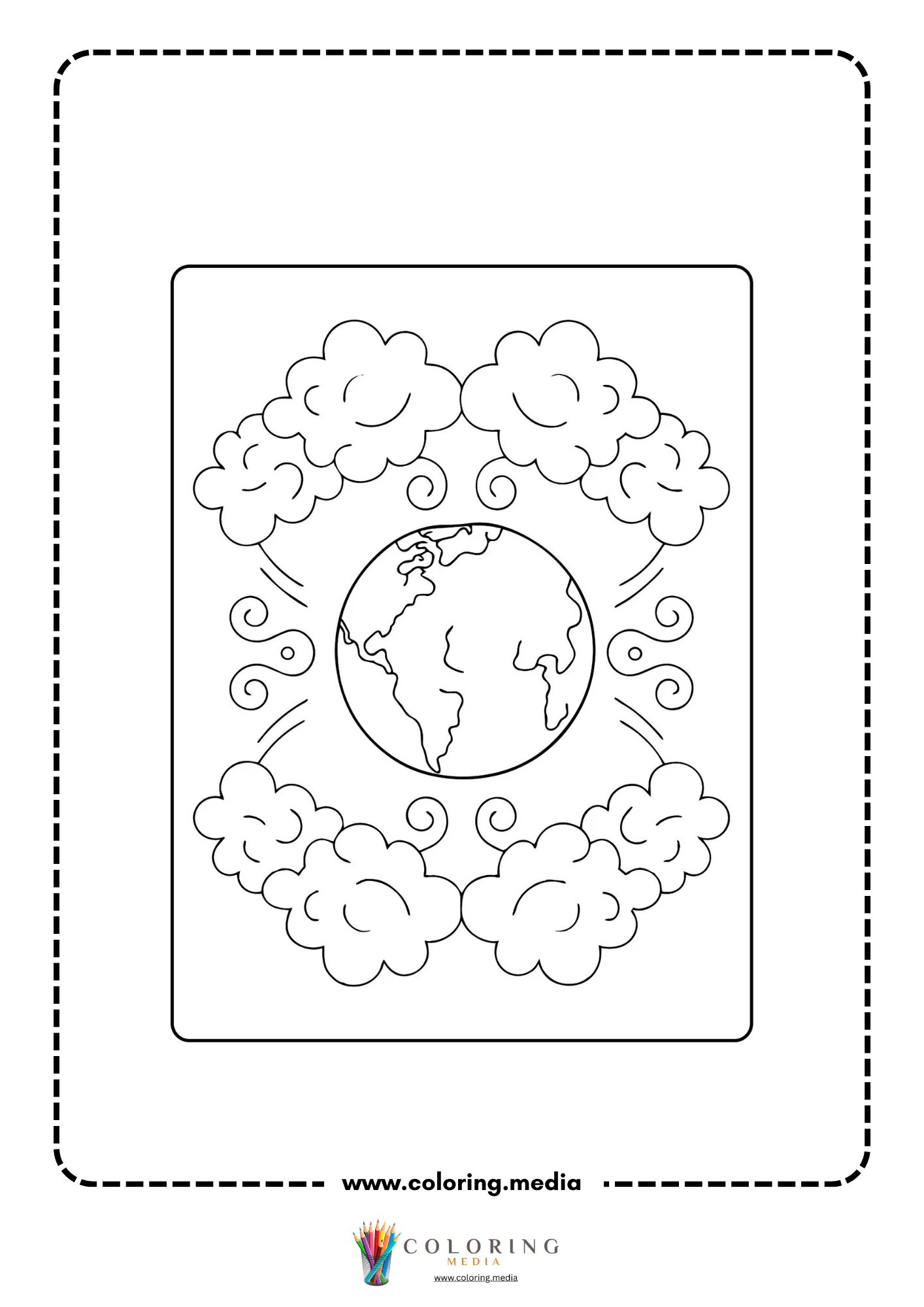
This collection includes 21 printable greenhouse effects coloring pages explaining the mechanism of the greenhouse effect through illustrated scenes — solar radiation, atmospheric heat trapping, fossil fuel emissions, climate impacts, and renewable energy solutions — in a child-accessible cartoon illustration style. Print on US Letter or A4 paper.



Who Are These Greenhouse Effects Coloring Pages Best For?
Early-elementary children (ages 6-10) encountering climate science for the first time will benefit most. The greenhouse effect is a physical process that can be explained through analogy — the atmosphere acts like the glass of a greenhouse, letting sunlight in but slowing heat from escaping — and these pages make that analogy visual rather than abstract.
The solution-focused pages (solar panels, wind turbines, electric cars, planting trees) are as important as the problem-description pages in this set. For young children, ending a lesson on a concrete action they or their family can take is more emotionally productive than ending on the problem alone. Teachers should use both halves of this set, not just the cause-and-effect pages.
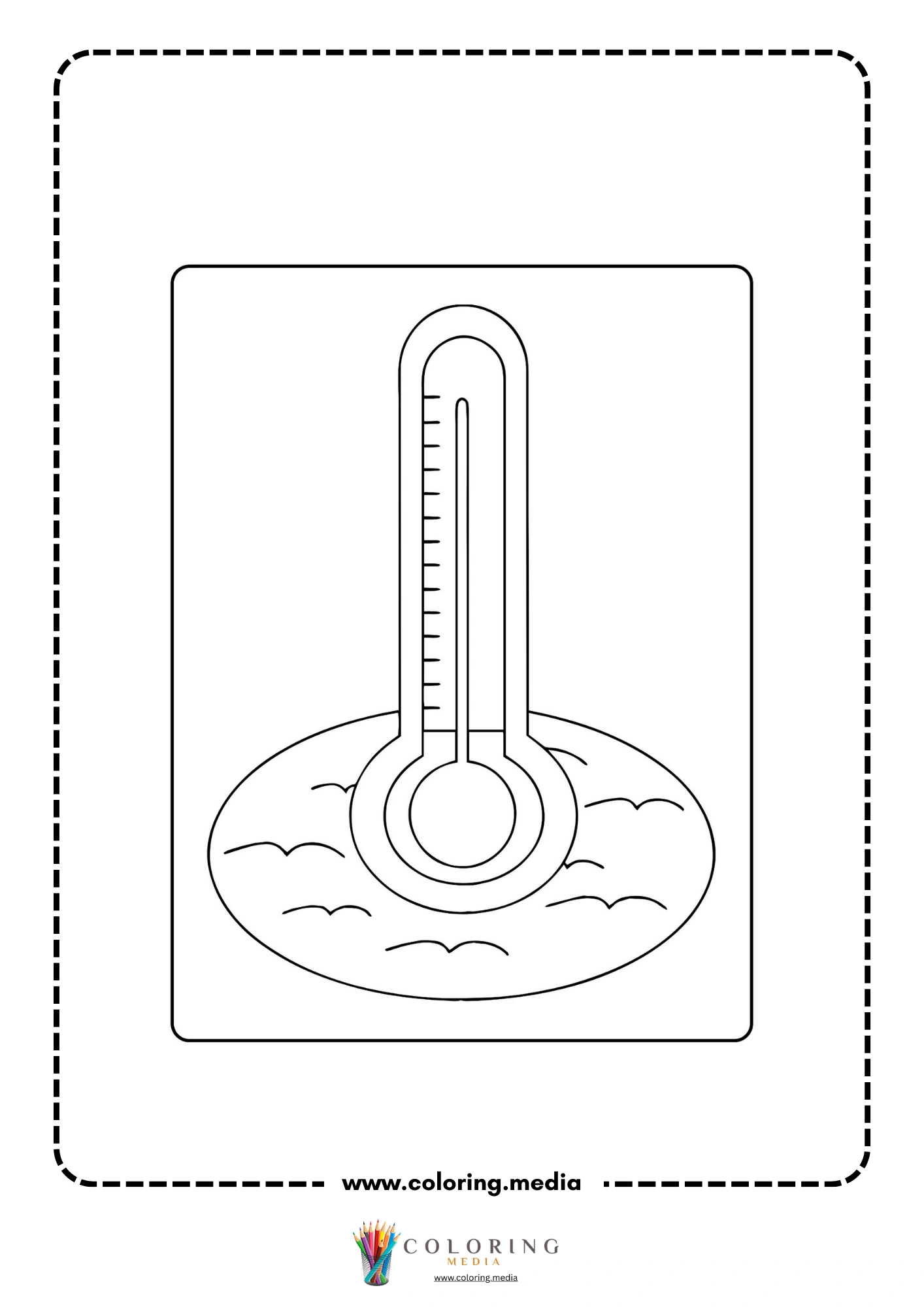
These pages pair naturally with a hands-on greenhouse experiment: place two thermometers, one inside a sealed plastic bag and one outside, in sunlight and compare temperatures after 20 minutes. The coloring page explains the mechanism; the experiment demonstrates it.
Interesting Greenhouse Effect Facts to Share While Coloring
Without any greenhouse effect, Earth would be about 33 degrees Celsius colder — too cold for liquid water and most life as we know it. The problem is not the greenhouse effect itself but the accelerated version caused by rapidly increasing greenhouse gas concentrations from human activity.
CO2 stays in the atmosphere for hundreds to thousands of years. Carbon dioxide emitted today will still be trapping heat in 2100, 2200, and beyond. This is why current emissions have long-term consequences — the gas we add now commits future generations to continued warming.
Methane is a far more potent greenhouse gas than carbon dioxide in the short term — about 80 times more effective at trapping heat over a 20-year period. Methane comes from agriculture (especially cattle), natural gas leaks, landfills, and rice paddies, making those sources important targets alongside carbon dioxide reduction.
Creative Greenhouse Effect Coloring and Craft Ideas
Greenhouse Experiment Seal a thermometer inside a zip-lock bag and place both it and a bare thermometer in direct sunlight. Read temperatures after 20 minutes to see the greenhouse effect in action.
Cause-and-Effect Sequence Arrange colored pages in order: emissions source, gas buildup, heat trapping, temperature rise, impact, solution — creating a visual story of the entire process.
Renewable vs. Fossil Fuel Sort After coloring both the pollution sources and the solution pages, sort them into two piles and discuss the difference in their impact.
Energy Source Investigation Find out what energy sources power your home city or region — what percentage comes from renewables vs. fossil fuels — and compare to the solution pages.
Atmosphere Layer Drawing On a separate sheet, draw Earth with layered atmosphere labels (troposphere, stratosphere) and mark where greenhouse gases accumulate.
Carbon Cycle Diagram Draw a simple carbon cycle alongside the greenhouse pages — plants absorbing carbon, animals releasing it, fossil fuels storing ancient carbon — to show the larger context.
Compare Countries Research which countries produce the most greenhouse gas emissions per capita and which produce the least — compare them and discuss what factors explain the difference.
Home Emissions Estimate List the main sources of greenhouse gas in your home (heating, car trips, food choices) and rank them from largest to smallest — a practical application of the coloring page’s content.
How to Print These Greenhouse Effects Coloring Pages
Each page downloads as a PDF formatted for US Letter and A4 paper. Standard copy paper works well for all coloring media. For a classroom cause-and-effect display, print selected pages in sequence and mount them on a board with arrows connecting them. All designs print cleanly in grayscale.
Explore More Science & Nature Coloring Pages
If you enjoyed these pages, you may also like:
Global Warming Coloring Pages
Renewable Energy Coloring Pages
Earth Science Coloring Pages
Ecosystem Coloring Pages
Science & Nature Coloring Pages