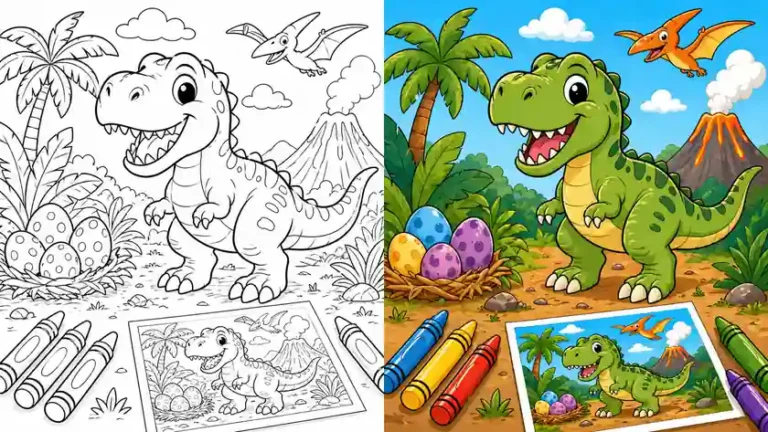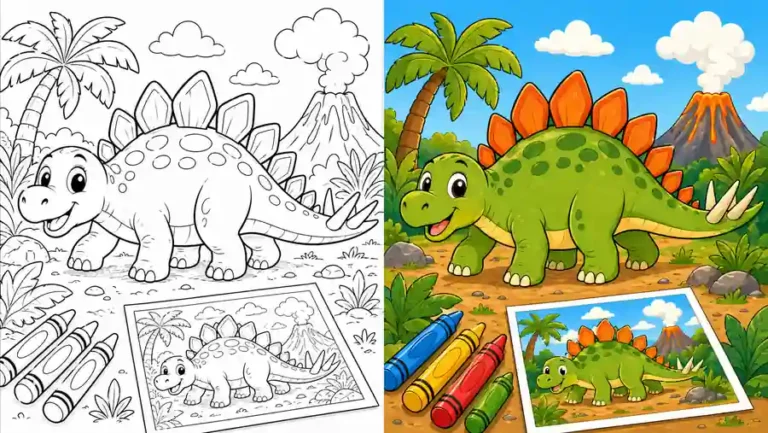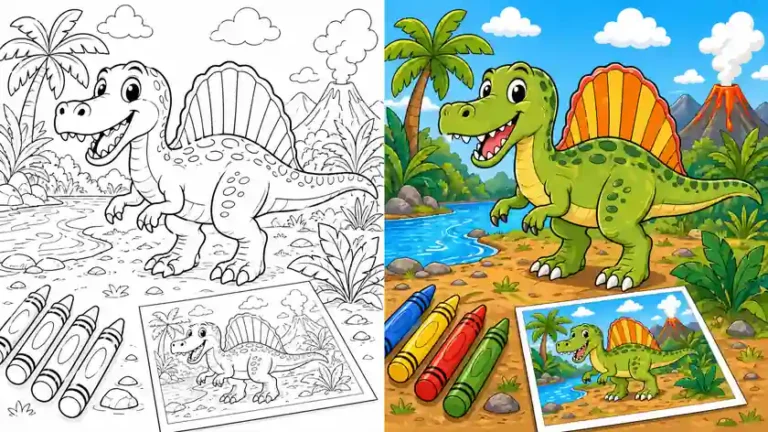

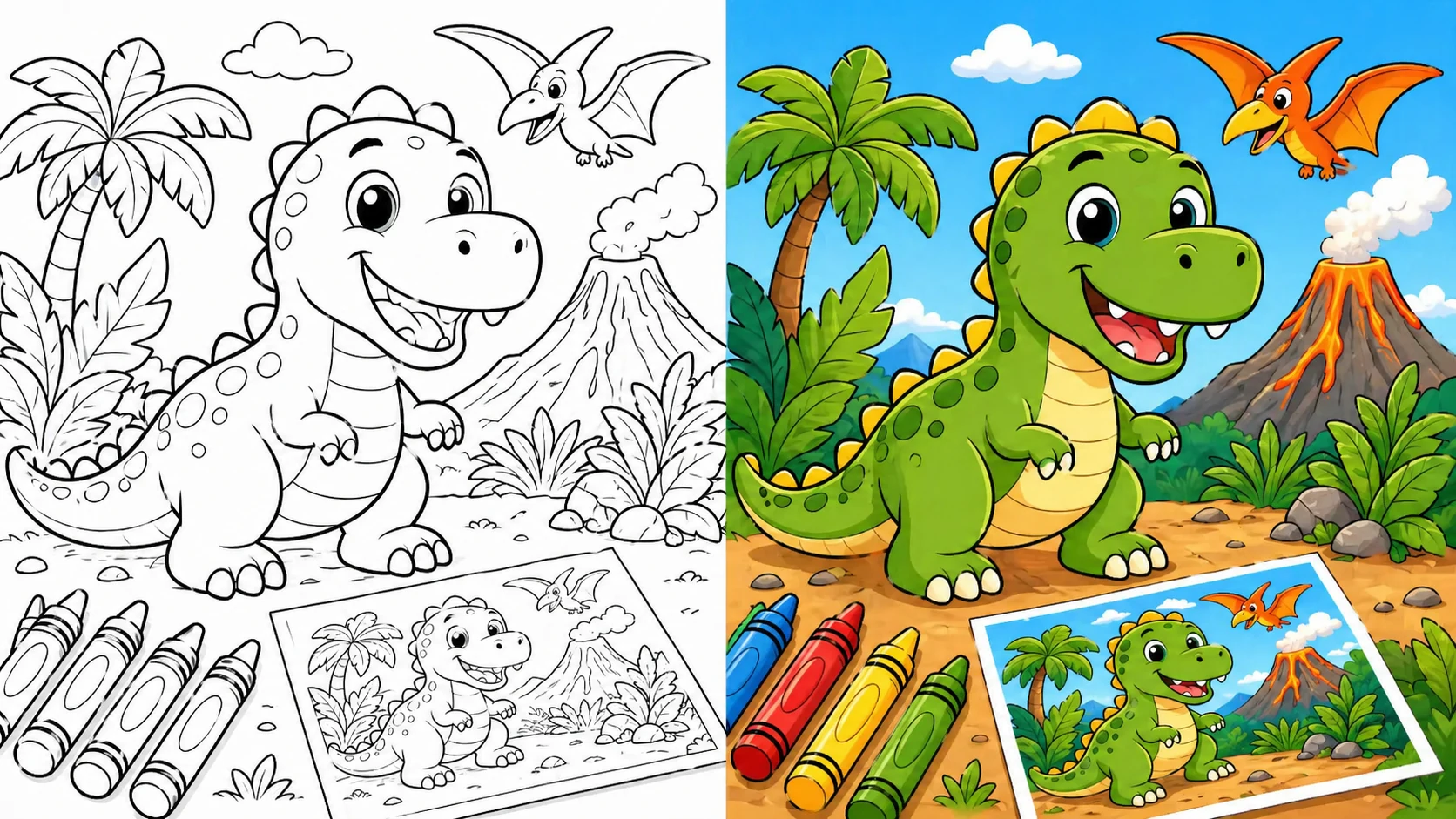
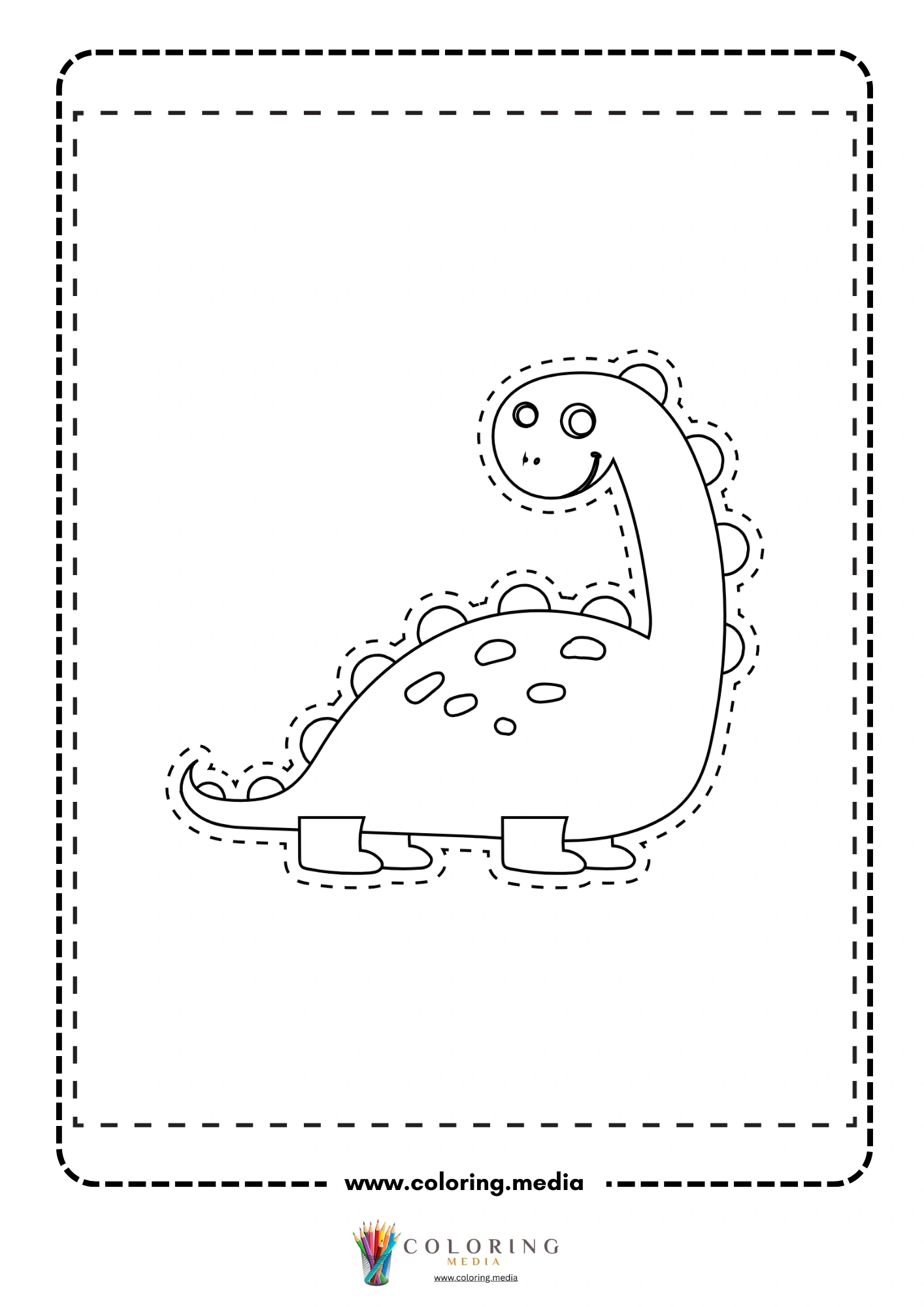
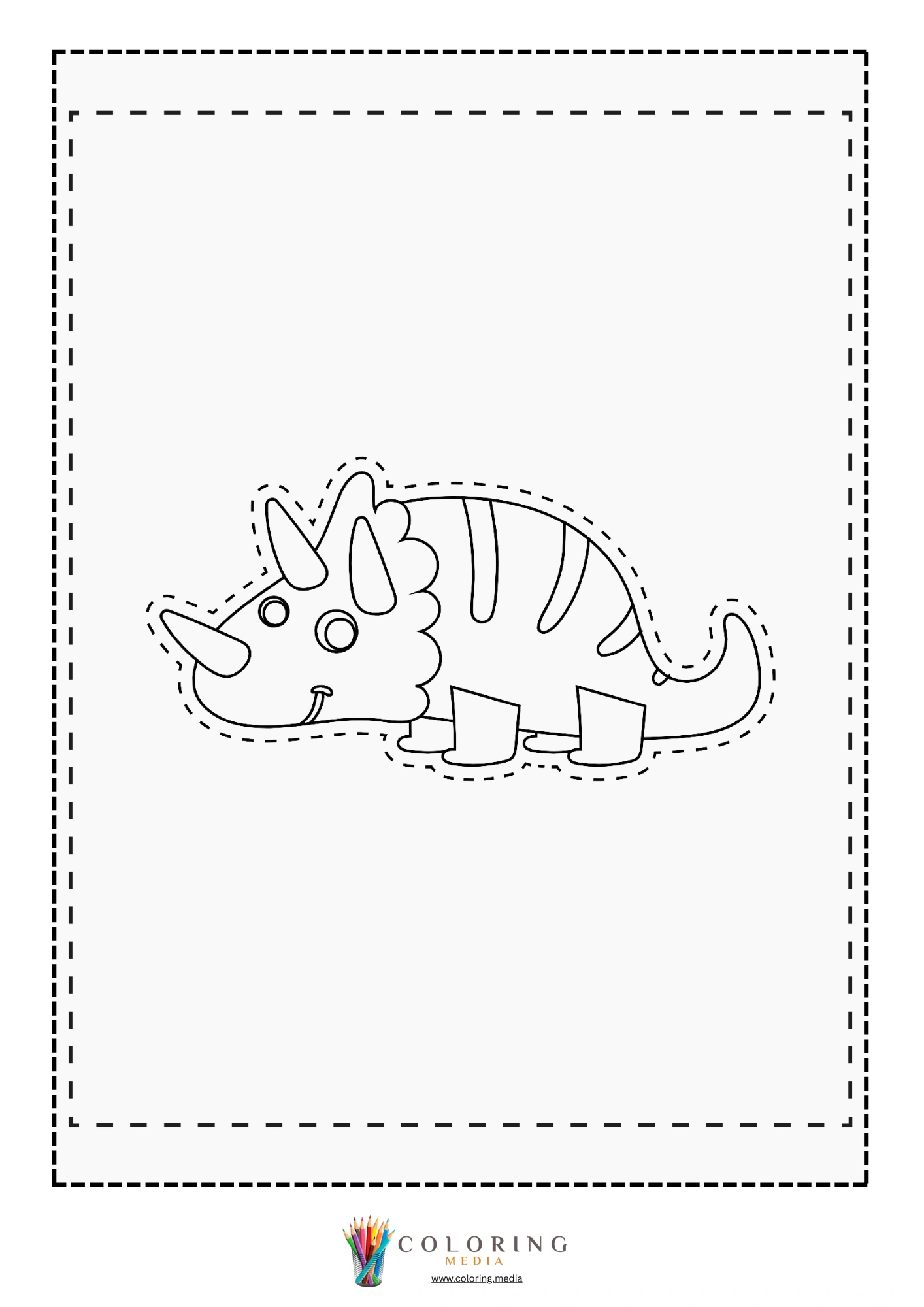
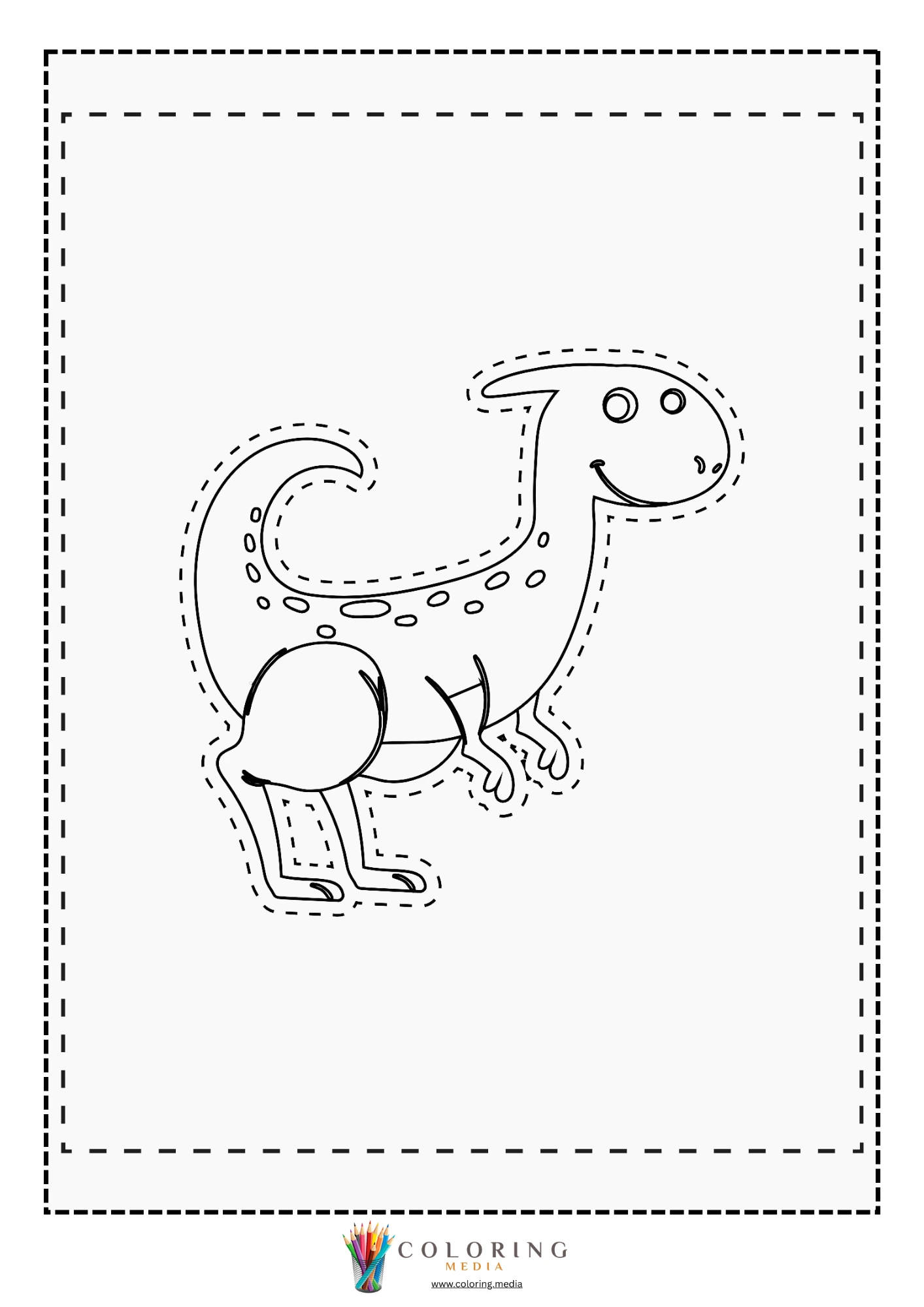
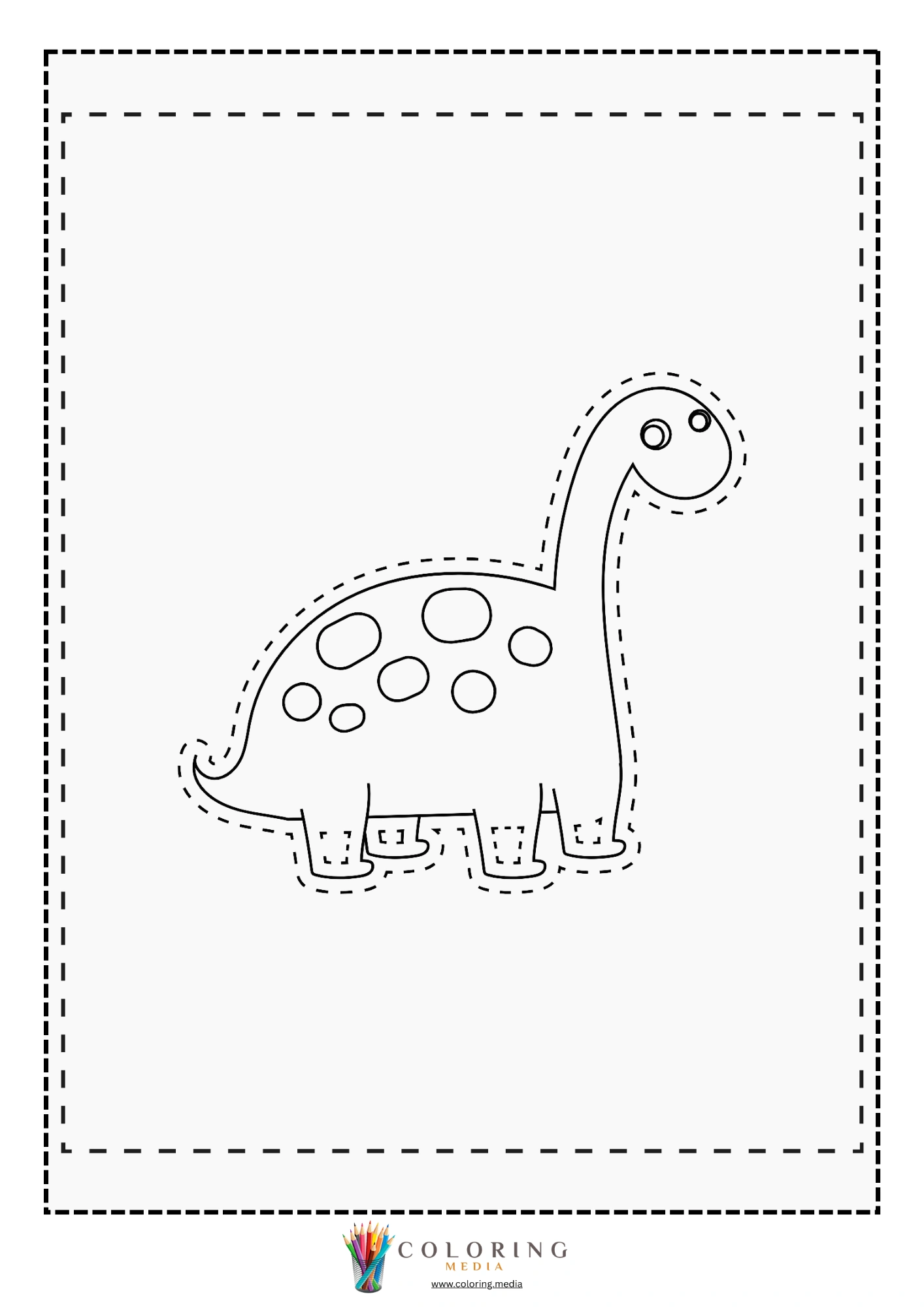
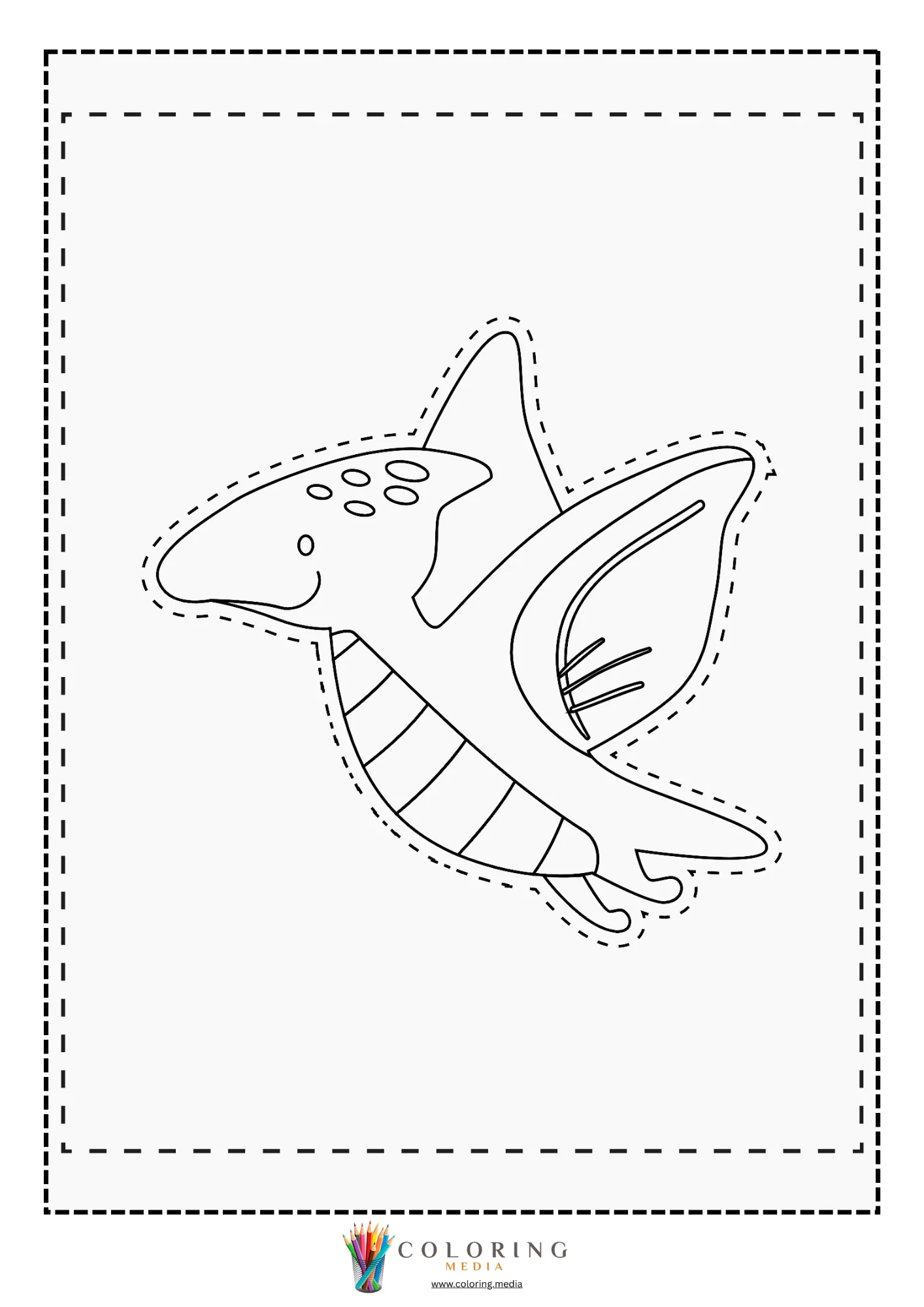
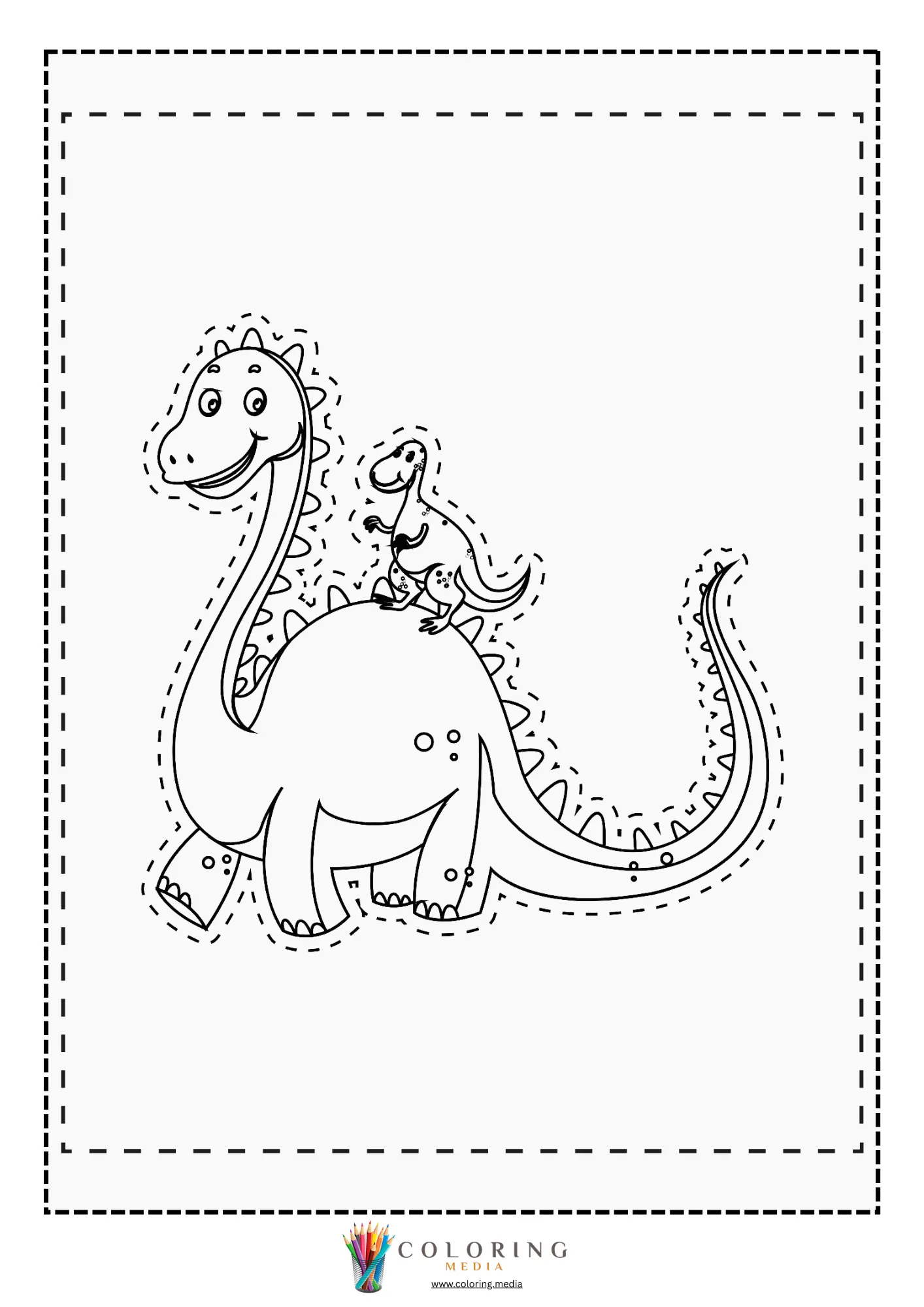
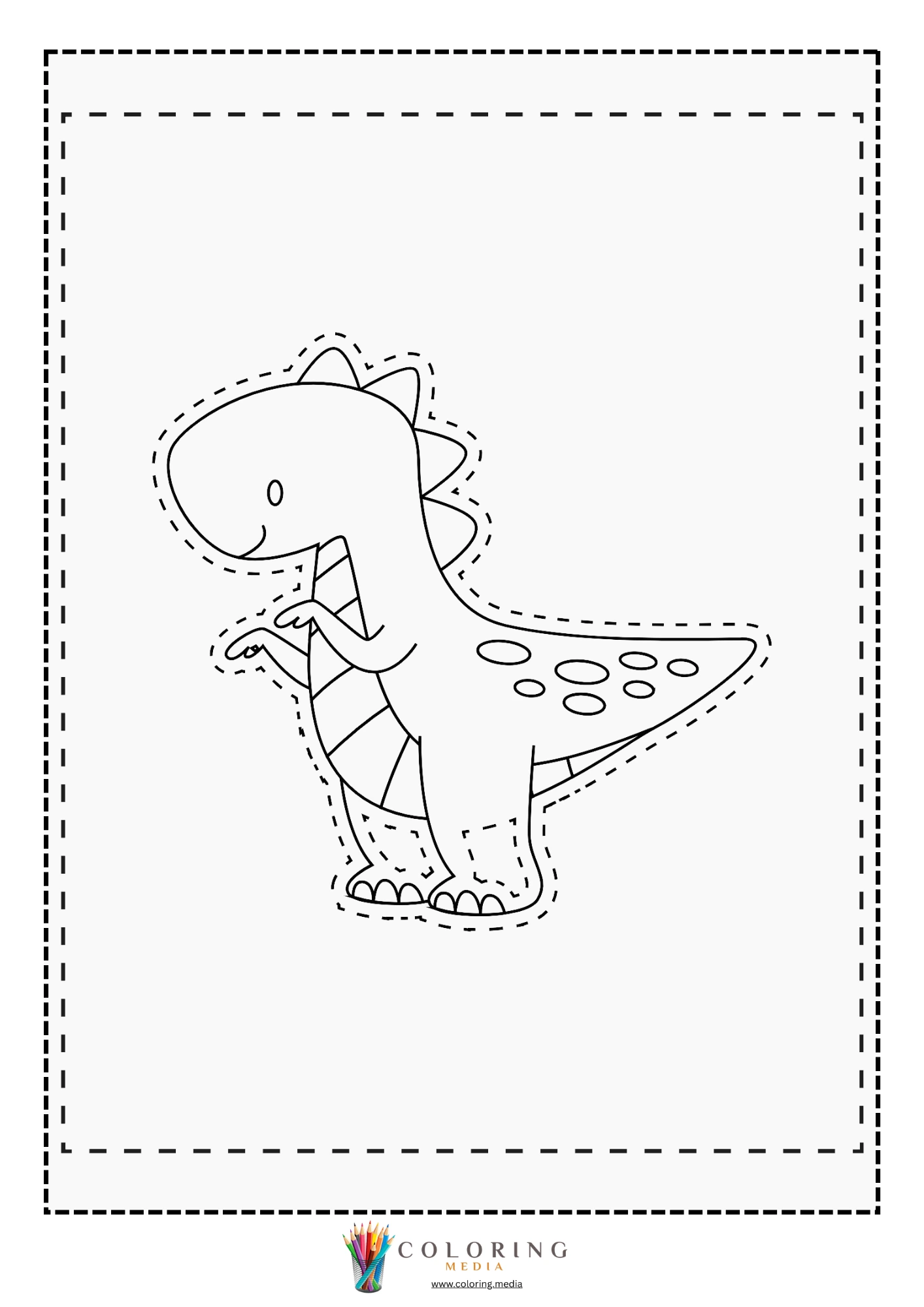
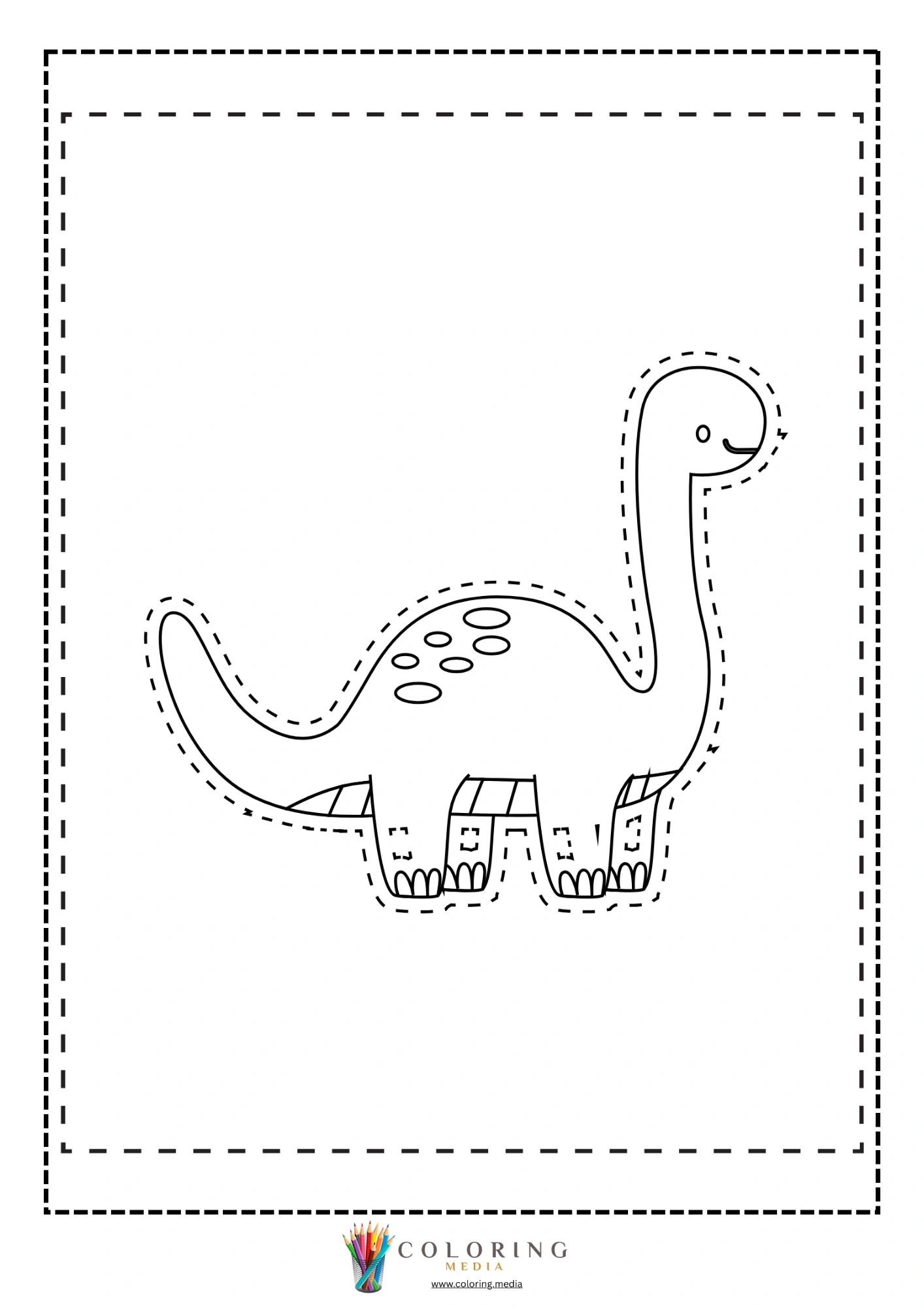
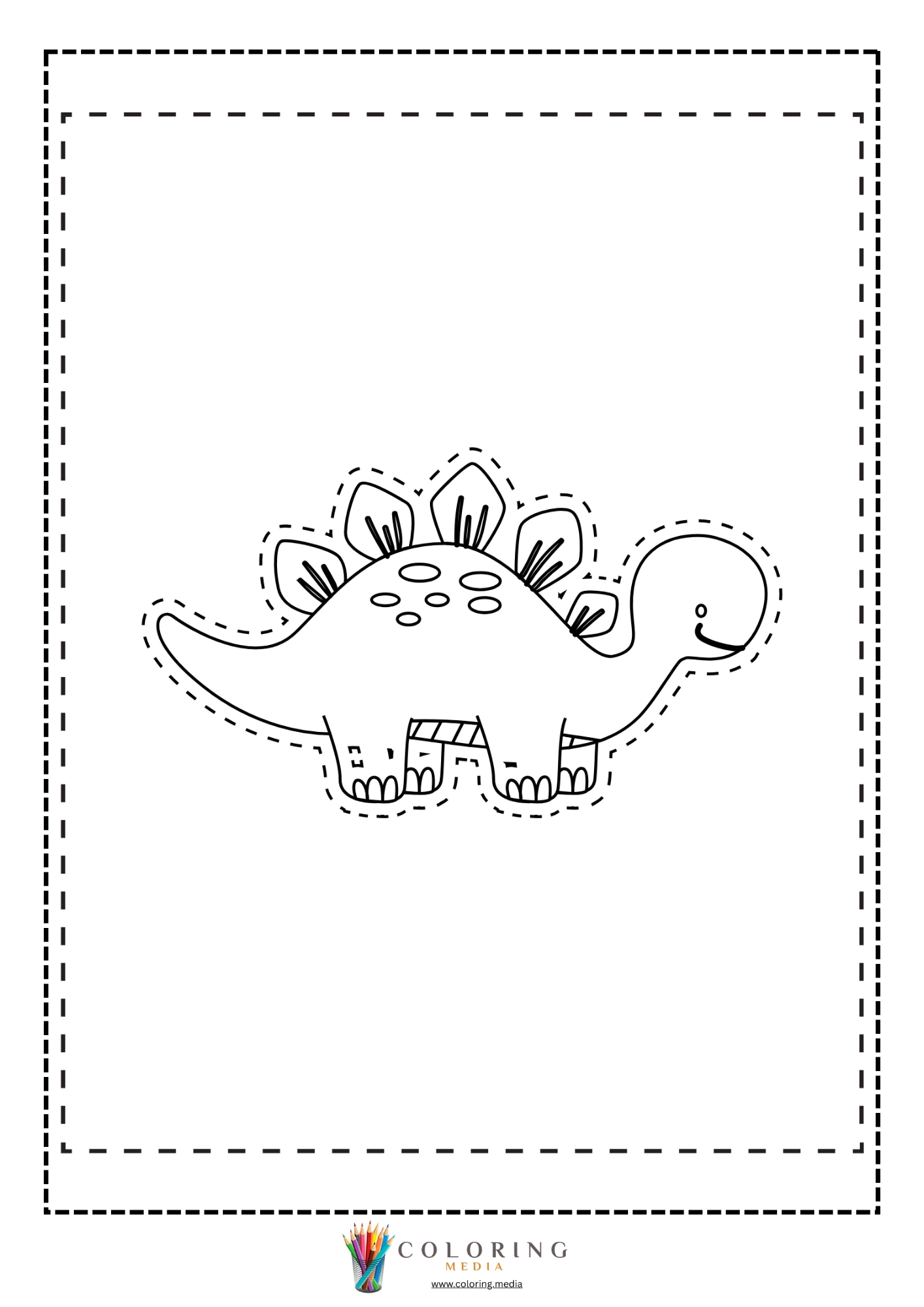
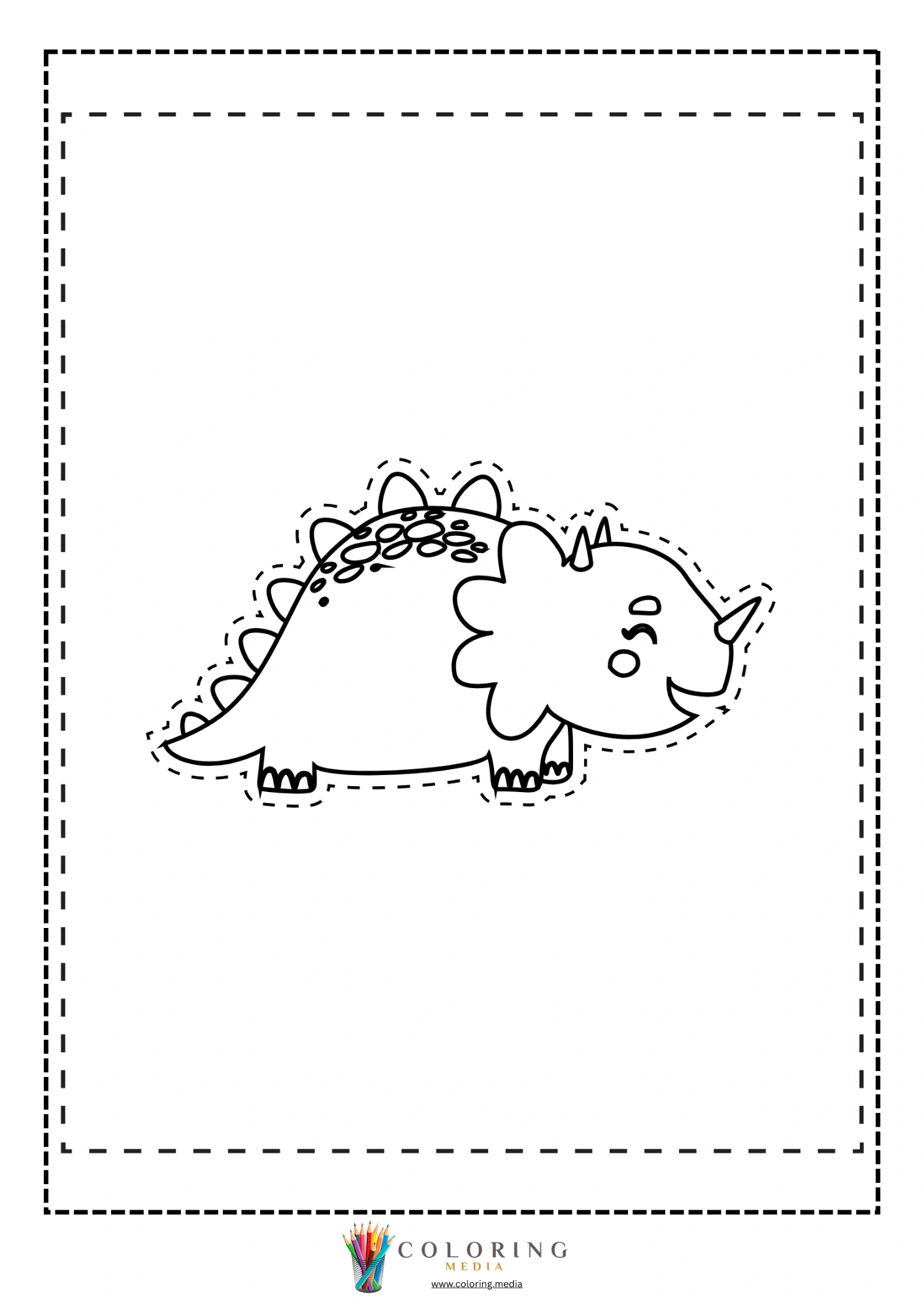
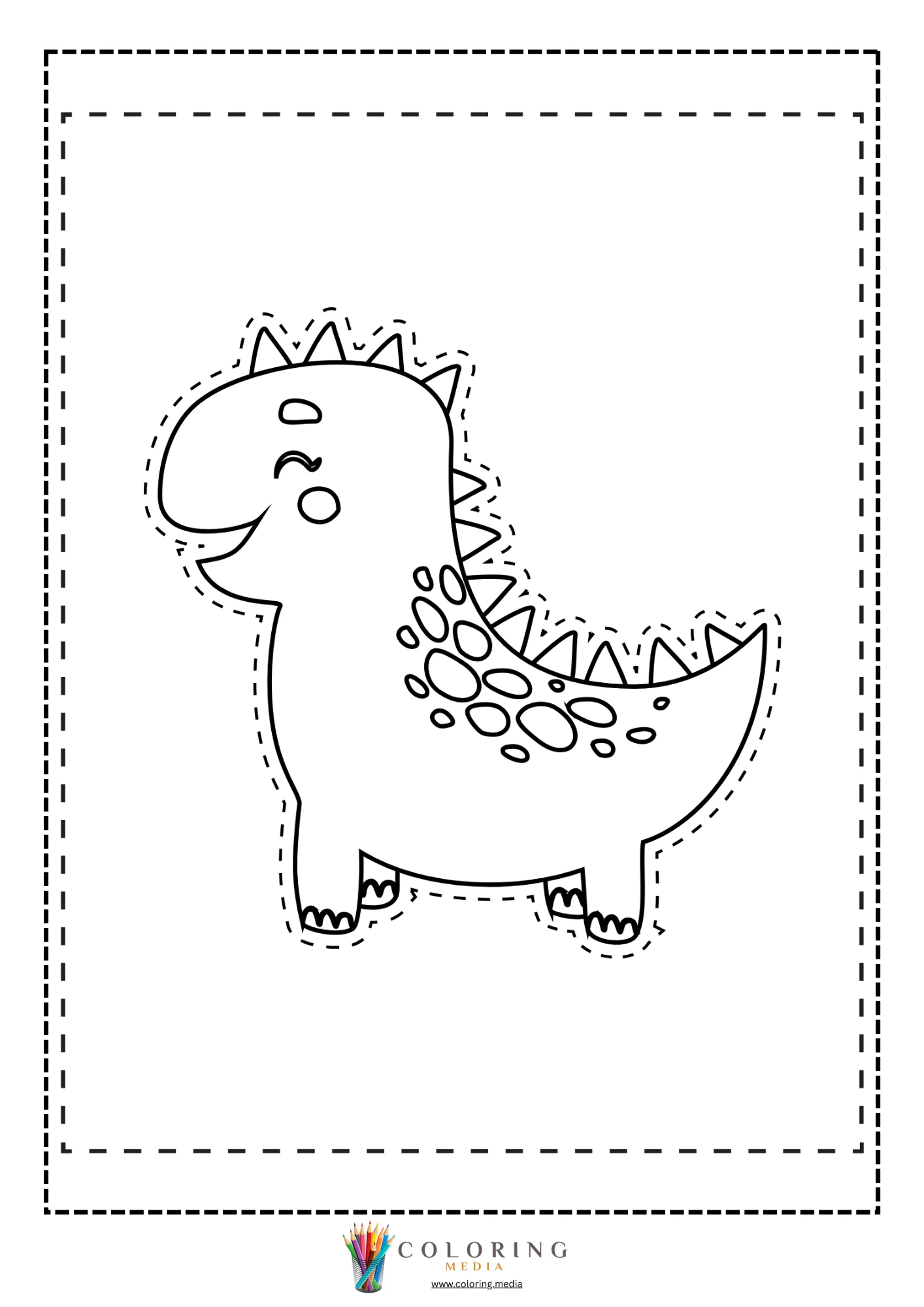
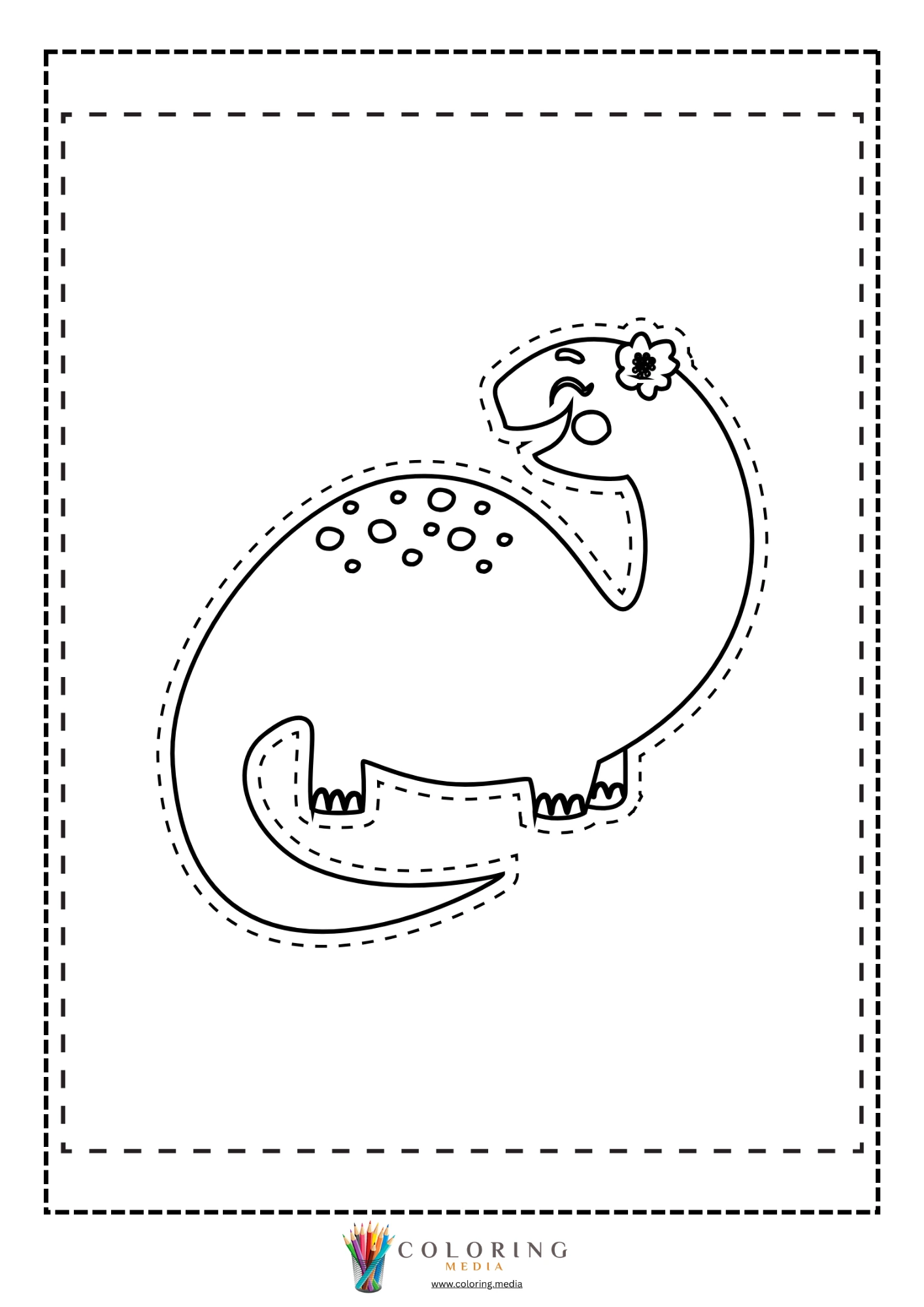
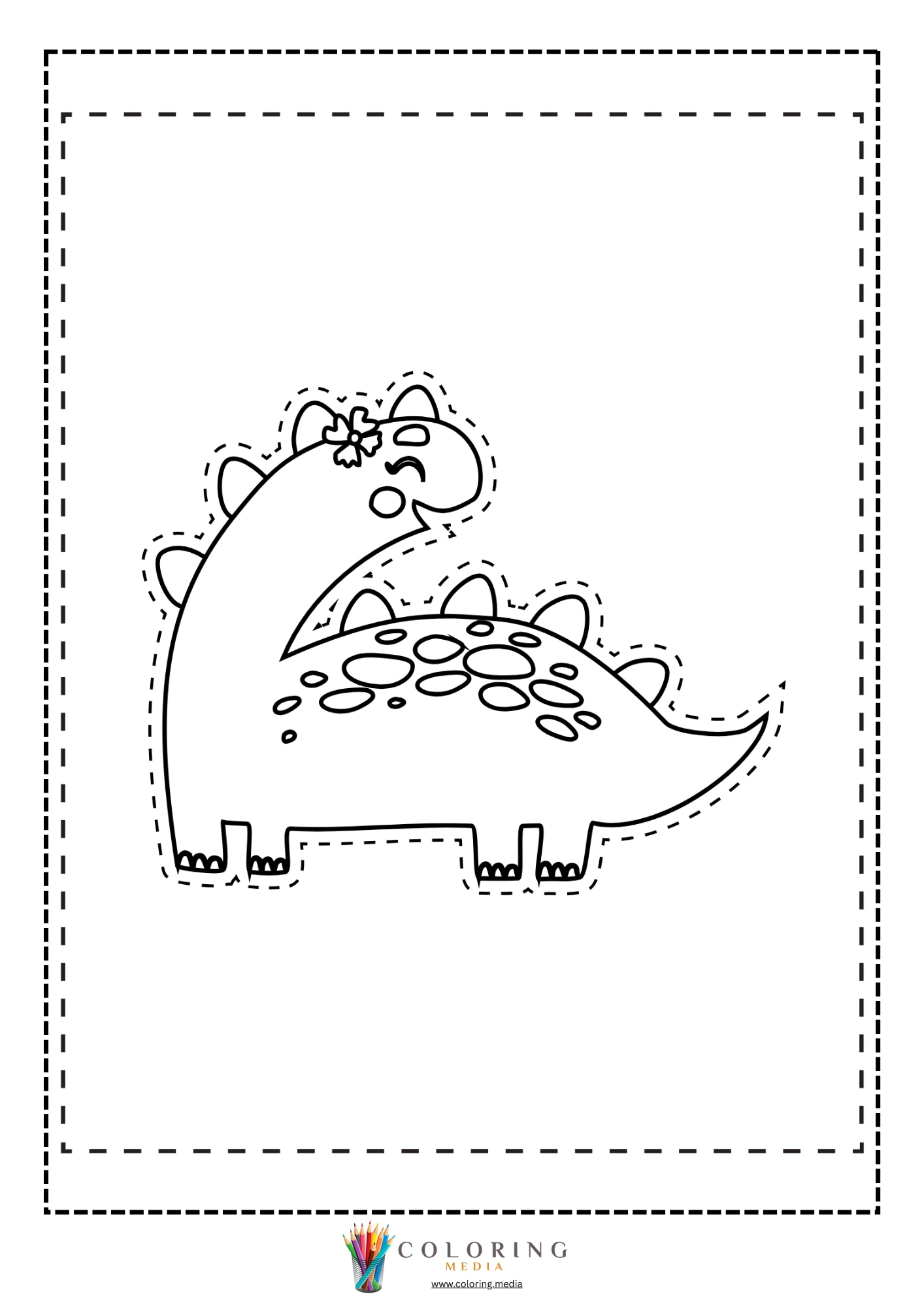
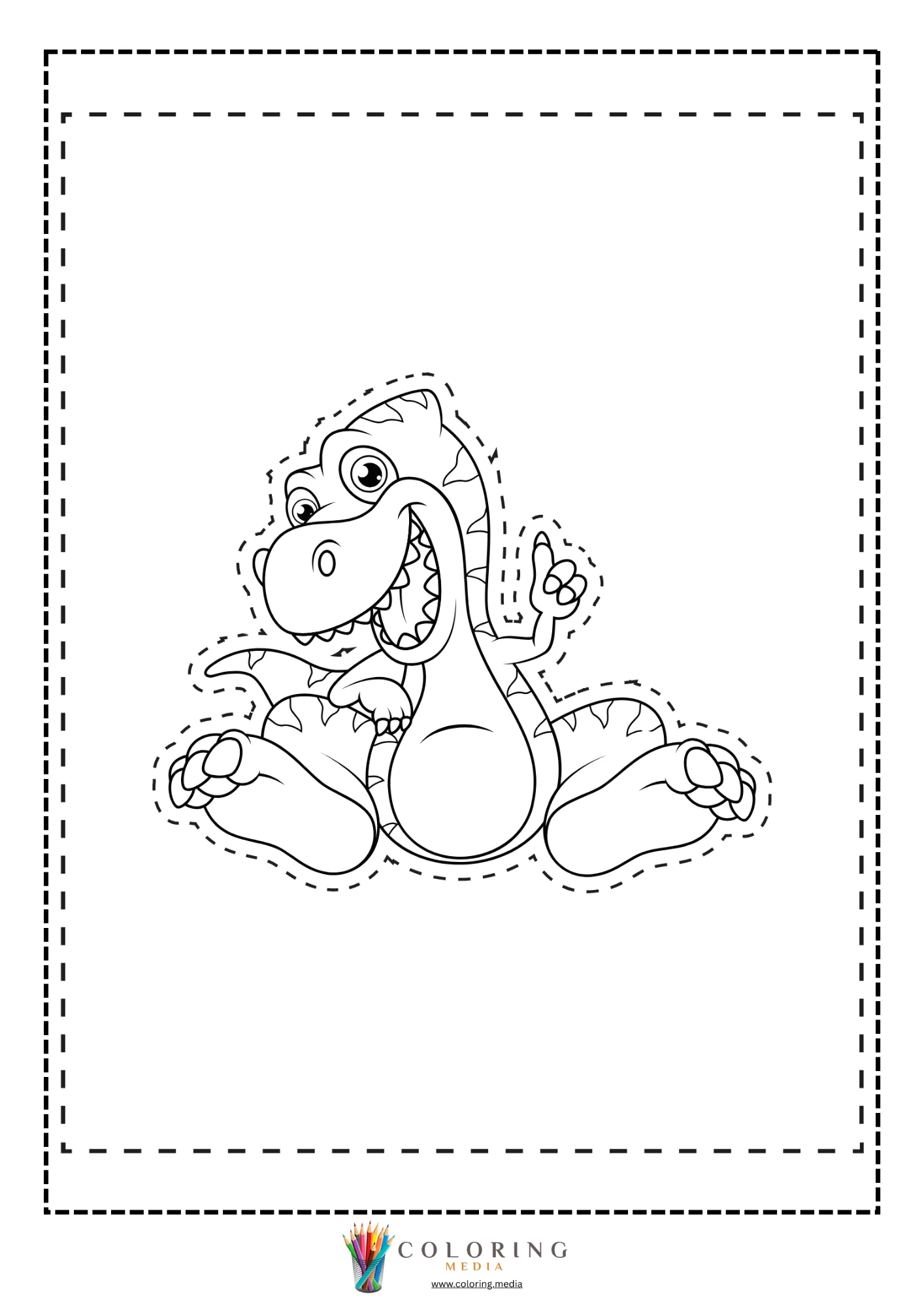
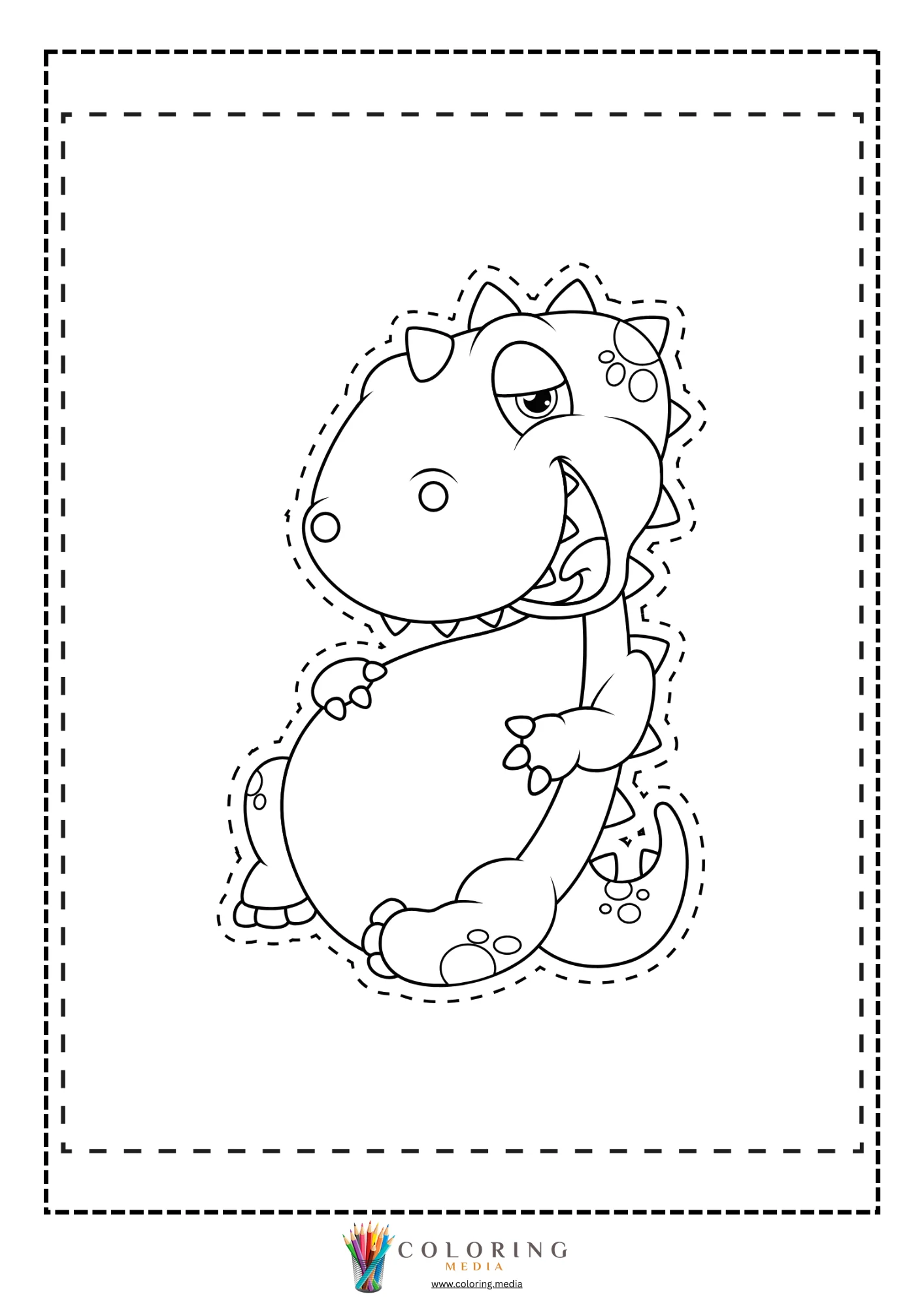
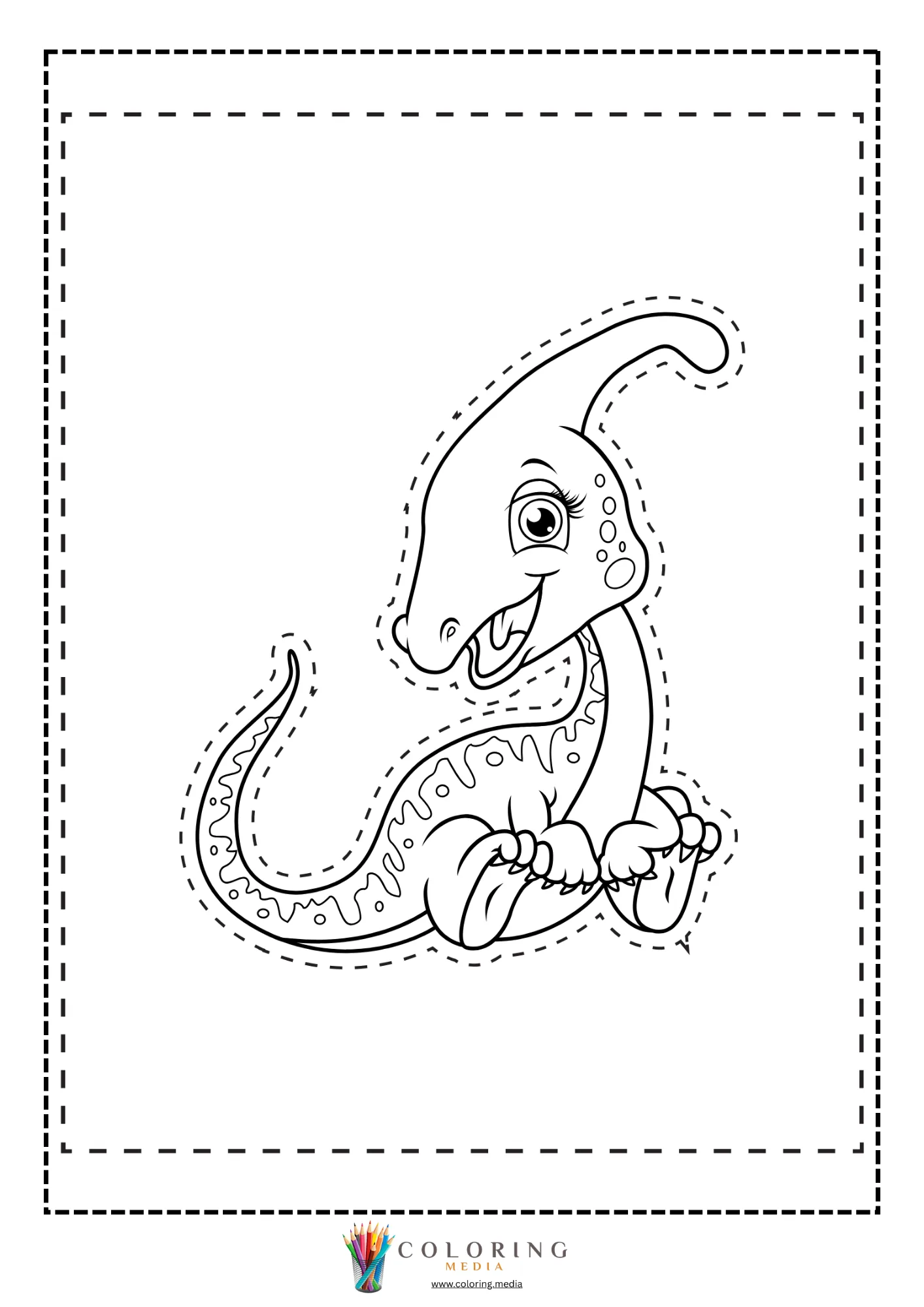
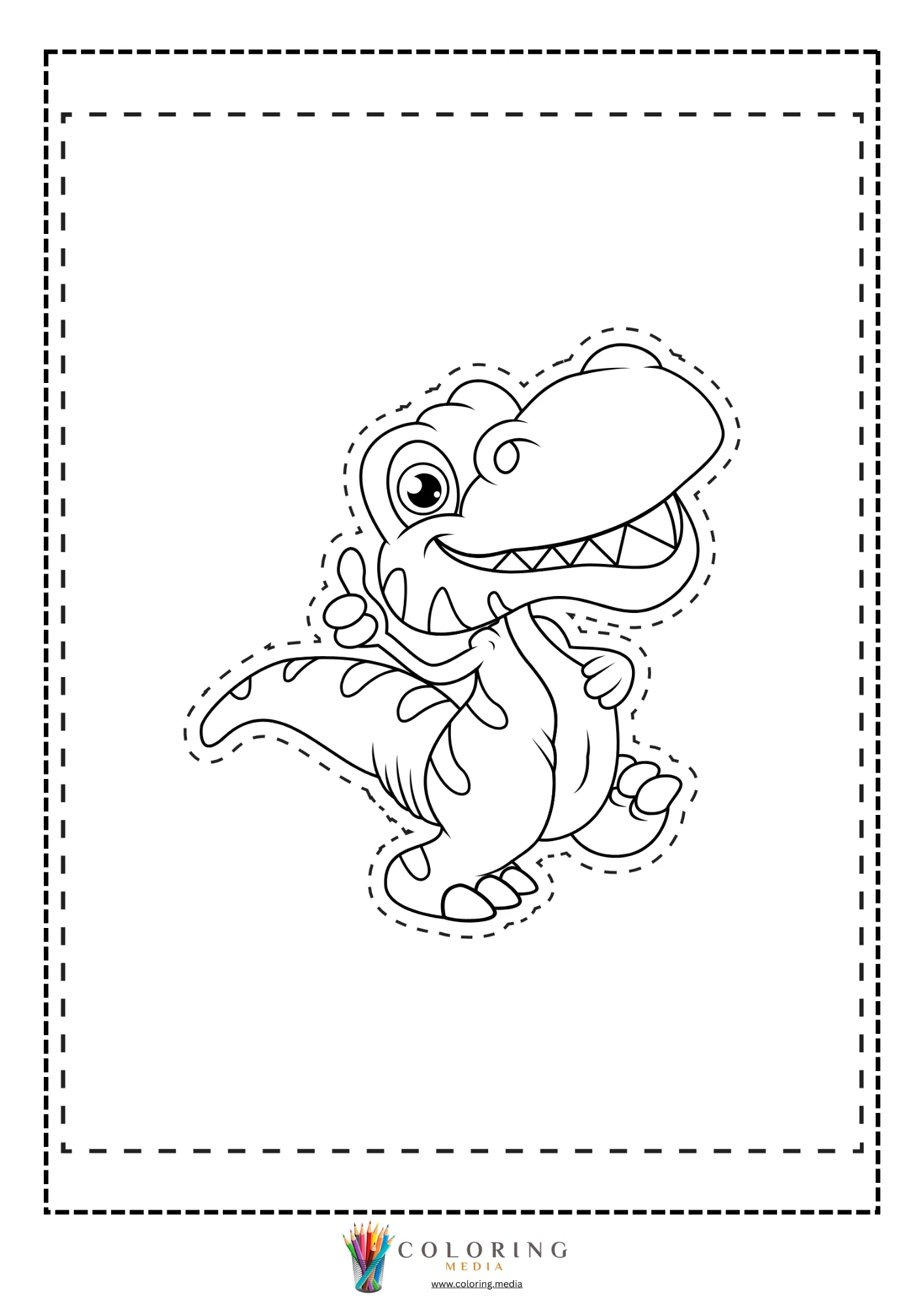
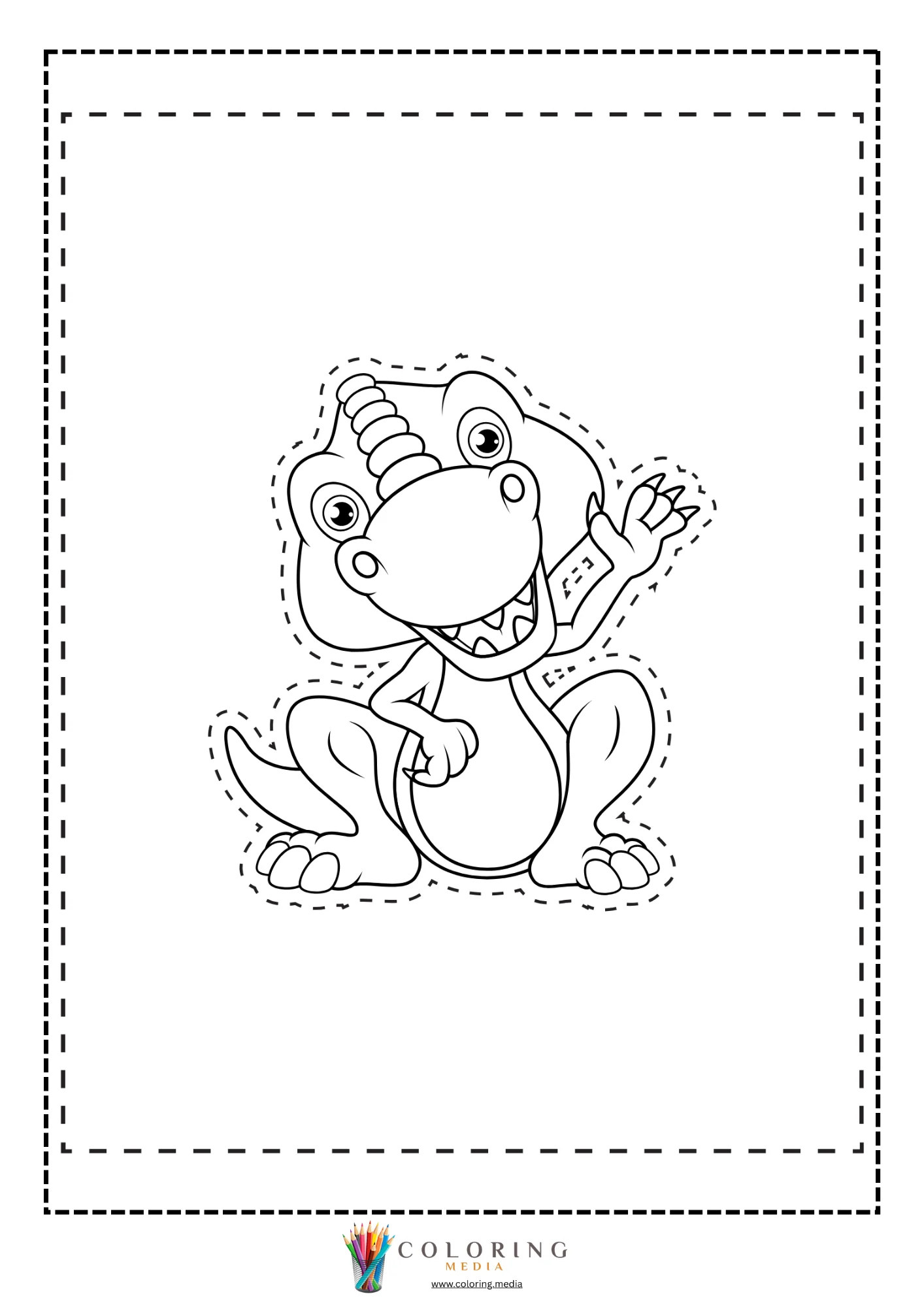
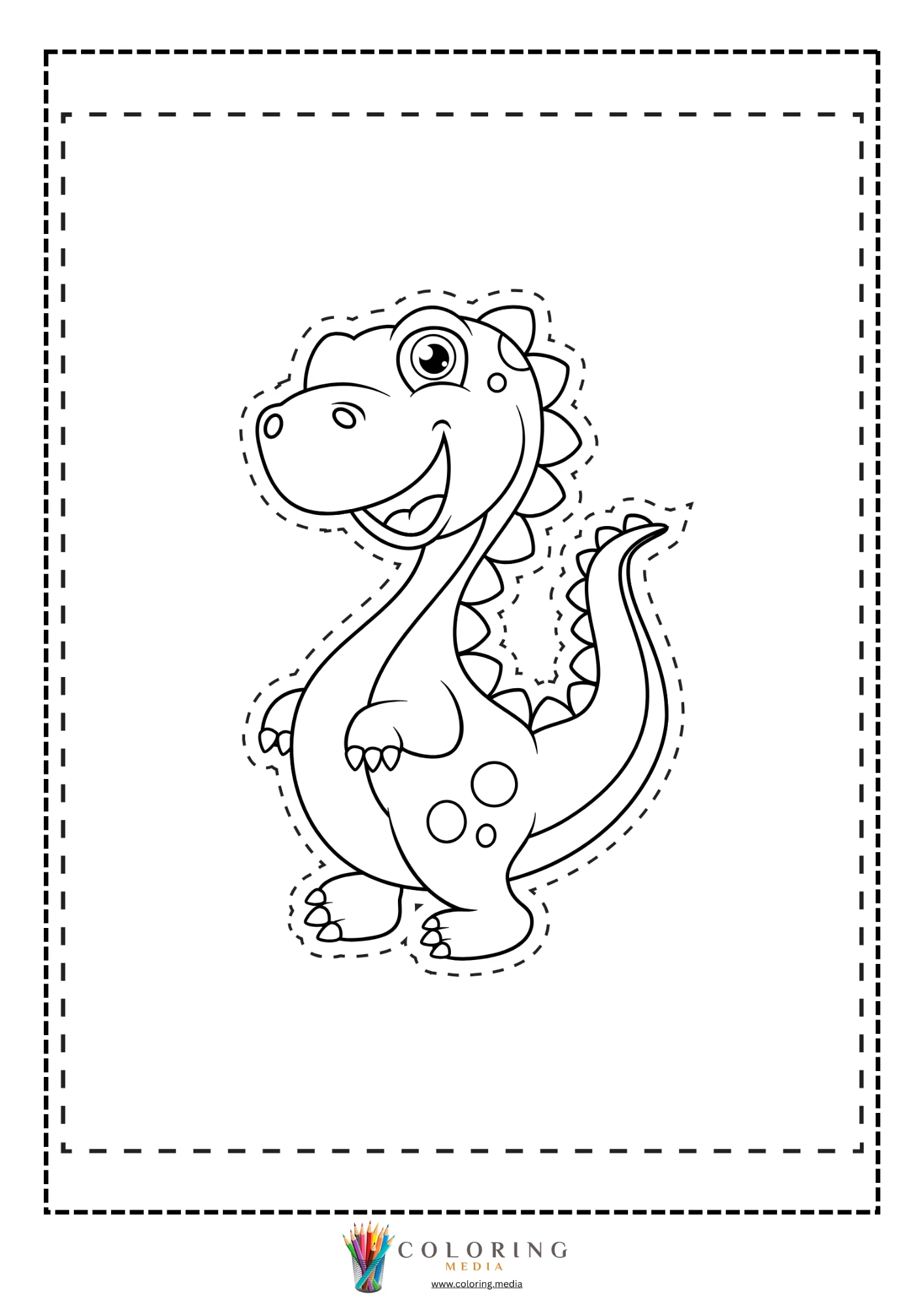
Every dinosaur in this set has been given the kawaii treatment: round body, oversized head, tiny limbs, and a friendly expression that suggests absolutely no interest in hunting anything. A long-necked sauropod looks up with curious eyes. A stegosaurus wears its back plates like a neat row of decorations. A small raptor sits on its haunches in a pose that reads more “puppy” than “predator.” These are dinosaurs for children who love dinosaurs but might find realistic reconstructions a bit intense — the soft, cartoonish rendering keeps every species approachable without losing the basic silhouette that makes each one recognizable.
There are 20 pages covering a range of species — long-necks, horned dinosaurs, armored dinosaurs, and several theropods among them. The line work is consistently simple, with thick outlines and minimal interior detail. Everything here is free to download and easy to print.
Free Printable Dinosaur Coloring Pages
This collection includes 20 printable dinosaur coloring pages featuring kawaii-style cartoon versions of sauropods, stegosaurs, triceratops, raptors, pterosaurs, and more — each drawn with rounded proportions, expressive faces, and thick simple outlines. Pages show individual dinosaurs in playful poses with minimal or no background. Files are formatted for standard US Letter and A4 paper at 300 dpi.

Who Are These Dinosaur Coloring Pages Best For?
The outlines here are on the thicker end — 2-3 mm in most places — with very few interior lines beyond a basic eye, nostril, and the occasional scale or stripe marking. That simplicity makes these pages accessible to preschoolers aged 3-4 who are still learning to control a crayon. The rounded body shapes are forgiving: a child does not need to navigate tight corners or narrow interior sections to produce a completed, recognizable dinosaur.
Kindergarteners will enjoy these too, particularly children who are in a dinosaur phase and care about coloring things “correctly.” That often means conversations about what color dinosaurs actually were — which science cannot definitively answer for most species, giving kids full license to choose. The question of whether a T-rex should be green, brown, or purple is genuinely open, which tends to be exciting rather than stressful.
In a classroom or homeschool setting, these pair naturally with early science or natural history units. Each page can anchor a brief discussion of what made that dinosaur different — how it moved, what it ate, when it lived — before the coloring begins.
Interesting Dinosaur Facts to Share While Coloring
Scientists now believe many dinosaurs had feathers. Birds are technically a group of theropod dinosaurs that survived the mass extinction event, and their close dinosaur relatives — including Velociraptor — are thought to have been feathered too. Velociraptor was actually about the size of a large turkey, not the human-sized animal shown in movies.
The long-necked dinosaurs (sauropods) had the largest bodies of any land animal in history. Some species like Argentinosaurus may have weighed up to 70 tons — roughly the weight of ten elephants. To support that mass, their bones were partially hollow, similar to bird bones, which reduced weight without sacrificing structural strength.
Stegosaurus and T-rex were separated by more time than T-rex and us. Stegosaurus lived about 155 million years ago; T-rex lived about 66 million years ago. That is an 89-million-year gap — longer than the 66 million years between T-rex’s extinction and today. Stegosaurus was, relative to T-rex, an ancient species.
Triceratops’ three horns and frill may have been used for display as much as defense. The frill could have been brightly colored during mating season, functioning more like a peacock’s tail than a shield. Some fossils show bite marks on frills from other Triceratops, suggesting they also used their horns in combat with each other — not just against predators.
Dinosaur fossils have been found on every continent, including Antarctica. The southern continent was warmer and forested during the Mesozoic era, and paleontologists have found fossils there since the 1980s. Most Antarctic dinosaurs were herbivores related to species found in South America, suggesting the landmasses were still connected.
Creative Dinosaur Coloring and Craft Ideas
Prehistoric World Mural Color and cut out several dinosaurs, then arrange and glue them onto a large piece of paper with drawn-in trees, volcanoes, and a prehistoric sky — each child contributes one dinosaur to a shared scene.
Name That Dinosaur Label Game Color the pages, then challenge kids to look up each species and write or dictate its name below the image. Creates a personal dinosaur reference book.
Herbivore vs. Carnivore Sort After coloring, sort the completed pages into two groups: plant-eaters and meat-eaters. Discuss what clues in the body shape (teeth type, eye position, leg length) hint at diet.
Fossil Rubbing Companion Activity Press a textured surface (leaf, burlap) under a page and rub a crayon gently over it for a fossil-texture background effect before adding color to the dinosaur figure itself.
Dinosaur Timeline Research when each colored dinosaur lived and arrange the pages in chronological order on a wall — a visual timeline spanning the Triassic, Jurassic, and Cretaceous periods.
Color-by-Diet Assign a color rule: herbivores get warm earth tones (green, brown, tan), carnivores get cooler or more dramatic colors (red, dark grey, black) — then color accordingly and discuss the choices.
Dinosaur Size Comparison Chart After coloring, draw a simple human figure at the same scale on a separate sheet and place each dinosaur next to it — a visual exercise in just how differently sized these animals were.
Imaginary Dinosaur Design Use blank paper and the coloring pages as inspiration to invent a new dinosaur — mix features from different species and name it, then color the original alongside the invention.
How to Print These Dinosaur Coloring Pages
Each file downloads as a PDF formatted for US Letter (8.5×11 in) and A4 — both print without cropping on either size. Plain copy paper works well with crayons and colored pencils; for markers, 65-90 lb cardstock prevents bleed-through. Print at “actual size” for the sharpest outlines, and grayscale at high quality will give cleaner lines than draft mode if your ink is low.
Explore More Animals Coloring Pages
If you enjoyed these pages, you may also like:
T-Rex Dinosaur Coloring Pages
Stegosaurus Coloring Pages
Raptor Dinosaur Coloring Pages
Cute Animal Coloring Pages
All Animals Coloring Pages