
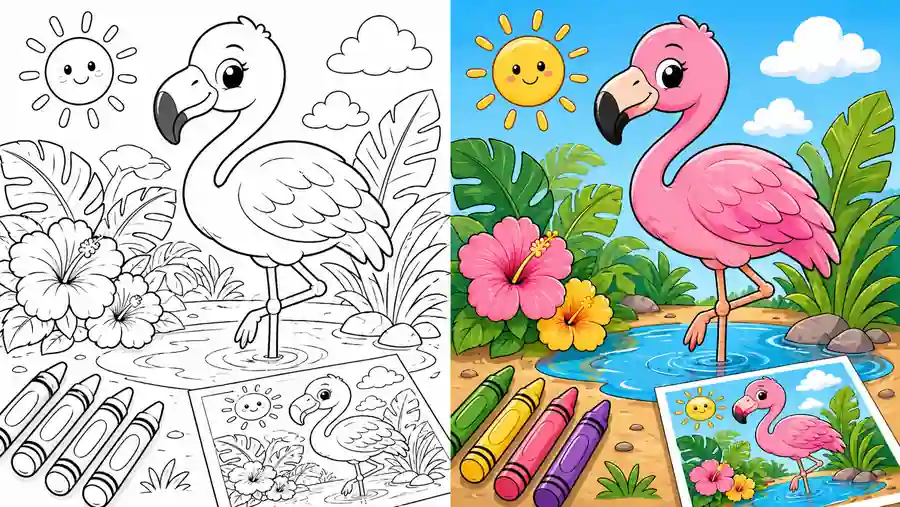
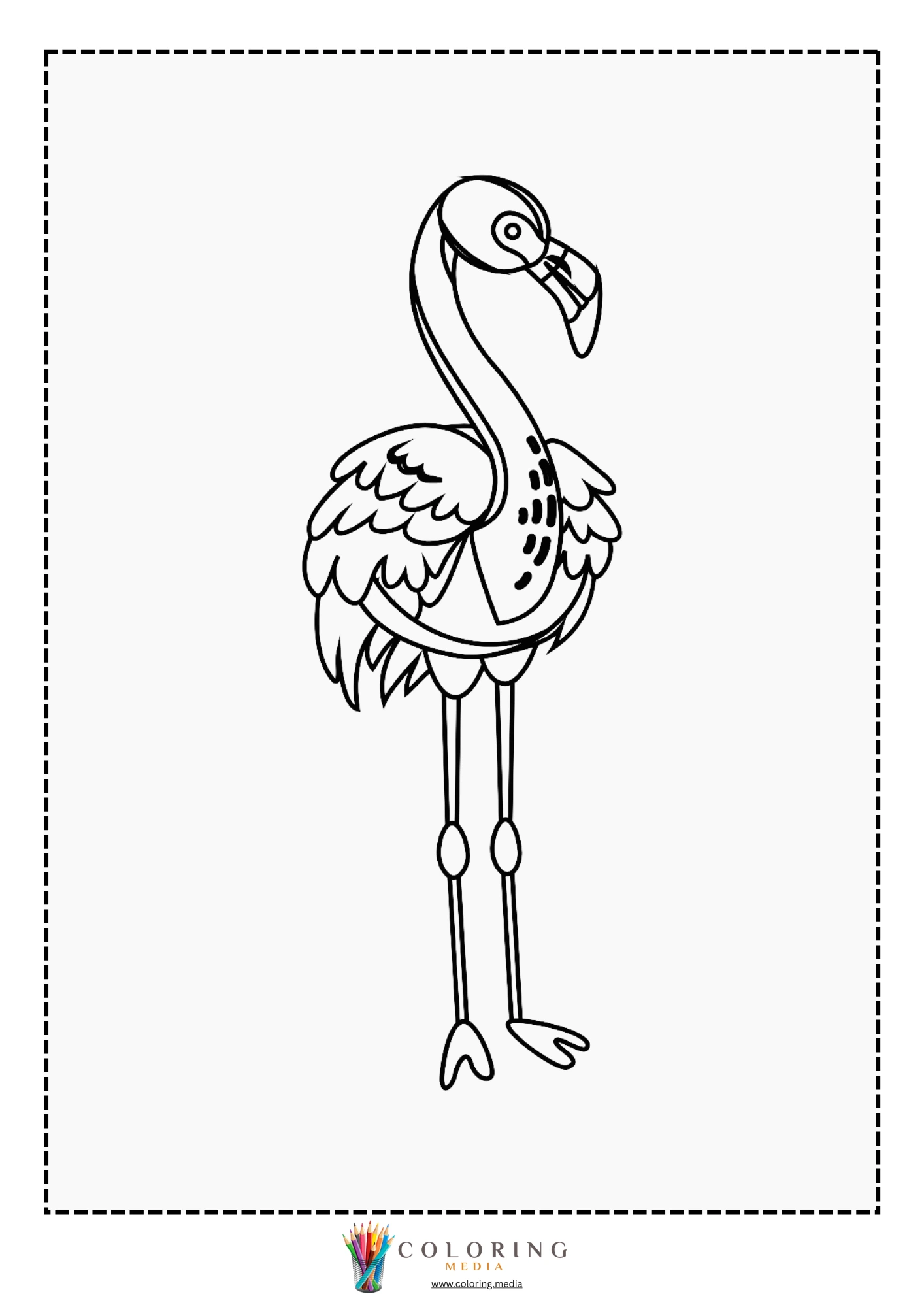
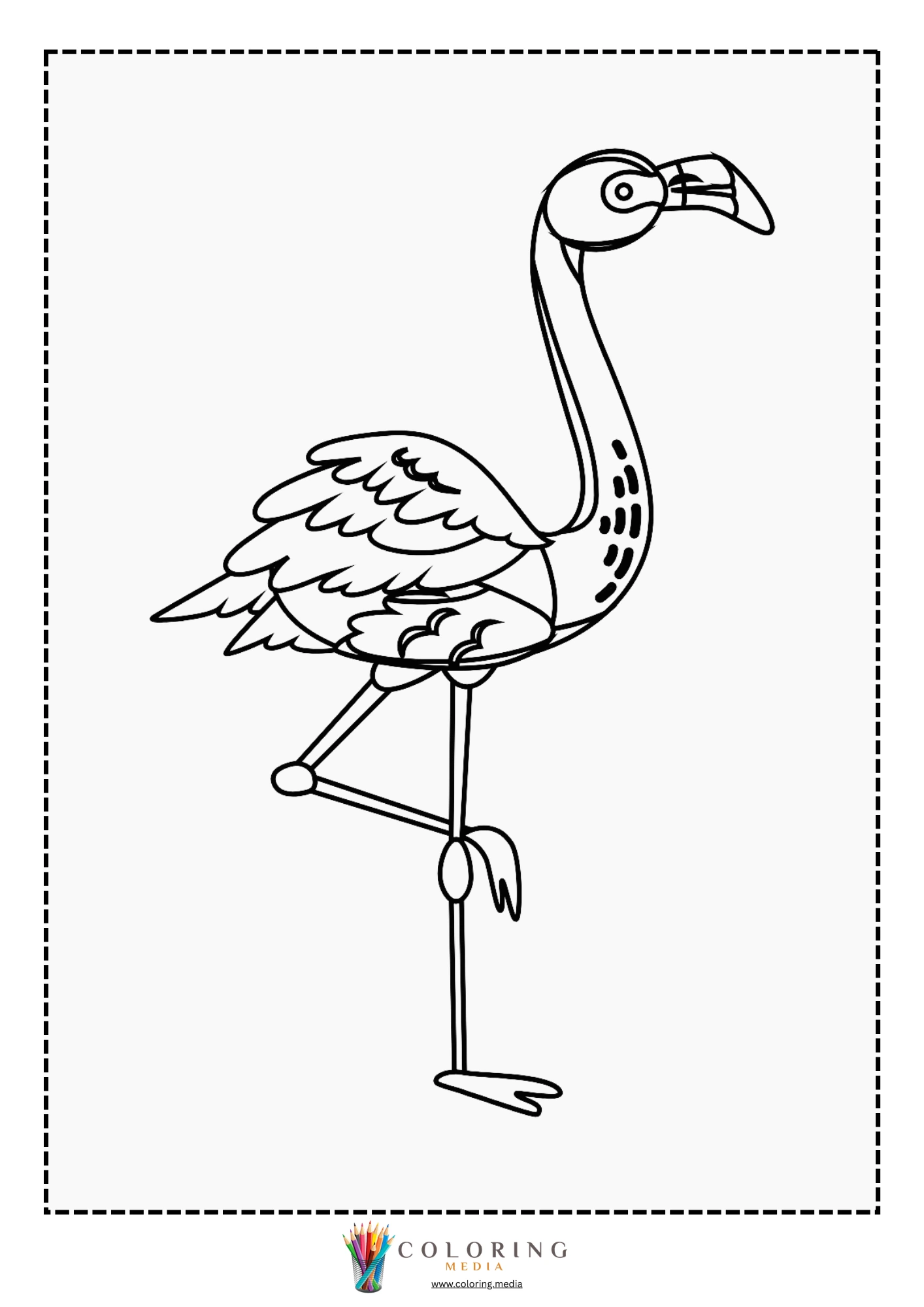
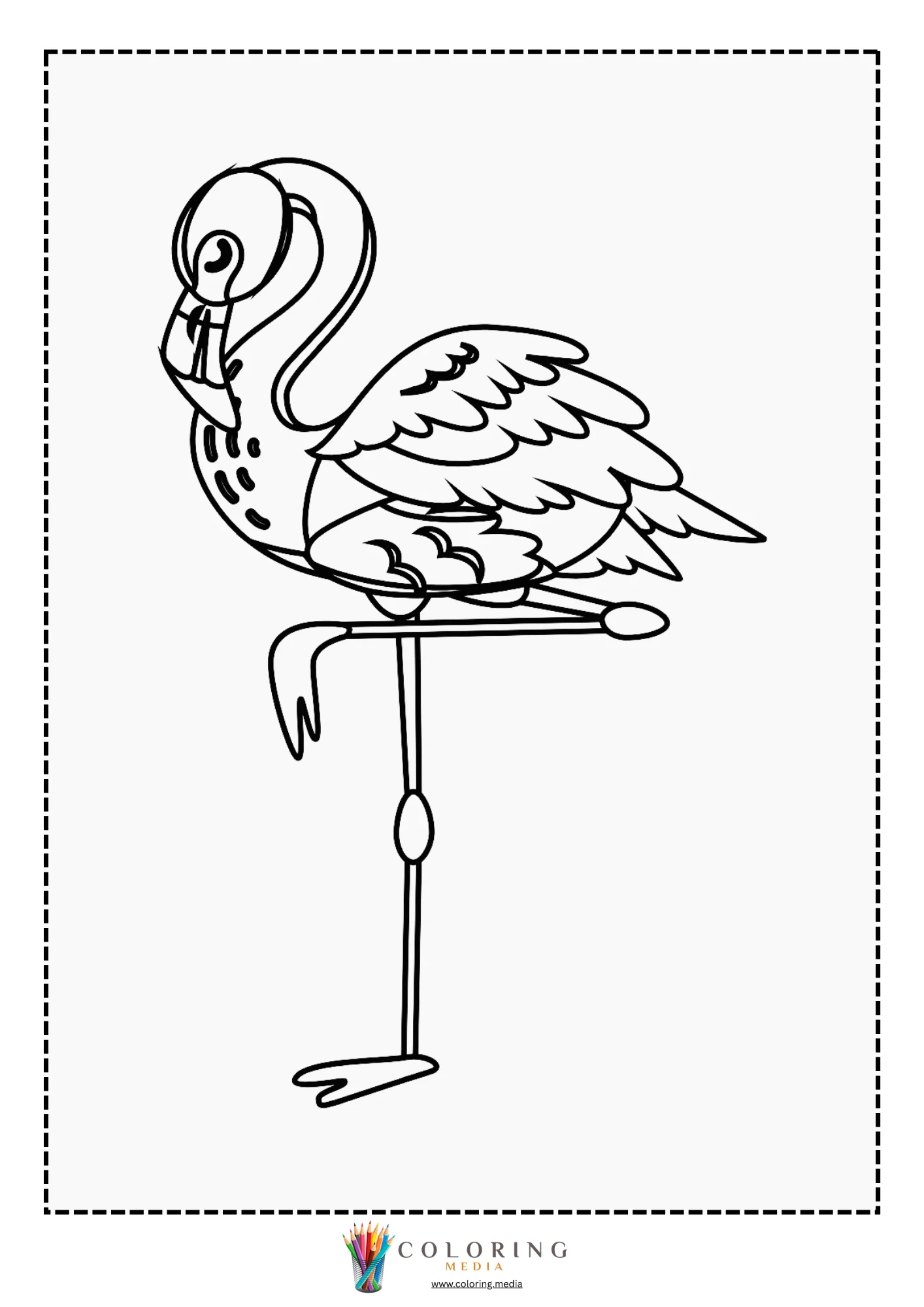
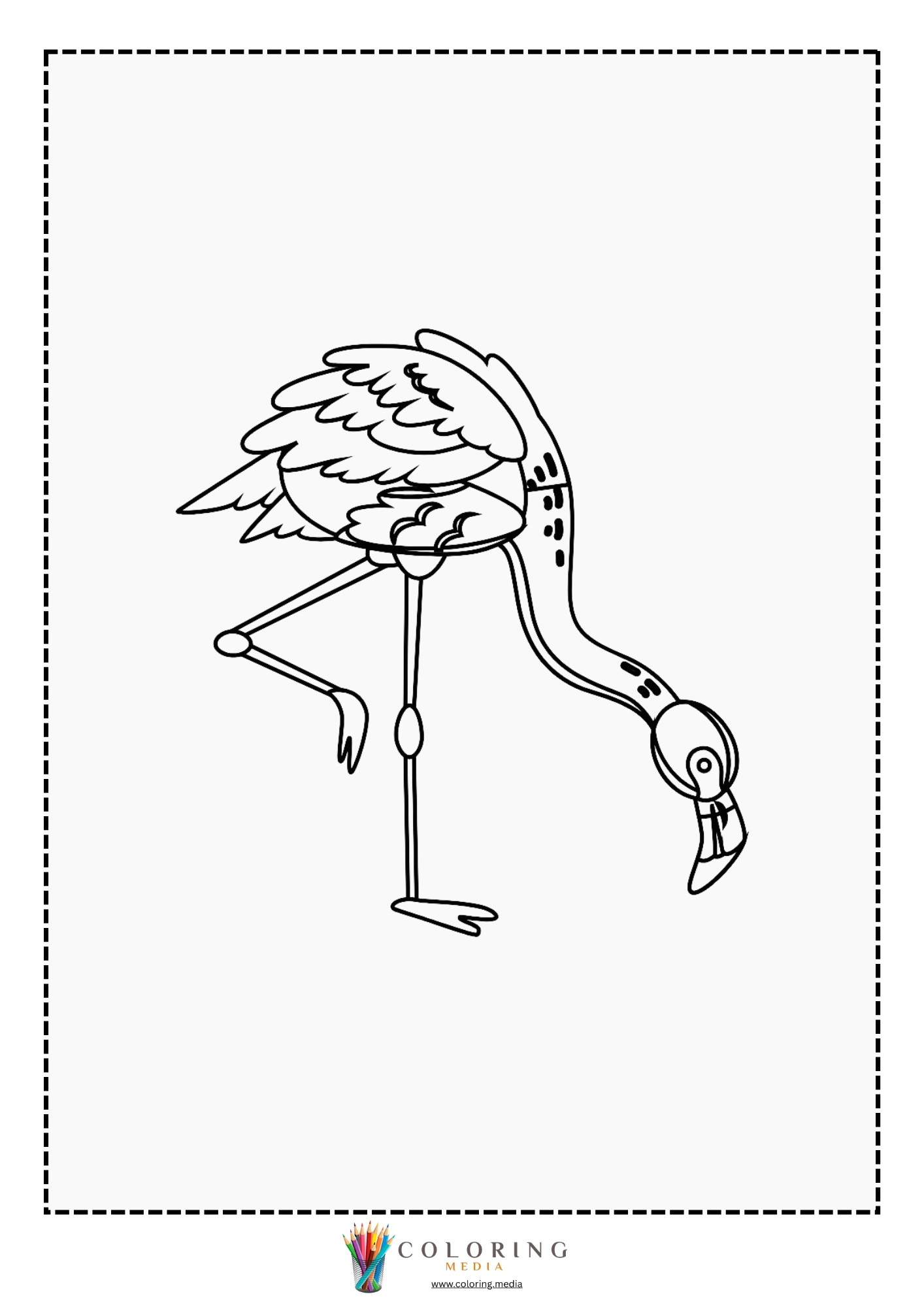
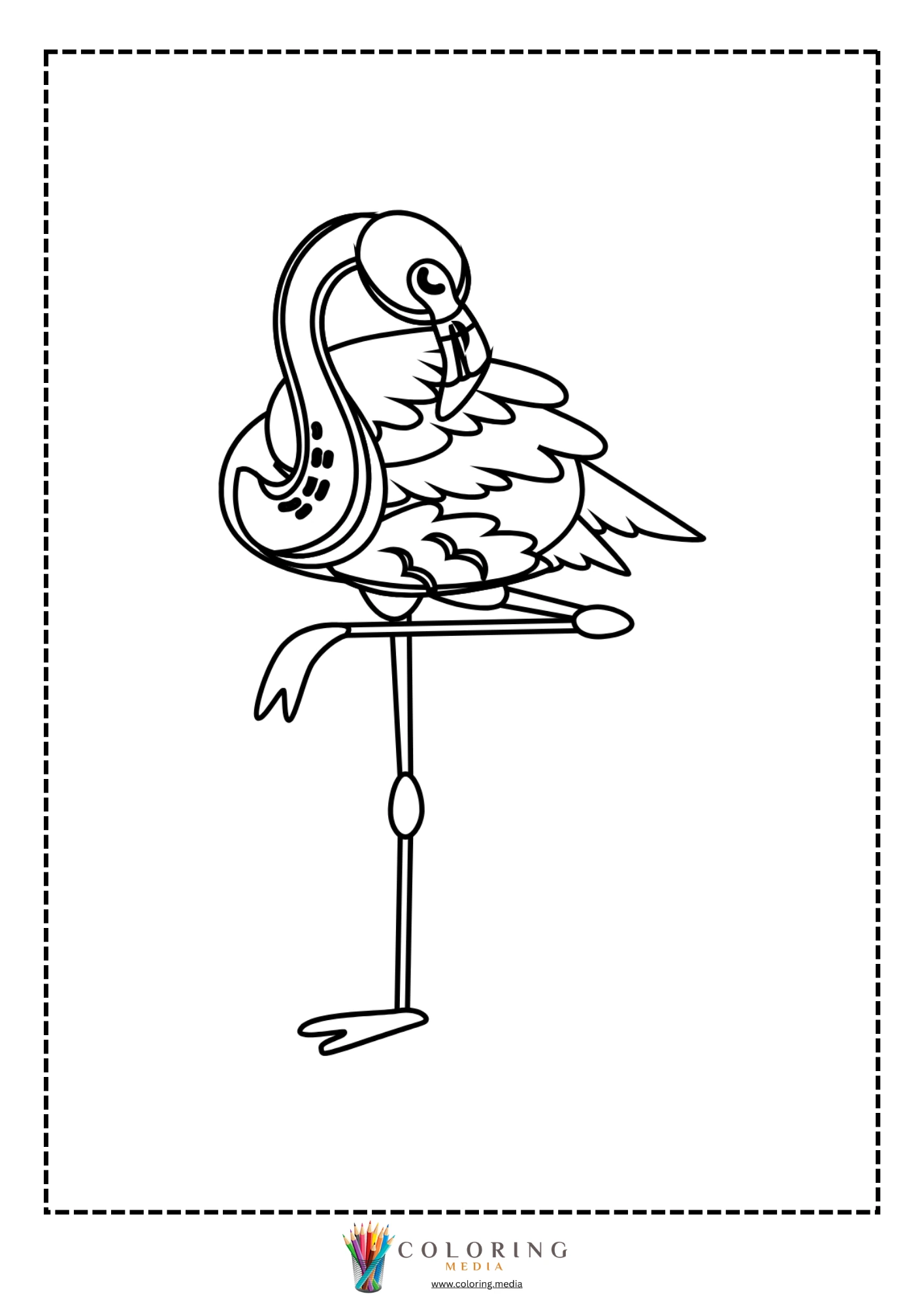
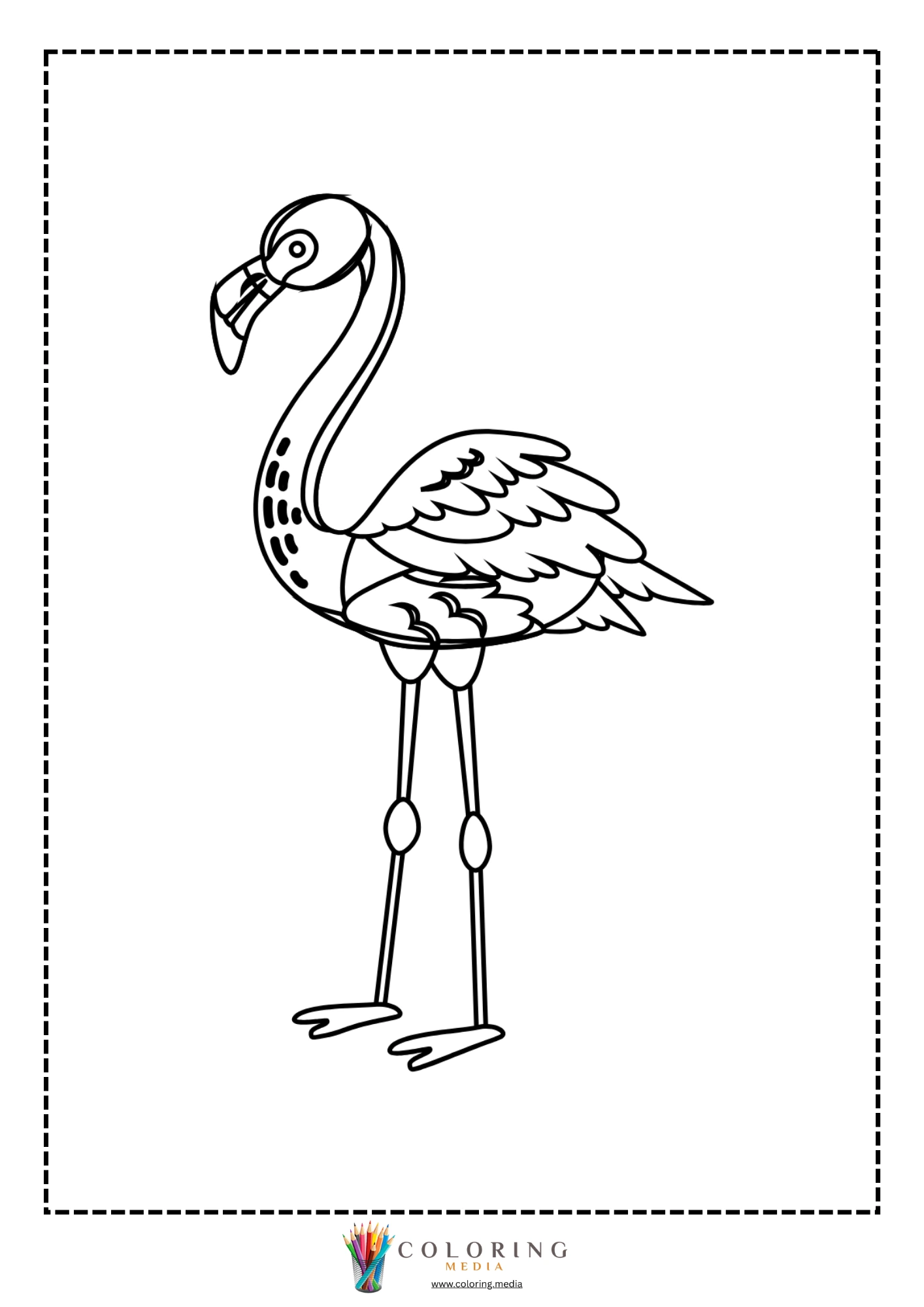
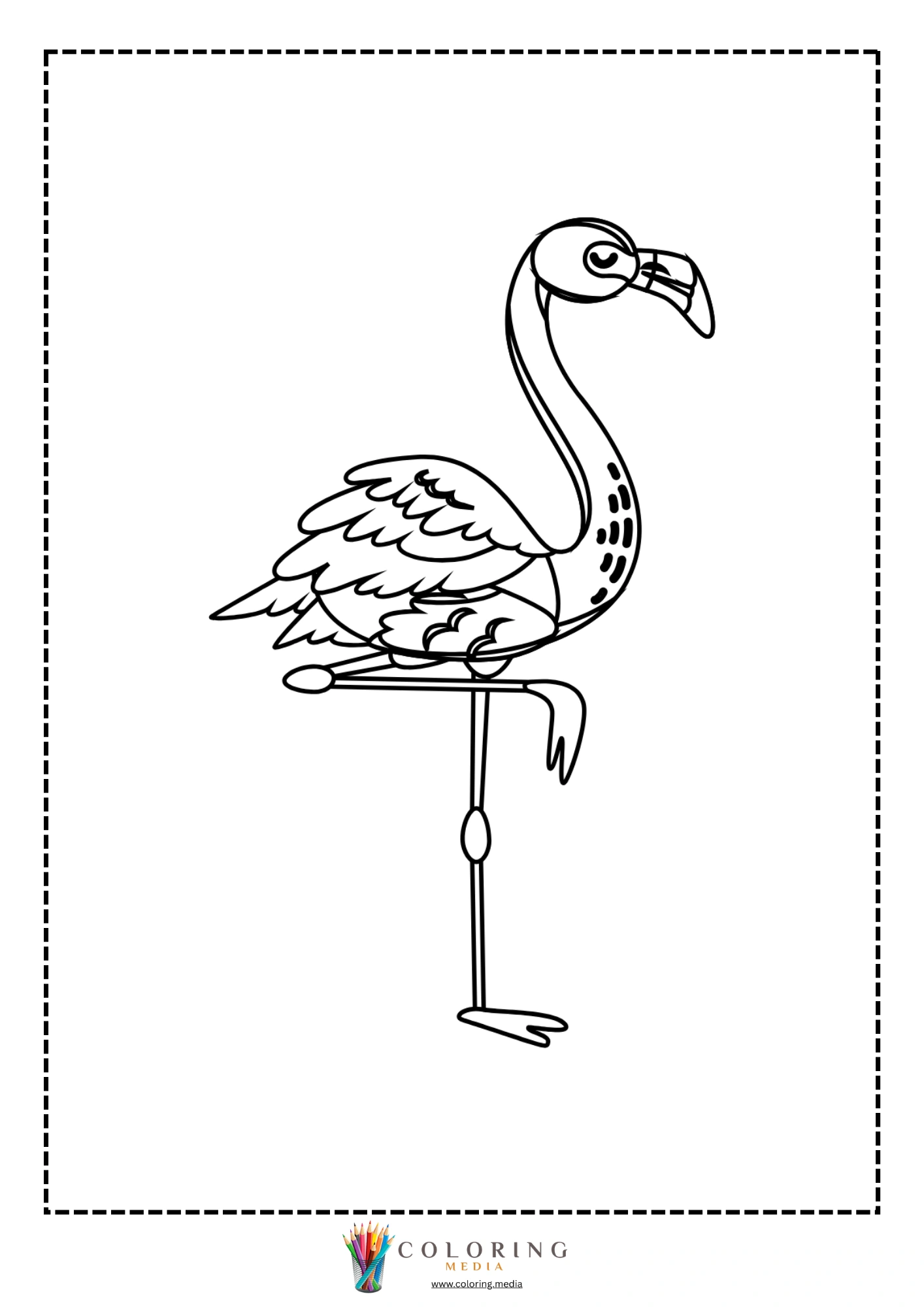
A flamingo standing on one leg is already a striking image, and these pages make the most of that natural elegance. The collection focuses entirely on flamingos — no other animals, no complicated backgrounds — each page exploring a different pose: one leg up, both legs down, neck curved in an S, wings slightly spread, or the bird bending to drink from the water below. The line work is clean and relatively minimal, following the natural curves of the bird’s long neck, angular wings, and spindly legs without overloading the silhouette with interior detail. It is a more refined style than a typical children’s coloring sheet, which makes it appealing to a slightly older or more patient colorist.
There are 10 pages in total, all flamingos, each in a distinct pose. The consistent subject matter makes this a good set for exploring different color and shading approaches across multiple pages. Everything here is free to download and easy to print.
Free Printable Flamingo Coloring Pages
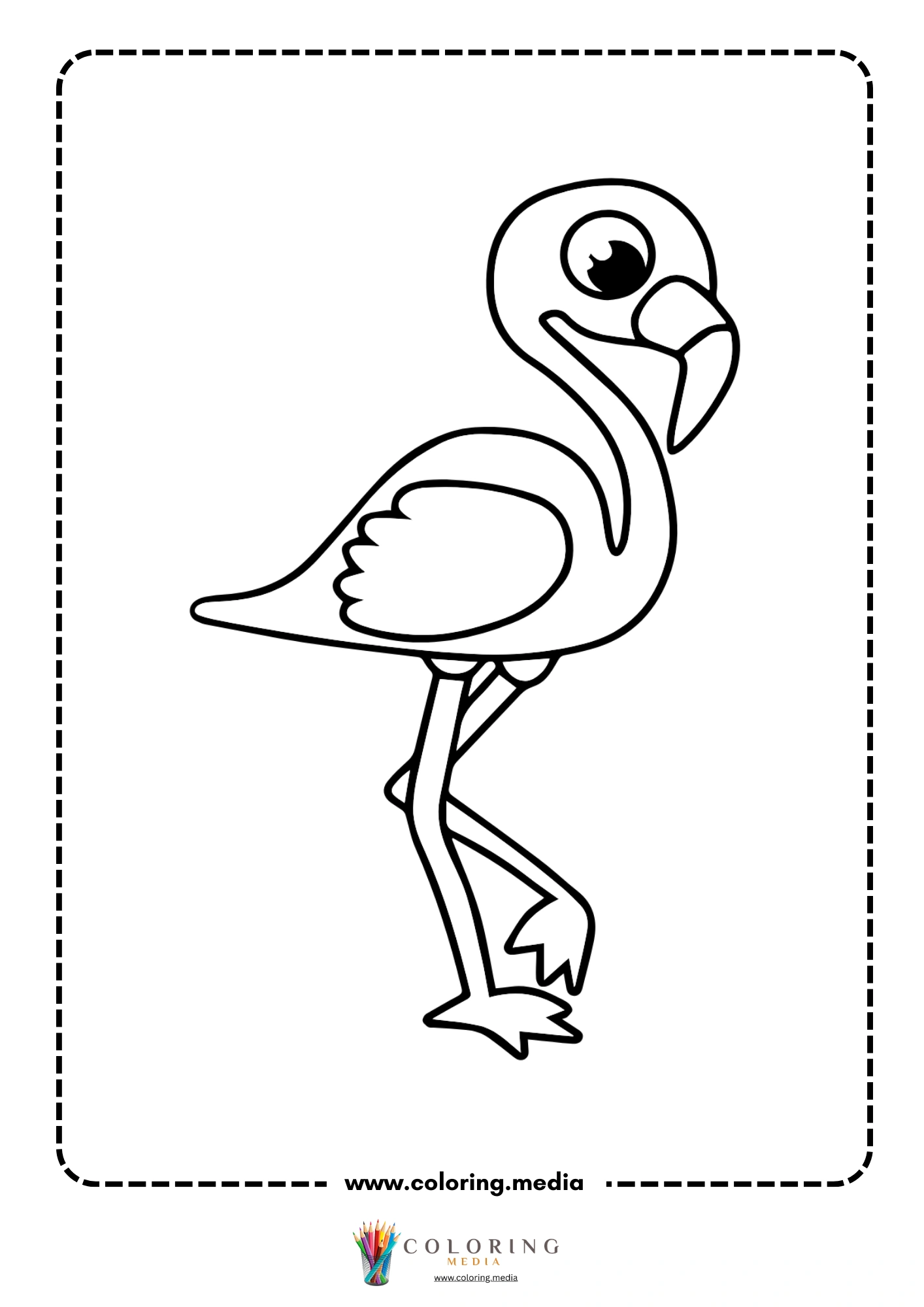
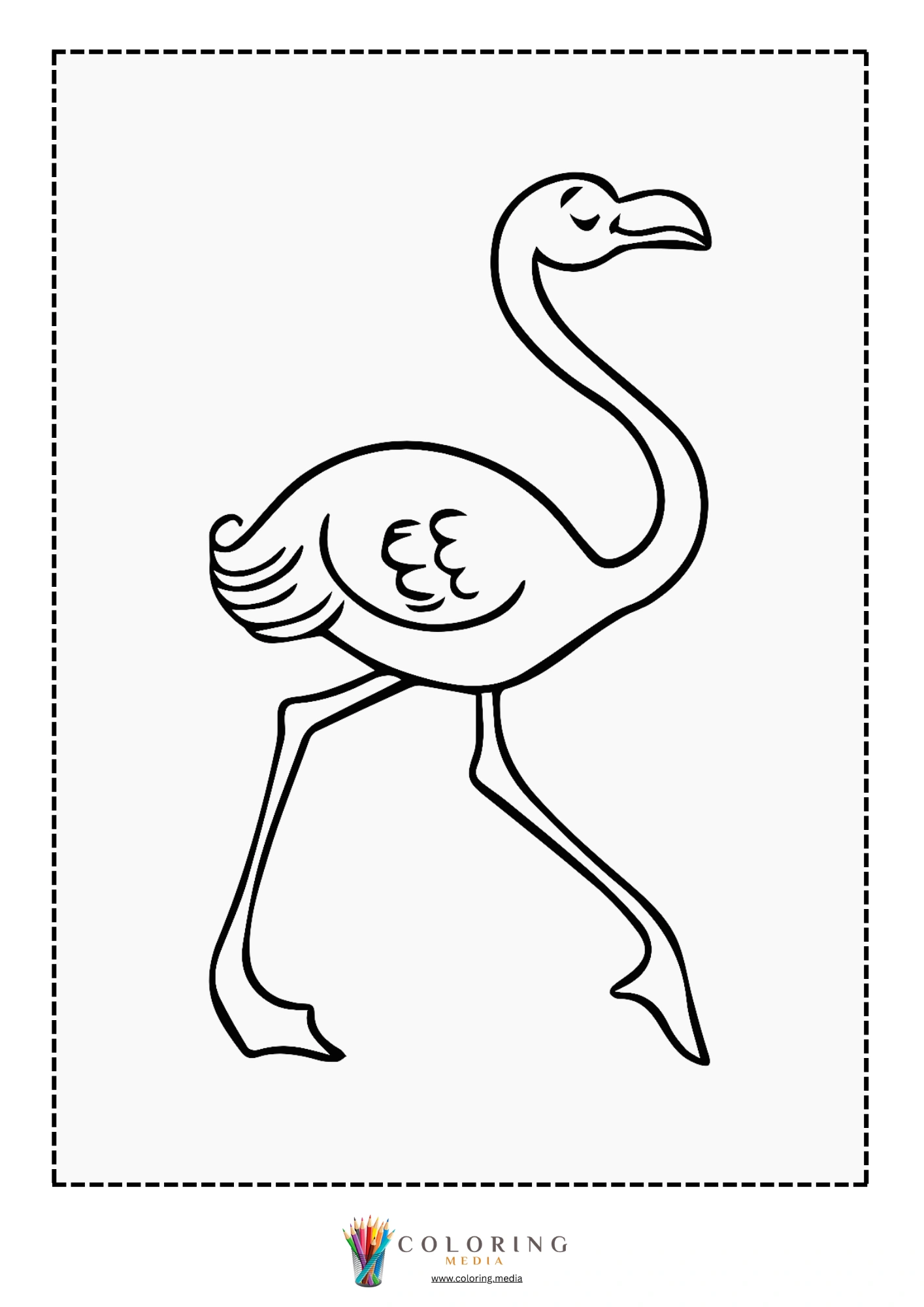
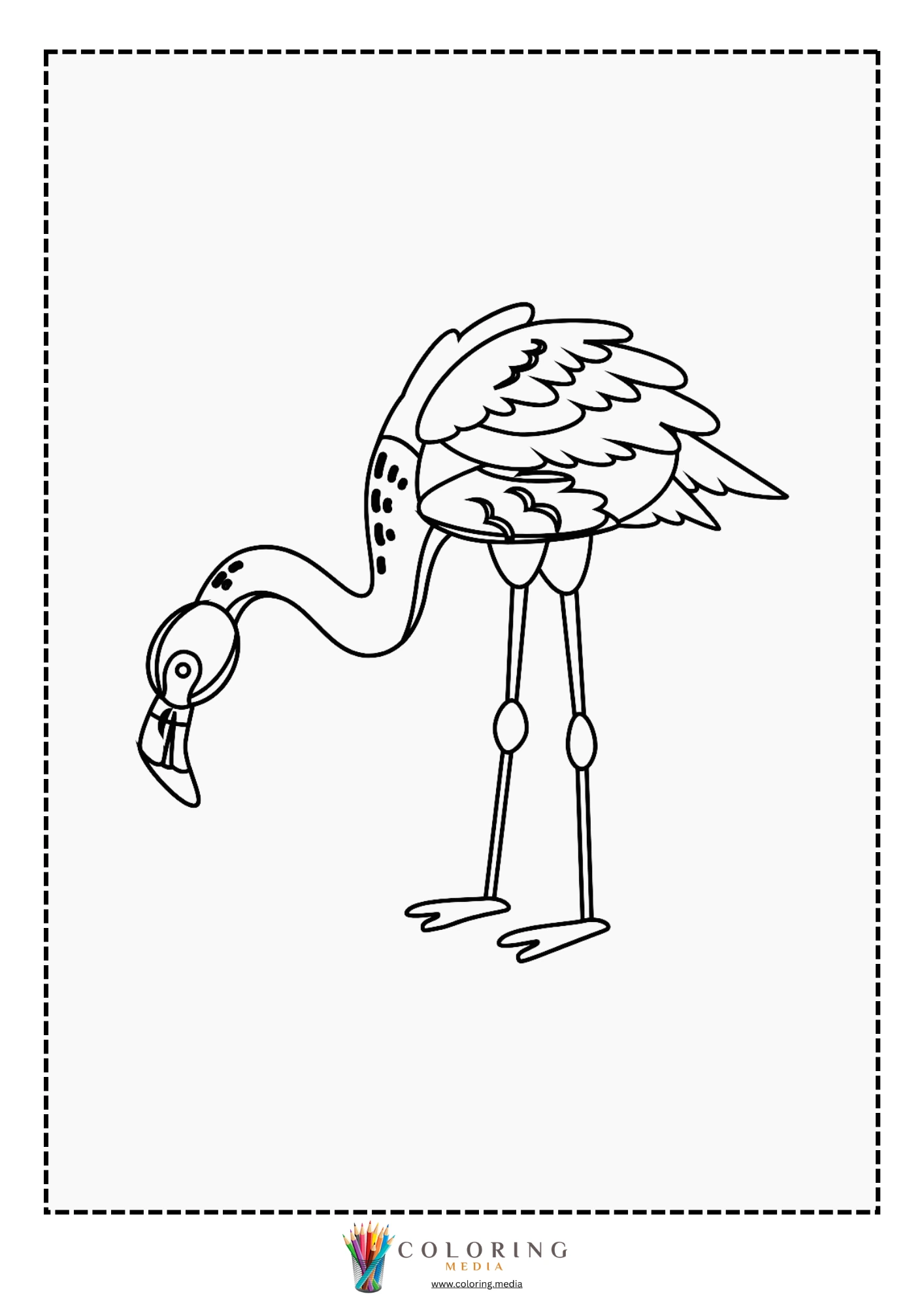
This collection includes 10 printable flamingo coloring pages each showing a single flamingo in a different pose — standing on one leg, drinking, preening, wings spread, and more — drawn in a clean simplified line art style that captures the bird’s elegant proportions without excessive interior detail. Pages have minimal or no backgrounds. Files are formatted for standard US Letter and A4 paper at 300 dpi.
Who Are These Flamingo Coloring Pages Best For?
Flamingos present a specific coloring challenge: their most iconic feature is their color, which is pink — but the pink varies from pale blush at the feather edges to deep coral-rose at the wing bases and joints. A child who uses a single flat crayon across the whole bird misses something that more deliberate coloring can capture. For that reason, these pages work best for children who have developed some patience and interest in using color meaningfully — generally kindergarten age and up.
Early elementary children, especially those who enjoy art as a subject rather than just an activity, will find real satisfaction in the graduated pink challenge. Using two or three shades of pink or red-orange — building darker at the wing joints and bill, lighter at the breast and lower neck — produces a result that looks noticeably more finished than a flat-color approach, and children this age are often motivated by that visual difference once they see it demonstrated.
The consistent single-subject format also makes this a useful set for art instruction on form and proportion — the flamingo’s distinctive silhouette, with its S-curve neck and backward-bending knee, is a good exercise in drawing observation even when working from a printed outline.
Interesting Flamingo Facts to Share While Coloring
Flamingos get their pink color entirely from their food. Their natural color is white; the pink and red pigments called carotenoids come from the algae and crustaceans they filter from the water. Flamingos in captivity that are not given carotenoid-rich food turn white within a few years. The intensity of the color varies by species and diet — a wild flamingo eating well is deep coral, while one in poor health fades noticeably.
Flamingos feed with their heads upside down. Their bills are specialized for filter feeding — bent in the middle so that when the bird lowers its head to the water, the bill is naturally inverted, with the top half on the bottom and the bottom half on top. Rows of comb-like structures called lamellae filter algae and small crustaceans from the water as the tongue pumps back and forth several times per second.
A flamingo standing on one leg is not resting — it is regulating temperature. By tucking one leg against the body and standing on the other, flamingos reduce the heat lost through their legs (which have no feathers and lose heat quickly). In cold water or cold air, you will see more one-legged flamingos. When the temperature is comfortable, they often stand on two. The leg-tucking posture also requires almost no muscular effort — flamingos can actually lock the joint in place passively.
Flamingos are surprisingly fast fliers and can travel hundreds of miles in a single night. Despite their ungainly appearance on the ground, they fly at speeds of 35-40 mph and can cover 300-400 miles between lakes when conditions change. They migrate at night and use calls to stay together in the dark. Their long necks and legs extend fully in flight, creating a very different silhouette from the standing bird.
Creative Flamingo Coloring and Art Ideas
Pink Gradient Practice Before coloring, gather two or three shades of pink and red-orange, then plan which is darkest (wing joints, bill, knees) and which is lightest (breast, lower neck) — using the flamingo as a shading exercise.
Flock Silhouette Display Color all 10 pages and cut out just the flamingo silhouettes, then arrange them at different heights on a long strip of blue paper to create a flock scene — overlapping slightly as a real flock would.
Sunset Background Wash Color the flamingo first with crayons, then paint a loose watercolor gradient behind it — yellow-orange at the horizon fading to pink and purple higher up — for a sunset lagoon effect.
Reflection Drawing Color the flamingo, then draw its mirror reflection in the water below — useful for discussing symmetry and also looks striking when done with a light blue pencil for the reflection.
Pose Comparison Chart Color two or three flamingo pages and display them side by side with labels for each pose — “feeding,” “resting,” “preening” — as a behavior observation chart.
Diet-to-Color Science Illustration Draw or print a small picture of brine shrimp and algae beside the completed flamingo, with an arrow showing how the food produces the color — a simple cause-and-effect science diagram.
How to Print These Flamingo Coloring Pages
Each file downloads as a PDF formatted for US Letter (8.5×11 in) and A4 — both print without cropping. Because the line work here is thinner than a standard children’s coloring page, printing at “actual size” and high quality gives the crispest outlines. Smooth 65-80 lb cardstock works better than copy paper for colored pencil work, as it takes multiple light strokes without pilling. For watercolor background washes, use at least 90 lb paper or dedicated watercolor paper to prevent buckling.
Explore More Animals Coloring Pages
If you enjoyed these pages, you may also like:
Sea Life Coloring Pages
Dolphin Coloring Pages
Birds Coloring Pages
Cute Animal Coloring Pages
All Animals Coloring Pages