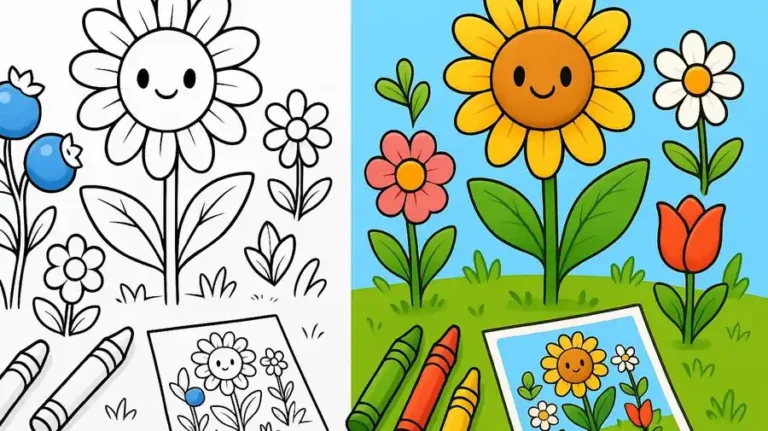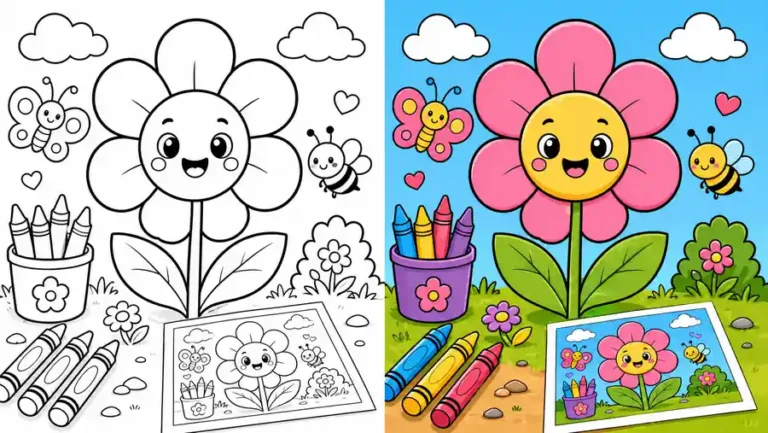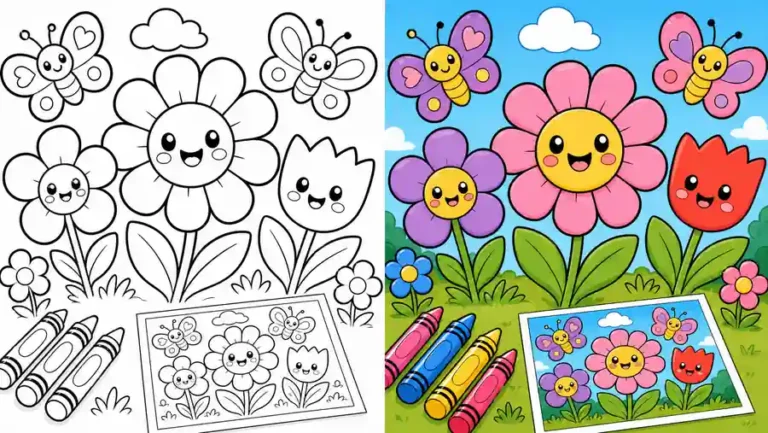

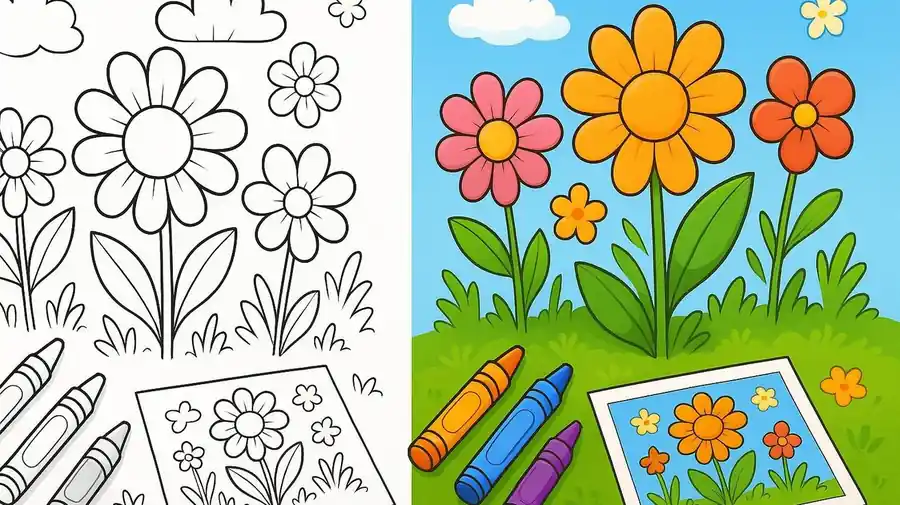
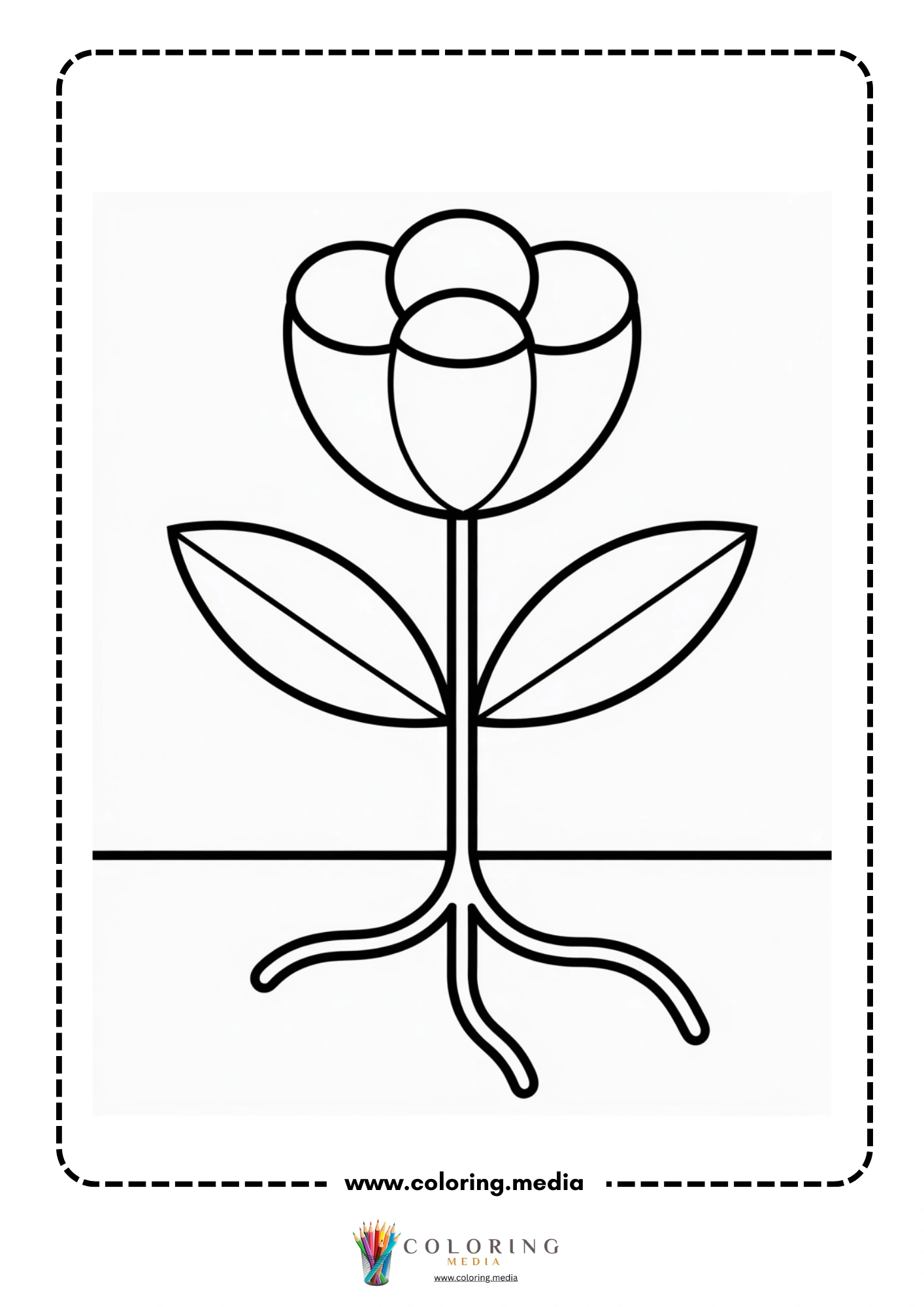
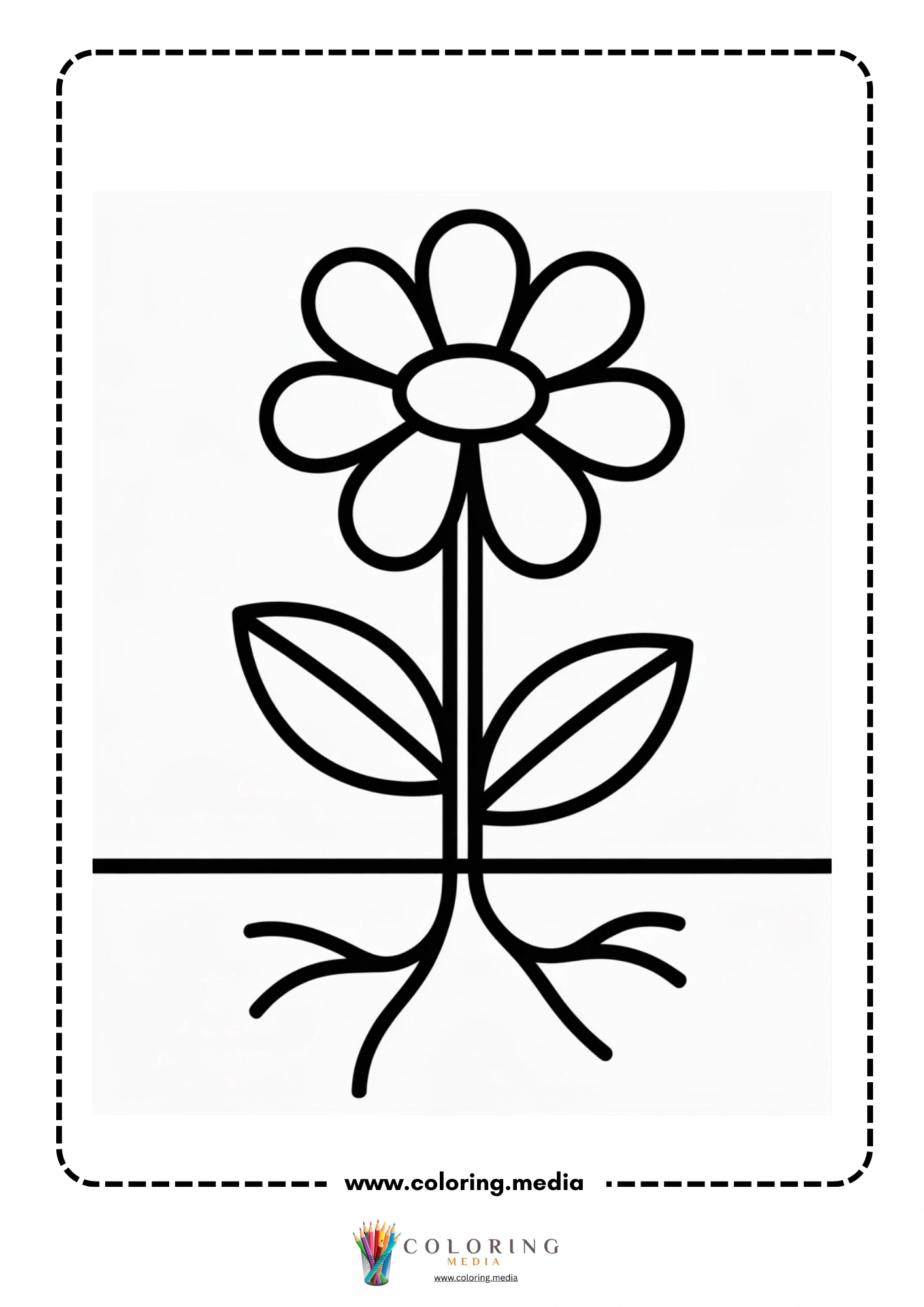
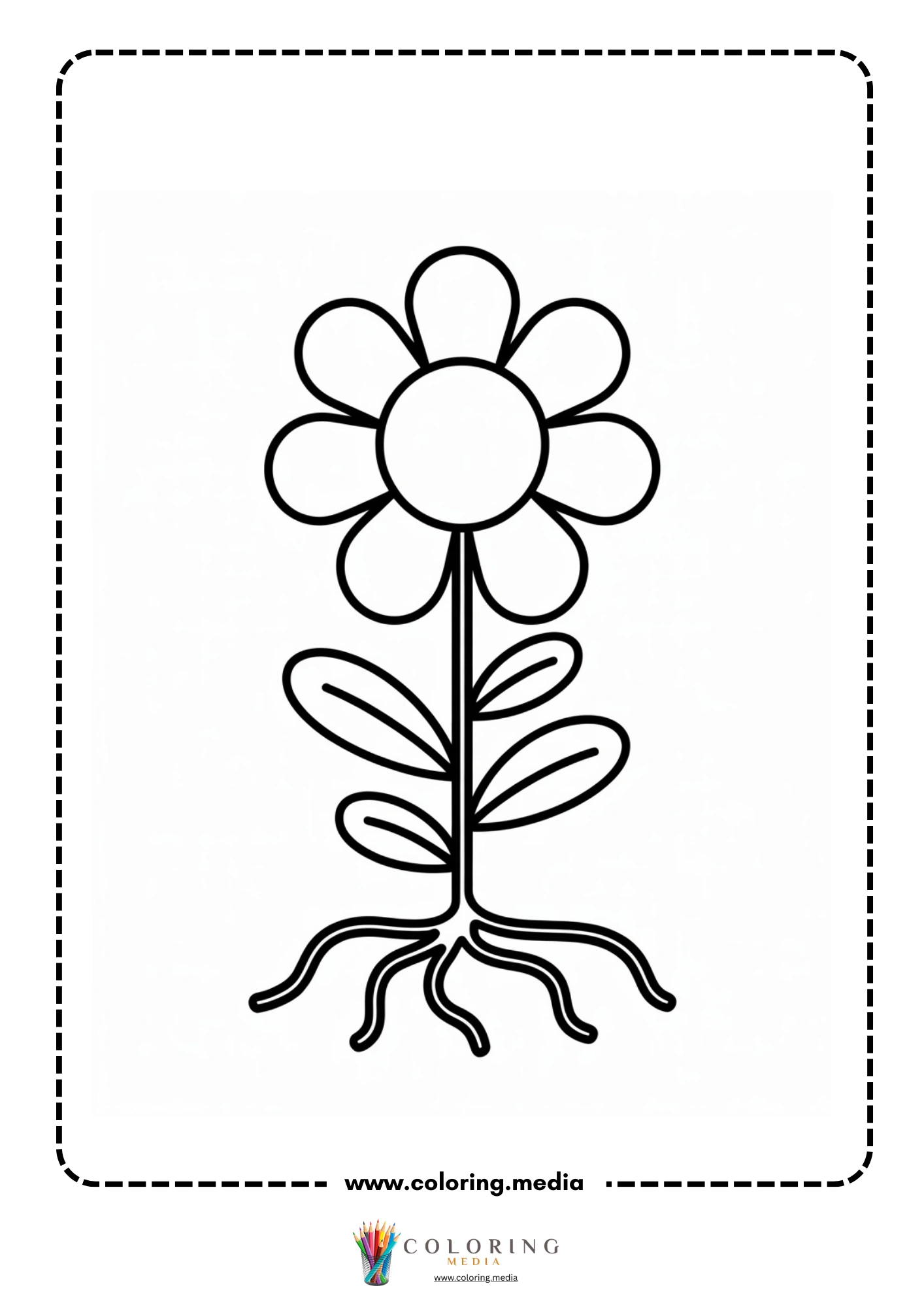
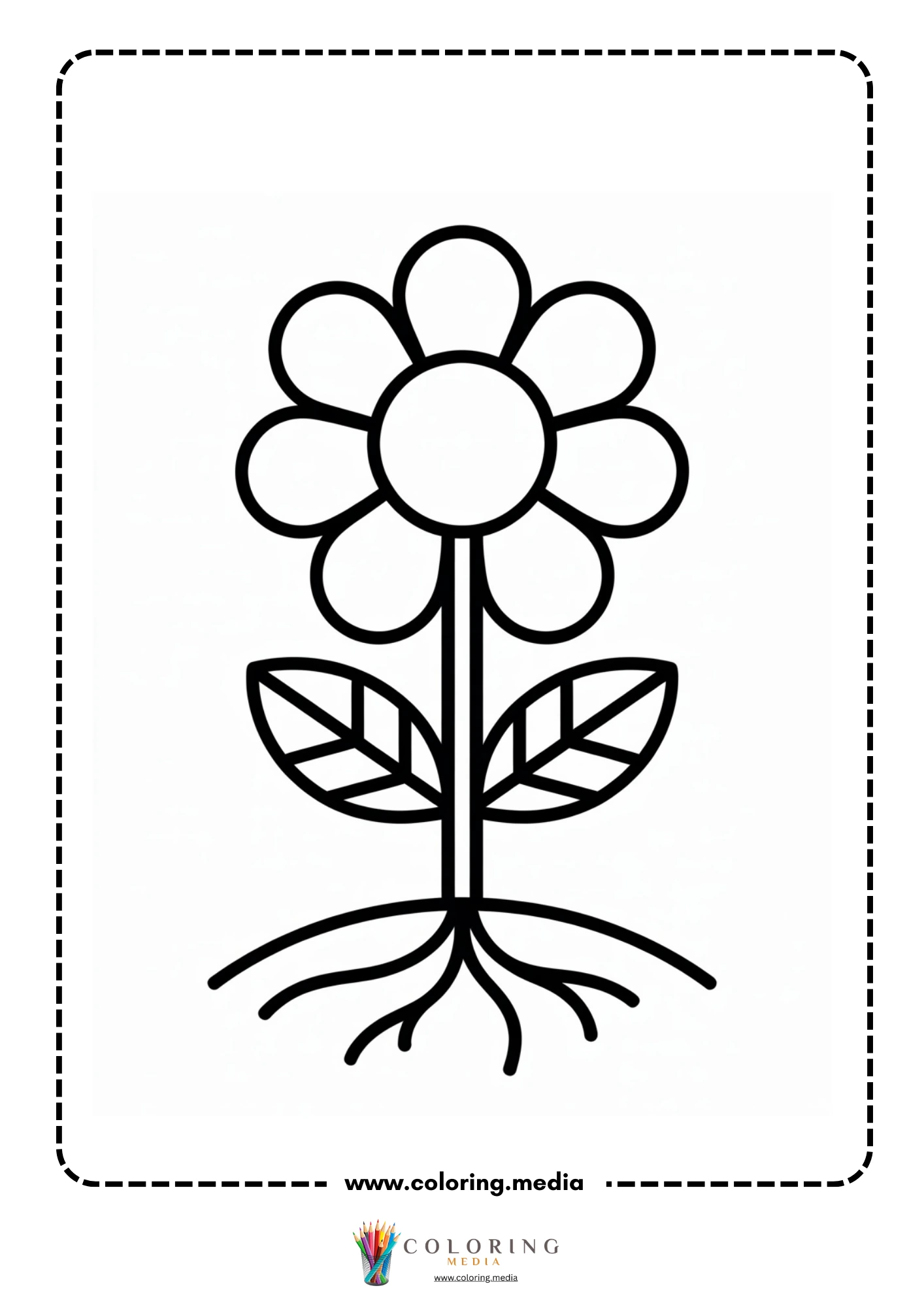
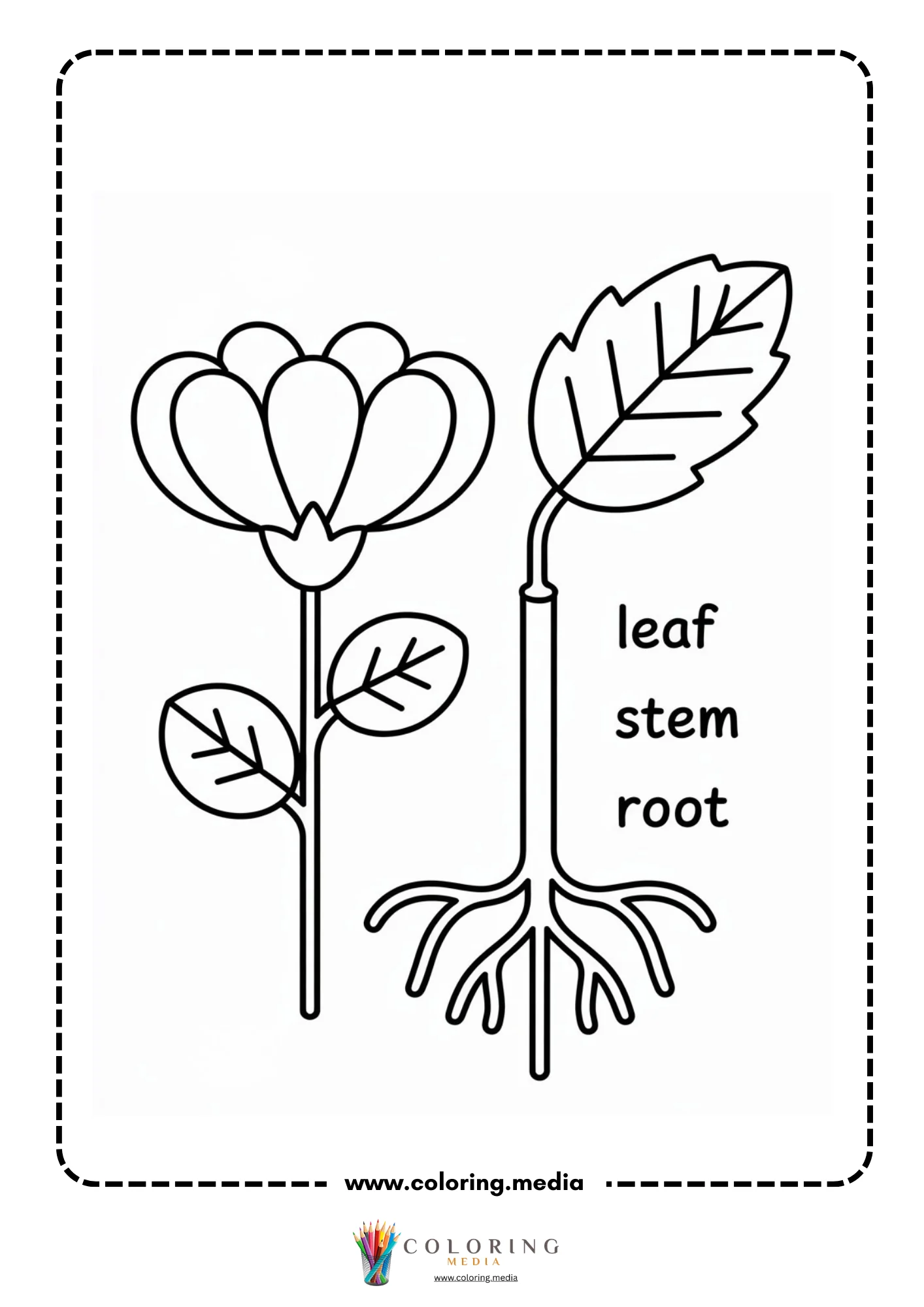
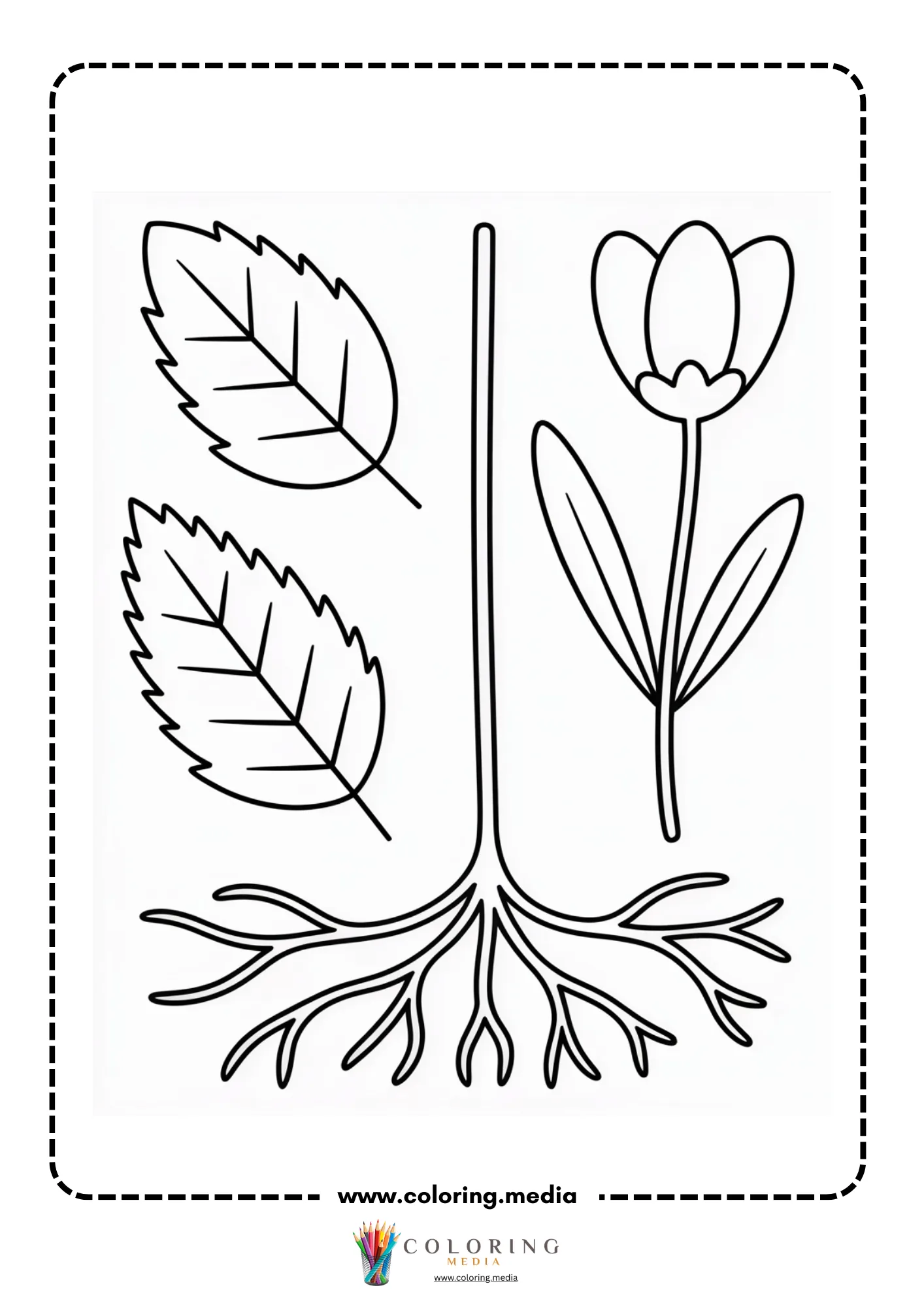
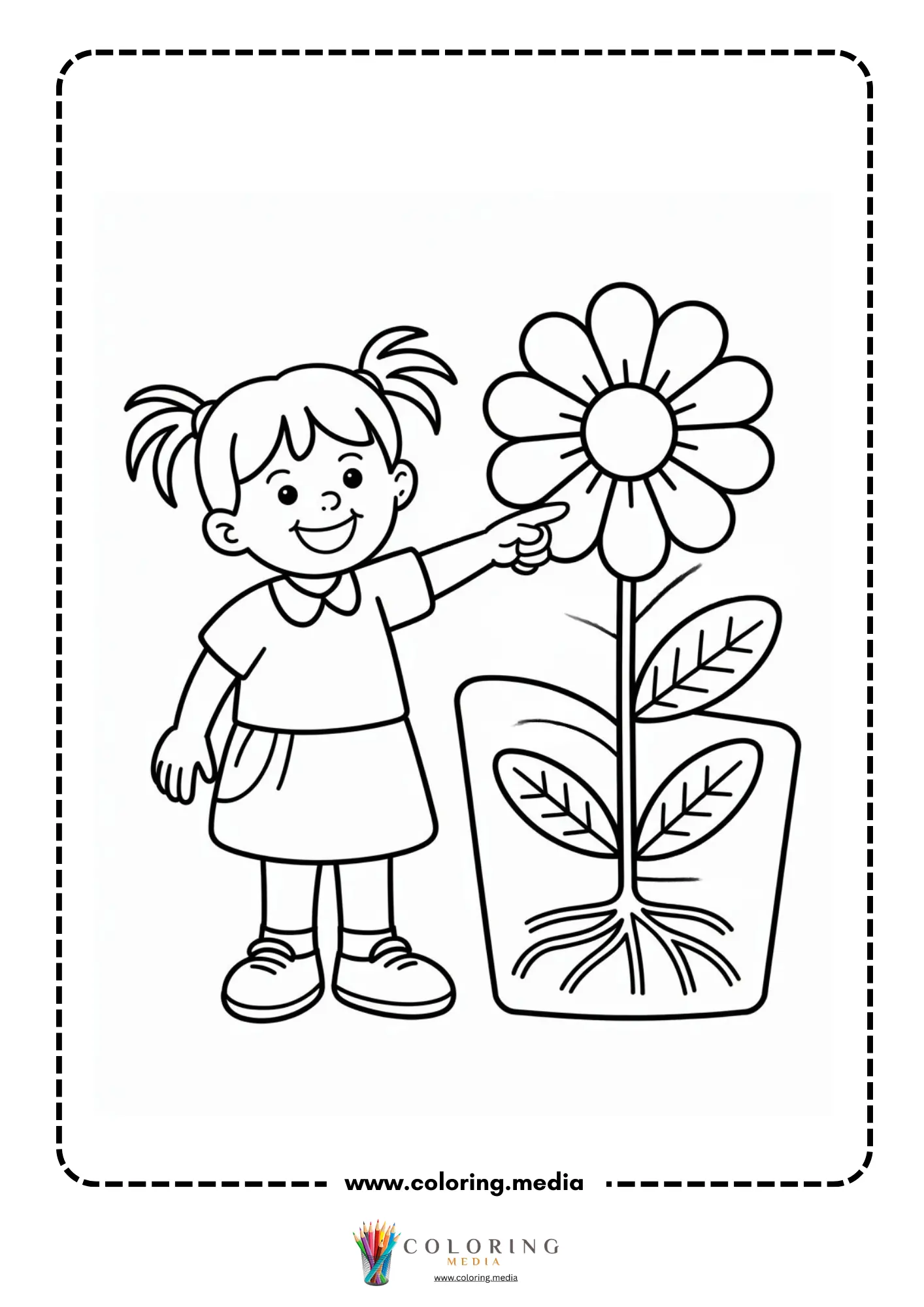
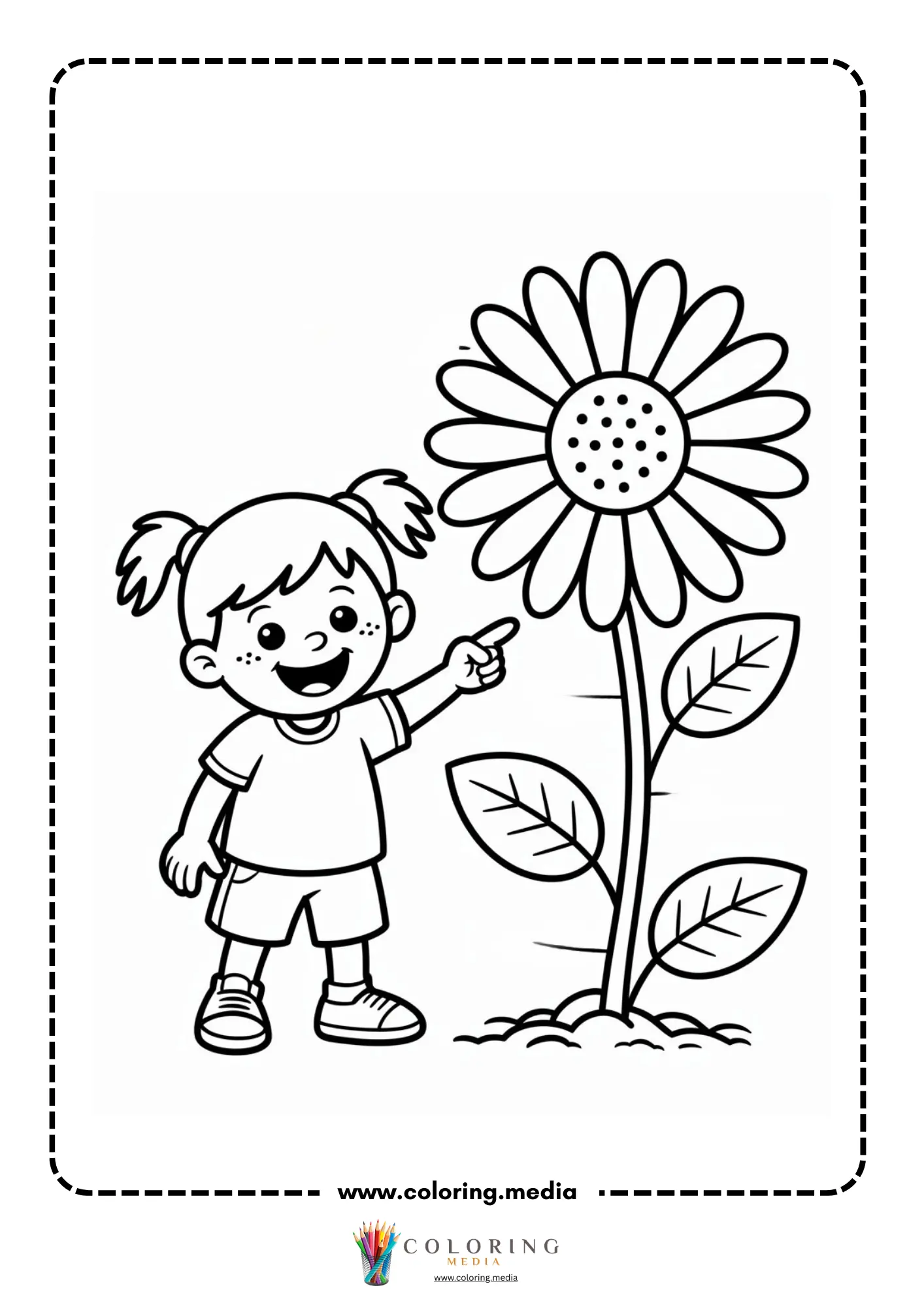
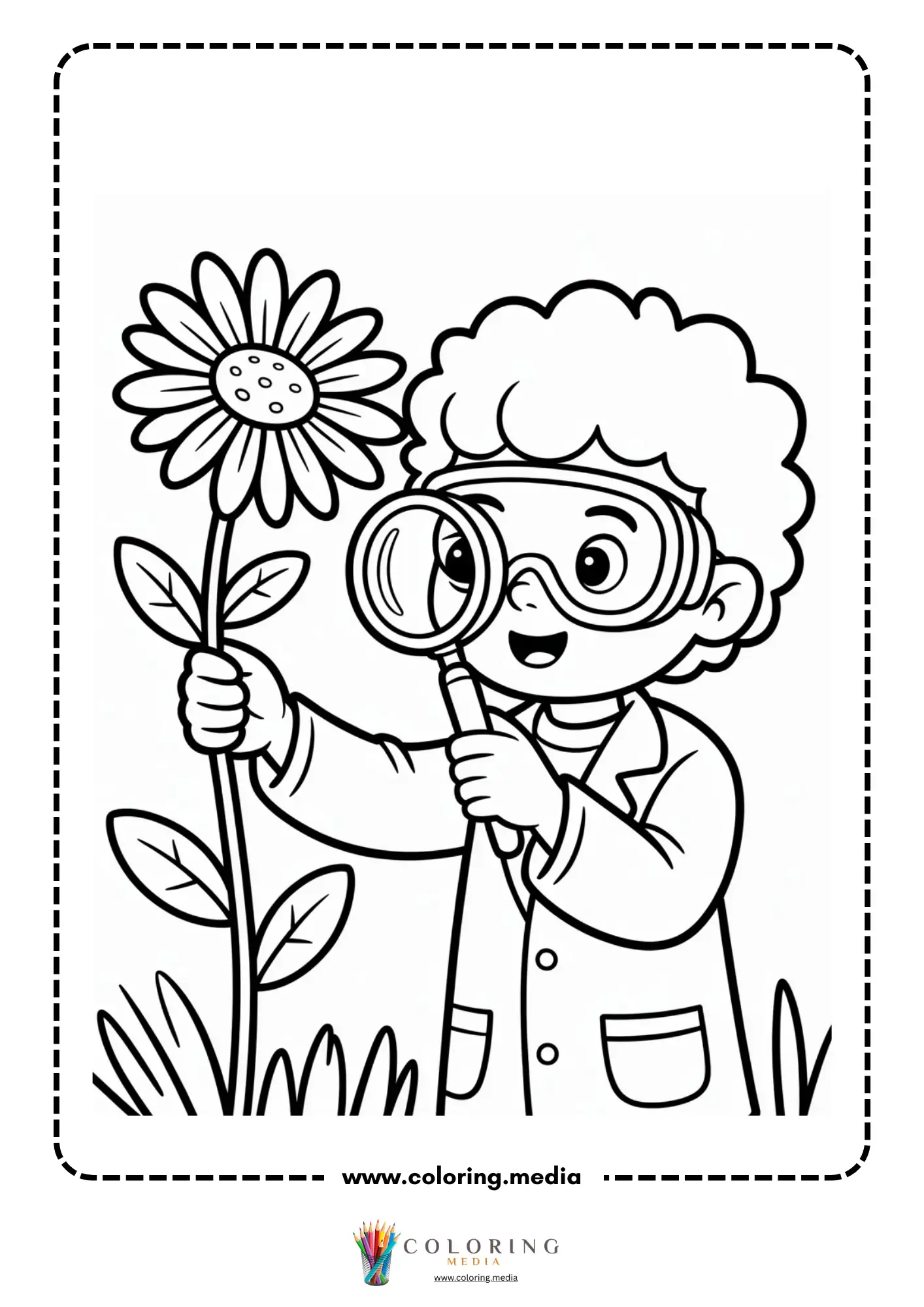
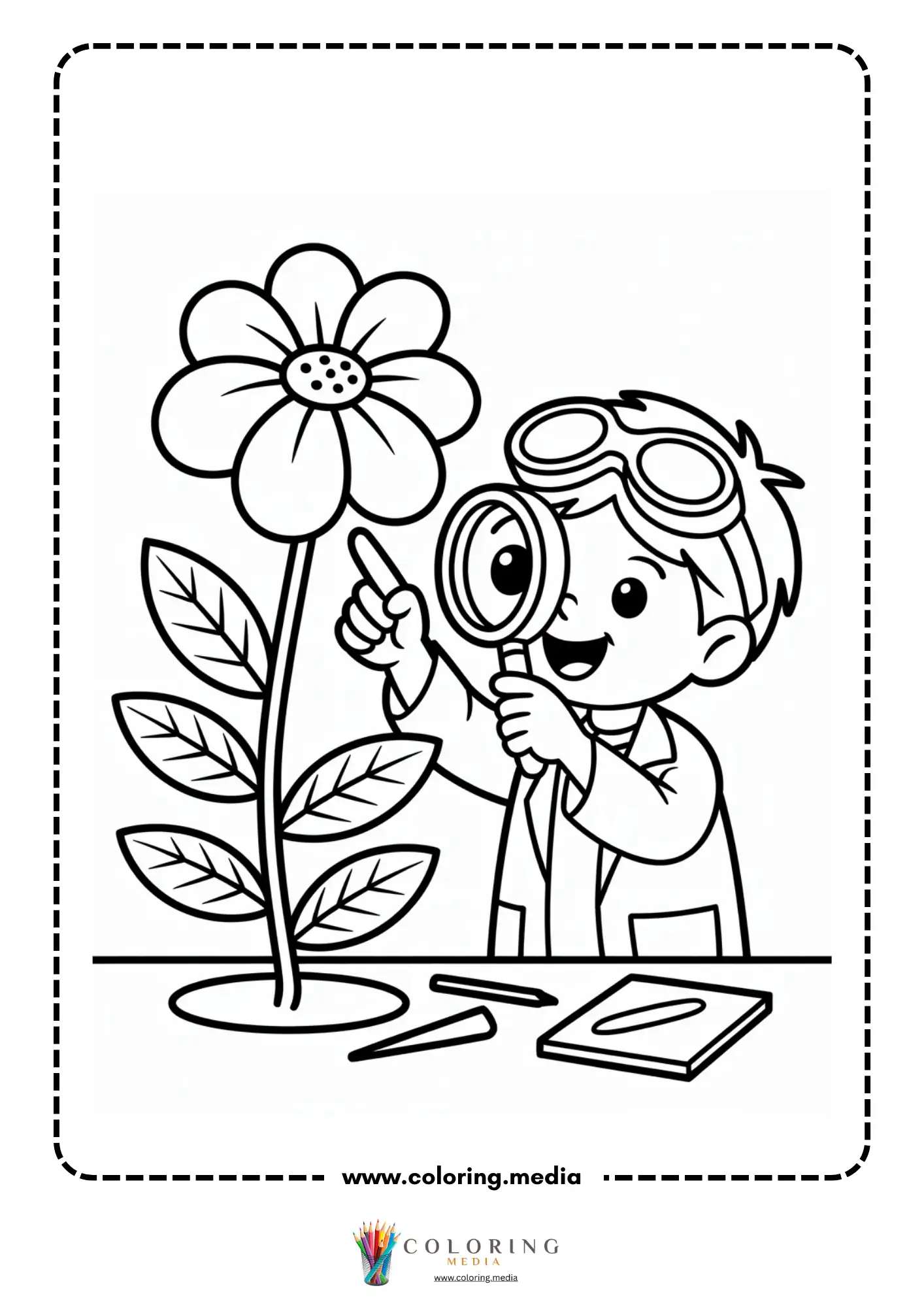
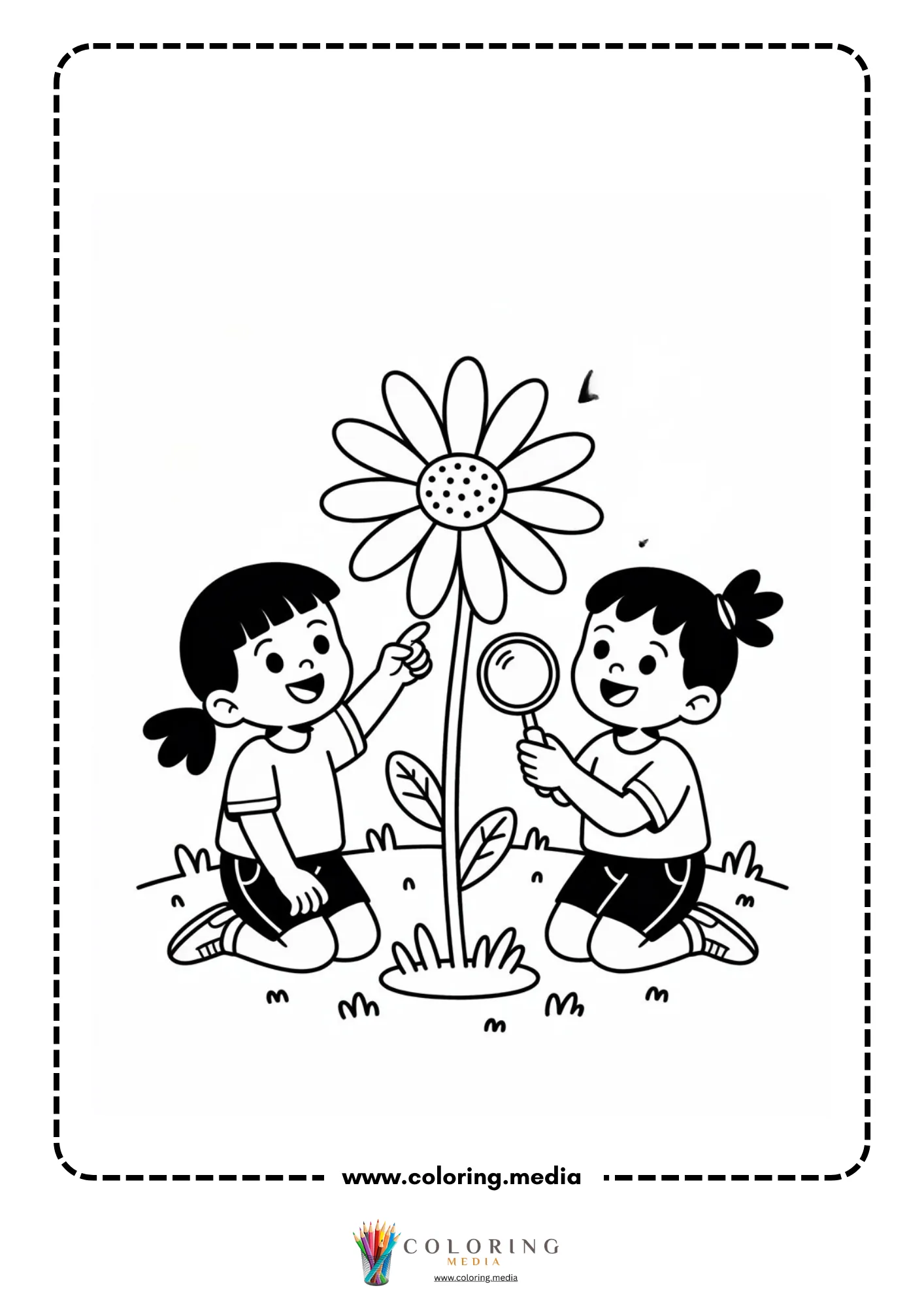
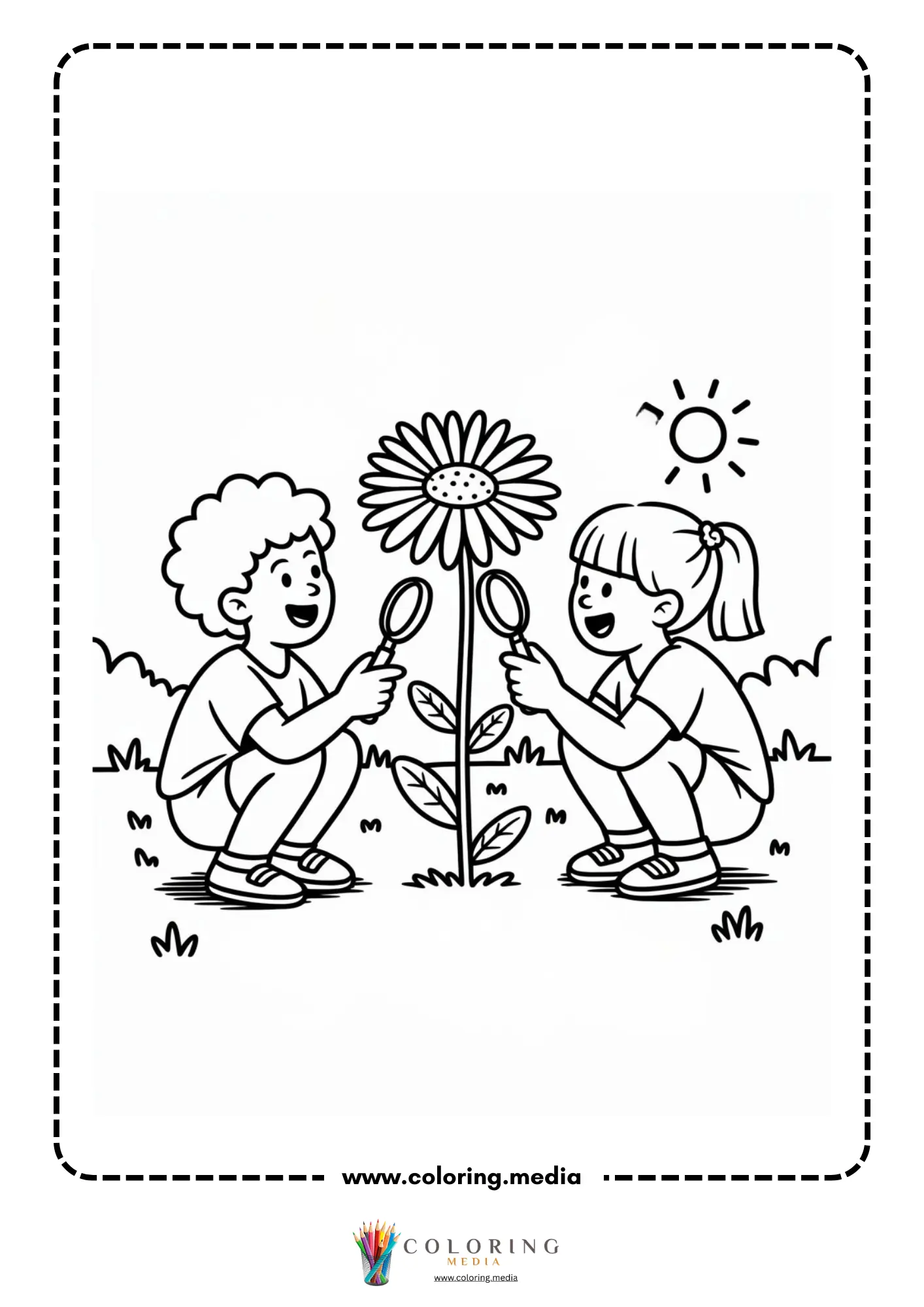
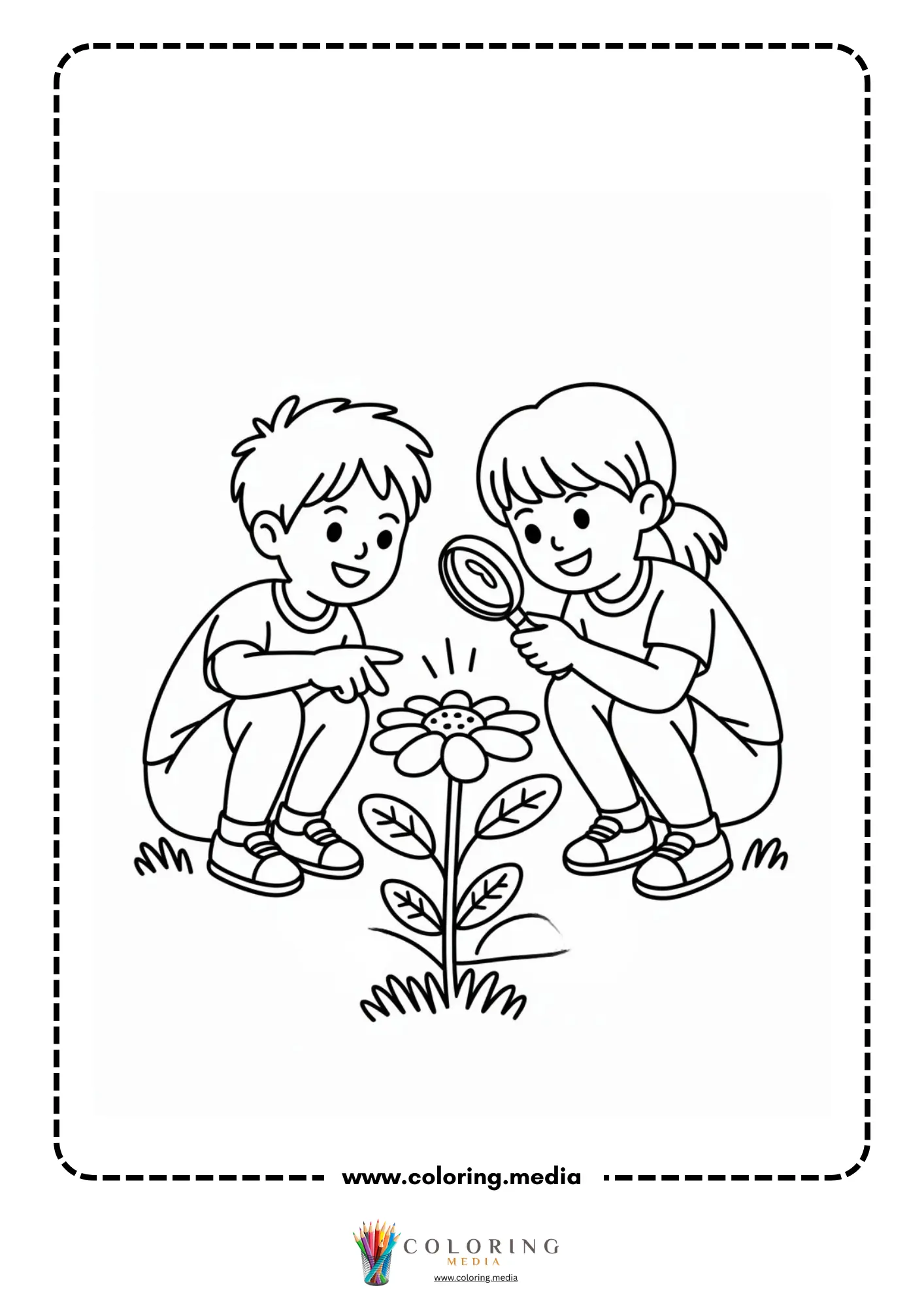
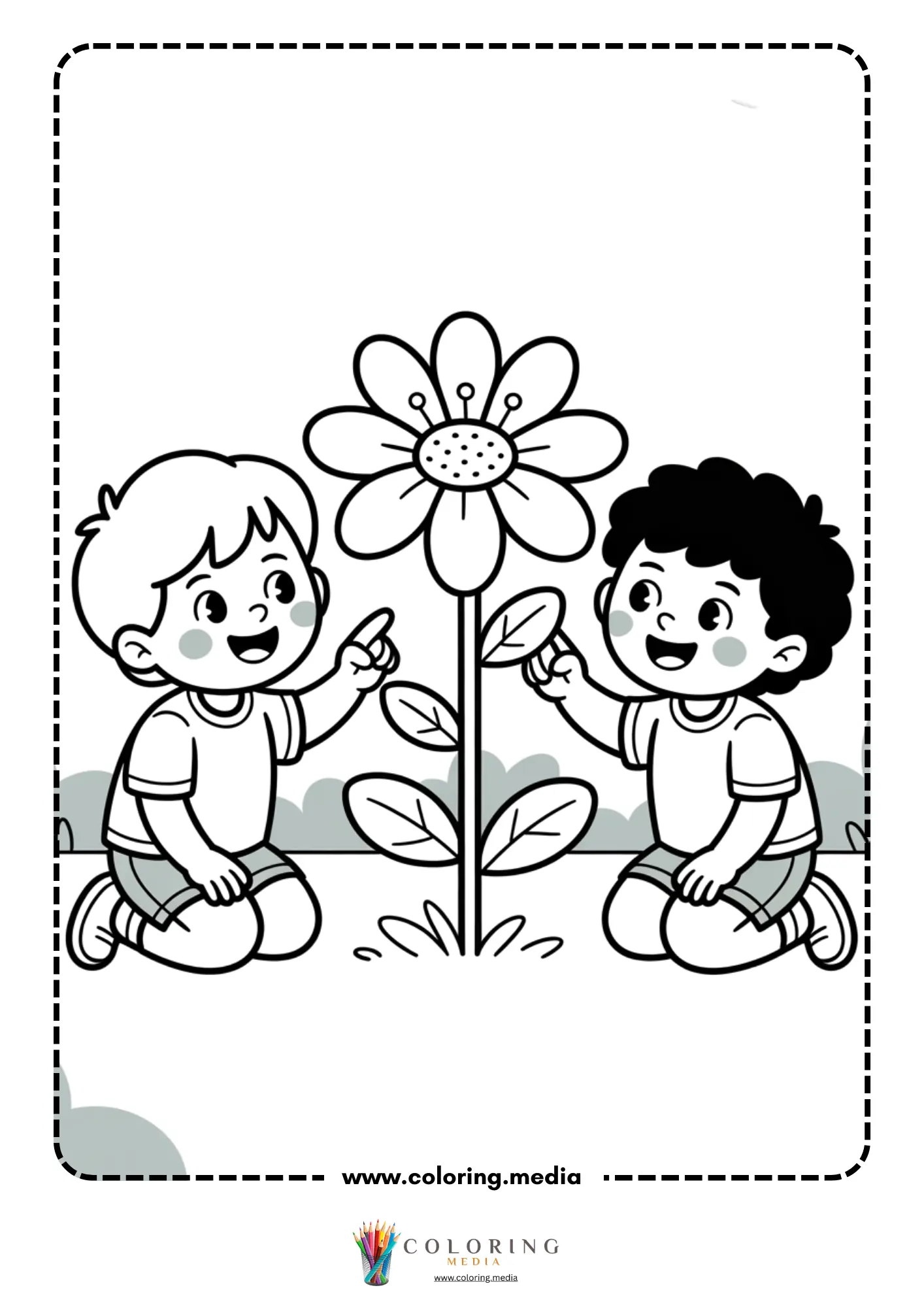
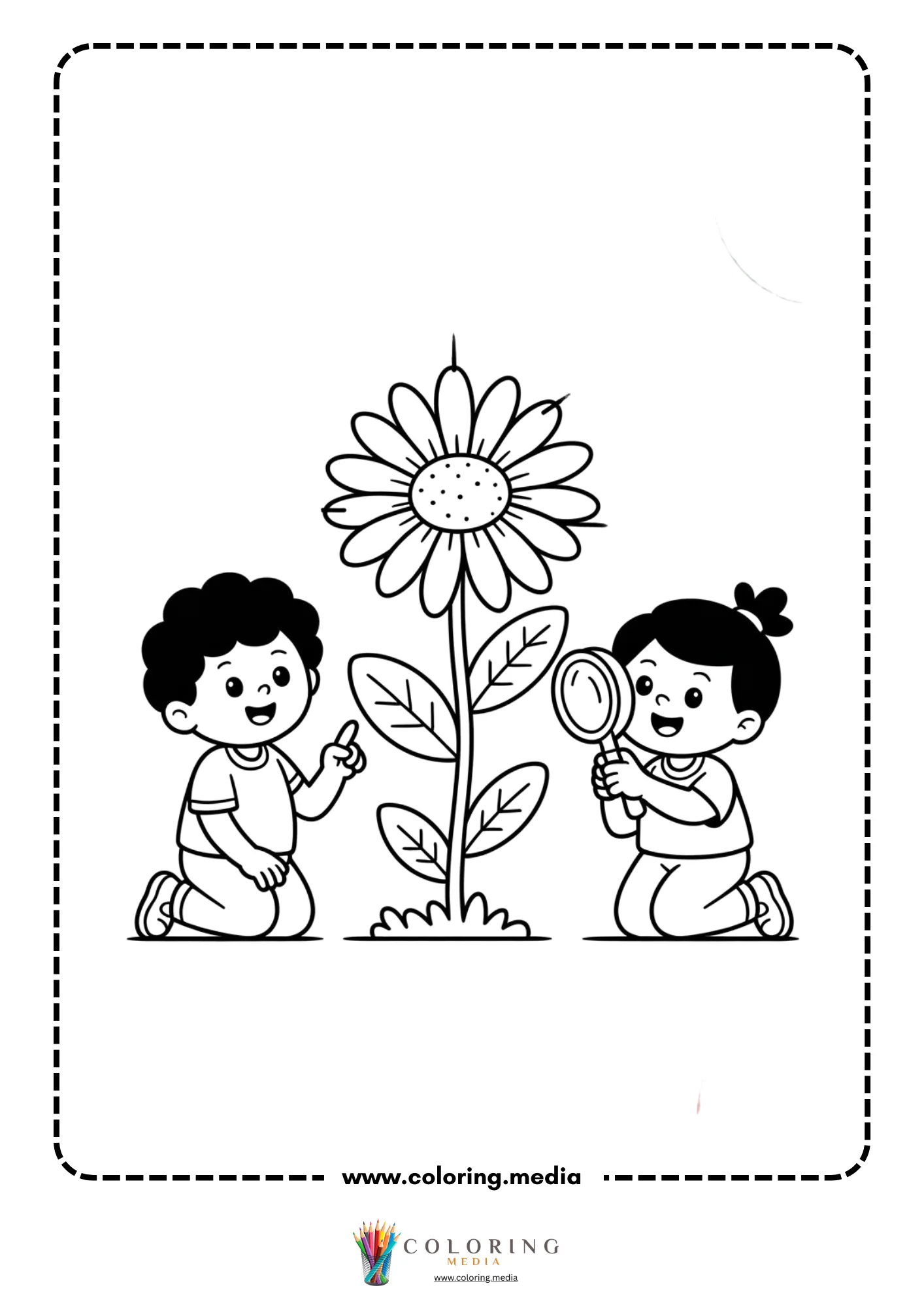
About half the pages in this set show a single flower drawn in clean botanical-diagram style — roots visible below the soil line, a straight stem, a leaf or two partway up, and a simple open bloom at the top, with labeled lines pointing to each part. The other half are cartoon scenes: rounded, chunky characters — kids and teachers — pointing at flowers, watering seedlings, comparing roots, or holding up illustrated charts. The two approaches work together well, giving children both the factual diagram and a relatable human context for why any of this matters.
These pages suit a specific learning moment — the unit where kids first encounter the idea that a flower is a system with distinct parts that each do a different job. Coloring reinforces that vocabulary more durably than copying words off a board. Everything here is free to download and easy to print.
Free Printable Flower Parts Coloring Pages
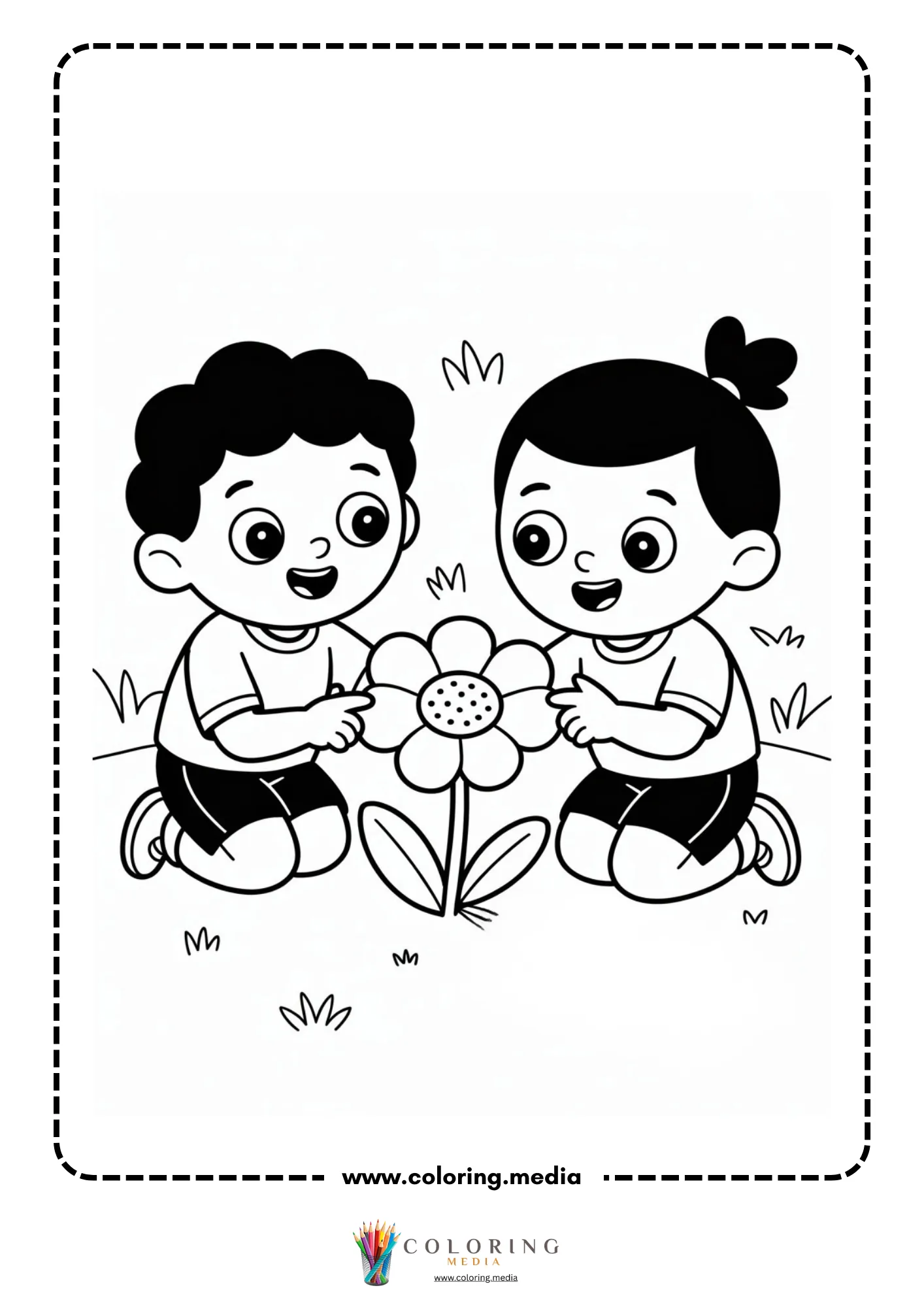
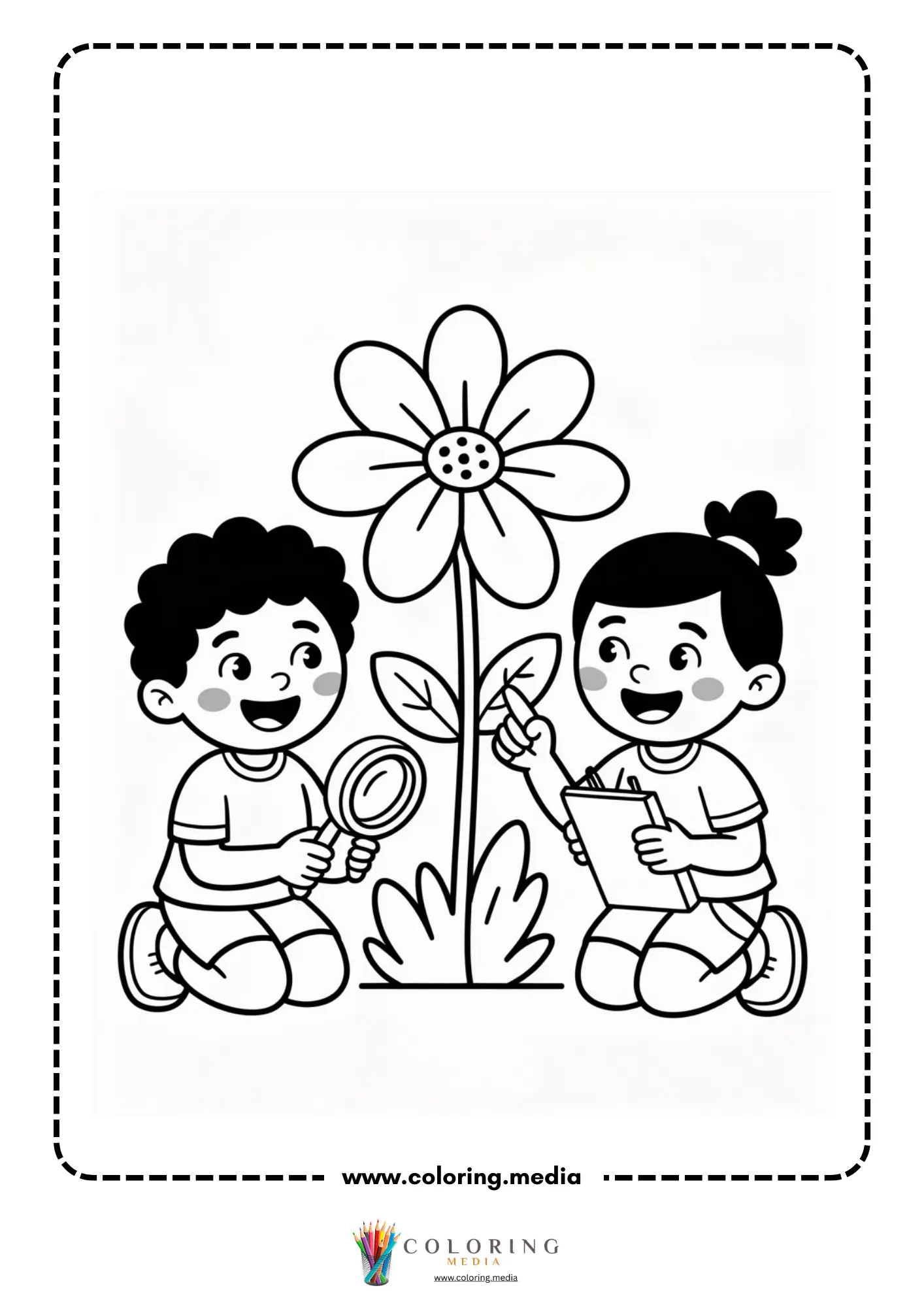
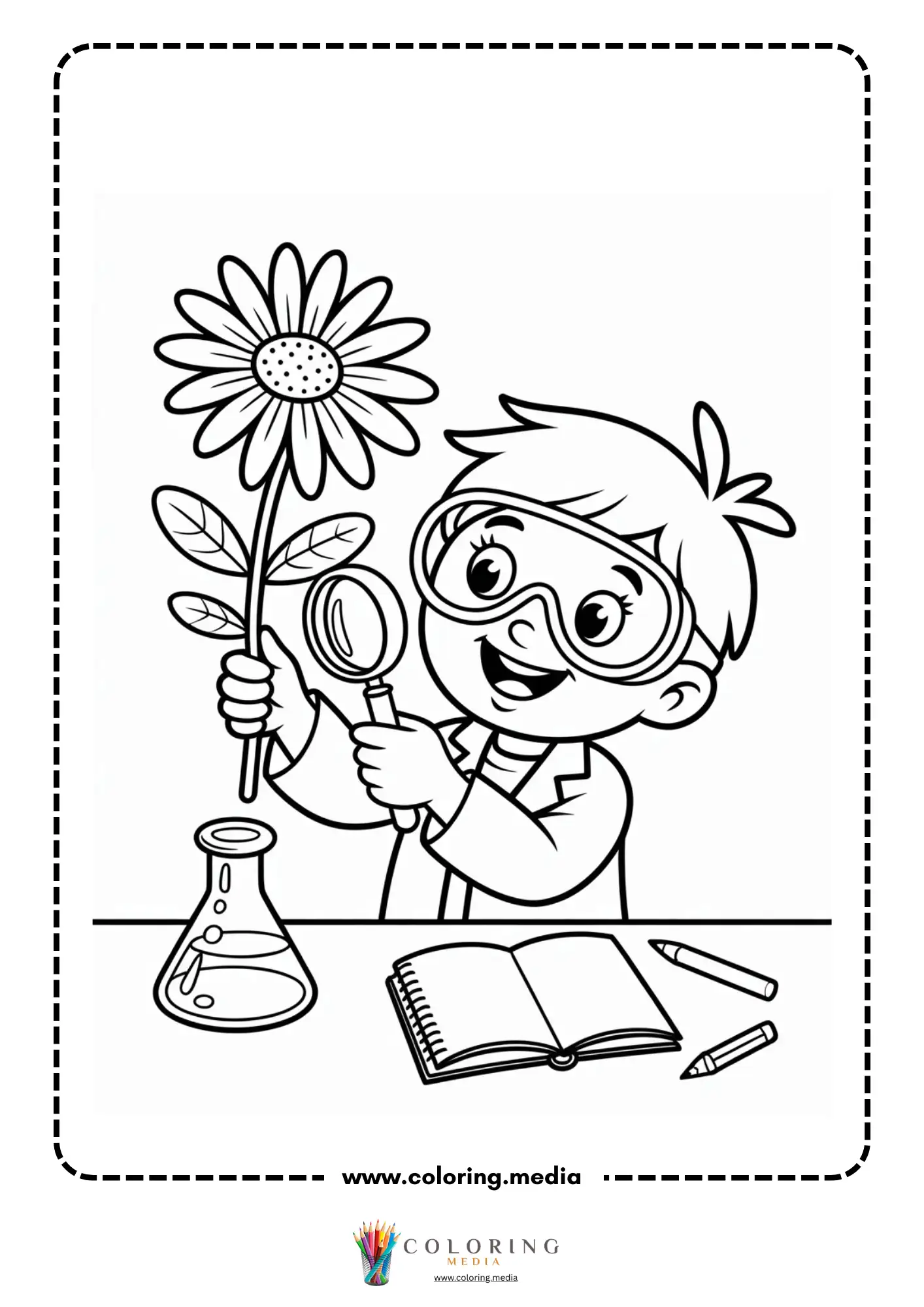
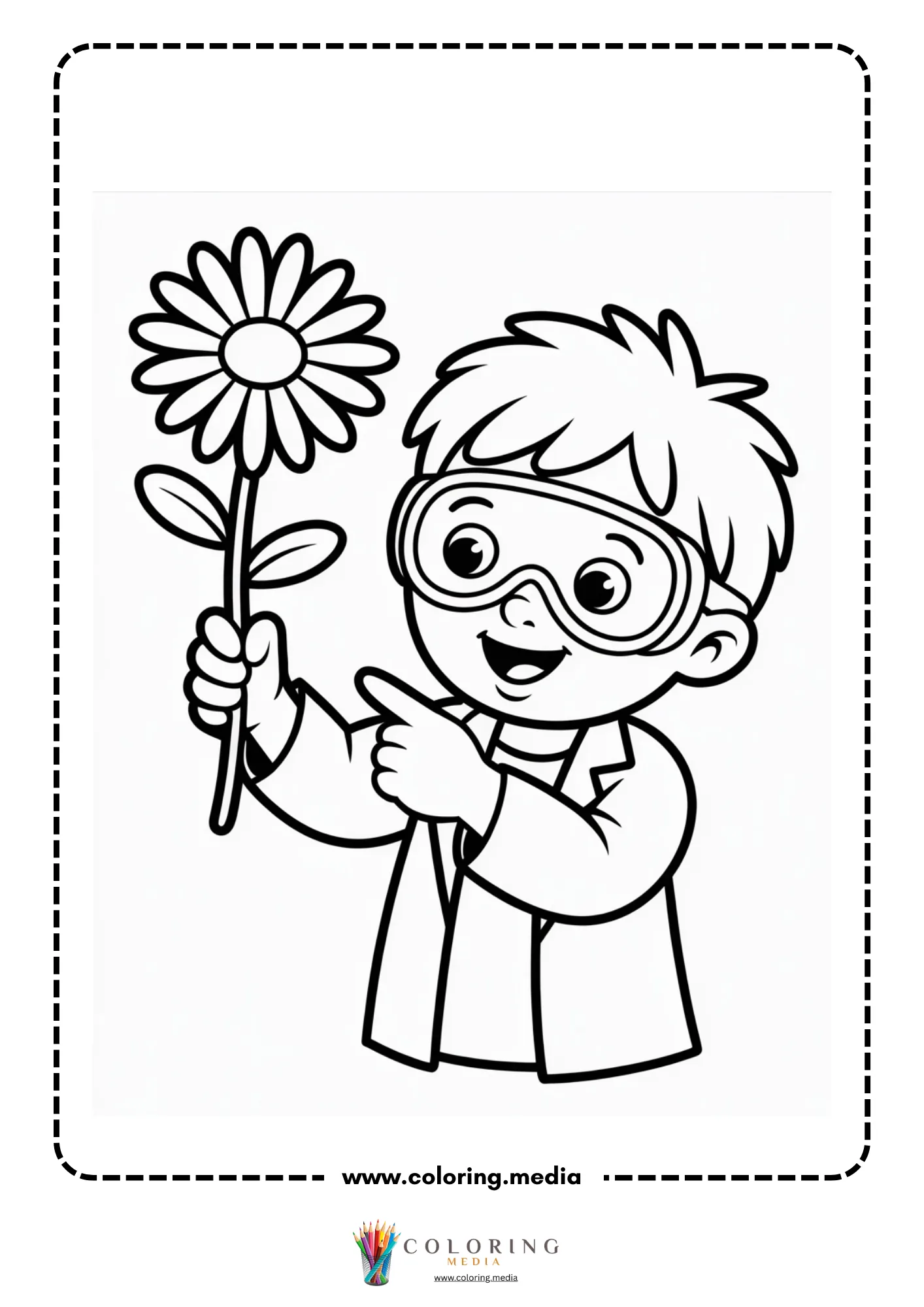
This collection includes 20 printable flower parts coloring pages featuring labeled anatomy diagrams showing roots, stem, leaves, petals, and flower head, alongside cartoon scenes of children examining, growing, and learning about flowers. Some pages include text labels with leader lines pointing to each plant part; others show children holding magnifying glasses over root systems or tending seedlings in garden beds. Line work is simple and bold throughout, with outlines wide enough for young children to color comfortably. All pages print on standard US Letter or A4 paper.
Who Are These Flower Parts Coloring Pages Best For?
The primary audience is preschool and kindergarten — ages four through six. The line work is chunky, the compositions are uncluttered, and the labeled diagram format maps well onto how early science units are structured. A four-year-old working on the labeled diagram can color the roots one color and the petals another, making the parts visually distinct without needing to read the text labels yet. That physical act of assigning color to each named region tends to lock the vocabulary in place better than pointing at a chart.
The cartoon scene pages are particularly useful for children who find pure diagrams dry. Seeing a drawn character look surprised at a root system or carefully water a seedling gives the anatomy content a narrative hook. Kids at this age absorb information through story and character more readily than through labeled schematics alone, so the mix of both formats in this set covers both learning styles.
For classroom or homeschool use, these pages work as a natural companion to a hands-on planting activity. Print the diagram page before planting a bean seed in a clear cup, then print the scene pages as the seedling grows — the coloring acts as a visual journal of what is happening in the cup on the windowsill.
Interesting Flower Parts Facts to Share While Coloring
Roots do more than hold a plant in place. They absorb water and dissolved minerals from the soil and send them upward through tiny tubes inside the stem. Some roots, like carrots and radishes, also store energy — which is why we eat them.
The stem is basically a two-way highway. Water and nutrients travel up through one set of tubes (xylem), while sugars made in the leaves travel down through a separate set (phloem). If you cut a stem and put it in dyed water, you can watch the color travel up into the white petals within hours — a classic classroom experiment.
Leaves are the plant’s food factories. They use sunlight, water, and carbon dioxide to make sugar through photosynthesis. The green color comes from chlorophyll, the molecule that captures light. In autumn, when days shorten and chlorophyll breaks down, the yellow and orange colors that were there all along become visible.
Petals are there to attract visitors, not to look nice for us. Their colors, shapes, and sometimes scents are aimed at insects, birds, and bats that carry pollen from flower to flower. A bee landing on the center of a flower to collect nectar picks up pollen grains on its fuzzy body and carries them to the next flower it visits.
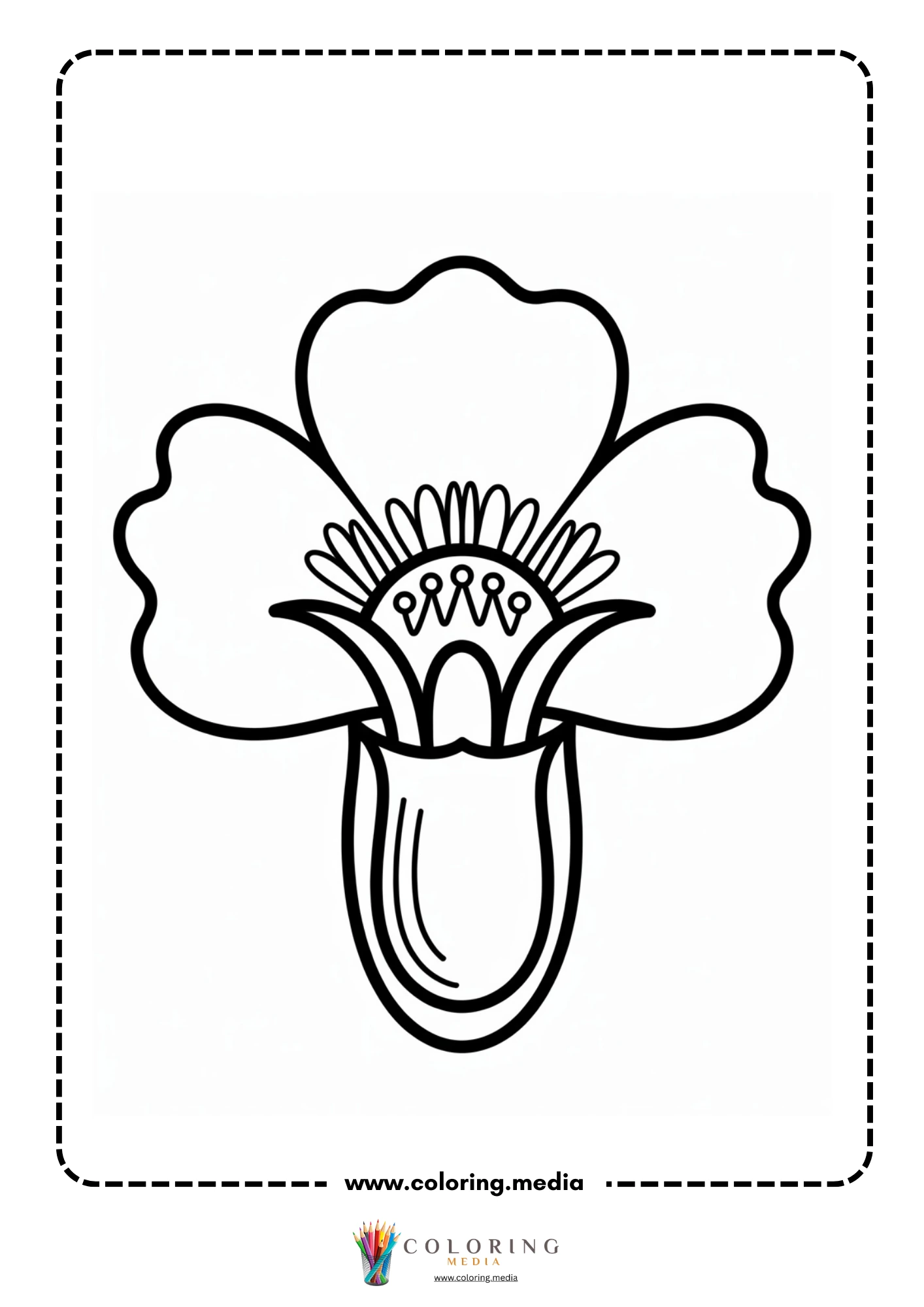
Not all flowers have all five basic parts. Some flowers are missing petals entirely; others have petals but no distinct sepals. Some plants put male and female parts on separate flowers, or even on entirely separate plants. The tidy labeled diagram is a useful starting point, but nature ignores the template fairly often.
Creative Flower Parts Coloring and Craft Ideas
Color-Coded Anatomy Assign each part a specific color before starting — roots brown, stem green, leaves light green, petals red, center yellow — and stick to those colors across multiple pages to reinforce the vocabulary visually.
Real vs. Drawn Comparison Pull apart a real flower (a tulip or daffodil works well) and lay the parts next to the diagram while coloring. Match each piece to its label on the page.
Clear Cup Seed Experiment Plant a bean seed against the side of a clear plastic cup so the roots are visible. Print a roots diagram page and update it with colored pencil each day as the root system grows.
Vocabulary Flashcards After coloring a diagram page, cut the labeled parts apart with scissors. Flip them word-side down and quiz yourself on which part is which by looking at the drawing only.
Dye Experiment Follow-Up Put a white carnation stem in food-coloring water overnight, then color the accompanying petal diagram using whatever color the flower absorbed. Label it with the word “xylem.”
Life Cycle Sequence Print a seed page, a seedling page, and a full-flower diagram page. Color all three and arrange them left to right with arrows drawn between them to show the growth sequence.
Pollinator Scene On one of the cartoon scene pages, add a pencil-drawn bee or butterfly visiting the flower before coloring. Color the insect and the flower together as a pollination scene.
How to Print These Flower Parts Coloring Pages
Each page downloads as a PDF sized for US Letter (8.5×11 inches) or A4 — no resizing needed. Standard 20lb copy paper works for crayons and markers; if children are using watercolors or heavy marker, 65lb cardstock prevents bleed-through and buckling. Printing in grayscale or draft mode is fine — the bold outlines reproduce cleanly even at reduced ink density.
Explore More Flowers & Plants Coloring Pages
If you enjoyed these pages, you may also like:
Cactus Coloring Pages
Cute Flower Coloring Pages
Plants Coloring Pages
All Flowers & Plants Coloring Pages