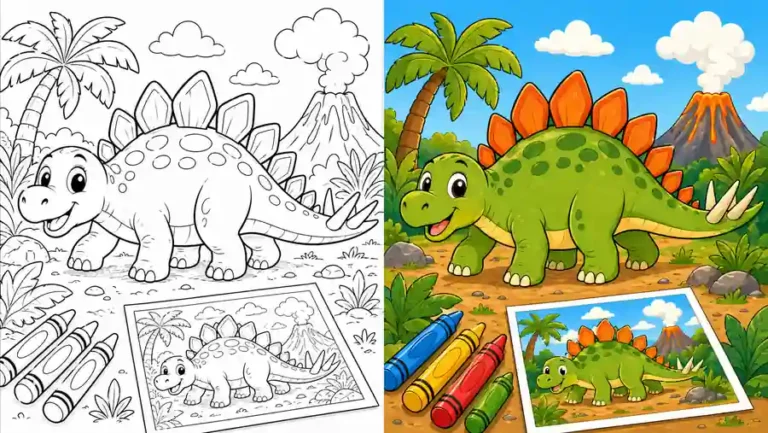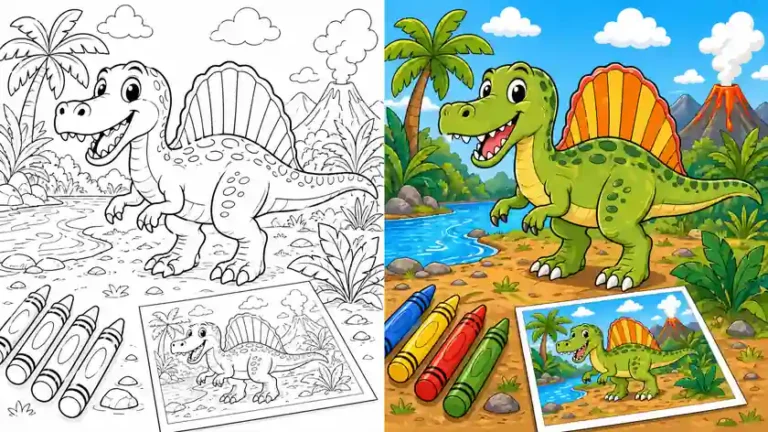

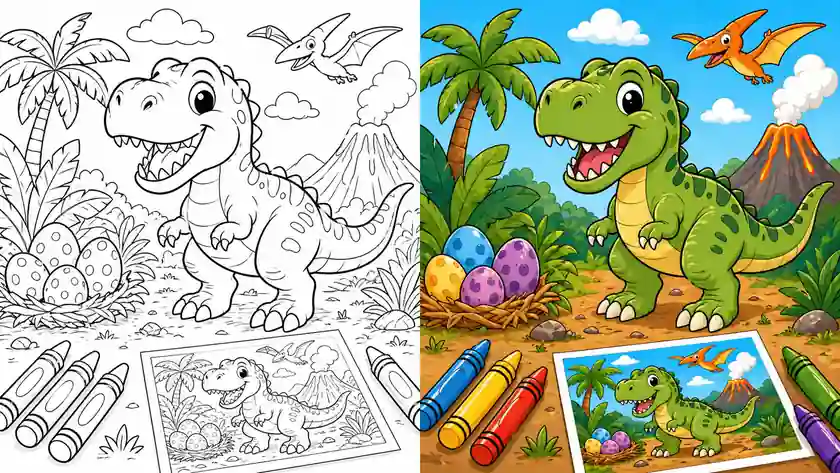
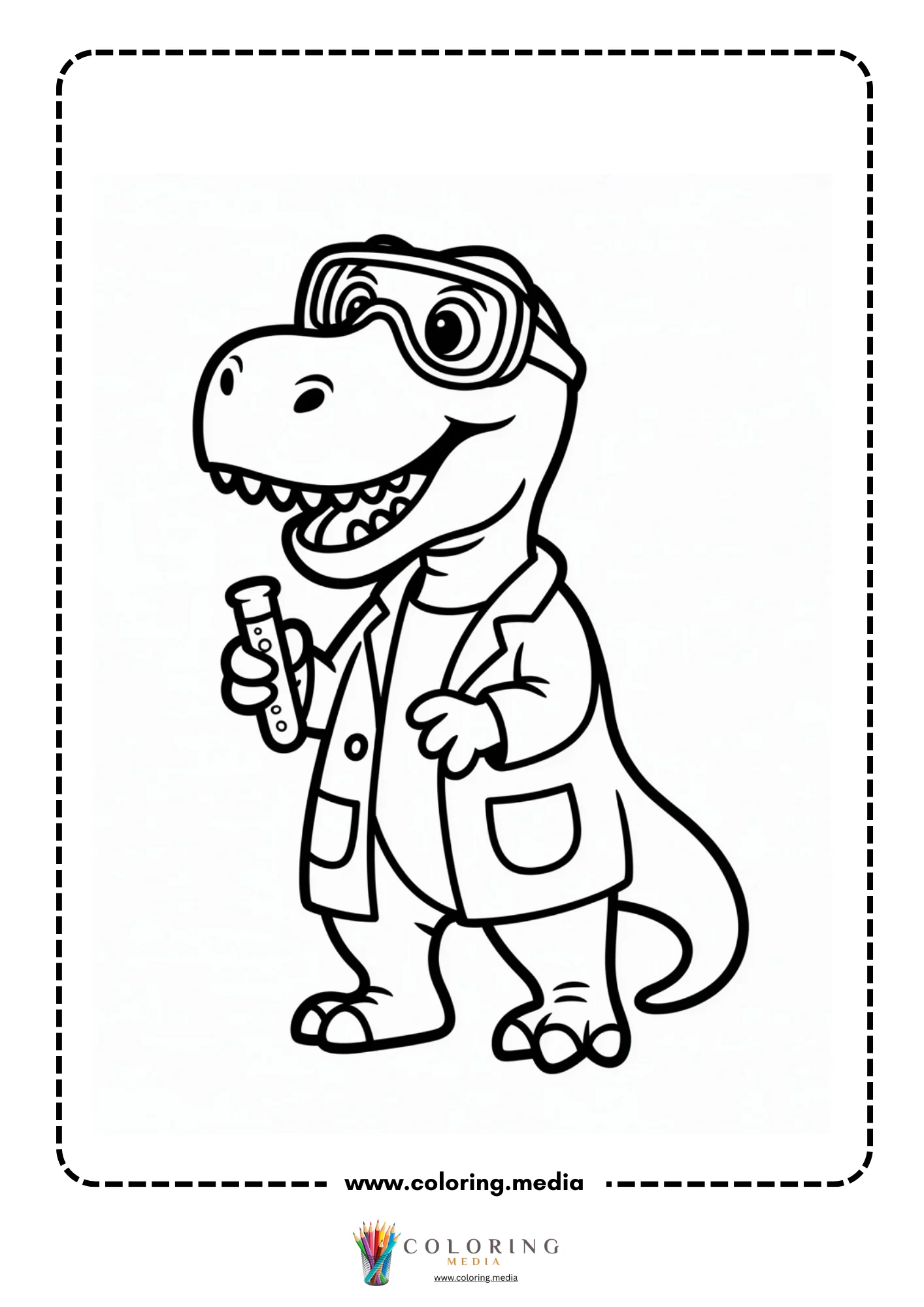
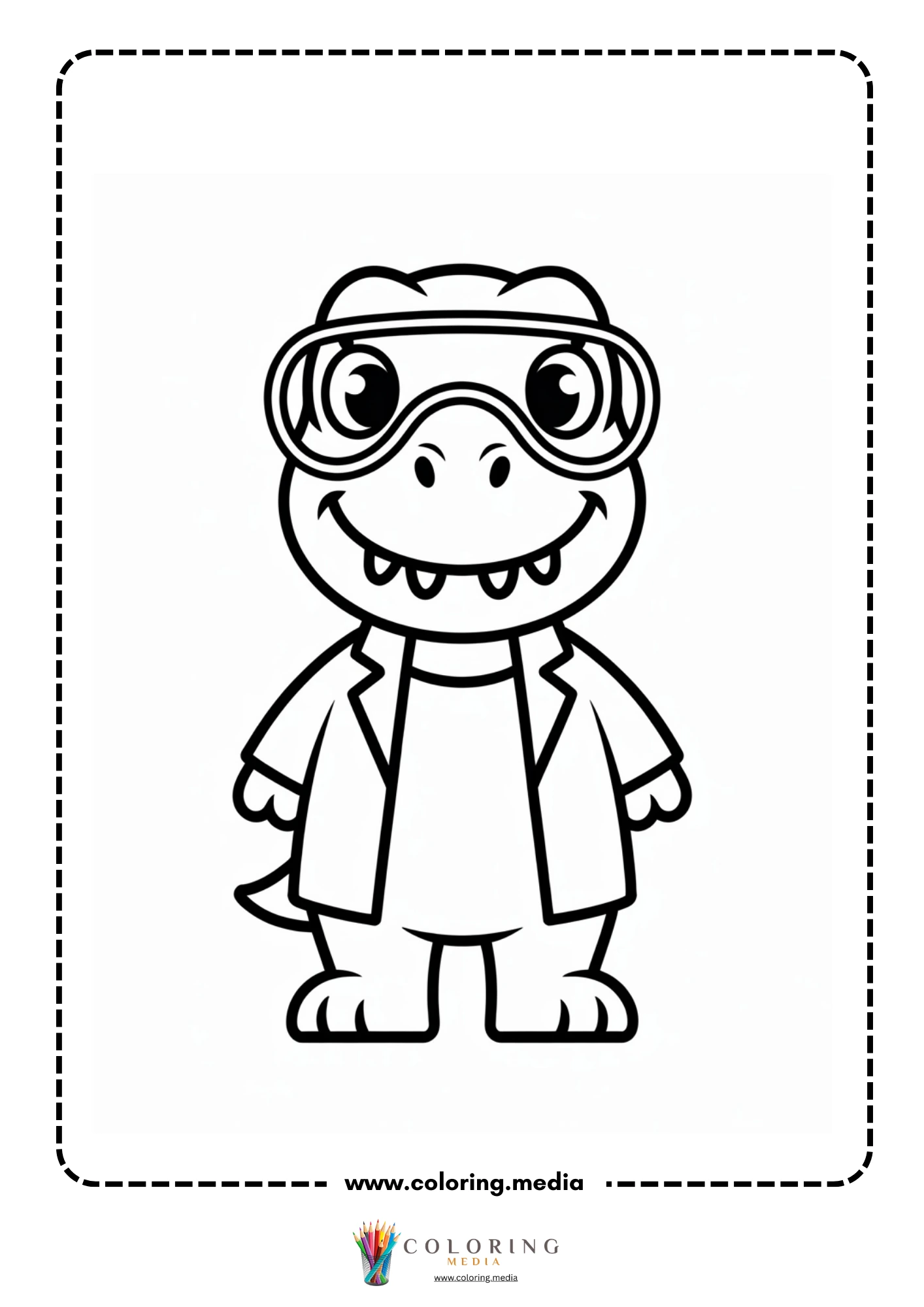
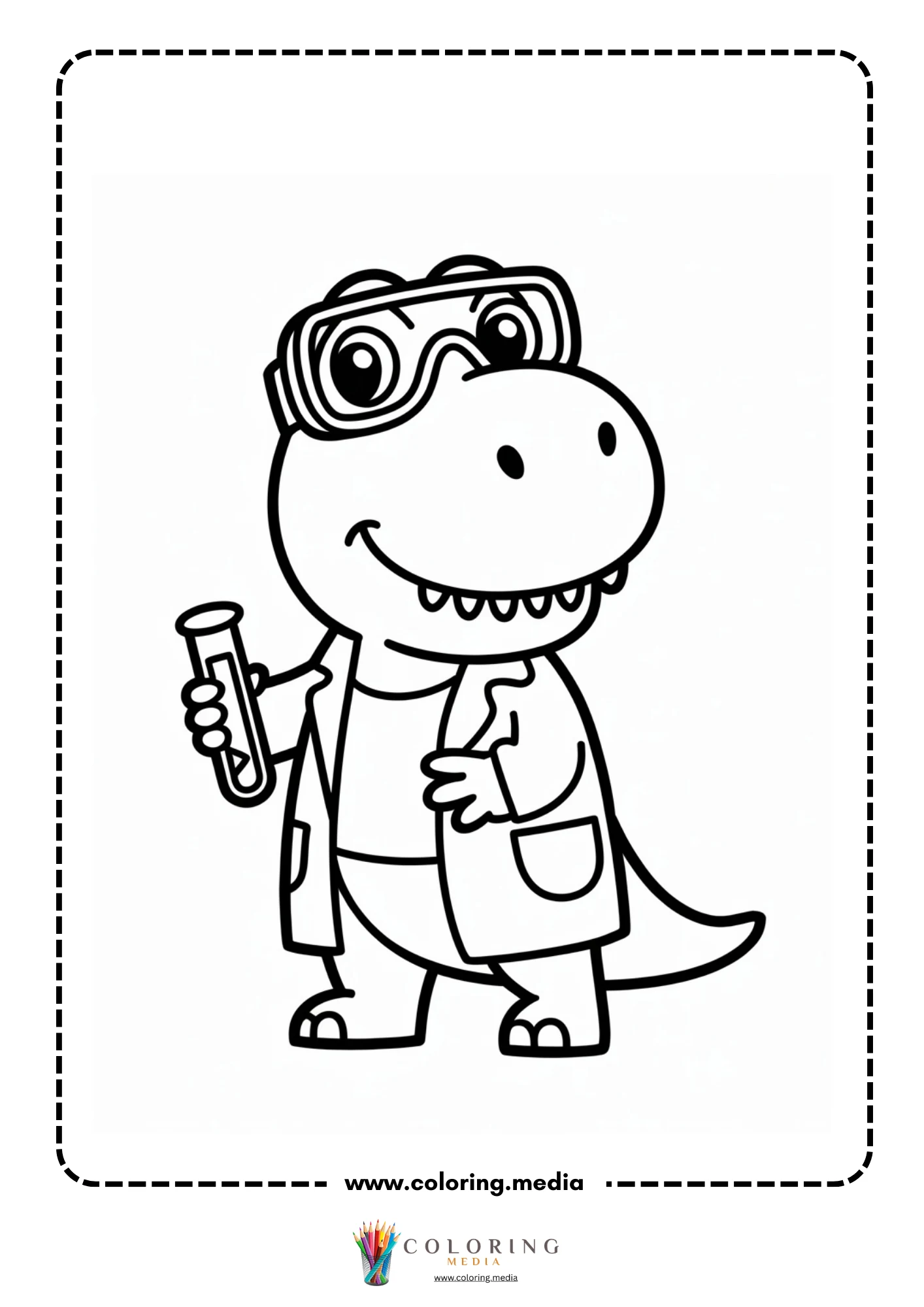
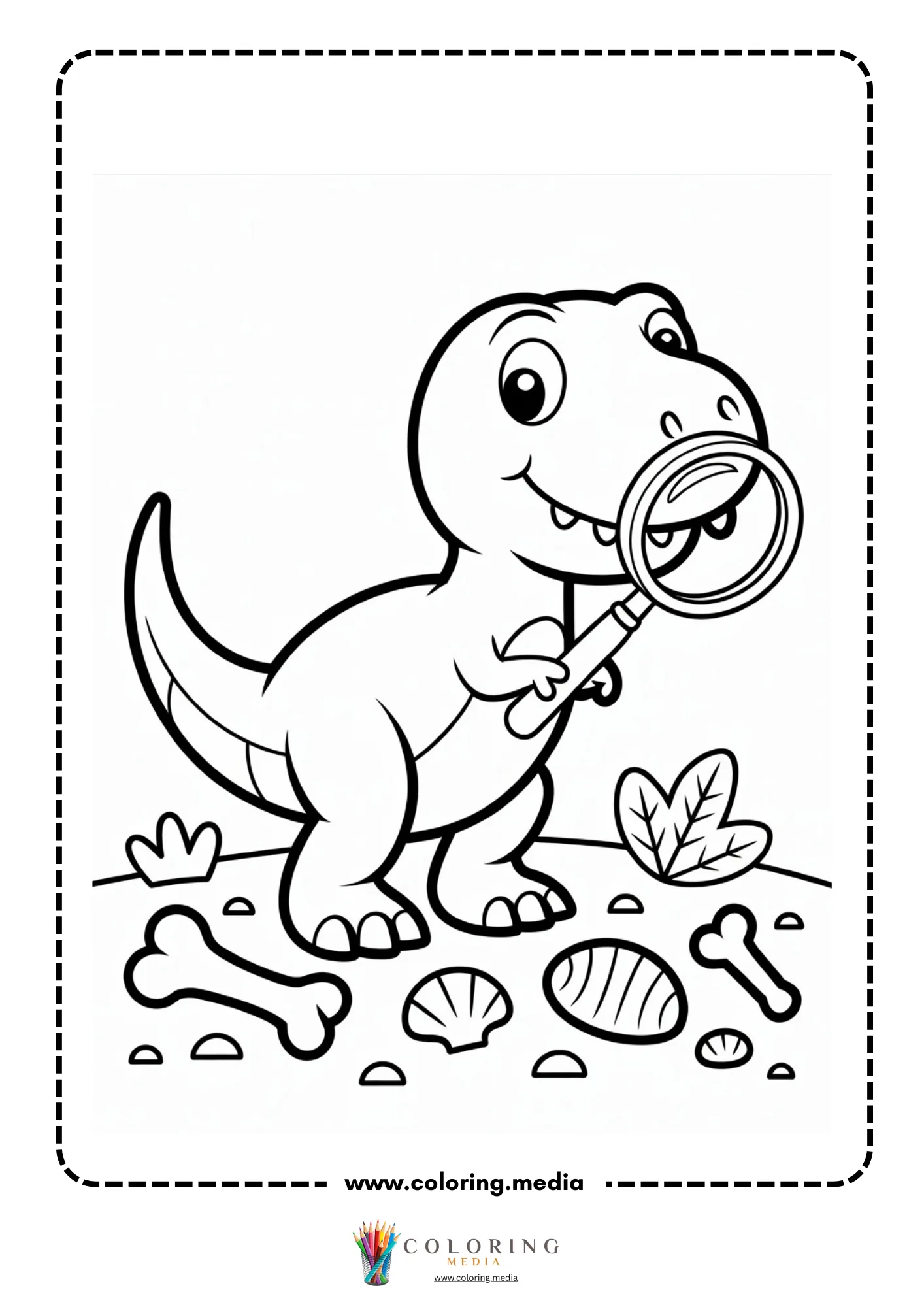
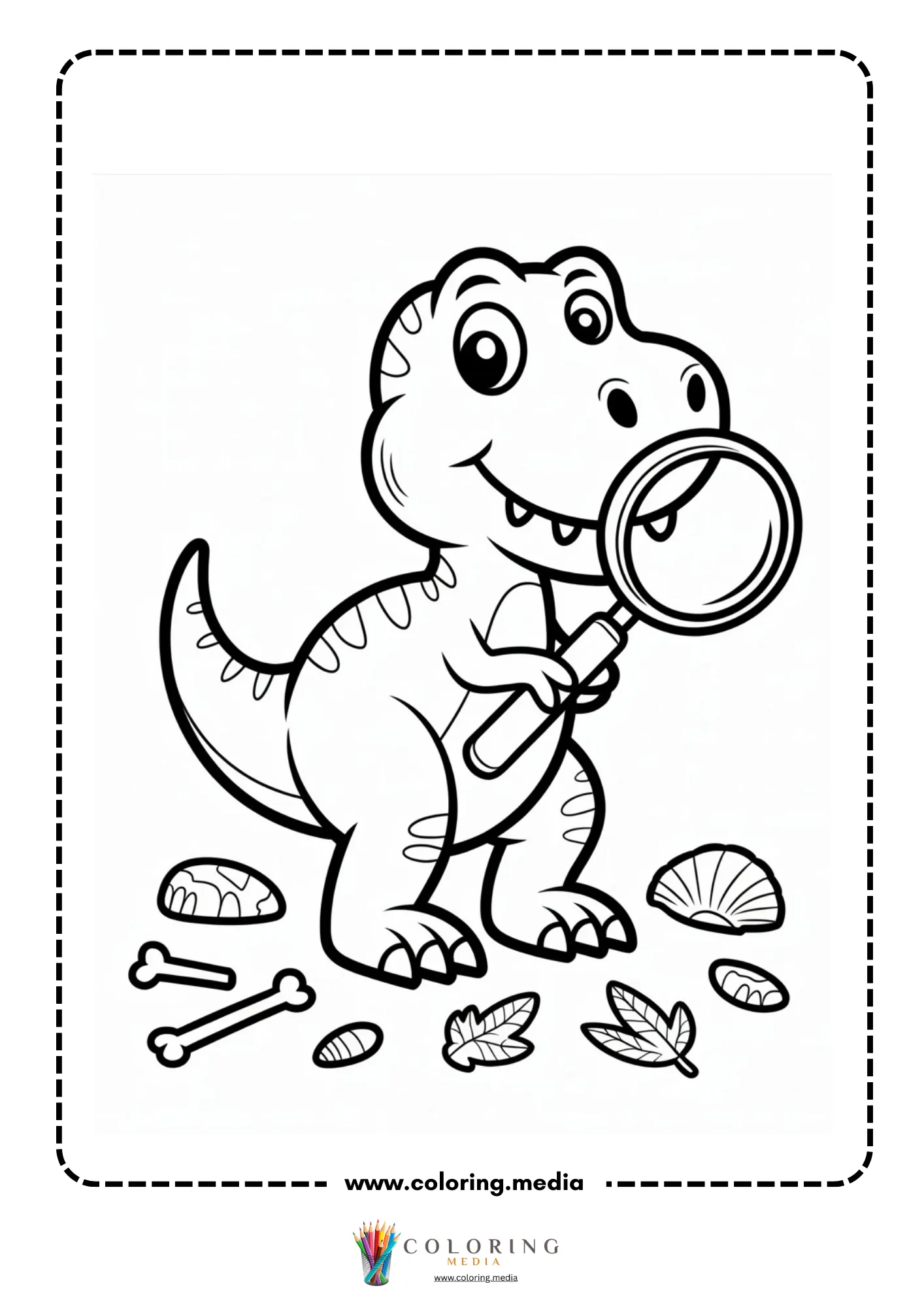
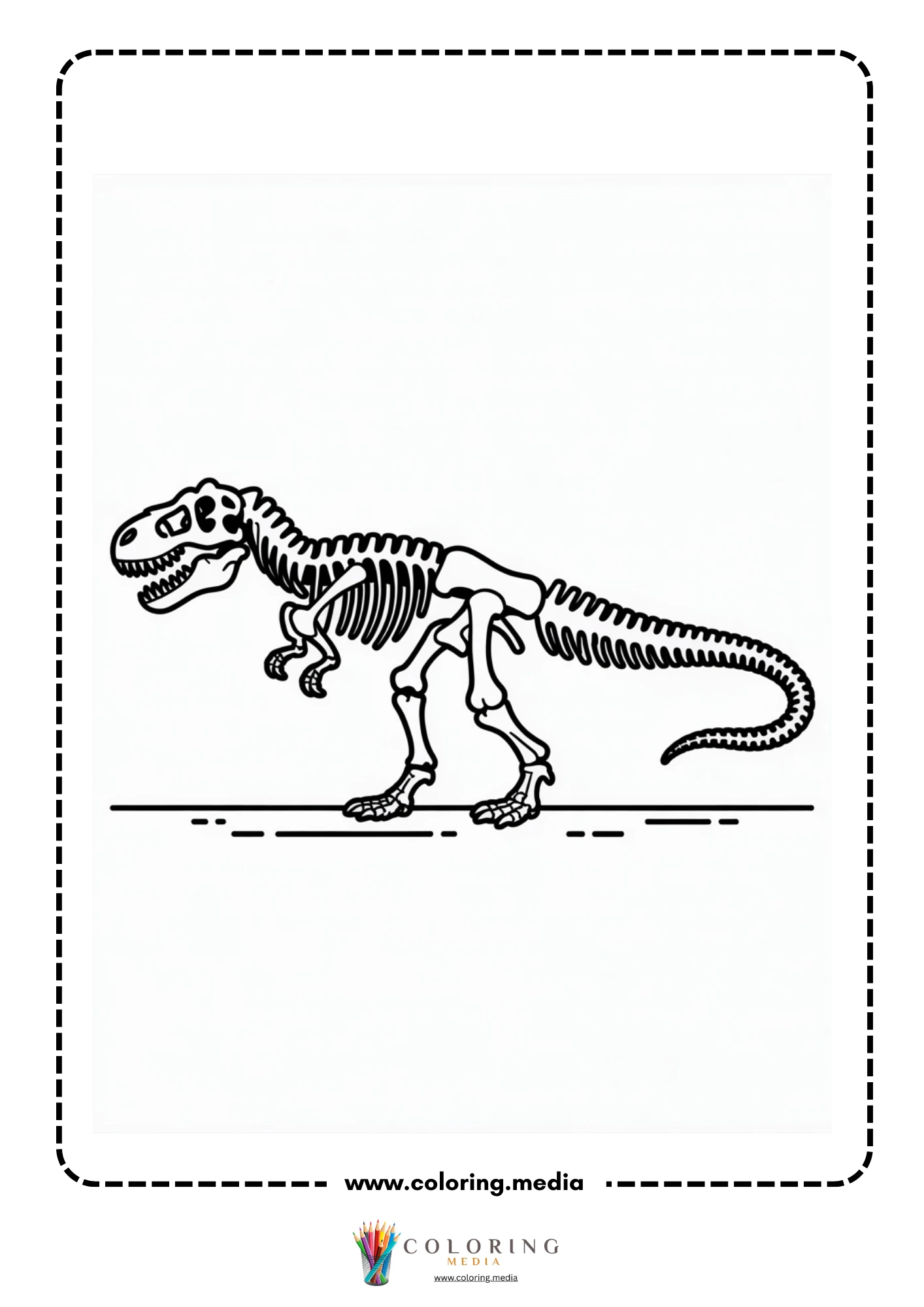
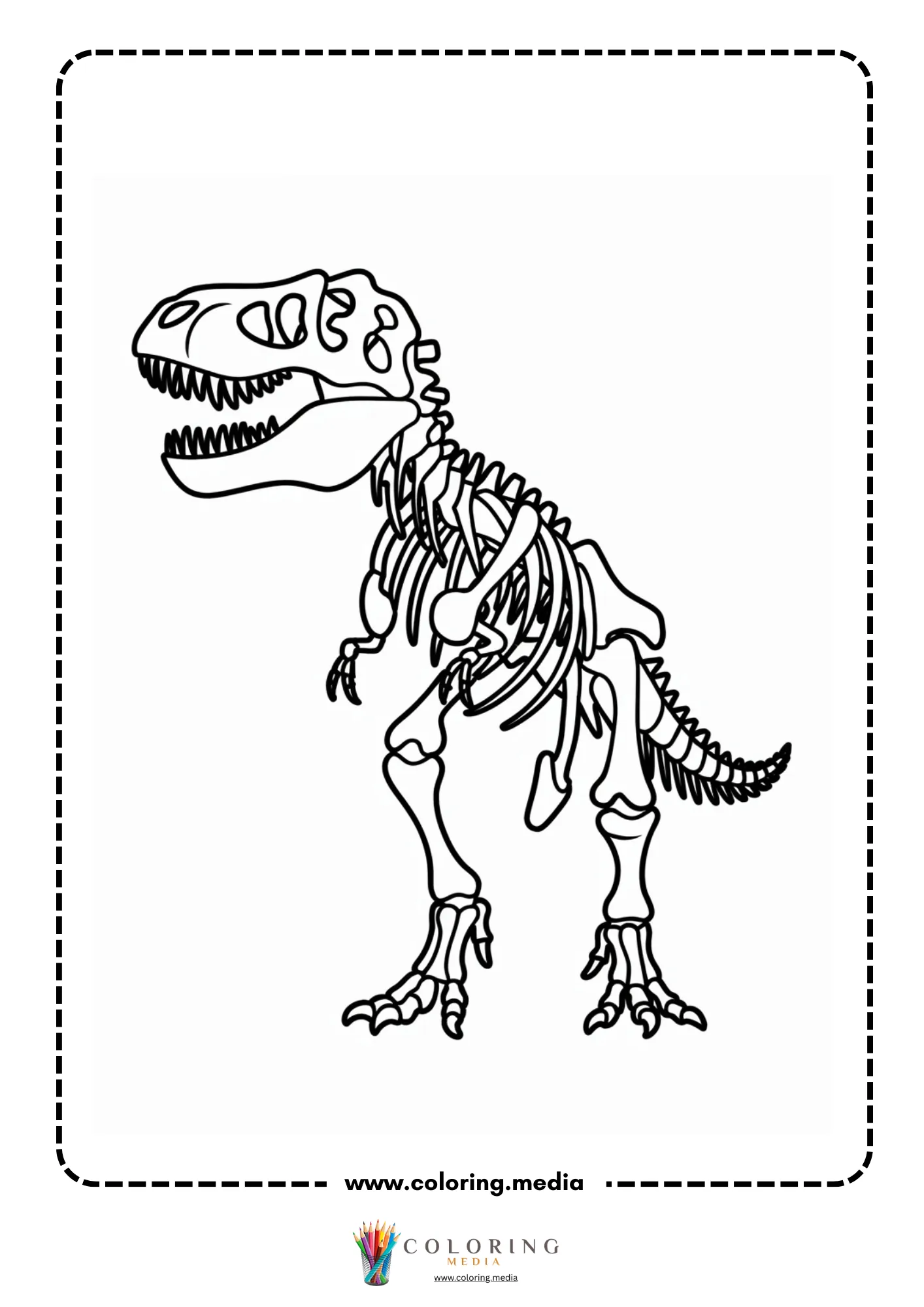
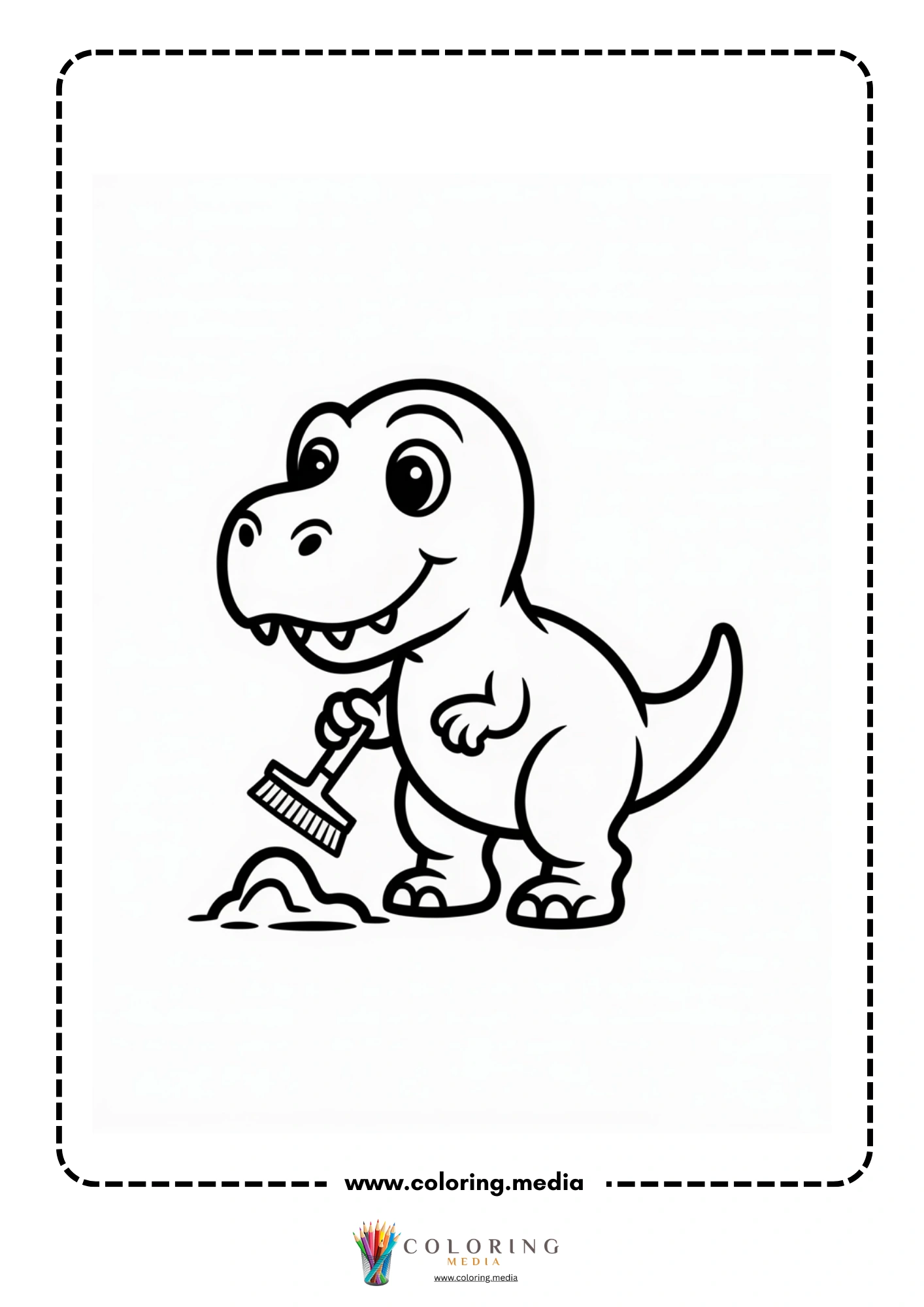
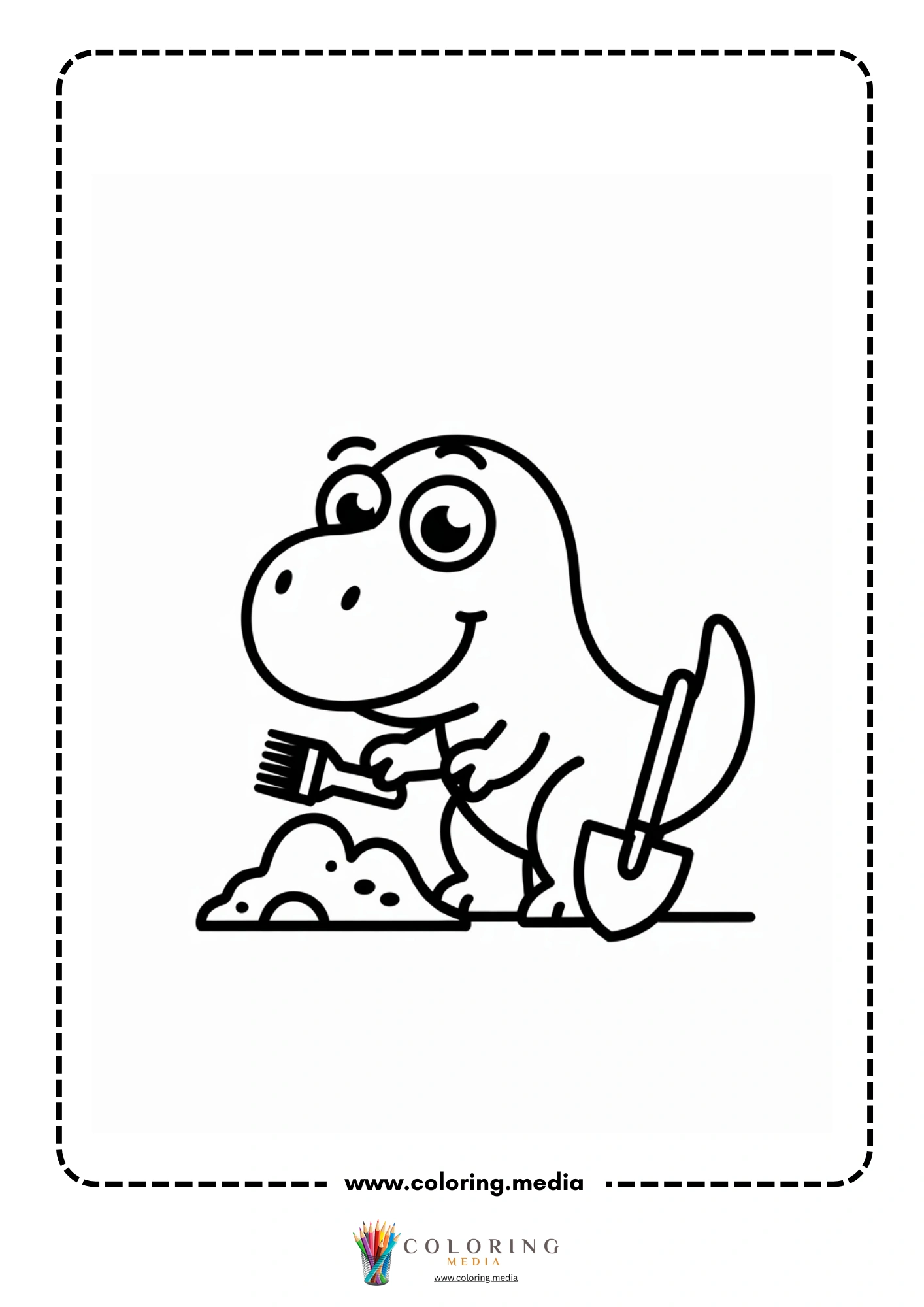
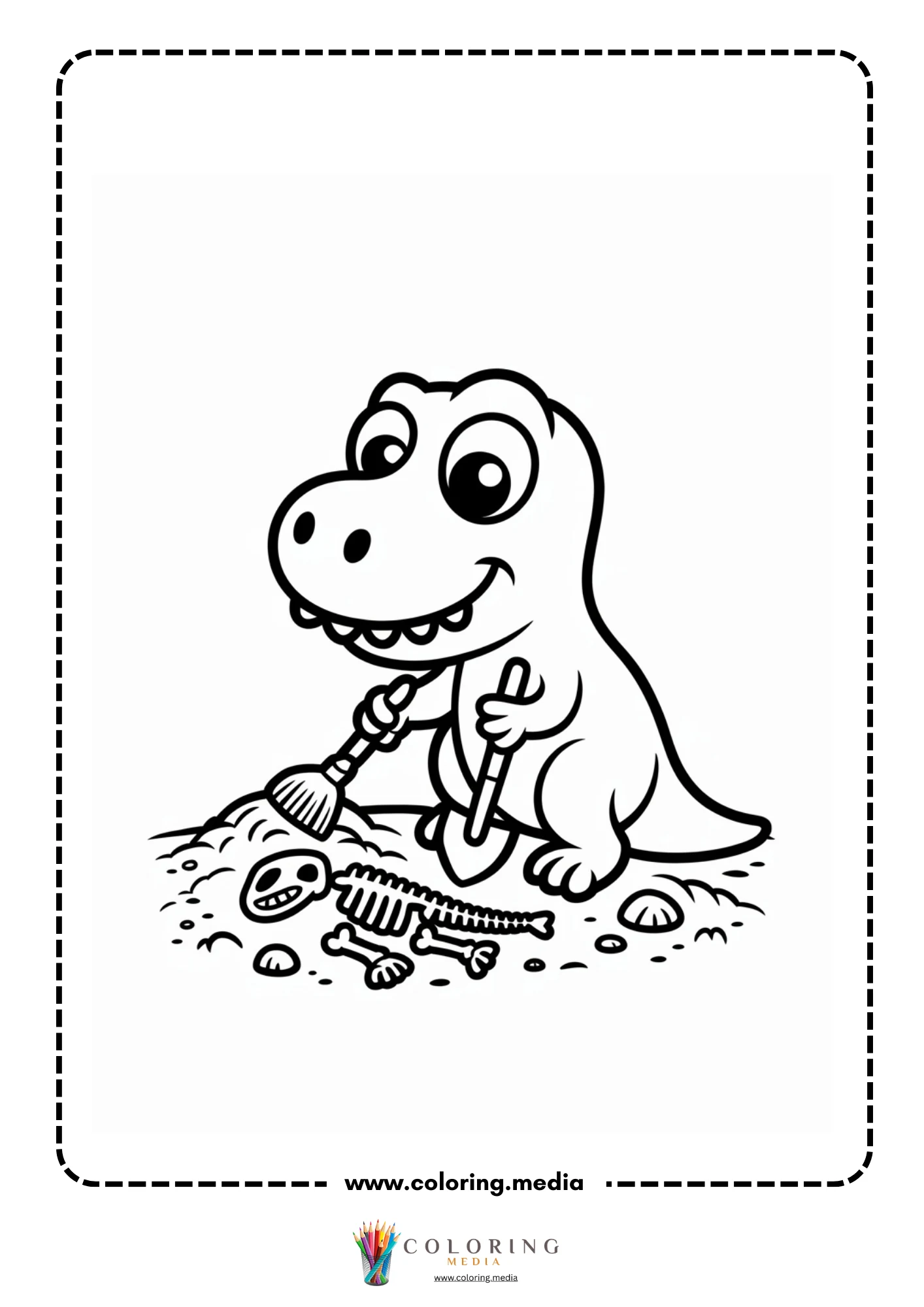
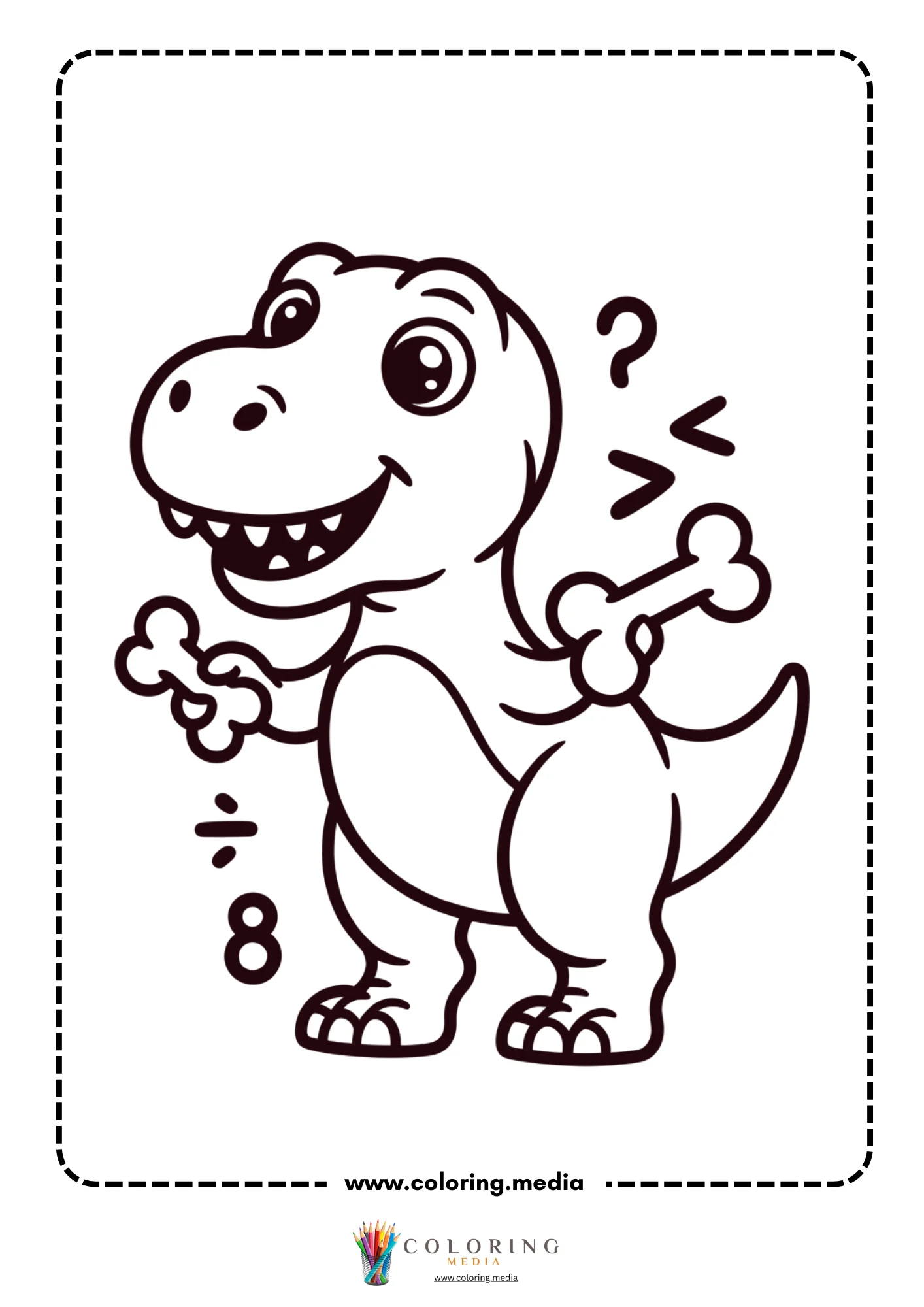
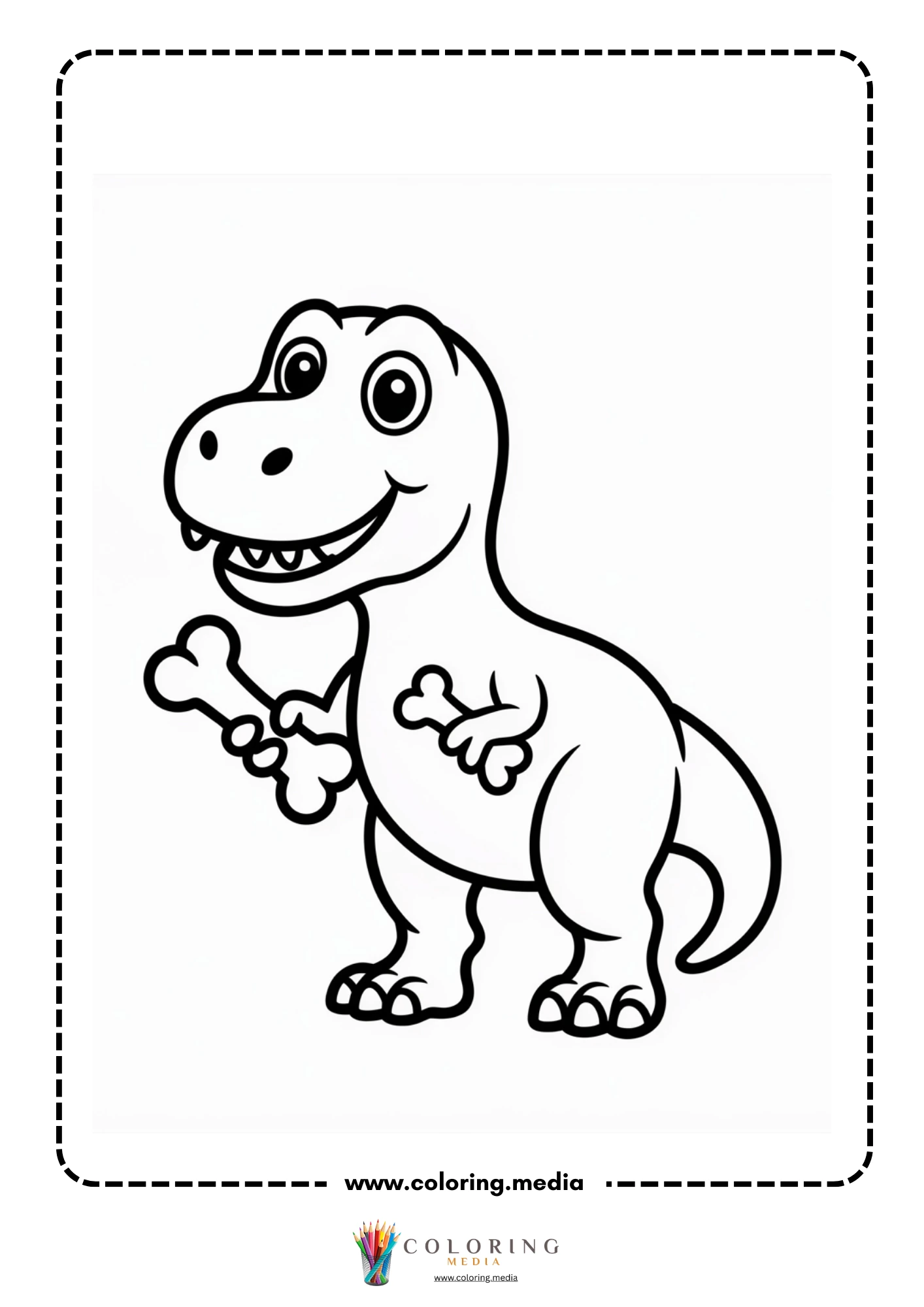
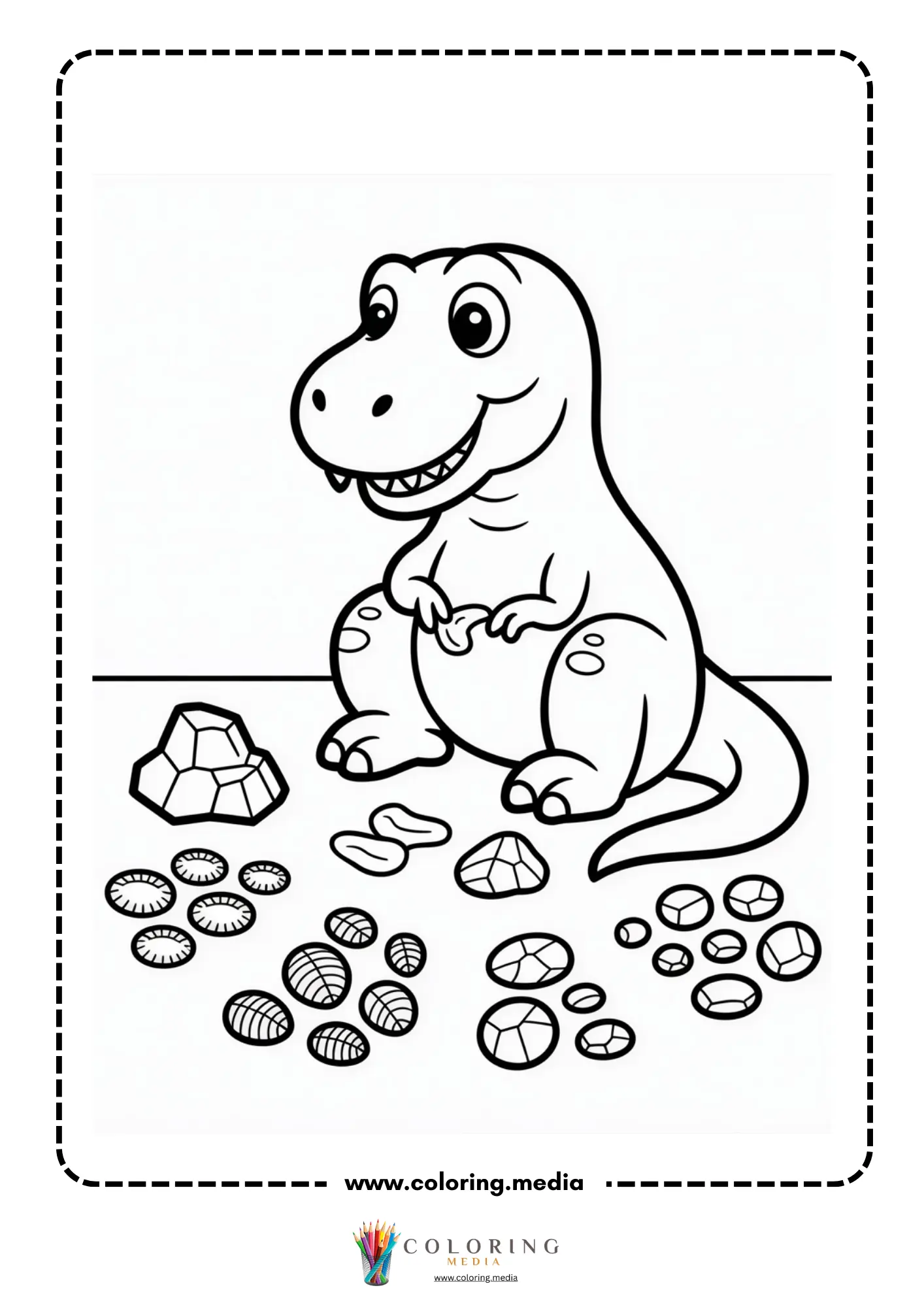
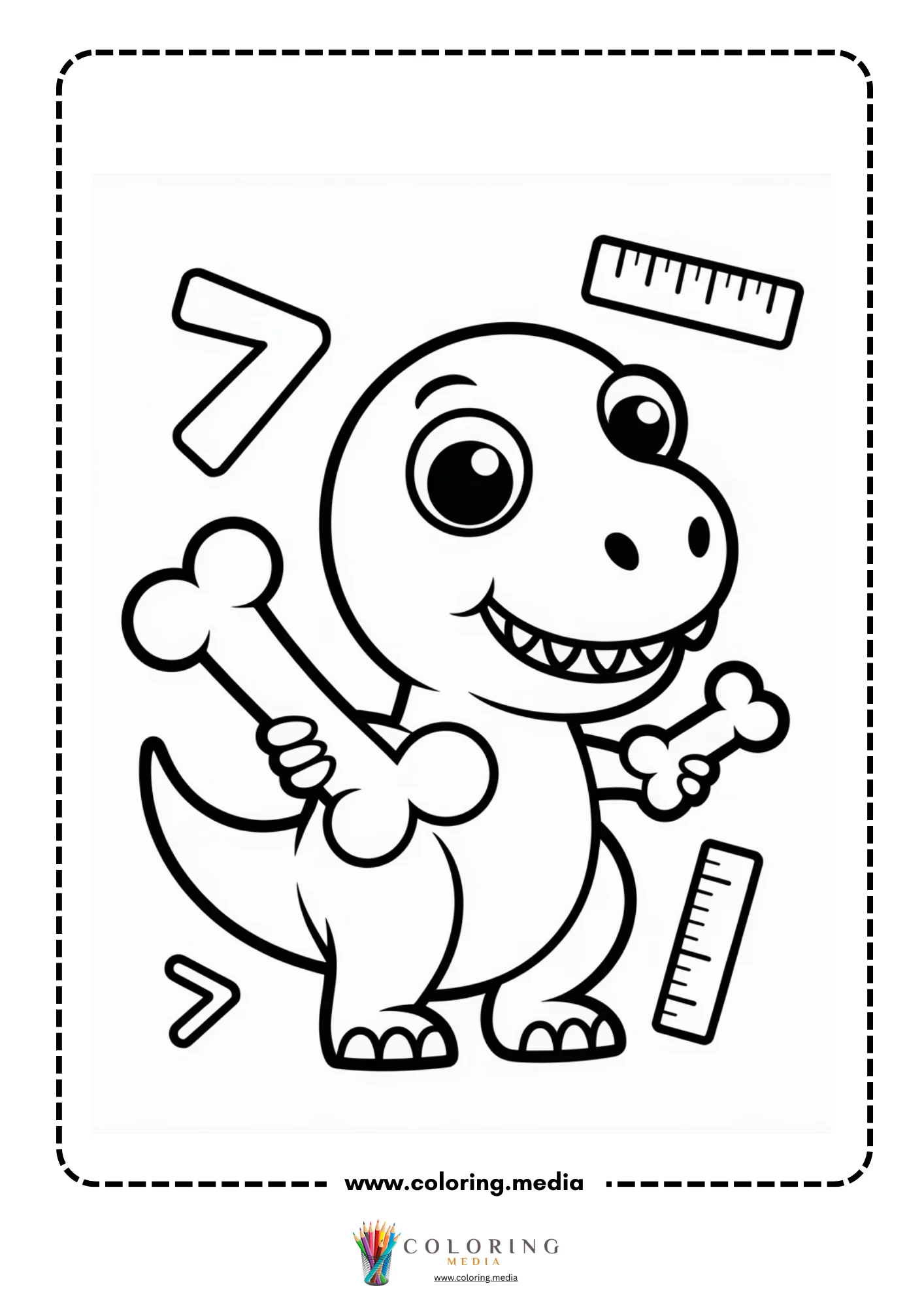
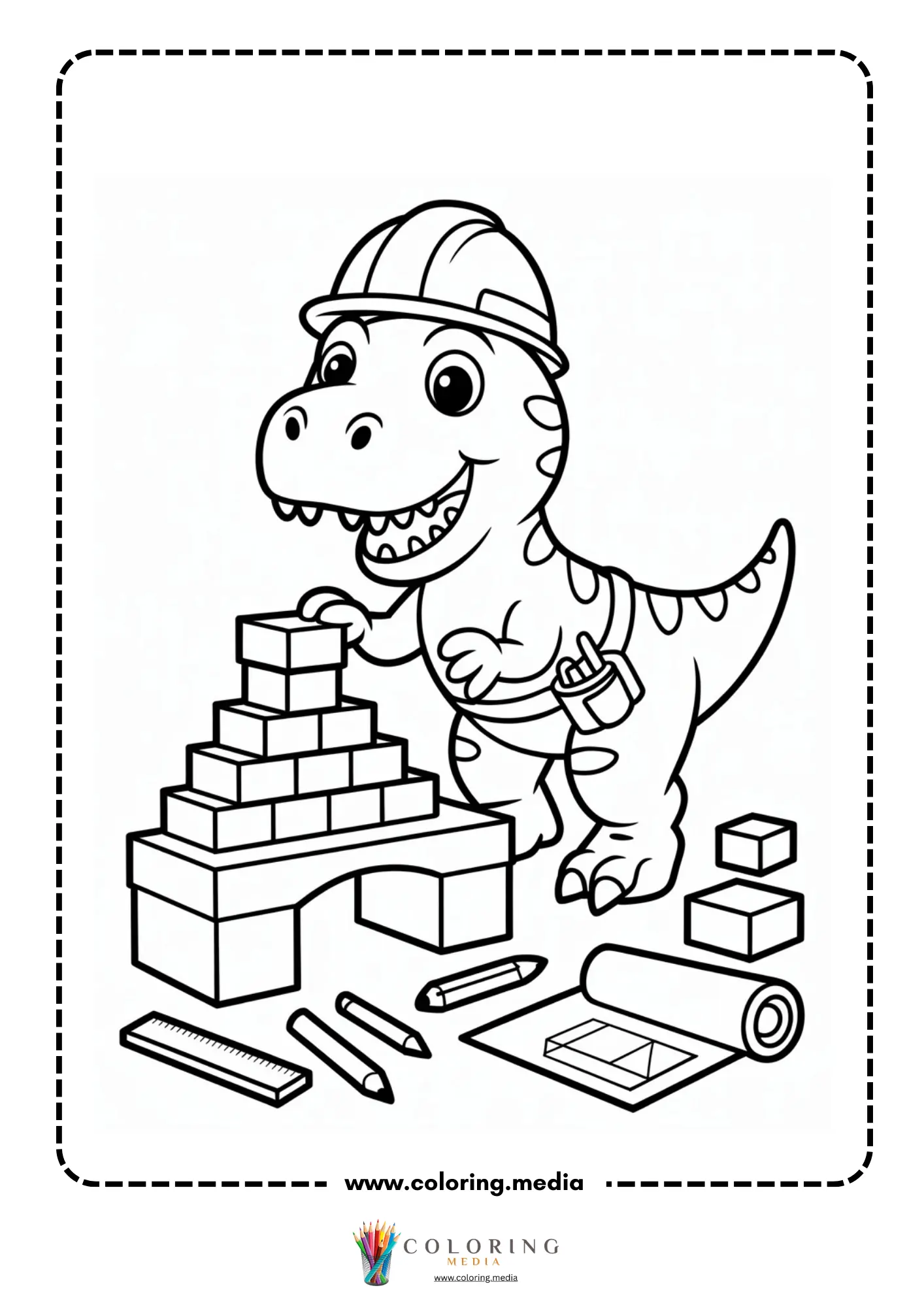
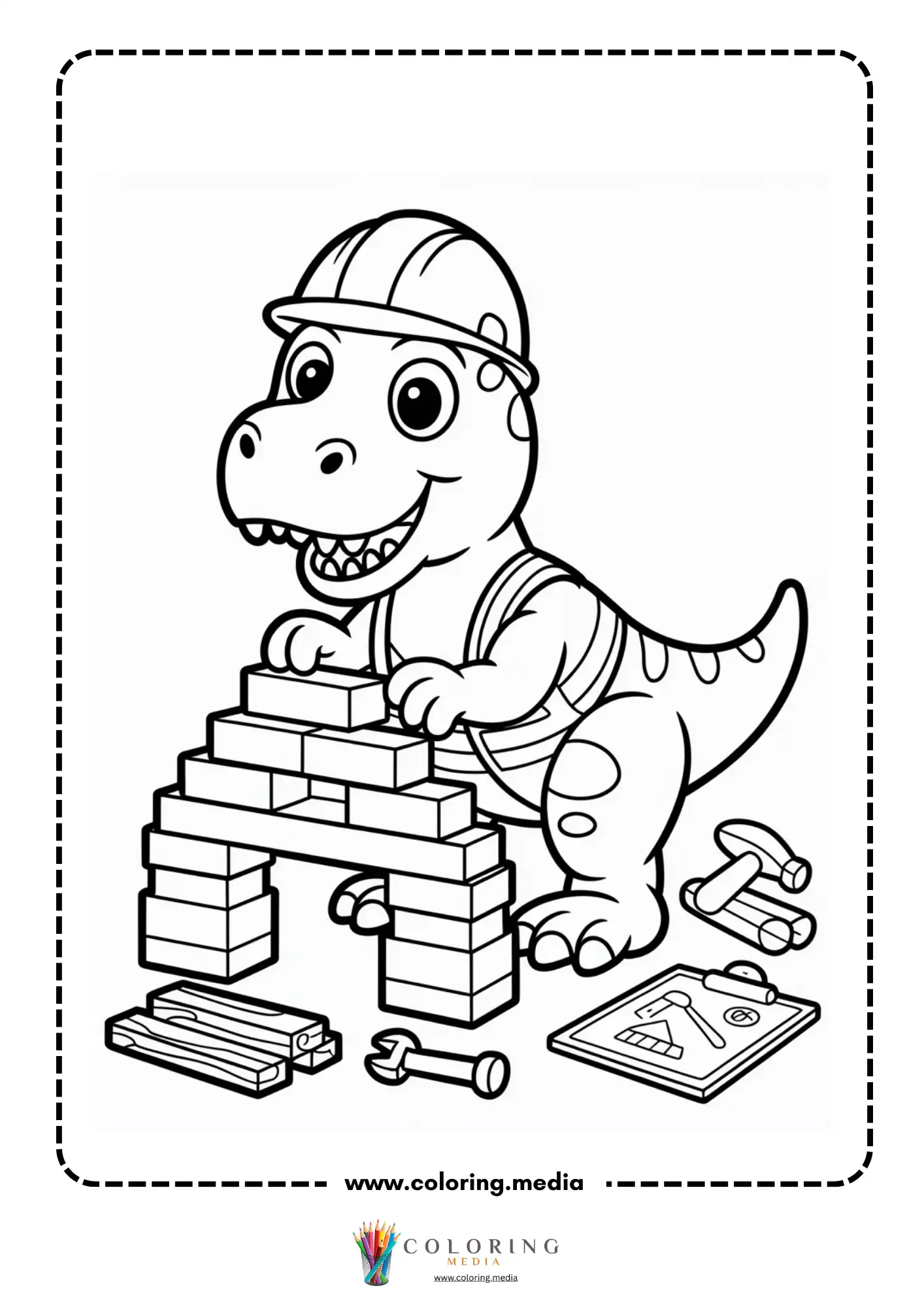
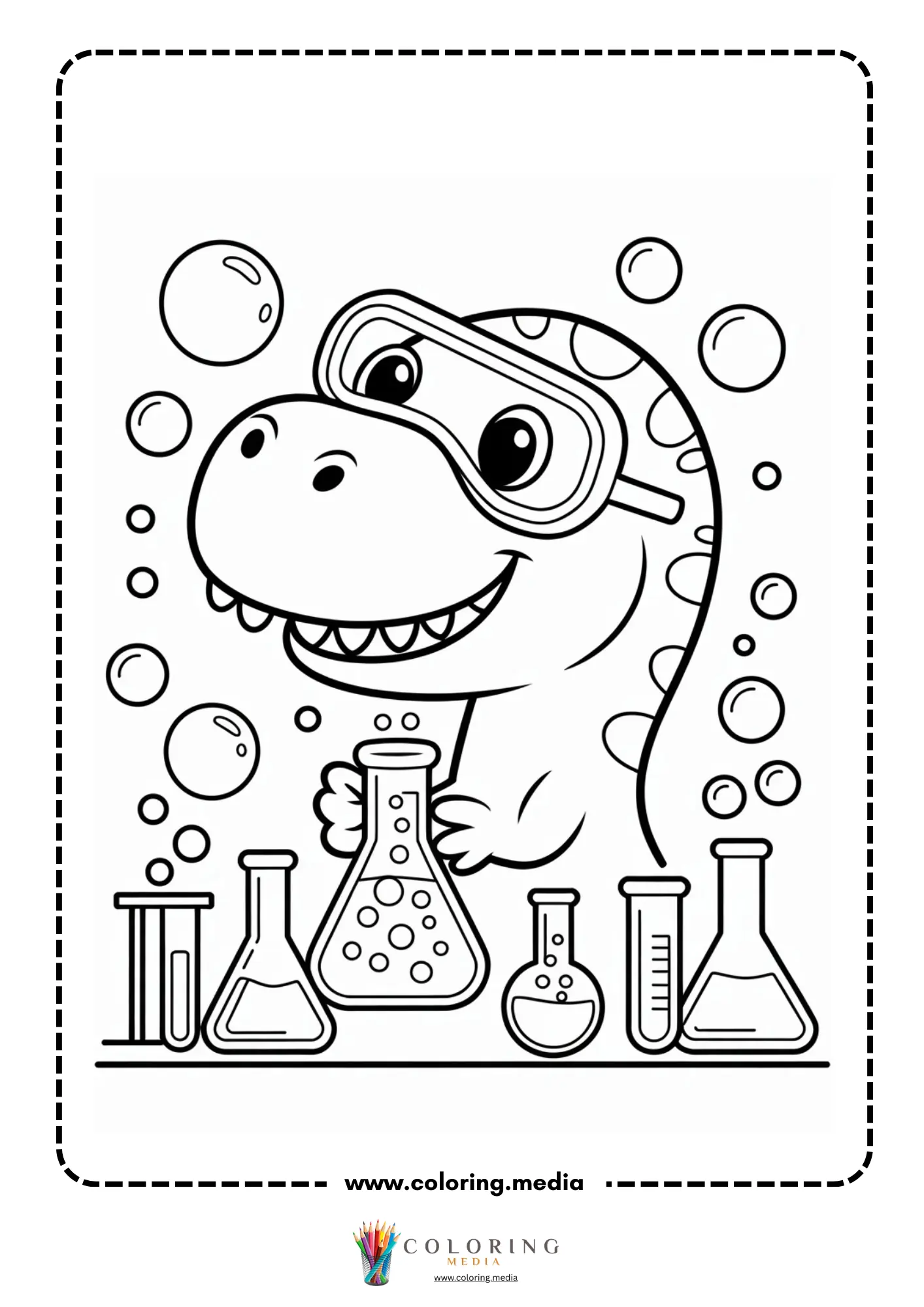
The tyrannosaurus rex has been the most famous dinosaur in the world for a century, and these coloring pages lean into that legacy from two different directions. Most of the set is kawaii cartoon T-rex characters — round bodies, big expressions, some in costumes or action poses — but a couple of pages shift toward more realistic rendering, including a page that shows the skeletal structure of a T-rex in outline form. That combination works well: younger kids gravitate to the cute versions, while older kids who are actually into paleontology appreciate the anatomy page.
The tiny arms are there on every page, which always provokes a reaction from kids who know the joke — and gives them a specific detail to color differently from the rest of the body. Across 20 pages the designs cover simple portraits, costumed characters, and more involved adventure scenes. Everything here is free to download and easy to print.
Free Printable T-Rex Coloring Pages
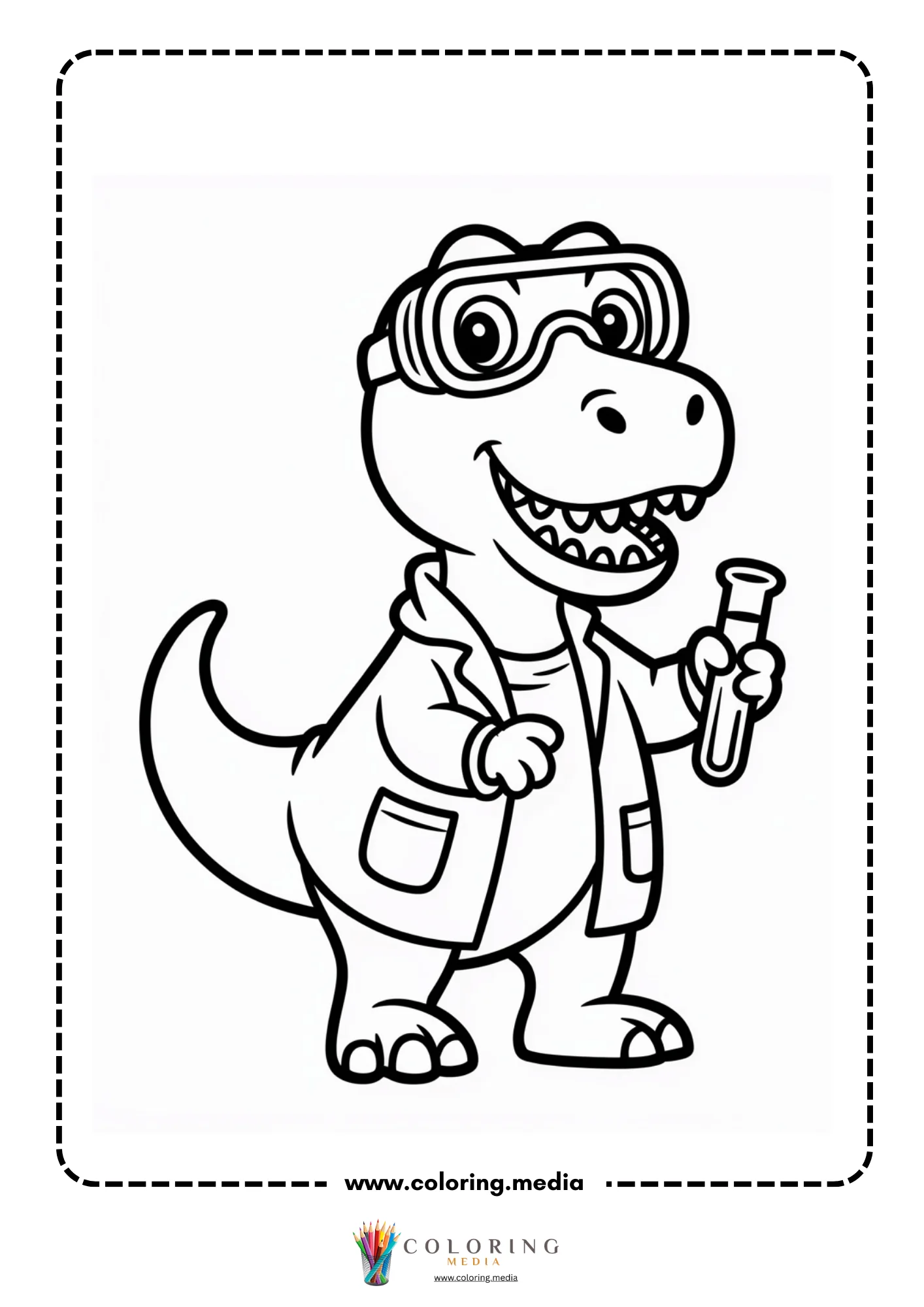
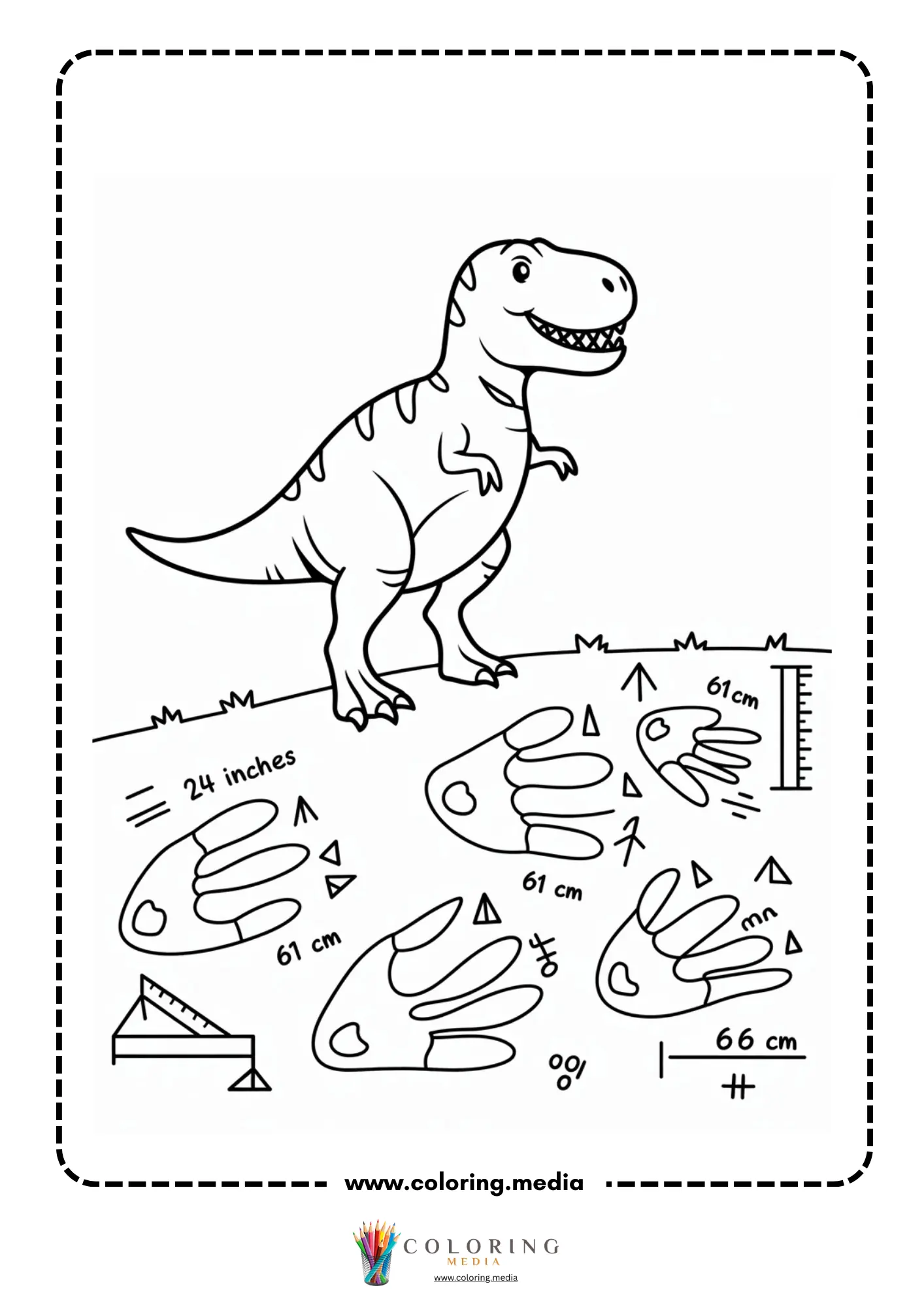
This collection includes 20 printable T-rex coloring pages featuring kawaii cartoon tyrannosaurus rex characters in portrait poses, costumes, and action scenes, plus a more detailed skeletal anatomy page. The designs range from very simple open compositions to busier multi-element scenes. Each page is sized for US Letter and A4 paper and downloads as a ready-to-print PDF.

Who Are These T-Rex Coloring Pages Best For?
Kindergarteners do best on the portrait-style kawaii pages, where the T-rex is centered, the outlines are clear, and the tiny arms are funny rather than confusing. Five-year-olds who are already into dinosaurs will latch onto these immediately — T-rex is usually the first dinosaur kids learn, and having a cute version to color feels like a familiar friend in a new outfit.
Early-elementary kids will appreciate the full range, and the skeleton page specifically suits kids who are curious about how animals work inside. Coloring the bone structure — distinguishing the skull from the ribcage from the leg bones — is a different kind of challenge than a standard cartoon fill, and it tends to prompt a lot of questions. The costumed and action-pose pages give creative kids a character to build a story around.
In a classroom setting, the skeleton page is a natural pairing with a bones-and-anatomy unit, while the cartoon pages work for free coloring time or reward activities. Twenty pages covers most class sizes with enough variety to avoid duplicates.
Interesting T-Rex Facts to Share While Coloring
T-rex had the most powerful bite of any land animal ever recorded. Bite force estimates range from 8,000 to 12,800 pounds of force — enough to crush bone. The thick, serrated teeth were designed not just to pierce but to grind, which is why T-rex bone fragments are regularly found inside fossilized T-rex dung.
The tiny arms were not useless. Current thinking suggests they were strong enough to grip prey at close range, functioning as hooks to hold struggling animals steady. They couldn’t reach the mouth, but they didn’t need to.
T-rex probably had feathers. Close relatives have been found with feather impressions in the fossil record, and there’s evidence T-rex juveniles may have been feathered even if adults lost most of them due to their large body mass generating excess heat.
T-rex likely had lips. A 2023 study comparing tooth wear patterns between T-rex and modern crocodilians (which have exposed teeth) versus monitor lizards (which have lips) suggests T-rex teeth were covered by lips that kept them moist and protected. The iconic open-toothed grin may be inaccurate.
There are more T-rex individuals known to science than any other large theropod. Over 50 specimens have been found, including several nearly complete skeletons. Sue, at the Field Museum in Chicago, is the largest and most complete — over 40 feet long and about 13 feet tall at the hips.
Creative T-Rex Coloring and Craft Ideas
Feathered vs. Scaly Comparison Color one page as the traditional scaly green movie monster, then color a second page with feathers added — downy patches on the head and neck, quill impressions along the back — and discuss which is more scientifically accurate.
Skeleton Study Use the skeleton page as a biology activity: label the major bones (skull, vertebrae, femur, tibia, fibula) with small text notes in pencil after coloring. Bones look different in different colors, which helps kids remember the structure.
Lips or No Lips Vote Before coloring the head, discuss the 2023 research suggesting T-rex had lips. Have kids vote, then color accordingly — closed lips or exposed teeth — and explain both positions as legitimate current science debate.
T-Rex vs. Scale Drawing After coloring, draw a rough outline of a school bus or a car at approximate scale next to the finished T-rex. A full-grown T-rex stood about as tall as a two-story building.
Costume Character Name For the dressed-up T-rex pages, invent a name, occupation, and catchphrase for the character. “Rex the Accountant can’t reach his keyboard but his calculation bite force is legendary.”
T-Rex Cretaceous Menu After coloring, research what T-rex likely ate (hadrosaurs, triceratops, smaller dinosaurs) and draw a simple “restaurant menu” for a T-rex in the white space margin. Silliness anchors facts in memory.
Footprint Tracing T-rex footprints were about 30 inches long. Mark that length on a piece of paper and have kids trace around their own foot next to it. The scale comparison is always memorable.
How to Print These T-Rex Coloring Pages
Each page downloads as a PDF sized for US Letter and A4 paper with no adjustment needed. Standard copy paper works well for crayons and colored pencils; 90gsm or heavier prevents marker bleed-through. The skeleton page has finer lines than the cartoon pages — turn off “fit to page” scaling for the sharpest print.
Explore More Animals Coloring Pages
If you enjoyed these pages, you may also like:
Raptor Dinosaur Coloring Pages
Spinosaurus Coloring Pages
Stegosaurus Coloring Pages
Dinosaur Coloring Pages
Animals Coloring Pages