
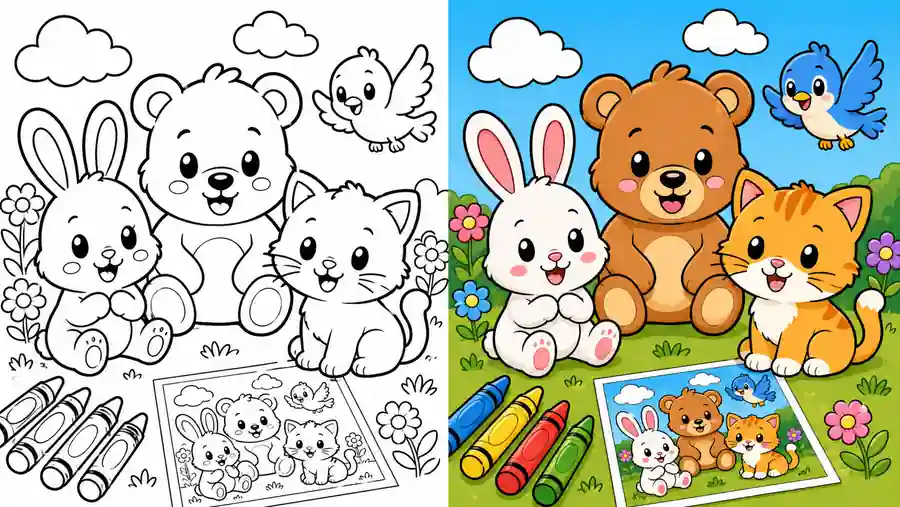
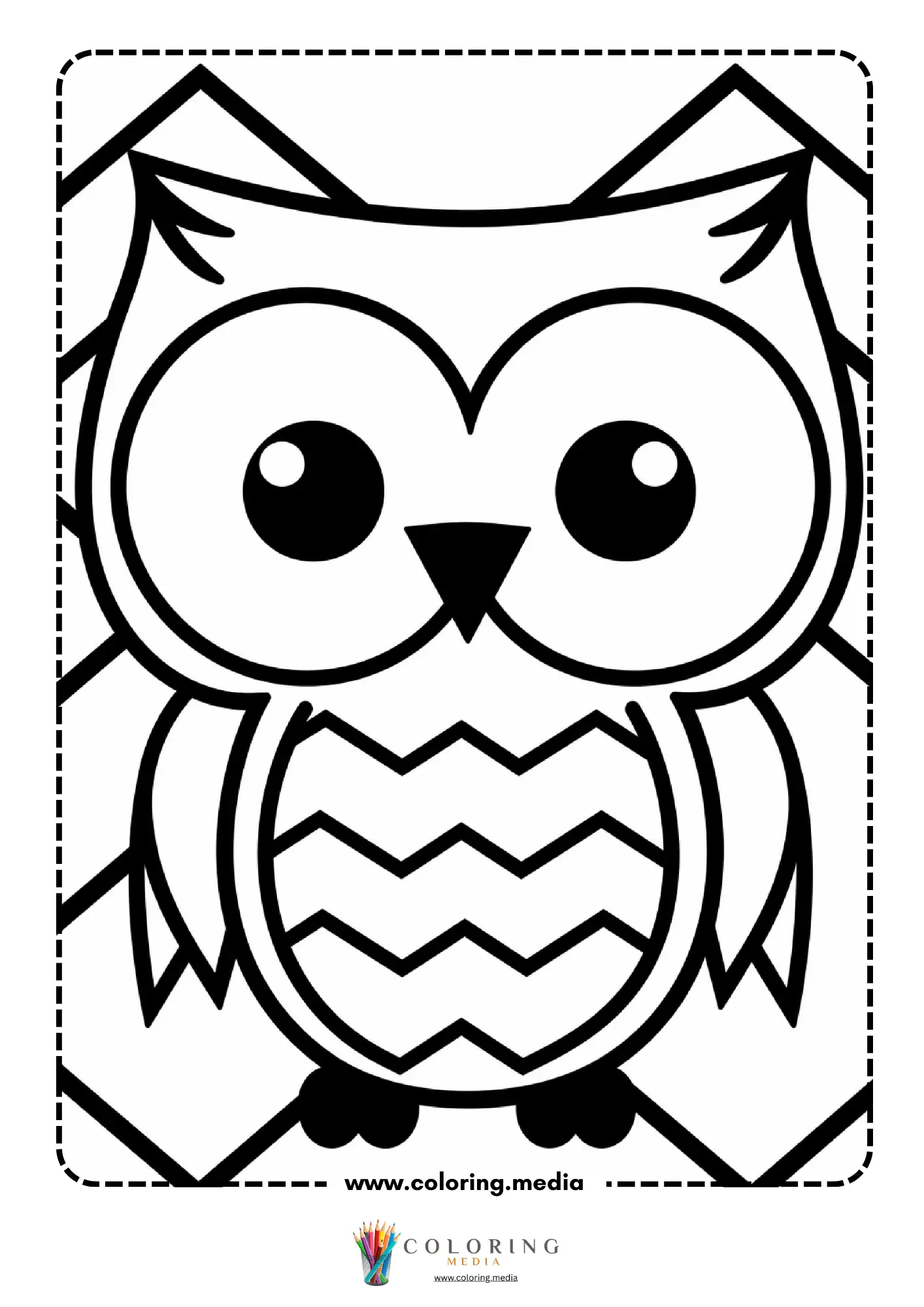
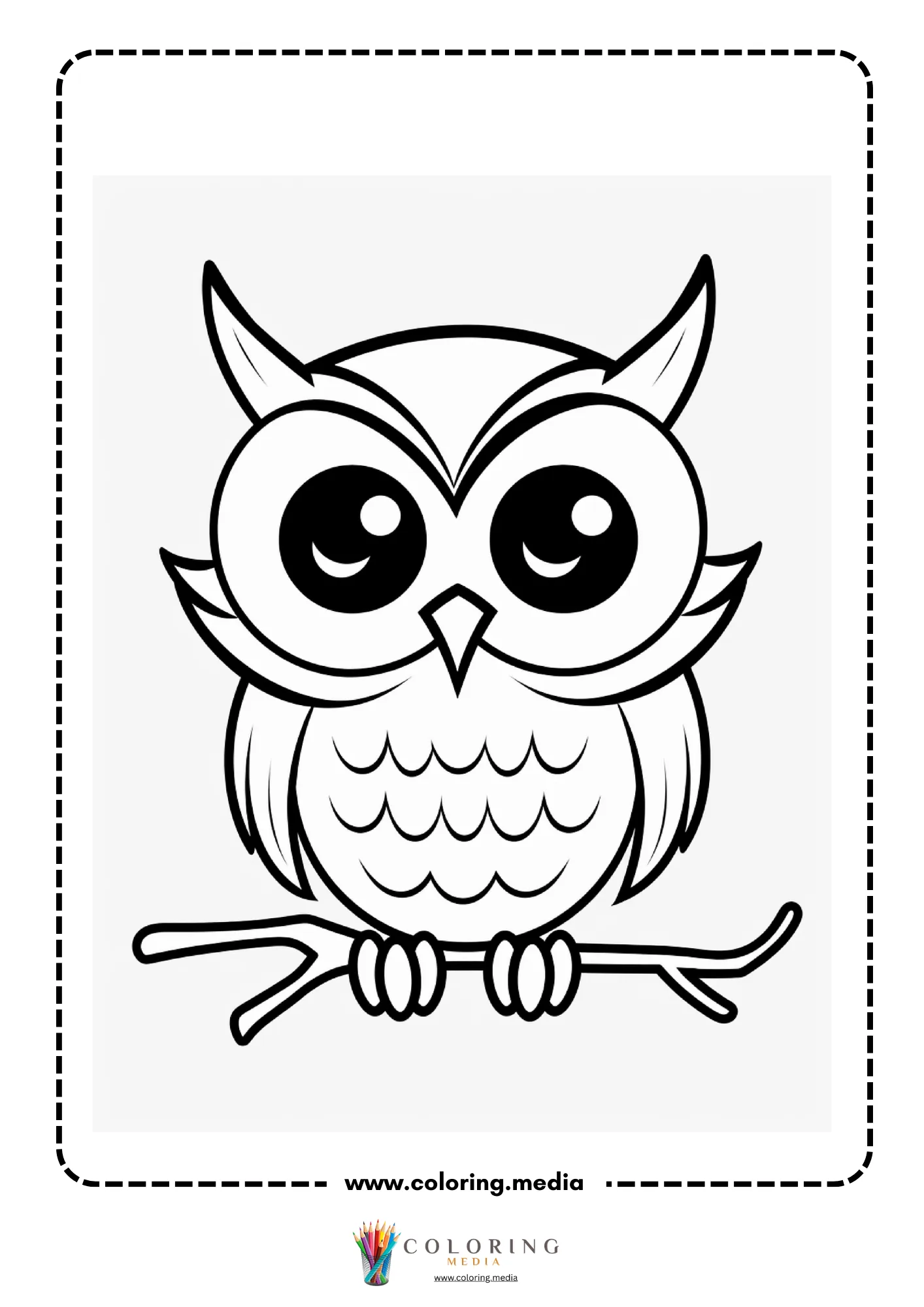
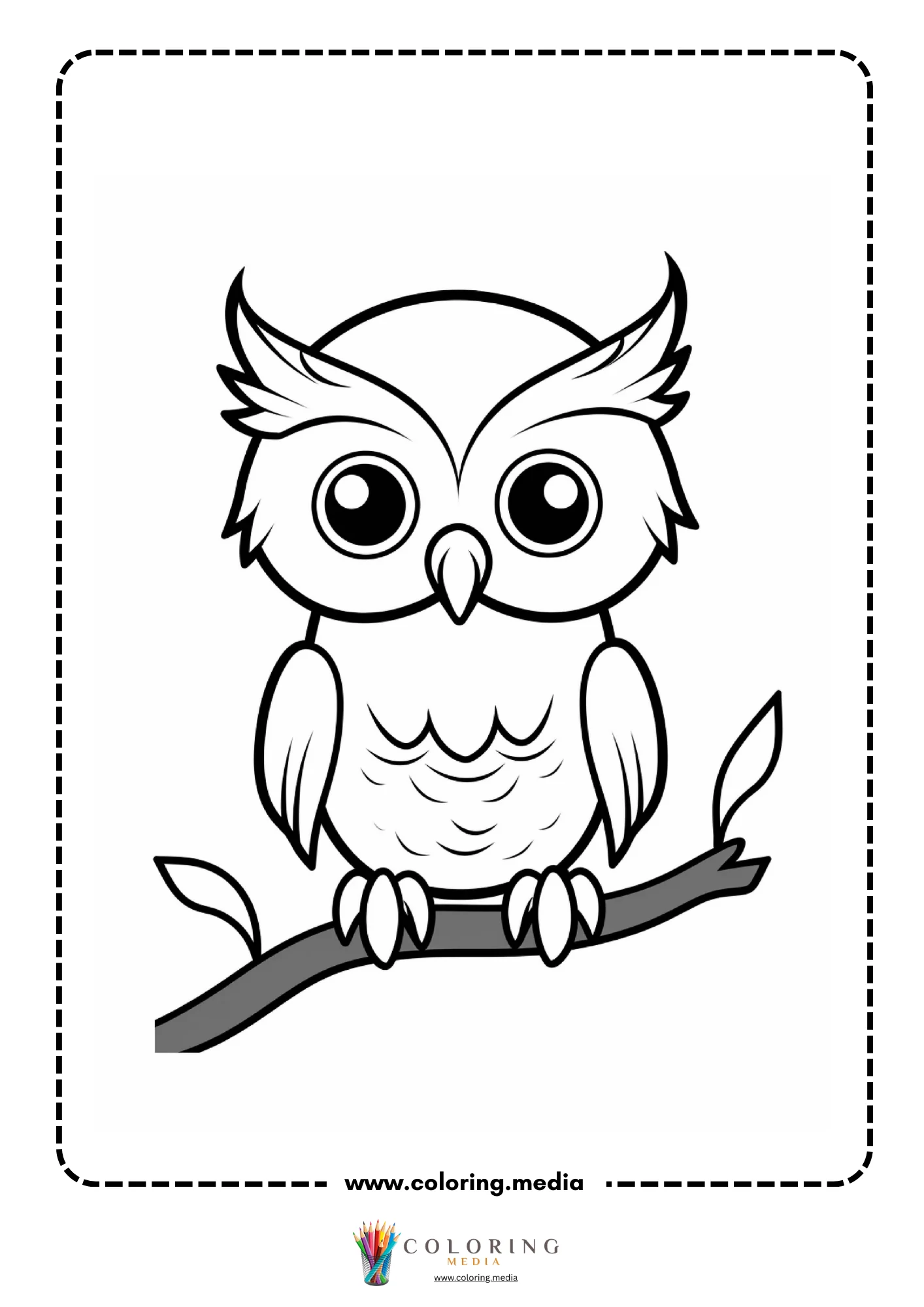
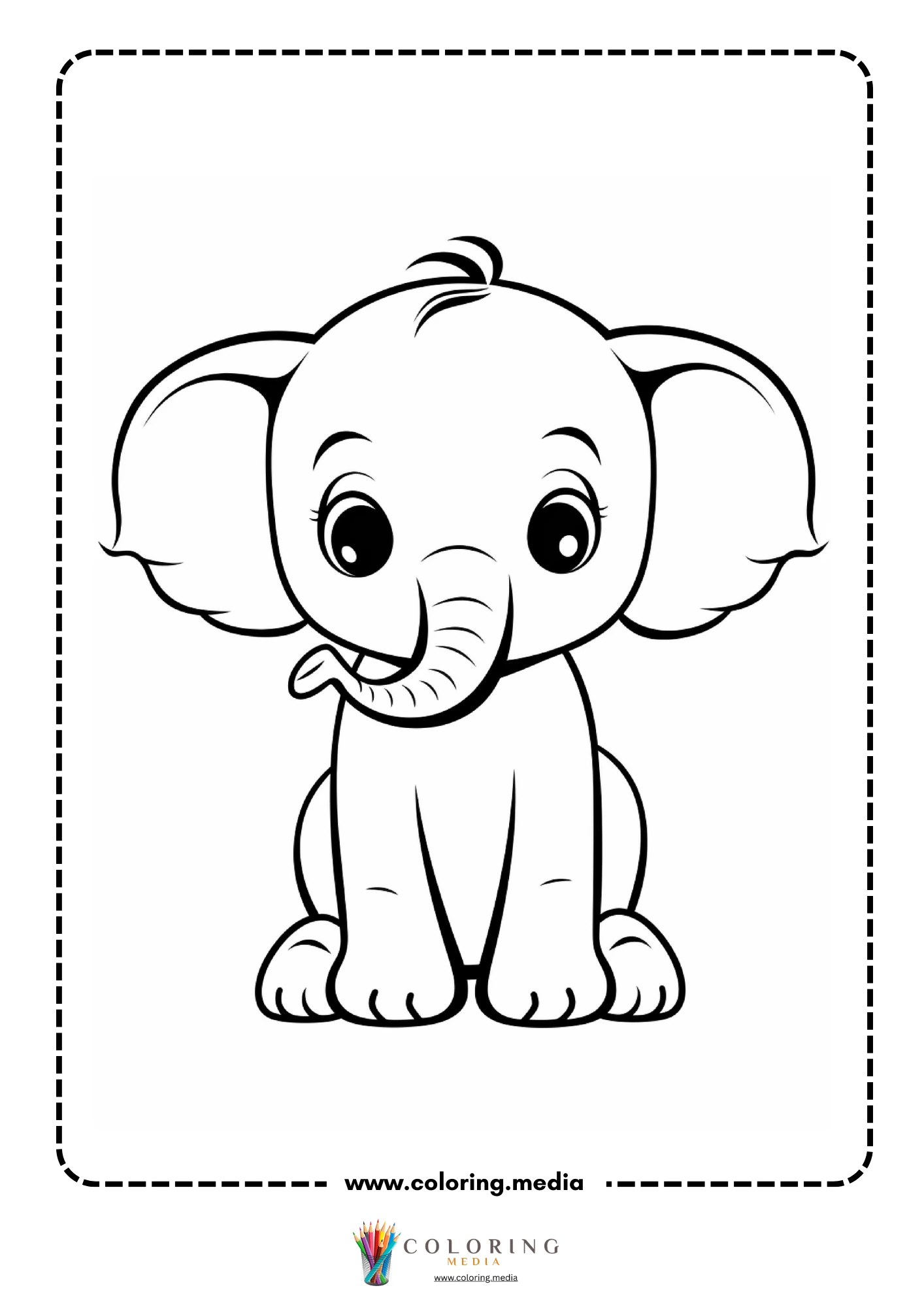
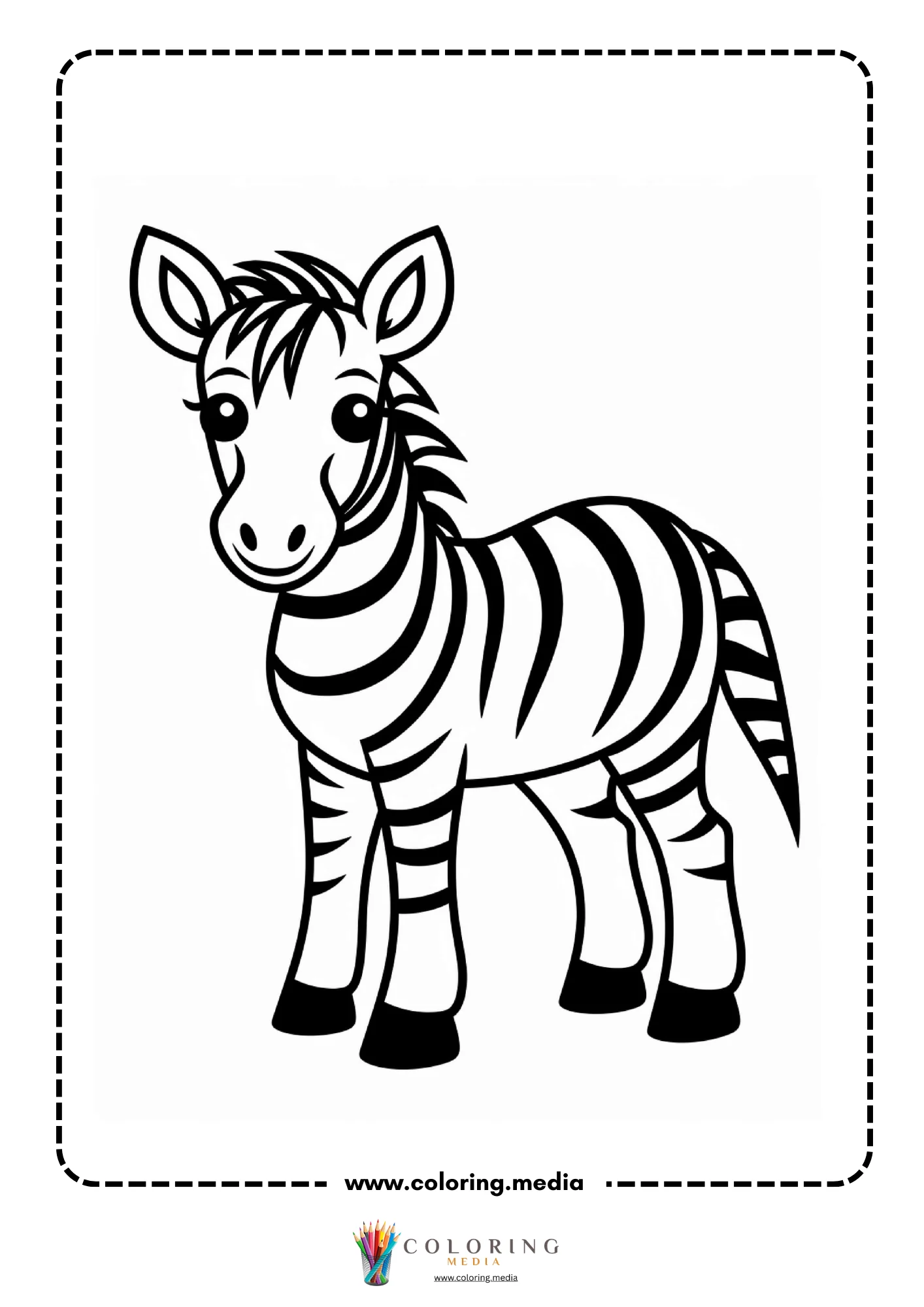
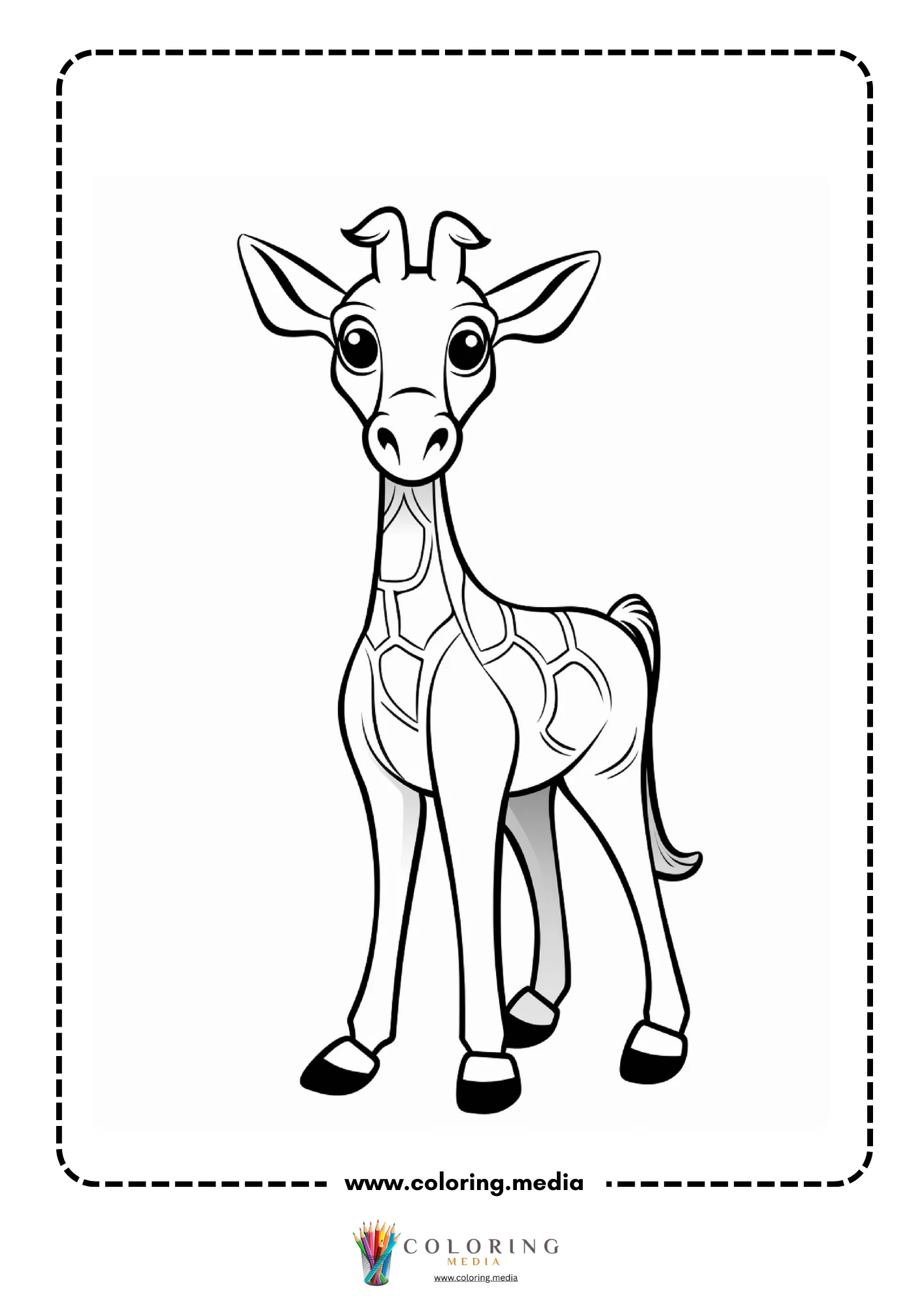
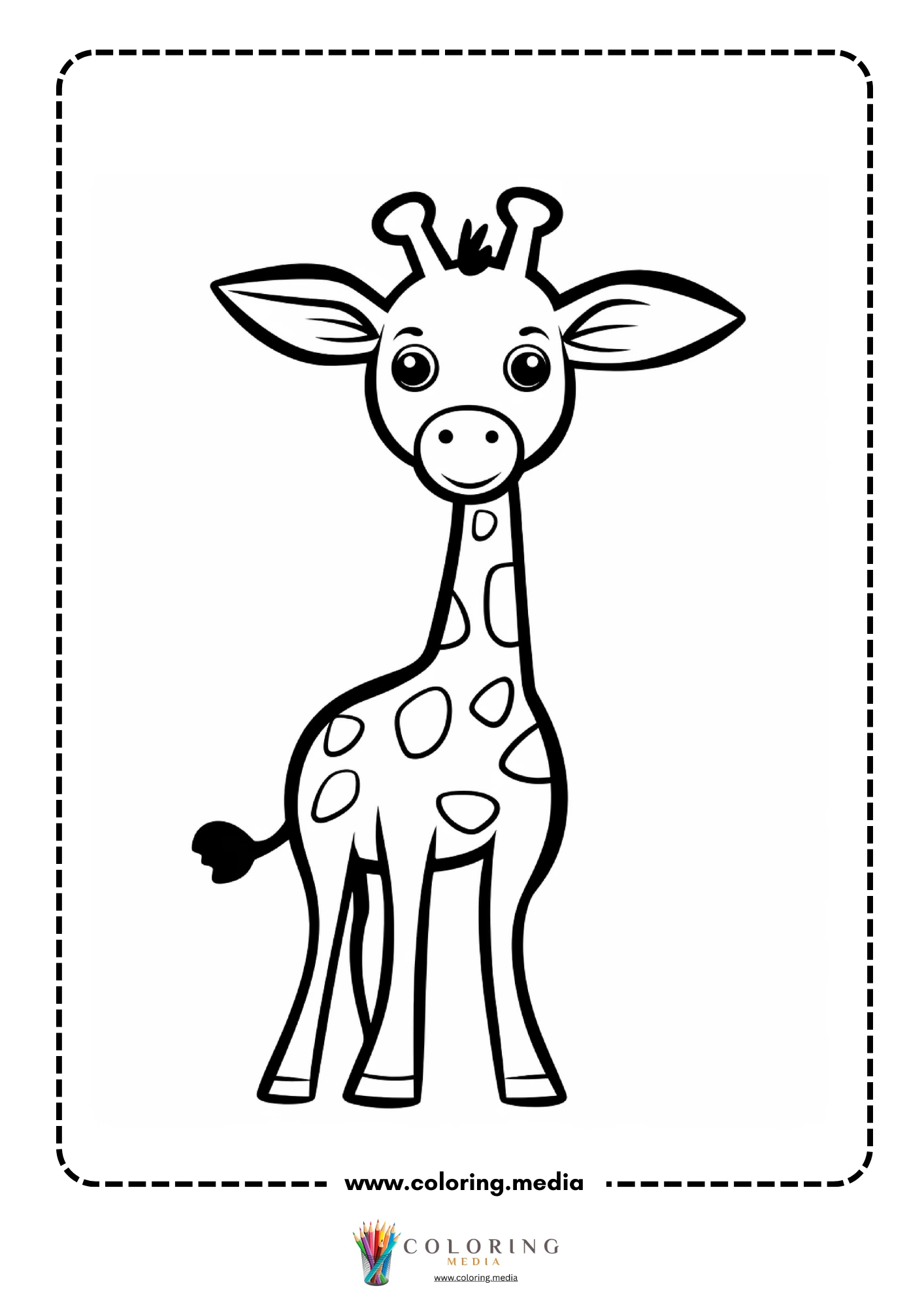
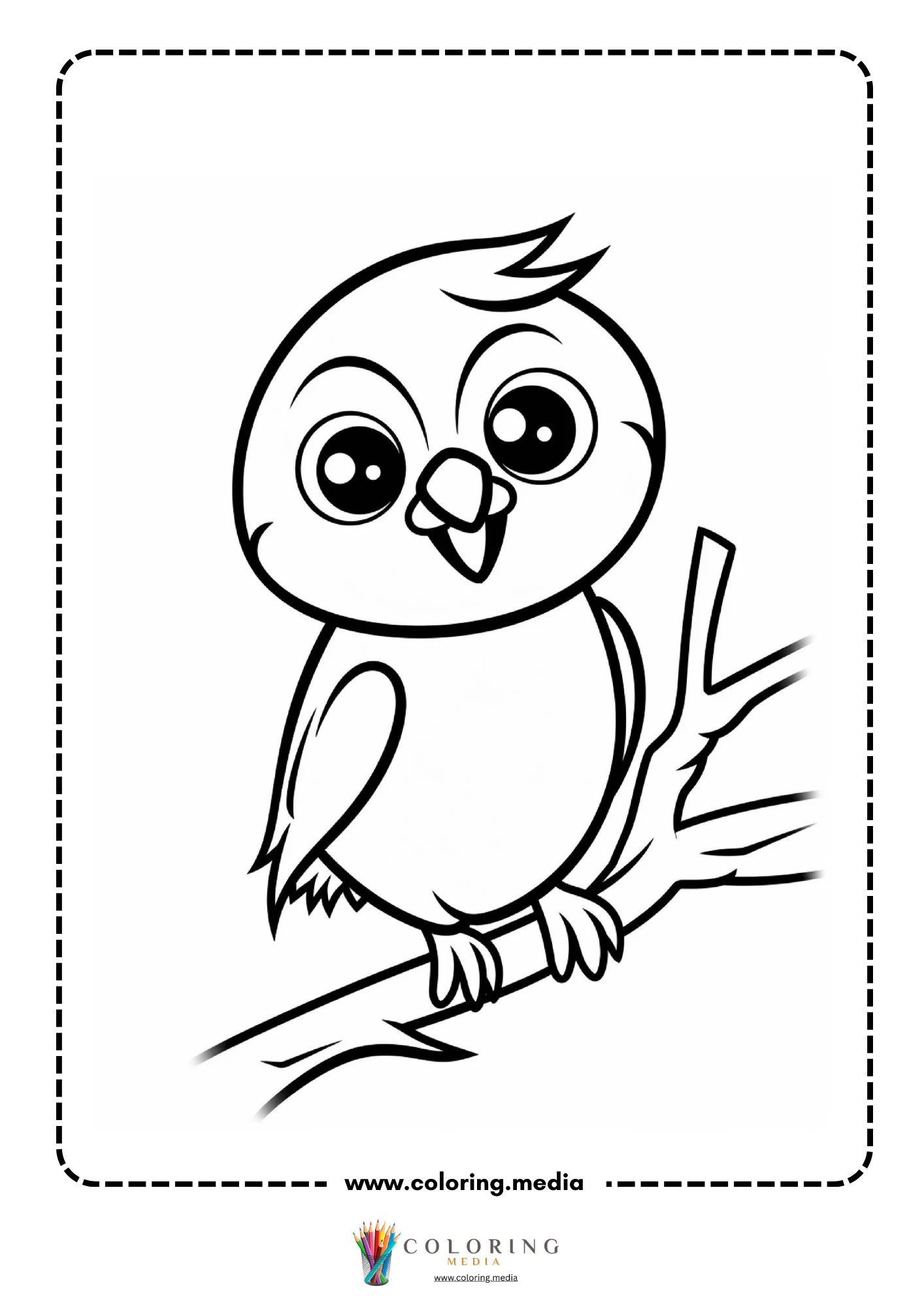
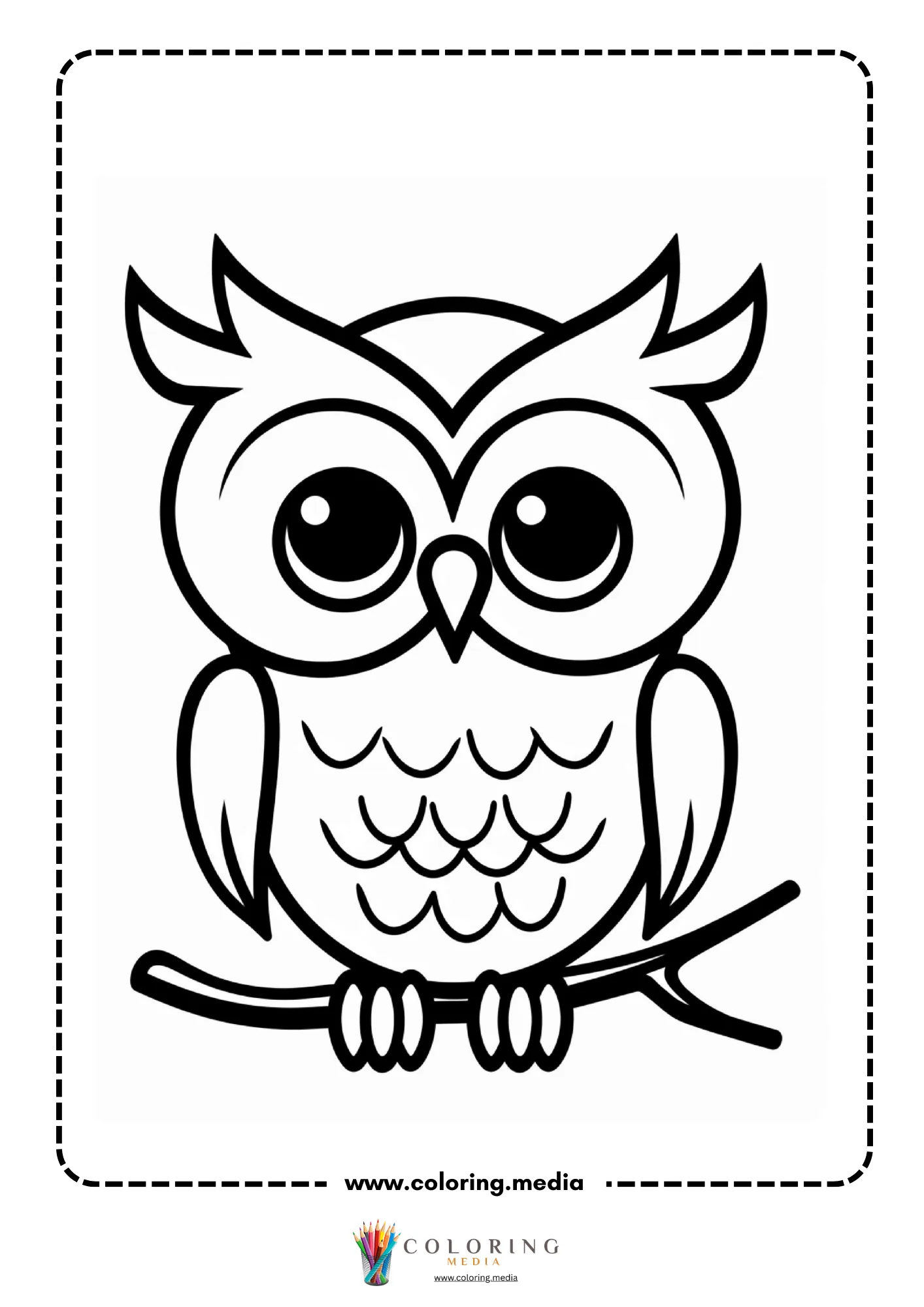
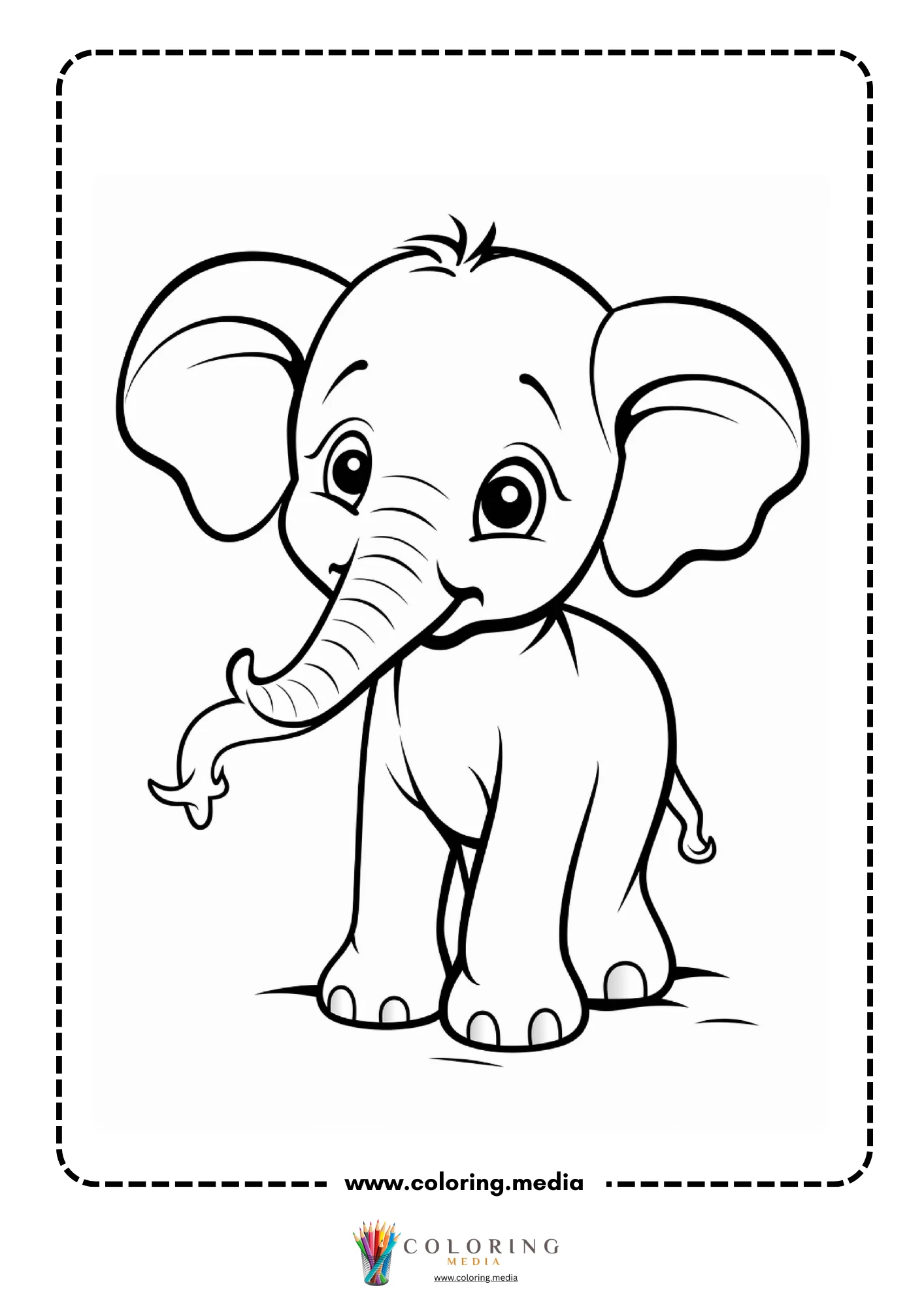
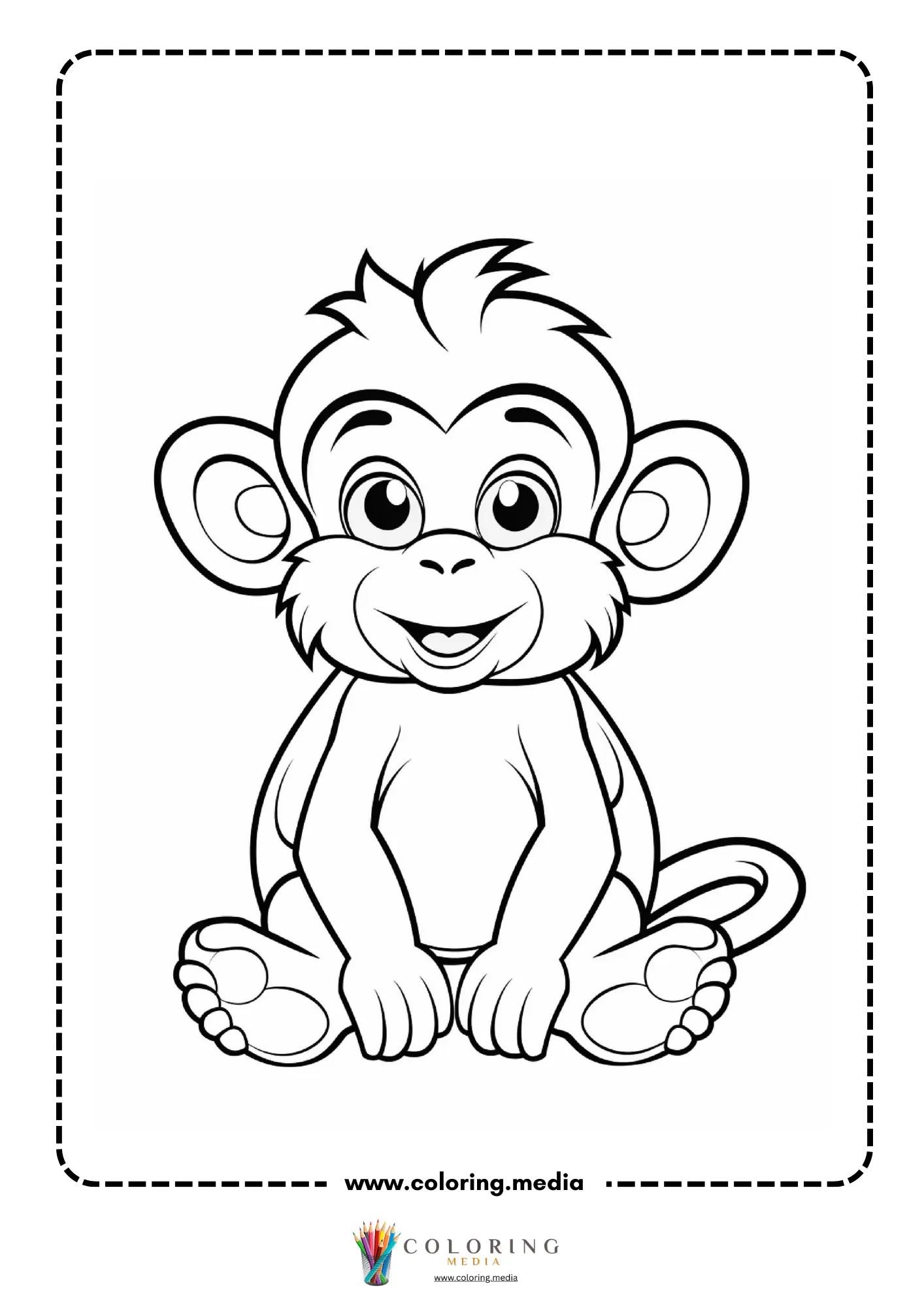
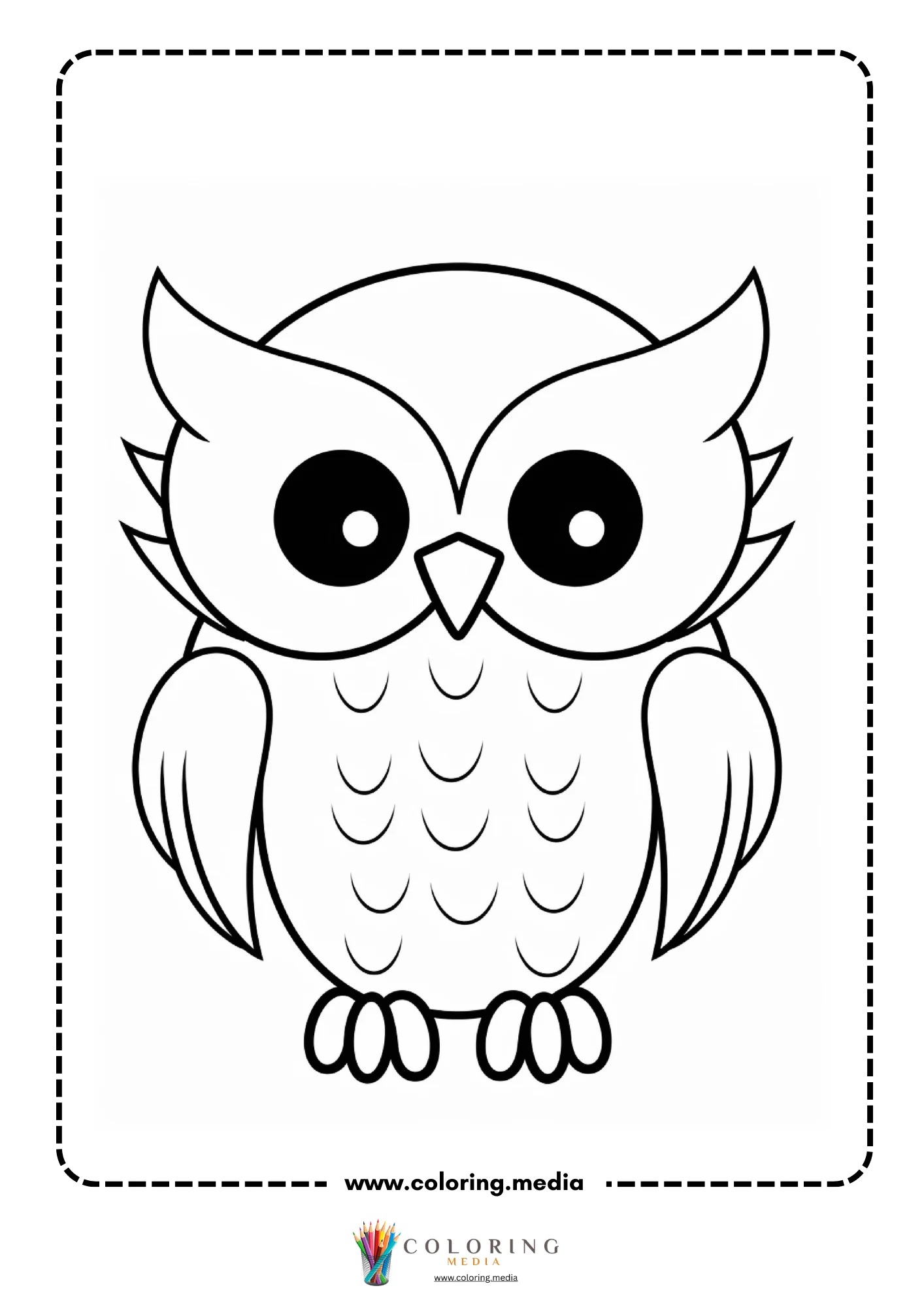
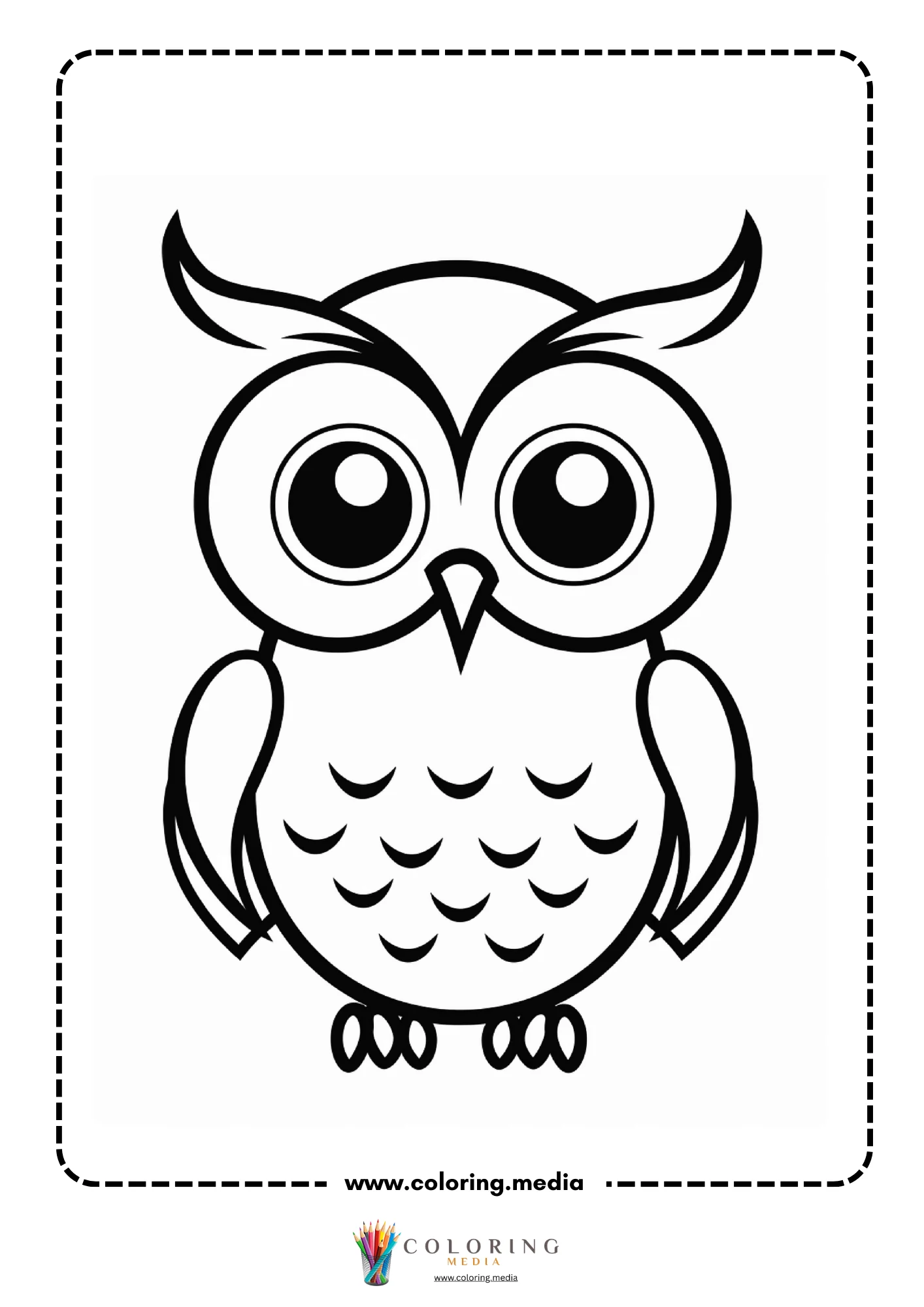
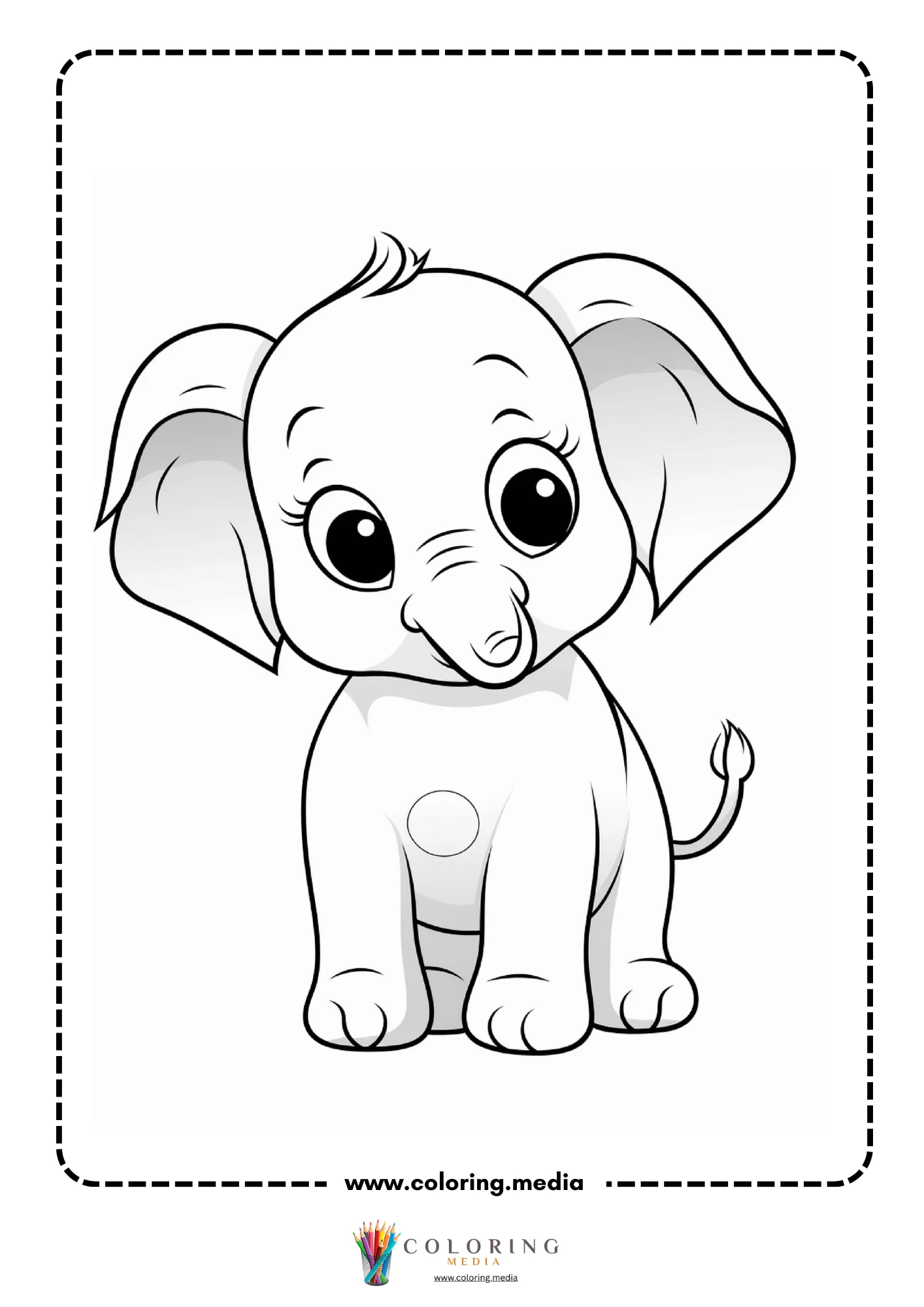
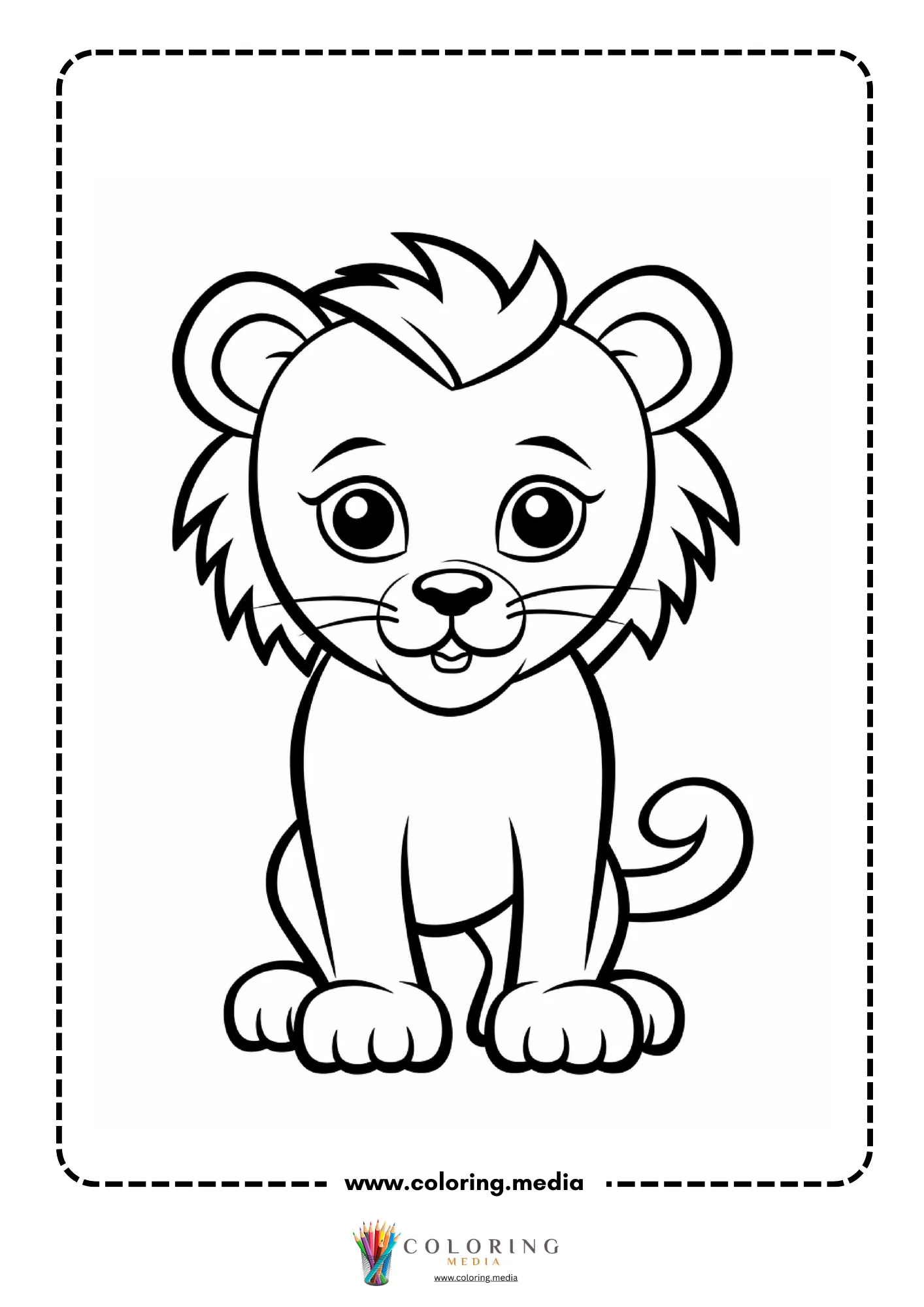
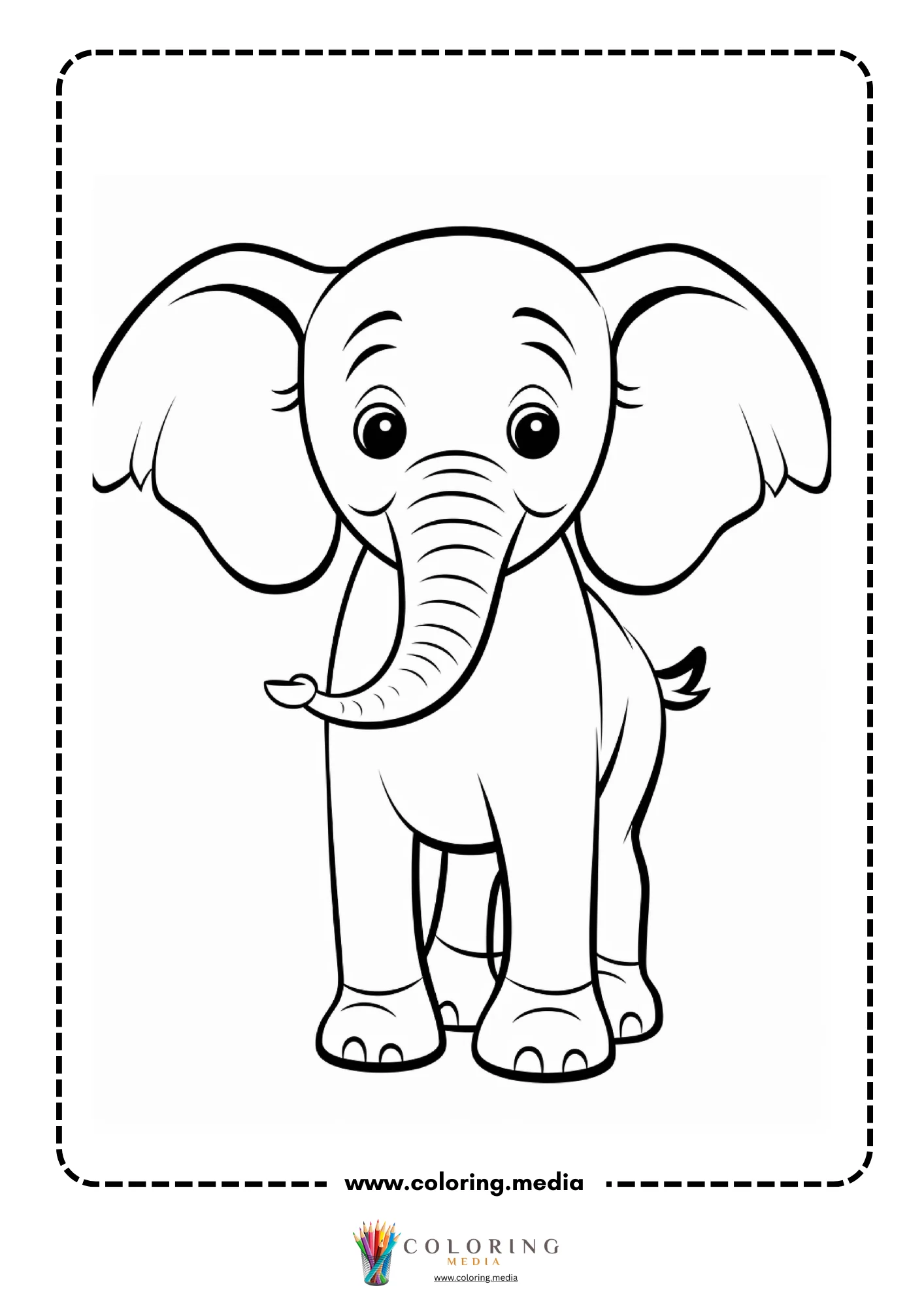
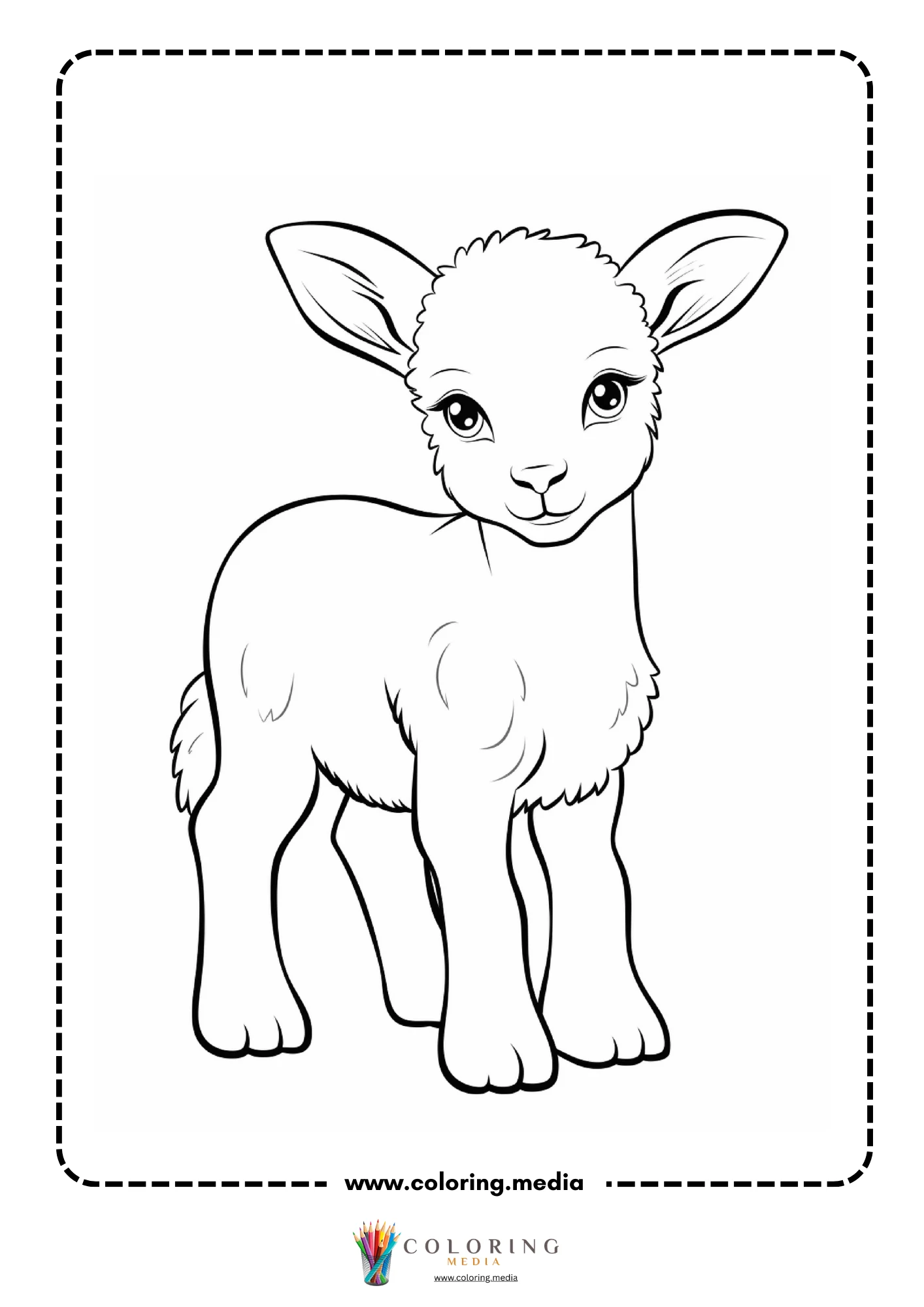
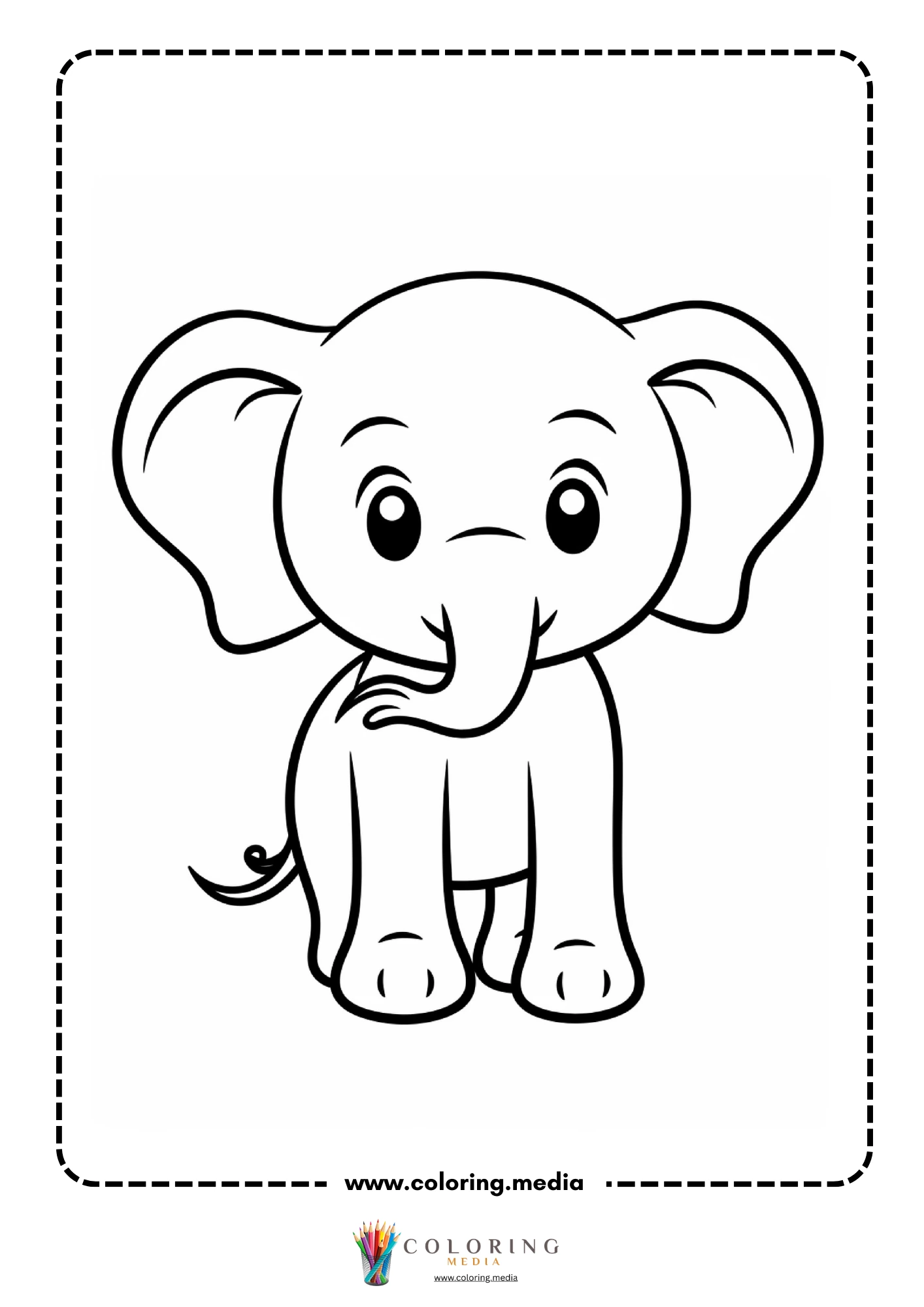
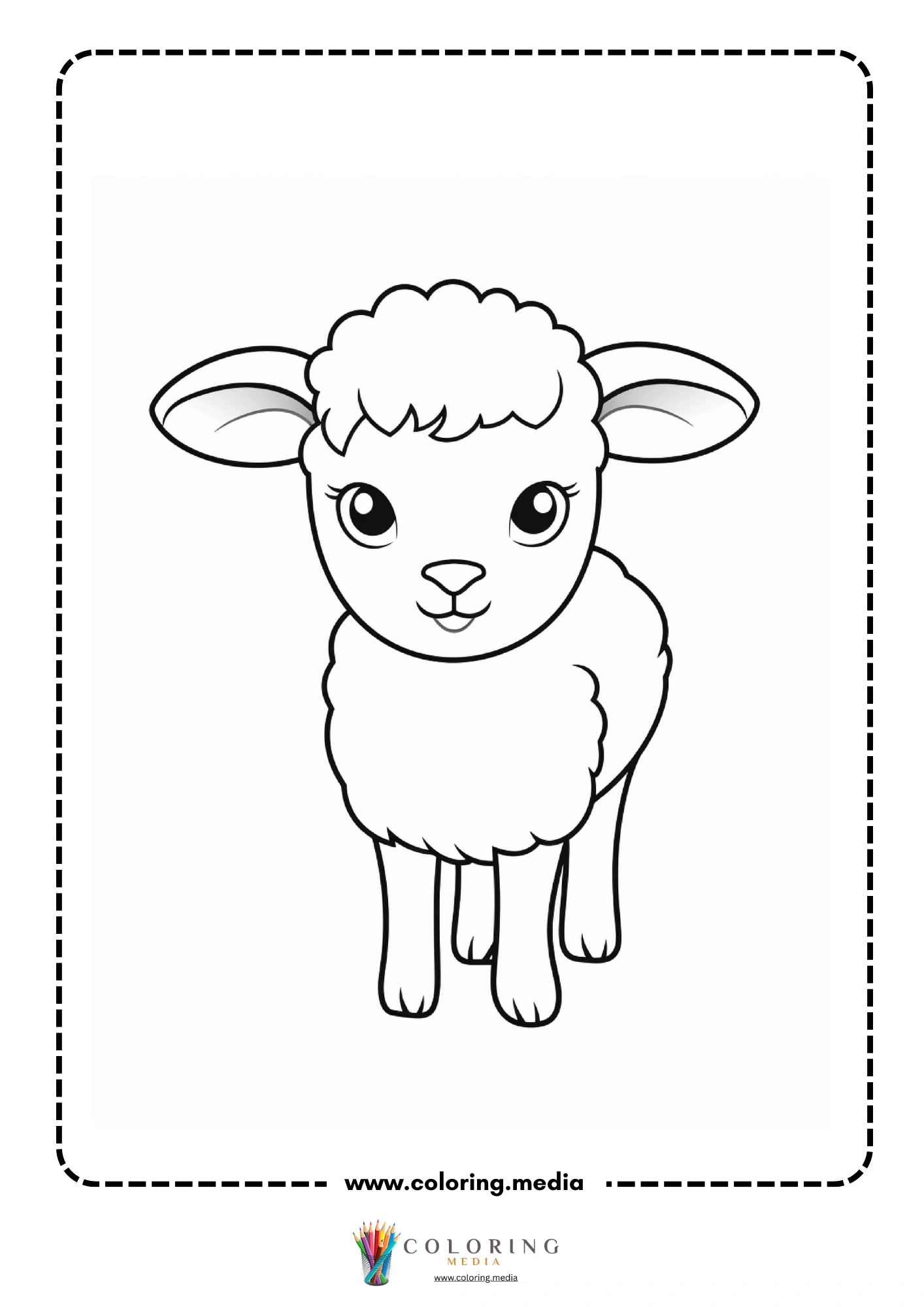
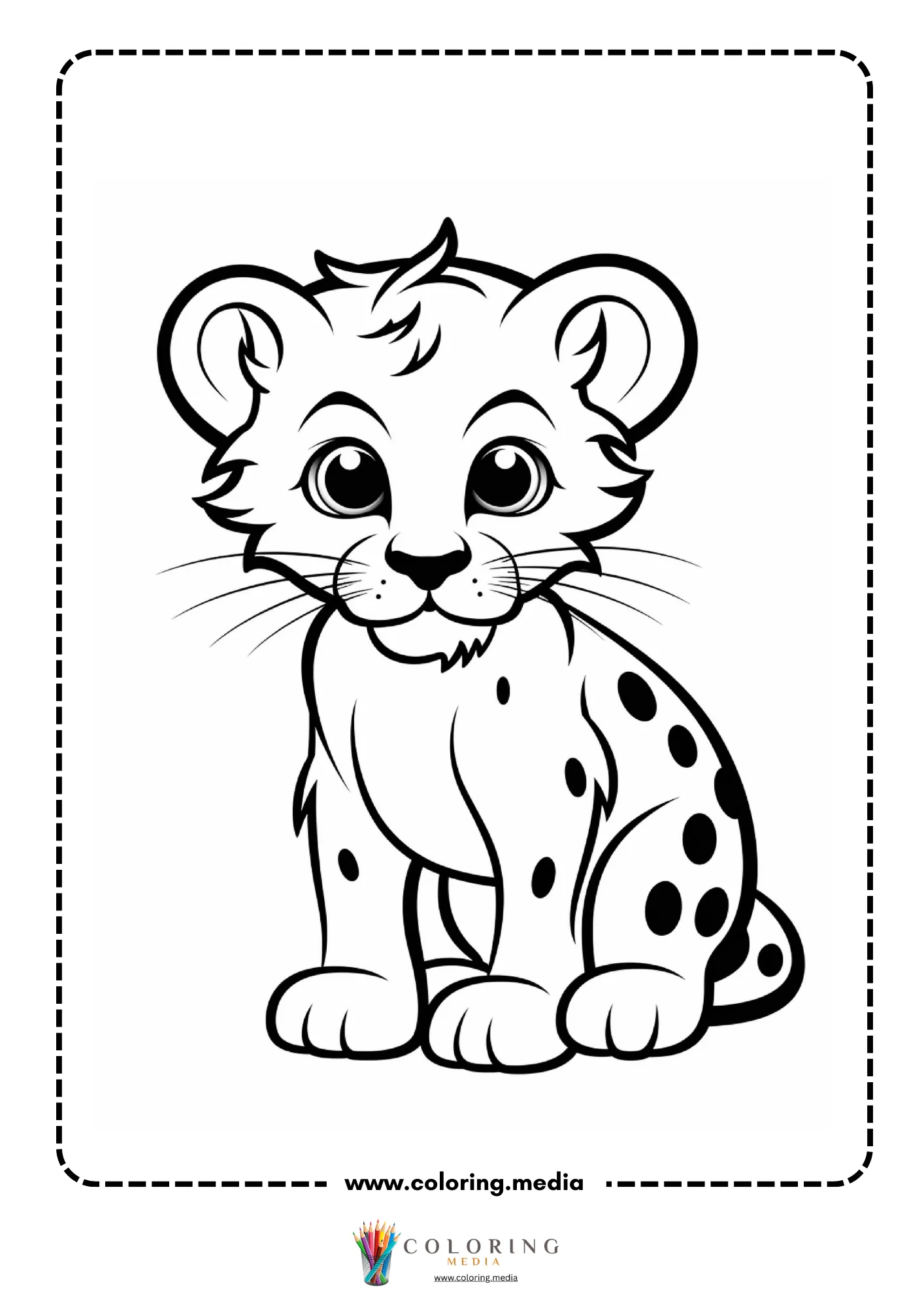
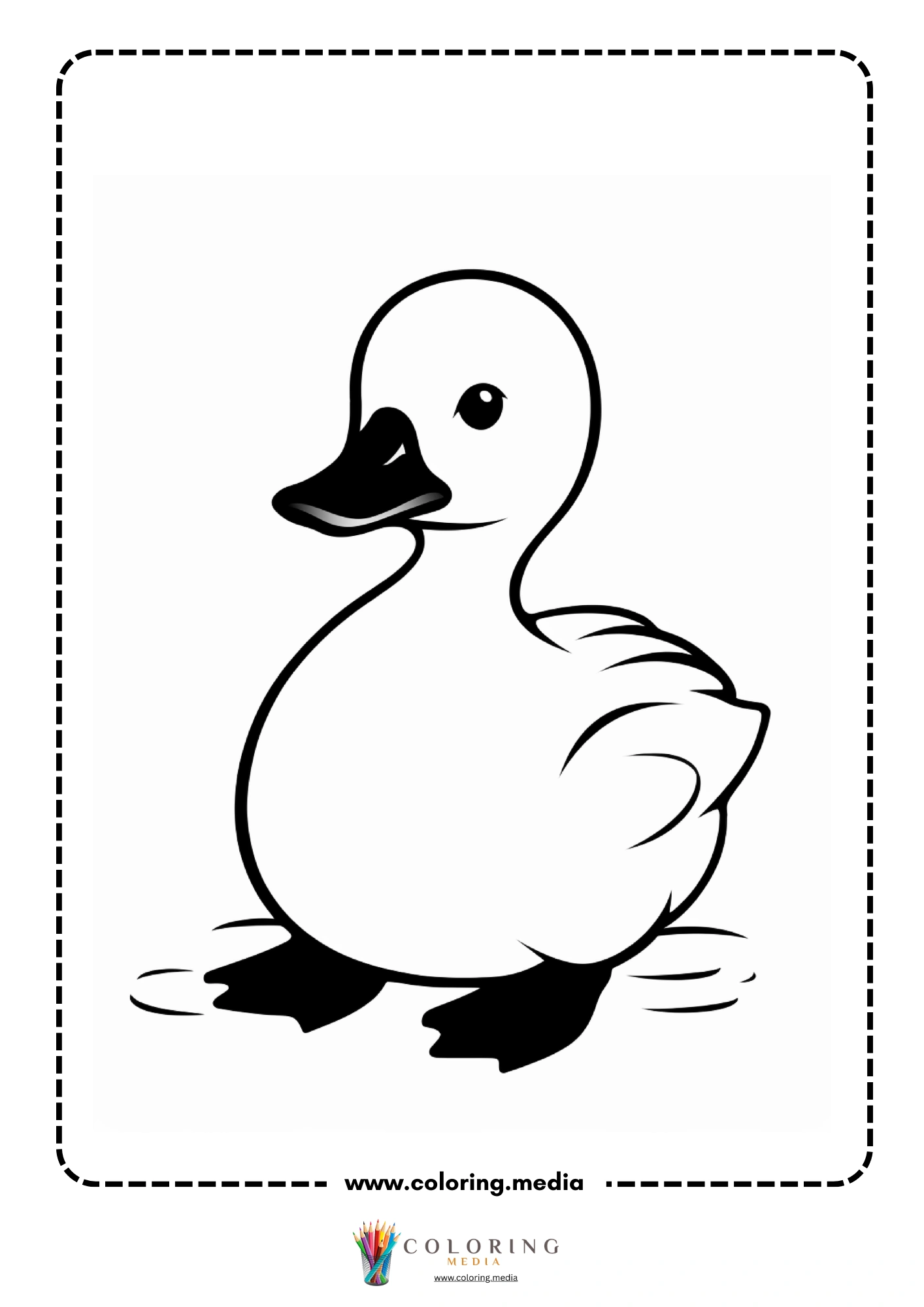
Every page in this collection puts a single animal front and center against a blank background, drawn with outlines that run 4-5mm thick — the kind of line width where a toddler pressing down hard with a fat crayon will still land inside them. The subjects lean toward familiar wildlife: owls in multiple poses, baby elephants and adults side by side, a curious monkey, a lion cub, a lamb, a cheetah cub, a swan, zebras, and a giraffe. Nothing elaborate, no competing details, no scenery to accidentally color over.
These are built specifically for the youngest colorers — children who are still learning how crayons work, or anyone with limited fine motor control who benefits from larger, clearer targets. The simplicity isn’t a limitation; it’s the whole point. Everything here is free to download and easy to print.
Free Printable Bold and Easy Animal Coloring Pages
This collection includes 22 printable bold and easy animal coloring pages featuring owls perched in a variety of positions, baby and adult elephants, a playful monkey, a lion cub, a lamb, a cheetah cub, a graceful swan, zebras, and a tall giraffe — each drawn as a single centered subject with thick black outlines and minimal interior linework. There are no backgrounds to deal with and no competing visual elements. Pages are formatted for US Letter or A4 paper and download as print-ready PDFs.

Who Are These Bold and Easy Animal Coloring Pages Best For?
Toddlers aged 18 months to 3 years get the most from these pages, specifically because of the outline thickness. At 4-5mm, the boundary between “inside” and “outside” is wide enough that even a child still developing wrist control will land inside it most of the time. That success matters at this age — a toddler who feels like they’re doing it right is far more likely to sit with the activity for more than 30 seconds. Crayons, chunky markers, or even paint-dipped sponges all work.
Preschoolers (ages 3-5) will find these pages comfortable and satisfying rather than frustrating, which is the right difficulty level for kids who are just building their coloring habits. The single-animal-per-page format keeps the task clear: one subject, pick a color, fill it in. Parents who have watched a 4-year-old crumple up a page because “I messed up a tiny bit” know exactly why this format exists.
These also work well in occupational therapy settings and for children with fine motor challenges at any age. The thick outline is forgiving in a way that most coloring pages aren’t, and the lack of background removes the anxiety of not knowing which part belongs to what.
Interesting Animal Facts to Share While Coloring
Owls can rotate their heads up to 270 degrees. They can’t move their eyes within their sockets the way humans can, so evolution gave them extremely flexible necks instead. A barn owl turning to look behind itself looks almost like a magic trick to a young child watching for the first time.
Baby elephants are born already able to stand — usually within an hour. In the wild, a calf that can’t stand is vulnerable to predators almost immediately, so natural selection strongly favored infants who get upright fast. A human baby takes about a year to manage the same thing.
No two giraffes have the same pattern. The irregular brown patches on a giraffe’s coat are unique to each individual, similar to human fingerprints. Researchers use pattern photographs to identify individual giraffes across long-term field studies.
Zebra stripes may work as a fly repellent. A 2019 study put horse-sized striped coats on plain horses and found that biting flies — which can transmit disease — landed significantly less often on the striped horses. The current theory is that the stripe pattern disrupts the flies’ visual approach calculation.
Cheetahs can’t roar, but they purr. The same anatomical feature that lets big cats like lions and tigers roar prevents them from purring continuously; cheetahs work the other direction — they purr on both the inhale and exhale, exactly like a domestic cat does.
Creative Animal Coloring and Craft Ideas
Animal Color Match After coloring, look up photographs of the real animal together and compare — did the colors match? It’s a low-stakes conversation starter about how animals actually look.
Zoo Bulletin Board Color and cut out each animal, then arrange them on a large sheet of blue or green construction paper as a DIY zoo scene.
Alphabet Animal Link Pick one page per letter — O for owl, E for elephant, G for giraffe — and tape them in order as an informal alphabet wall display.
Flashcard Set Color a page, write the animal name on the back, and use the cards for simple name-recognition practice with toddlers.
Sponge Painting Cut a kitchen sponge into a square, dip in tempera paint, and dab inside the thick outlines for a very young child who isn’t ready for crayons yet.
Texture Rubbing Place the printed page over a textured surface — sandpaper, burlap, bubble wrap — and rub with the side of a crayon to pick up the texture through the paper inside the animal outline.
Story Time Companion Pull out the matching animal page when reading an animal-themed picture book — color the owl during an owl story, the elephant during an elephant story.
Finger Painting Warmup Use these pages as a beginner finger-painting activity with washable paint. The thick outlines are bold enough to see through a thin paint layer and still provide the boundary.
How to Print These Bold and Easy Animal Coloring Pages
Each page downloads as a PDF formatted for US Letter (8.5×11 in) or A4 paper. Standard copy paper is fine for crayons and colored pencils; if you’re planning to use washable markers or paint, 60 lb paper or heavier will prevent bleeding and tearing. Print at 100% scale to keep the thick outlines at their full width — scaling down reduces the line weight and makes the pages harder for young children. Grayscale printing works perfectly since the pages are pure black line art.
Explore More Animal Coloring Pages
If you enjoyed these pages, you may also like:
Cute Animal Coloring Pages
Farm Animals Coloring Pages
Birds Coloring Pages
Elephant Coloring Pages
Animals Coloring Pages