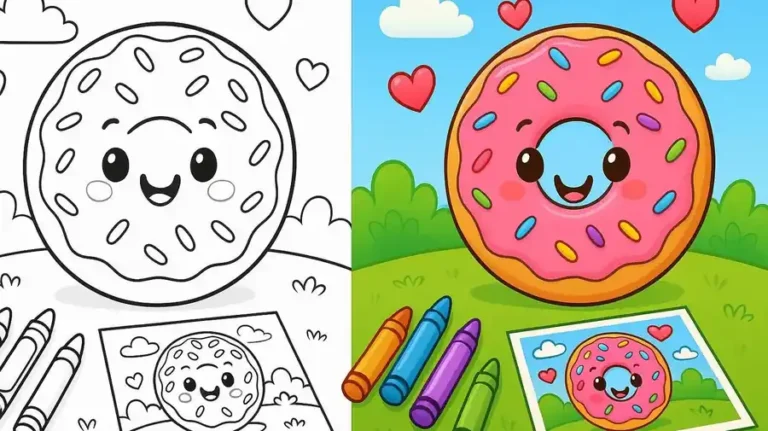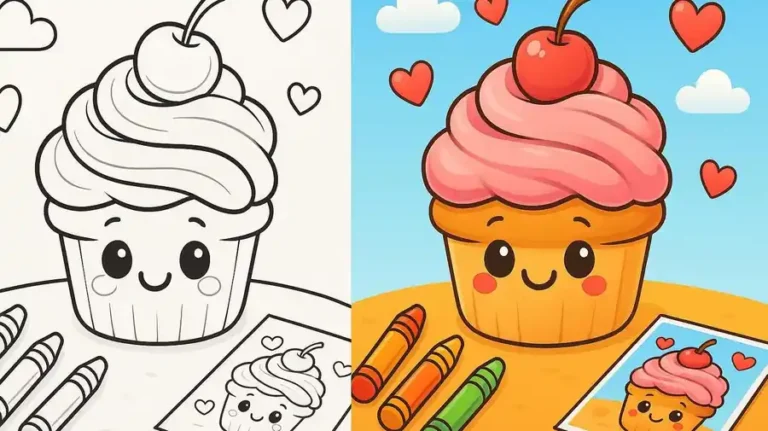

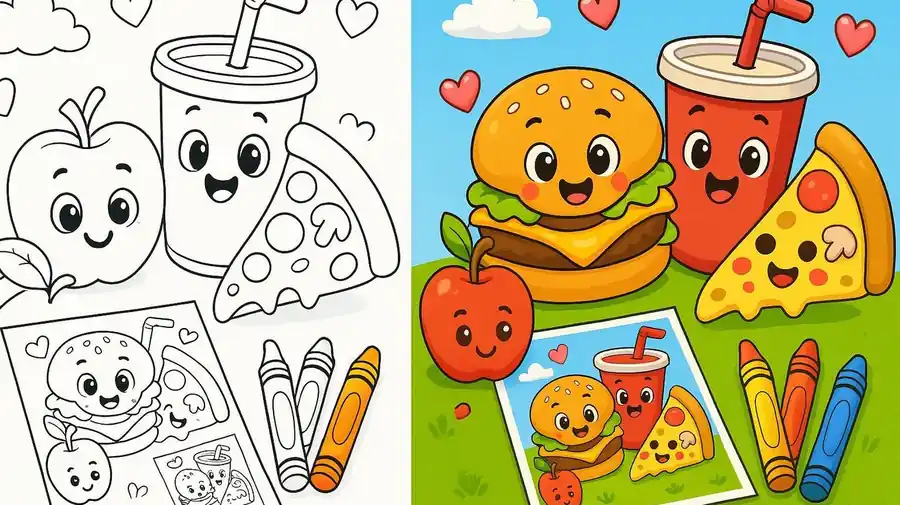
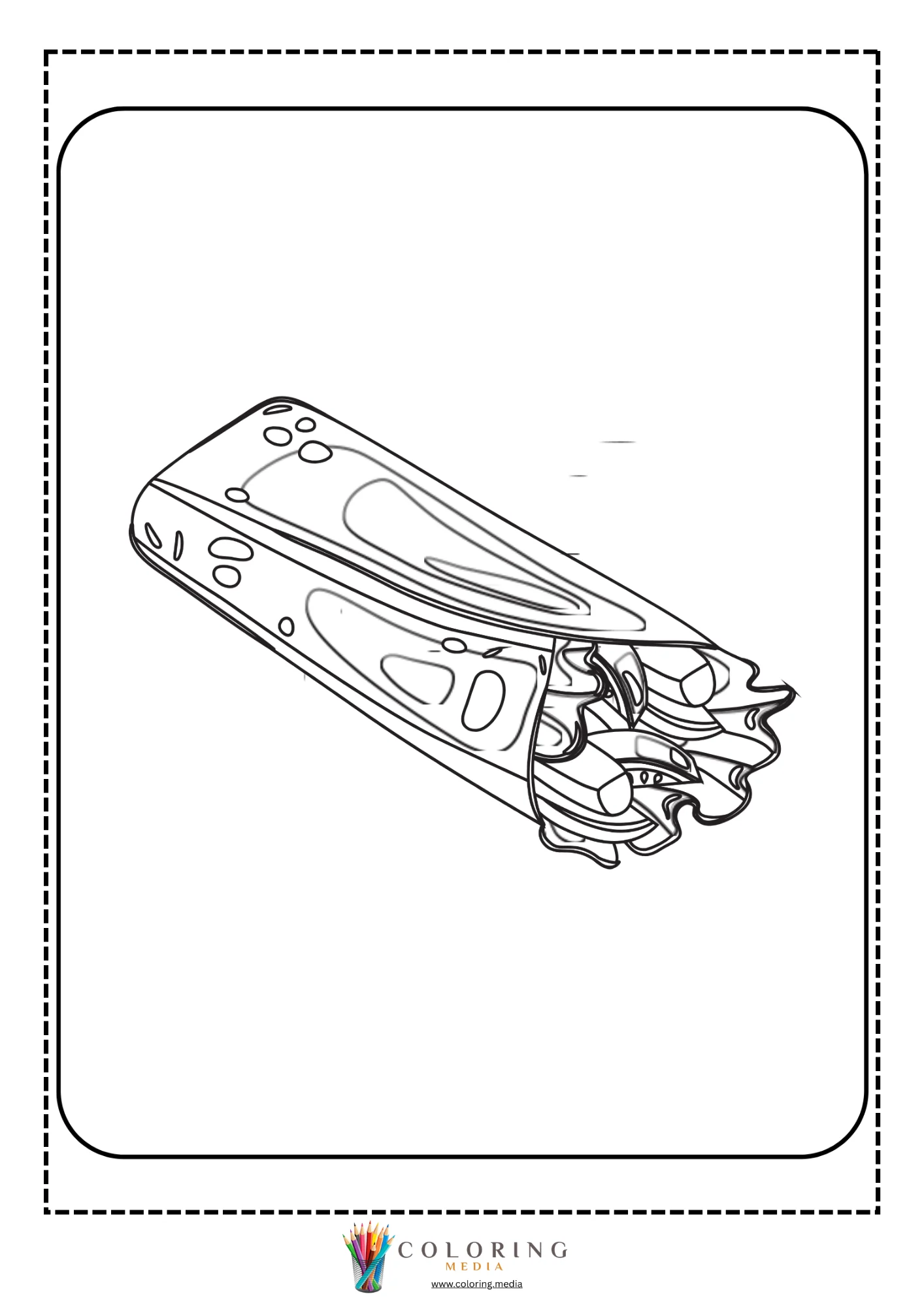
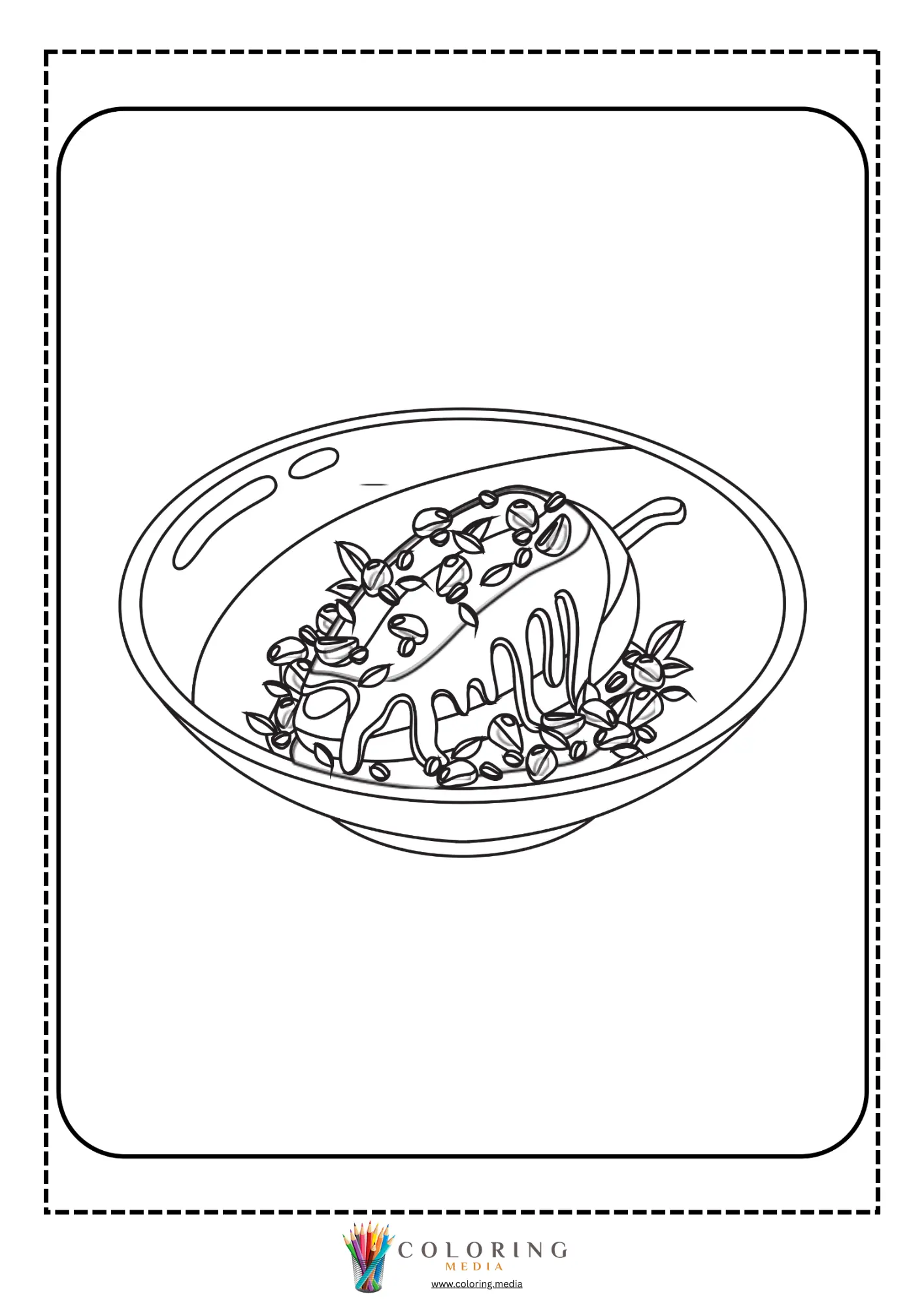
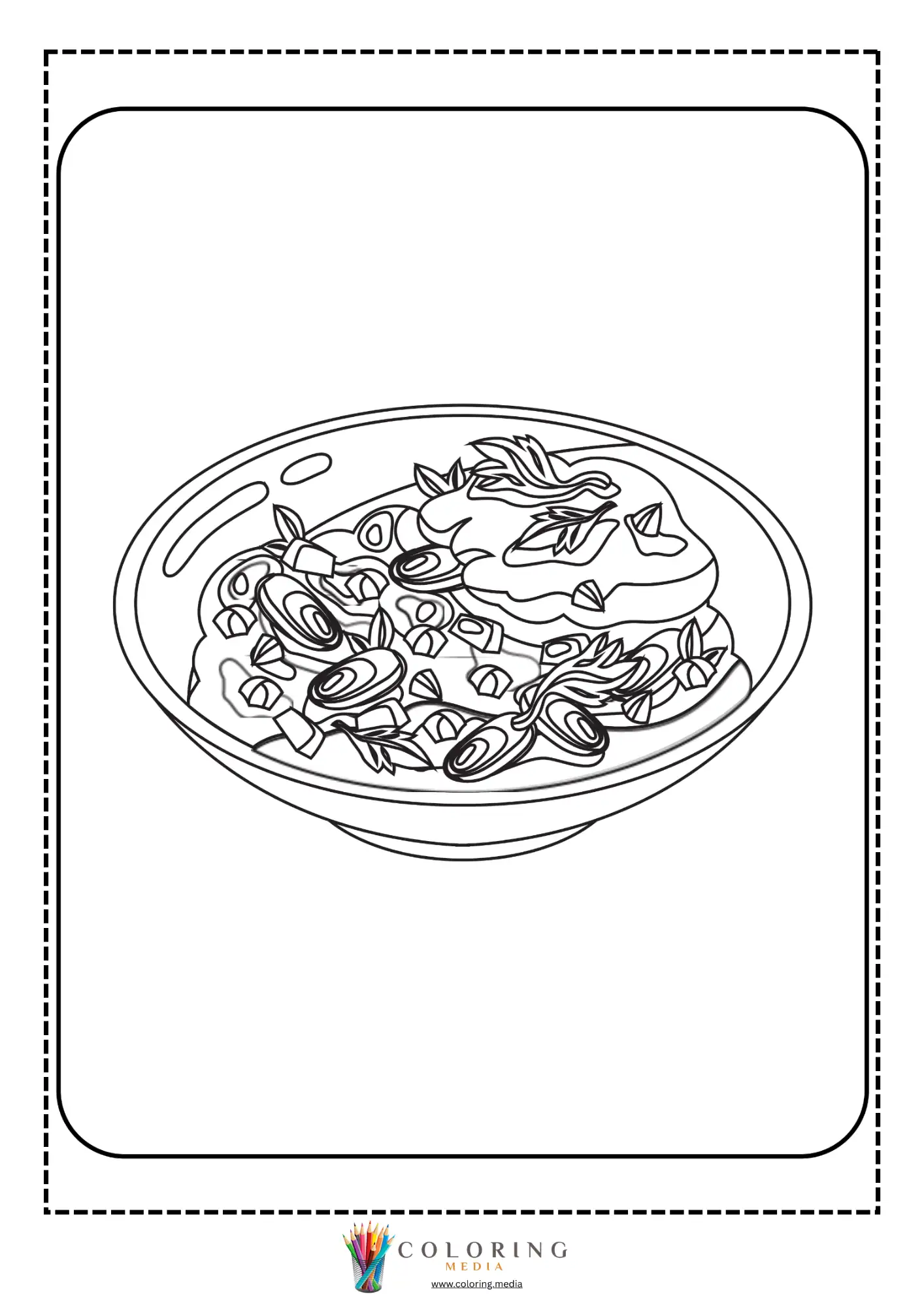
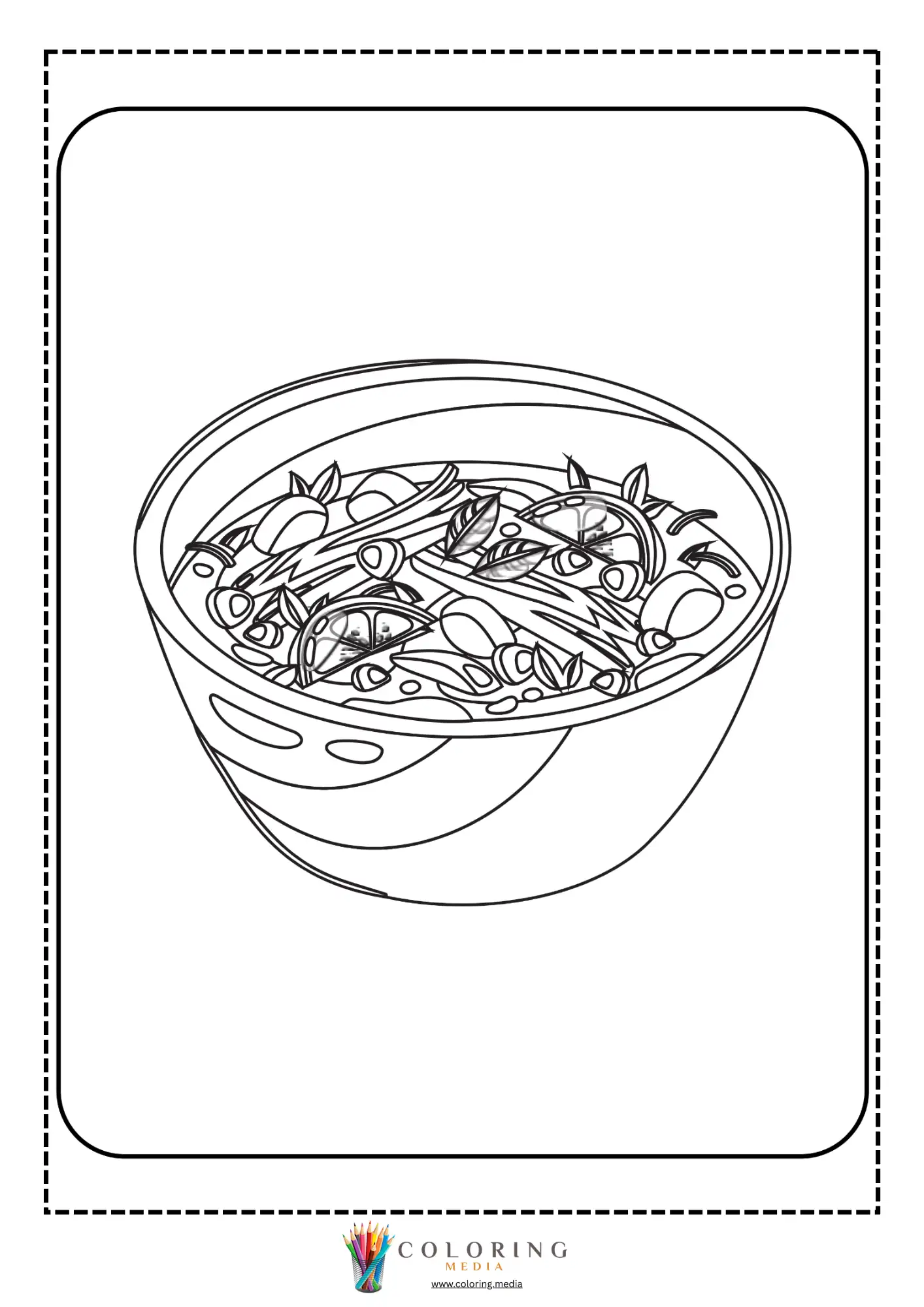
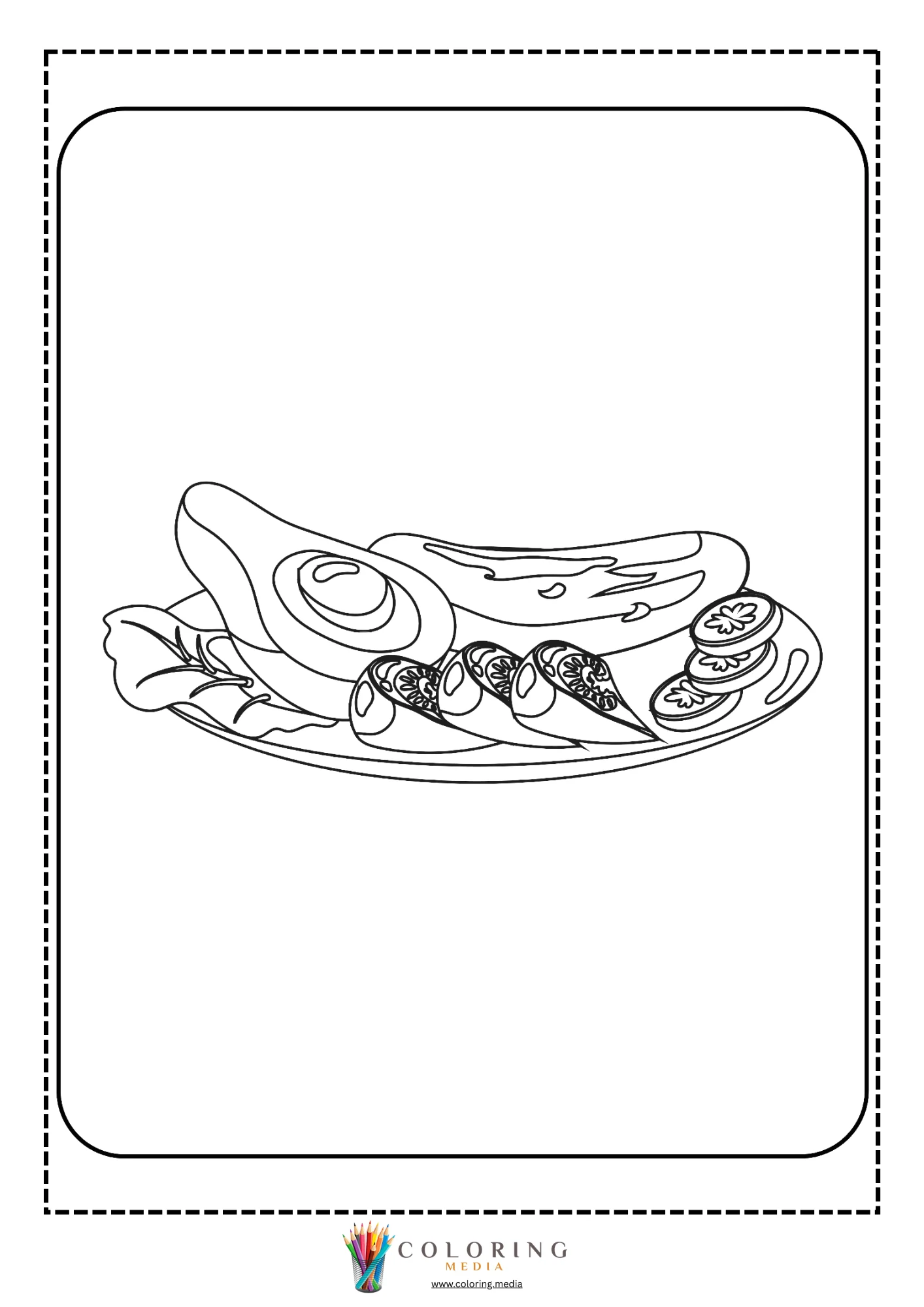
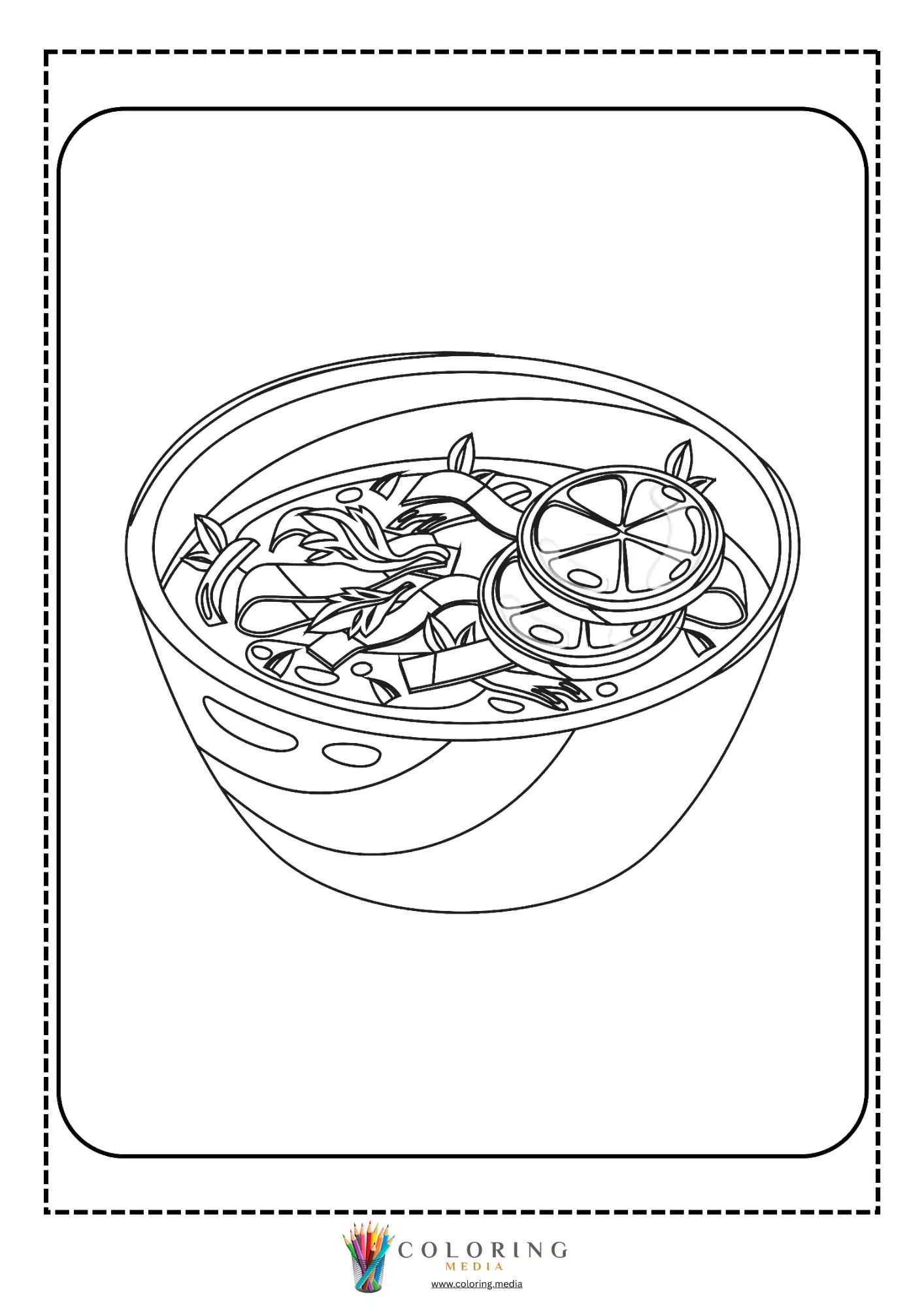
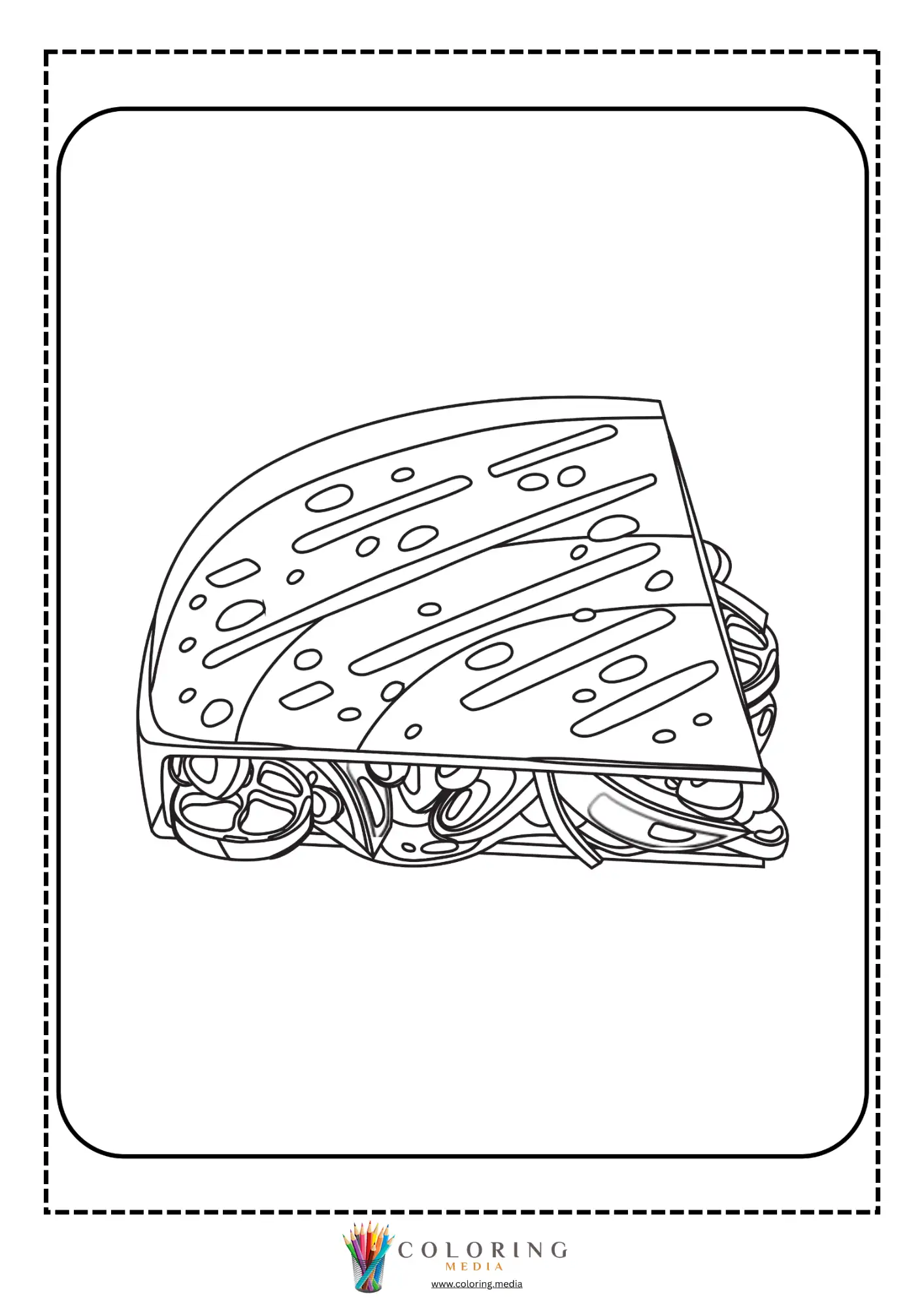
This is not a collection of cartoon food with googly eyes. These 20 pages show real dishes — ramen noodles in broth with toppings, rice bowls with chopsticks, burritos and wraps cross-sectioned to show their fillings, avocado halves, taco shells, soup bowls steaming at the rim. The illustration style is closer to editorial food art than children’s cartoon: clean outlines define each ingredient, with crosshatching and texture lines capturing the difference between a smooth broth surface and the coarse edge of a sesame-seeded bun.
Kids who have eaten any of these dishes will recognize them immediately, which gives the coloring a different kind of engagement — memory and appetite rather than pure imagination. It’s also a set that quietly introduces a range of global cuisines without announcing that it’s doing so. Everything here is free to download and easy to print.
Free Printable Cute Food Coloring Pages
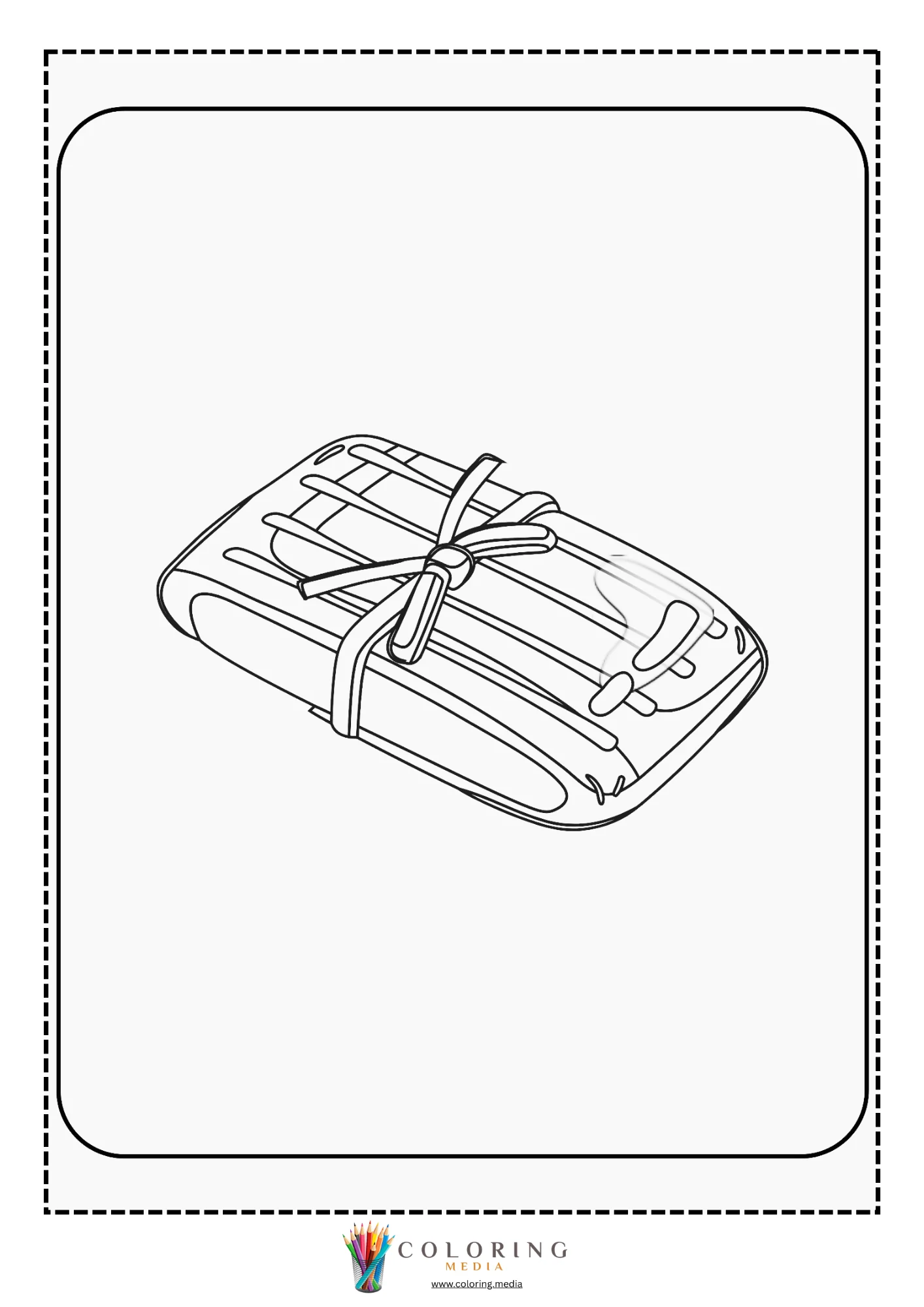
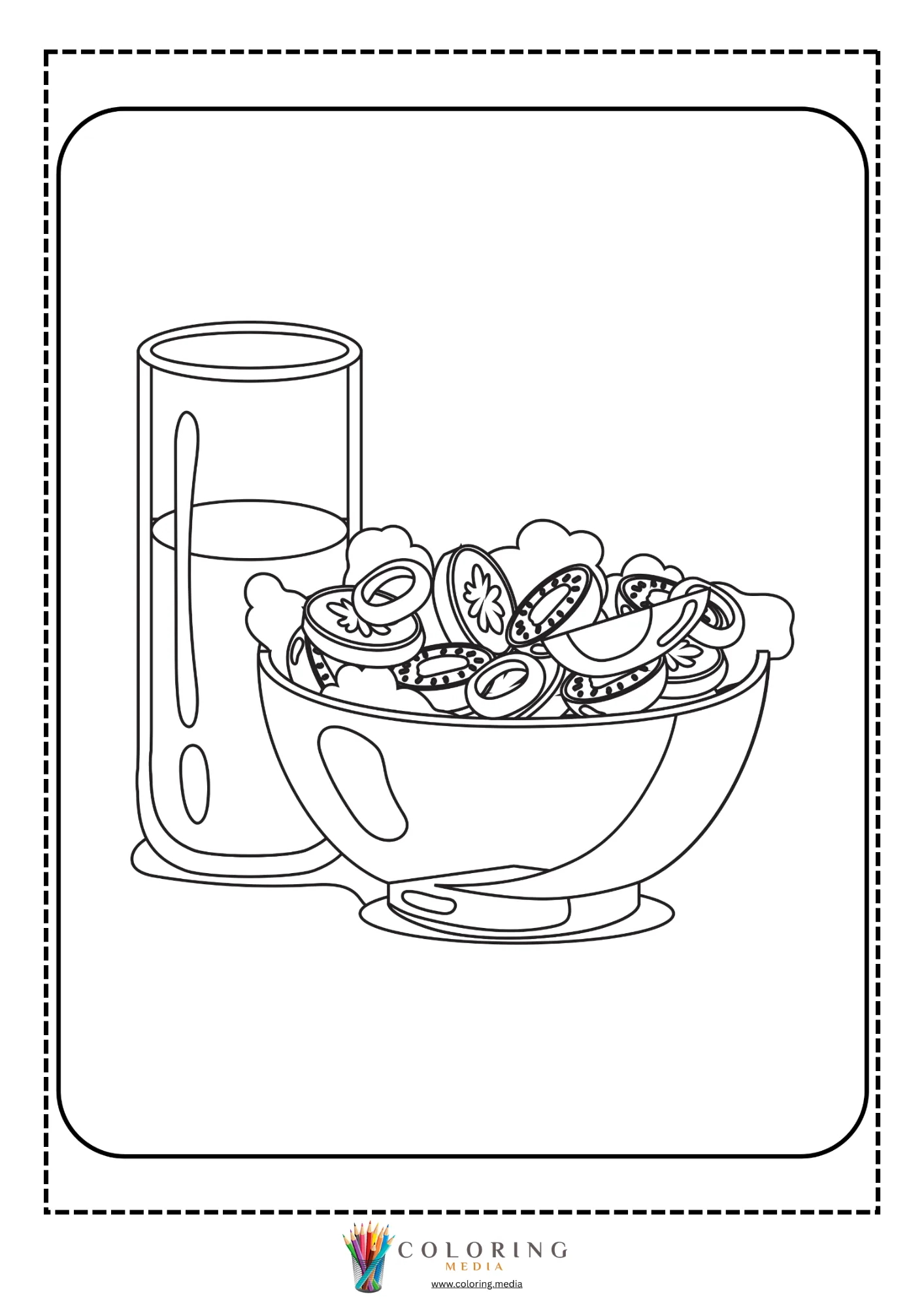
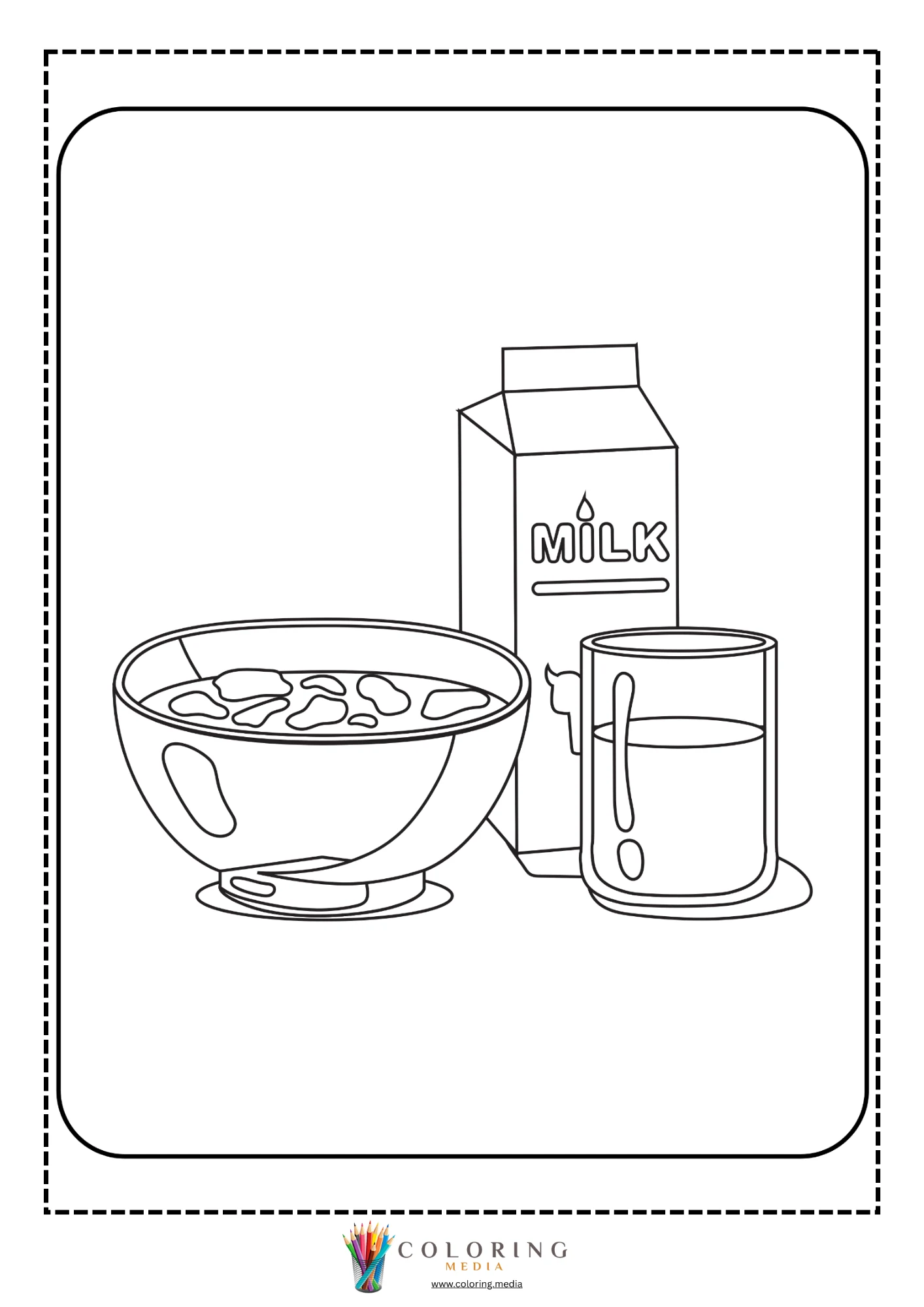
This collection includes 20 printable cute food coloring pages featuring a variety of dishes drawn in a detailed editorial illustration style: ramen noodle bowls with toppings, rice bowls, soup bowls, avocado halves, burritos and wraps, tacos, salads, beverages, and more. Each page shows one dish centered in the composition, with ingredient textures conveyed through line work rather than cartoon simplification. Pages are formatted for US Letter or A4 paper and print cleanly on standard copy paper.







Who Are These Cute Food Coloring Pages Best For?
The detail level sits clearly in early elementary range — ages six through ten. The line work includes texture cues like crosshatching on bread crusts, parallel lines on noodle surfaces, and small radiating marks suggesting steam. A six-year-old can enjoy these by simply filling the large flat areas with color; an older child can treat each ingredient separately, researching what color a particular dish actually is and trying to match it. Either approach works, and the two often happen side by side at the same table.
These pages have a different kind of classroom application than simple cartoon food. They work well as a starting point for a multicultural foods unit, a geography lesson tied to where different dishes come from, or a food science conversation about ingredients. The ramen bowl alone contains noodles, broth, soft-boiled egg, nori, and green onions — each one a small lesson in where food comes from.
Interesting Food Facts to Share While Coloring
Ramen only became the noodle soup Japan is famous for in the 20th century. It was heavily influenced by Chinese wheat noodle dishes brought to Japan by immigrants in the late 1800s. The regional variations — Sapporo’s miso ramen, Fukuoka’s tonkotsu, Tokyo’s shoyu — developed in just a few decades, which makes ramen one of the fastest-evolving national dishes in culinary history.
Avocados don’t ripen on the tree. The tree produces an enzyme that prevents ripening; only after the fruit is picked does it start to soften. Farmers can essentially keep avocados hanging on trees for months as a form of storage, harvesting them as needed. Once picked, ethylene gas from ripening fruit nearby speeds the process — which is why putting an avocado in a paper bag with a banana works.
The burrito as most people know it is a fairly recent invention. The flour tortilla-wrapped format common in American Mexican food became widespread only in the mid-20th century. Traditional Mexican food in most regions uses corn tortillas; flour tortillas are primarily from the northern Mexican states near the US border, where wheat could be grown more easily than corn.
Rice feeds more than half the world’s population as a dietary staple. There are more than 40,000 known varieties of rice, ranging from short-grain Japanese sushi rice to long-grain Indian basmati to glutinous sticky rice used across Southeast Asia. The difference in starch composition between varieties determines whether cooked rice clumps together or stays separate — which in turn determines which dishes it’s suited for.
Creative Food Coloring and Craft Ideas
Accurate Color Challenge Pick one page and research the real dish online or in a cookbook before coloring. Try to match every ingredient’s actual color as closely as possible — treat it as a food illustration assignment.
World Food Map Color one page per dish, cut them out, and pin or glue each to a world map in the region where that dish originated. Label each with the dish name and country.
Recipe Card Pair After coloring a dish, write out a simple version of the recipe on the back of the page — even just listing the ingredients. It’s a good way to connect the image to actual cooking.
Taste Test Series Color the ramen bowl, then actually make or order ramen. Compare the bowl in front of you to the colored page. What did the illustration get right? What’s different?
Ingredient Inventory Before coloring, count every separate ingredient visible in the image. Write the list on a sticky note next to the page. Then color each ingredient a distinct color and cross it off the list when done.
Chopstick Placement On the bowl pages, before coloring, draw chopsticks (or a fork or spoon) in pencil resting across the rim of the bowl. Color the utensils as part of the final image.
How to Print These Cute Food Coloring Pages
Each page downloads as a PDF sized for US Letter (8.5×11 inches) or A4 — no resizing needed. Standard 20lb copy paper works for markers and crayons; for colored pencil work with significant layering, 65lb cardstock gives a firmer surface. The fine texture lines in these illustrations print cleanly even in grayscale or draft mode.
Explore More Food & Treats Coloring Pages
If you enjoyed these pages, you may also like:
Cupcake Coloring Pages
Cute Fruits Coloring Pages
Delicious Donut Coloring Pages
All Food & Treats Coloring Pages