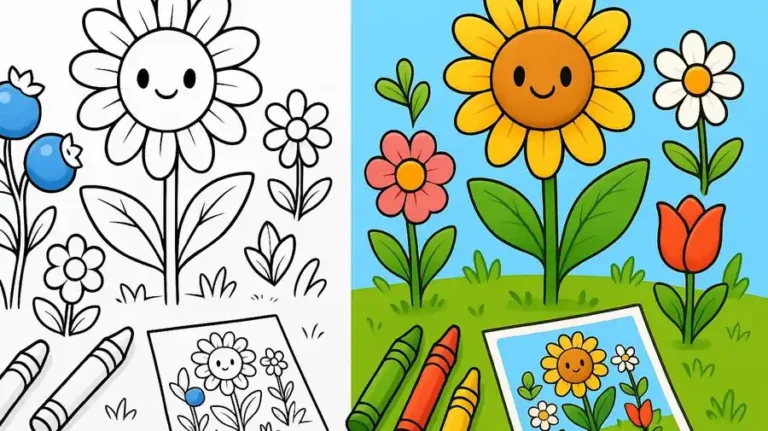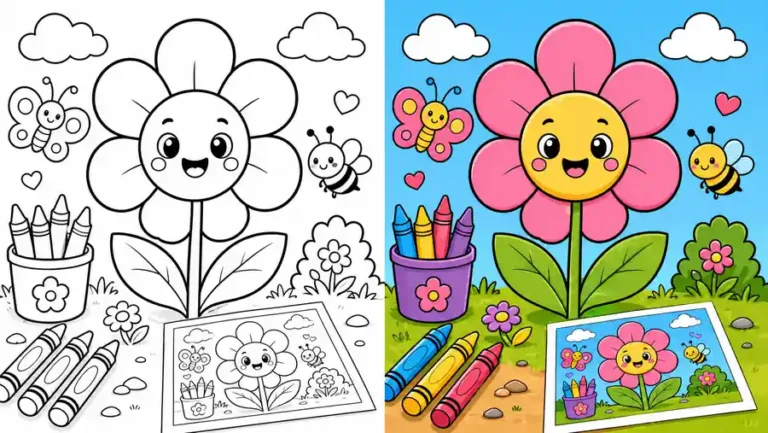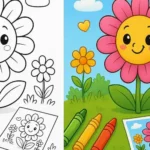

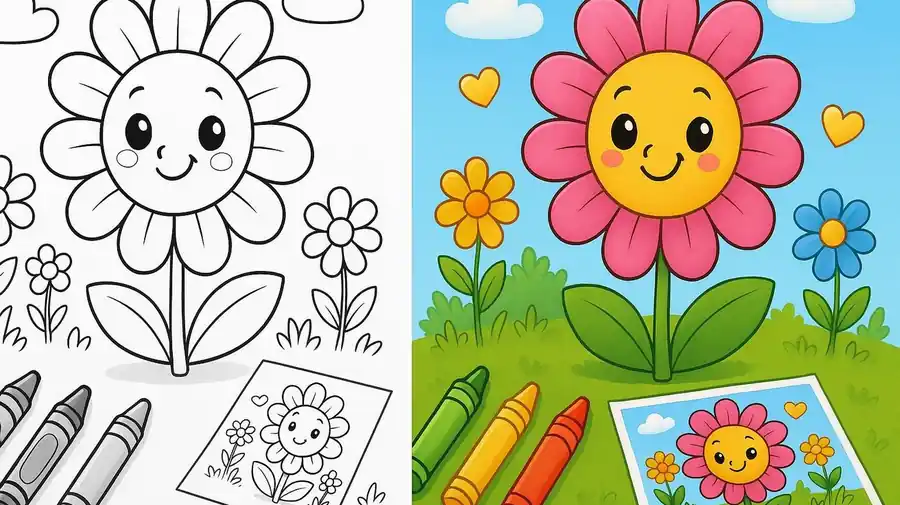
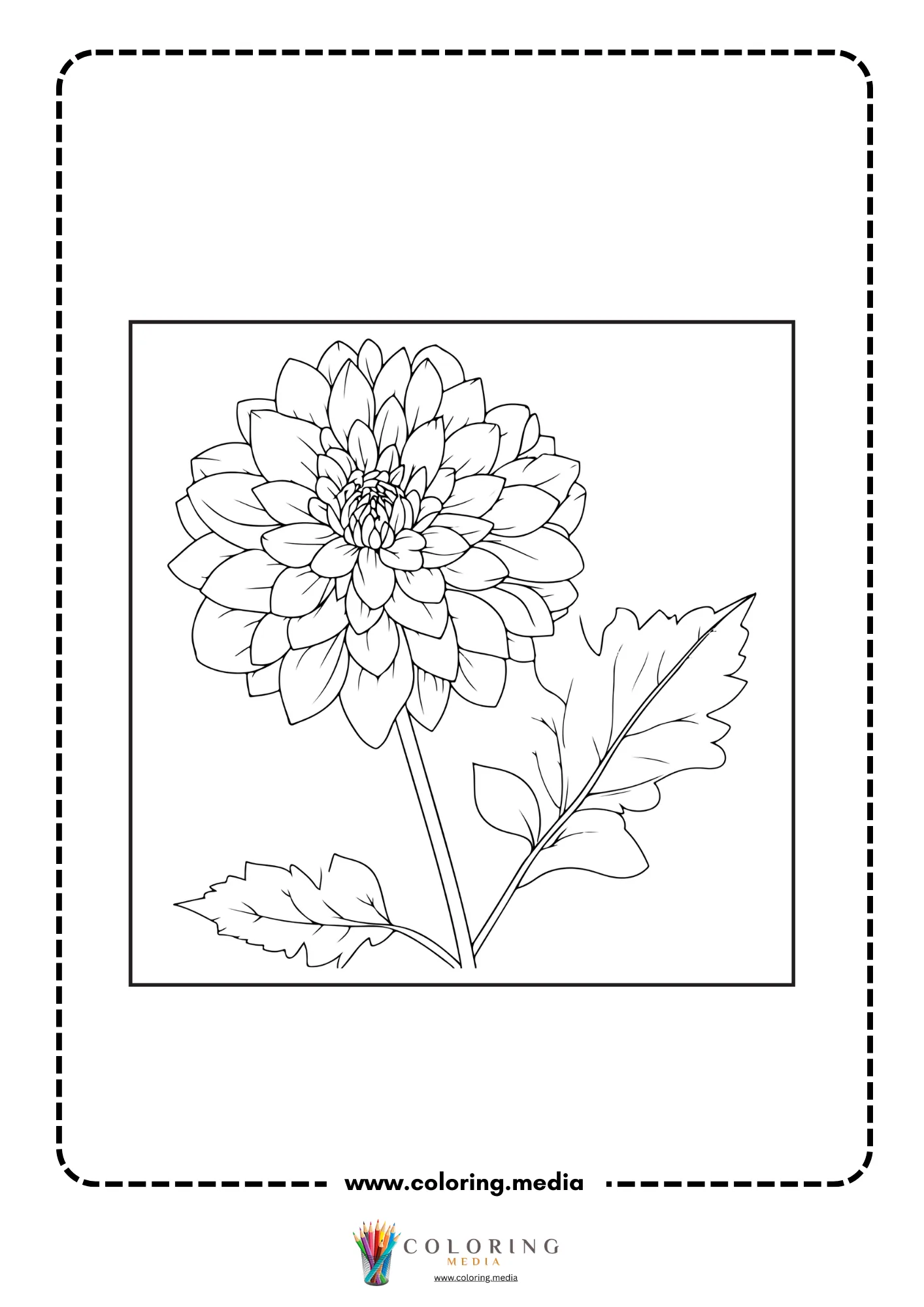
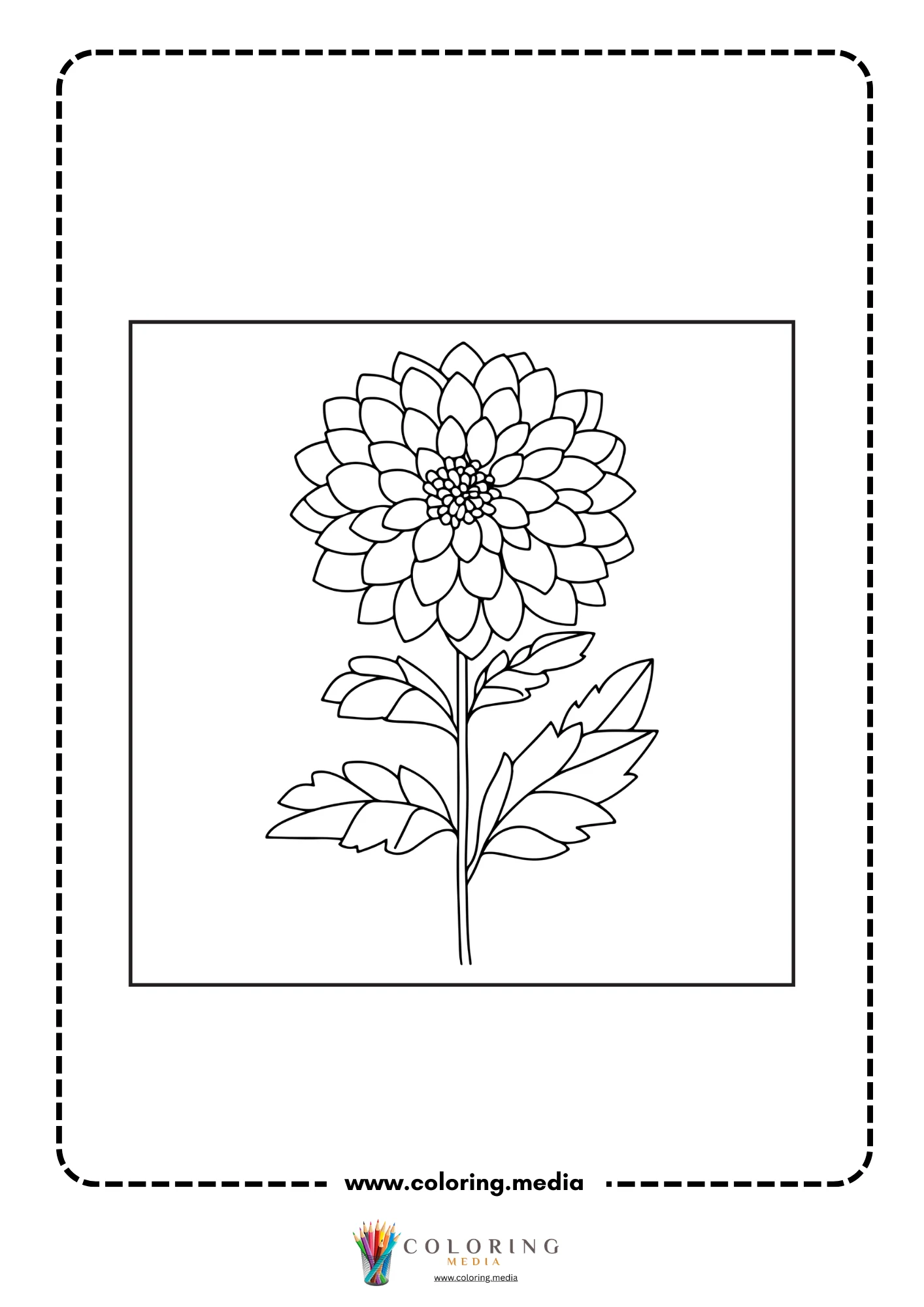
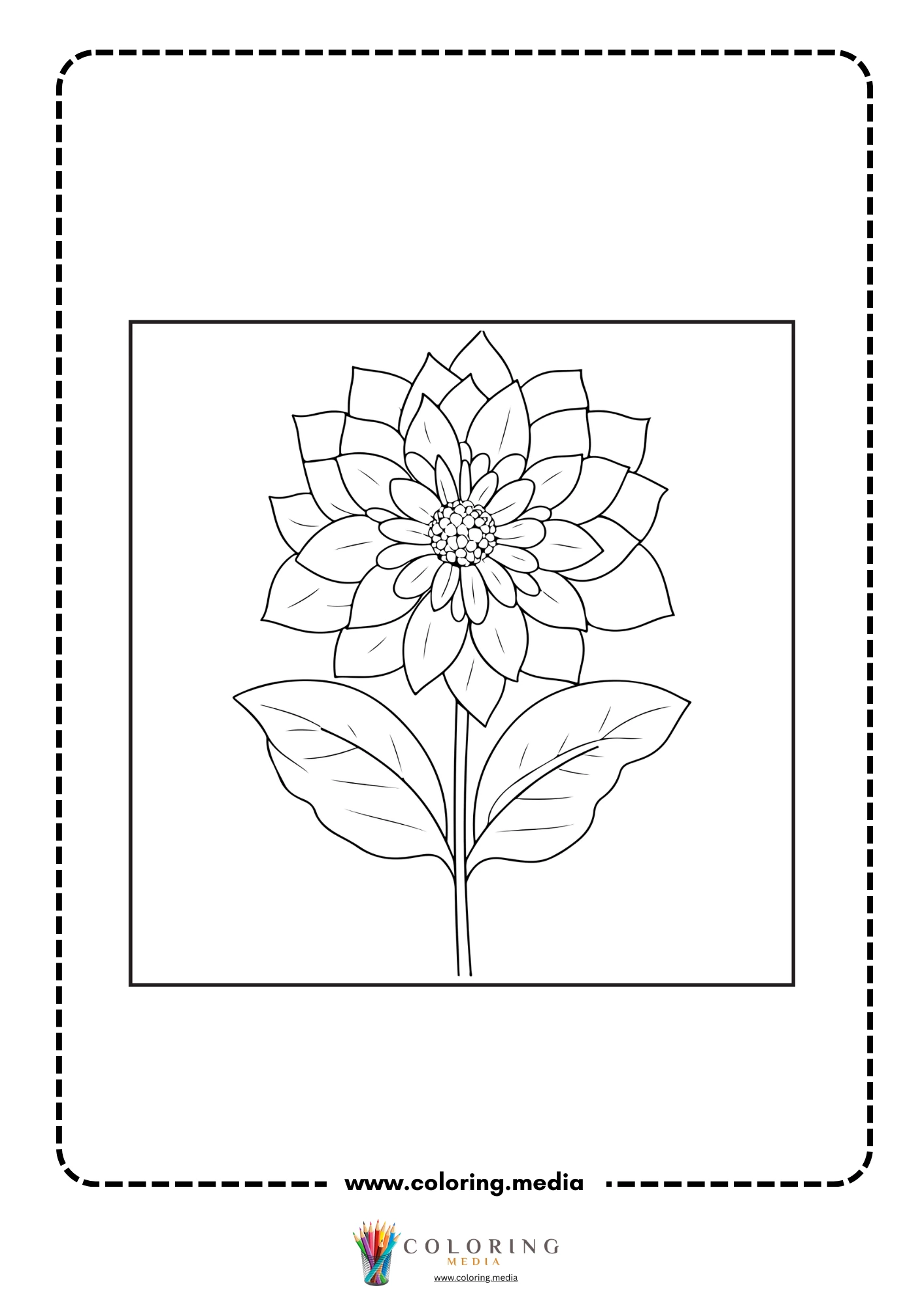
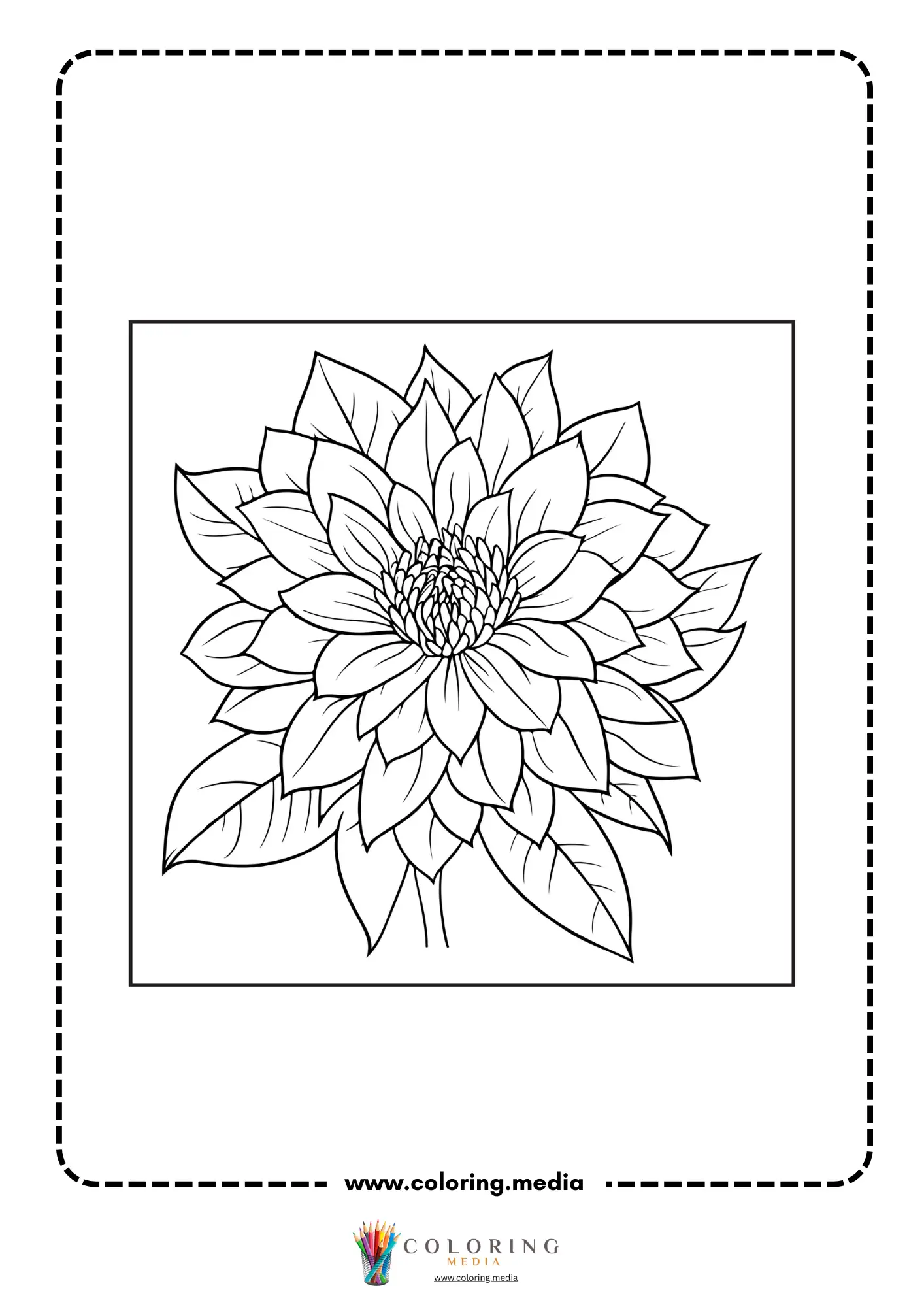
This set moves across a satisfying range — the first several pages feature single flowers on tall stems, the kind with six or eight clean petals and a bold center, where the outlines are maybe 2mm wide and the composition breathes. Then the collection shifts to something more ambitious: dense chrysanthemum and dahlia-style blooms packed with row upon row of tapered petals, each one only a few millimeters wide, radiating outward from a tight center. Same subject, completely different challenge.
That range is what makes this collection genuinely useful. A seven-year-old can pick a simple daisy page and finish it in ten minutes with chunky crayons, while a thirteen-year-old can spend an afternoon layering colored pencils through a dahlia wheel with forty-plus petals. Everything here is free to download and easy to print.
Free Printable Cute Flower Coloring Pages
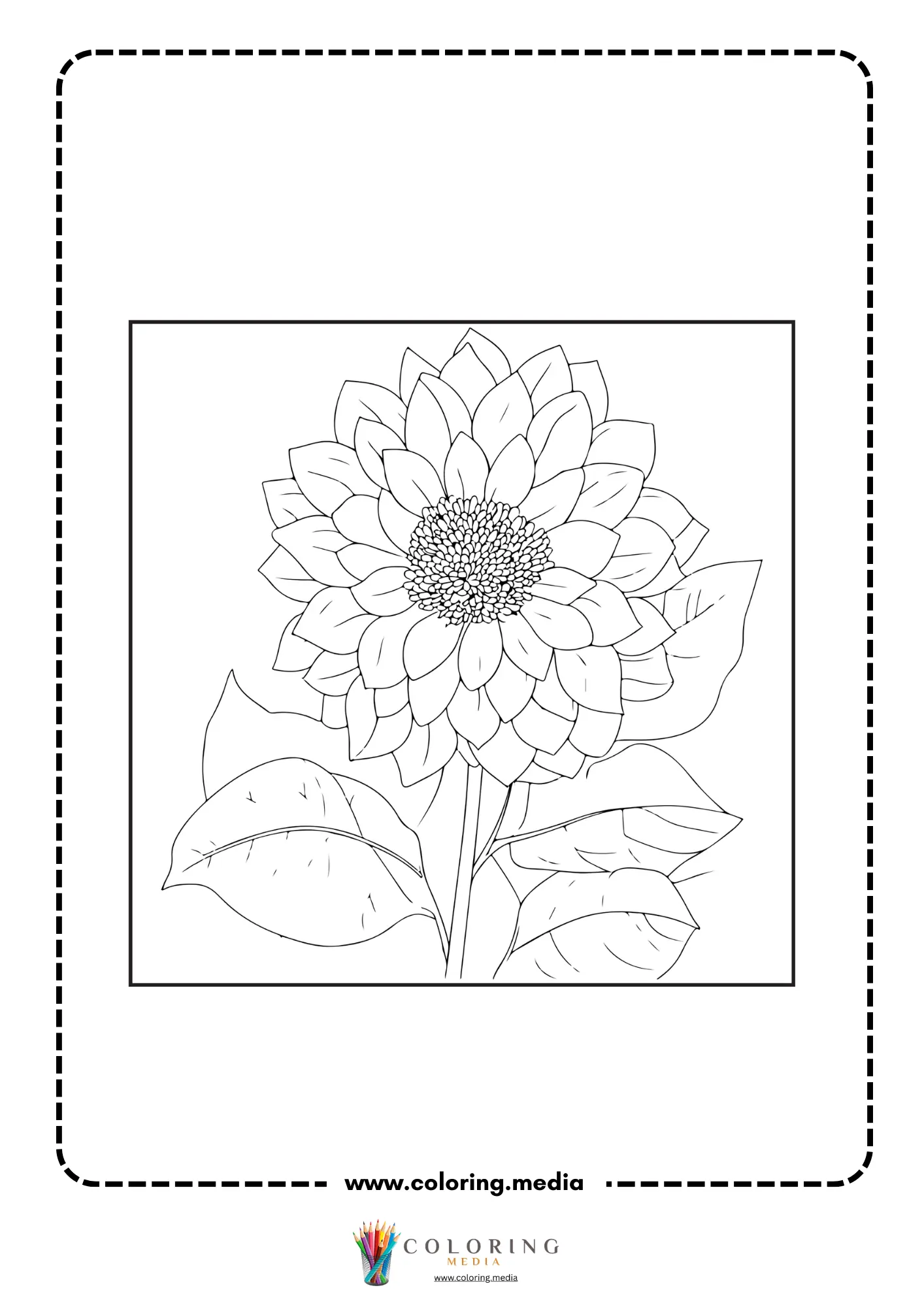
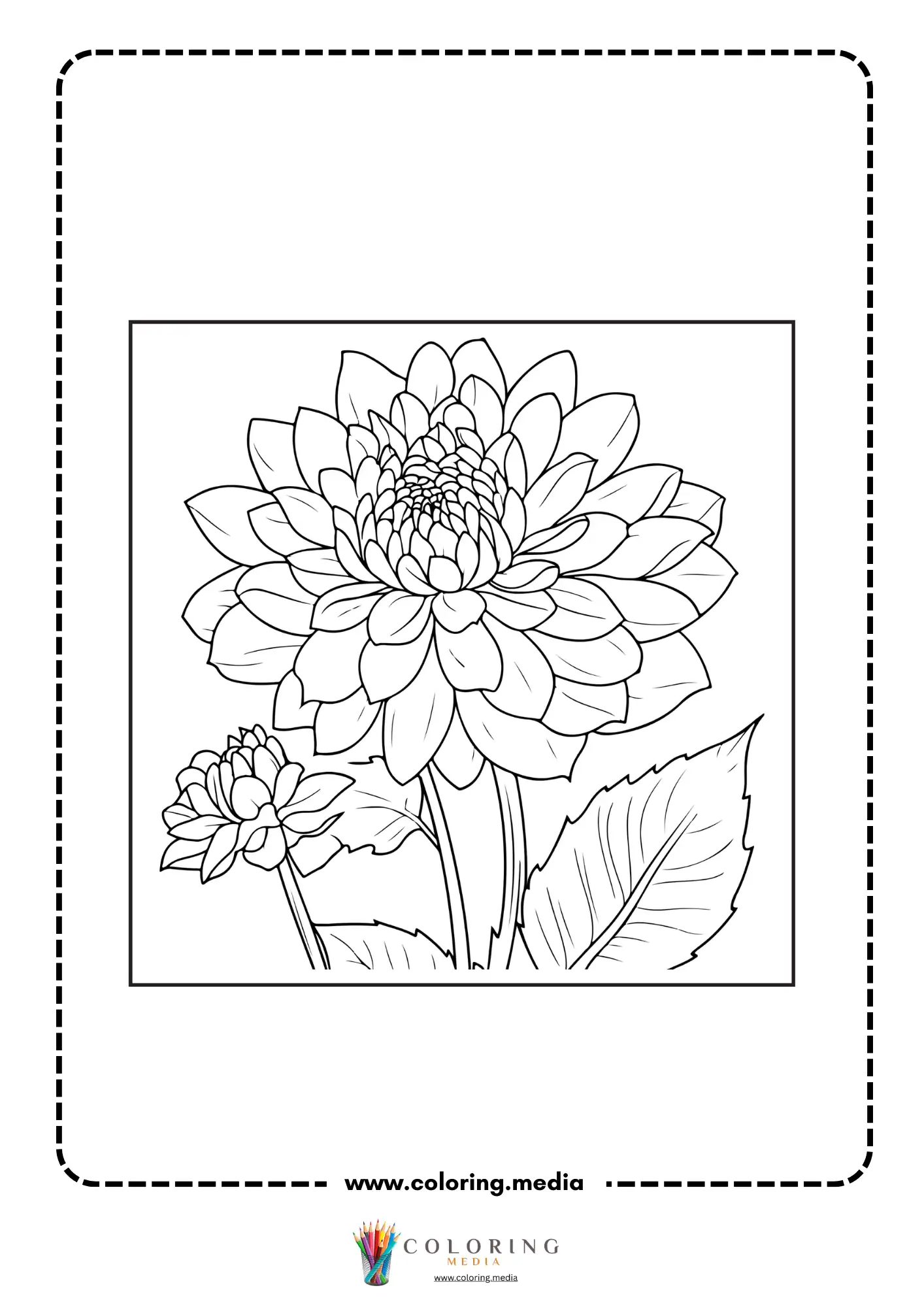
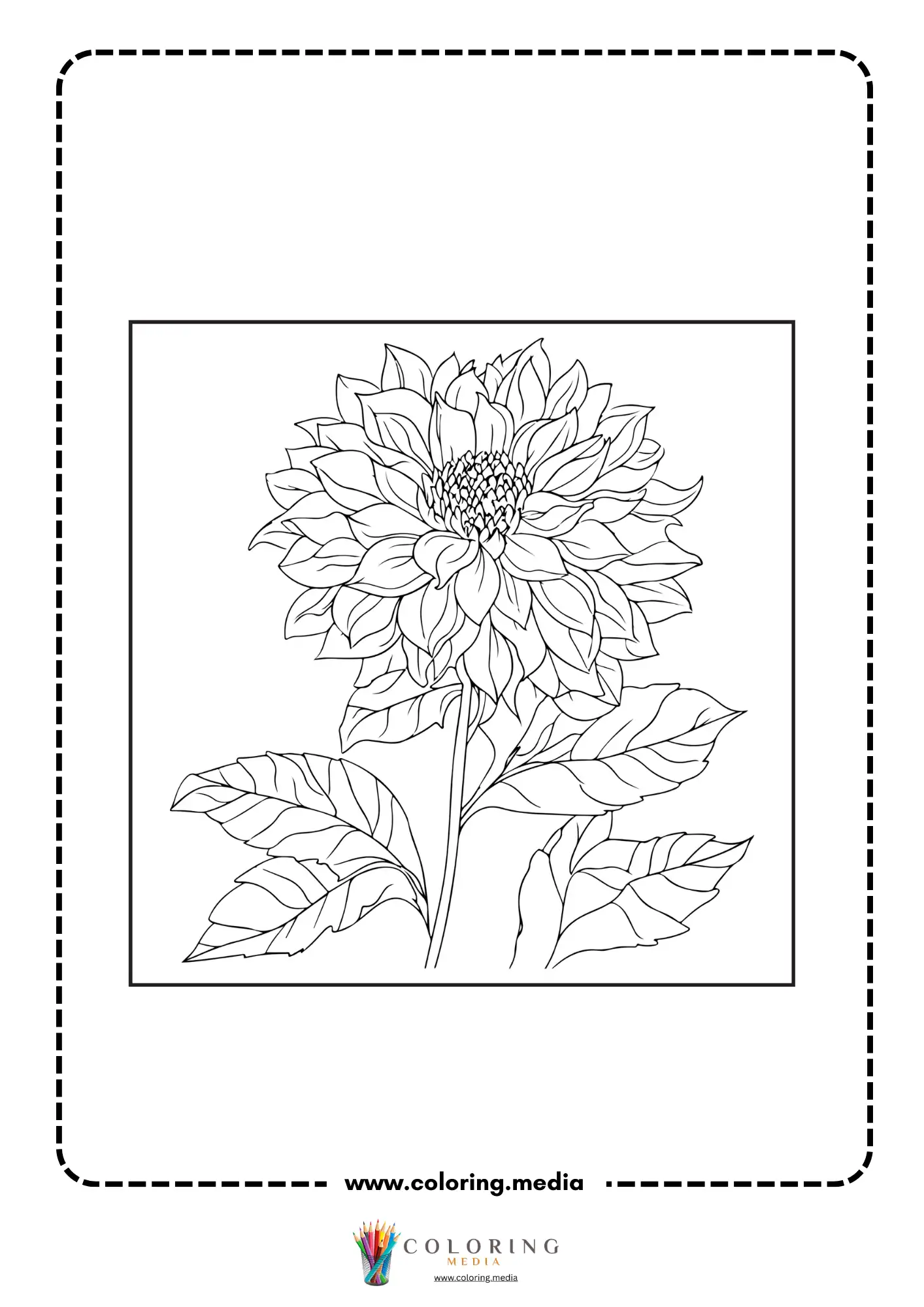
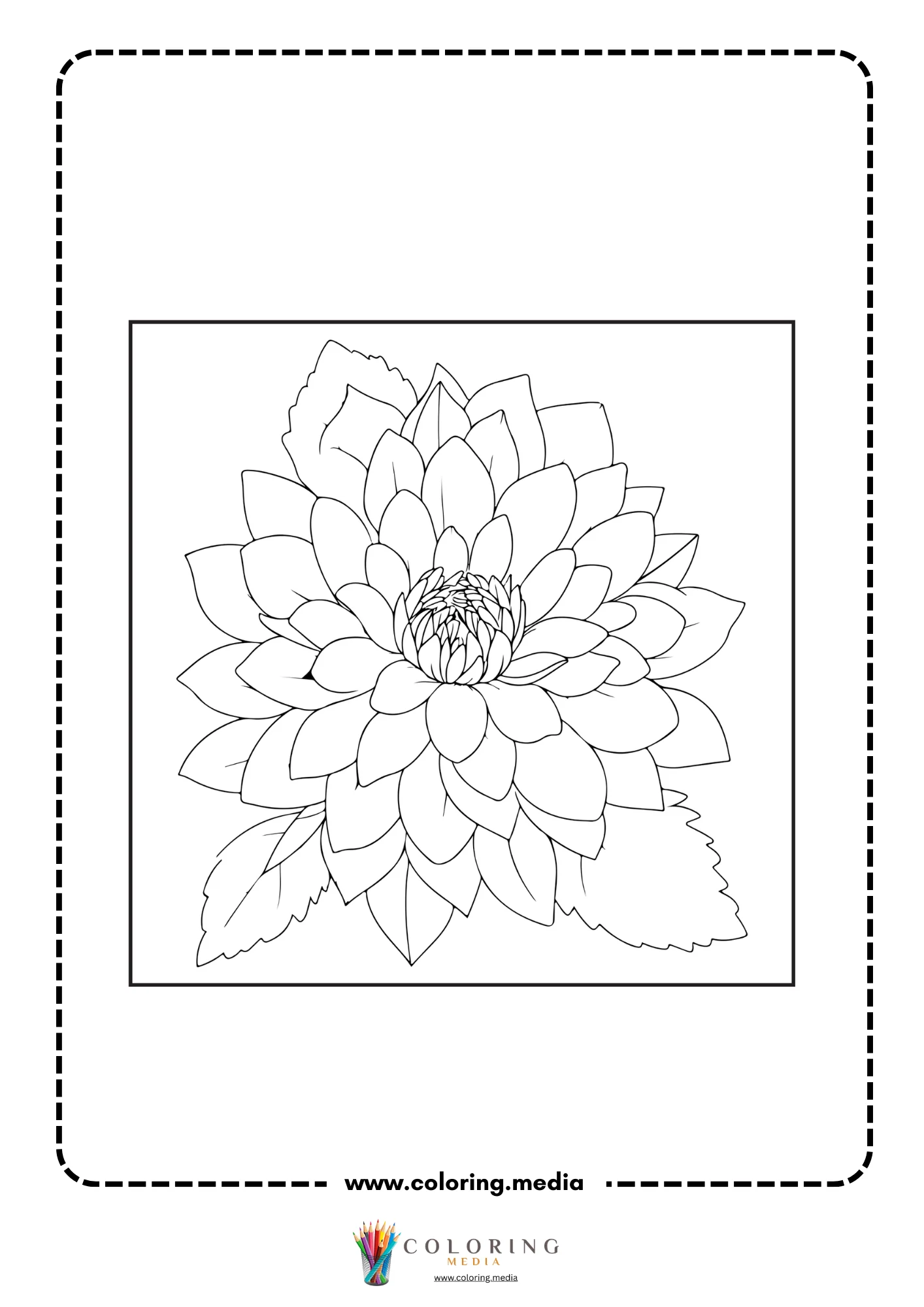
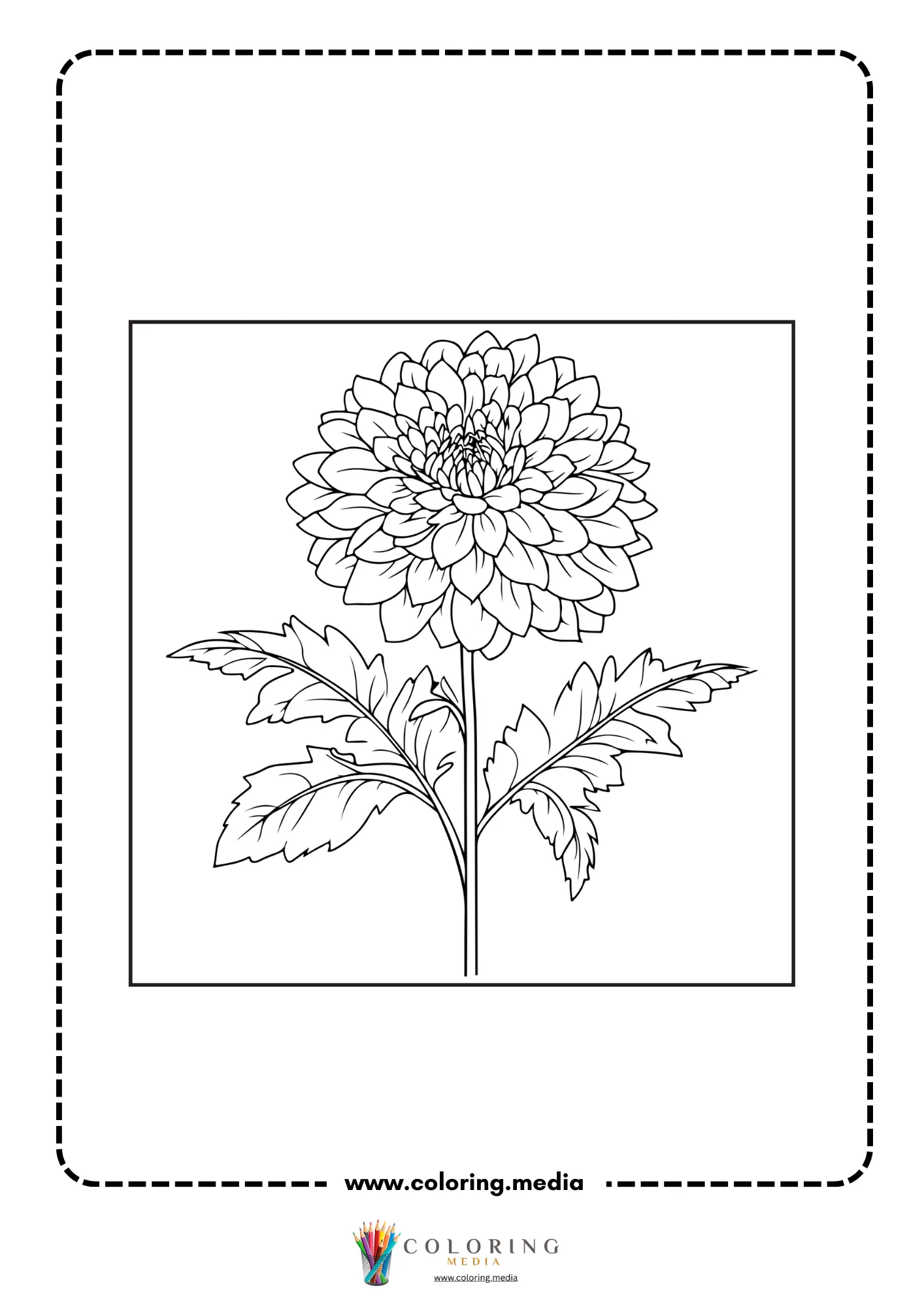
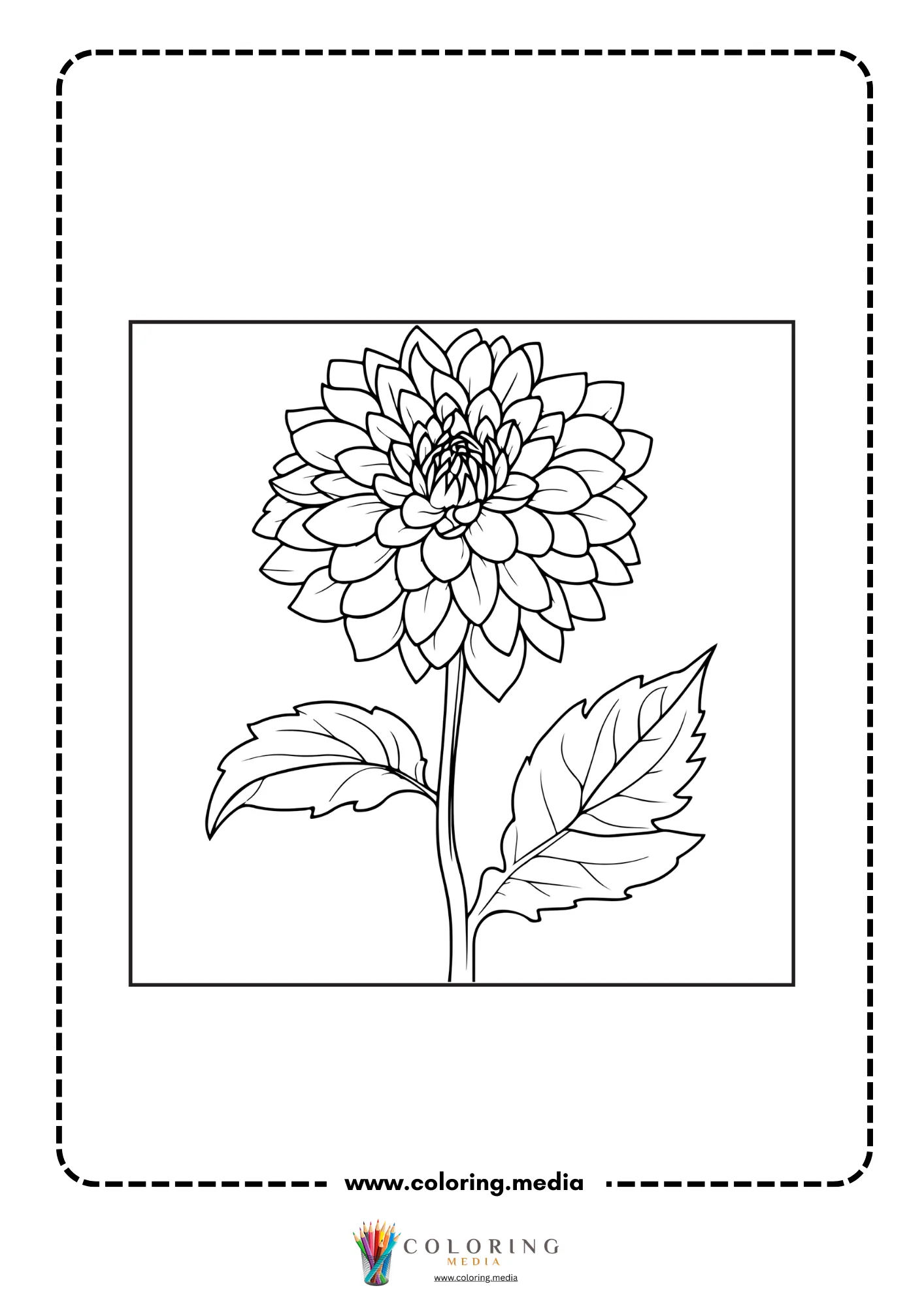
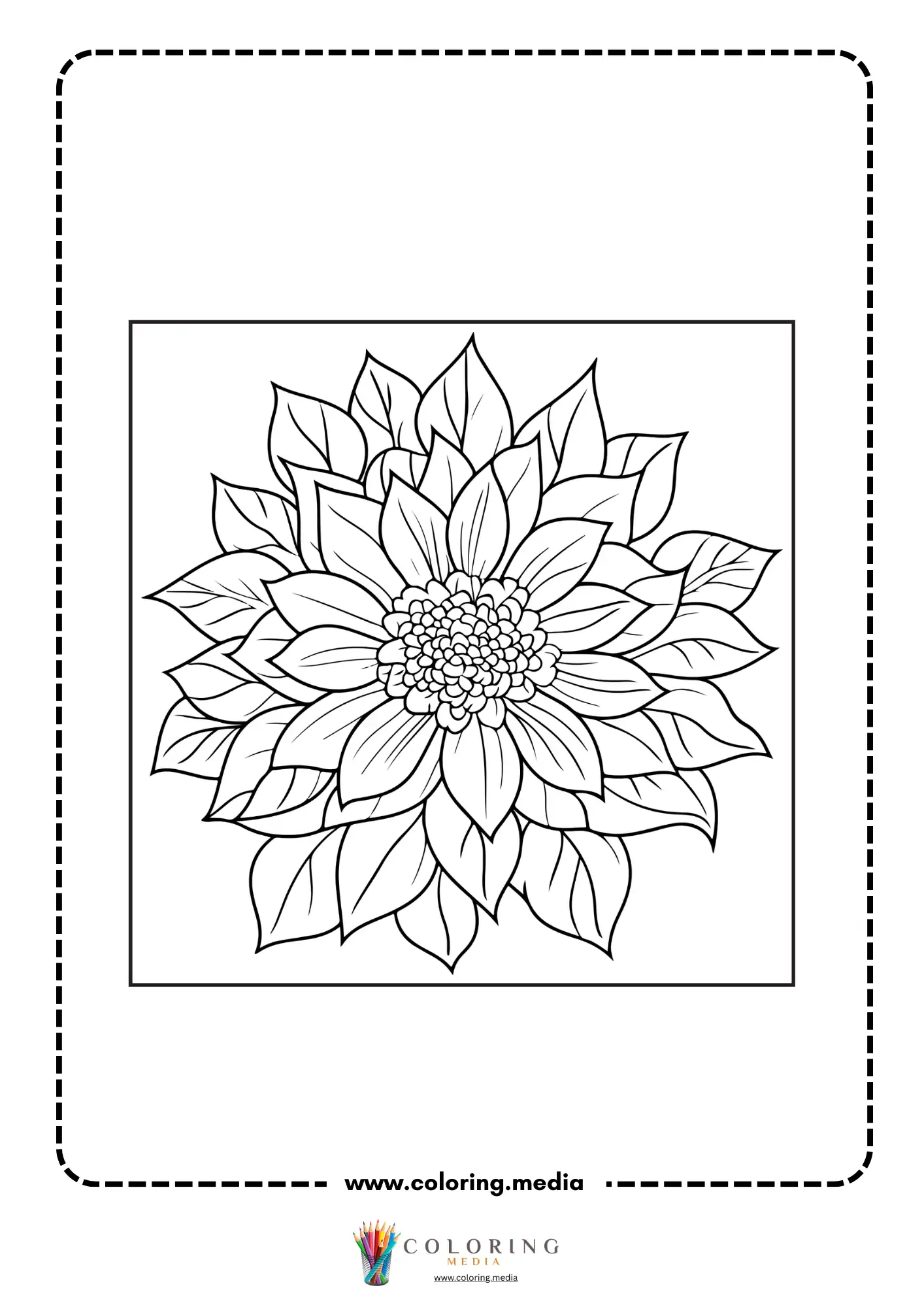
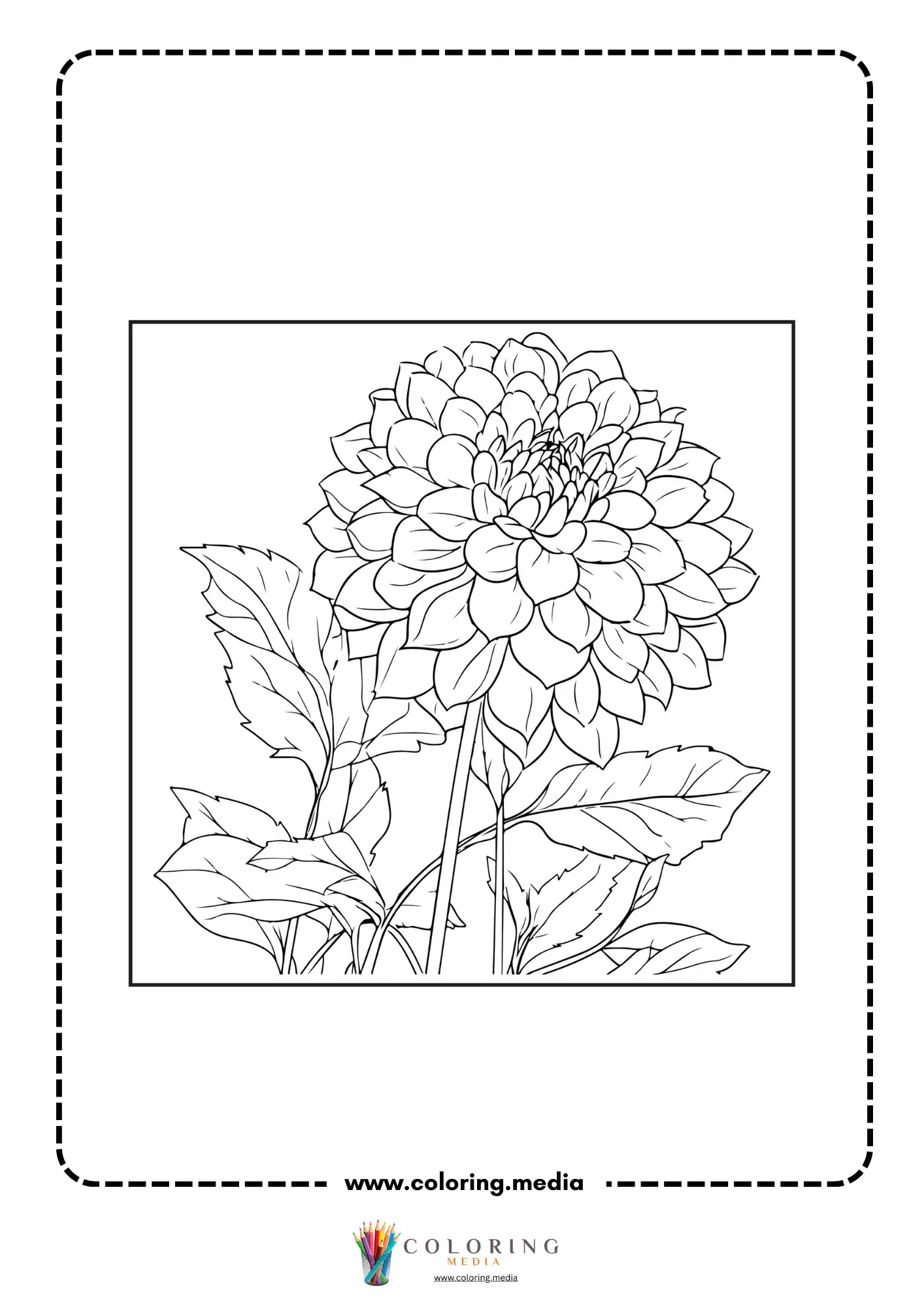
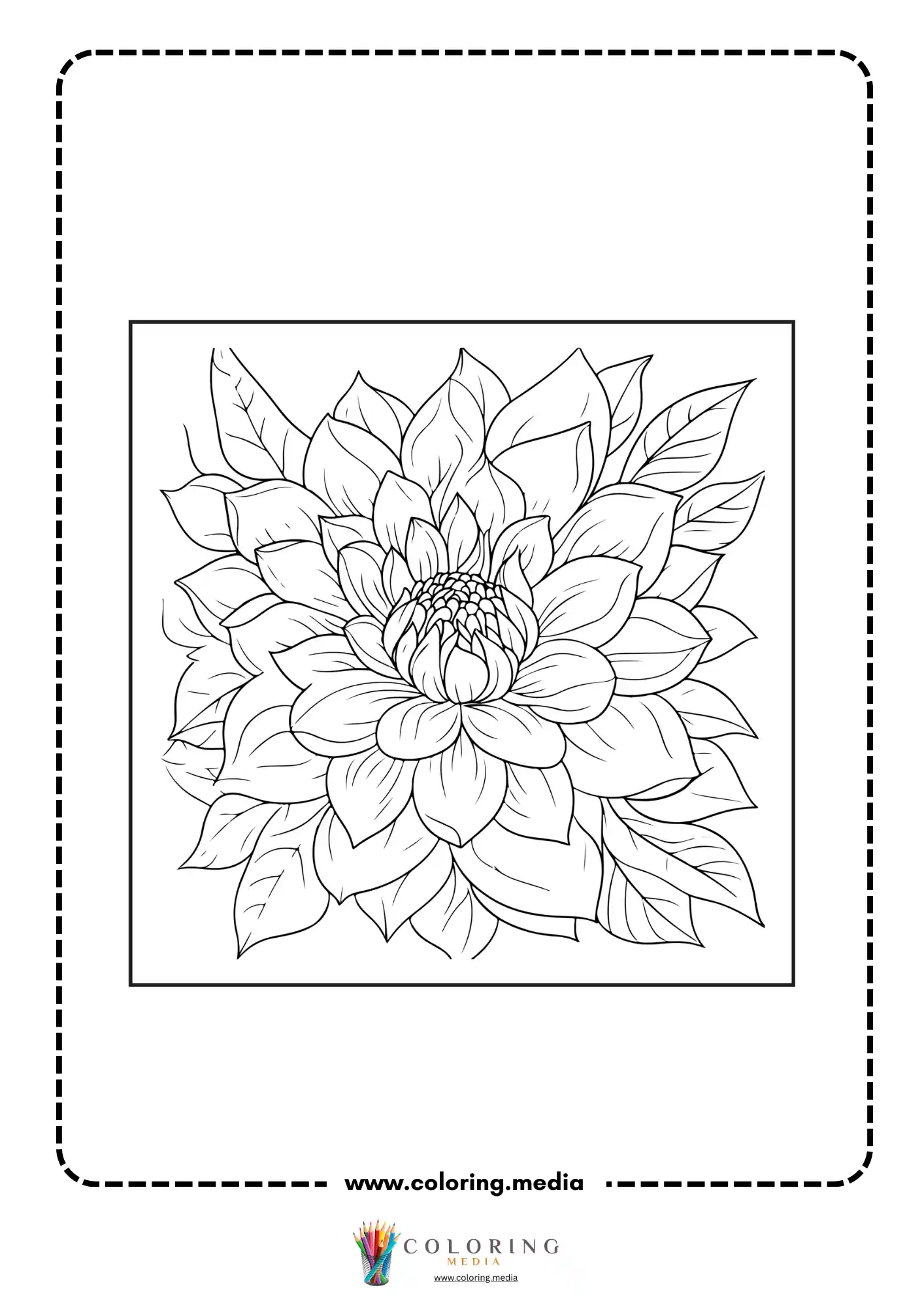
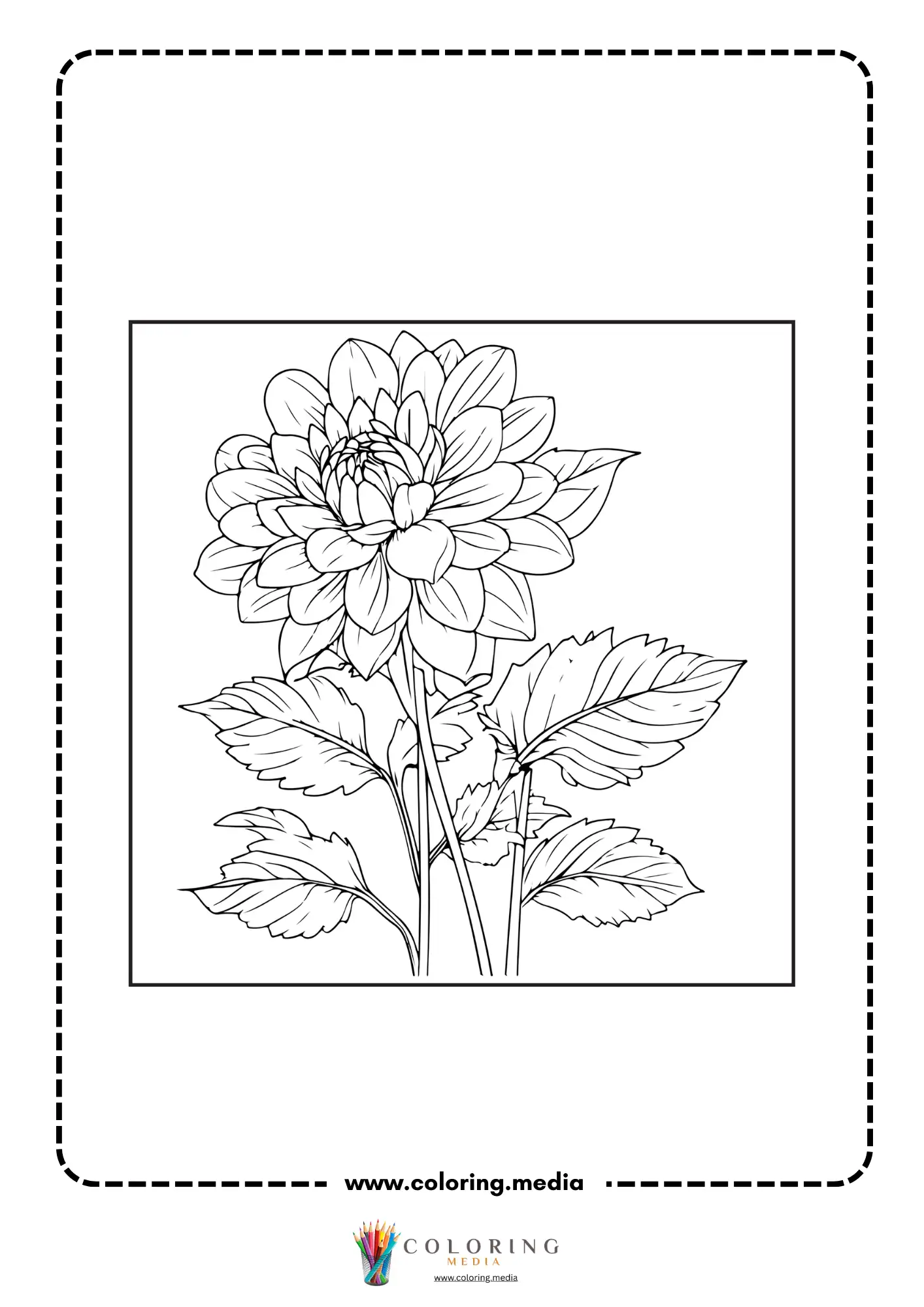
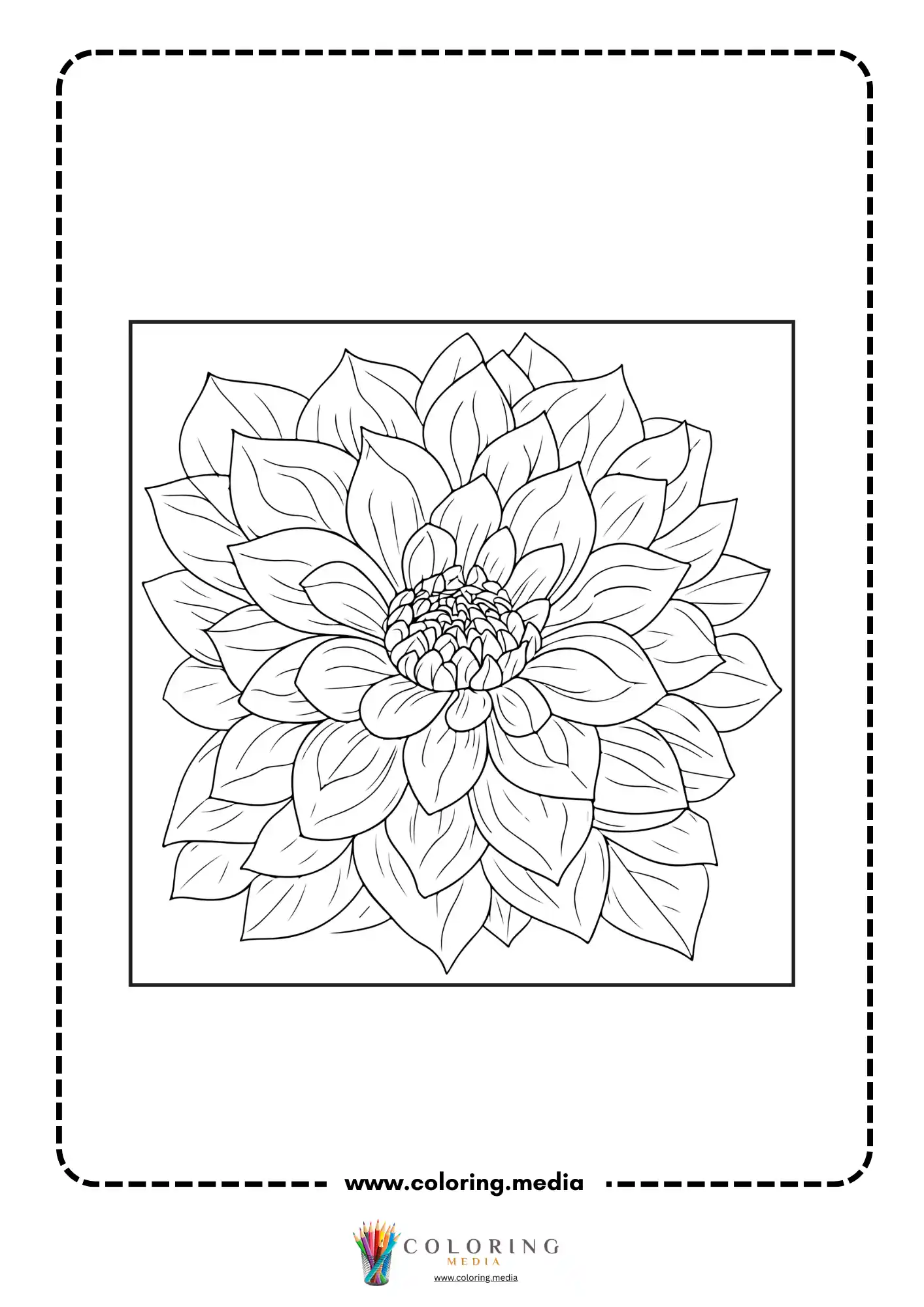
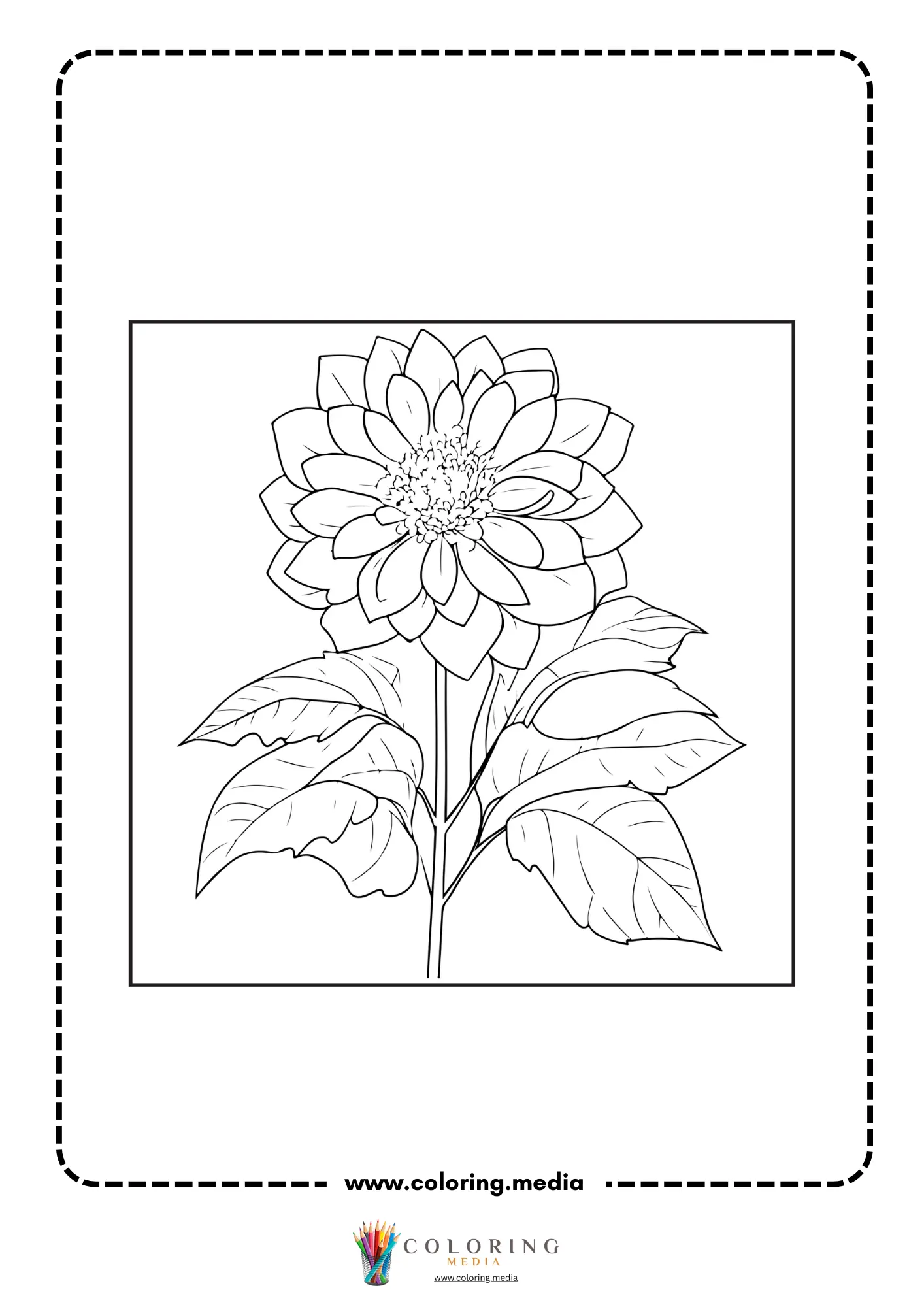
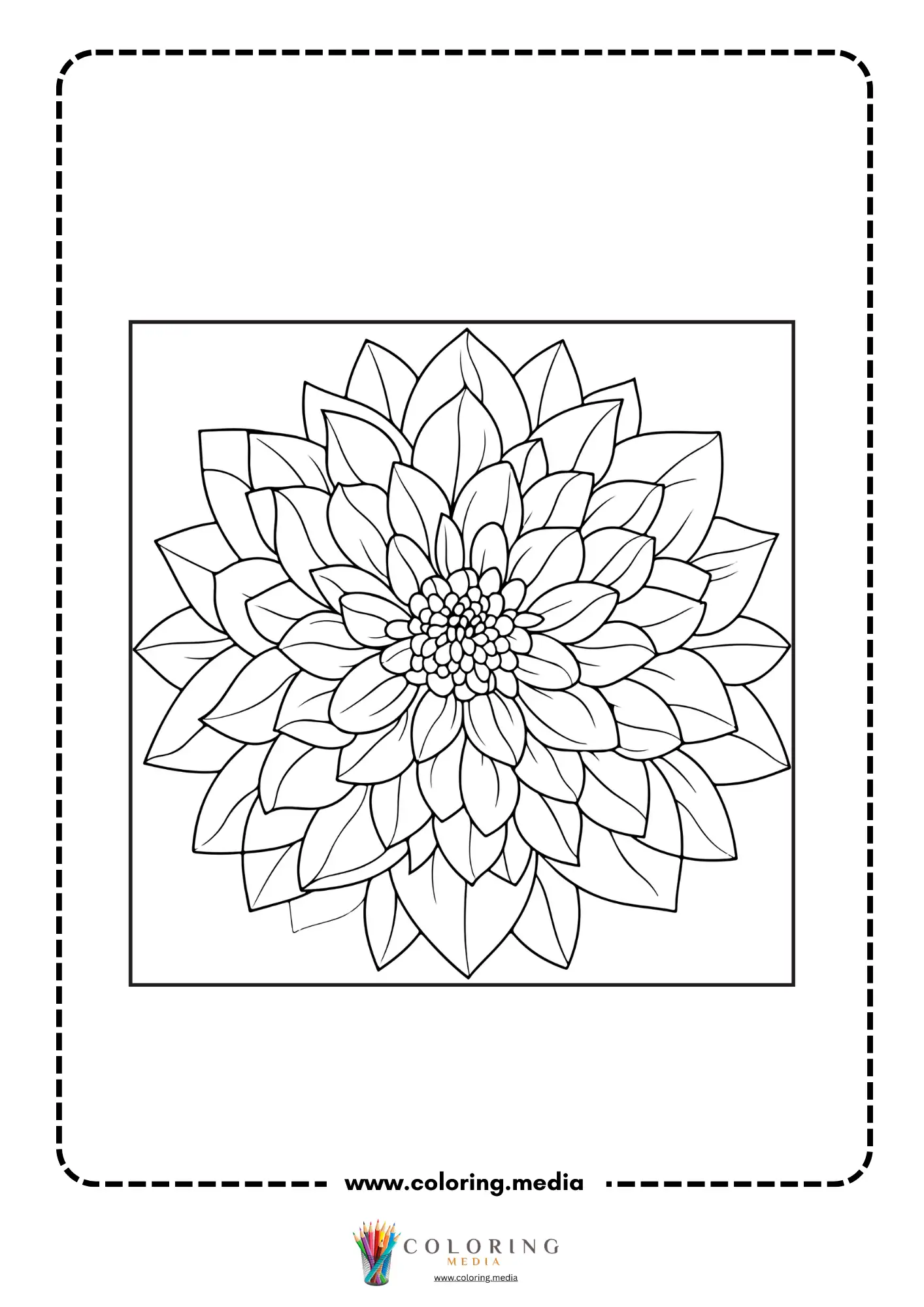
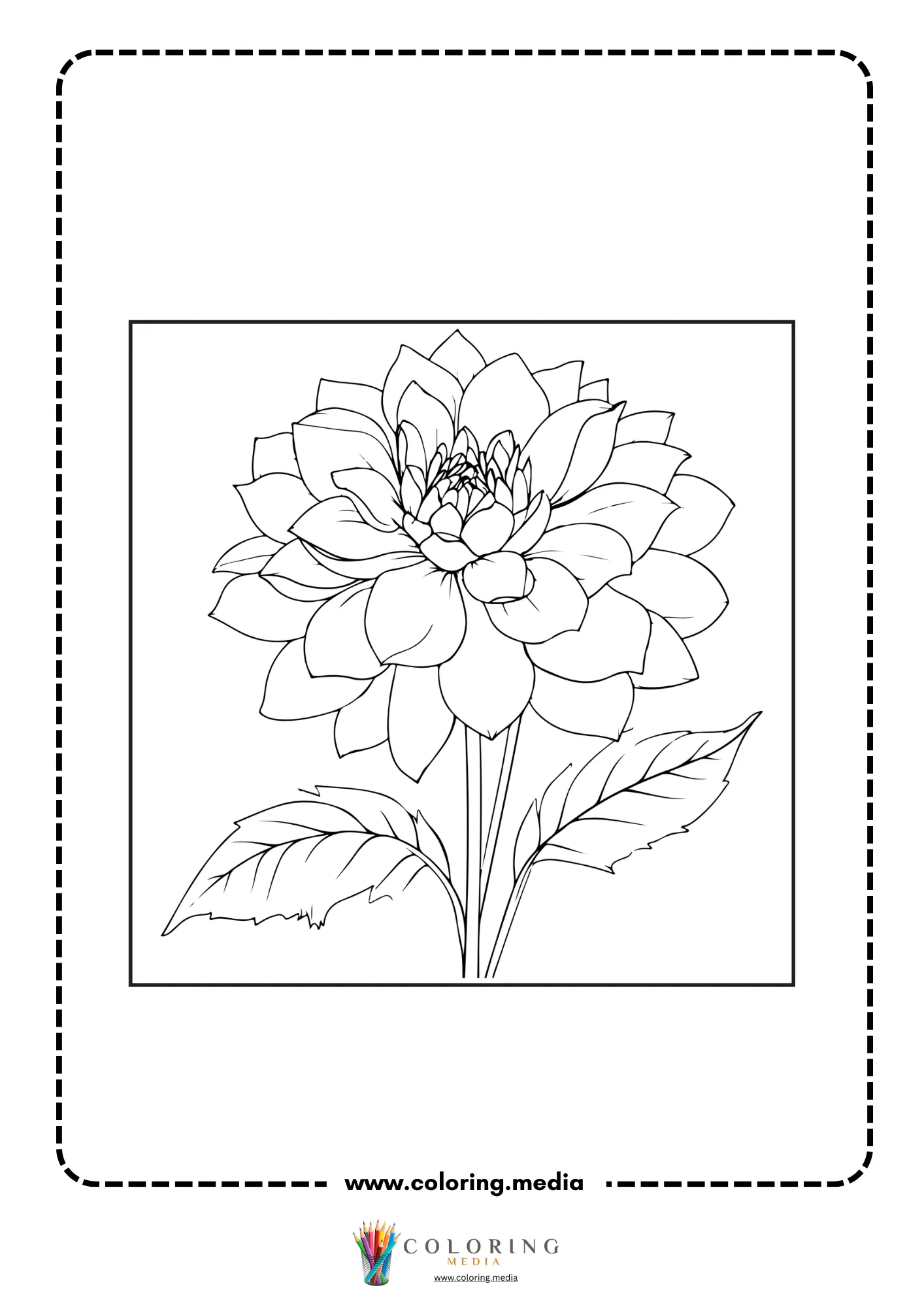
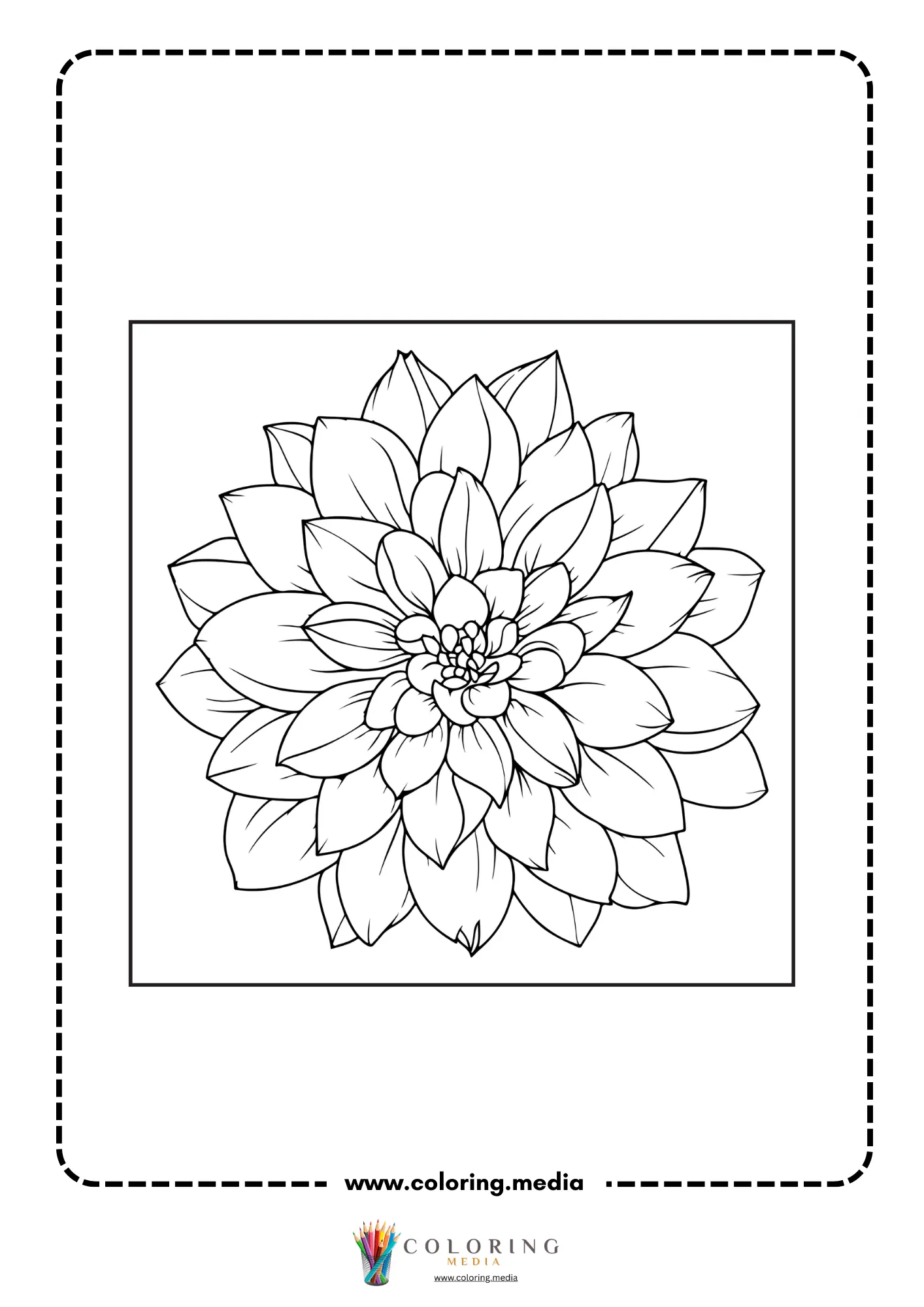
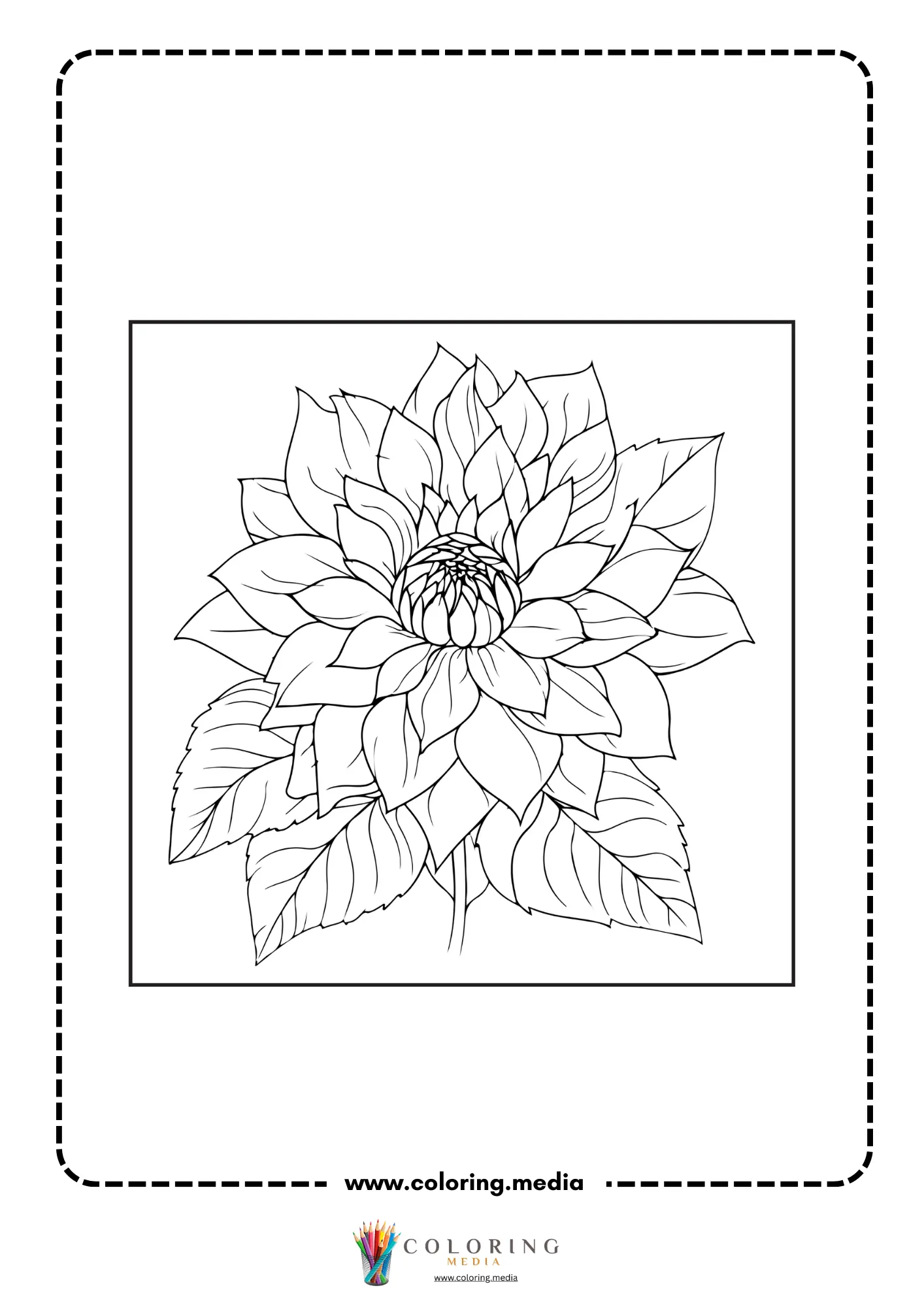
This collection includes 20 printable cute flower coloring pages featuring a mix of styles: tall-stemmed daisy and sunflower-type blooms with clean rounded petals, rounder composite flowers with two to three layers of petals, and fully detailed dahlia and chrysanthemum heads where the petals are narrow, pointed, and densely packed across the full page. Some pages show the flower with a leaf or two on the stem; others are tight close-up portraits of the bloom alone. All pages are formatted for standard US Letter or A4 paper, portrait orientation, and print cleanly on plain 20lb copy paper.
Who Are These Cute Flower Coloring Pages Best For?
The simpler stem-flower designs — single blooms with six to eight wide petals and a circular center — are a solid fit for early elementary kids, roughly ages six to nine. The outlines are clear and the shapes are large enough to fill with markers or crayons without the need for fine motor precision. There’s room to experiment with color gradients on the petals without the work becoming frustrating.
The dahlia and chrysanthemum-style pages are a different matter. Those flowers have forty or more individual petals arranged in concentric rings, each petal only a few millimeters wide at the tip. That level of detail rewards a slow, deliberate approach — colored pencils or fine-tipped markers rather than crayons — and the patience to keep a consistent color scheme across dozens of repeating shapes. These are genuinely suited to teens or older tweens who enjoy the meditative quality of intricate coloring.
For a classroom or homeschool setting, the collection splits naturally into two activity tiers. Younger students get the simpler designs while older kids tackle the botanical close-ups. Both groups are working with flowers, so the topic stays cohesive even when skill levels differ across the room.
Interesting Flower Facts to Share While Coloring
Dahlias are not one flower — they’re hundreds. What looks like a single large bloom is actually a composite of many tiny individual flowers called florets. The “petals” radiating outward are ray florets, and the tight center is packed with even smaller disc florets. Dahlias were first cultivated by the Aztecs as a food crop, not a decorative plant.
Flowers use geometry to pack in as many petals as possible. The spiral arrangement of petals in chrysanthemums and sunflowers follows a mathematical sequence where each new petal grows at roughly a 137.5-degree angle from the last. That angle, called the golden angle, ensures no two petals block each other’s sunlight — which is why the spiral pattern looks so balanced from above.
Many flowers can see colors humans can’t. Bees and butterflies see ultraviolet light, and lots of flowers have UV patterns — essentially landing strips and nectar guides — invisible to the human eye but clearly visible to pollinators. What looks like a plain white petal to us might be a vivid pattern of lines to a bee.
A single dahlia can take three to four months to grow from a tuber to full bloom. That slow build is why the flowers are so elaborate — the plant has invested significant energy by the time the bloom opens. The largest dinner-plate dahlias can reach 30cm across, roughly the width of a dinner plate (hence the name).
Flowers that look “cute” often have tougher origins than they appear. The cheerful daisy, for example, is one of the most adaptable plants on the planet — it grows in arctic tundra, alpine meadows, and temperate lawns. Its simple petal-and-center design is one of the most evolutionarily stable flower forms, having stayed roughly the same for millions of years.
Creative Flower Coloring and Craft Ideas
Gradient Petals Pick two colors — say yellow and orange — and blend from the petal tip inward, letting the shades merge in the middle third of each petal.
Real Flower Reference Bring a fresh dahlia or chrysanthemum to the table and compare it to the page while coloring. Identify which petal shapes match the drawing and which artistic liberties were taken.
Botanical Journal Print a simple stem-flower page on cardstock, color it, then write the flower’s name and three facts around the border. Stack several pages into a hand-stapled mini field guide.
Complementary Color Challenge Choose opposite colors on the color wheel — purple and yellow, or red and green — and apply them to alternating petals. It’s a low-stakes way to see how complementary pairs vibrate against each other.
Cut-Out Wreath Color four or five of the simpler stem flowers, cut them out leaving a small white border, and arrange them in a circle on a sheet of colored cardstock to make a paper wreath.
Zentangle Centers Leave the petals plain white and instead fill the circular flower center with small repeating patterns — dots, crosshatching, tiny spirals — using a fine black pen.
Seasonal Palette Swap Color the same dahlia page three times using a different seasonal palette each time: warm oranges and reds for autumn, cool blues and purples for winter, soft pinks and greens for spring.
Watercolor Wash Over Line Print the page on 90lb cardstock, lightly color the petals with watercolor paint, and let it dry. The printed lines hold up well and the soft wash gives a looser, more naturalistic feel than crayons.
How to Print These Cute Flower Coloring Pages
Each page downloads as a PDF sized for US Letter (8.5×11 inches) or A4 — both work without resizing. Standard 20lb copy paper is fine for crayons and markers; for watercolors or heavy colored pencil layering, use 65lb cardstock to prevent buckling. If ink is running low, printing in grayscale or draft mode still produces clean enough lines for coloring.
Explore More Flowers & Plants Coloring Pages
If you enjoyed these pages, you may also like:
Cactus Coloring Pages
Flower Parts Coloring Pages
Plants Coloring Pages
All Flowers & Plants Coloring Pages