
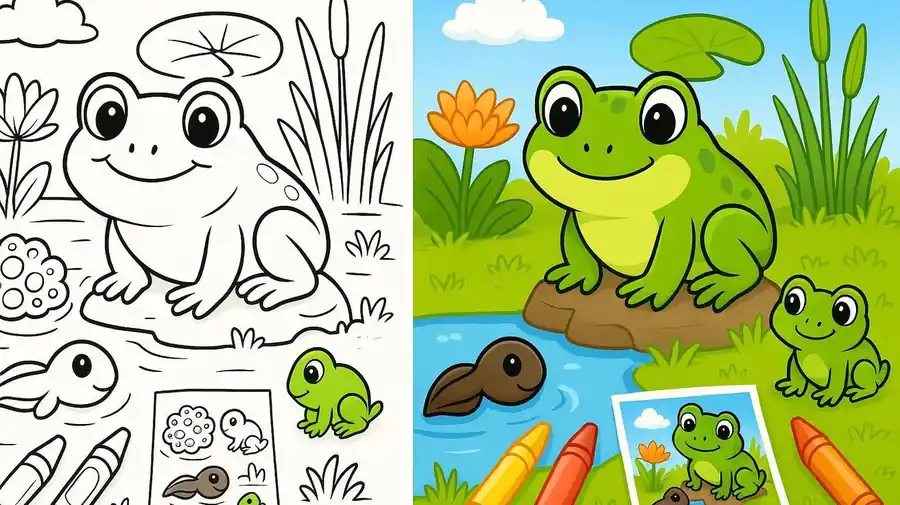
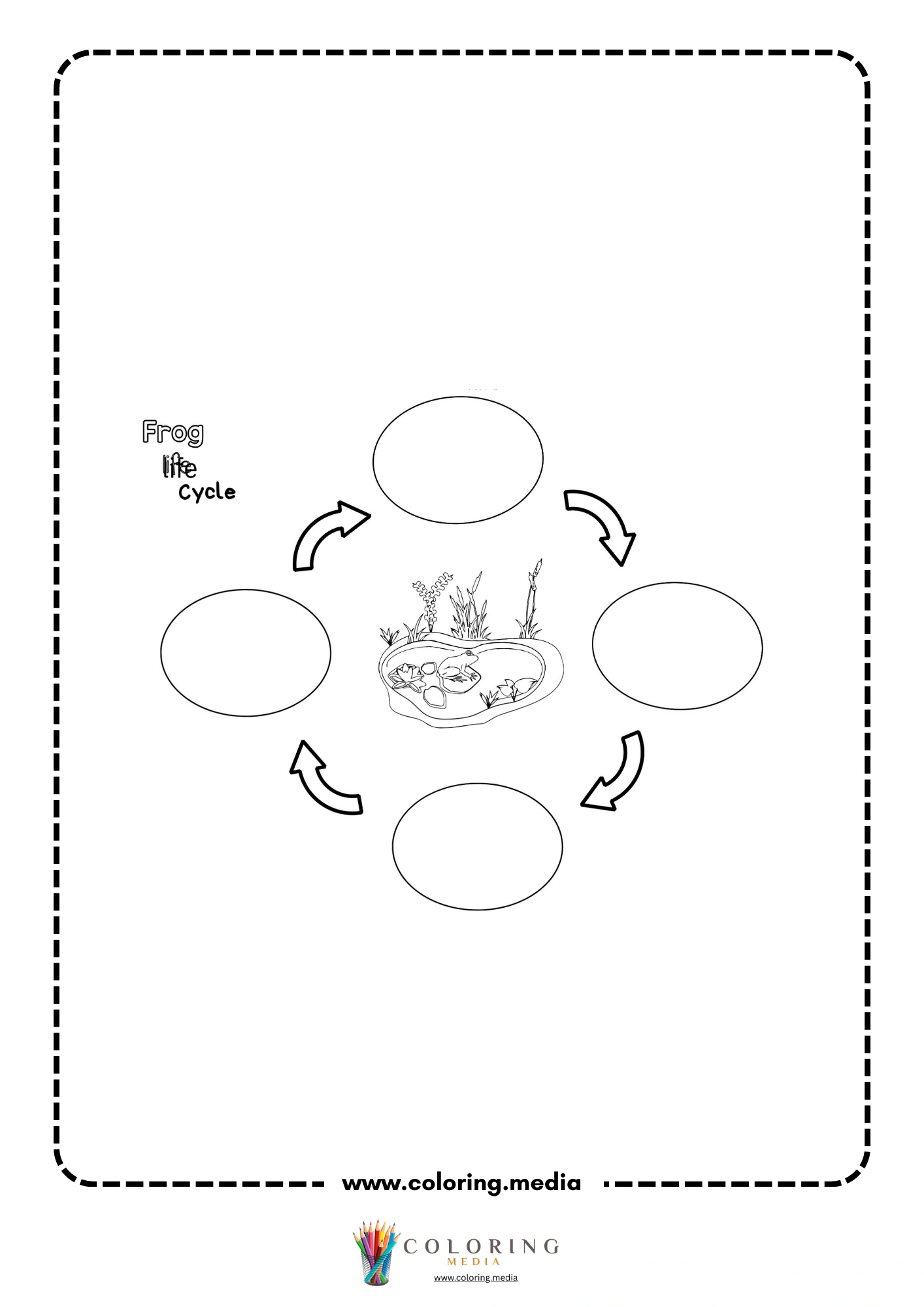
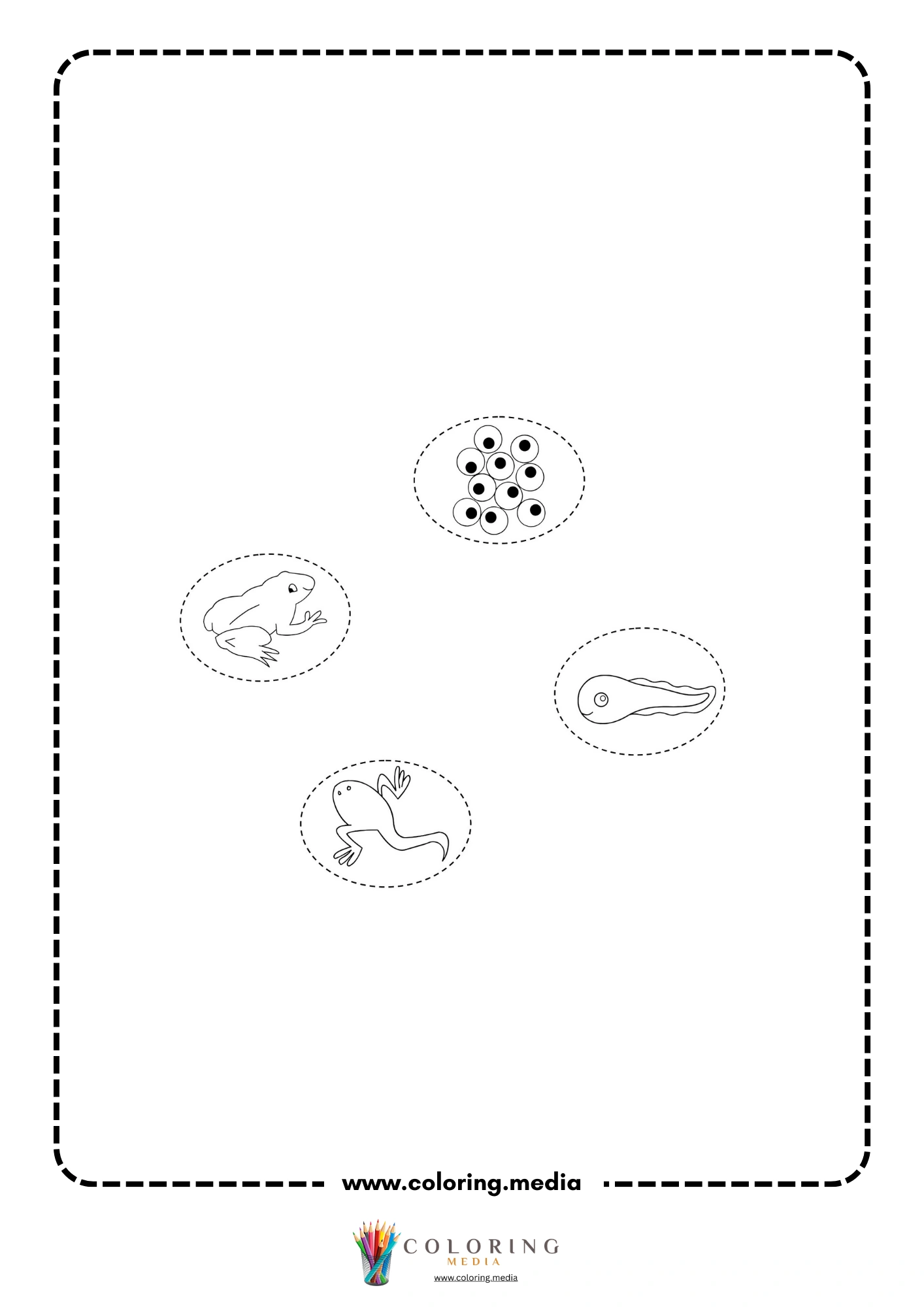
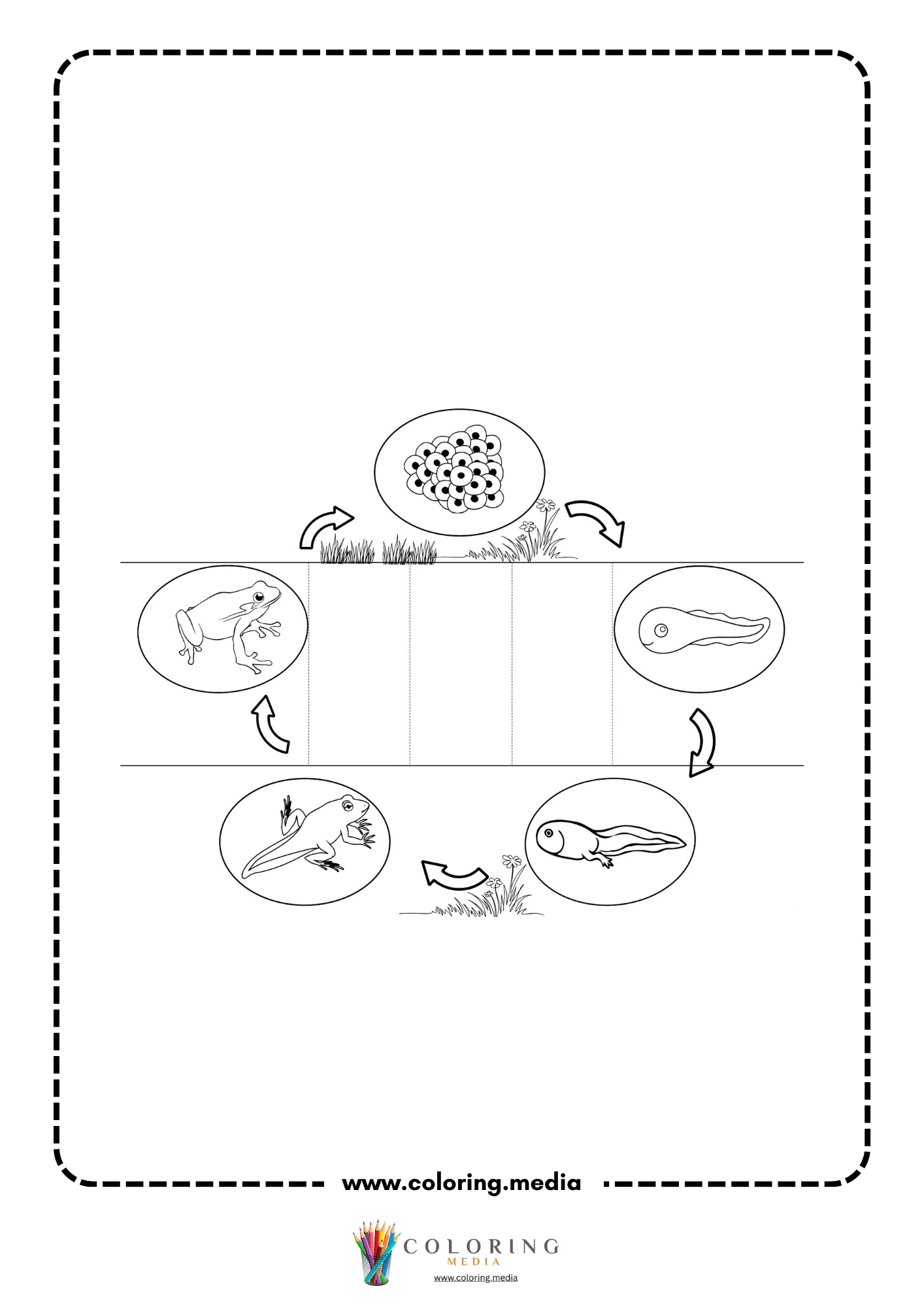
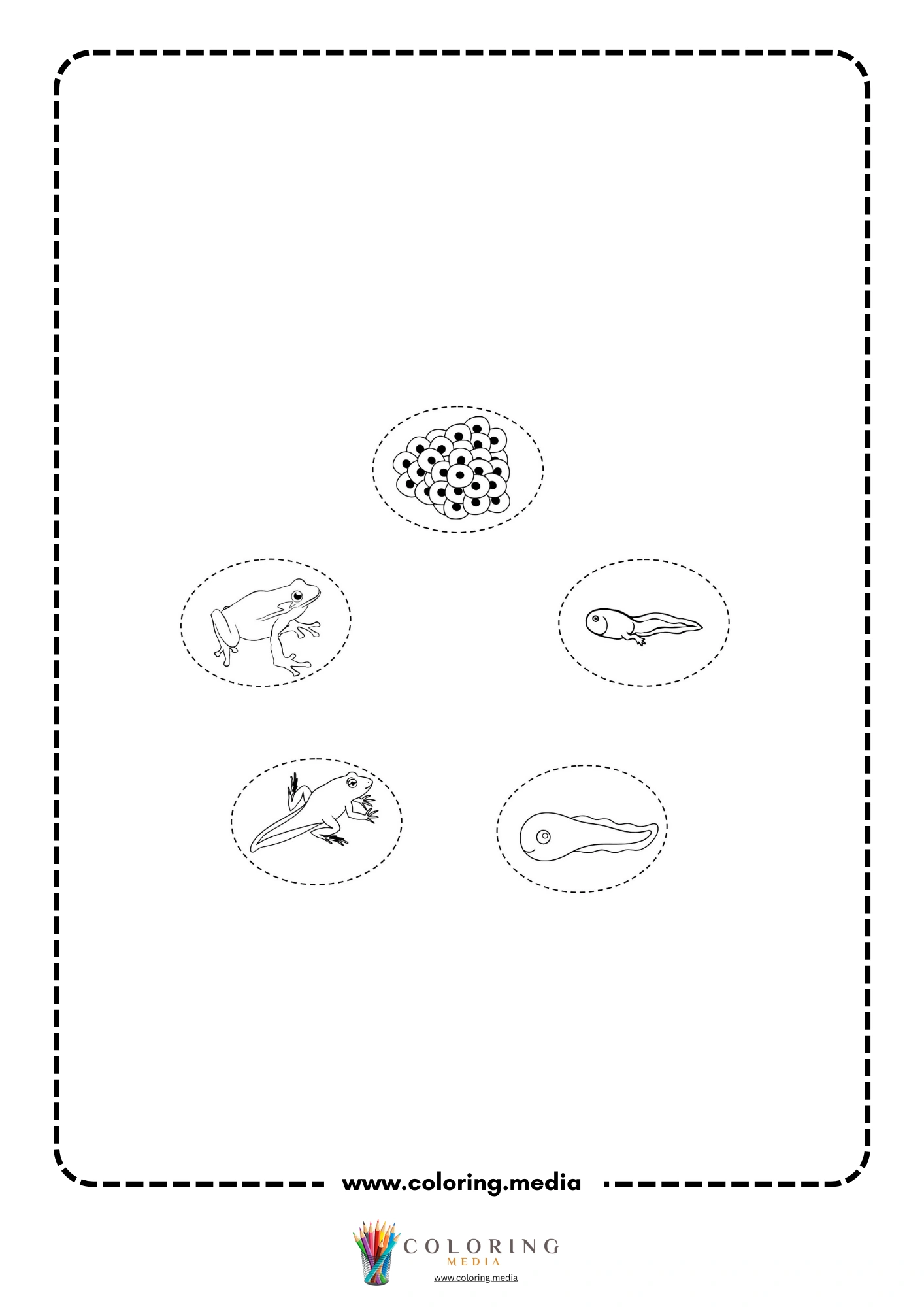
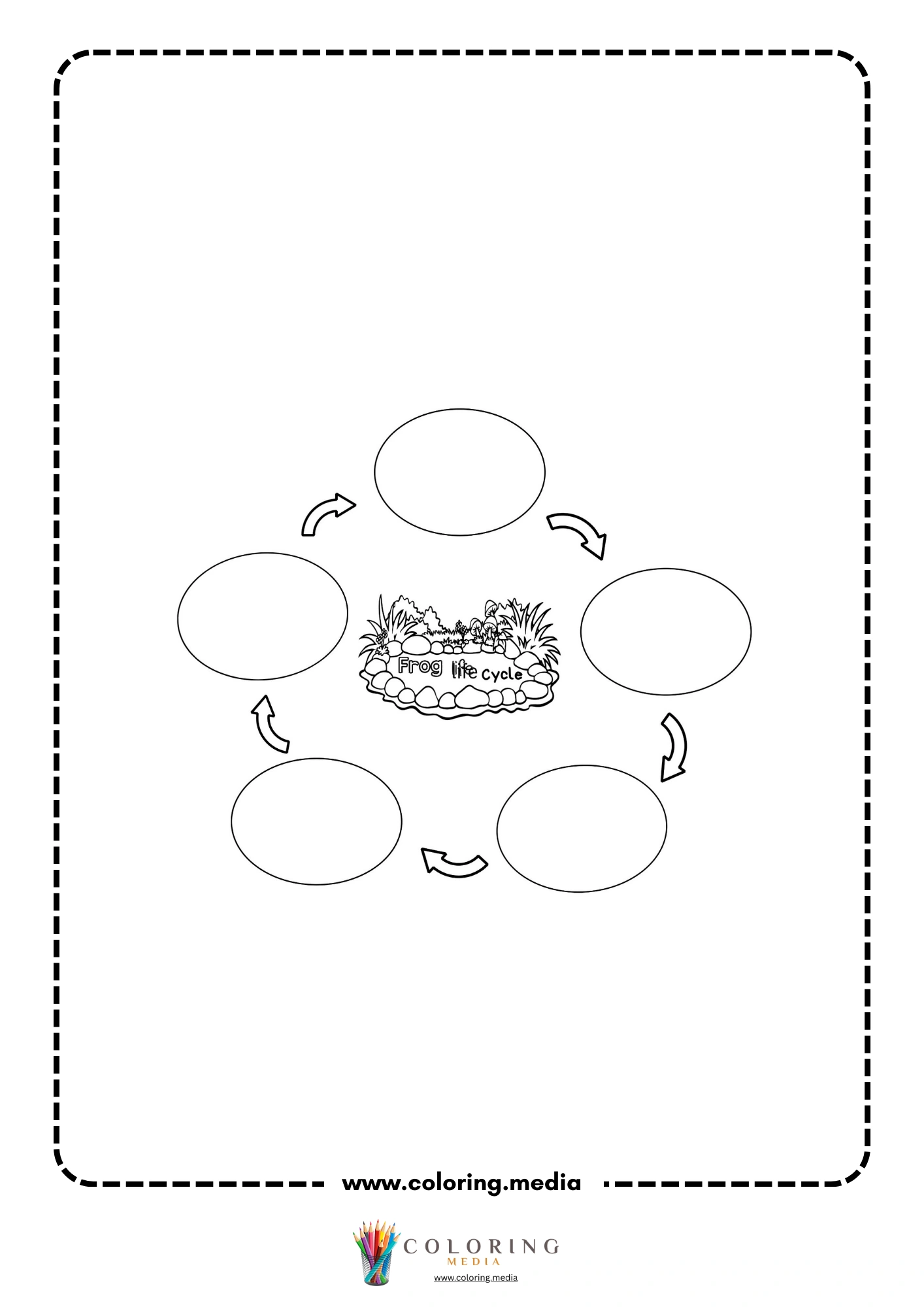
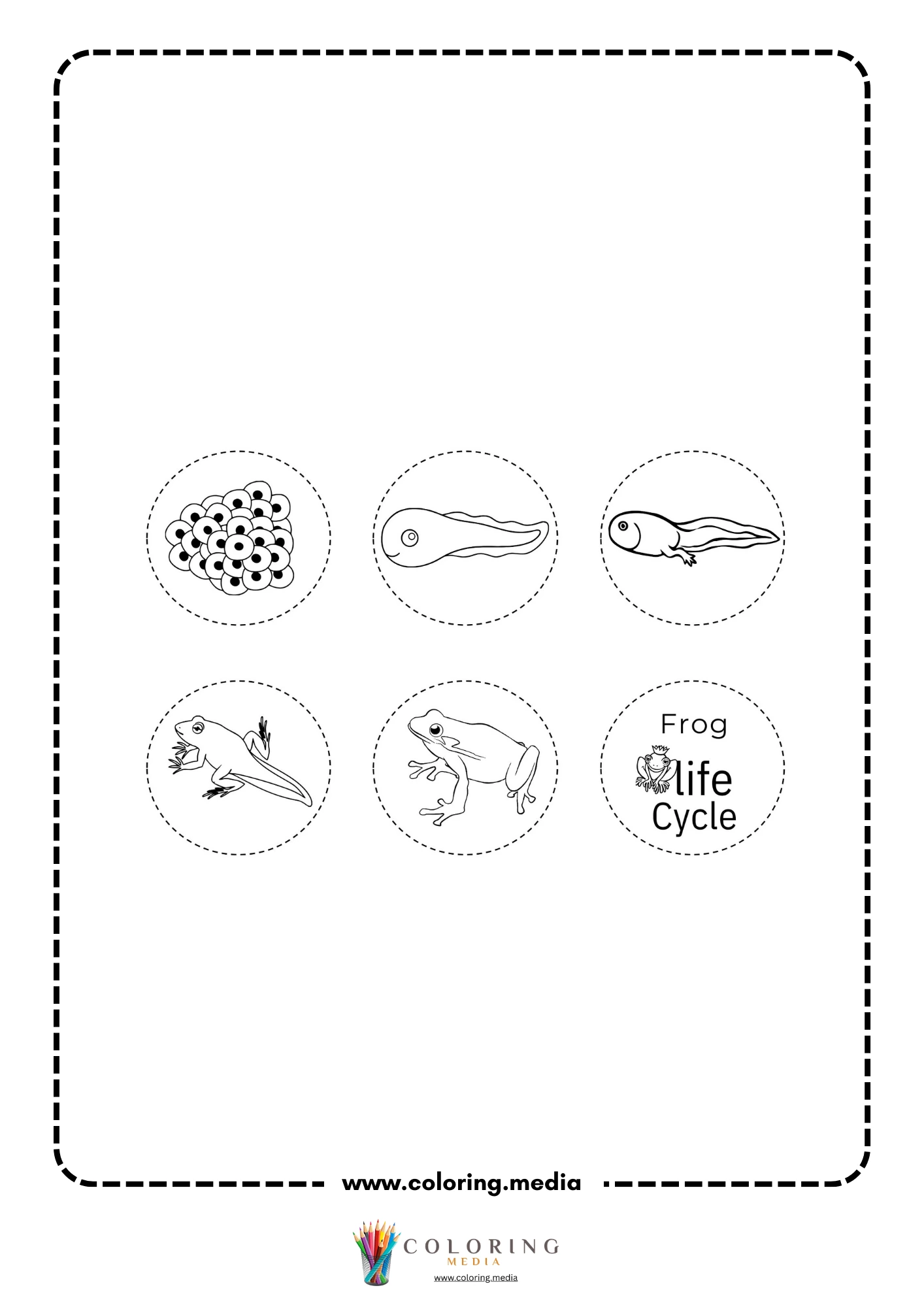
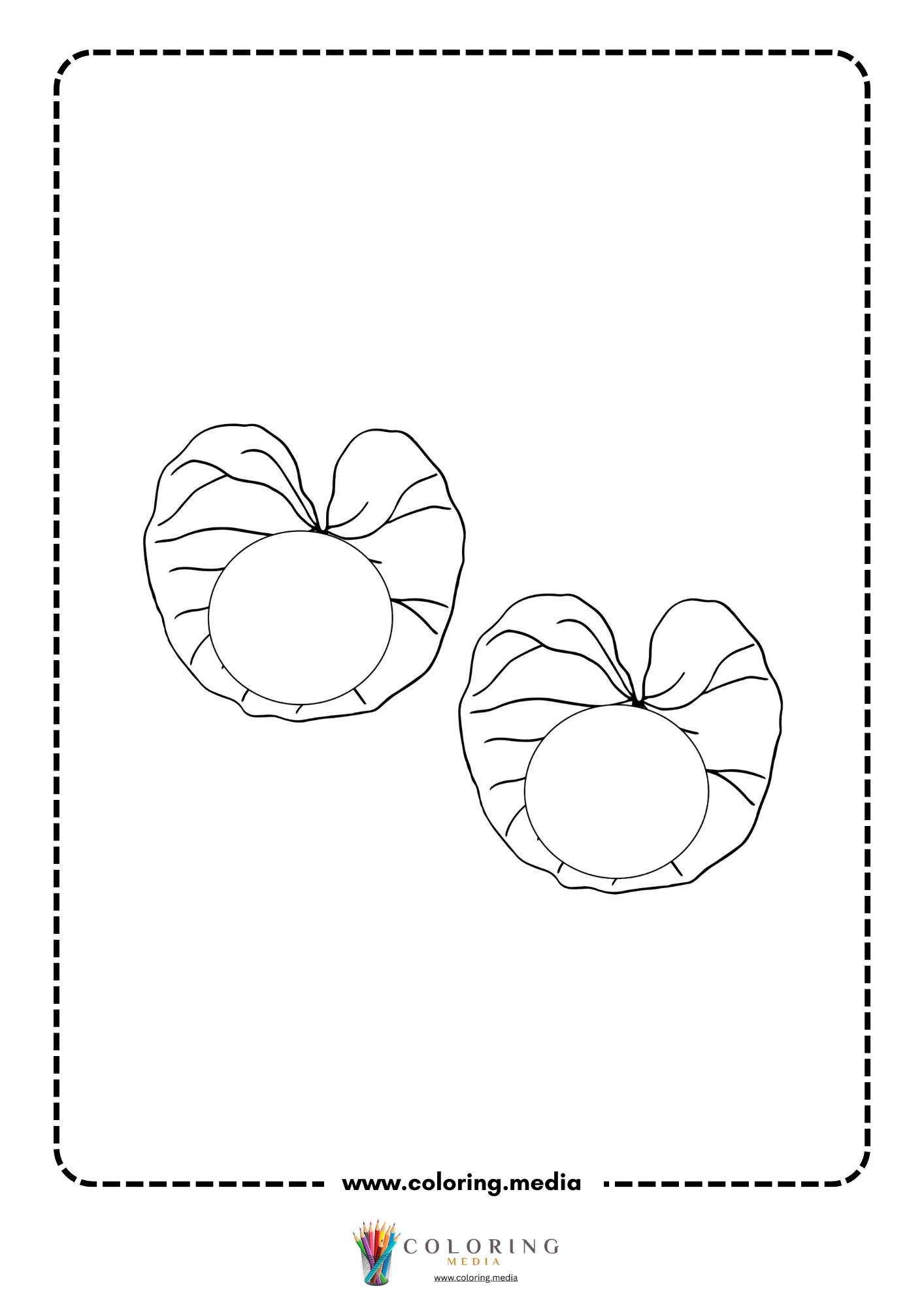
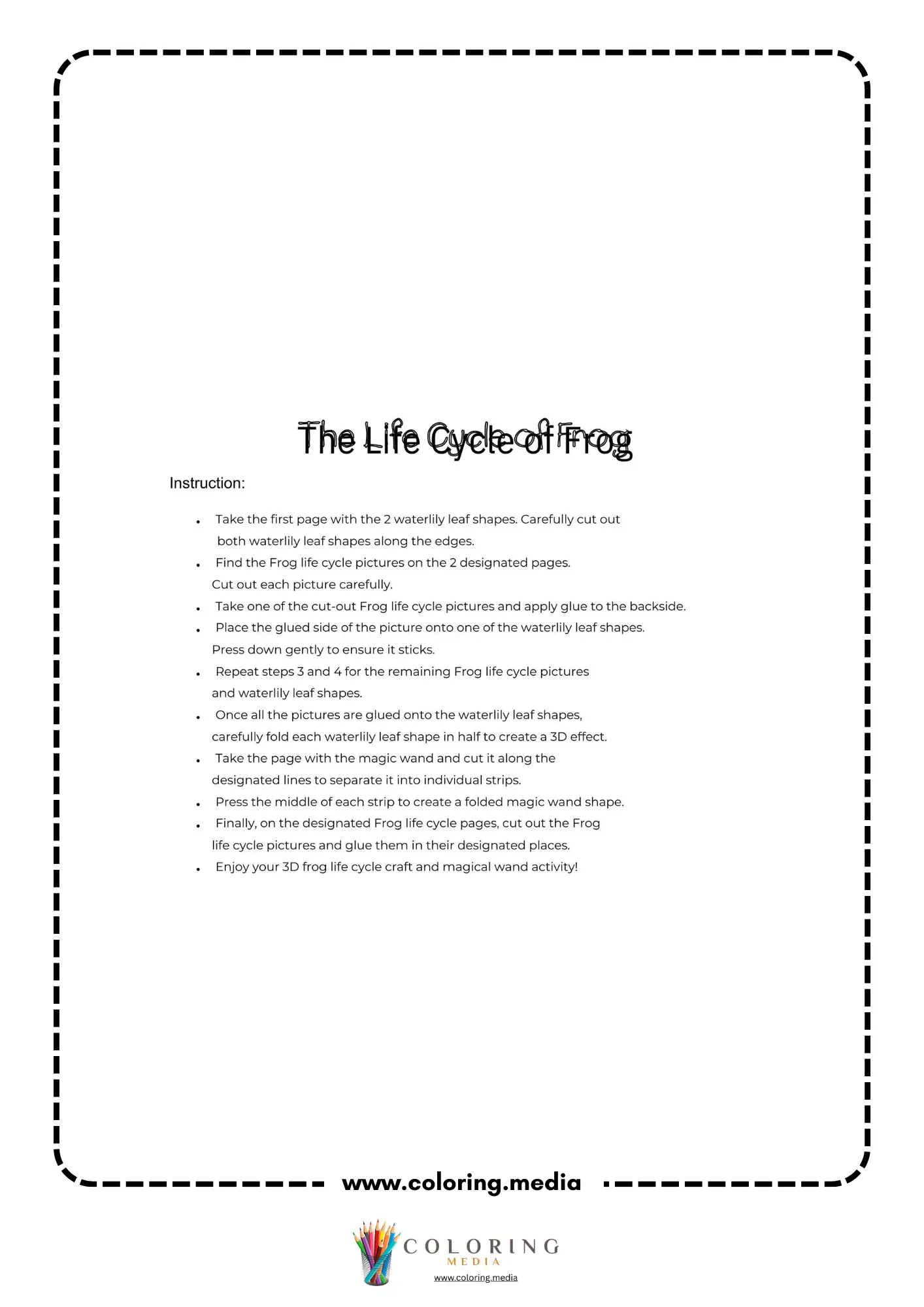
These 8 pages cover the frog life cycle in an educational worksheet format — a circular diagram showing the four main stages (frog spawn/eggs, tadpole, tadpole with legs developing, adult frog), individual stage pages with labeled illustrations, a pond environment illustration showing multiple stages in context, a lily pad page for background coloring, and a reading-passage reference sheet. The illustrations are simple and scientifically accurate — the egg cluster looks like real frog spawn, the tadpole progression shows the leg development that distinguishes frog metamorphosis from insect metamorphosis.
The frog life cycle is one of the most visually dramatic metamorphoses in nature — a creature that breathes water becoming one that breathes air, growing legs, and losing its tail in the process. That transformation is genuinely interesting, and the coloring pages give children a way to sit with each stage and examine it. Everything here is free to download and easy to print.
Free Printable Frog Life Cycle Coloring Pages
This collection includes 8 printable frog life cycle coloring pages featuring circular life cycle diagrams, individual stage illustrations (spawn, tadpole, frog with developing legs, adult frog), a pond environment scene, lily pad background page, and a reading-passage reference worksheet. Print on US Letter or A4 paper.
Who Are These Frog Life Cycle Coloring Pages Best For?
Kindergarteners and early-elementary children (ages 4-8) are the primary audience. The frog life cycle appears consistently in K-2 science curricula as an example of animal metamorphosis, and these pages provide ready-to-use visual materials for that unit. The pond scene page is particularly useful for showing children that all stages can coexist in the same habitat simultaneously — eggs hatching while tadpoles swim while adult frogs sit on lily pads.
The reading passage makes this set useful for integrated science and literacy lessons. A teacher can use the passage as a shared reading text at the start of the lesson, then have children color the corresponding diagram page to consolidate what they have just read.
Children who have seen real frog spawn in a pond, creek, or nature center can connect their observation directly to the coloring pages — the egg cluster illustration is accurate enough to be recognizable from a real sighting. For children who have not, the pages build a visual expectation that makes the real thing more meaningful when they eventually encounter it.
Interesting Frog Life Cycle Facts to Share While Coloring
Tadpoles and adult frogs use completely different organs to breathe. Tadpoles breathe through gills, like fish. As metamorphosis progresses, the gills disappear and lungs develop. The skin also becomes capable of absorbing oxygen directly from water or air — adult frogs breathe through both lungs and skin simultaneously.
Most frogs return to the exact pond or stream where they were born to lay their eggs. This homing behavior is not fully understood, but frogs appear to use a combination of chemical cues in the water, magnetic sensing, and possibly celestial navigation to find their birth pond even after years away.
Frog eggs have no shell — just a protective jelly coating. Unlike bird eggs, frog eggs are exposed to the environment and must stay moist to survive. The jelly surrounding each egg is permeable to oxygen, which the developing embryo absorbs directly from the water. Drying out is fatal within hours.
Creative Frog Life Cycle Coloring and Craft Ideas
Pond Scene Diorama Use a shoebox on its side as a pond scene — blue cellophane for water, green paper for lily pads, cut-out colored frog stages placed at different positions in the scene.
Stage Sequencing Game Cut individual stage pages into cards, mix them, and race to sort them in the correct order — use the completed diagram as an answer key.
Gills vs. Lungs Comparison Draw or find images of fish gills and frog lungs side by side — discuss what function they share and why the frog needs to switch from one to the other.
Tadpole Observation If a nature center or school has a tadpole tank, observe real tadpoles and compare their appearance to the illustration — what stage are they at, and what comes next?
Water Absorption Experiment Dip a sponge in water and watch it absorb — then discuss how frog skin absorbs oxygen similarly. Why does this make frogs sensitive to water pollution?
Before and After Drawing Draw what a tadpole and an adult frog look like side by side on a single sheet, then draw arrows between corresponding body parts that change (tail disappears, legs grow, gills become lungs).
Frog Call Research Different frog species have different calls. Listen to three frog call recordings and try to draw what you imagine the frog looks like based only on its sound.
Habitat Map Draw a simple pond habitat map marking where each life cycle stage would most likely be found — eggs near the shallow edges, tadpoles in open water, adult frogs on land and water margins.
How to Print These Frog Life Cycle Coloring Pages
Each page downloads as a PDF formatted for US Letter and A4 paper. Standard copy paper works for crayons and colored pencils. For the pond scene page, using blue and green watercolor wash for the background before the outlines dry adds a naturalistic feel. Grayscale printing reproduces all outlines cleanly.
Explore More Science & Nature Coloring Pages
If you enjoyed these pages, you may also like:
Butterfly Life Cycle Coloring Pages
Life Cycle of a Chicken Coloring Pages
Ladybug Life Cycle Coloring Pages
Penguin Life Cycle Coloring Pages
Science & Nature Coloring Pages