
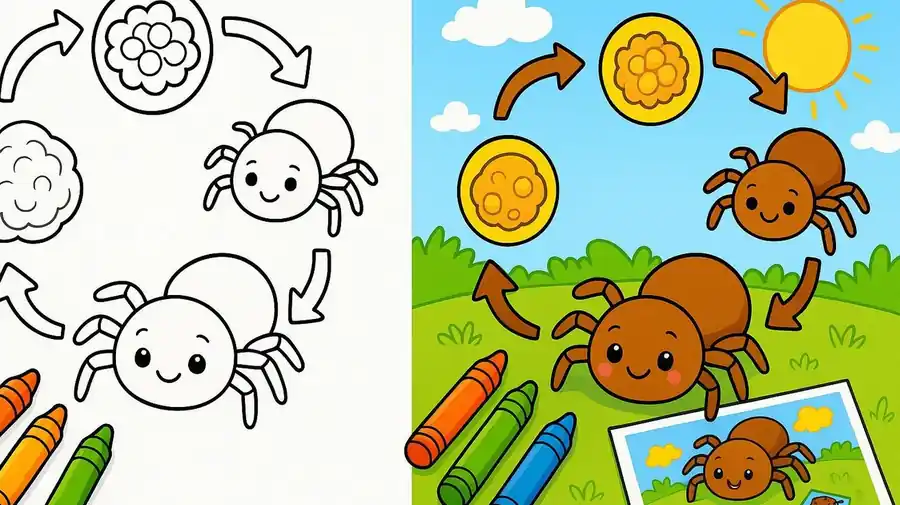
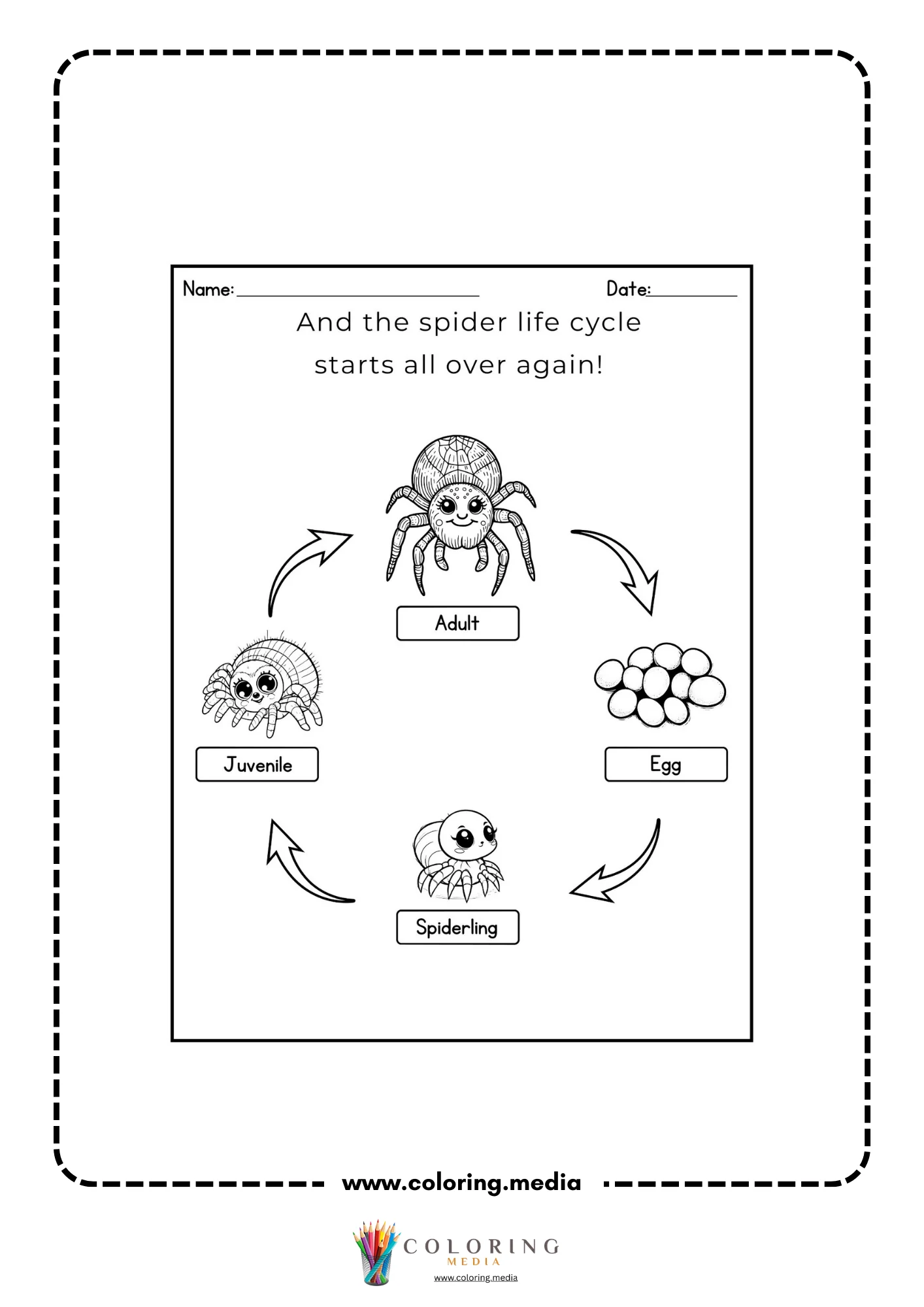
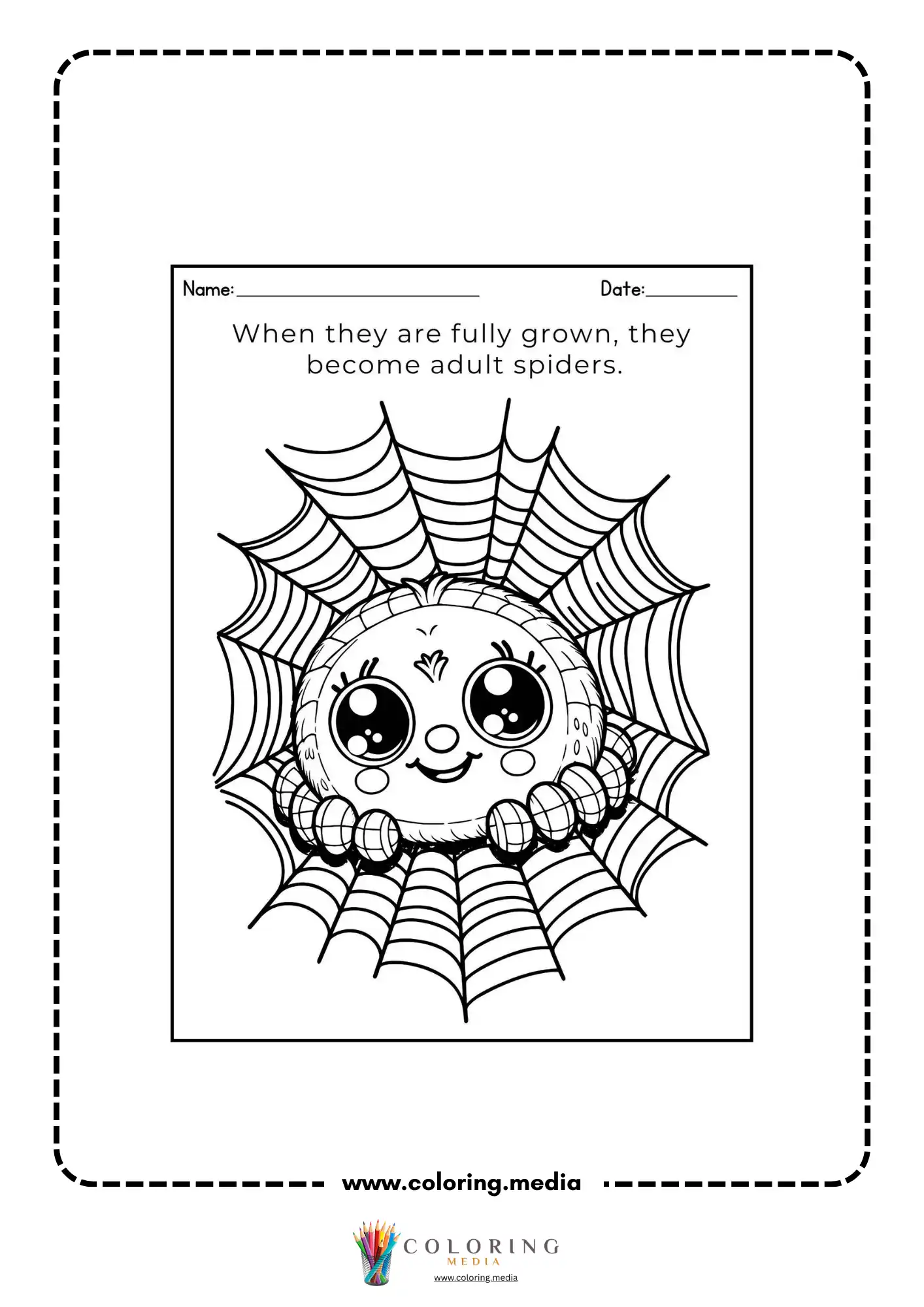
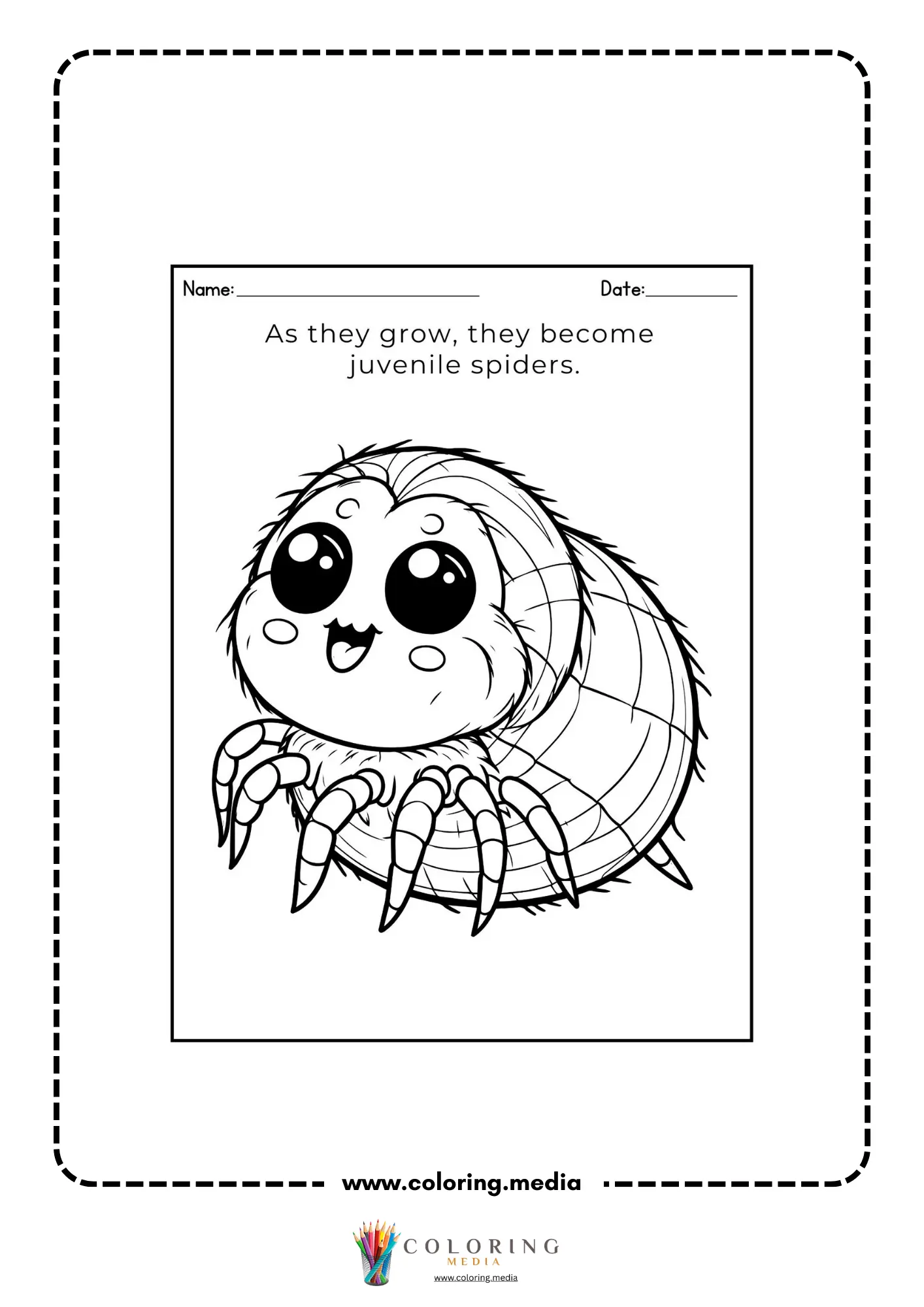
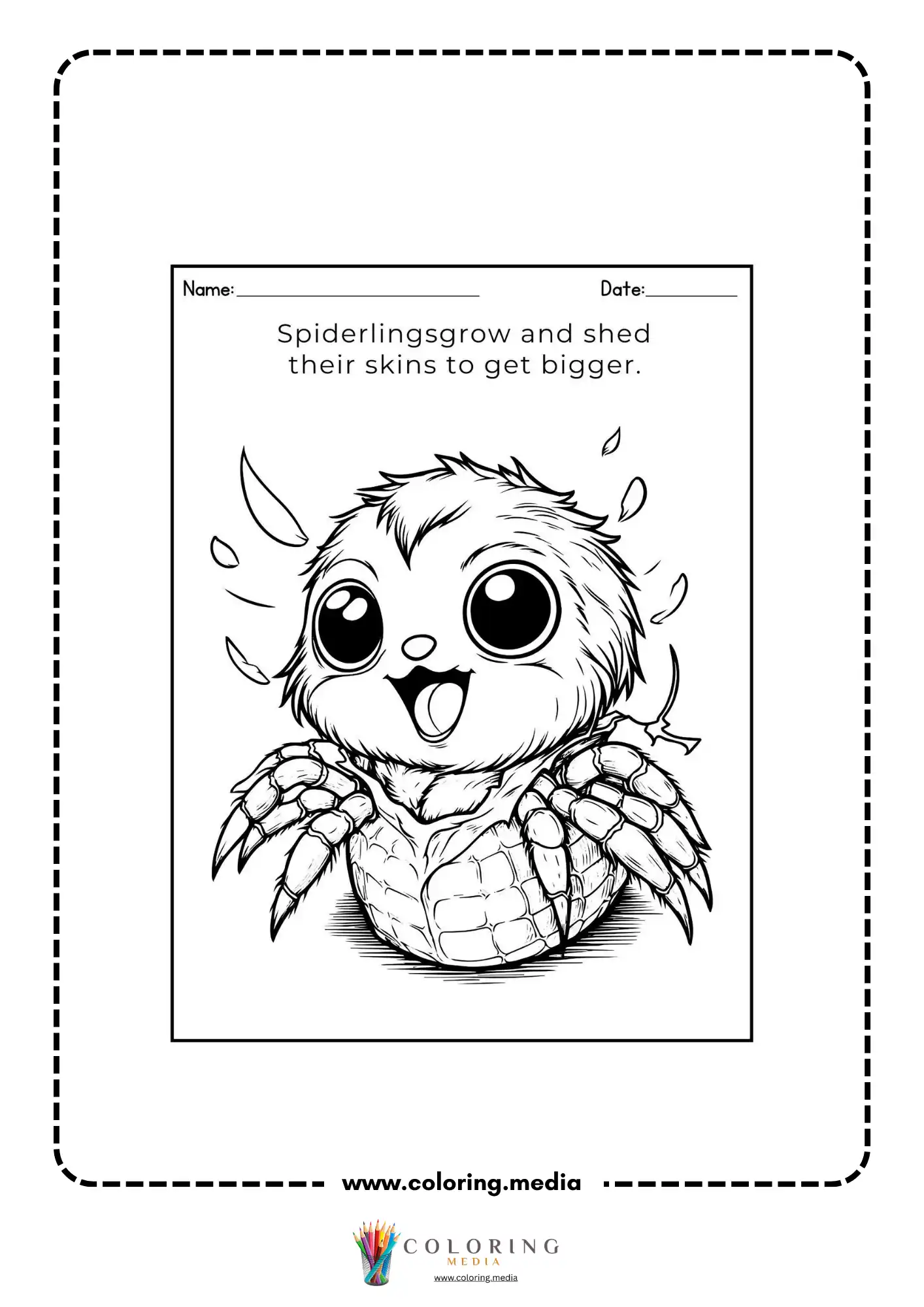
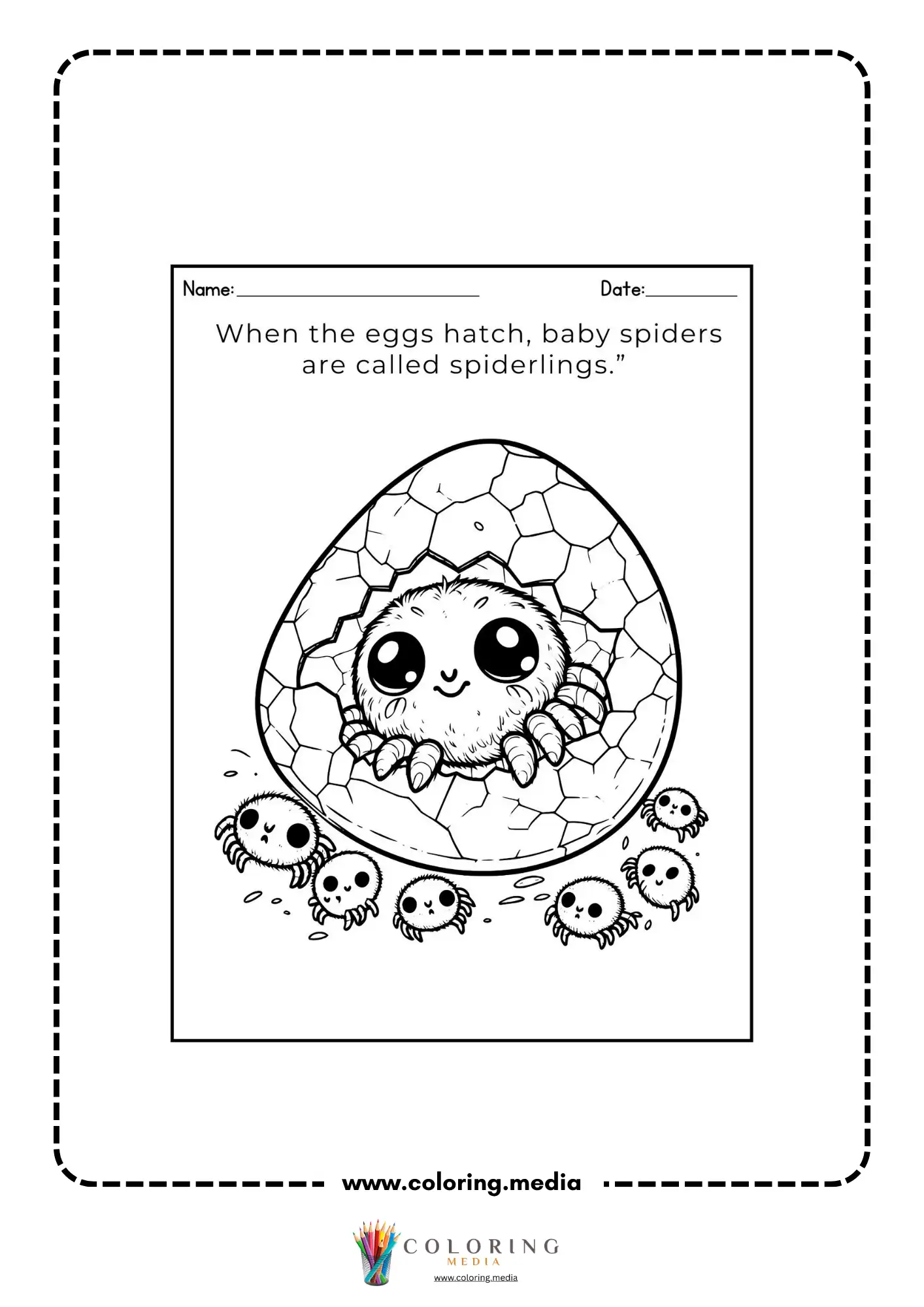
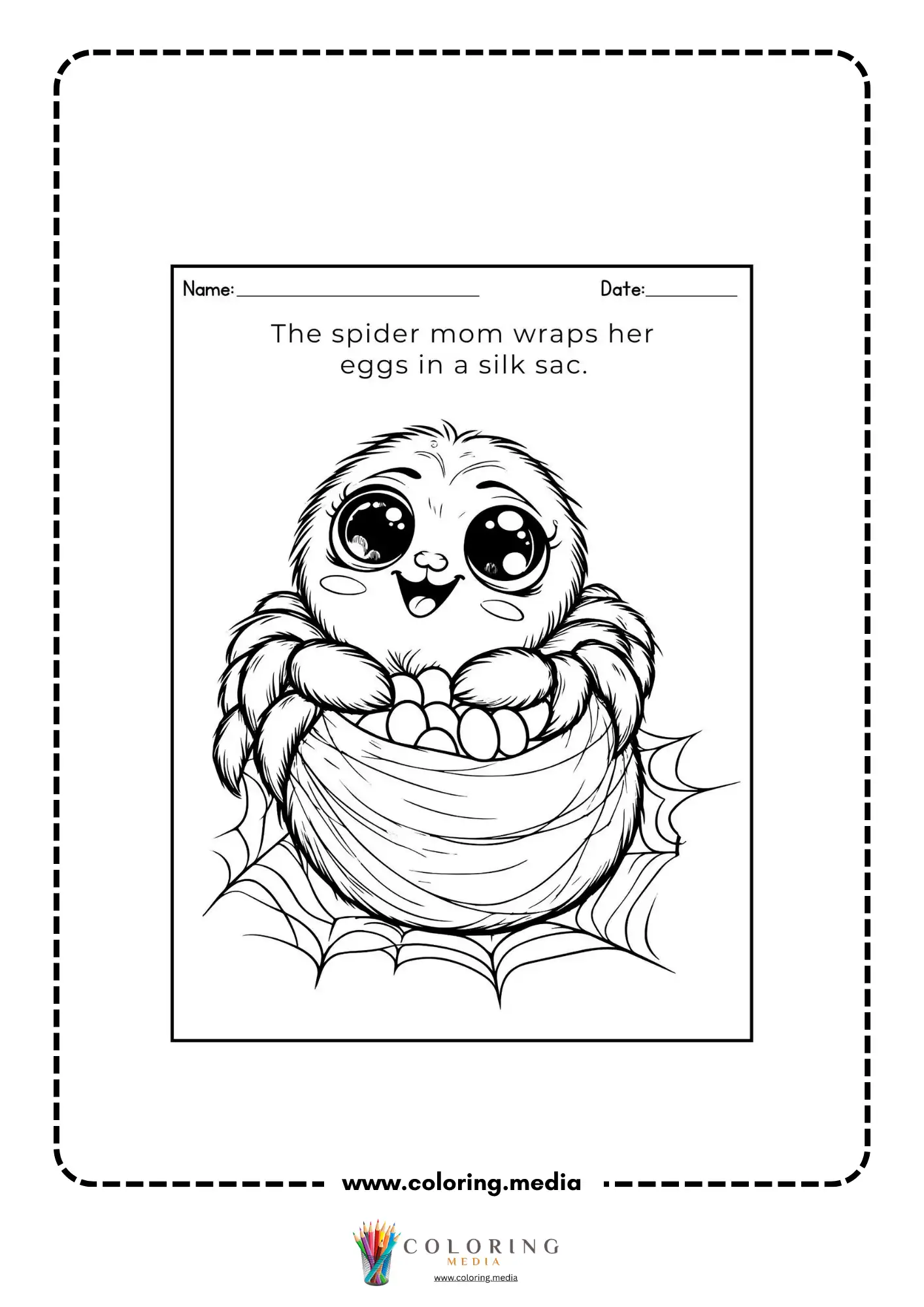
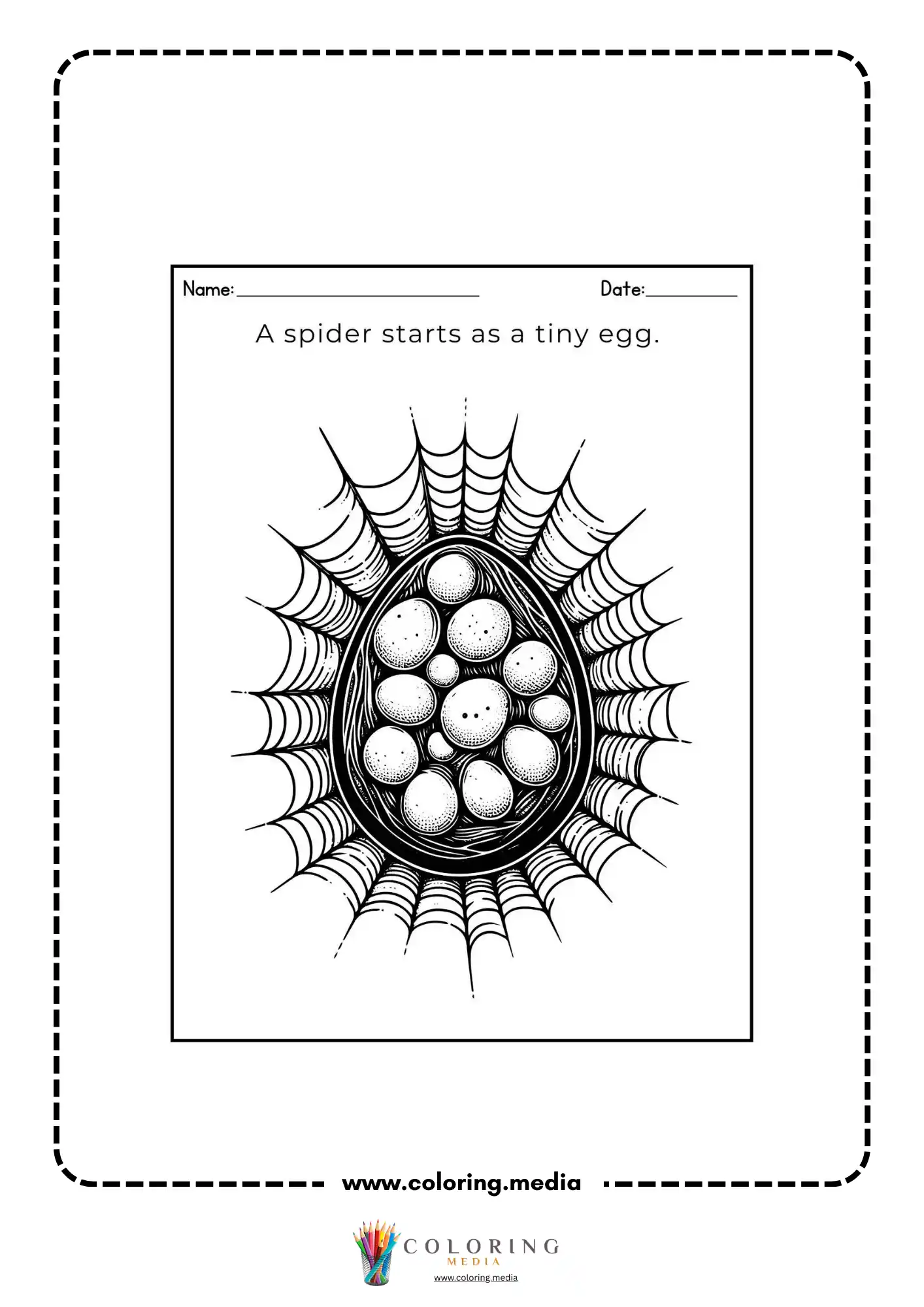
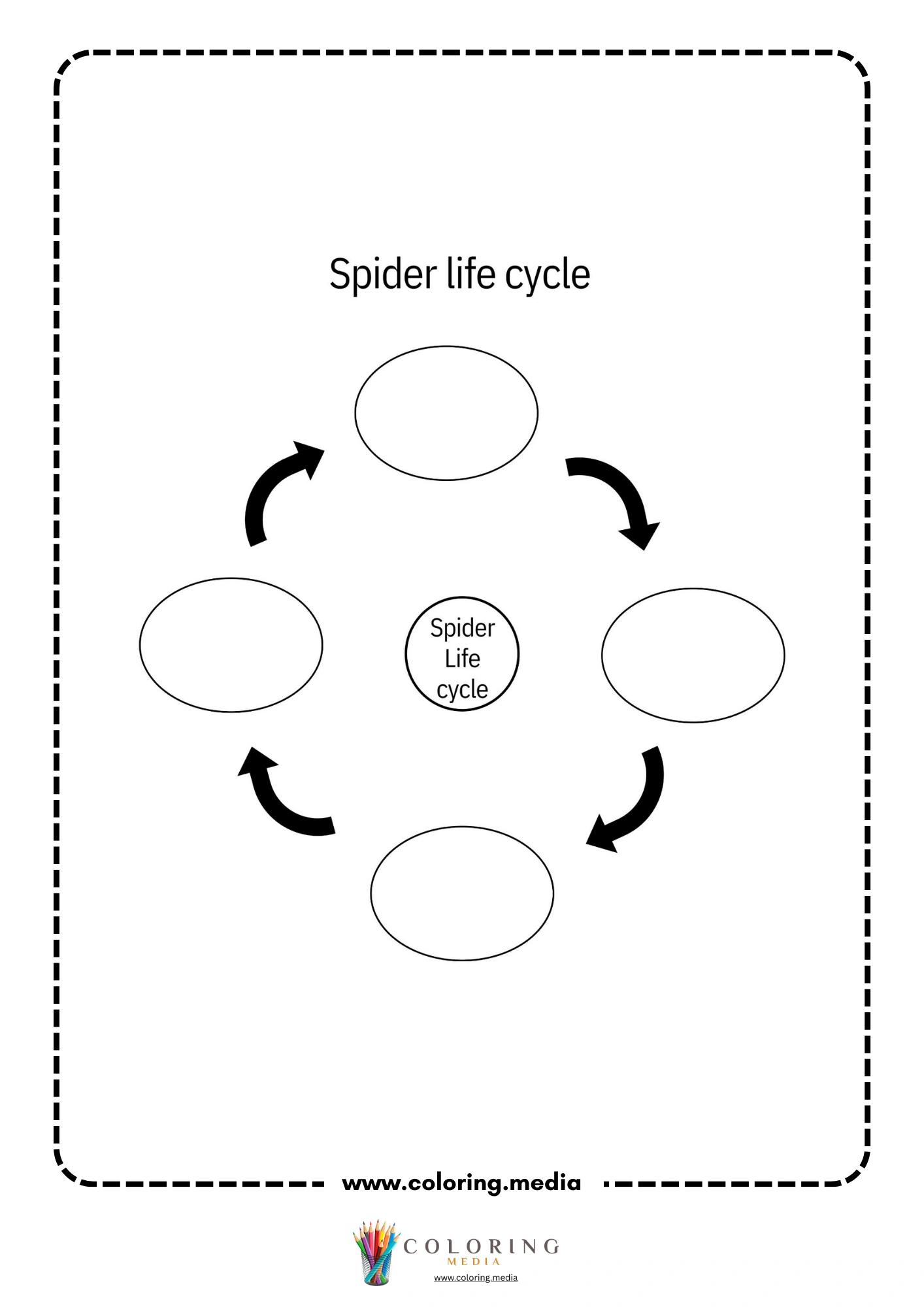
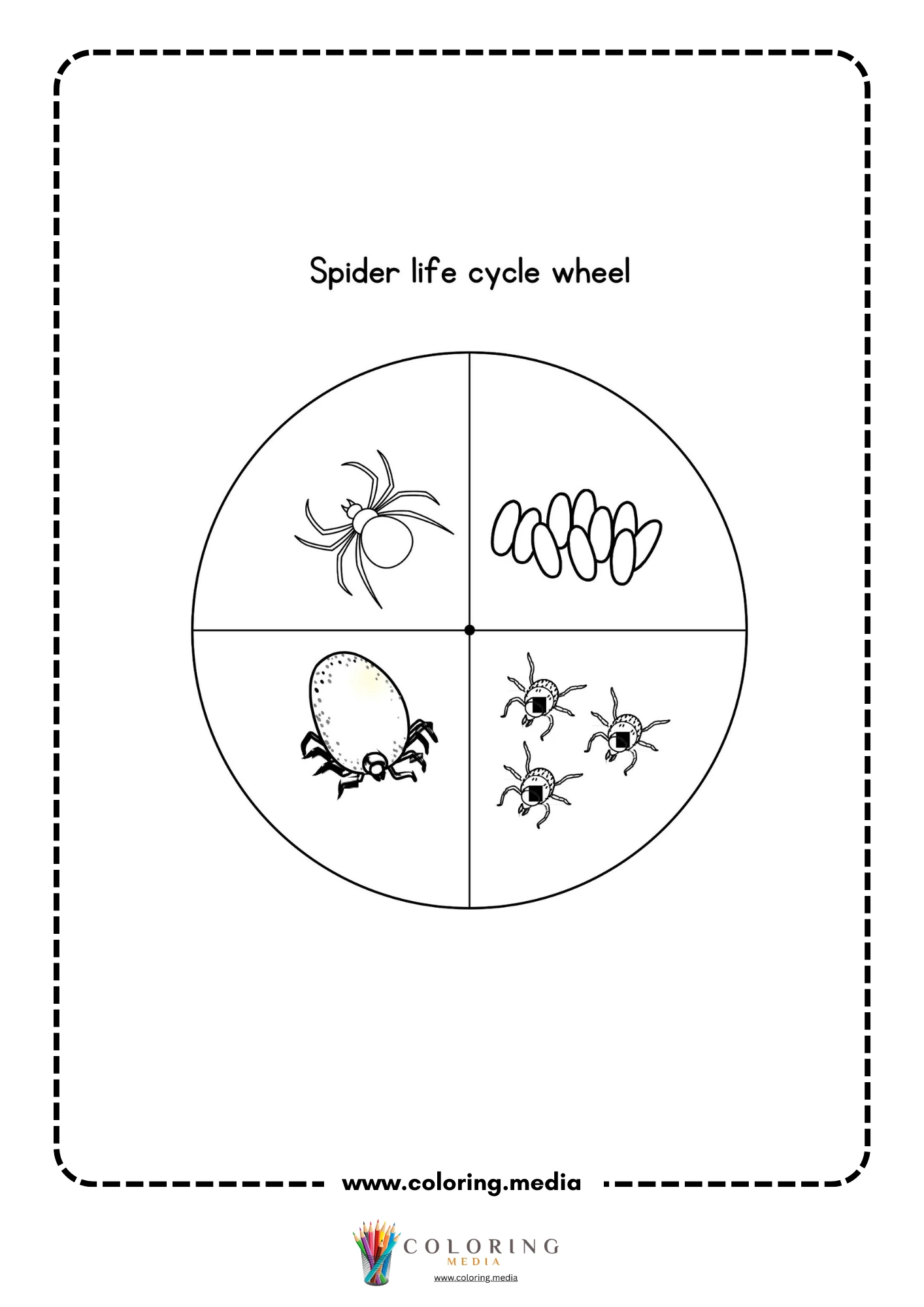
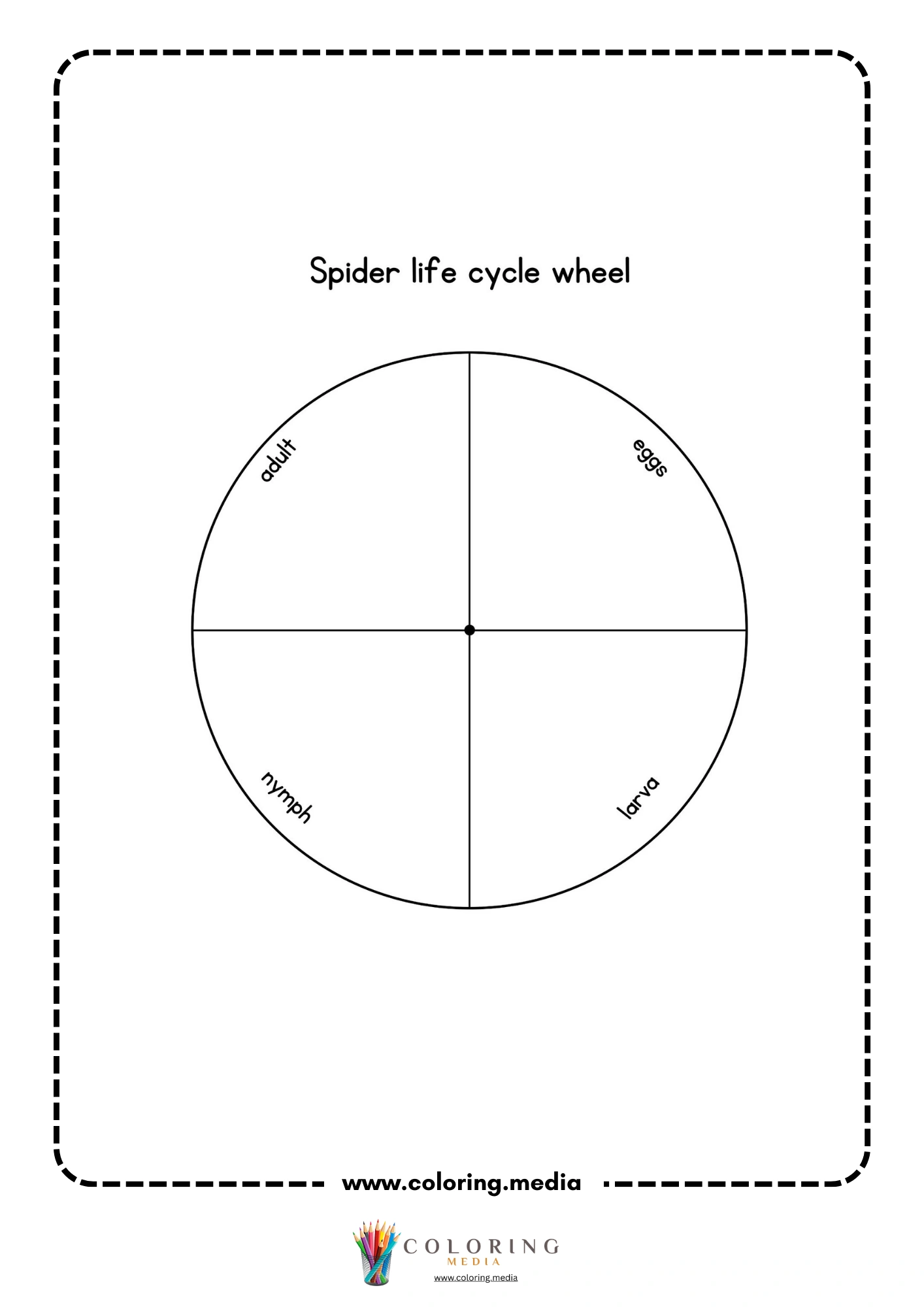
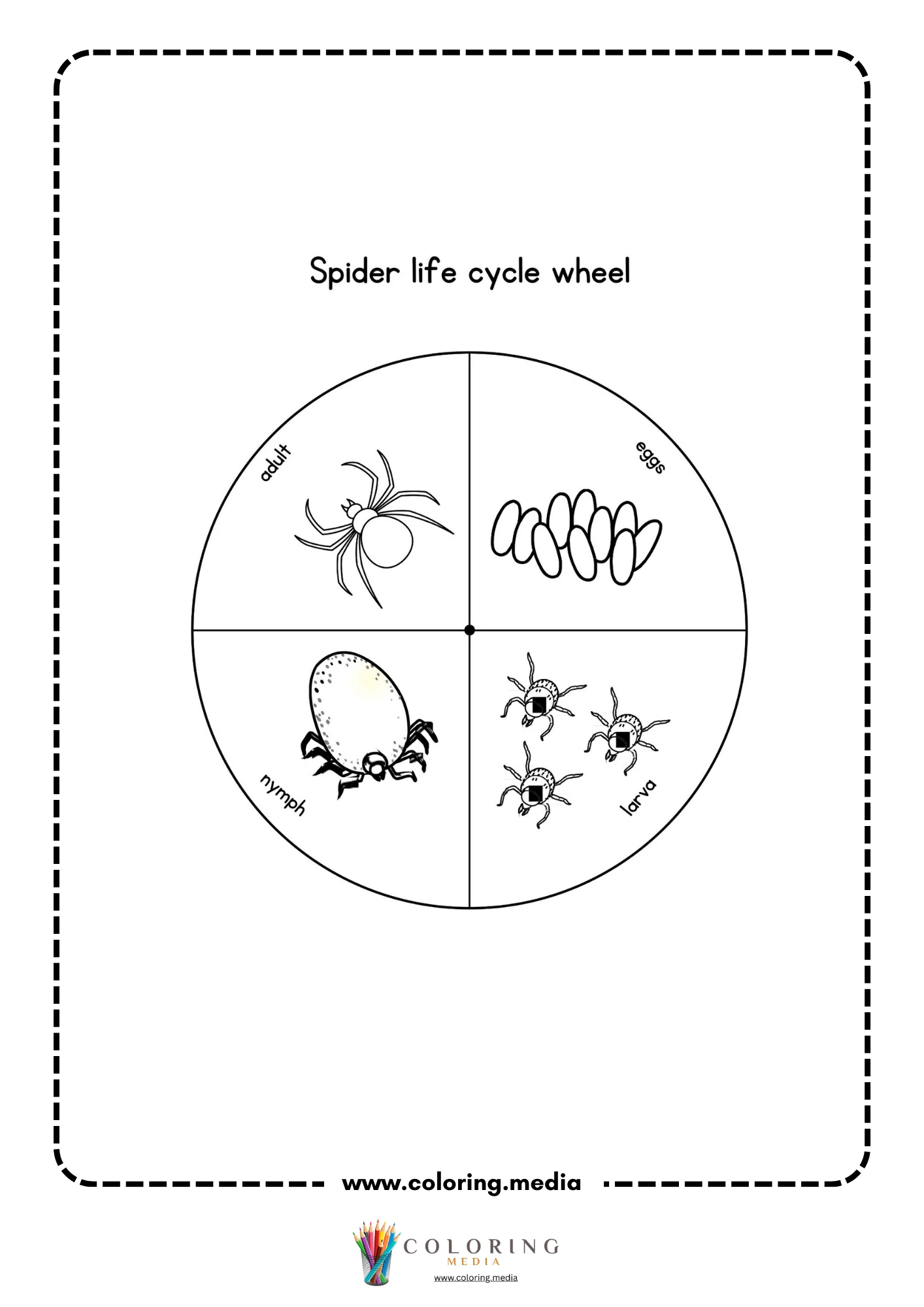
These 12 pages present the spider life cycle in a format specifically designed for kindergarten-age children — cute kawaii-style spider characters at each stage (egg sac, spiderlings hatching, juvenile spider, adult spider), simple circular life cycle diagrams with large arrows, a spinner wheel craft page that children cut and assemble, labeled individual stage pages, and a reading-passage teacher reference. The spider characters are round and expressive rather than realistic, which makes a creature some children find frightening feel approachable and even friendly.
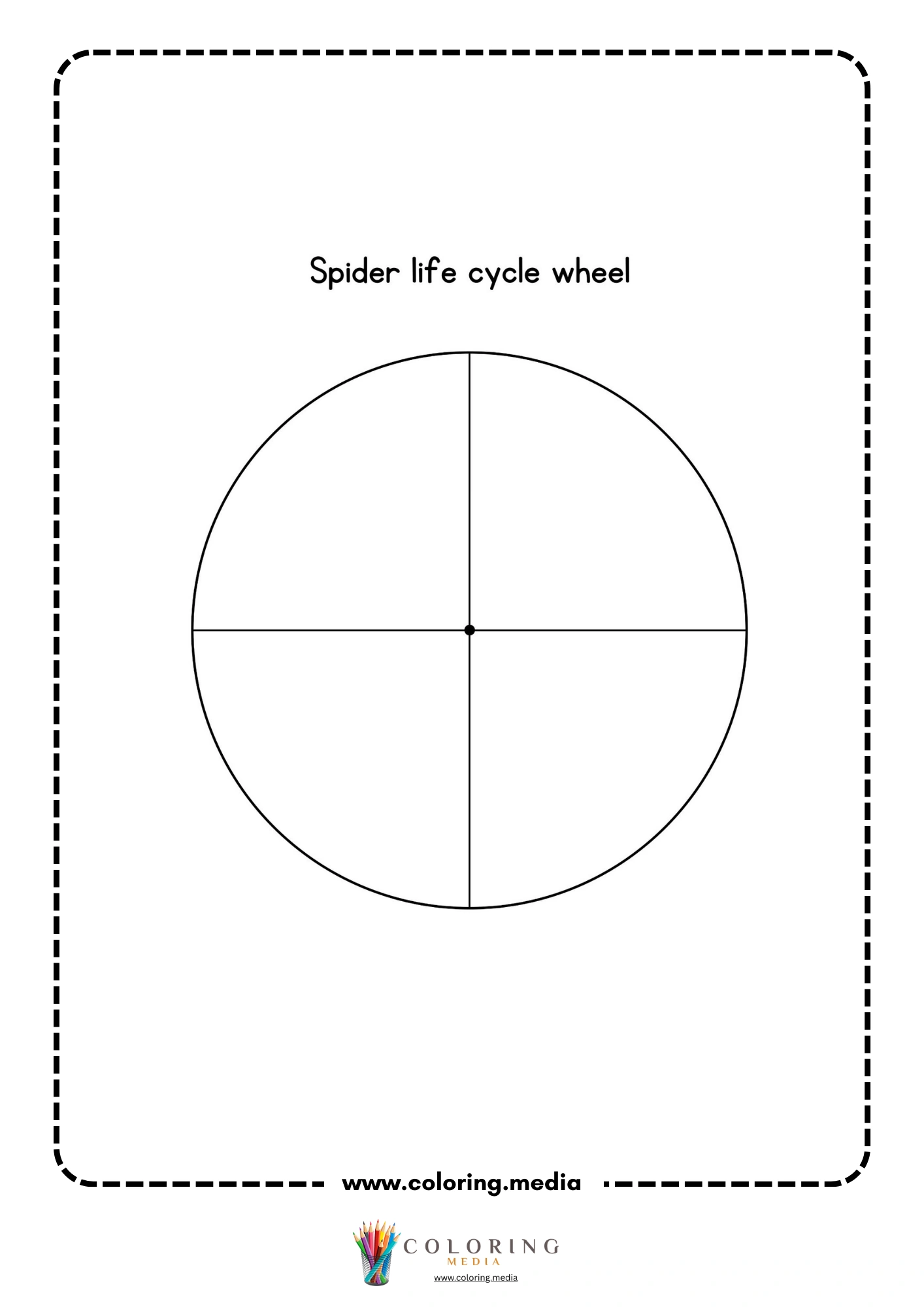
The spinner wheel craft element — where children cut out a circular wheel, add a brad fastener, and spin a pointer to land on each life cycle stage — transforms the worksheet into a hands-on game that can be played repeatedly. Everything here is free to download and easy to print.
Free Printable Kindergarten Spider Life Cycle Coloring Pages
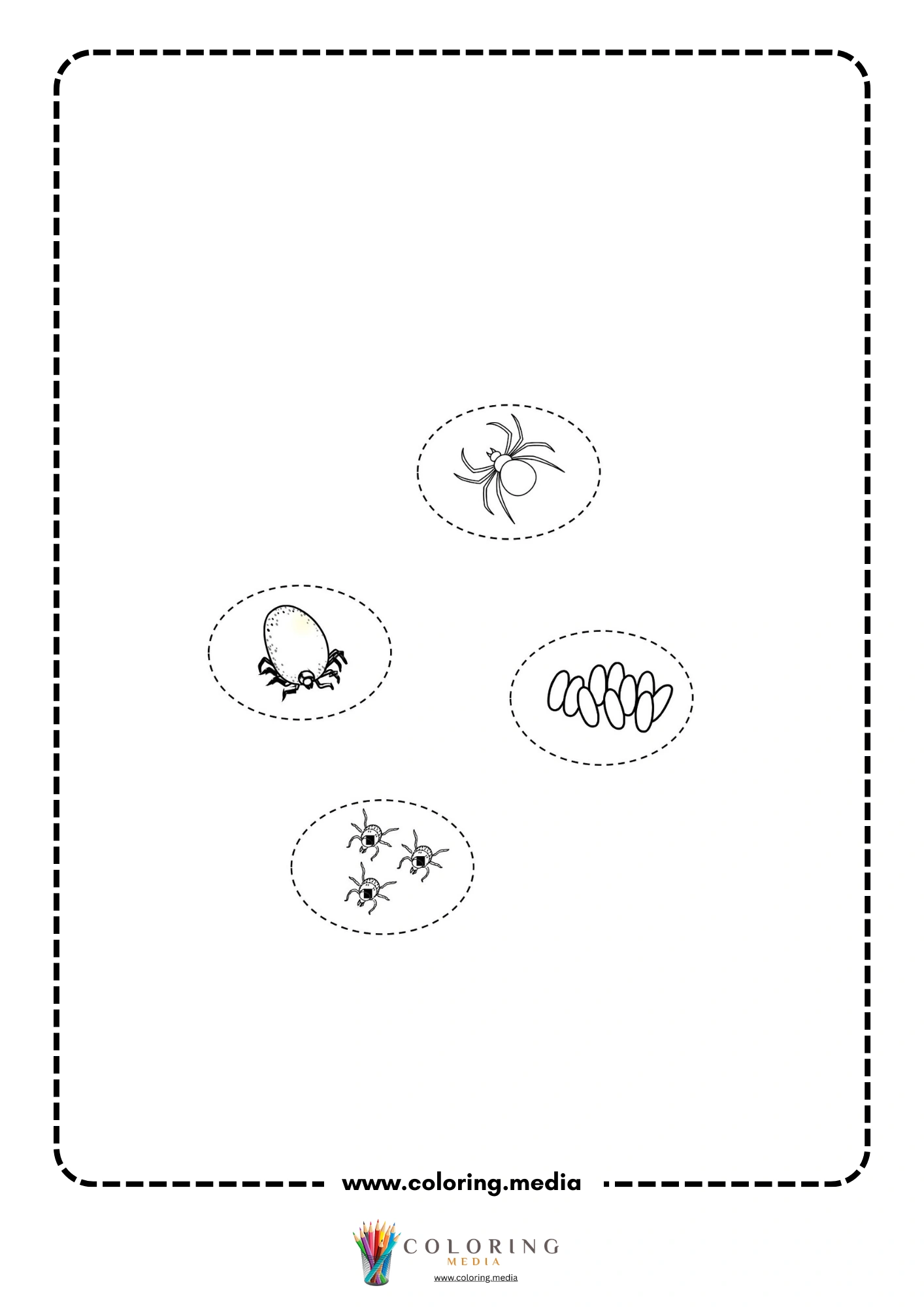
This collection includes 12 printable kindergarten spider life cycle coloring pages featuring kawaii-style spider characters at each developmental stage, simple circular life cycle diagrams, individual stage coloring pages, a cut-and-assemble spinner wheel craft, and a teacher reading-passage reference. Designed specifically for kindergarten-level science instruction. Print on US Letter or A4 paper.
Who Are These Kindergarten Spider Life Cycle Coloring Pages Best For?
Kindergarteners (ages 4-6) are the explicit design target for this set. The kawaii art style — large friendly eyes, rounded bodies — is carefully calibrated to make the spider characters feel non-threatening to children who might otherwise be uncomfortable with spider imagery. A child who colors a cartoon spider egg sac and watches it hatch into tiny baby spiders is building both science knowledge and a more comfortable relationship with a creature they may encounter in daily life.
The spinner wheel craft elevates this set above a standard coloring packet. After coloring and assembling the wheel, children can use it independently to quiz themselves or a partner on the life cycle stages — the spinner becomes a game piece. That shift from coloring-to-game is motivating for kindergarteners and extends the instructional life of the packet beyond a single coloring session.
Early-elementary children in grade 1 who need a review of life cycles as a concept — rather than the spider-specific content — can also use these pages, though the kawaii style and kindergarten reading level mean it works best for its intended age group.
Interesting Spider Life Cycle Facts to Share While Coloring
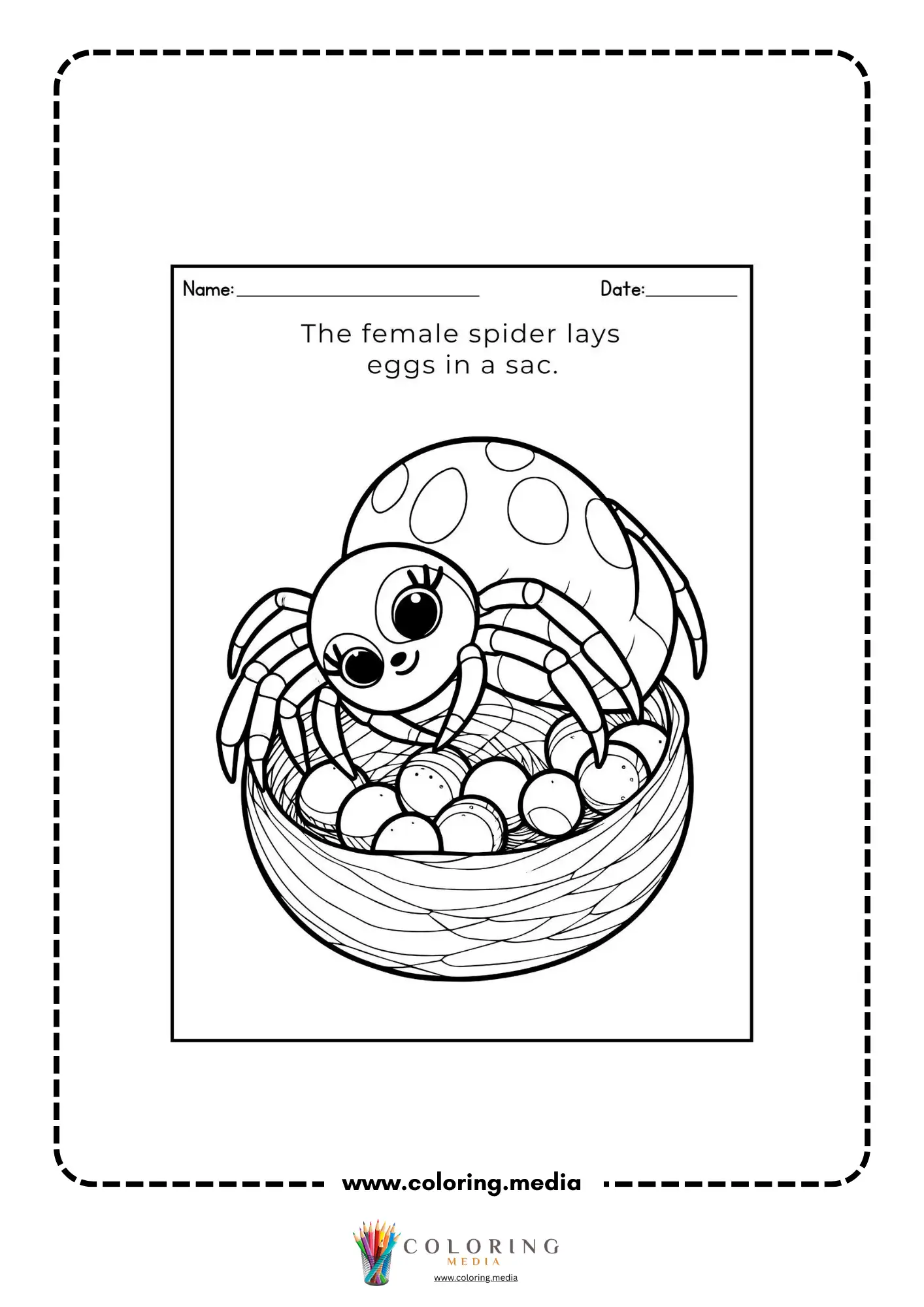
A single spider egg sac can contain hundreds of eggs. The garden spider (Argiope aurantia) lays 400-1,400 eggs in a single sac, wrapped in layers of silk that protect them through winter. When the eggs hatch in spring, the spiderlings often disperse by a behavior called ballooning — standing on a high point, releasing a thread of silk, and floating away on air currents.
Spiders grow by molting. Unlike mammals and birds, spiders have a hard exoskeleton that does not grow with them. To get larger, a spider must shed its entire outer shell in a process called ecdysis — a vulnerable period where the animal hides and waits for its new soft exoskeleton to harden.
Most spider species do not take care of their young after the egg sac is made — the mother may guard the sac but rarely feeds the babies after they hatch. Wolf spider mothers are an exception: they carry the egg sac attached to their abdomen and allow the hatched spiderlings to ride on their back for a week or two.
Creative Spider Life Cycle Coloring and Craft Ideas
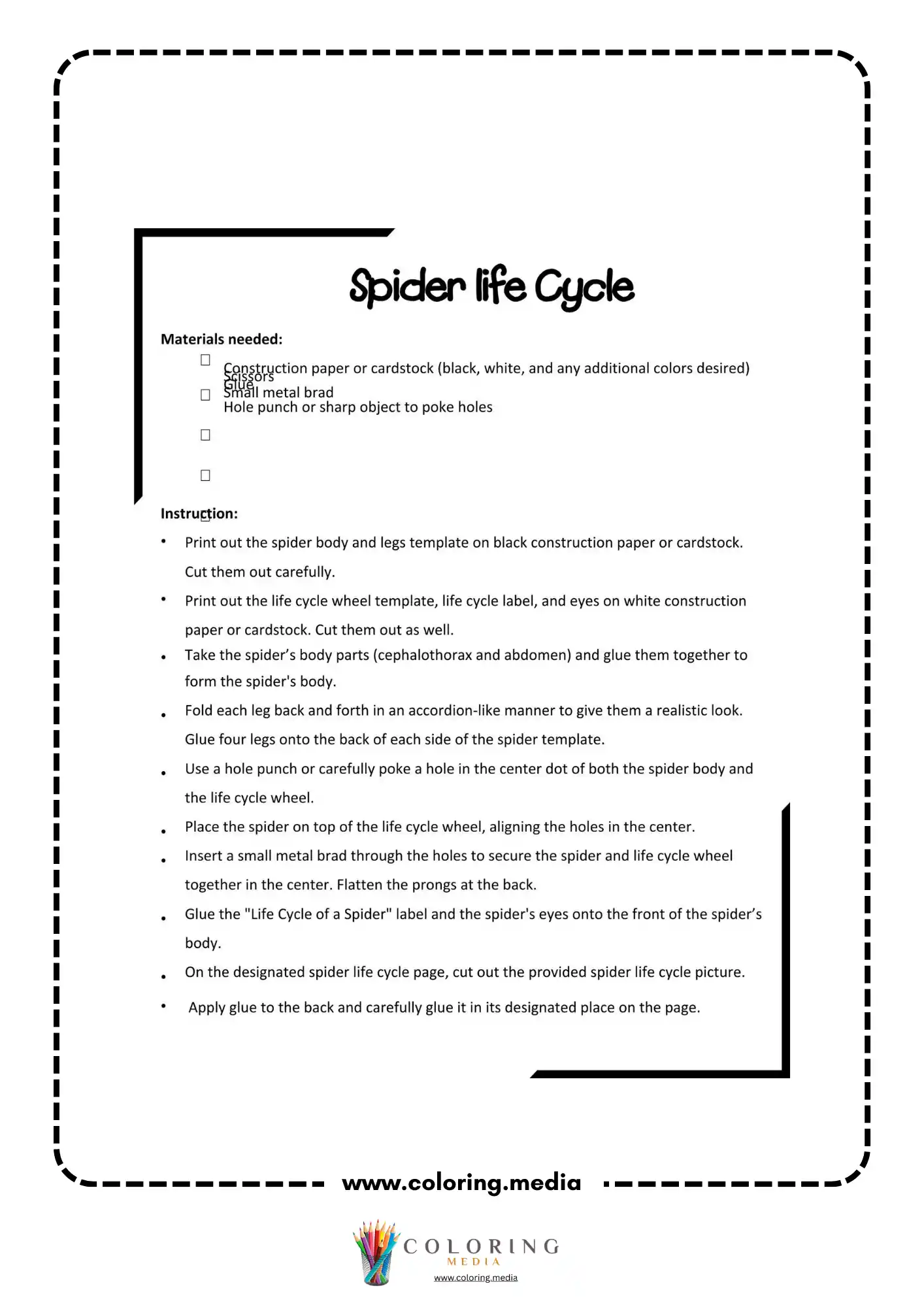
Spinner Wheel Assembly Color the spinner wheel page, cut out the wheel and pointer, punch a hole in the center, and attach with a brad fastener — then use the assembled wheel to quiz a partner on the life cycle stages.
Stage Sequencing Race Cut the individual stage pages into cards, mix them up, and time how fast each child can correctly sequence them from first to last.
Web Weaving Art While coloring the adult spider page, weave a simple web using thread or yarn on a small cardboard frame — reinforce the connection between the animal and its most recognizable behavior.
Nature Observation Go outside and look for a real spider web. Sketch what you observe — how many anchor points, what pattern in the center, any signs of the spider itself.
Egg Sac Count After reading that some spiders lay hundreds of eggs per sac, draw 100 small dots on a page and discuss how different 100 feels from 400 or 1,000.
Spider vs. Insect Sort After coloring the spider page (8 legs, 2 body segments), compare it to an insect coloring page (6 legs, 3 body segments) and sort a group of animal images into spider or insect categories.
Classroom Bulletin Board Assemble a full life cycle display using the circular diagram as the center and individual stage pages arranged around it with arrows connecting them.
Vocabulary Card Set Write each stage name on the back of its individual page — egg sac, spiderling, juvenile, adult — for a portable science vocabulary reference.
How to Print These Kindergarten Spider Life Cycle Coloring Pages
Each page downloads as a PDF formatted for US Letter and A4 paper. For the spinner wheel craft, print on 67 lb cardstock so the wheel is sturdy enough to handle the brad fastener and repeated spinning. Standard copy paper works for all other pages. Grayscale printing is fine.
Explore More Science & Nature Coloring Pages
If you enjoyed these pages, you may also like:
Spider Life Cycle Kindergarten Coloring Pages
Ladybug Life Cycle Coloring Pages
Butterfly Life Cycle Coloring Pages
Life Cycle of a Frog Coloring Pages
Science & Nature Coloring Pages