
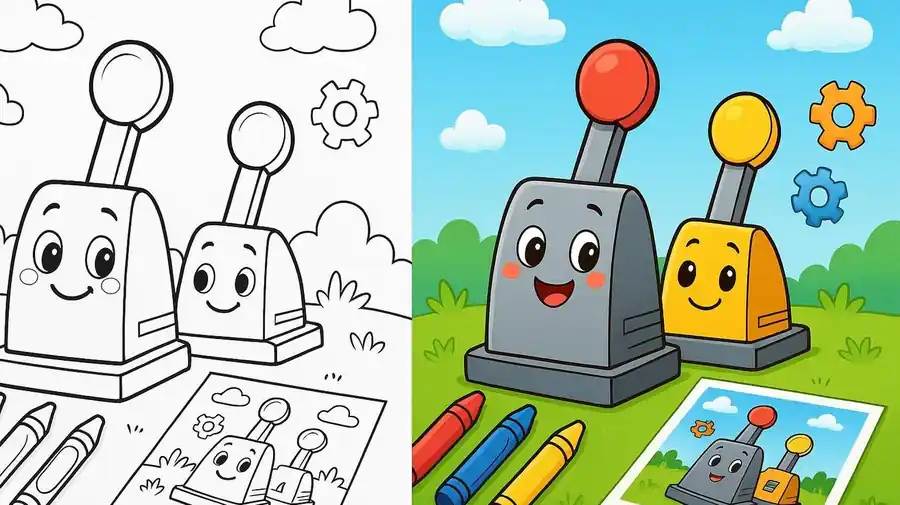
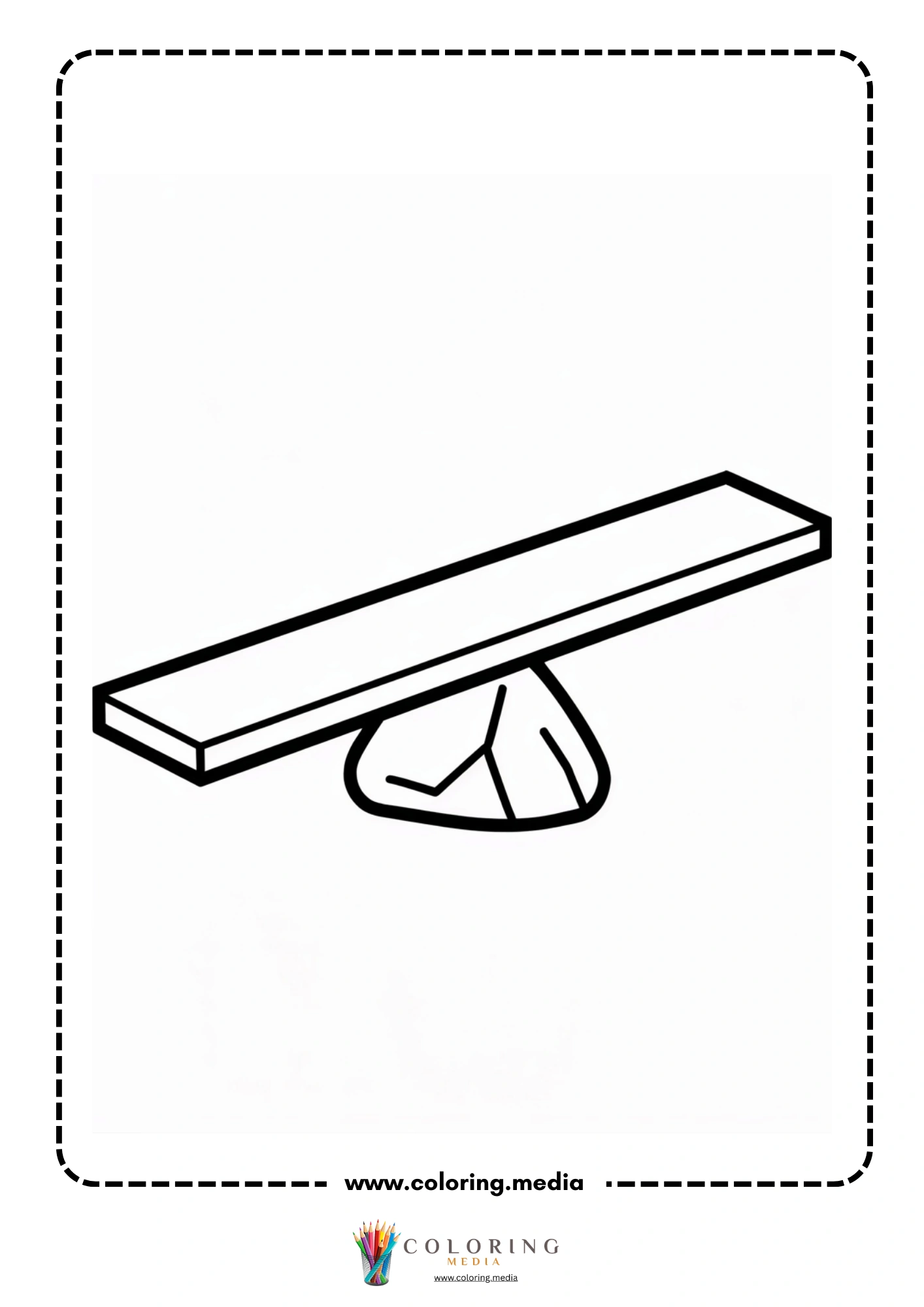
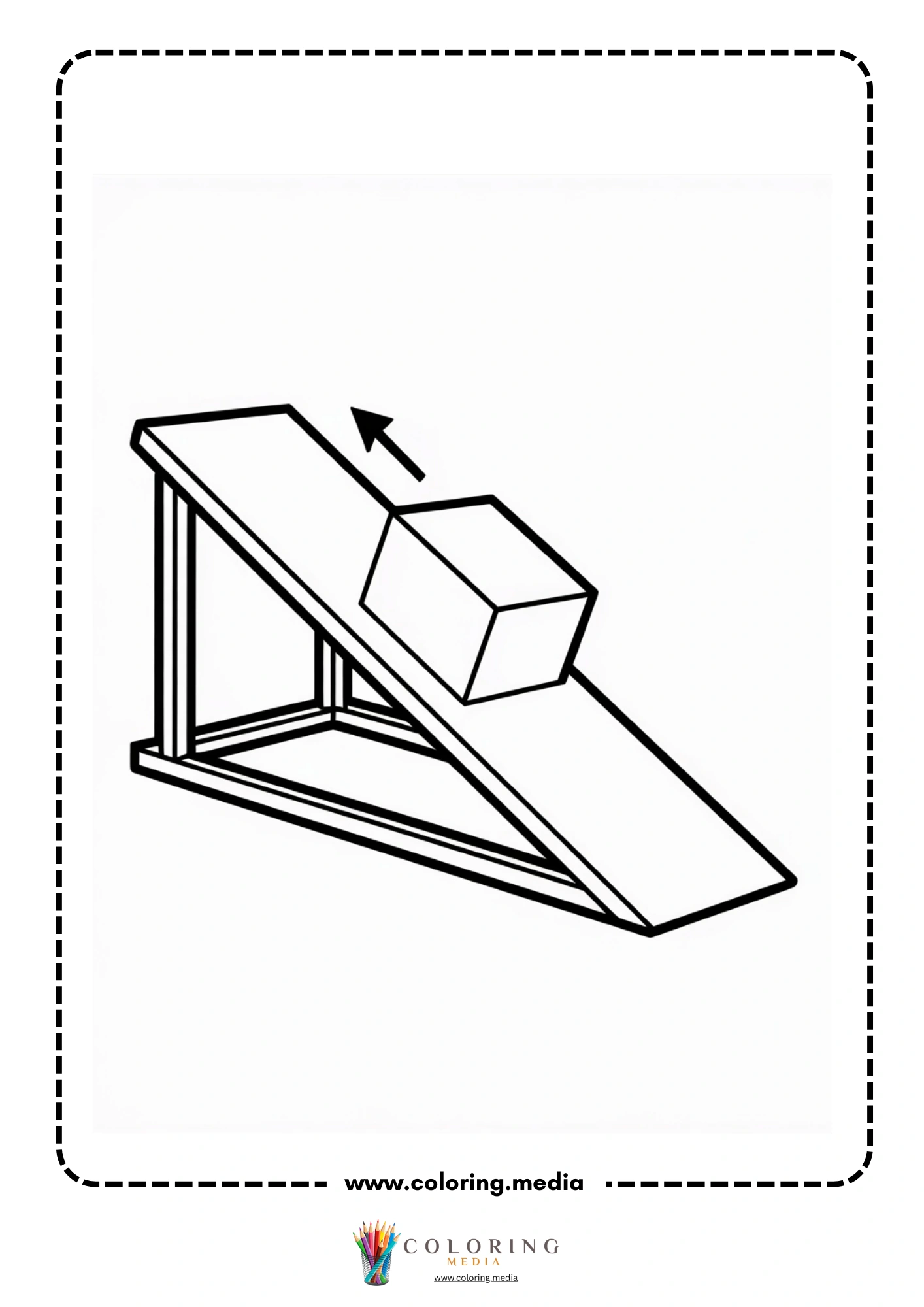
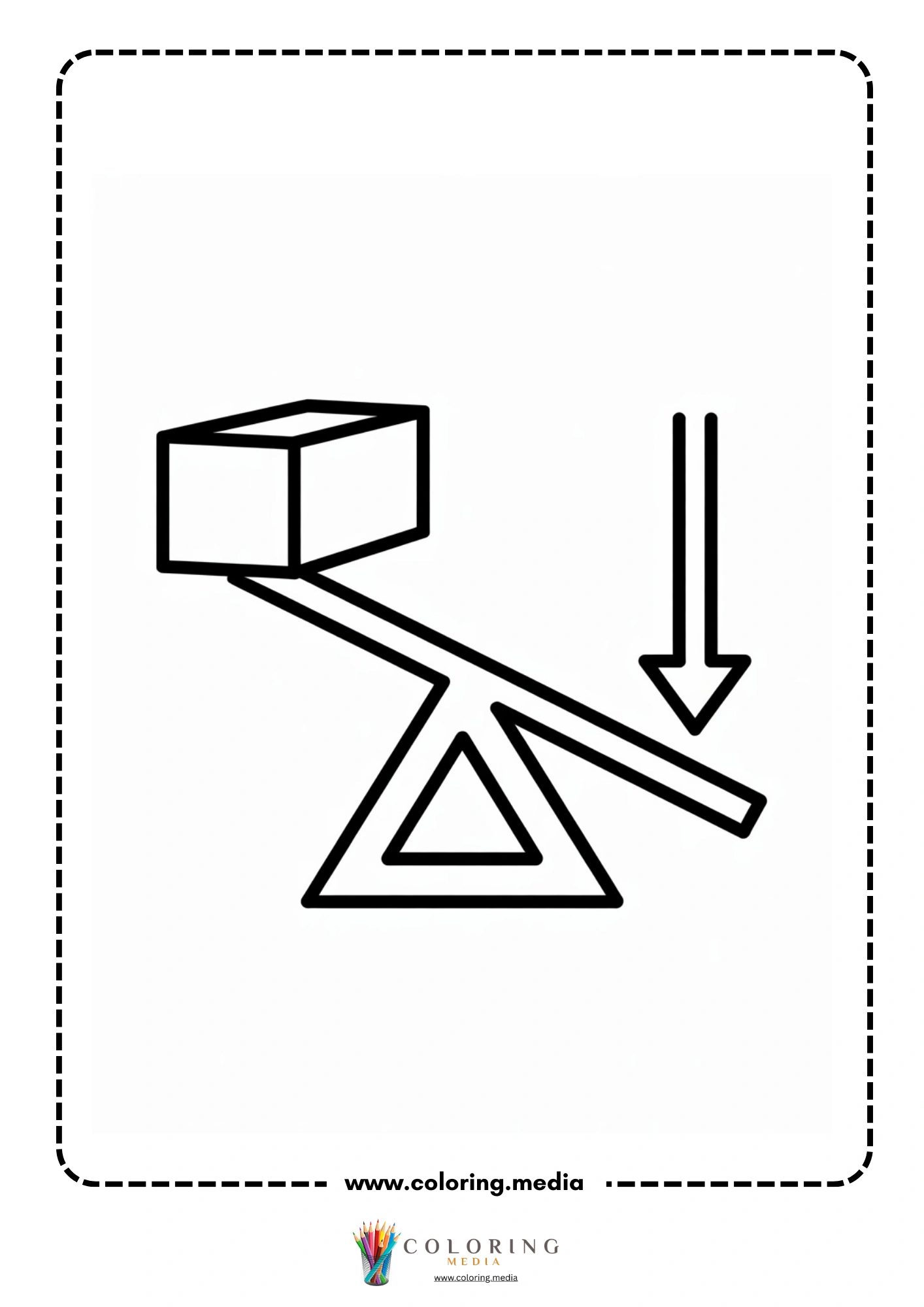
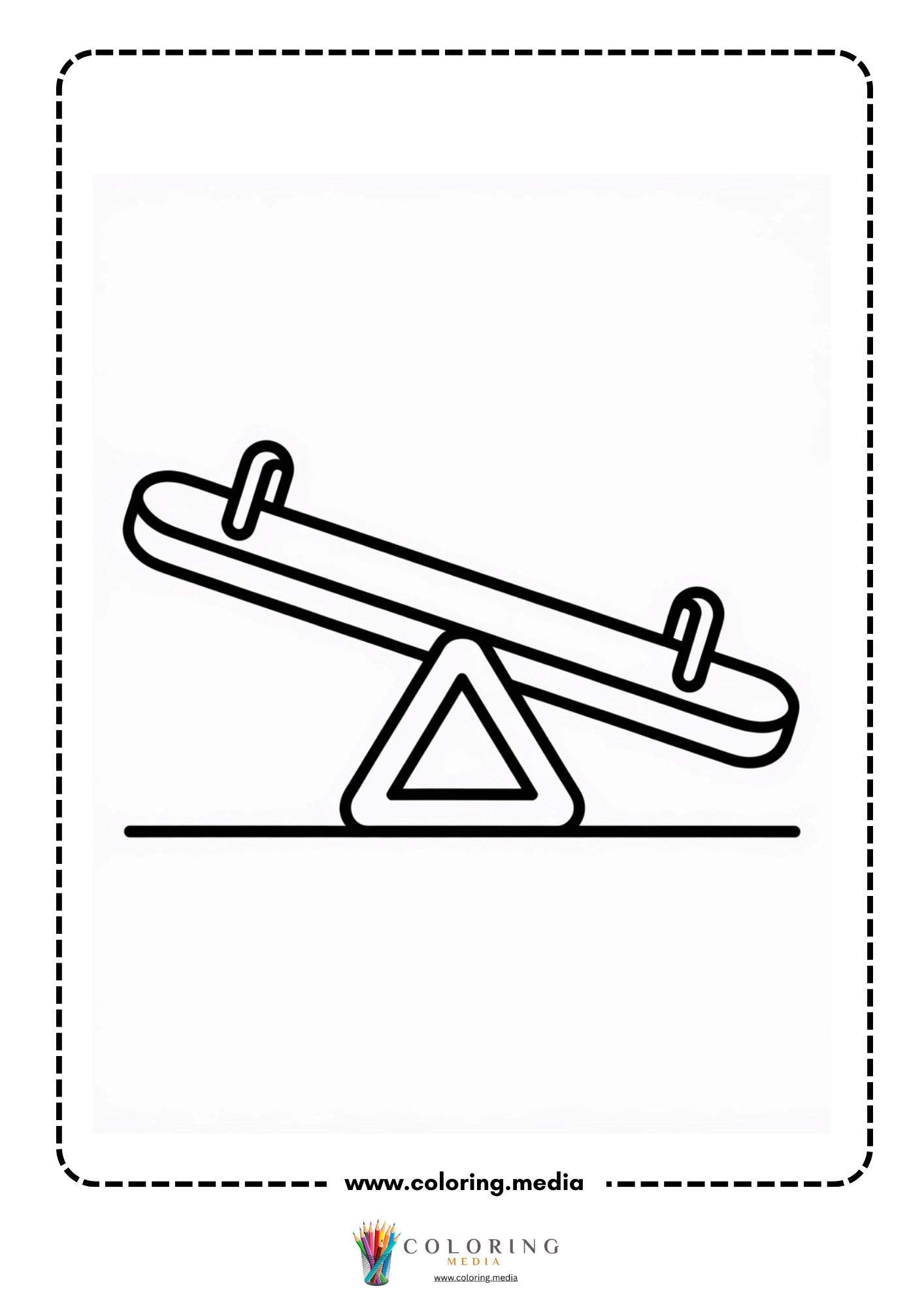
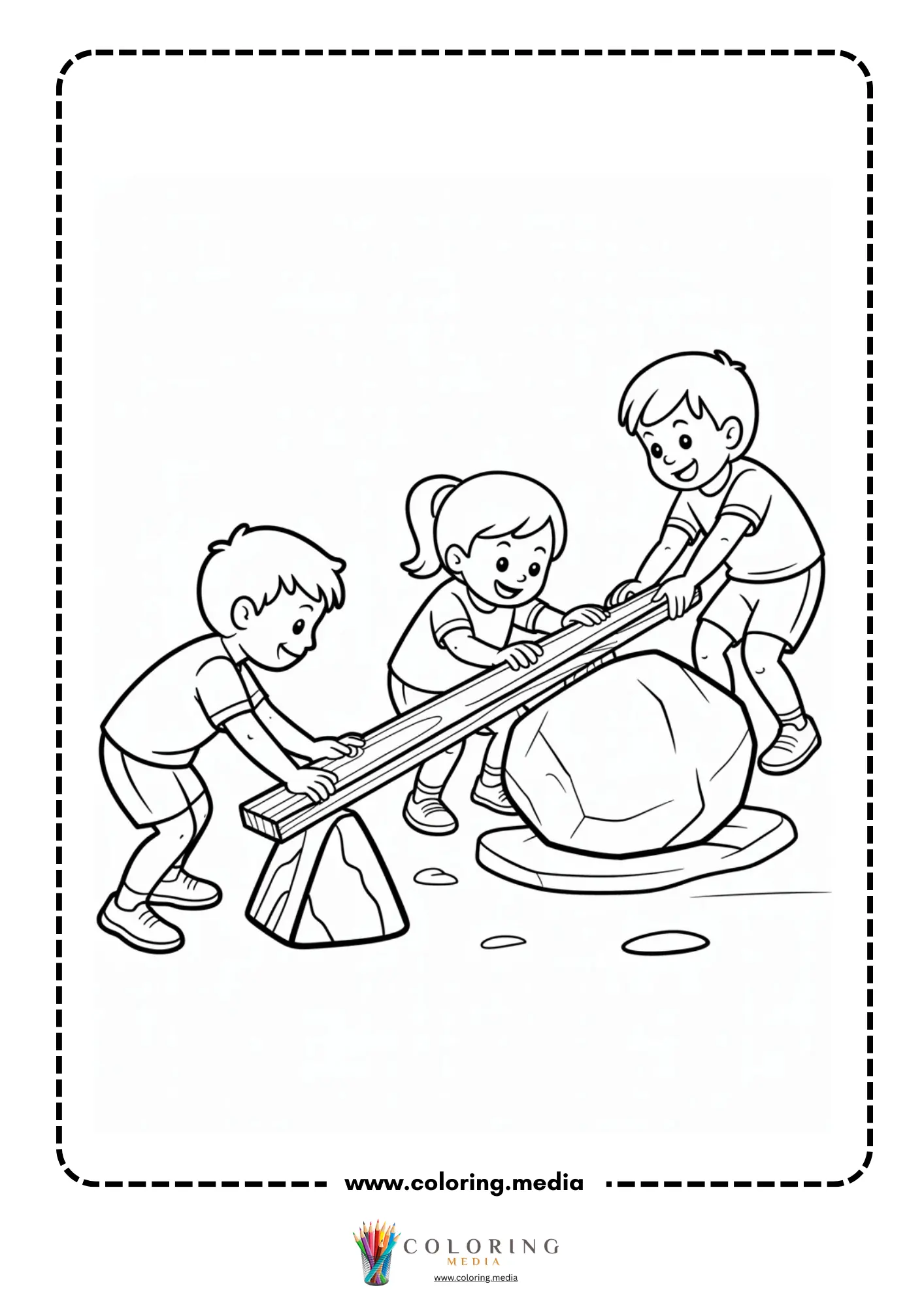
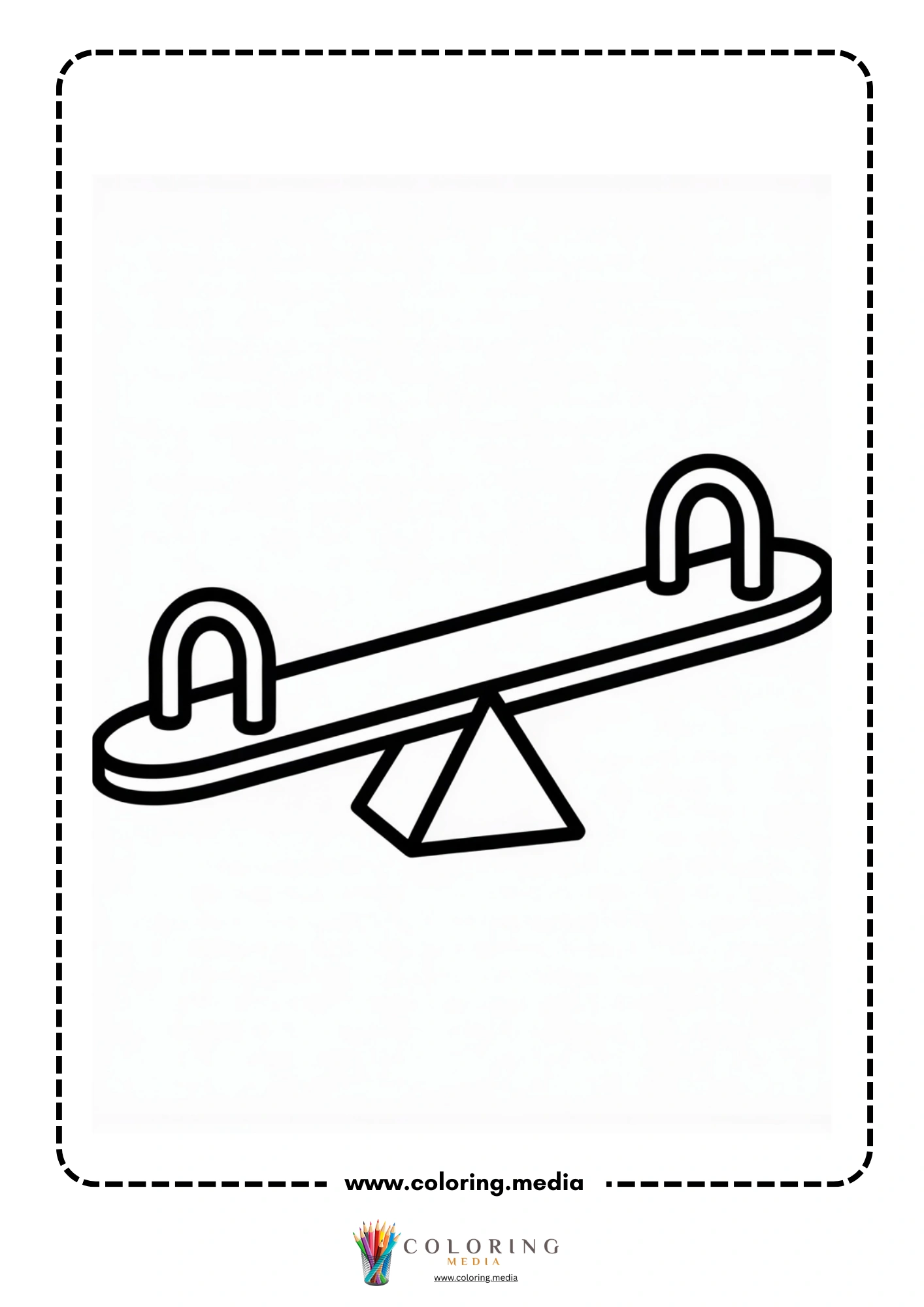
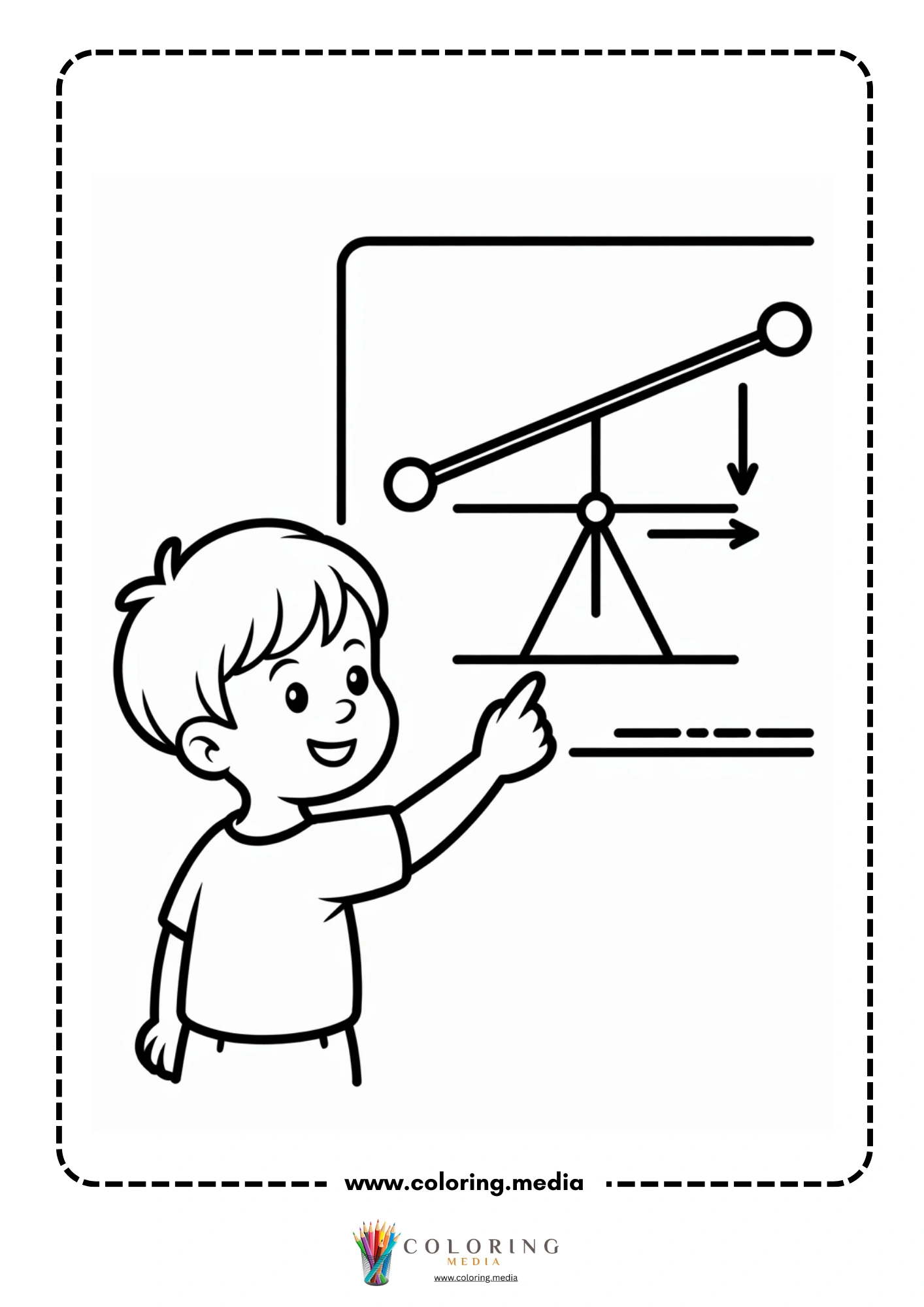
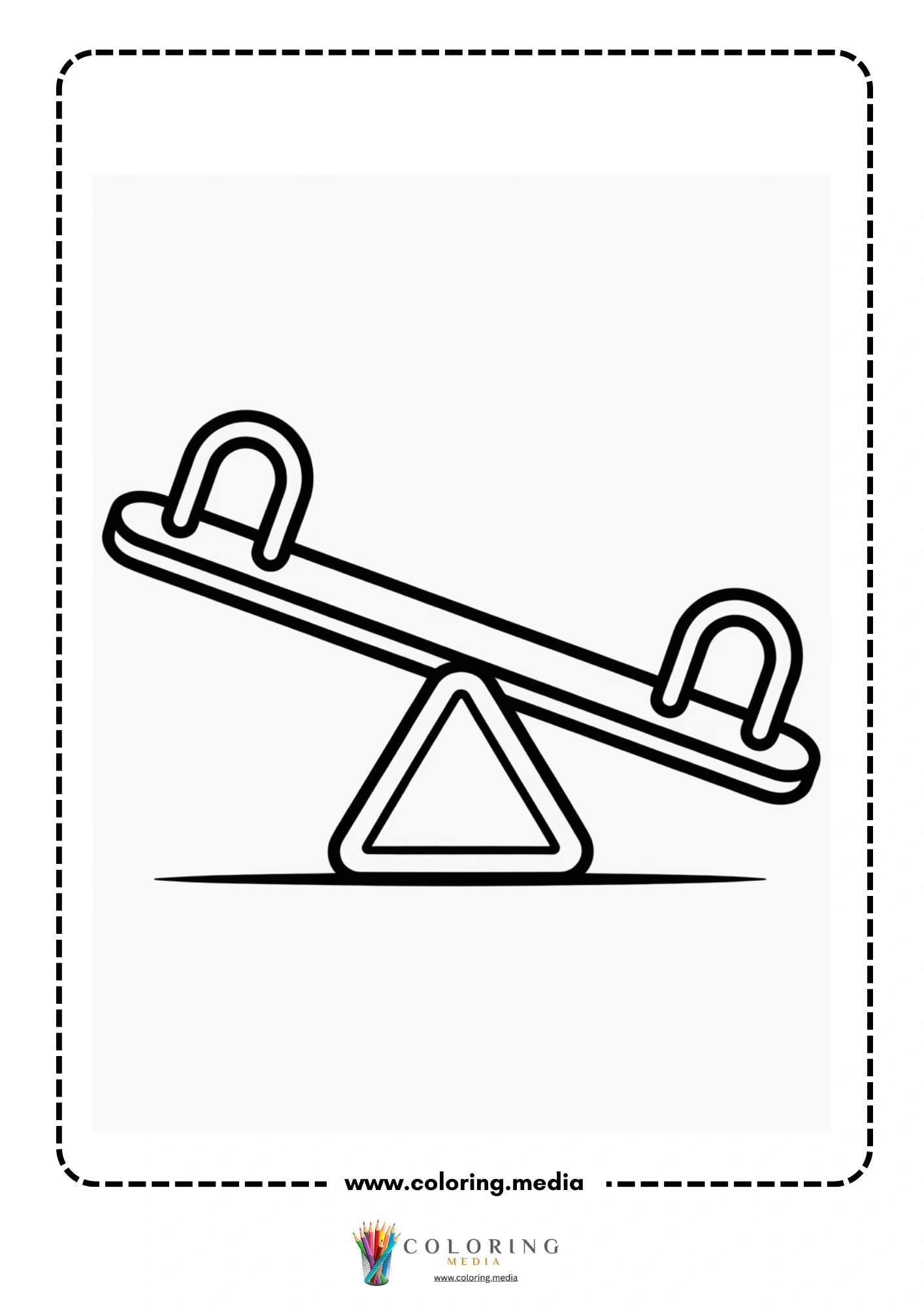
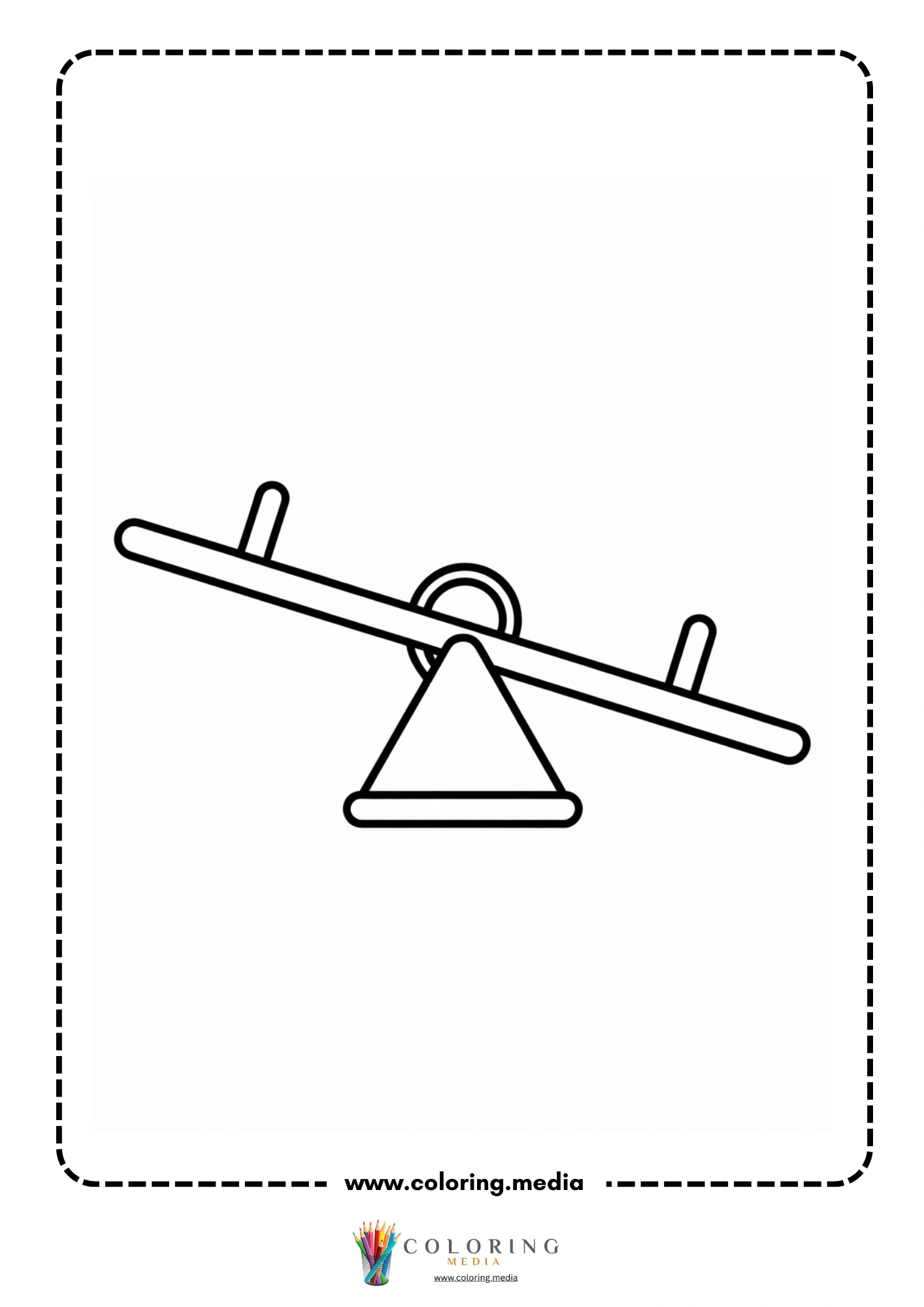
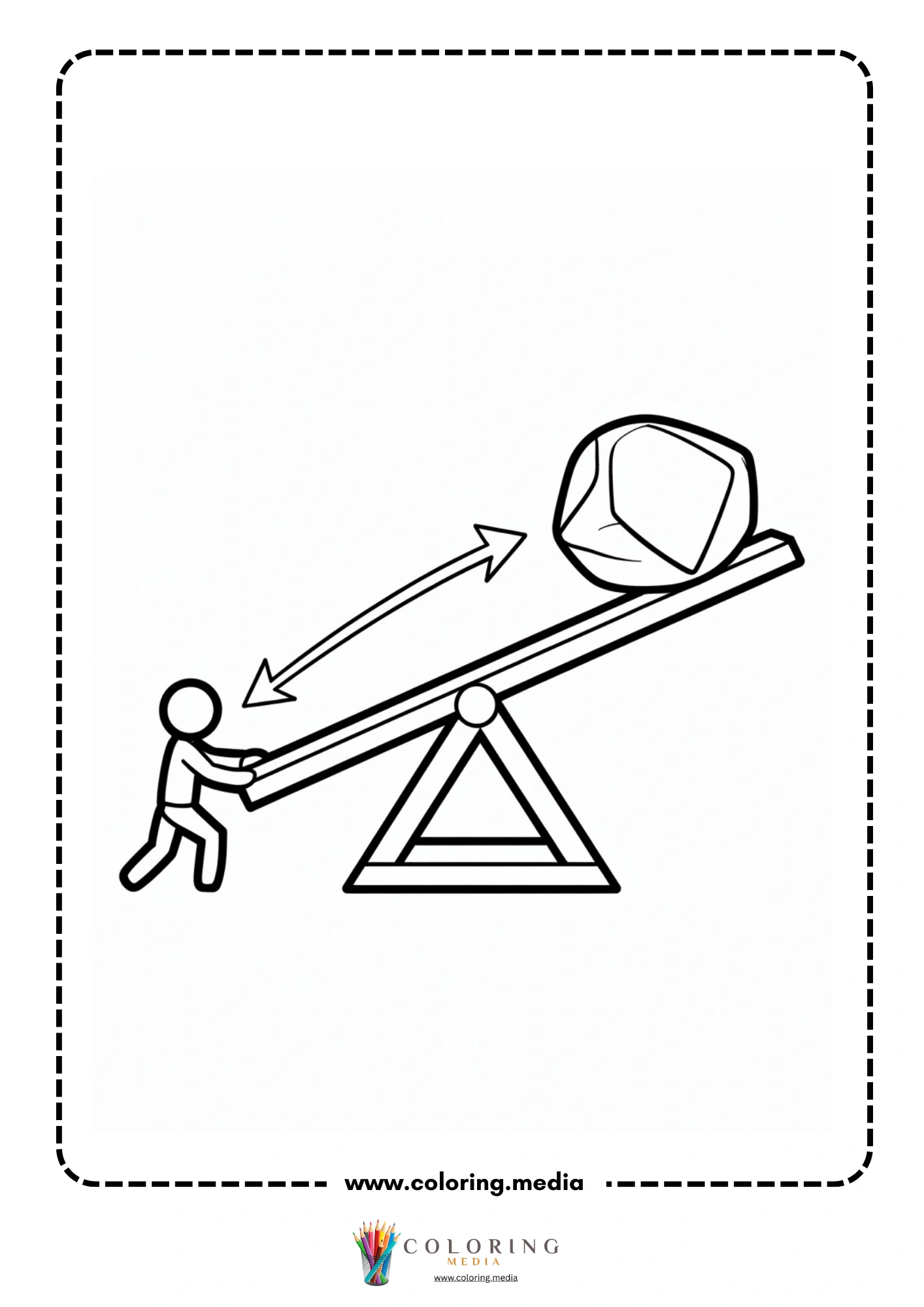
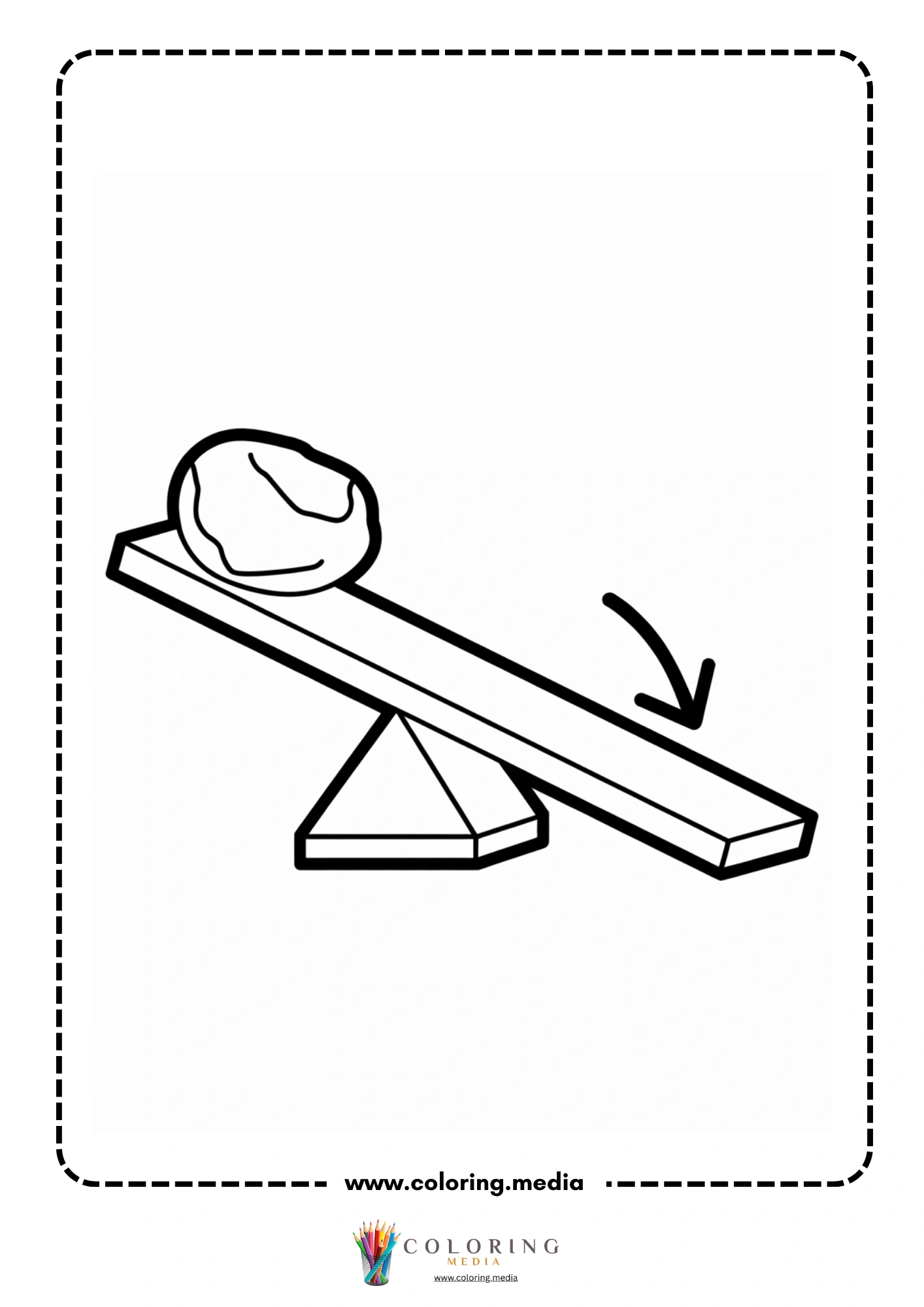
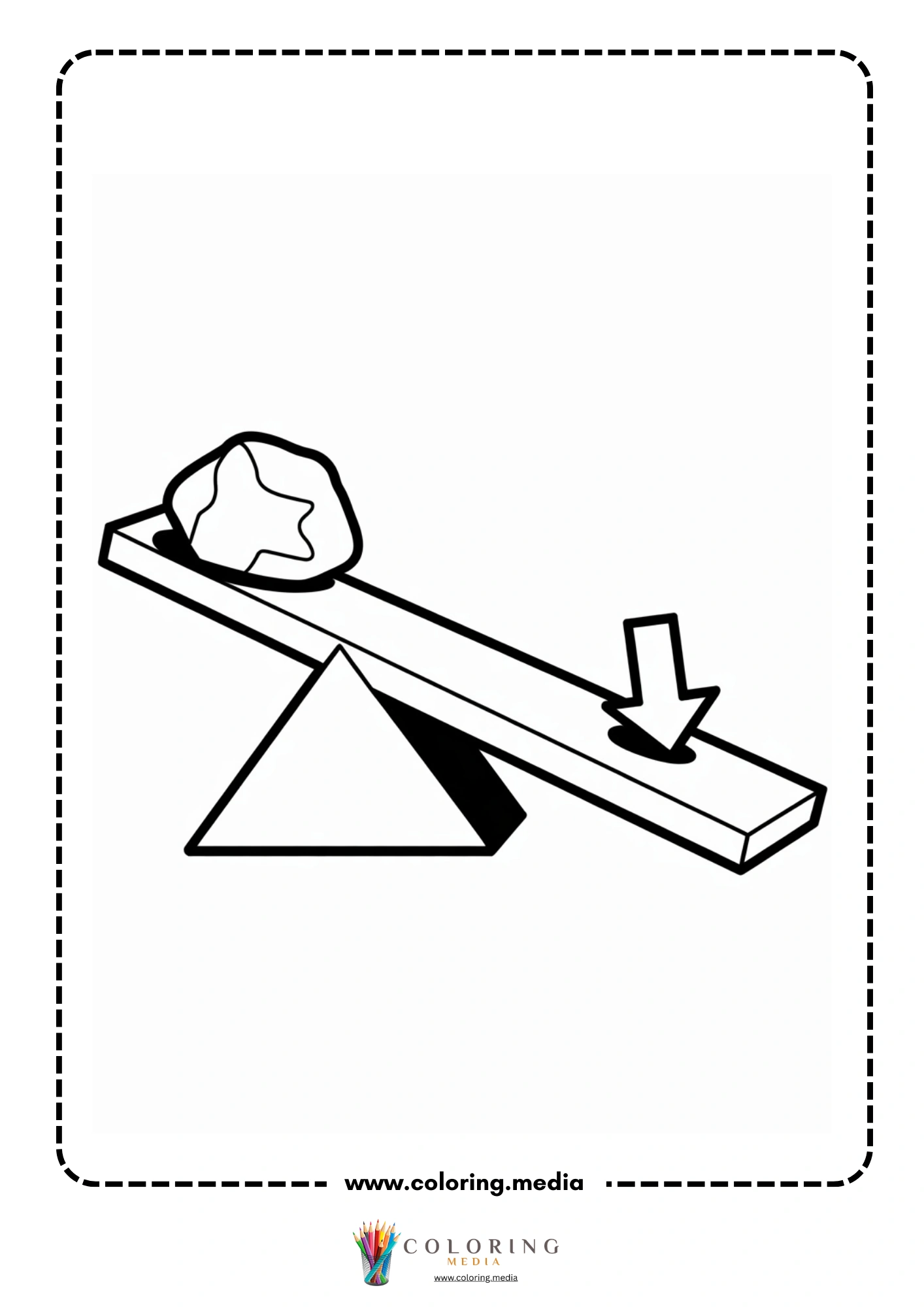
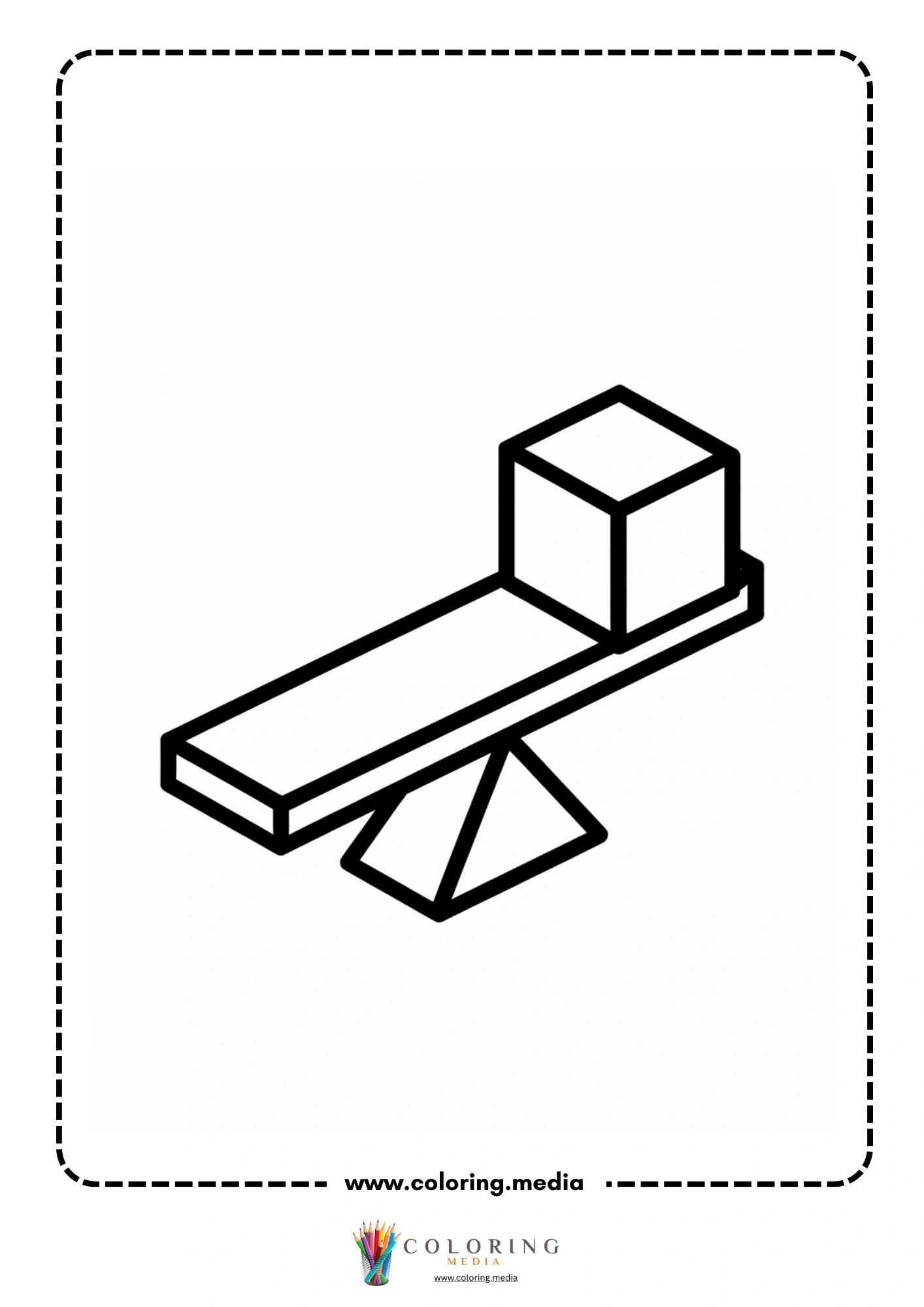
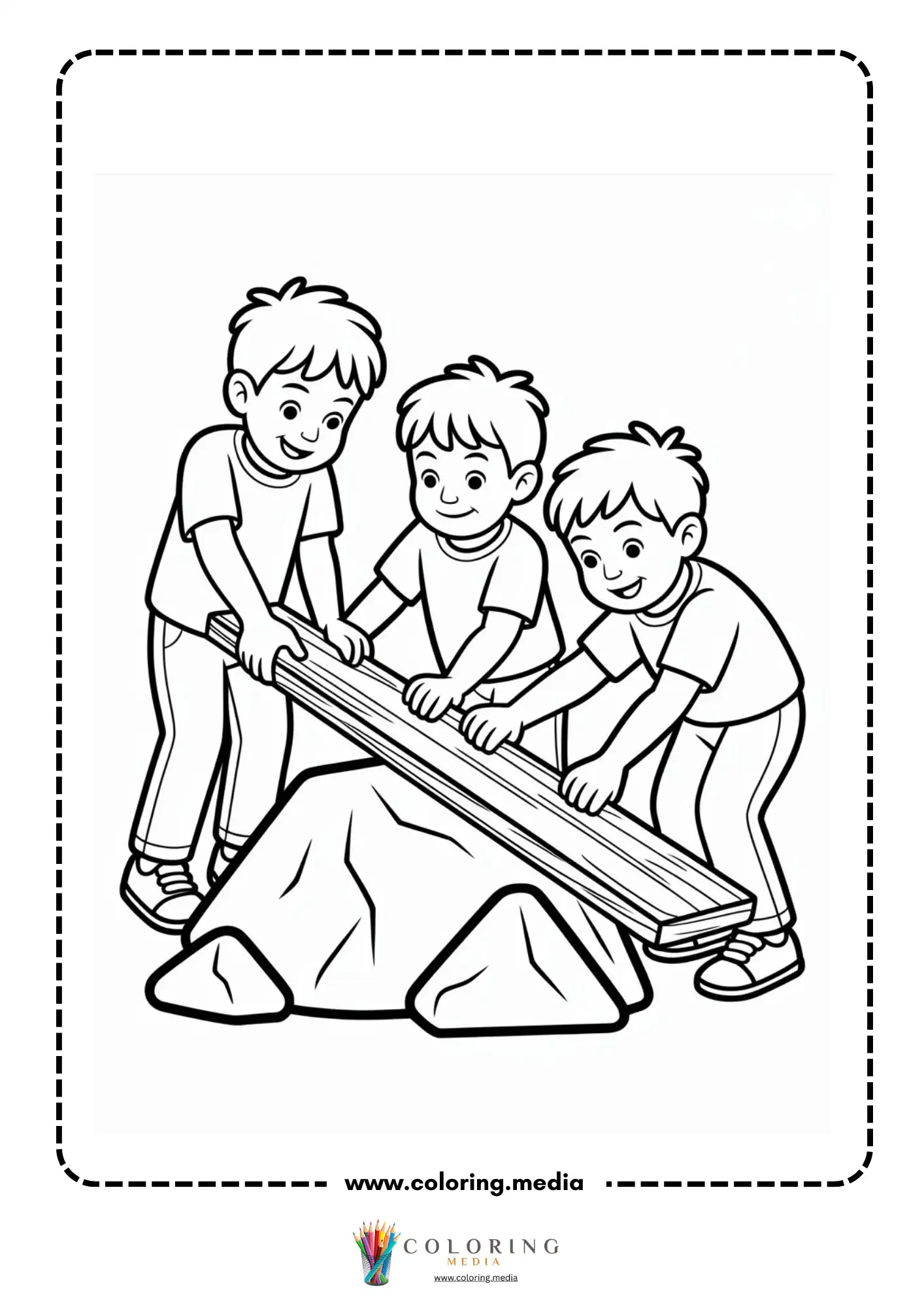
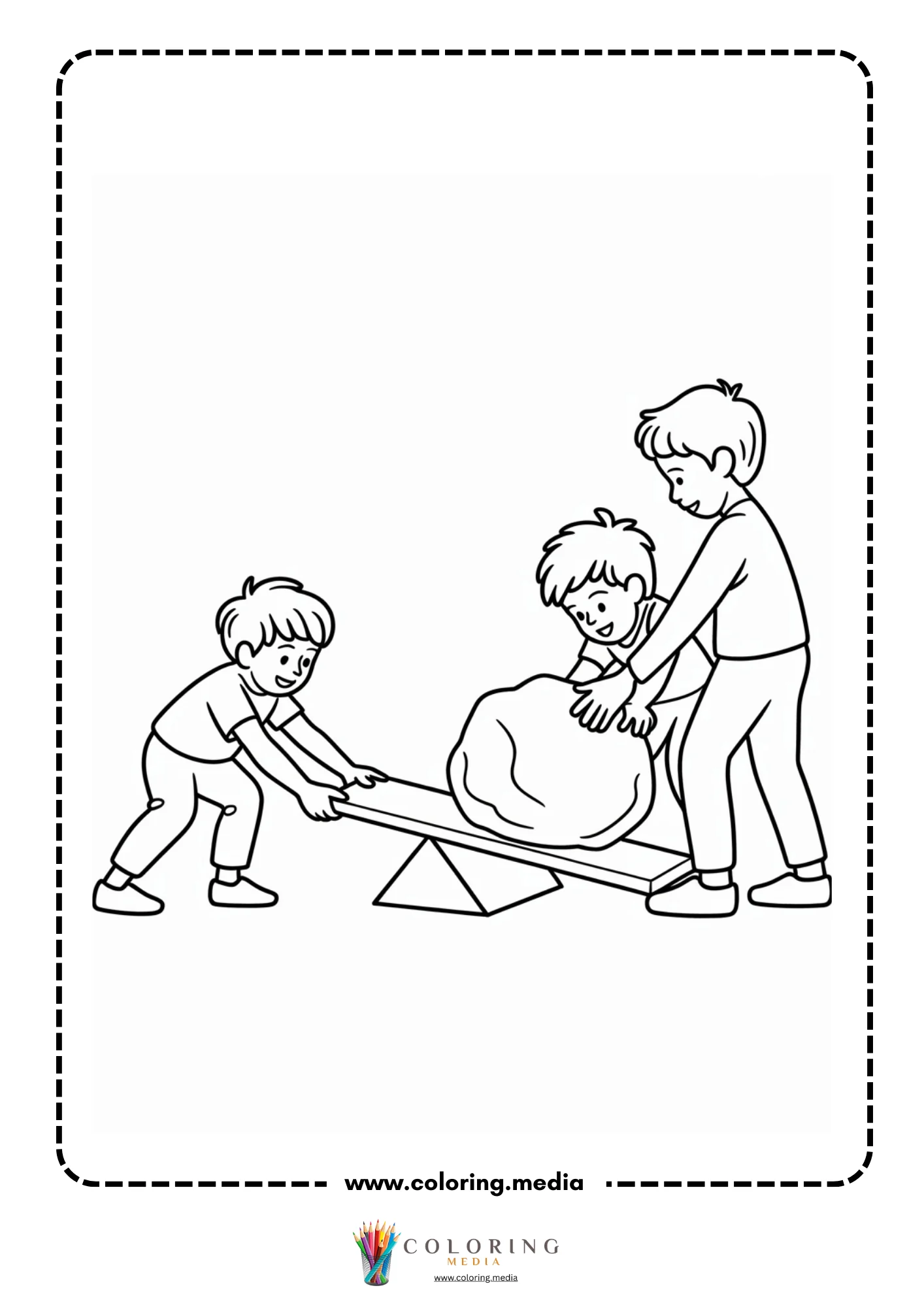
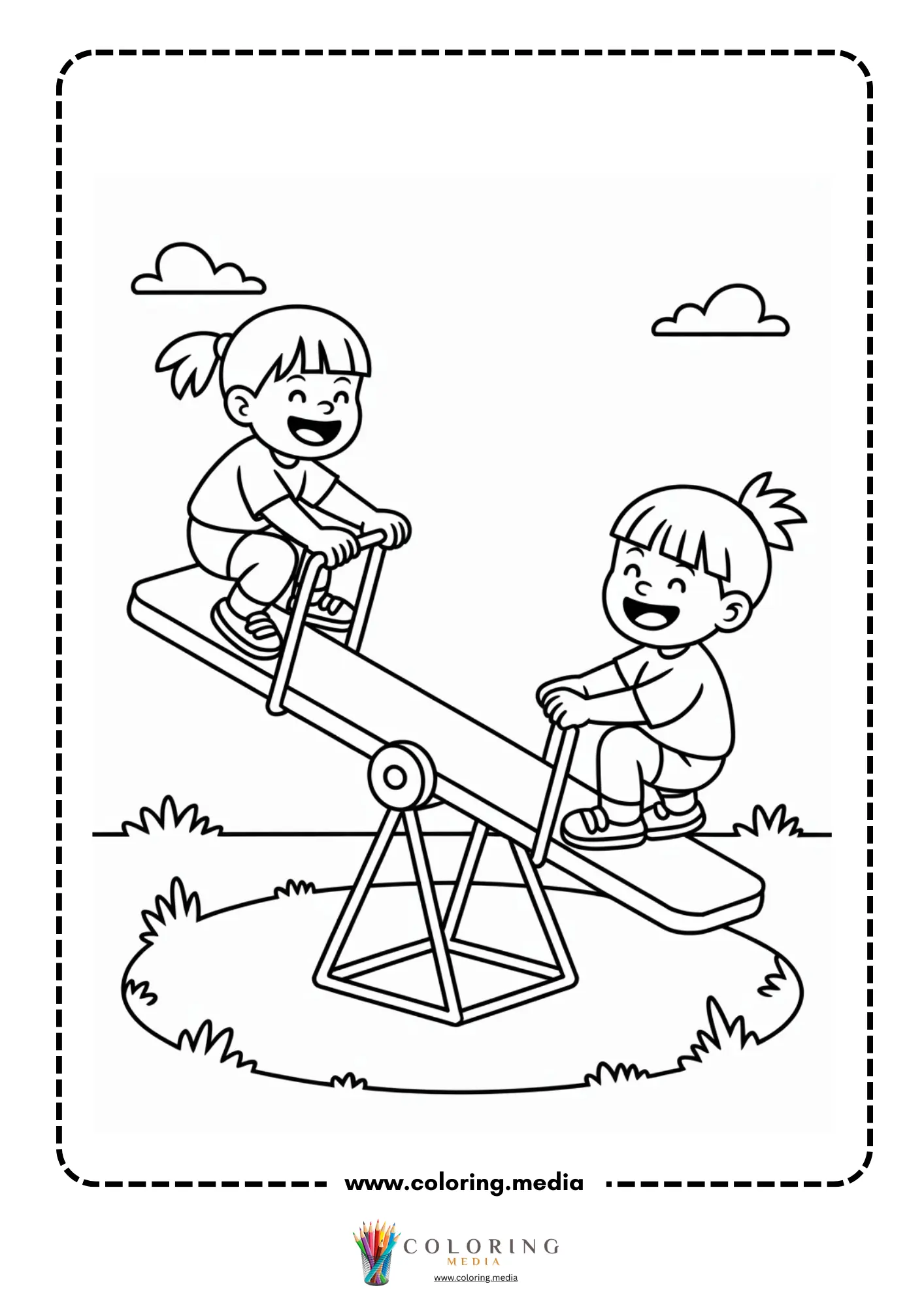
Levers are one of the six classical simple machines, and these twenty pages present them in three ways. The most common is the seesaw — children playing on playground equipment that is, at its core, a first-class lever with the fulcrum in the middle. A second group shows more abstract lever diagrams: a bar resting on a triangular fulcrum, with a load on one end and an effort arrow on the other. The third group shows characters using levers in practical contexts — a child using a long bar to lift a heavy rock, or a teacher at a chalkboard with a lever diagram drawn behind them.
The variety covers both the playful and the educational dimensions of levers, which makes the set useful in both a science lesson and a free-play coloring session. Everything here is free to download and easy to print.
Free Printable Lever Coloring Pages
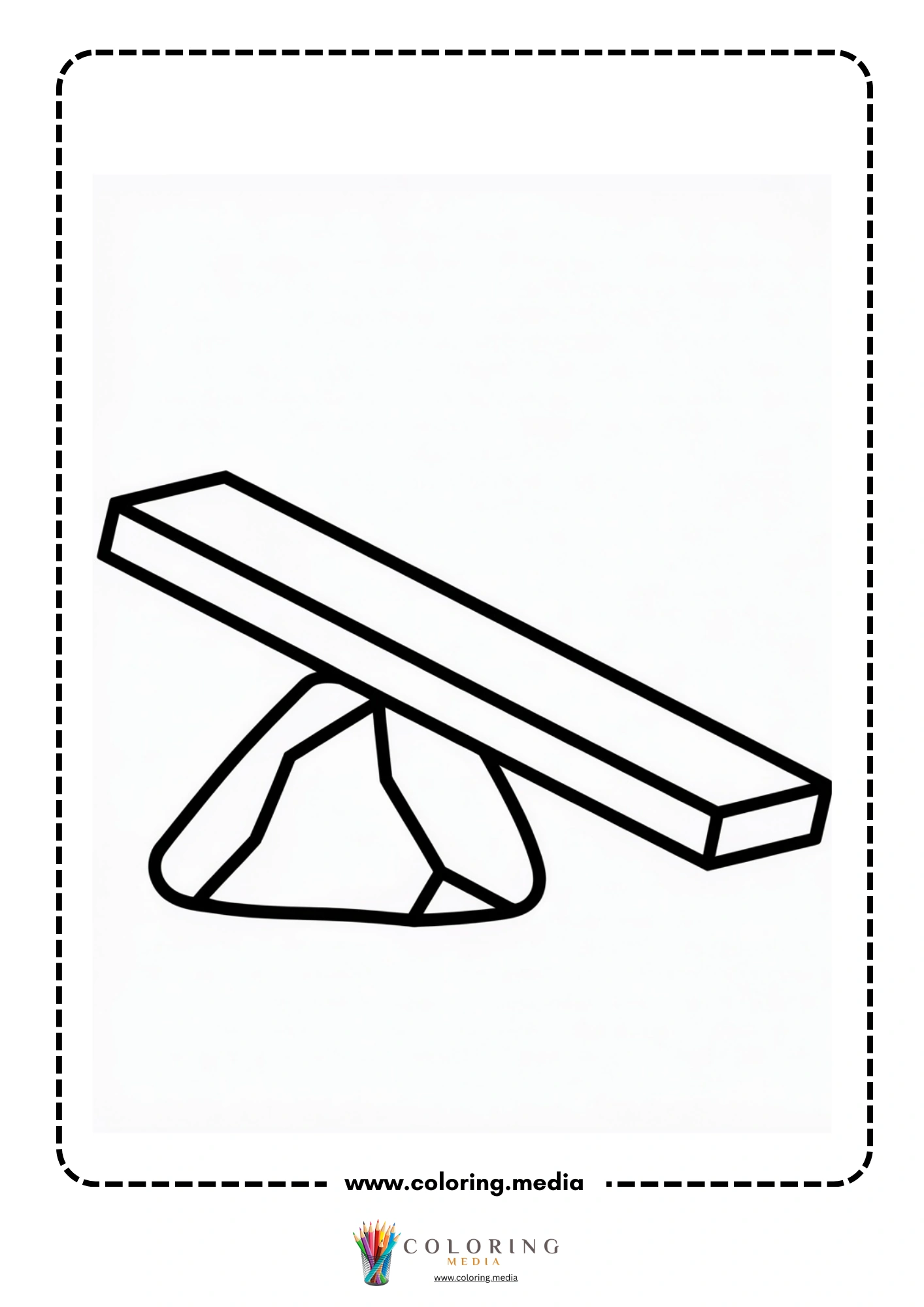
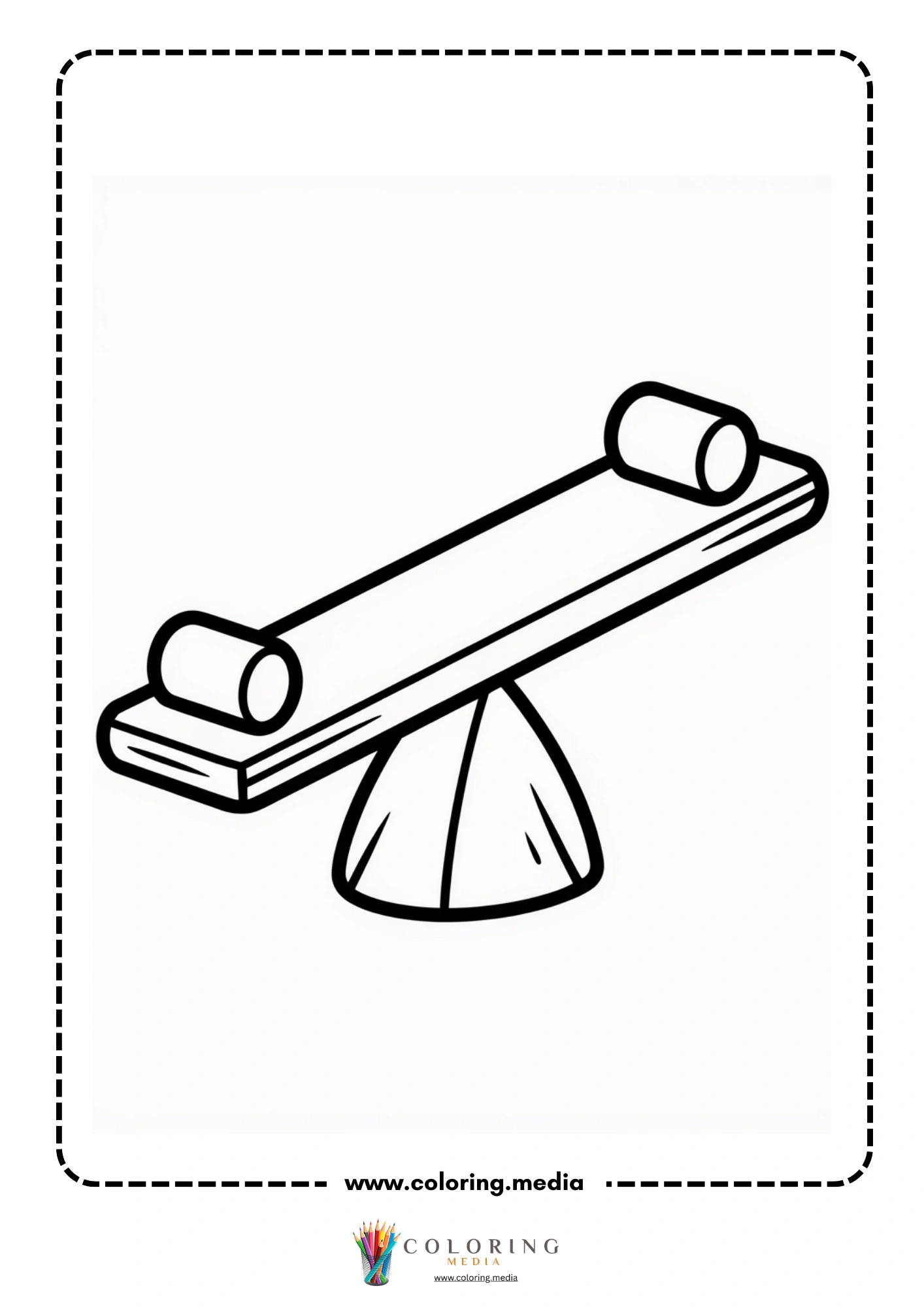
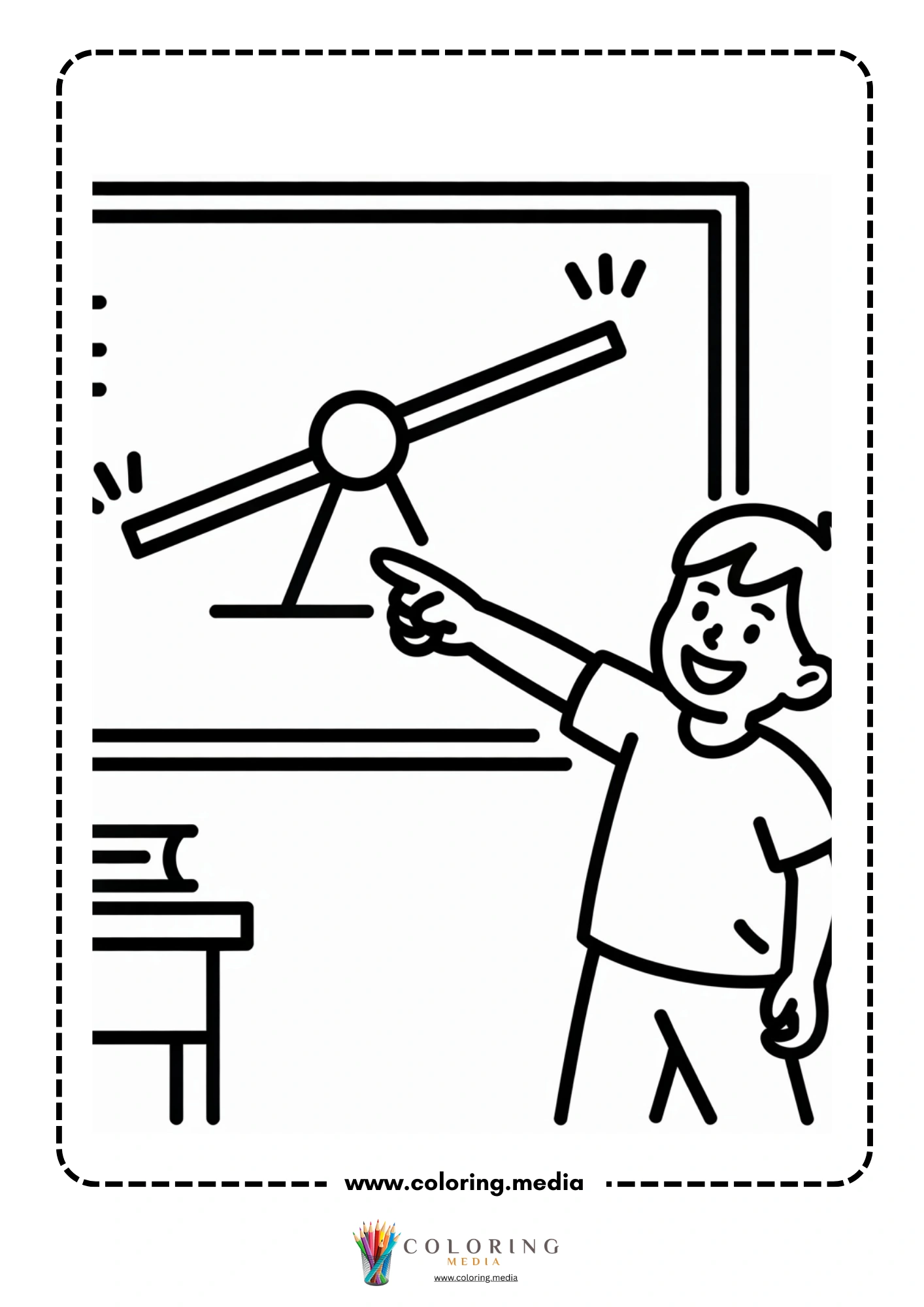
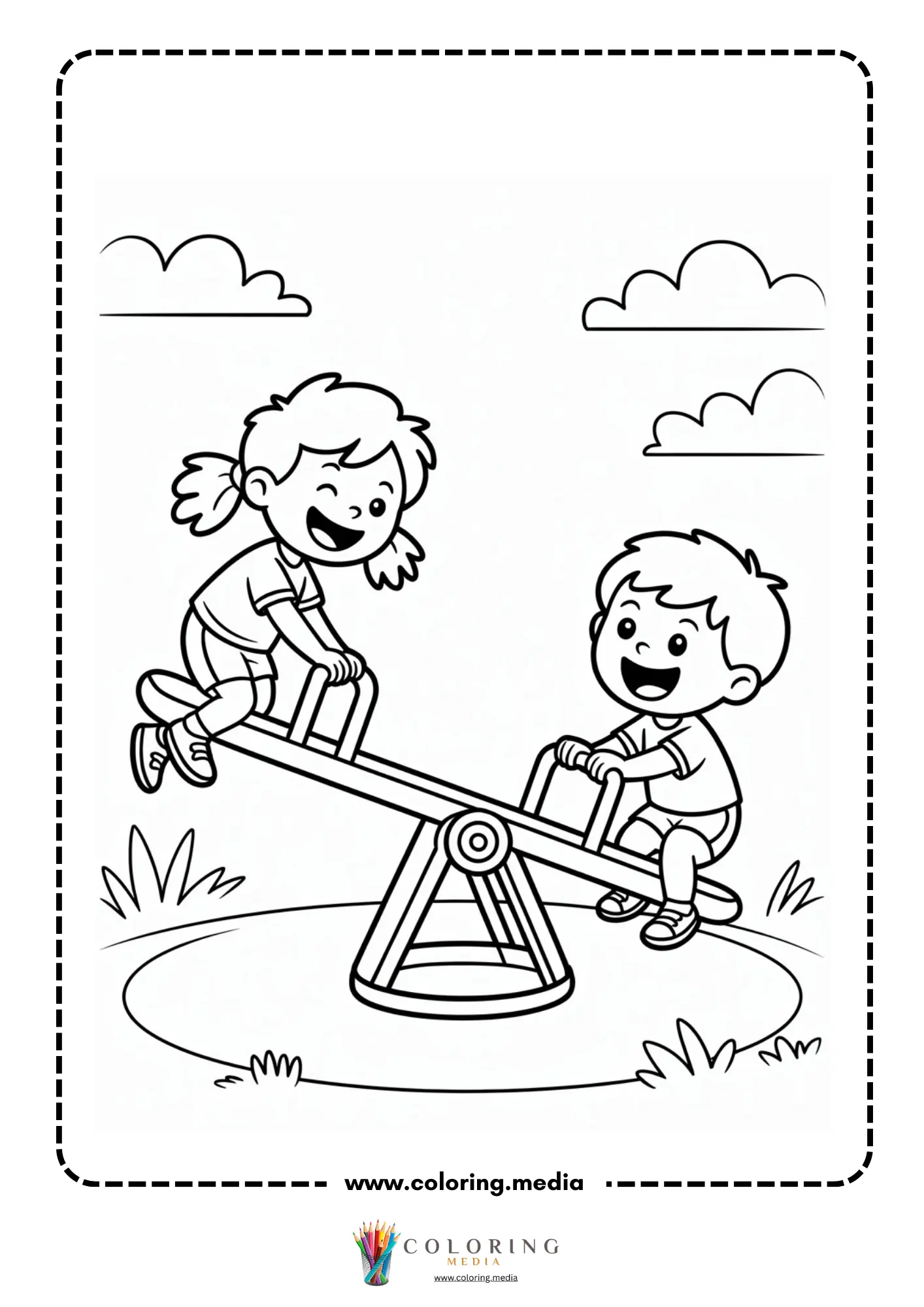
This collection includes 20 printable lever coloring pages featuring children on playground seesaws shown from multiple angles, abstract lever-and-fulcrum diagrams with load and effort positions clearly shown, children using long bars as levers to lift heavy objects, a teacher explaining lever principles at a blackboard, and balance-scale lever arrangements. The set moves naturally from concrete playground experience to formal physics diagram, making it a useful bridge between play and classroom learning. All pages print on A4 or US Letter paper.
Who Are These Lever Coloring Pages Best For?
Kindergarteners will connect most with the seesaw pages. Every child who has been on a playground recognizes a seesaw, and many already understand intuitively that a heavier person on one side makes that side go down. The character pages in this set have 2–3mm outlines and are straightforward to color with crayons.
Early elementary students (grades 1–2) can engage with both the playground scenes and the abstract diagrams. The diagram pages introduce the vocabulary of levers — fulcrum, effort, load — in a visual format that is concrete enough to understand without prior instruction but abstract enough to be worth discussing. Coloring the load arrow red and the effort arrow blue, for instance, is a simple activity that reinforces the difference between the two forces.
Science teachers and homeschool parents will find this set particularly useful as a lesson opener. A child who has colored a lever diagram before the lesson discussion already has a mental image to hang the vocabulary on, which speeds up comprehension considerably.
Interesting Lever Facts to Share While Coloring
Archimedes famously said ‘Give me a lever long enough and a fulcrum on which to place it, and I shall move the world’. He was making a mathematical point: a lever can theoretically multiply force by any factor, depending on where the fulcrum sits. The longer the effort arm relative to the load arm, the more mechanical advantage.
There are three classes of lever based on where the fulcrum sits. In a first-class lever (seesaw, scissors), the fulcrum is between the effort and the load. In a second-class lever (wheelbarrow, nutcracker), the load is between the fulcrum and the effort. In a third-class lever (tweezers, fishing rod), the effort is between the fulcrum and the load.
Your forearm is a third-class lever. When you lift a glass of water, your elbow is the fulcrum, your bicep muscle applies effort near the fulcrum, and the glass is the load at the far end. Third-class levers sacrifice mechanical advantage for speed and range of motion.
A crowbar is one of the oldest human tools, used since prehistoric times to move heavy stones. The same physics that explains why a crowbar works — placing the fulcrum very close to the load and applying effort far from the fulcrum — also explains how ancient builders moved multi-tonne stones to construct Stonehenge and the Egyptian pyramids.
Scissors are two first-class levers joined at a shared fulcrum. The rivet at the center is the fulcrum, your hand squeezing the handles provides the effort, and the blades meeting at the cutting point are the output. Longer scissors (like garden shears) cut with more force because the effort arm is longer.
Creative Lever Coloring and Craft Ideas
Color-Code the Forces On every diagram page, color the effort arrow one color (e.g. green) and the load arrow another (e.g. red) to train the eye to distinguish input from output force.
Fulcrum Position Experiment With a ruler balanced on a pencil eraser, slide the pencil toward one end and observe how the balance changes. Draw the three positions and label them on the back of a diagram page.
Seesaw Balance Puzzle For seesaw pages, calculate where a heavier person would need to sit to balance a lighter person using the principle that weight times distance must be equal on both sides.
Lever Scavenger Hunt Find five levers in your home (door handle, scissors, can opener, bottle opener, broom) and write down which class each one belongs to.
Playground Physics On the seesaw pages, write the names of two friends and estimate their approximate weights, then work out where each should sit to balance.
Build a Lever Balance a ruler over a pencil and use it to flip a small coin at the end. Move the pencil closer to the coin and observe how much harder you need to push.
Before and After For the lever-lifting-a-rock pages, draw the same scene without the lever — showing how hard it would be to lift the rock by hand — on the back of the page.
Three Classes Diagram Draw your own diagram showing all three lever classes, labeling the fulcrum, effort, and load for each. Use the coloring pages as reference.
How to Print These Lever Coloring Pages
Each file is a single PDF at 300 dpi, formatted for A4 and US Letter. Print from Adobe Reader or a browser with ‘fit to page’ enabled. Standard copy paper handles all media used in this age range. For the diagram pages where fine-tip color-coding is the goal, colored pencils give the cleanest results. Select black-and-white printing to save ink.
Explore More STEM Coloring Pages
If you enjoyed these pages, you may also like:
Simple Machines Coloring Pages
Pulley Coloring Pages
Gear Coloring Pages
Measure Tools Coloring Pages
STEM & Technology Coloring Pages