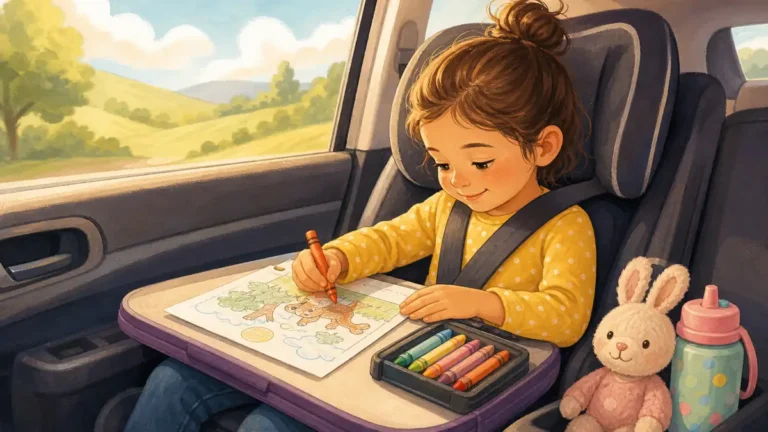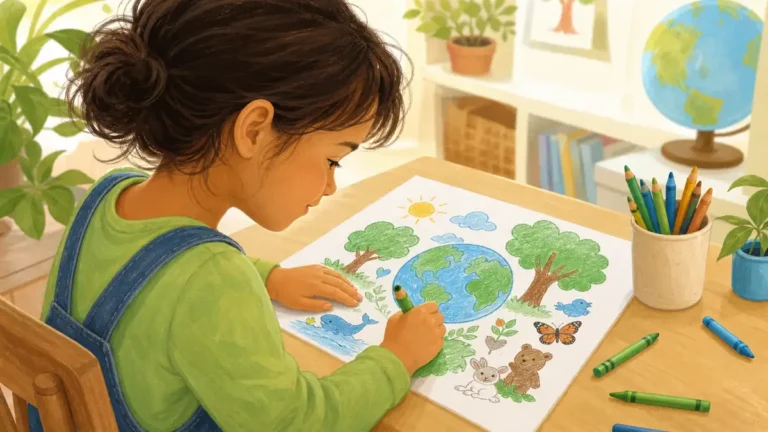

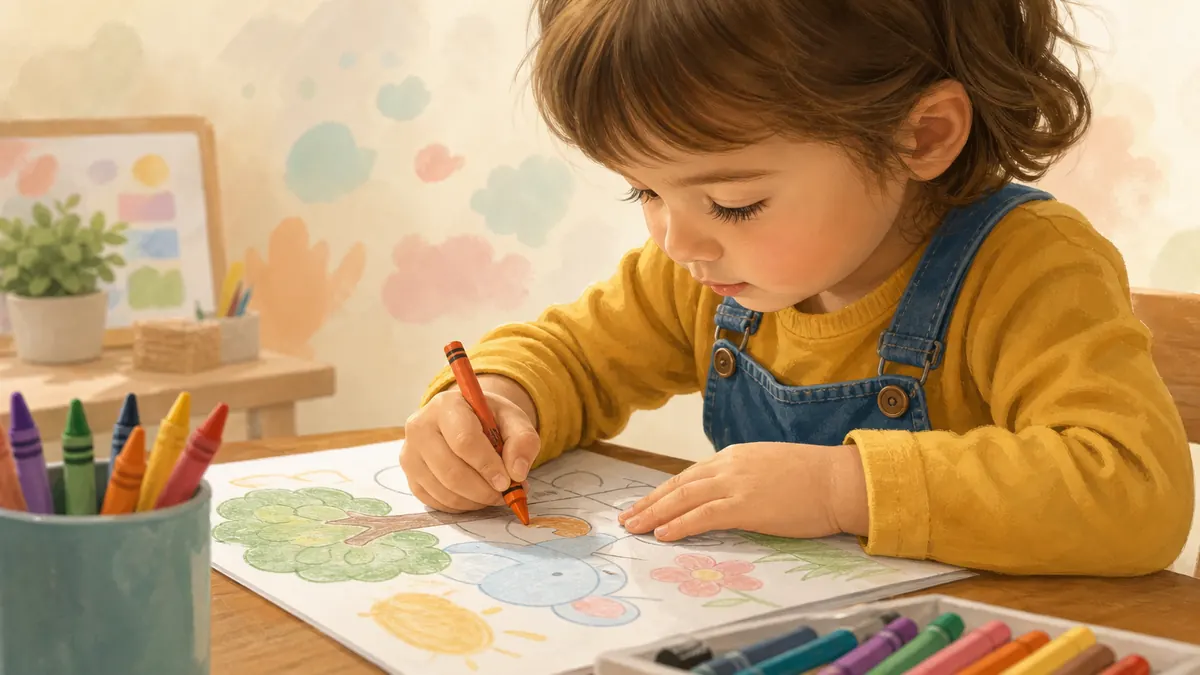

Coloring builds fine motor skills by requiring children to grip a crayon or pencil, control the direction and pressure of their strokes, and coordinate hand and eye movements to stay within defined boundaries — all of which directly develop the small muscle strength, dexterity, and neural connections that underpin later writing, cutting, and self-care skills. It is one of the most accessible and effective fine motor activities available precisely because it requires no special equipment and produces a visible, satisfying result.
What Are Fine Motor Skills and Why Do They Matter?
Fine motor skills are the coordinated movements of the small muscles in the hands, fingers, and wrists — as distinct from gross motor skills, which involve the large muscles of the arms, legs, and torso. These small-muscle skills are foundational for virtually every academic and self-care task a child will be expected to perform:
- Writing — forming letters requires precise pencil control built through thousands of repetitions of fine motor practice
- Cutting with scissors — requires bilateral coordination and grip strength developed through drawing and coloring
- Keyboarding — finger dexterity and independence build through fine motor activities in early childhood
- Self-care skills — buttoning clothes, tying shoes, and using utensils all draw on the same muscle systems coloring develops
Occupational therapists consistently cite coloring as one of their primary recommended activities for fine motor development in early childhood, precisely because it targets multiple components of fine motor skill simultaneously in a naturally motivating activity.
How Coloring Specifically Develops Fine Motor Skills
Pencil Grip Development
Holding a crayon correctly — the tripod grip, using thumb, index, and middle finger — is a learned skill that requires deliberate practice. Very young children (under 2) grasp crayons with a whole-fist grip; by age 3–4, most children can hold a crayon with a functional tripod or quadrupod grip with practice. Coloring provides the repetitions needed to build this grip naturally. Our easy coloring pages with large simple outlines are ideal for children still developing their grip.
Pencil Pressure Control
Coloring teaches children to modulate pressure — enough to make a visible mark, not so much that the paper tears or the crayon breaks. This pressure modulation is the same control needed for writing. Children who have colored extensively before beginning formal handwriting instruction show significantly better writing pressure control than those without coloring experience.
Stroke Direction and Control
Coloring inside the lines — or even aiming in a general direction for younger children — builds directional motor control. Children learn to move their hand consistently left-to-right, top-to-bottom, and in curves, building the directional memory that handwriting instruction will later rely on.
Hand-Eye Coordination
The constant feedback loop between what the eye sees (the boundary of the outlined shape) and what the hand does (the crayon stroke) is one of the most effective hand-eye coordination training exercises available to young children. This coordination underlies not just writing but catching, cutting, and dozens of other daily tasks.
Bilateral Coordination
When a child holds the paper still with one hand while coloring with the other, they’re practicing bilateral coordination — the ability to use both hands simultaneously for different tasks. This is a foundational skill for cutting, dressing, and many sport and musical activities.
Age-by-Age Fine Motor Development Through Coloring
Ages 1–2 (Mark-Making Stage)
At this stage, the goal is simply holding a marking instrument and making marks on paper. Whole-fist grip is normal and appropriate. Focus on the experience, not the result. Chunky crayons designed for toddler grips reduce frustration and build initial confidence with coloring tools.
Ages 2–3 (Scribbling Stage)
Children begin to make intentional scribbles and can start to fill large areas with color. They’re developing the wrist rotation and arm movement patterns that will become letter strokes. Large, bold outline pages provide a target without creating frustration.
Ages 3–4 (Basic Control Stage)
Children start attempting to color within boundaries and show preferences for specific colors. Grip is improving toward a functional tripod. This is a critical window for fine motor development — regular coloring practice at this age pays significant dividends in kindergarten writing readiness.
Ages 4–5 (Developing Precision)
Children can color within lines with reasonable accuracy and are developing the fine motor control to form letters. More detailed animal pages and flower pages with multiple distinct areas provide the appropriate challenge level.
Ages 5+ (Refined Control)
School-age children benefit from detailed coloring pages that require sustained fine motor effort and encourage technique development — shading, blending, staying precisely within intricate outlines.
Tips for Maximizing Fine Motor Development Through Coloring
- Encourage the tripod grip from age 3 onward — gently correct whole-fist grips without making it stressful
- Use shorter crayons — a broken crayon forces a better grip than a full-length one
- Color on vertical surfaces (easel, taped to a wall) occasionally — this builds wrist extension and shoulder stability
- Vary paper size — very large pages encourage whole-arm movement; small pages develop finger precision
- Don’t over-correct — the goal is motivated practice, not perfection
For more on supporting children’s development through coloring activities, visit our Tips & Techniques hub.
Frequently Asked Questions
Does coloring really help with fine motor skills?
Yes — occupational therapists routinely recommend coloring as a fine motor activity because it simultaneously targets grip strength, pencil pressure control, stroke direction, hand-eye coordination, and bilateral coordination. It is particularly valuable in the 2–5 age range, when fine motor skills are developing most rapidly and the foundations for handwriting are being laid.
At what age should children start coloring for fine motor development?
Mark-making and scribbling can begin as soon as a child can hold a crayon — around 12–18 months with chunky toddler crayons. Intentional coloring within boundaries develops from about age 3. The most critical window for fine motor development through coloring is ages 3–5, when children are building the specific muscle patterns needed for kindergarten writing readiness.
How much time should kids spend coloring for fine motor benefits?
Even 10–15 minutes of coloring per day produces measurable fine motor development when done consistently. Three to four coloring sessions per week is sufficient for most children. Quality of engagement matters more than duration — focused, careful coloring develops skills faster than distracted scribbling.
What type of coloring is best for fine motor development?
Pages with clear outlines that provide a target for precision are more developmentally valuable than free drawing for fine motor purposes. The outline gives the child’s hand-eye coordination system a specific goal to work toward. Match page complexity to the child’s current skill level — pages that are too easy provide insufficient challenge; pages that are too detailed create frustration.
Are colored pencils better than crayons for fine motor development?
Both are valuable, and alternating between them is ideal. Crayons are easier to grip and more forgiving of pressure variation, making them better for younger children and beginners. Colored pencils require more precise pressure control and a more refined grip, making them better for ages 5+ who are ready for a greater challenge. The transition from crayons to colored pencils mirrors the developmental progression toward pencil writing.
Fine motor development doesn’t require specialized equipment or scheduled therapy sessions for most children — it requires repetitions of engaging, appropriately challenging hand activities, consistently practiced. Coloring provides exactly that. Browse our full library at coloring.media and find the pages that match your child’s current level and keep them coming back to practice.