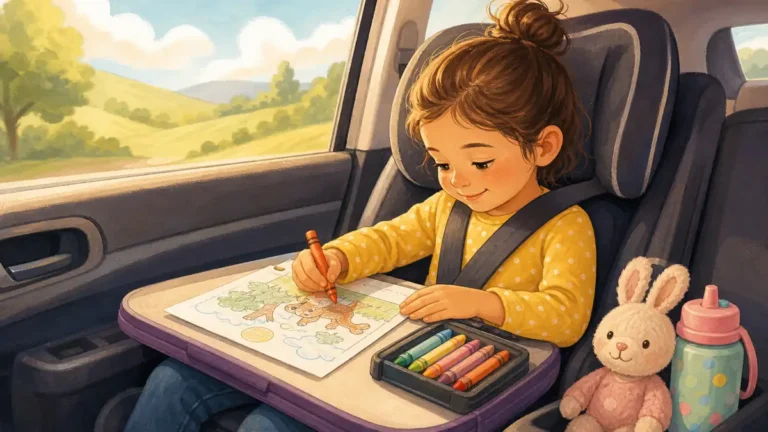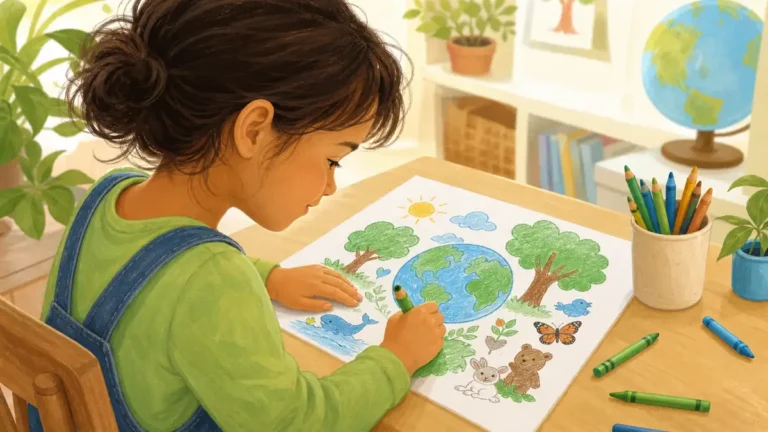


The best coloring pages for kindergarten serve double duty — they engage the child in 15–25 minutes of focused creative work while simultaneously supporting the three developmental priorities of the kindergarten year: fine motor writing readiness, early literacy and number foundations, and sustained attention. A well-chosen kindergarten coloring page isn’t just a pleasant activity; it’s a targeted developmental tool for the most important readiness-building year before formal academic instruction takes over.
Why Kindergarten Is the Peak Year for Coloring Value
Kindergarten sits at a unique developmental intersection. Children at this age have enough fine motor development to attempt precise outline work — but still benefit enormously from practice. Their literacy and math foundations are actively forming — but the concepts are most durably encoded through multi-sensory activities rather than worksheets alone. And their attention spans are long enough for meaningful coloring sessions — 15–25 minutes — but still need the intrinsic motivation of engaging content to sustain them.
Research consistently links regular coloring activity in kindergarten with three measurable outcomes: stronger writing readiness (pencil grip quality, pressure control, letter formation), faster letter recognition development, and better sustained attention capacity in formal instruction. These aren’t incidental benefits — they’re the core developmental work of the kindergarten year, delivered through a format children approach with willingness rather than resistance.
Best Coloring Page Categories for Kindergarten
Alphabet Pages (Highest Literacy Value)
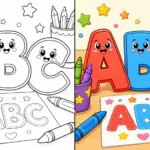
Kindergarten is the peak year for alphabet coloring page value. The letter-recognition, letter-sound association, and letter-shape motor memory that phonics instruction depends on are all actively developing in the kindergarten year. A child who colors alphabet pages regularly during this window builds the foundational literacy scaffolding that reading instruction builds on.
The most effective kindergarten alphabet coloring use pairs the page with explicit phonics instruction: say the letter name, sound, and picture cue before the child colors (“This is B. B says /b/ like butterfly. Can you find the butterfly on this page?”). The coloring then provides the kinesthetic encoding layer that the verbal instruction alone doesn’t produce.
Browse our full alphabet coloring pages — one page per letter with picture cues, available individually to follow any phonics sequence. For the complete literacy integration approach, see our guide to how to teach letters with coloring pages.
Number Pages (Math Foundation)
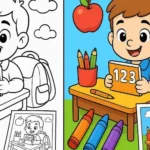
Number recognition, counting, and numeral-quantity connection are the core kindergarten math foundations — and math coloring pages deliver practice on all three in a format more engaging than worksheets. A numeral page with large bold number and matching objects to count provides the symbol-quantity connection that number sense requires.
Our math coloring pages cover the kindergarten number range. For structured approaches, see our guide to how to teach numbers with coloring pages.
Science Diagram Pages (Content Knowledge)
Science is where kindergarten coloring pages deliver the most curriculum-connected value beyond literacy and math. Simple life cycle pages, plant anatomy pages, and animal classification pages introduce the science vocabulary and conceptual structures that formal science instruction builds on in grades 1–3.
A kindergartener who has colored and discussed a butterfly life cycle page arrives at first-grade science with a visual memory of metamorphosis that no amount of later instruction can replicate as a first encounter. Our life cycle pages and science and nature pages are the highest-value kindergarten science coloring resources.
Seasonal Pages (Calendar and Nature Connection)
Kindergarten is when children first develop a conscious relationship with the school calendar — and seasonal coloring pages reinforce that temporal awareness while connecting indoor learning to the observable world outside. A monthly seasonal page connects the classroom calendar to natural world changes in a concrete, colorable way.
Our seasonal pages are organized by month for easy classroom and home calendar integration.
Kindergarten Coloring in Different Settings
Classroom Morning Work
Curriculum-connected morning work coloring is the most common and effective classroom kindergarten coloring use. A seasonal page during the corresponding month, an alphabet page during the current phonics letter week, or a science page during the current unit primes the day’s learning while building fine motor skills during the class arrival transition. See our complete guide to coloring pages for morning work in kindergarten.
Home Practice
For parents supporting kindergarten readiness at home, a daily 15-minute coloring session with educational content (alphabet or number pages connected to what the child is learning in school) produces measurable writing readiness development over a school year. The investment is minimal; the developmental return is significant.
Homeschool Kindergarten
In a homeschool setting, kindergarten coloring pages can serve as the visual anchor for every subject area — an alphabet page for phonics, a number page for math warm-up, a life cycle page for science, a seasonal page for nature study. For the complete homeschool coloring framework, see our guide to homeschool coloring pages and printables.
Frequently Asked Questions
What coloring pages are best for kindergarten writing readiness?
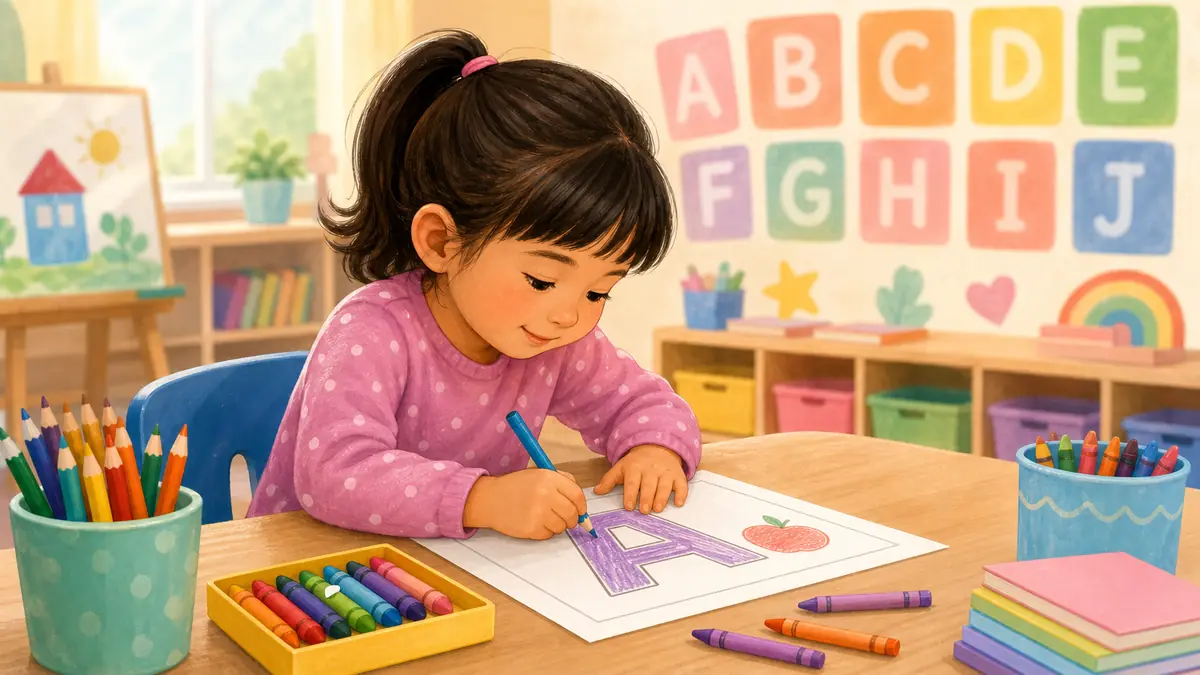
Pages with varied section sizes — some large, some medium, requiring different levels of precision — provide the best fine motor writing readiness practice. Alphabet pages are particularly valuable because they require the child to color around letter shapes, building the same motor pathways that letter formation uses. Any page that requires deliberate, careful coloring (not just scribble-filling) is producing writing readiness work, regardless of the content subject.
How often should kindergarteners color for developmental benefit?
Daily coloring — 15–20 minutes at a consistent time — produces the most measurable fine motor and attention development over a school year. This is particularly important in the first half of kindergarten when writing readiness muscles and habits are most actively forming. The content of the daily coloring should connect to current academic learning when possible; the consistency of the daily practice matters more than the specific page choice.
Are coloring pages better than worksheets for kindergarteners?
For most kindergarteners, educational coloring pages produce higher engagement and lower resistance than worksheets covering identical content. A child who actively avoids alphabet worksheets often engages willingly with alphabet coloring pages — and the learning outcome (letter recognition, phonics connection) is comparable. Coloring pages are not universally superior to worksheets, but for children who find the worksheet format aversive, coloring pages can deliver the same academic content in a more accessible format.
Kindergarten is the year when coloring pages deliver the most concentrated developmental value — every session builds fine motor writing readiness, every educational page adds to the literacy and math foundation, and every focused coloring session develops the sustained attention that formal schooling requires. Browse our alphabet, math, life cycle, and seasonal pages at coloring.media to build your kindergarten coloring collection, and visit our Tips & Techniques hub for kindergarten-specific guides.