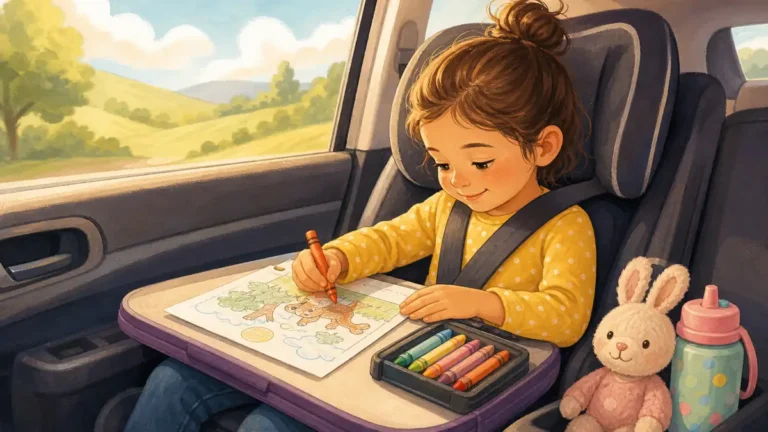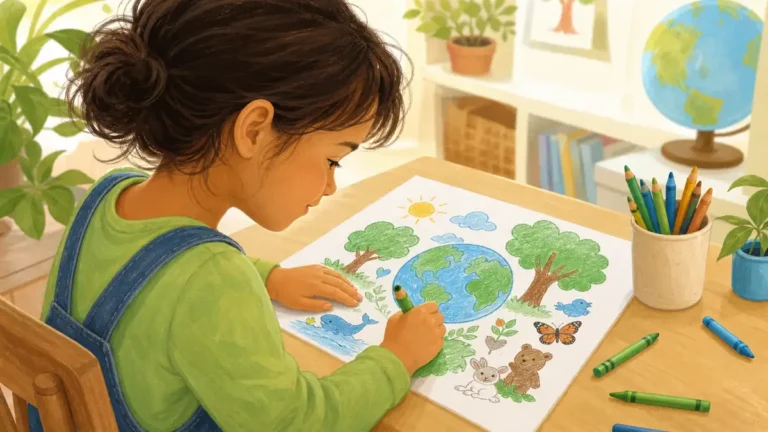
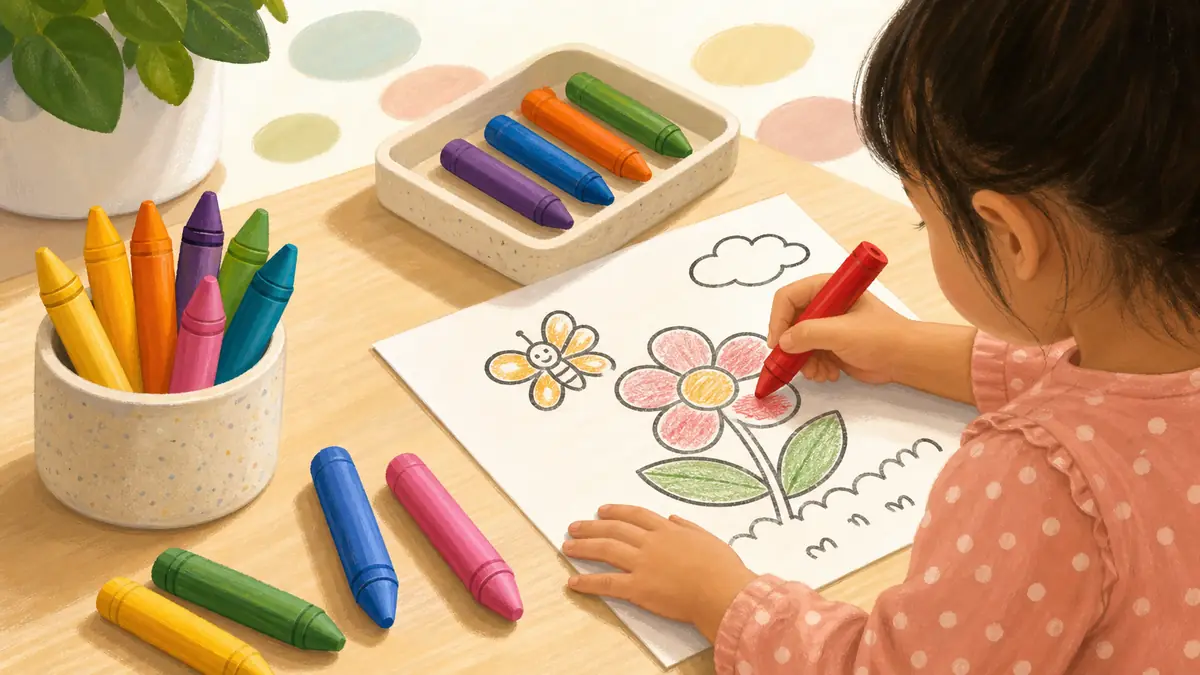

The best crayons for toddlers and preschoolers are chunky, washable, and durable enough to survive the enthusiastic grip of a child who hasn’t yet learned to be gentle. For toddlers under 3, large triangular or barrel crayons designed specifically for toddler grip are worth the small premium over standard crayons — they’re significantly easier to hold, harder to break, and make the early coloring experience far more successful and enjoyable.
What to Look for in Toddler and Preschool Crayons
Not all crayons are appropriate for all ages. When choosing crayons for toddlers and preschoolers, four factors matter most:
Size and Shape
Standard-size crayons (the length and diameter of a typical Crayola crayon) are designed for hands that have already developed a functional tripod grip — typically age 4 and up. For toddlers under 3, chunky “jumbo” crayons (significantly wider diameter) or triangular crayons (which naturally guide fingers into a correct grip position) are far more appropriate. The larger contact surface gives small hands something to hold onto without the frustration of a slipping, rolling standard crayon.
Washability
Non-negotiable for under-5s. Toddler coloring reliably travels beyond the page — onto tables, walls, and clothing. Washable formulas (Crayola’s “Ultra-Clean Washable” line is the benchmark) remove from most surfaces with soap and water and from clothing in a standard wash cycle. The peace of mind is worth every penny of the small price premium.
Durability
Toddlers apply significantly more pressure than older children and are more likely to press straight down rather than at an angle, snapping crayons. Look for harder wax formulas, or embrace breakage as part of the process — broken crayons actually encourage better grip (the shorter the crayon, the harder it is to use a fist grip).
Safety
All major brand crayons (Crayola, Faber-Castell, Melissa & Doug) meet ASTM D4236 safety standards. For toddlers who still mouth objects, confirm the “AP Certified Non-Toxic” label. Avoid off-brand crayons without clear safety certification for children under 3.
Best Crayons by Age
Ages 1–2: Toddler Grip Crayons
At this age the goal is simply making marks on paper — technique doesn’t matter yet. The best options:
- Crayola My First Crayons — wide barrel, short length, designed specifically for toddler fist grip. The most widely available and reliable option.
- Melissa & Doug Jumbo Crayons — oversized triangular crayons that sit stably on a table and naturally encourage correct grip.
- Honeysticks 100% Pure Beeswax Crayons — natural, non-toxic, round and chunky. A premium option for families who prefer natural materials.
Ages 2–3: Chunky Washable Crayons
Children are developing intentionality — they want specific colors and are attempting to fill areas. Washability becomes critical at this stage as coloring range expands beyond the page.
- Crayola Ultra-Clean Washable Crayons (Large) — the standard recommendation for this age. Large size, washable, broadly available, good color range.
- Faber-Castell Jumbo Grip Crayons — triangular grip crayons with a textured surface that reduces slipping. Excellent quality, slightly higher price point.
Ages 3–4: Transitioning to Standard Size
Preschoolers with developing tripod grips can begin transitioning to standard-size crayons, though chunky options remain appropriate. This age benefits from a larger color selection — 24 colors rather than 8 — as color choices become more intentional.
- Crayola Washable Crayons 24-count — the classic choice, expanded palette, still washable.
- Crayola Triangular Crayons — standard length but triangular cross-section prevents rolling and naturally positions fingers in tripod grip.
Tips for Getting the Most from Toddler Crayons
- Remove paper wrapping from standard crayons — it encourages peeling (a fascinating toddler distraction) and prevents using the side of the crayon for broader strokes
- Break crayons shorter intentionally — a 2-inch crayon is easier for a toddler to control than a full-length one and promotes better grip
- Limit to 4–6 colors at a time — too many choices overwhelms toddlers and preschoolers; a small selection keeps focus on coloring rather than choosing
- Store in a wide-mouthed cup rather than a box — toddlers spend more time selecting from the box than coloring if retrieval is difficult
- Pair with the right pages — chunky crayons work best with bold, large outlines. Our easy coloring pages and animal pages provide the large outlines that make toddler coloring successful and satisfying
When to Upgrade to Colored Pencils
Most children are ready to try colored pencils around age 5–6, when their grip has developed enough to control a standard-diameter pencil and they begin to want more precision in their coloring. Don’t rush the transition — crayons remain appropriate and valuable well into early elementary, and many older children prefer them. Introduce colored pencils as an “option” rather than a replacement, and let the child’s interest and capability guide the timing.
For more on age-appropriate coloring supplies and activities, visit our Tips & Techniques hub.
Frequently Asked Questions
What crayons are best for 2-year-olds?
Chunky toddler-grip crayons are best for 2-year-olds. Crayola My First Crayons and Melissa & Doug Jumbo Crayons are the most widely recommended. They’re wide enough for a whole-fist grip, short enough to prevent snapping, and washable enough to survive the inevitable wall experiments. Standard-size crayons are too thin and long for most 2-year-olds to grip and control comfortably.
Are washable crayons worth it for toddlers?
Absolutely yes. The “ultra-clean washable” formula (Crayola’s benchmark) removes from most painted walls, hardwood floors, and clothing with soap and water. The peace of mind for parents of active toddler colorers — and the hours of scrubbing it prevents — is worth the modest price premium over non-washable crayons every time.
When should kids switch from chunky to standard crayons?
Most children are ready for standard-size crayons around age 3.5–4, when their tripod grip is developing. The transition doesn’t need to be abrupt — keep both available and let the child gravitate toward standard size as their control improves. Triangular standard-size crayons (which naturally position fingers correctly) are a good bridge between chunky and standard.
How many crayons should a toddler have?
Start with 8 basic colors for toddlers. Expand to 16–24 for preschoolers as their color preferences and intentionality develop. More than 24 colors creates choice paralysis for under-5s — the time spent choosing a color exceeds the time spent coloring with it. A curated small selection keeps the focus on the creative activity itself.
What’s the difference between regular and triangular crayons for preschoolers?
Triangular crayons have three flat sides rather than a round barrel. The flat sides prevent the crayon from rolling off tables (a significant practical benefit) and naturally guide little fingers into a triangular tripod grip — the same grip used for writing. For preschoolers beginning to develop proper pencil grip, triangular crayons provide a gentle corrective nudge without requiring explicit instruction.
The right crayons make an enormous difference in how successfully young children engage with coloring — and a successful early coloring experience builds the love of creative activity that supports learning for years. Pair great crayons with our easy coloring pages designed specifically for toddler and preschool skill levels, and you have everything needed for a great first coloring experience.