

Educational coloring activities for kids combine the inherent engagement of creative coloring with deliberate learning content — alphabet pages that teach letter-sound relationships, math pages that reinforce number concepts, science diagrams that make abstract processes visible, and life cycle pages that encode biological sequences in memory. When designed well, they deliver genuine academic value in a format children willingly engage with for 20–45 minutes at a stretch, making them one of the most cost-effective educational tools available to parents and teachers.
Why Educational Coloring Activities Work
Educational coloring pages are effective because they engage multiple learning channels simultaneously — channels that are typically addressed separately in traditional instruction:
- Visual processing — the child sees the letter, number, diagram, or concept represented graphically
- Kinesthetic encoding — the hand traces the outlines of letters, numbers, or biological structures, building motor memory of the shape and sequence
- Attention and focus — coloring requires sustained visual attention to a specific area — the same attentional channel used in reading and writing
- Emotional engagement — children approach coloring with inherent motivation, meaning academic content delivered through coloring arrives in a receptive rather than resistant state
Dual coding theory (Paivio, 1986) explains the mechanism: when information is processed both verbally and visually, recall is significantly stronger than when processed verbally alone. Educational coloring adds a third processing channel — kinesthetic — creating a triple-encoded memory that is more durable and more easily retrieved than content learned through any single channel.
Educational Coloring Activities by Subject
Literacy: Alphabet and Letter Learning
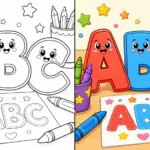
Alphabet coloring pages are among the most research-supported early literacy activities available. Each page pairs a letter with a picture cue (A for apple, B for butterfly), reinforcing the letter-name-sound-picture connection that is the foundation of phonics. Children who color alphabet pages regularly show stronger letter recognition and faster writing readiness than those who practice letters only through writing drills.
How to use alphabet coloring pages for maximum literacy impact:
- Before coloring: say the letter name, sound, and picture cue together (“This is the letter B. B says /b/ like butterfly.”)
- During coloring: have the child trace the letter with their finger before picking up the crayon
- After coloring: ask the child to write the letter on the back of the page, then find it in environmental print (on a cereal box, a book cover, a street sign)
Browse our complete alphabet coloring pages — one page per letter, with picture cues, available in any order. See our guide to how to teach letters with coloring pages for a step-by-step approach.
Mathematics: Number and Pattern Learning
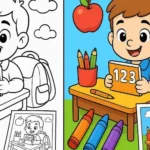
Math coloring pages make numerical concepts visual and tactile in ways that abstract number cards and worksheets rarely achieve. Color-by-number pages tie number recognition to a visual reward — solving the number identification reveals a picture. Pattern completion pages make repeating sequences visible and colorable. Counting pages embed one-to-one correspondence in a creative activity.
Educational math coloring activities by concept:
- Number recognition: pages featuring large bold numerals with objects to count
- Counting: pages with groups of objects to count and color
- Color-by-number: pages that require correct number identification to produce the intended image
- Patterns: pages with repeating color patterns to identify and extend
- Geometry: pages featuring named geometric shapes in compositions children color and label
Explore our math coloring pages for number and pattern coloring at multiple levels. See our guide to how to teach numbers with coloring pages for structured approaches.
Science: Life Cycles, Biology, and Earth Science
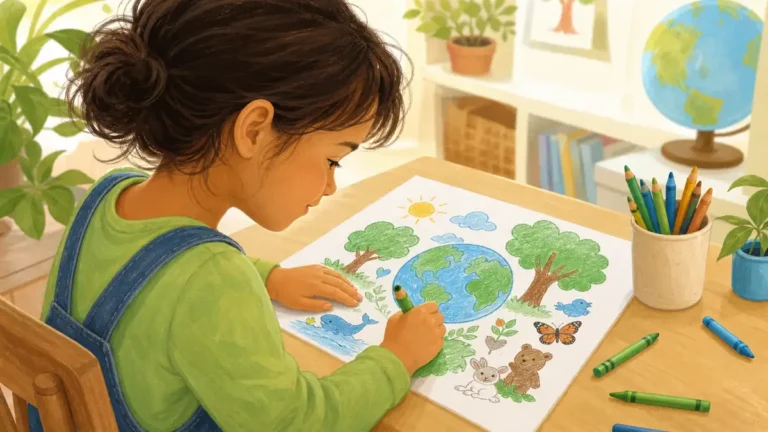
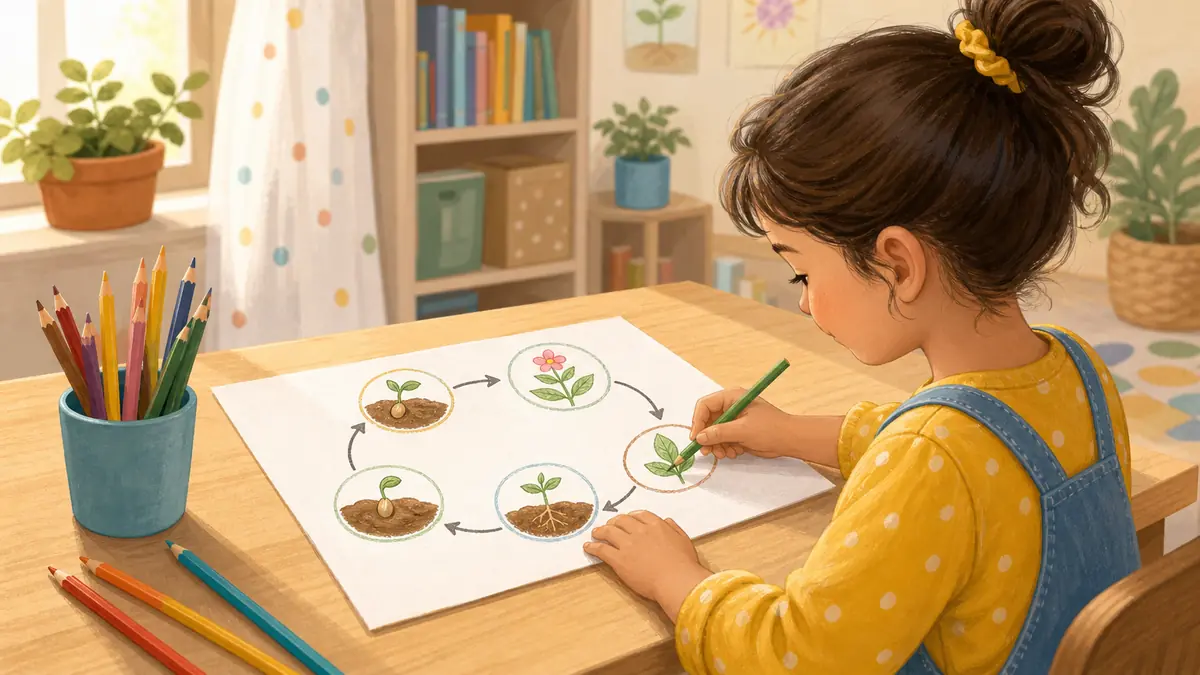
Science is where educational coloring pages arguably deliver their greatest value, because so much of scientific content is inherently invisible or abstract. Life cycles, ecosystems, anatomy, geological processes, and weather systems are all made visible and engageable through coloring diagrams.
A child who colors a butterfly life cycle diagram — egg, caterpillar, chrysalis, adult — physically moves through the sequence and creates a kinesthetic memory of the stages that pure reading or listening cannot match. The finished page becomes a reference artifact they can return to.
Science coloring activities by topic:
- Life cycles: butterfly, frog, plant, chicken — our life cycle coloring pages cover the most studied species at the elementary level
- Biology: plant anatomy, human body systems, animal classification
- Earth science: weather cycles, rock types, habitats, seasons
- Ecology: food chains, ecosystems, environmental science
Browse our science and nature coloring pages for a wide range of scientific subject matter. For STEM-focused coloring, see our guide to STEM activities using coloring pages.
Social Studies: Community, World, and History
Coloring pages featuring community helpers, world geography, cultural celebrations, and historical figures support social studies curriculum at the elementary level by making abstract social concepts concrete and visible. A child who colors a page depicting community helpers (doctors, teachers, firefighters) builds a visual-spatial understanding of community that a verbal description alone cannot provide.
Our people and family coloring pages provide human-centered social studies content for elementary-age learners.
Preschool and Kindergarten Readiness
For children not yet in formal schooling, educational coloring activities develop the four foundational competencies that predict kindergarten success:
- Fine motor skills — grip strength, pencil pressure control, stroke direction
- Visual-spatial processing — shape recognition, color differentiation, spatial relationships
- Sustained attention — the ability to maintain focus on a task for increasing durations
- Following instructions — selecting specific colors, completing a page, responding to guided prompts
For a complete guide to fine motor development through coloring, see our article on how coloring helps kids build fine motor skills.
Educational Coloring for Different Audiences
For Parents at Home
Parents using educational coloring at home get the most value from a structured, intentional approach rather than simply handing a child a page. Before the page: introduce the concept (name the letter, describe the life cycle stage, name the shape). During coloring: narrate and question (“What letter is this? What sound does it make? What comes next in the butterfly’s life?”). After coloring: apply the concept (find the letter in a book, look for the animal outside, write the number).
This before-during-after structure takes the educational value of a coloring page from background reinforcement to active learning. The page itself is the anchor; the conversation around it is what produces lasting learning.
For Teachers in the Classroom
Classroom use of educational coloring pages is most effective when pages connect directly to the current unit. A science coloring page used the same week as the science lesson creates reinforcement; used three weeks later, it’s isolated review with less impact. The most powerful classroom uses:
- Lesson introduction: Color a diagram as an anticipatory set before instruction begins — visual exposure before verbal content improves retention
- Lesson reinforcement: Color and label a diagram after instruction as a kinesthetic consolidation activity
- Assessment alternative: A completed and labeled coloring page demonstrates understanding in a format that suits visual-kinesthetic learners better than worksheets
- Morning work: Curriculum-connected morning work coloring pages prime the day’s learning theme
For classroom-specific resources, see our guides on coloring pages for morning work and art activities for the classroom.
For Homeschoolers
Homeschool families use educational coloring pages across a wider range of contexts than classroom teachers because the flexibility of homeschooling allows coloring to be integrated into morning basket, unit studies, nature journaling, and narration activities simultaneously. The most effective homeschool coloring approaches:
- Unit study anchor pages: A coloring page that introduces the visual vocabulary of the unit before reading begins
- Nature journal illustrations: Color a nature page after an outdoor observation to create an illustrated nature journal entry
- Narration tools: Color a diagram, then narrate (verbally or in writing) what each labeled section represents
- Morning basket enrichment: Calm, connected coloring during morning circle time while a parent reads aloud
See our complete guide to homeschool morning basket with coloring pages for structured approaches.
How to Choose the Right Educational Coloring Pages
Not all educational coloring pages are equally effective. The most impactful pages share several qualities:
Appropriate Complexity
Pages too simple for the child’s skill level provide no challenge and little learning; pages too complex create frustration and disengagement. The sweet spot is a page that requires effort and attention but is achievable within a single sitting. Match complexity to the child’s current fine motor level, not just their age or grade.
Clear Educational Content
The learning content should be visible and clear — not buried in decorative detail. A life cycle diagram where each stage is distinctly outlined and labelable is more educational than an artistic illustration of the same content. The page should function as a learning tool first and a creative activity second.
Connectedness to Other Learning
Educational coloring pages that connect to what the child is currently reading, studying, or observing are exponentially more valuable than generic educational content delivered in isolation. A butterfly life cycle page used during a butterfly study produces deeper learning than the same page used on a random Tuesday with no curriculum connection.
Space for Extension
The best educational coloring pages leave room for the child to add labels, write facts, or extend the image. This active addition — rather than pure coloring — is what moves the activity from passive reinforcement to active construction of knowledge.
Building an Educational Coloring Curriculum
A simple monthly educational coloring plan that delivers consistent learning value without overwhelming planning effort:
- Weekly alphabet page (preschool–kindergarten) — one letter per week with a connected phonics activity
- Monthly science diagram — one life cycle or science concept per month, used as a unit study opener
- Seasonal nature page — one seasonal nature page per month, connected to outdoor observation
- Math page as needed — color-by-number or pattern page when a specific math concept needs reinforcement
This four-page-per-month structure covers literacy, science, nature study, and math without requiring daily curriculum planning, and produces 48 completed educational pages per year — a tangible record of the year’s learning.
Frequently Asked Questions
Are coloring pages actually educational?
Yes — coloring pages designed with educational content (alphabet letters, number concepts, science diagrams, life cycles) deliver genuine academic value while engaging children in a format they find inherently motivating. The multi-sensory encoding of visual plus kinesthetic processing produces stronger memory formation than single-channel learning methods. Educational coloring pages are most valuable when paired with explicit instruction and connected to active learning rather than used as isolated activities.
What educational coloring pages are best for preschoolers?
Alphabet pages (letter recognition and phonics), number pages (counting and number identification), and simple science pages (animal names, plant parts, weather concepts) are most appropriate for preschoolers. Choose pages with large, clear content and minimal fine detail. The educational interaction — parent naming letters, discussing colors, asking questions — matters more than the complexity of the page itself.
How do educational coloring pages support kindergarten readiness?
Educational coloring pages support kindergarten readiness by developing fine motor skills (grip, pressure control, stroke direction), visual processing (letter and number recognition, shape identification), sustained attention (staying focused on a task), and academic content familiarity (letters, numbers, basic science concepts). Children who arrive at kindergarten with these foundations through regular educational coloring show faster acquisition of formal reading and writing skills.
Can educational coloring pages replace workbooks?
Educational coloring pages can effectively replace or supplement workbooks for many children — particularly those who resist the worksheet format. They cover similar content (letters, numbers, science concepts) in a format that produces less resistance and more sustained engagement. For children who learn well through visual-kinesthetic channels, educational coloring pages may actually be more effective than traditional workbooks for the same content.
How often should kids do educational coloring activities?
Two to four sessions per week is sufficient for most children to see meaningful educational benefit. Daily sessions (10–20 minutes) are appropriate for children in active literacy or math skill-building phases. The quality of the educational interaction around the coloring — the before-during-after conversation — matters more than the frequency of the sessions themselves.
What age is educational coloring most effective?
Educational coloring is most impactful in the 3–7 age range, when children are in the critical window for letter recognition, number concepts, and science vocabulary development. It remains valuable through upper elementary for science diagrams, pattern work, and art-integrated curriculum. The fine motor benefits are most significant in the 2–5 window, when the muscle systems used in writing are actively developing.
Educational coloring activities are one of the most underutilized tools in the parent and teacher toolkit — high engagement, multi-sensory learning, zero resistance, and available for the cost of printer paper and crayons. Browse our full library of alphabet, math, science, and life cycle coloring pages to start building your educational coloring curriculum today.