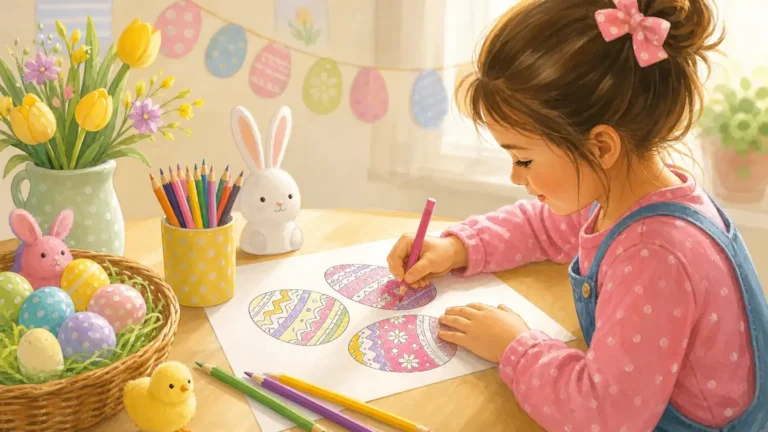

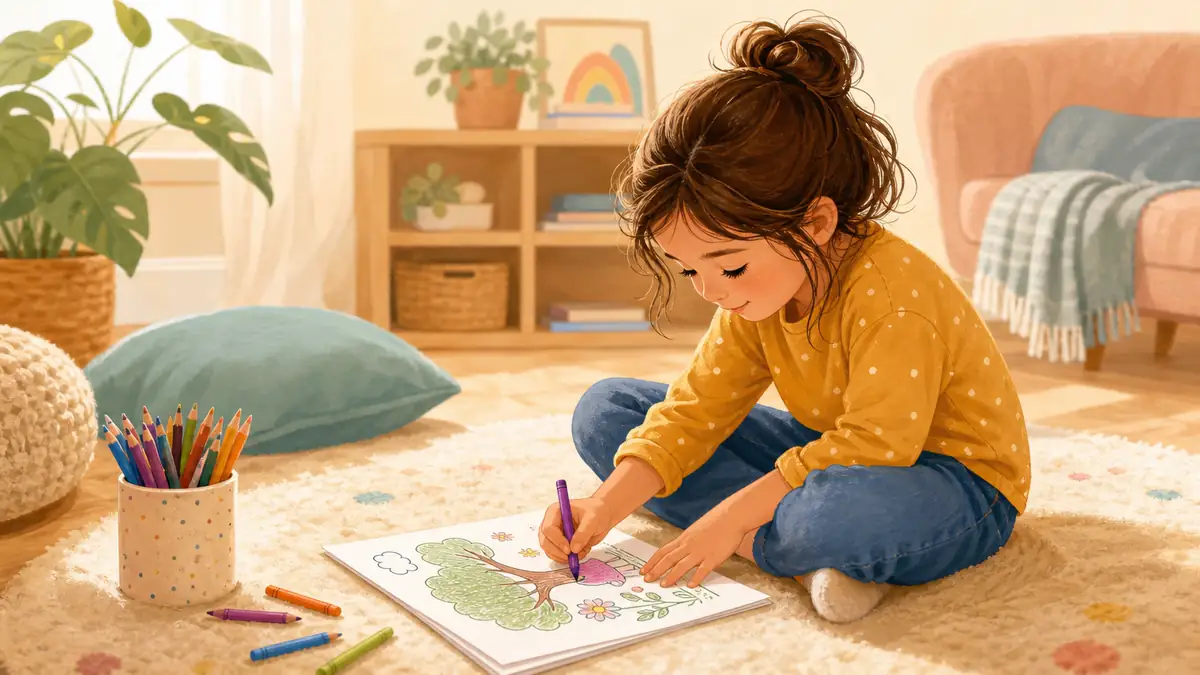

Coloring helps kids calm down because the repetitive, focused motion of filling in shapes activates the brain’s relaxation response — lowering heart rate and reducing cortisol in ways similar to meditation. It gives children something concrete to focus on when big feelings feel overwhelming, making it one of the most accessible and effective calm-down tools available to parents and teachers.
Why Coloring Is a Proven Calming Activity for Kids
When a child is overwhelmed, anxious, or overstimulated, the brain needs a bridge back to calm. Coloring provides that bridge. The act of choosing colors, staying within lines, and making small deliberate movements engages the prefrontal cortex — the part of the brain responsible for focus and emotional regulation — while quieting the fight-or-flight response.
Unlike screen-based distractions that replace one stimulation with another, coloring is genuinely restorative. It requires just enough attention to pull a child out of a spiral, but not so much that it creates new stress. The result is a natural, drug-free, screen-free tool for emotional regulation that works across a wide age range.
For more ways to build calm into your child’s day, visit our Tips & Techniques hub.
How Coloring Affects the Brain and Body
Research into art therapy and mindfulness consistently shows that repetitive creative activities reduce activity in the amygdala — the brain’s alarm center. For children, whose emotional regulation systems are still developing, this effect is especially significant. Coloring gives the nervous system a structured way to reset.
Physical effects include:
- Slower, more regular breathing as children settle into the activity
- Reduced muscle tension in the hands, shoulders, and jaw
- Lowered cortisol levels after sustained coloring (10+ minutes)
- Improved focus that carries over into the next activity
These effects make coloring particularly useful during transitions — after school, before bed, or between high-energy activities — when children are most prone to emotional dysregulation.
Best Times to Use Coloring as a Calm-Down Tool
After School Wind-Down
The after-school period is one of the highest-stress windows of a child’s day. They’ve been holding it together for hours and are exhausted. A 20-minute coloring session before homework or screens gives the nervous system time to decompress. Keep a printed stack of pages and crayons at the kitchen table so the transition from “school mode” to “home mode” is immediate and effortless.
Before Bed
Screens stimulate the brain before sleep; coloring does the opposite. A quiet coloring session 30–45 minutes before bed — paired with soft music or an audiobook — signals to children’s bodies that the day is winding down. Our nature coloring pages and flower and plant pages work especially well for bedtime coloring: calming subjects, gentle detail levels, and nothing overstimulating.
During Big Feelings
When a child is mid-meltdown, asking them to color won’t work — but having it available as a “when you’re ready” option is powerful. Some families create a calm-down corner stocked with coloring pages, crayons, and soft lighting. The child learns that coloring is a tool they can reach for, not a punishment or a distraction imposed from outside.
During Transitions and Waiting
Long waits, car rides, waiting rooms, and the gaps between activities are classic flashpoints for children’s frustration. A small folder of printed animal coloring pages in a bag turns these moments from potential meltdowns into calm, productive time.
Coloring Pages That Work Best for Calming
Not every coloring page has the same calming effect. The most effective pages for emotional regulation share a few qualities:
- Repetitive patterns — mandalas, geometric shapes, and repeating designs are particularly meditative
- Nature themes — flowers, leaves, trees, and garden scenes are inherently calming subjects
- Manageable detail — not so simple it’s boring, not so complex it creates frustration
- Familiar subjects — animals and characters the child already loves lower the activation energy to start
Browse our nature coloring pages and people and family pages for calm-focused options that work across ages.
How to Introduce Coloring as a Calm-Down Tool
The key is introducing coloring during calm moments — not trying to use it for the first time mid-crisis. Here’s a simple approach:
- Stock up on pages and supplies in advance. Have pages printed and crayons accessible in a designated spot.
- Model it yourself. Color alongside your child during a low-stress time so they associate it with calm before they need it for calm.
- Name it explicitly. “When I need to calm down, I color” teaches children to self-identify the tool and reach for it independently.
- Don’t force it mid-meltdown. Offer it as an option: “When you’re ready, your coloring pages are right here.” Autonomy matters.
- Celebrate the choice. When a child reaches for coloring to self-regulate, acknowledge it specifically: “I love that you knew what would help you feel better.”
Frequently Asked Questions
Does coloring actually help kids calm down?
Yes. The repetitive, focused motion of coloring engages the brain’s calming systems and reduces activity in the amygdala — the brain’s stress center. Studies on art therapy and mindfulness show that repetitive creative tasks lower cortisol and heart rate. For children whose emotional regulation systems are still developing, coloring provides a reliable, accessible tool to return to calm.
At what age does coloring work as a calm-down strategy?
Coloring as a calming activity works from about age 2 onward. Toddlers benefit from the sensory experience of holding crayons and making marks; preschoolers begin to use it intentionally to self-soothe; school-age children can use it as a deliberate emotional regulation strategy. The approach and page complexity should match the child’s developmental level.
How long does a child need to color before it has a calming effect?
Most children begin to show physiological signs of calming — slower breathing, reduced tension — within 5–10 minutes of focused coloring. The full calming effect typically peaks around 15–20 minutes. Shorter sessions still help, especially if paired with soft music or a quiet environment.
What kind of coloring pages are most calming for kids?
Nature themes, repeating patterns, and familiar subjects work best. Avoid pages with very high detail that might frustrate younger children, and avoid highly stimulating themes like action scenes or complex machinery for calm-down purposes. Simple animal and flower pages are reliably effective across age groups.
Can coloring replace other calm-down strategies?
Coloring works best as part of a toolkit rather than as the only strategy. It pairs well with deep breathing, soft music, and sensory tools like fidgets or weighted blankets. For children with diagnosed anxiety or sensory processing differences, consult with a therapist about how coloring fits into a broader emotional regulation plan.
Teaching kids to recognize when they need to calm down — and to reach for a tool that actually works — is one of the most valuable things a parent or teacher can do. Coloring pages are low-cost, always available, and genuinely effective. Browse our full library at coloring.media and find the pages that resonate most with your child.