

The best coloring pages for preschoolers are bold enough to be achievable, interesting enough to hold 10–20 minutes of attention, and varied enough to keep the activity fresh across hundreds of sessions between ages 3 and 5. Preschoolers are in a unique developmental window — their fine motor skills are actively developing, their interests are intensely personal, and their attention spans are long enough for a real coloring session but short enough that the wrong page loses them in minutes. This guide covers what actually works for this age group.
What Preschoolers Need in a Coloring Page
Bold Outlines with Medium-Large Areas
Preschoolers (ages 3–5) have a range of fine motor capability — a newly-turned 3-year-old and a child weeks from kindergarten are in very different places. The sweet spot for this age range: bold outlines (not as thick as toddler pages, but clearly visible and durable) with coloring areas that range from medium-large to large. No section should require more precision than a functional tripod grip can reliably deliver — roughly, areas the size of a child’s palm or larger for younger preschoolers, thumb-sized or larger for older preschoolers.
Clear, Recognizable Subjects
Preschoolers color subjects they care about with dramatically more investment than subjects assigned to them. Ask a 4-year-old their favorite animal and you’ll get an immediate, passionate answer — that passion should drive page selection. Having 4–5 themes available and letting the child choose produces better coloring sessions than any single “right” page could.
Appropriate Number of Elements
Pages with 3–7 distinct elements are the preschool sweet spot — enough visual interest to sustain engagement, not so many elements that the page feels overwhelming before the first crayon touches paper. A page with 15 tiny sections is an upper-elementary page; a page with a single large shape is a toddler page. Preschoolers sit between these extremes.
Best Page Categories for Preschoolers
Animals (Top Choice)
Animal pages are the most reliable preschool coloring choice across the age range — the interest is nearly universal, the subject matter scales naturally from very simple (a single large cat) to moderately detailed (a cat with a background scene), and the emotional connection to beloved animals drives careful, sustained coloring. Our animal coloring pages include the full range from simple to detailed — for preschoolers, look for single-animal pages with minimal background complexity.
Alphabet Pages (Literacy Value)
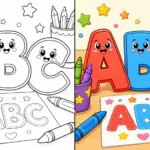
Alphabet coloring pages deliver genuine pre-literacy value — letter recognition, letter-sound connection, and the beginning of letter-shape motor memory — in a format preschoolers find enjoyable. Keep the approach light and playful rather than instructional: “This is the letter B — can you find any B’s in your name?” Our alphabet pages pair each letter with a picture cue appropriate for phonics introduction at the preschool level.
Food Pages (High Engagement)
Food pages — especially treats like ice cream, pizza, and cupcakes — tap into preschool imaginative play naturally. A child who colors a cupcake often begins narrating a story about who the cupcake is for, extending the activity into dramatic play and language development simultaneously. Our food and treats pages include the treat categories most engaging for this age.
Seasonal Pages (Natural World Connection)
Preschoolers are highly attuned to seasonal changes — they notice pumpkins, flowers, snow, and sunshine in a way younger toddlers don’t. Seasonal coloring pages connect the indoor creative activity to the world they’re observing outside, making coloring feel timely and relevant. Our seasonal pages are organized by month for easy year-round selection.
Simple Science Pages (Early Learning)
Simple animal life cycle pages — a frog, a butterfly, a caterpillar — introduce science vocabulary in a visual, colorable format appropriate for preschool. The page itself teaches; no formal instruction is required. Our life cycle pages include the species most commonly studied at the preschool and early elementary level.
Making Preschool Coloring Educational
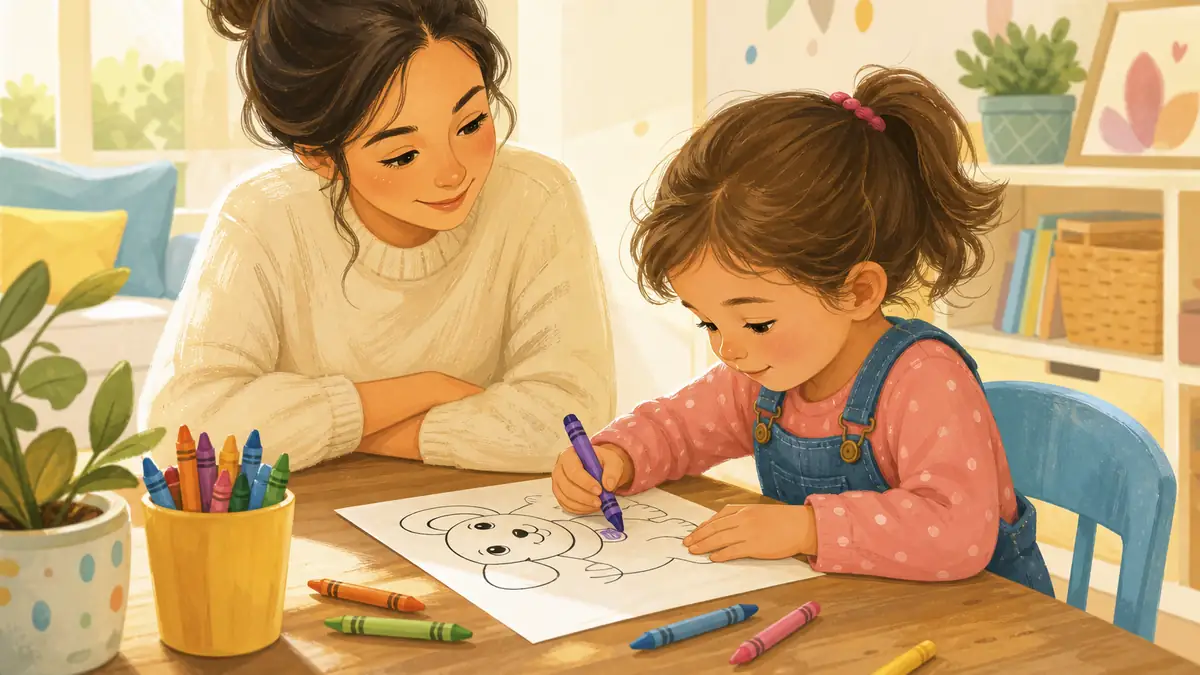
The educational value of preschool coloring pages multiplies with simple adult engagement — but requires minimal time. The three-step sequence:
- Before coloring: Name and discuss what’s on the page (letter name and sound, animal name and one fact, seasonal connection)
- During coloring: Light narration and questions (“What color are you choosing? How many flowers are there? What sound does that letter make?”)
- After coloring: One connection prompt (“Can you find that letter somewhere in the kitchen? Can you look for that animal next time we go outside?”)
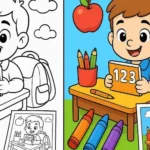
This sequence takes 2–3 minutes total and transforms the educational value of any preschool coloring page from background reinforcement to active learning. For detailed literacy and math integration approaches, see our guides on how to teach letters with coloring pages and how to teach numbers with coloring pages.
For the complete developmental picture, see our pillar guide on coloring pages by age: complete parent guide.
Frequently Asked Questions
What are the best coloring pages for 3-year-olds?
Three-year-olds need bold outlines and large areas — slightly more detailed than toddler pages, but still achievable with an imprecise grip. The most effective pages have 3–5 large, recognizable elements and a subject the child cares about. Animals (especially dogs, cats, and whatever the child is currently obsessed with), simple food items, and seasonal themes consistently produce the most engaged coloring at this age. Avoid pages with sections smaller than a child’s palm.
What are the best coloring pages for 4-year-olds?
Four-year-olds are in the developmental sweet spot for coloring — their grip is functional and their preferences are passionate. Favorite animal pages, food and treat pages, alphabet pages for the letters they’re learning, and seasonal themes all work well. Pages with 4–8 elements at varying sizes are appropriate — the child can color the larger areas precisely and work toward the smaller ones as their focus allows. For a complete 4-year-old coloring guide, see our article on screen-free activities for 4-year-olds.
Should preschoolers do educational or fun coloring pages?
Both — and the distinction is less meaningful than it seems. An animal page is “fun” and also educational (animal names, colors, habitat). An alphabet page is “educational” and also enjoyable when the child has genuine interest in the letter. The most effective approach is choosing pages the child finds genuinely engaging and adding a light educational layer through adult narration and questioning rather than selecting pages based on educational content alone.
The best preschool coloring pages are the ones the child asks for by name — “Can I do the dinosaur one? Can I do the letter S?” Build a collection across their current interests and watch engagement, attention span, and fine motor skill develop naturally. Browse our animal, alphabet, food, and seasonal pages at coloring.media for the widest preschool-appropriate selection, and visit our Tips & Techniques hub for age-specific guides.