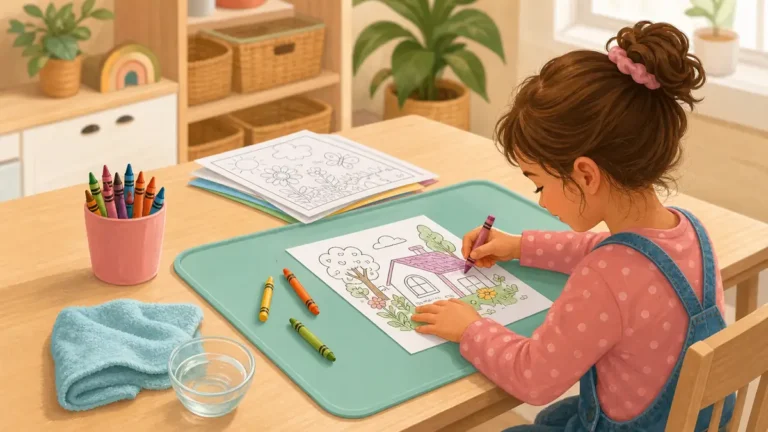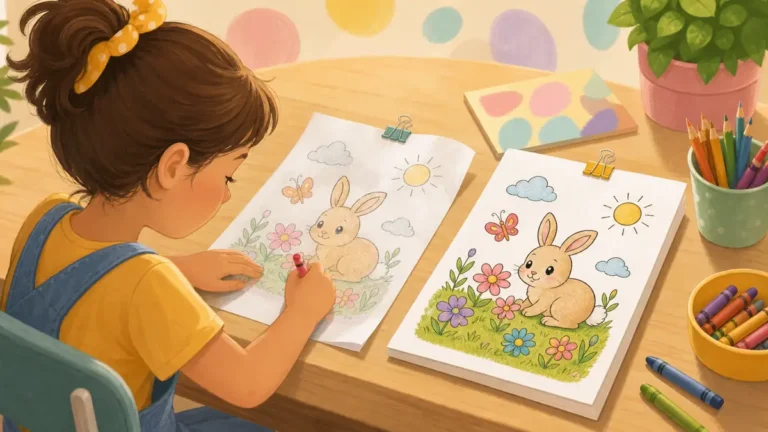

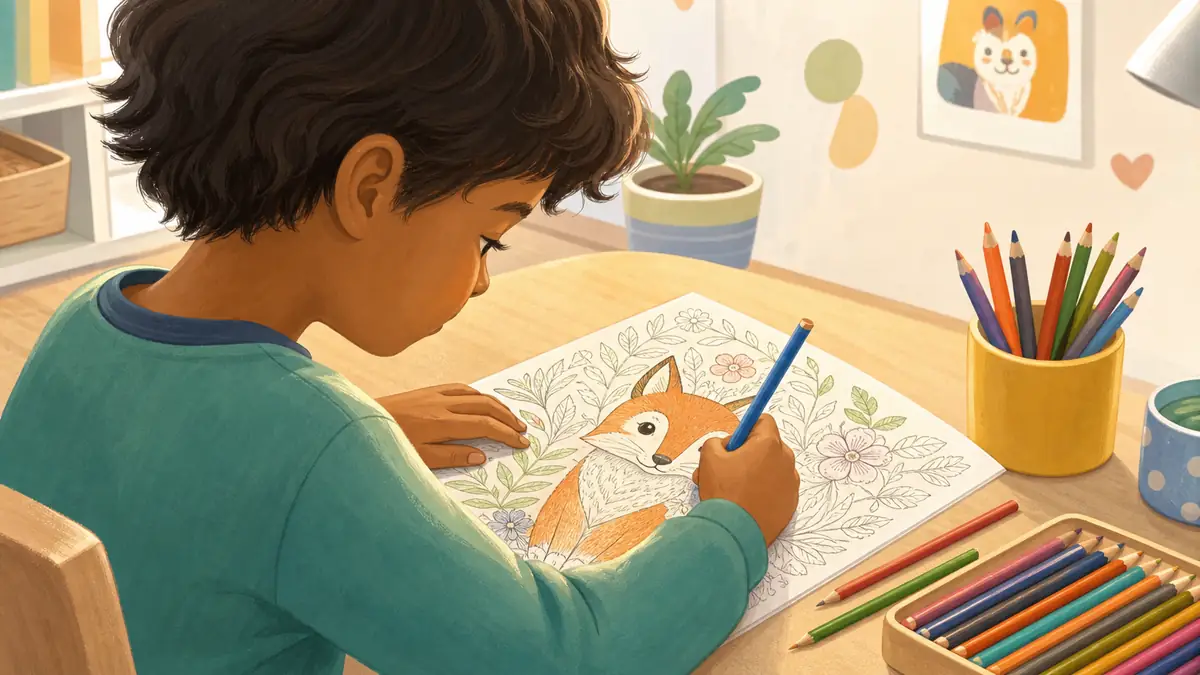

Learning to color neatly inside the lines is a developmental milestone, not a technique to force — the precision required develops naturally through fine motor maturation between ages 3 and 7, and attempting to rush it produces frustration rather than skill. But for children who are developmentally ready and want to improve their coloring precision — typically ages 5 and up — there are specific techniques that produce measurably neater results quickly. This guide covers what those techniques are, when to introduce them, and how to support rather than pressure the development of coloring precision.
Before Technique: Developmental Readiness
The most important thing to know about coloring inside the lines: it can’t be taught before the fine motor system is ready to execute it. A 3-year-old cannot reliably color within outlines not because they haven’t been shown how, but because their motor control systems haven’t yet developed the precision that outline work requires. Attempting to teach precision coloring before readiness produces only frustration and negative association with coloring.
Developmental readiness signals that a child is ready to work on coloring precision:
- They can hold a standard crayon or pencil in a tripod or functional grip without it slipping
- They are spontaneously attempting to stay within outlines, even imperfectly
- They express frustration with their own results (“It went outside!”) — this frustration means they have an internal standard that their motor system isn’t yet meeting, which is exactly the readiness condition for technique instruction
- They can follow a drawn line with a crayon when moving slowly
Most children show these signals between ages 4.5 and 6. Earlier than this, focus exclusively on providing age-appropriate pages rather than technique instruction.
The Four Core Techniques
Technique 1: Color the Edge First
The most effective single technique for improving outline precision is “edge-first” coloring: color slowly and carefully along the outline edge before filling the interior. The edge stroke establishes a clean boundary; the fill strokes then stay inside that established boundary naturally without requiring constant precision attention.
How to teach it:
- Show the child the outline and say: “First, we go slowly around the edge — like we’re tracing the border.”
- Demonstrate by slowly tracing along the inside of an outline, keeping the crayon touching the line’s inner edge.
- After the edge is established, say: “Now we fill in the middle — and we don’t have to be as careful because the edge is already done.”
Children who learn this technique typically show immediately improved precision because the task is decomposed into a careful phase (edge) and a free phase (fill) rather than requiring constant precision throughout.
Technique 2: Slow Down Near Edges
Most coloring precision loss happens when children approach an outline at full speed. The simple instruction: “Go fast in the middle, go slow near the lines.” This variable-speed approach is intuitive once named — children understand that the edges require more care — and produces quick improvements in precision without requiring sustained slow-speed coloring of entire sections.
Technique 3: Short Strokes Near Outlines
Long crayon strokes near an outline almost always cross it. Short strokes — 5–10mm parallel to the outline direction — give the child more control because each short stroke is a fresh movement decision rather than a continuation of a long stroke that’s already heading toward the line. Demonstrate: “Near the edge, make small strokes going this way” (parallel to the outline). “In the middle, you can make bigger strokes in any direction.”
Technique 4: Appropriate Pressure
Heavy crayon pressure makes precision harder because the crayon tip spreads under pressure, making the effective coloring area wider and harder to control. Light to medium pressure near outlines, heavier pressure for filling middles, gives better control. This is easier to demonstrate than describe: “Press lightly here, near the edge — like you’re tickling the paper. Press harder in the middle to make it brighter.”
Choosing Pages That Support Precision Development
Technique instruction is most effective when paired with pages appropriate for the child’s current level:
- For beginners (ages 4.5–5.5): Bold outlines with medium-large areas — enough space to practice edge technique without the frustration of tiny sections. Our easy pages and animal pages provide appropriate starting-point complexity.
- For developing precision (ages 5.5–7): Moderate detail with varied section sizes — some large sections for confident filling, some medium sections for precision practice. Life cycle pages and nature pages work well at this level.
- For refining precision (ages 7+): Complex pages with fine detail — the challenge of small sections provides the productive struggle that drives precision development further. Our science and nature pages are appropriate for this level.
What Not to Do
Three approaches that reliably undermine coloring precision development:
- Correcting in real-time: “You went outside! Start over.” Stops the flow state that produces the best coloring and attaches anxiety to the outline that makes future precision harder, not easier.
- Choosing pages too detailed for current capability: Pages with sections smaller than the child can target produce guaranteed outside-the-lines results regardless of effort or technique.
- Making it a performance: “Show me how neatly you can color” shifts the child’s attention from the intrinsic satisfaction of careful work to external evaluation — which typically degrades, not improves, precision.
Frequently Asked Questions
At what age should children be able to color inside the lines?
Most children develop reliable within-outline coloring on appropriately bold pages between ages 4.5 and 6. On moderately detailed pages, consistent precision typically develops between ages 5.5 and 7. On fine-detail pages, reliable precision is typically achieved between ages 7 and 9. These are ranges, not milestones — variation of a year in either direction is normal. Children who are significantly behind their peers in coloring precision and also showing handwriting or self-care fine motor challenges are worth mentioning at the next pediatric visit.
Should I correct my child for coloring outside the lines?
No — real-time correction produces anxiety rather than improved precision. Instead, teach techniques during calm coloring sessions when the child is not in the middle of a piece they care about. Practice edge-first technique on a “practice page” first, then let the child apply it independently on their own work. Positive attention to neat sections (“That edge looks really clean!”) is more effective than negative attention to imprecise sections.
Does using the right coloring tool help with precision?
Yes — the coloring tool affects achievable precision significantly. Colored pencils allow finer control than crayons for children with sufficient grip development (typically ages 6+). Fine-tip washable markers allow precise edge work for children who find pencils frustrating. Within the crayon category, triangular-barrel crayons promote the tripod grip that supports precise control. See our guide to colored pencils vs. crayons for tool-specific guidance.
Neat coloring develops naturally when children have age-appropriate pages, quality tools, and simple technique guidance introduced at the right developmental moment. Browse our full coloring page library at coloring.media for pages matched to every skill level, and visit our Tips & Techniques hub for skill-development guides.