


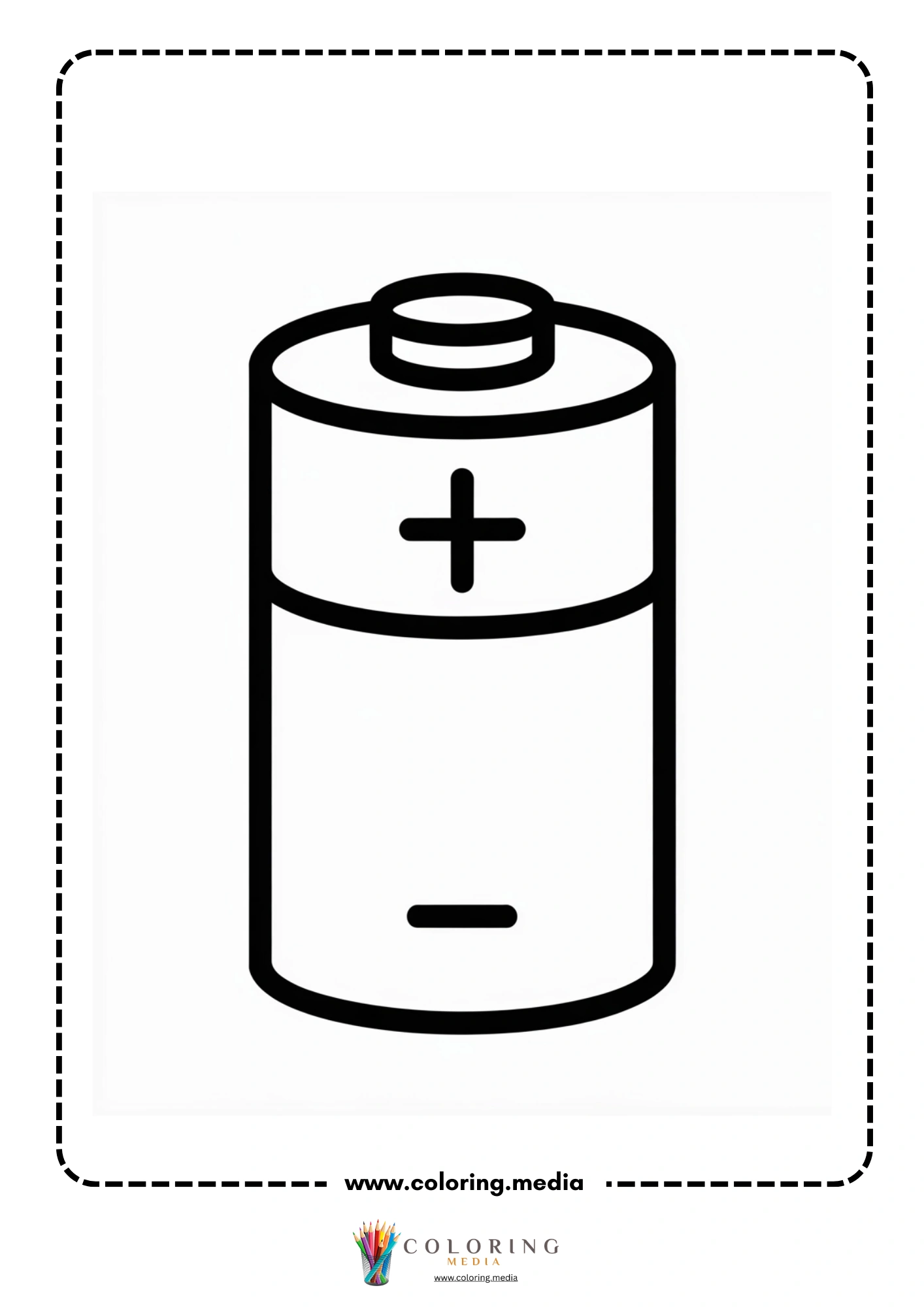
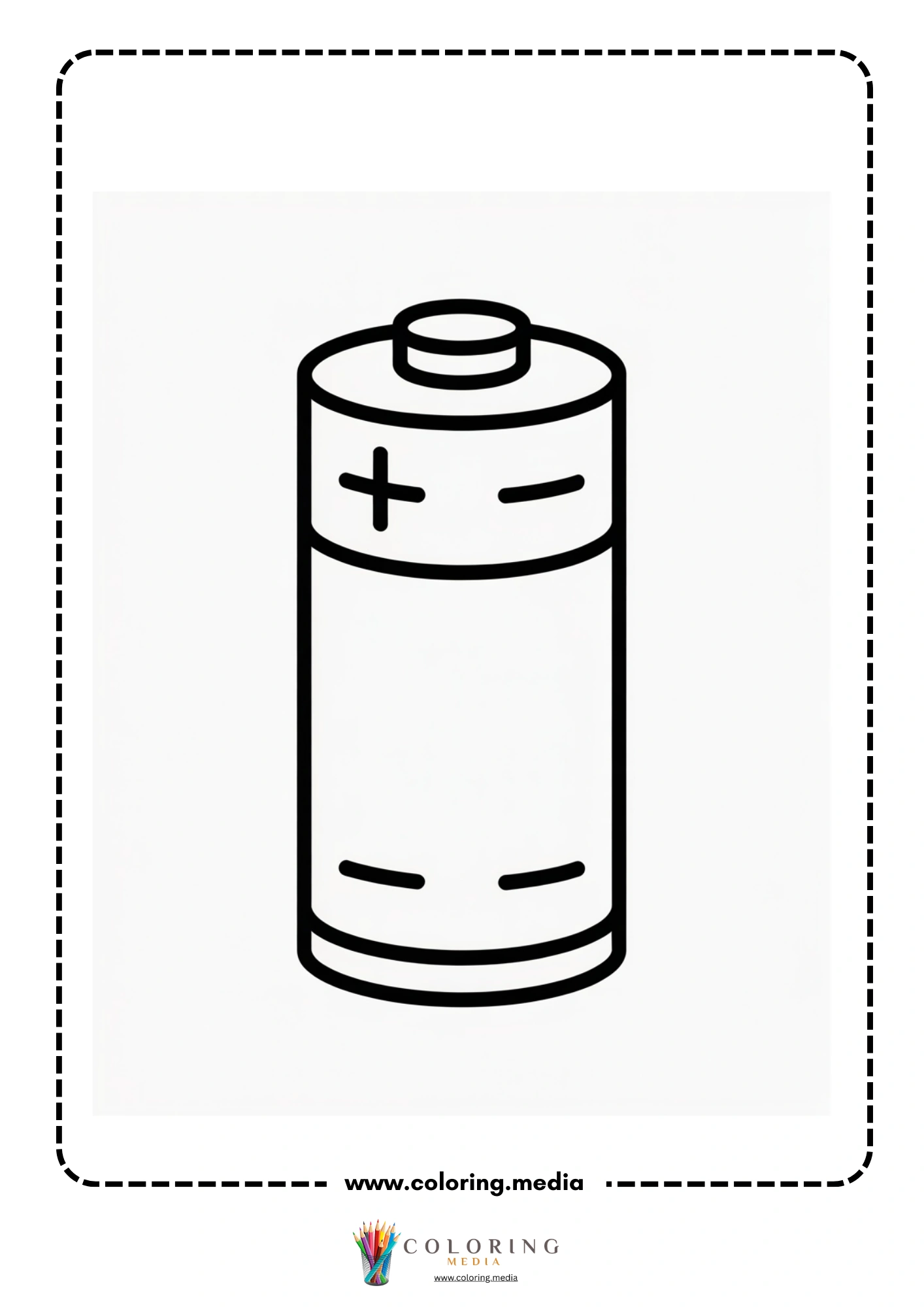
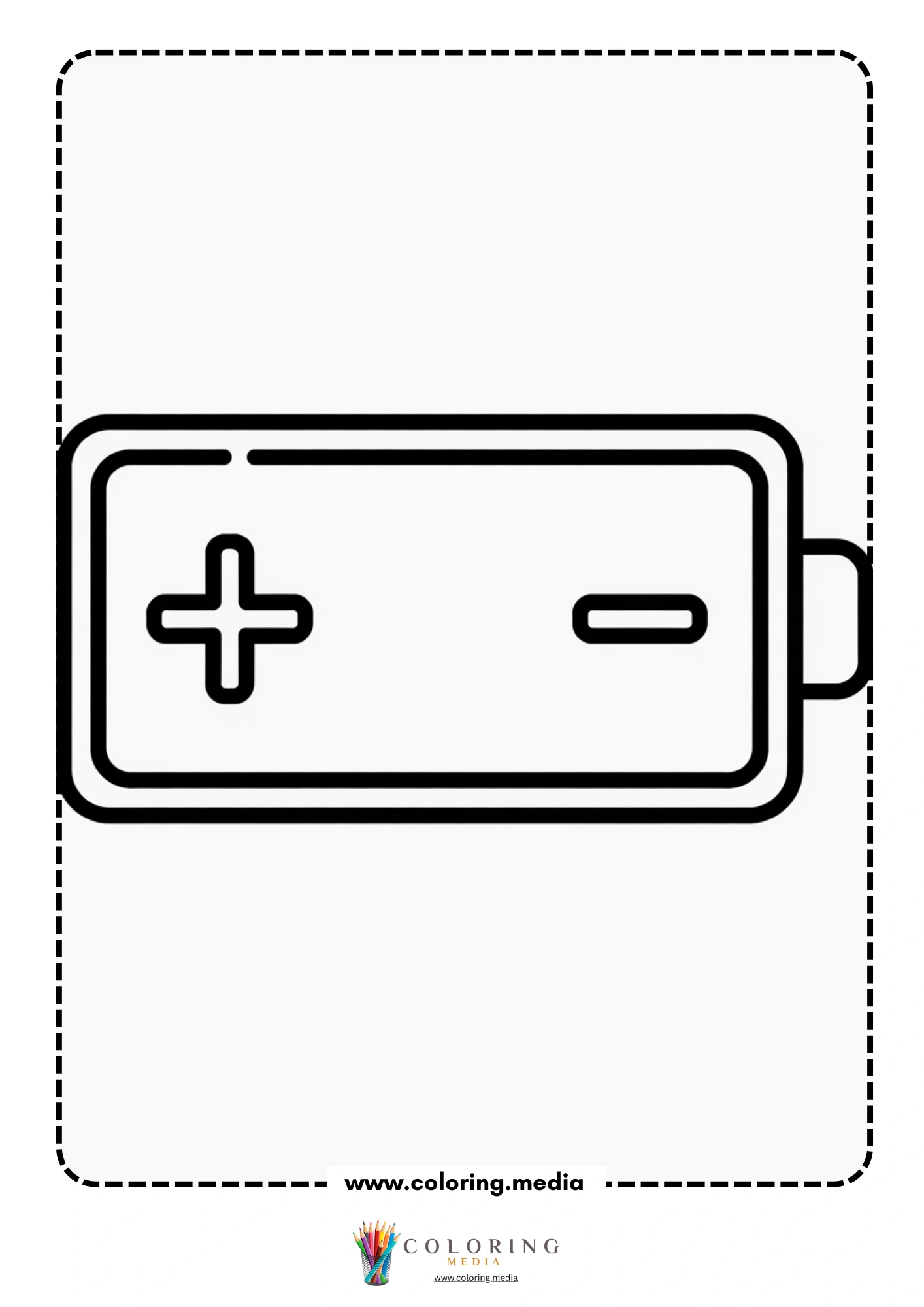
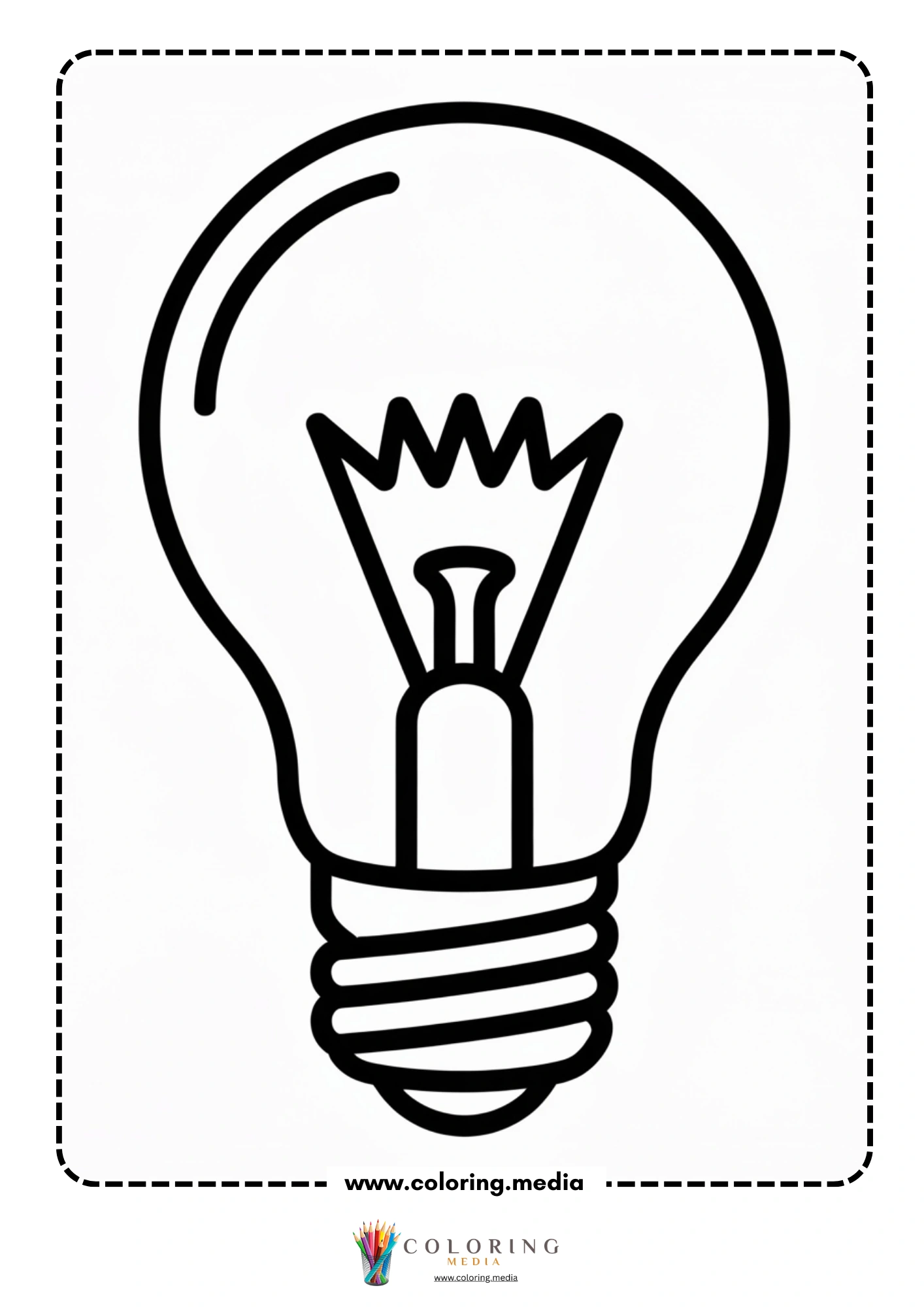
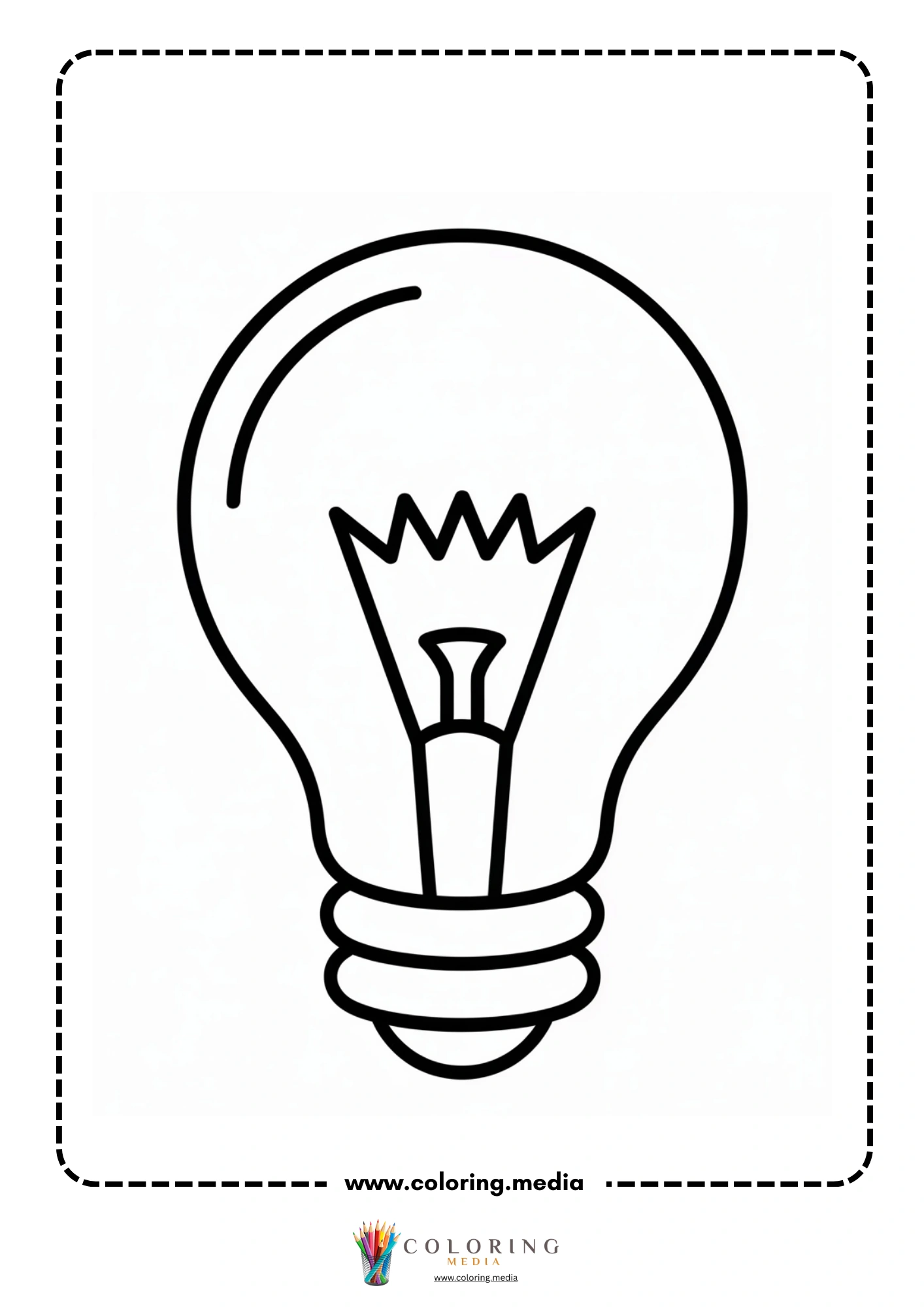
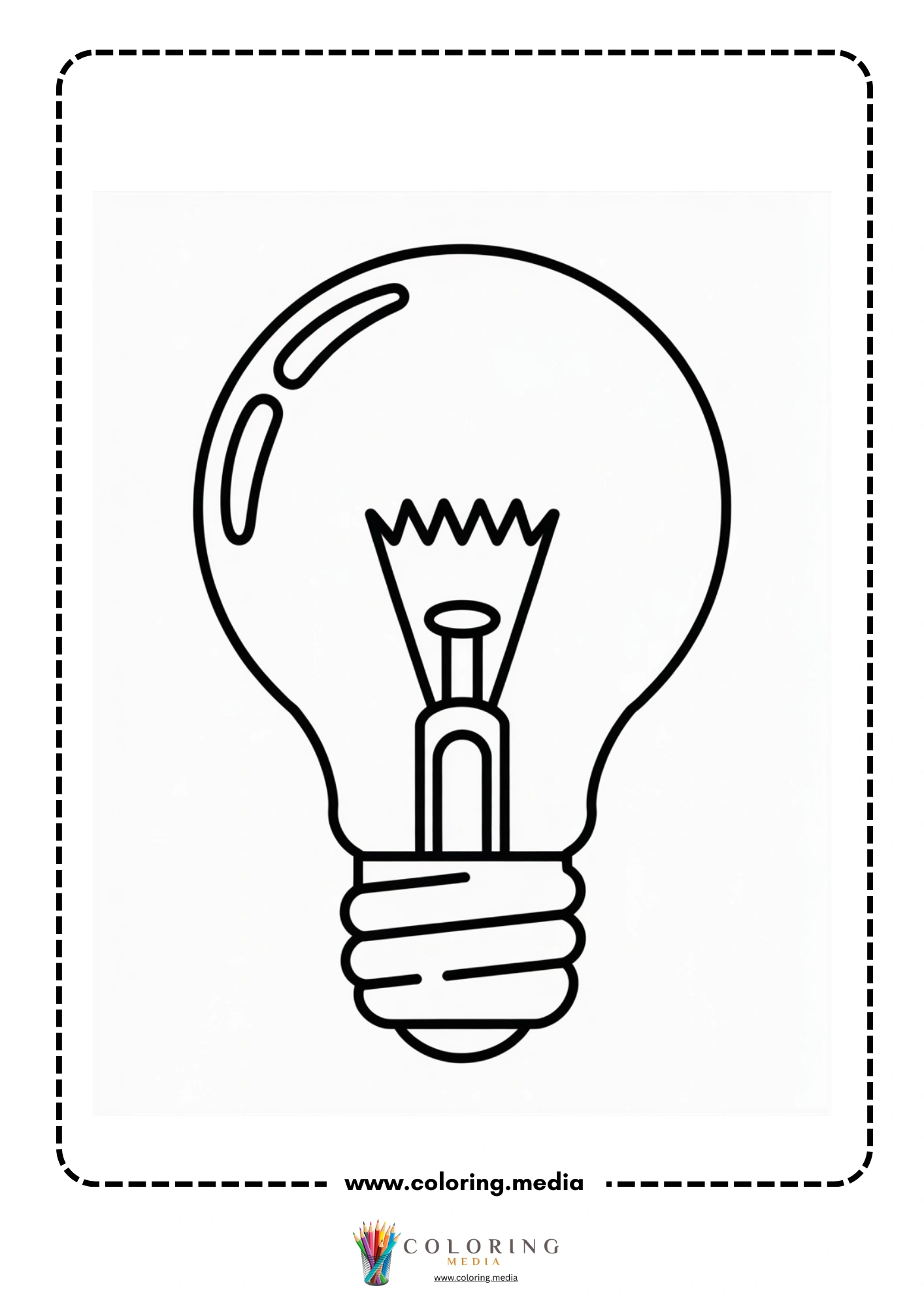
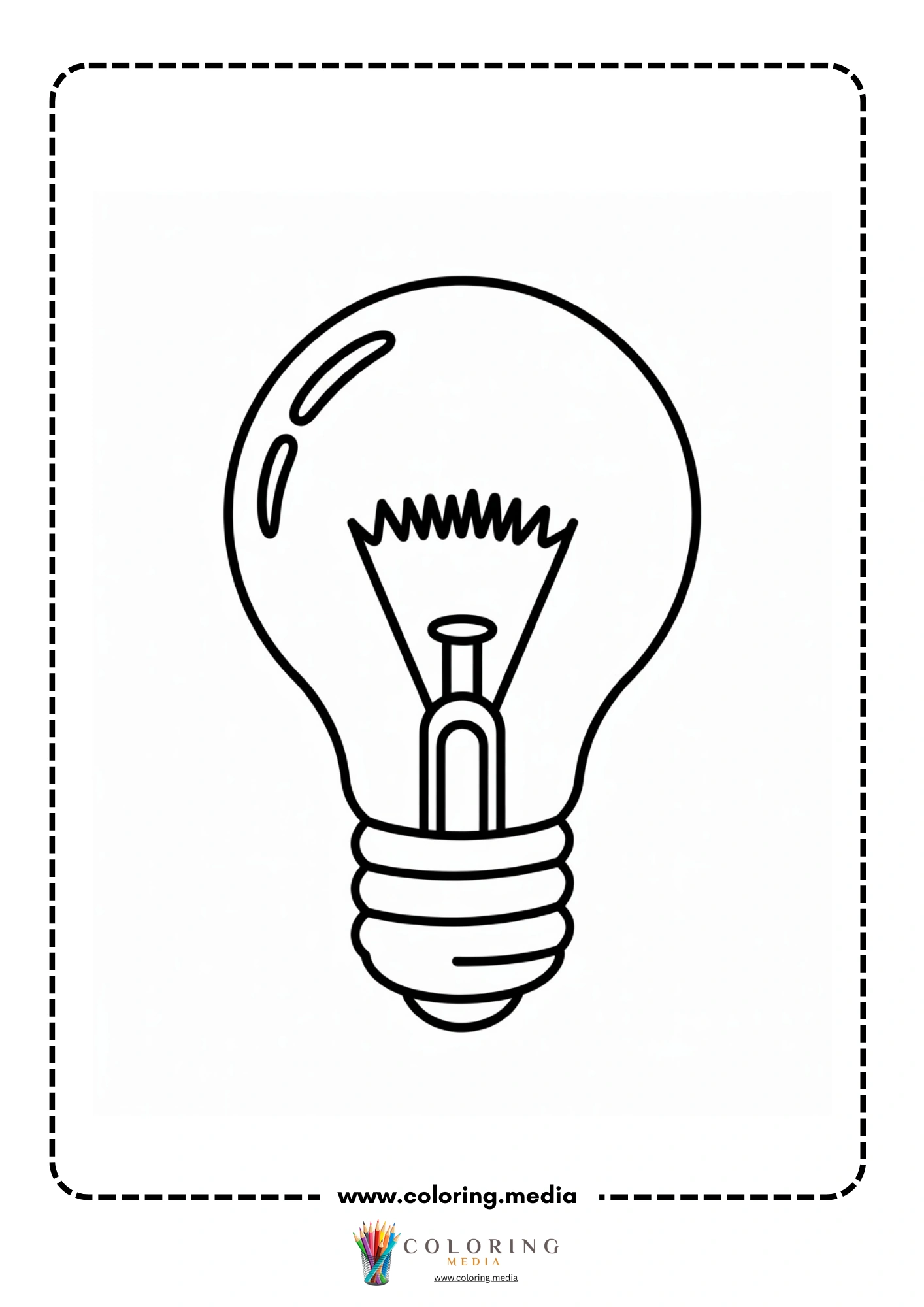
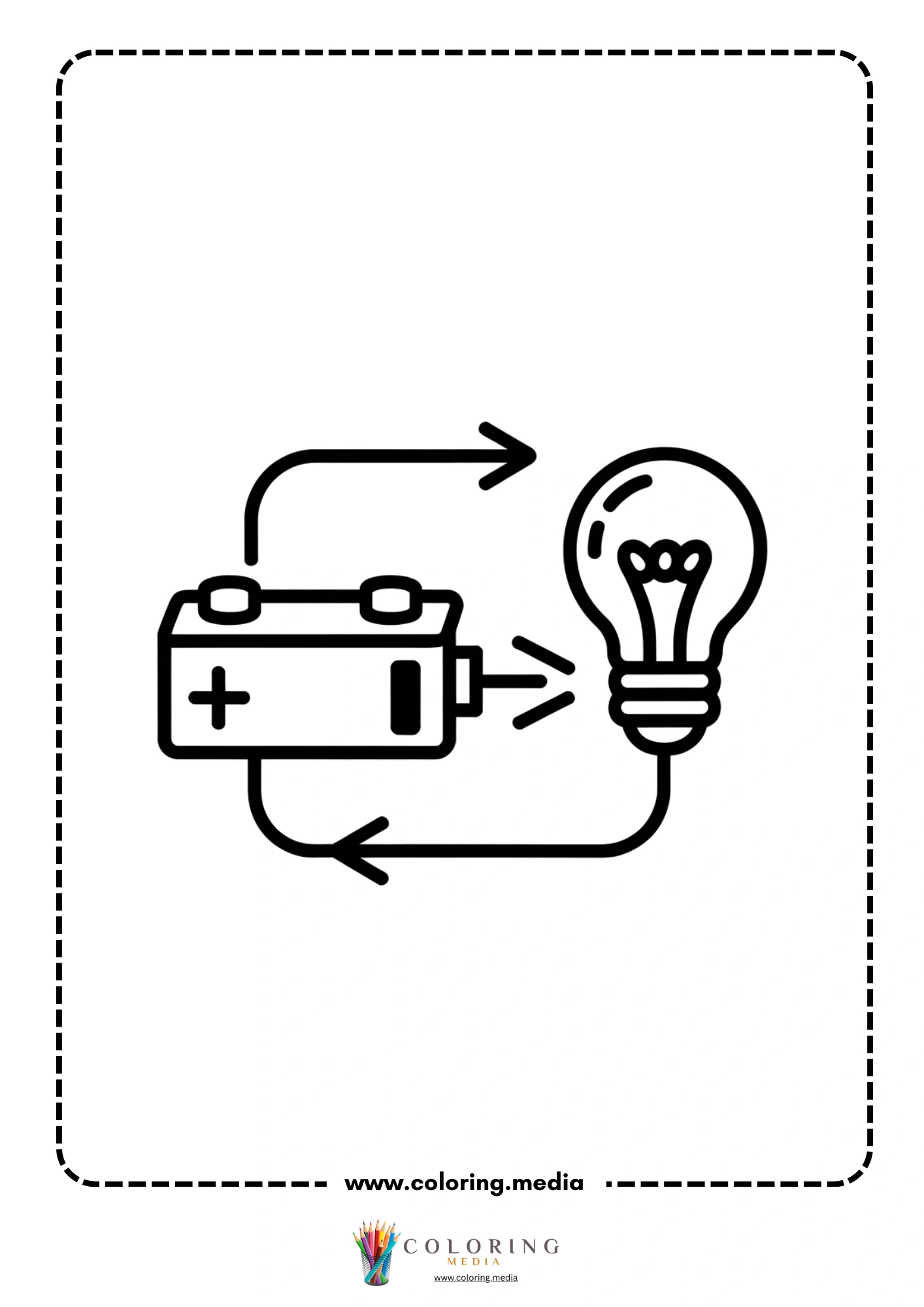
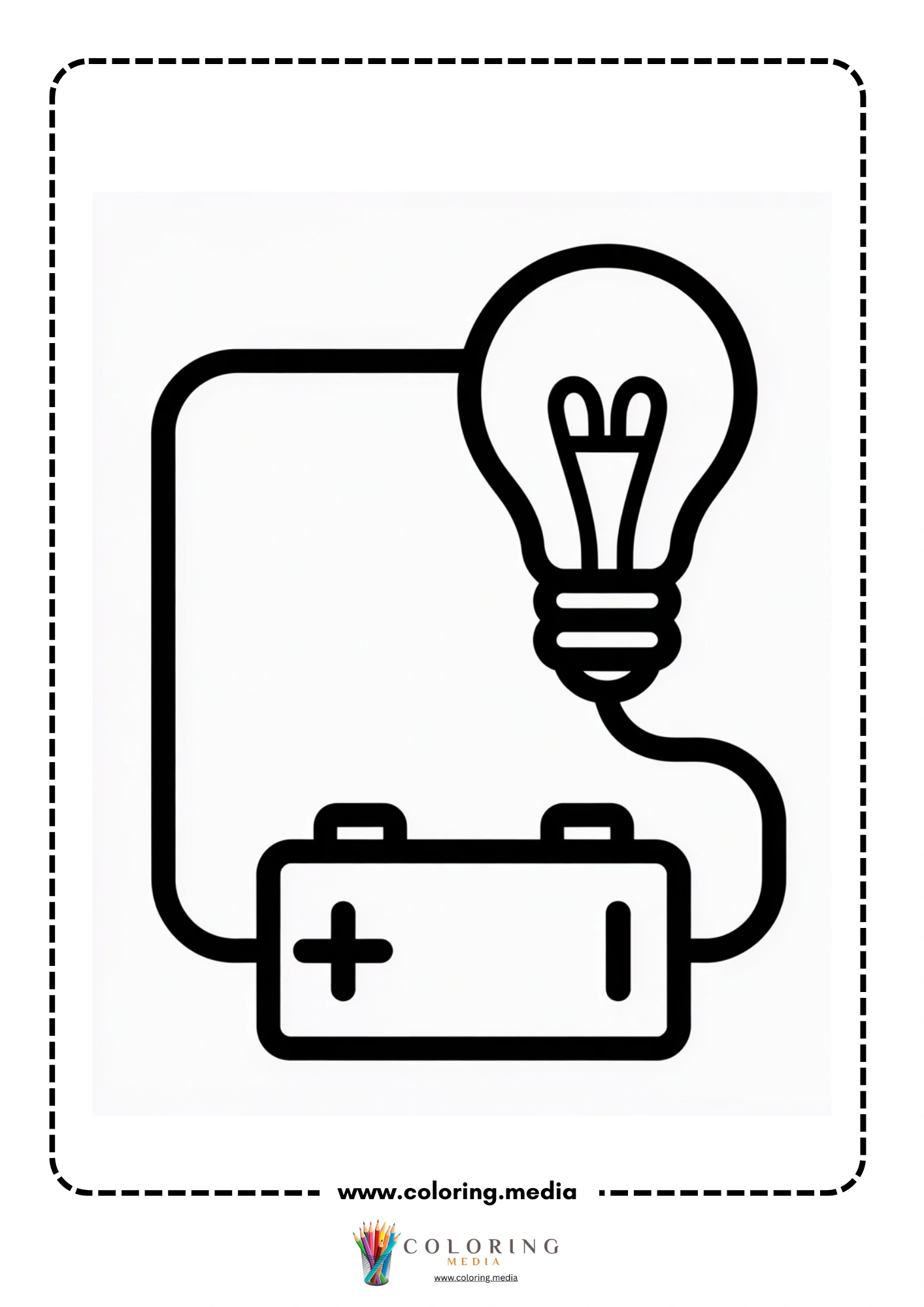
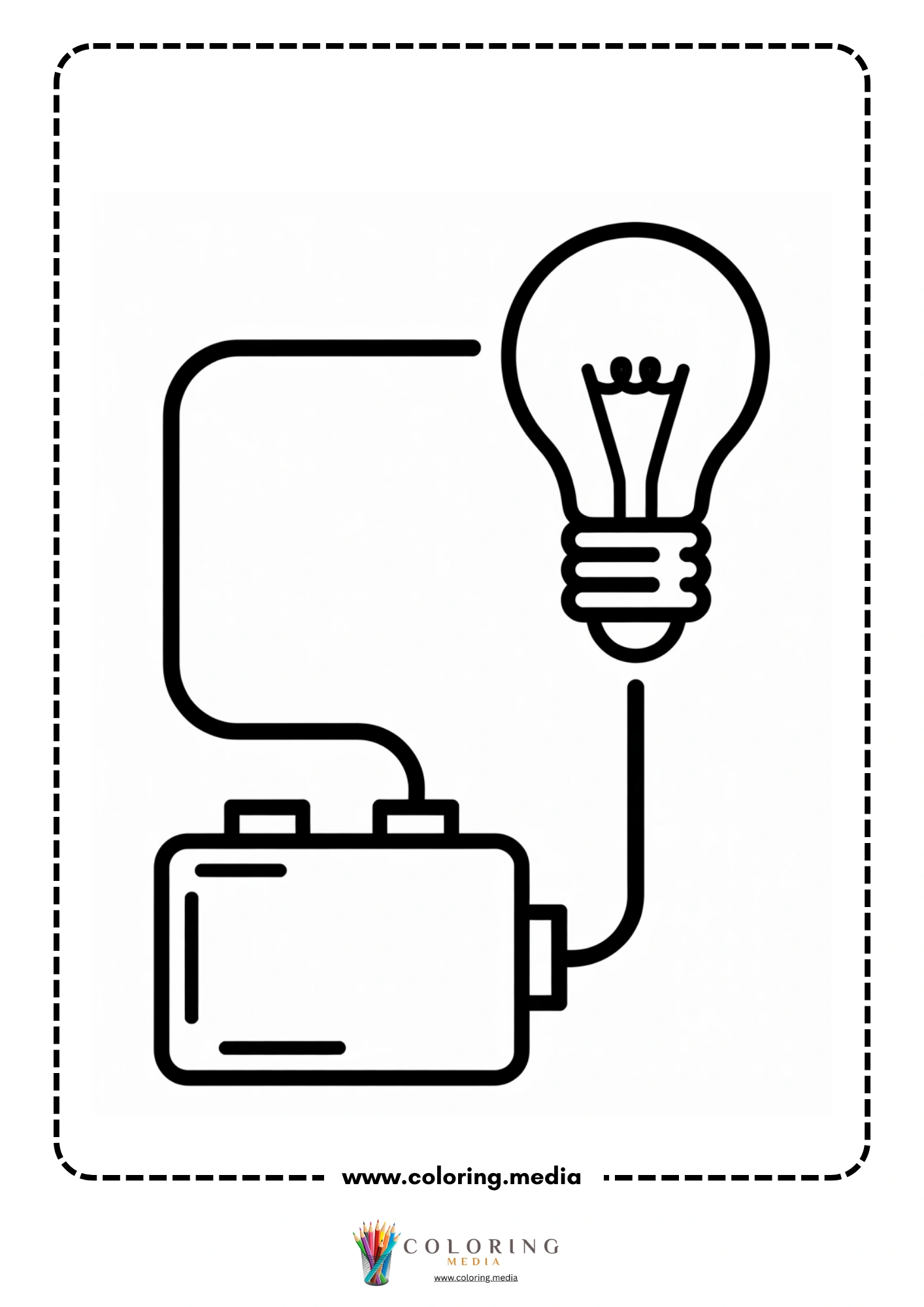
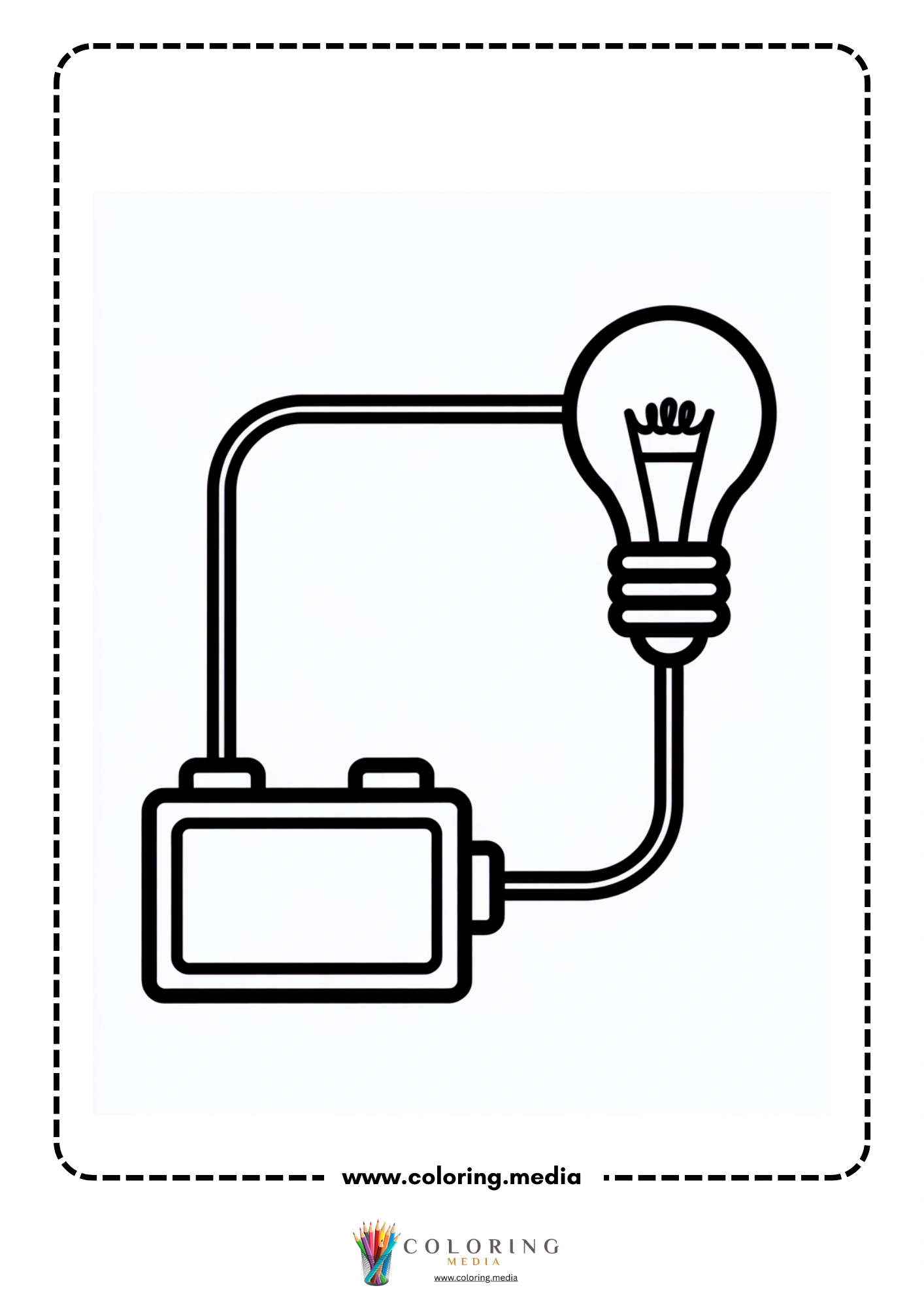
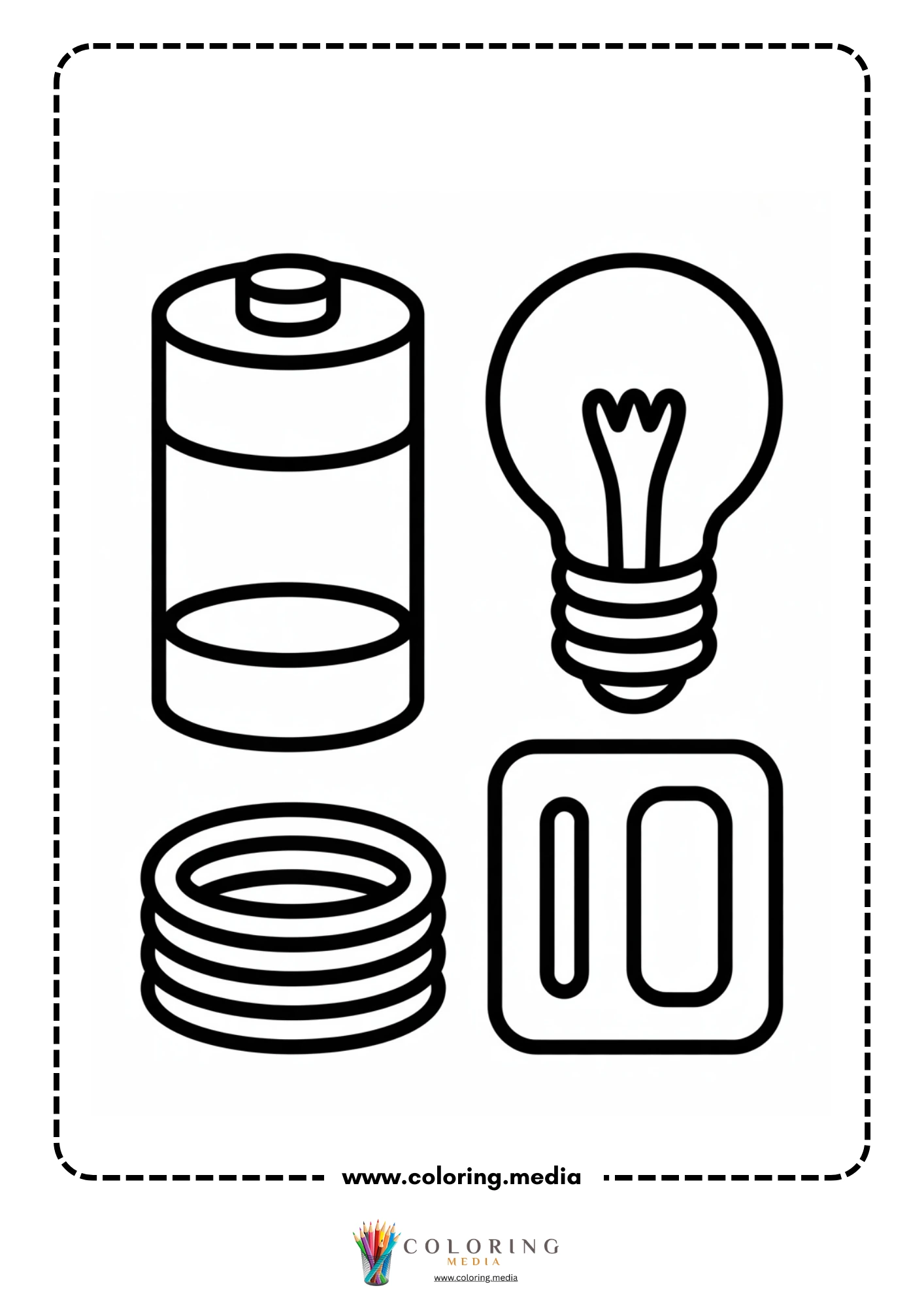
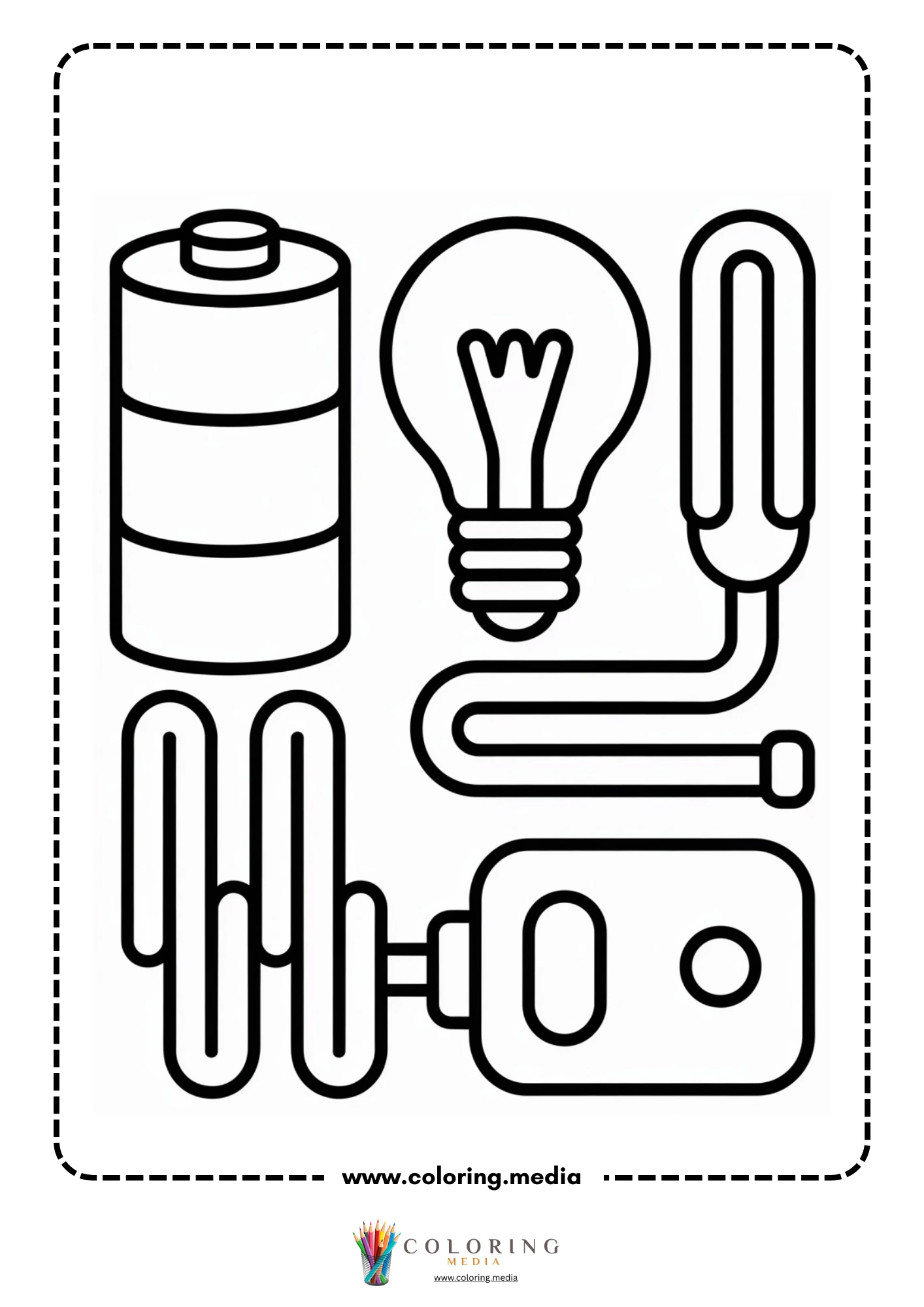
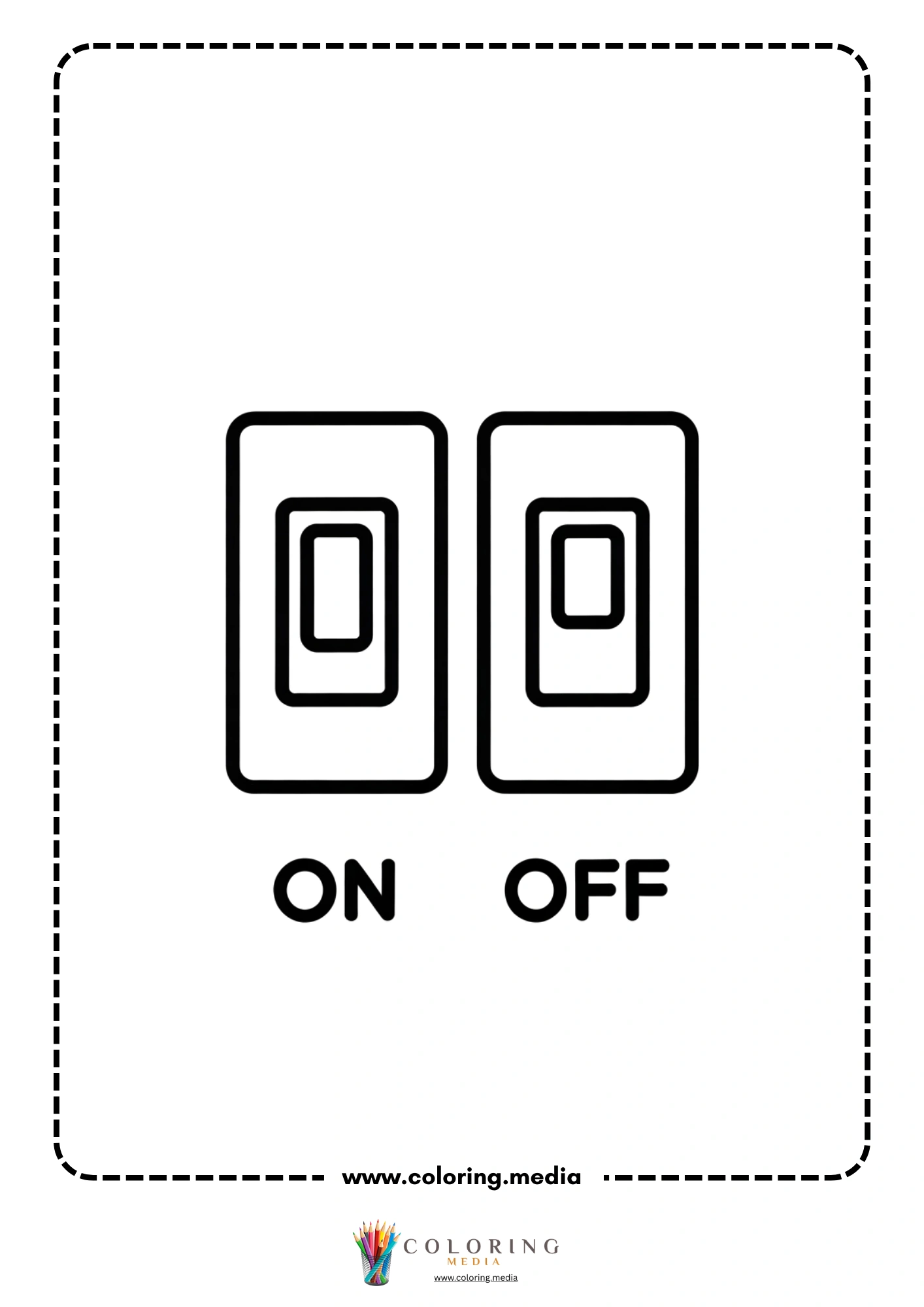
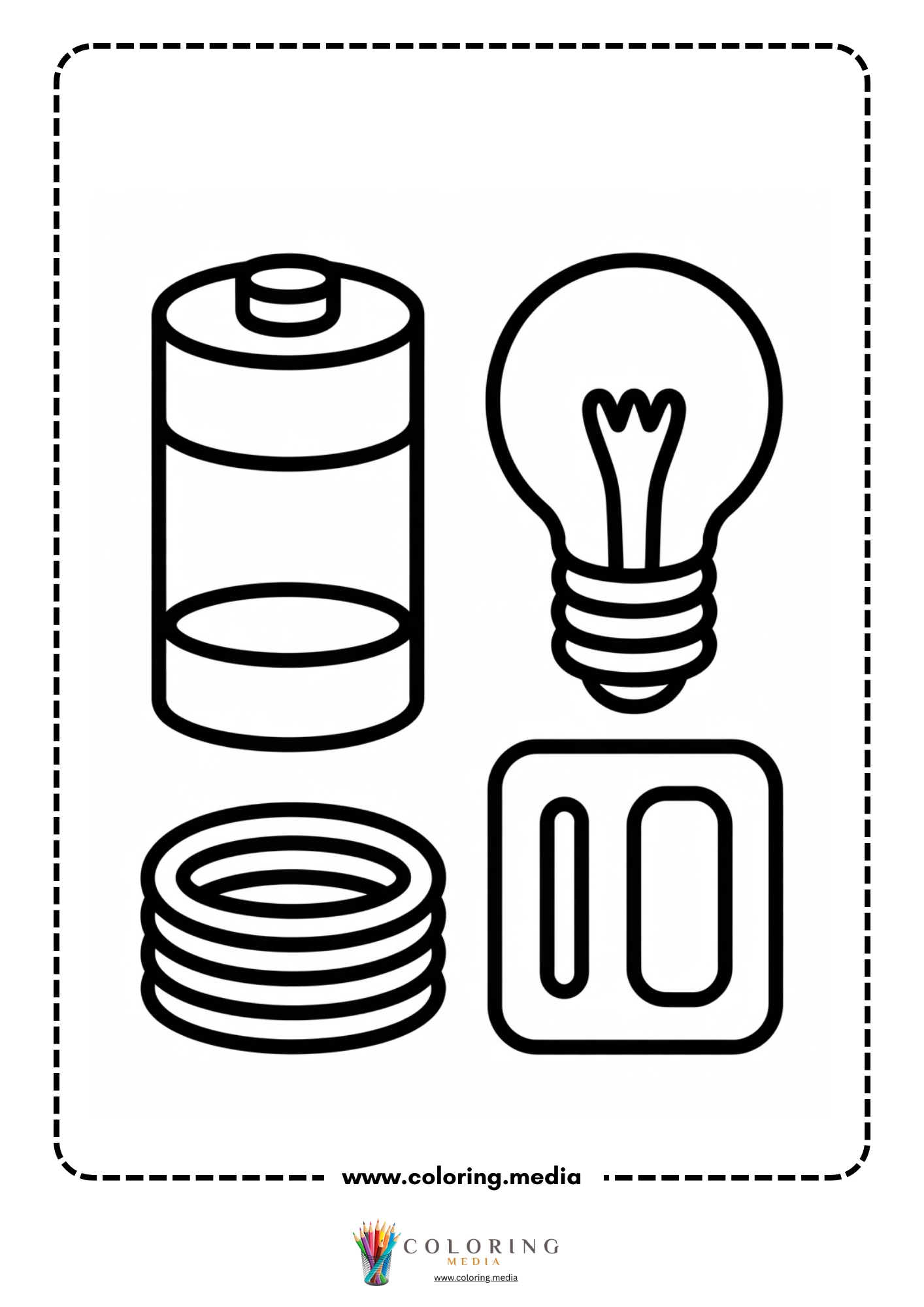
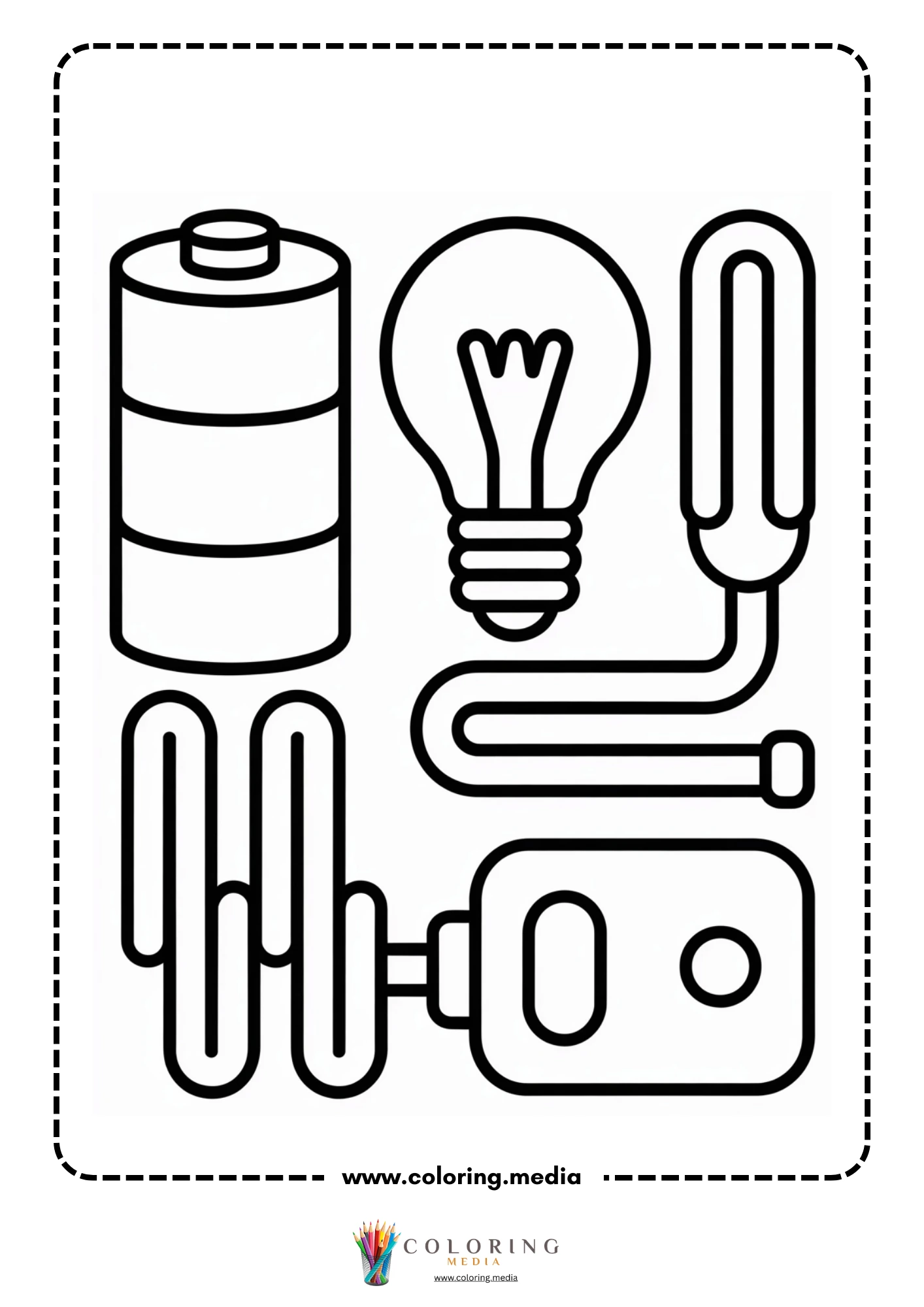
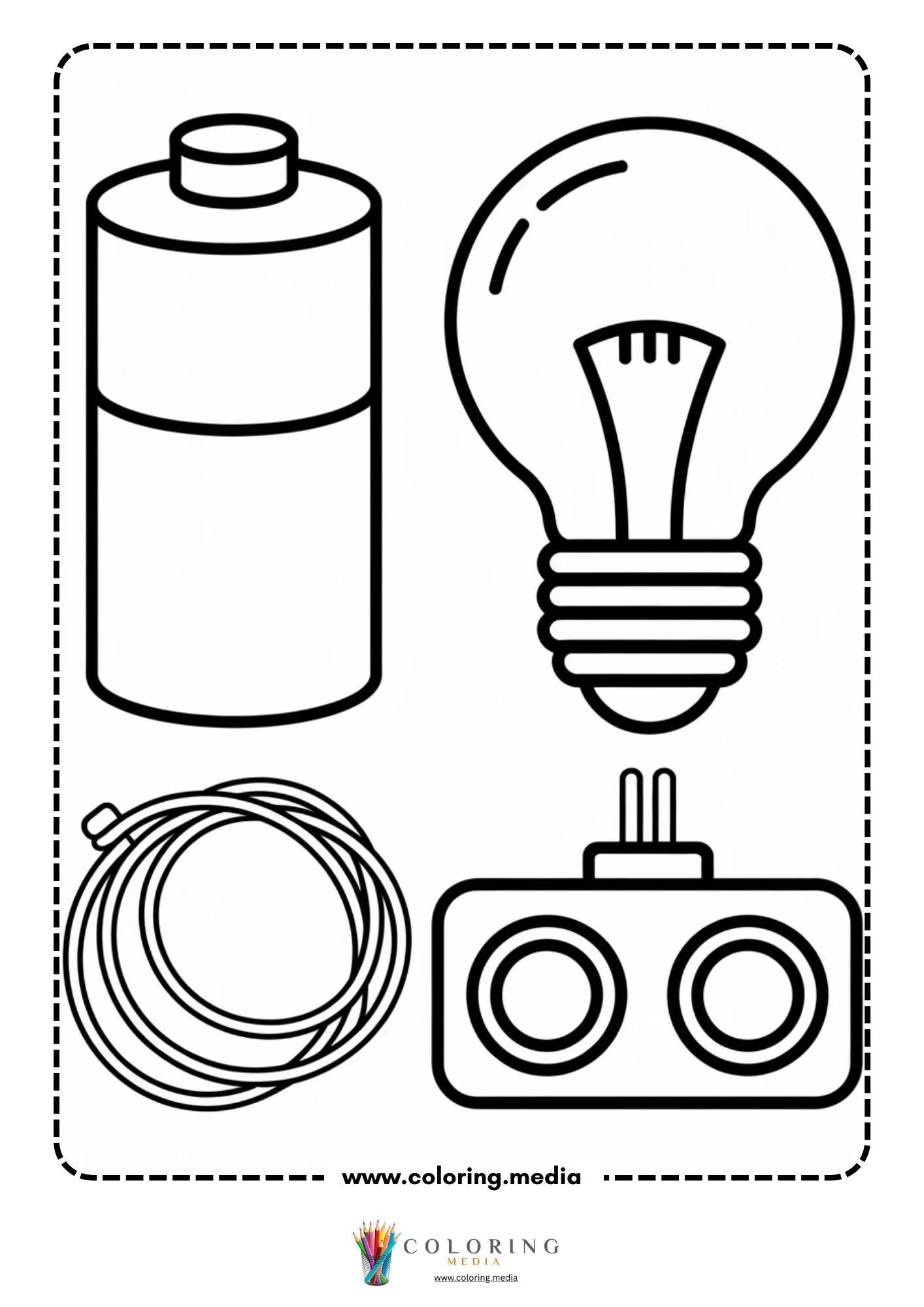
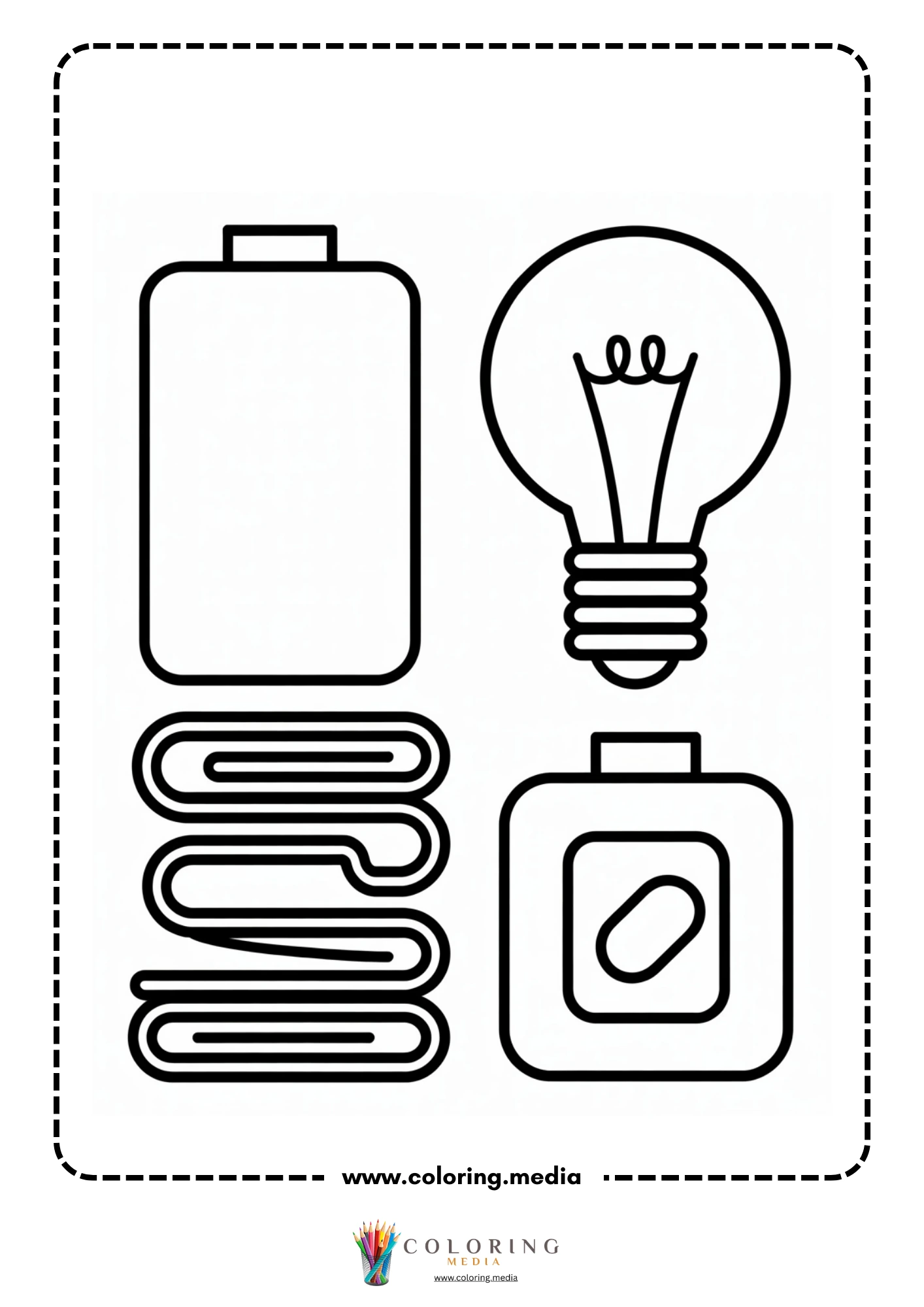
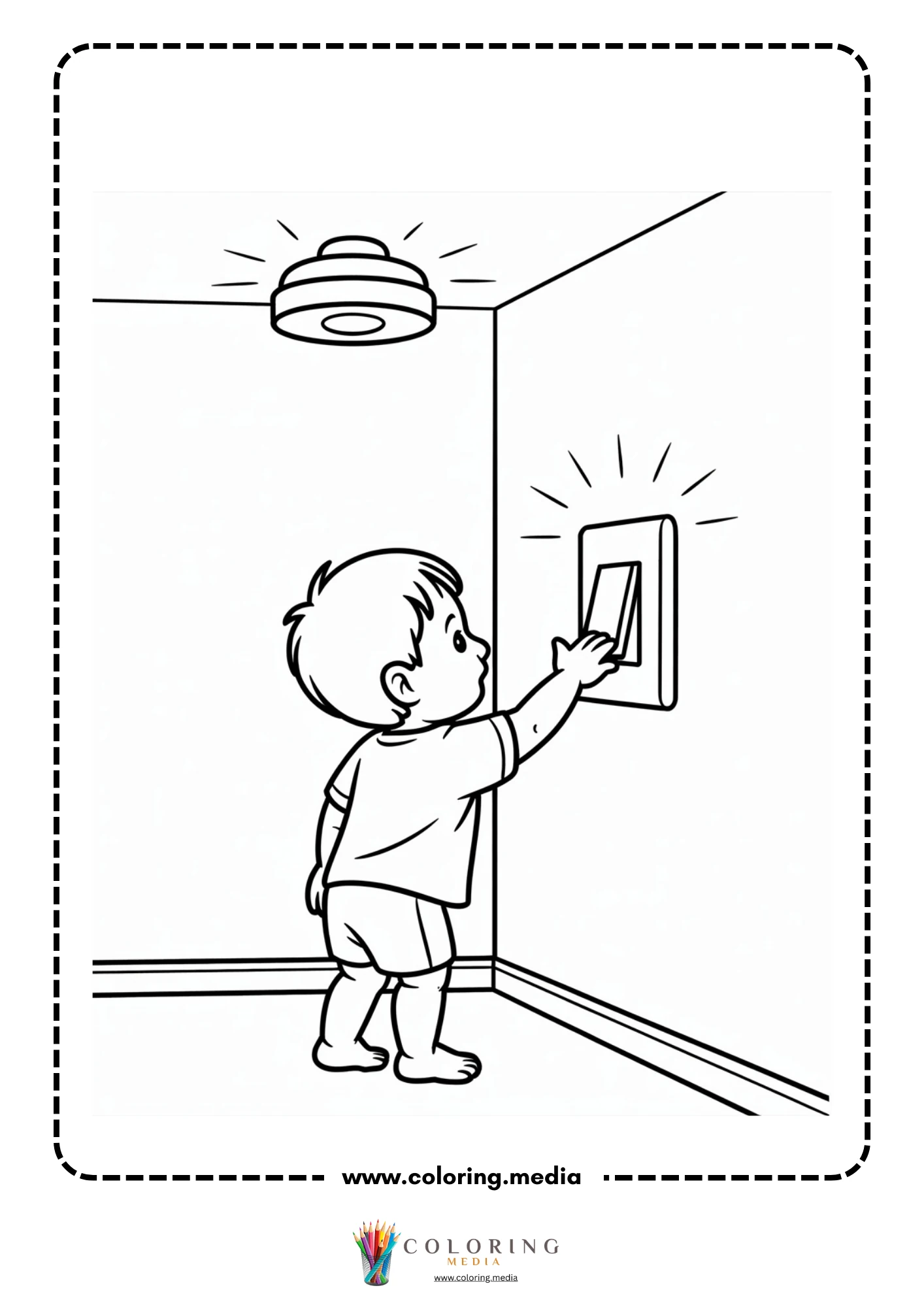
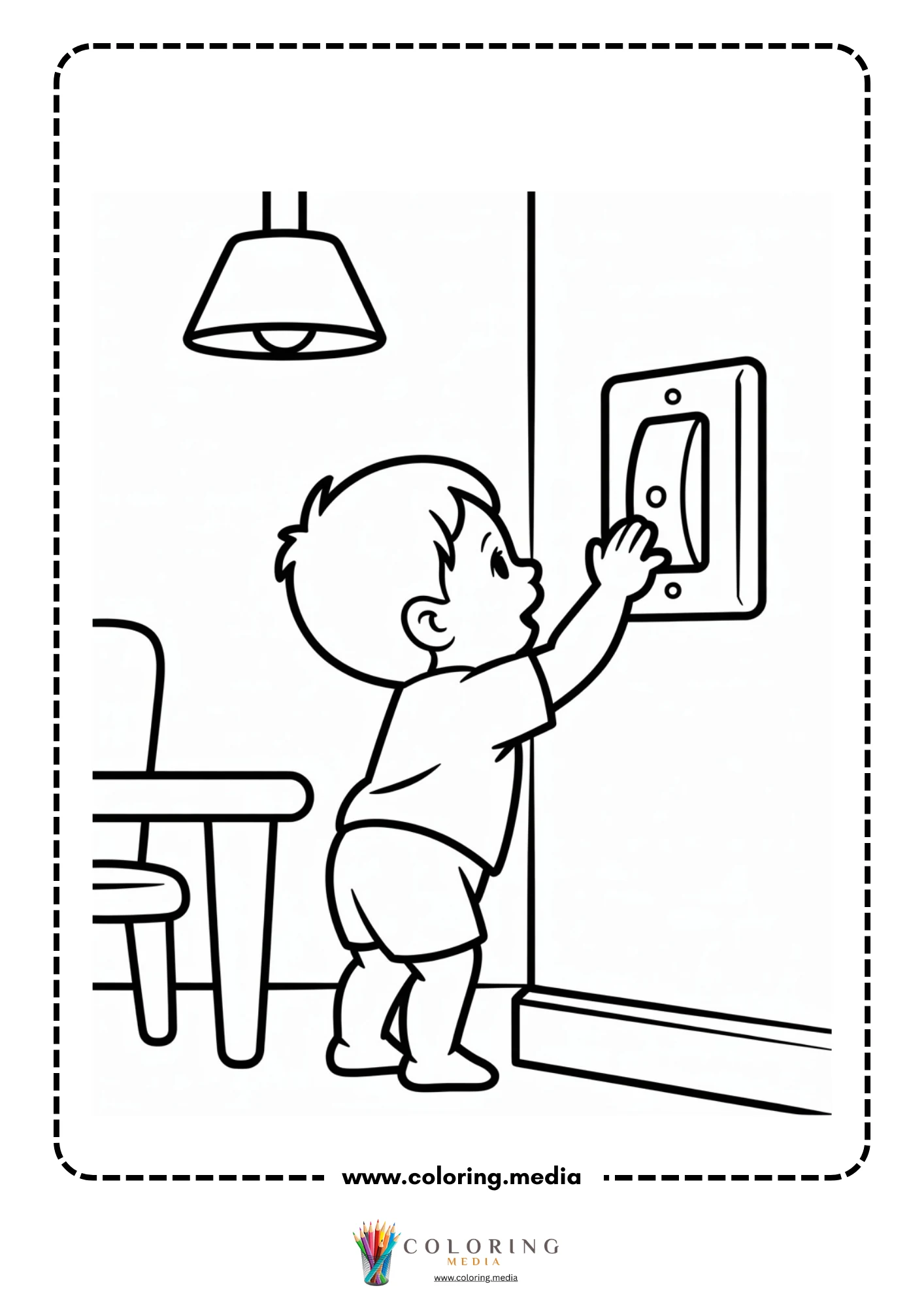
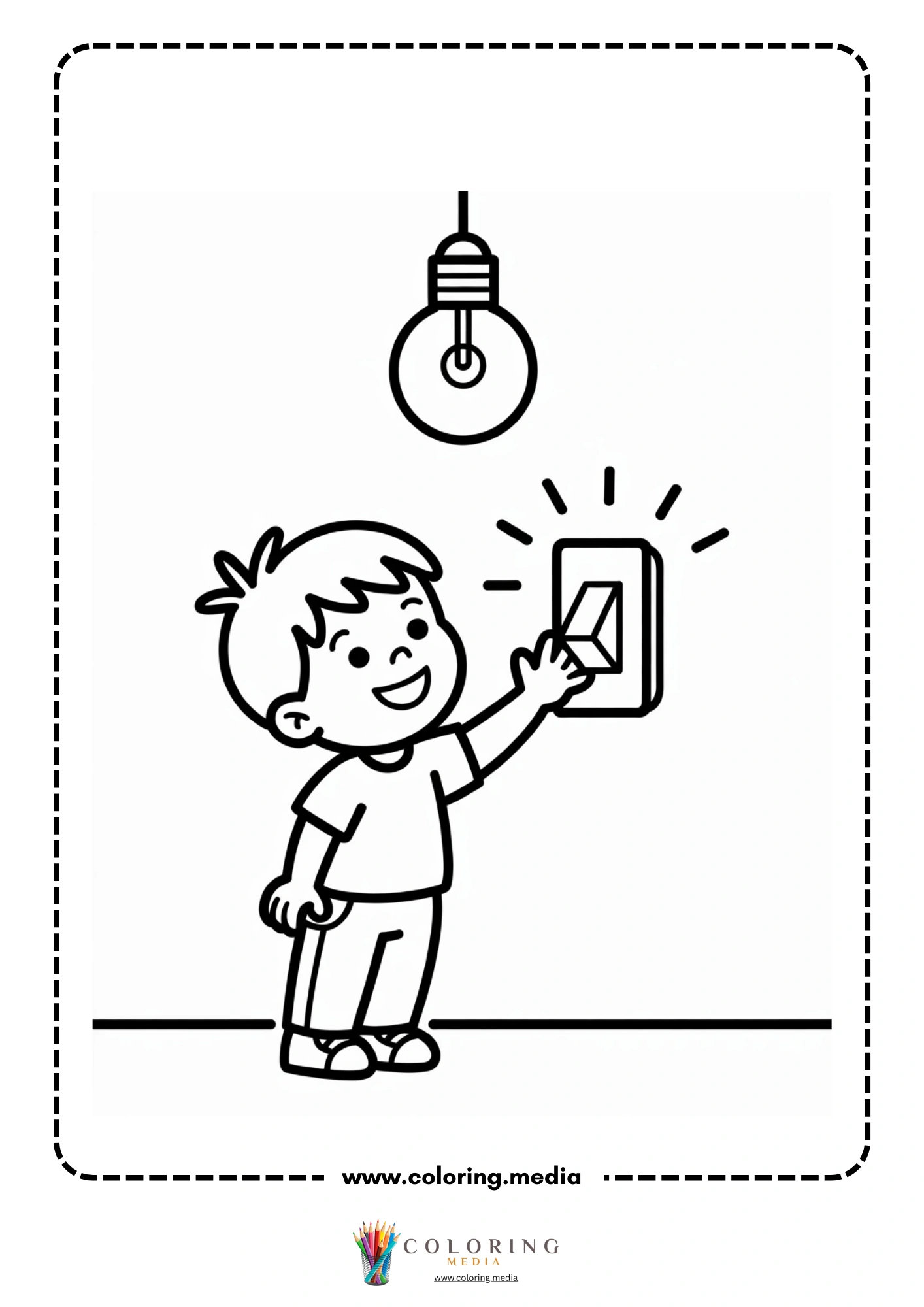
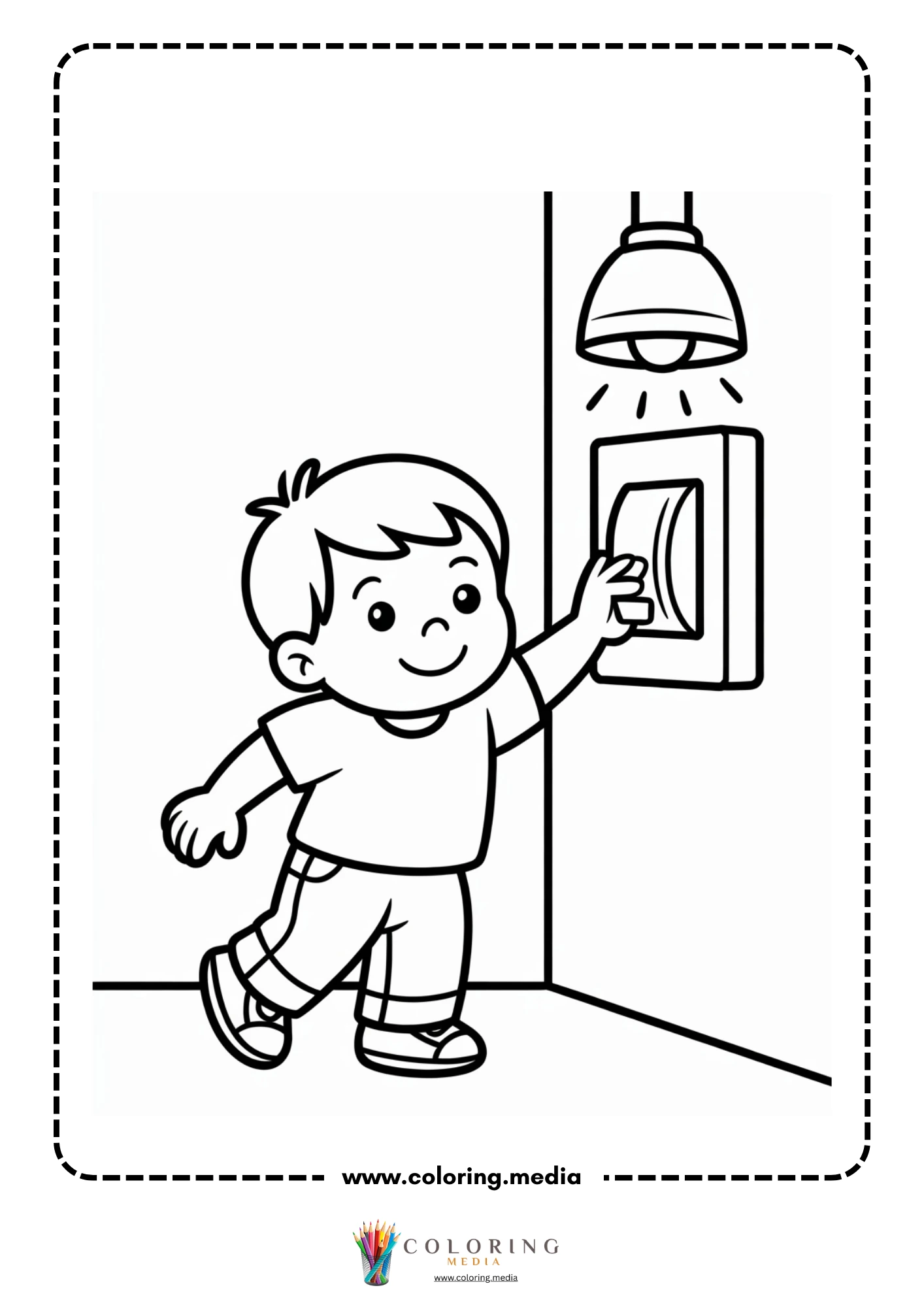
The pages here focus on electronics at the component level rather than the device level — this is a set about batteries, bulbs, and switches rather than smartphones and tablets. The first group shows labeled component illustrations: a battery in cutaway view, a light bulb against a white background, an ON/OFF switch, a simple circuit schematic. The second group zooms out slightly to show children interacting with these components — a child touching a wall switch, a boy illuminating a bulb he has just connected. The line style is clean and diagrammatic rather than narrative, with outlines of 2–3mm throughout.
For a child who has just done a hands-on circuits activity, these pages reinforce the components they handled. For a child who has not, the pages work as a preview of what those components look like. Everything here is free to download and easy to print.
Free Printable Electronic Coloring Pages
This collection includes 22 printable electronic coloring pages featuring battery illustrations shown in standard cylindrical and rectangular forms, individual and grouped light bulb drawings in multiple styles including traditional incandescent and simple schematic forms, ON/OFF switch diagrams, simple circuit schematics showing batteries connected to bulbs via wires, children interacting with wall switches and connected bulbs, and component groupings showing batteries alongside bulbs for comparison. The clean diagrammatic style makes these pages particularly suitable for use alongside hands-on science experiments. All pages print on A4 or US Letter paper.
Who Are These Electronic Coloring Pages Best For?
Kindergarteners can color the single-component pages — a large battery, a single light bulb — without difficulty. The outlines are generous and the subjects are simple enough that a five-year-old with crayons can finish a page in 10 minutes. These pages work well as a quiet activity while discussing where electricity comes from or what makes a light bulb glow.
Early elementary students (grades 1–3) will benefit most from using these pages alongside actual science content. A first-grader who has built a simple circuit using a battery holder, wires, and a bulb will find the diagram pages grounding — they can identify every element on the page from their own hands-on experience and color each part meaningfully.
Homeschool science parents running an electricity unit often appreciate diagram-focused coloring pages because they serve as a low-effort but high-retention review activity. After coloring a circuit diagram, a child who can label and explain each component has demonstrated real understanding.
Interesting Electronics Facts to Share While Coloring
A single AA battery produces 1.5 volts of electrical potential — that is enough to power a small LED for many hours but not enough to feel through the skin. Car batteries are 12 volts; the wall sockets in most homes deliver 120 volts (USA) or 230 volts (Europe).
Light bulbs waste about 90% of their energy as heat, not light. The glowing filament inside a traditional bulb reaches around 2,500 degrees Celsius — hot enough to emit light, but also hot enough to burn your finger instantly if you touch it when on. LEDs produce the same brightness using a fraction of the energy.
Electricity travels at close to the speed of light through a wire — about 200,000 kilometers per second. When you flip a switch, the effect propagates through the wire almost instantaneously. Individual electrons actually move very slowly, at a few millimeters per second, but the electrical effect passes along almost instantly, like a wave.
The first electric light was demonstrated by Humphry Davy in 1802 using a carbon arc lamp that was far too bright and short-lived for practical use. It took another 77 years before Edison and Swan independently produced a filament bulb that could burn for hours.
Static electricity is what makes a balloon stick to a wall after you rub it on your hair. Rubbing transfers electrons from your hair to the balloon, giving it a negative charge. The negatively charged balloon attracts the positively charged wall surface, creating enough force to hold itself up against gravity.
Creative Electronics Coloring and Craft Ideas
Component Color Code Establish a standard: all batteries are red and black, all wires are yellow, all bulbs are white with a yellow glow area. Apply it consistently across every page.
Lit vs. Unlit Comparison For bulb pages, color one version showing the bulb on (bright yellow interior, glowing aura lines) and one showing it off (clear glass, no glow).
Switch Diagram Annotation On the ON/OFF switch pages, draw a simple circuit connecting the switch to a bulb and a battery, then shade the wires to show which path current takes in each position.
Battery Experiment Connect two AA batteries in a holder to a small LED and observe the brightness. Then try one battery. Color a diagram page showing both configurations.
Component Scavenger Hunt Find five household objects that contain batteries, five that use wall power, and one that uses both. Write the list on the back of a colored battery page.
Safety Rules Poster On the back of a switch or outlet page, write three electrical safety rules for children and illustrate each one with a simple drawing.
Invent an Appliance Design a fictional electronic appliance on blank paper — draw its external appearance, label its components, and write a one-paragraph description of what it does.
Energy Source Chart List ten household electronics and next to each write where the energy originally came from (coal, wind, solar, nuclear) based on your local electricity grid.
How to Print These Electronic Coloring Pages
Each file is a single PDF at 300 dpi, formatted for A4 and US Letter paper. Download by clicking any thumbnail, then print from Adobe Reader or a browser viewer with ‘fit to page’ selected. Standard copy paper is suitable for all media. For the clean diagram pages, fine-tip colored pencils or pens give the sharpest results. Select black-and-white printing to save ink.
Explore More STEM Coloring Pages
If you enjoyed these pages, you may also like:
Circuit Coloring Pages
Coding Coloring Pages
Computer Coloring Pages
Technology Coloring Pages
STEM & Technology Coloring Pages