
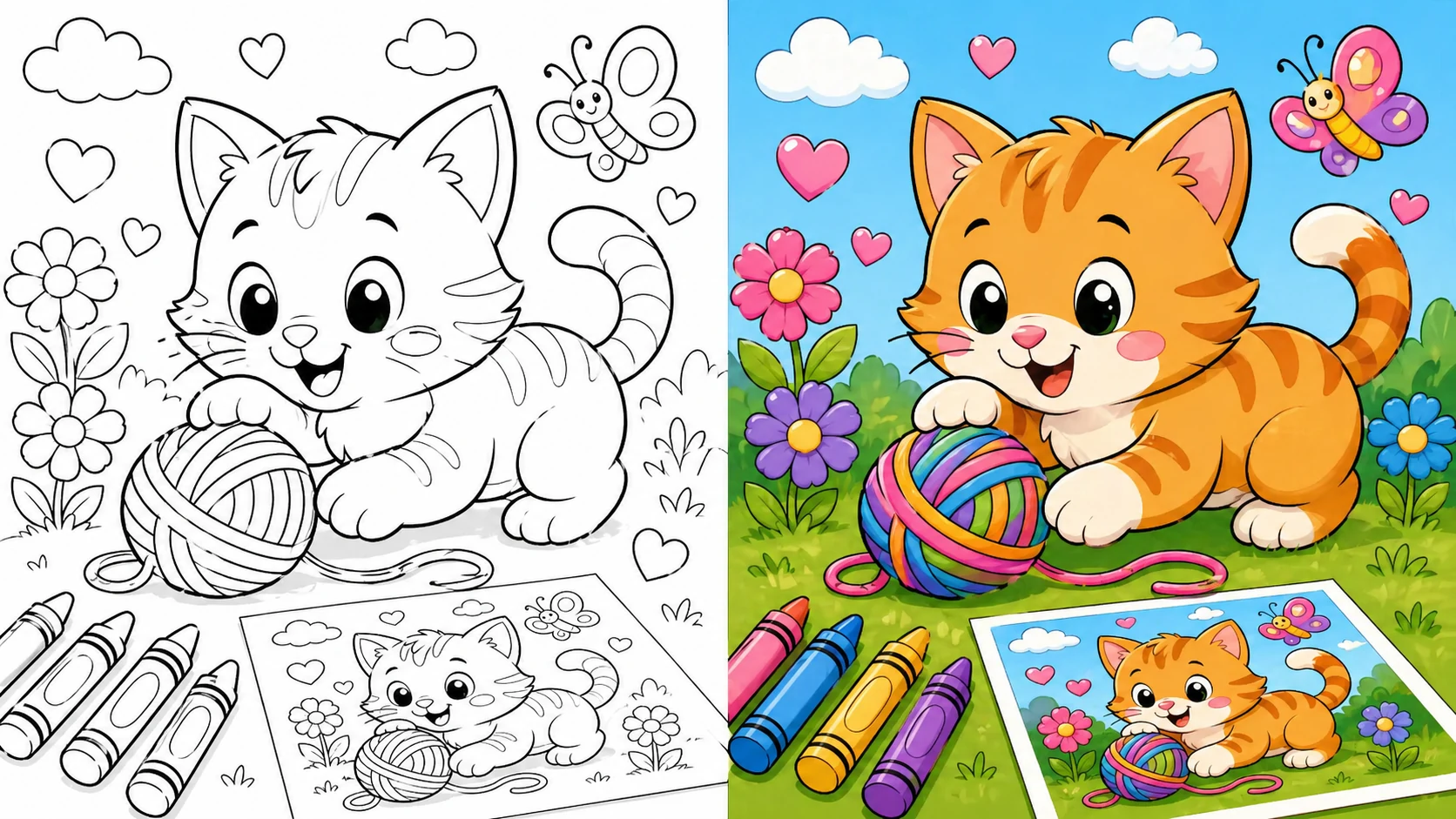
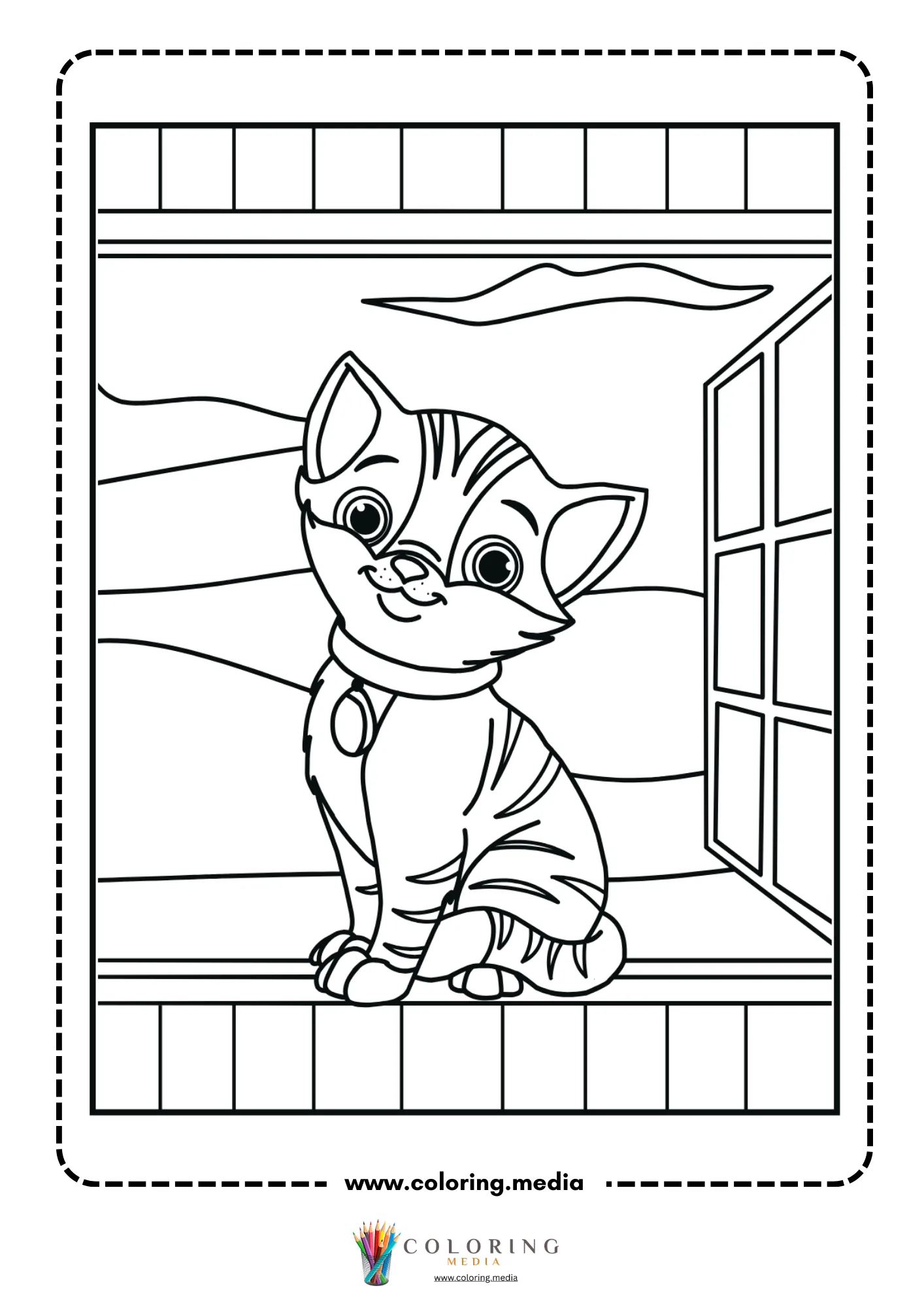
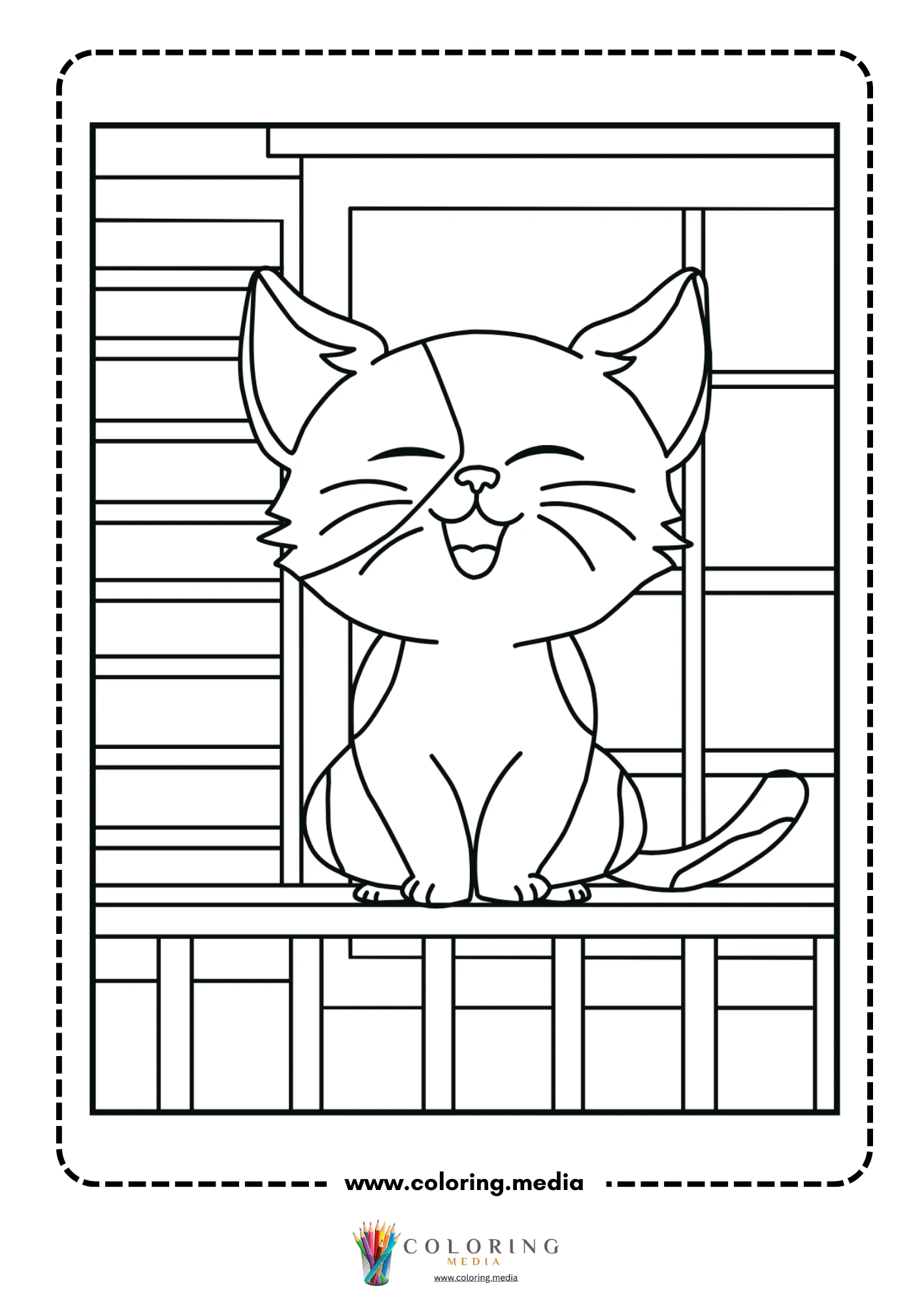
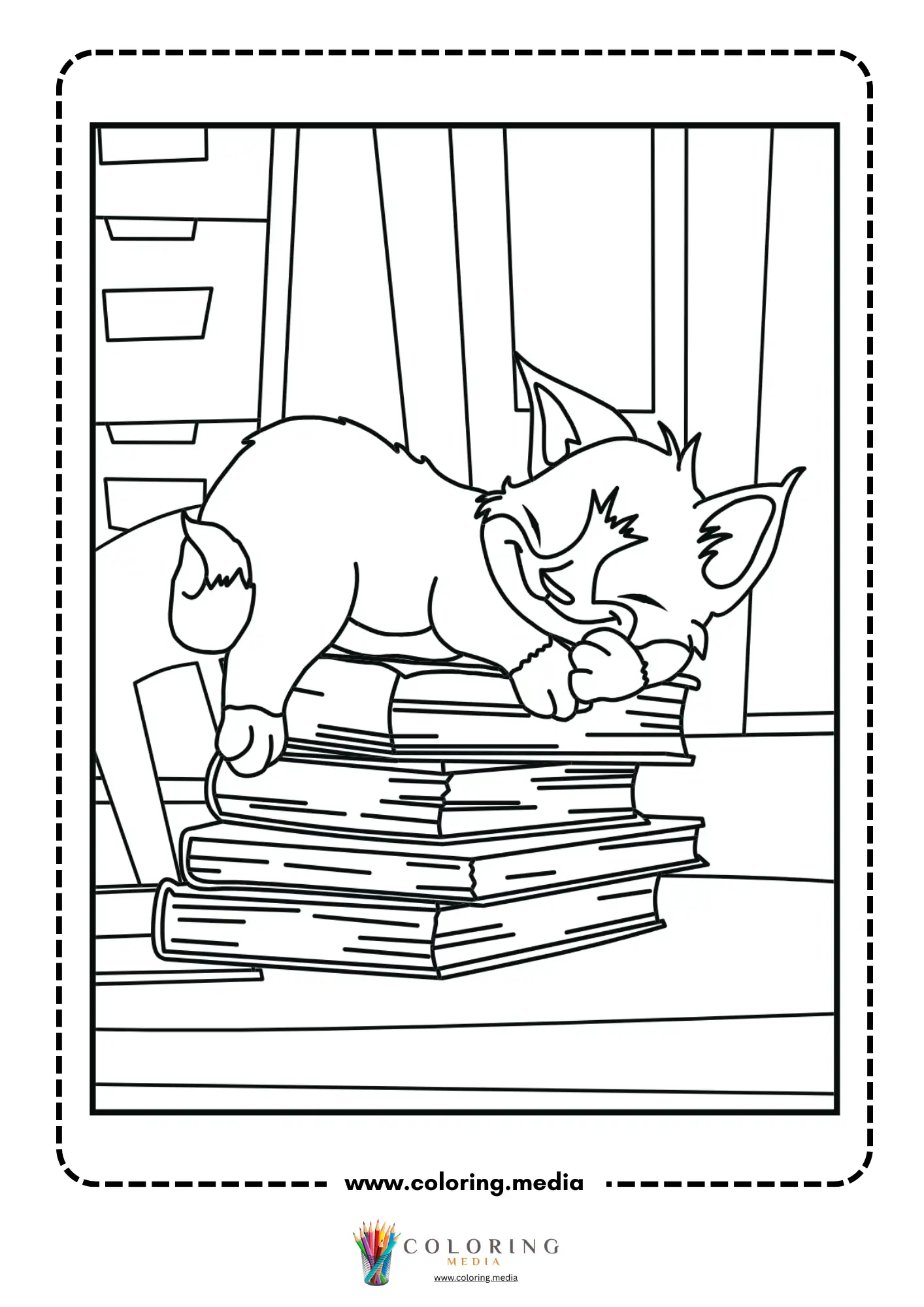
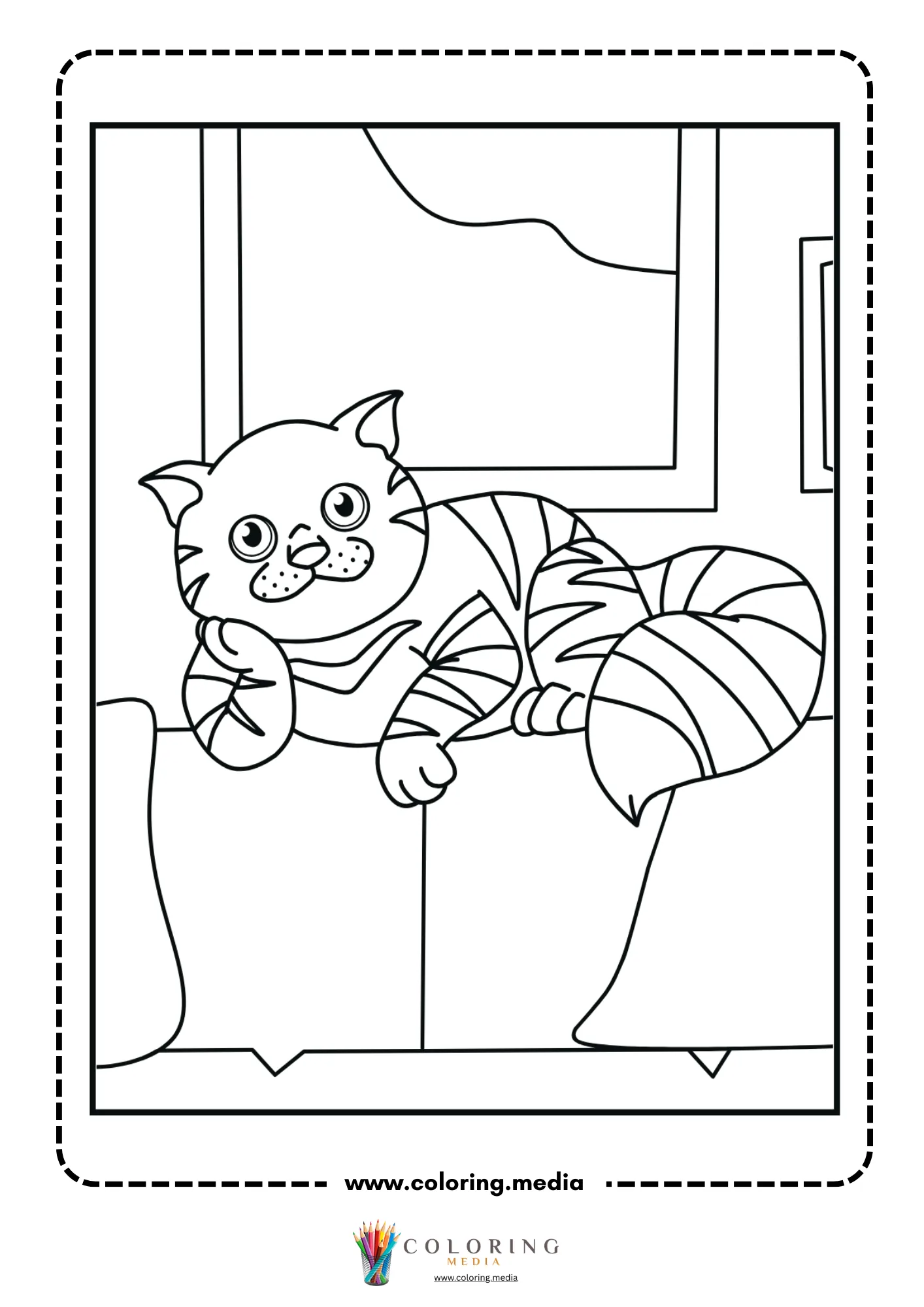
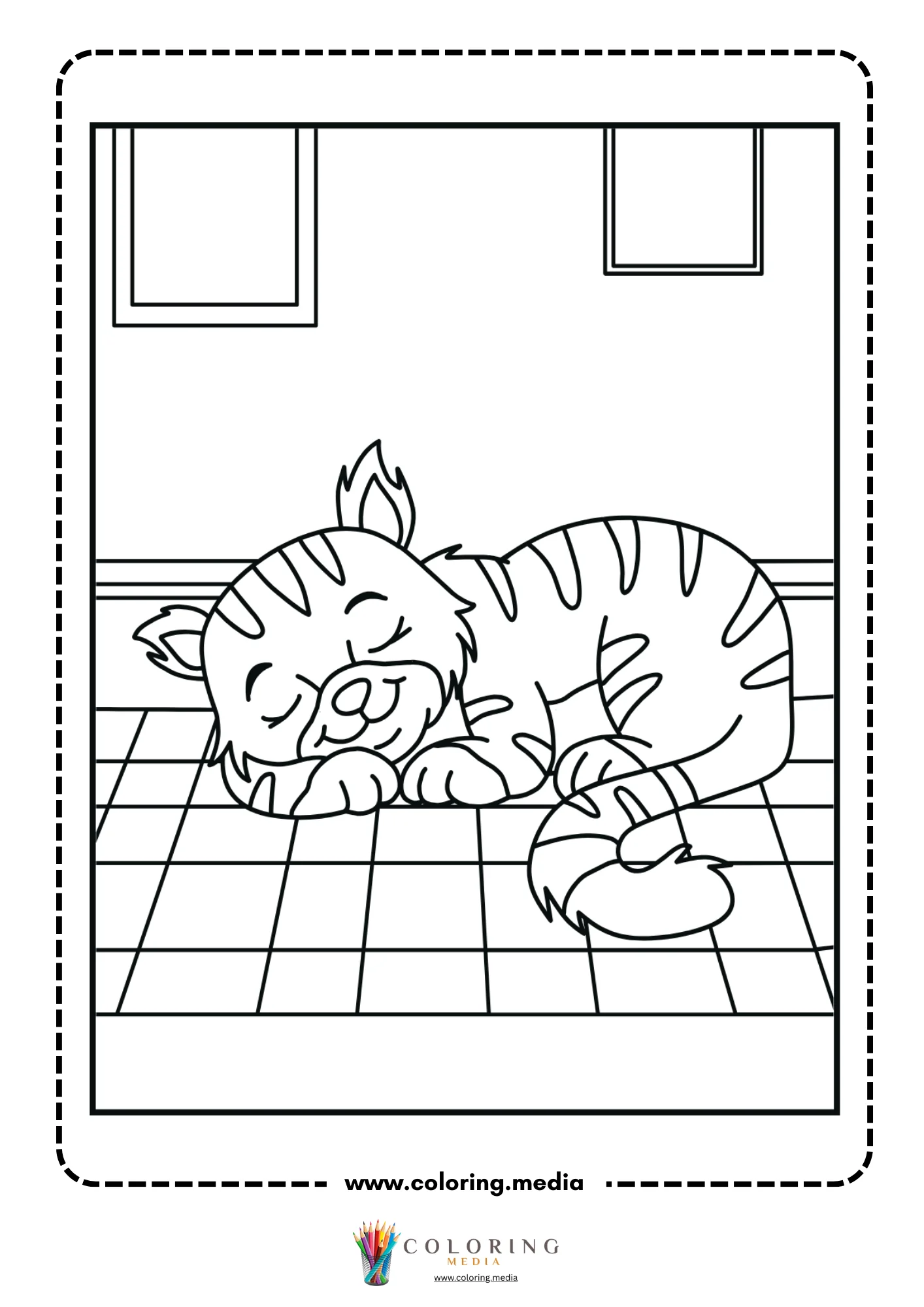
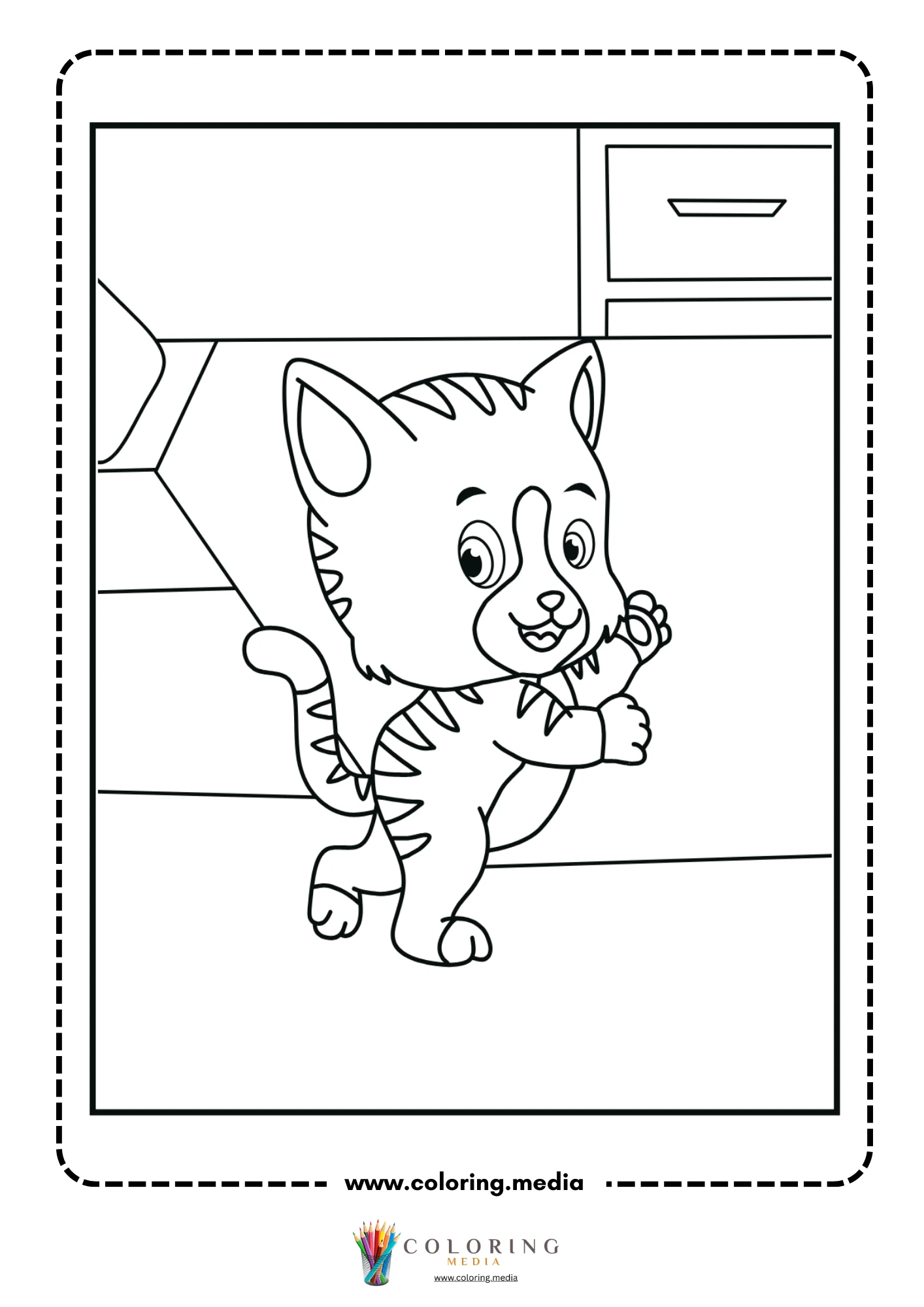
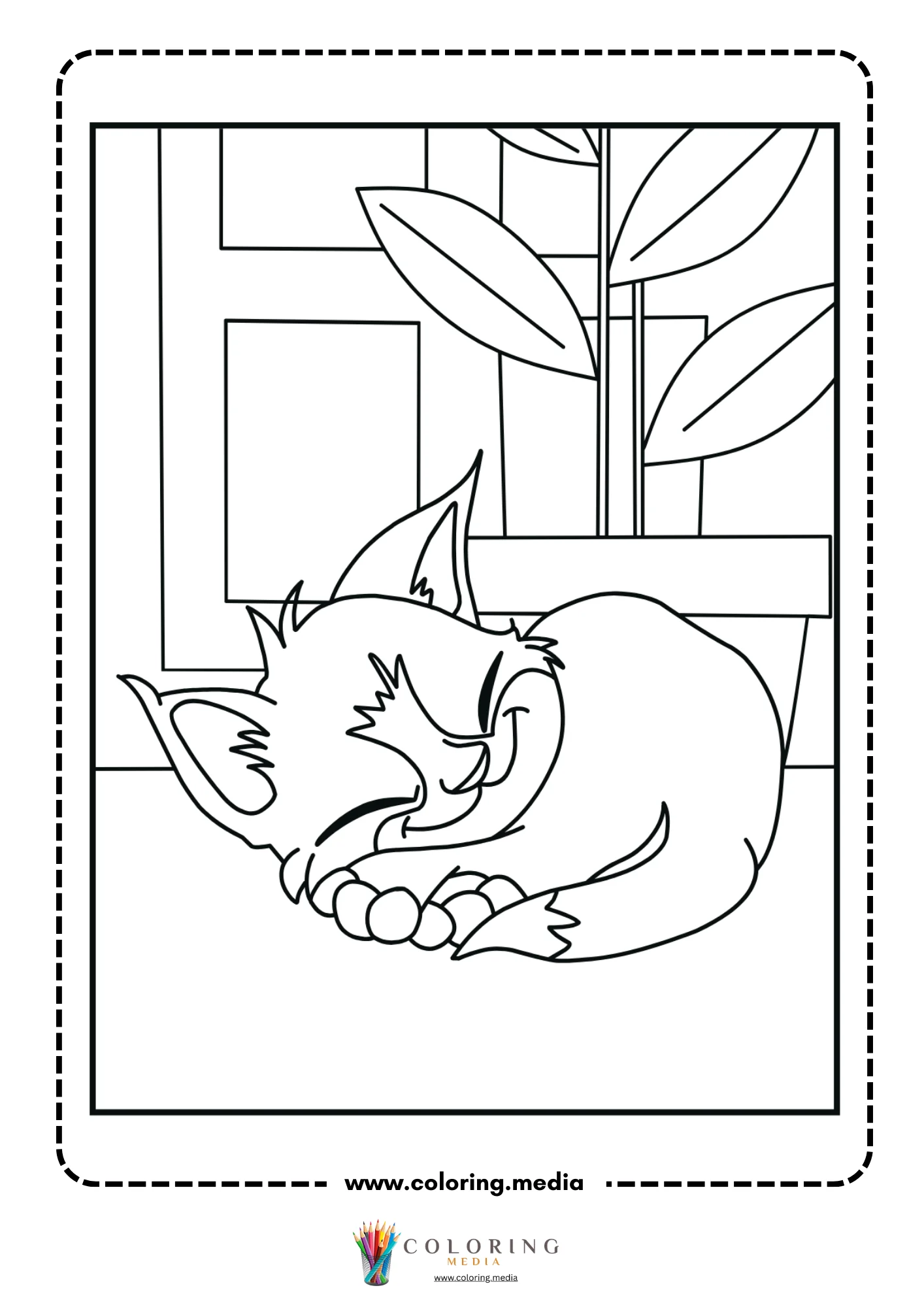
Cats in this collection are almost always doing something domestic and specific: perched on a windowsill watching the outside world, curled asleep on a floor, playing with a ball of yarn, or grouped with kittens in what looks very much like a living room corner. The scenes have furniture, curtains, plants on ledges, and occasionally a glimpse of a garden through glass. That context is what separates these from plain animal portraits — the cats exist in a recognizable indoor world, which tends to prompt kids to fill in details they know from home.
There are 20 pages, ranging from simple seated cat portraits to fuller scenes with multiple cats and background elements. The line work is clean and cartoon-styled throughout, with enough interior fur detail on the closer portraits to keep a focused child engaged. Everything here is free to download and easy to print.
Free Printable Cute Cat Coloring Pages
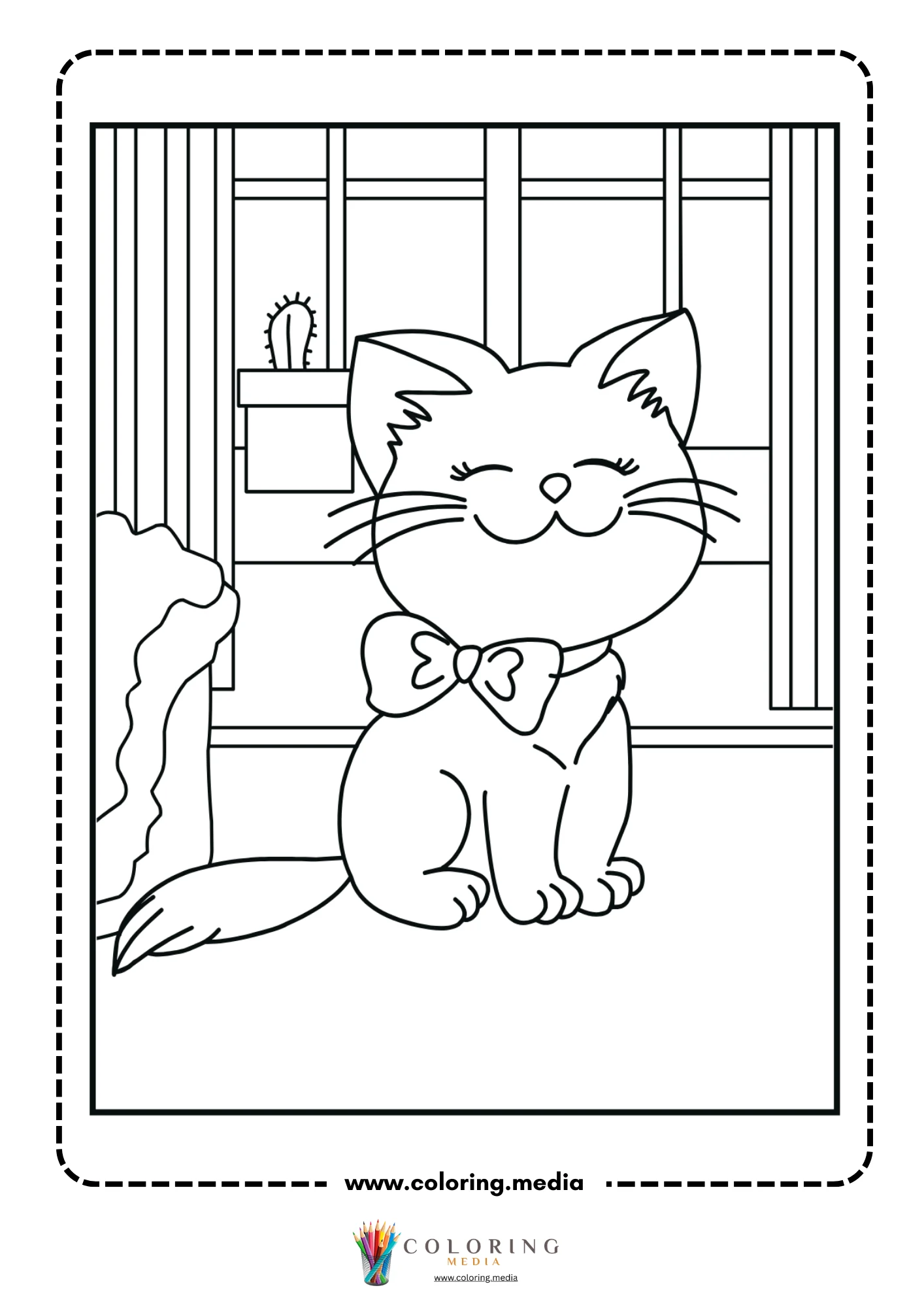
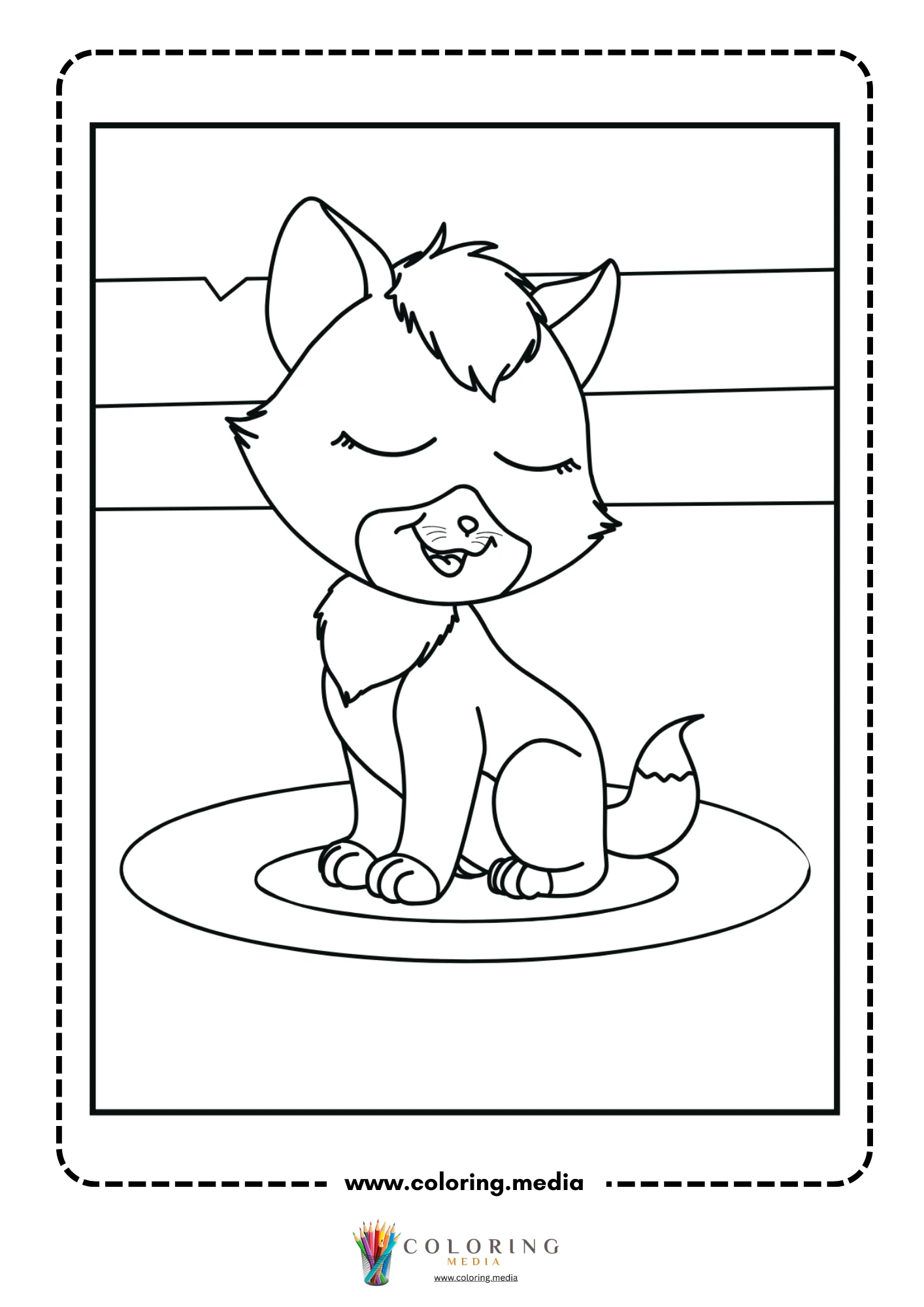
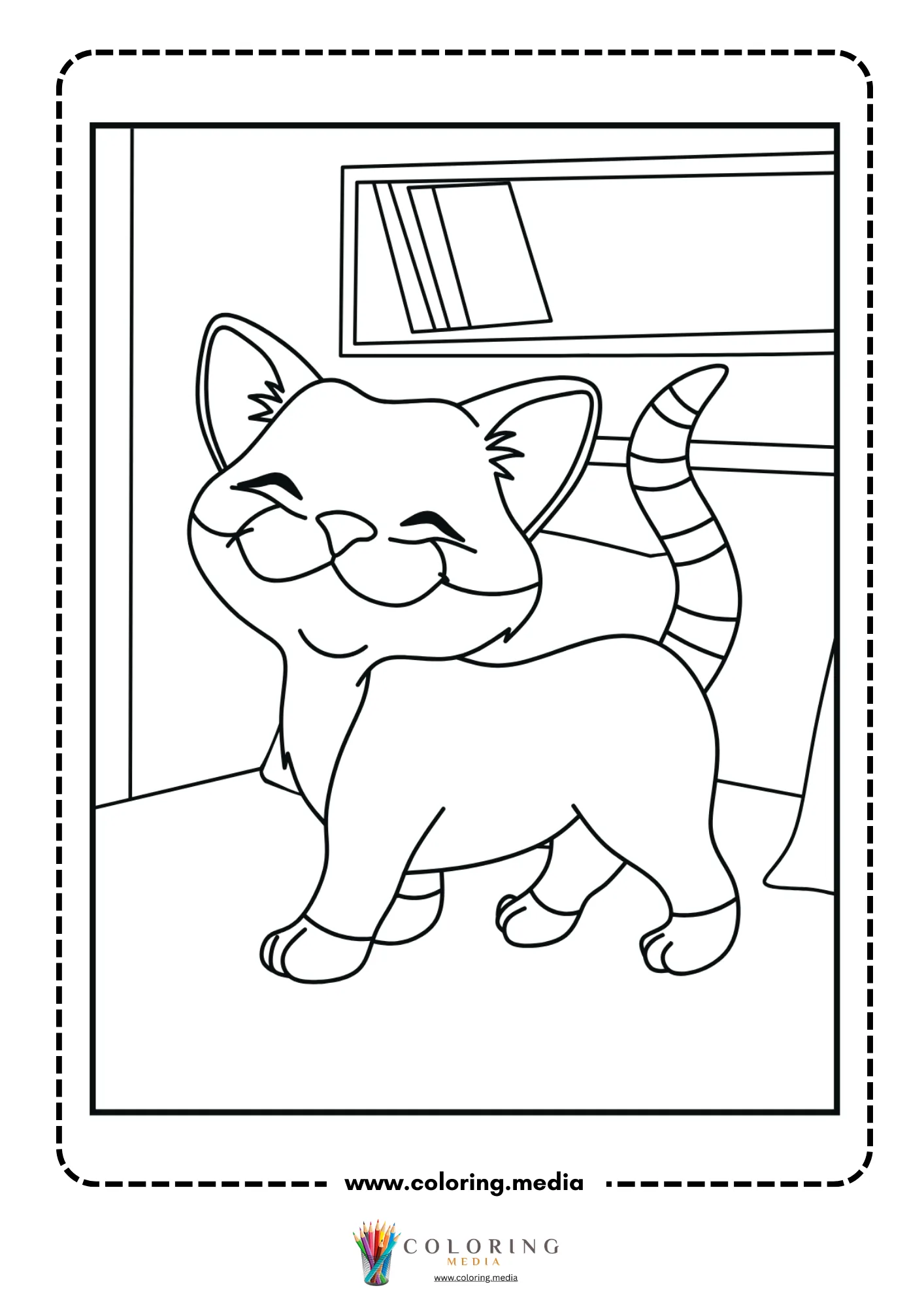
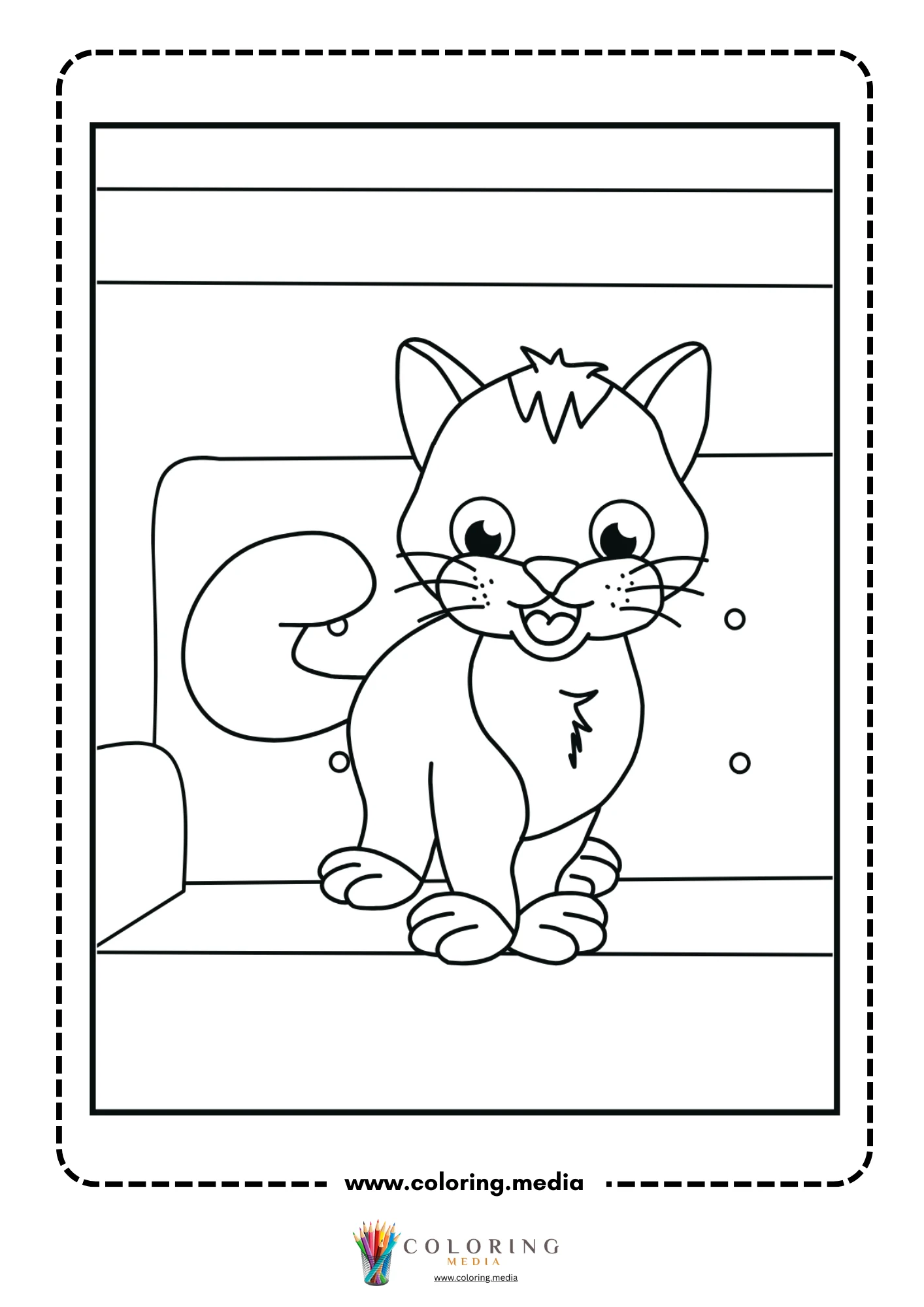
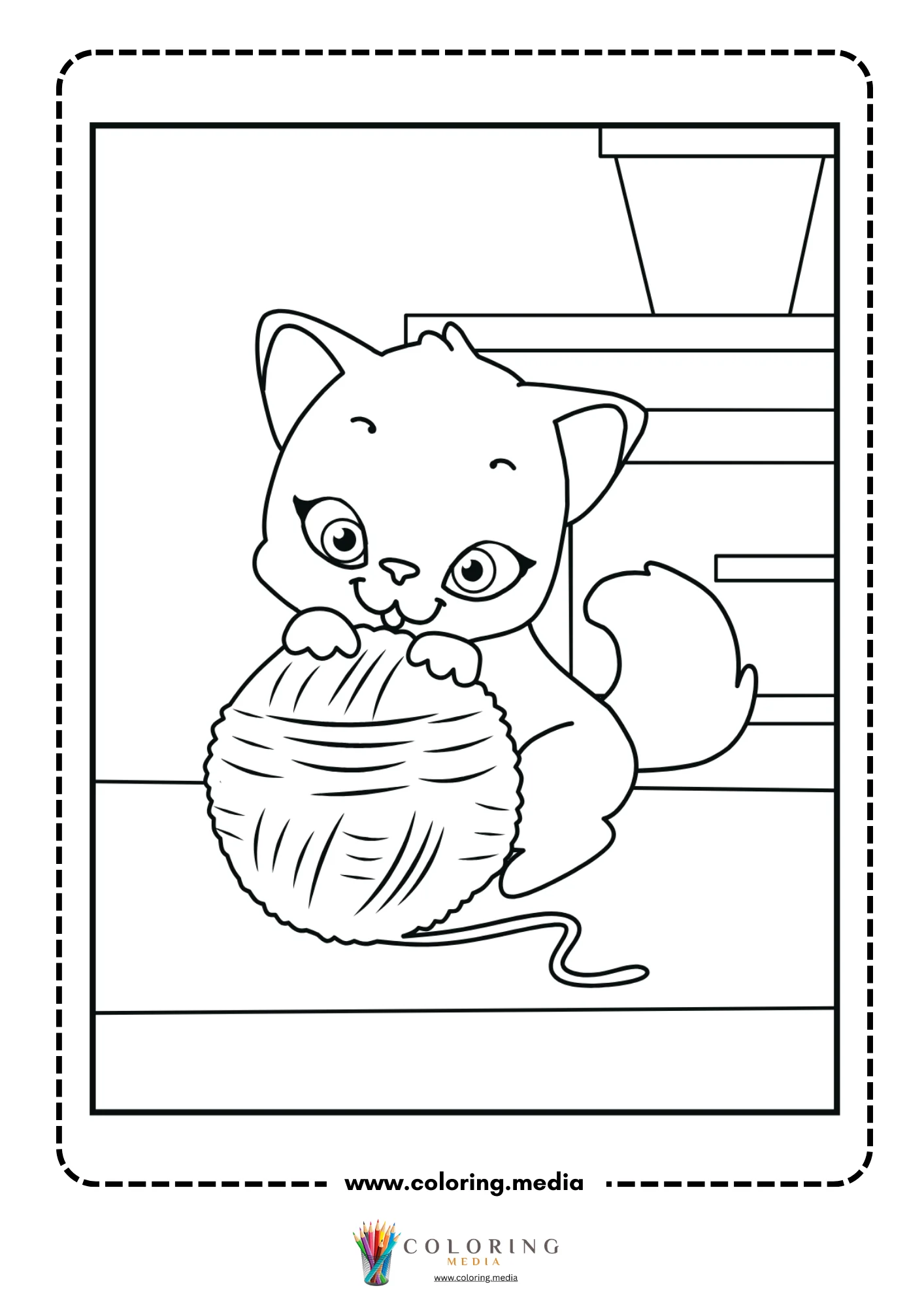
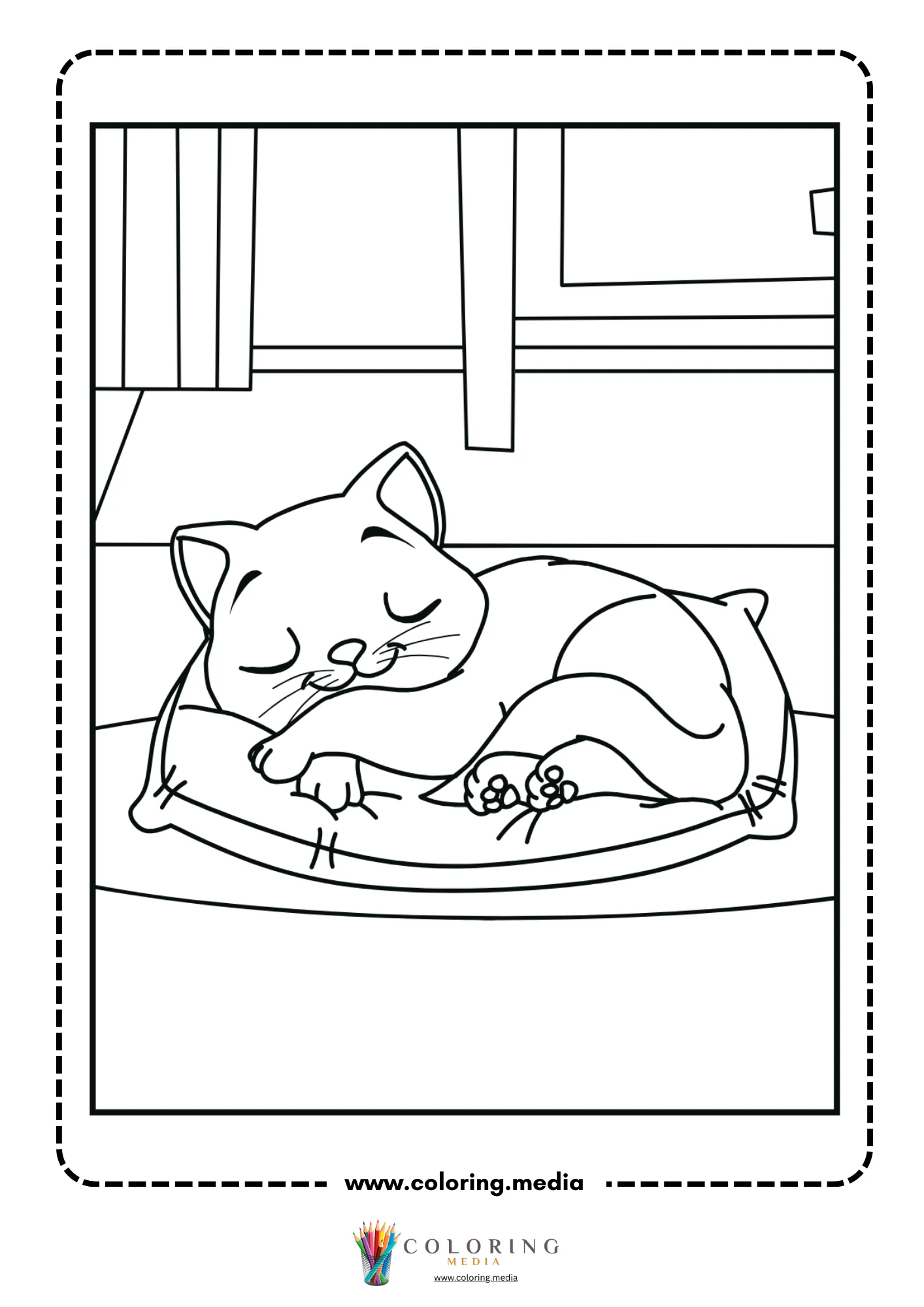
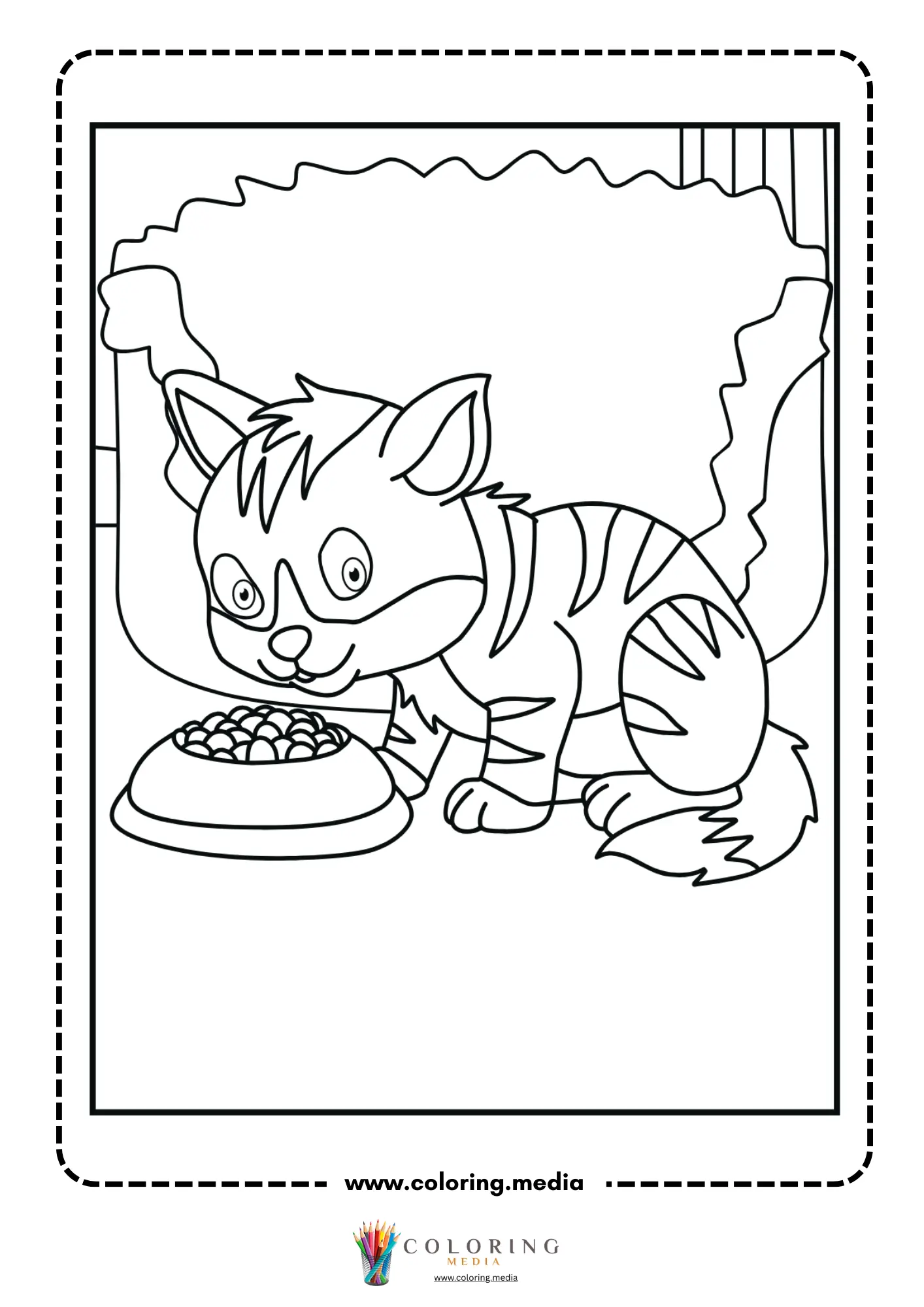
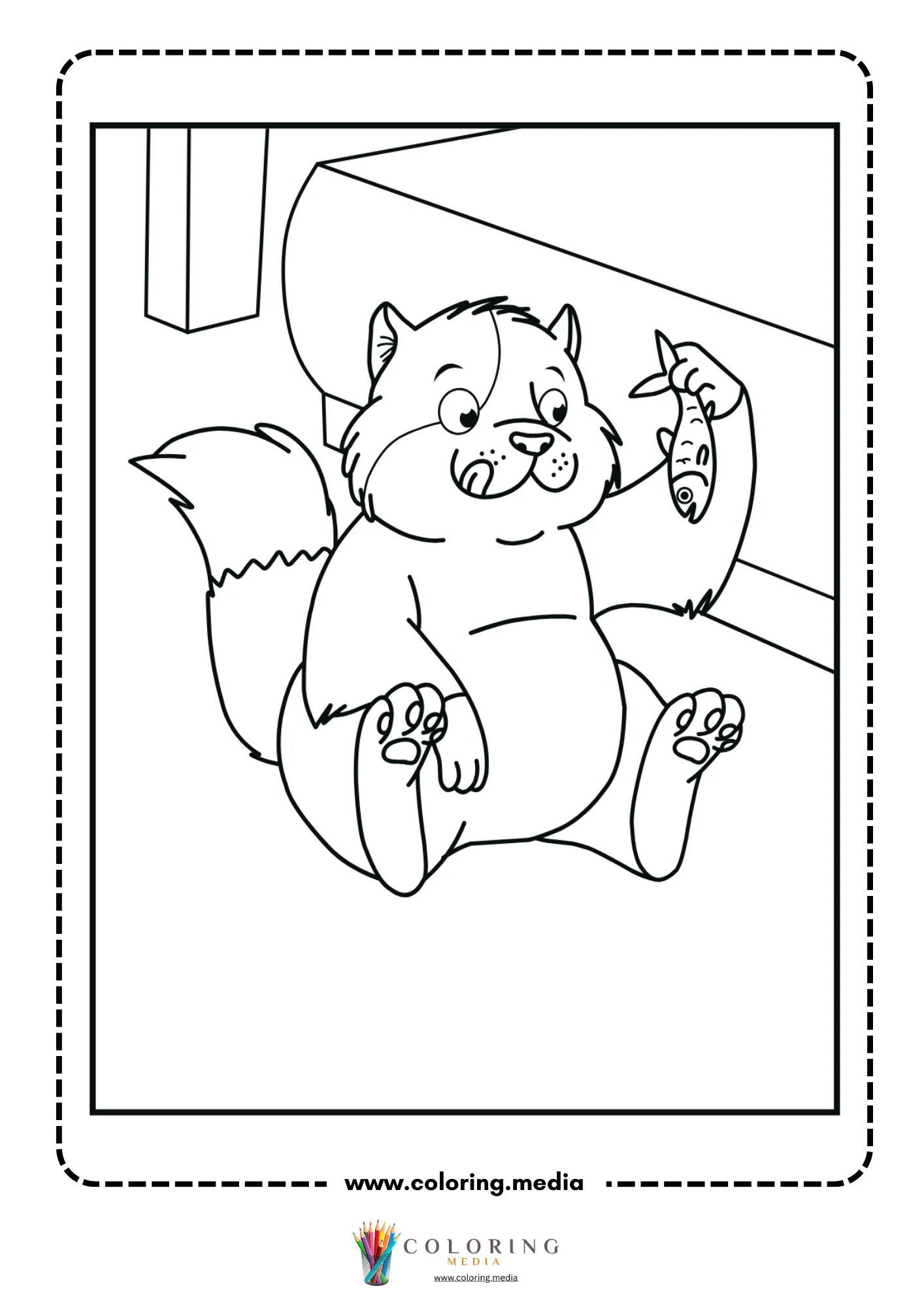
This collection includes 20 printable cute cat coloring pages featuring cats at windows, mother cats with kittens, cats playing with yarn, cats sleeping, cats in pairs, and portrait-style poses — all drawn in a friendly cartoon style with clear outlines and expressive faces. Several pages include interior background elements like windowsills, curtains, and indoor plants; others are simpler close-up portraits. Files are formatted for standard US Letter and A4 paper at 300 dpi.



Who Are These Cute Cat Coloring Pages Best For?
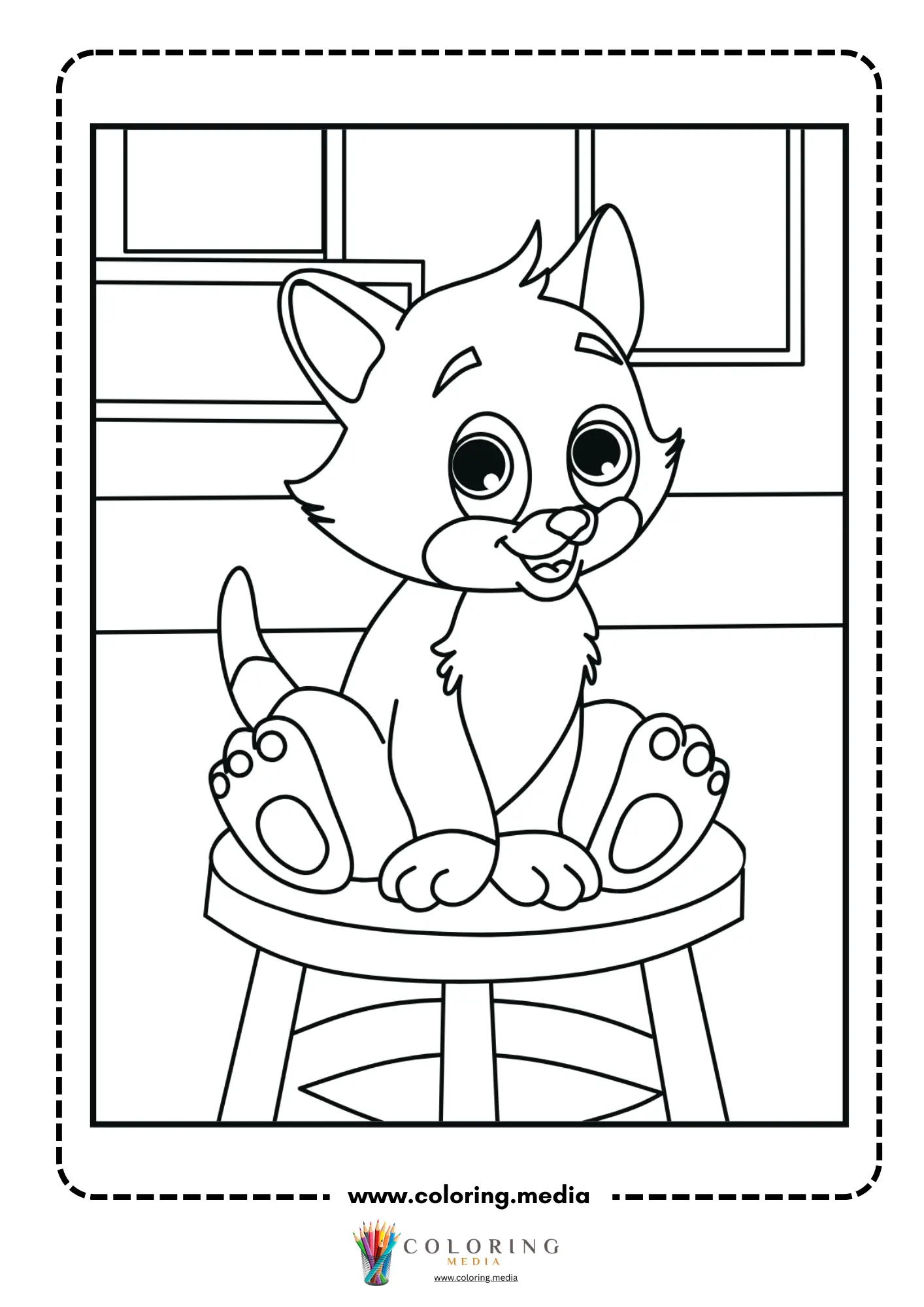
The simpler portrait pages — a cat sitting straight, a single kitten facing forward — have relatively thick outlines and minimal background detail, making them manageable for preschoolers around age 4 who can handle a basic fill-in without getting overwhelmed. The body of the cat is a clear shape with a few interior lines for ear detail and facial features, nothing that requires very precise crayon control.
The scene pages with multiple cats, furniture details, and window backgrounds are better matched to kindergarten and early elementary children. Curtain folds, window pane lines, plant leaves in the background, and the overlapping bodies of two or three cats together create enough complexity to hold a six- or seven-year-old’s attention for a proper sit-down coloring session. Children that age often appreciate pages with a “story” built in — where is the cat looking, what is outside that window — which these scenes naturally support.
In a classroom, the mother-and-kitten pages work particularly well during units on animals and family structures. They are clear enough to color quickly and concrete enough to discuss: how many kittens, what might the mother cat be teaching them, what do baby cats need that grown cats do not.
Interesting Cat Facts to Share While Coloring
Cats spend roughly 70 percent of their lives sleeping. An adult domestic cat sleeps 12 to 16 hours a day on average, and kittens and older cats sleep even more. This is a holdover from their predator ancestry — hunting requires explosive short bursts of energy, and resting conserves the fuel for those bursts. The coloring page of a cat sleeping on the floor is, biologically speaking, a cat doing exactly what cats are built to do.
A cat’s purr is not fully understood, even by scientists. We know cats produce the sound using rapid muscle movements in the larynx, and that they purr both when content and when stressed or in pain — so it is not simply a happiness signal. Some researchers think purring may have a self-healing function, since the vibration frequency (25-150 Hz) overlaps with frequencies that promote bone density and tissue repair.
Cats cannot taste sweetness. They lack the taste receptor that detects sugar, which is why a cat will completely ignore a bowl of fruit while being intensely interested in protein sources. This is thought to be an evolutionary adaptation — as obligate carnivores, cats have no biological use for detecting sweet foods, so the receptor was lost over time.
A group of cats has a specific name: a clowder. Baby cats are kittens individually but a group of kittens is a kindle. If a cat is sitting alone watching from a window, it is just a cat — but if three cats are sitting at that same window, that is technically a clowder of cats, which is a much more satisfying word.
Cats use their whiskers to measure gaps before entering them. Whiskers extend roughly as wide as a cat’s body, so if the whiskers fit through a space, the cat’s body should fit too. This only works reliably for cats at a healthy weight — an overweight cat’s whiskers may still fit where its body no longer can, which occasionally leads to stuck cats.
Creative Cat Coloring and Craft Ideas
My Cat’s Room Design Use the window-scene pages as a starting point and draw in what the cat is looking at outside — birds, a garden, rain, another cat — adding a drawn-in view beyond the glass.
Cat Emotion Chart Color the same portrait page multiple times and label each with a different emotion — sleepy, alert, curious, grumpy — using color choices and facial expression doodles to show the difference.
Kitten Count Activity Print the mother-and-kitten pages and use them as a counting and math prompt: how many paws total, how many ears, how many tails.
Yarn Ball Collage Color the yarn pages with crayons, then glue small loops of actual yarn or string onto the colored ball for a mixed-media texture element.
Window View Diorama Color and cut out a cat from one page, then mount it inside a frame made from a cut cereal box to look like it is sitting in a window — add a painted or drawn outdoor scene behind it.
Cat Pattern Design Color the cat’s fur using a deliberate repeating pattern — stripes, spots, zigzags — rather than a flat color. Tabby stripes, calico patches, and tuxedo markings all have real cat equivalents to reference.
Cat Care Checklist Pair a completed coloring page with a hand-drawn checklist of what a cat needs each day — food, water, play, grooming, sleep — as an early responsibility-building activity.
Before and After Story Panels Color two pages and label one “before” and one “after” — for example, the cat awake at the window and the cat asleep on the floor — and write or dictate a short story connecting them.
How to Print These Cute Cat Coloring Pages
Each file downloads as a PDF sized for US Letter (8.5×11 in) and A4 — no cropping needed on either size. Plain copy paper handles crayons and colored pencils well; marker or watercolor users should use 65-90 lb cardstock to prevent bleed-through and warping. For pages with fine background lines like curtain folds and window frames, printing at “actual size” gives the crispest result, and grayscale at high quality will produce sharper outlines than draft mode if your ink is running low.
Explore More Animals Coloring Pages
If you enjoyed these pages, you may also like:
Cute Kawaii Cat Coloring Pages
Cute Animal Coloring Pages
Fox Coloring Pages
Farm Animals Coloring Pages
All Animals Coloring Pages