
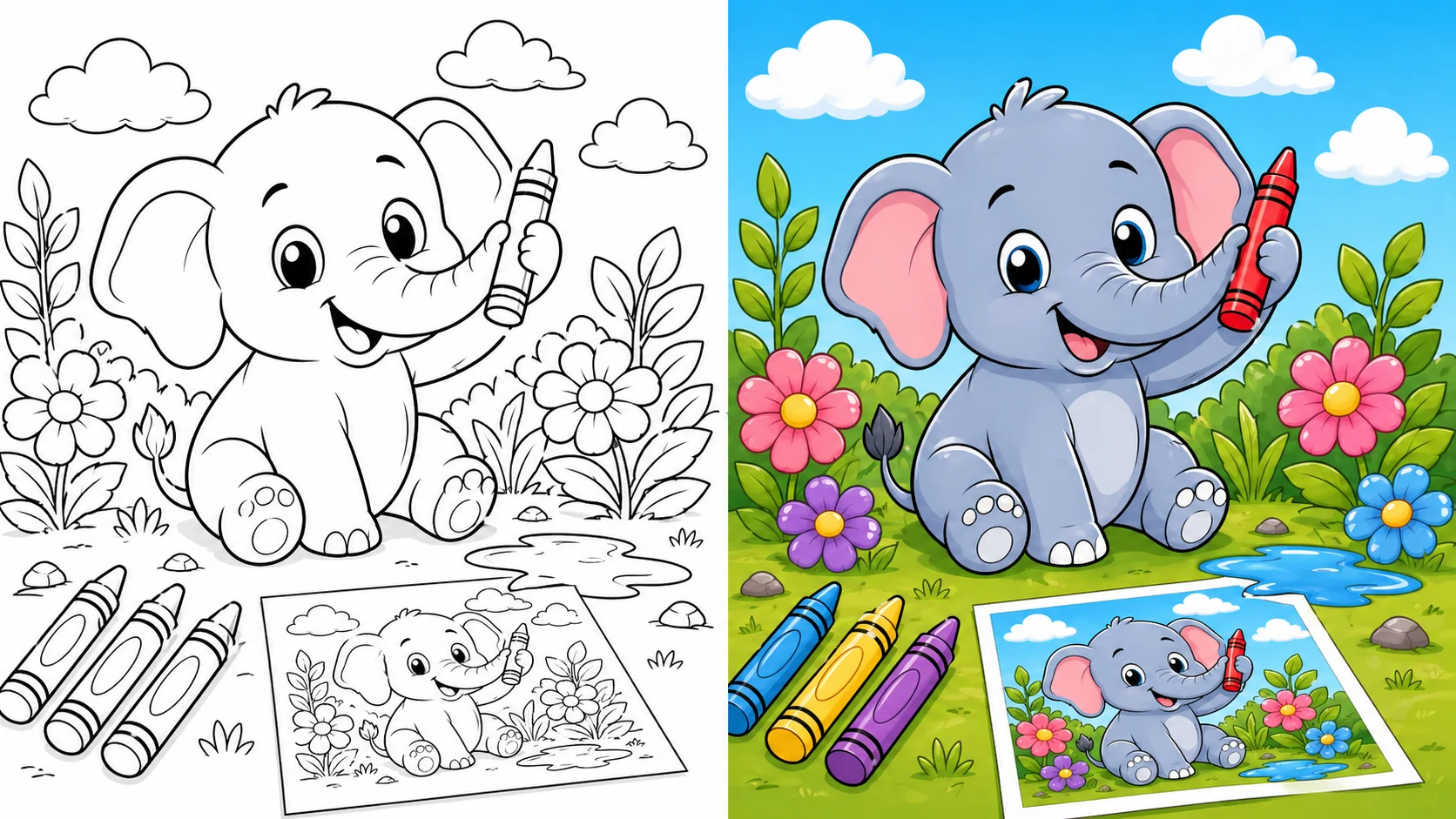
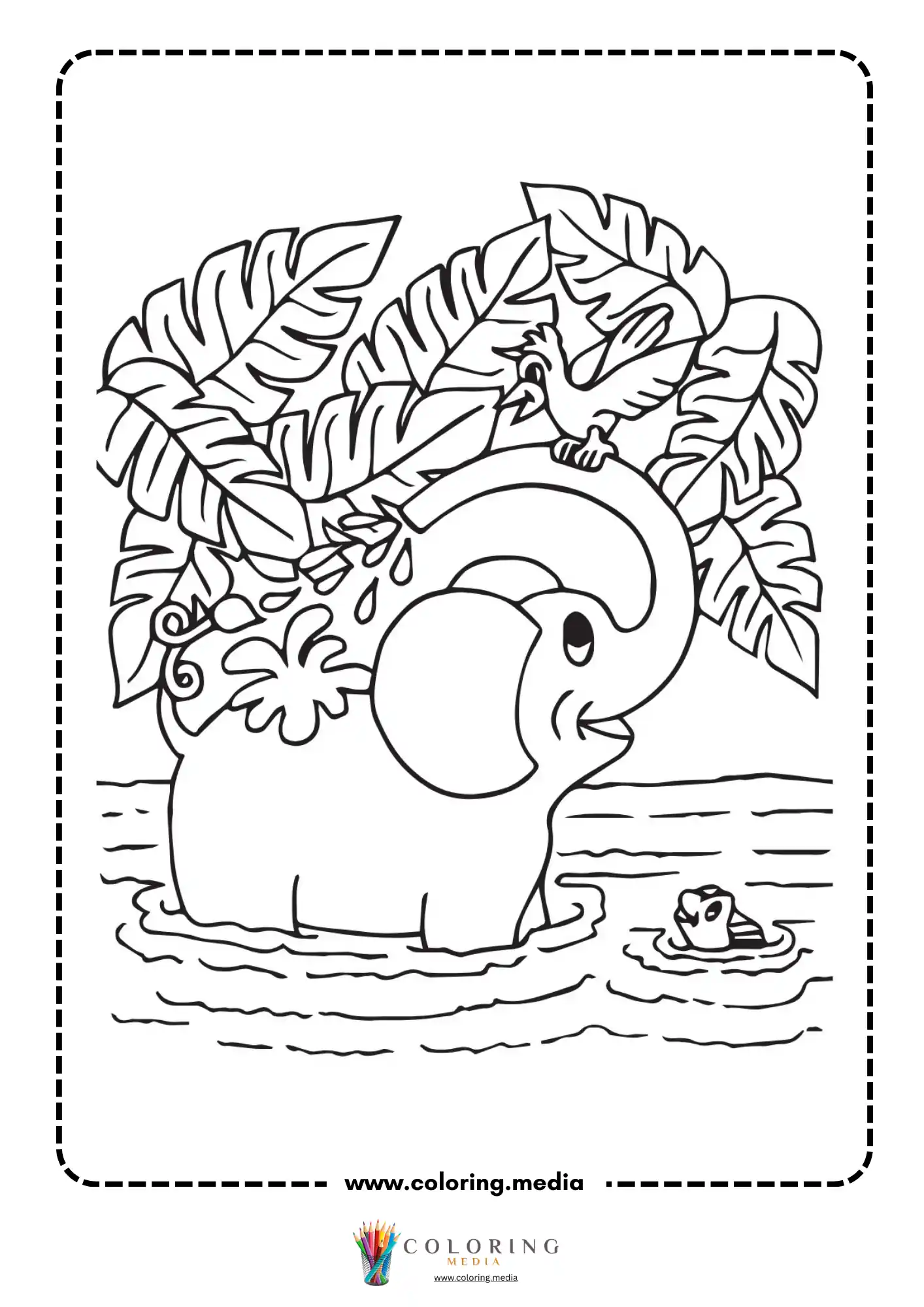
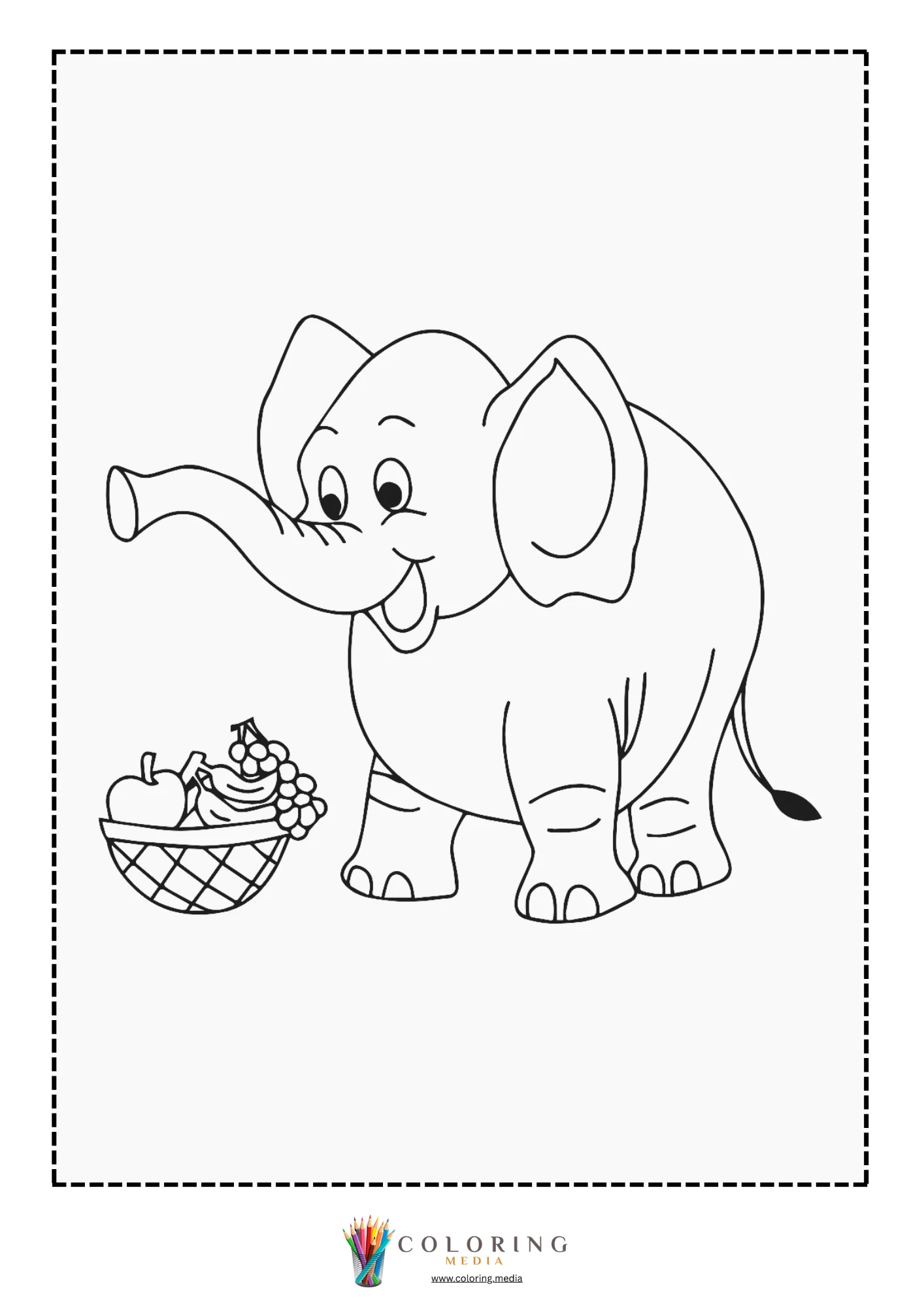
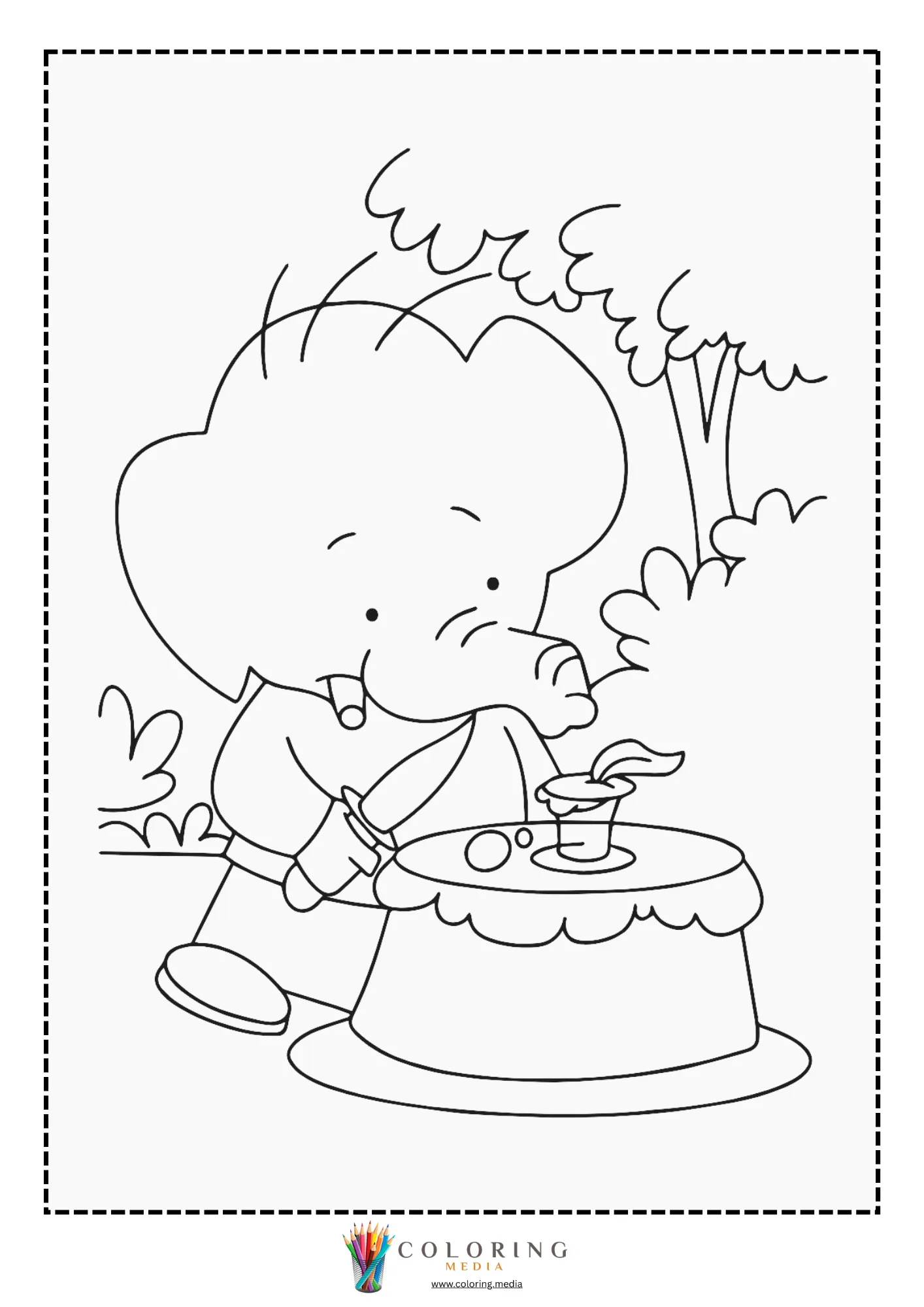
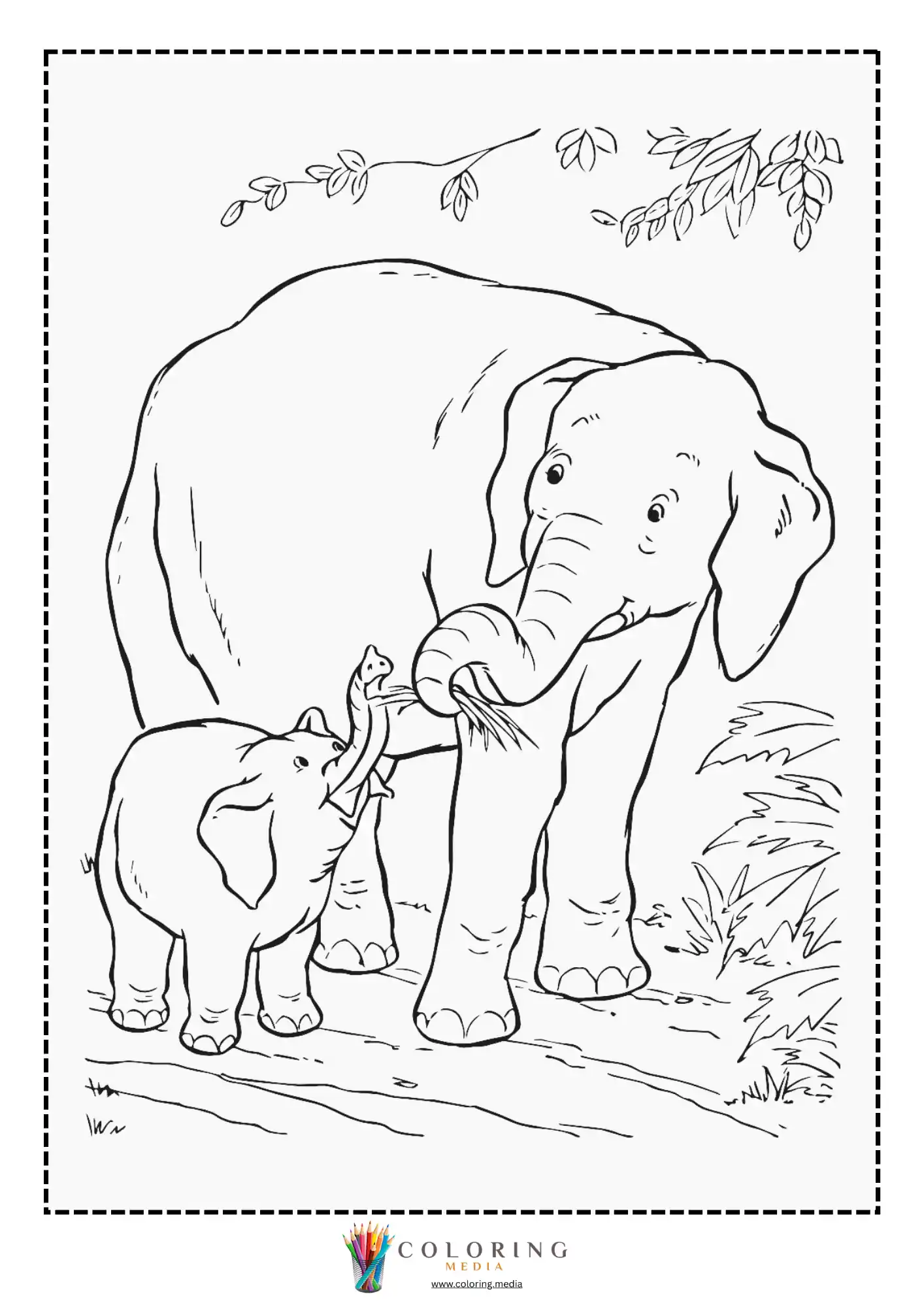
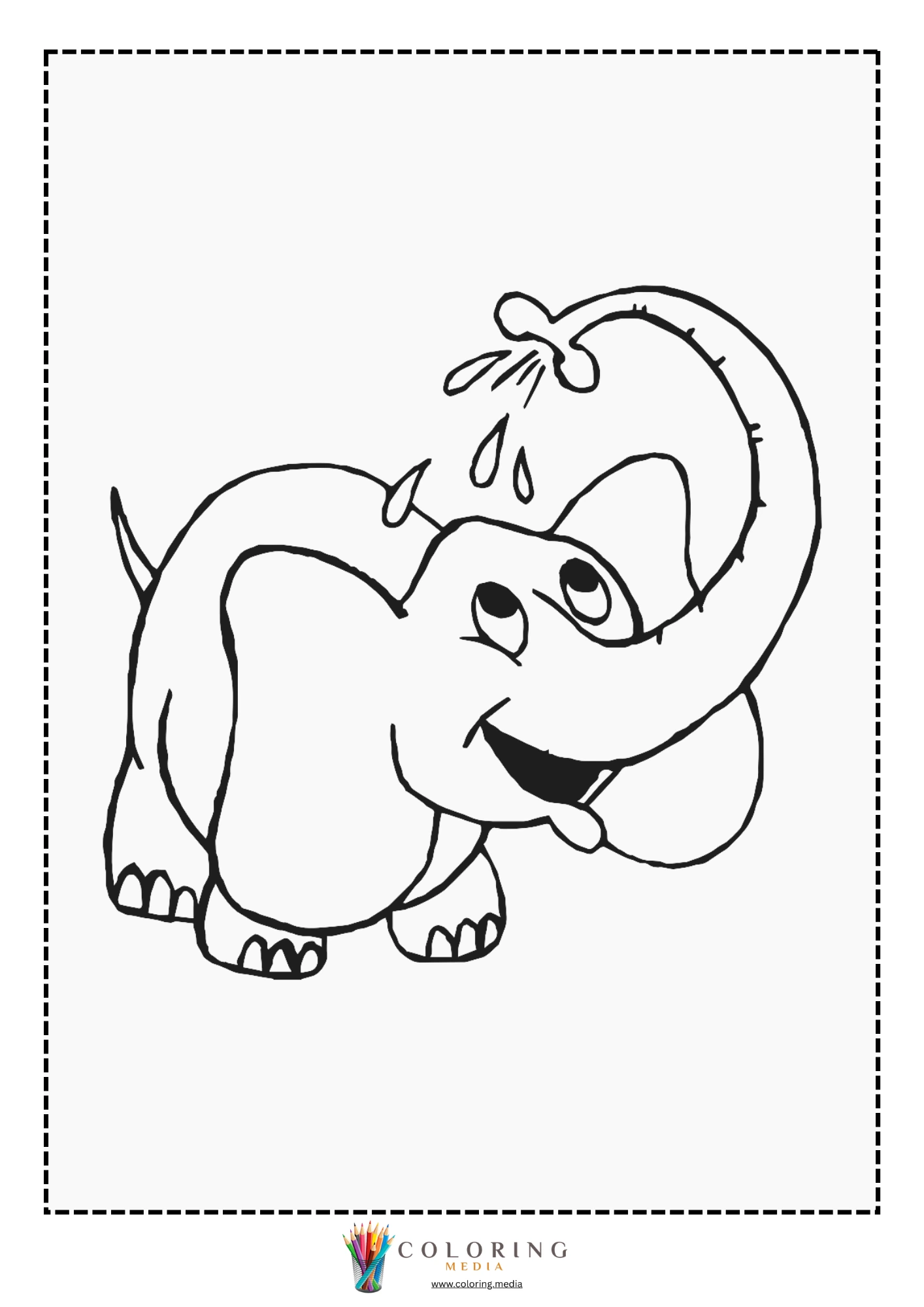
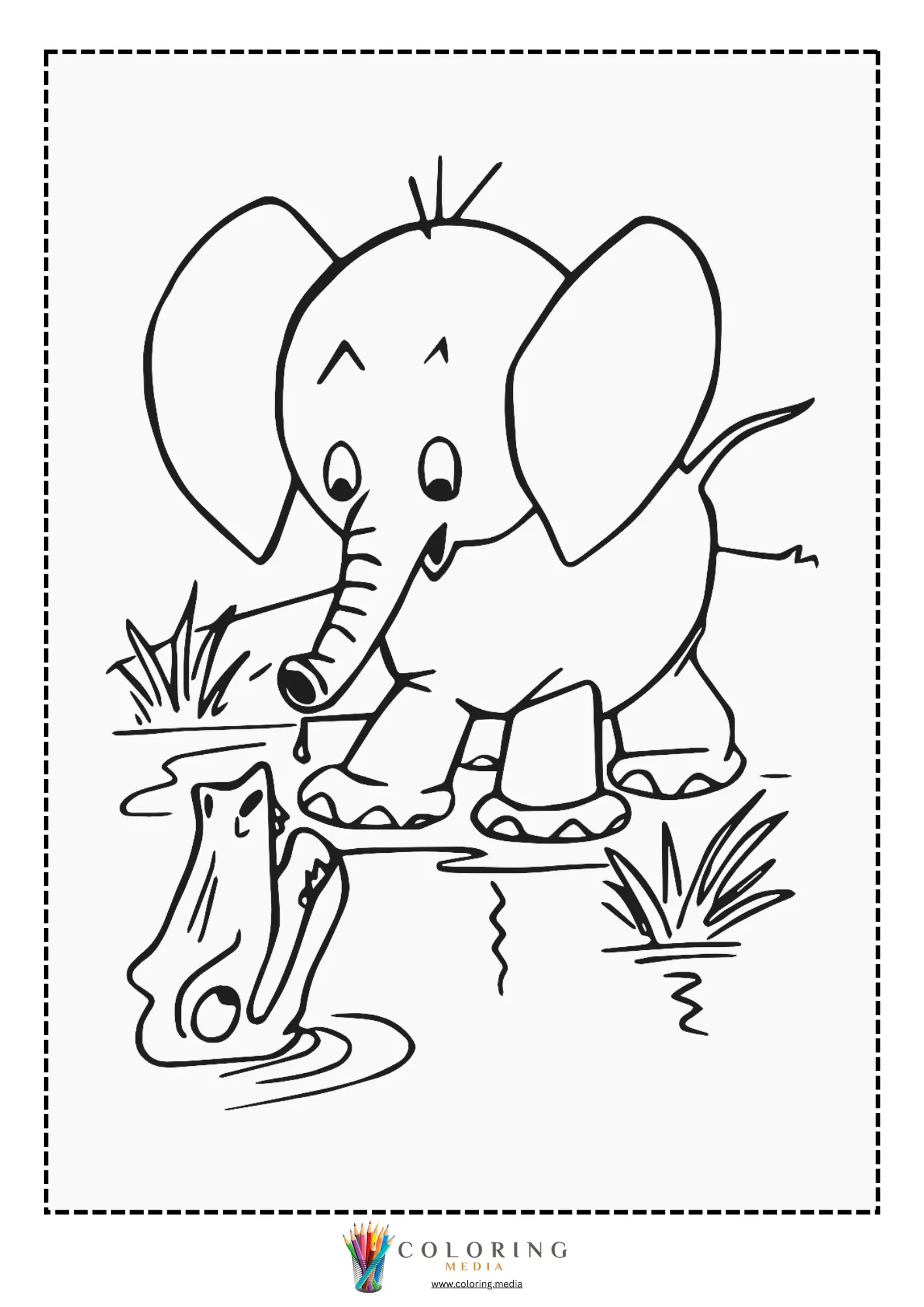
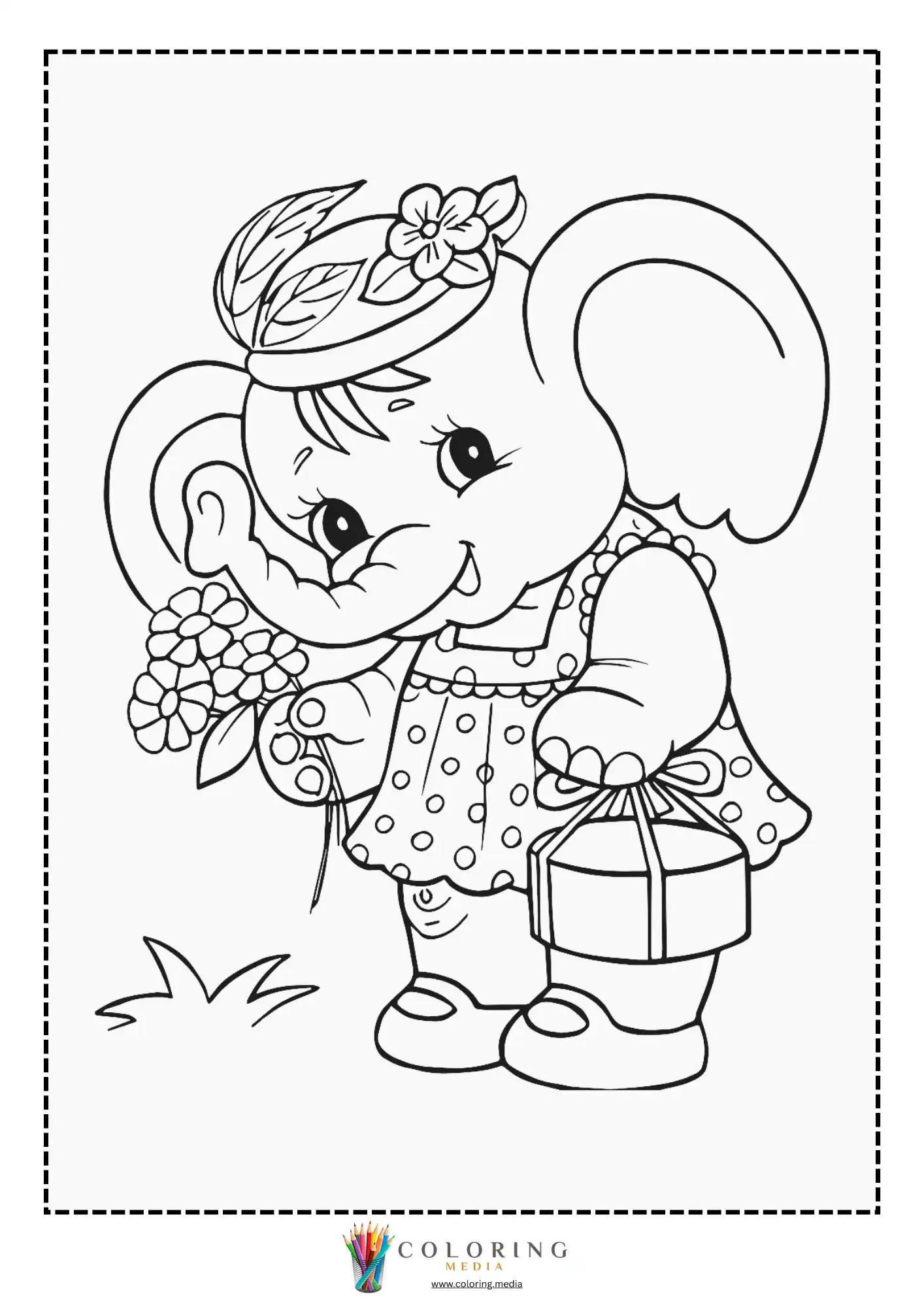
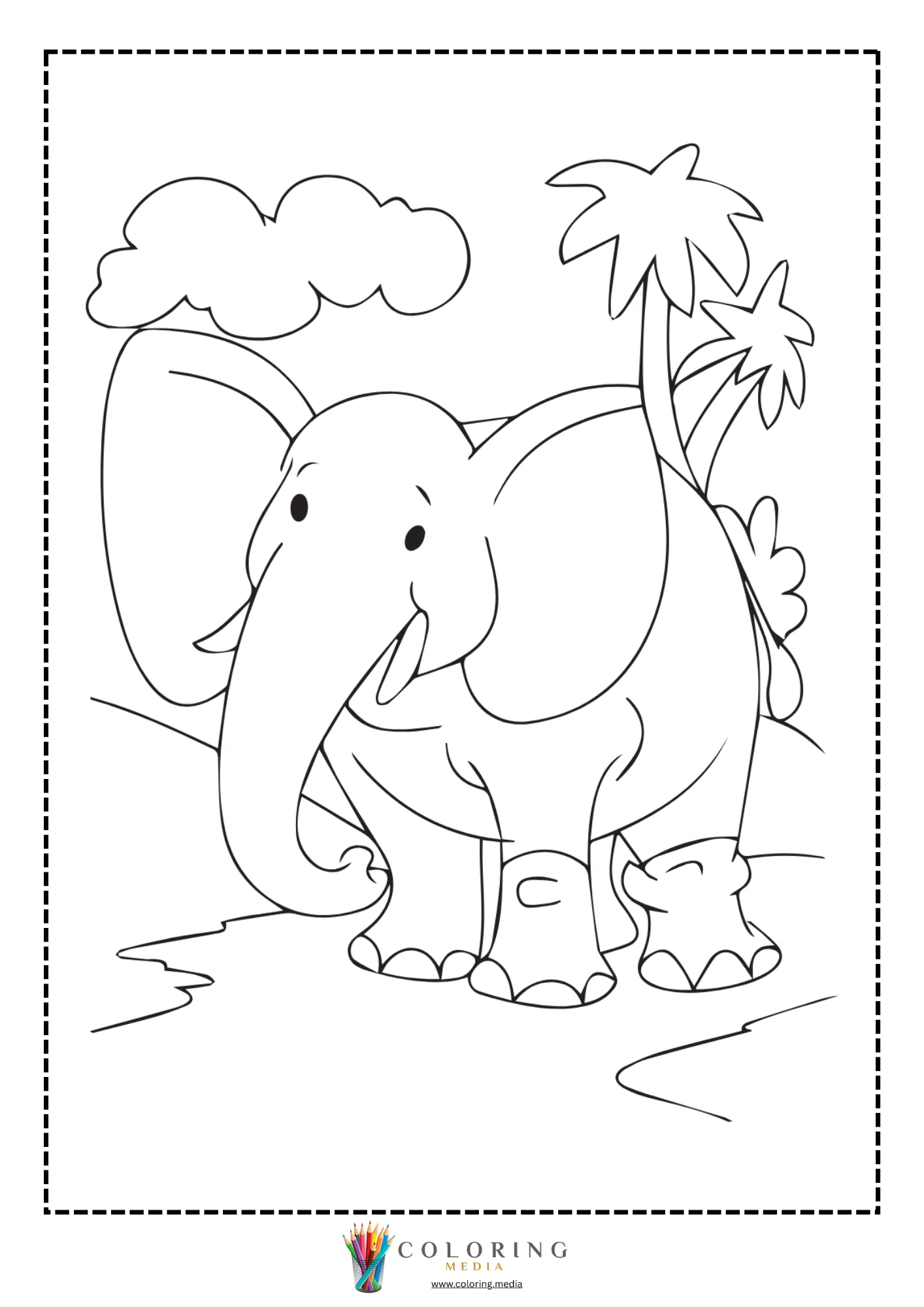
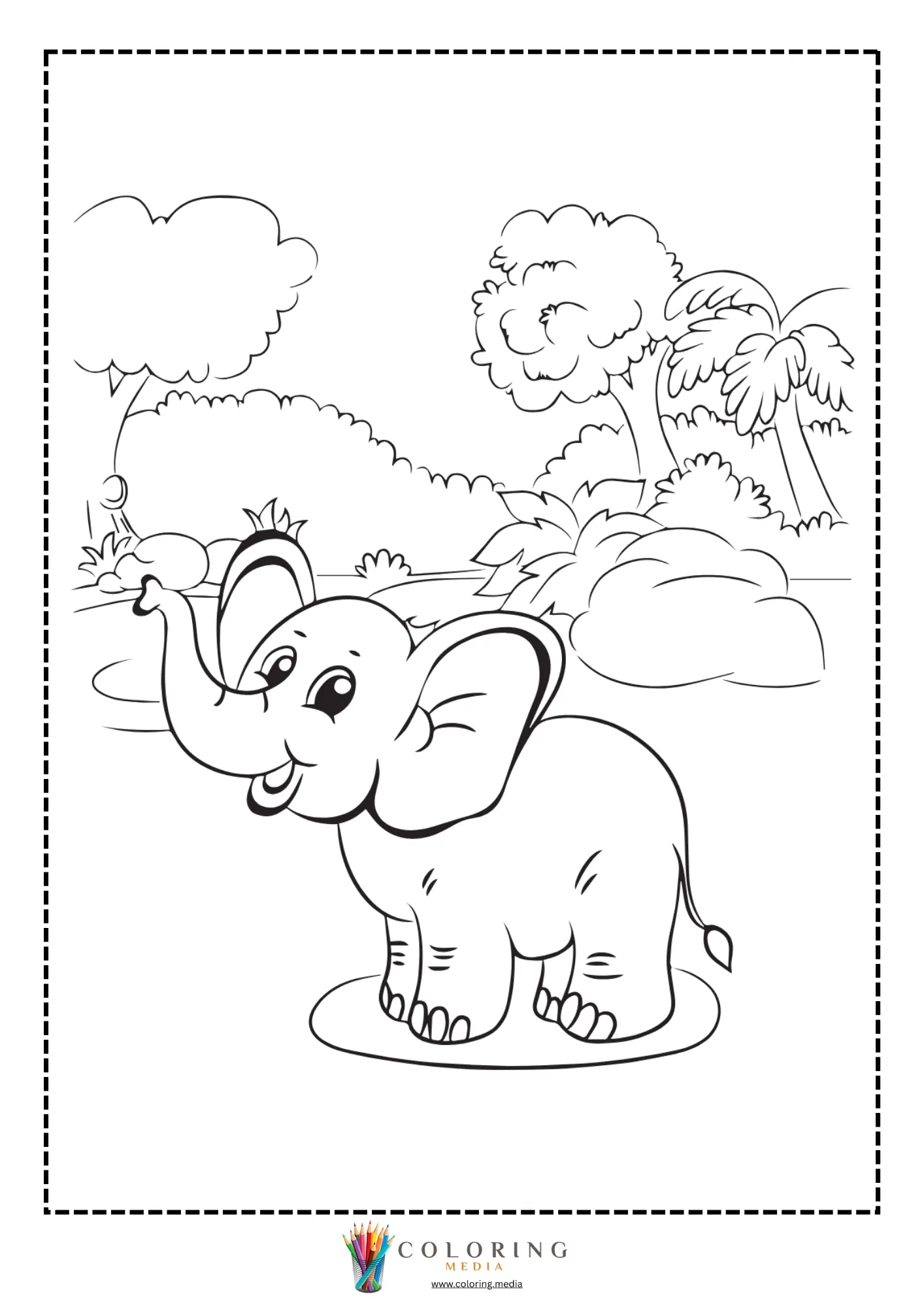
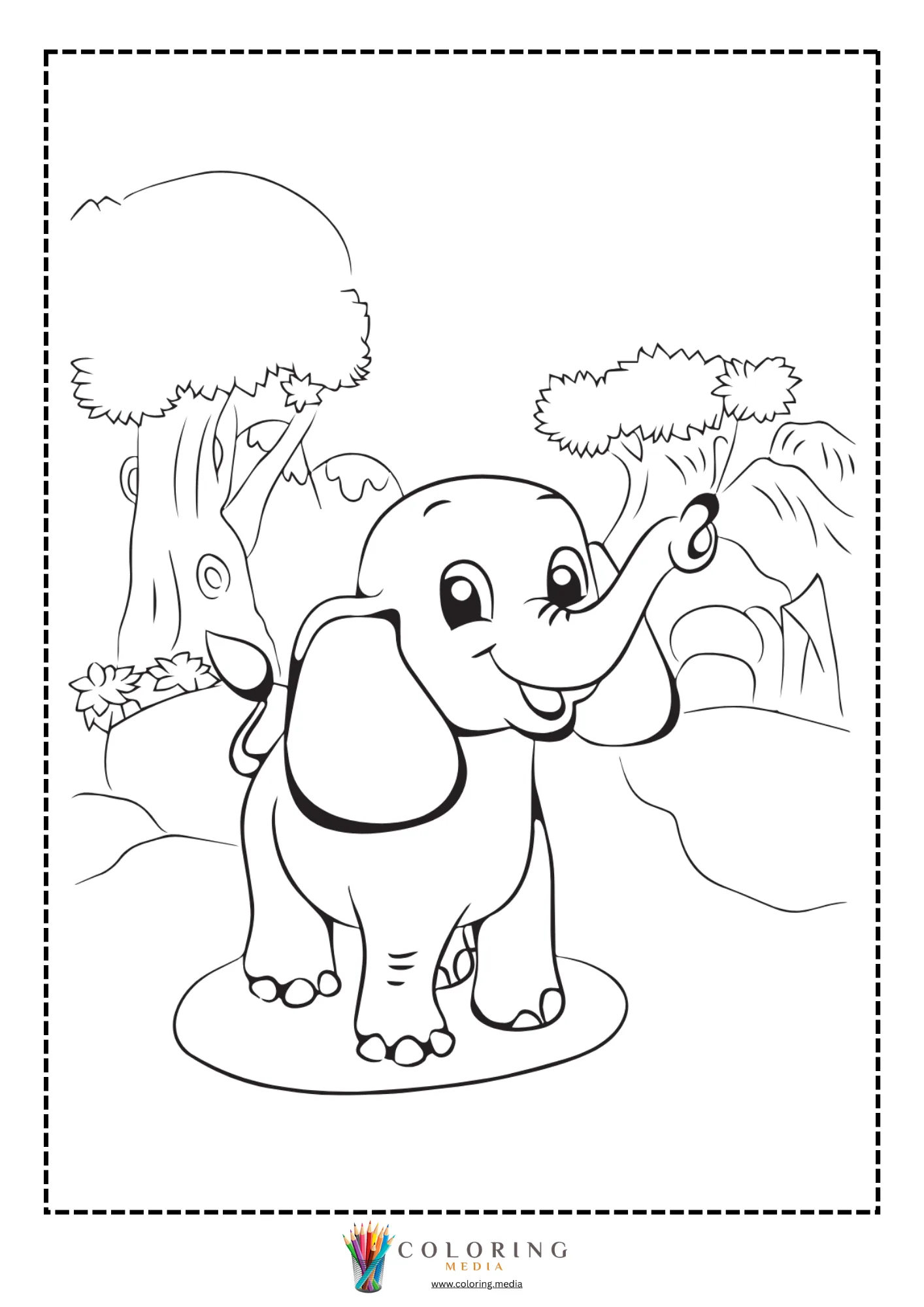
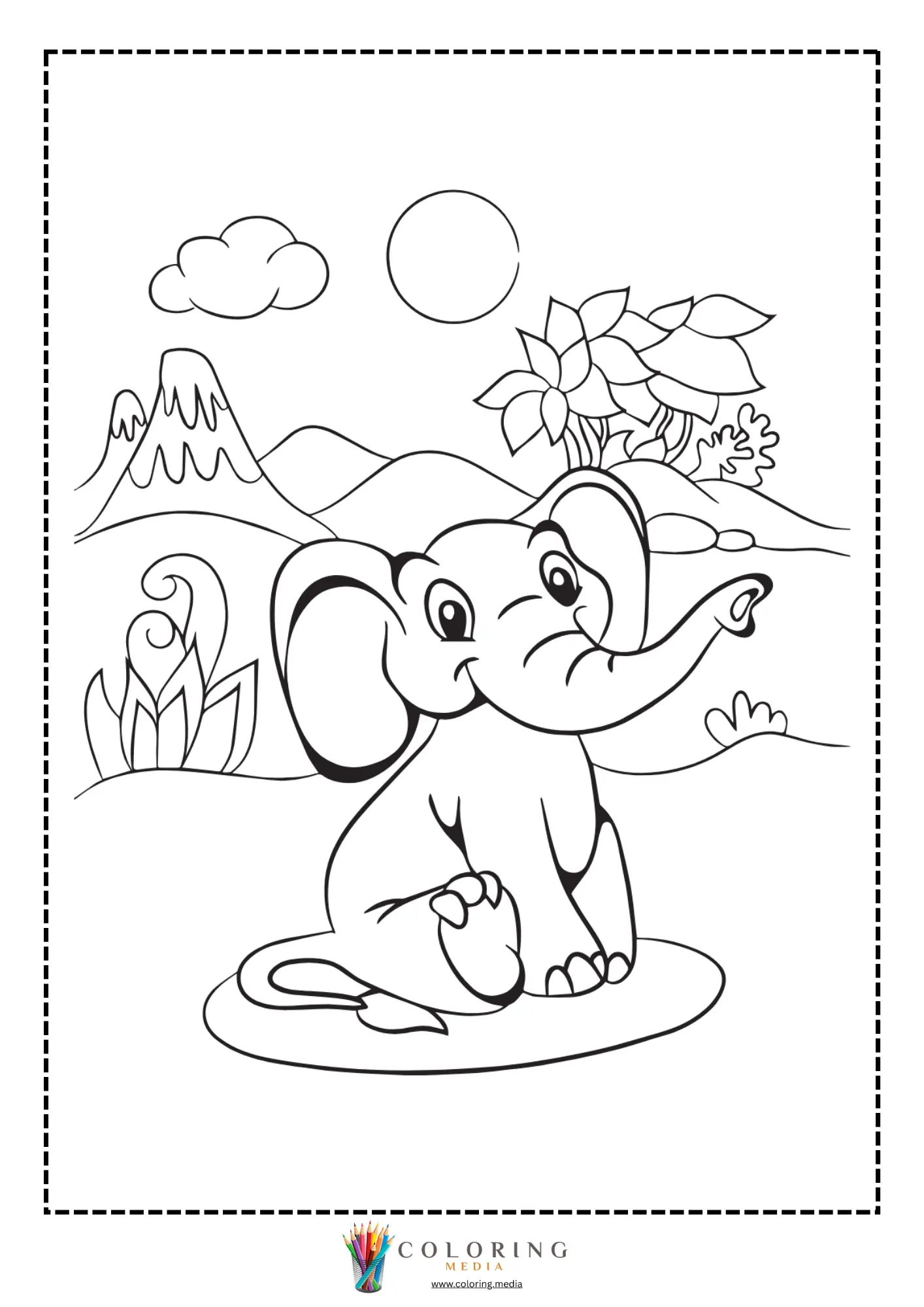
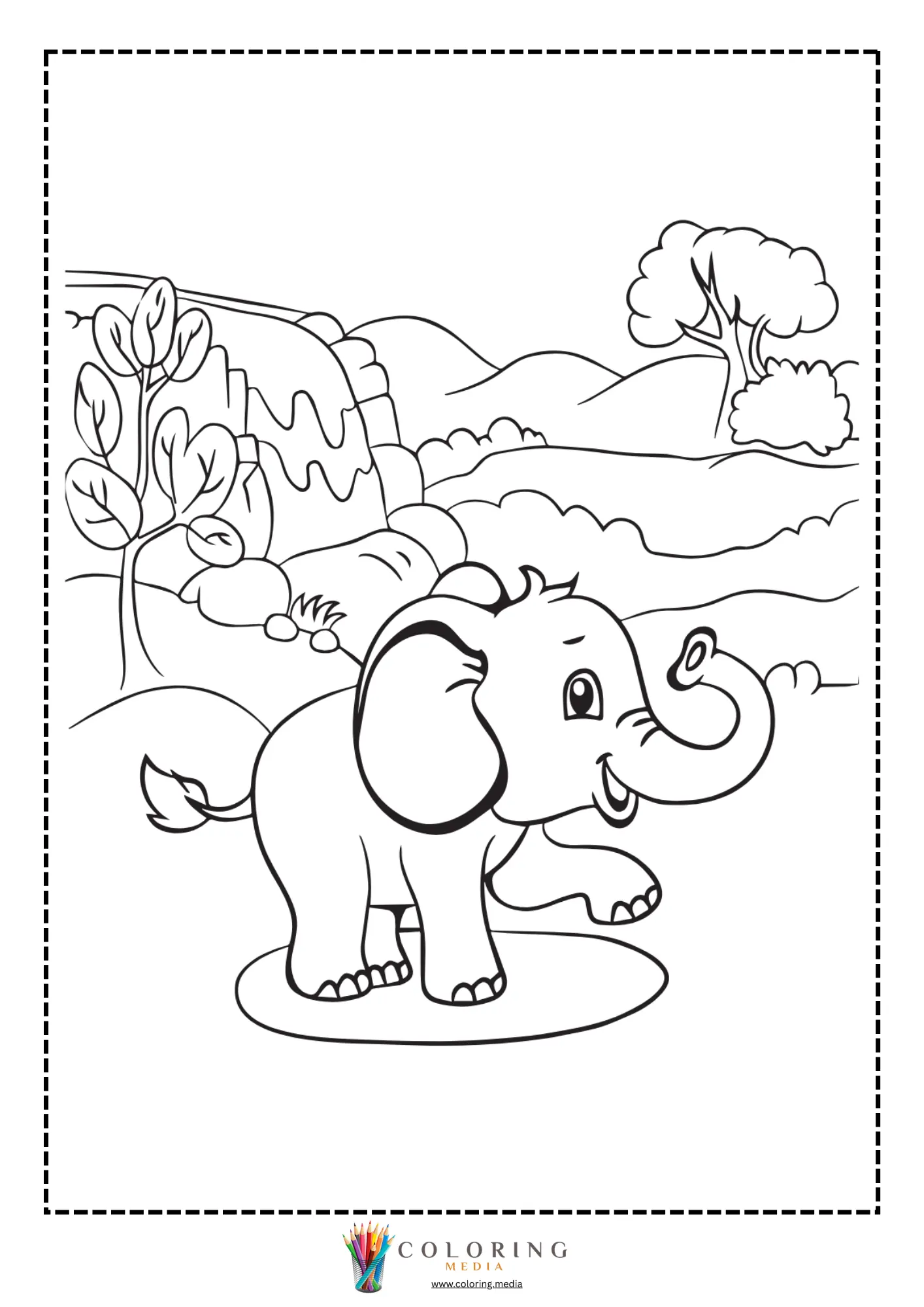
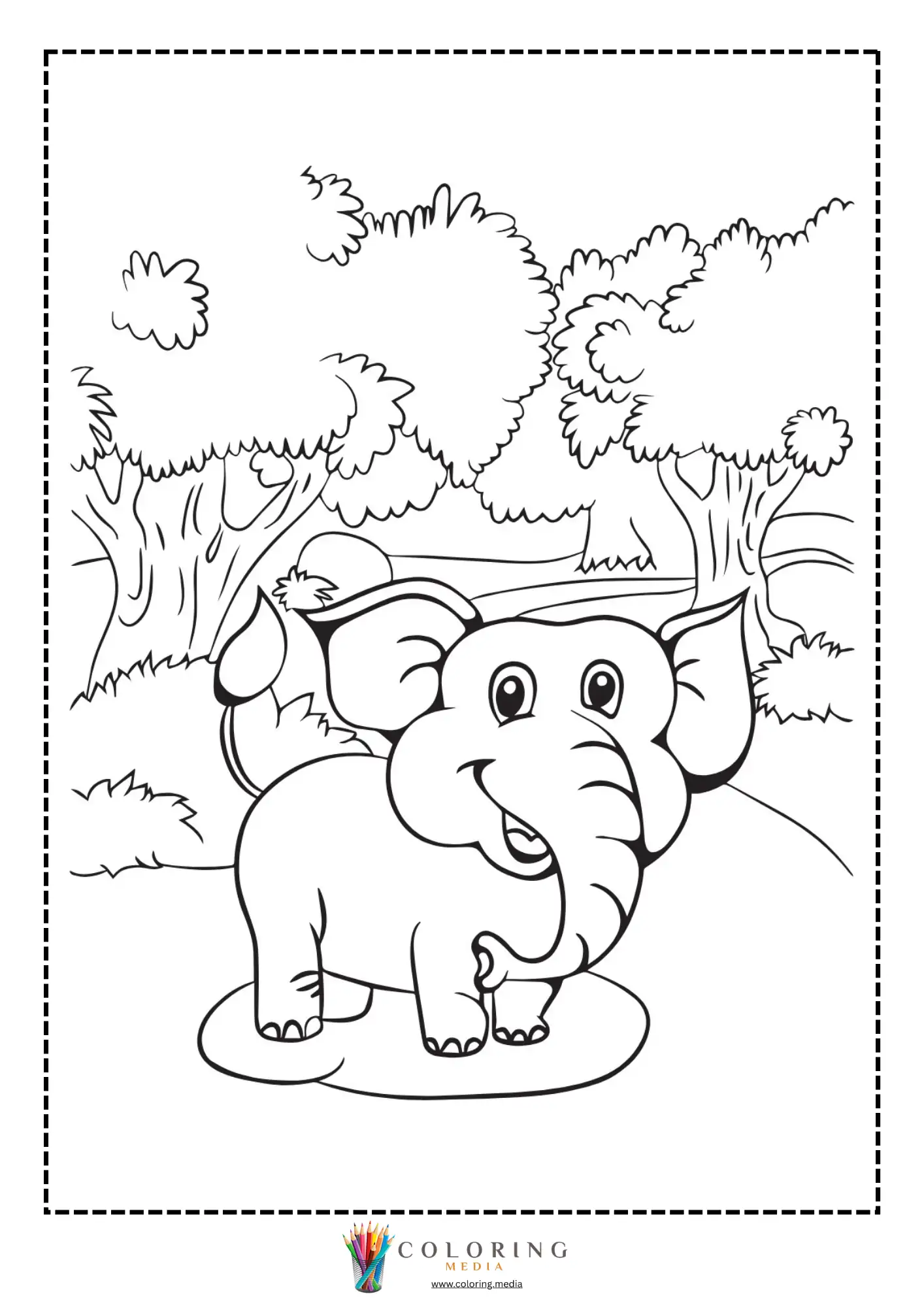
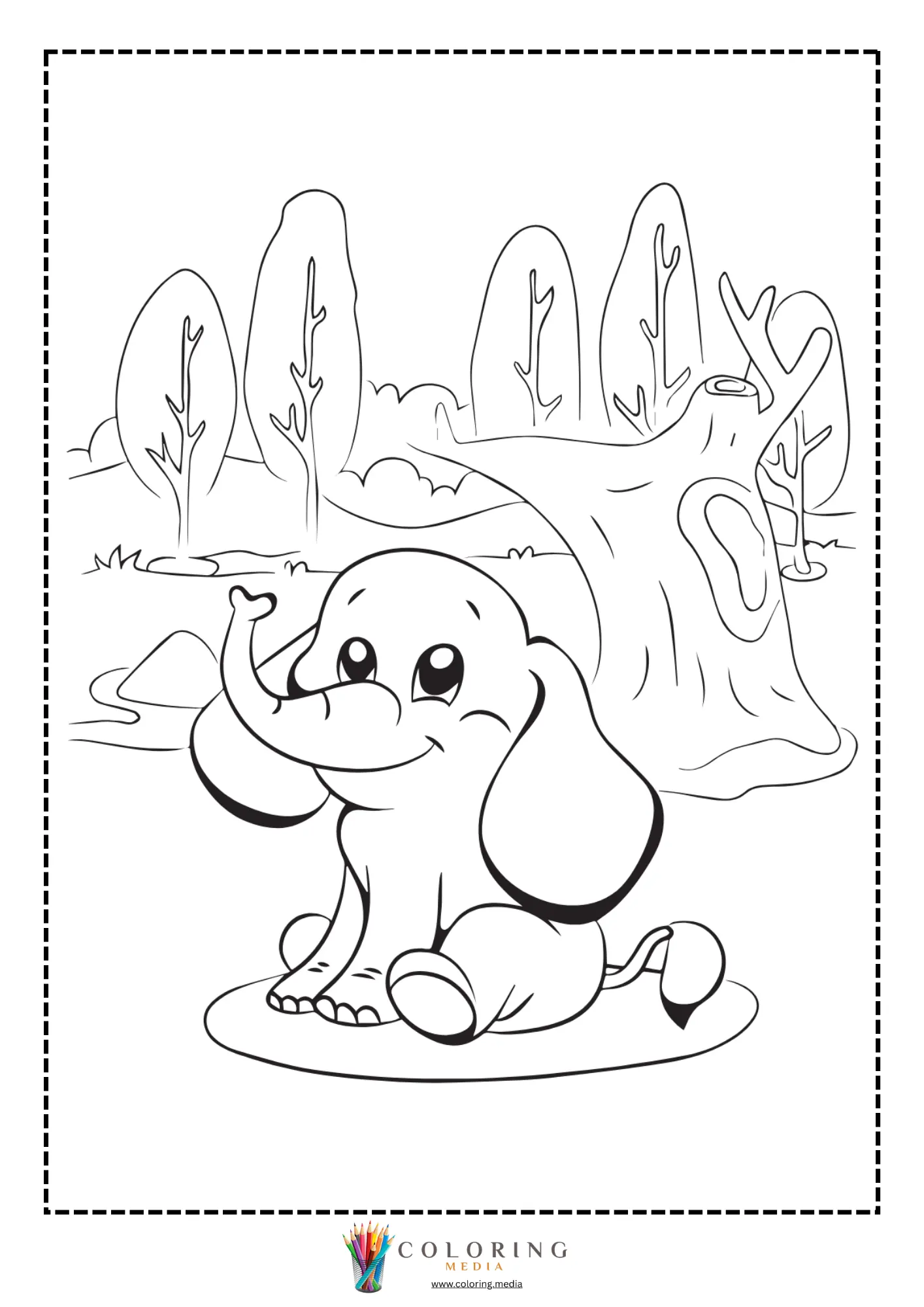
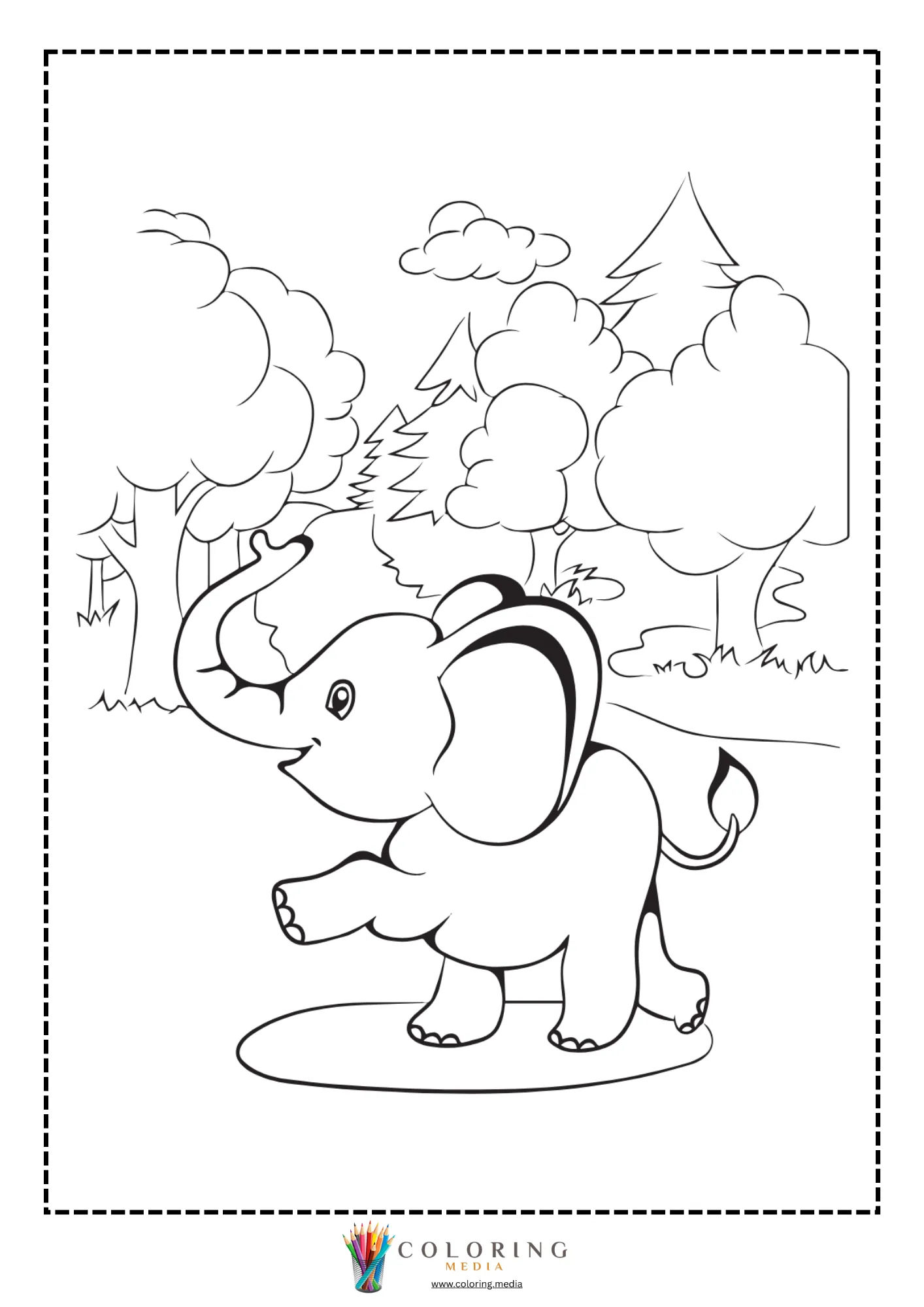
Elephants in this collection are always in relationship with something — the landscape, other elephants, or a moment in the day. A baby elephant stands in tall grass with a tree line behind it. A mother and calf face each other with trunks nearly touching. A single elephant holds flowers in its trunk with an expression that manages to look both pleased and a little bashful. The cartoon style keeps proportions friendly — big round ears, plump bodies, expressive eyes — but the scenes themselves have enough setting detail to make each page feel like a slice of a larger world rather than a blank-background exercise.
There are 15 pages, mixing portrait-style compositions with fuller scenes that include trees, grass, water, and other landscape elements. Line complexity varies across the set, but the overall style is accessible and warm. Everything here is free to download and easy to print.
Free Printable Elephant Coloring Pages
This collection includes 15 printable elephant coloring pages featuring single elephants, mother-and-calf pairs, family scenes, and elephants interacting with their environment — all drawn in a friendly cartoon style with rounded proportions, clear outlines, and expressive faces. Background elements include trees, grass, water, and landscape details on several pages. Files are formatted for standard US Letter and A4 paper at 300 dpi.
Who Are These Elephant Coloring Pages Best For?
The simpler pages — a single elephant in a clean pose without much background — have bold outlines and open body areas that work well for preschoolers aged 3-4. Elephant bodies in cartoon form are large, rounded, and uncluttered, which means a young child with a fat crayon can cover the main shape satisfyingly without needing fine motor precision. The ear, trunk, and tusk are large enough to color separately with intention even at that age.
The scene pages are better suited to kindergarteners. Grass tufts, tree lines, and water elements add sections that benefit from different color choices and a steadier hand. Children at this stage often enjoy the planning involved — choosing which gray for the elephant, what shade of green for the grass, whether the sky is blue or sunset-orange. The mother-and-calf pages in particular tend to appeal to children who are thinking about family relationships and like to color the two elephants differently to distinguish them.
In a classroom or homeschool setting, these work well alongside science units on African or Asian ecosystems, animal families, or endangered species — elephants appear on conservation lists and generate genuine engagement when children learn that wild elephant populations are under pressure.
Interesting Elephant Facts to Share While Coloring
Elephants mourn their dead. When an elephant in a herd dies, family members will stay with the body for hours or days, touching it with their trunks and feet. Elephant herds have also been observed returning to the bones of deceased relatives years later and showing what researchers describe as grieving behavior — holding still, touching the bones, making low vocalizations. It is one of the most striking examples of emotional complexity in any non-human animal.
An elephant’s trunk has no bones — just about 40,000 muscles. That makes it one of the most precisely controllable body parts in the animal kingdom. Elephants use it to breathe, smell, drink, communicate, pick up objects as small as a single peanut, and spray themselves with water or dust for cooling and sun protection.
Elephants are one of the few animals that can recognize themselves in a mirror. This ability — called mirror self-recognition — is considered a marker of self-awareness and has only been confirmed in a handful of species: great apes, dolphins, orcas, magpies, and elephants. The test involves marking the animal’s forehead and observing whether it touches the mark on its own body when it sees the reflection.
Baby elephants are born nearly blind and rely entirely on touch and smell. A newborn elephant calf weighs around 200 pounds and can stand within hours of birth, but its eyesight is poor. It identifies its mother and herd members primarily by smell and by the rumbling infrasonic communication elephants use — vocalizations too low for human ears to hear, which travel through the ground and can be felt through the feet.
Elephants sleep very little — roughly 2 hours per day on average. Studies using activity trackers on wild African elephants found they often go multiple days without any sleep during long-distance movements, and when they do sleep, it is often standing up for short stretches. This is far less than any other known mammal and is thought to be an adaptation to their need to keep moving in search of food and water.
Creative Elephant Coloring and Craft Ideas
Herd Mural Color and cut out multiple elephants, arrange them by size from largest to smallest, and glue them onto a savanna backdrop — showing a family herd with matriarch at the front.
Elephant Ear Pattern Design Use the ear as a canvas for a repeating pattern — geometric shapes, flowers, or abstract designs — treating it like a decorative element in the style of Ganesha-inspired art.
African vs. Asian Elephant Compare Research the visible differences between the two species (ear size, head shape, back curve, number of toes) and label them on two different colored pages — a simple biology comparison activity.
Watercolor Wash Sky Color the elephant with crayons, then paint a loose watercolor wash across the background. The crayon wax resists the paint and keeps the elephant figure crisp while the background picks up texture.
Elephant Size Fact Tag Write the actual weight and height of an African elephant on a tag attached to the completed page — a scale reference that surprises most children when they see the numbers.
Trunk Activity Chart List five things elephants do with their trunk (drink, spray, pick up, smell, communicate), then color one elephant page and draw small icons around it illustrating each function.
Calf and Mother Story Color the mother-and-calf pages and write or dictate a short story about what they are doing together — where they are going, what the calf is learning, what the herd does next.
Elephant Conservation Poster Color a portrait page and surround it with drawn or printed facts about elephant conservation — how many remain, where they live, what threatens them — as an awareness display.
How to Print These Elephant Coloring Pages
Each file downloads as a PDF formatted for US Letter (8.5×11 in) and A4 — both print without cropping on either size. Plain copy paper works well for crayons and colored pencils; for watercolor or marker work on the scene pages, 65-90 lb cardstock prevents bleed-through and buckling. Select “actual size” in your print dialog for the sharpest outlines, and high-quality grayscale gives cleaner lines than draft mode when ink is low.
Explore More Animals Coloring Pages
If you enjoyed these pages, you may also like:
Cute Animal Coloring Pages
Farm Animals Coloring Pages
Sea Life Coloring Pages
Dinosaur Coloring Pages
All Animals Coloring Pages