
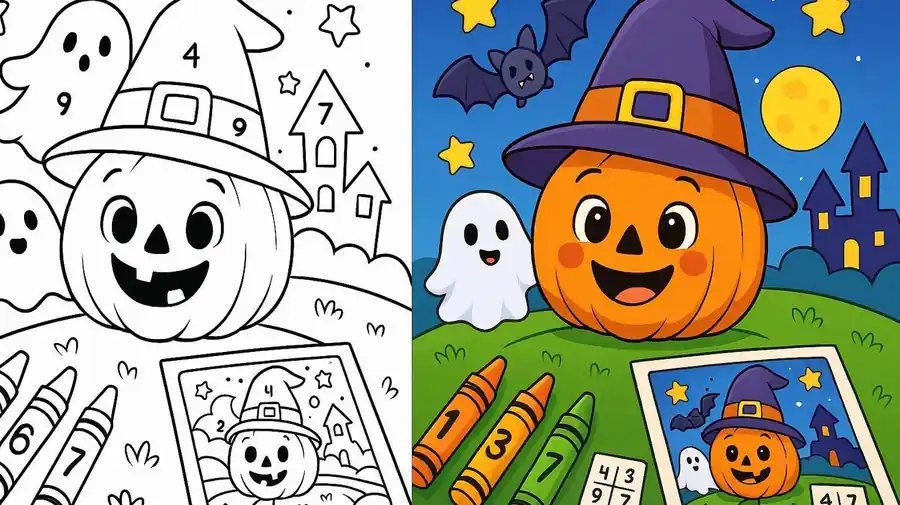
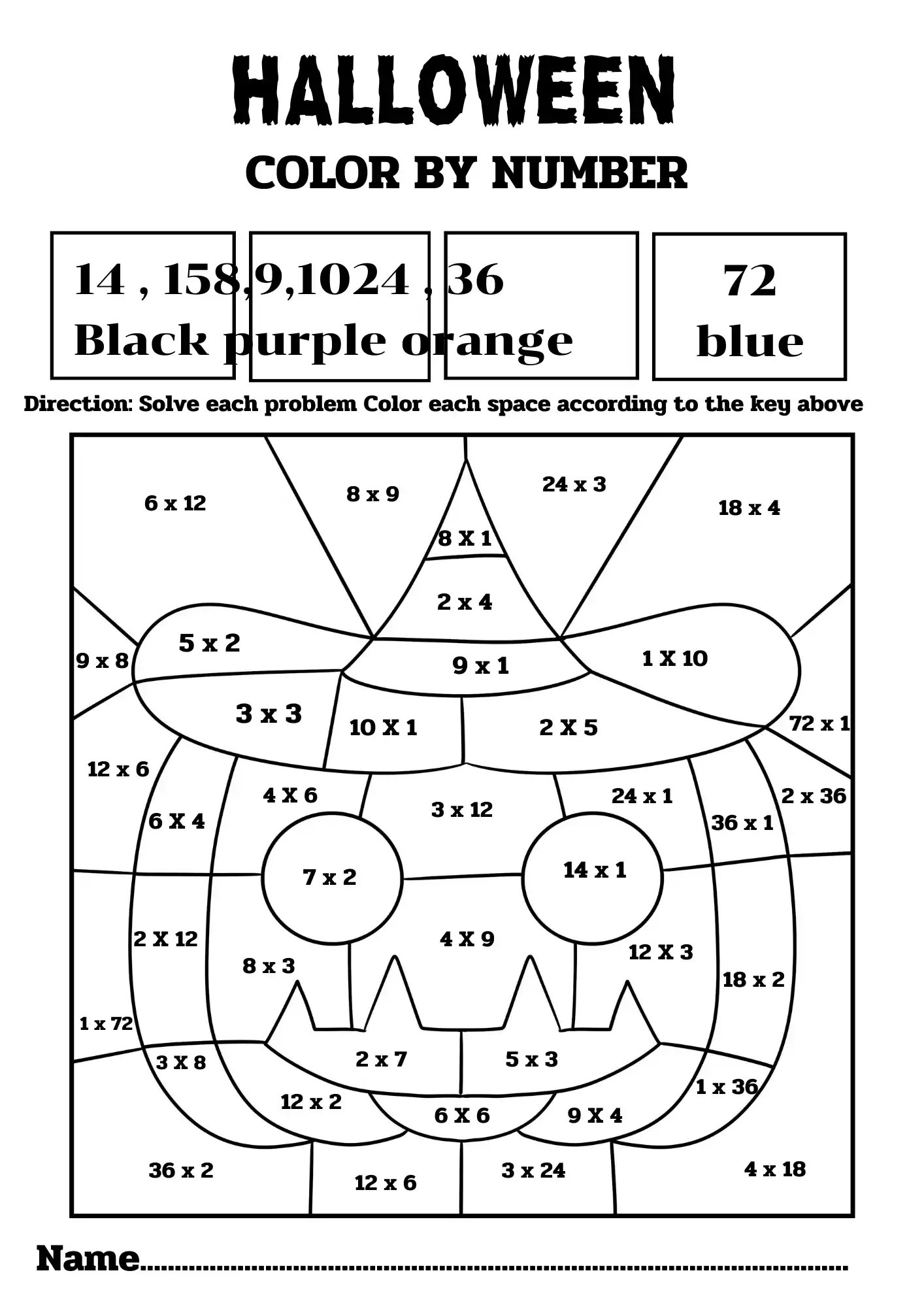
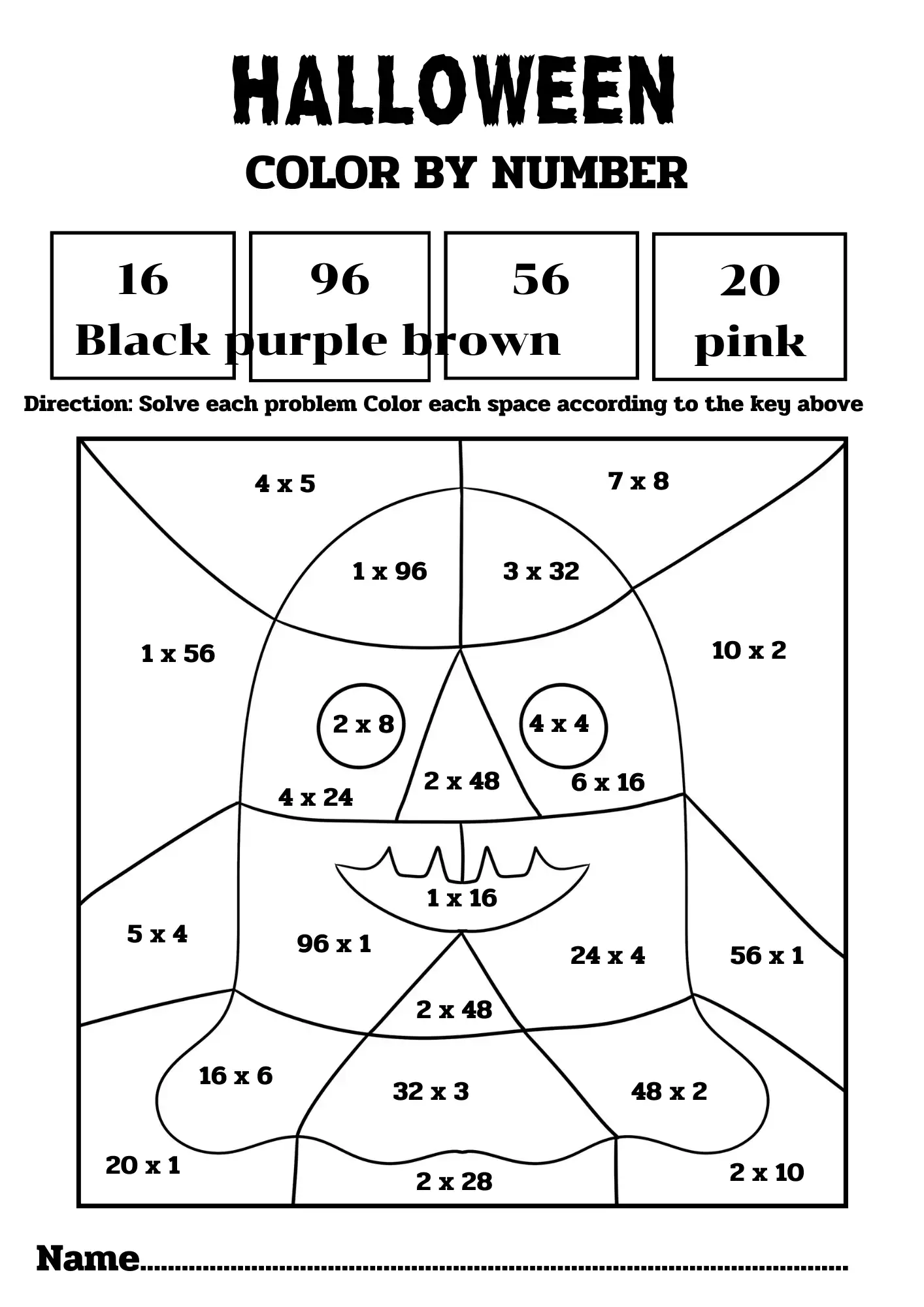
Each of these 10 pages combines a Halloween outline drawing — a pumpkin, a spider web, a bat in flight, a ghost, a skull — with multiplication equations printed inside every color region. The format is direct: solve the equation in a zone (say, 4 × 3), find that product in the color key at the bottom, and pick the matching crayon. The Halloween artwork acts as the reward; the multiplication practice is the price of admission.
The designs are clean cartoon outlines with enough visual interest to make the activity feel like a coloring project rather than a math drill in disguise. That’s the point — students who resist flashcard-style repetition will often work through the same multiplication facts willingly when there’s a finished picture at stake. Everything here is free to download and easy to print.
Free Printable Halloween Multiplication Color by Number Pages
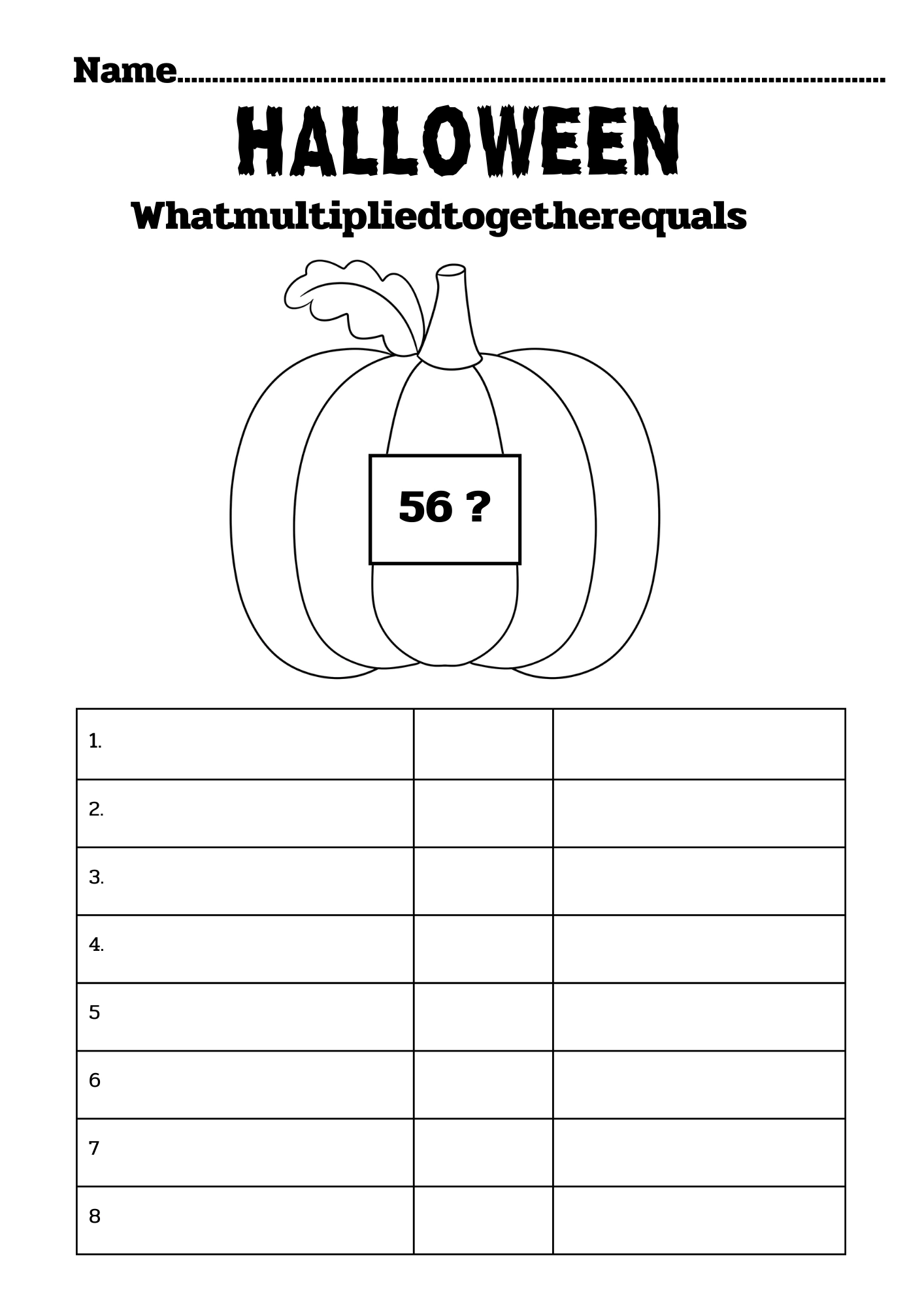
This collection includes 10 printable Halloween multiplication color by number pages featuring holiday-themed images — pumpkins, ghosts, bats, spider webs, skulls, witches, and monsters — with multiplication equations printed inside each color region. Students solve each equation and use the product to find the matching color in the answer key. All pages format for US Letter and A4 paper and download as print-ready PDFs.
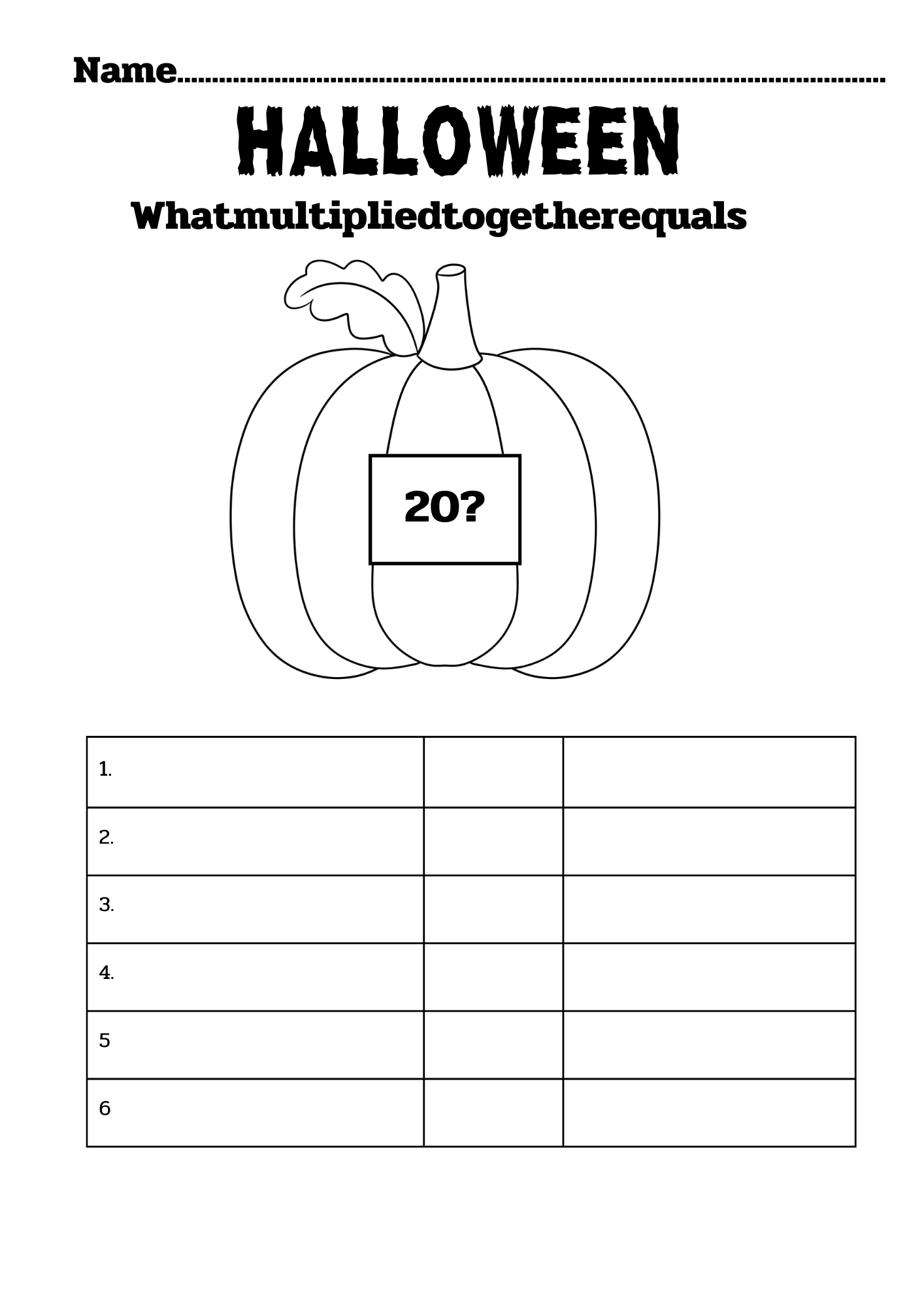
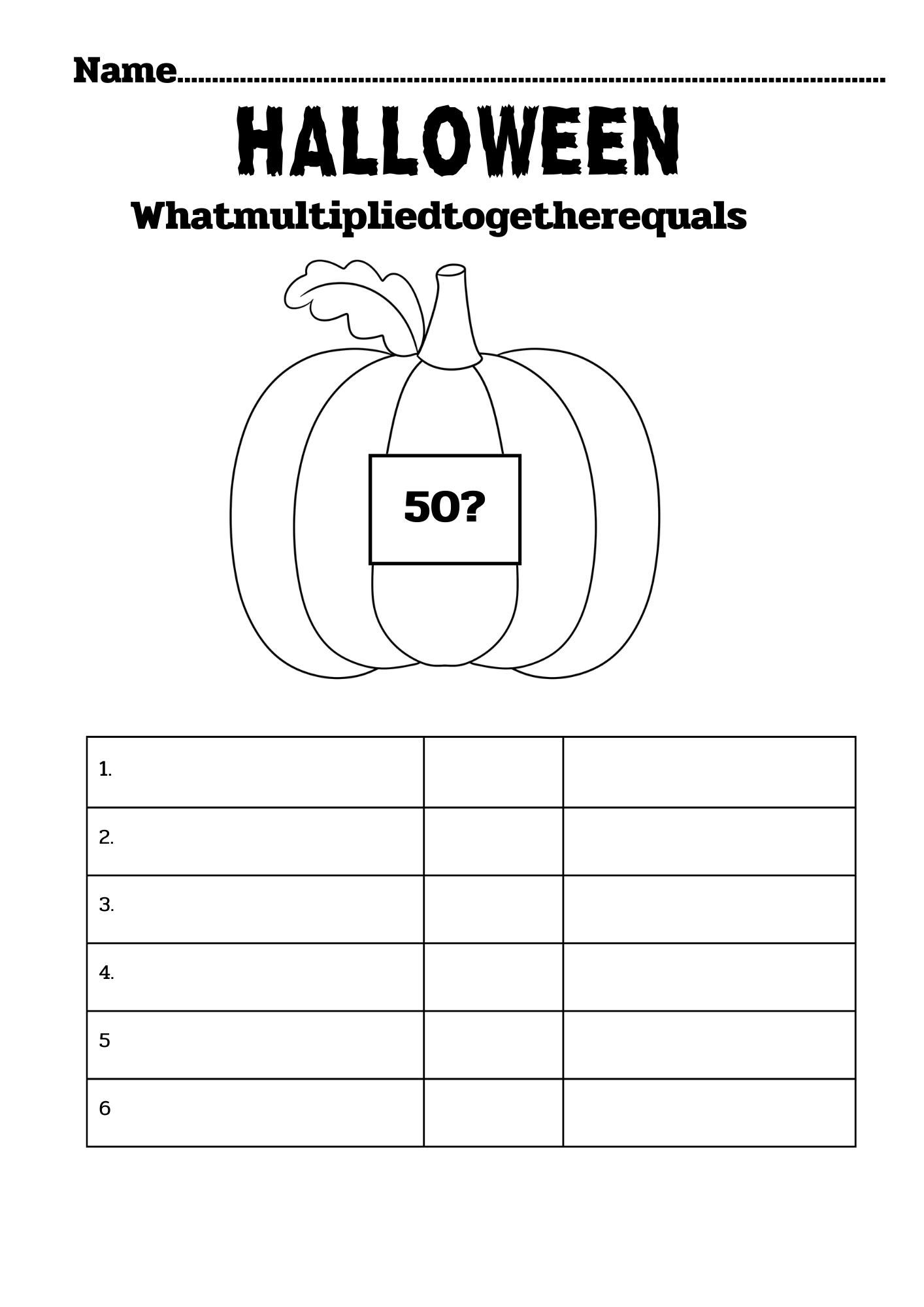
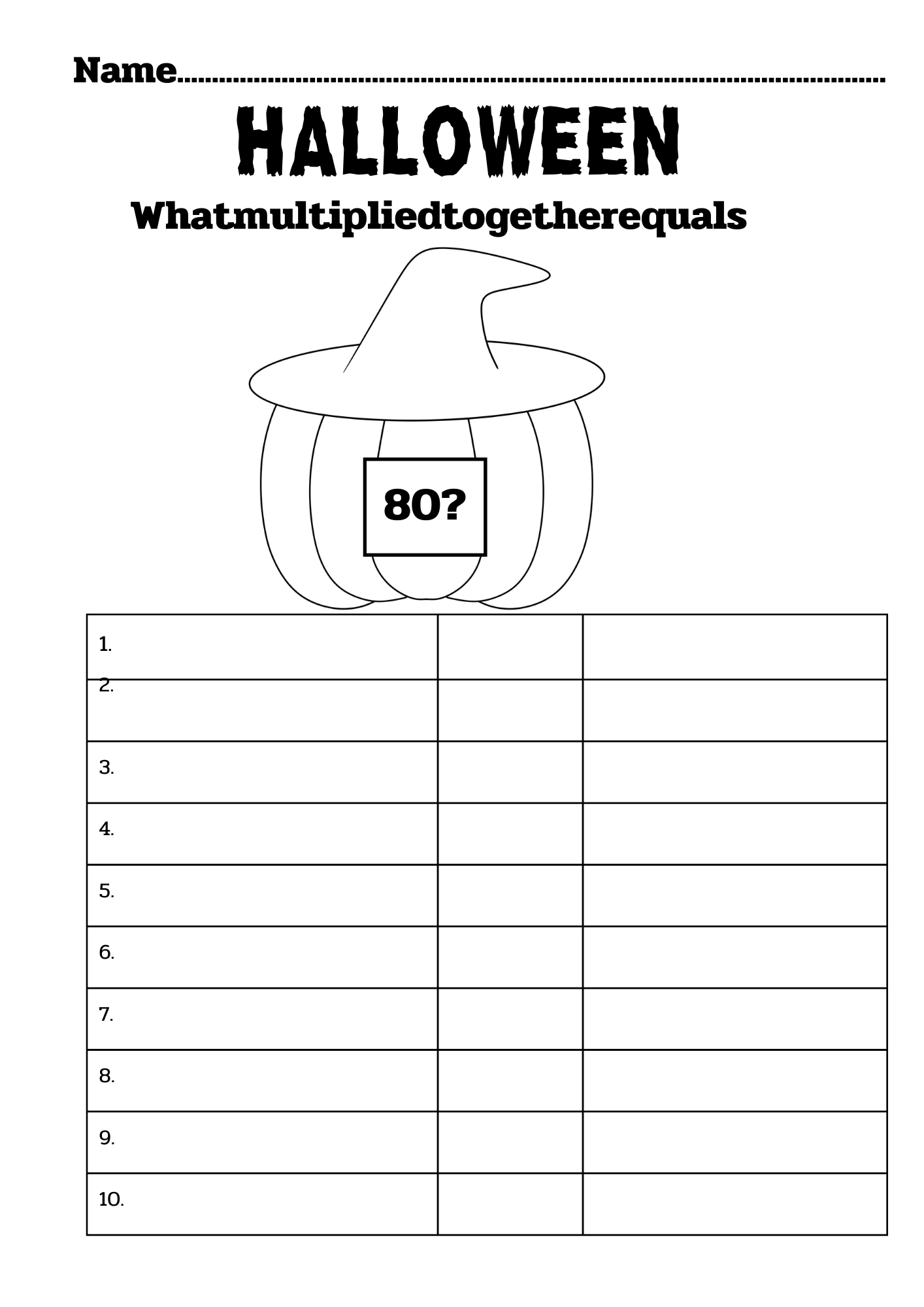
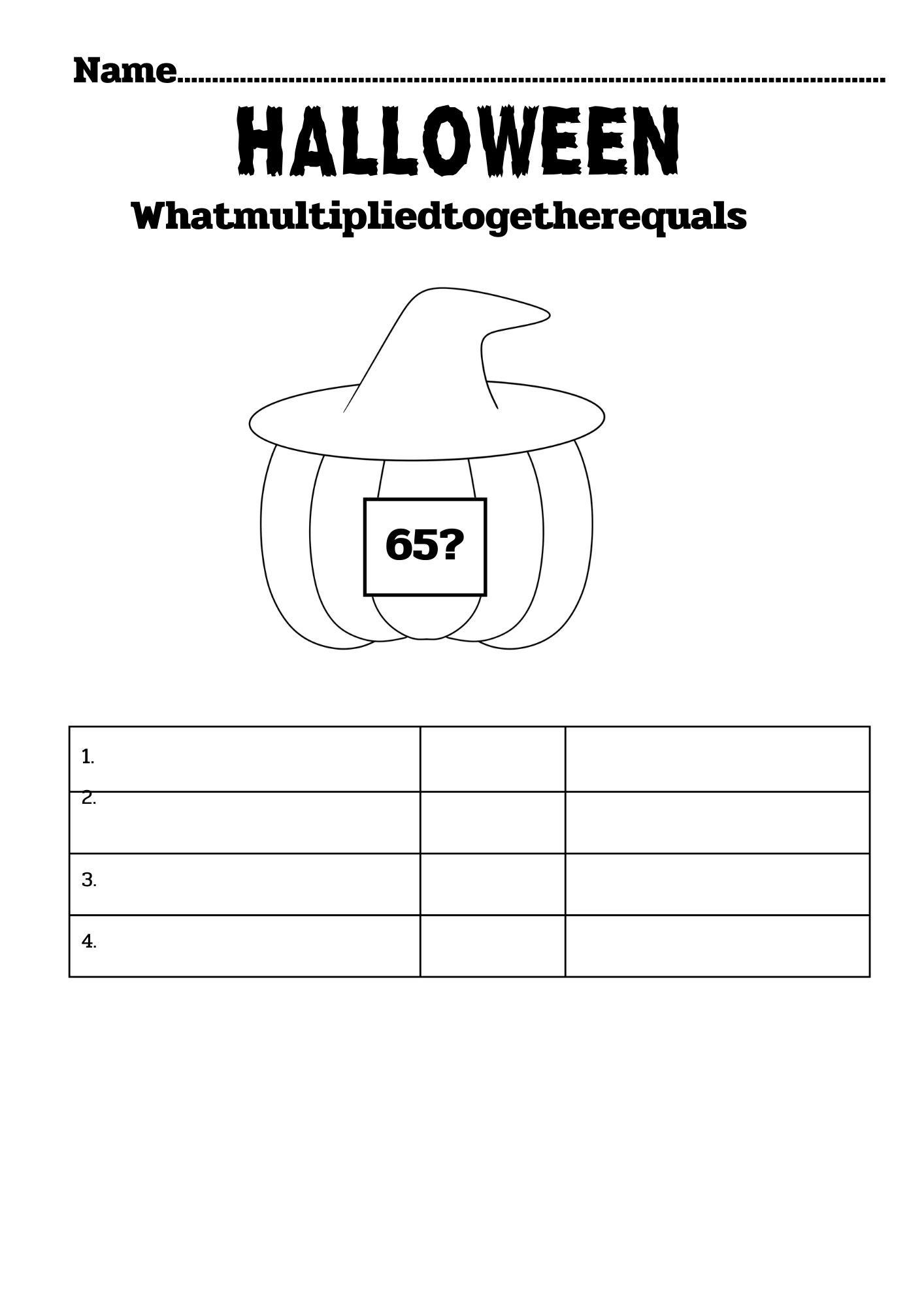
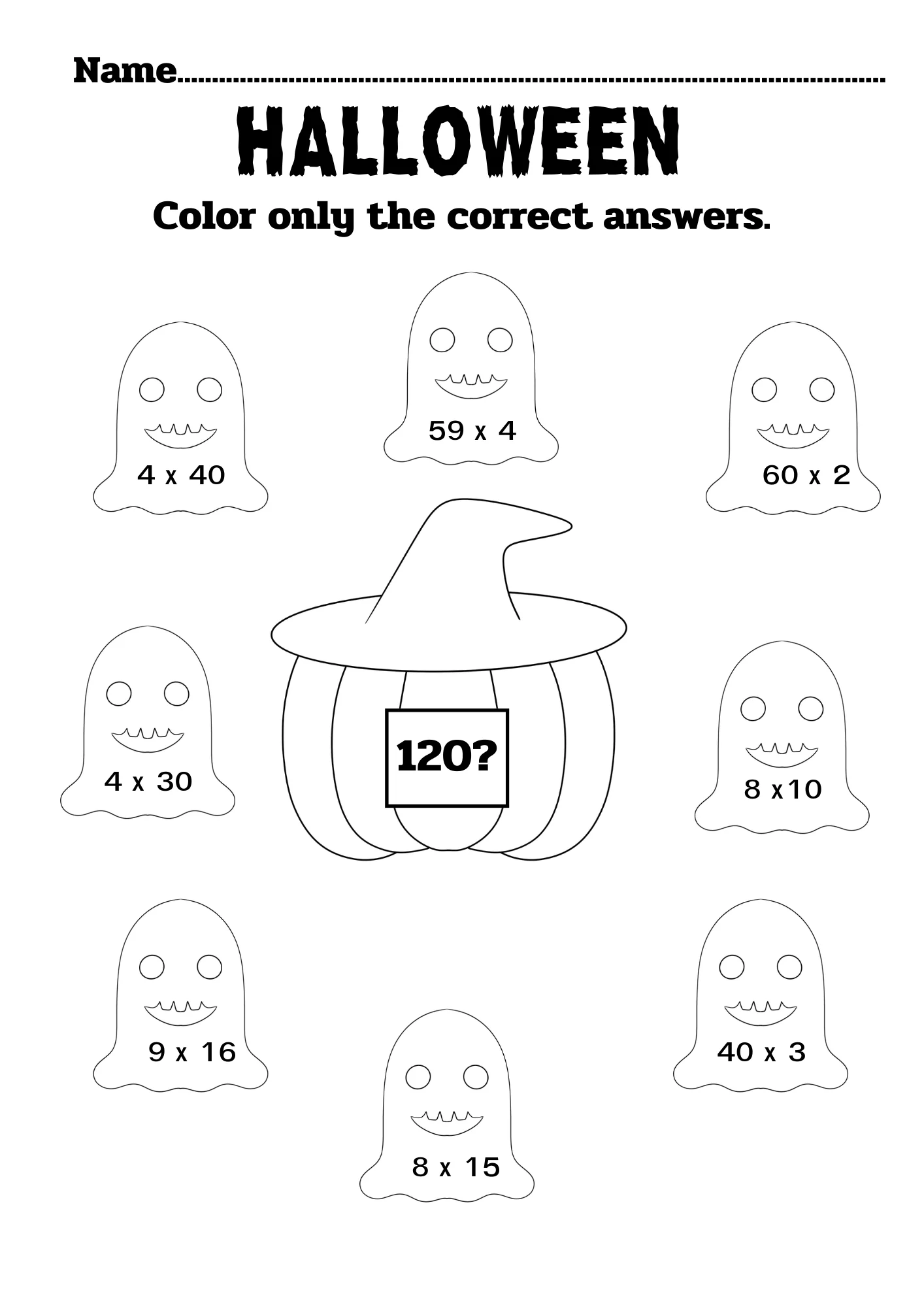
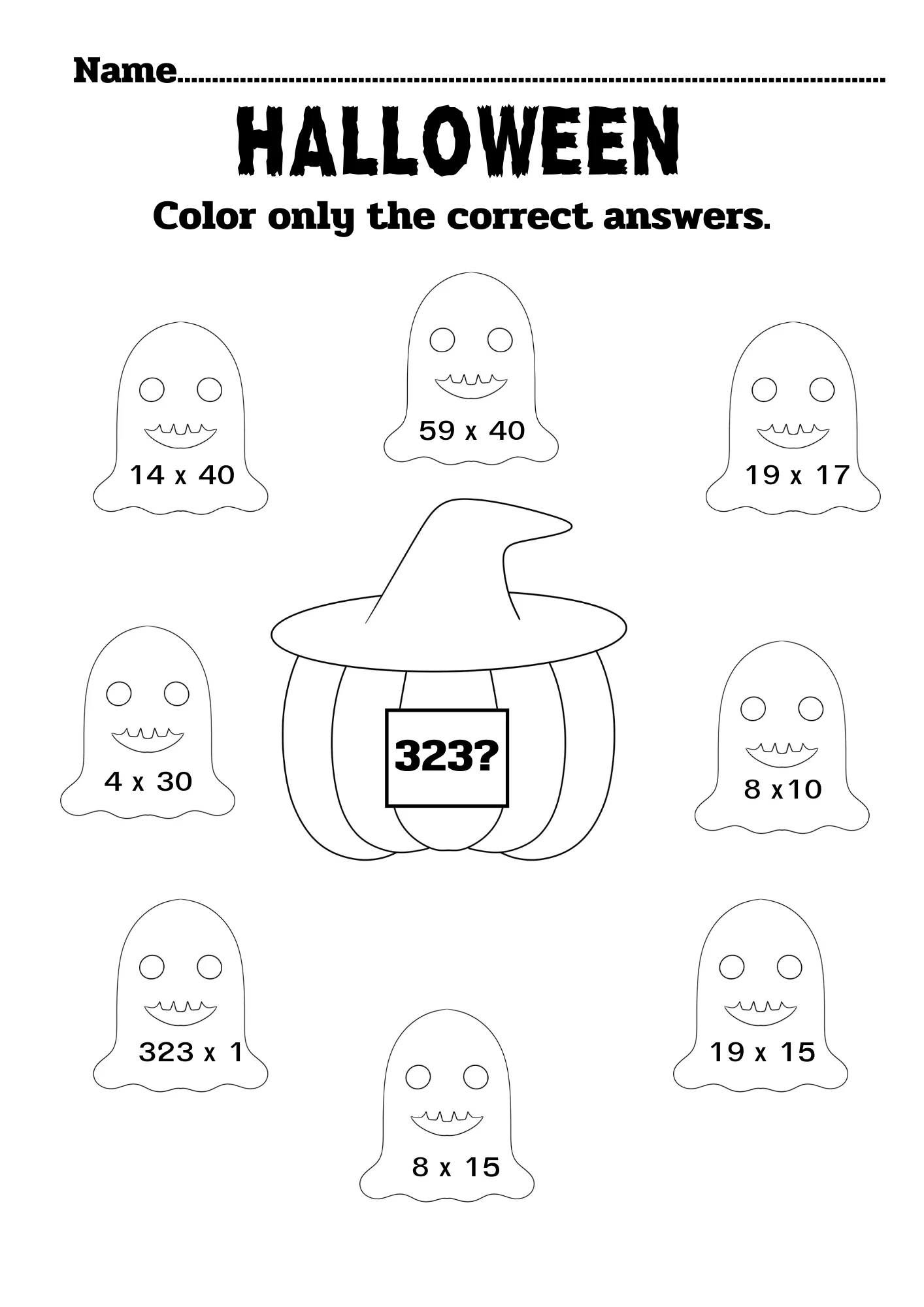
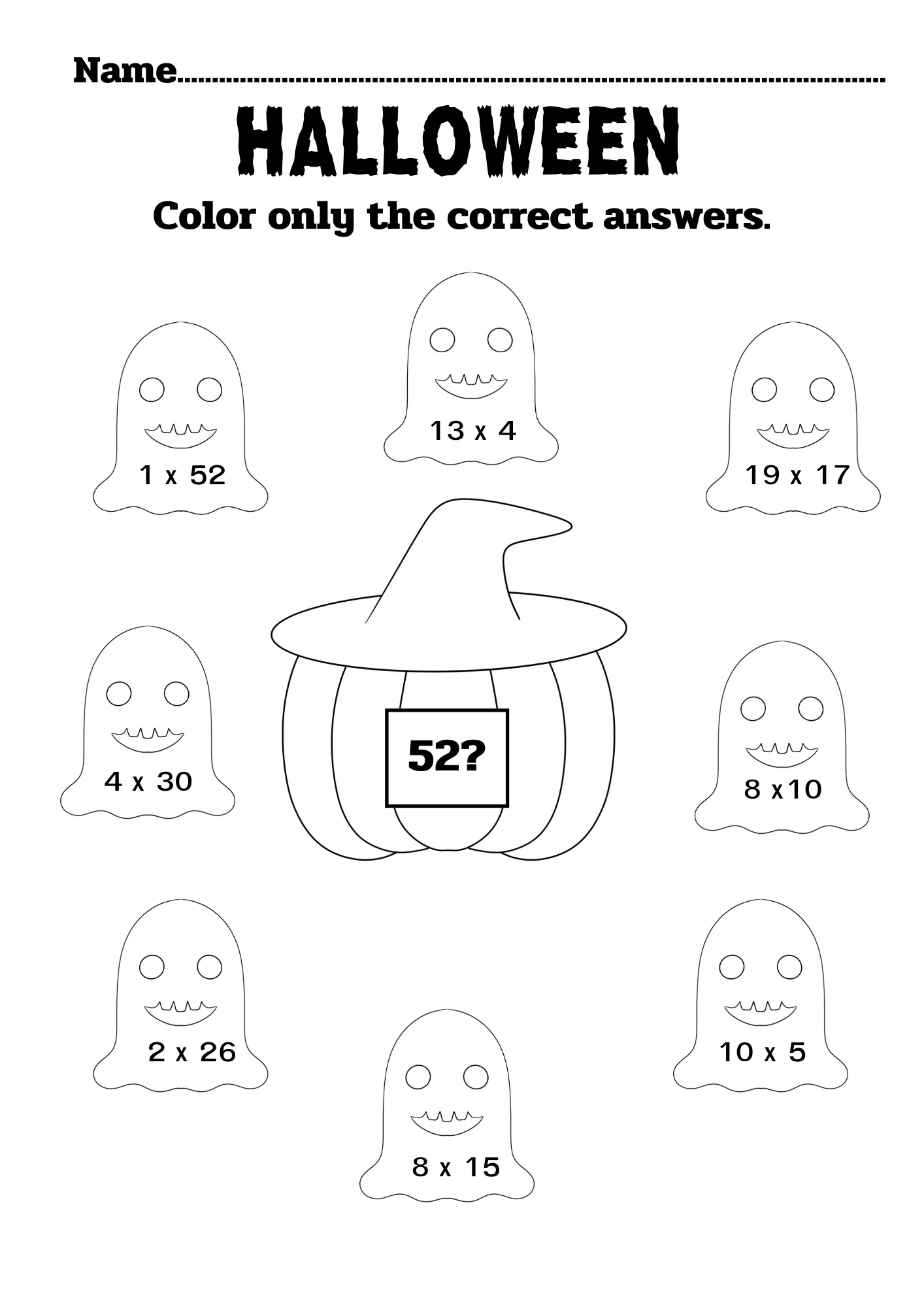
Who Are These Halloween Multiplication Color by Number Pages Best For?
These pages target the 3rd and 4th grade range — roughly ages 8 to 10 — when multiplication tables are being actively introduced and practiced. The format works best for students who have begun learning their times tables but haven’t yet fully memorized them; needing to look up each product in the answer key before coloring provides built-in self-checking. Students who already have multiplication memorized can still use the pages as fluency practice, though they’ll move through them noticeably faster.
The Halloween theme makes these a natural fit for October classroom math practice. They hold up well as early finisher work, homework, or a centers activity during math rotations. Because the activity requires paper and colored pencils rather than a device, they’re a good option during lessons where screens aren’t available or appropriate. They’re also low-prep — print and hand out, no additional materials needed.
In a mixed-level class, students who are faster with their facts will complete the coloring sooner, but that’s a feature rather than a problem — they get the satisfaction of a finished image quickly, while students who need more processing time have a reason to stay engaged rather than giving up partway through. The Halloween imagery keeps even reluctant colorers curious about what the finished picture will look like.
Interesting Multiplication Facts to Share While Coloring
Multiplication is just repeated addition with a shortcut. The equation 4 × 6 means “add 4 to itself 6 times” — and multiplication tables are essentially a lookup chart that saves you the trouble of doing that addition every time. This is worth making explicit with kids who struggle to see why multiplication matters: it’s speed, not magic.
The multiplication sign was invented in 1618. The × symbol was first used by Welsh mathematician William Oughtred in a book called Clavis Mathematicae. Before that, mathematicians used words, letters, or other symbols to indicate multiplication. Oughtred’s × stuck partly because it was visually distinct from the + sign and easy to write by hand.
Nine has a finger trick that actually works. To multiply any single digit by 9 using your fingers: hold up all ten fingers, then fold down the finger that matches the number you’re multiplying by (fold the 3rd finger for 9 × 3). The fingers to the left of the folded one show the tens digit; the fingers to the right show the ones digit. For 9 × 3: 2 fingers left, 7 fingers right — the answer is 27.
Multiplying by 10 or 100 is the easiest operation in base-10 math. You’re just shifting the digits one or two places to the left and adding zeros. This seems obvious once you know it, but it’s one of those things that helps children understand why the decimal system is structured the way it is — base 10 was built precisely so that multiplication by powers of 10 would be trivial.
Creative Halloween Multiplication Coloring and Craft Ideas
Time the First Page, Then Beat It On the first page, time how long it takes a student to solve all the equations and complete the coloring. On the next page, challenge them to finish faster. The improvement is almost always visible — multiplication fluency genuinely increases with practice — and having a number to beat is more motivating than abstract encouragement.
Wrong Answer Hunt Intentionally give a student a page with one region already “filled in” — but with the wrong color based on an incorrect multiplication answer. Ask them to find the error. It requires checking every equation in the key, which is exactly the kind of verification thinking math class is trying to build.
Table Focus Rotation Assign each page in the set to practice a specific times table (all 3s on page 1, all 4s on page 2, etc.) by going through the answer key before handing it out. This turns the set into a structured multiplication table curriculum rather than a mixed practice session.
Partner Check Have two students work on the same page independently, then compare their colored versions before looking at an answer key. Disagreements require them to go back to the equation and work it out together. This is more effective than individual checking because neither student knows for certain who is right.
Halloween Math Gallery Display completed pages on a classroom wall labeled with each student’s fastest time or their score on a quick multiplication check. The visual element — ten different Halloween images side by side — makes the display more interesting than a standard test scores board.
Reverse Engineer the Key Remove the answer key from the page before printing and challenge students to create their own color key that would produce the same finished image. They have to work backward from the expected colors to figure out which products map to which crayon. This is genuinely hard and better suited to students who already have multiplication down.
Home Practice Set Send one page home per week throughout October as a take-home multiplication practice activity. Parents can time their child and record the results, then return the completed page. Collecting all 10 over the month gives students a set of Halloween artwork to display at home while tracking multiplication progress.
How to Print These Halloween Multiplication Color by Number Pages
Each file downloads as a PDF sized for US Letter (8.5 × 11 inches), which prints cleanly on A4 as well. Standard copy paper works fine for colored pencil use; if students are using markers, 24 lb or heavier paper prevents bleed-through. Printing in grayscale produces usable pages — the number equations still read clearly and students can assign any colors they choose to each product.
Explore More Color by Number Coloring Pages
If you enjoyed these pages, you may also like:
Color by Number Halloween Coloring Pages
Color by Number Easy Kindergarten Coloring Pages
Color by Number Christmas Coloring Pages
Color by Number Thanksgiving Coloring Pages
Color by Number Pages