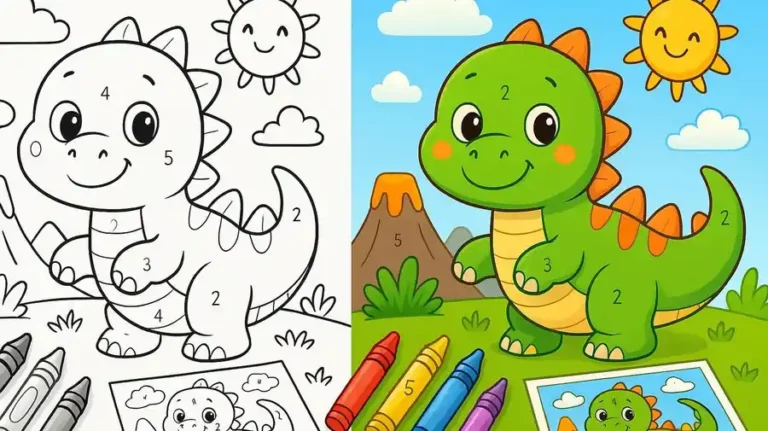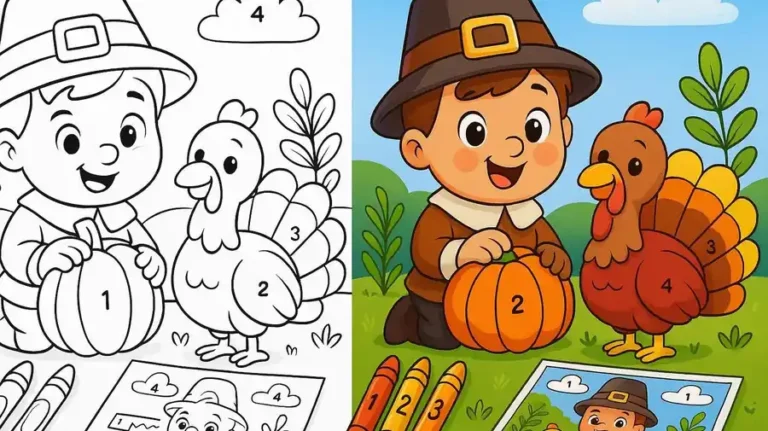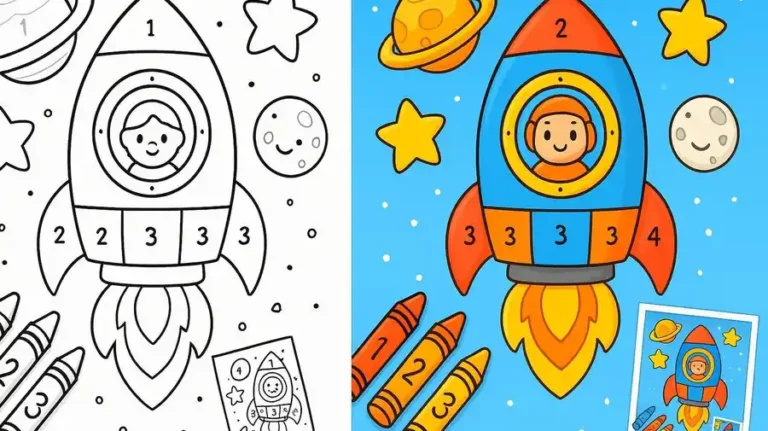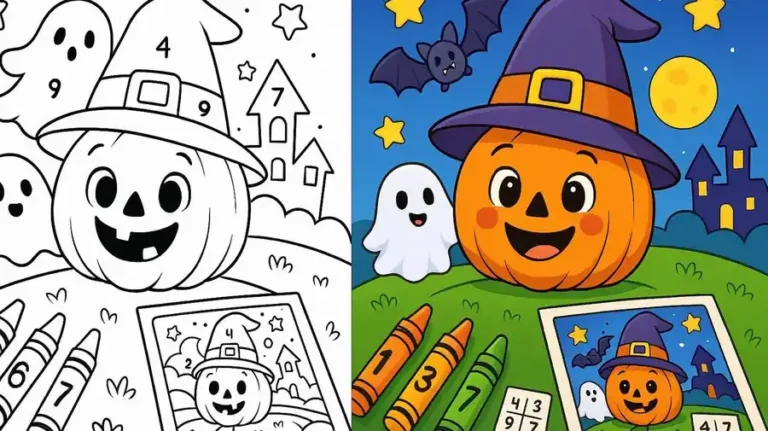

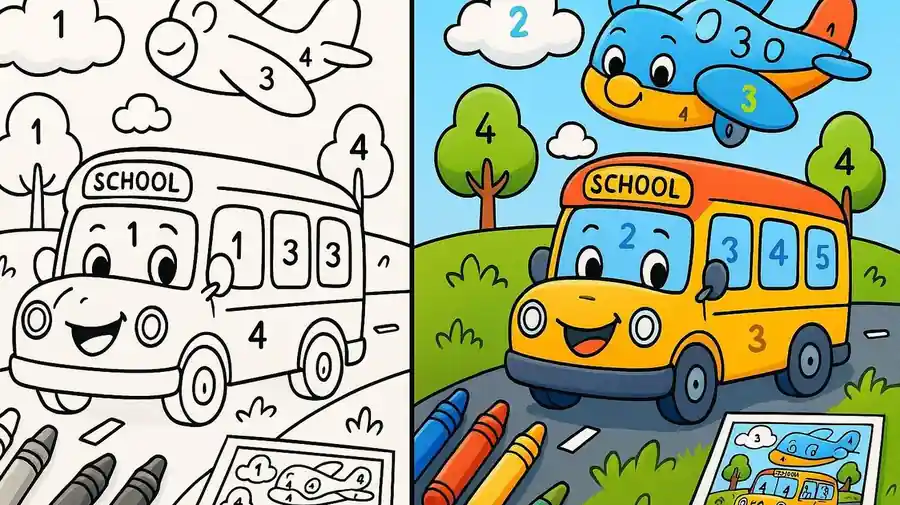
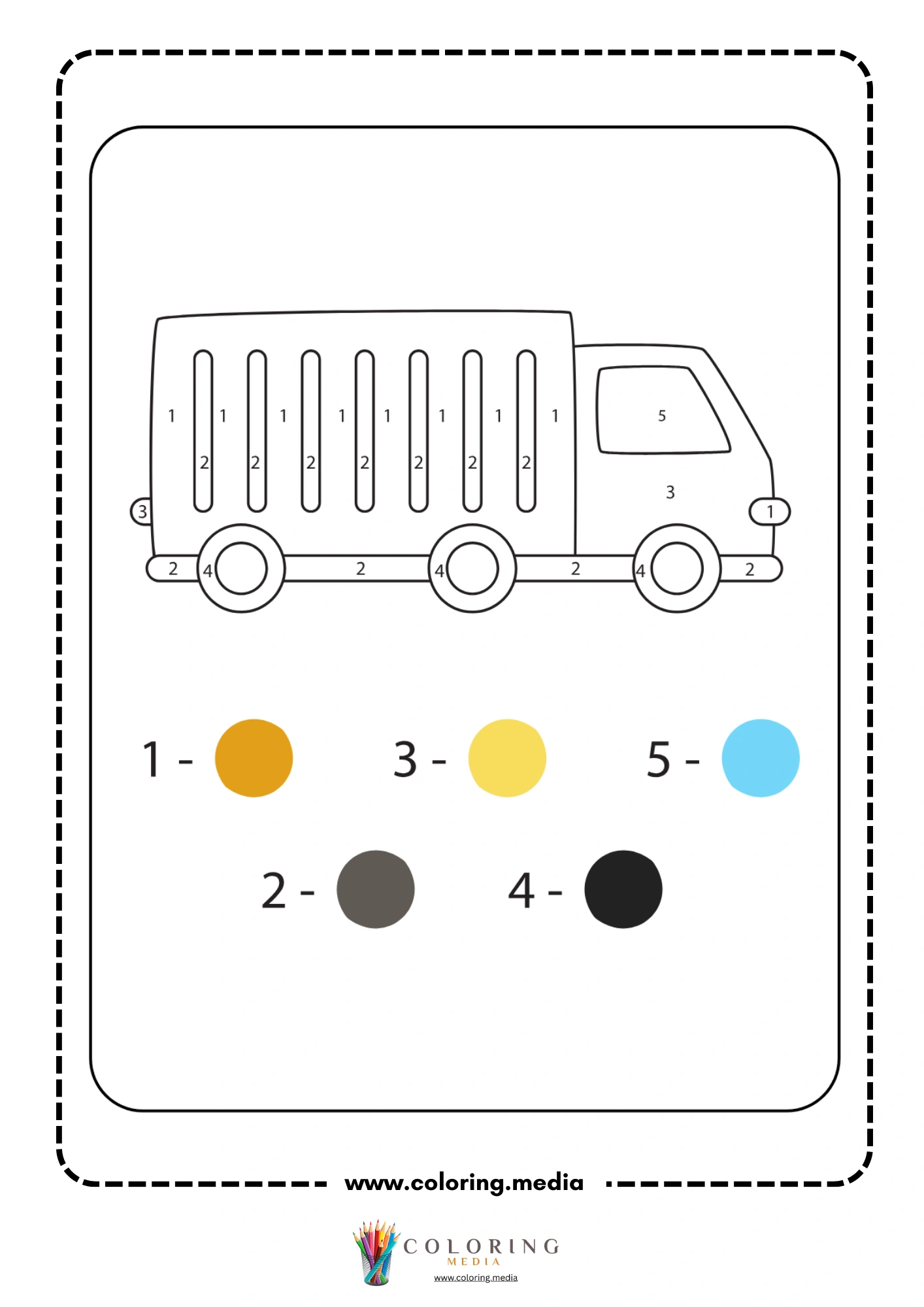
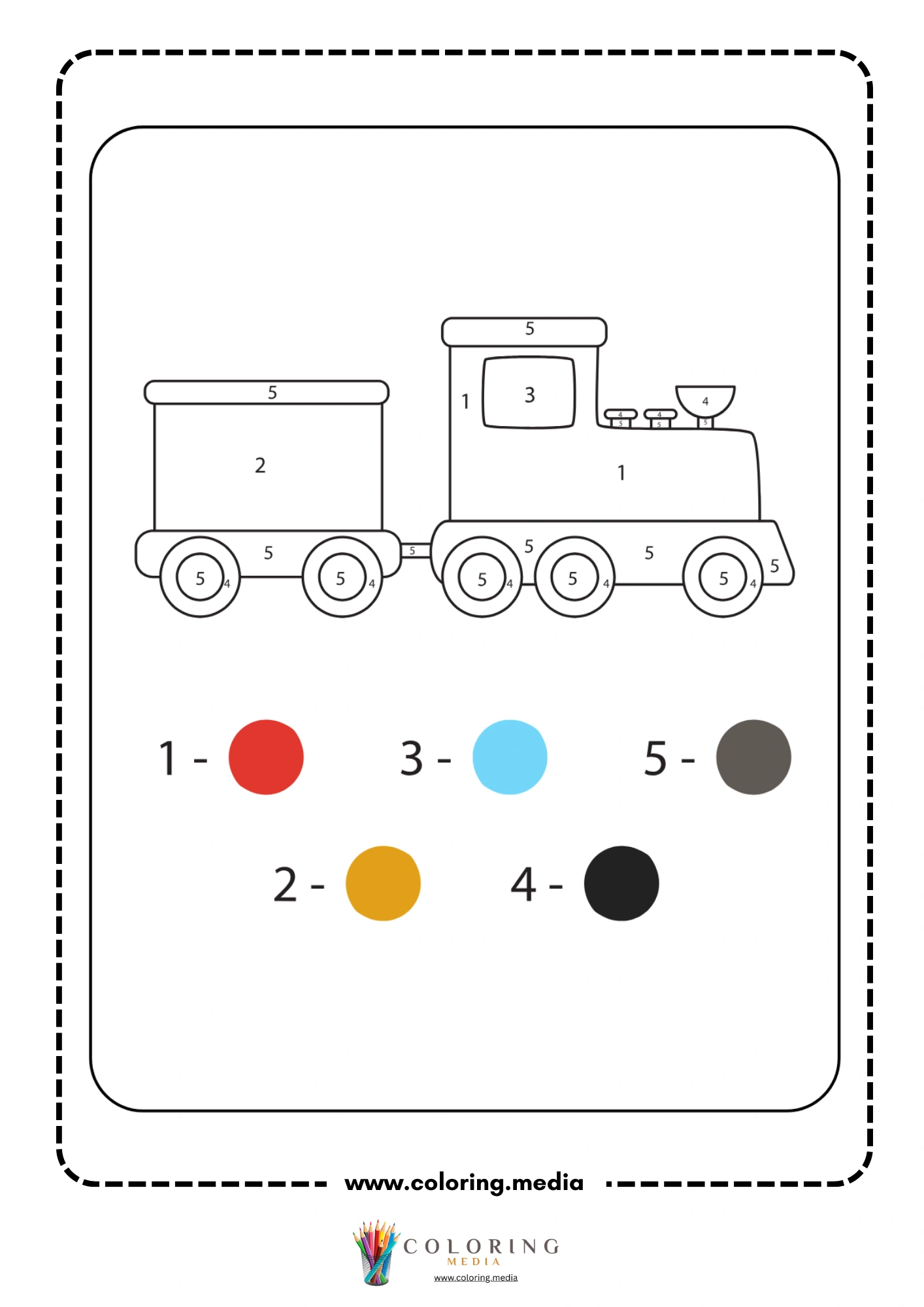
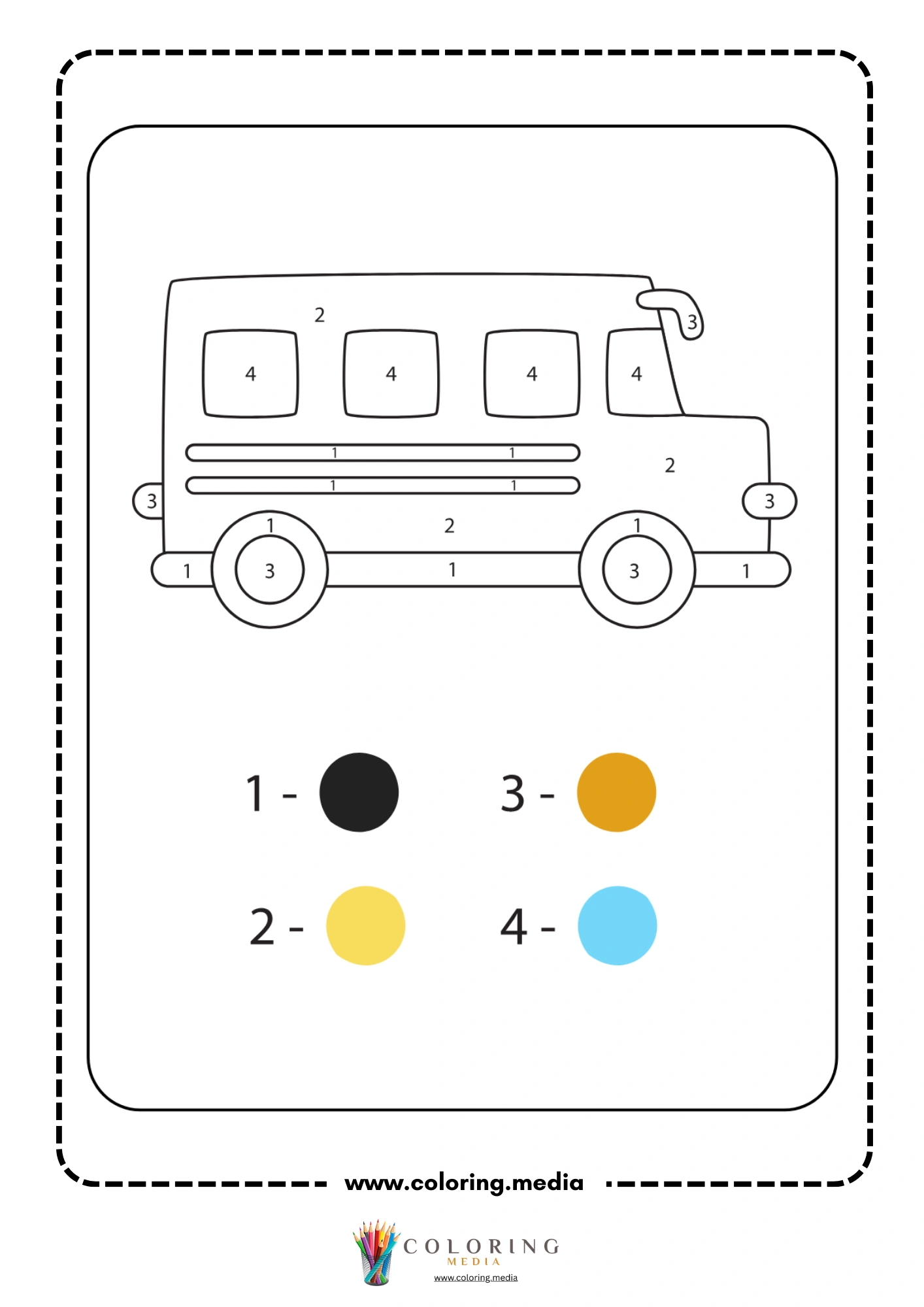
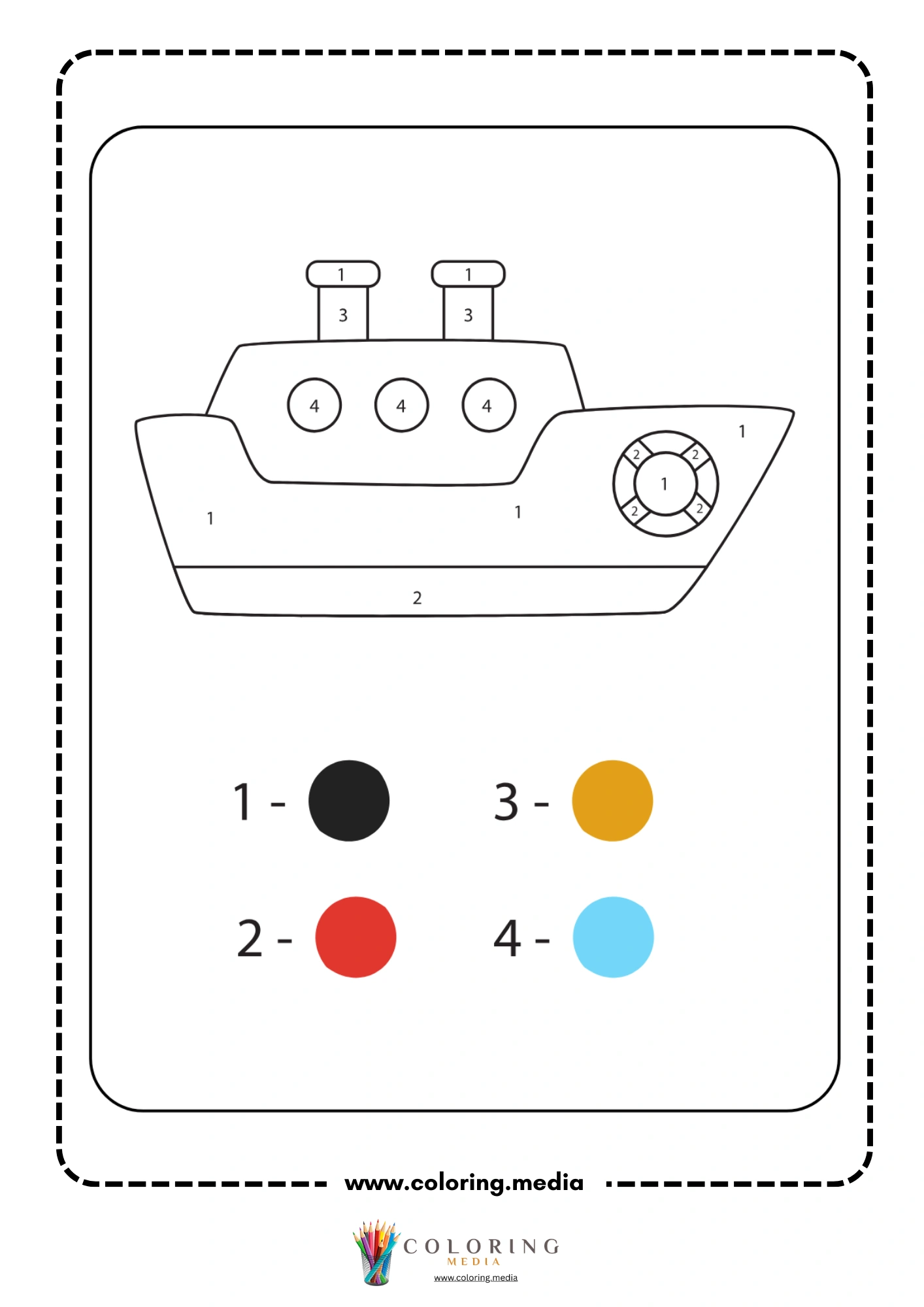
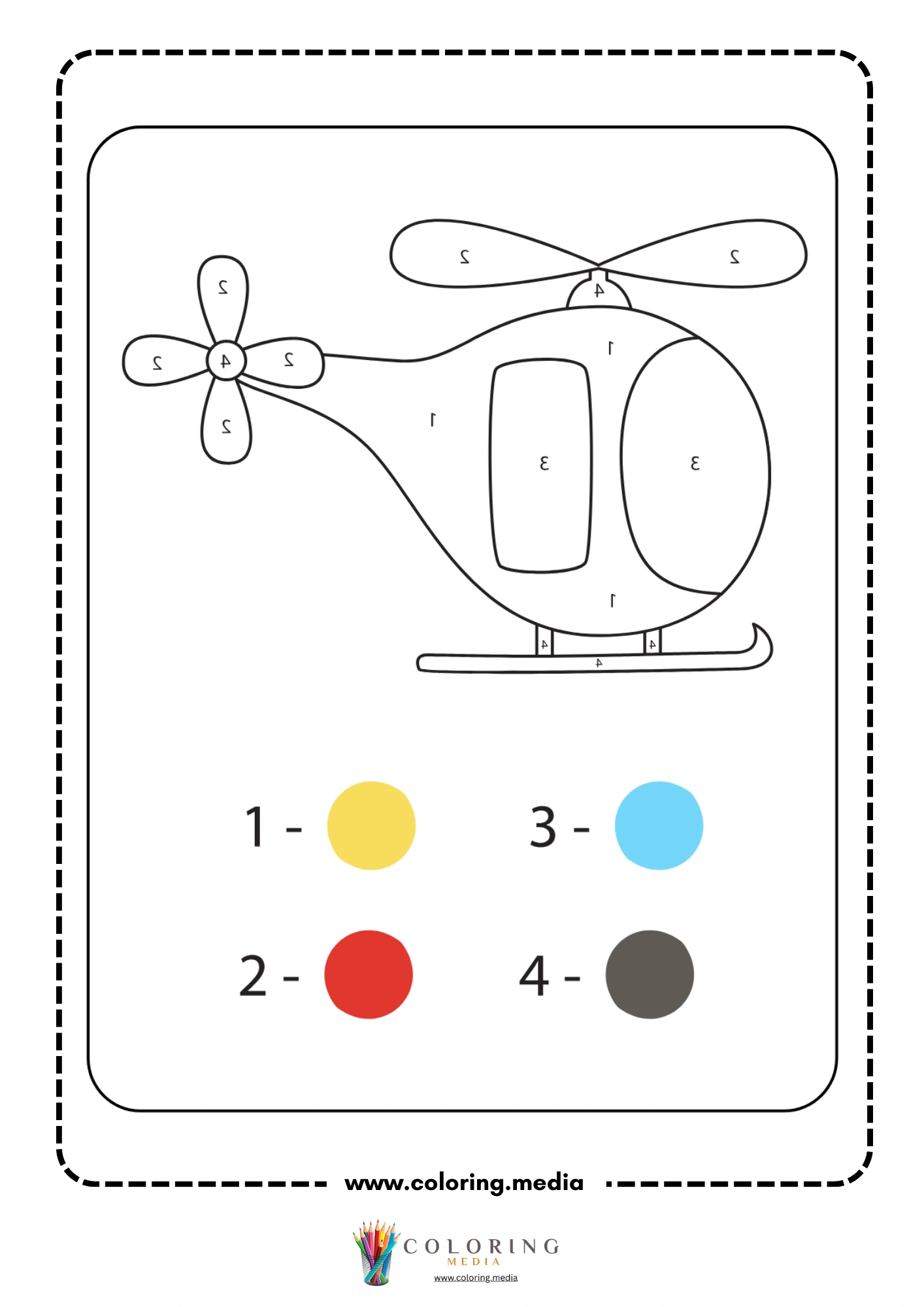
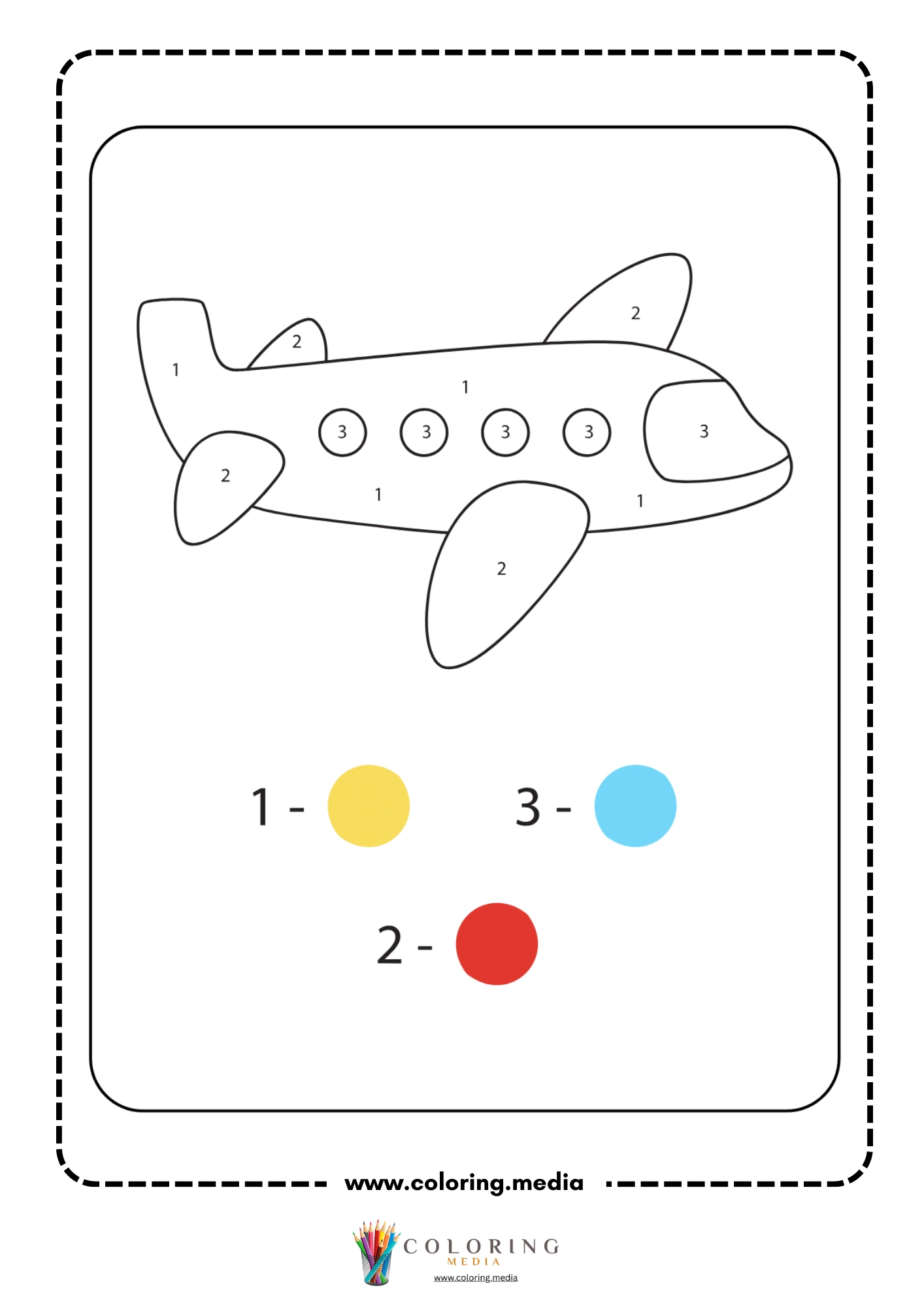
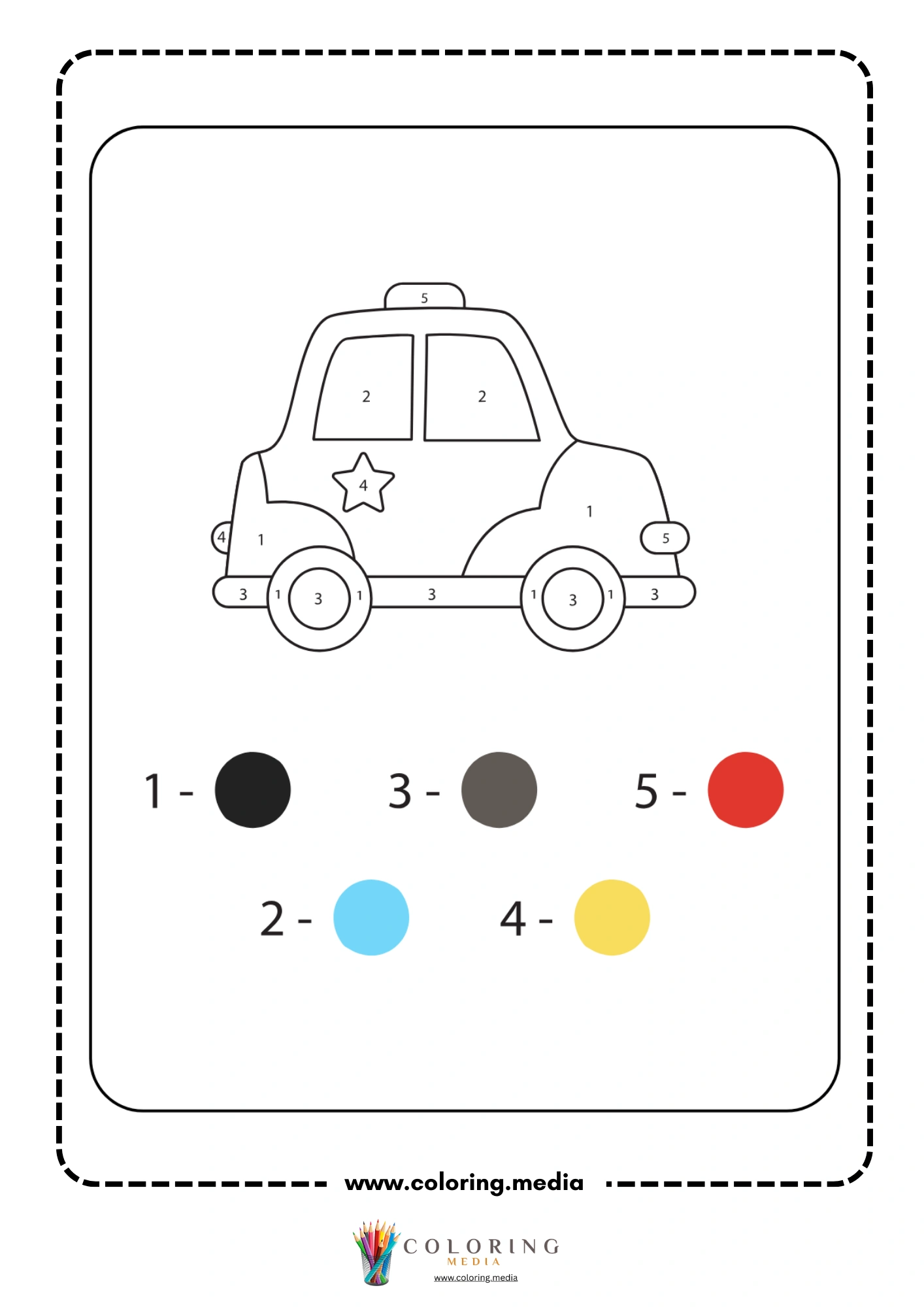
Each page in this set puts one vehicle in the center — a chunky cartoon car, a steam locomotive, a passenger ferry, a submarine, a helicopter with wide rotor — and divides it into clearly bounded color regions. The outlines are thick enough that a 3-year-old with a broad crayon can stay mostly inside the lines. The dot key at the bottom pairs each number with a filled circle of color, so pre-readers can participate by matching color samples rather than needing to recognize numerals.
The 10-page set covers land, water, and air: car, train, airplane, submarine, passenger boat, helicopter, fighter jet, rocket spacecraft, and more. That variety makes it easy to pair the activity with whatever transportation unit is happening in a classroom, or simply to follow a young child’s current enthusiasm for a particular kind of vehicle. Everything here is free to download and easy to print.
Free Printable Color by Number Transportation Coloring Pages
This collection includes 10 printable color by number transportation coloring pages featuring cartoon-style vehicles including a car, train, airplane, submarine, passenger boat, helicopter, fighter jet, and rocket spacecraft. Each design uses a numbered dot key with five to eight large color regions per page. All pages format for US Letter and A4 paper and download as print-ready PDFs.



Who Are These Color by Number Transportation Coloring Pages Best For?
The primary audience is preschool and kindergarten — ages 3 to 6. The vehicle outlines are large and bold, with five to eight substantial regions per page and no tight corners or narrow zones that require precise crayon control. A 3-year-old using chunky crayons can work through a page without constant frustration. The dot key makes the activity accessible to pre-readers: matching the colored circle next to each numeral requires only color recognition, not number reading.
Transportation is one of those topics that children in this age range tend to already be enthusiastic about — the subject does half the motivational work on its own. A child who would resist a generic coloring page will often stay focused through an airplane or submarine page because the vehicle itself is interesting. The structured nature of color-by-number also works in its favor for preschoolers who do better with defined tasks than with open-ended creative choices.
In a classroom, these work as transportation unit activity pages, morning arrival work, or calm-down activities between more demanding tasks. For home use, they’re a good choice for a long car trip, a waiting room, or any stretch of time when a child needs something engaging that doesn’t require adult supervision to execute.
Interesting Transportation Facts to Share While Coloring
The first cars moved about as fast as a person can walk briskly. The Benz Patent-Motorwagen, built in 1885 and considered the first true automobile, had a top speed of about 16 kilometers per hour (10 mph). Modern highway cars routinely travel 10 to 15 times faster. Most of that change happened in a single century — one of the fastest technological shifts in human transportation history.
Trains are one of the most energy-efficient ways to move large numbers of people. A single freight train can carry the same load as approximately 300 trucks, using significantly less fuel per ton moved. Passenger trains are similarly efficient: a full train uses far less energy per person than the equivalent number of individual cars. This is one reason cities with dense rail networks tend to have lower per-capita carbon footprints than car-dependent ones.
Submarines use a simple physics principle to dive and surface. They have tanks called ballast tanks that can be filled with water or air. Filling them with water makes the submarine denser than the surrounding water — it sinks. Pushing the water out with compressed air makes it less dense — it rises. The same principle explains why a steel boat floats: the overall density of the hull-plus-air interior is less than water, even though steel alone would sink.
Helicopter rotors generate lift the same way airplane wings do. The rotor blades are shaped in cross-section like an airplane wing — curved on top, flatter on the bottom. As they spin, air moves faster over the curved top surface than the flat bottom, creating lower pressure on top. That pressure difference pushes the rotor upward. Tilting the rotor forward or to the side redirects that lift and moves the helicopter in the chosen direction.
Creative Transportation Coloring and Craft Ideas
Build a Transportation Town After coloring several vehicle pages, cut out the vehicles and arrange them on a large sheet of blue or gray construction paper. Add roads, waterways, and sky strips cut from paper. Glue everything down to create a transportation scene with the colored pages as the vehicles.
Sort by Land, Water, Air After coloring all 10 pages, lay them out and sort them into three groups: land vehicles, water vehicles, and air vehicles. Discuss how each one moves, what powers it, and where it goes. It’s a natural classification activity that uses the finished pages as sorting materials.
Design Your Own Vehicle After completing a page, give the child a blank sheet and ask them to invent a new vehicle — one that combines two types, or one that travels somewhere no current vehicle can go. Children who finish quickly often have strong ideas about this and will spend 10-15 minutes on their invention with no prompting.
Sound Effects Story While coloring, ask the child to narrate what the vehicle is doing right now — where it’s going, what it’s carrying, and what sounds it makes. Younger children (3-4) will often do this spontaneously; older preschoolers who don’t initiate it usually enjoy being asked. The colored page becomes an illustration for a story they’ve already told.
Alphabet Vehicle Match After coloring, ask the child to name the vehicle on each page and then name something else that starts with the same letter. Airplane → apple, car → cat, helicopter → hat. It’s a phonics warm-up disguised as a game, and it works best right after the child has finished coloring when the vehicle name is fresh in their mind.
Which Is Fastest? Lay all 10 completed pages in a row and ask the child to arrange them from slowest to fastest. There’s no single right answer for some comparisons (a fast car vs. a slow boat?), which makes it a better discussion prompt than a quiz. The conversation tends to surface real curiosity about how vehicles work.
Classroom Transportation Mural Assign one vehicle page to each student. After coloring, cut out the vehicles and mount them on a large mural background divided into sky, land, and sea zones. Label each vehicle with the student’s name. The collective result is more interesting than any single page and gives the activity a social dimension that individual coloring lacks.
How to Print These Color by Number Transportation Coloring Pages
Each file downloads as a PDF sized for US Letter (8.5 × 11 inches), which also prints cleanly on A4 with no cropping. Standard 20 lb copy paper works well for crayon use. Printing in grayscale produces fully functional pages — the numbered dot key still guides coloring, and children can assign their own vehicle colors, which often leads to more personalized results than following the key exactly.
Explore More Color by Number Coloring Pages
If you enjoyed these pages, you may also like:
Color by Number Easy Kindergarten Coloring Pages
Color by Number Rocket Math Worksheet Pages
Dinosaur Color by Number Coloring Pages
Color by Number Back to School Coloring Pages
Color by Number Pages