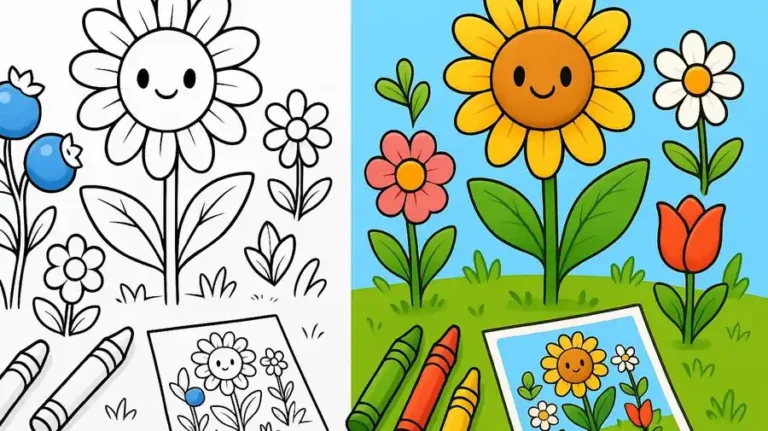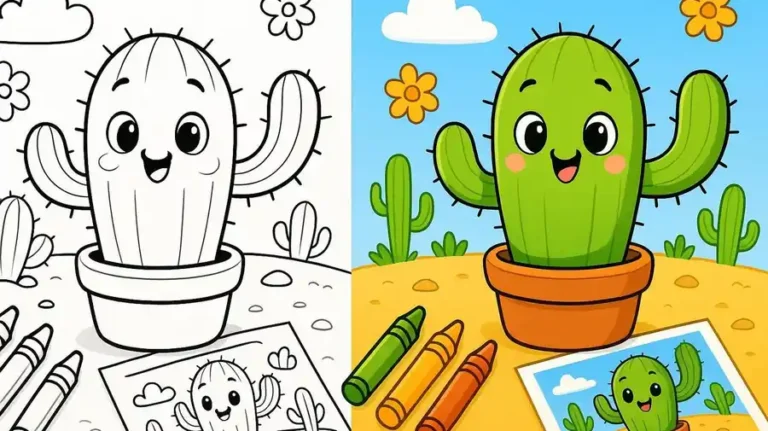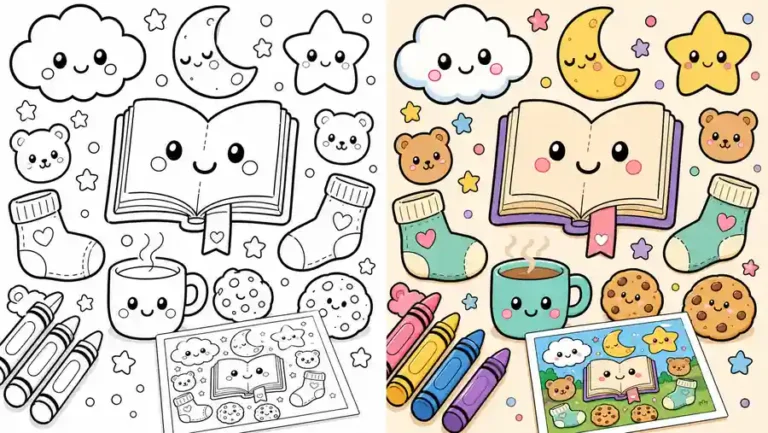

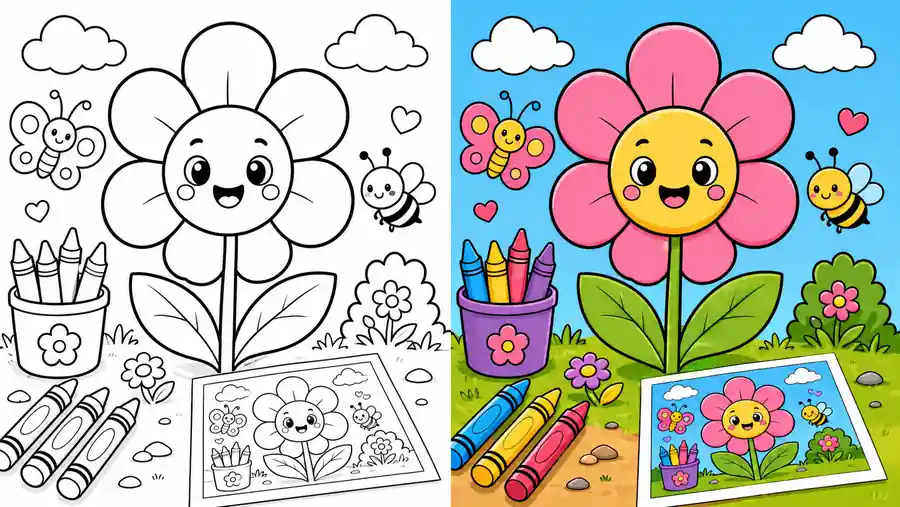
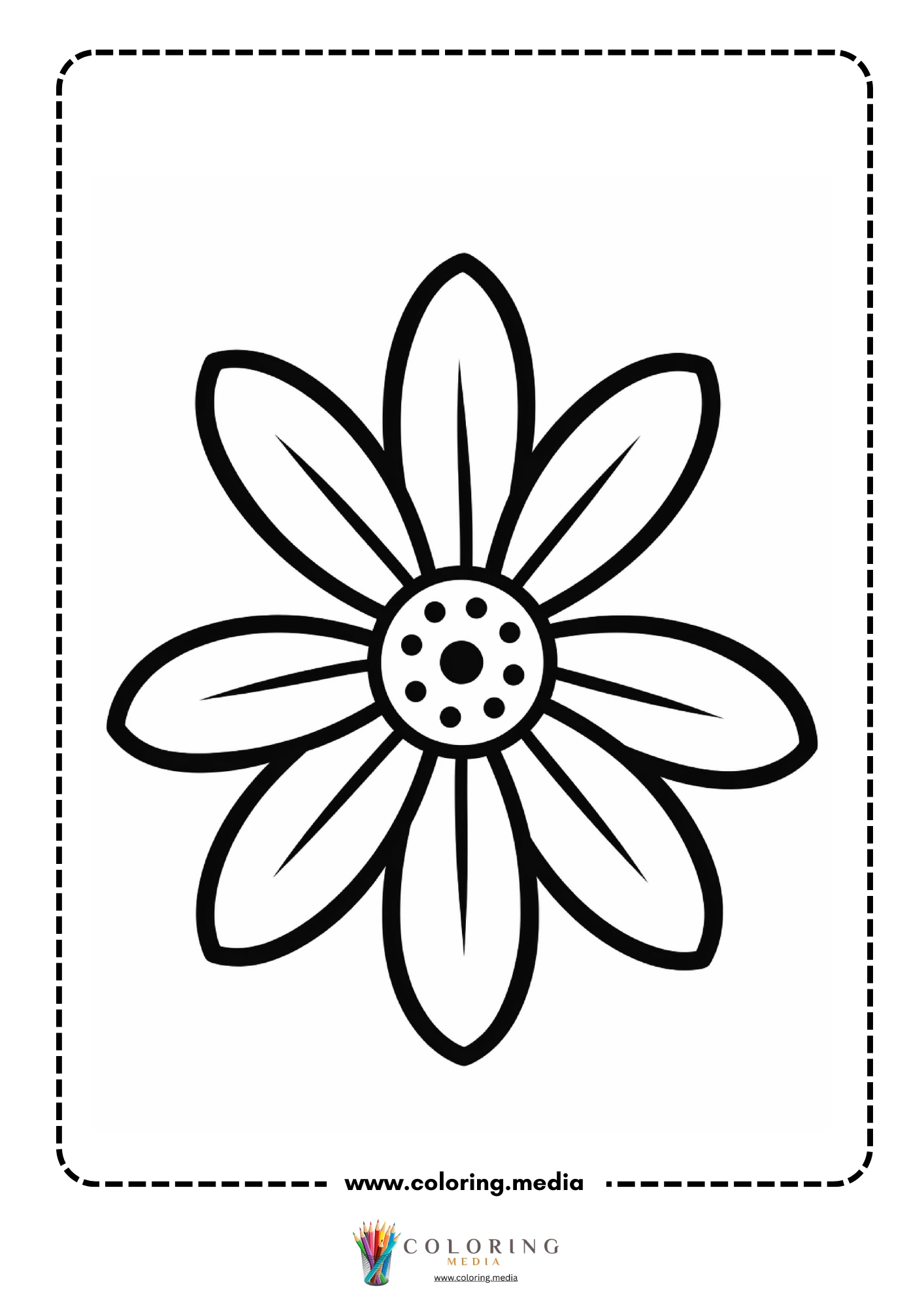
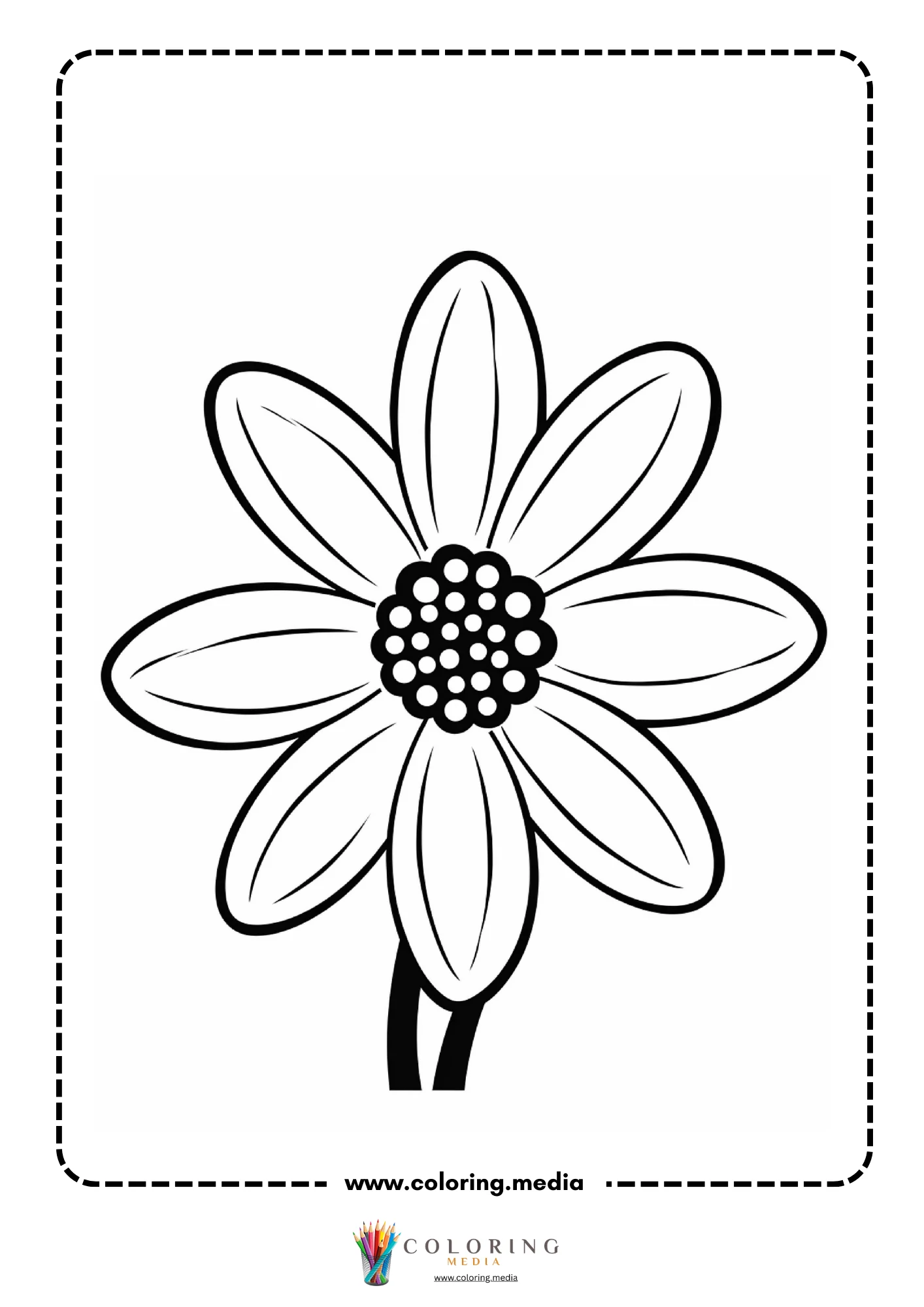
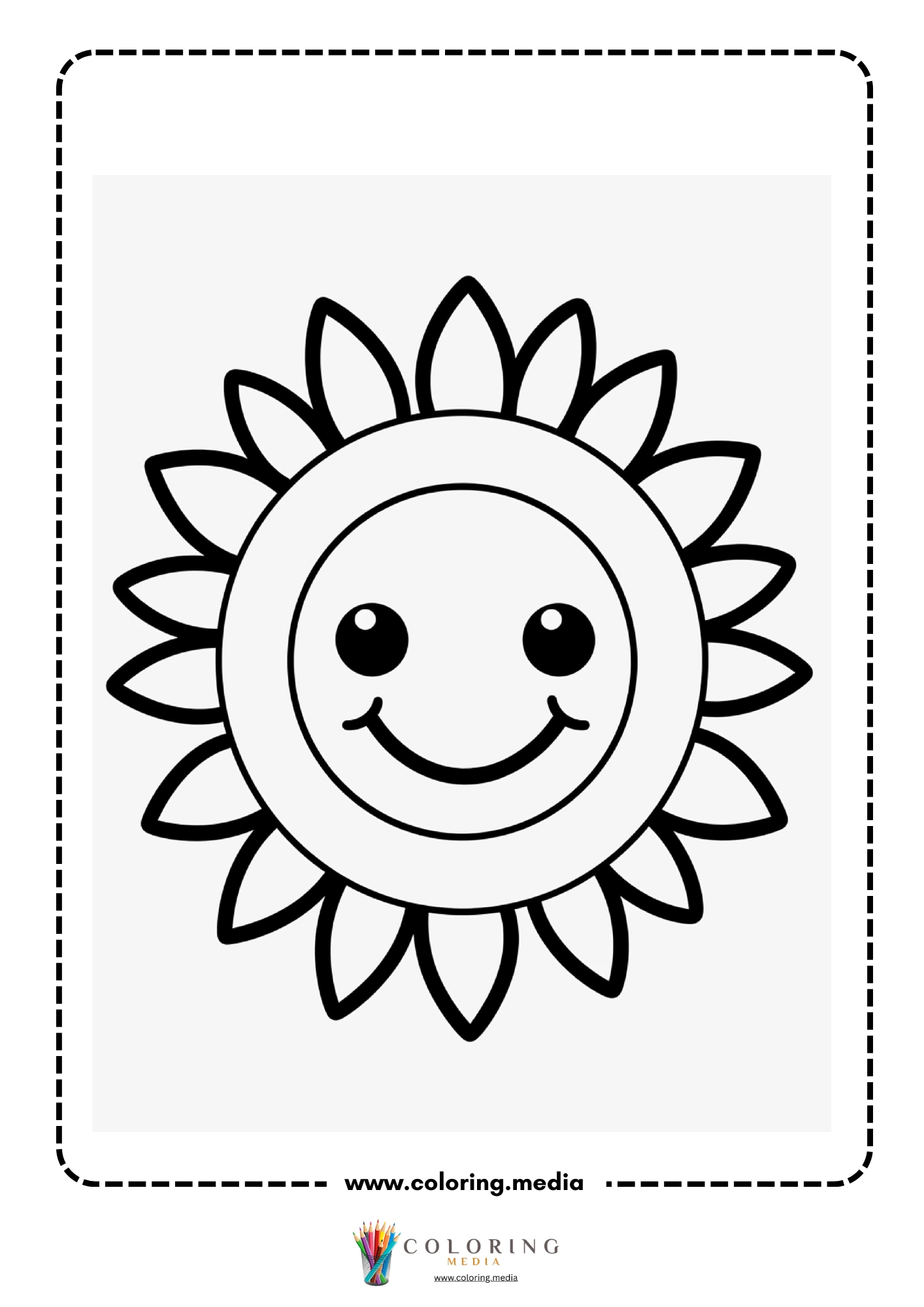
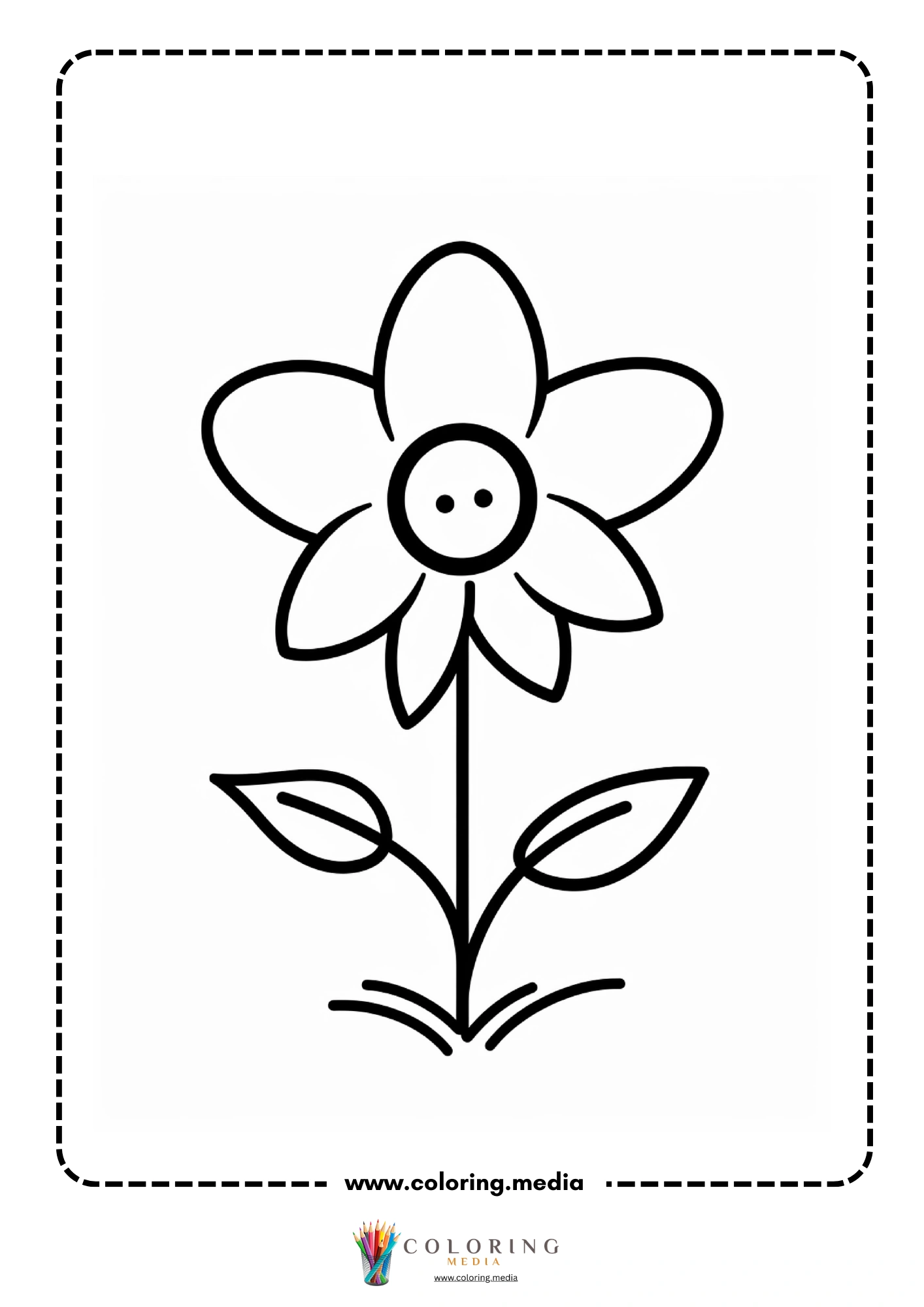
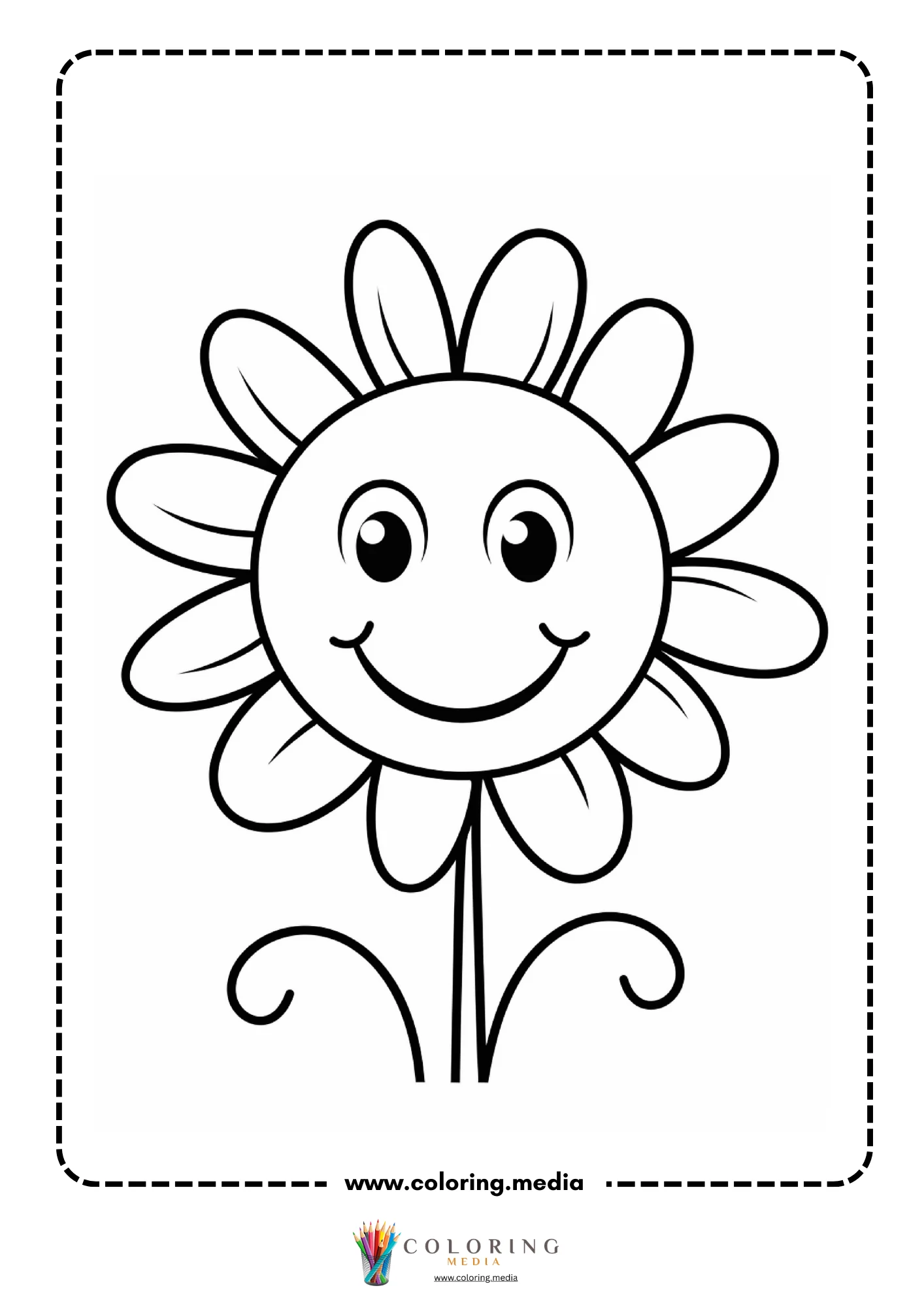
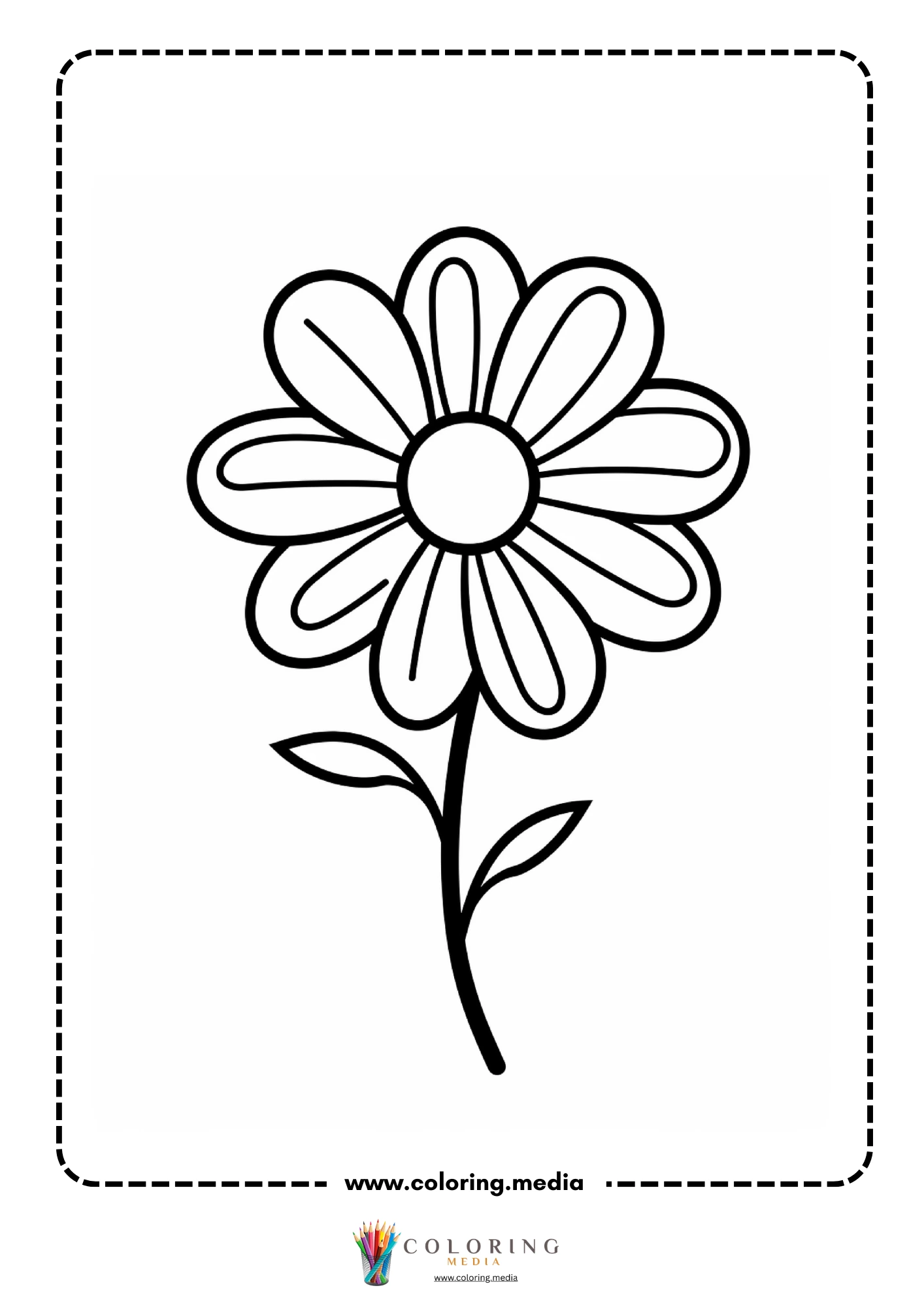
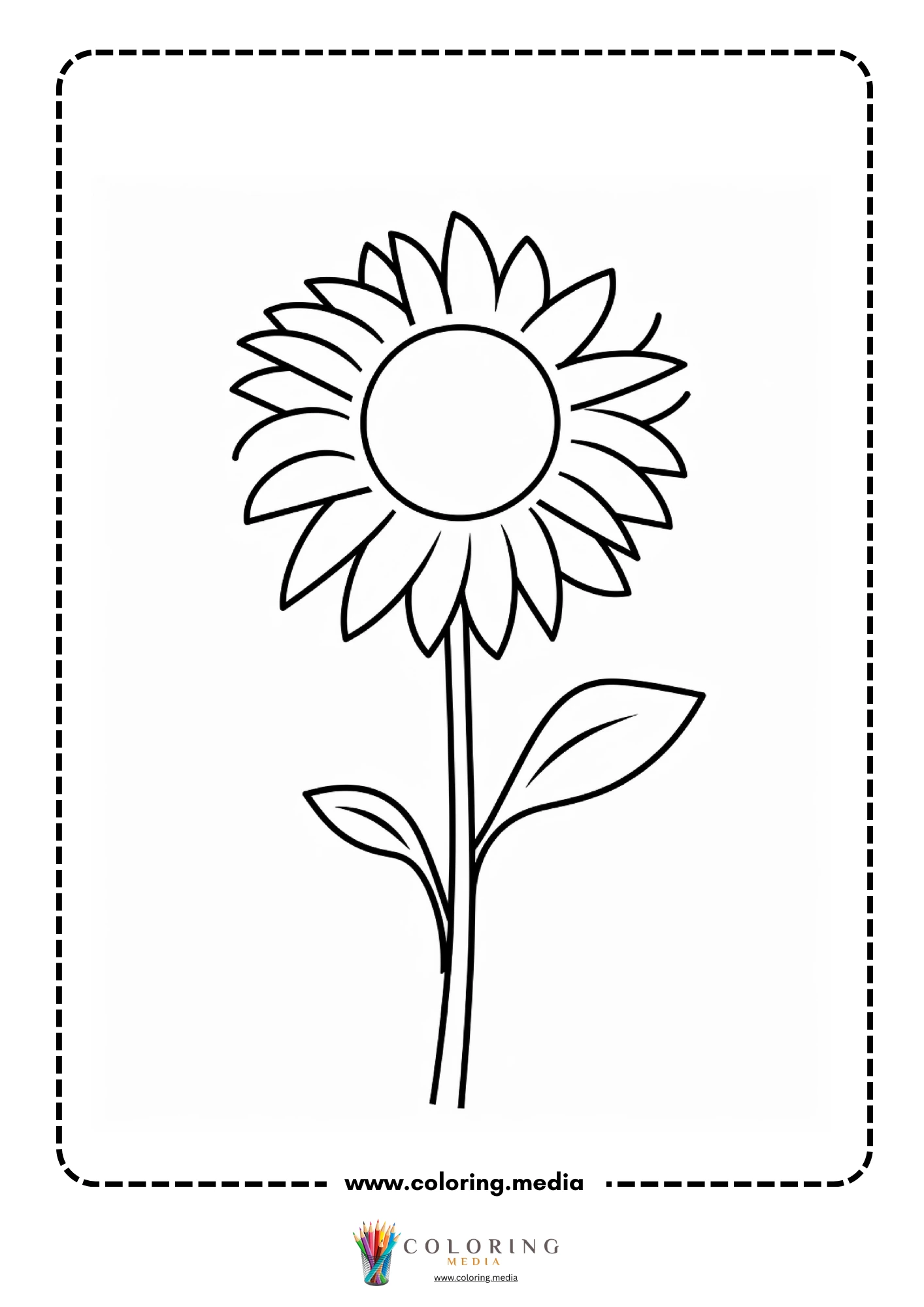
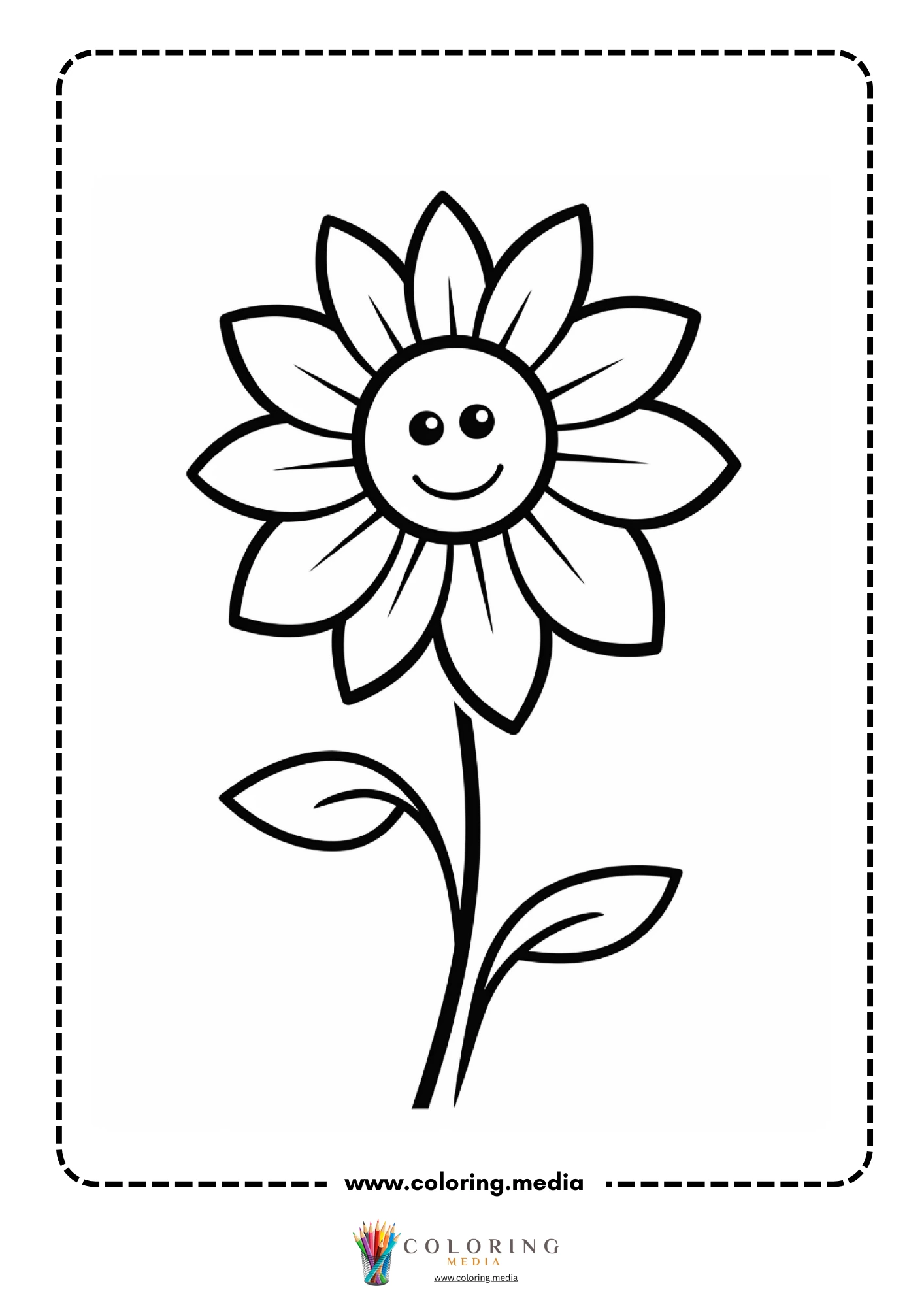
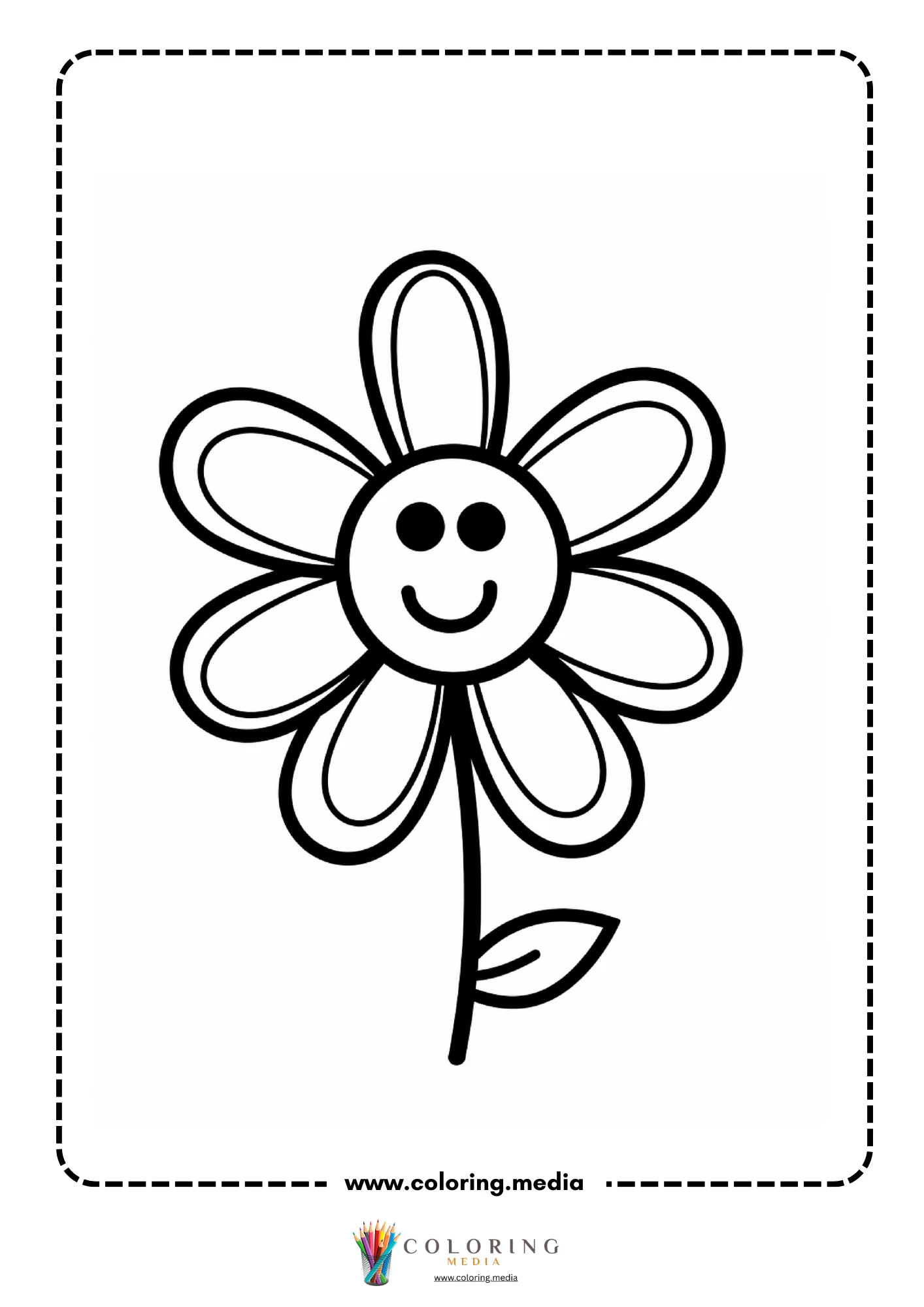
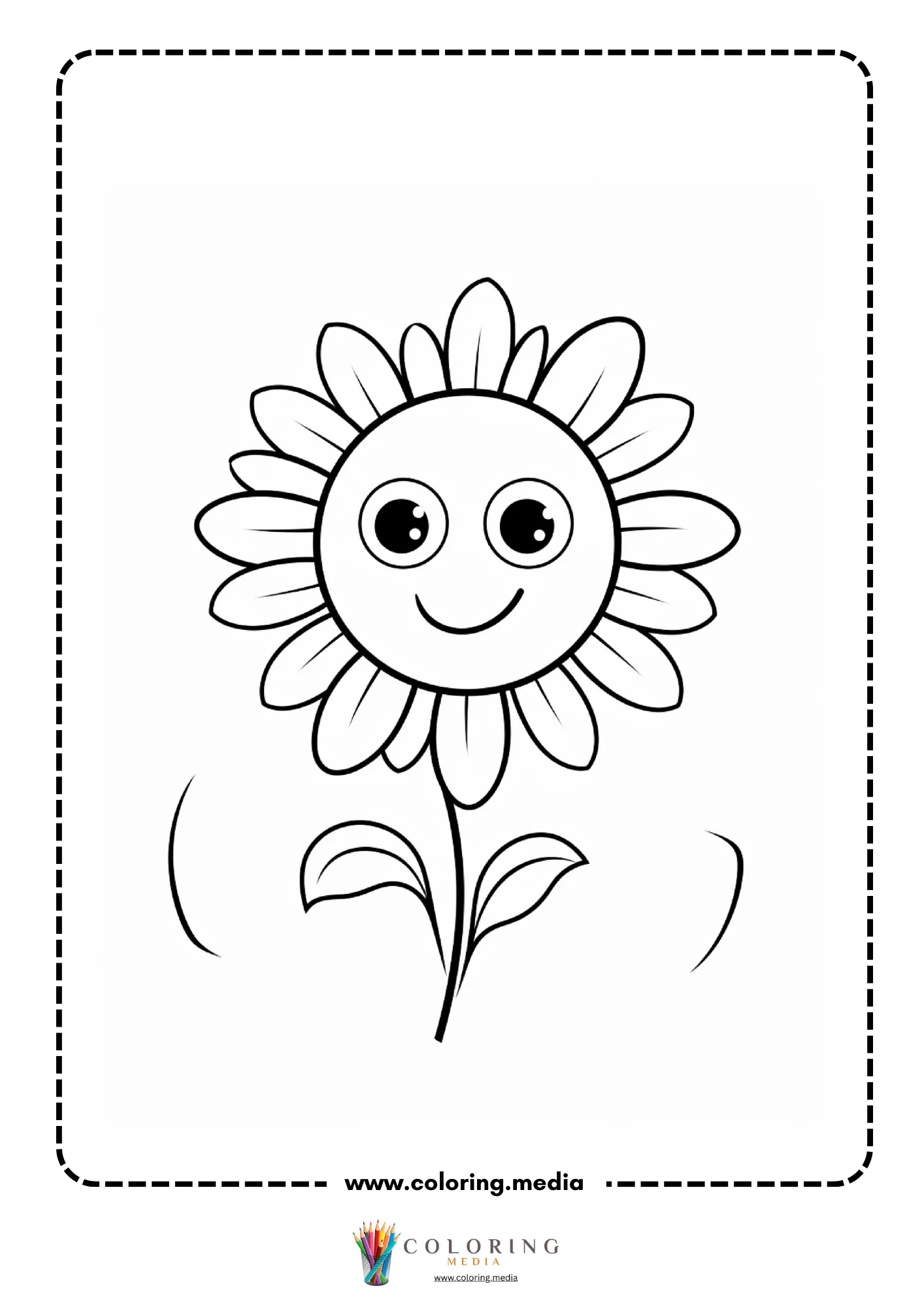
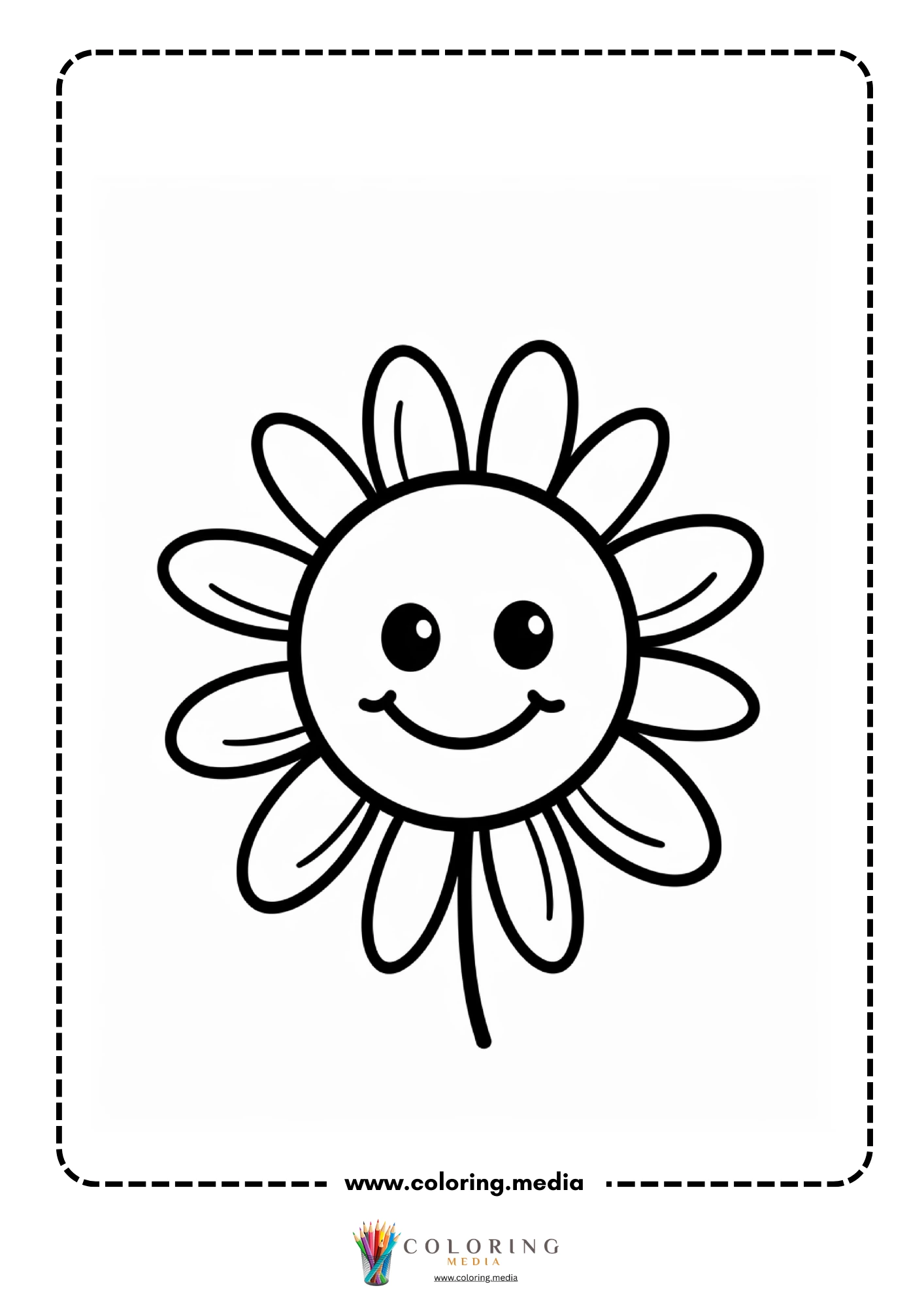
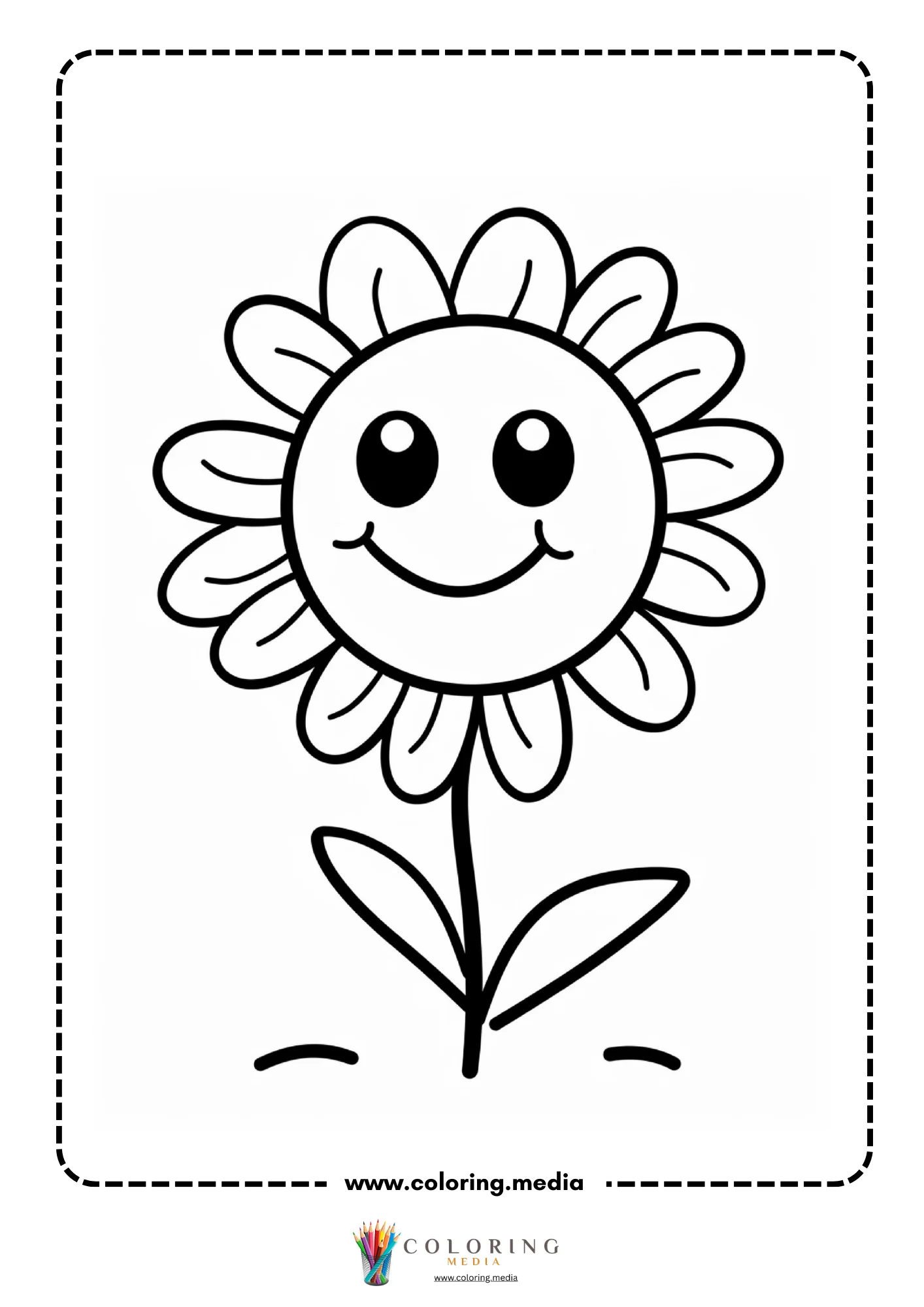
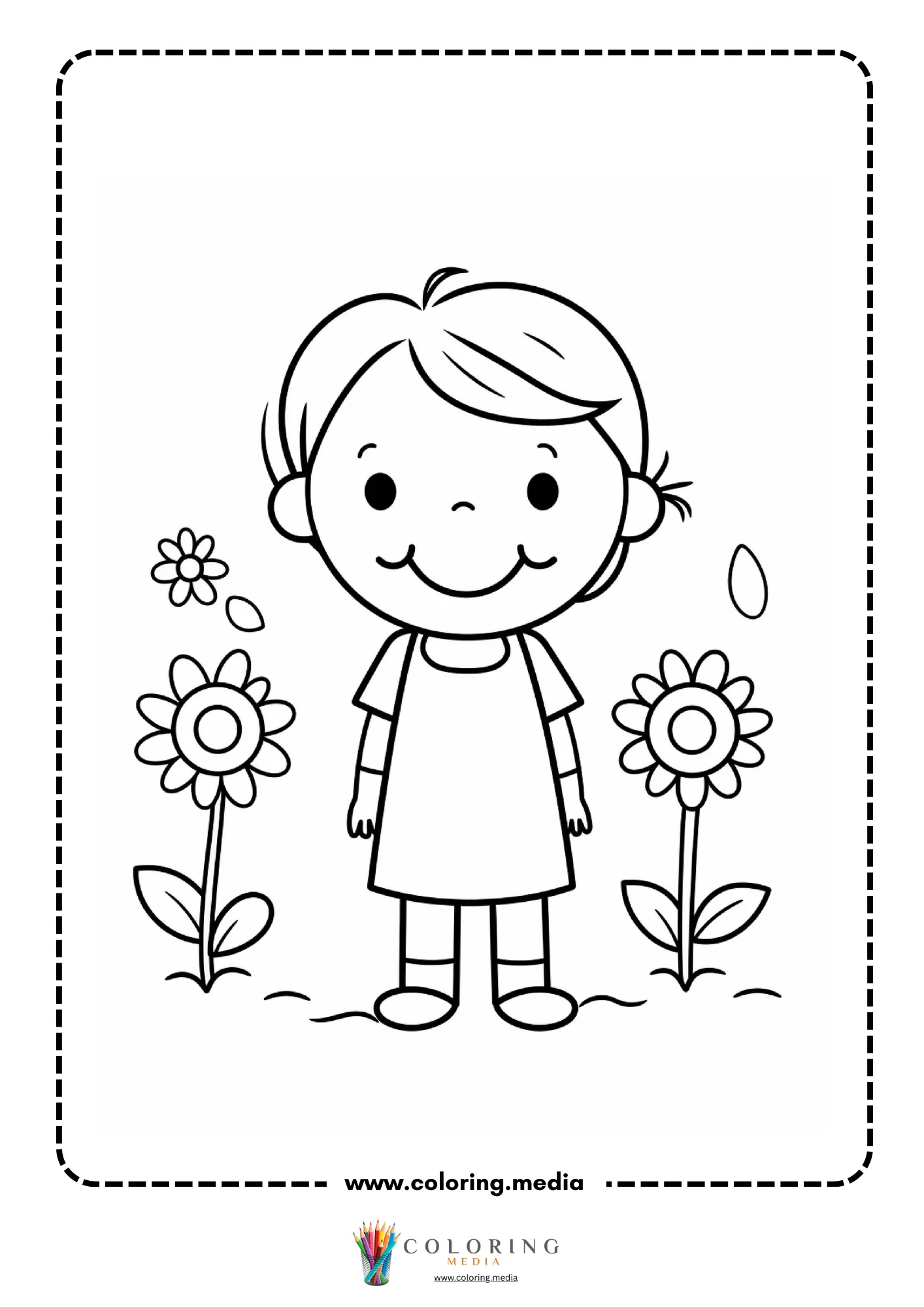
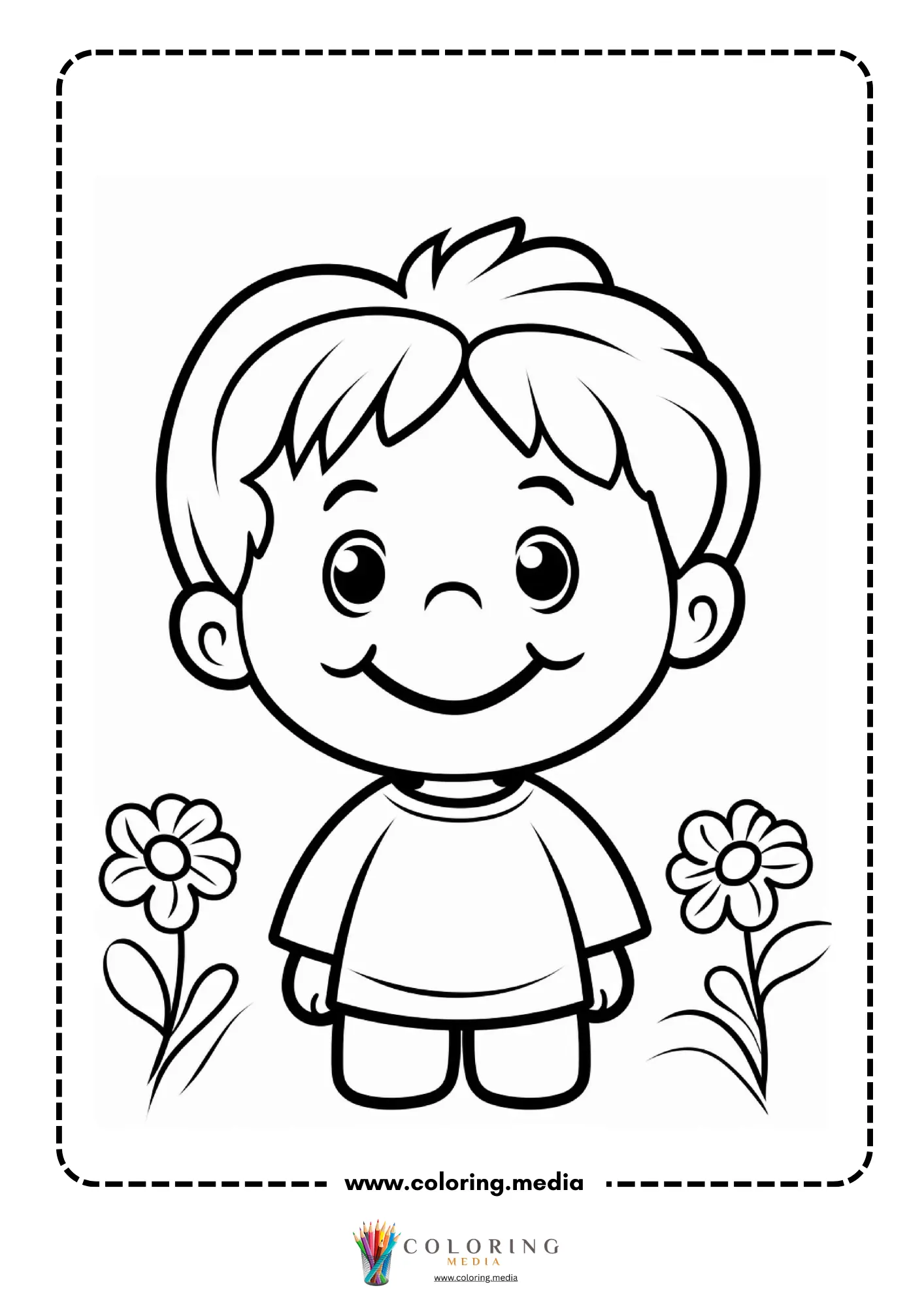
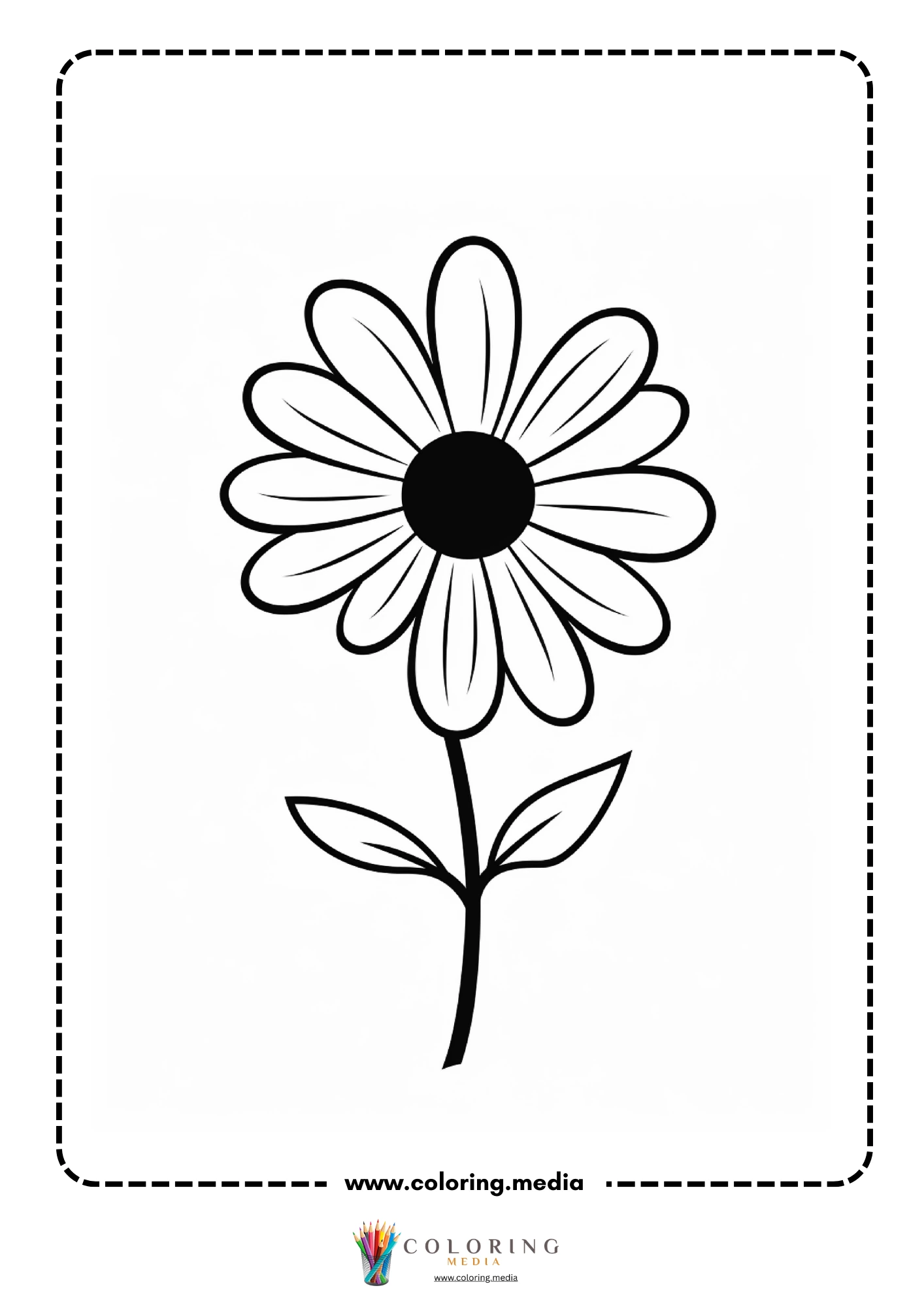
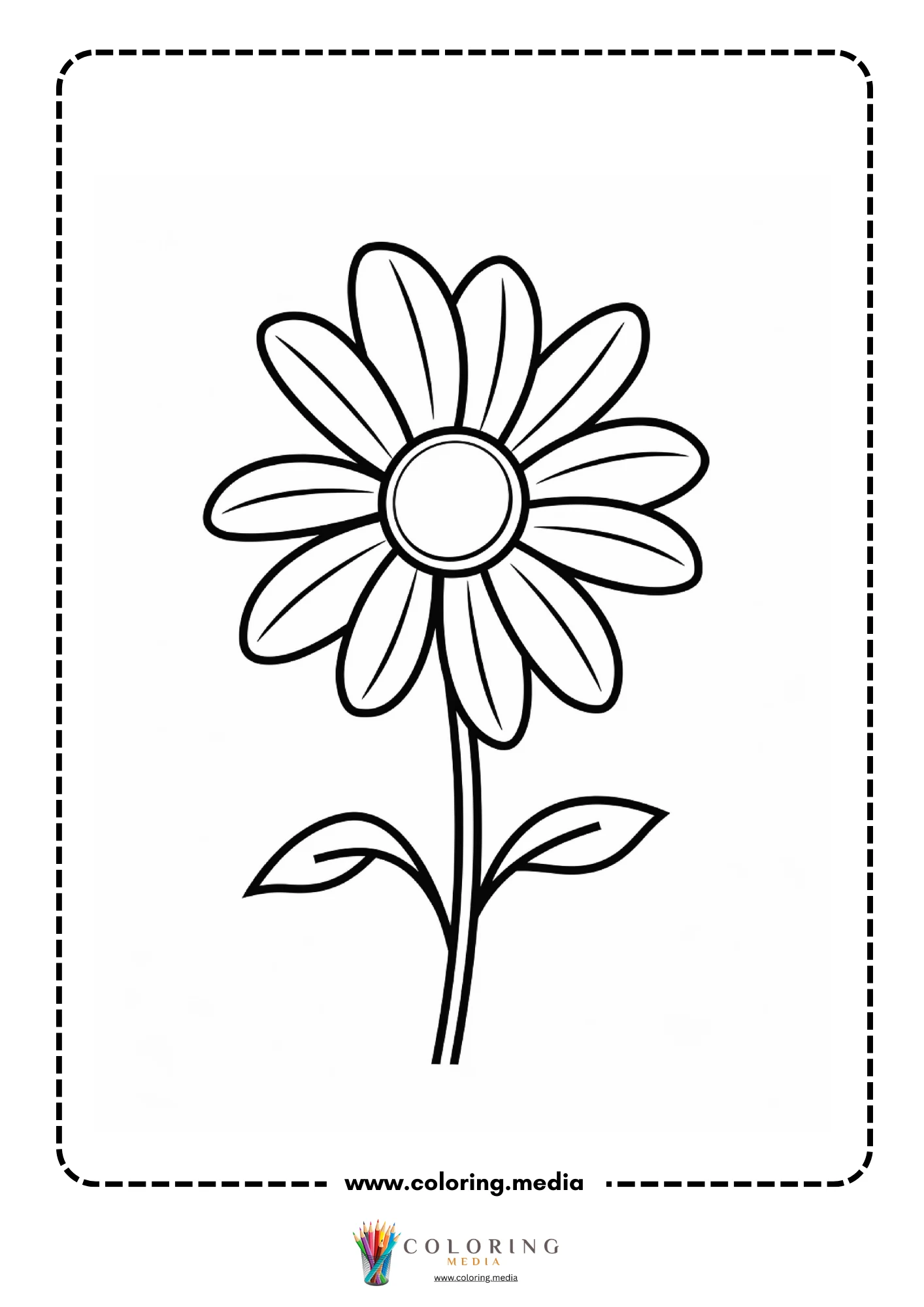
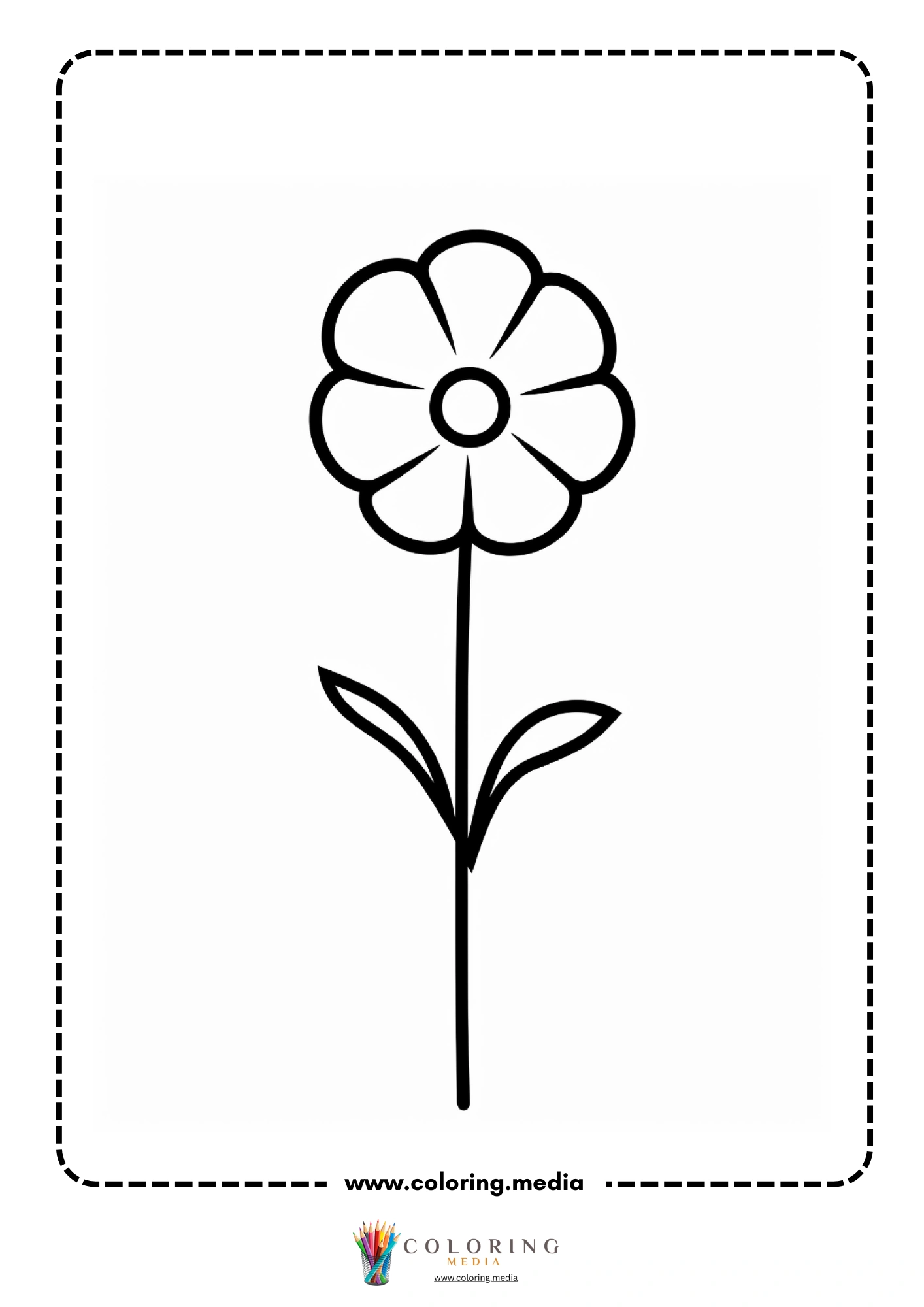
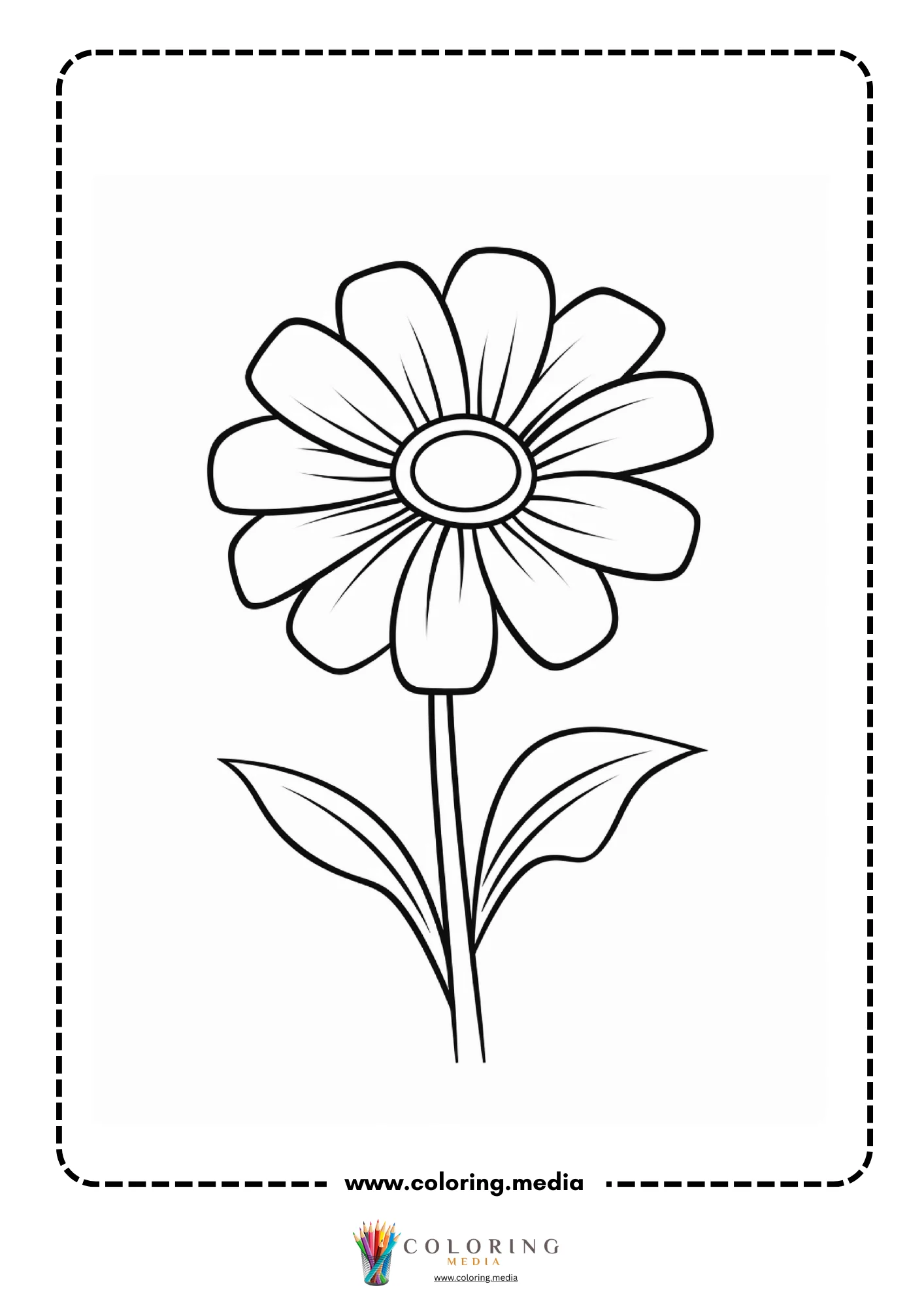
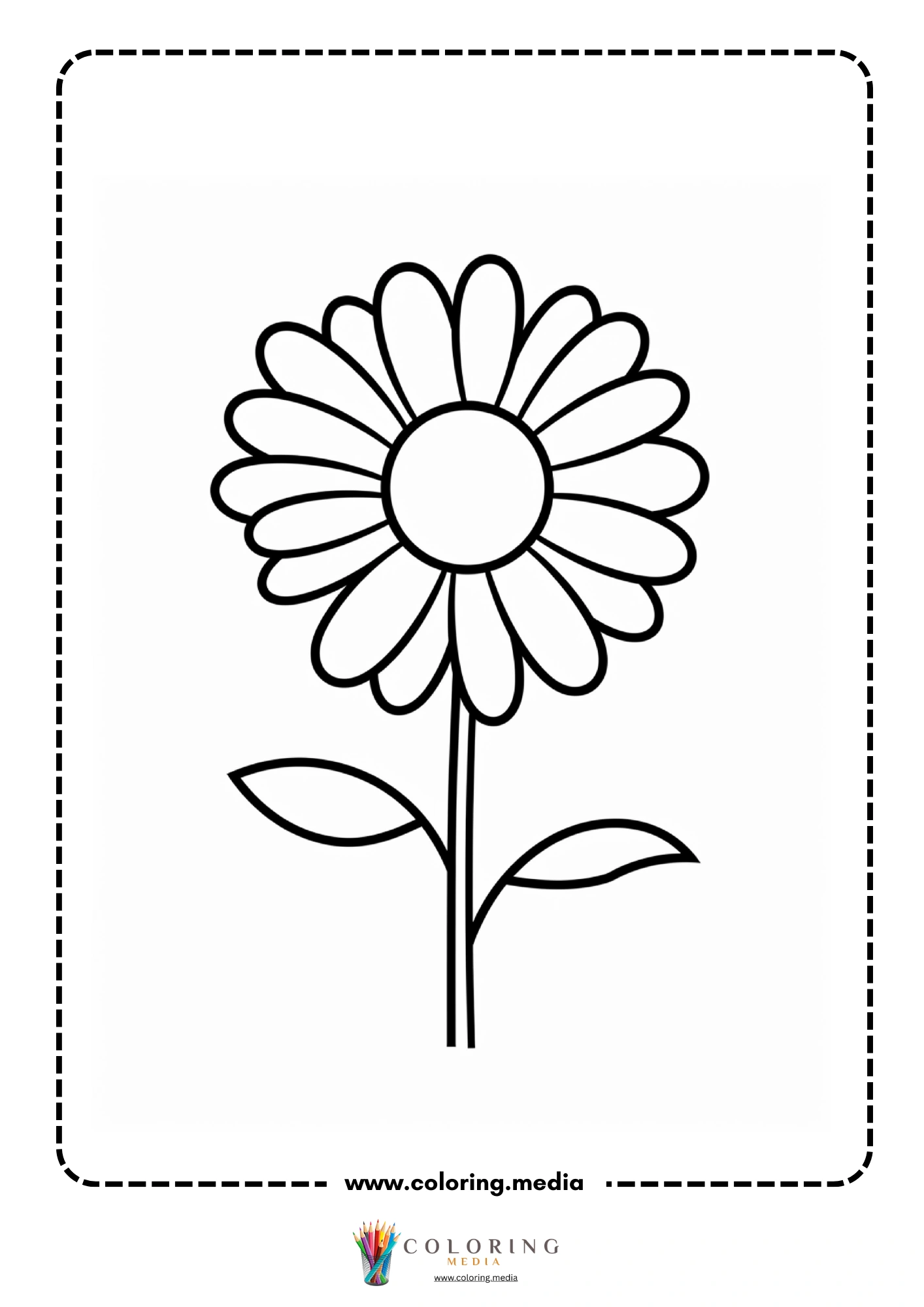
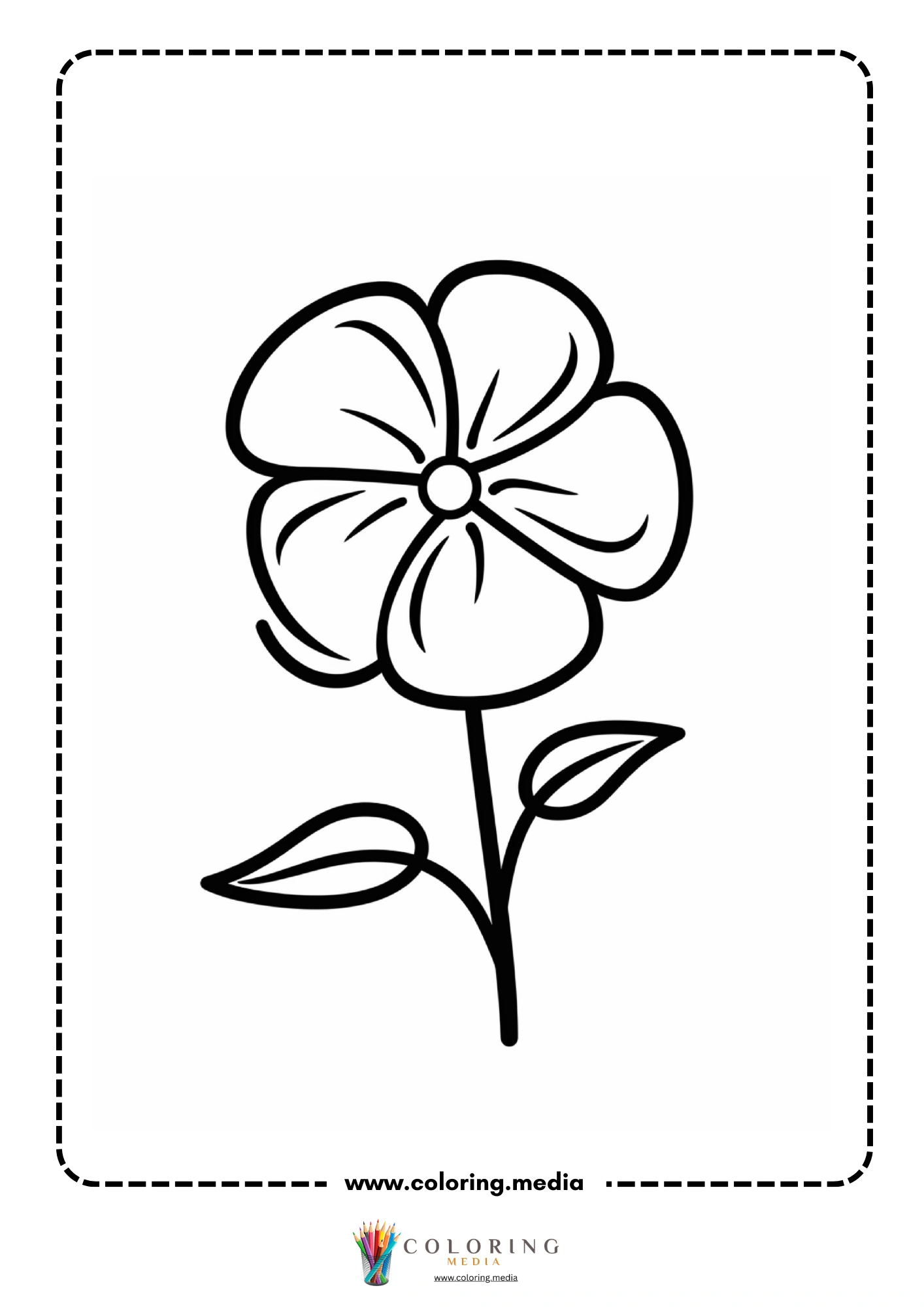
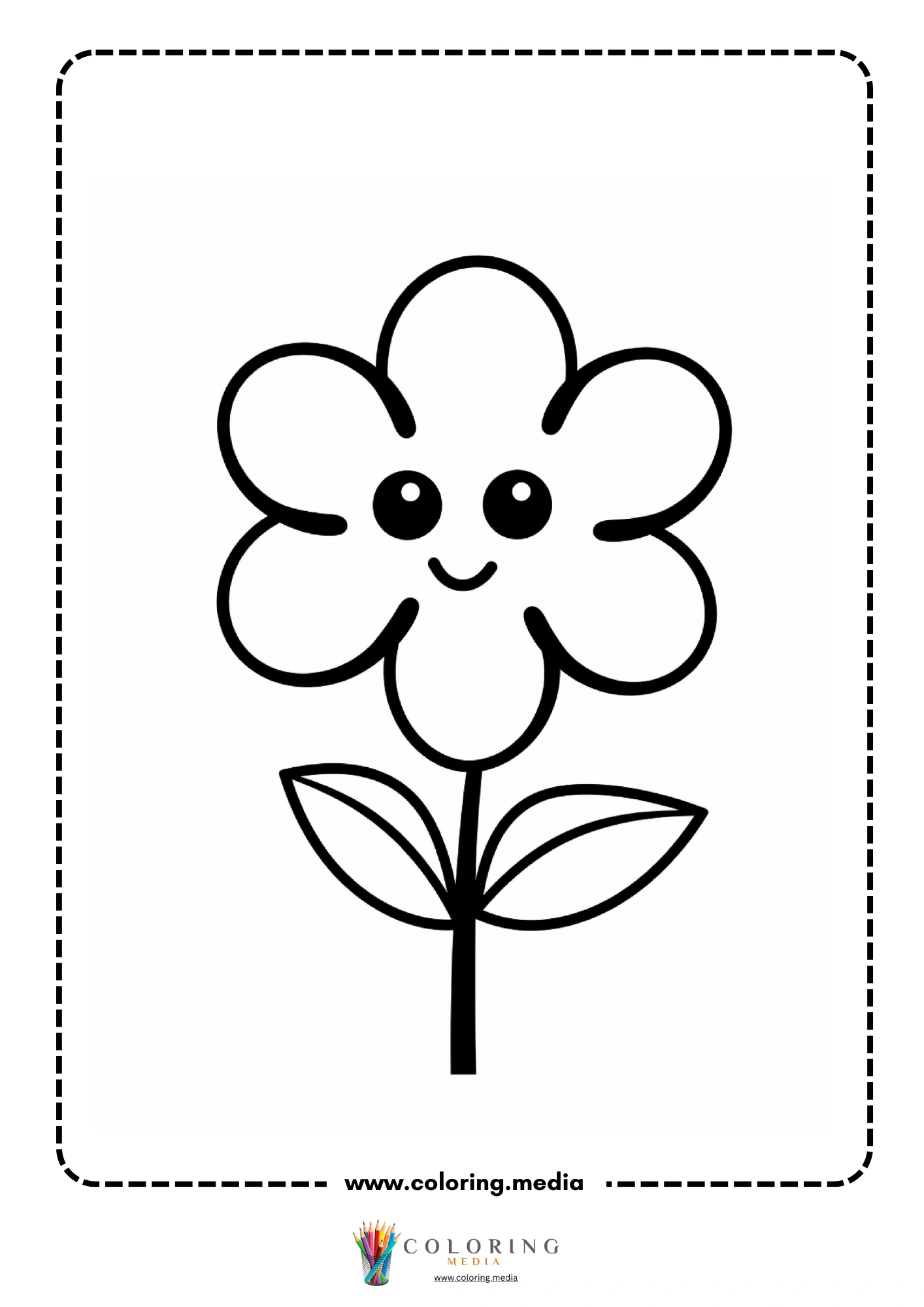
These are not floral arrangements or botanical studies. They are flowers stripped down to their most cheerful, recognizable shape: a round center, a ring of fat rounded petals, and a smiling face. Most of the 22 designs center on sunflowers and daisy-type blooms, drawn with outlines that are at least 4 to 5 millimeters thick. A two-year-old gripping a chunky crayon can color inside these without the outline becoming a barrier. Several pages add tiny child characters holding or standing beside a flower — at roughly the same scale, which keeps the compositions balanced and sweet.
This set was built for the very youngest colorers: toddlers discovering crayons for the first time, preschoolers who still work in broad strokes rather than precise fills, and kindergarteners who want a quick satisfying win. The designs are uncomplicated enough to finish in five minutes, which matches short attention spans exactly. Everything here is free to download and easy to print.
Free Printable Bold & Easy Flower Coloring Pages
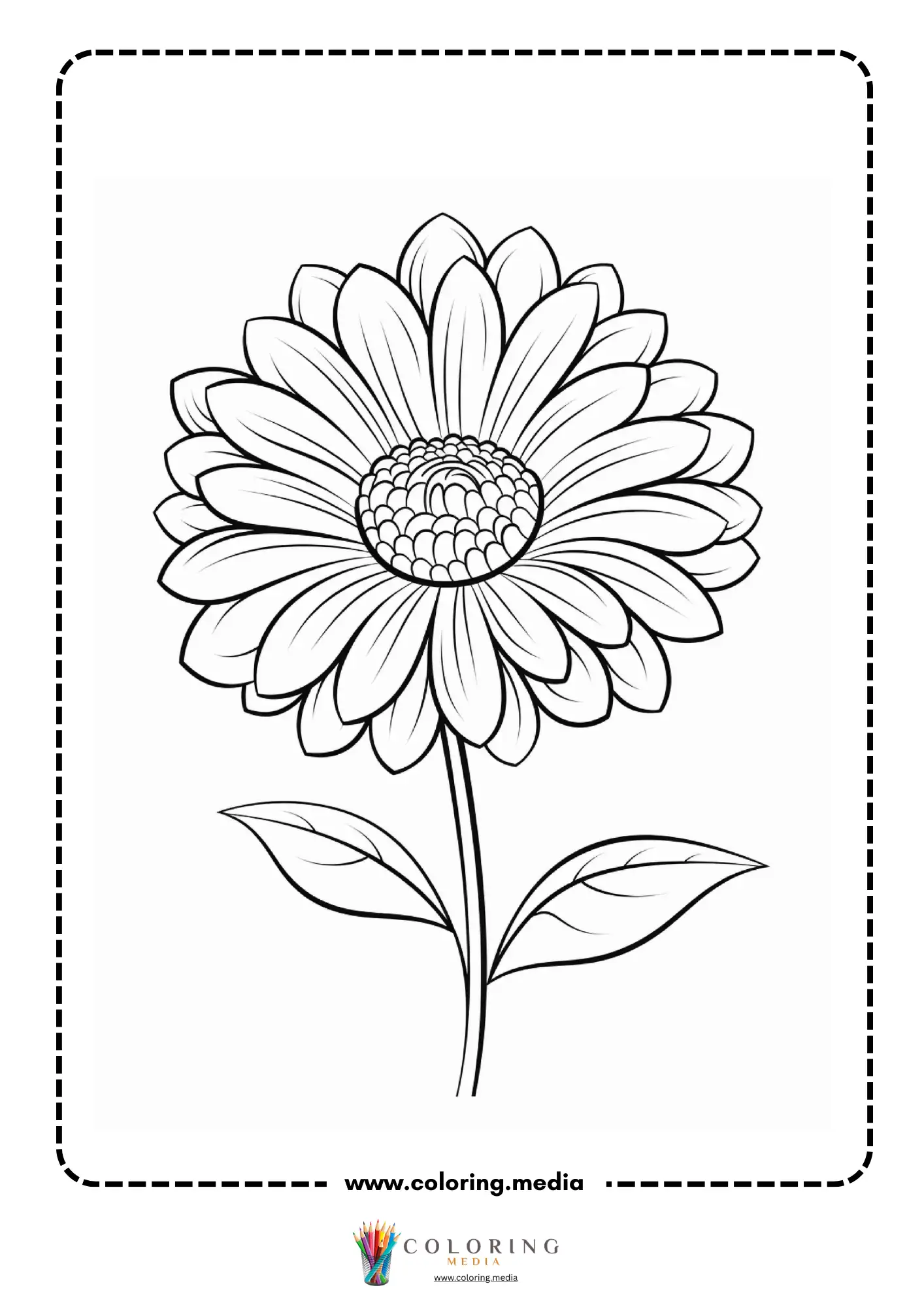
This collection includes 22 printable flower coloring pages featuring smiling sunflowers with round petal rings, simple daisy shapes with happy faces, single blooms on straight stems, flowers shown from the front and at slight angles, and a few pages with small cartoon children holding or standing beside giant cheerful flowers. Each design prints on A4 or US Letter paper as a ready-to-color PDF.
Who Are These Flower Coloring Pages Best For?
Toddlers aged two to three will get the most from these pages. The outlines are thick enough — 4 to 5 millimeters — that even a child who cannot yet control crayon direction very well will produce a recognizable colored flower. The smiling faces on most of the designs also help young children connect with the image: they see a friendly face and engage with it the same way they would a character.
Preschoolers, roughly three to five, can use these pages to practice staying inside lines without the frustration of narrow spaces. The large petal areas reward effort immediately — a few strokes of yellow and the sunflower looks finished. That quick sense of completion matters a lot at this age. Many children who find coloring books too fussy will sit happily with pages like these.
Kindergarteners who already color with some confidence will zip through these quickly, but they work well as warm-up sheets at the start of an art session or as calm-down activities. In a preschool classroom setting, a stack of these is a practical resource for free-choice time.
Interesting Flower Facts to Share While Coloring
Sunflowers track the sun across the sky. Young sunflowers actually move during the day to face the sun — east in the morning, west in the evening. Once they fully bloom, they stop moving and generally end up facing east, which catches the warm morning light that pollinators prefer.
Flowers communicate with color. Red flowers are often visited by birds like hummingbirds, while bees prefer yellow and blue flowers. White flowers tend to attract moths because white shows up in low light. A flower’s color is basically an advertisement aimed at a specific visitor.
Some flowers only live for one day. Daylilies, for example, open at sunrise and close by evening — permanently. Each bud on the plant blooms once and is done. A plant with many buds looks continuously in bloom, but each flower has its single day in the sun.
The biggest flower in the world has no leaves. Rafflesia, found in Southeast Asian rainforests, produces blooms that can reach nearly a meter across and weigh up to 10 kilograms. It has no stems, no leaves — it lives entirely as a parasite inside a vine and only becomes visible when it flowers.
Creative Flower Coloring and Craft Ideas
Rainbow Petals Color each petal of a sunflower page a different color of the rainbow — red, orange, yellow, green, blue, purple — for a bold, graphic result that works as instant wall art.
Finger-Dot Centers Dip a fingertip in brown or orange paint and dot the flower center repeatedly to create a textured seed pattern. Let it dry before displaying.
Name the Flower After coloring, have the child write (or dictate) a name for their flower — not “sunflower” but a made-up name like “Sunny McPetal” — and add it below the image in crayon.
Sun Tracking Experiment Color a sunflower page, then go outside and watch where the real sun is at three different times of day. Mark the sun’s position on the sky with chalk on the ground and compare it to the sunflower on the page.
Seed Collage After coloring the flower center, glue real sunflower seeds (from a snack bag) onto the center circle. The contrast of the flat color and real seeds creates an interesting texture.
Grow Your Own Color a flower page while a sunflower or daisy seed sits soaking in a damp paper towel nearby. Check the seed daily and draw a picture of what you see as it sprouts.
Color-by-Mood Ask the child: if this flower was happy, what color would it be? Sad? Sleepy? Color three versions of the same page using “mood colors” for each emotion.
How to Print These Flower Coloring Pages
Each page downloads as a PDF that fits A4 or US Letter paper. For toddlers, standard copy paper is fine since chunky crayons do not bleed through. If you are using washable markers, a slightly heavier paper (24 lb or more) will hold up better without wrinkling. Printing in black and white or grayscale mode keeps the outlines crisp and ink-efficient.
Explore More Flowers & Plants Coloring Pages
If you enjoyed these pages, you may also like:
Bold & Easy Floral Coloring Pages
Bold & Easy Garden Coloring Pages
Bold & Easy Animal Coloring Pages
Flowers & Plants Coloring Pages