
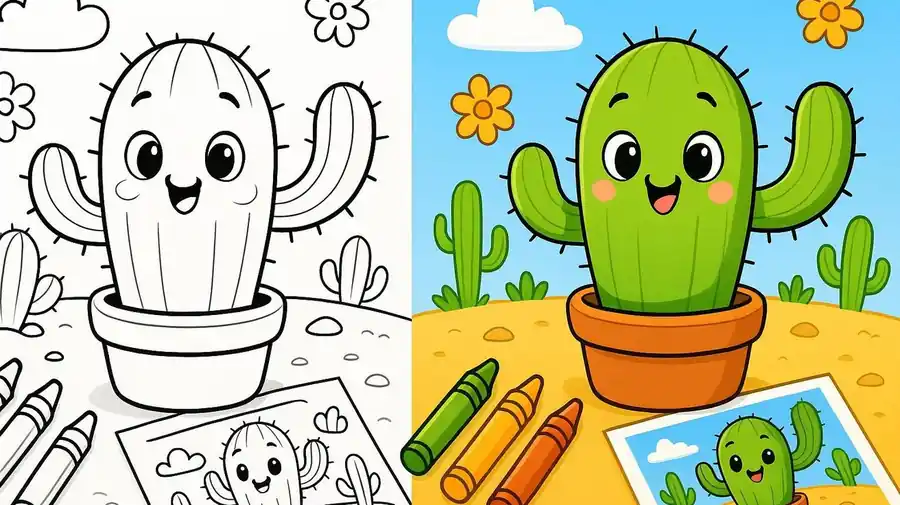
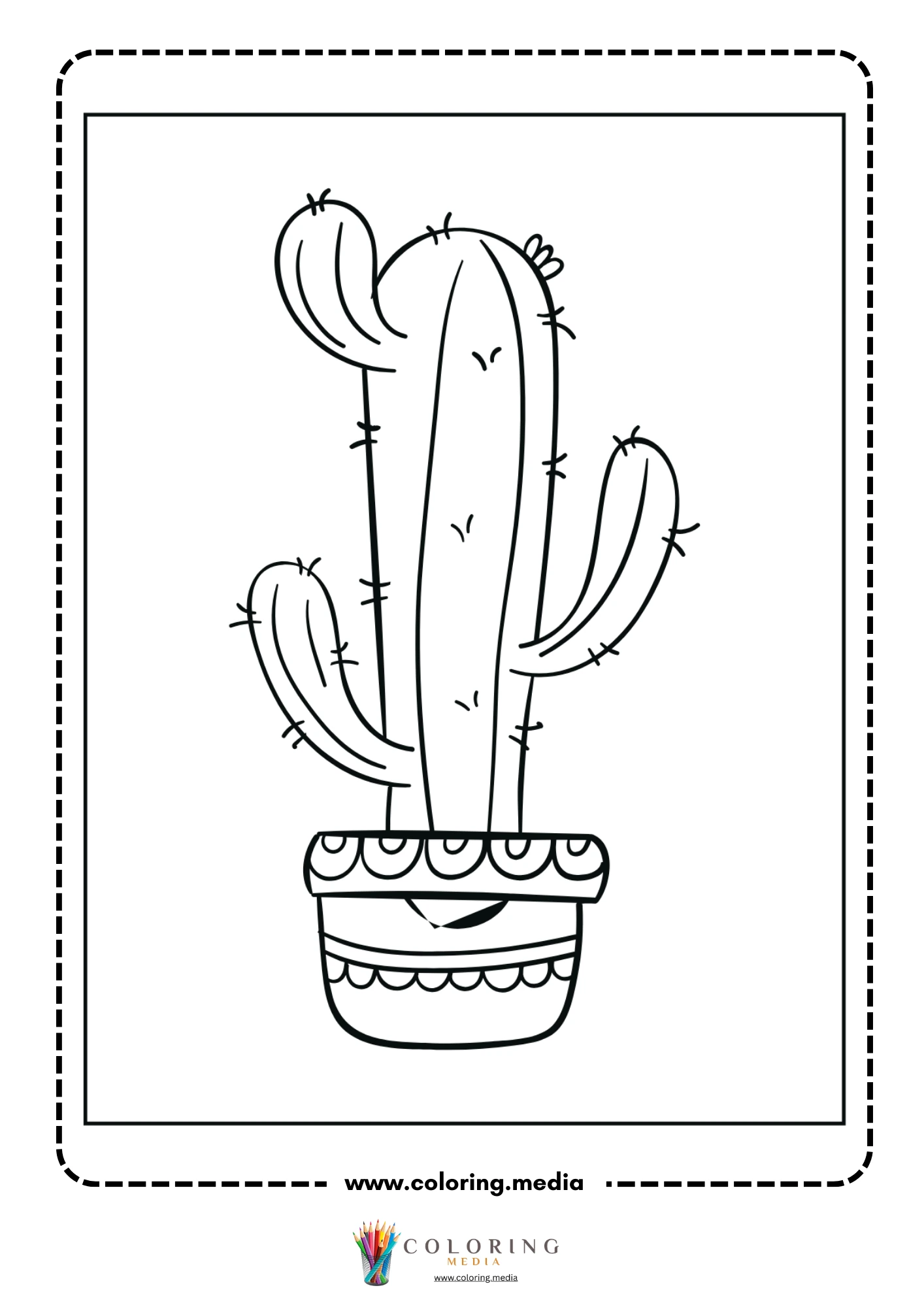
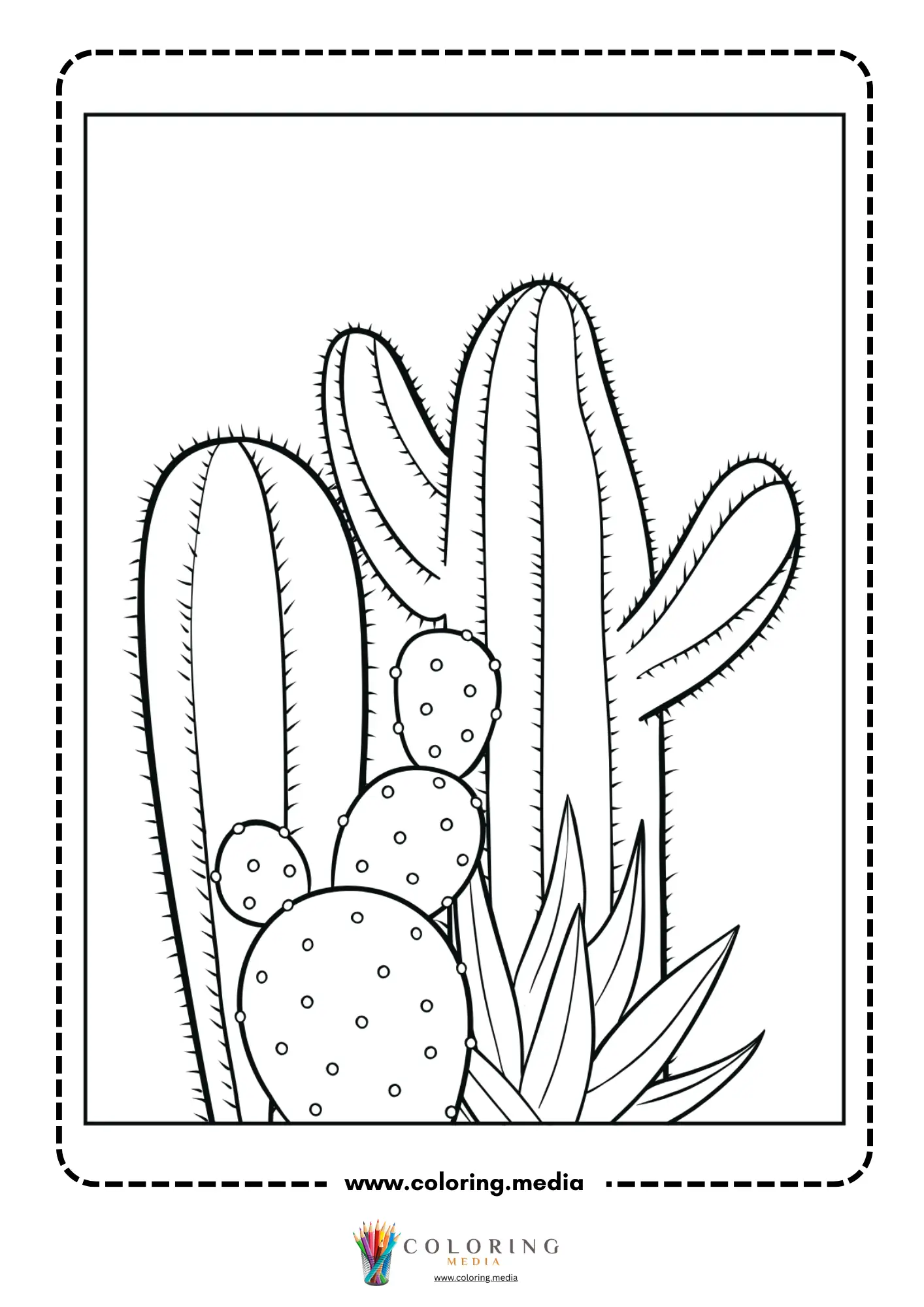
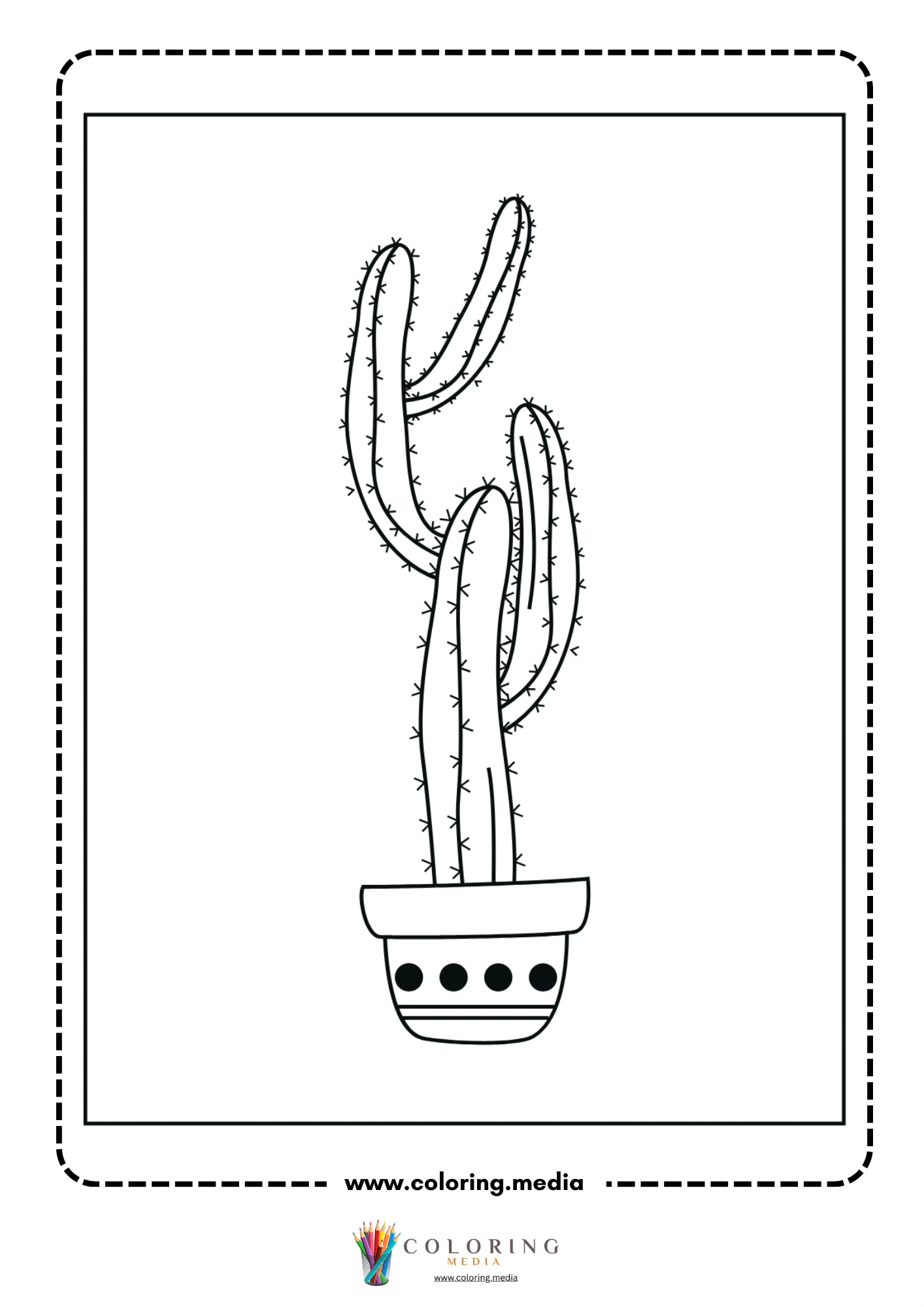
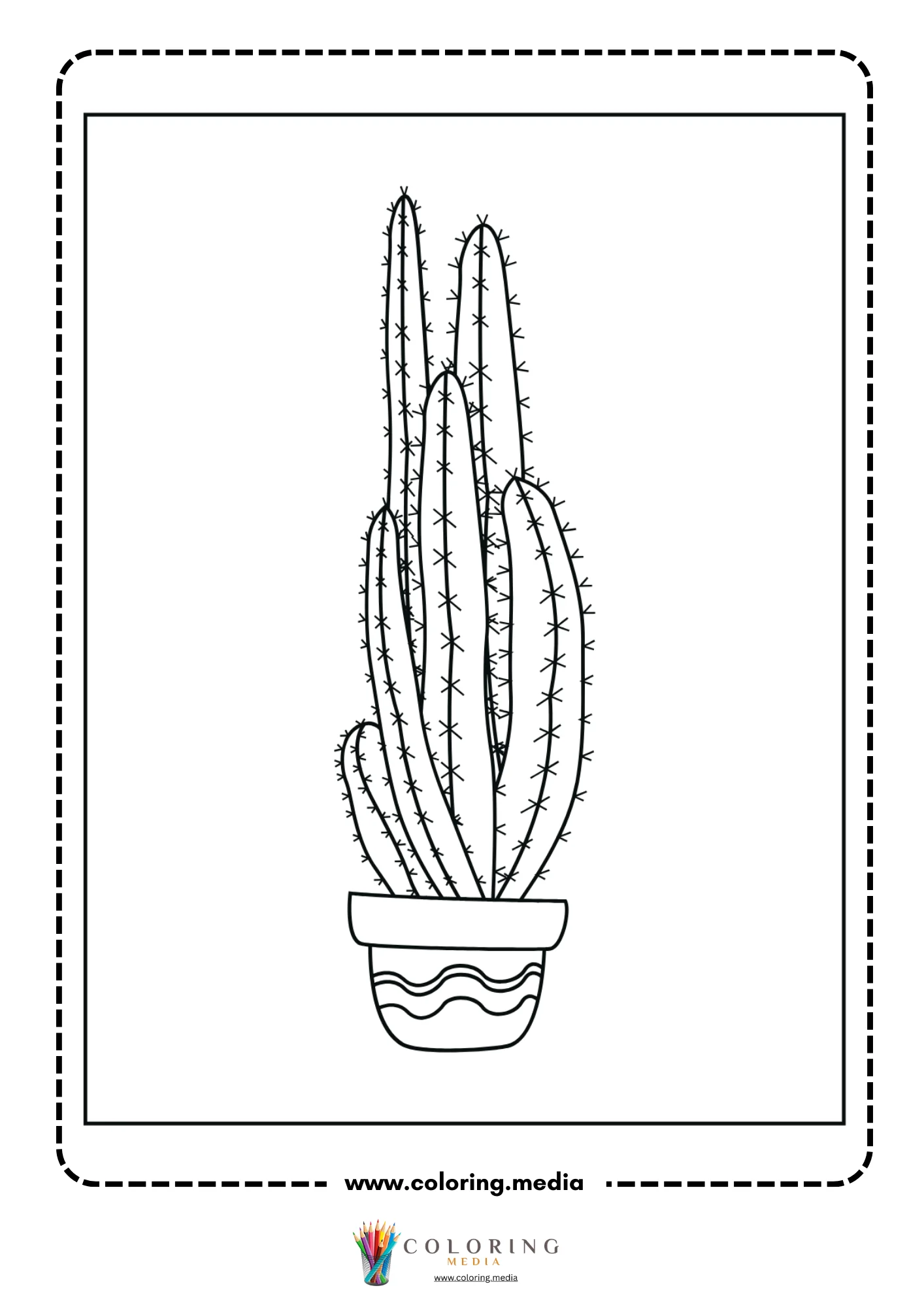
The cactus designs in this set cover a wider range of species than you’d expect — squat barrel cacti in decorative pots, tall multi-armed saguaro types, flat-paddle prickly pears, columnar cereus shapes, and a few small potted succulents that blur the line between cactus and houseplant. About half the pages show cacti in indoor pots, which gives them a domestic, approachable quality; the rest have a more naturalistic desert feel. One page features a cactus with a small kawaii face, which tends to be a favorite with younger kids who need a character to connect to.
The detail level is moderate and consistent — clean outlines with enough rib lines and spine detailing to make the finished coloring look like something, but nothing so fine that it requires special equipment. A broad marker works fine, and so does a sharpened colored pencil. Everything here is free to download and easy to print.
Free Printable Cactus Coloring Pages
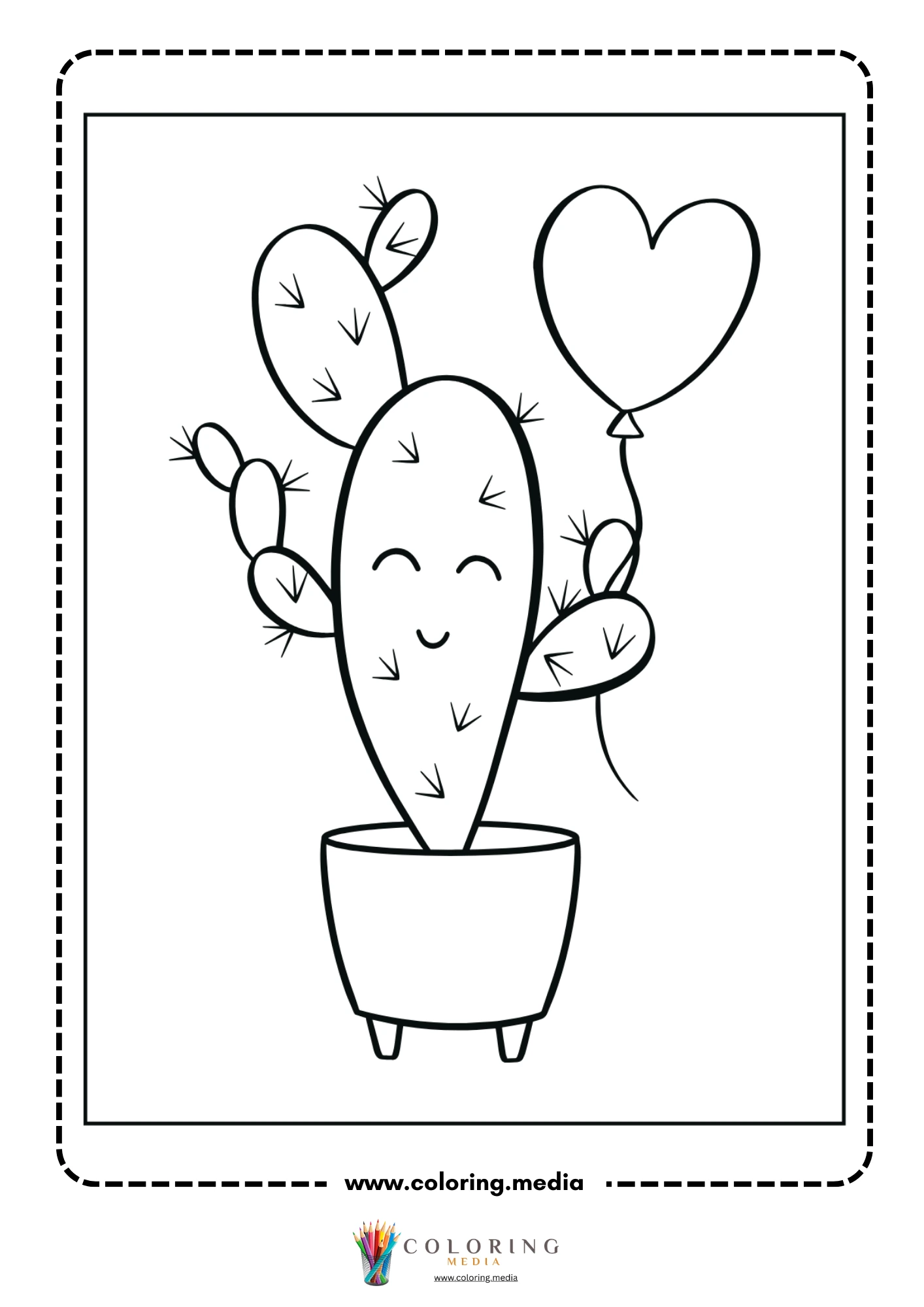
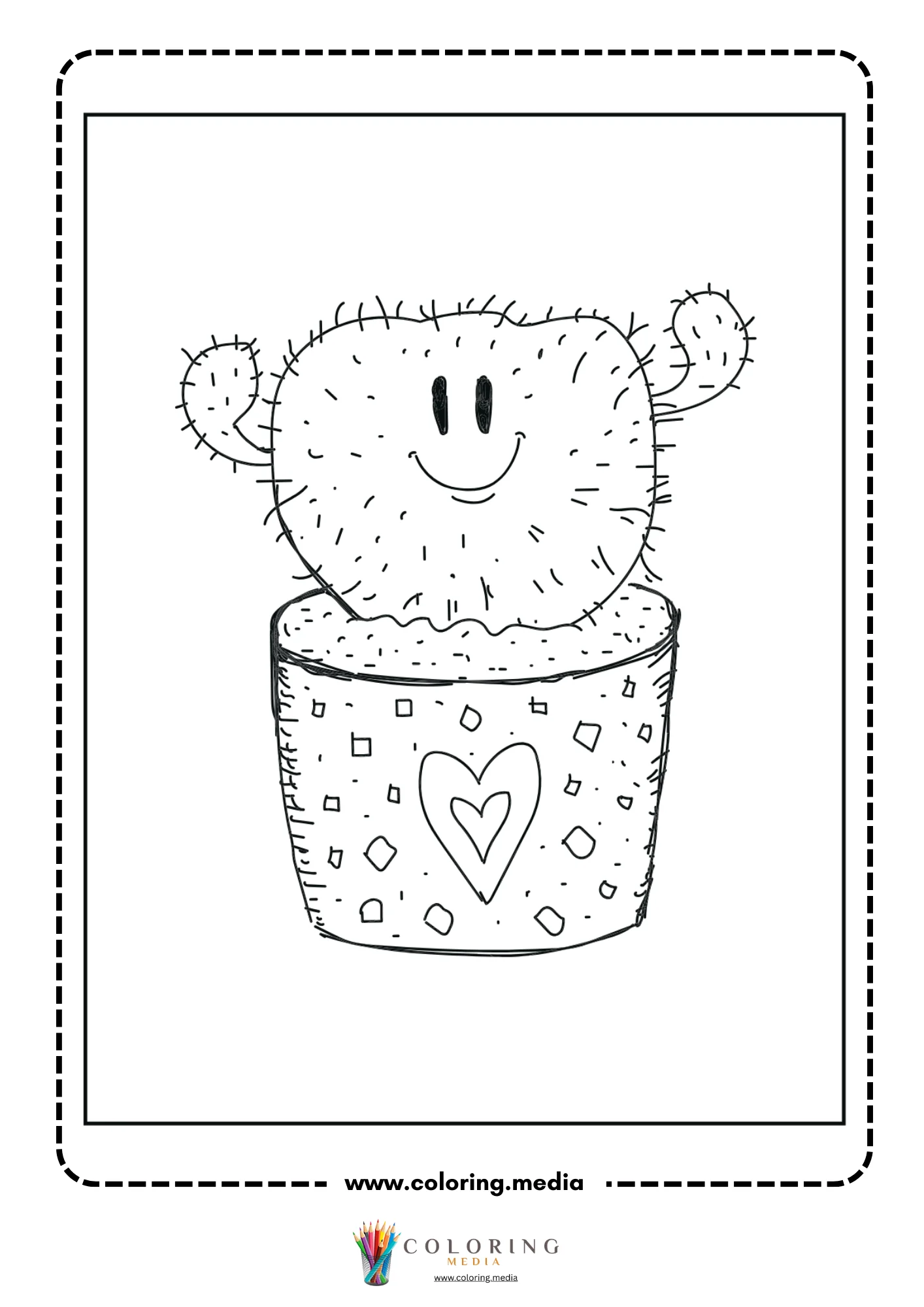
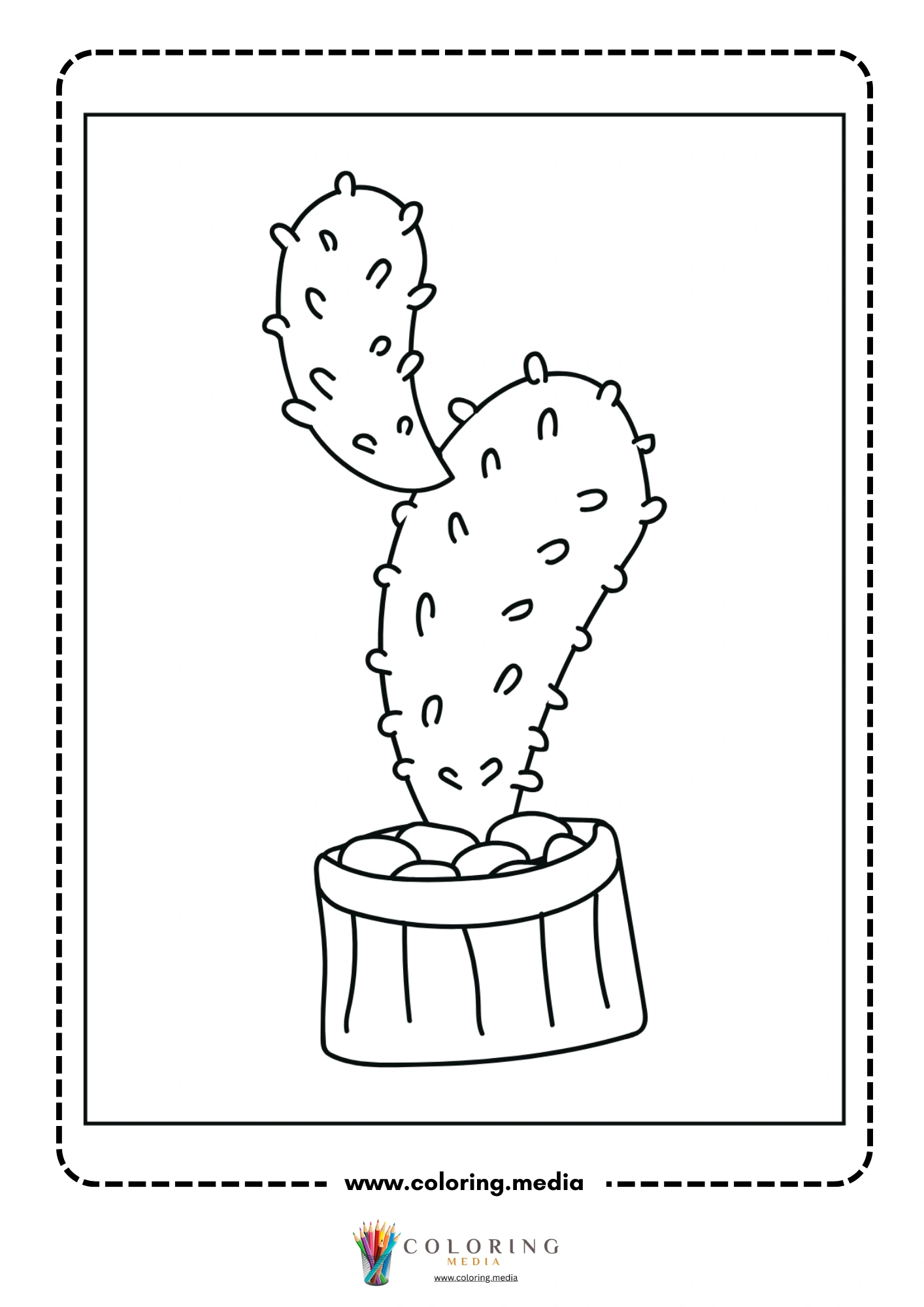
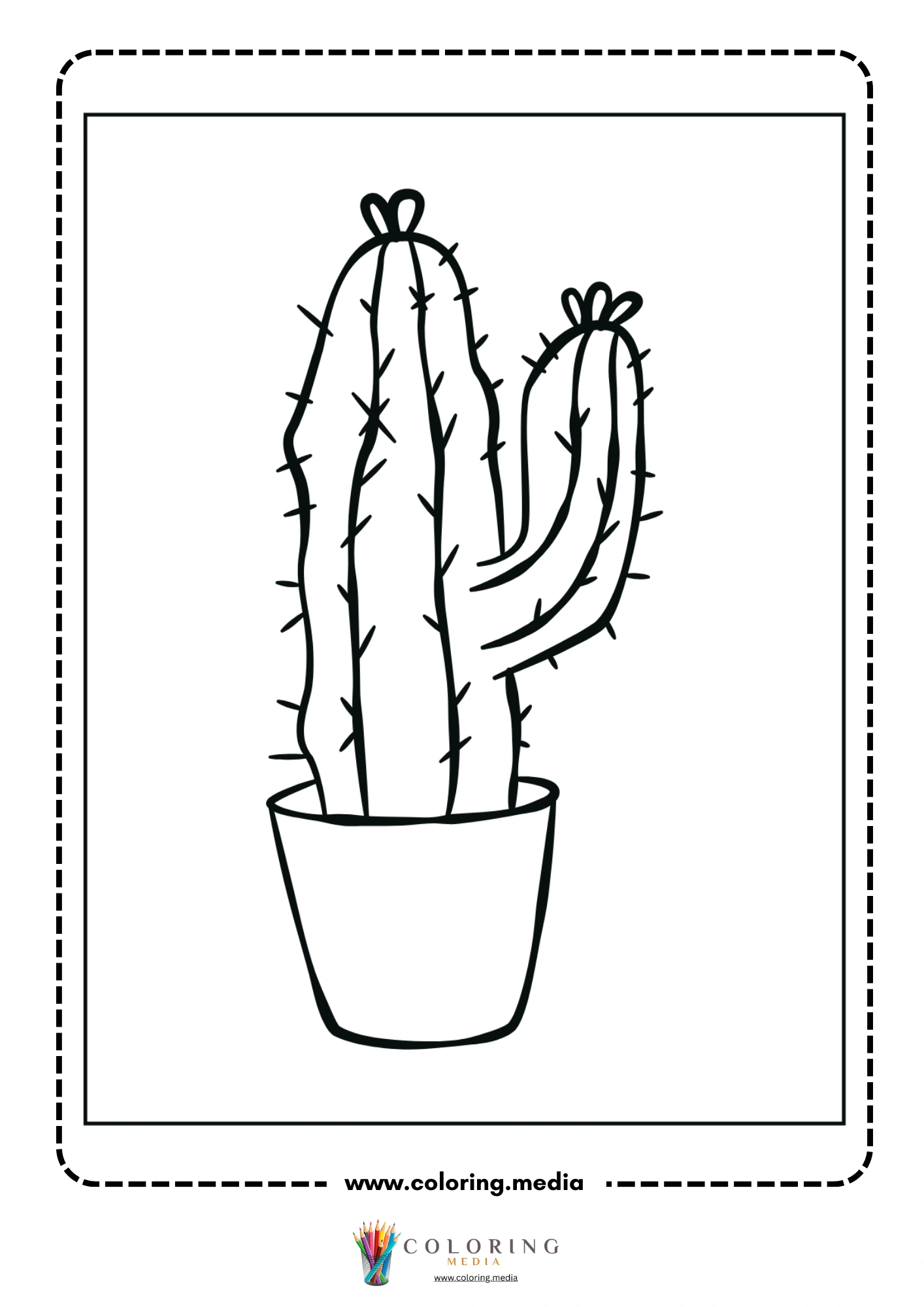
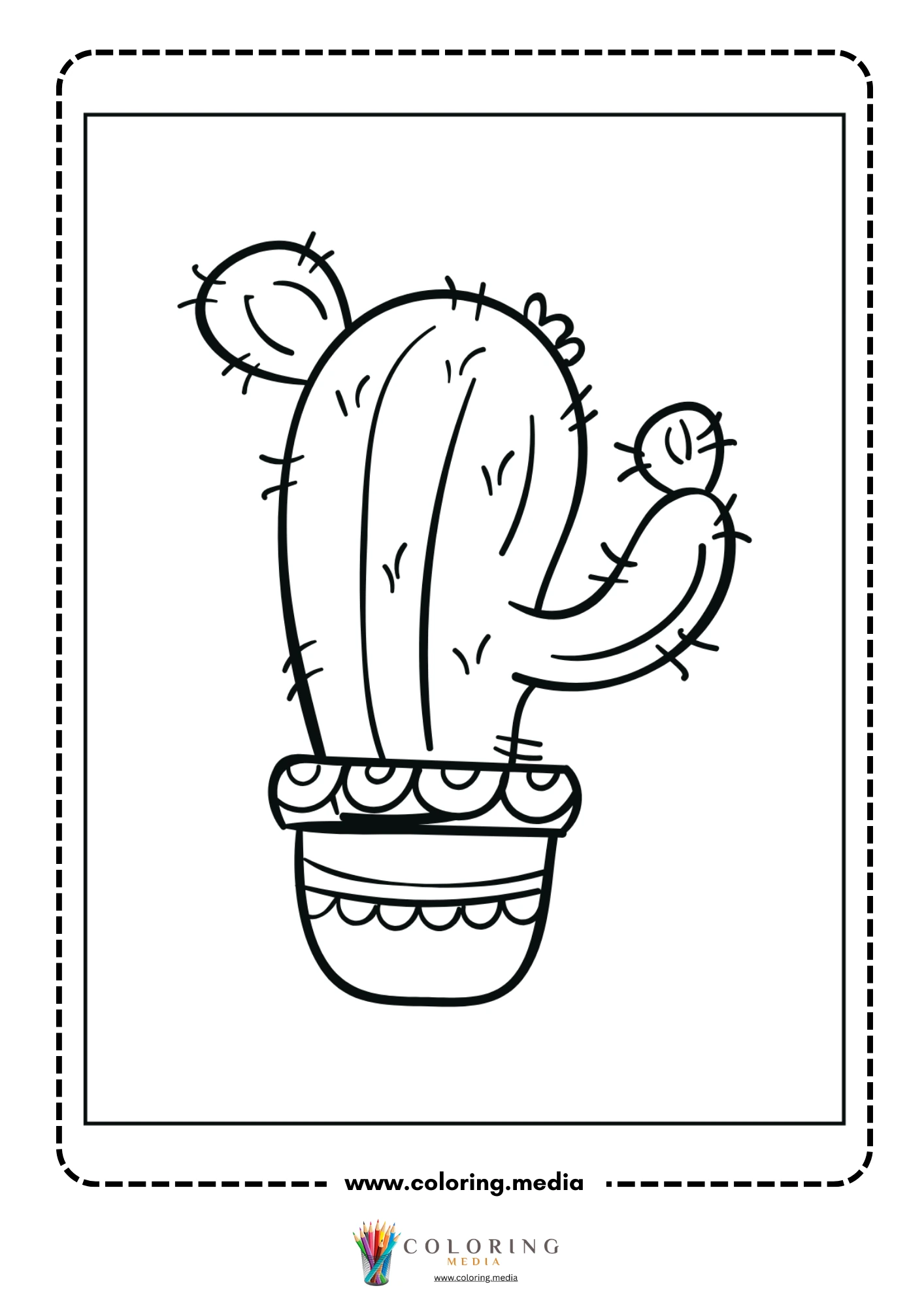
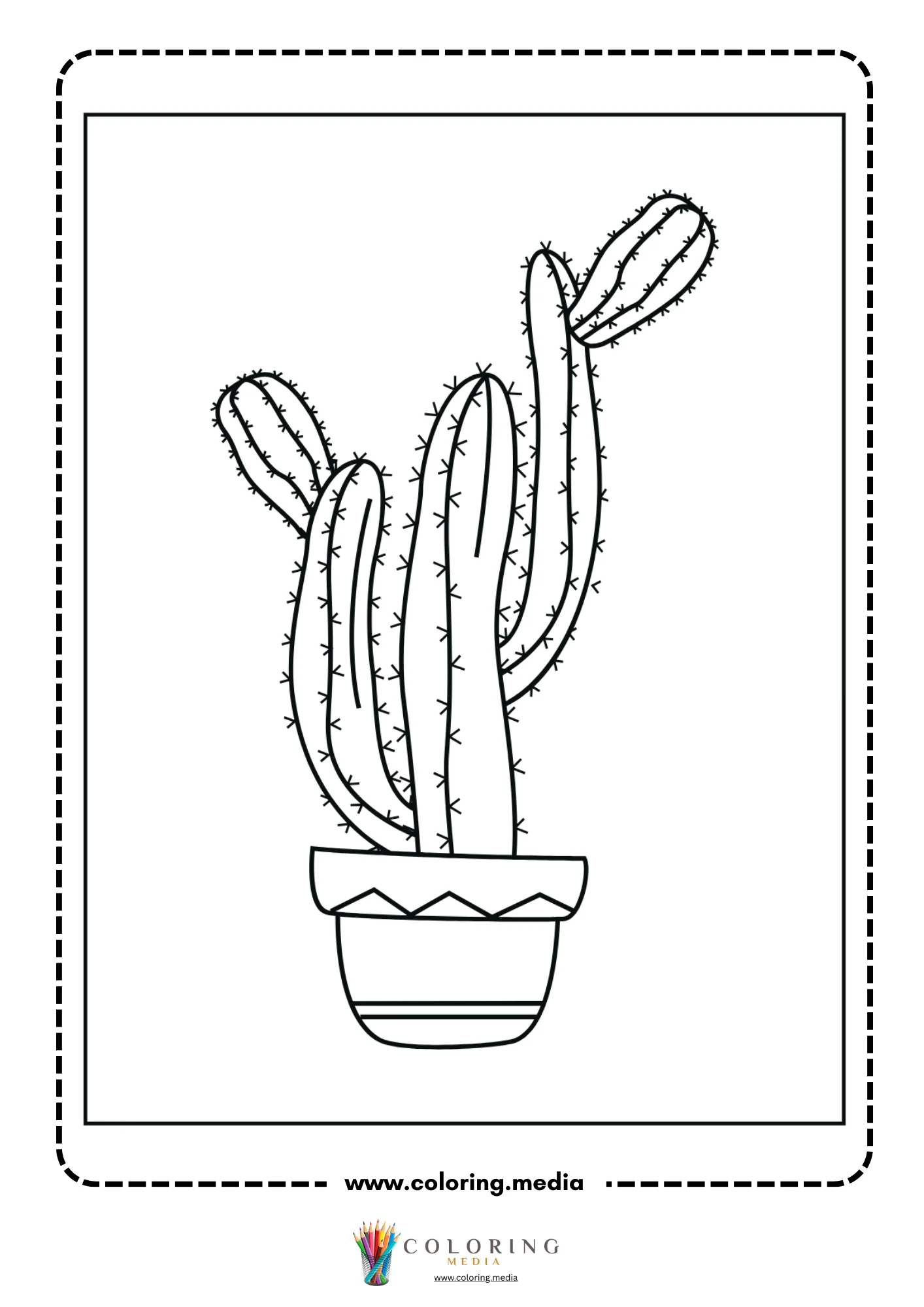
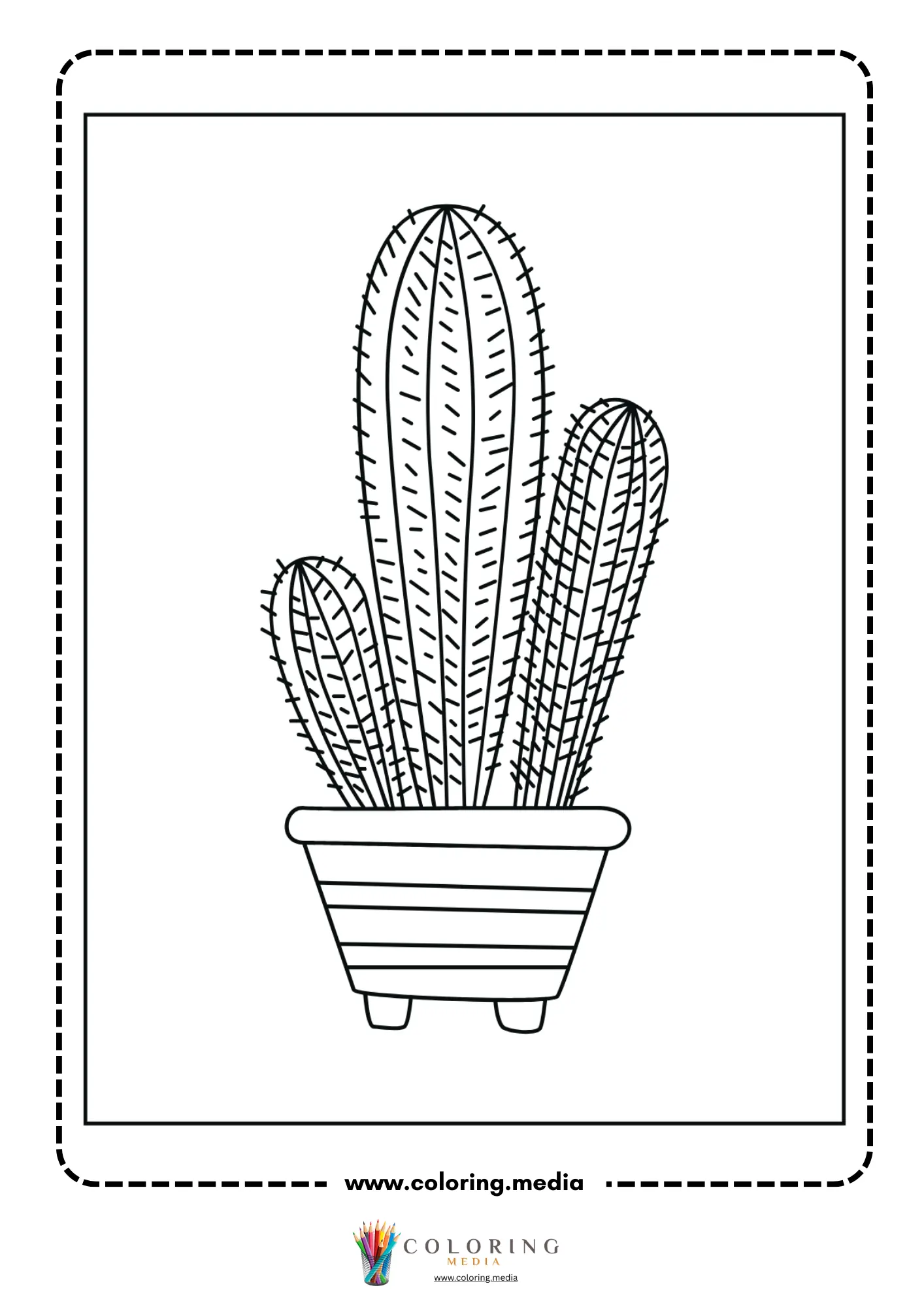
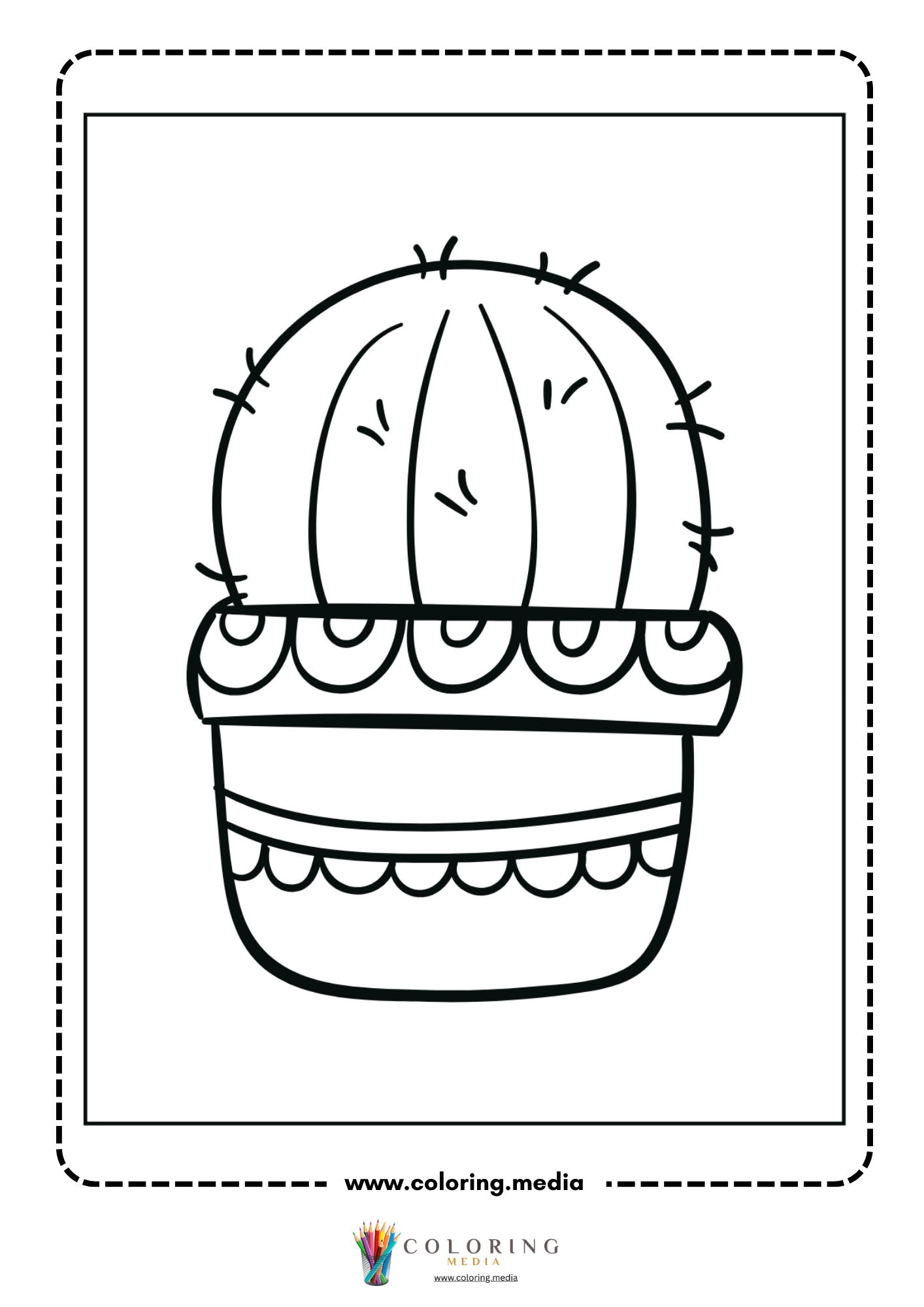
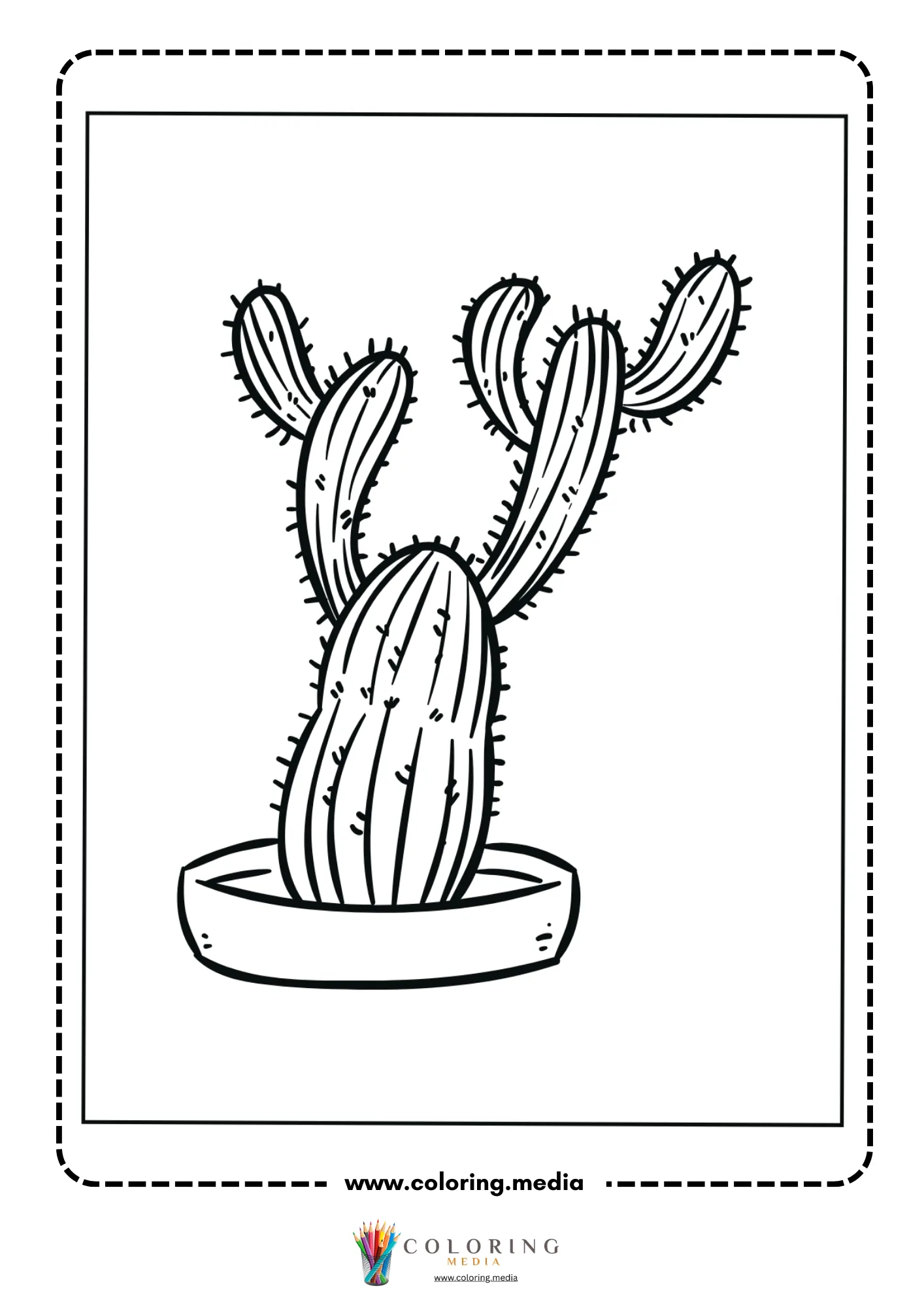
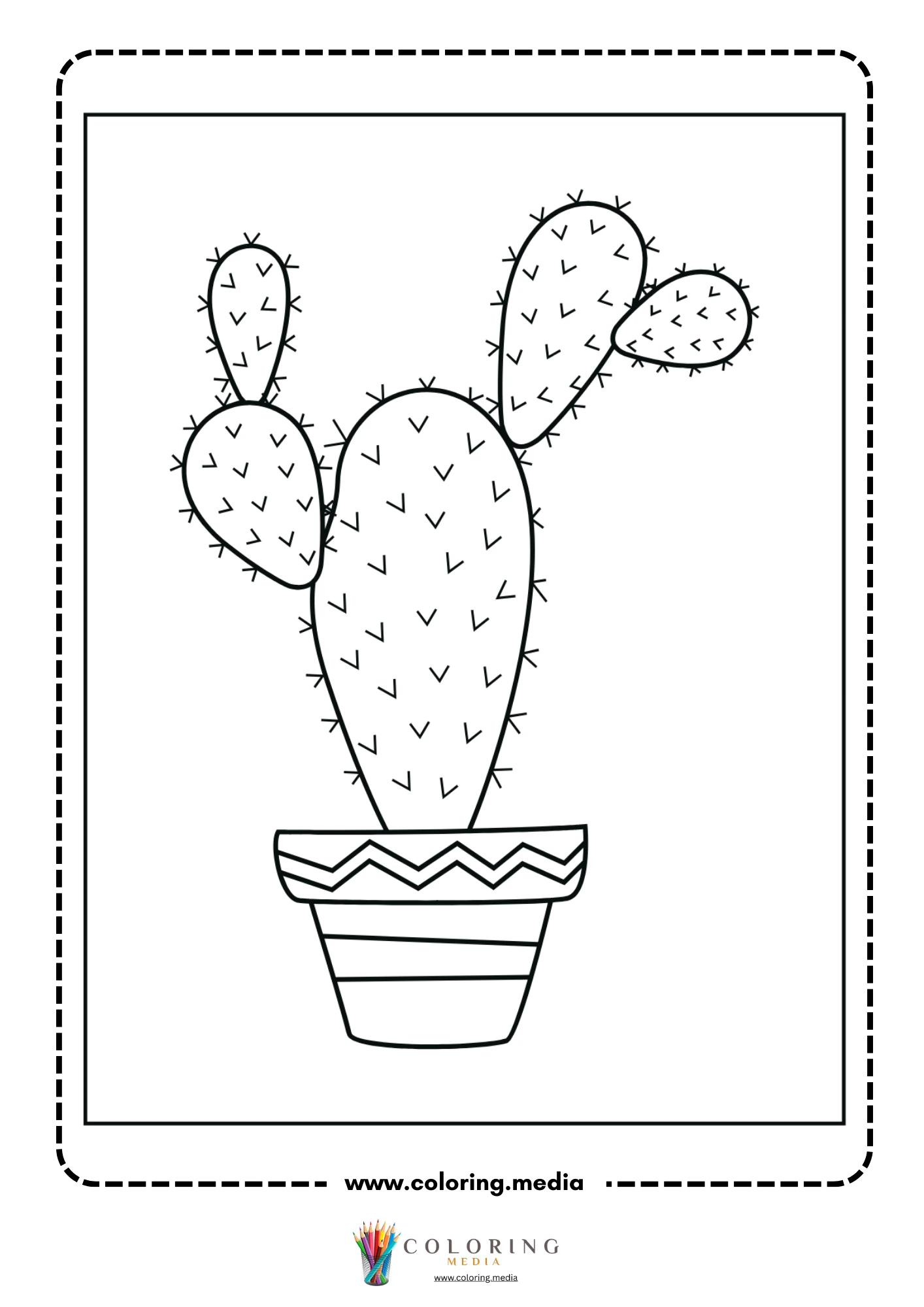
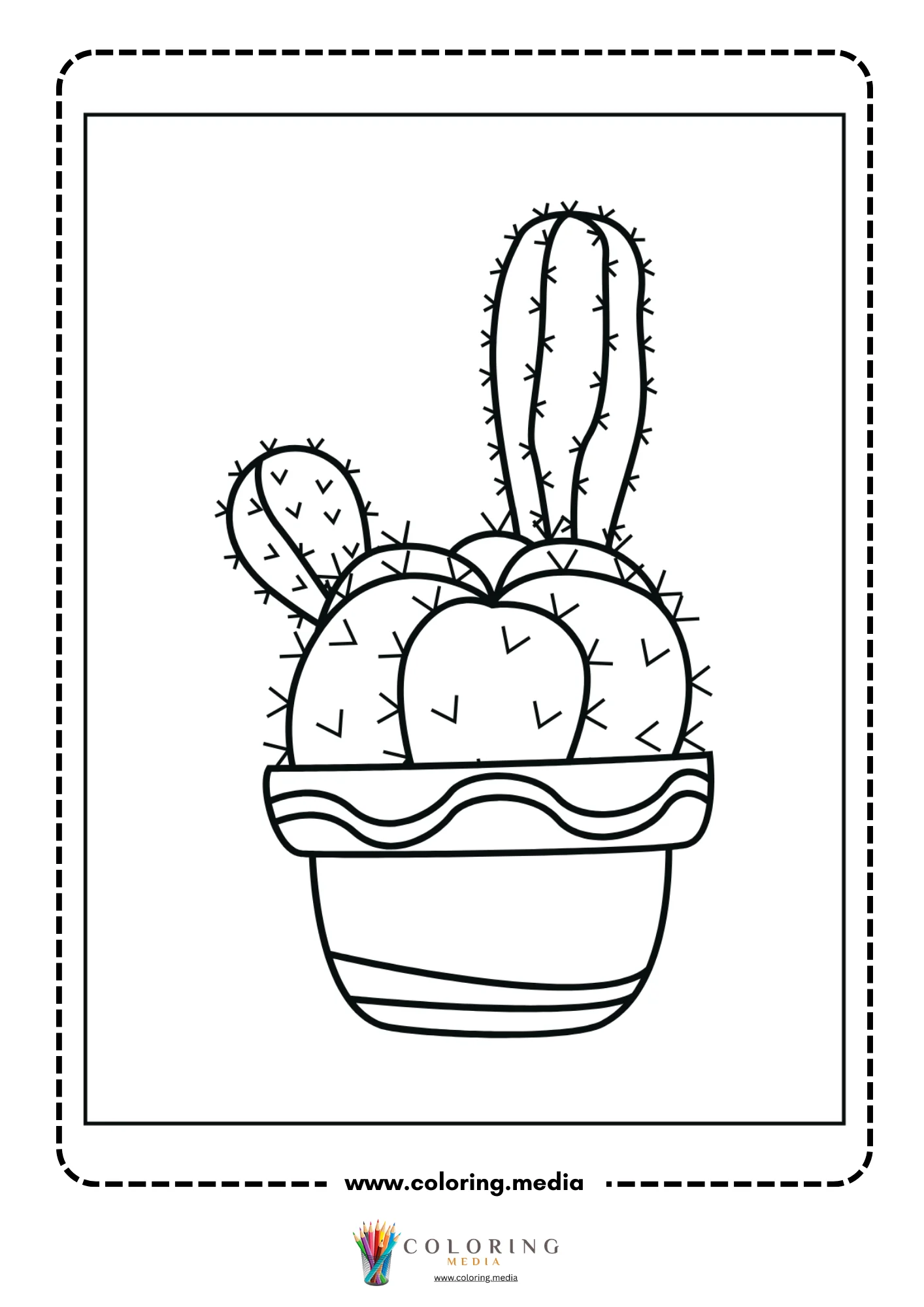
This collection includes 20 printable cactus coloring pages featuring a variety of desert and potted cactus species — tall saguaro-style cacti with upraised arms, round barrel cacti sitting low in ceramic pots, flat prickly pear pads with visible spines, columnar clustering types, and small decorated succulent arrangements. The pot designs on the indoor pages add an extra coloring element: stripes, patterns, and geometric shapes on the containers. Each page downloads as a PDF for A4 or US Letter paper.





Who Are These Cactus Coloring Pages Best For?
Kindergartners can manage the simpler potted cactus pages comfortably — the barrel and round cactus designs have large coloring areas and don’t require careful handling of small details. The decorative pots add a secondary coloring element that keeps the activity interesting without raising the technical difficulty. A child who can color a basic animal page without frustration will do fine here.
Early elementary kids get more out of the detailed pages — the tall multi-armed saguaro types with visible ribs and spine cluster details, the prickly pear arrangements with overlapping pad shapes, and the more complex pot arrangements with decorative patterns. These ask for a bit more precision and color planning: how do you color a cactus so the spines don’t disappear into the green body? That’s the kind of minor problem-solving that makes the activity more engaging for 6 and 7-year-olds.
In a classroom, cactus pages pair naturally with a unit on desert habitats or plant adaptations — they give kids a visual anchor for the conversation about how plants survive without regular water. The variety of species shown also opens the door to naming the different types and comparing their shapes.
Interesting Cactus Facts to Share While Coloring
Cactus spines are actually modified leaves. Over millions of years of evolution in dry environments, the broad flat leaves that most plants use for photosynthesis became a liability — too much surface area for water to evaporate from. Cacti evolved spines as highly reduced leaf structures that protect the plant without losing significant water. The actual photosynthesis happens in the thick green stem instead.
The saguaro cactus can weigh more than a car. A full-grown saguaro can hold up to 200 gallons of water after a heavy rain, and since water weighs about 8 pounds per gallon, a water-saturated saguaro can weigh over 1,600 pounds — more than most sedans. That water has to last through long dry spells, which is why the pleated accordion-like ribs expand when full and contract as the water is used.
Some cacti bloom only once a year, for a single night. The queen of the night (Selenicereus grandiflorus) produces large white flowers that open after dark and close before sunrise — meaning if you don’t stay up to see them, you miss them entirely. The flowers are pollinated by night-flying moths and bats that are active during those same nighttime hours.
Most cacti are native only to the Americas. Unlike succulents, which grow on every continent, true cacti (family Cactaceae) originally evolved only in North and South America. The one exception is Rhipsalis baccifera, a mistletoe cactus found in Africa and Sri Lanka — which likely got there via bird-carried seeds rather than ancient land connections. When cacti appear in African desert scenes in movies, they’re technically inaccurate.
Creative Cactus Coloring and Craft Ideas
Desert scene background Color the cactus in warm greens and yellows, then glue it onto orange or sandy-brown paper with a blue strip at the top for sky. Add a crayon sun in the corner for a quick desert diorama effect.
Spine highlight technique Color the main cactus body in green, then use a white gel pen or sharp white colored pencil to draw small radiating lines where the spine clusters are. The white over green creates a visible contrast that makes the spines pop.
Decorated pot design challenge Before coloring the cactus itself, spend time planning the pot’s pattern: stripes, polka dots, chevrons, or a geometric tile design. This makes the pot as much a creative project as the cactus.
Unusual color cactus Skip the standard green and color the cactus in an unexpected palette — deep blue, terracotta orange, or purple — to create a fantasy desert plant. It reads as more artistic than wrong, particularly when paired with a contrasting pot color.
Cactus species comparison chart Print four or five pages showing different cactus types. Color each one, label the species type (barrel, saguaro, prickly pear, etc.), and display them side by side as a comparison chart. A natural extension for a science unit.
Mini cactus garden display Print and color several of the potted cactus pages, then cut each one out and stand it up by folding a tab at the base. Arrange them on a tray with real sand or small pebbles for a display cactus garden that doesn’t need watering.
Gradient green shading Use two shades of green — lighter near the ribbed ridges, darker in the valleys between them. This gives the rounded cactus body a three-dimensional quality without requiring any blending tools.
How to Print These Cactus Coloring Pages
Each page downloads as a PDF that prints on standard A4 or US Letter paper. Copy paper works well for crayons and markers. If you’re adding white gel pen details for spine highlights, 65lb cardstock takes the gel pen more cleanly and prevents the ink from sinking into the paper fibers. Print in draft mode to save ink — the line quality is unaffected.
Explore More Flowers and Plants Coloring Pages
If you enjoyed these pages, you may also like:
Cute Flower Coloring Pages
Plants Coloring Pages
Flower Parts Coloring Pages
All Flowers & Plants Coloring Pages