
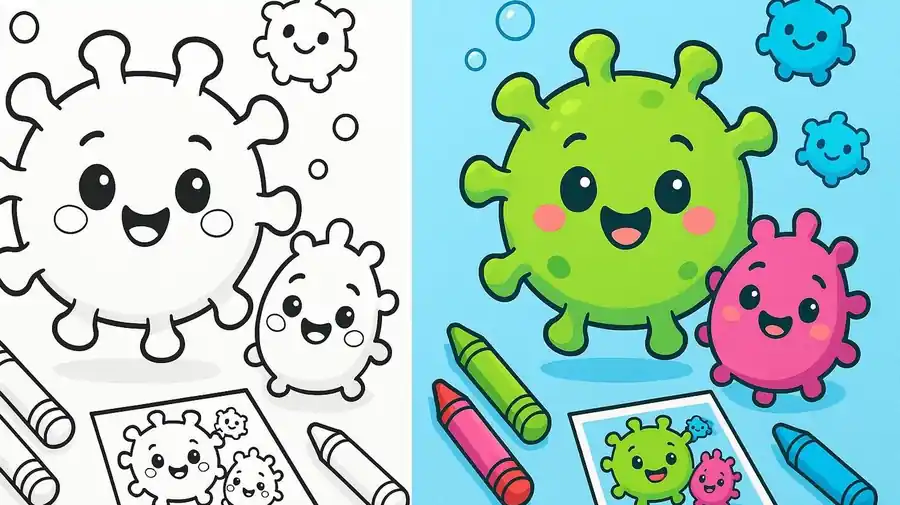
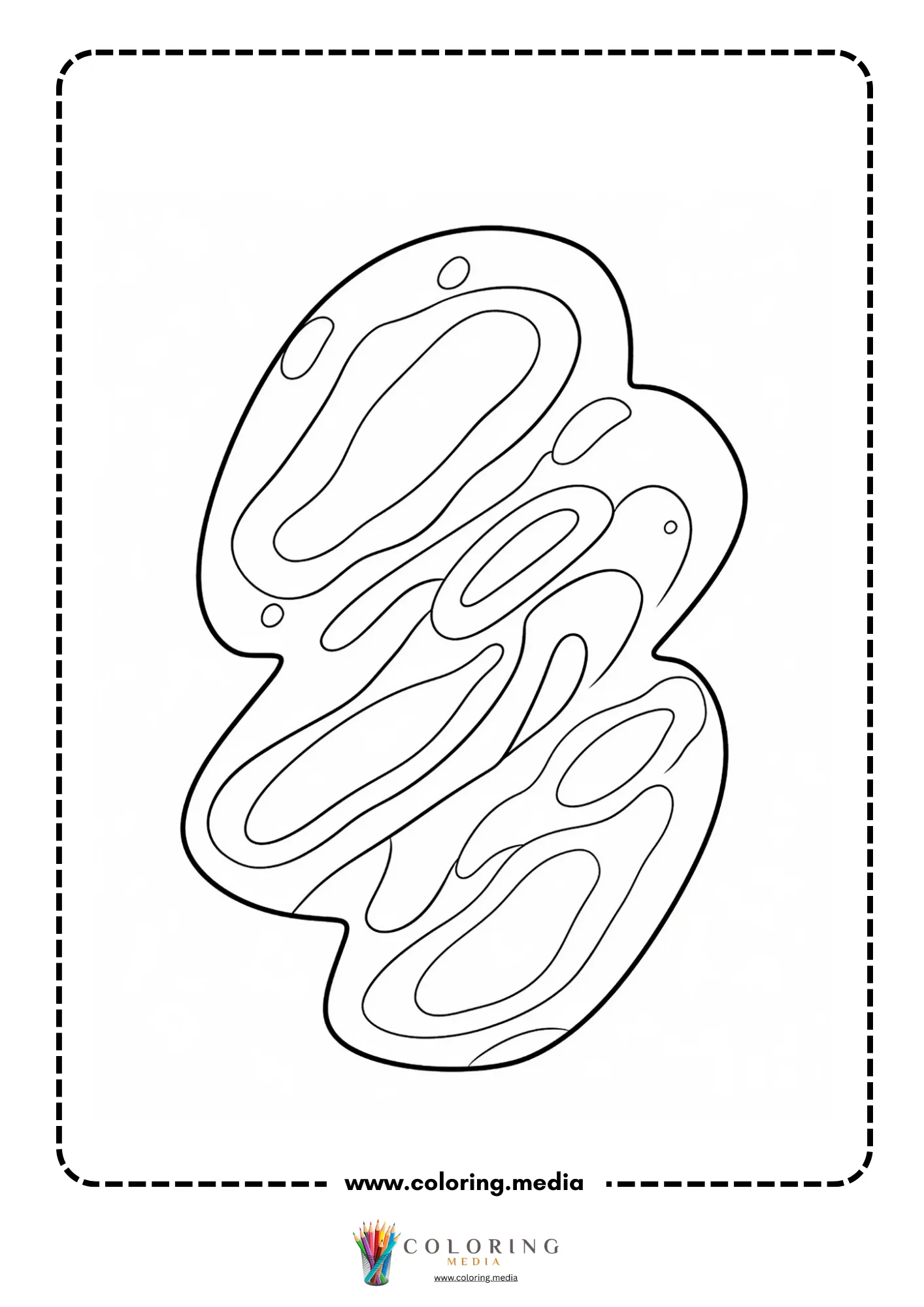
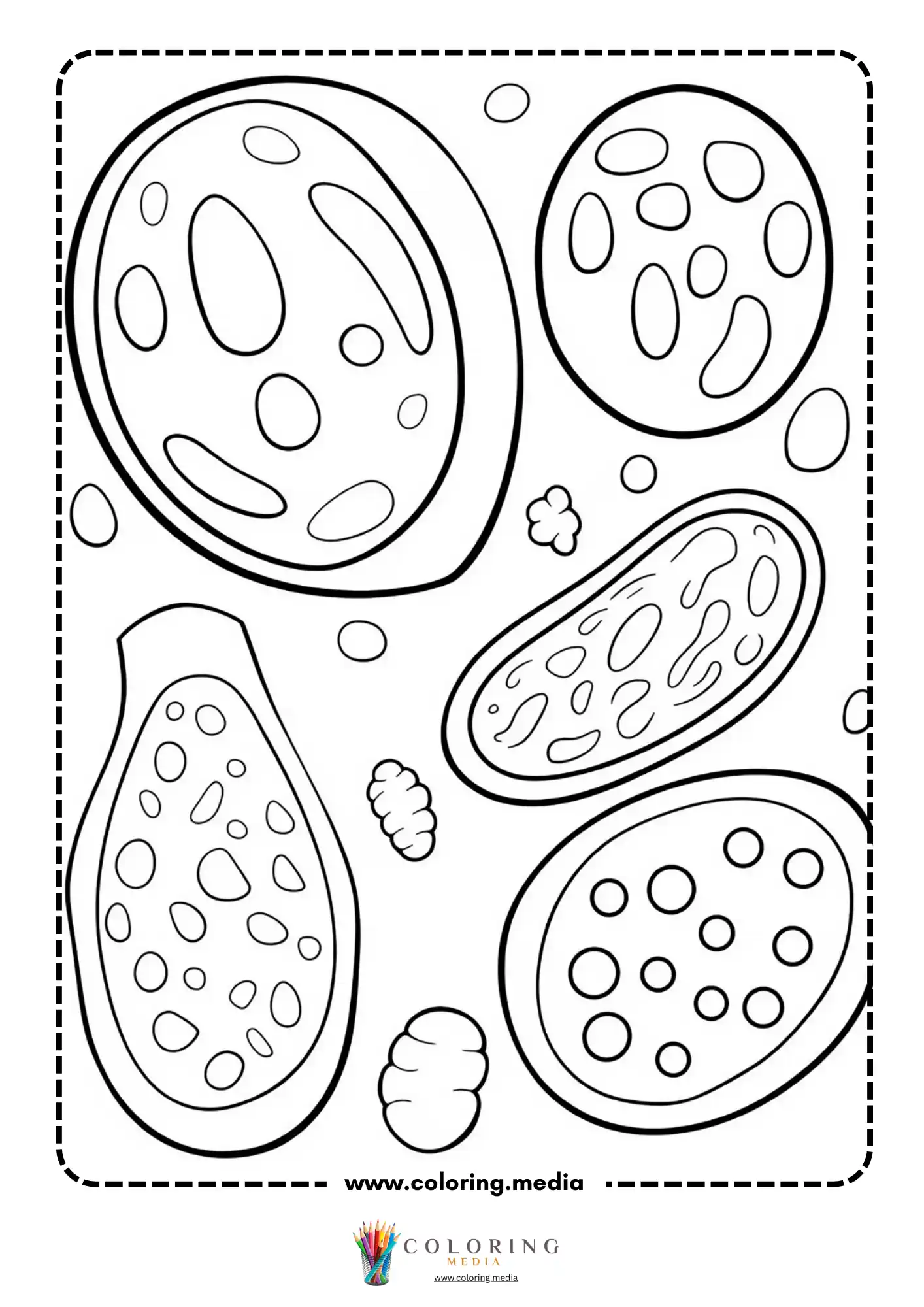
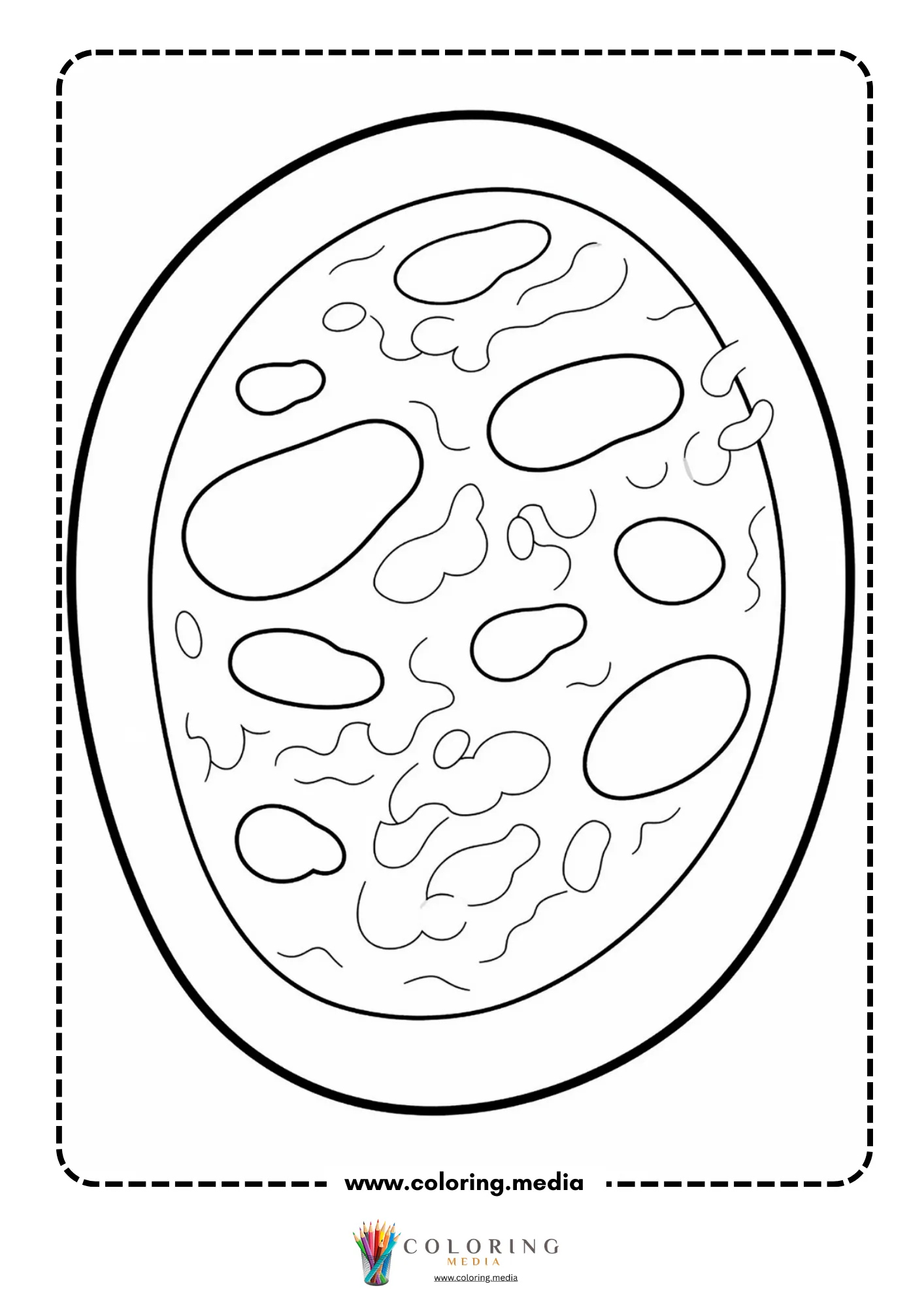
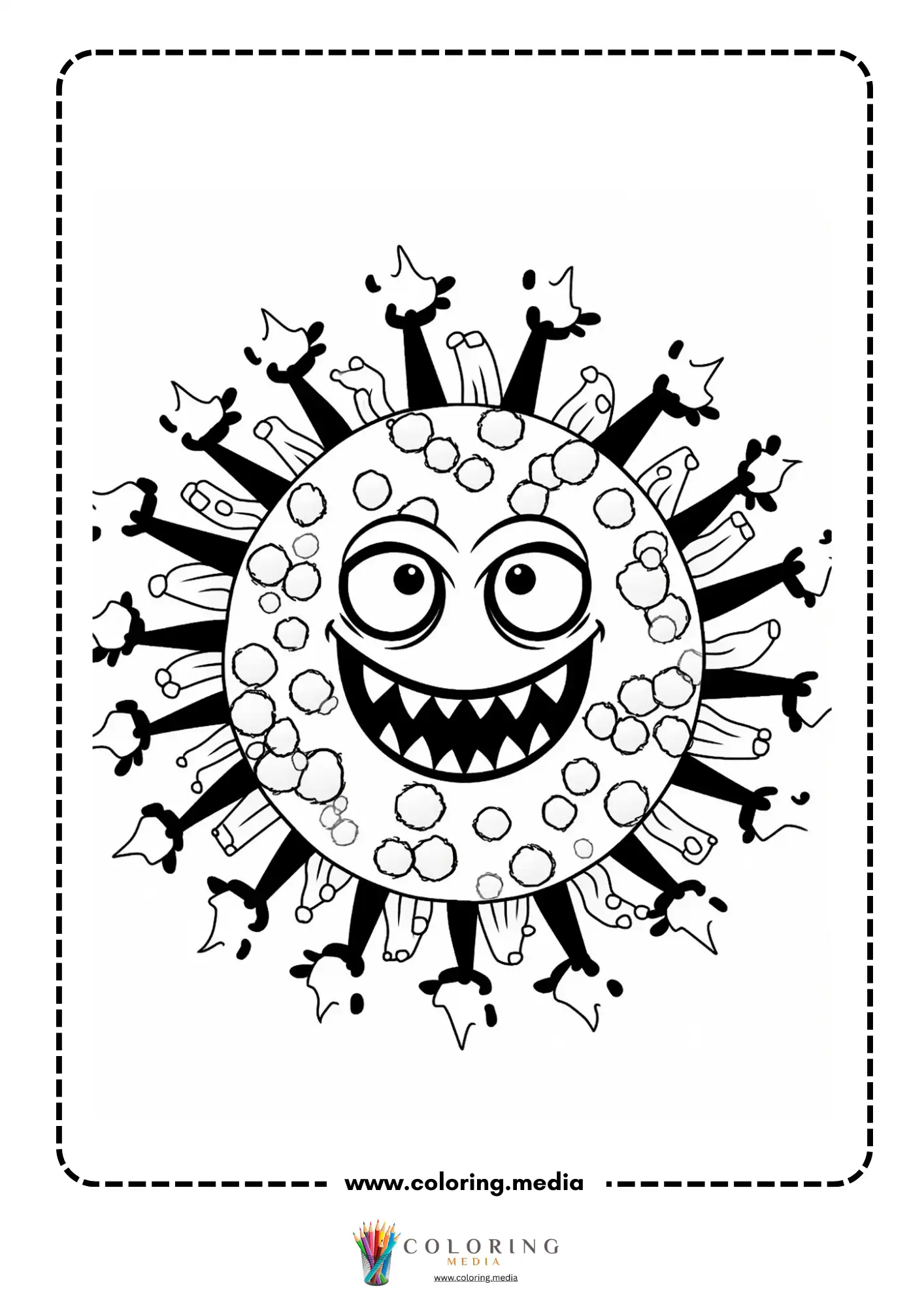
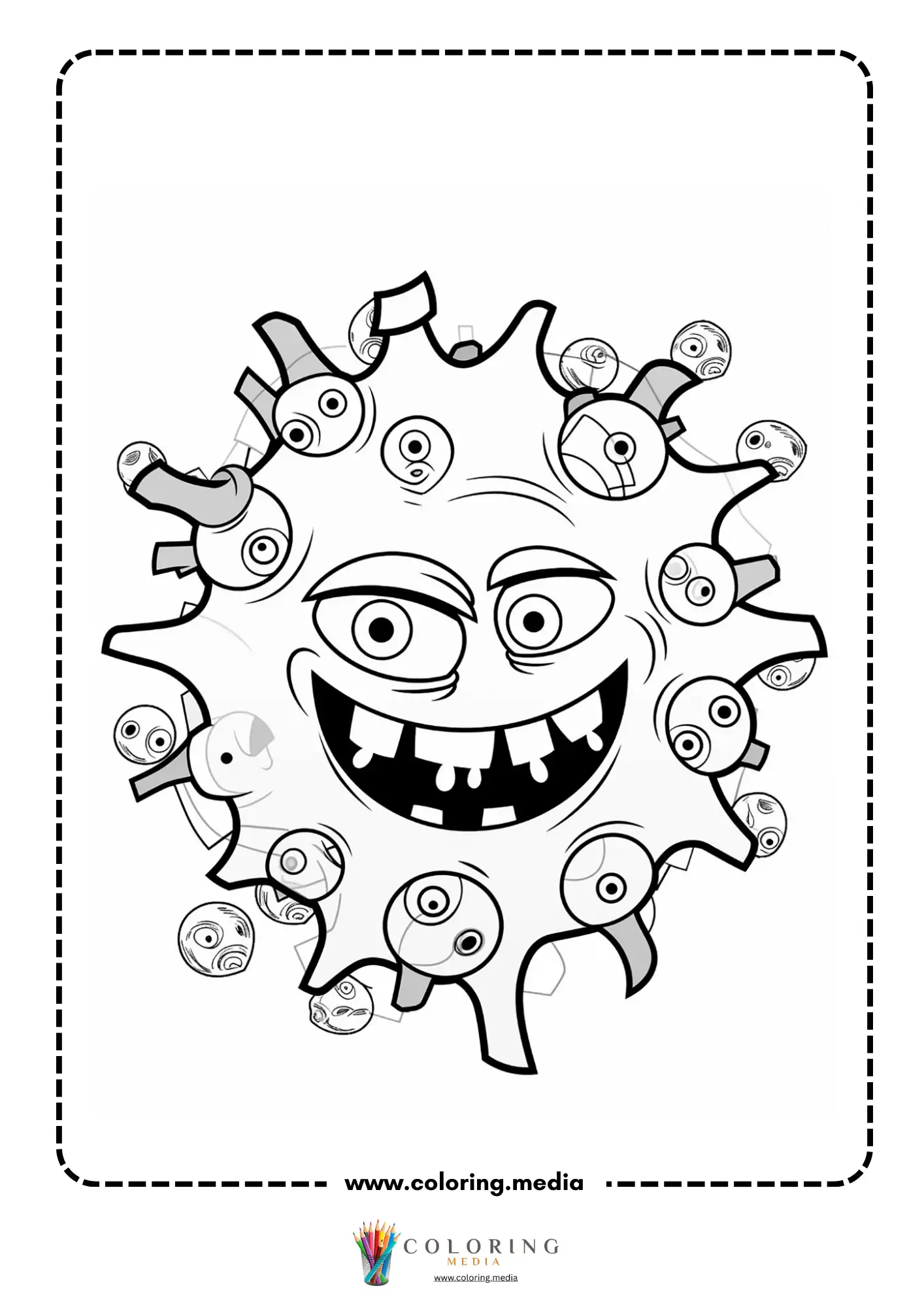
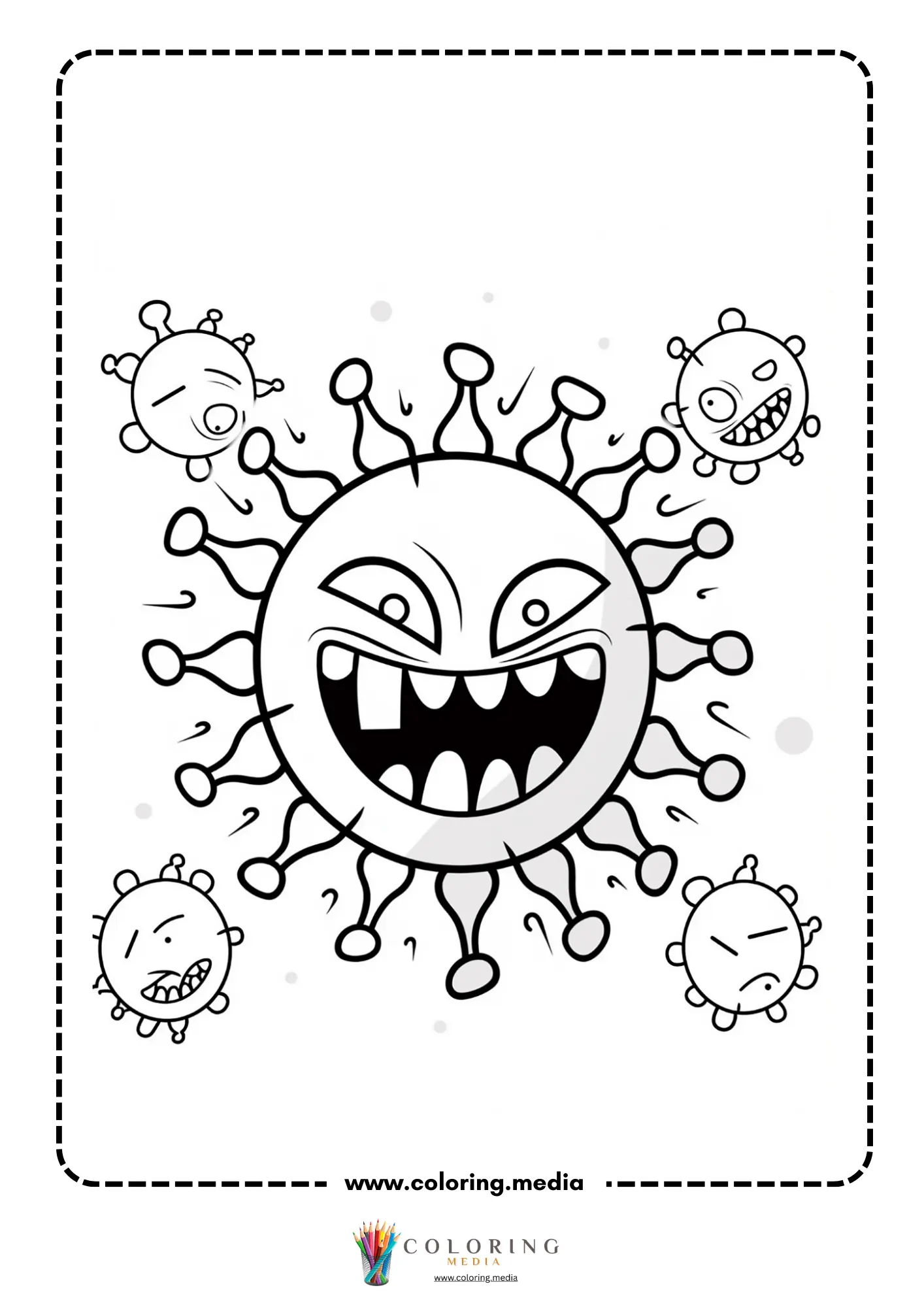
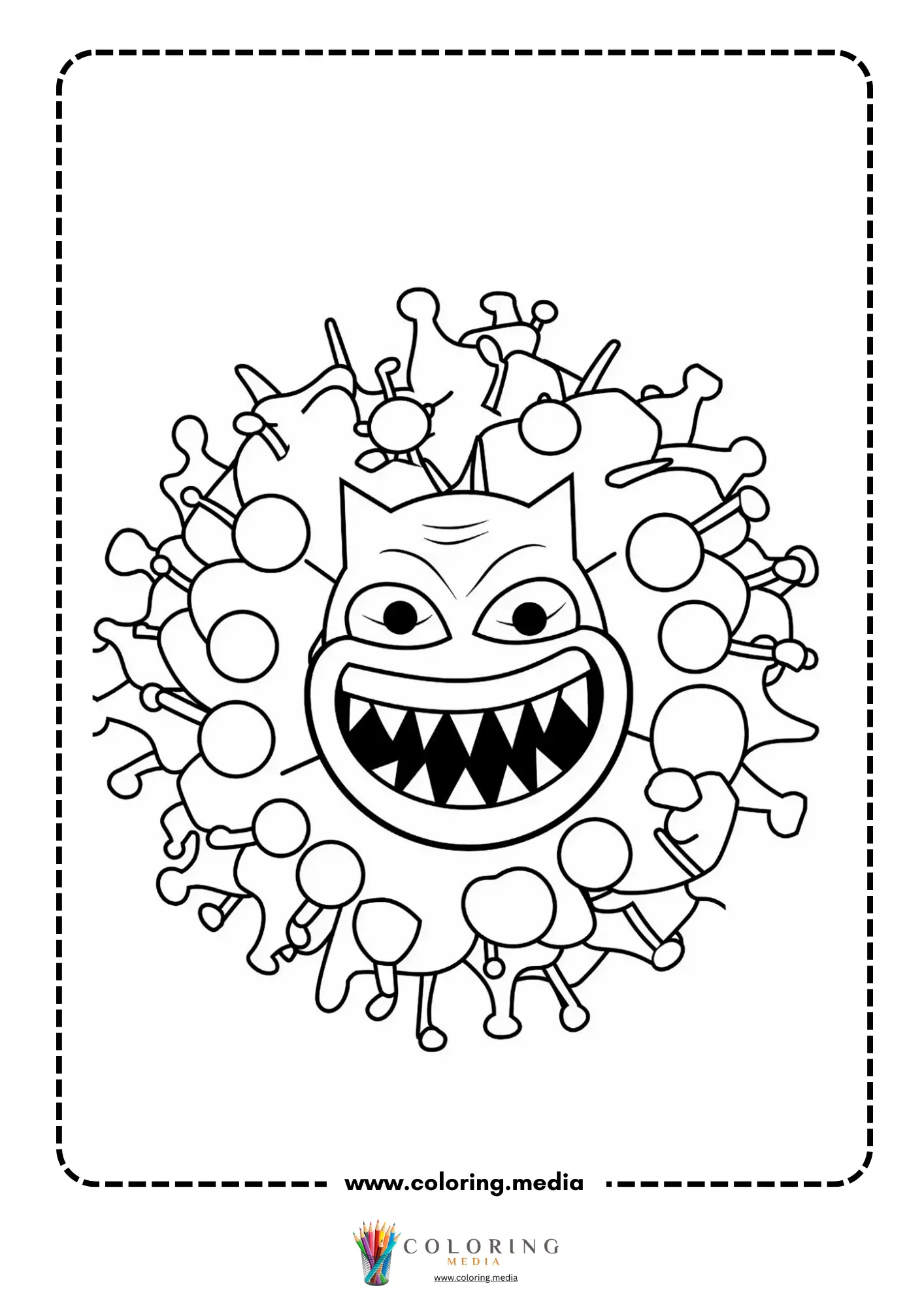
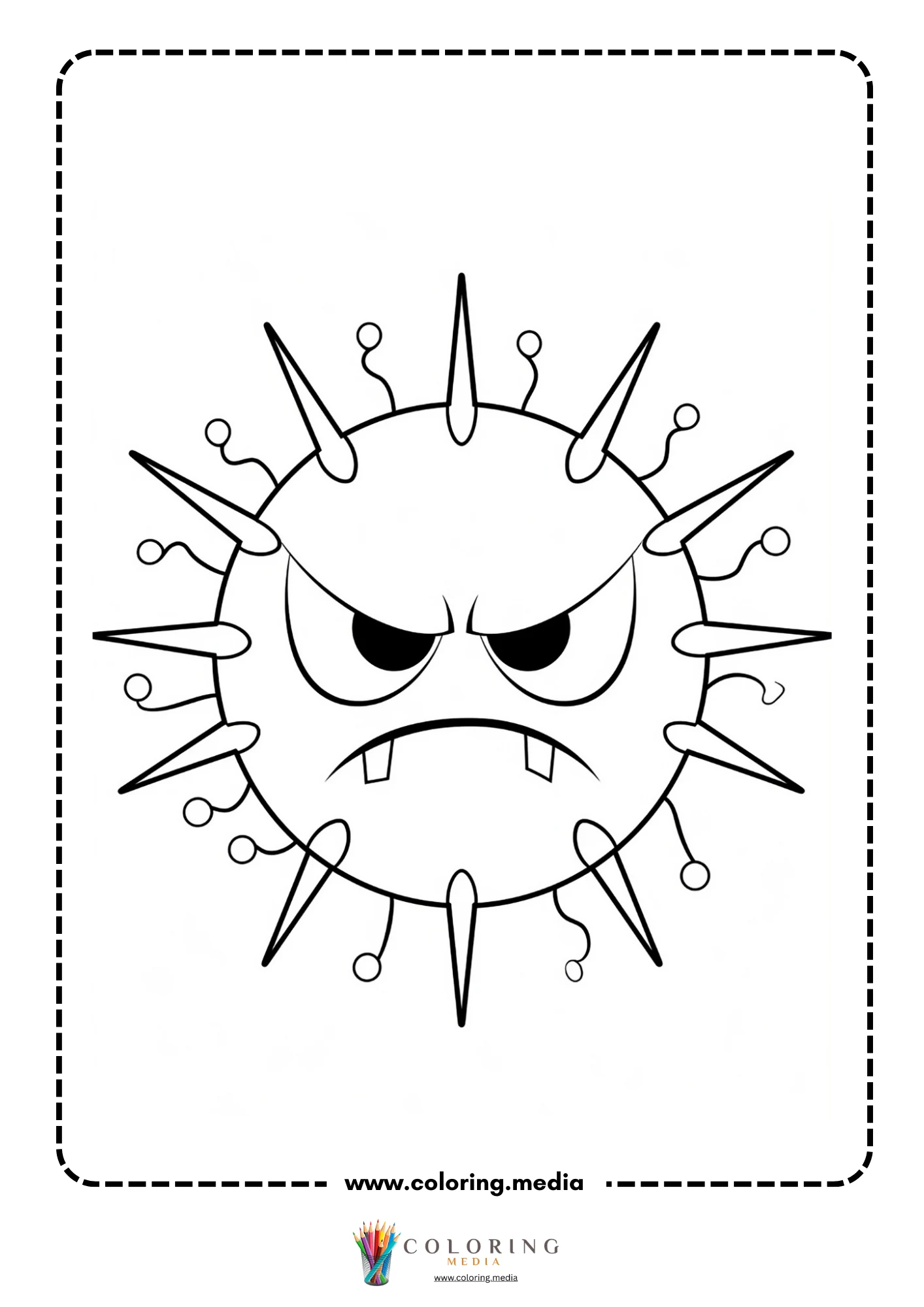
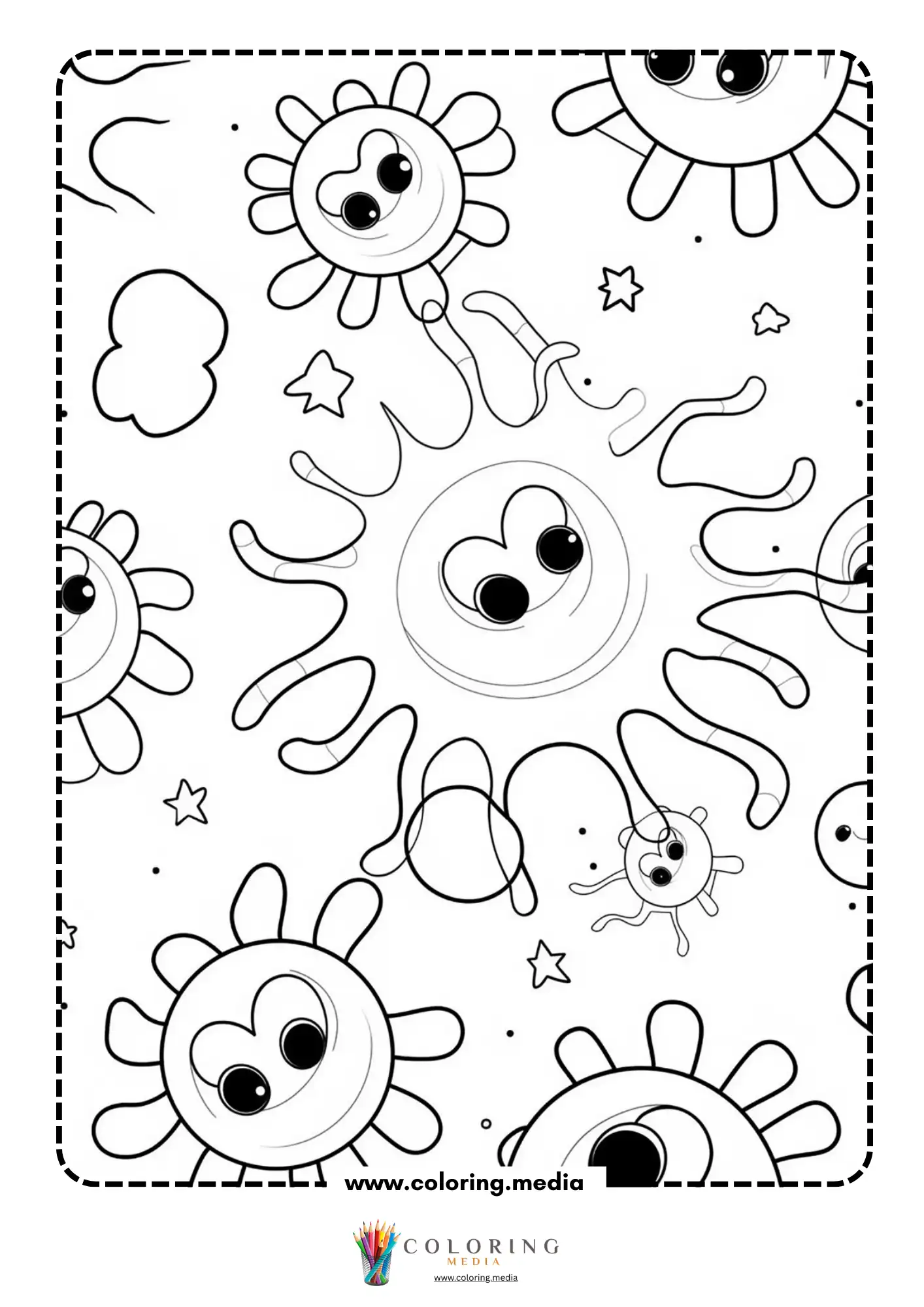
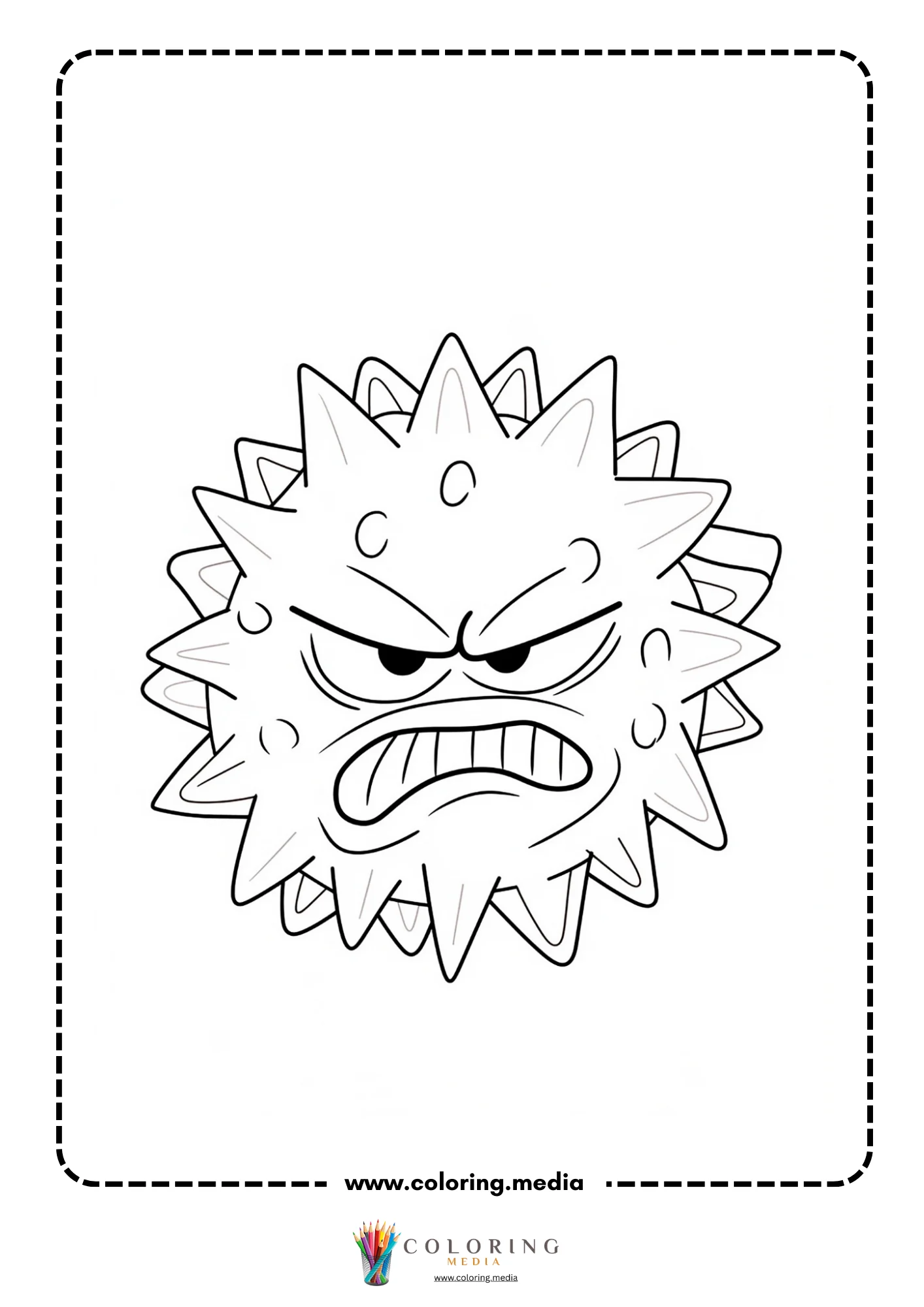
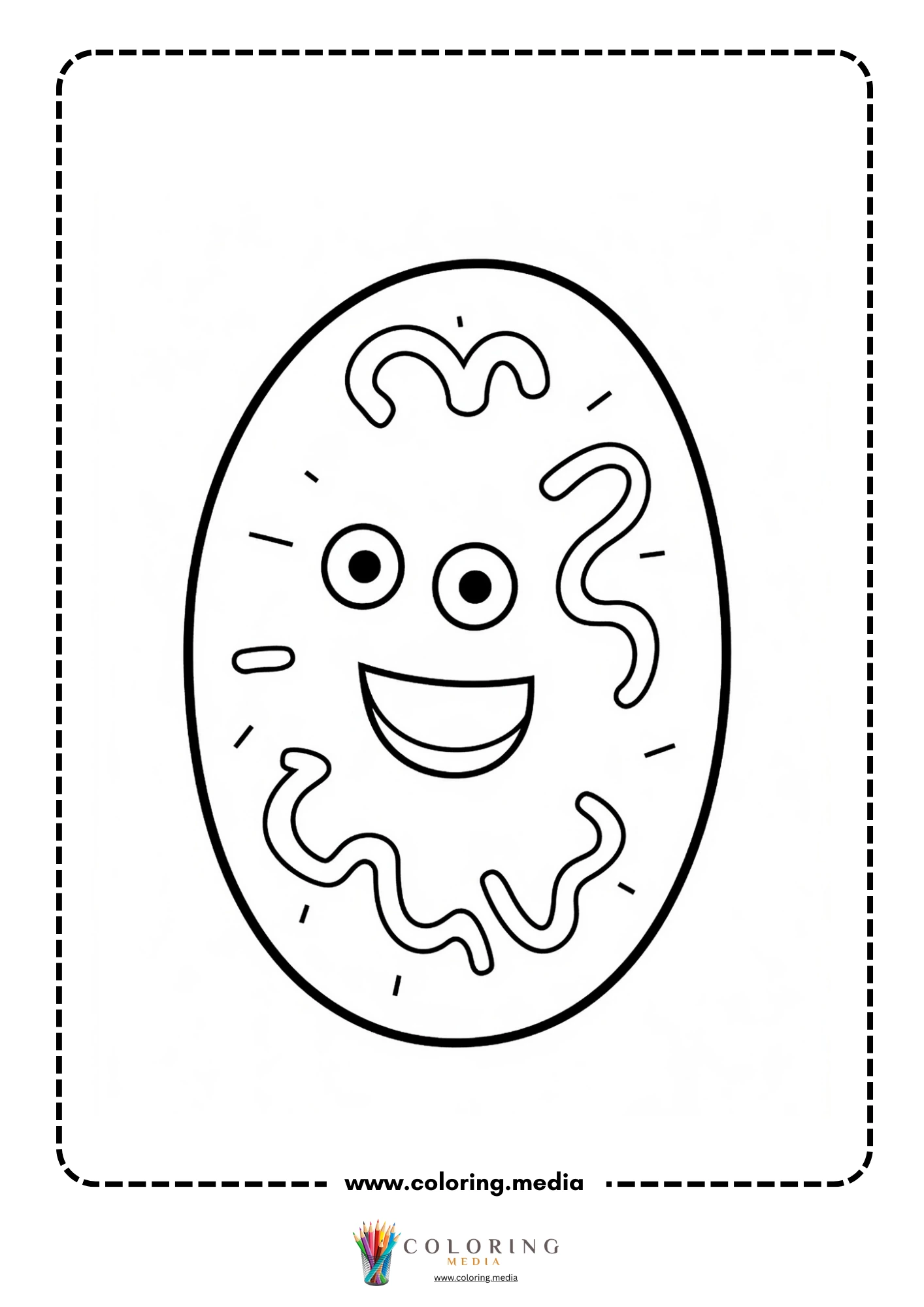
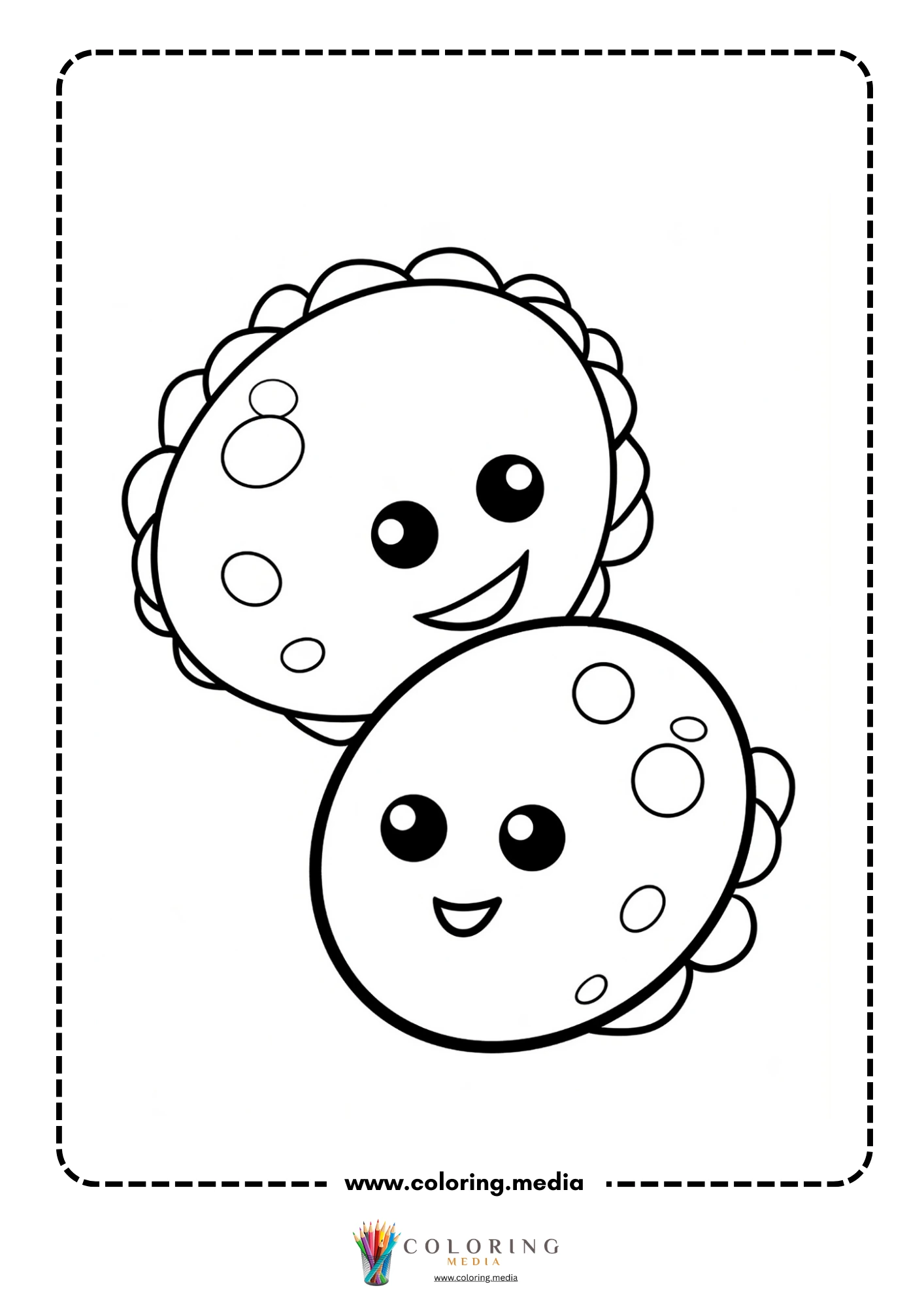
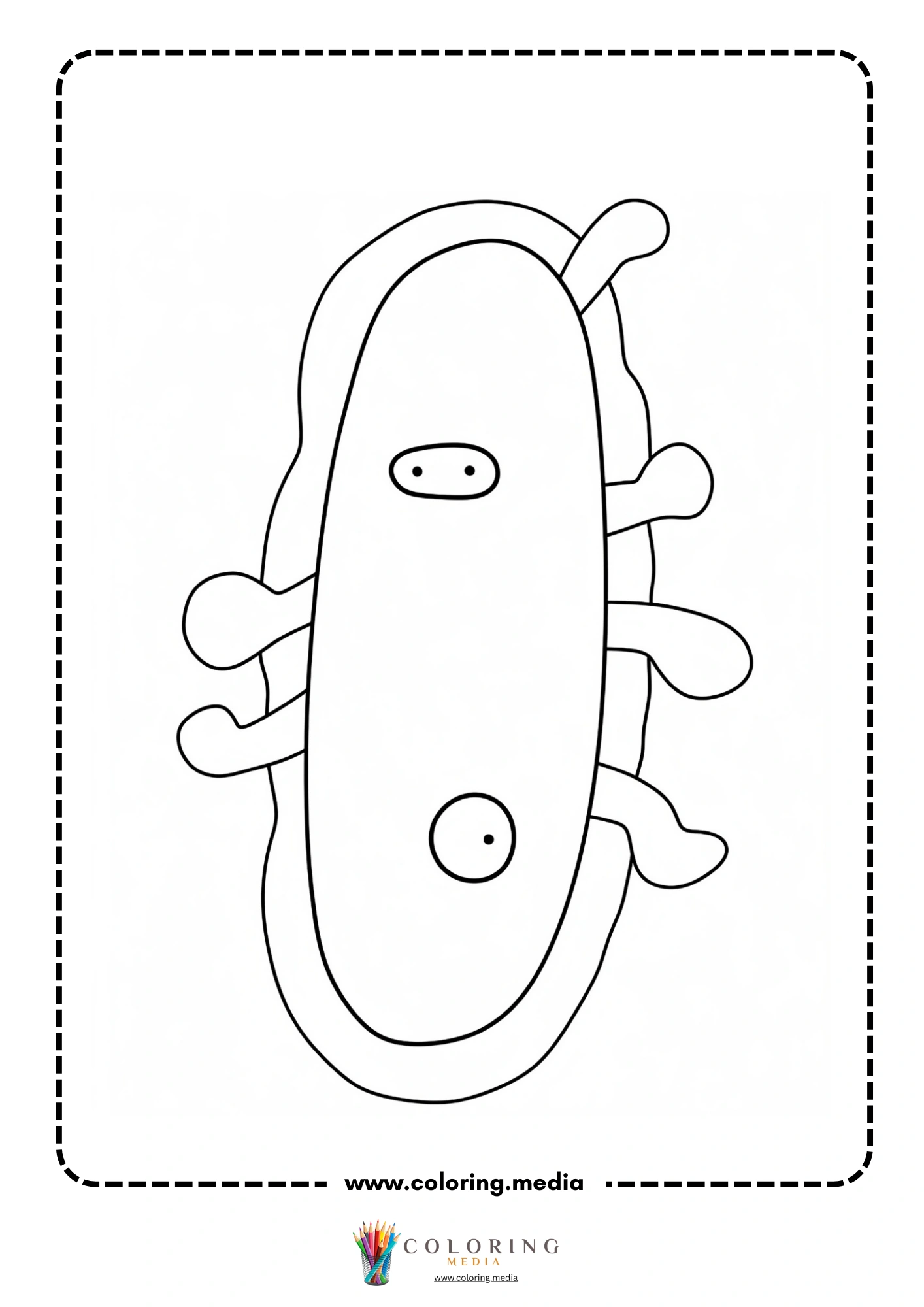
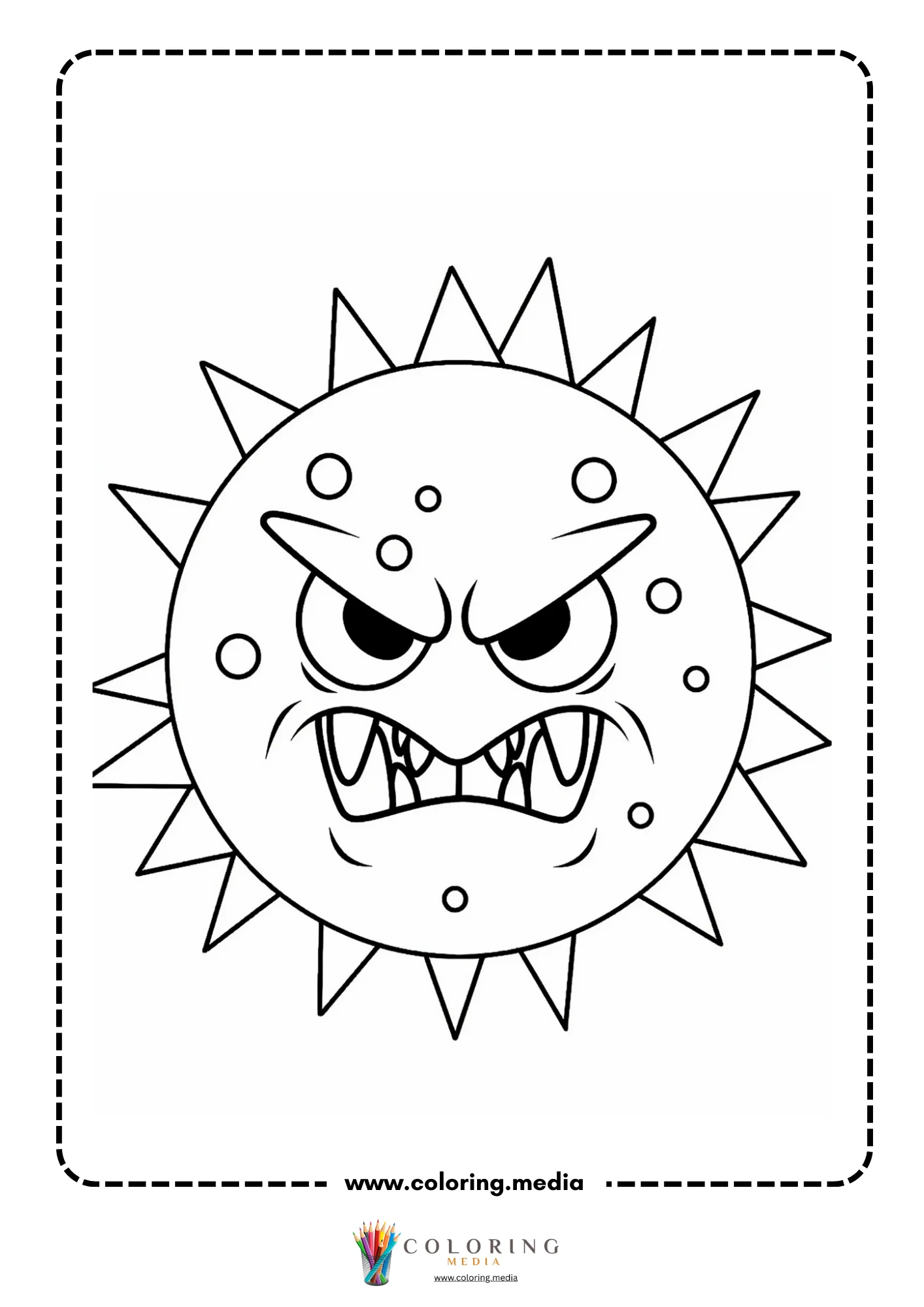
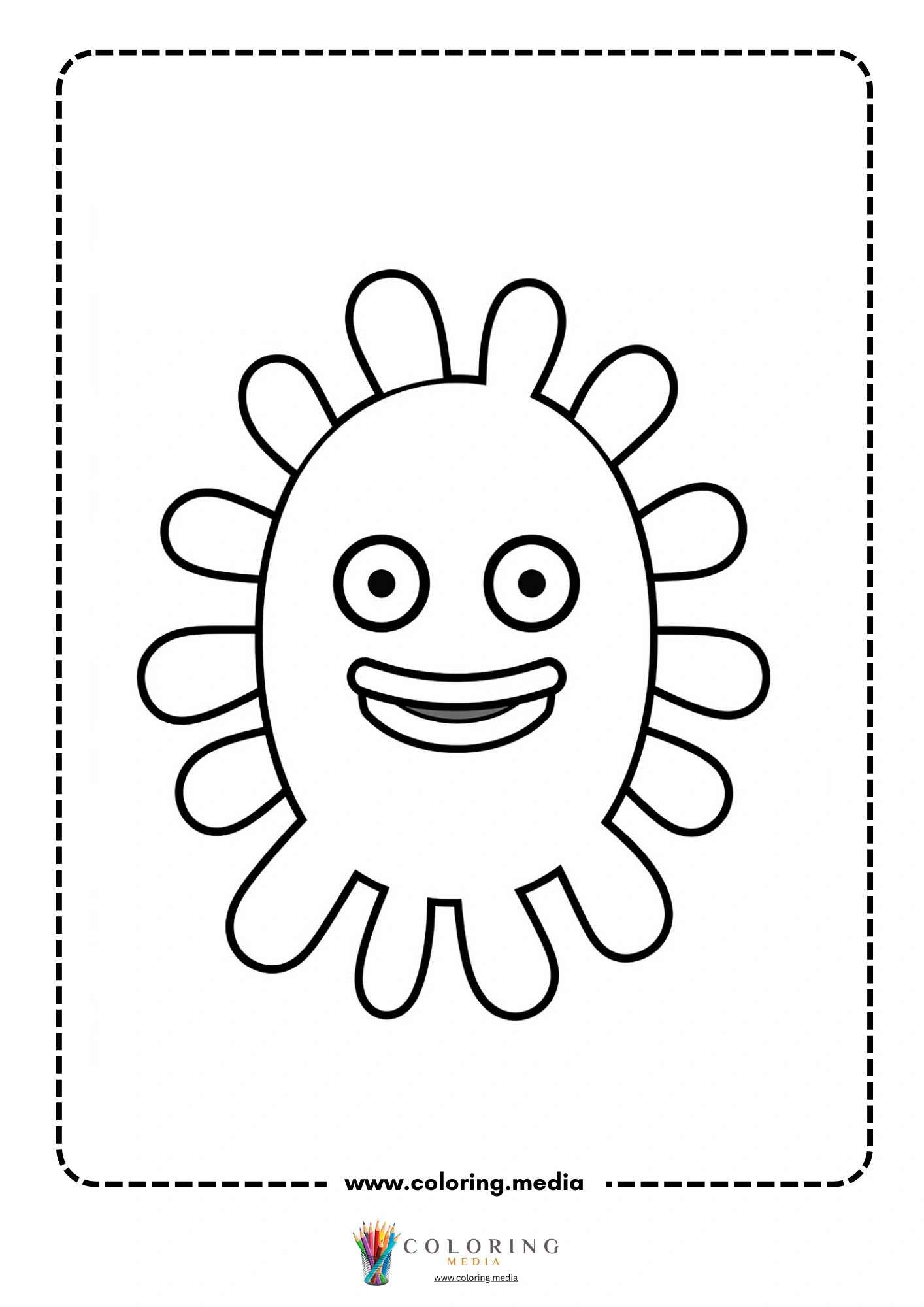
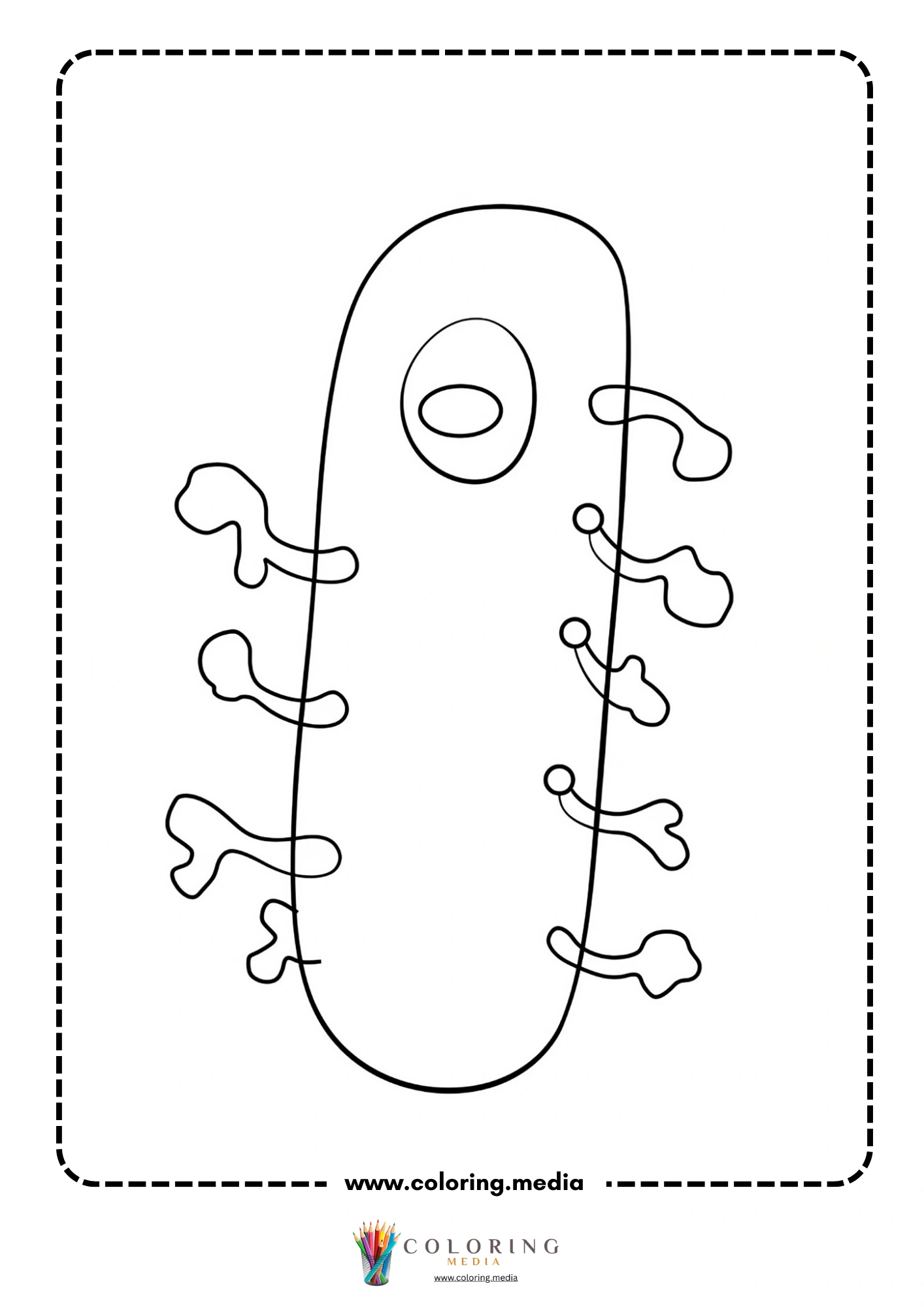
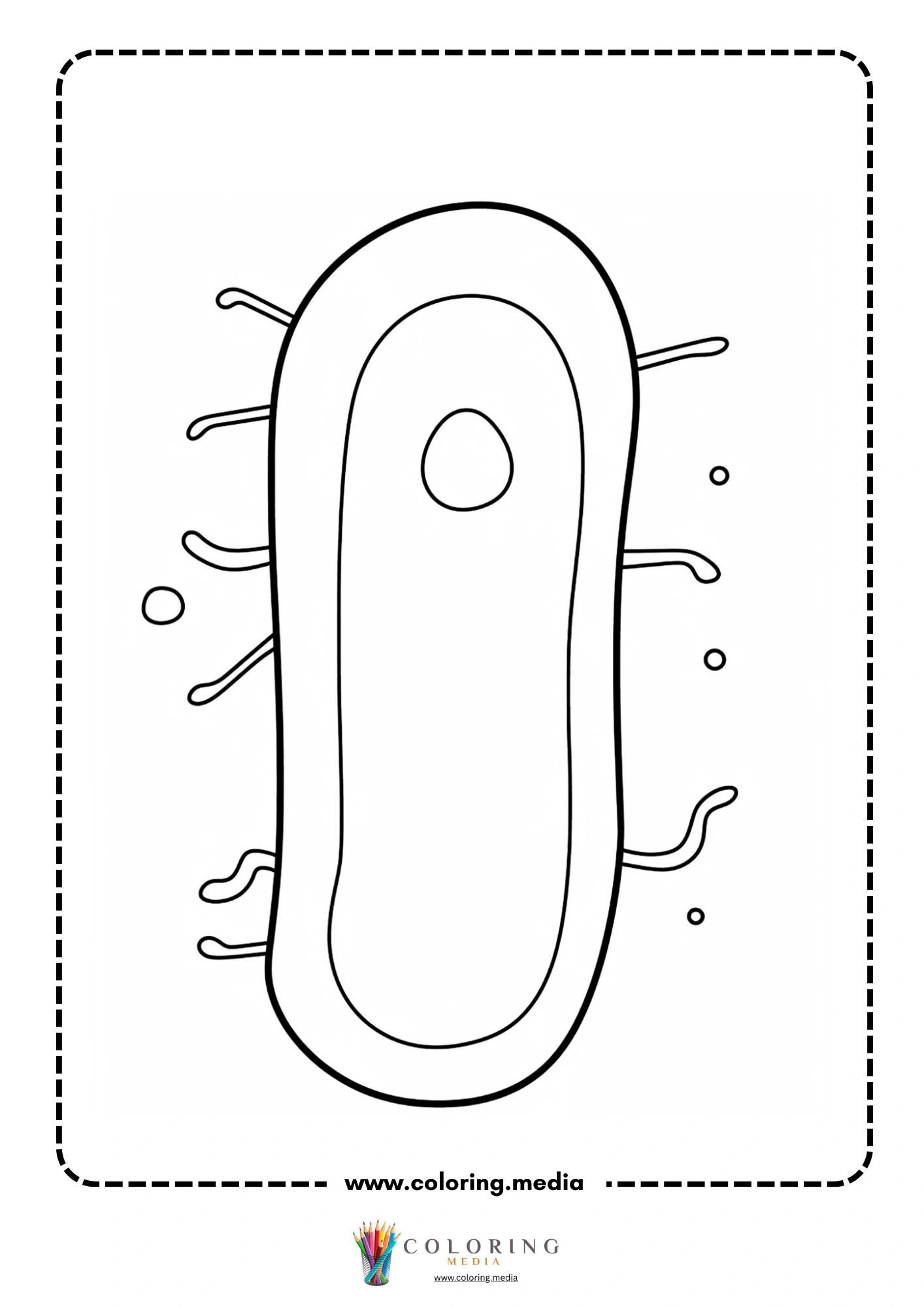
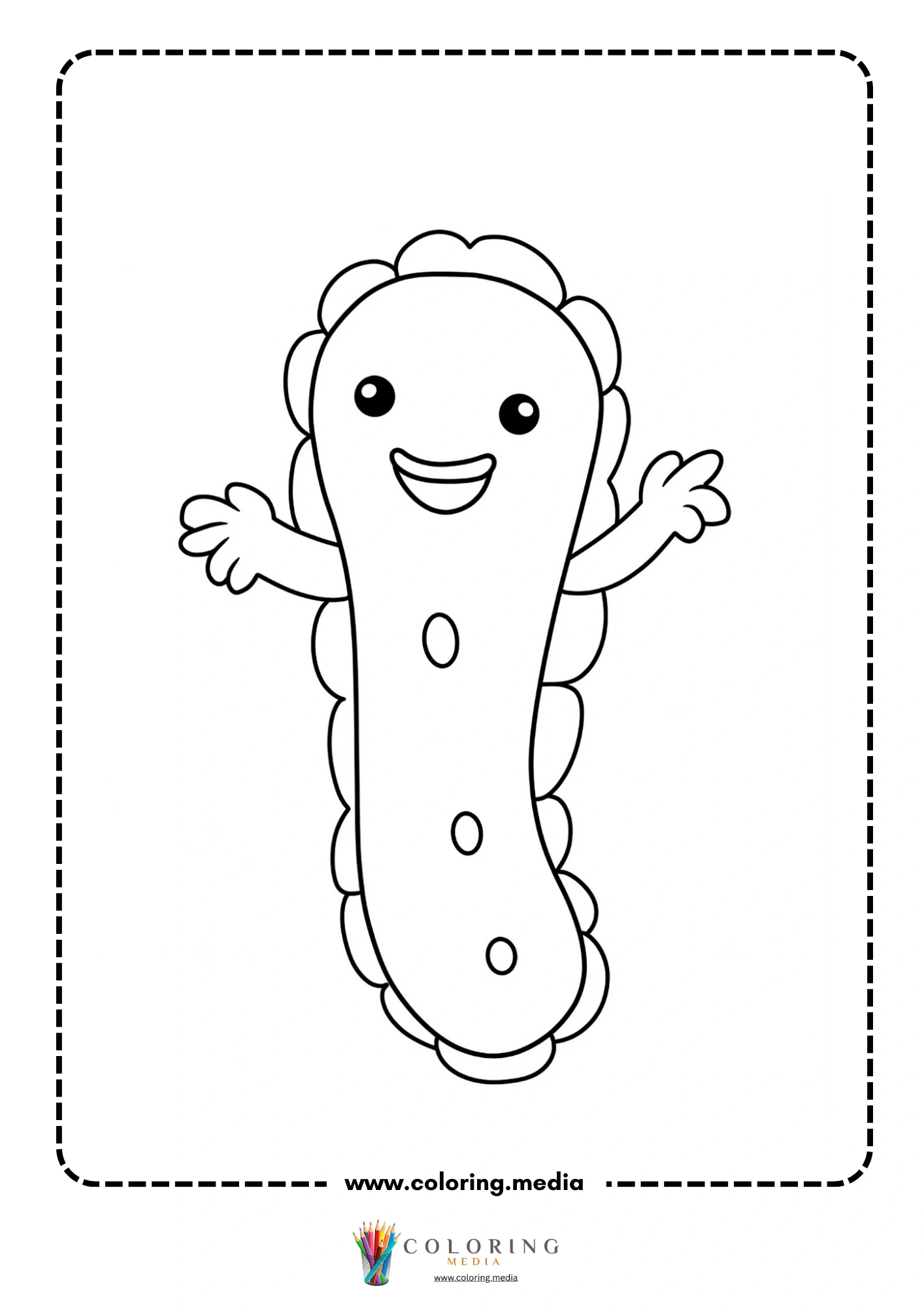
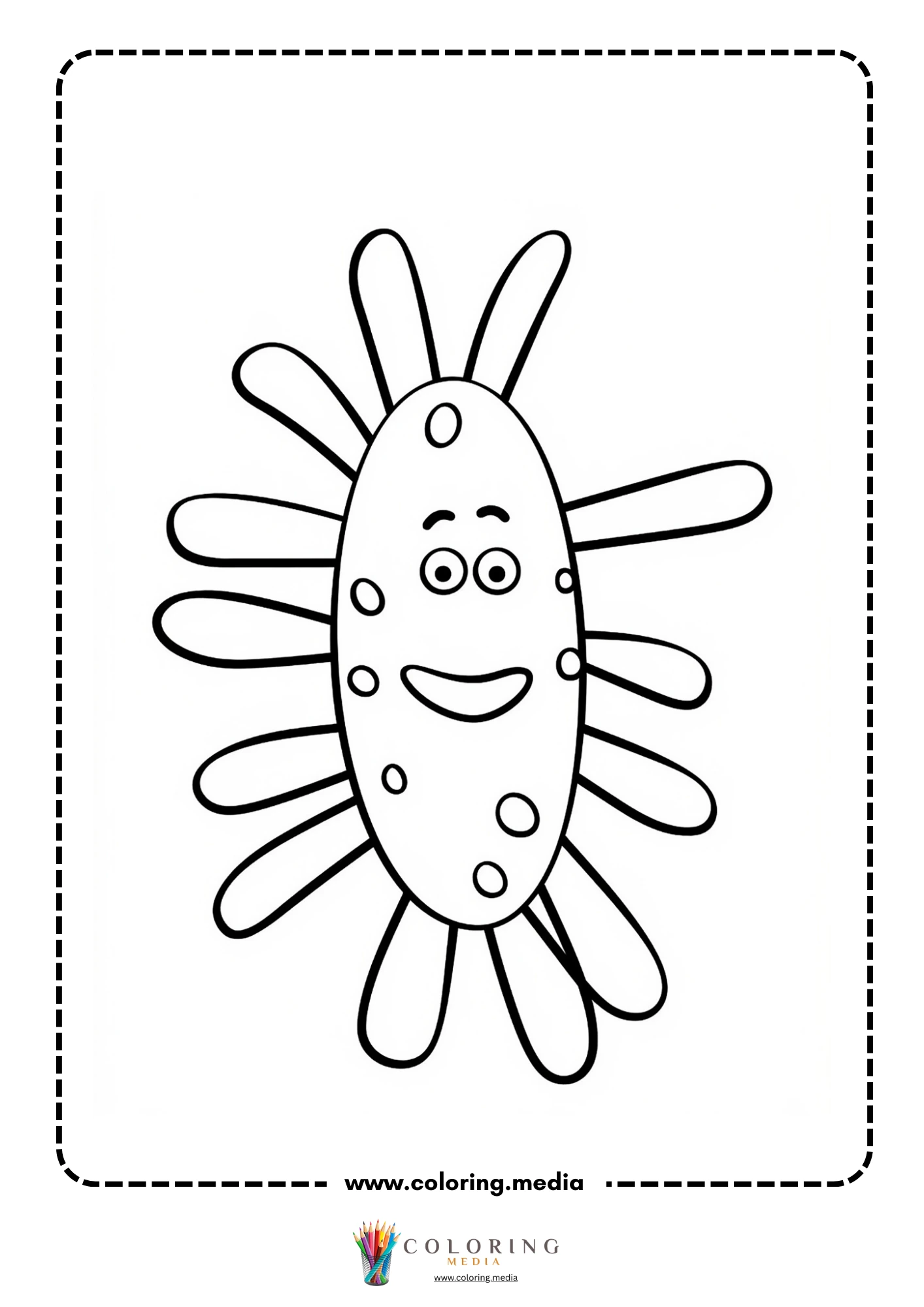
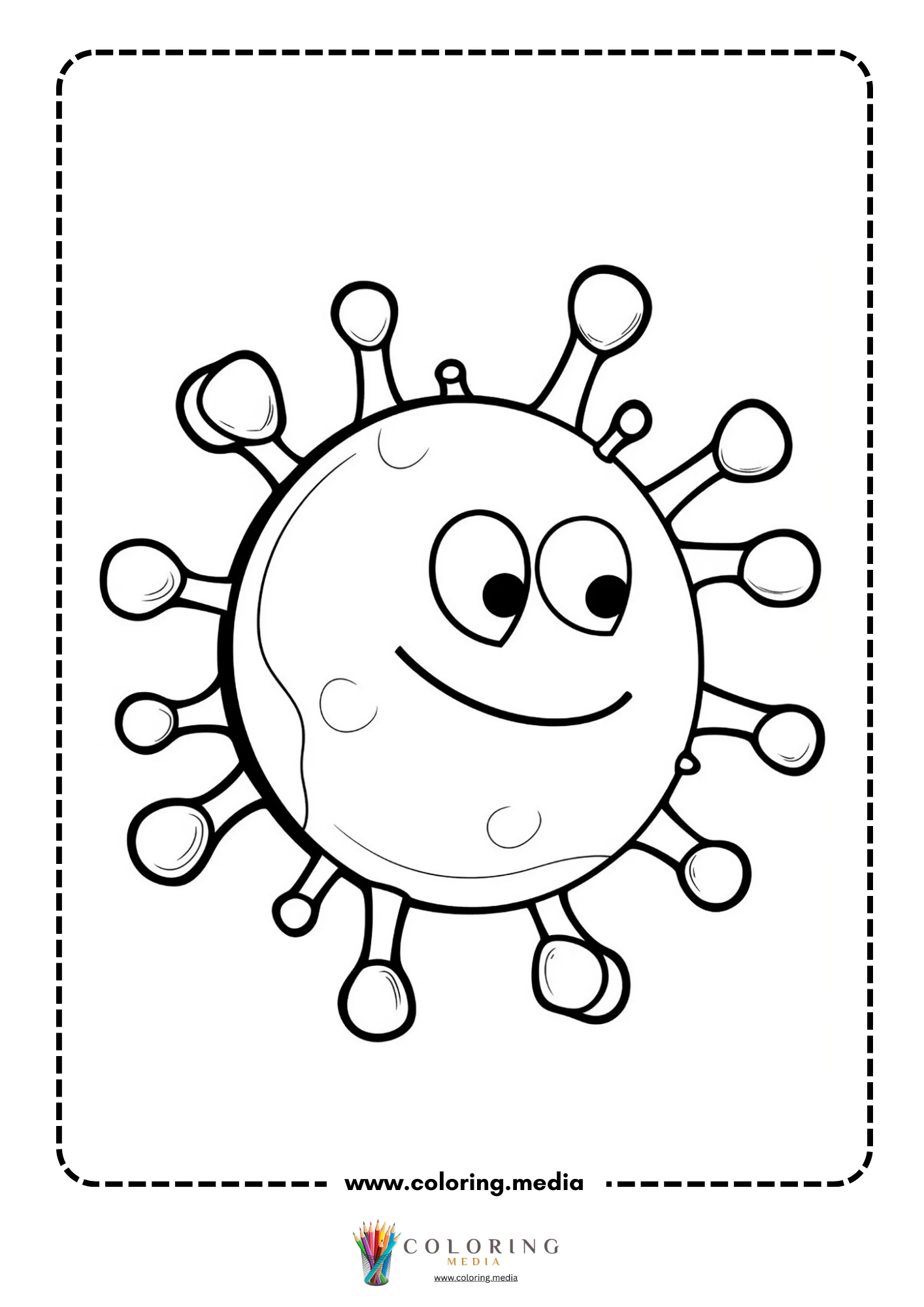
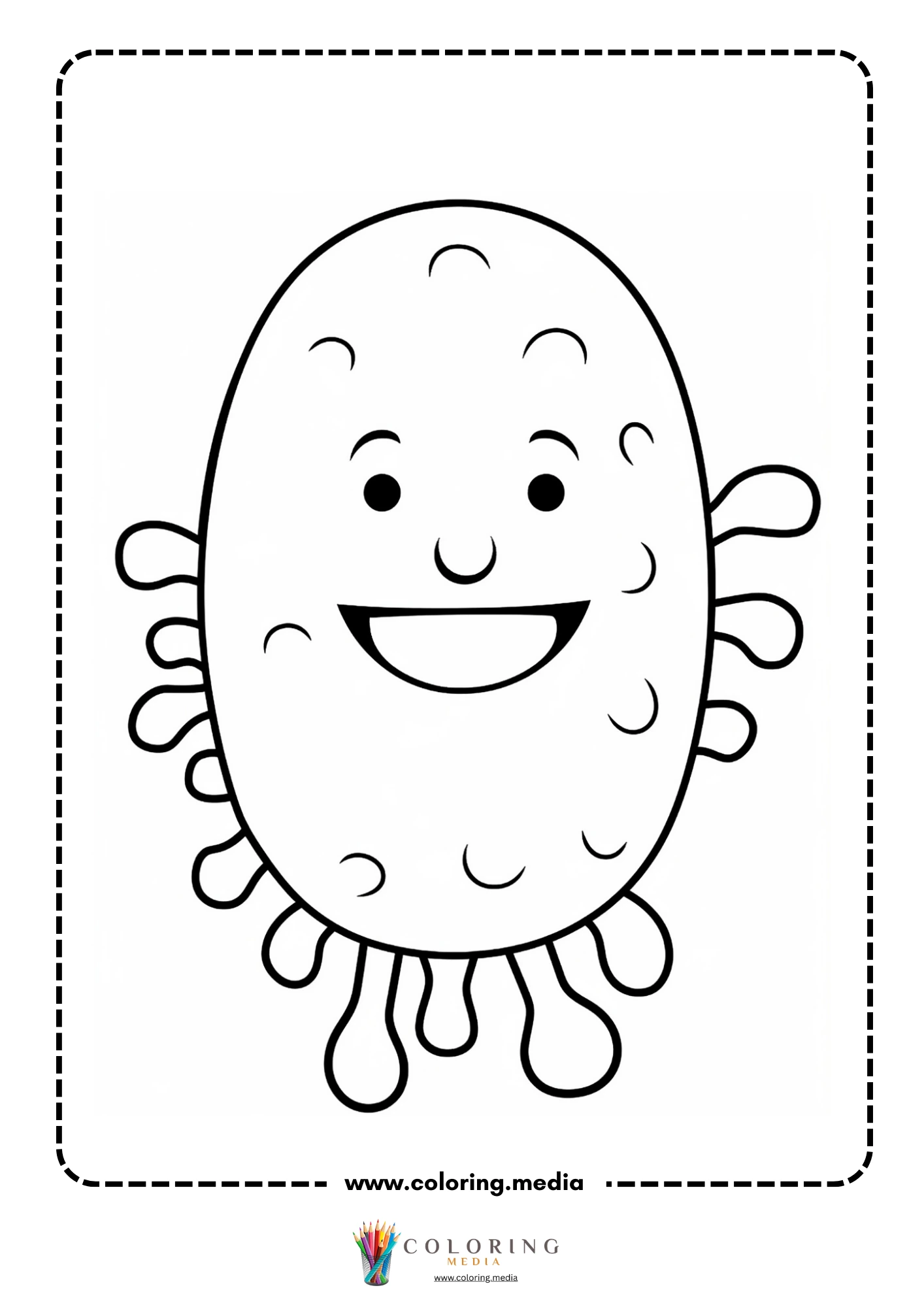
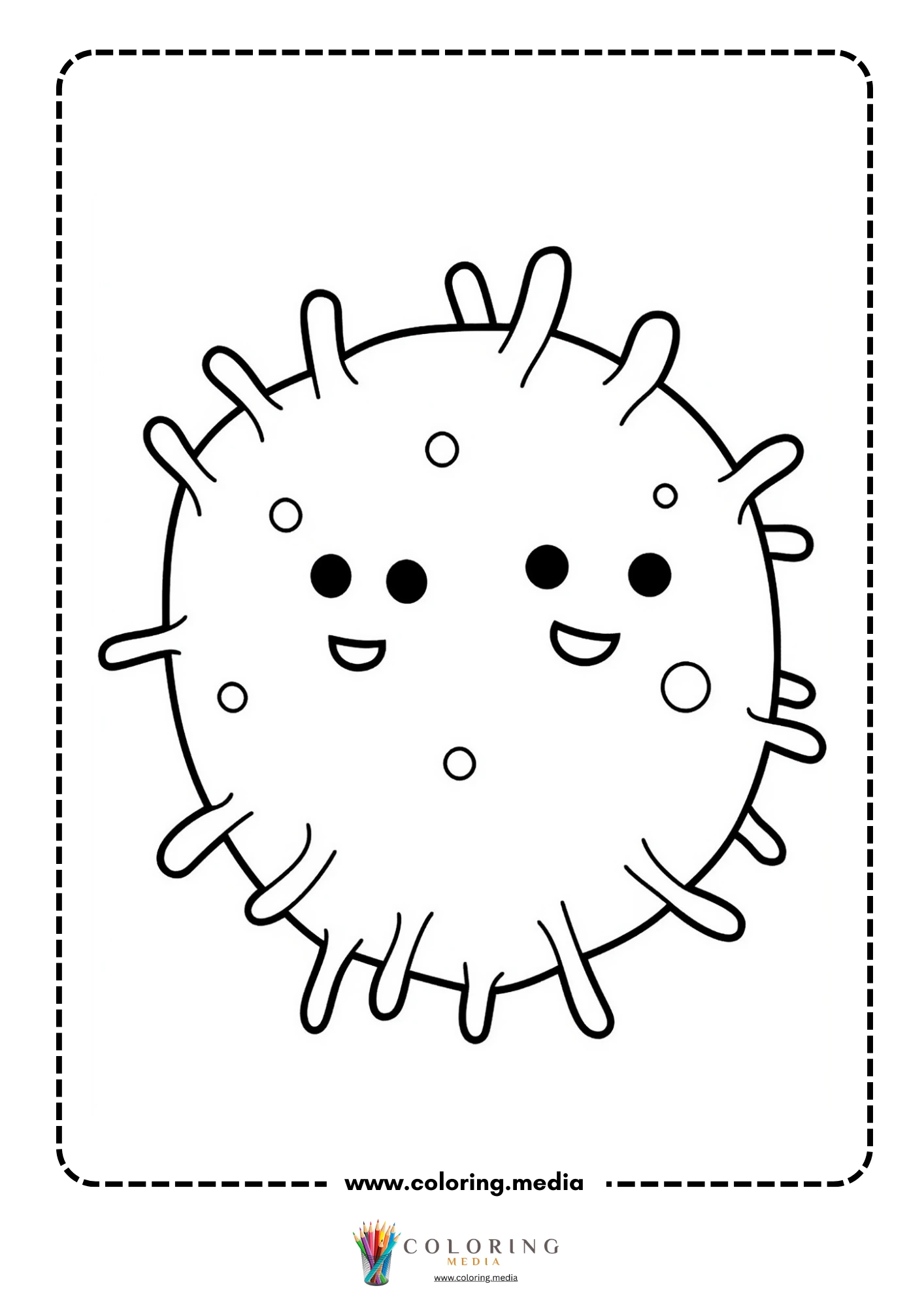
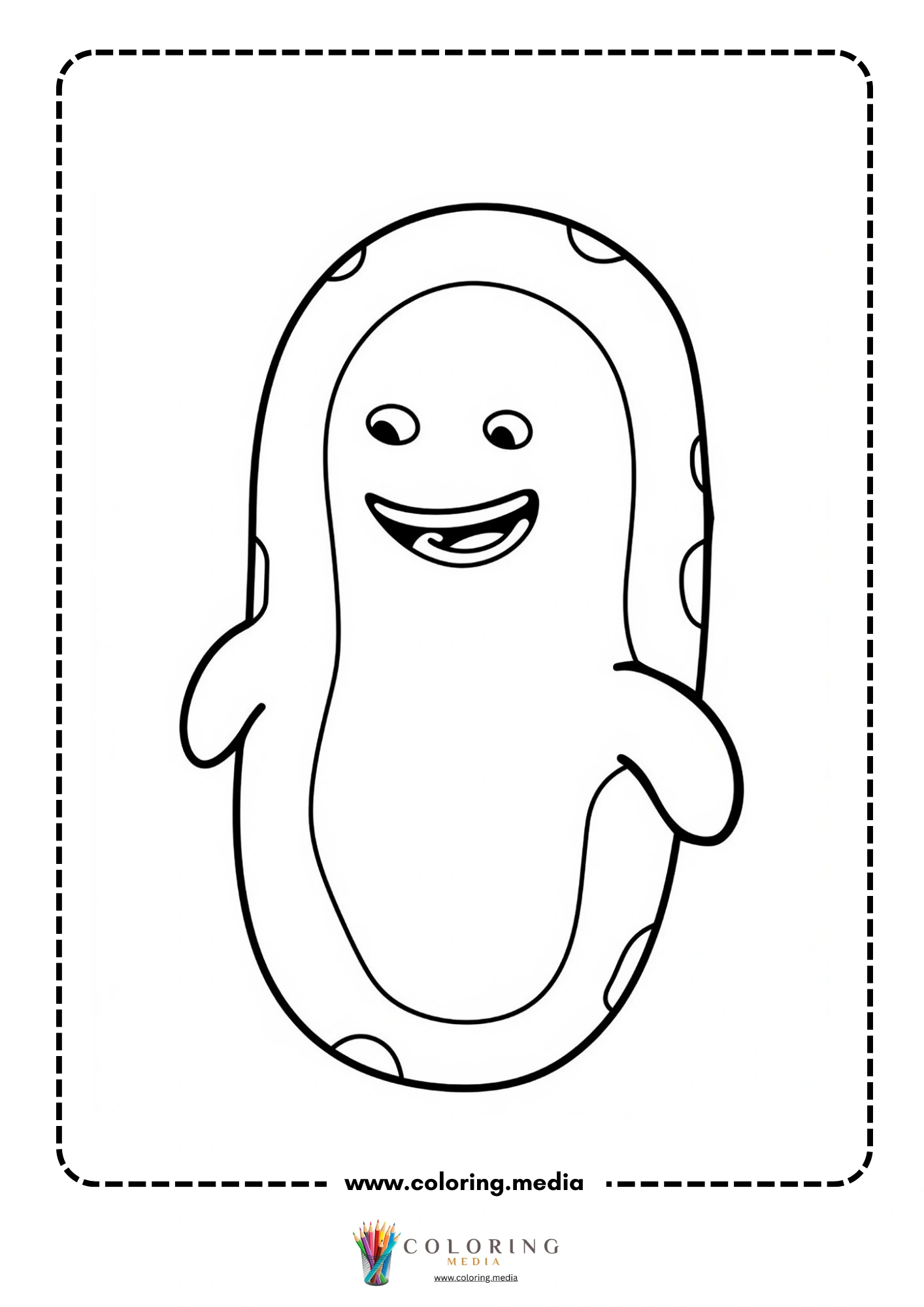
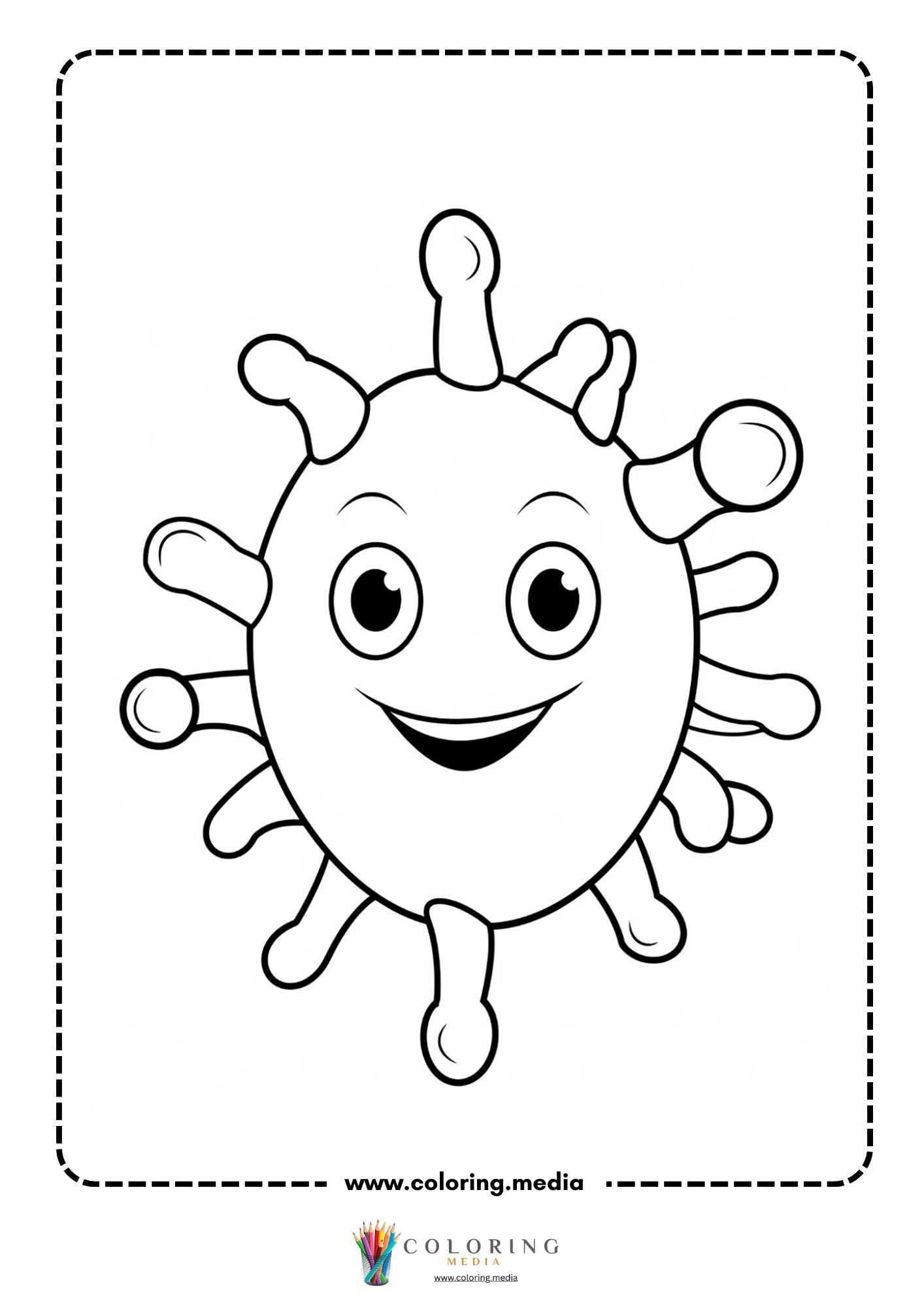
These 24 pages take bacteria and viruses — organisms that are genuinely difficult to visualize and easy to find frightening — and render them as distinct cartoon characters with faces, expressions, and enough anatomical accuracy to serve as a real introduction to microbiology. The set includes spiral-shaped spirochetes with corkscrew bodies, round cocci with face expressions, rod-shaped bacilli drawn like capsules with tiny legs, flagellated bacteria swimming through stylized environments, and several virus particle shapes including a spiky coronavirus-style sphere and a multi-limbed bacteriophage. Some look cheerful; some look menacing.
The character approach is effective for teaching because it gives each microorganism a memorable visual identity. A child who has colored a spirochete with its corkscrew shape will recall that image when the word comes up in a science class years later. Everything here is free to download and easy to print.
Free Printable Cute Virus and Bacteria Coloring Pages
This collection includes 24 printable cute virus and bacteria coloring pages featuring anthropomorphized cartoon microorganism characters — spirochetes, cocci, bacilli, flagellated bacteria, coronavirus-style spheres, bacteriophages, and more, each given a distinct facial expression and drawn with enough anatomical reference to be recognizable as a real microorganism type. Print on US Letter or A4 paper.
Who Are These Cute Virus and Bacteria Coloring Pages Best For?
Early-elementary children (ages 6-9) who are curious about why people get sick, what germs actually look like, or what happens inside the body will find these pages immediately engaging. The cartoon faces make potentially scary subjects approachable — a menacing-looking virus character is still a cartoon, and the humor in the faces makes the topic feel safe to explore.
Middle-school students (ages 11-14) studying microbiology, cell biology, or infectious disease can use these pages as a creative review tool. Coloring a bacteriophage — with its hexagonal head, collar, tail sheath, and leg-like tail fibers — is more memorable than reading a description, and the slightly cartoonish versions here still capture the real structural features that distinguish it from other virus types.
Science teachers at both levels can use individual pages as entry points for specific lessons — introduce the page, color it while discussing its real-world biology, then move into the textbook content with a concrete visual already established in the child’s memory.
Interesting Virus and Bacteria Facts to Share While Coloring
Bacteria are the oldest living organisms on Earth. Fossil evidence suggests bacteria have existed for at least 3.5 billion years — more than three-quarters of Earth’s total lifespan. They were the only life on Earth for the first 2 billion years.
Viruses are not technically alive. They cannot reproduce on their own, do not grow, and do not carry out any metabolic processes independently — they only become active inside a host cell, using the host’s machinery to copy themselves. Whether they count as life is a genuine scientific debate with no settled consensus.
There are more bacterial cells in your body than human cells. Recent estimates put the ratio at roughly 1:1, with about 38 trillion bacterial cells alongside 30 trillion human cells. Most are harmless or beneficial — the gut microbiome alone contains hundreds of species that help digest food, regulate the immune system, and produce vitamins.
Bacteriophages (viruses that infect bacteria) are the most abundant entities on Earth — estimated at 10 to the power of 31 (that is 10 followed by 31 zeros). They outnumber bacteria 10 to 1 in the ocean and play a critical role in cycling nutrients through marine ecosystems.
Creative Virus and Bacteria Coloring and Craft Ideas
Species ID Card After coloring a microorganism, write a 3-line species card on the back: its real name, whether it is a bacterium or virus, and one fact about what it does.
Good vs. Bad Sort After coloring several pages, sort them into beneficial microorganisms (helpful bacteria), harmful pathogens, and neutral — discuss what determines which category an organism falls in.
Size Scale Drawing Bacteria are typically 1-10 micrometers long. Draw a human hair (about 70 micrometers) beside a bacterium at scale on paper — a useful way to grasp just how small these organisms are.
Petri Dish Art Use a circular paper cut-out as a pretend petri dish and arrange colored cutout microorganism characters inside it as if they are growing in culture.
Microscope Comparison Look up real microscope images of each organism colored and compare the actual appearance to the cartoon version — what did the artist exaggerate, and what did they get right?
Immune System Story Write a short comic strip or story where a white blood cell encounters and defeats one of the villain bacteria characters from the coloring pages.
Virus vs. Bacteria Sorting Game After coloring a set, flip all pages face-down and try to correctly sort them into virus and bacteria piles just from memory of each character.
Health Poster Combine several colored microorganism pages with handwritten hygiene tips (wash hands, cover cough) to create a classroom health display.
How to Print These Cute Virus and Bacteria Coloring Pages
Each page downloads as a PDF formatted for US Letter and A4 paper. Standard copy paper handles crayons and colored pencils well. For classroom ID card projects, print at half size on cardstock. All designs print cleanly in grayscale.
Explore More Science & Nature Coloring Pages
If you enjoyed these pages, you may also like:
Human Body Coloring Pages
Human Body Parts Coloring Pages
Cute Science Kids Christmas Coloring Pages
Earth Science Coloring Pages
Science & Nature Coloring Pages