


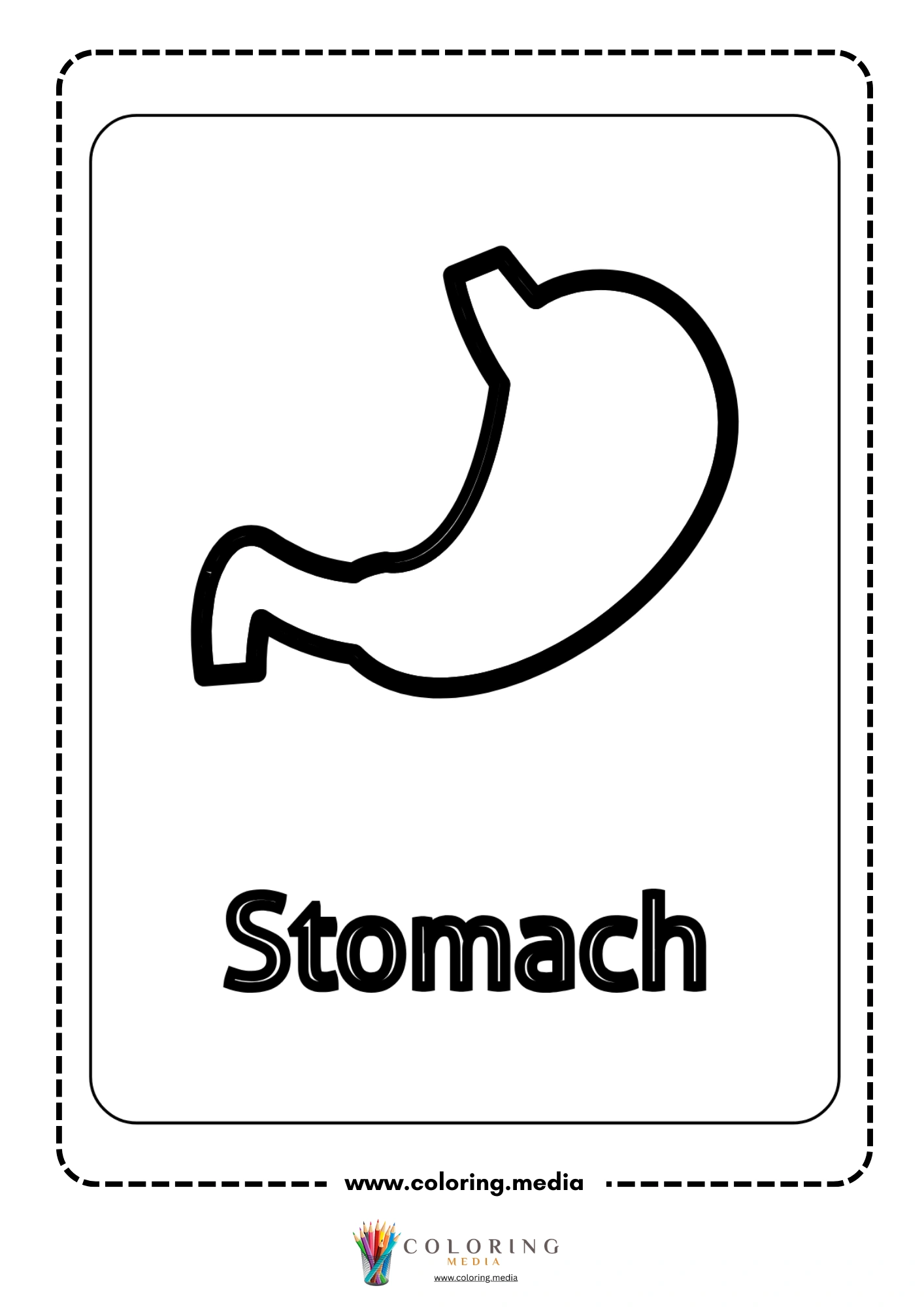
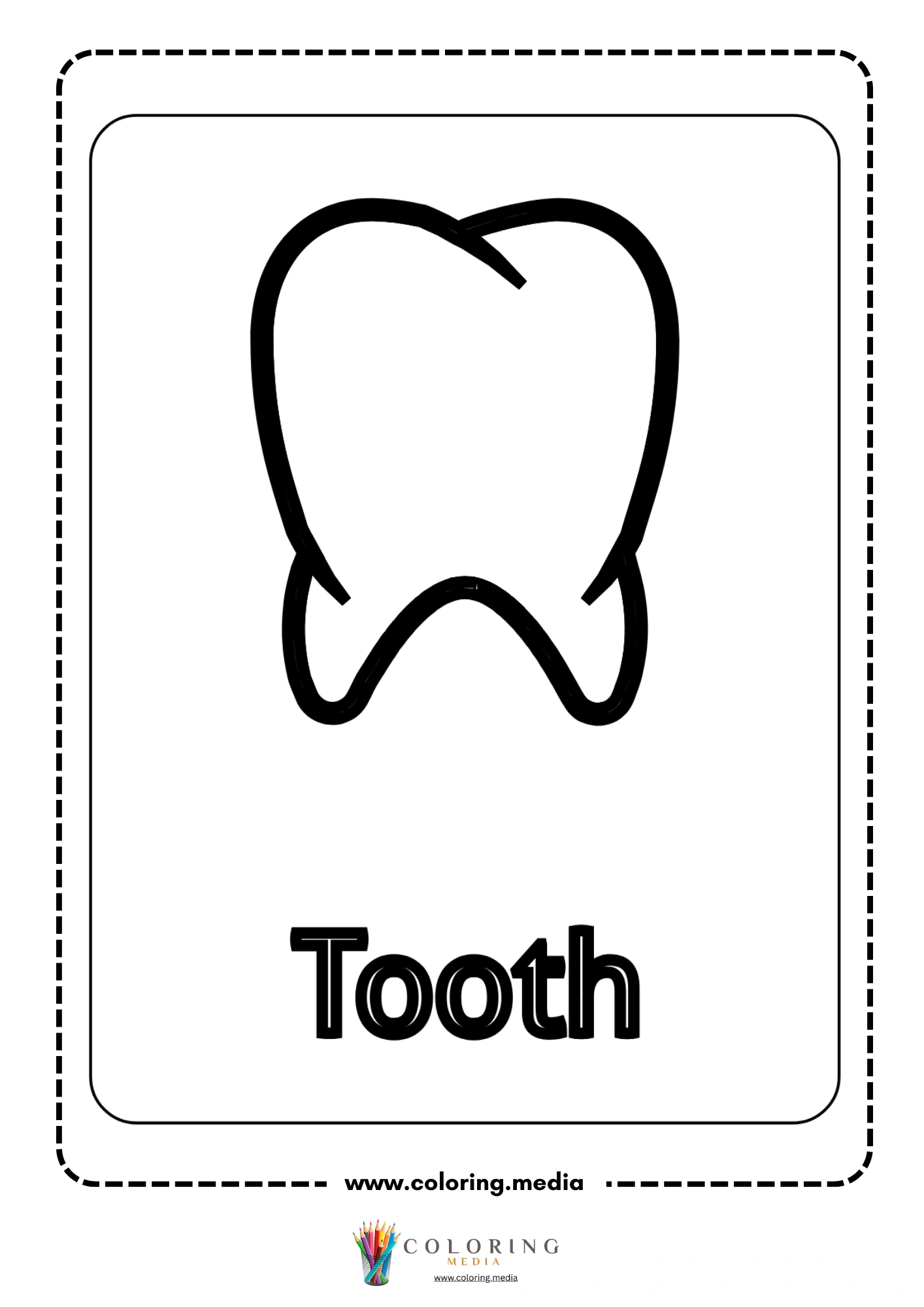
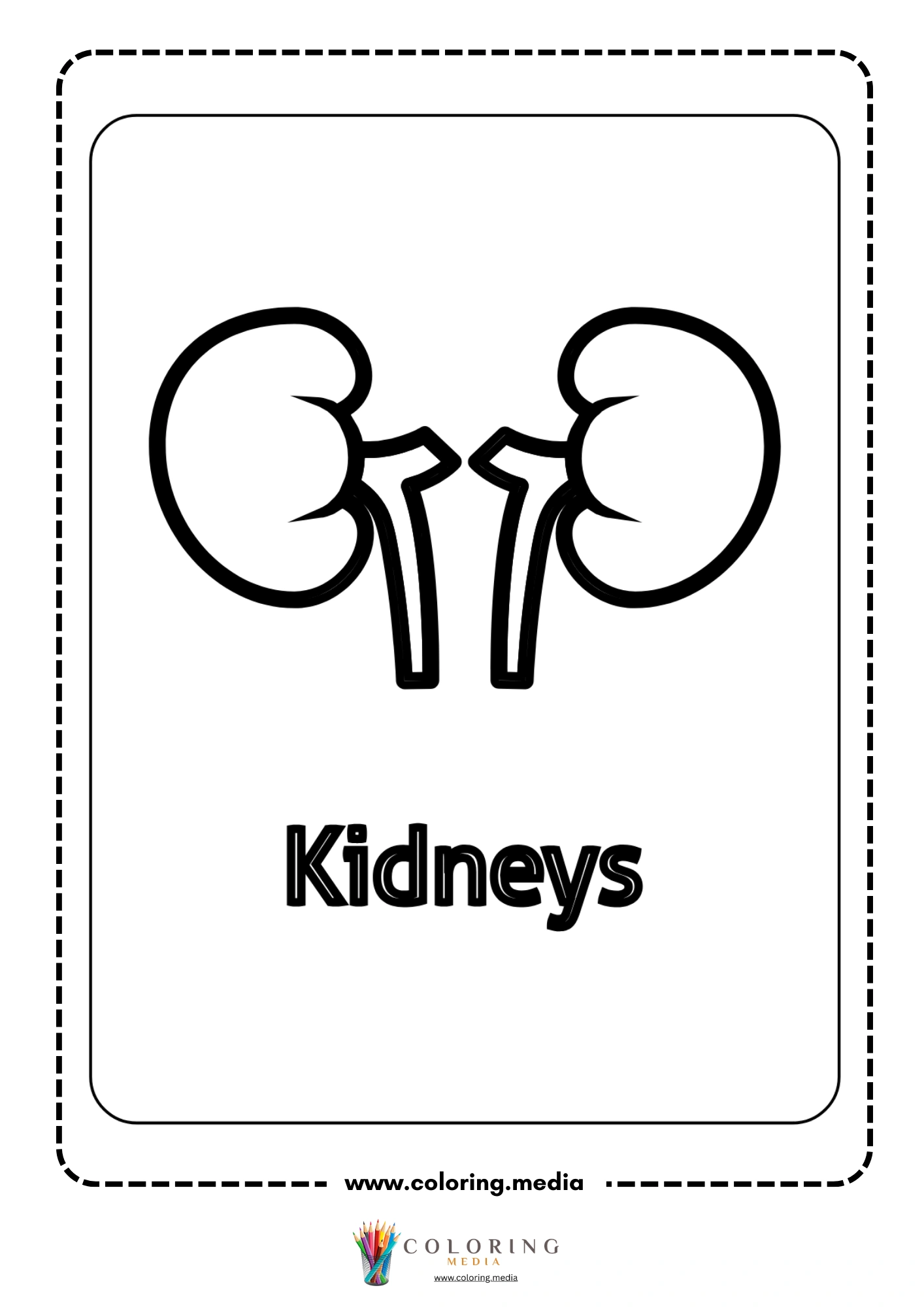
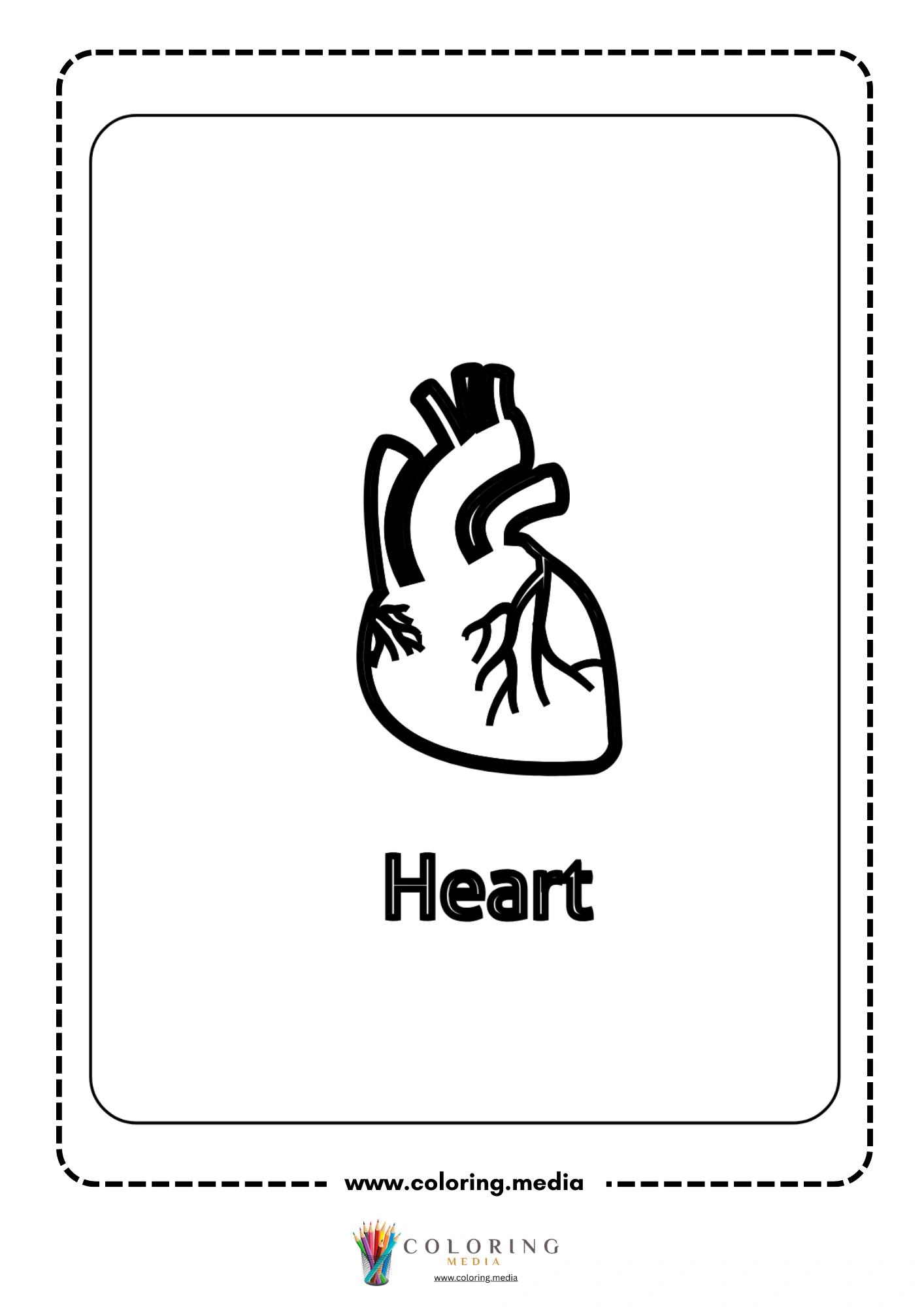
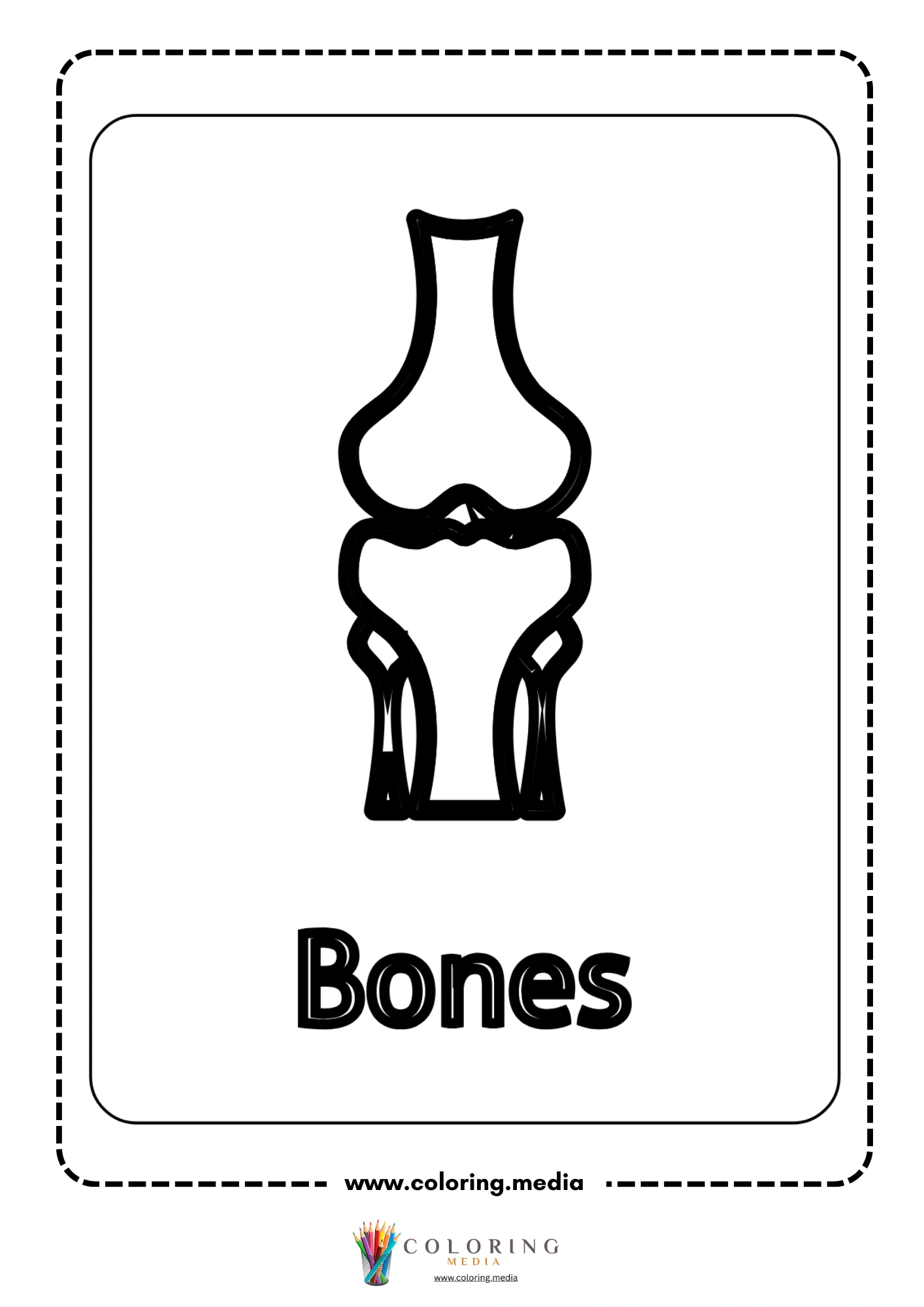
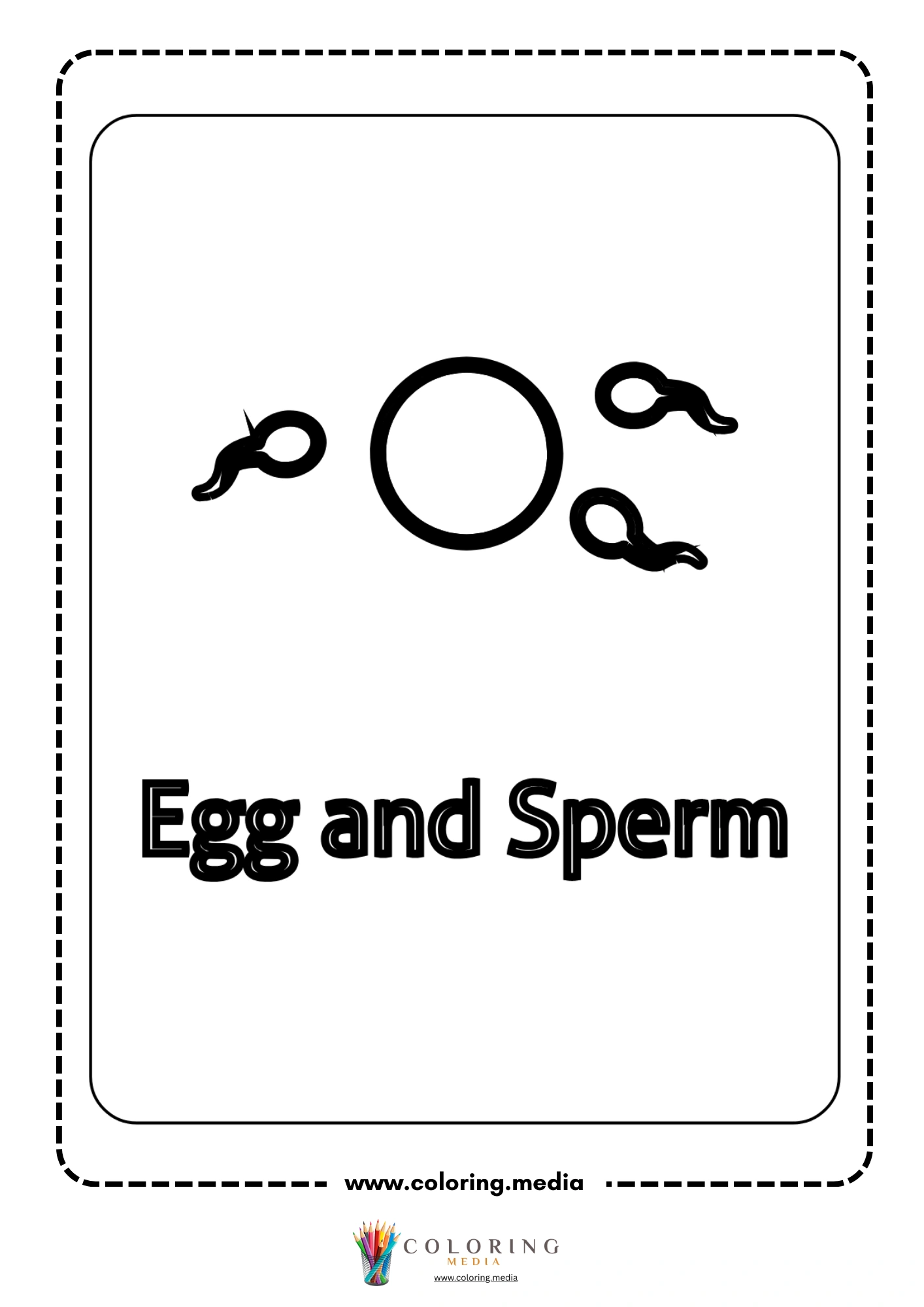
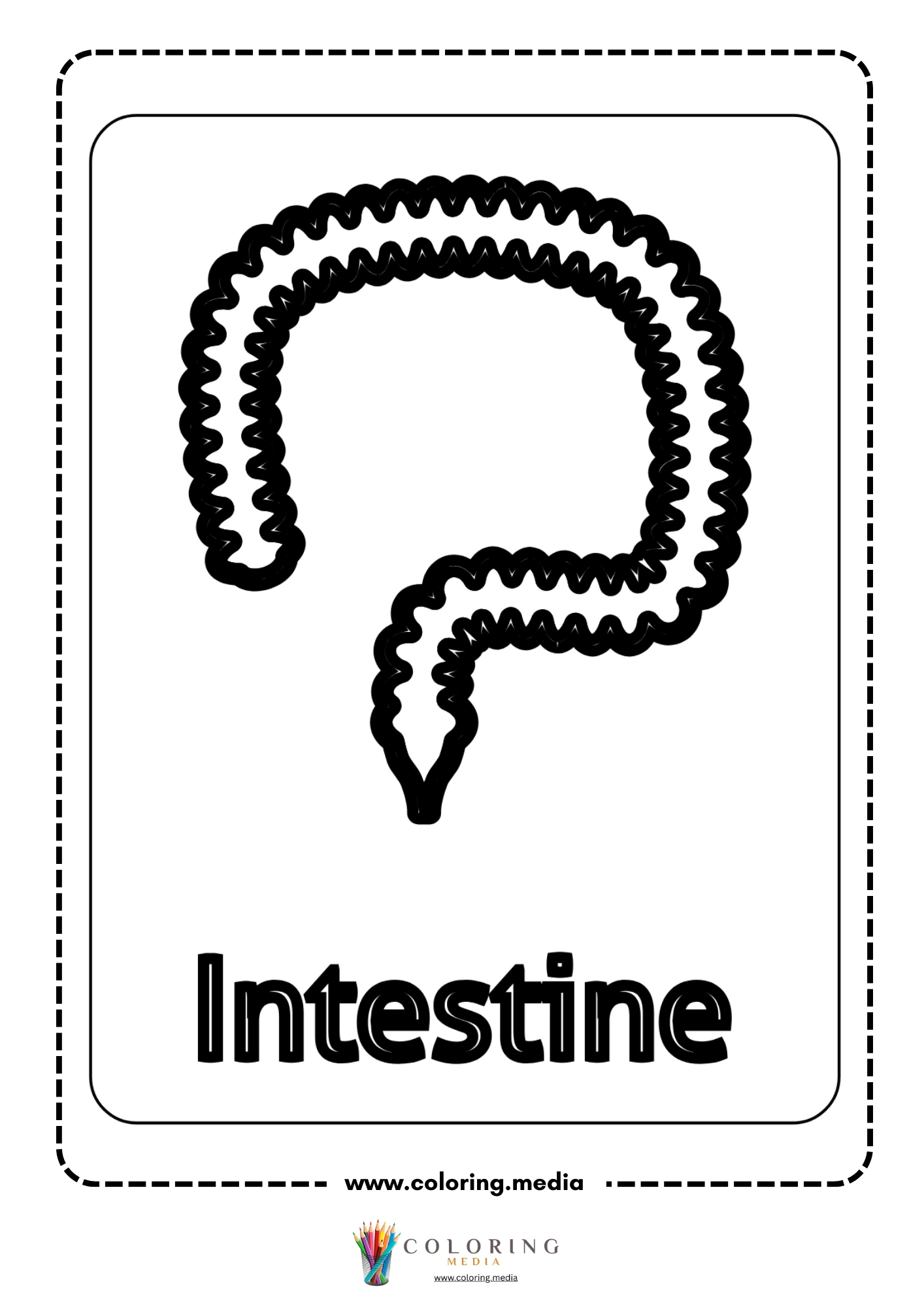
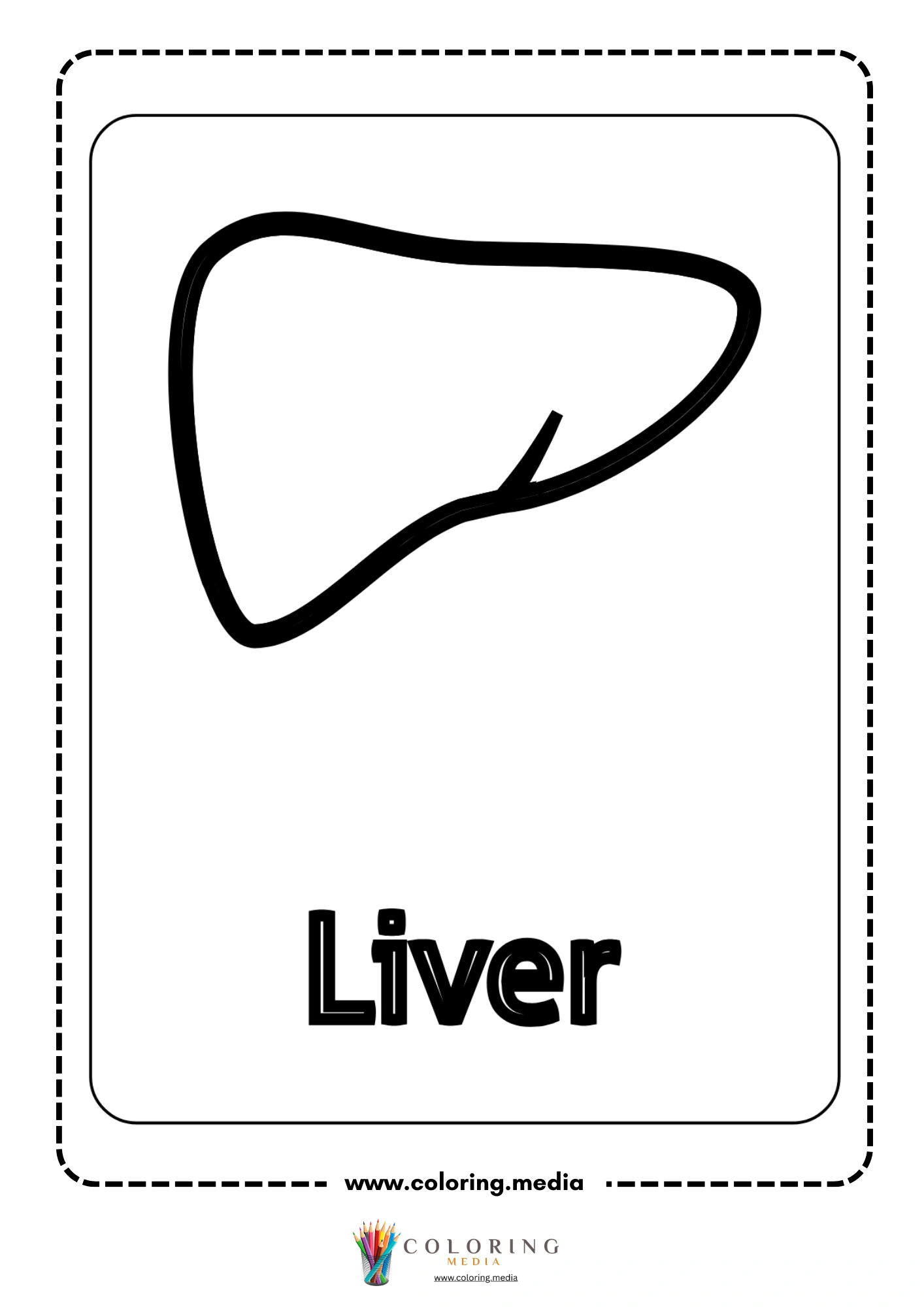
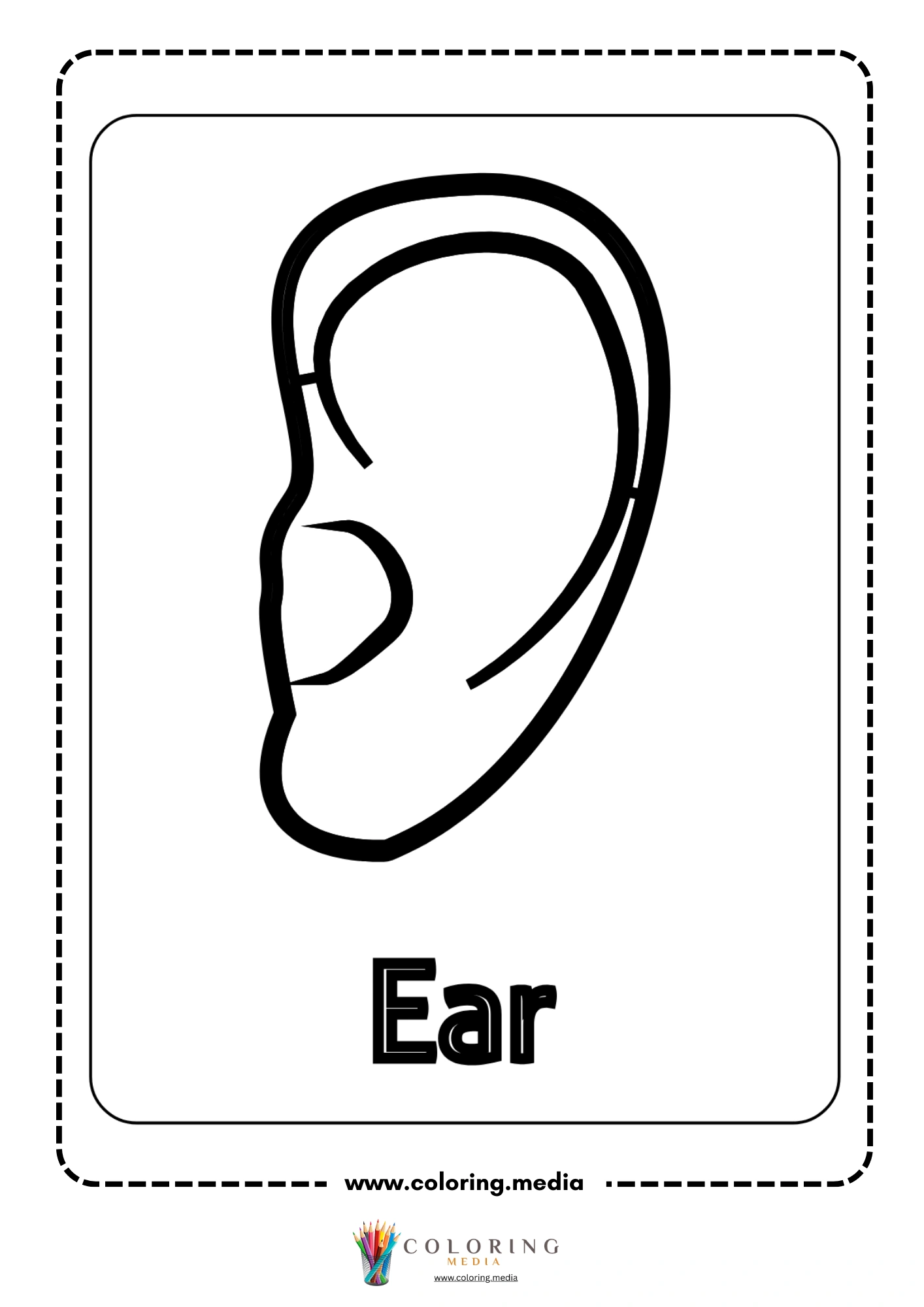
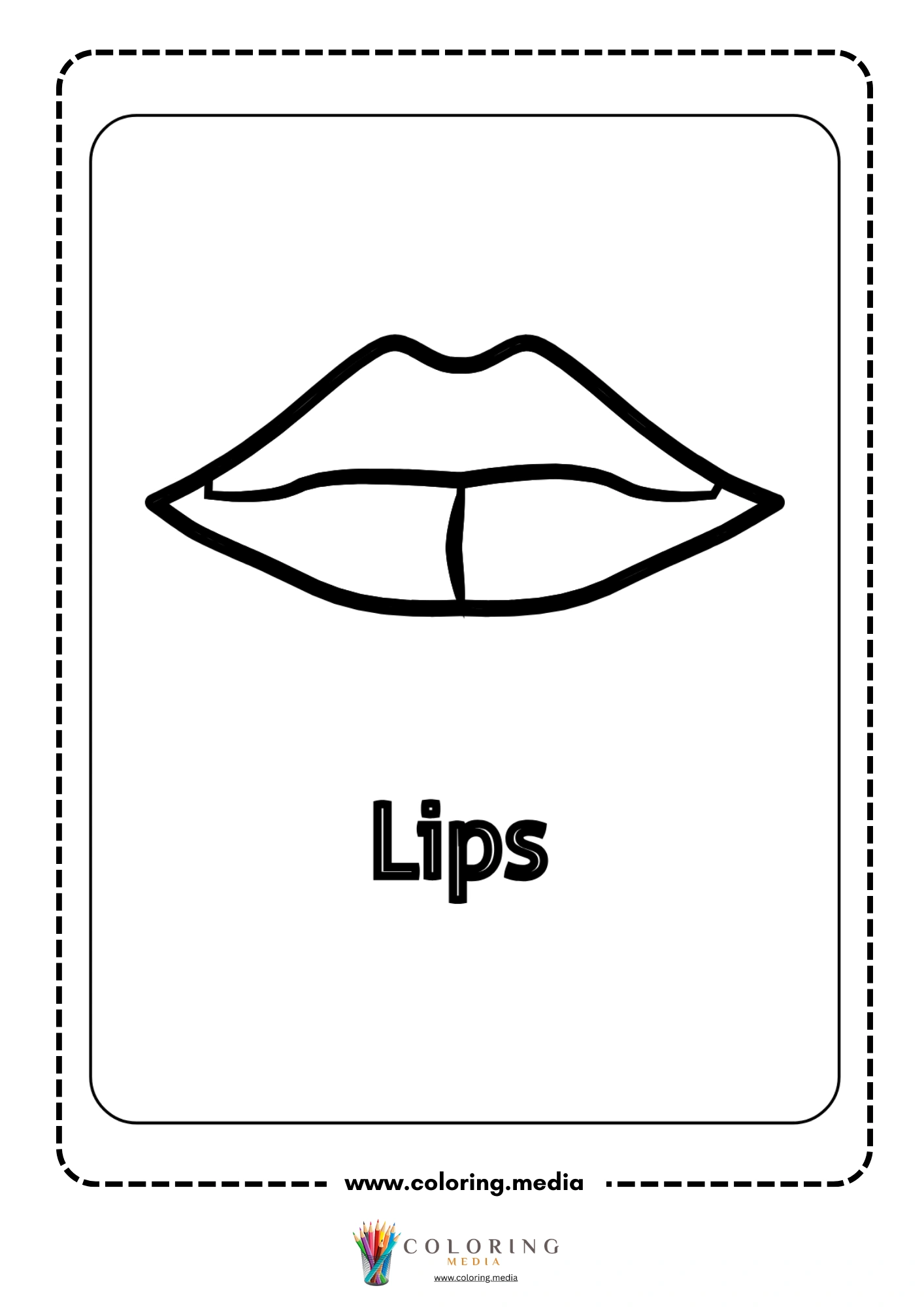
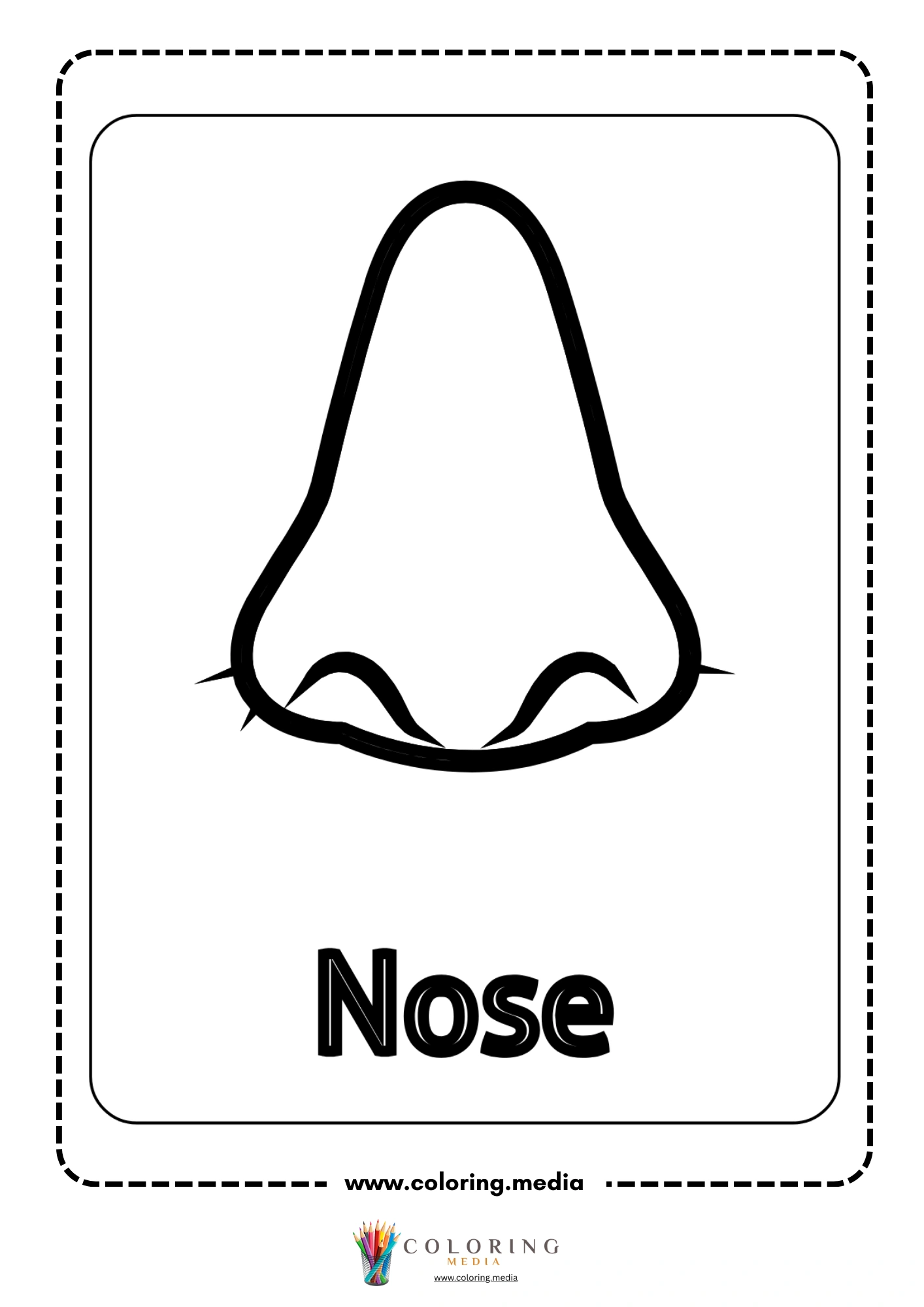
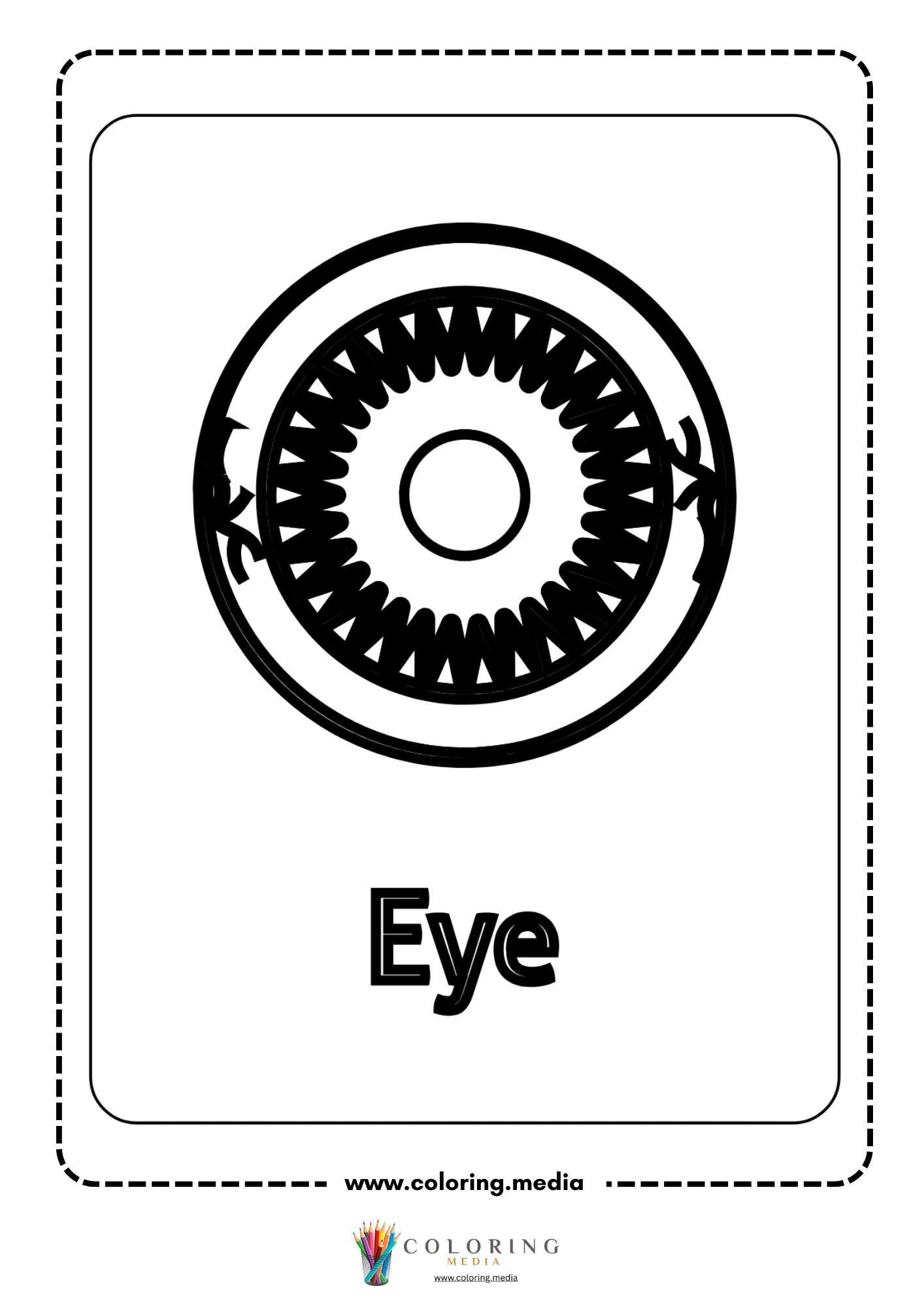
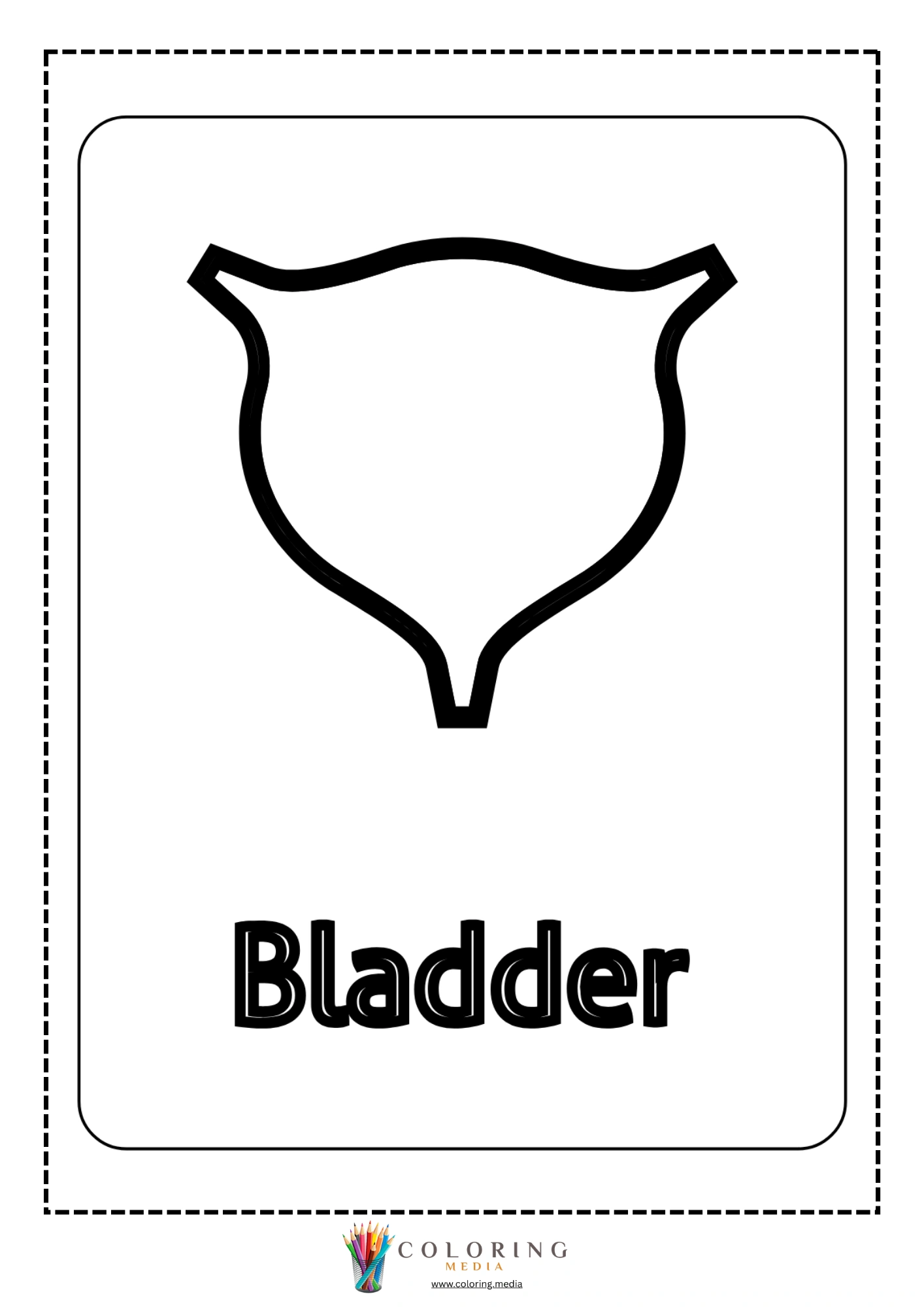
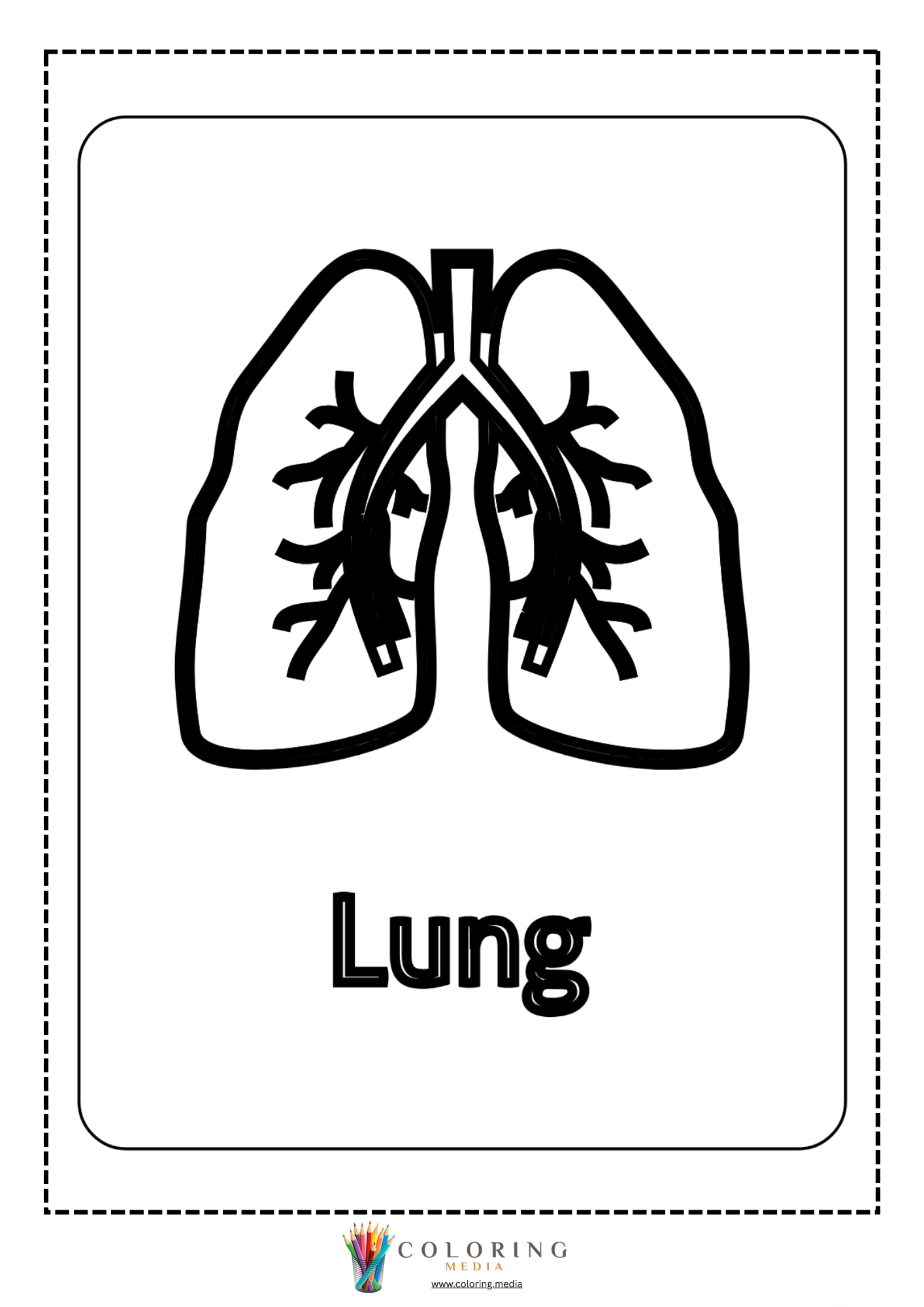
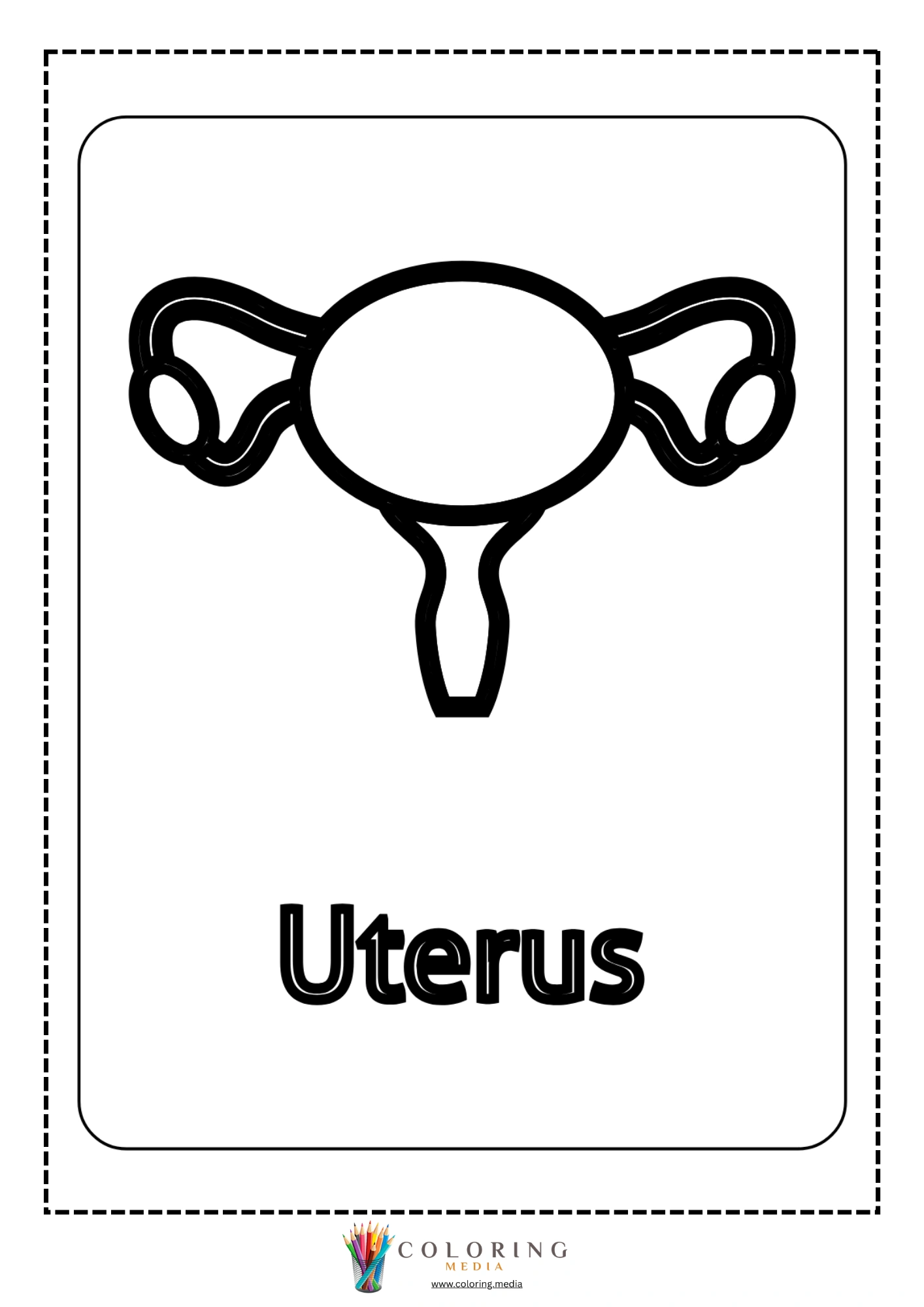
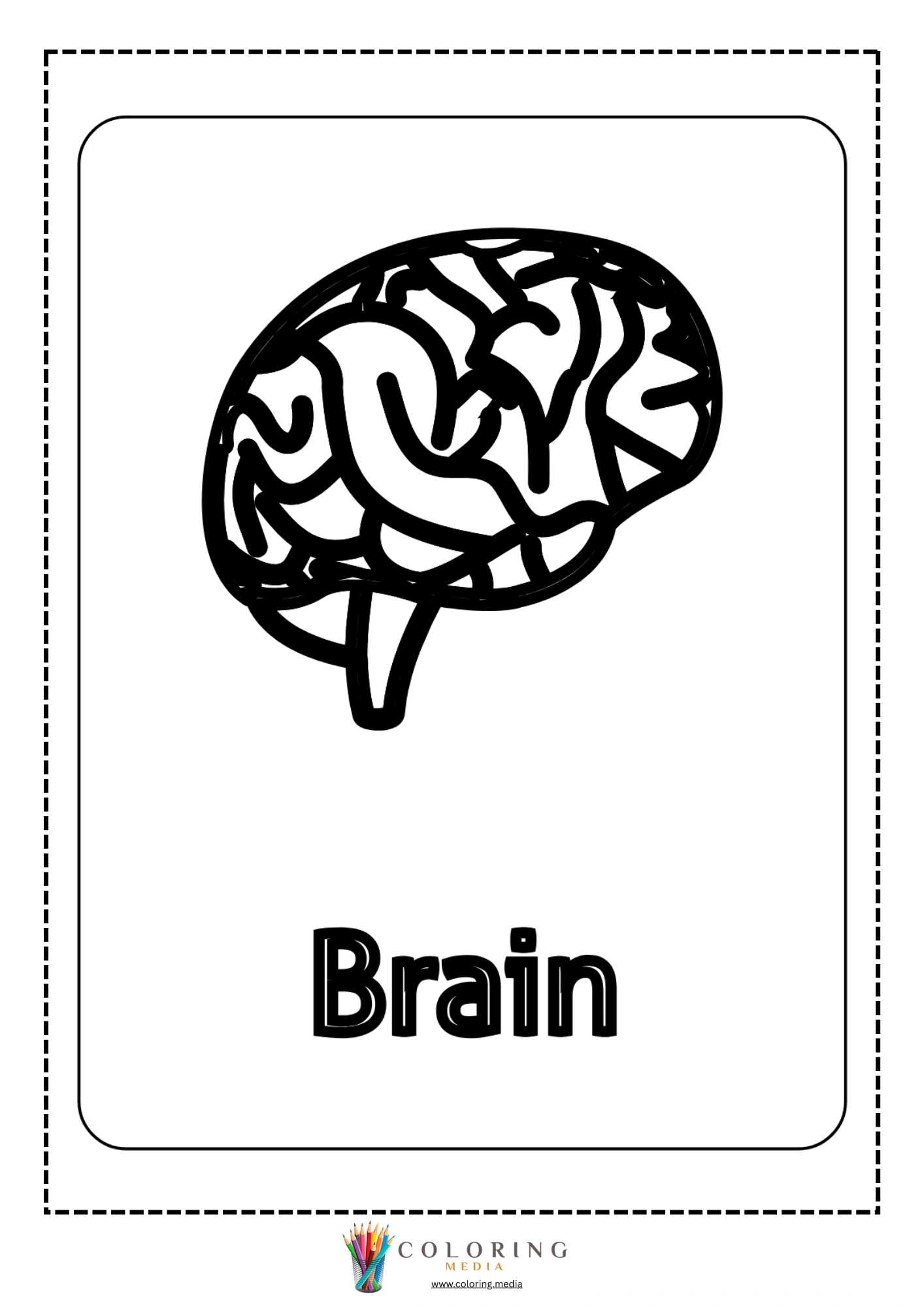
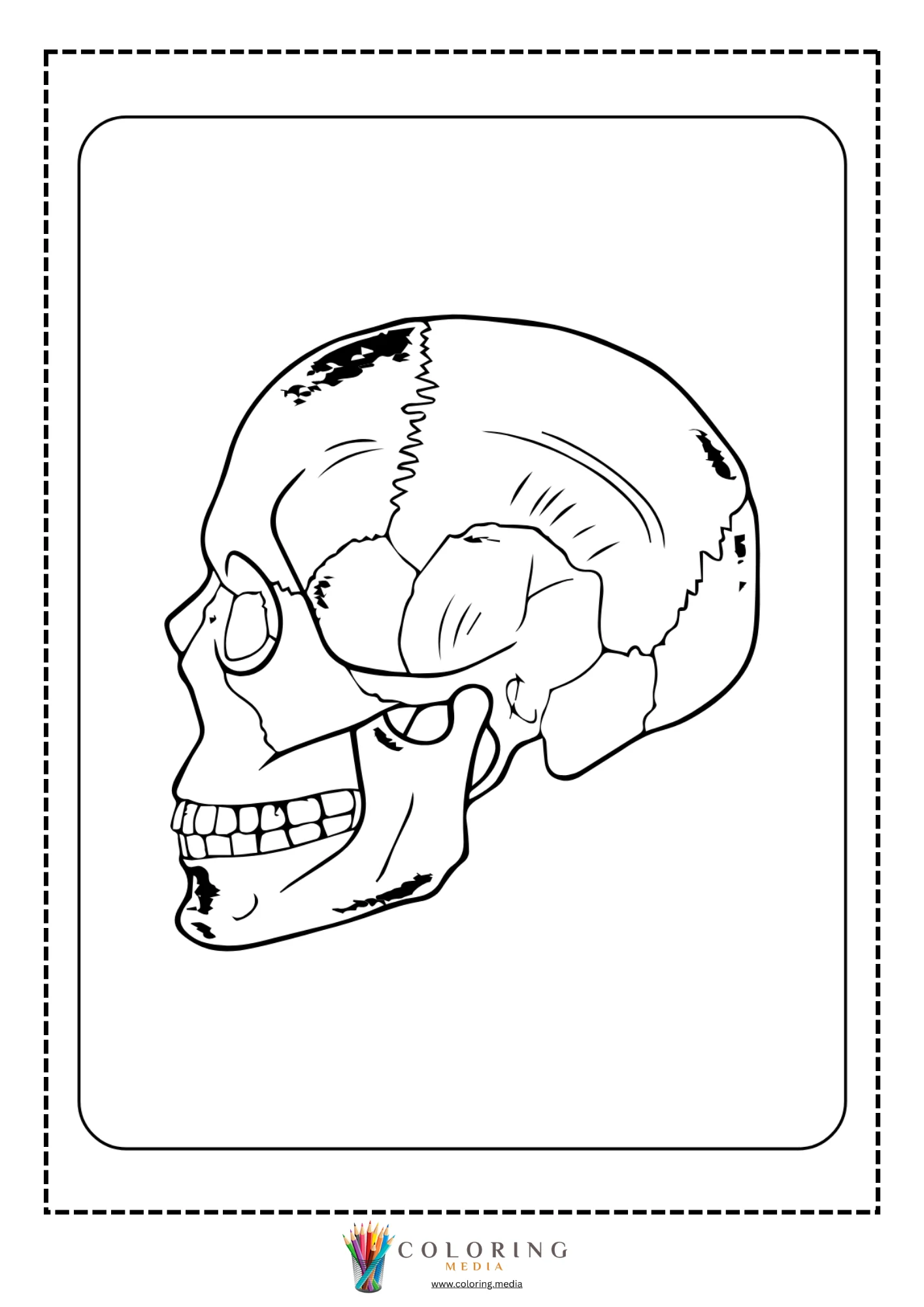
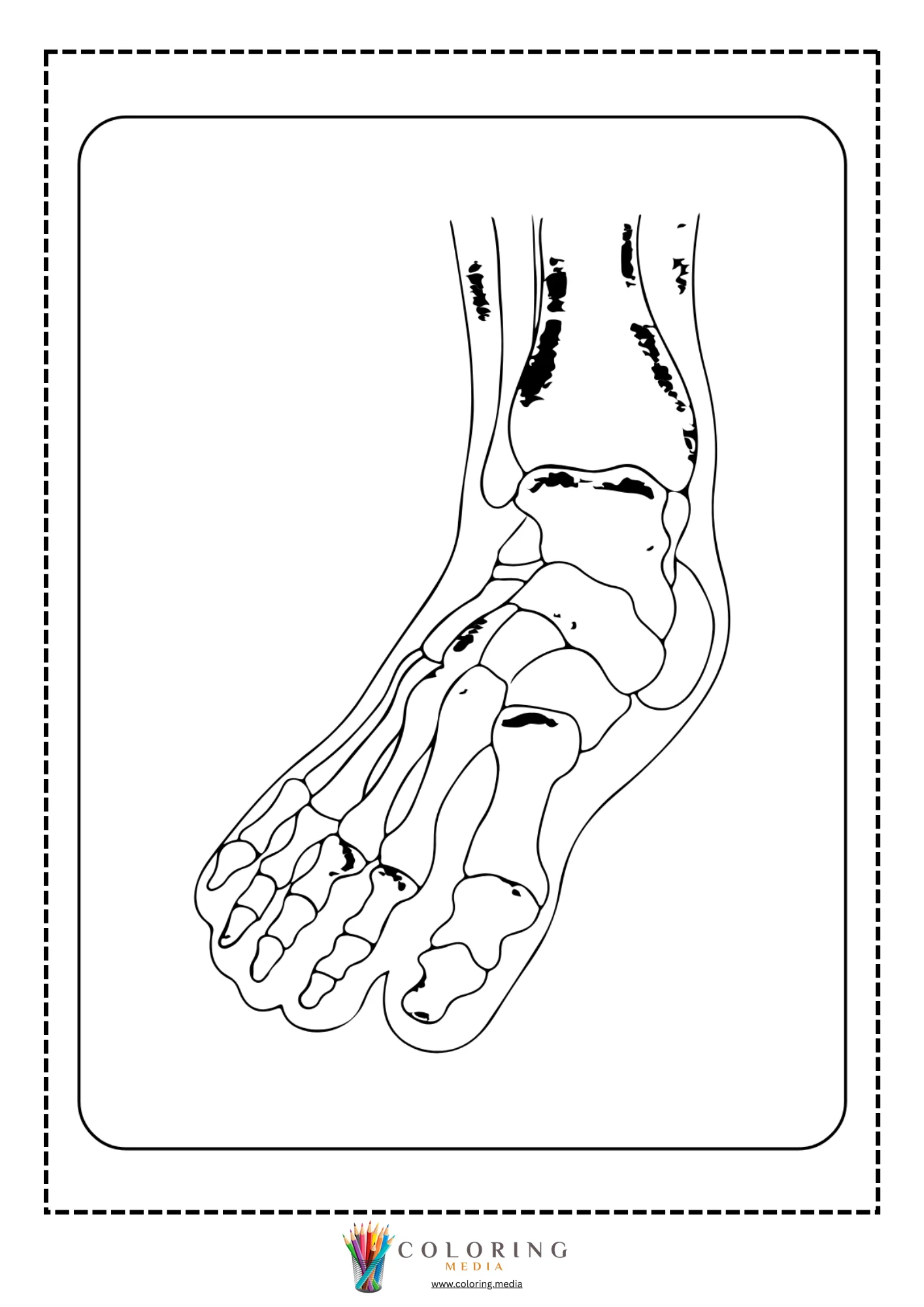
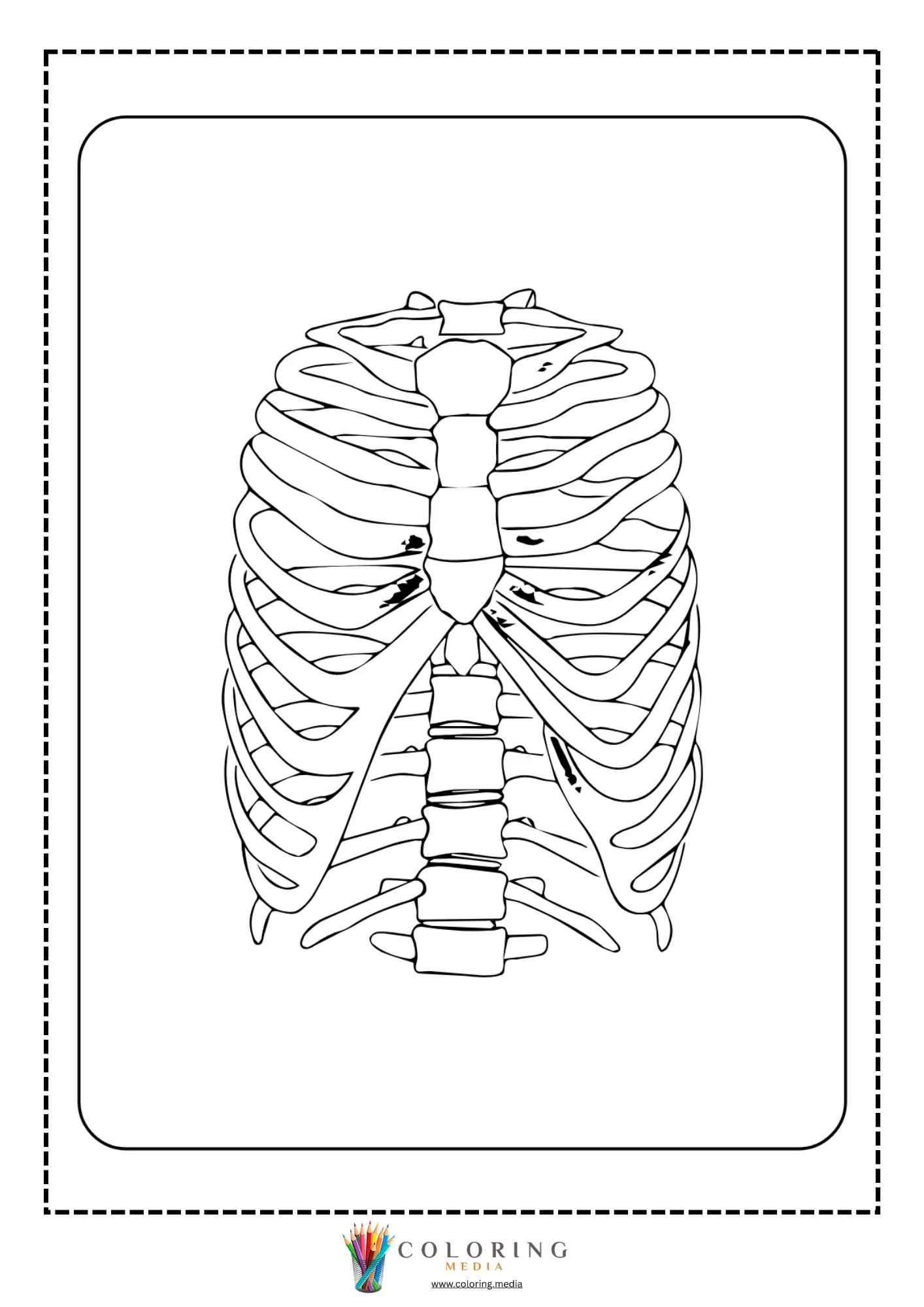
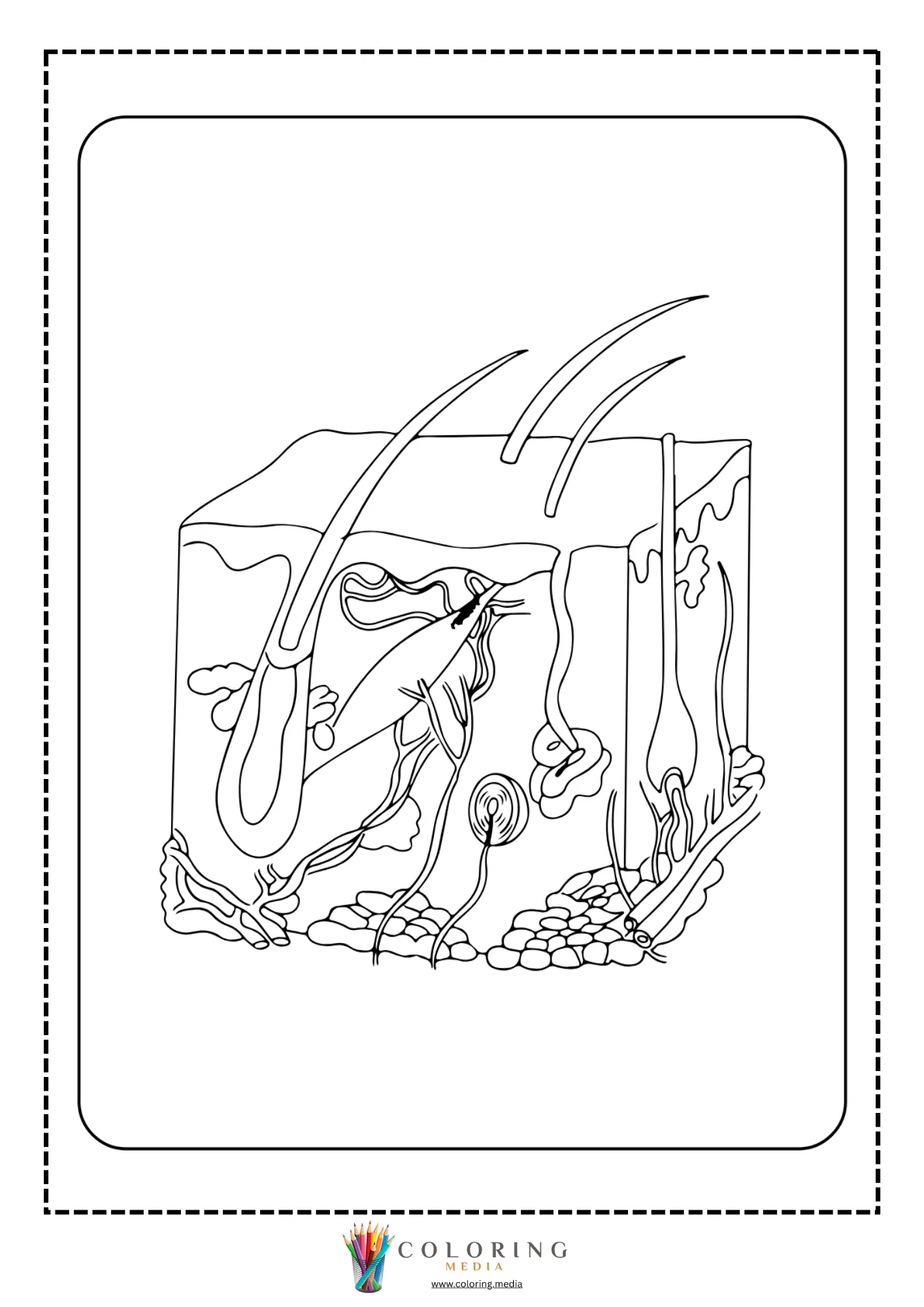
These 20 pages each focus on one labeled body part in a clean, educational diagram style — Stomach, Lips, Nose, Eye, Bladder, Lung, Uterus, Brain, Skull, Tooth, Kidneys, Heart, Bones, Egg and Sperm, Intestine, Liver, and Ear. Each illustration fills most of the page with a clear outline of the organ at a size that makes structural details readable, and the organ name appears in large text above or below the illustration. Some organs (the brain, the kidney, the heart) show visible internal structures; others (the nose, the lips) are more surface-level anatomical profiles.
The format is reference-style rather than scene-based — these are individual organ portraits, not body system overviews. That makes them useful for pairing directly with specific lessons rather than as standalone coloring pages. Everything here is free to download and easy to print.
Free Printable Human Body Parts Coloring Pages
This collection includes 20 printable human body parts coloring pages featuring individual labeled organ illustrations — one organ per page in a clear, anatomy-reference style with the organ name printed prominently. Organs covered include major structures from multiple body systems: digestive (stomach, intestine, liver), reproductive (uterus, egg and sperm), urinary (kidneys, bladder), sensory (eye, ear, nose), skeletal (bones, skull), and cardiac (heart) systems. Print on US Letter or A4 paper.
Who Are These Human Body Parts Coloring Pages Best For?
Early-elementary children (ages 6-10) studying specific body systems will find these pages most useful as lesson companions. Because each page shows only one organ, a teacher can hand out the appropriate page at the moment it is relevant — the kidney page during a lesson on the urinary system, the ear page during a sensory systems lesson — rather than giving students a full body diagram where their attention is distributed across multiple structures.
The labeled format makes these pages work double duty as vocabulary builders. A child who colors the Liver page has read the word ‘liver’ multiple times, seen what it looks like, and thought about its position in the body — three separate encoding pathways for a single vocabulary term.
For families who discuss health and biology at home — for instance, explaining to a child what is happening when someone needs surgery or a particular organ test — these pages provide an accessible visual reference. Showing a child the kidney page before explaining what a kidney stone is, or the heart page before discussing why someone needs heart surgery, makes abstract medical information concrete.
Interesting Human Body Parts Facts to Share While Coloring
The liver performs over 500 distinct functions. It filters toxins from the blood, produces bile for digestion, stores glycogen for energy, synthesizes proteins, and regulates cholesterol levels, among many other roles. It is also the only internal organ that can fully regenerate — a person can survive with as little as 25% of their liver intact, and the remaining tissue will grow back.
The brain contains approximately 86 billion neurons connected by roughly 100 trillion synaptic connections. The total length of all neural connections in a single human brain, laid end to end, would stretch around the Earth multiple times. Despite its complexity, the brain consumes only about 20 watts of power — less than a dim light bulb.
The ear can detect sounds ranging from 20 to 20,000 hertz — a range of about 10 octaves. At the high end, a 20,000 Hz tone is beyond human hearing for most adults; children typically hear it but lose that sensitivity gradually with age. The lowest notes on a large pipe organ are near the bottom of human hearing range.
Creative Human Body Parts Coloring and Craft Ideas
System Assembly Arrange colored organ pages on a large sheet of paper in their approximate position within the body outline — building a complete body map from individual organ portraits.
Function Label Write the main function of each organ in one sentence on the back of its page before filing it in an anatomy binder.
Size Reference Research the actual size of each organ and draw a scale bar beside the illustration — the stomach is about the size of your fist, the liver about the size of a football.
System Connections Draw arrows on a blank sheet connecting organs that work together — the stomach to the small intestine to the liver — showing which organs form connected systems.
Organ Function Quiz Cover the labels on finished pages with sticky notes and quiz a partner on which organ is which from the illustration alone.
Medical Vocabulary Book Create a personal medical dictionary by writing a definition for each organ on the back of its page and binding the pages alphabetically.
Compare to Other Animals Research whether the same organ exists in a fish, a bird, and a dog — how similar or different is the heart of a fish compared to the human heart shown in the coloring page?
Health Connection For each organ page, name one food or lifestyle habit that supports that organ’s health — the kidney page prompts discussion of hydration, the lung page prompts discussion of air quality.
How to Print These Human Body Parts Coloring Pages
Each page downloads as a PDF formatted for US Letter and A4 paper. For anatomy reference use, print on 24 lb or 65 lb paper so the pages hold up to repeated handling in a binder. Colored pencils give the most control for detailed organ illustrations. Grayscale printing works for all pages.
Explore More Science & Nature Coloring Pages
If you enjoyed these pages, you may also like:
Human Body Coloring Pages
Human Life Cycle Coloring Pages
Medical Coloring Pages
Medical Instrument Coloring Pages
Science & Nature Coloring Pages