
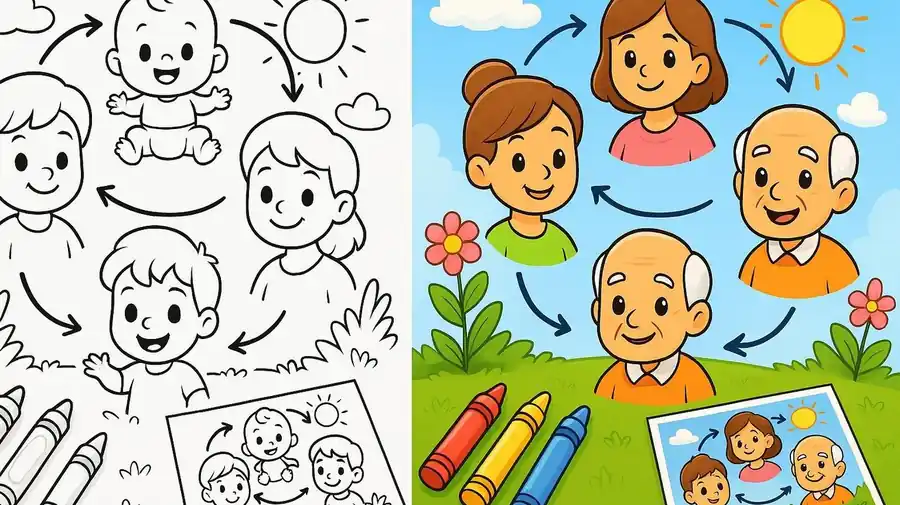
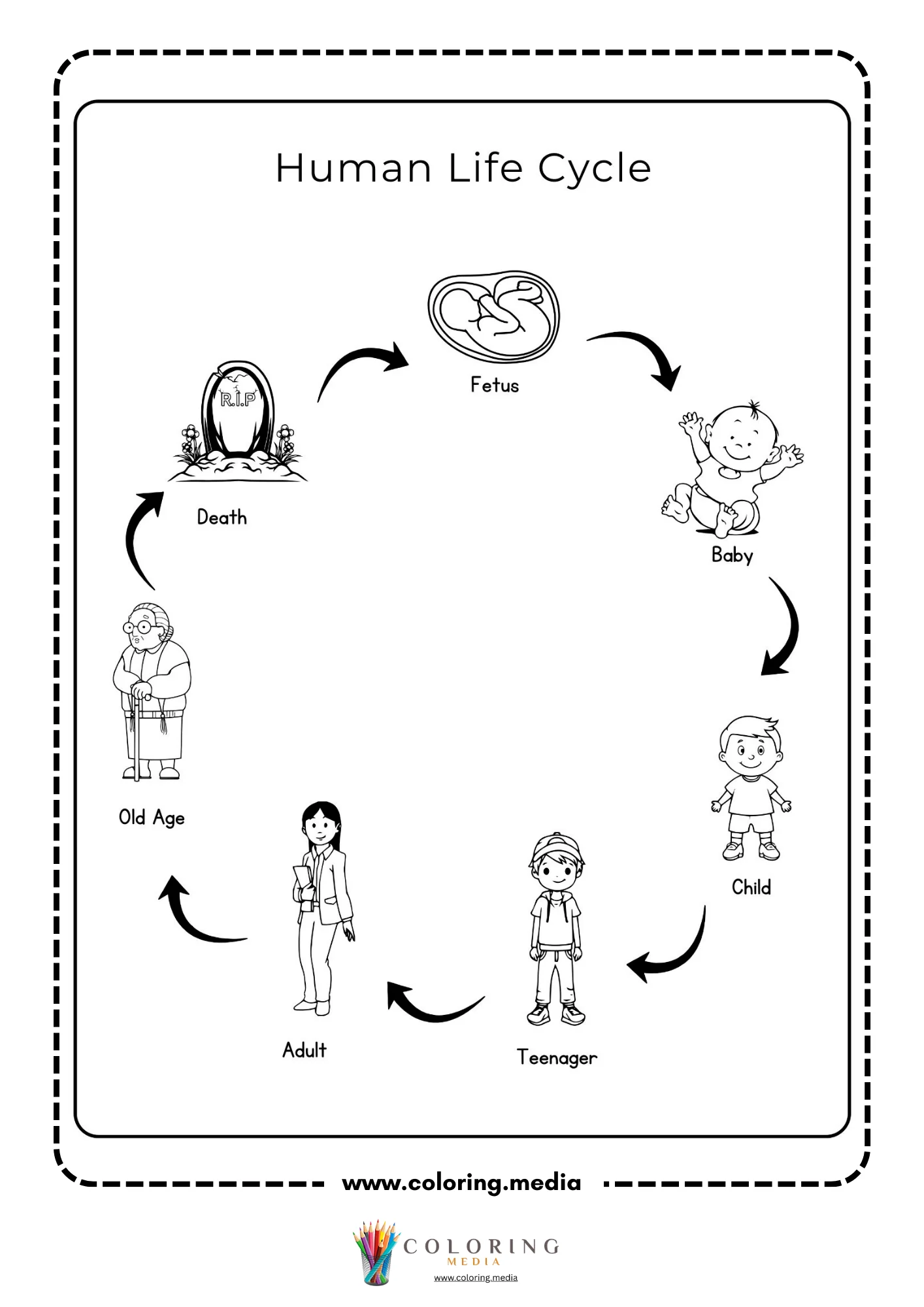
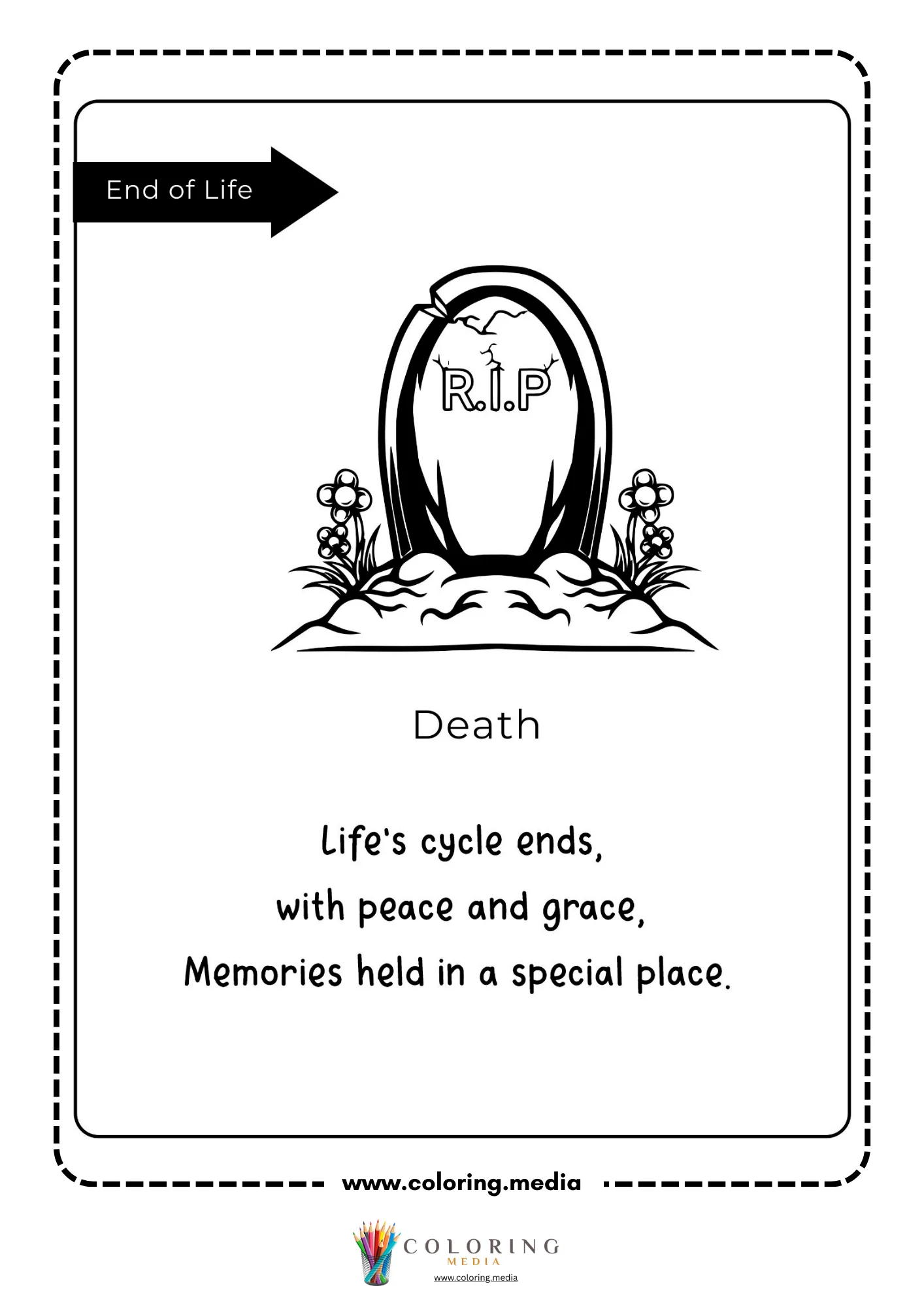
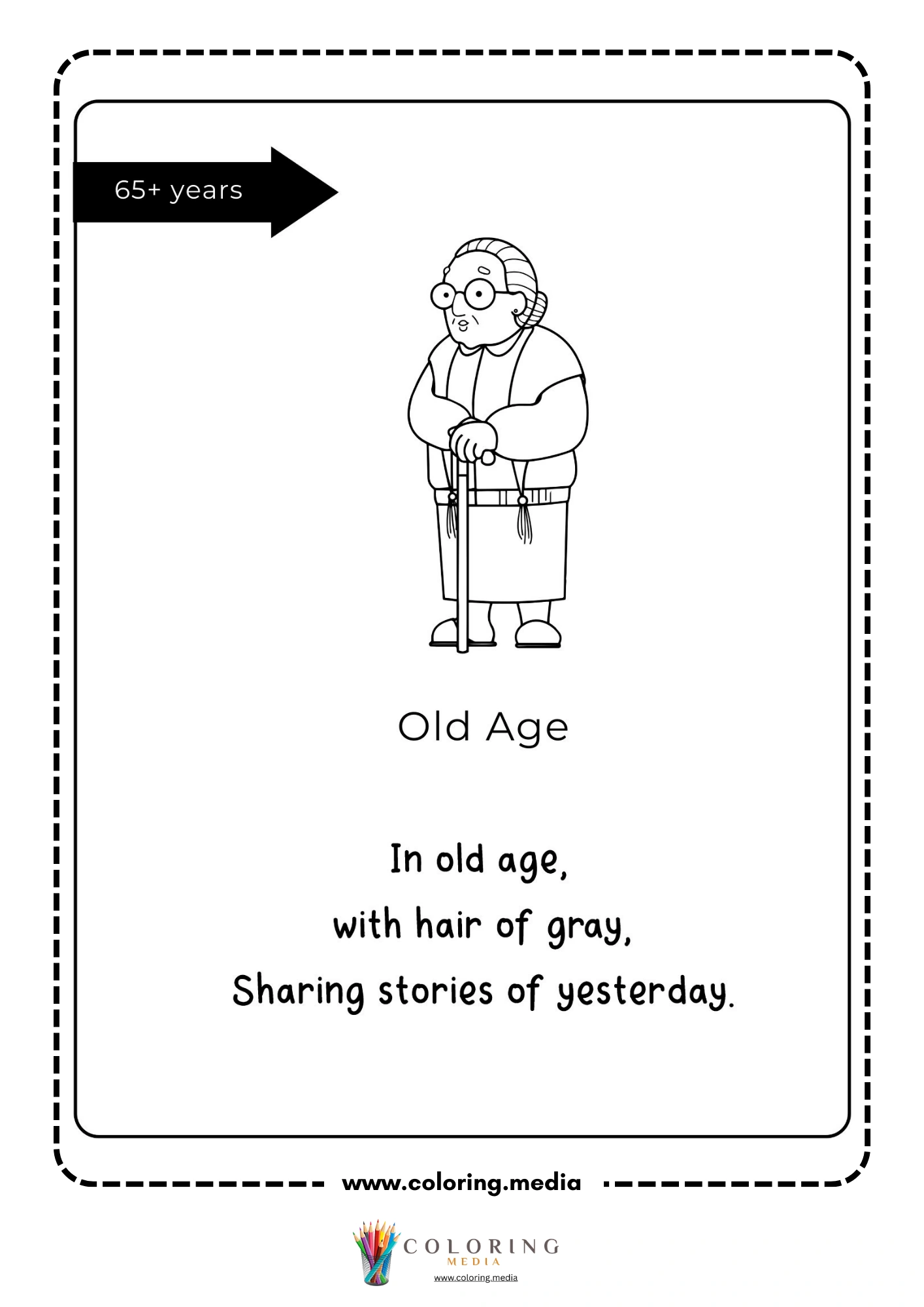
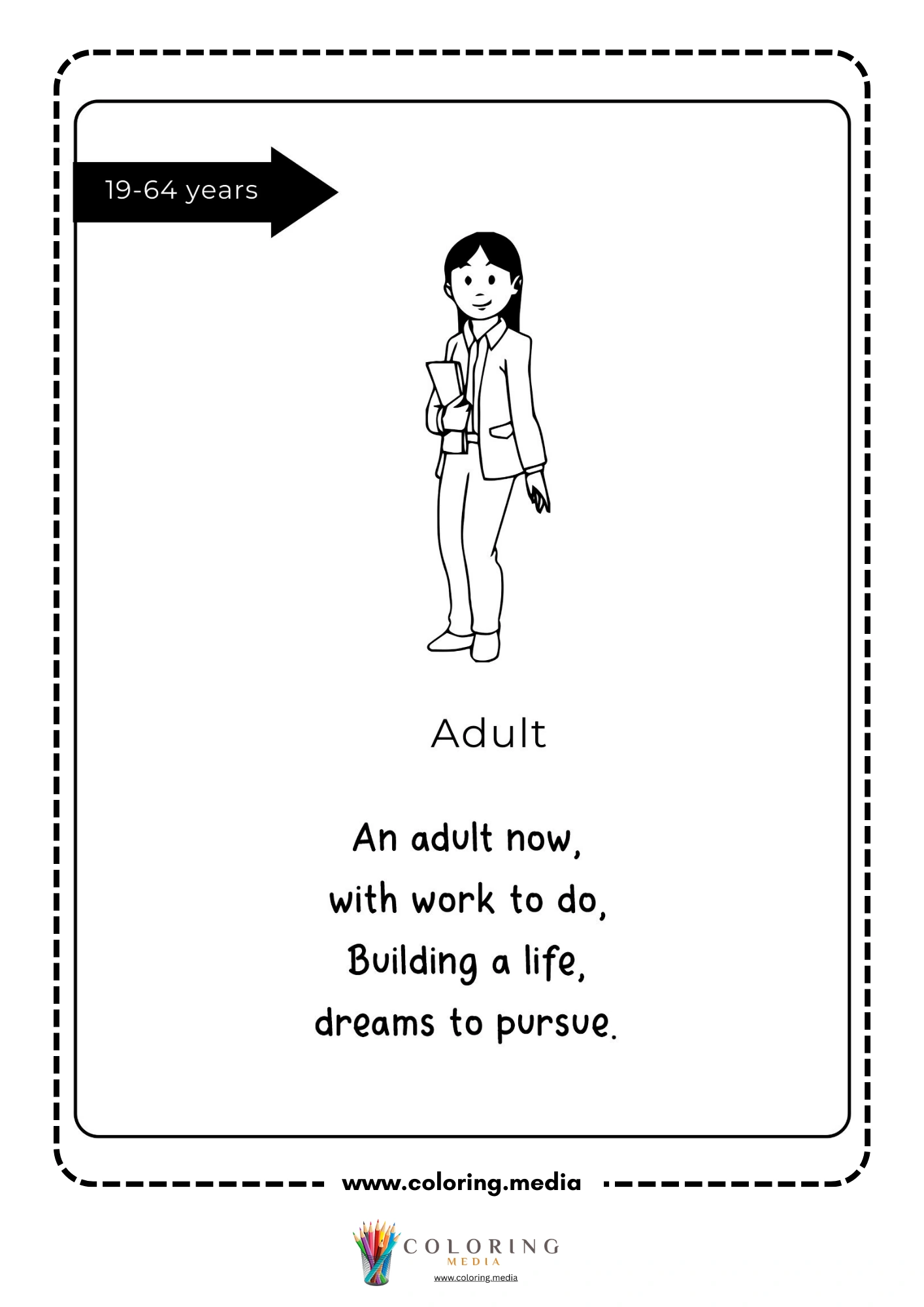
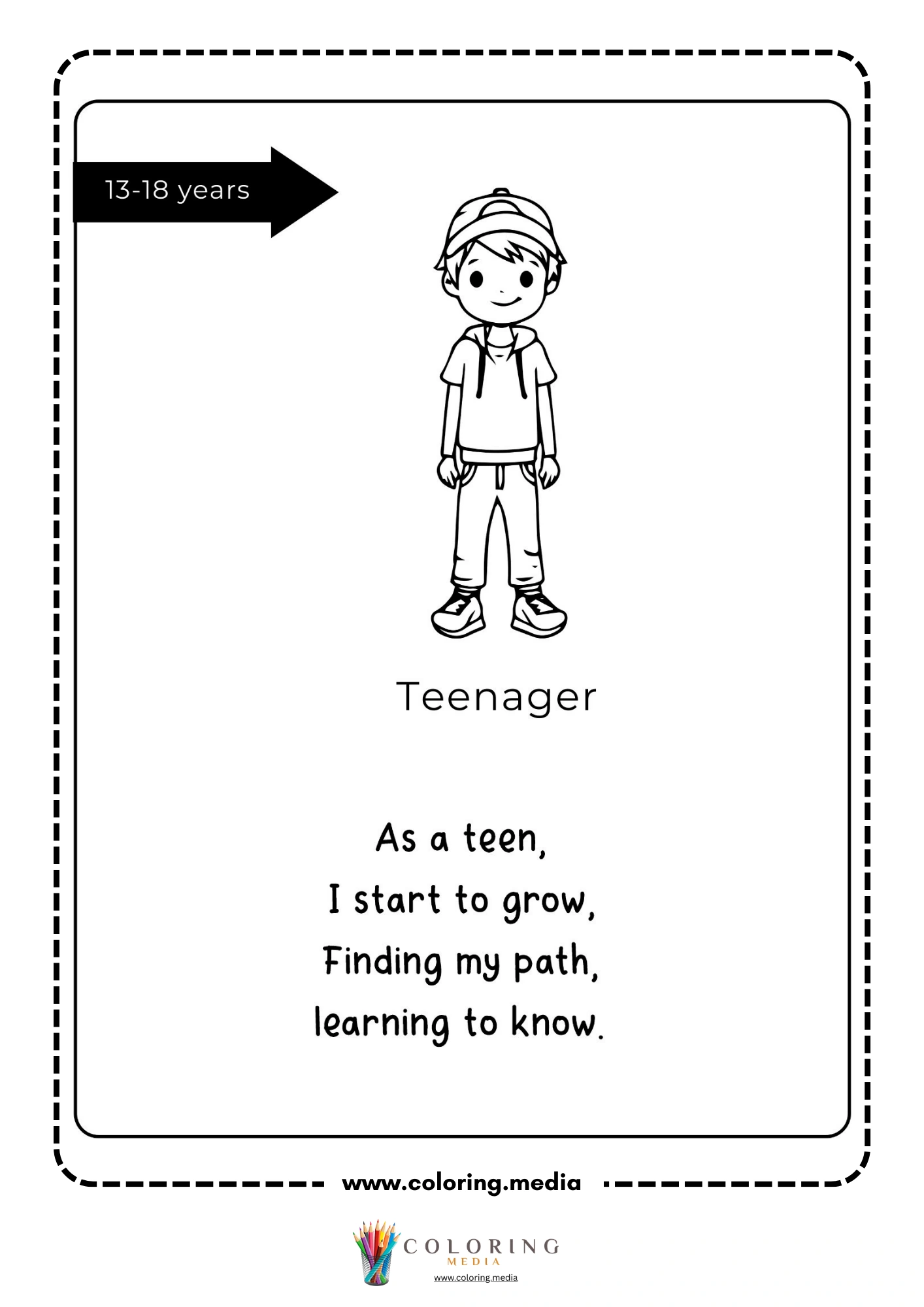
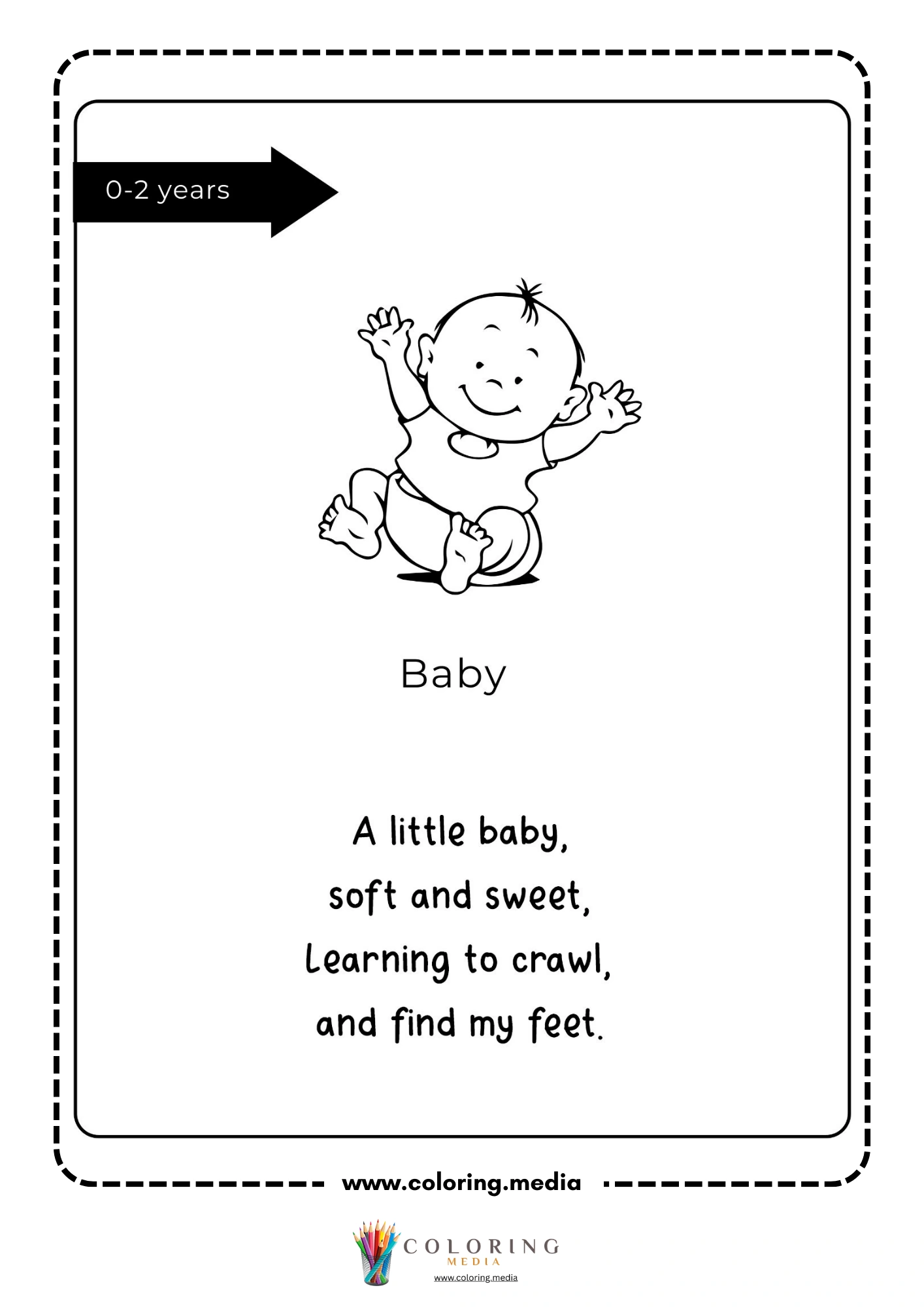
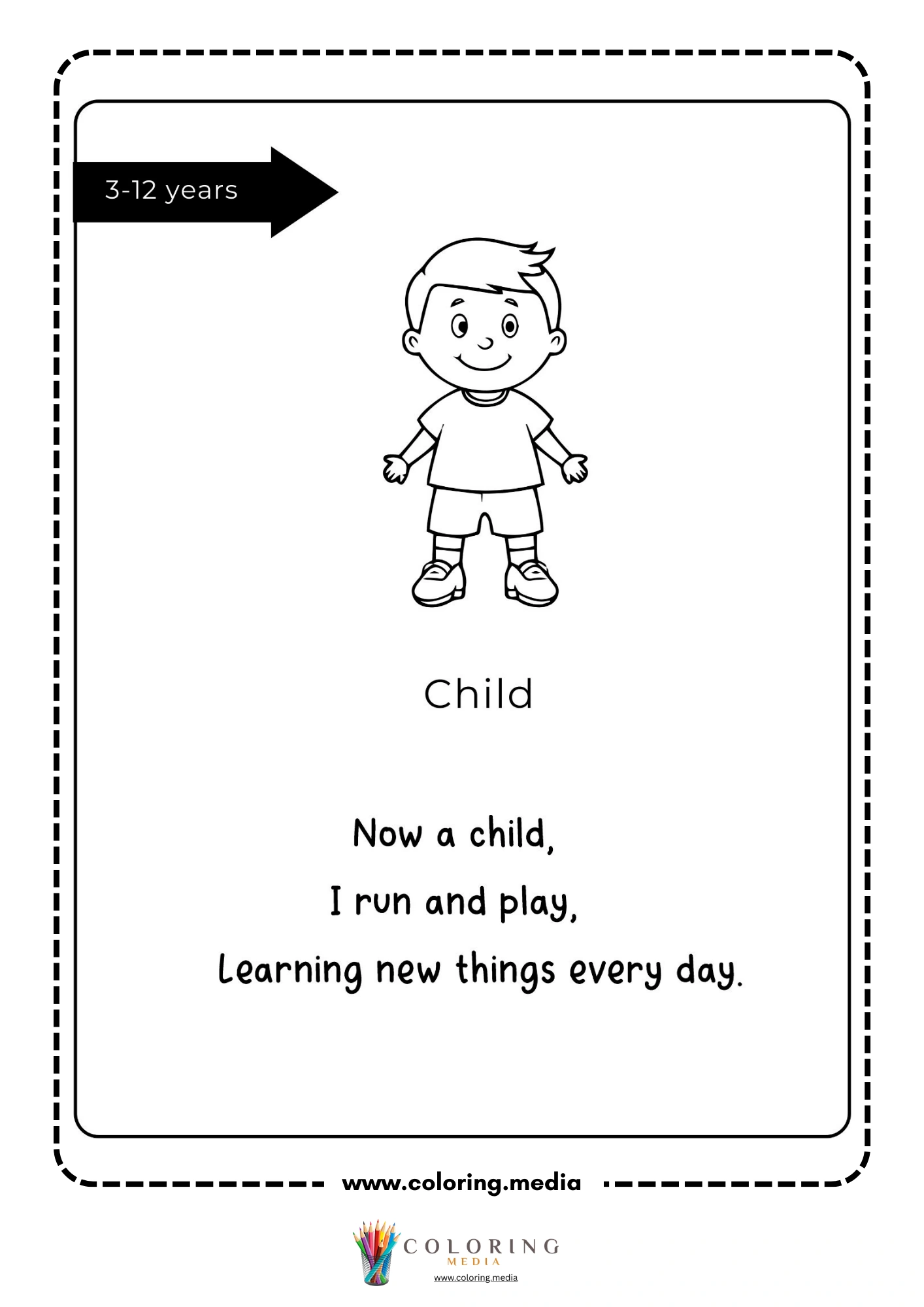
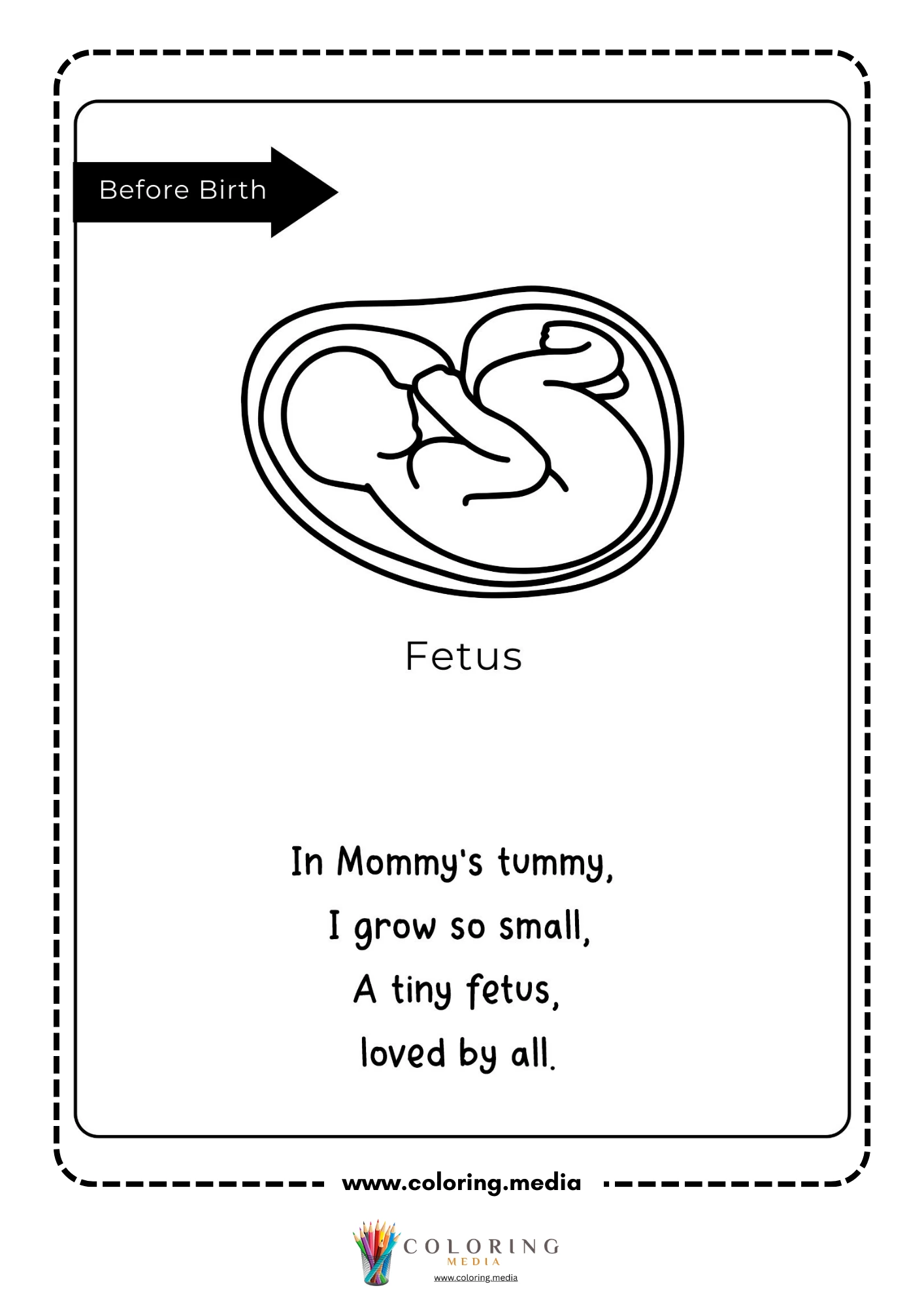
These 11 pages present the human life cycle in an educational worksheet format — a circular diagram showing the stages from infant to elderly adult with arrows connecting each stage, individual pages for each life stage featuring a simple figure with a label (baby, toddler, child, teenager, adult, elderly), and activity pages that ask children to sequence the stages or write about each one. The figures are simple, friendly cartoons with clear gender-neutral or mixed-gender representation.
The human life cycle is one of the earliest biological concepts children encounter — they already know they were once babies and that adults are different from children, and these pages help formalize that intuitive knowledge into a scientific framework. Everything here is free to download and easy to print.
Free Printable Human Life Cycle Coloring Pages
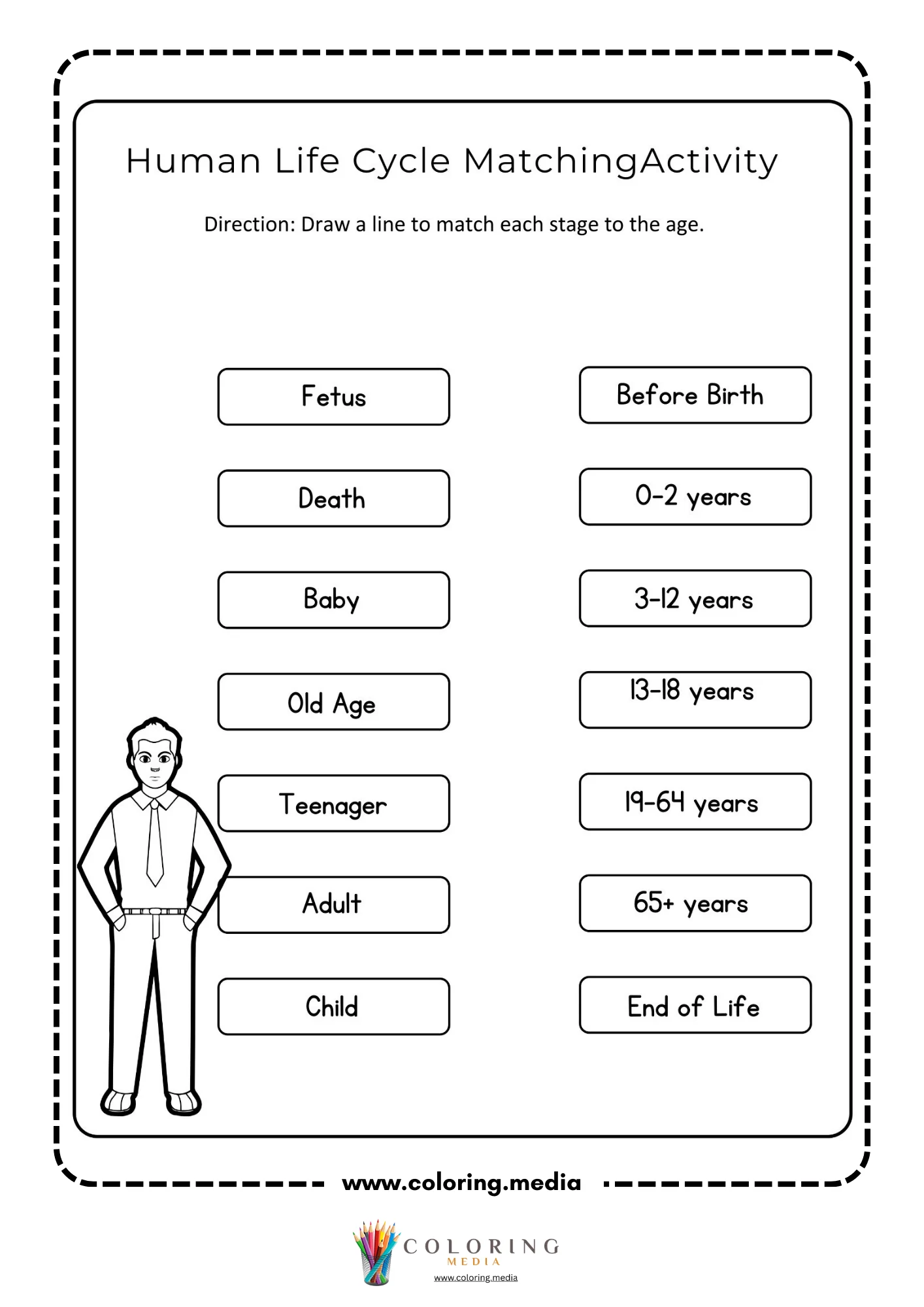
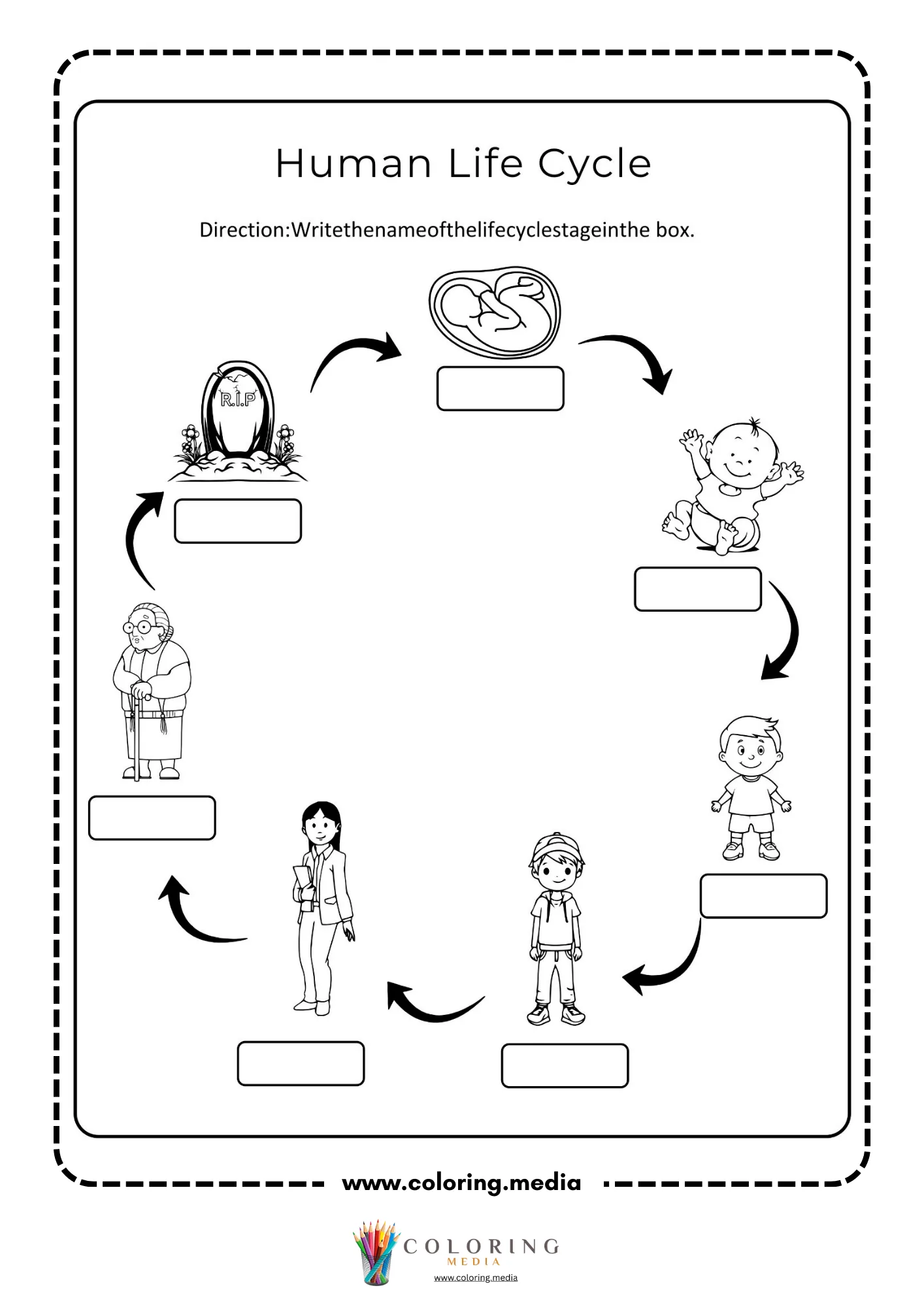
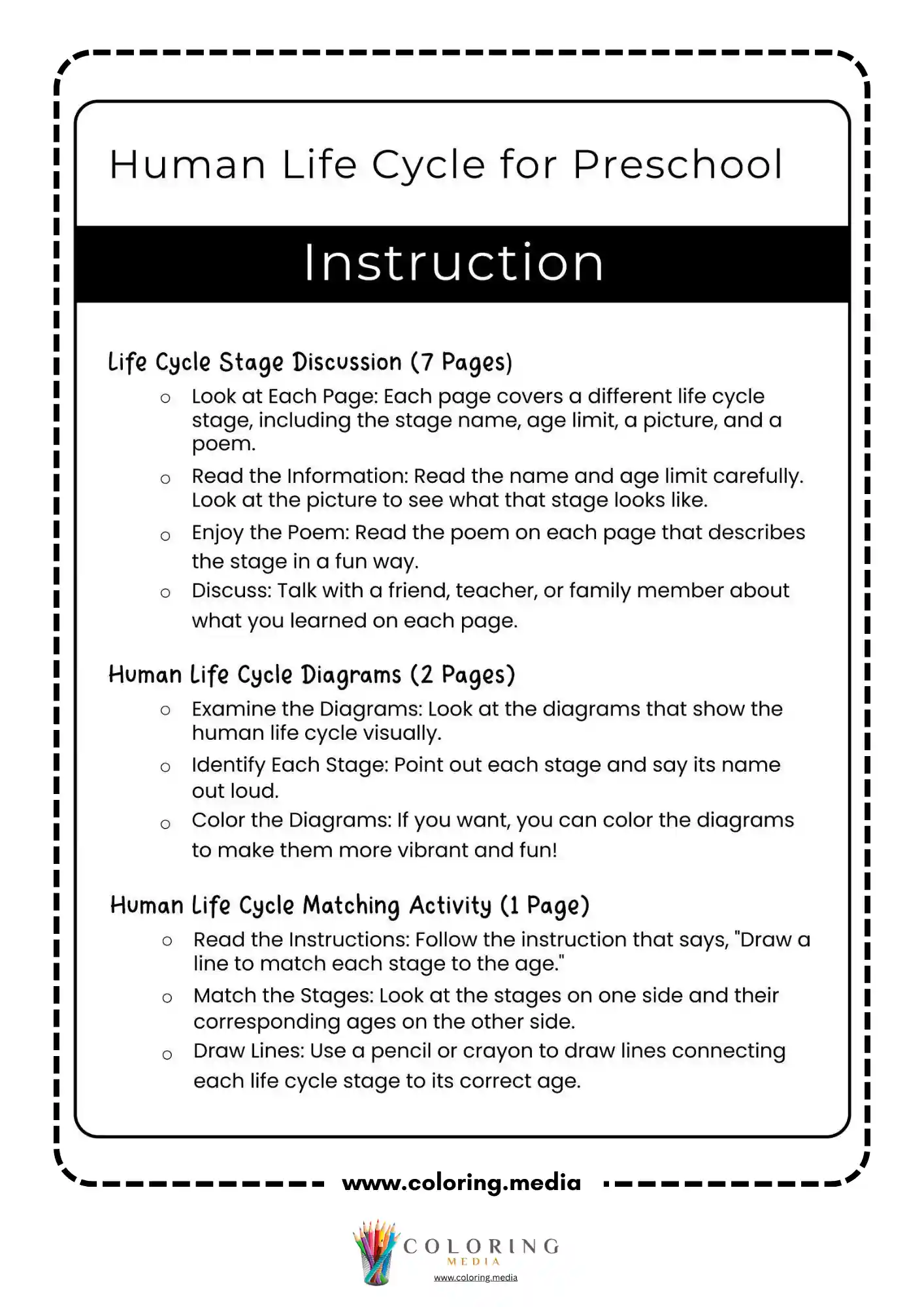
This collection includes 11 printable human life cycle coloring pages featuring circular life cycle diagrams, individual life stage coloring pages, and activity worksheets for labeling and sequencing the stages of human development from infancy through old age. Print on US Letter or A4 paper.
Who Are These Human Life Cycle Coloring Pages Best For?
Kindergarteners and early-elementary children (ages 4-8) are the primary audience. Understanding that all humans pass through the same developmental stages is an early science concept that also has social-emotional dimensions — it connects children to their parents, grandparents, and future selves. The coloring activity makes that connection tactile and personal.
The sequencing and labeling activity pages are particularly useful for ages 5-7, when children are developing the cognitive ability to think about temporal sequences (what comes first, what comes next) and to match written labels to visual concepts. A child who correctly arranges the life stage cards in order has demonstrated understanding of a biological sequence in a way that a multiple-choice question cannot capture.
For classroom use, these pages work well paired with a family interview activity — students ask a family member about one of the life stages and bring back one story to share. The coloring page serves as the visual anchor for a conversation that spans science, language arts, and social studies simultaneously.
Interesting Human Life Cycle Facts to Share While Coloring
Humans have one of the longest childhoods of any species. Human children depend on adult care for at least 12-15 years — far longer than most mammals. This extended childhood is linked to brain development: the human prefrontal cortex, responsible for planning and judgment, does not fully mature until around age 25.
Babies are born with roughly 270 bones that gradually fuse together as the child grows. By adulthood, the human body has 206 bones — the difference is accounted for by bones that merge (several skull bones fuse in early childhood, for example). Babies also have more cartilage than adults, which makes their skeletons flexible enough to survive the birth process.
The human body replaces most of its cells continuously throughout life. Skin cells are replaced roughly every 2-4 weeks; red blood cells every 4 months; most cells in the small intestine every few days. However, most neurons in the brain are not replaced — the neurons you have at age 1 are largely the same ones you use at 80.
Creative Human Life Cycle Coloring and Craft Ideas
Family Life Stage Photos Match photographs of family members (baby photo, school photo, parent, grandparent) to the correct stage on the life cycle diagram.
Interview Activity Interview one person in each life stage in the family — ask what they can do now that they couldn’t before, and what they remember from an earlier stage.
Then and Now Drawing Draw yourself as a baby (imagined) and yourself now on two halves of a sheet, placed beside the corresponding stages on the life cycle page.
Growth Timeline Mark your height on a wall or door frame, then mark the approximate heights for each life stage on the coloring page using a ruler and pencil.
Life Stage Sorting Game Cut the individual stage pages into cards, mix them up, and race to put them in the correct order — a self-checking activity once the finished diagram page is used as an answer key.
Comparison with Another Species Compare the human life cycle diagram to a butterfly or frog life cycle page from the science set — how many stages, how long each takes, what changes are involved.
Future Stage Drawing Draw what you imagine yourself looking like in 30 years on a blank page and attach it beside the ‘adult’ stage on the life cycle diagram.
Vocabulary Building For each stage, write the related vocabulary word on the back: infant, toddler, juvenile, adolescent, adult, elderly — a science vocabulary card activity.
How to Print These Human Life Cycle Coloring Pages
Each page downloads as a PDF formatted for US Letter and A4 paper. Standard copy paper works for all coloring media. For the activity sequencing pages, print on cardstock and cut the individual stage cards for reuse across multiple sessions. Grayscale printing works fine.
Explore More Science & Nature Coloring Pages
If you enjoyed these pages, you may also like:
Human Body Coloring Pages
Butterfly Life Cycle Coloring Pages
Life Cycle of a Frog Coloring Pages
Penguin Life Cycle Coloring Pages
Science & Nature Coloring Pages