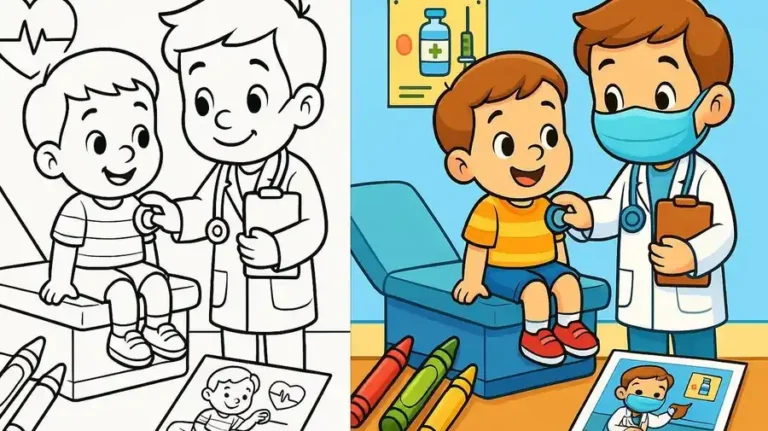

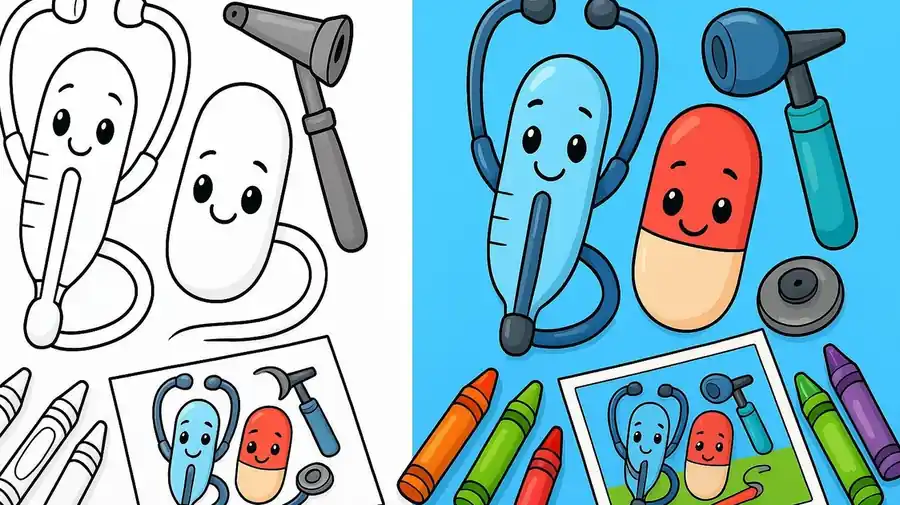
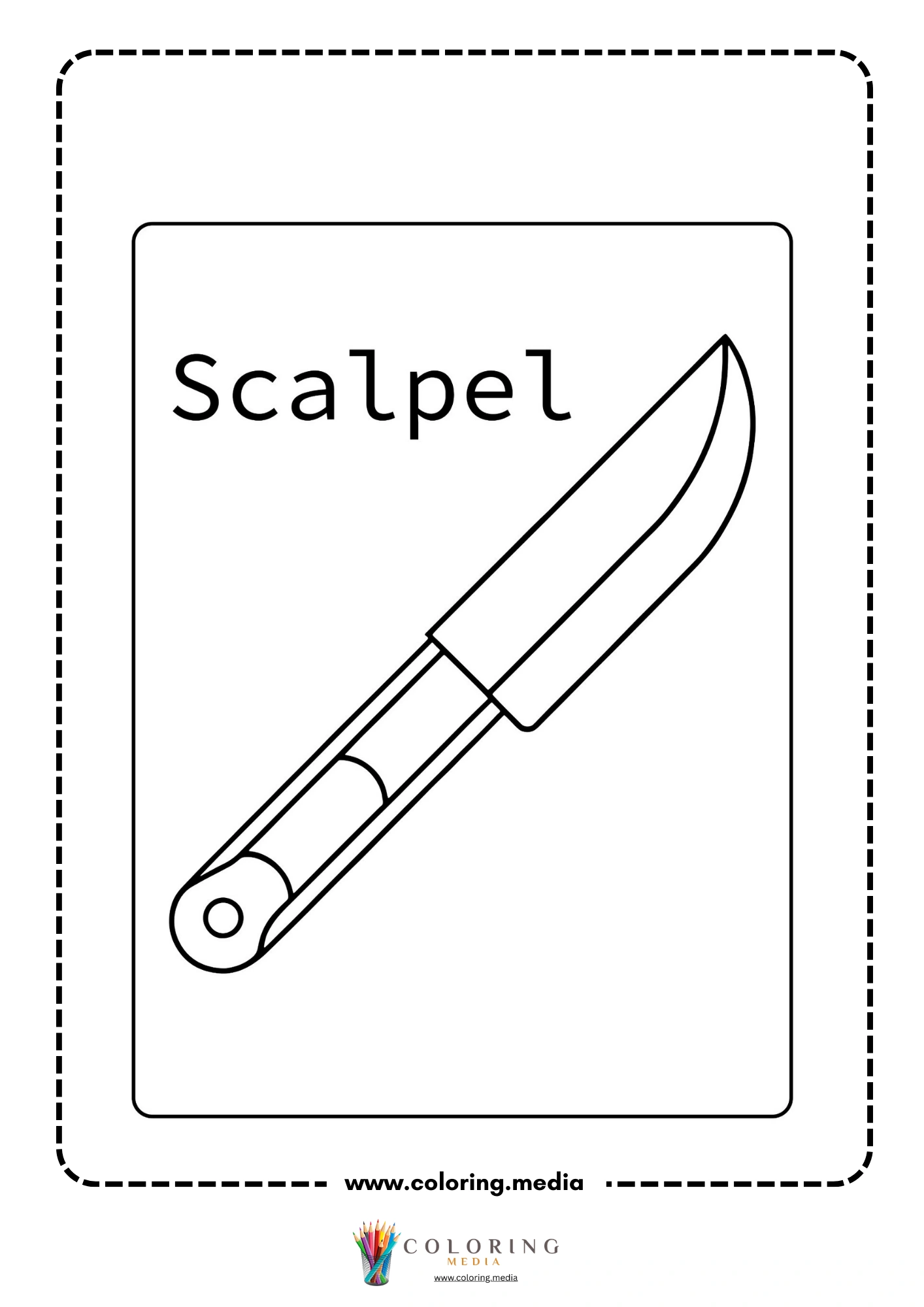
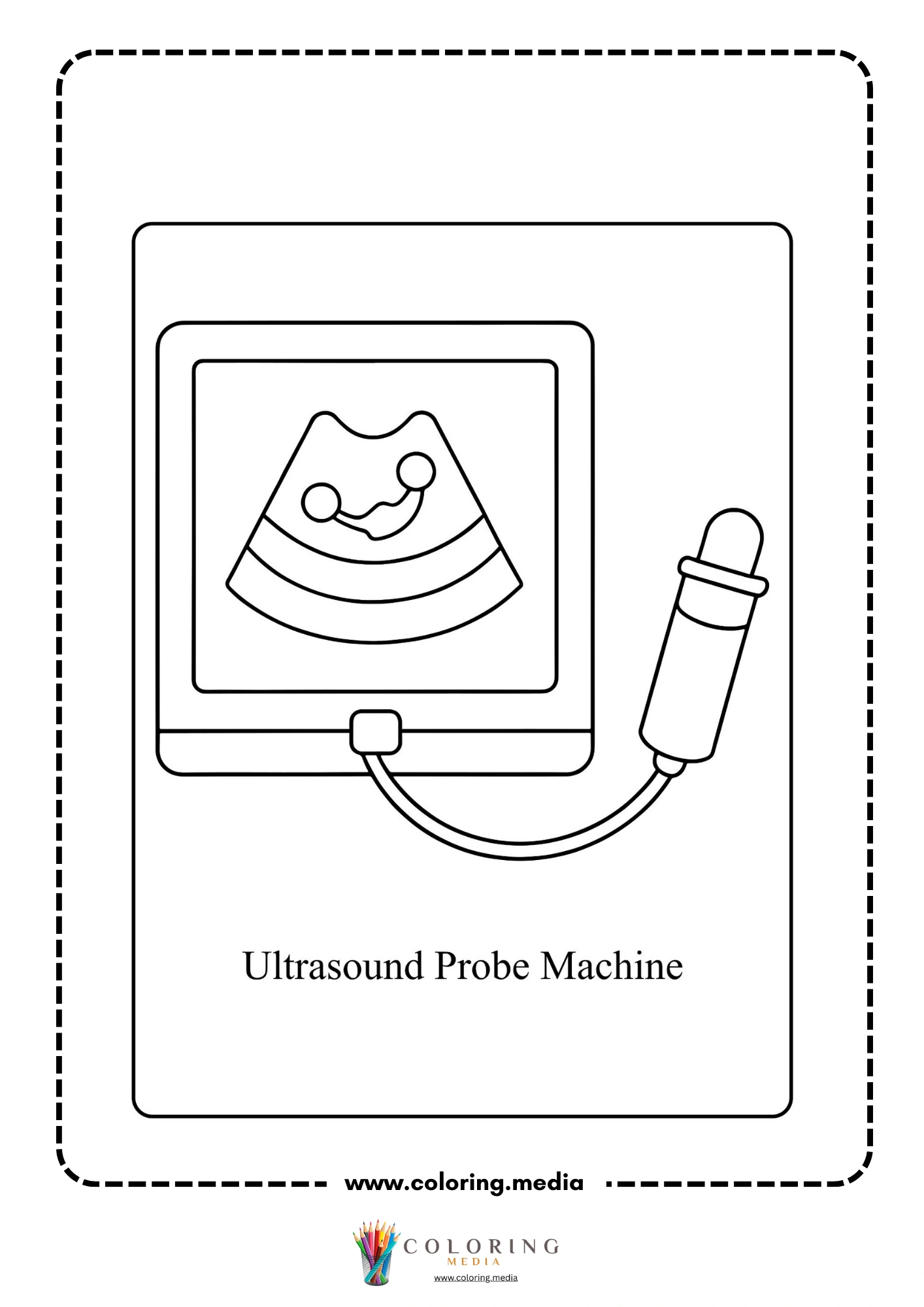
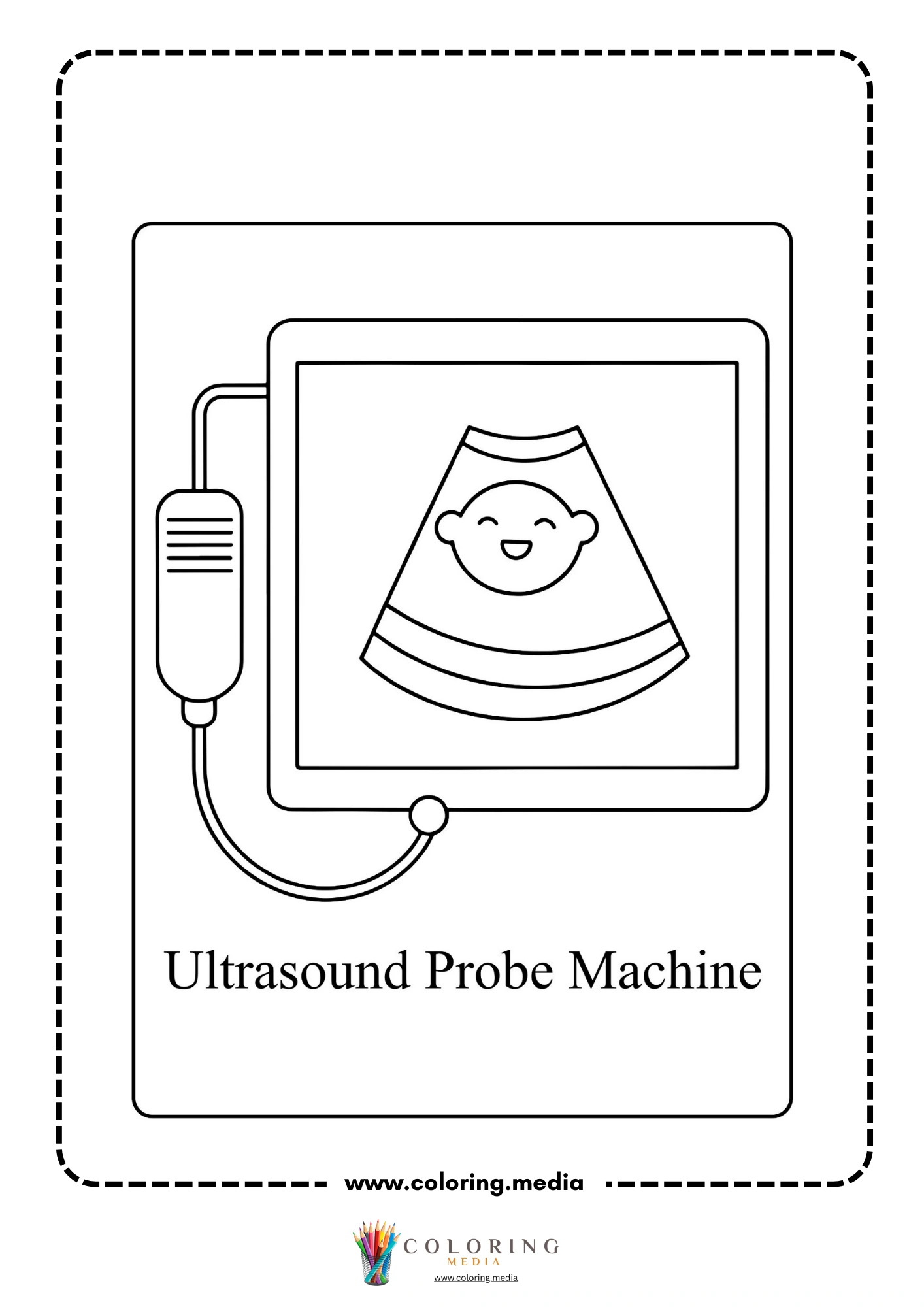
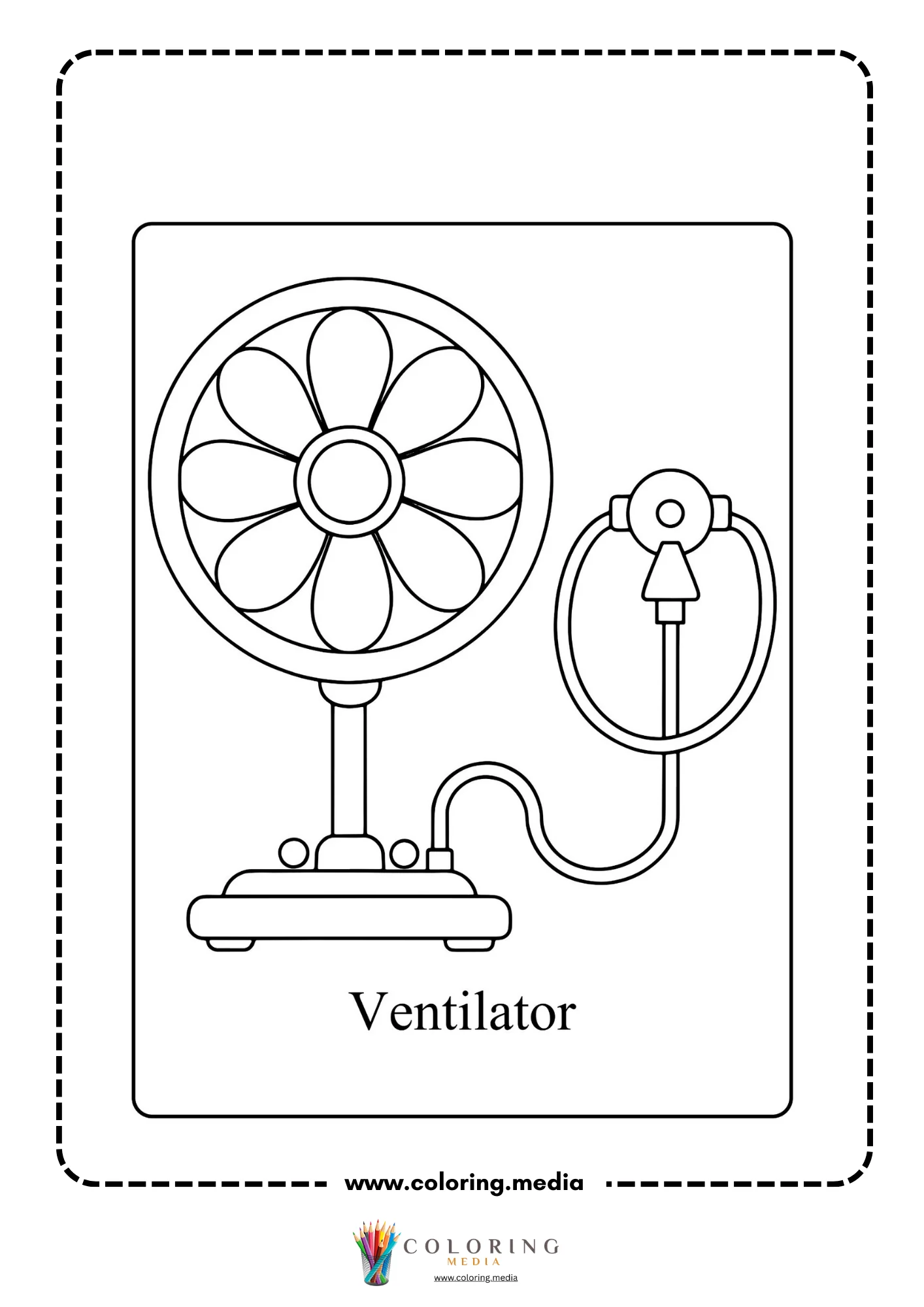
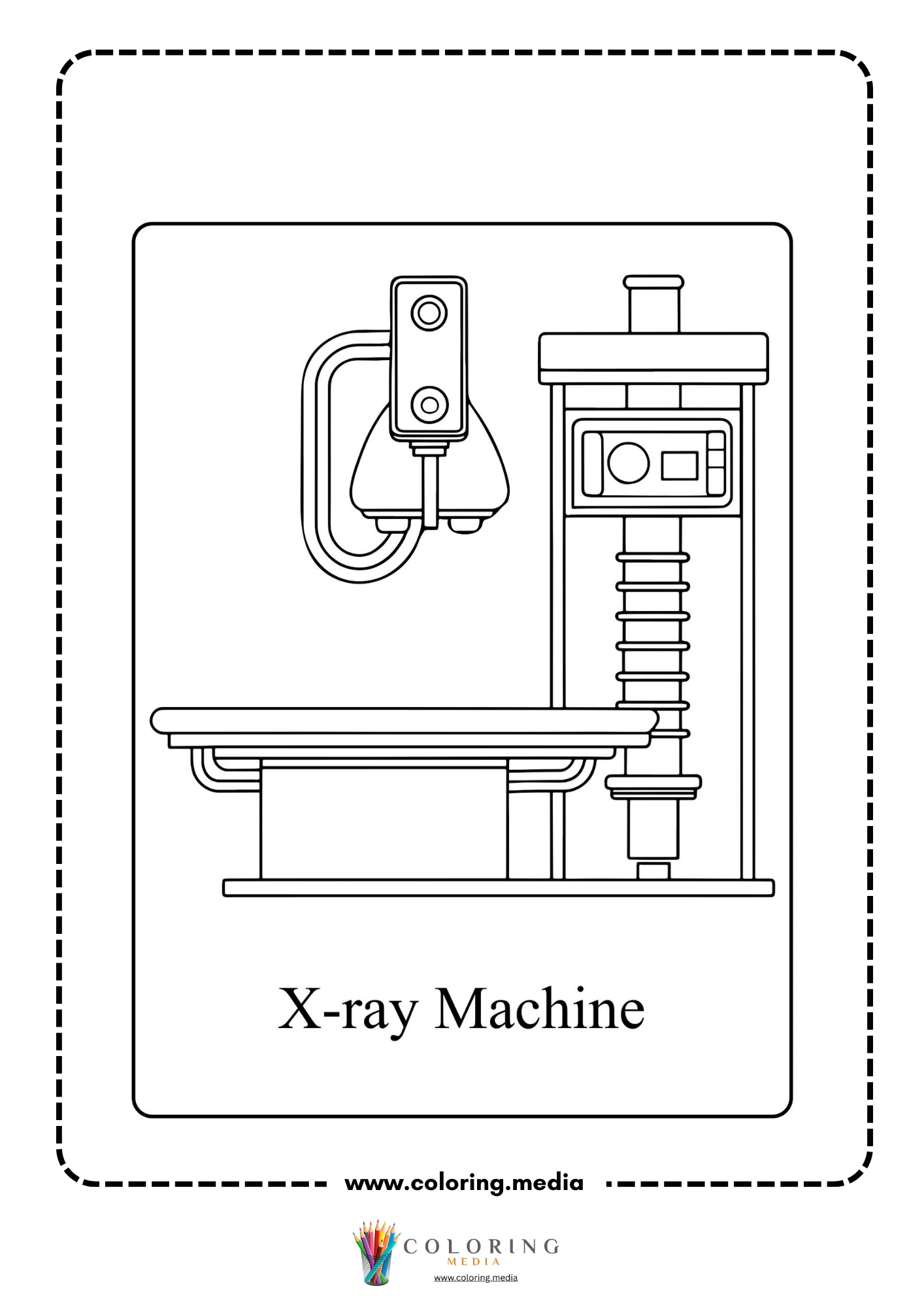
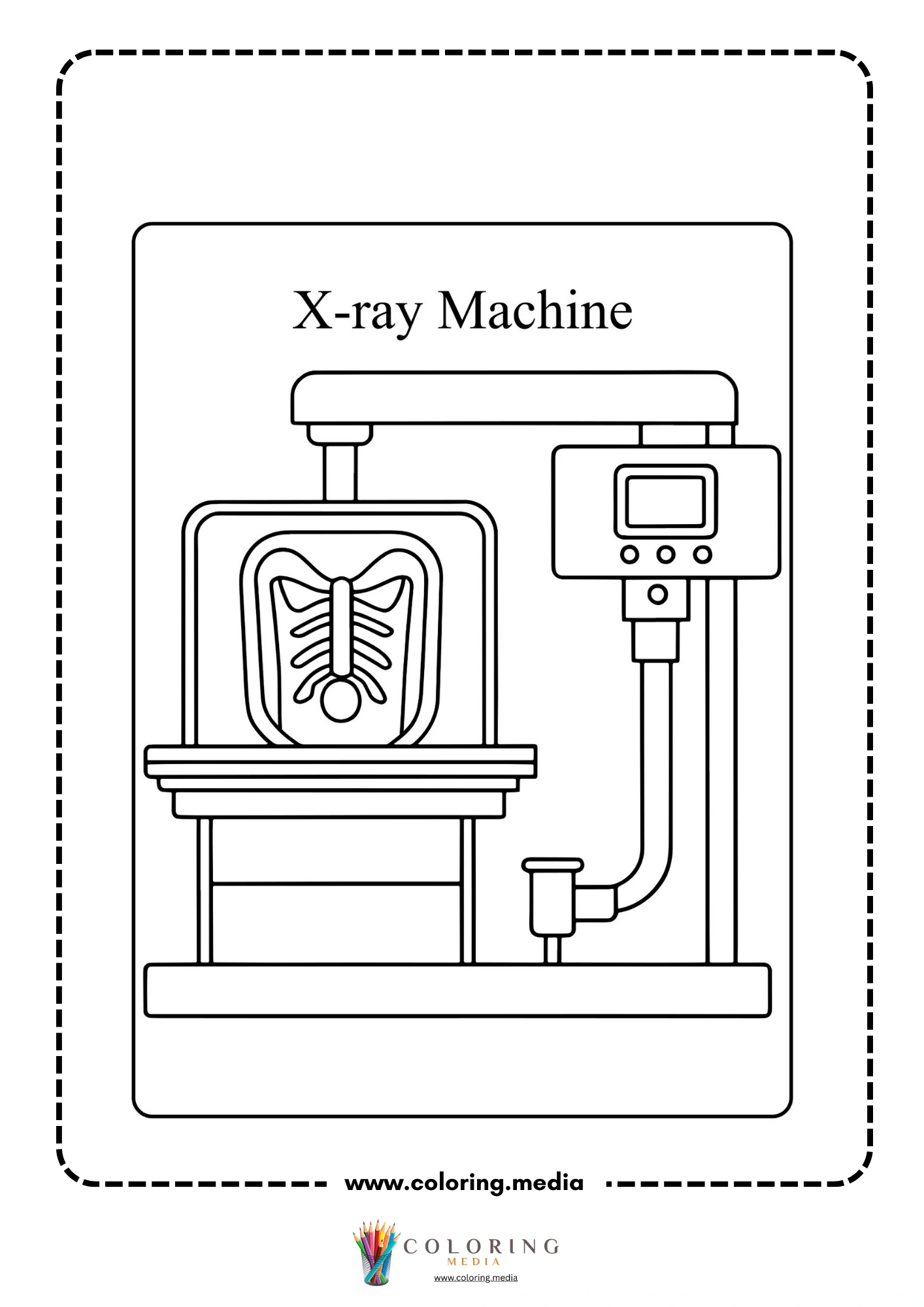
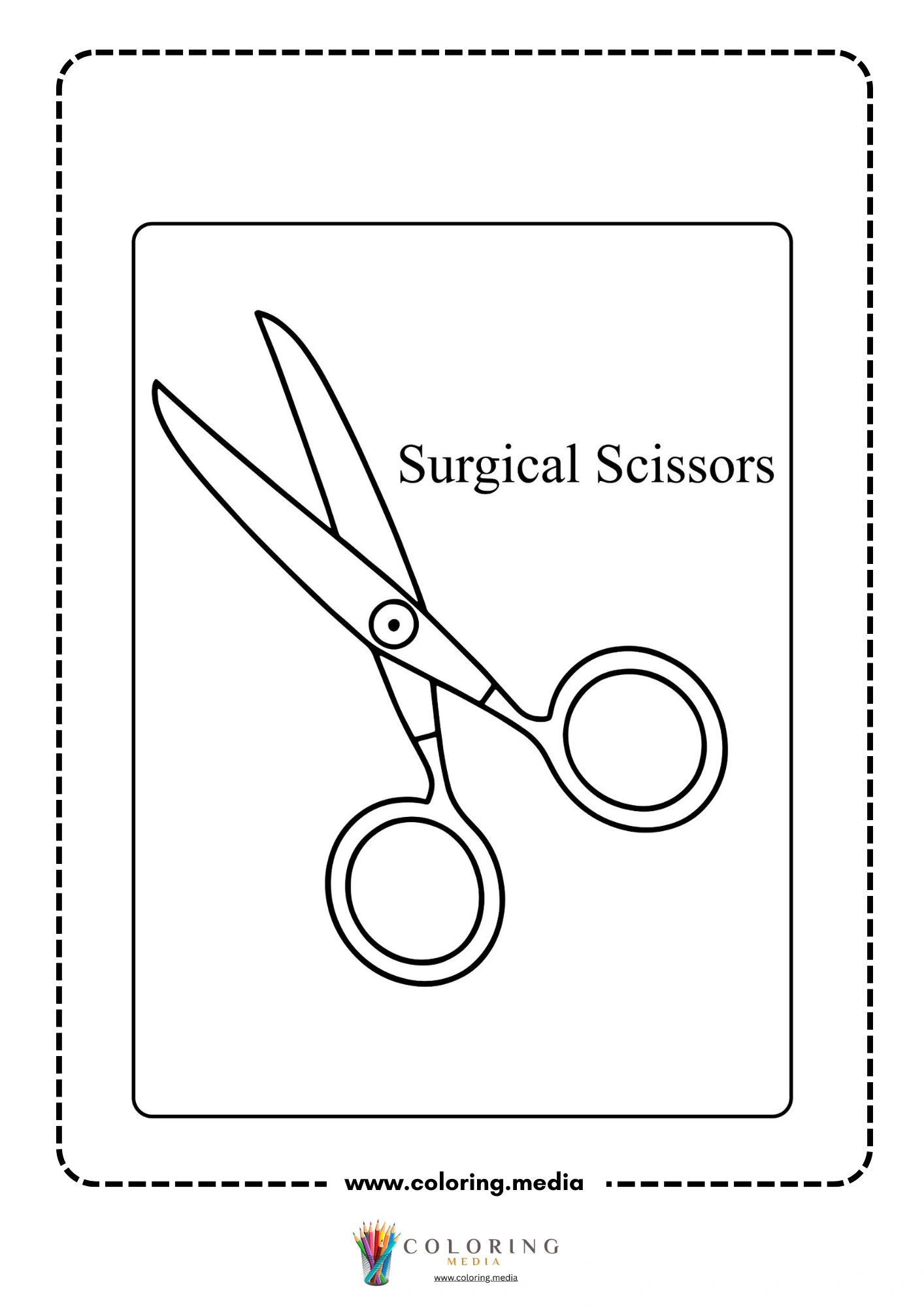
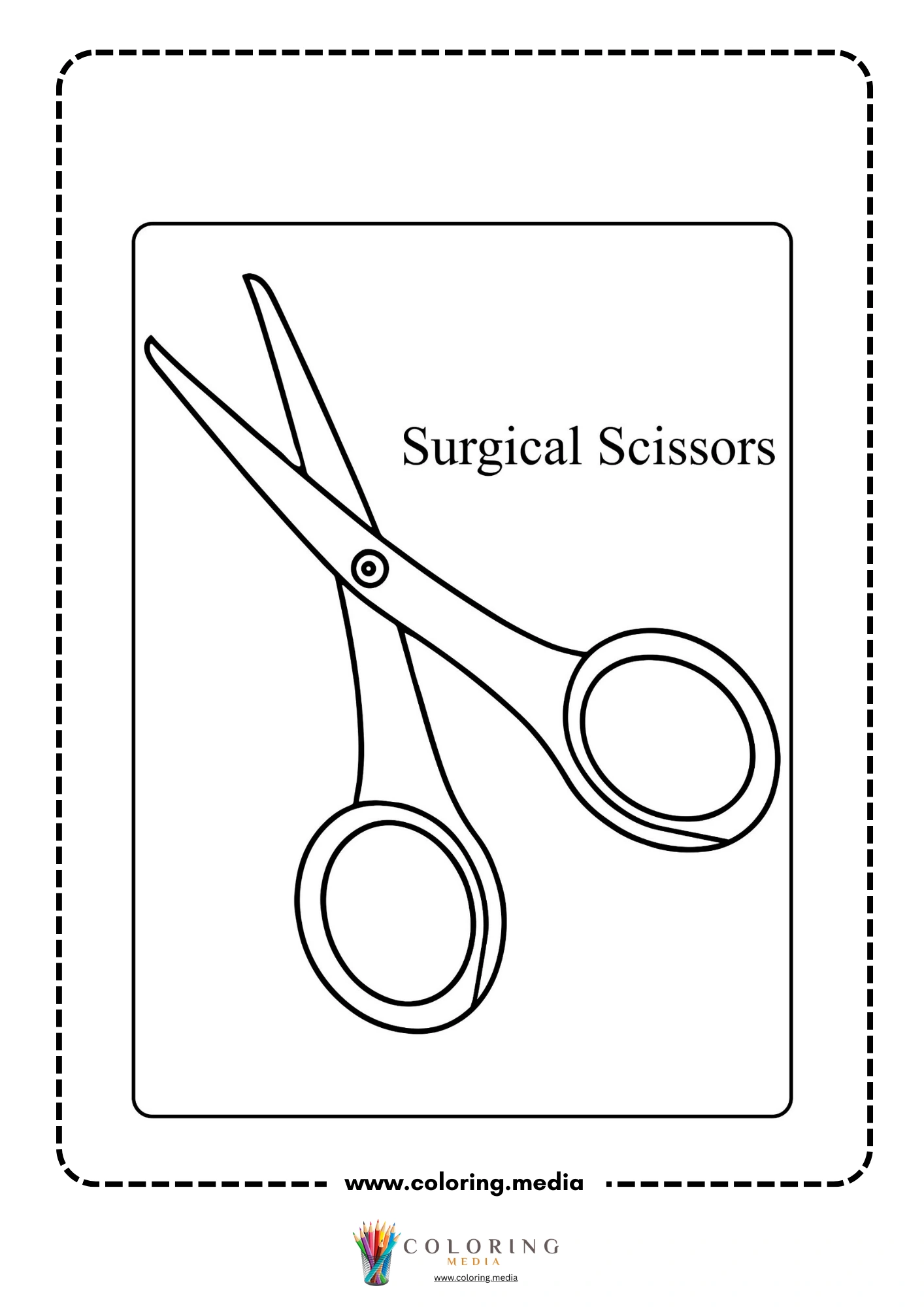
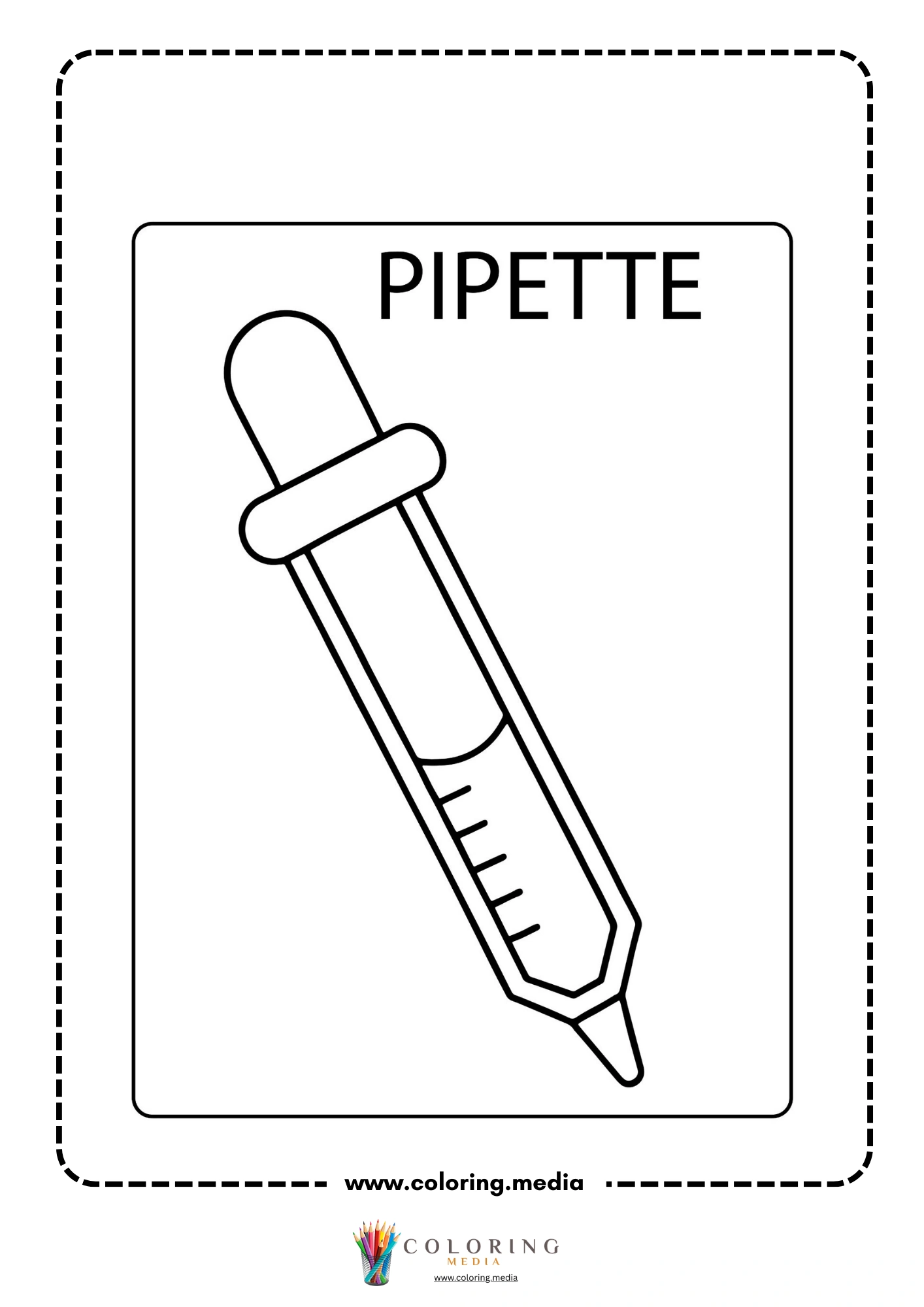
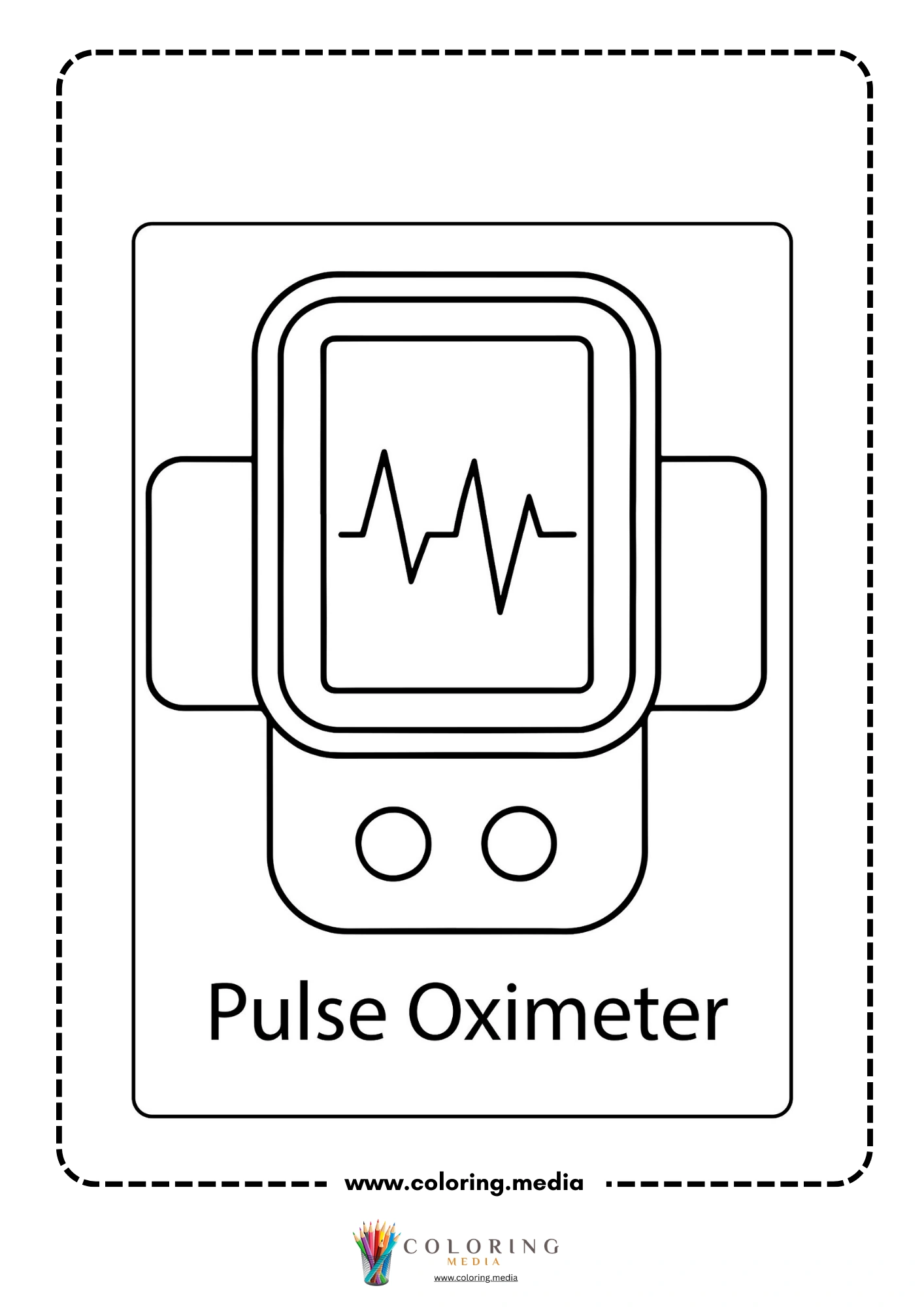
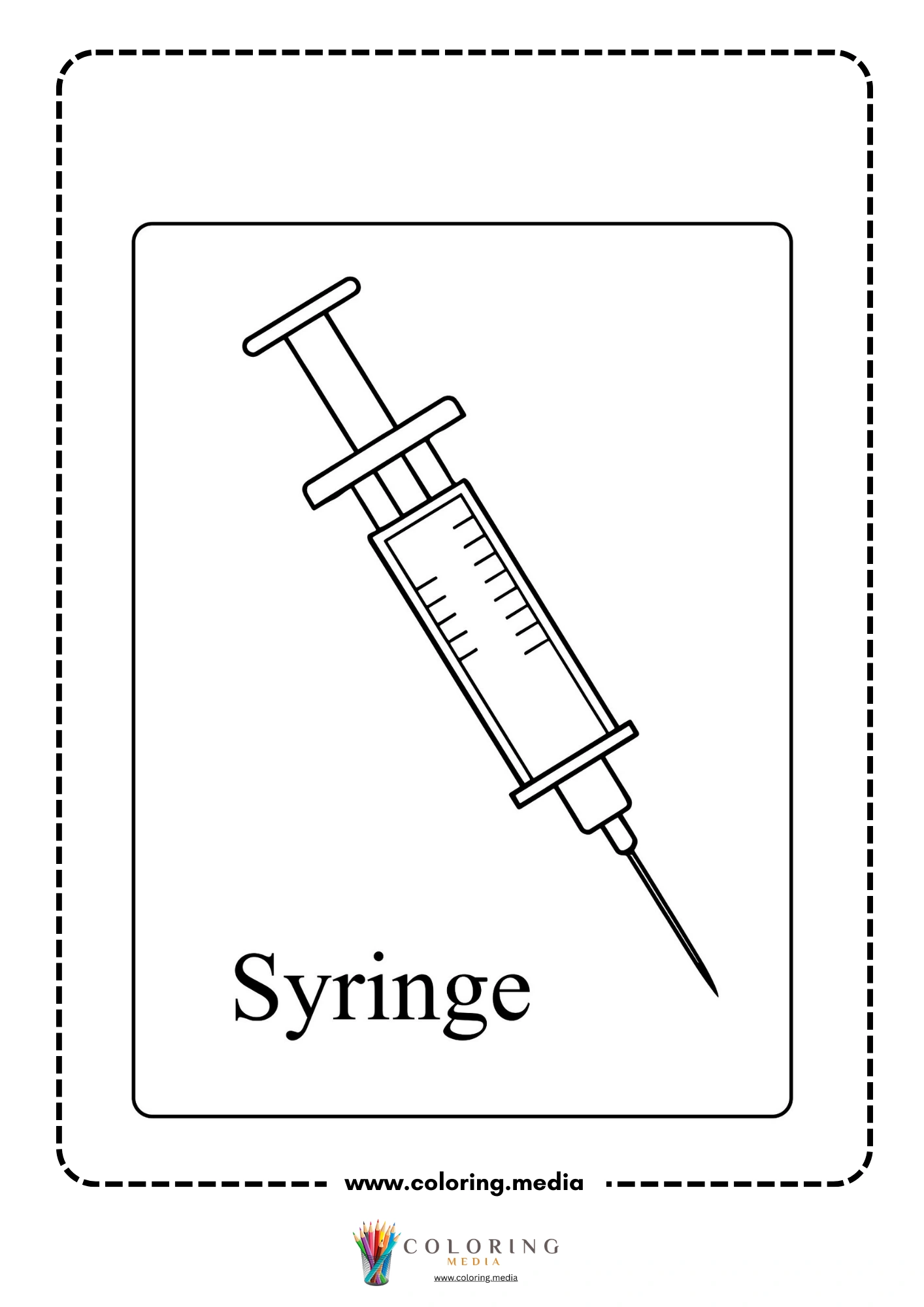
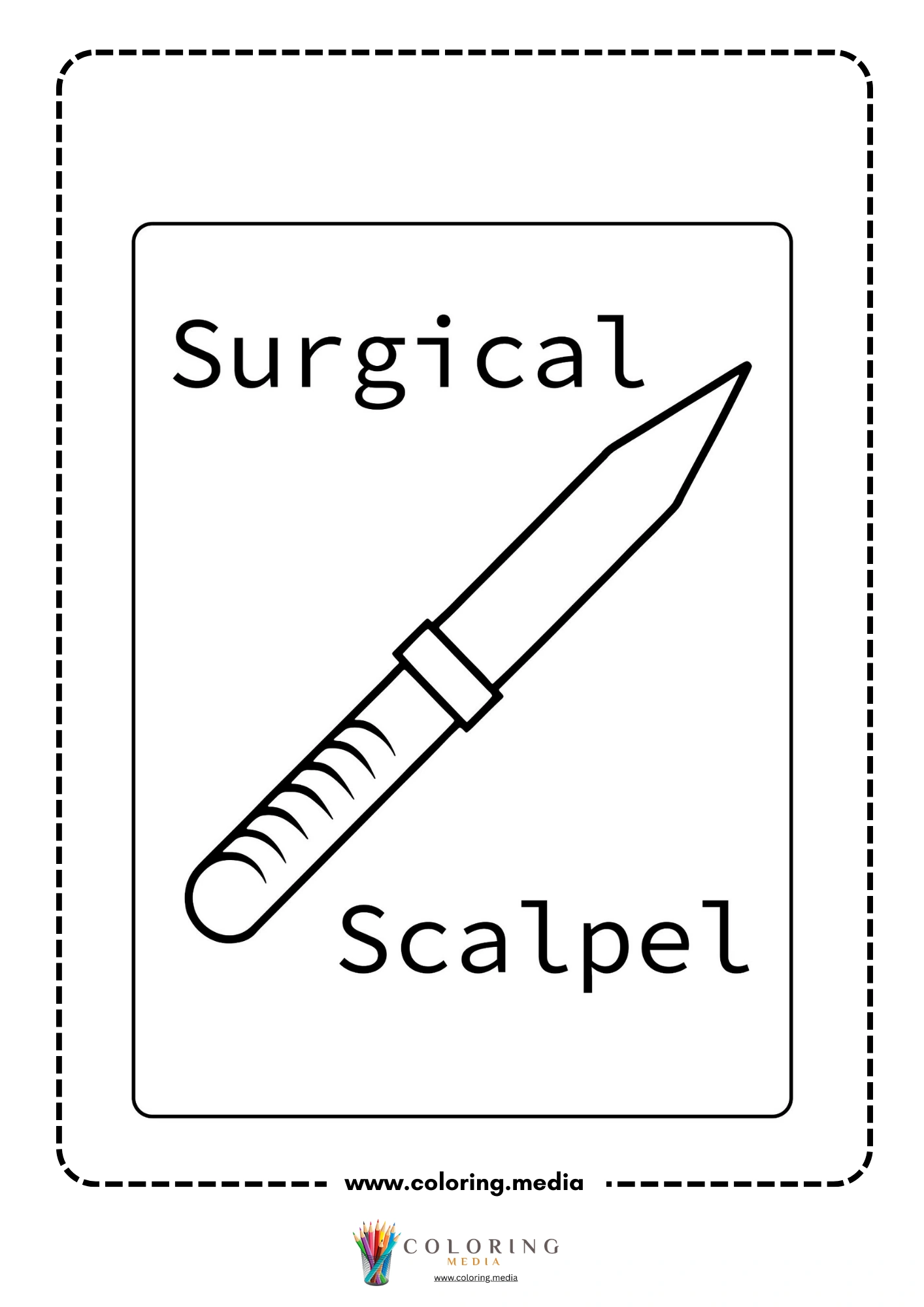
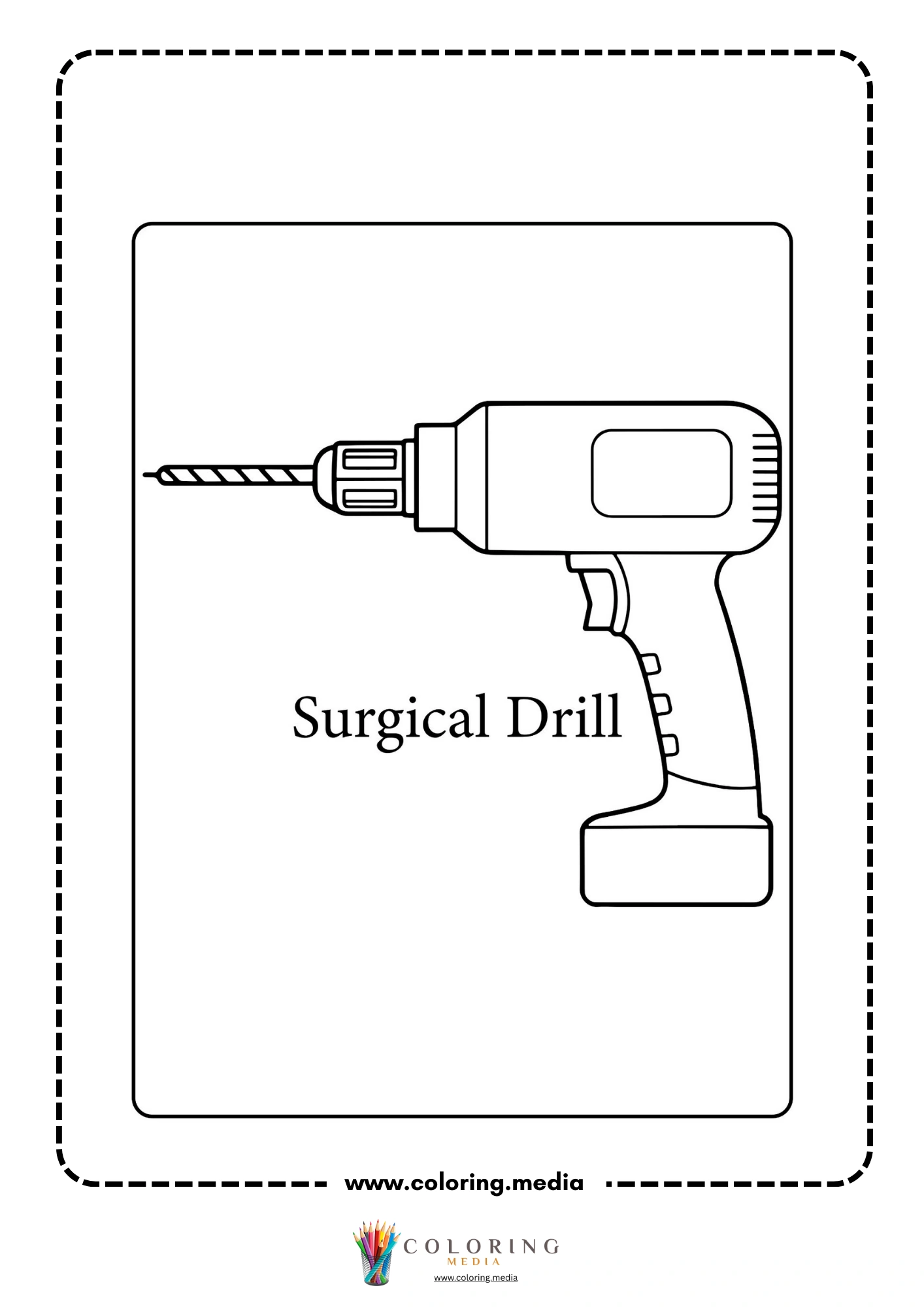
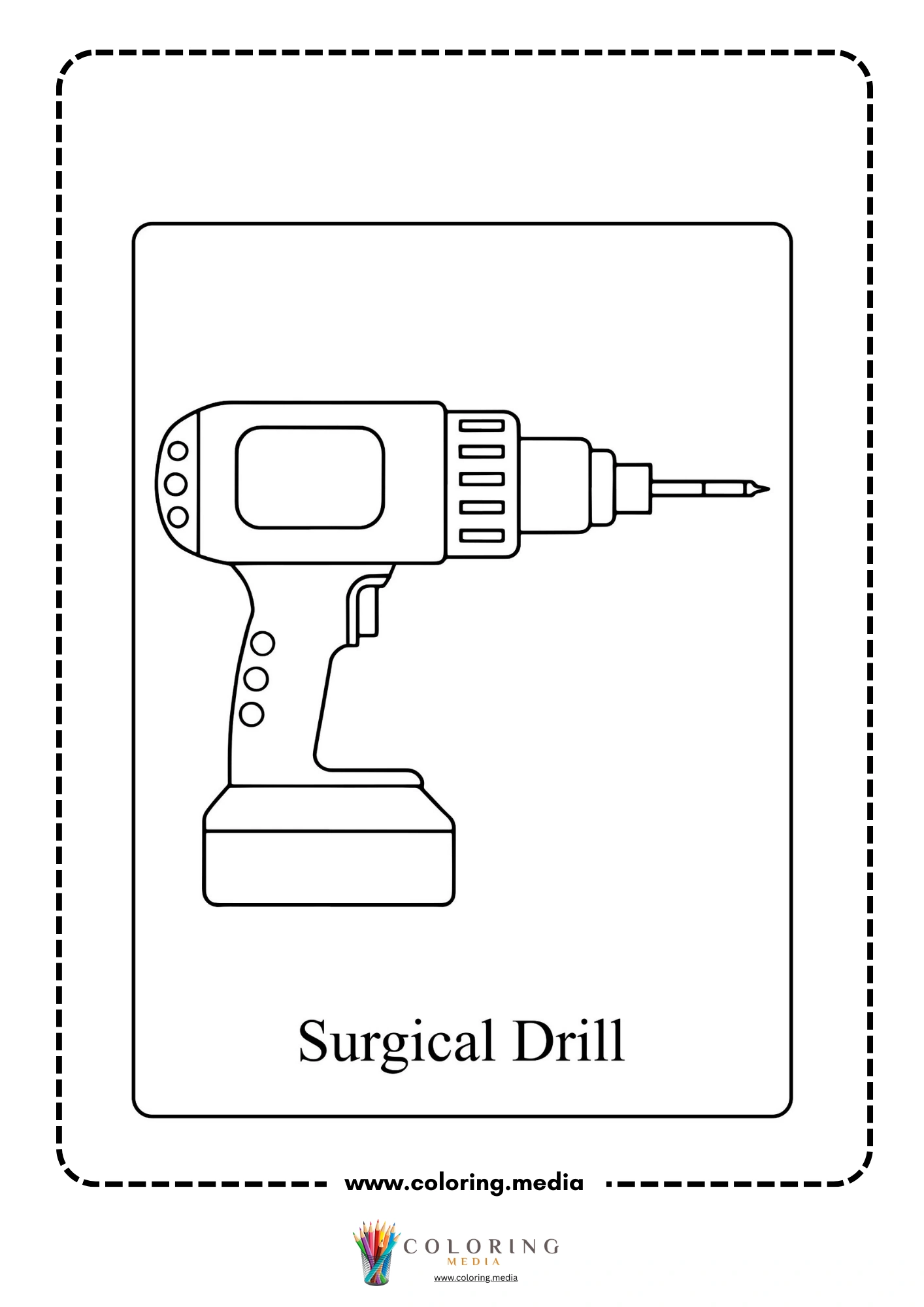
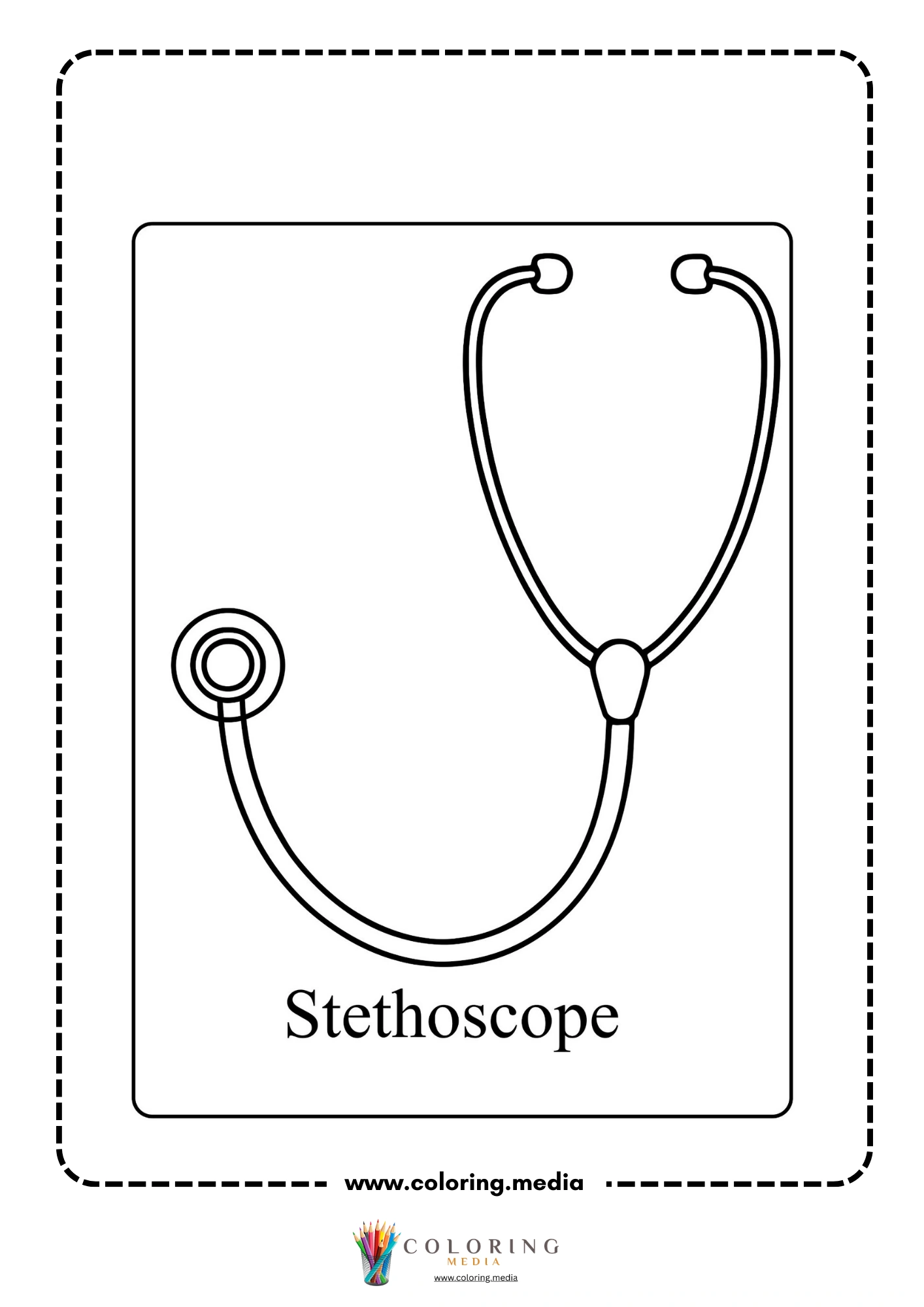
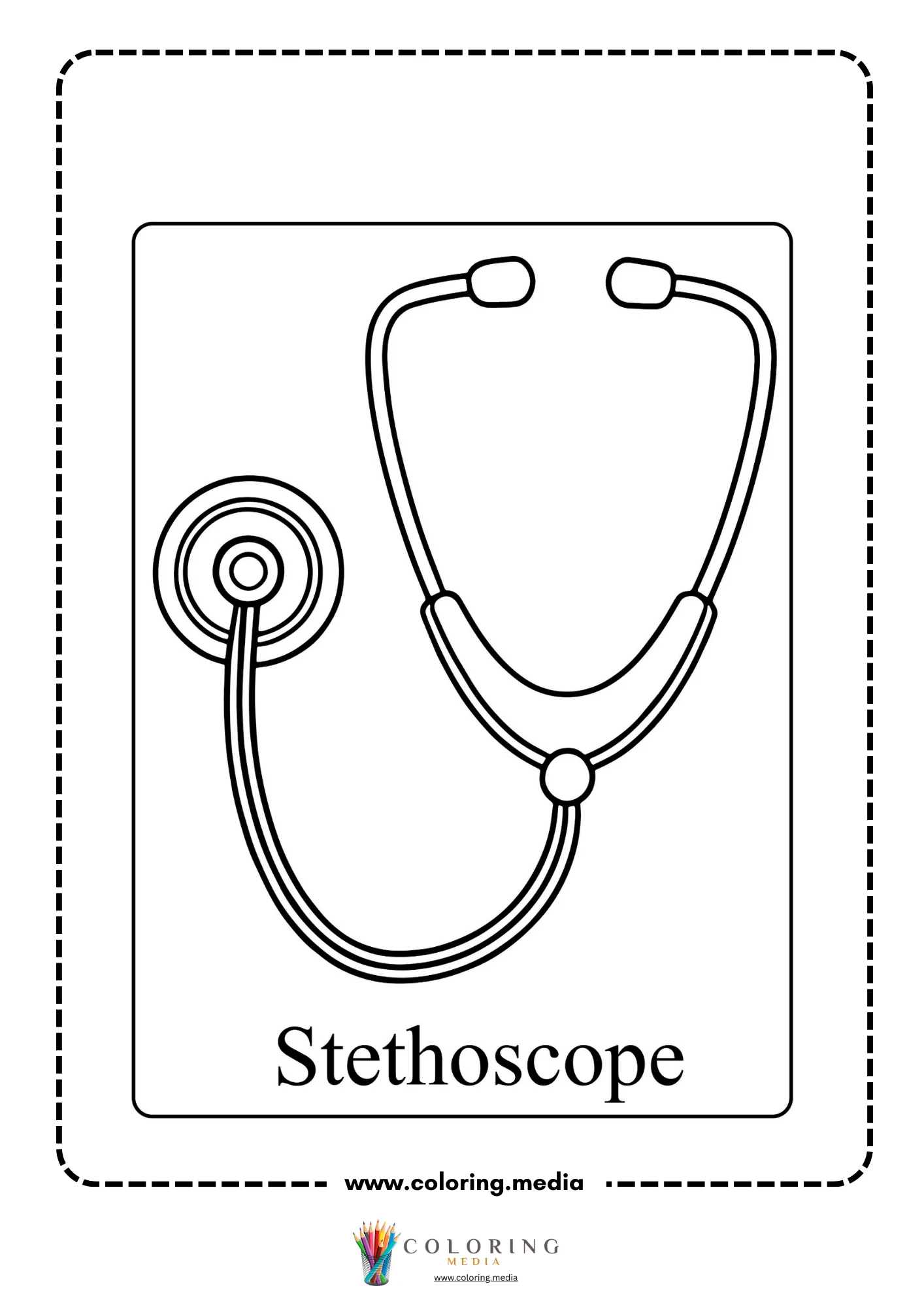
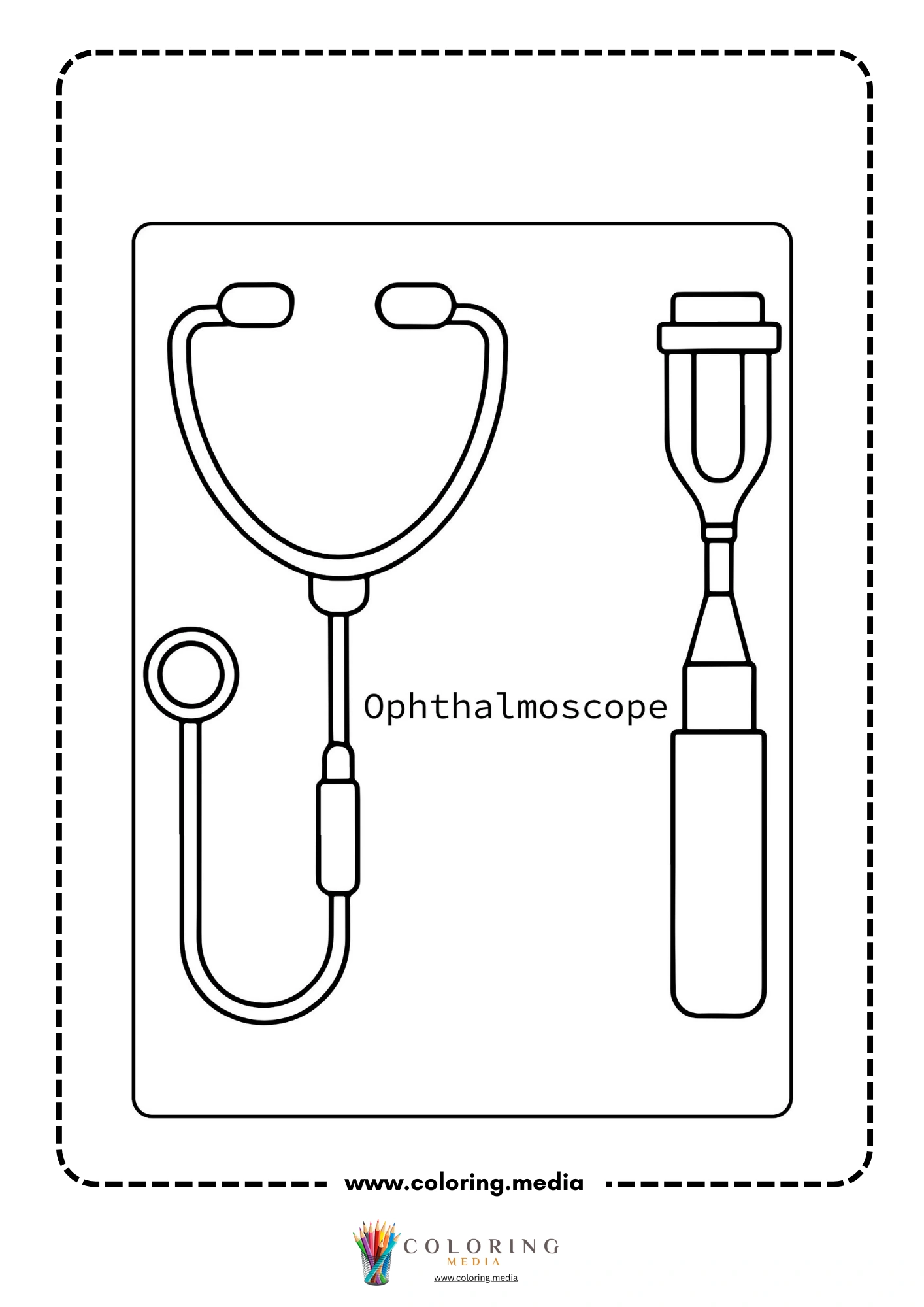
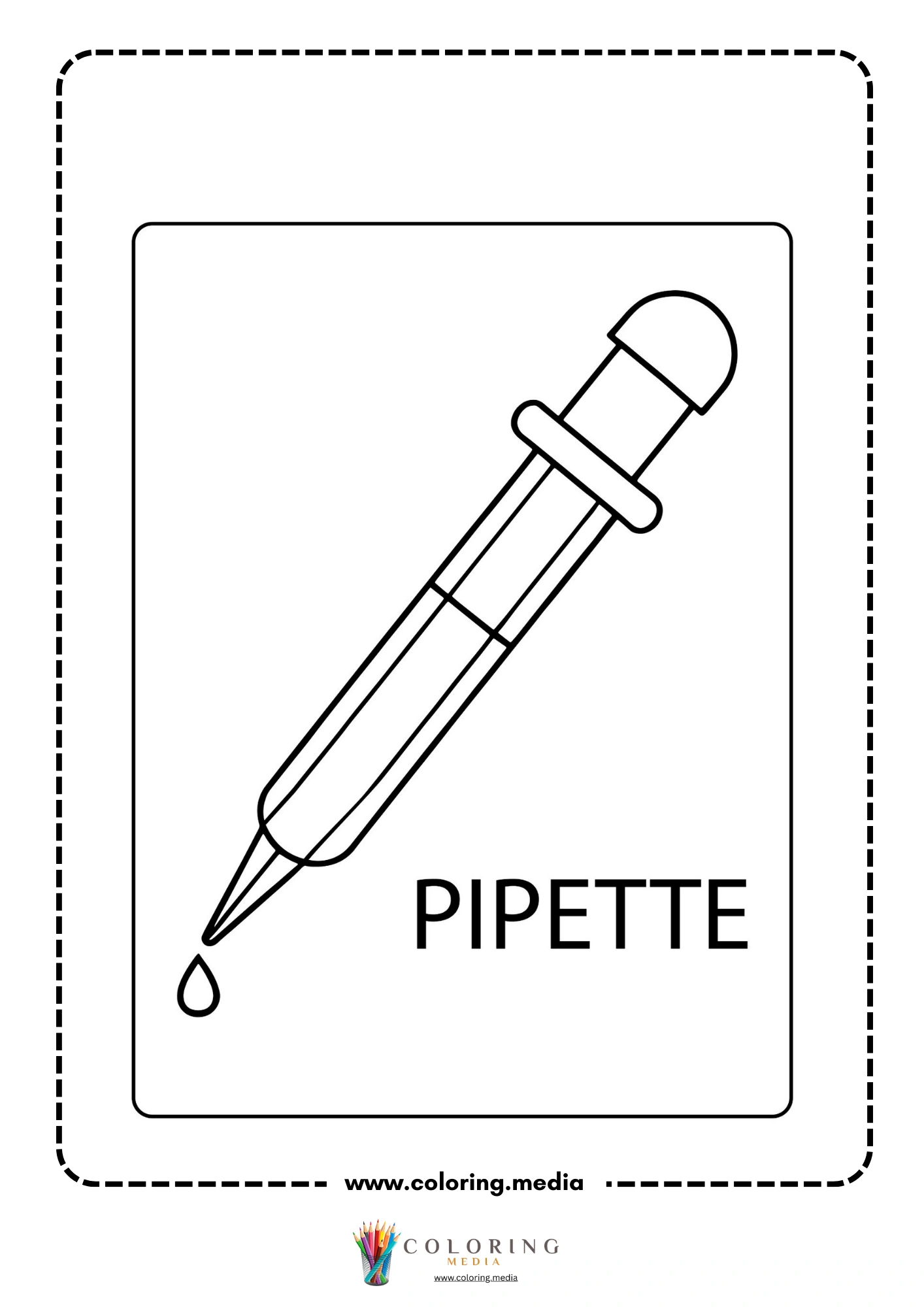
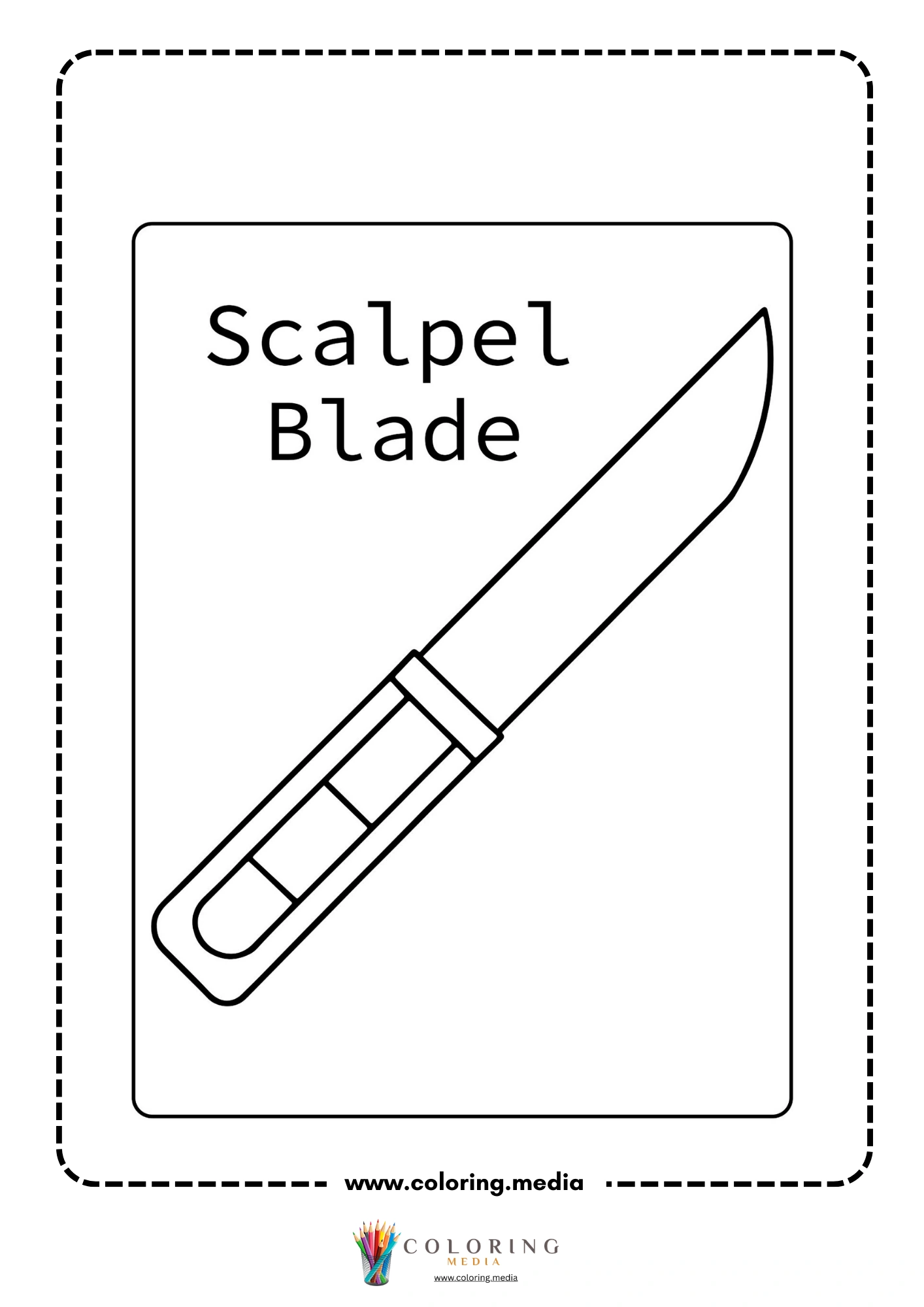
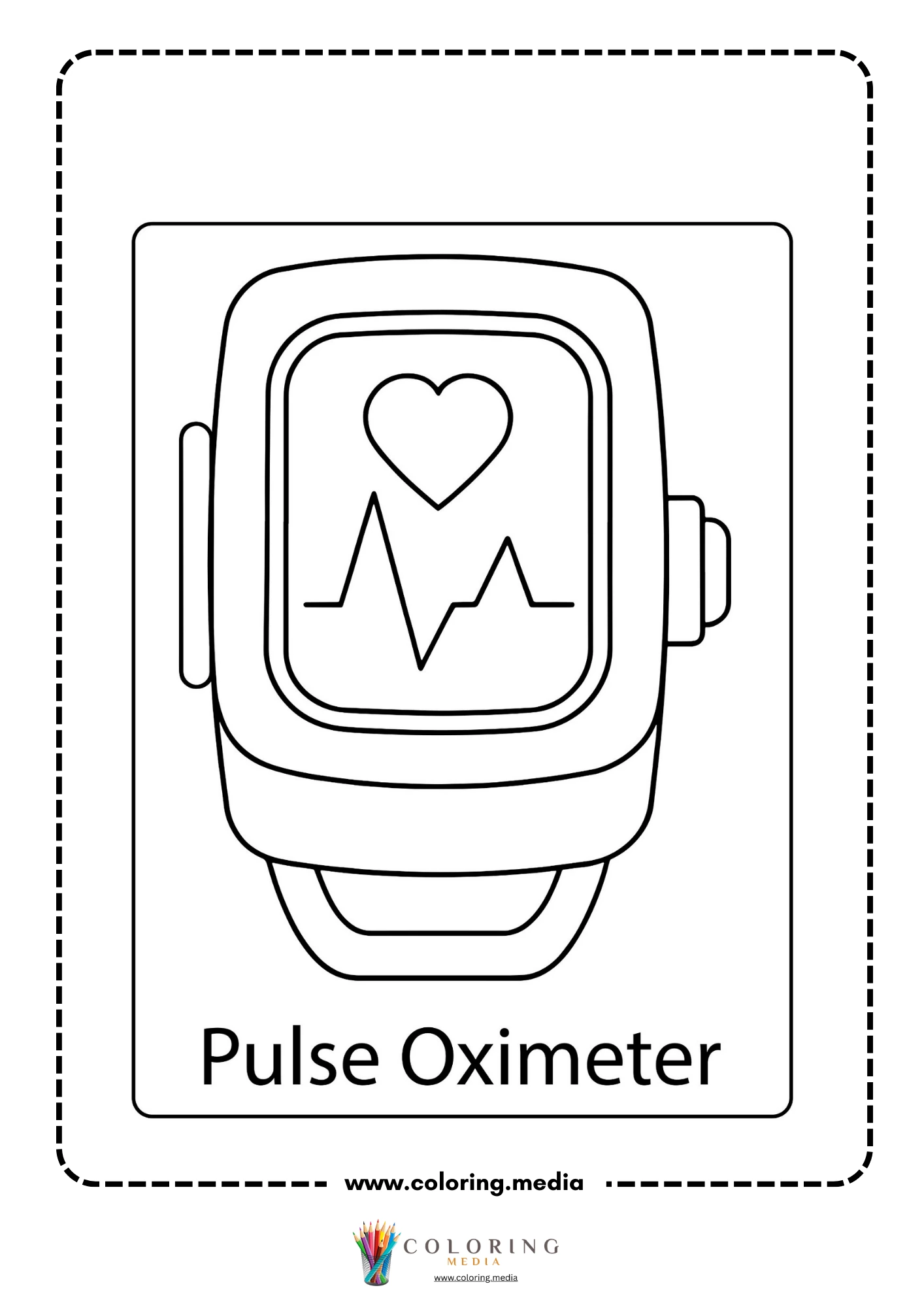
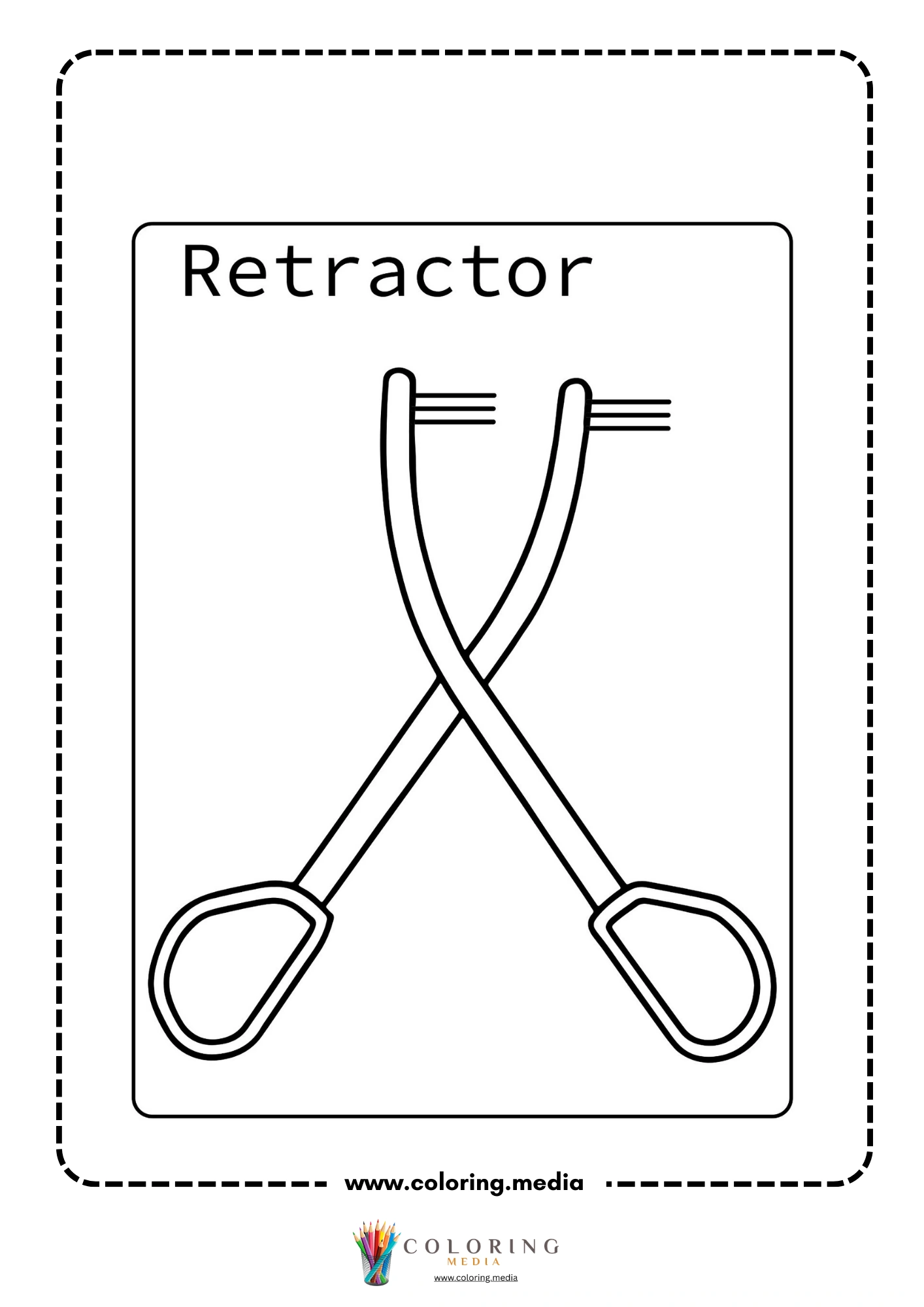
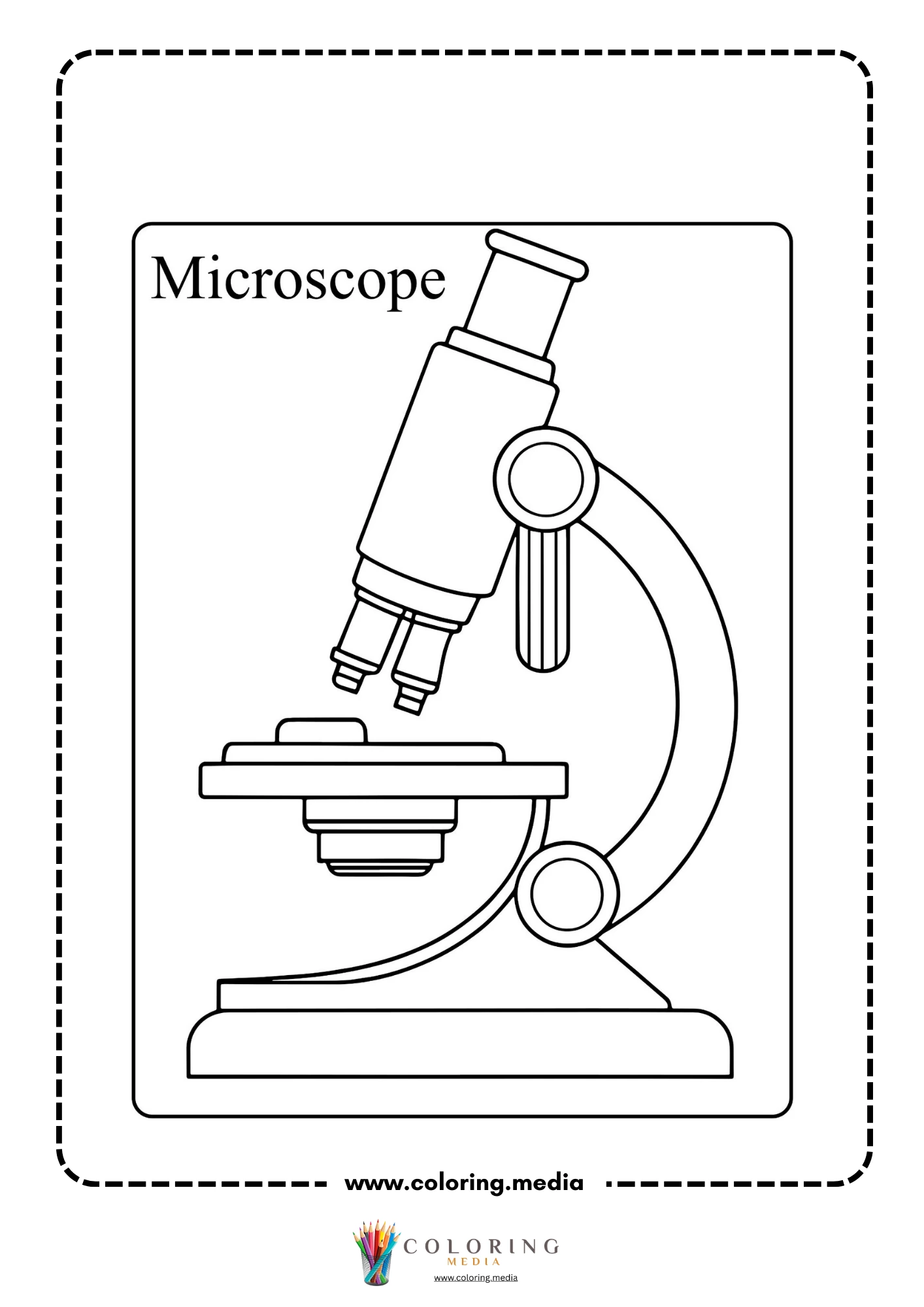
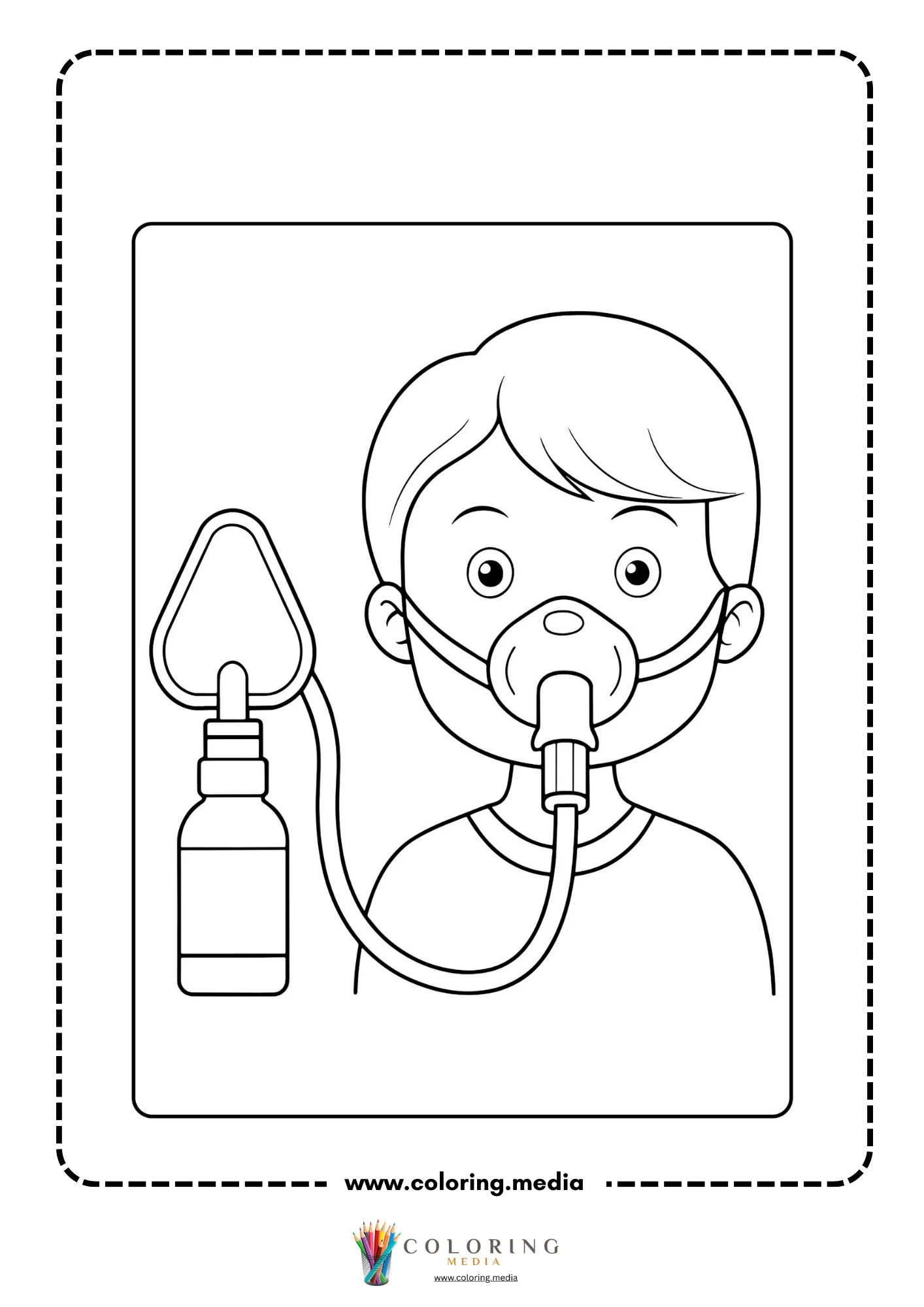
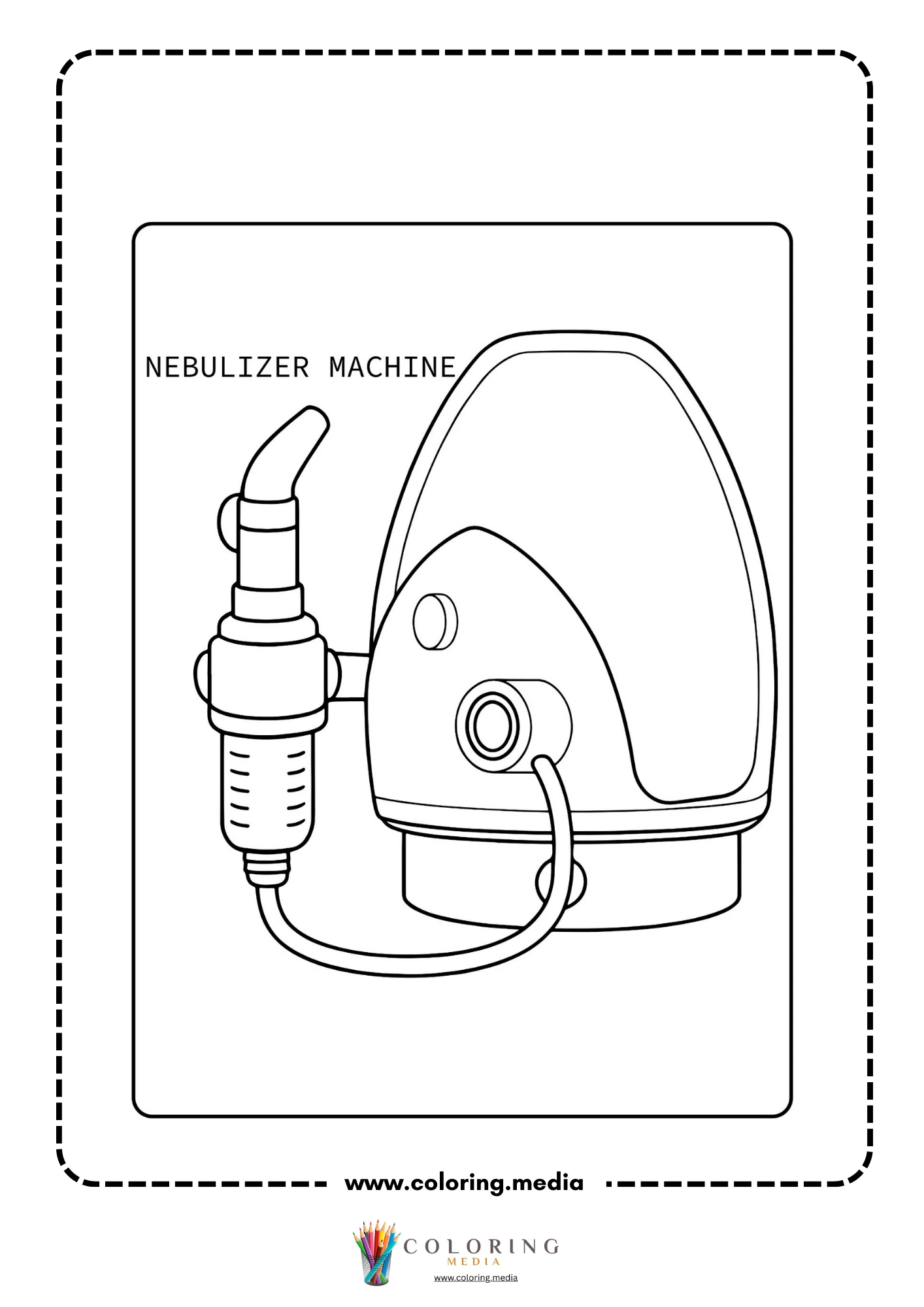
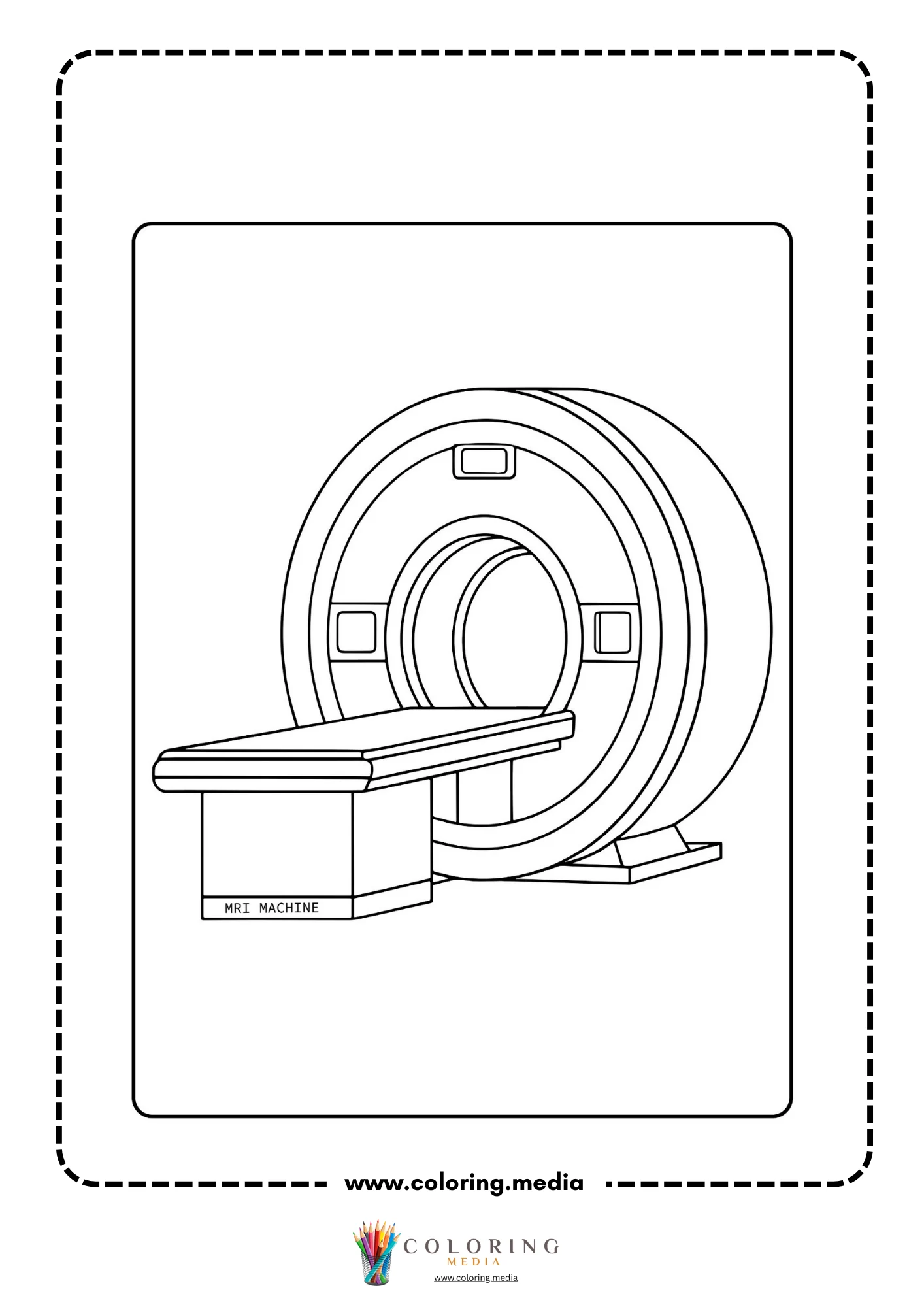
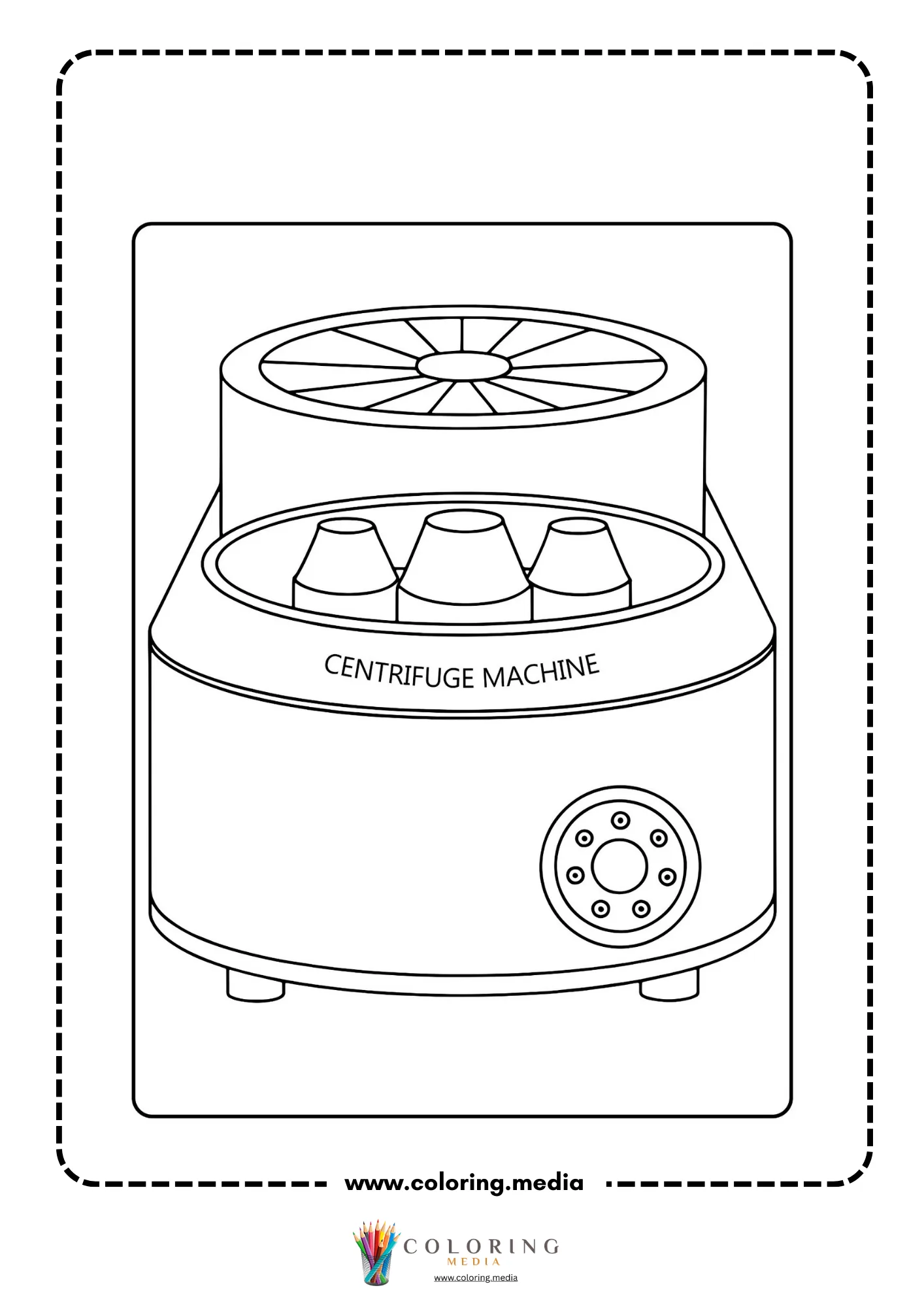
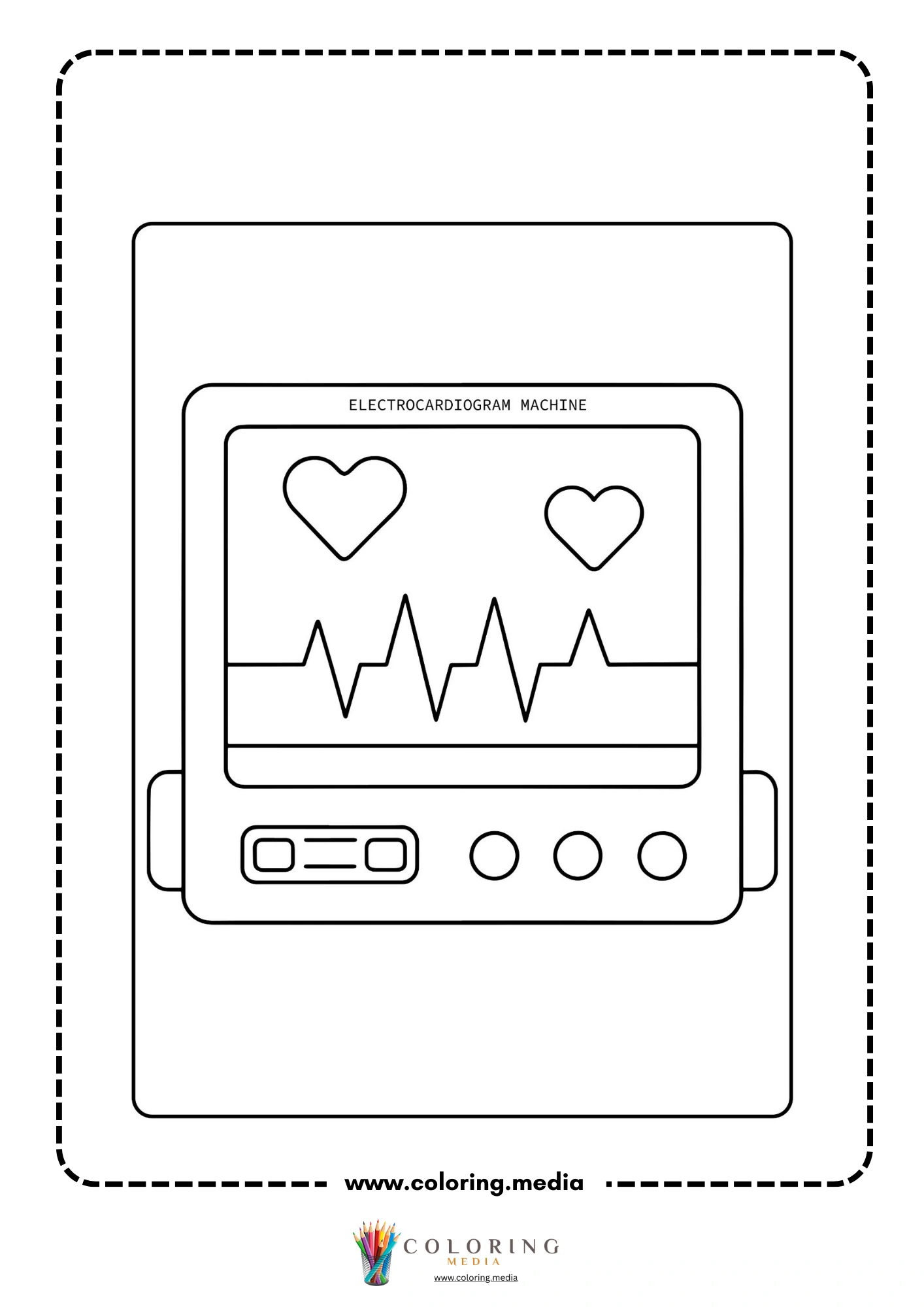
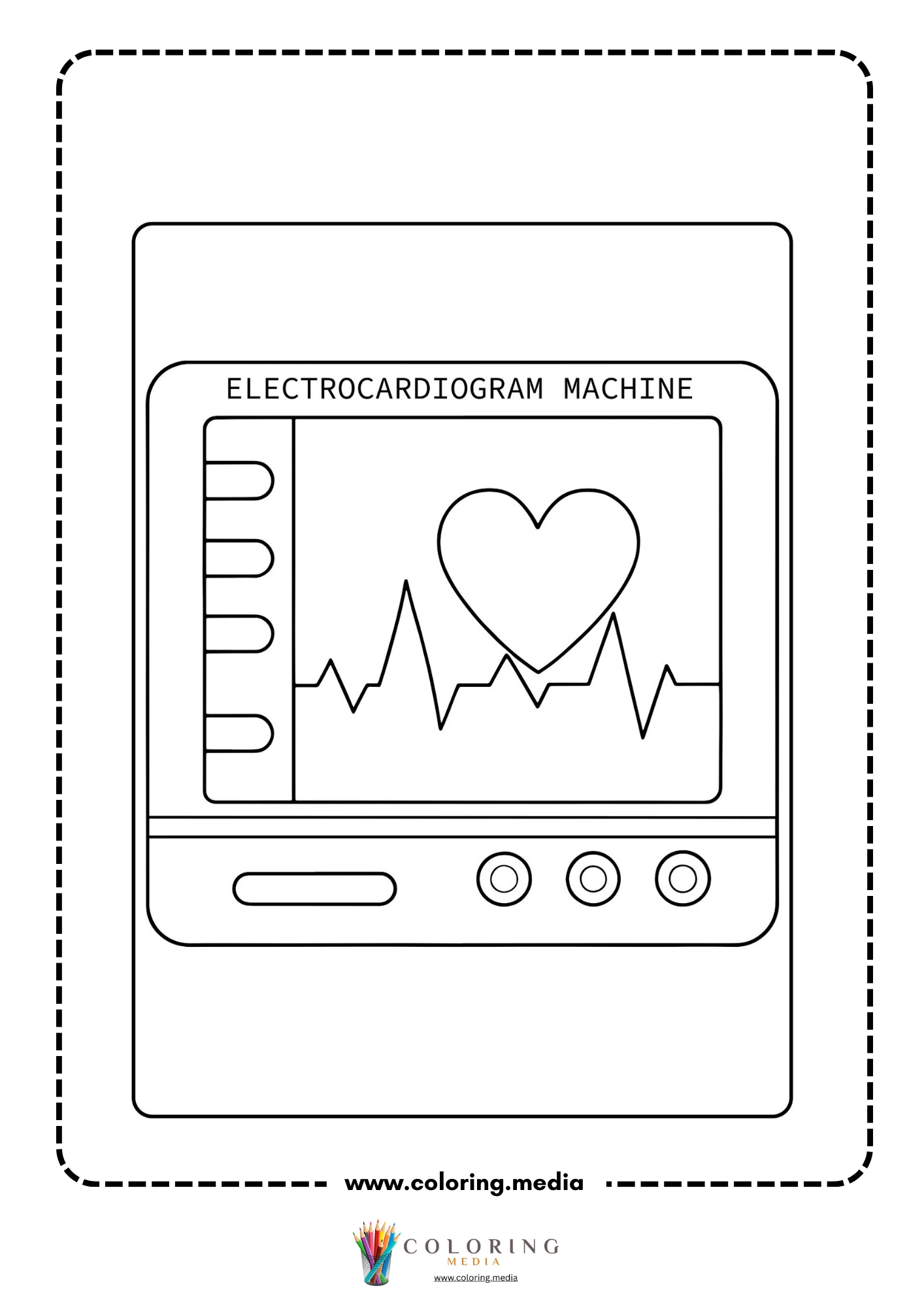
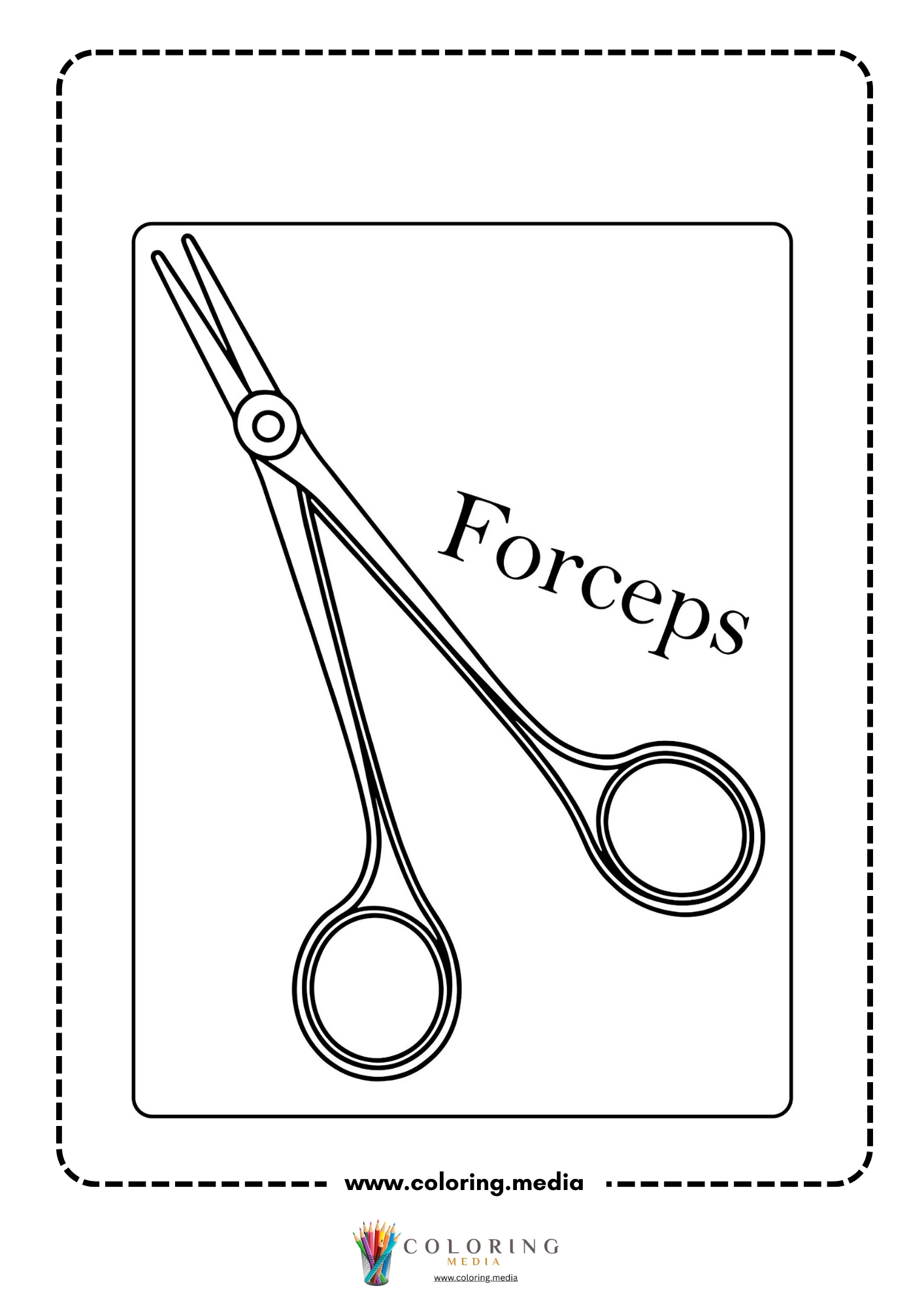
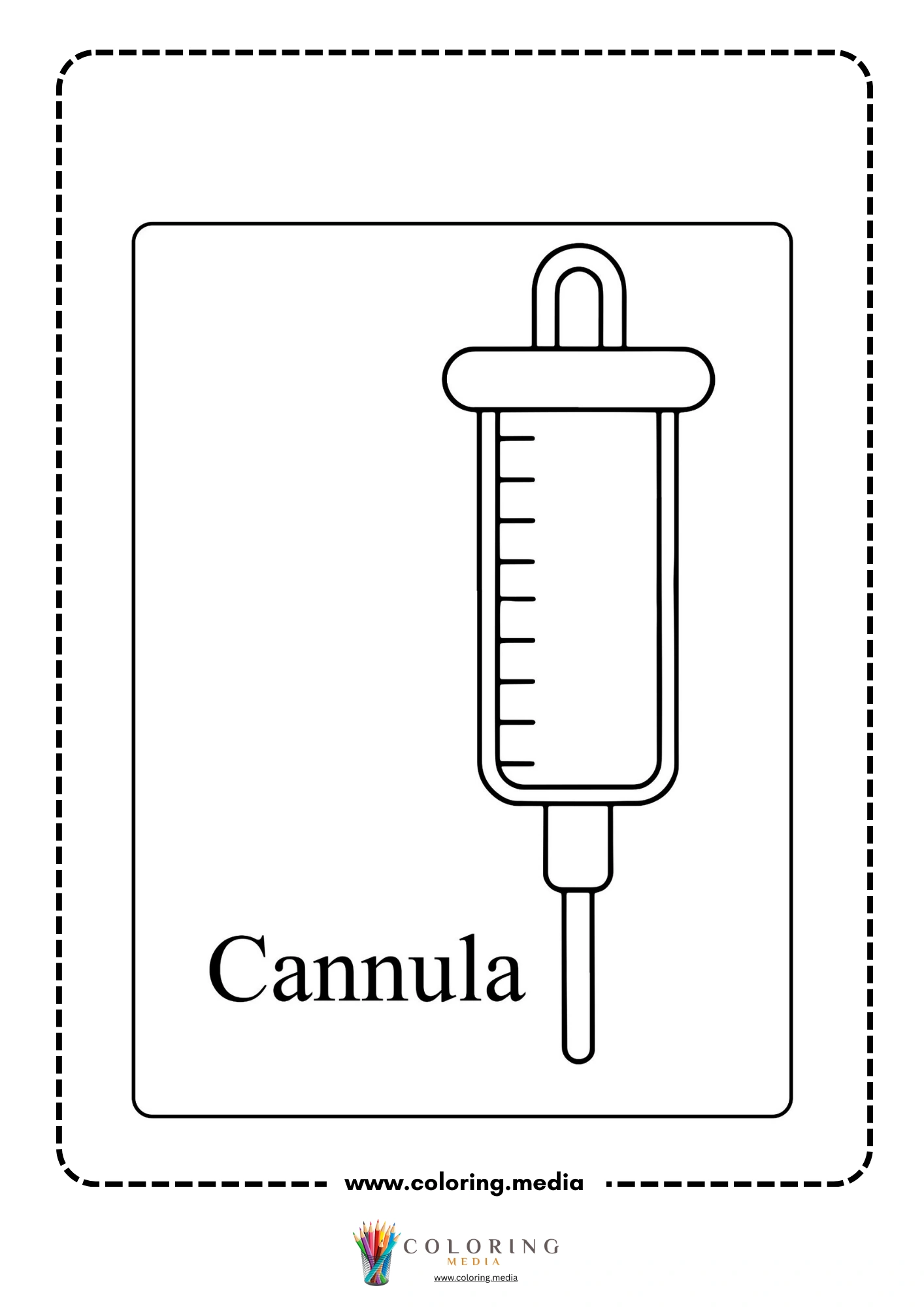
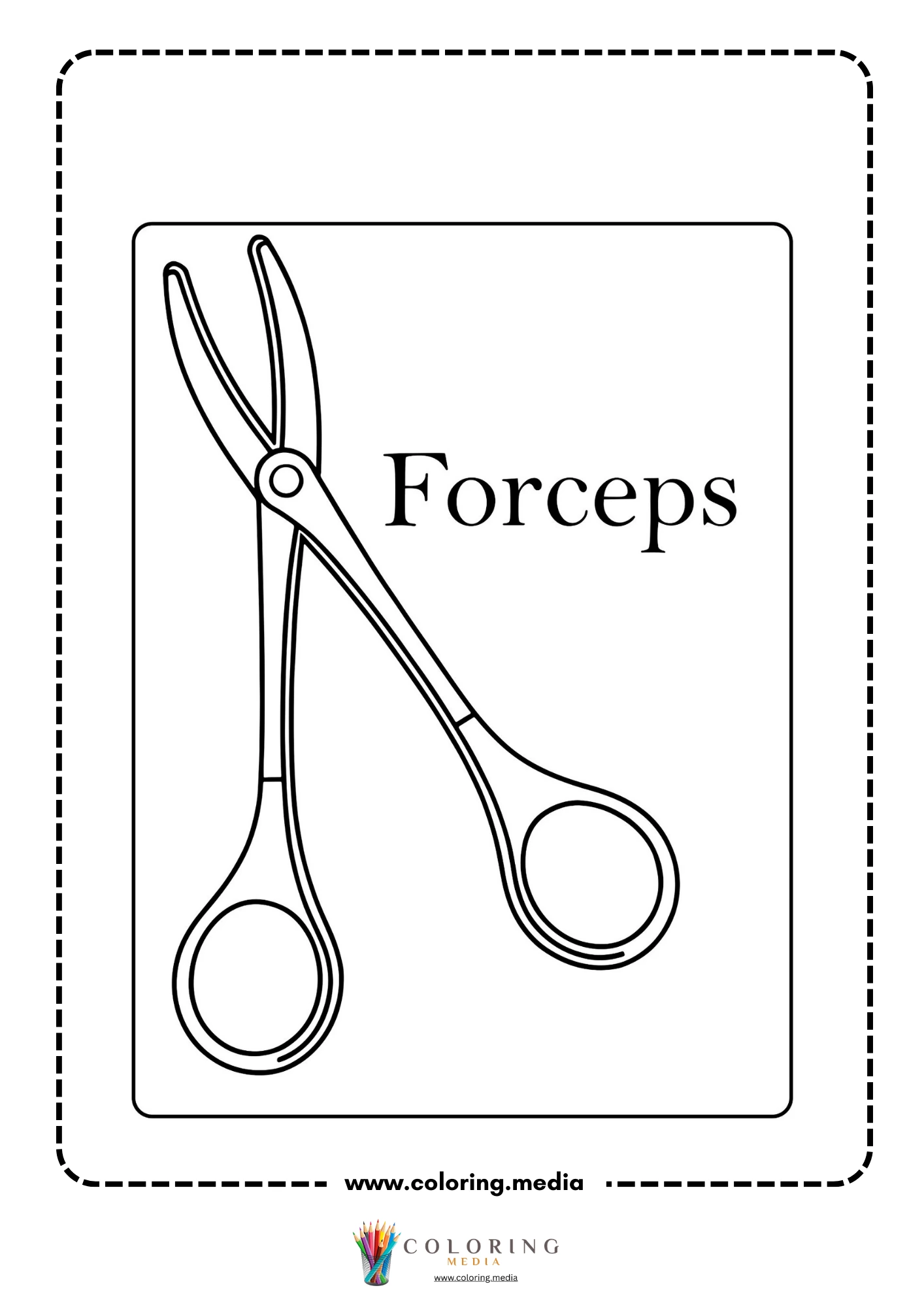
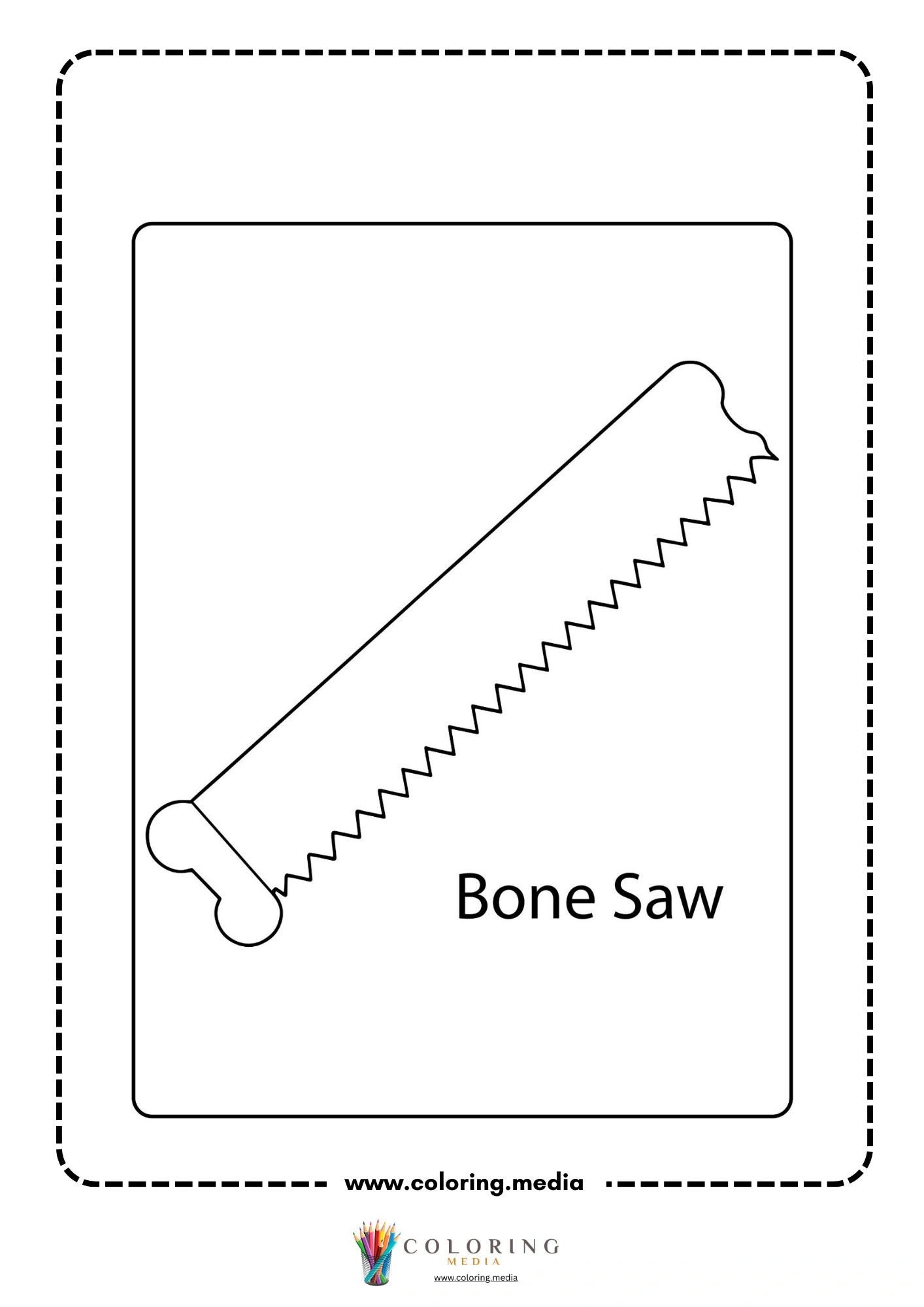
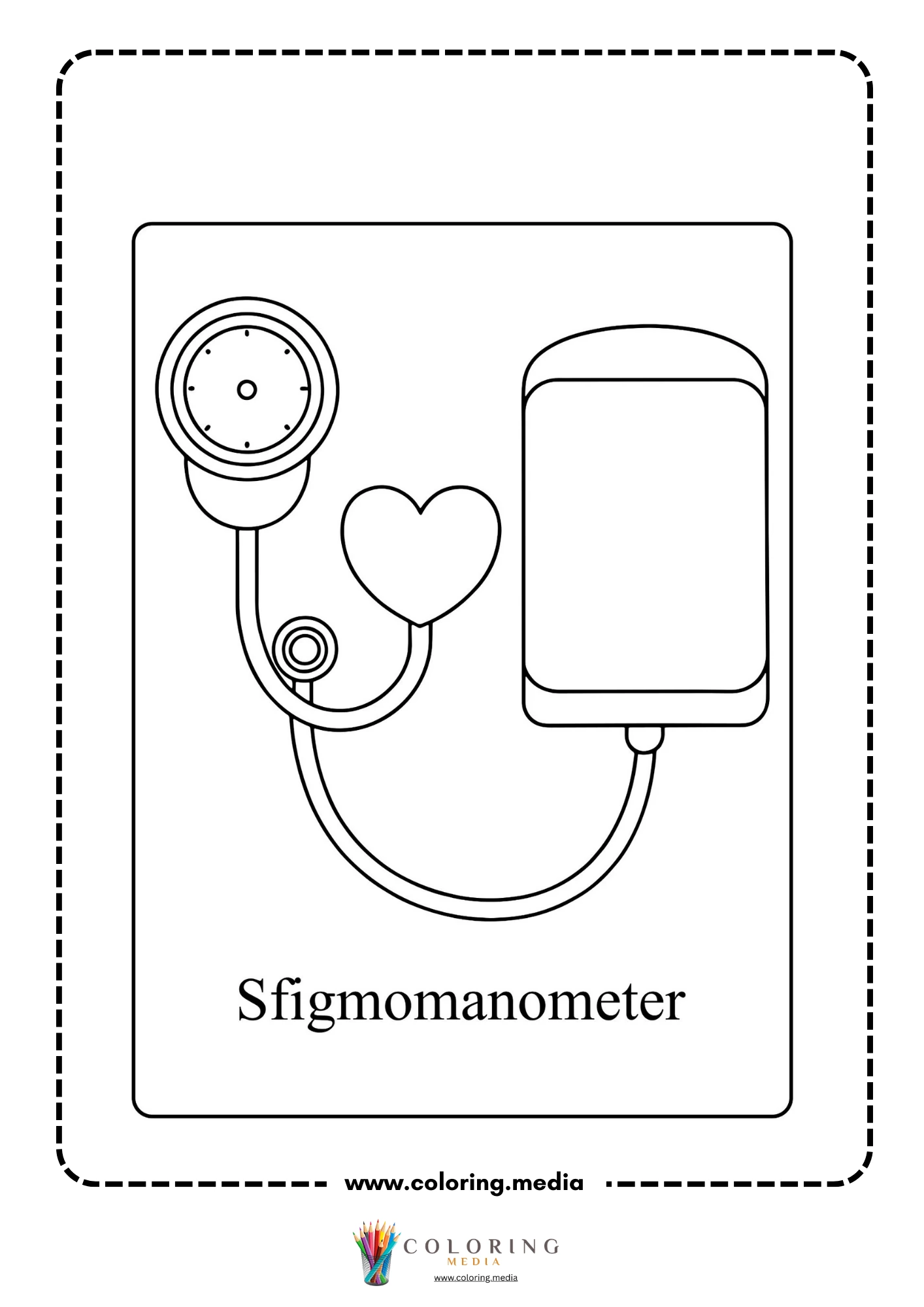
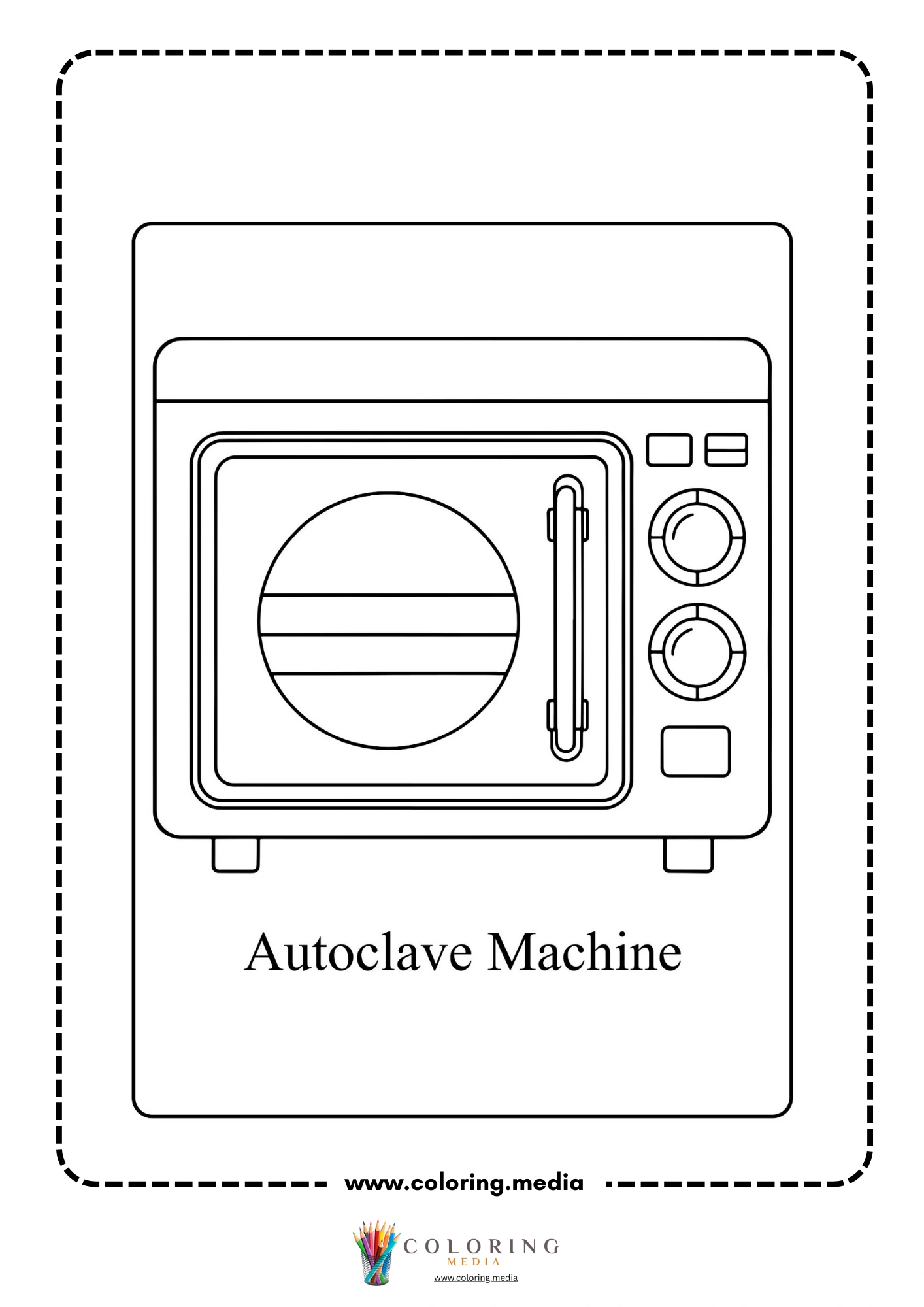
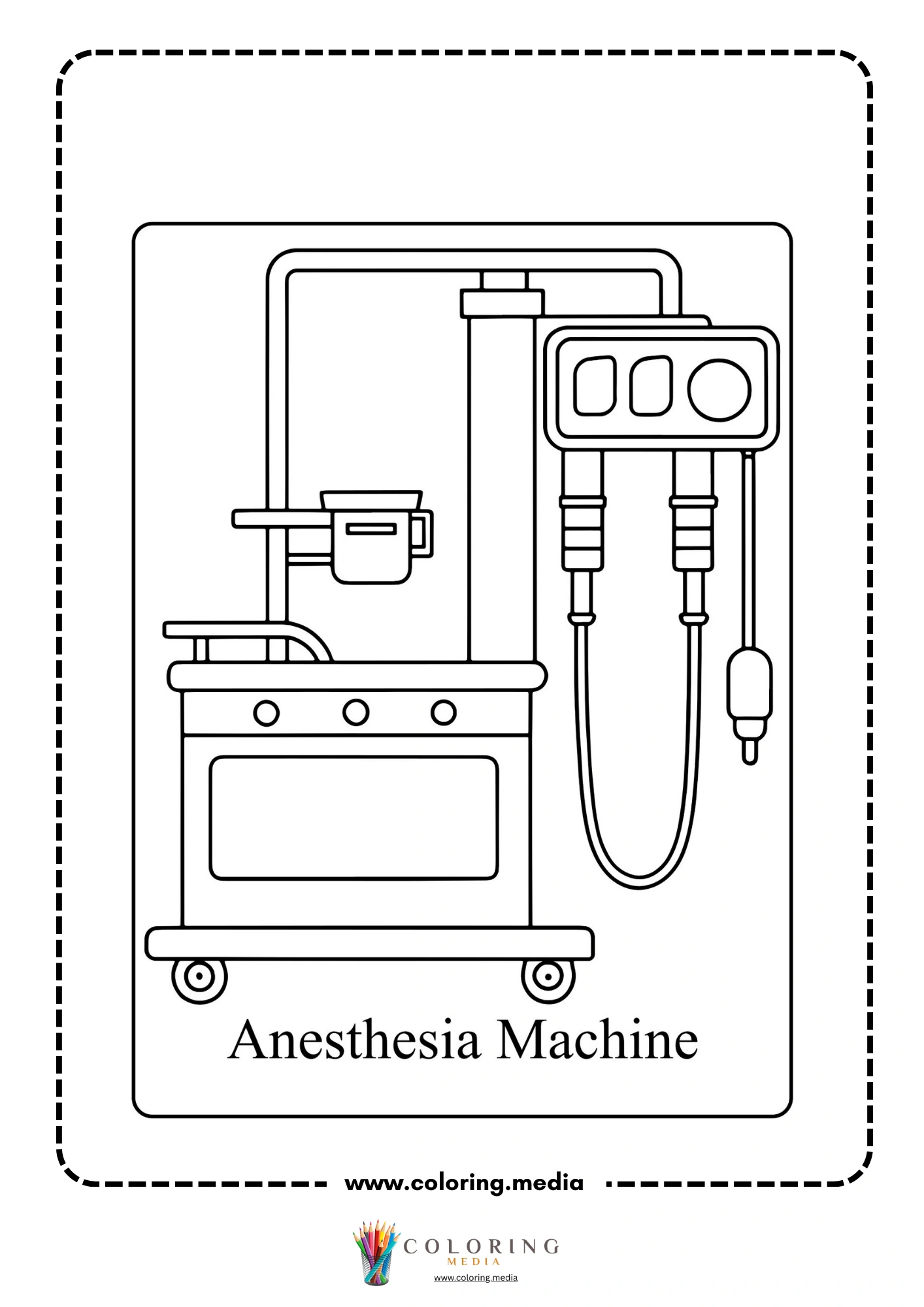
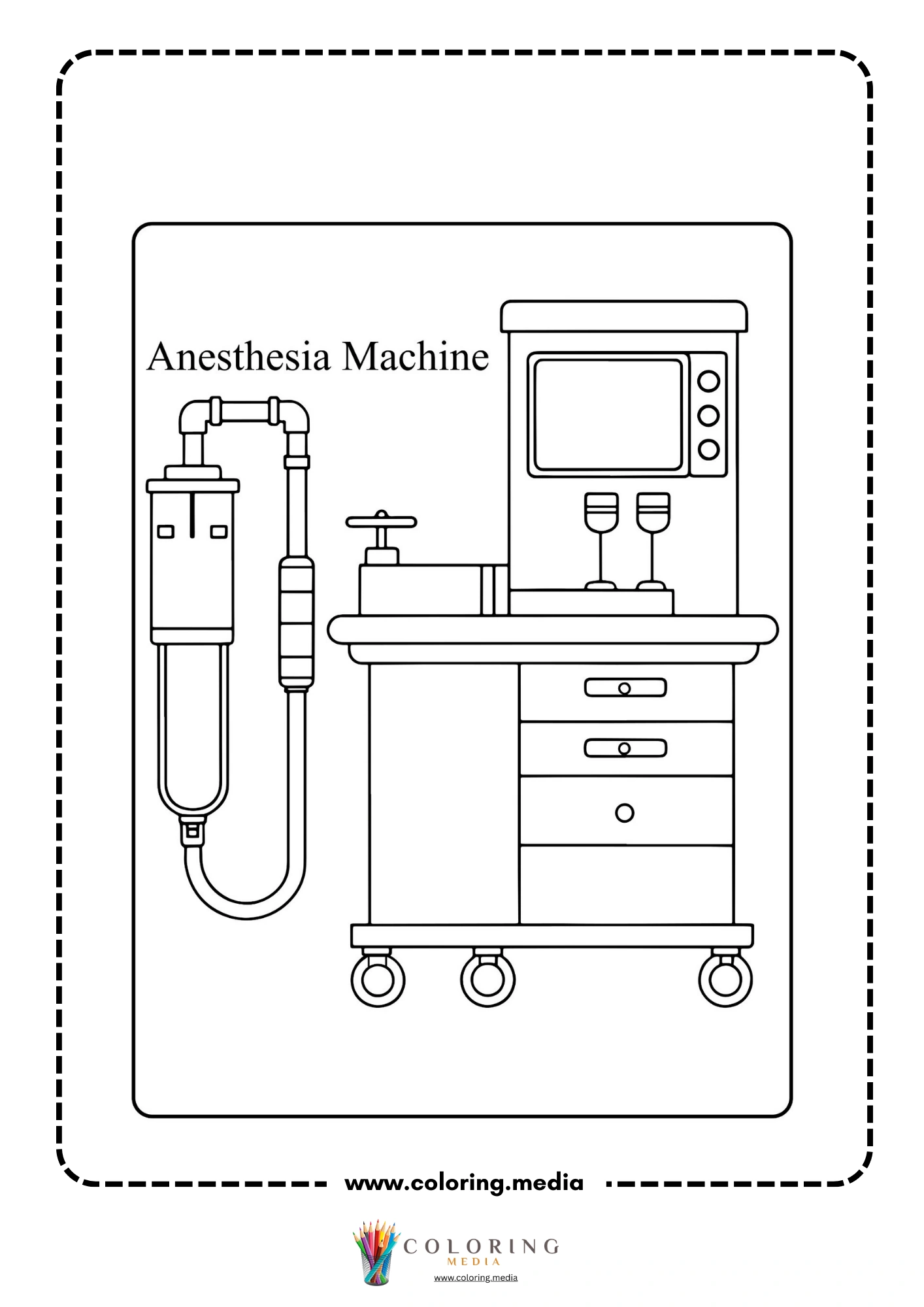
These 50 pages focus specifically on medical instruments and equipment — each page shows one labeled tool in a clean, diagrammatic outline style. The set covers both everyday clinical instruments and more specialized equipment: scalpel, syringe, thermometer, stethoscope, otoscope, ophthalmoscope, forceps, surgical scissors, tongue depressor, blood pressure cuff, pulse oximeter, reflex hammer, IV drip stand, MRI machine, ultrasound transducer, ECG monitor, surgical gloves, and more. Each instrument’s name appears in print text below the illustration.
The format is intentionally reference-like — these pages work as much as labeled diagrams as they do as coloring pages. A child who colors a stethoscope page and reads the name learns a word and an image together. Everything here is free to download and easy to print.
Free Printable Medical Instrument Coloring Pages
This collection includes 50 printable medical instrument coloring pages featuring individual labeled clinical tools and equipment — diagnostic instruments, surgical tools, monitoring devices, imaging machines, and protective gear. Each page shows one instrument at a size that fills most of the sheet, with the instrument name printed below in clear text. Print on US Letter or A4 paper.








Who Are These Medical Instrument Coloring Pages Best For?
Early-elementary children (ages 6-10) are the core audience. By this age, children have often encountered several of these instruments at the doctor and have natural curiosity about what each one does. The single-instrument-per-page format makes it easy to focus on one tool at a time, ask what it is for, and have a short conversation before picking up a crayon.
These pages are also valuable in homeschool or classroom science units on health, the human body, or careers in medicine. A set of 10 or 12 key instruments colored and labeled over a two-week unit gives children a concrete, visual medical vocabulary that abstract text descriptions rarely achieve on their own.
Students interested in health sciences at the middle-school level can use this set as a starting reference — coloring a page is a low-stakes way to learn the name and shape of instruments they will encounter again in biology and health classes, and later in any healthcare training.
Interesting Medical Instrument Facts to Share While Coloring
The stethoscope was invented in 1816 by a French physician named Rene Laennec. Before that, doctors simply pressed their ear directly against a patient’s chest. Laennec famously rolled up paper into a tube and discovered it amplified heart sounds better than direct contact — and the design has barely changed conceptually in 200 years.
A surgical scalpel blade is sharper than a razor blade. Standard surgical blades are honed to an edge measured in nanometers and can make incisions 0.1mm wide or less. They are single-use for exactly this reason — the edge begins to dull with the very first contact with tissue.
An MRI machine uses no radiation at all. Unlike x-rays or CT scans, MRI works by using powerful magnetic fields to briefly align the water molecules in your body, then measuring how they return to normal. The detailed images come entirely from detecting those tiny magnetic signals.
The blood pressure cuff (sphygmomanometer) measures two numbers. The top number (systolic) is the pressure when the heart beats; the bottom number (diastolic) is when the heart rests between beats. The normal range for most adults is around 120/80 mmHg — a unit that stands for millimeters of mercury, because early versions of the device literally measured a column of liquid mercury.
Creative Medical Instrument Coloring and Craft Ideas
Instrument Flashcard Deck Print at half size on cardstock, color, cut to card dimensions, and use as a medical vocabulary flashcard set — instrument on front, function written on back.
Match to the Doctor After coloring a set, sort instruments by which type of doctor uses them most: cardiologist, dentist, radiologist, surgeon, general practitioner.
Diagram Labels Add arrow labels to a colored page pointing to specific parts of the instrument — the diaphragm of a stethoscope, the plunger of a syringe, the cuff of a blood pressure monitor.
Invention Timeline Research the year each instrument was invented and arrange colored pages chronologically on a classroom wall timeline.
Doctor Kit Props Color on cardstock, laminate, and add to a pretend doctor kit for dramatic play — children can name each instrument as they use it.
Science Fair Poster Choose one instrument, color the page, and build a science fair display around how it works and what it measures.
Hospital Waiting Room Packet Assemble a mini booklet of 5-6 instrument pages for a child before a hospital visit to familiarize them with what they might see.
Compare Old and New Color the modern instrument, then find an image of an older version (early stethoscope, wooden tongue depressor) and draw it beside the colored page to show how the design evolved.
How to Print These Medical Instrument Coloring Pages
Each page downloads as a PDF formatted for US Letter and A4 paper. Standard copy paper works well for most coloring media. For flashcard use, print on 67 lb cardstock before cutting. All illustrations are solid black outlines that print clearly in grayscale with no loss of detail.
Explore More People & Community Coloring Pages
If you enjoyed these pages, you may also like:
Community Worker Coloring Pages
Medical Coloring Pages
People & Community Coloring Pages