

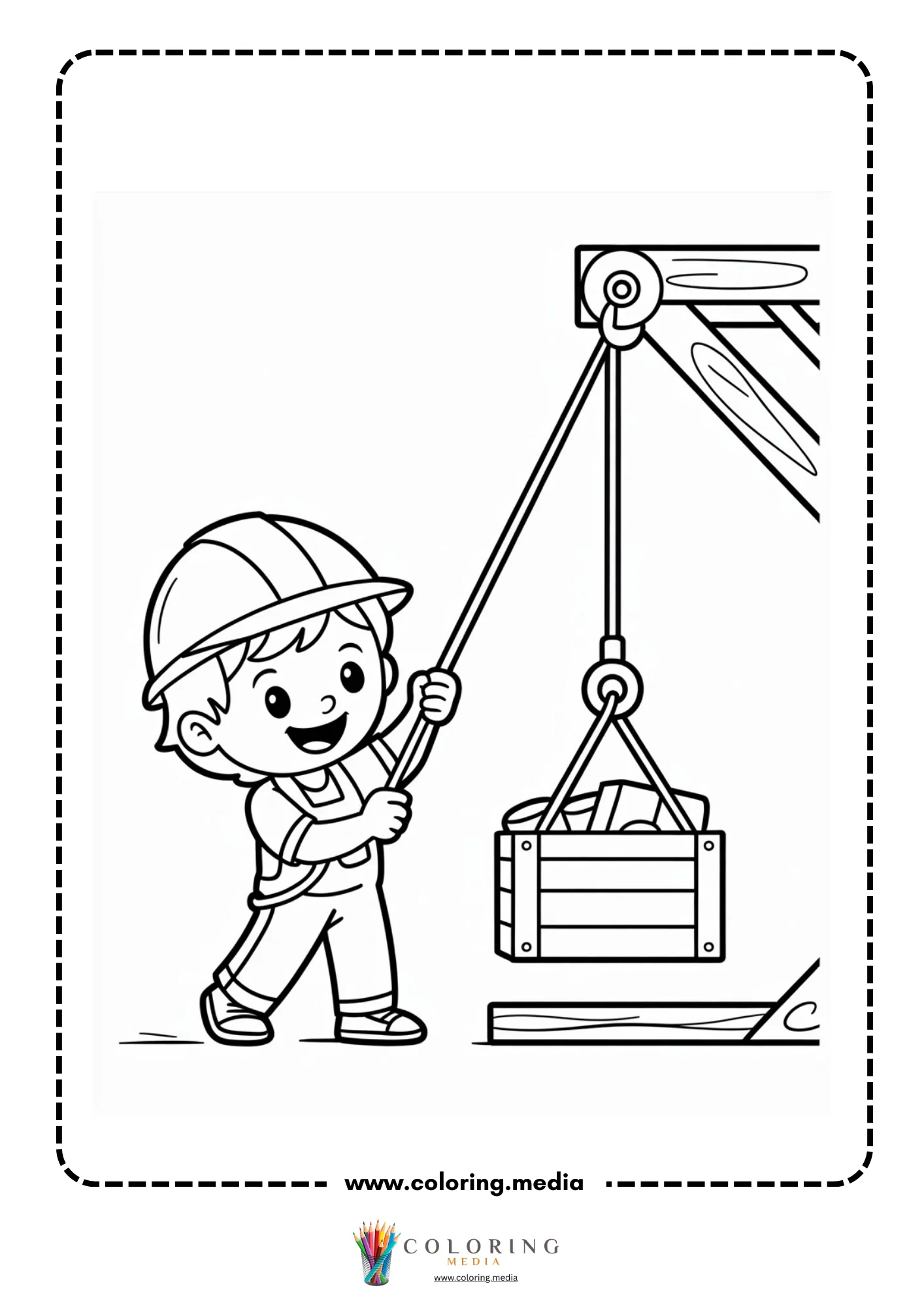
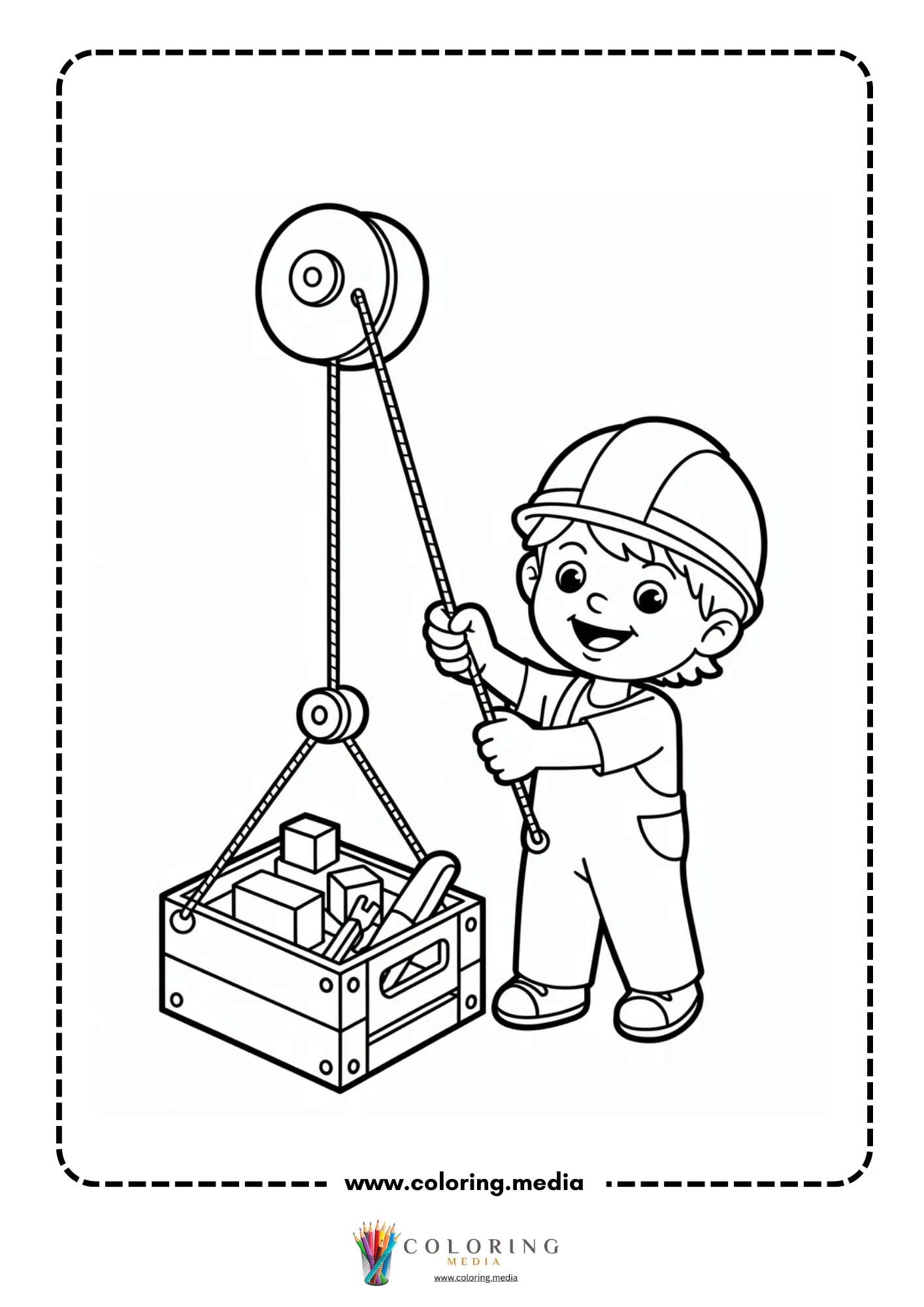
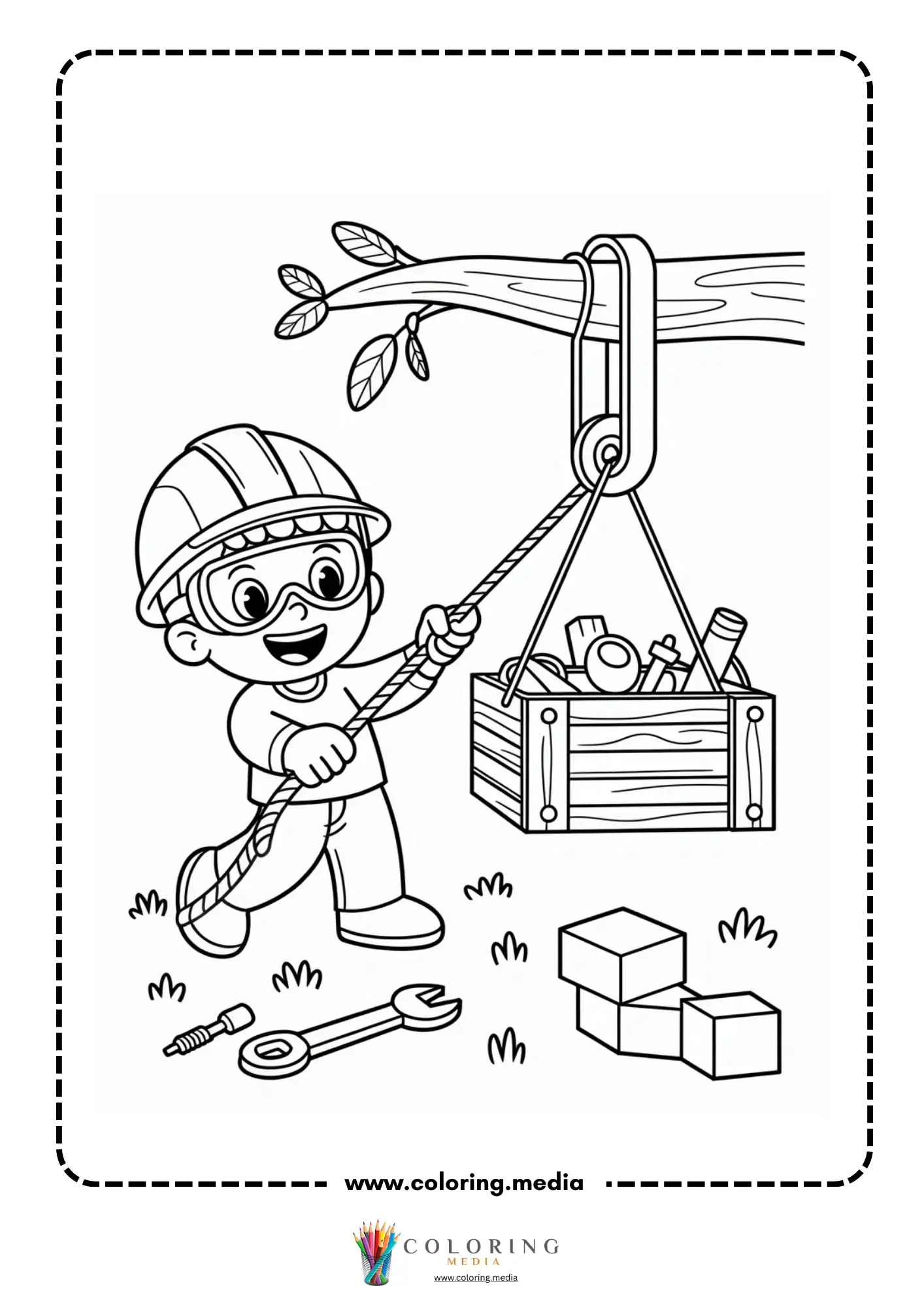
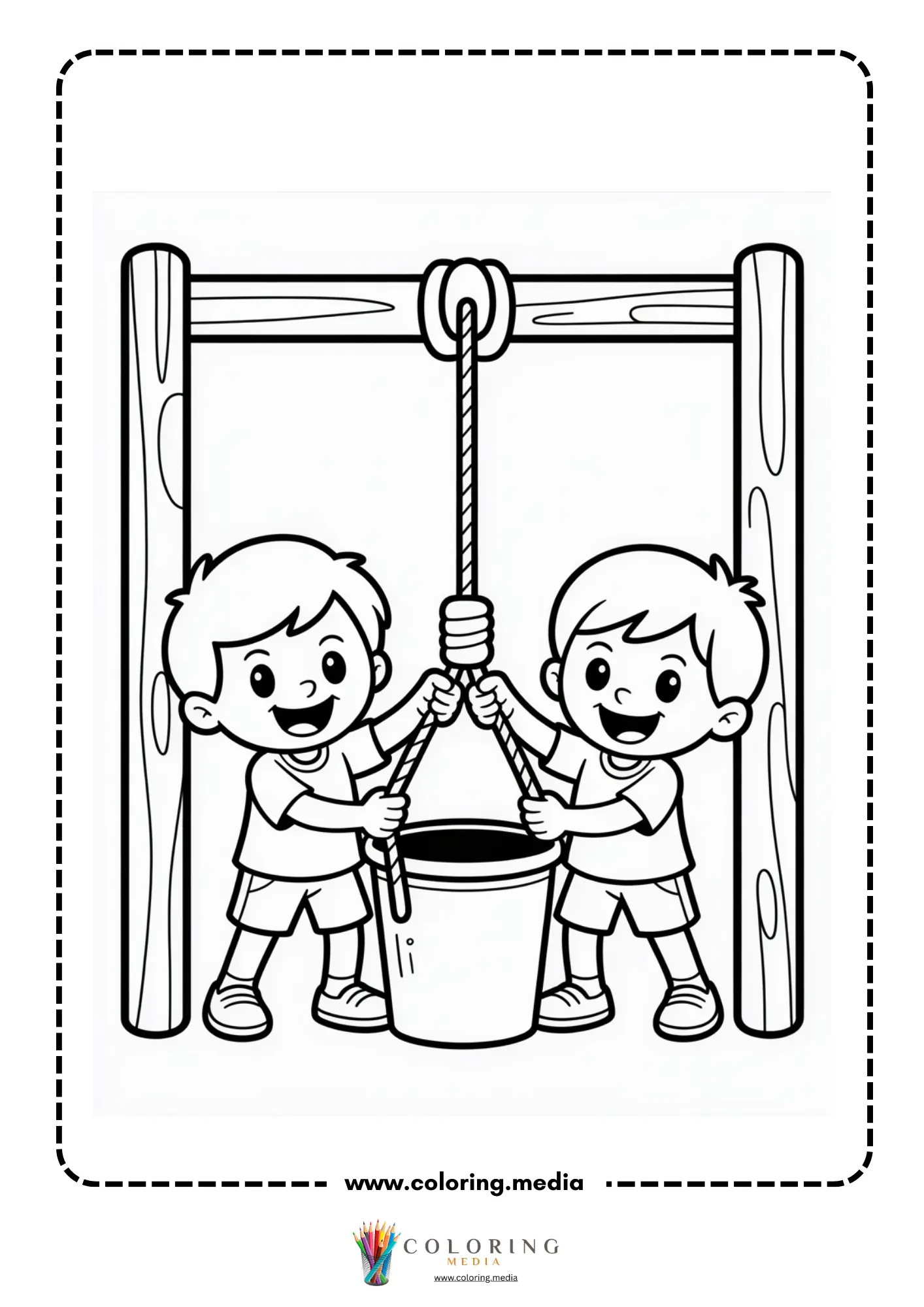
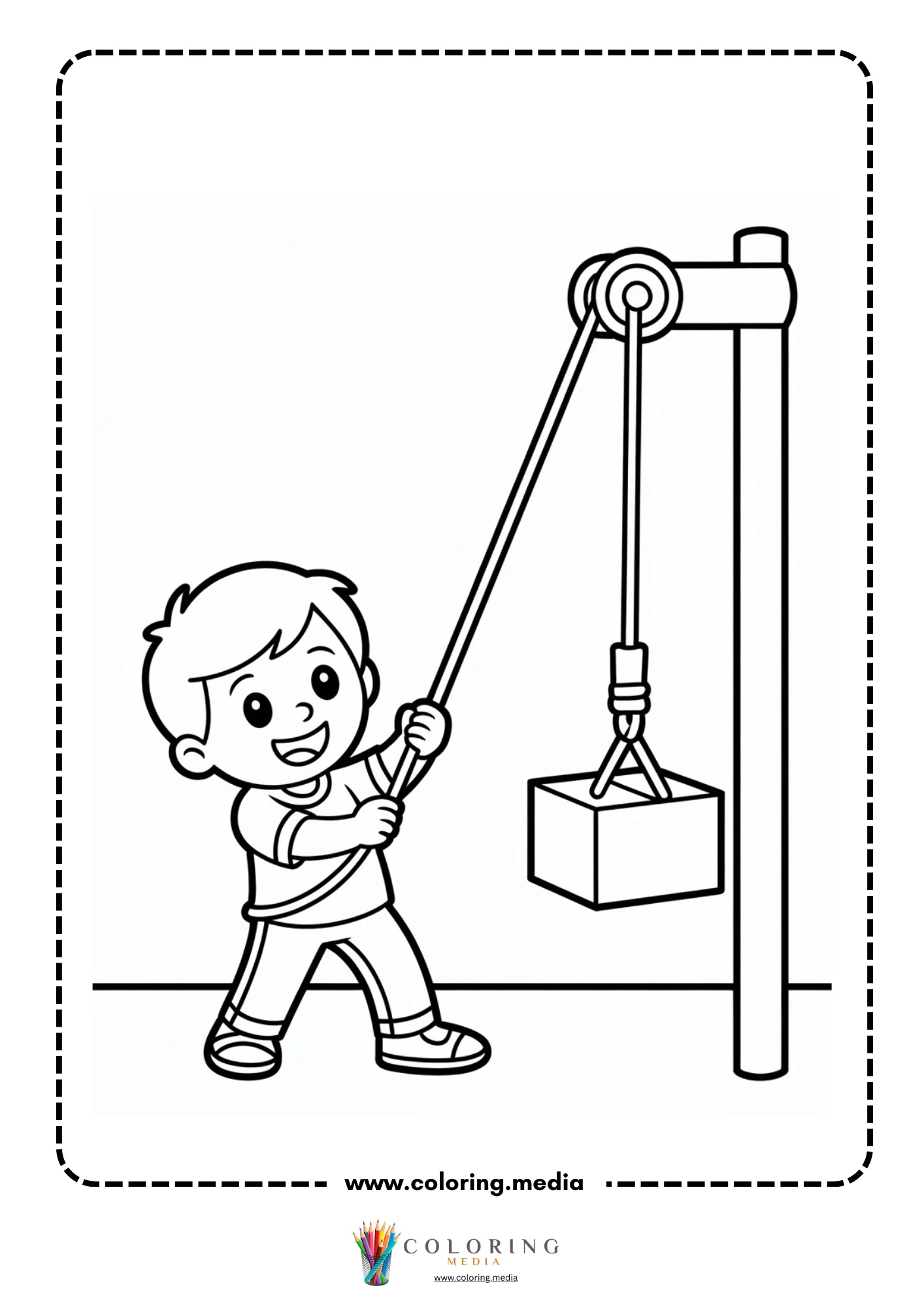
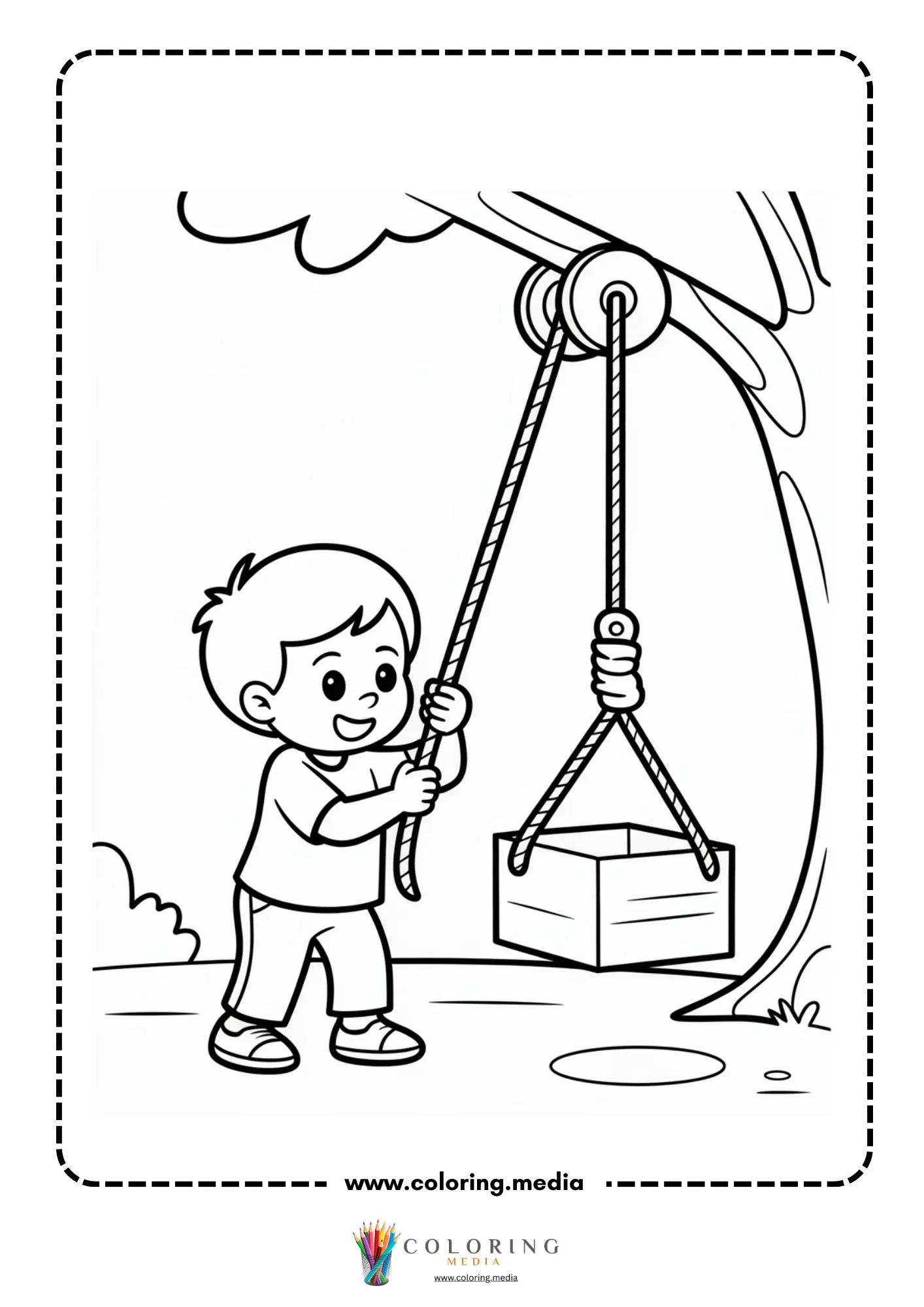
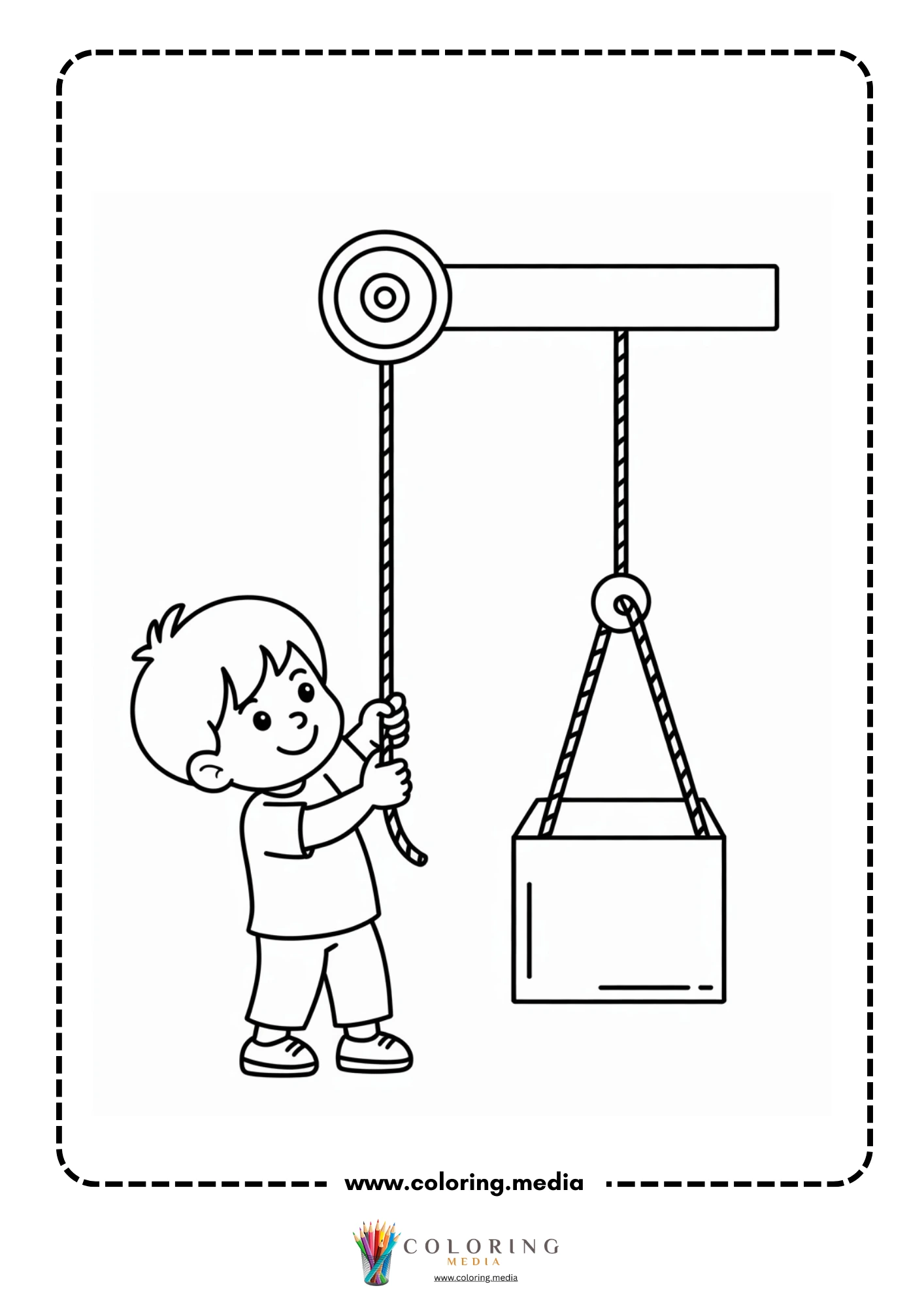
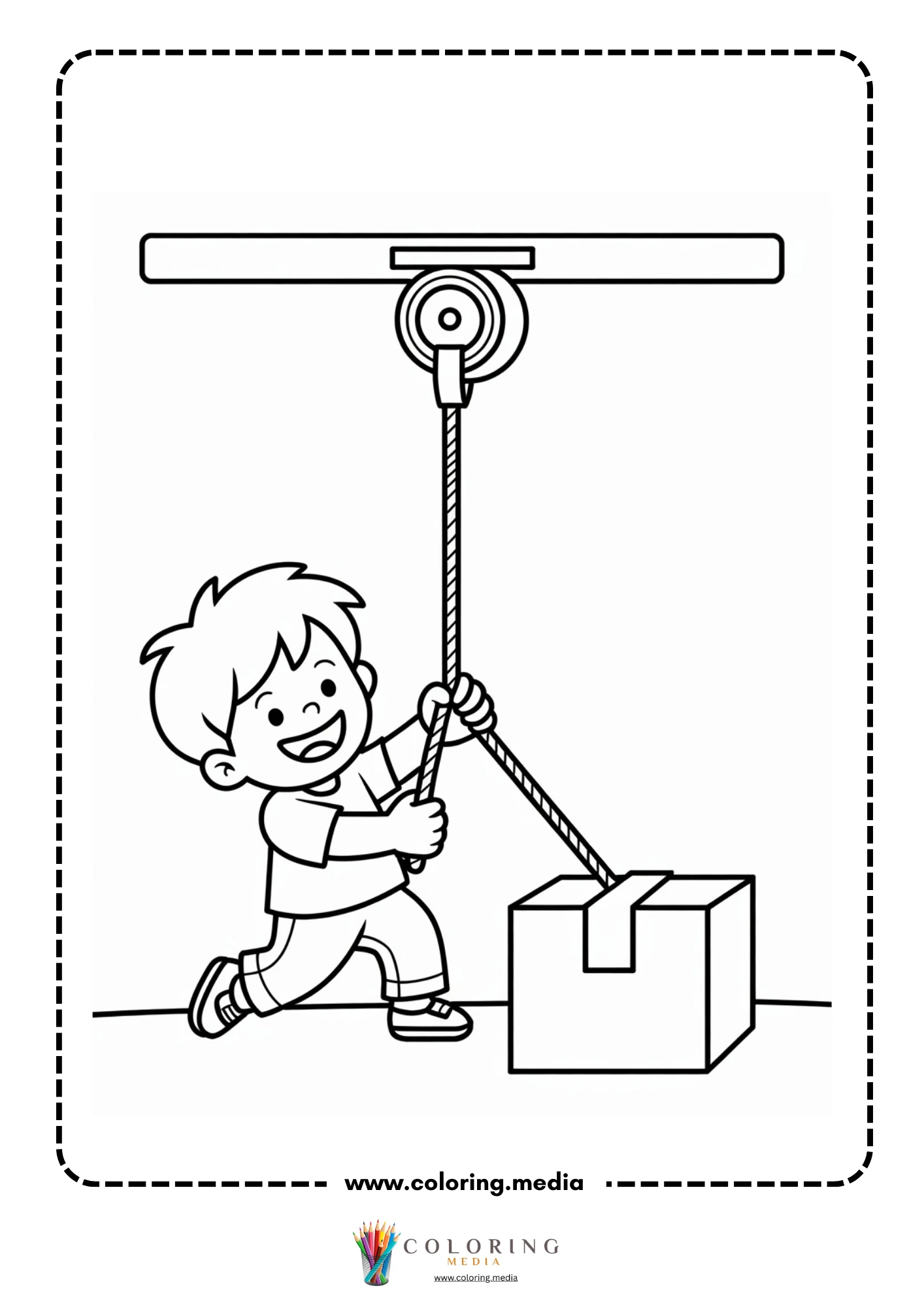
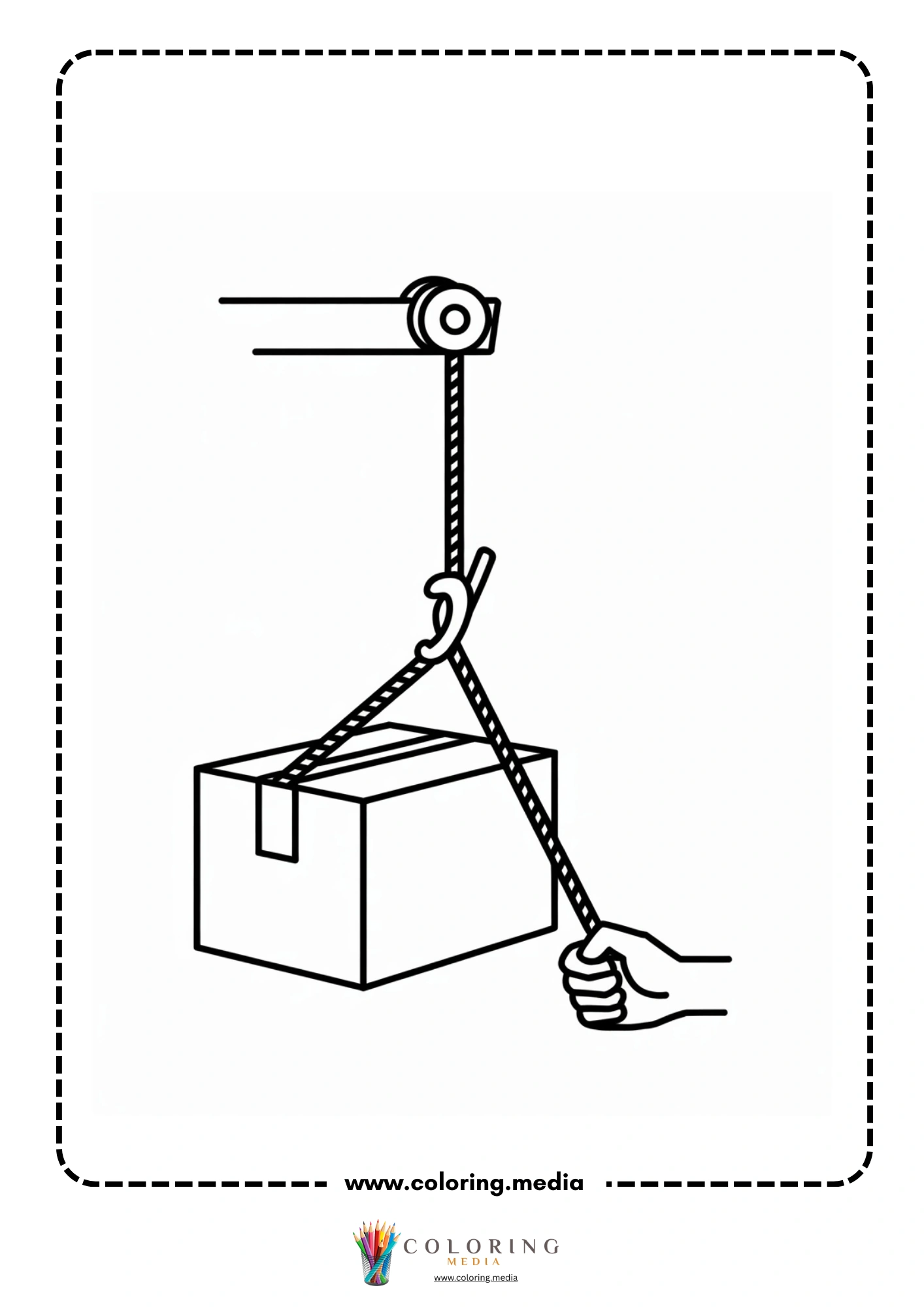
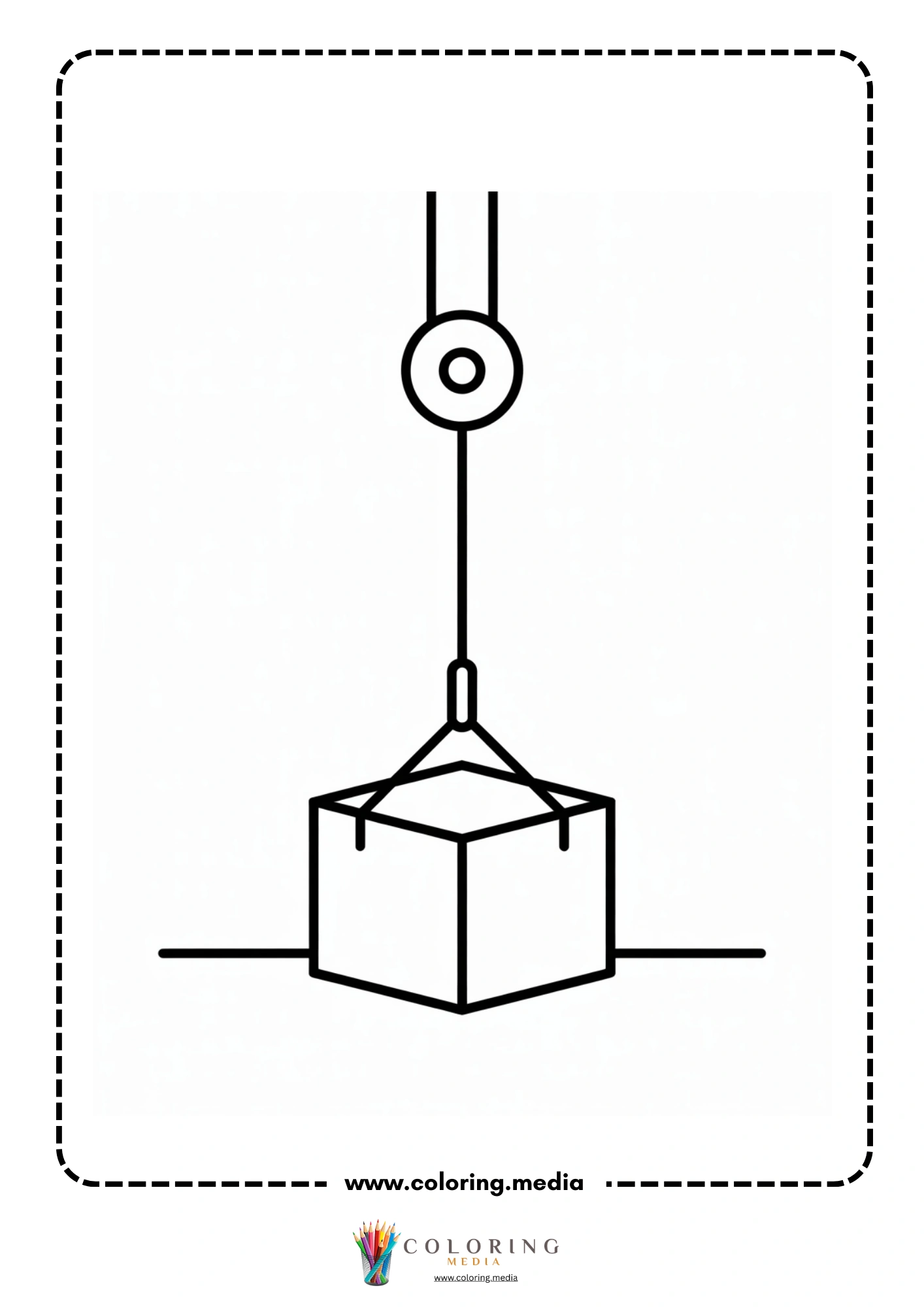
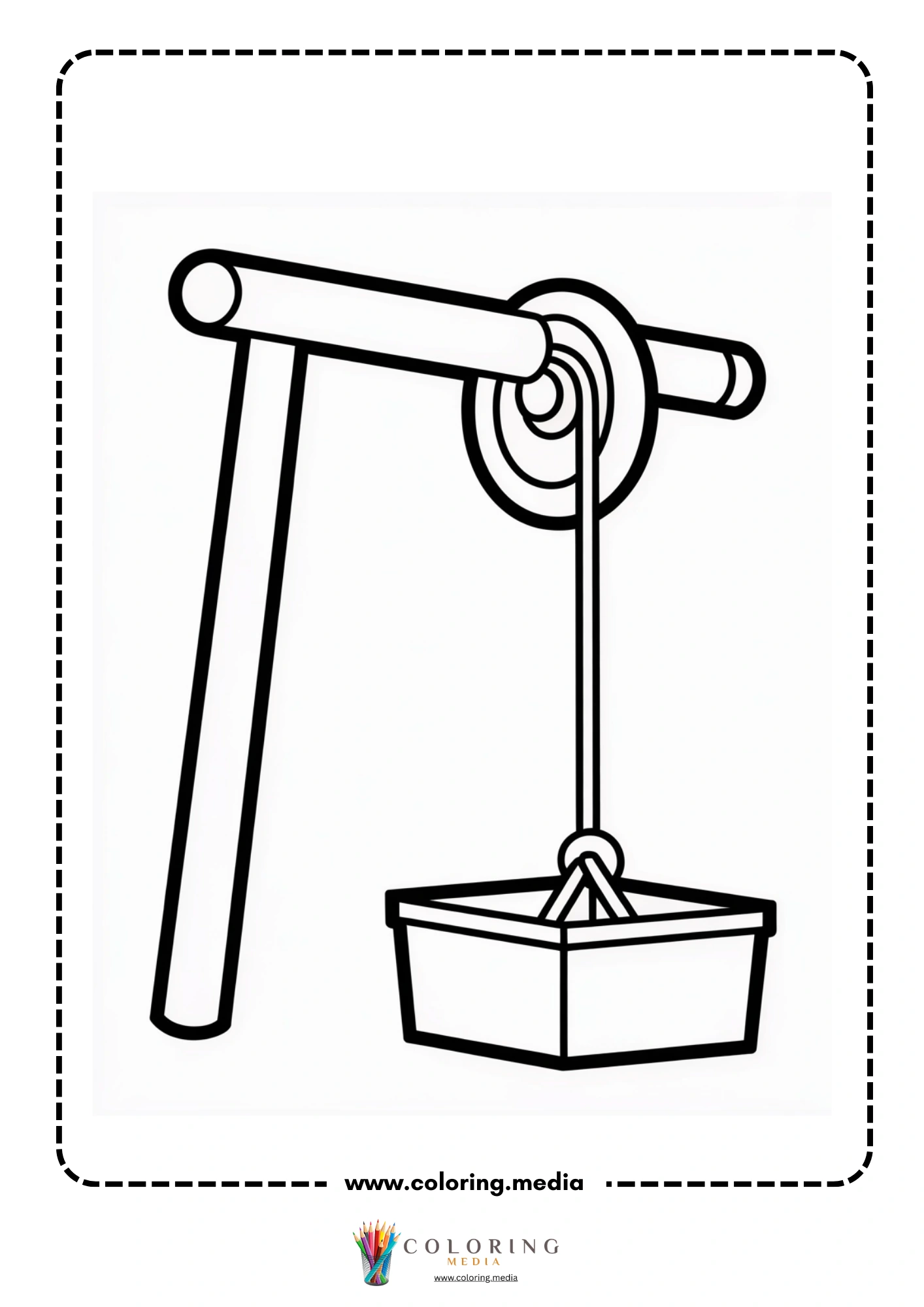
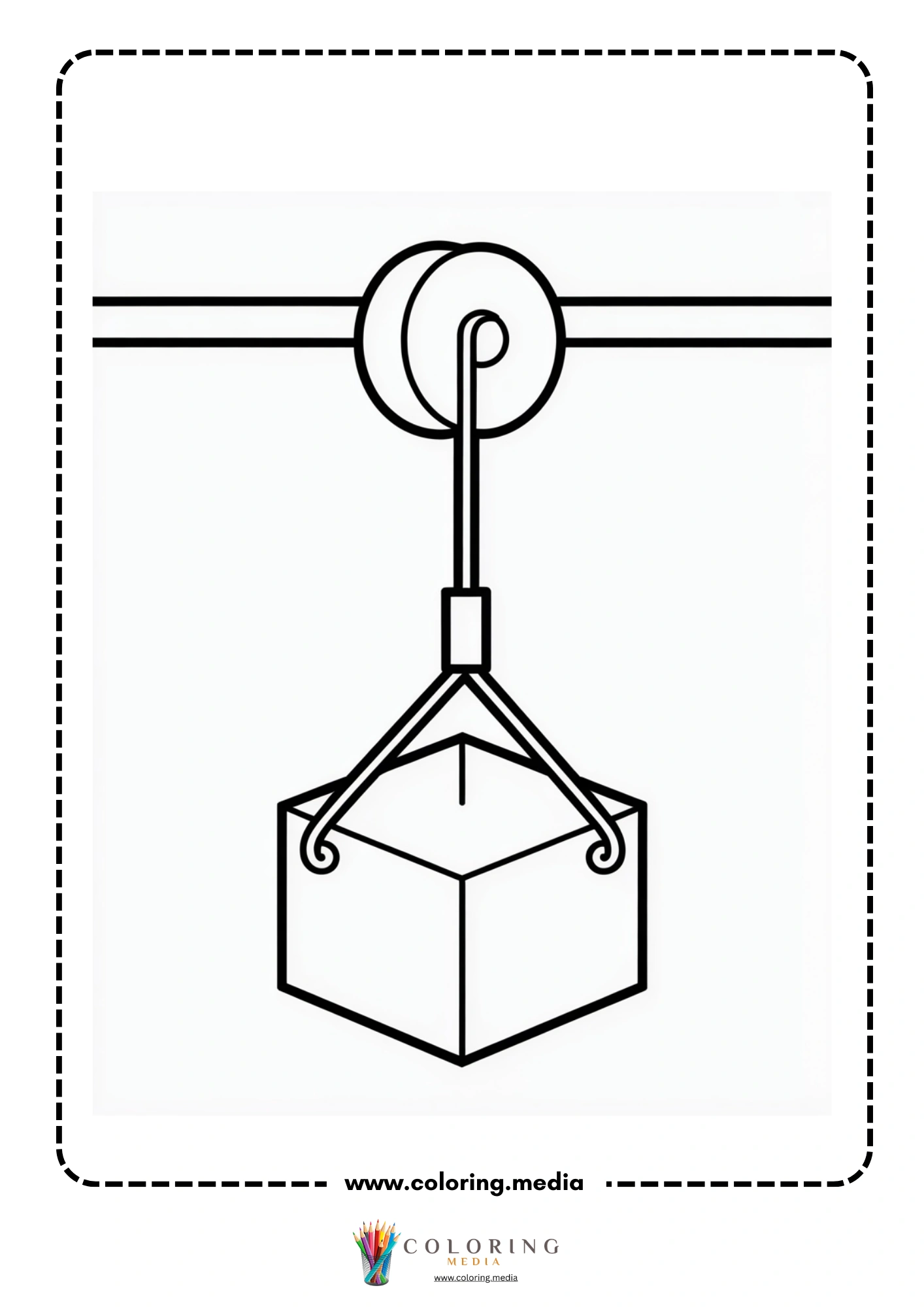
All twenty pages deal with pulleys — one of the six classical simple machines — in a way that makes the mechanism visible and comprehensible. Most pages show children using pulley systems to lift boxes, buckets, or other loads: the rope runs over a wheel fixed above, and pulling down on one end raises the object on the other. A handful of pages focus more on the mechanism itself, showing the pulley wheel and rope arrangement in diagrammatic detail without a character in the scene. The consistent subject and clear visual logic make this one of the more focused STEM coloring sets available.
The cartoon style is clean and functional, with 2–3mm outlines throughout. The load-and-rope visual is immediately interpretable even for children who have never heard the word pulley. Everything here is free to download and easy to print.
Free Printable Pulley Coloring Pages
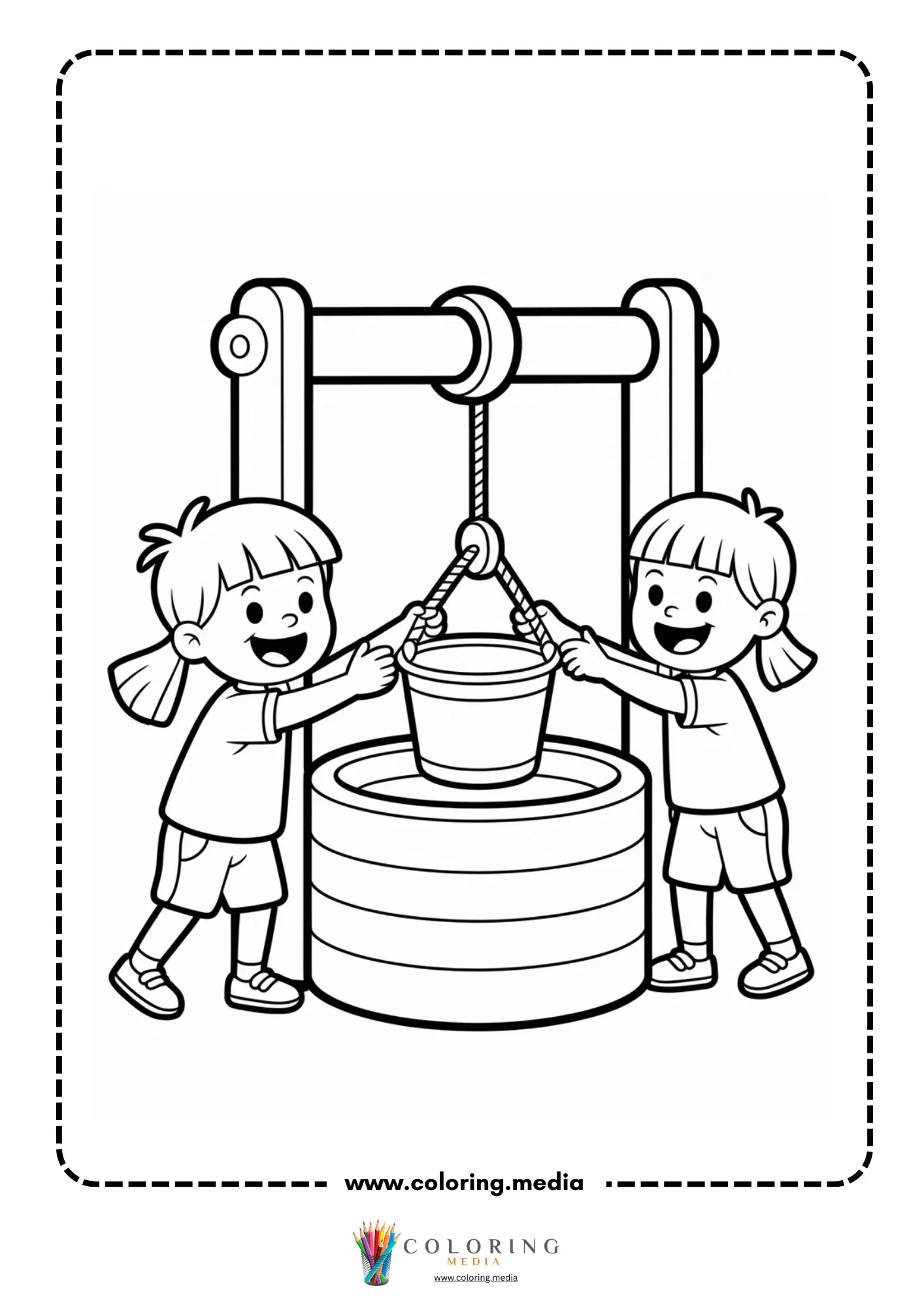
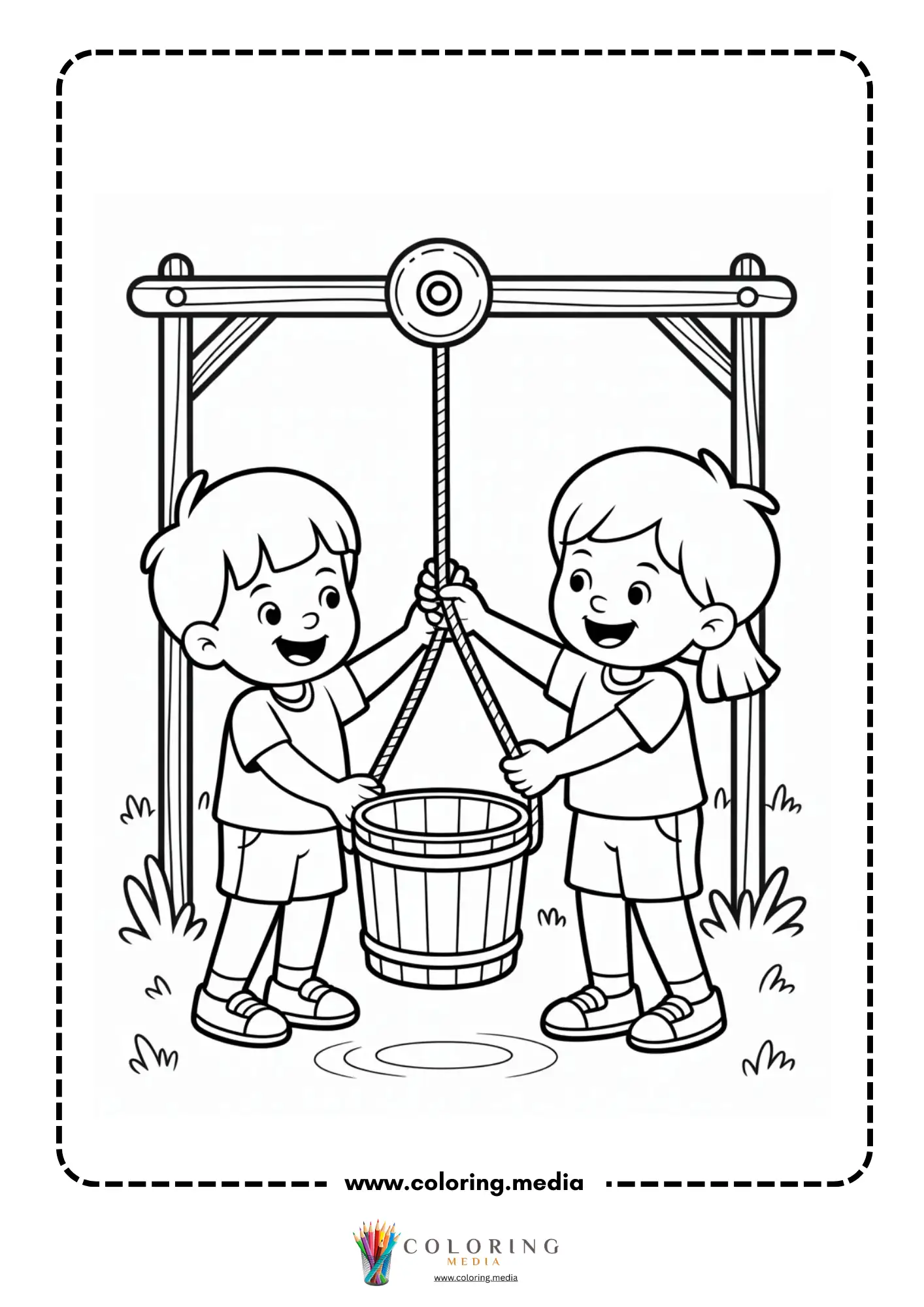
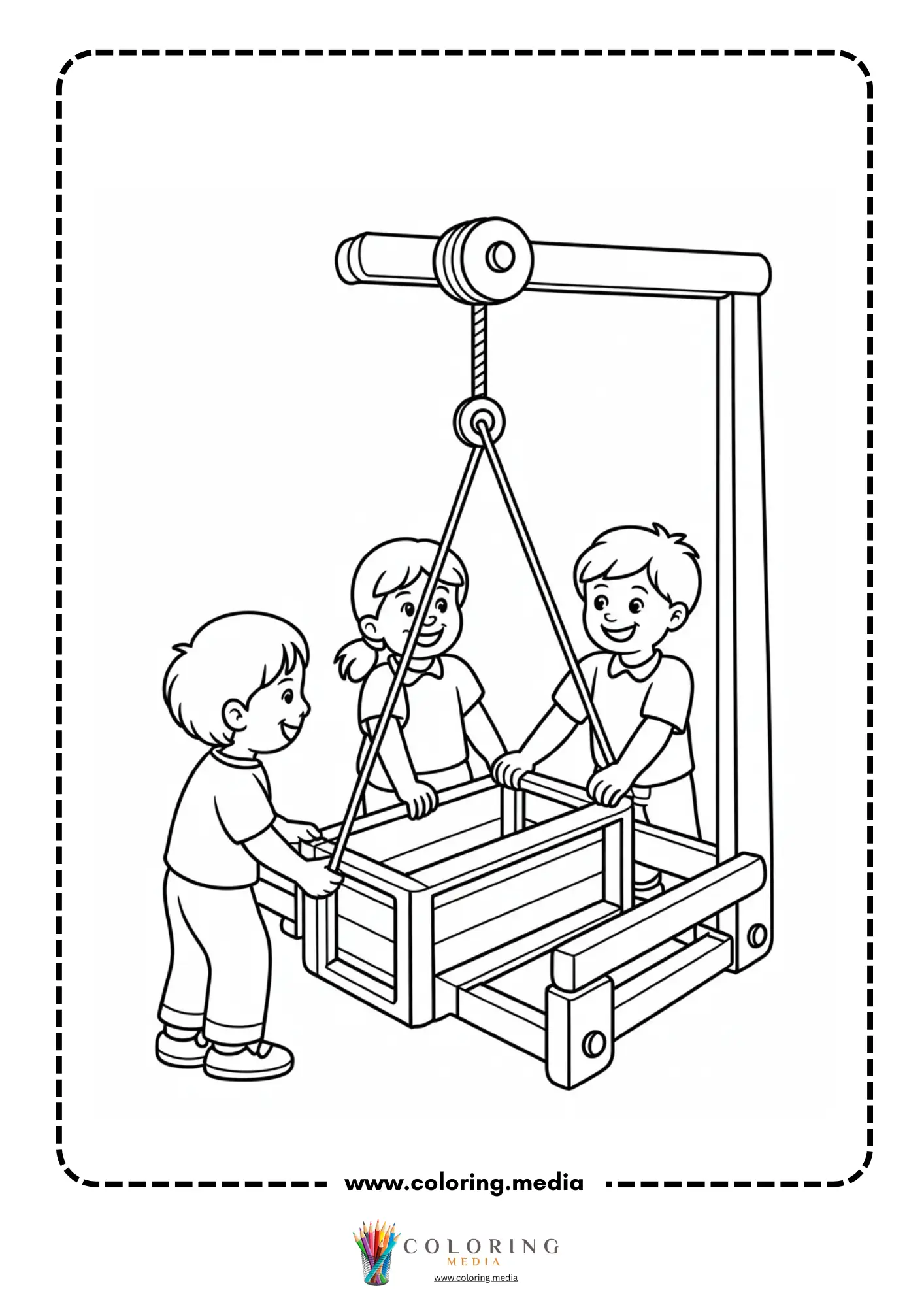
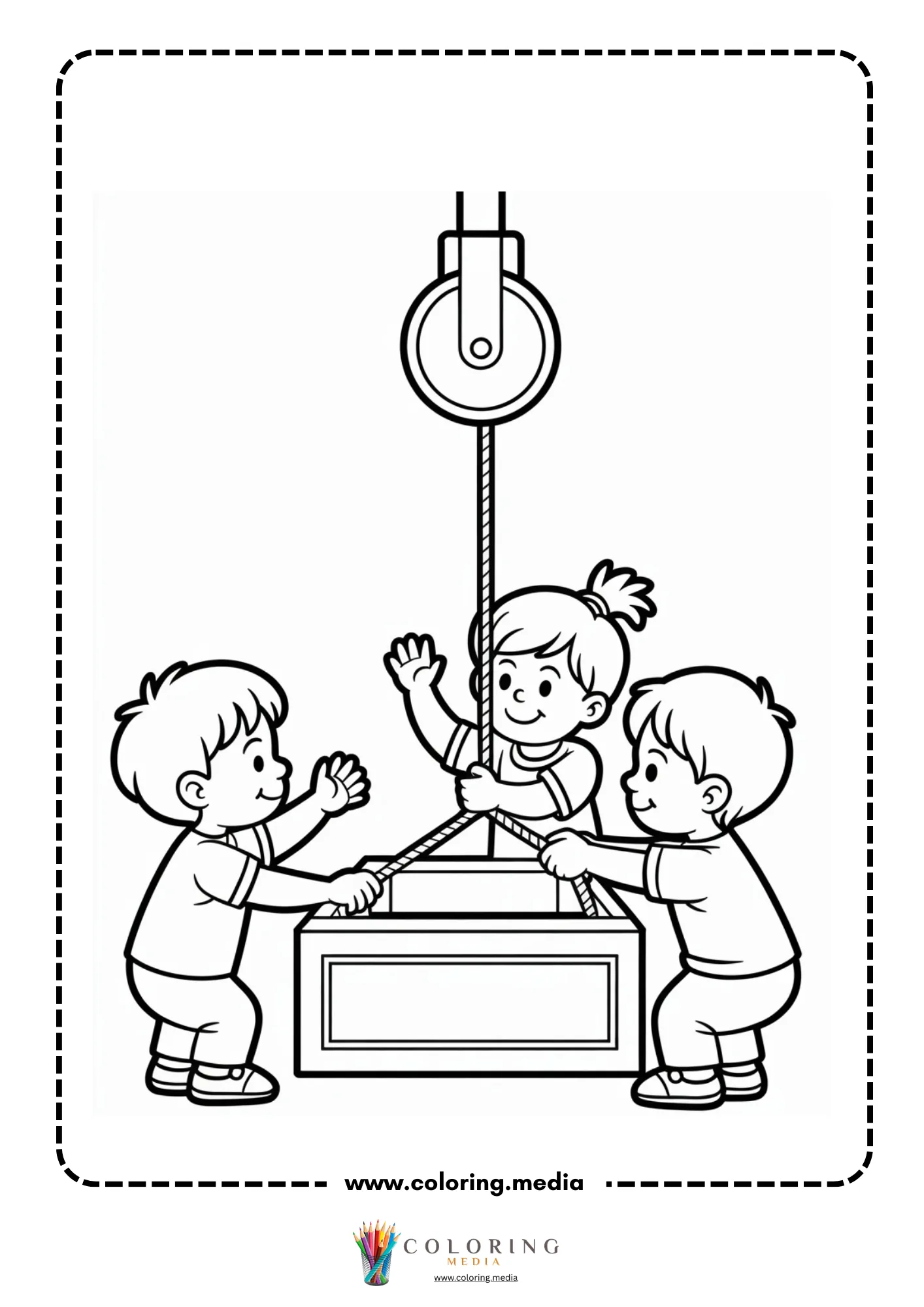
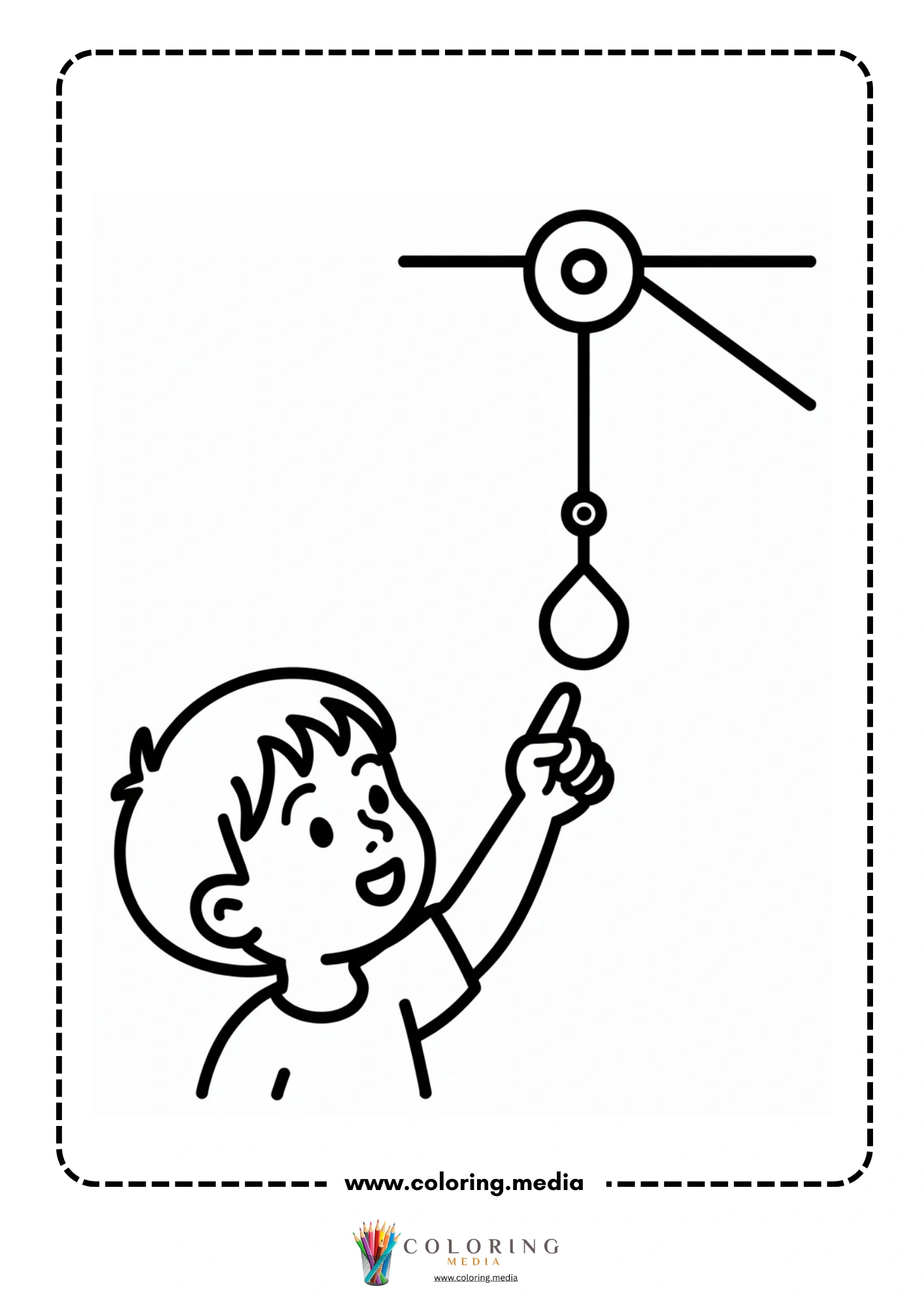
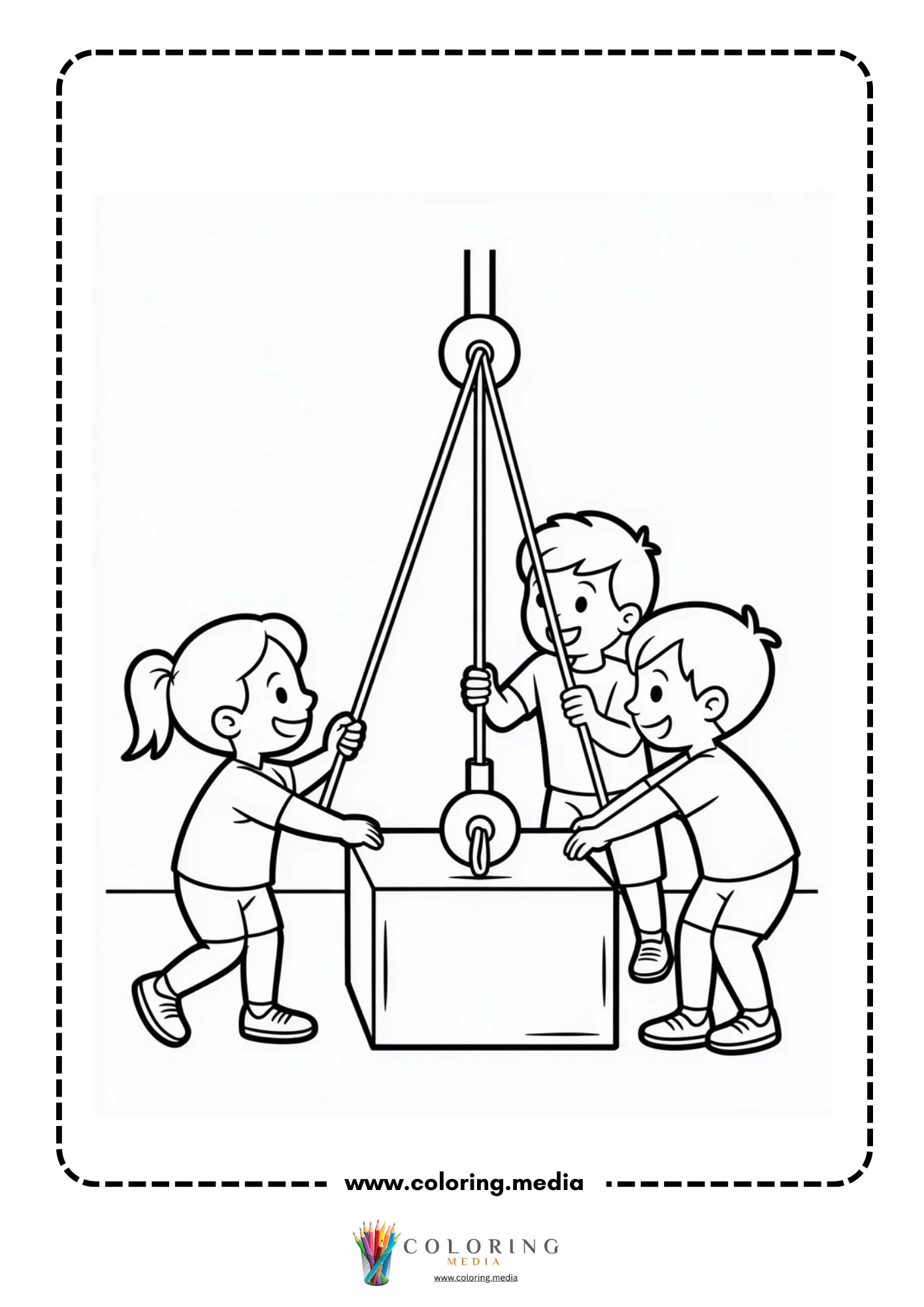
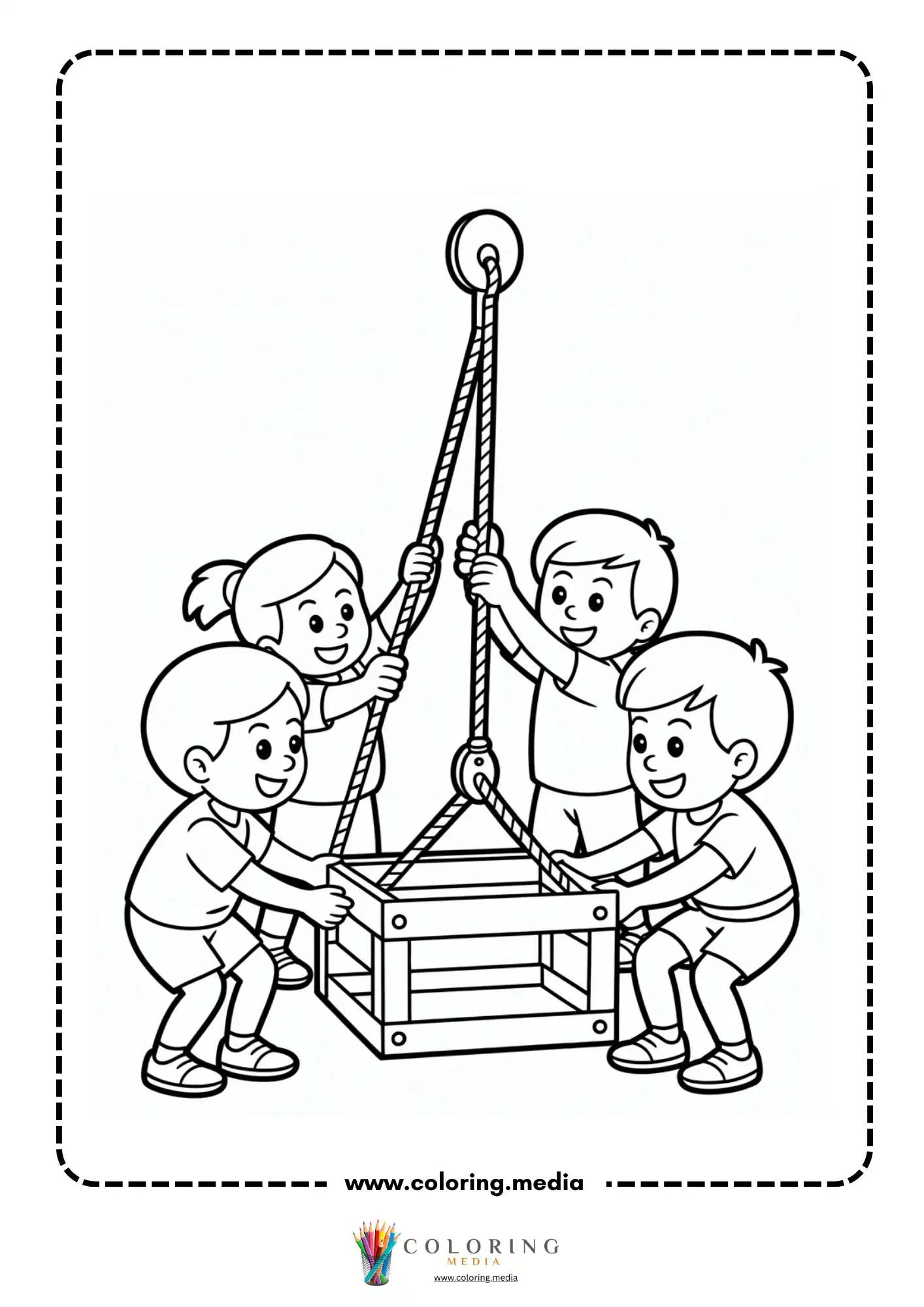
This collection includes 20 printable pulley coloring pages featuring children operating single fixed pulleys to lift crates and buckets, compound pulley systems with multiple wheels and rope passes, group scenes showing teams pulling a rope together through a pulley to lift a heavy load, close-up illustrations of the wheel-and-rope mechanism, and classroom demonstration scenes with a teacher and students. Several pages show the load clearly labeled and the effort direction with arrows, making them directly usable as science diagrams. All pages print on A4 or US Letter paper.

Who Are These Pulley Coloring Pages Best For?
Kindergarteners can color the character-focused pages without needing to understand the mechanics — a child pulling a rope to lift a box is a visually clear scene that reads as a story even before any physics explanation. The outlines are thick enough for crayon coloring and the scenes are uncluttered.
Early elementary students (grades 1–3) get the most educational value from this set. The pulley is often introduced in second or third grade as part of a simple machines unit, and these pages serve as both a pre-lesson visual primer and a post-lesson review activity. Coloring the rope one color and the wheel another, then drawing arrows to show the direction of force, turns a coloring page into a labeled science diagram.
Homeschool science days benefit particularly from this set because pulleys are one of the simple machines easiest to demonstrate at home — a length of rope over a towel bar can recreate the basic mechanism shown in the pages. Coloring the diagram and then building the real-world version creates a memorable learning sequence.
Interesting Pulley Facts to Share While Coloring
A single fixed pulley does not reduce the force required to lift a load — it only changes the direction of the force. Instead of lifting upward, you pull downward, which feels easier because you can use your body weight. To actually reduce the required force, you need a movable pulley or a compound system.
A block-and-tackle is a compound pulley system that can multiply force dramatically. A system with four rope segments supporting the load requires only one-quarter of the load’s weight as input force. Sailors used block-and-tackle systems to raise heavy sails long before electrical winches existed.
Elevators in modern buildings use a pulley system with a counterweight. The counterweight — roughly equal to the weight of the elevator car plus half a full load of passengers — balances on the other end of the cable. This means the motor only needs to move the difference between the two sides, saving enormous amounts of energy.
The pulley was used in ancient Egypt, Mesopotamia, and Greece to lift heavy loads during construction. Archimedes reportedly used a compound pulley system to demonstrate that a single person could move a fully loaded ship. The Roman architect Vitruvius described multi-pulley cranes used in construction around 50 BC.
Flag poles use a fixed pulley at the top. When you pull the rope downward on one side, the flag rises on the other. The pulley is what allows you to stay on the ground while raising something high above your head.
Creative Pulley Coloring and Craft Ideas
Force Direction Arrows On every page showing someone pulling a rope, draw arrows: one showing the direction of the effort (the pull) and one showing the direction the load moves.
Rope Color Trace For compound pulley pages, trace the entire rope with a single bright color from the effort end all the way to the load end, following it around every wheel.
Build a Simple Pulley Loop a string over a cylindrical object (like a cardboard tube) held above a table. Attach a small bag to one end and pull the other. Observe the direction change.
Pulley vs. No Pulley Test With a rubber band as a force gauge, measure how hard it feels to lift a book directly vs. lifting it via a string over a smooth rounded edge. Compare the readings.
Mechanical Advantage Calculation For compound pulley pages, count the number of rope sections supporting the load and write that number as the mechanical advantage on the back of the page.
Real-World Pulley Spot Find three places in your neighborhood where pulleys are used. Describe each one and which type it is (fixed, movable, compound).
Before Pulleys Existed Draw the same scene shown in one of the lifting pages but without the pulley — how would the children lift the heavy load?
Design a Pulley Machine Invent a machine that uses pulleys to solve a specific problem (lifting groceries to an apartment window, raising a boat out of water). Draw and label it.
How to Print These Pulley Coloring Pages
Each file downloads as a single PDF at 300 dpi, formatted for A4 and US Letter. Print from Adobe Reader or a browser with ‘fit to page’ selected. Standard copy paper handles all coloring media in this age range. For the diagram pages where rope-tracing with a single color is the goal, a fine-tip colored pen or marker gives the clearest line. Select black-and-white print mode to save ink.
Explore More STEM Coloring Pages
If you enjoyed these pages, you may also like:
Simple Machines Coloring Pages
Levers Coloring Pages
Gear Coloring Pages
Bridge Coloring Pages
STEM & Technology Coloring Pages