
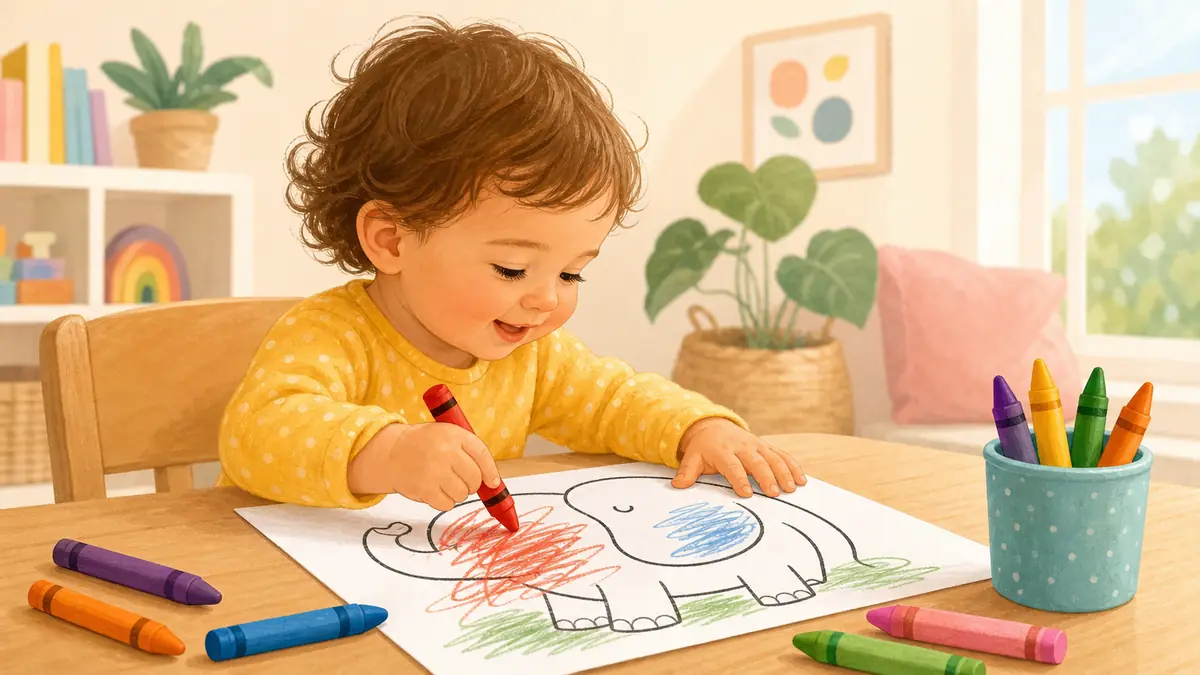

The best coloring pages for toddlers share one essential quality: they’re achievable. A toddler who successfully fills a large, bold cat outline with scribbled color has had a successful coloring session — one that built fine motor skills, reinforced color naming, and produced something they can proudly show. A toddler handed a page with small intricate sections produces only frustration. This guide covers exactly what to look for, what to avoid, and which page themes produce the most engaged toddler coloring sessions.
What Makes a Coloring Page Work for Toddlers
Toddler coloring page selection comes down to three non-negotiable criteria:
Large Coloring Areas
Every coloring area on a toddler page should be large enough to fill with a whole-fist or adapted palmar grip. If the smallest section on the page is smaller than the child’s fist, it’s too detailed. Toddlers cannot target small areas with precision — their fine motor development doesn’t yet support it — and any page that requires that precision produces frustration, not coloring.
Bold, Clear Outlines
Bold outlines (2–4pt line weight, minimum) serve two purposes: they’re visible enough for a toddler to recognize as a boundary, and they’re durable enough to survive the pressure of enthusiastic toddler coloring. Thin, delicate outlines disappear under heavy crayon pressure or get crossed accidentally, removing the sense of a defined image.
Immediately Recognizable Subject
Toddlers engage with things they already know. A simple cat, a big star, a round face, a single large flower — these produce immediate recognition and connection. Abstract shapes, unclear silhouettes, or subjects requiring explanation before the coloring starts lose toddler engagement before a crayon is picked up.
Best Themes for Toddler Coloring Pages
Animals
Animals are the single most reliable toddler coloring theme — the combination of recognition (“Dog! I know dog!”), emotional connection, and the inherent interest most toddlers have in creatures makes animal pages the highest-engagement category across the age range. Simple versions of dogs, cats, birds, fish, and familiar farm animals produce the most consistent engagement for ages 2–3. Our animal coloring pages include simple animal designs appropriate for young children — look for the simplest designs with minimal background detail.
Food
Food pages — a single large apple, a big round pizza, an ice cream cone — are consistently engaging for toddlers who connect immediately with familiar food subjects. The round, large shapes of many food items also make them structurally ideal for toddler fine motor capabilities. Our food and treats pages include simple food designs appropriate for young children.
Simple Shapes and Objects
Pages featuring a single large sun, a big star, a simple house, or a round ball give toddlers a satisfying, achievable coloring target with maximum white space and minimum detail. These are particularly good for the youngest toddlers (18–24 months) who are still in pure mark-making mode rather than attempting to stay within outlines.
Vehicles
For toddlers who are fascinated with cars, trucks, trains, and planes — as many are — simple vehicle pages with bold outlines produce some of the most sustained toddler coloring sessions available. The subject engagement carries the activity even when fine motor control is still developing.
Toddler Coloring Tools
The right tools matter as much as the right pages. For toddlers ages 1–3:
- Jumbo crayons (ages 1–2.5): Crayola My First Crayons or similar — short, thick, designed for palmar grip. Standard-length crayons are too thin to hold effectively at this age.
- Standard washable crayons (ages 2.5–3+): As grip transitions toward tripod, standard crayons become manageable. Washable is non-negotiable for this age group.
- Do-A-Dot markers: Large dauber tip produces satisfying results regardless of grip precision — excellent for the youngest toddlers who find even jumbo crayons frustrating.
For detailed crayon recommendations for this age group, see our guide to best crayons for toddlers and preschoolers.
Coloring Developmentally: What to Expect
Understanding what toddlers are actually doing when they color helps parents set realistic expectations and respond appropriately:
- Ages 1–2: Random mark-making. No attempt to stay within outlines; the goal is the sensory experience of making marks. Success looks like a scribbled page.
- Ages 2–2.5: Beginning area filling. Some attempt to keep color in a general region, though rarely within exact outlines. Success looks like most color inside a large area.
- Ages 2.5–3: Intentional coloring. Beginning to attempt outline boundaries on bold pages. Success looks like intentional filling with some outline respect.
For the complete developmental picture of coloring across all ages, see our guide to coloring pages by age: complete parent guide.
Frequently Asked Questions
When can toddlers start coloring?
Children can begin coloring as soon as they can hold a crayon — typically around 12–18 months. Early “coloring” is pure mark-making: the child makes marks on paper with a crayon held in a fist grip. This is developmentally appropriate and valuable. Purposeful area-filling coloring emerges between ages 2 and 3; attempting to stay within outlines typically begins around age 2.5–3 with appropriate pages.
Should toddlers color within the lines?
No — staying within lines is not a developmentally appropriate expectation for most children under age 4. The fine motor control required for precise outline work develops gradually through preschool. A toddler who colors enthusiastically with scribbles covering the page and surrounding area is having a successful, developmentally appropriate coloring session. Never correct or redirect a toddler for coloring “outside” — it discourages the exploration that produces skill development.
How long will a toddler color?
Typical toddler coloring sessions last 5–15 minutes on a page they chose and find engaging. Having 3–4 pages available and allowing free switching can extend total engagement to 20–30 minutes. Don’t expect or require completion of a page — toddlers move on when their interest shifts, and that’s appropriate. The goal is positive association with the activity, not finished pages.
The best coloring pages for toddlers are bold, simple, and immediately recognizable — with areas large enough for an enthusiastic fist-grip crayon and subjects familiar enough to produce immediate connection. Browse our easy pages and animal pages at coloring.media for the highest-engagement toddler coloring options, and visit our Tips & Techniques hub for age-specific guides.